2019-2020 HANDBOOK - Crestwood School
←
→
Page content transcription
If your browser does not render page correctly, please read the page content below
EDUCATING HEARTS & MINDS

                                  HANDBOOK
     2300 - 19th Ave. SE
      Medicine Hat, AB
          T1A 3X5
                                2019-2020
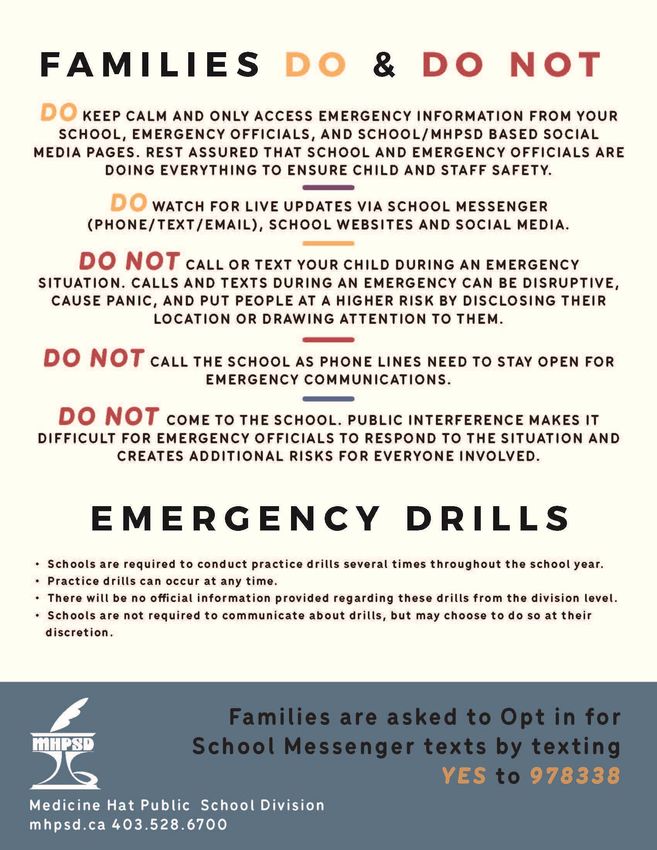
   Phone: (403) 527-2257
     Fax: (403) 526-2505
                                Check Out Our Web Page
Email: crestwood@sd76.ab.ca    (www.crestwood.mhpsd.ca)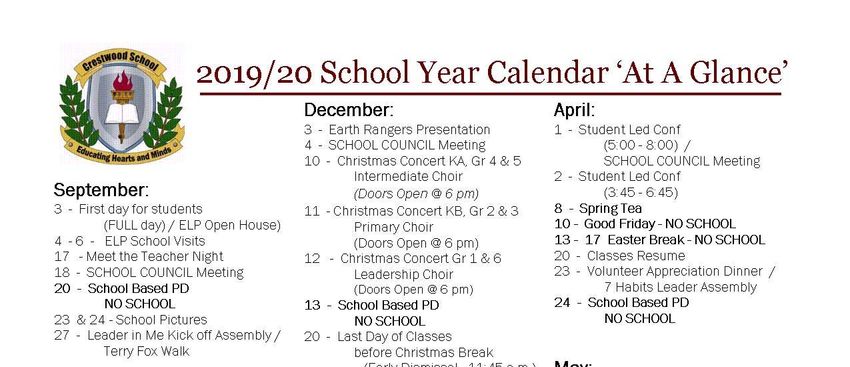
Table of Contents
                   Seven Habits of Highly Effective People /                                Pg. 3
                    Mission Statement

                   MHSD #76 Board of Trustees & Central Office Staff                        Pg. 4

                   Principal's & Vice Principal’s Message s                                 Pg. 5

                   Crestwood School Staff                                                   Pg. 6

                   School Operating Hours                                                   Pg. 7

                   Instructional Materials / Online Payments                                Pg. 8

                   Administration & Storage of Medication / Crestwood School                Page 9
                    Volunteers / Health, Cleanliness & School Dress /
                    Crestwood School Advisory Council

                   Fair Notice Letter                                                       Pg. 10

                   Emergency Protocols                                                      Pg. 11 & 12

                   Information on Head Lice / Lost and Found / Bicycles                     Pg. 13
                     Student Drop Off and Pick Up

                   Enhanced Academic Programs / Co-curricular Programs /                    Pg. 14
Crestwood School

                    Safety Patrol / Crosswalk Safety

                   Classroom Support Teacher / Cards and Other Trading Items /              Pg. 15
                    Noon Hour Activities

                   School-Community Programs /                                              Pg. 16
                    Buses and Bus Safety / Crestwood School Student Cell Phone Policy

                   Arrival at School / Attendance & Promptness / Leaving School Grounds /   Pg. 17
                    Contact Information / New Crestwood Logos

                   Crestwood School Code of Conduct / Student Reponsibility /               Pg. 18
                    Remember the Four R’s

                   Classroom/School Consequences / Smoke Free Environment /                 Pg. 19
Handbook

                    Student Assessment

                   Goals for 2019 - 2020                                                    Pg. 20

                   HUG Program / Multi-Sensory Room                                         Pg. 21

                   Calendar of Major School Events for 2019 - 2020                          Pg. 22

                                              Check Out Our Web Page
                                              www.crestwood.mhpsd.ca
                                                                                                          2
Crestwood School….A Leader in Me School & An Overview of the 7 Habits of Highly
                     Effective People
 As a Leader in Me School we align our        Habit 1:                                    understanding rather than to formulate
 school systems to provide a holistic                                                     our own responses. This is a skill that
 approach to educational programming. At      Be Proactive – We learn to take full        requires sensitivity to others, empathy,
 the core of this approach is a focus on
                                              responsibility for ourselves, and to        and leads to greater understanding and
                                              avoid the negativity of being reactive.     improved relationships.
 leadership and a culture for learning. The
 Seven Habits provide a common                Habit 2:                                    Habit 6:
 language for an innovative Character
 Education Program. The principles are        Begin with the End in Mind – We think       Synergize – We choose to collaborate
 timeless and are integrated into classroom   beyond the present to consider              in order to achieve results that simply
 practice and school-wide programs. Our       implications of our actions into the        cannot be found on our own.
 ongoing work with the 7 Habits has
                                              future. We encourage goal-setting,
                                              advance planning, and projecting            Habit 7:
 complimented more recent teacher and
                                              ourselves into the future to try to shape
 student collaborative processes such as                                                  Sharpen the Saw – We renew ourselves
                                              our destinies. We write and adhere to
 the Collaborative Response Model and                                                     each day: physical, emotional, mental
                                              mission statements.
 cooperative learning strategies. Looking                                                 and spiritual.
 forward, we are excited to implement         Habit 3:
 new student leadership opportunities in
 an effort to help our students find their
                                              Put First Things First – We endeavour
                                              to set proper priorities, to make wise
 passion and voice.
                                              choices, and to keep a positive
                                              perspective. Our “first things” should
                                              never be at the mercy of second or third
                                              priority items. This habit requires time
                                              management, planning and putting our
                                              mission into action.
                                              Habit 4:
                                              Think Win-Win – We try to exercise
                                              both courage and consideration as we
                                              seek mutual benefit. While I cannot
                                              always achieve a win-win situation, I
       The Seven Habits include:              can always THINK win-win. Such a
                                              paradigm leads us to look for ways to
                                              be kind and considerate while finding
                                              solutions, answers, and approaches that
                                              can make everyone feel happy and
                                              valued.
                                              Habit 5:
                                              Seek First to Understand, Then to Be
                                              Understood – We practice empathic
                                              listening where we try to listen for

Mission Statement

                                     Crestwood School
                is a place of learning, friendship, order, laughter, and love
                where each child, staff member, and parent is safe, valued,
                         and encouraged to reach his/her potential.

                                                                                                                                     3
M.H.S.D. #76—Board of Trustees

Chair: Mr. Rick Massini
Vice Chair: Mrs. Catherine Wilson Fraser
Trustee: Ms. Deborah Forbes
         Mrs. Carolyn Freeman
         Ms. Celina Symmonds

               M.H.S.D. #76—Central Office Staff

   Superintendent                                                Mr. Mark Da-
   vidson
   Deputy Superintendent: Human Resources                      Mr. Lyle Cun-
   ningham
   Associate Superintendent: Student Services                    Mrs. Tracy
   Hensel
   Assistant Superintendent Universal Design & Learning     Mr. Jason Peters
   Assistant Superintendent Inclusive Mindset                Mr. Corey
   Sadlemyer
   Secretary Treasurer                                  Mr. Jerry Labossiere
   Director of Facilities                               Mr. Andy Christie
   Transportation Coordinator                                     Mr. Robert
   Olson
   Early Learning Coordinator                               Mrs. Joanne
   Stockman
   District Psychologist                                Mrs. Claire Petersen
   First Nations, Metis & Inuit Coordinator                      Mr. Darrell
   Willier
   First Nations, Metis & Inuit Worker                          Ms. Shirley
   Boomer
   English Language Coordintor                             Mrs. Emma Piayda

                                                                                4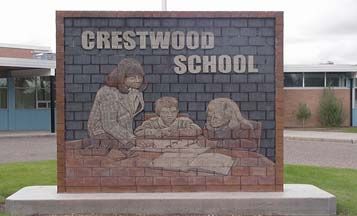
“Welcome To Crestwood School”
                       Principal Message: Mr. C. Edwards
                       On behalf of the staff at Crestwood School I would like to welcome you back for the 2019-2020
                       school year. A special greeting to those families new to the school, we look forward to building a
                       positive and collaborative relationship with you and your child to promote their success.
                      Teaching students The 7 Habits of Highly Effective People during classroom instruction, through
                      school-wide programs, and as a main component of our Leadership Academies continues to be an
                      important aspect of Crestwood School and our culture for learning. We encourage you to ask your
                      child questions about these timeless principles that support a whole-child educational approach. The
                      staff of Crestwood School also continue to refine processes involved with the Collaborative
Response Model (CRM). As teachers, administrators, and support staff utilize various forms of assessment evidence to
inform instructional practice and school intervention systems, your child benefits from timely and responsive strategies to
support their individualized learning journey. You can visit the Jigsaw Learning website to learn more about the CRM
model, https://www.jigsawlearning.ca/
We also want to support our school community with the transition to a common district Outcomes-Informed Report Card.
Students need to know and understand the outcomes they are expected to achieve, what they are going to do achieve
them, and what they will do once they have been achieved. This is the work that teachers do together with students in
their classroom. The report card is one of the communication tools that is used to provide information regarding student
progress; it is our goal to provide regular communication through your child’s classroom teacher and school-wide events
such as parent-teacher interviews. If you have questions about this reporting format you can talk with your child’s teacher
or the school administration.
Open communication is important for home and school to work together in a proactive manner in which information is
shared in a timely fashion and is student-focused. The staff at Crestwood School are committed to your child’s success
and I encourage you to contact your child’s teacher or an administrator should you have an item you would like to discuss.
Please utilize the student agenda provided to your child at the beginning of the year as another tool for information
sharing. The student agenda will also support your child in effective planning and organization, helping them practice the
first three habits as they work towards greater independence.
This handbook contains valuable information regarding educational programming, significant dates and events, student
expectations, contact information, as well as school and district policies. Please review the section on page 9 which high-
lights some information about the Crestwood School Advisory Council. Our families and School Council play a vital role to
an enhanced learning experience for students. There are different ways to become involved and your participation is
appreciated.
I encourage you to review the handbook with your child and keep it on hand for future reference. We look forward to
talking with you in the hallways and at school events, as we embark on this learning journey together.
Mr. Cody Edwards, Principal

                                                            Vice Principal Message: Mr. D. Ashmore
 As we move into the 2019/2020 school year, I anticipate a year of growth and transformation. It will be an exciting time for
 Crestwood School as we look forward to the development of new initiatives at Crestwood School. Our school academics will
 continue to provide unique learning opportunities for our students through the development of new assessment and reporting
 procedures.
 In addition to our additional staff changes this year, and as new teaching teams build cohesive ideas and programming that
 will bring exciting opportunities to our classrooms. Crestwood School is looking forward to continuing to support the Collab-
 orative Response Model (CRM) as a student centered capacity building mechanism. The CRM meetings ena-
 ble us to collaborate with school staff, school district personnel and out of school providers to discuss strate-
 gies to support children.
 We have been busy during the summer making plans to ensure that the traditions, standards and high levels of
 achievement continue at Crestwood School.

                   Best wishes to all Crestwood students, staff and their respective families!

                                                                                                                                 5
Crestwood School Staff

Kindergarten     A/B                  Mrs. K. Martin             Room 7 & 9

Early Child Educator                  Ms. T. Bolton

ELP                                   Mrs. M. Johnson            Room 8

Grade 1          A                    Mrs. M. Hansen             Room 6
                 B                    Mrs. C. Hall               Room 4
                 C                    Ms. R. Windjack            Room 5

Grade 1/2        C                    Mrs. C. Schlenker          Room 3

Grade 2          A                    Miss A. Barton             Room 1
                 B                    Mrs. T. McLane             Room 2

Grade 3          A                    Mrs. M. Pruden             Room 13
                 B                    Mrs. M. Harrison           Room 10
                 C                    Mrs. W. Smid               Room 12

Grade 4          A                    Mrs. C. Glasgo             Room 21
                 B                    Mrs. M. Koenig             Room 19
                 C                    Mrs. A. Pavelich           Room 16

Grade 5          A                    Mr. W. Wood                Room 17
                 B                    Mrs. V. Browne             Room 15
                 C                    Mrs. S. Thome              Room 20

Grade 6          A                    Mrs. V. Clarke           Room 23
                 B                    Mrs. D. Nielson / Mrs. M. Butchart      Room 14
                 C                    Mr. M. McKee             Room 18

Classroom Support Teacher (CST)       Mrs. K. Western

Teacher Librarian                     Mrs. M. Thompson
Principal                             Mr. C. Edwards
Vice-Principal                        Mr. D. Ashmore

Secretaries                           Mrs. M. Hammel
                                      Mrs. C. Bates
                                      Mrs. J. Carson (Library)

FSLW                                  Miss M. Tulip

Head Custodian       (days)           Mr. C. Orge
Custodian            (evenings)       Mr. E. Toole
Housekeeper                           Mrs. B. Morrey

                                                                                        6
School Operating Hours

        TIME                                       CLASS TIME

8:35            Warning Bell, Prepara on and Agendas
8:40            Period 1
9:20            Period 2
9:50            Period 3
10:20                                            Common Recess
10:35           Period 4
11:10           Period 5
11:40           Period 6                                         ( Lunch – K ‐ 2)
12:10           Lunch – 3 ‐ 6                                    (Recess ‐ K ‐ 2)
12:30           Period 6                                         (Recess ‐ 3 ‐ 6)
12:55           Warning Bell
1:00            Period 7
1:30            Period 8
2:00            Period 9
2:30            Period 10
3:00            Homerooms and Agenda
3:02            School Dismissal

                                                                                    7
Instructional Materials Fee
All elementary students in the public school system will be supplied with books,
instructional materials, and limited pencil and paper supplies. Kindergarten activity
fees will be $60.00 for the year.
Fees are due by
October 1st.
Online Payments Now Available
For safety and efficiency reasons, we want to reduce the amount of cash and cheques coming into our
school Before/After School Program fees can be paid online. The Medicine Hat School District No.
76 office has also advised us that credit card payments can only be made online and are no longer ac-
cepted at the school.
Parents please register!
Here’s how:
Step 1: Go to this website:
HTTPS://sd76.schoolcashonline.com
Step 2: Register by selecting “Get started now” and follow the steps (you must have a student ID# -
this will be on your Before/After statement or phone the office, LEGAL last name and date of birth to
register your student).
Step 3: After you receive the confirmation email, please select the “click here” option, sign in and
add each of your children to your household account.
For those parents/guardians who do not have a home computer, payments of cash or cheques can still
be used.
8Administration & Storage of Medication
Under certain circumstances your child may require medication administered during
school hours. We require a copy of the prescription, including instructions for ad-
ministration. Please come in and complete a form from the office. This must be
completed before any medication can be given. When students require medication
to be at school for medical conditions, the “Medication Administration” form must
be completed at the beginning of the school year and updated on a yearly basis.
Crestwood School Volunteers
Volunteers are welcome at Crestwood School and are an important component of the
educational programming. We appreciate the time and effort of Crestwood family members
and community volunteers. If you are interested in volunteering please contact your child’s
teacher or school administration.
School Council offers various opportunities throughout the year to be involved with school
events. Please watch the newsletter and other school communications for volunteer roles.
Please remember to come into the office to sign in and out of the building if you are serv-
ing in a volunteer role.
Health, Cleanliness &
Crestwood School Advisory Council
School Dress
(S.A.C.)
Children are encouraged in school to develop atti-
tudes and habits of cleanliness, good health, and neat
and modest appearance. Children are encouraged to All parents and guardians of students attending Crestwood School are
wash their hands throughout the day with a hand eligible members of School Council. All parents are invited to attend
sanitizer found in each classroom to prevent the monthly meetings and special functions, provide feedback to school
spread of germs and illness. administration, and to vote for plans or changes that are discussed at
Council meetings. Councils main goals are to:
Clothing and dress should be appropriate for the promote communication between parents and school staff
weather, the school activity, the school climate, and
the well-being of the rest of the students in the promote cooperation between parents and school staff
school. Students are not permitted to wear T-shirts consider and make recommendations about educational policies,
with inappropriate graphics, and other revealing plans, and operations within the school
clothing. All headwear is to be removed when en- recommend, assist, and participate in educational/family activities
tering the building unless students are wearing within the school
items for religious reasons. Students and/or parents
will be contacted if dress is considered inappropriate. assist and sponsor fund raising projects
Council meetings are held from 9:00 a.m. - 10:15 a.m., in the cafeteria
once a month. Your involvement is your opportunity to become more
aware of your child's learning environment.
910
11
12
Information On Head Lice

Medicine Hat School District No. 76 follows the recommended practices outlined by Alberta Health Services with regards to the
protocol for the treatment of head lice. This involves a proactive approach in asking parents to check for head lice on a regular
basis to reduce the amount of head lice in schools.

Head lice are not dangerous and they do not spread disease, but can and do spread from person to person. Often head lice are con-
tracted from close family and friends in the home and community, not typically from school, although it can spread there as well.
Research indicates that activities such as sleep-overs, shared hats and close contact such as play wrestling are among the most
common means of spreading head lice. It is important to note that head lice are always in the community and this proactive ap-
proach is always important.

Should a family require support or information with methods of checking their child for lice, nits or proper treatment methods, the
school, if needed, will connect them with the appropriate Alberta Health Services contact. At the schools suggestion, parents are
asked to take care of the treatments quickly and to take all of the other precautions to limit the chance of reoccurrence.

     Lost and Found

There are two Lost and Found boxes to which students
have access to look for lost articles. Periodically we
arrange all articles in the hall for pupil inspection. At
various times during the year items are donated to a                       Student Drop Off And Pick Up
charity.

We encourage you to label lunch kits (please include
last names) and items worn or brought to school by                   Parents who drive their students to school are asked to drive into
your child.                                                          the front drive-way and slowly move forward until the line of
                                                                     cars stops. At that point, your child(ren) is asked to exit the
Parents are invited to visit the school and claim lost               vehicle and walk to the sidewalk and enter the school. Parents
                                                                     are then to proceed slowly with the line of cars and exit the
                                                                     school property. If parents wish to walk their children into the
                                                                     school, they must park on the street near the front of the school.

       Bicycles                                                      After school, the driveway is to be used ONLY by busses, and
                                                                     parents will need to park on the street for pick-up. The busses
                                                                     usually depart by 3:20 p.m., at which time parent vehicles can
Bicycle racks are provided for those who ride their bicycles to      again access the driveway. Please note that the parking lot
school. All bicycles must be placed in the racks. It is strongly     behind the school is reserved for STAFF ONLY. Children are
suggested that they be locked. Students are not allowed by the       not to exit the back of the school.
bike racks once their bicycles have been parked. Also, students
are requested not to leave bicycles overnight at the school, as we
cannot guarantee their security.

                                                                                                                                      13
Enhanced Academic Programs At Crestwood School
1. 7 Habits of Highly Effective People Safety City - traffic, winter, home safety, seatbelt
2. Leadership Academy - Grade 6 safety, internet safety
3. Leadership Through Sports Academy - Grade 5 Firehall - fire safety
4. Environmental Leadership Academy - Grade 4 Health Unit - dental care, vaccination
5. Full Alternate Day Kindergarten Programs (full time
Kindergarten program option available) Effective Behaviour Supports
6. Accelerated Reading, Grades 2 - 6
7. Core French, Grades 4 - 6
8. Daily Physical Education K - 6
9. Speech Therapy Program
10. Library Program
11. Occupational, Physical Therapy Programs
12. HUG Program (Helping Us Grow)
13. English as Second Language Support
14. Literacy Intervention Support
15. Family School Liasion Worker
16. First Nations, Metis & Inuit Worker
17. Complementary Health Programs
Medicine Hat Police Service Youth Program
(EPIC)
Safety Patrol
Co-Curricular Programs
An important part of the school safety program is the
1. Math Growth Mindset Awards AMA School Safety Patrol.
2. 7 Habits Leader Assemblies
3. Primary and Intermediate Choirs Safety patrols are organized for the safety and
4. Christmas Concerts K - 6 welfare of the students. The Safety Patrols receive
5. Grade Six Outdoor Ed. Leadership Camp training on rules and techniques for helping students
6. Safety Patrol Program cross busy streets safely.
7. Student Lighthouse Council We ask parents to encourage their children to obey all
Primary & Upper Elementary patrols.
8. Grades K - 6 Intramurals Grades 5 and 6 students are invited to work on the
9. Inter-School Sports, Grades 4 - 6 school patrol team.
10. Win-Win Sports Day
11. Hot Lunch Program
12. Recycling Program / Green Team
13. Extensive Field Trip Programs
14. Science Fair
Crosswalk Safety
To ensure the safety of Crestwood students and families, as well as our Student Safety Patrol-
lers, we ask that parents/guardians respect the crosswalk. There are “no parking” signs located in
close proximity to the crosswalk to ensure vehicles are not parked within five meters of the
crosswalk. Thank you for your cooperation.
14Classroom Support Teacher
Crestwood School is fortunate to have a full-time Classroom Support Teacher (CST). Mrs. Western possesses a wealth of teach-
ing experience , Individual Support Plan creation for students, as well as implementing targeted literacy interventions. She is
an excellent resource for connecting our teachers, families and students with both school-based and external service providers.
The CST role focuses on three core priorities to enhance the student learning experience:
1. Literacy Support: Working closely with our primary grade level teachers, the CST is able to support quality Language Arts
instruction both in and outside the classroom. Through reading assessments, programming decisions are made to ensure
appropriate leveled materials and instructional strategies for students.
2. Differentiated Instruction: The CST serves as a support to our classroom teachers in the creation of Individual Support
Plans. This can involve adaptations to student programming to promote greater academic success, or to achieve a just right
state for learning. Crestwood staff and families have received training in working through a Collaborative Problem Solving
model with children. The CST collaborates with the school administration and teachers to implement this model.
3. Learner Data: Universal screening assessments are implemented throughout the school division to gain a better awareness
of student understanding in literacy and numeracy. The CST is directly involved with supporting teachers in the implementa-
tion of the assessments, as well as organizing and inferring the data. This information helps guide instructional decision
making at the classroom and school levels.
We recognize that learning is an individualized experience and that for each student there should be a warm, personal relationship
between the teacher and the student. Thus, we try to have each student feel that s/he is respected and cared for. We believe that
the child must know that we really care.
Cards and Other Trading Items
We ask that students please leave cards (ex. Pokémon) and trading items at home, as trading is not allowed in school.
Additionally, items of value could be lost or damaged.
Noon Hour Activities
At noon hour, all students who stay for lunch are expected to eat their lunch in the cafeteria or their classroom unless
directed otherwise by staff. Students are to remain in the cafeteria/classroom until they have finished eating their
lunch and have been dismissed by a supervisor.
When students leave the cafeteria/classroom they are to put their lunch box/bag away and go outside for fresh air.
When the activity bell rings at 12:30 p.m., students may choose one of the following options for the activity period of
noon hour:
1. Remain outside and play
2. Participate in leadership activities, such as Student Lighthouse Team meetings, school service, etc., under the
supervision/permission of staff members.
3. Go to the library for quiet work. (when open & supervised)
4. Go to the computer lab to work or play on the computer. (when open & supervised)
5. Go to the gym for intramurals if it is their grade’s assigned day.
6. Participate in school activities, choirs, clubs, etc., scheduled for noon hour.
15School-Community Programs
12. Volunteer Appreciation Dinner
1. 7 Habits Leaders Celebrations 13. Pitch-In Community Clean-up
2. Kindergarten Field Trip Program 14. Big Brothers/Big Sisters - In-School Mentoring
3. School Advisory Council (SAC) 15. Performing Arts
4. Child Supervision Program (YMCA) 16. EPIC - Medicine Hat Police Youth Program
5. Fundraising Program (BINGO/CASINO/Other) 17. Math Growth Mindset Assemblies
6. Kinsmen Skate-a-thon
7. Parent Conferences / Student Led Conferences
8. Annual Spring Tea
9. Year-end Activity Program - Field Trips, Win-Win SportsDay
10. School Family Events
11. Terry Fox Walk
Buses and Bus Safety
A large number of students are bussed to Crestwood School. Although we have very few behavioural problems on the bus, occasionally
problems do arise.
Students and parents are reminded that students are responsible to the bus driver while they are transported to and from home. Should
problems arise, we request parental involvement to help us solve them. Students may be suspended from riding the school bus for a peri-
od of time for misbehaviour and may result in loss of bus privileges for the remainder of the school year.
In order that students may have a safe and enjoyable ride to and from school, we hope they will follow these rules on the bus:
1. While waiting for the bus in the morning, respect all public and private property.
2. Behave properly while waiting in line for the bus.
3. After school, wait for the school bus under the roof deck in front of the school. Do not enter in the driveway.
4. Enter and leave the bus in single file.
5. Sit down quickly and stay seated.
6. Cooperate with others in sharing seats.
7. Keep head, arms and legs away from open windows.
8. Ride quietly on the bus to allow the driver to hear outside traffic sounds.
9. Do not use profane language on the bus.
10. Always obey the bus driver.
11. Unless other arrangements have been made, go straight home from the bus after school.
Crestwood School Student Cell Phone Policy
In order to minimize disruptions to learning, students are encouraged to refrain from bringing cell phones
to school. Phones are available in every classroom, office and hallway for student use during school
hours with teacher/secretary permission. Cell phone use guidelines are as follows:
1. Cell phones must be turned off and out of sight.
2. Staff may confiscate cell phones if there is a violation of the policy.
3. Staff are responsible to ensure confiscated cell phones are secured in the school office.
4. Confiscated cell phones may be picked up by students or parents during office hours.
5. The school will not be responsible for any lost, damaged or stolen cell phones.
16Arrival At School
Students should not arrive at school earlier than 8:20 am because
supervision is not provided earlier than this time. Attendance &
Promptness
Should parents wish their student to arrive at school earlier than ten
minutes before classes start, arrangements must be made for them to attend
the available Child Supervision Program - YMCA. Visit Crestwood A good attendance record for all
School website for more information. students is encouraged so as to
enhance good learning.
When your child is absent from
school, please telephone the
school at 403-527-2257 to inform
us.
Leaving School
Grounds
Crestwood School operates a closed campus, which
means that once pupils have arrived at school, they are
not allowed to leave the grounds, for any reason, unless
given permission or when it is time to go home. Contact Information
Bus students must remain on the school grounds, from
bus-arrival time to bus-departure time. At the beginning of the year, parents are asked to
fill out a form whereby the school can have on file
Please contact the school should you require your child to a telephone number of a person to call when it is
leave school early. impossible to reach the parents/guardians. It also
contains other relevant information which we feel
the school should know in the best interest of your
child.
NEW Crestwood Logos
Crestwood School is excited to introduce three new school logos
that are available on select clothing items for purchase. If you are
interested in purchasing Crestwood School clothing, please contact
Sports Connection at 403-529-6130. At select times during the school year, clothing
may be available to try on at the school or can be ordered online. Go Crestwood
Cougars!
17Crestwood School Code of Conduct
A student shall conduct himself or herself so as to reasonably comply with the following Code of Conduct:
a. be diligent in pursuing the student’s studies;
b. attend school regularly and punctually;
c. co-operate fully with everyone authorized by the board to provide education programs and other services;
d. comply with the rules of the school;
e. account to the student’s teachers for the student’s conduct;
f. respect the rights of others;
g. ensure that the student’s conduct contributes to welcoming, caring, respectful and safe learning environment
that respects diversity and fosters a sense of belonging;
h. refrain from, report, and not tolerate bullying or bullying behavior directed toward others in the school, whether
or not it occurs within the school building, during the school day or by electronic means;
i. positively contribute to the student’s school and community
Student Responsibility
We believe in setting a high standard for our students -- both in learning and in behaviour. To do this we operate with
a minimum set of basic, common-sense rules. These rules are summarized as the “Four R’s of Good Behaviour”.
Our first goal is to develop a wholesome, happy and productive learning climate in the school; our second goal is for
students to develop self-discipline, self-control, and self-responsibility. Students learn and are expected to use the
Principles of the 7 Habits of Highly Effective People to guide positive choices.
Remember the Four R’s:
Respect for Self;
Respect for Others;
Respect for Property;
Responsibility for ALL Your Actions
18Classroom/School Consequences: Smoke Free Environment:
As per MHPSD Policy 808 (Use of Tobacco, Cannabis and
Smoking Materials):
“All Division school sites, properties, vehicles and school
Each teacher is responsible for promoting positive student sponsored activities will be free from the use of tobacco and
choices, as well as addressing behavior that does not meet cannabis products and smoking materials in a smoke free
classroom or school rules. Staff may choose to involve school environment for students, staff and visitors.”
administration depending on the situation. Consequences for an
incident follow a hierarchal process and may include a warning, Thank you for your cooperation.
phone call home, creation of a behavior improvement plan, or Student Assessment:
working in the office. Students may also receive an in-school
MHPSD Policy 616 (Student Assessment) indicates that “student
suspension or an out-of-school suspension depending on the
severity of the incident. assessments provide necessary information to guide instruction
and improve learning. These assessments support the
determination and implementation of suitable educational
Definitions of bullying, discrimination, and harass- goals, teacher instructional strategies, and services in support
of student programming.”
ment;
Bullying: The School Act defines bullying as “repeated and
hostile or demeaning behavior by an individual in the school
community where the behavior is intended to cause harm, fear, or
distress to one or more individuals in the school community,
including psychological harm, or harm to an individual’s reputa-
tion”.
Discrimination: The denial of individual rights and freedoms in
a manner which contravenes the Canadian Charter of Rights and
Freedoms and/or the Alberta Human Rights Act (AHRA).
Discrimination on the basis of race, religious beliefs, color,
gender, physical disability, age, ancestry, place of origin, marital
status, source of income, family status, creed, sexual orientation,
and citizenship is prohibited.
Harassment: Any behavior that in effect or intent disparages,
humiliates, or harms another person or class of persons. It is
behavior that denies dignity and respect, and is demeaning and/or
humiliating to another person or class of persons. Harassment
may include, but is not limited to, references related to age, na-
tional or ethnic origin, religion, gender, sexual orientation, disa-
bility, race and/or sources of income or family status. Sexual har-
assment is any unwelcome behavior that is sexual in nature. Such
behavior may directly or indirectly affect or threaten to affect in
an adverse manner a student’s well-being and/or learning
environment. The behavior does not need to be intended as
harassing to be considered as personal harassment. It is sufficient
that one knows or ought reasonably to know, that his or her
behavior is offensive and unwelcome. Harassment is not a
relationship of mutual consent. It is any action including, but not
limited to, verbal, physical, written, and cyber messaging that is
unwelcome or intimidating and denies individual dignity and
respect.
19based instructional strategies to support
The Crestwood School Administration and Staff students’ overall growth through the
have committed to the following goals for the implementation of Collaborative Response
2019 - 20 school year. Model (CRM) structures. As described by
Hewson, Hewson, & Parsons (2015), a
7 Habits of Highly Effective People – Collaborative Response Model is a school-
Crestwood School will continue work this wide framework that places inclusion at the
year to implement the 7 Habits of Highly core and ensures a collaborative response to
Effective People into the school culture the individual needs of students. Crestwood
through classroom instruction and activities. School staff are excited to continue our
The 7 Habits is a principle-based approach to journey and focus our attention on school
helping people reach their potentials. level learner evidence, as well as the
Quality Evidence of Learning: Crestwood development of a Pyramid of Intervention
School staff will prepare for an Outcomes In- approach unique to Crestwood School.
formed Report Card with a focus on clearly Hewson, K., & Hewson, L., & Parsons, J. (2015).
communicated learning intentions, as well as Envisioning a collaborative response model:
quality formative and summative assessment
practices. Regular communication will occur Beliefs, structures, and processes to transform
with our parent community regarding the how we respond to the needs of students.
assessment process.
Collaborative Response Model
Implementation – The staff of Crestwood
School will build on both school and district
20“HUG Program”
What is HUG?
Capacity Building in Schools Initiative is an integrated, multidisciplinary team approach in providing
promotion, prevention and early intervention addiction and mental health services to children, youth
and their families within a school-based setting. Building relationships, positive communications and
innovative programming to aid in the physical and emotional well-being of our families are key goals of
HUG.
What is the goal?
The overall goal is to build resiliency skills in children, youth and families and
to support children and youth to stay in school and succeed. These projects
not only focus on at-risk kids but are designed for all students. The project
team provides mental health and wellness promotion and prevention supports
designed to build strengths in children, youth and their families.
supervision of an adult. This room is specially designed to de-
Multi-Sensory Room liver stimuli to various senses, using lighting effects, color,
sounds, music, scents, and textures. The combination of dif-
CRESTWOOD SCHOOL MULTI-SENSORY ROOM
ferent multi-sensory equipment may be explored using vision,
The multi-sensory room is based on “Snoezelen Rooms” which hearing, scent and tactile senses. The children control their
was developed first in The Netherlands in the 1970’s, and has environment and choose from the equipment those items they
spread across Europe and across North America. The term will use.
"snoezelen" (pronounced / snuz l (n)/) is formed from the
The specialized equipment housed in the Multi-Sensory Room
Dutch terms "snuffelen" (to seek out, to explore) and
includes:
"doezelen" (to doze, to snooze).
Research has shown that multisensory environments offer a Fiber-Optic Spray
wealth of benefits. The Multi-Sensory Room or environment is
safe and non-threatening. Children and adults with disabilities
Color-changing bubble tube
or other challenges and conditions enjoy gentle stimulation of Projector with spin-wheels of nature scenes
the primary senses. There is no need for intellectual reason-
ing. Participants experience self-control, autonomous discov- CD Player with CD’s of calming sounds from nature
ery, and exploration-achievements that overcome inhibitions, Aroma Therapy
enhance self-esteem, and reduce tension and stress.
Mirror Ball
Multi-sensory rooms are designed to provide an environment
for children with a wide variety of needs, including Autism
Tactile Box filled with various objects of different
textures
Spectrum Disorders, Aspbergers’ Syndrome, Learning Disabili-
ties, Behavioral and Social Challenges, Anxiety and Stress Bean-Bag Chair
where they will experience:
Cushioned Floor Mats
Sensory stimulation
Relaxation and calming effects
Stress reduction and Leisure
A sense of control of environment
An opportunity for choice
Encourages exploration and discovery
Time for individual attention
A medium to enhance the development of relation-
ships
Controlled multi-sensory stimulation involves exposing stu-
dents to a soothing and stimulating environment under the
2122
23
You can also read


