SOCIAL AND CULTURAL PSYCHIATRY - 24TH ANNUAL MCGILL SUMMER PROGRAM IN - DIVISION OF SOCIAL AND TRANSCULTURAL PSYCHIATRY DEPARTMENT OF PSYCHIATRY ...
←
→
Page content transcription
If your browser does not render page correctly, please read the page content below
24th Annual McGill Summer Program in
Social and Cultural Psychiatry
                               April 30 - August 24, 2018
                               Montréal, Québec

 Division of Social and Transcultural Psychiatry
 Department of Psychiatry, McGill University
 www.mcgill.ca/tcpsych
Division of Social and Transcultural Psychiatry

             24th Annual
         Summer Program in
    Social and Cultural Psychiatry
             May 7 - August 24, 2018
                       Courses
                  Cultural Psychiatry
               Psychiatric Epidemiology
   Research Methods in Social and Cultural Psychiatry
                     Workshops
                Working with Culture
         The McGill Illness Narrative Interview
                 Global Mental Health
          Indigenous Mental Health Research
                 Critical Neuroscience
           Social and Cultural Neuroscience

       Advanced Study Institute

                 June 19-21, 2018

      Challenging Migrant Detention:
  Human Rights, Advocacy and Mental Health

                       McGill University
                       Department of Psychiatry
                       Montréal (Québec) Canada
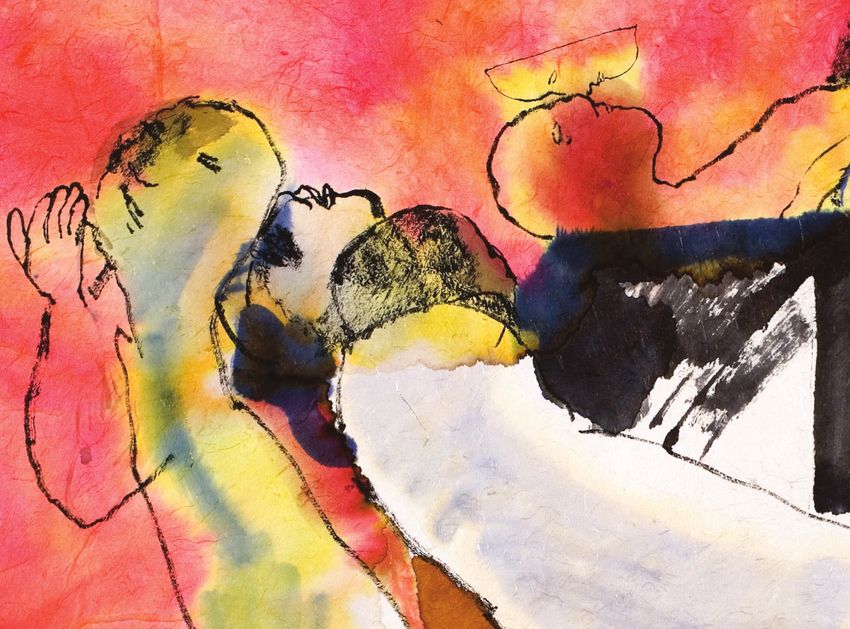
Front cover illustration courtesy of the artist:
               Jaswant Guzder

Back cover illustration courtesy of the artist:
 Alwy Fadhel, and the Refugee Art Project

           Visit our web page at:
           www.mcgill.ca/tcpsych

           Issued November 2017
McGill Summer Program in
Social and Cultural Psychiatry
In 1995, the Division of Social and Transcultural Psychiatry, Department of Psychiatry, McGill
University, inaugurated an annual summer school in social and cultural psychiatry and psychiatric
epidemiology. The program provides the conceptual background for research and clinical work in
social and cultural psychiatry and will be of interest to:
• postdoctoral trainees and researchers in psychiatry, psychology, and other mental health
disciplines
• graduate students in health and social sciences
• physicians, psychologists, social workers, and other health professionals
The summer program forms part of the training activities of the Montréal WHO Collaborating Centre and
is endorsed by the Canadian Academy of Psychiatric Epidemiology.
GENERAL INFORMATION
Director: Laurence J. Kirmayer, MD
Administrator: Consuelo Errazuriz
Administrative Office: Division of Social & Transcultural Psychiatry
Department of Psychiatry
McGill University
1033 Pine Ave. West
Montréal (Québec) Canada H3A 1A1
Tel: (514) 398-7302
Fax: (514) 398-3282
E-mail: tc.psych@mcgill.ca
The Summer Program in Social and Cultural Psychiatry coincides with the annual
Summer Session in Epidemiology and Biostatistics at McGill. Participants may
enrol in courses in statistics, epidemiology, or research methodology prior to or
concurrently with the psychiatry program. Students must apply to each of these
programs separately.
For information on Epidemiology and Biostatistics, contact: Student Affairs
Office, Department of Epidemiology, Biostatistics, and Occupational Health,
McGill University, Purvis Hall, 1020 Pine Ave. West, Room 27,
Montréal, QC H3A 1A2
Tel: (514) 398-6258; E-mail: graduate.eboh@mcgill.ca
Website: http://www.mcgill.ca/epi-biostat-occh/academic-programs/summer
The McGill Summer Institute in Infectious Diseases and Global Health will be
held June 11-22, 2018.
For more information: https://www.mcgill.ca/globalhealth/summer-institute
3REGISTRATION INFORMATION
Courses may be taken for academic credit or for professional interest. The Advanced Study Institute
Conference and Workshop may be taken only for professional interest.
Enrolment for courses and workshops is limited and early application is strongly
advised. Please note the application deadlines in order to submit your application.
All applicants for the Summer School must submit the registration form
(available at the end of this booklet) together with a CV to the Summer Program
Coordinator at tc.psych@mcgill.ca to obtain permission to attend the course(s).
Be sure to include your current contact information (mailing address, telephone,
e-mail and McGill ID (if applicable)) and specify which course(s) you would like
to attend.
For information on registering for the Advanced Study Institute Conference
and Workshop (June 19-21):
http://www.sherpa-recherche.com/en/partage-des-savoirs/colloques/
Professional Interest
Canadian and International students and professionals applying to the Summer School for professional
interest can do so through the Division of Social & Transcultural Psychiatry. Please fill out the
registration form at the end of this brochure or on the Division website:
http://www.mcgill.ca/tcpsych/training/summer/ and send it with your information to:
Summer Program Coordinator
tc.psych@mcgill.ca
Tel: (514) 398-7302
Fax: (514) 398-3282
On successful completion of the course or workshop, a certificate of attendance will be provided by the
Division. This does not confer formal academic credit, for which a separate application is required (see
below). Registration for professional interest is accepted as long as room is available in the course or
workshop.
Academic Credit
The following courses may be taken for academic credit by students enrolled in a graduate program at
McGill or another university: Cultural Psychiatry (PSYT711); Psychiatric Epidemiology (PSYT713);
and Research Methods in Social and Cultural Psychiatry (PSYT633). All applicants for academic
credit must submit their CV and Registration form to the summer program coordinator at
tc.psych@mcgill.ca to obtain permission to attend the course(s). After this initial step, all further
correspondence regarding the registration process for academic credit will be with the Department of
Psychiatry Graduate Program Coordinator, by e-mail at: graduate.psychiatry@mcgill.ca, Tel: (514)
398-4176
McGill Graduate Students
After receiving permission to attend the course(s), McGill students should register on Minerva once the
summer registration period for graduate students begins. Detailed registration information will be
available mid-March 2018 at www.mcgill.ca/gps/students/registration/dates. Students are billed by
McGill Student Accounts.
4McGill Double Program Students and McGill Psychiatry Residents
After receiving permission to attend the course(s), double program students may go to the following
link to register https://www.mcgill.ca/students/records/cc.
After receiving permission from the coordinator of the Division of Social and Transcultural Psychiatry
to attend the course(s), Psychiatry residents who want to take the courses for credit need to obtain
permission from the Graduate Program director and from the Faculty of Medicine. If interested to
register for professional interest, apply to tc.psych@mcgill.ca. McGill double program students and
McGill psychiatry residents are billed by McGill Student Accounts
Visiting, Exchange and Special Students
After receiving permission to attend the courses, please visit the McGill Graduate Studies website
(http://www.mcgill.ca/gradapplicants/apply/prepare/visiting#visiting) to verify what category of
student applies to you. Please observe the application deadline: January 15 for international students;
February 15, 2018 for Canadian students. Official notification of acceptance is issued by the Faculty
of Graduate Studies.
Non-McGill, Québec University Students
After receiving permission to attend the course(s) from your home University and from the Division of
Social and Transcultural Psychiatry, you must initiate an online application to request the required
authorizations at www.mcgill.ca/students/iut and you must complete a CREPUQ form
(https://mobilite-cours.crepuq.qc.ca/4DSTATIC/ENAccueil.html). Refer to your home university
website for regulations on the number of credits allowed, as well as policies for transferring credits.
Note: Once the Québec Inter-University Transfer (IUT) application is approved by both the home and
host universities, you remain responsible for registering in the course that was approved. At McGill,
you must register on Minerva (www.mcgill.ca/minerva).
Students from University of Toronto and University of British Columbia
After receiving permission to attend the course(s) from your home university and from the Division of
Social and Transcultural Psychiatry, students must submit a Graduate Exchange Agreement form to
your home university and to the graduate program coordinator at McGill:
graduate.psychiatry@mcgill.ca.
Students from other Universities in Canada (Inter University Credit Transfer)
After receiving permission to attend the course(s) from your home University and from the Division of
Social and Transcultural Psychiatry, please verify the registration procedure that you should follow:
Visiting, Exchange or special Student by visiting the following link:
http://www.mcgill.ca/gradapplicants/apply/prepare/visiting#visiting. The application fee cannot be
applied towards course/workshop fees. Official notification of acceptance as a “Visiting Student” or a
“Special Student” is issued by the Faculty of Graduate Studies. Students obtain a McGill student
identity number when applying and use this to register for the course(s) on Minerva. Transfer of
academic credits should be arranged with the applicant’s own university.
International Students
International students applying for academic credit: after receiving permission to attend the course(s)
by the Division’s instructor and their own university/department, students must apply for “Exchange
Student” status at McGill: http://www.mcgill.ca/gradapplicants/apply/prepare/visiting by January 15,
2018. The application fee cannot be applied toward course/workshop fees. Official notification of
5acceptance as a Special Student is issued by the Faculty of Graduate Studies. Students obtain a McGill
student identity number when applying and use this to register for the course(s) on Minerva. Transfer
of academic credits should be arranged with the applicant’s own university.
MSc Program in Psychiatry
Students who wish to apply for the MSc program in Psychiatry (with concentration in Social and
Transcultural Psychiatry) should direct inquiries to:
Graduate Program Coordinator
Department of Psychiatry
McGill University
1033 Pine Ave. West, Room 107
Montréal, Québec
Canada H3A 1A1
Tel: (514) 398-4176
E-mail: graduate.psychiatry@mcgill.ca
Website: http://www.mcgill.ca/psychiatry/
The deadlines for applications and documents from International and Canadian students for the MSc
and PhD programs are:
• September 15 for entry in January for all applicants
• January 15 for entry in May for international applicants (and part-time International
applicants seeking credit for summer courses)
• February 15 for entry in May for Canadian applicants and for part-time applicants in the
Transcultural courses
• March 15 for entry in September for all applicants.
For more information please visit:
http://www.mcgill.ca/psychiatry/education/graduate-program
6COURSES
PSYT711 Cultural Psychiatry
L. Kirmayer & Faculty (3 academic credits)
This course surveys recent theory and research on the interaction of culture and psychiatric disorders.
Topics to be covered include: history of cultural psychiatry; cross-national epidemiological and
ethnographic research on major and minor psychiatric disorders; culture-bound syndromes and idioms of
distress; culture, emotion and social interaction; somatization and dissociation; psychosis; ritual and
symbolic healing and psychotherapy; mental health of indigenous peoples; mental health of immigrants
and refugees; psychiatric theory and practice as cultural constructions; methods of cross-cultural research;
models of mental health care for multicultural societies; globalization and the future of cultural
psychiatry.
Prerequisites: Courses in abnormal psychology, psychiatry or medical anthropology, and permission of
the instructor.
Text: Course readings will be available in paper form and online at the McGill Bookstore
Date: May 1-24, 2018 (4 weeks) T•TH !13:30-18:00
Location: TBD
PSYT713 Psychiatric Epidemiology
G. Galbaud du Fort, X. Mei & Faculty (3 academic credits)
This course offers an overview of the application of epidemiology in the field of psychiatry. Topics
include: history of psychiatric epidemiology; epidemiologic research methods in psychiatry (in
addition to basic methods, specific lectures will cover meta-analysis, family studies, assessment of
needs for care, prevention) ; study of treatment-seeking, pathways to care, and use of services;
epidemiology of specific diagnoses (e.g., post-traumatic stress disorder, somatization); research on risk
factors (e.g., developmental impact of stress in pregnant women, childhood adversity and mood
disorders, cannabis and psychosis); interaction between mental and physical disorders (e.g., depression
and diabetes) ; introduction to evaluation of mental health services and programs (e.g., supported
employment for people with severe mental illness).
Prerequisites: introductory courses in epidemiology and biostatistics, and permission of the instructor.
Text: Course readings will be available in paper form and online at the McGill Bookstore;
presentations will be available online.
Date: April 30-May 25, 2018 (4 weeks) M•W•F! 13:30-16:45
Location: Room 138, Irving Ludmer Building, 1033 Pine Ave. West
PSYT633 Research Methods in Social and Cultural Psychiatry
R. Whitley, A. Ryder & Faculty
This workshop will introduce participants to research methods in cultural and social psychiatry in a
stepwise manner. The course consists of three modules: (1) introduction to qualitative research; (2)
introduction to quantitative research; and (3) introduction to mixed-methods studies. Modules 1 and 2
will focus on methodologies, study design, execution, analysis and dissemination. In Module 3,
students will learn how and when to integrate qualitative and quantitative approaches in a mixed-
method study. Ample time will be given for questions and discussion of participants’ projects.
Text: Course readings will be available in paper form and online at the McGill bookstore
Date: April 30-May 25, 2018 (4 weeks) M•W•F!9:00-12:30
Location: Room 138, Irving Ludmer Building, 1033 Pine Ave. West
7WORKSHOPS
Working with Culture: Clinical Methods in Cultural Psychiatry
J. Guzder & C. Rousseau
This workshop for mental health practitioners provides an overview of clinical models and methods in
cultural psychiatry. Topics include: working with translators and culture brokers; attending to culture,
ethnicity, racism and power in individual and family interventions with migrants and ethnocultural
minorities; how cultural work transforms the therapist; ethical issues in intercultural work; strategies
for working in different settings including schools, community organizations and refugee immigration
boards. Invited lecturers will frame the basic issues of clinical intervention through the paradigms of
cultural voices and languages of symptoms, art, and play. The clinical intersection of healer, culture,
diagnosis, and therapy will be approached by a review of developmental theories, identity, and life-
cycle variations in migrant or minority experience.
Text: Course readings will be available online
Date: May 1-24, 2018 (4 weeks) T•Th! 09:00-12:00
Location: Room 138, Irving Ludmer Building, 1033 Pine Ave. West
The McGill Illness Narrative Interview (MINI)
D. Groleau
This workshop will provide an introduction to the McGill Illness Narrative Interview (MINI), a semi-
structured protocol for eliciting information about illness experience that has been widely used in
psychiatry, medicine and global health research. This workshop will present the theoretical basis of the
MINI as a tool for qualitative health research. We will also cover the potential links with the concepts
and values of Person-Centered Medicine. The workshop will discuss ways to adapt the MINI to study
issues involving health behavior, bodily practices, illness, diseases, somatic and emotional symptoms.
Participants will practice the MINI in one-on-one interviews and learn ways to code and analyze
qualitative data produced with the MINI.
Text: Course readings will be available online.
Date: June 4, 5 & 6, 2018 (12 hours)! M•13:30-16:30, T•09:00-16:30, W•09:00-12:30
Location: Room 138, Irving Ludmer Building, 1033 Pine Ave. West
Global Mental Health Research
M. Ruiz-Casares & Faculty
This workshop provides an introduction to key issues in global mental health (GMH) research with
special reference to low and middle-income countries (LMICs). We will explore the tensions between a
vertical public health approach, grounded in a biomedical frame and current evidence-based practices,
and a horizontal community-based approach, that emphasizes local taxonomies and priorities,
empowerment of local resources and endogenous solutions. This seminar will build a cultural critique
of GMH and raise basic issues for discussion: (a) current priorities in GMH research have been largely
framed by mental health professionals and their institutional partners based in Northern countries,
reflecting the dominant interests of psychiatry and paying insufficient attention to Southern partners
and local priorities; (b) the assumption in GMH that major psychiatric disorders are biologically
determined and therefore universal; (c) the focus on existing evidence-based treatments, and the
assumption that Western standard treatments can be readily applied across cultures with minimal
adaptation; and (d) the emphasis on GMH interventions that may marginalize indigenous forms of
healing and coping which may contribute to positive outcomes and recovery. The workshop aims to
provide a balanced critical perspective on GMH as a new field of enquiry and practice that
8acknowledges the importance of the social determinants of mental health and the interplay between the
social and the cultural with the biological dimensions of mental health. The format includes lectures,
panel presentations, case studies and plenary discussions of readings by faculty and students,
supplemented by video documentaries and films.
Text: Readings will be available online.
Date: May 28-31, 2018 (24 hours) M•T•W•TH! 09:00-17:00
Location: Room138, Irving Ludmer Building, 1033 Pine Ave. West.
Critical Neuroscience
S. Choudhury & Faculty
This workshop provides an overview of current controversies surrounding cognitive neuroscience and
the implications of recent advances in research for psychiatry, education, bioethics, and health policy.
It will present the interdisciplinary project of critical neuroscience as a framework and set of tools with
which to critically analyze interpretations of neuroscience data in the academic literature, their
representation in popular domains and more broadly, the growth of neurocultures since the Decade of
the Brain. This course will problematize and consider alternatives to neurobiological reductionism in
psychiatry, neuroethics, cultural neuroscience and neuropolicy, attending to the models, metaphors and
political contexts of mainstream brain research. It will also explore various avenues for engagement
between neuroscience, social science and humanities. Sessions will be devoted to: critical methods;
methodological problems in neuroscience; cultural neuroscience, social determinants of health;
psychiatry, neuroeducation; mindfulness; and neuroethics.
Text: Choudhury, S. & Slaby, J. (Eds). (2012). Critical Neuroscience: A Handbook of the Social and
Cultural Contexts of Neuroscience, New York: Wiley.
Date: June 11-14, 2018 (24 hours) M•T•W•Th! 09:00-17:00
Location: Room 138, Irving Ludmer Building, 1033 Pine Ave. West
Social and Cultural Neuroscience
L. Kirmayer, S. Kitayama, M. Meaney, C. Worthman & Guest Faculty
Co-sponsored by the Foundation for Psychocultural Research (www.thefpr.org) and the McGill
Healthy Brains for Healthy Lives Program (www.mcgill.ca/hbhl). This workshop will provide an
overview of core topics and recent developments in social, and cultural neuroscience research in order
to promote cross-disciplinary collaboration in global mental health. After an introduction to cognitive,
social, and cultural neuroscience, the workshop will focus on the potential and limits of methods that
can be used to measure epigenetic, neuroendocrine, and neurocognitive processes in laboratory and
field settings. We will discuss the inter-relationships of these processes and how to map them onto
phenomenological, ethnographic, and ecological variables through technologies including remote
sensing techniques that capture health-relevant aspects of sociocultural contexts in situ. Participants
will also have the opportunity to present their own research projects for discussion with faculty.
Date: August 13-17, 2018 (30 hours) M•T•W•Th•F ! 09:00-17:00
Location: Room138, Irving Ludmer Building, 1033 Pine Ave. West &
Montreal Neurological Institute
9Indigenous Mental Health Research
L. Kirmayer & Guest Faculty
This workshop will survey recent work on the social determinants of mental health and discuss issues
in the design and implementation of culturally appropriate mixed-methods research with Indigenous
communities and populations. The emphasis will be on conceptual issues and the development of
research methodology to address both common and severe mental health problems and interventions.
Specific topics will include: ethical issues in Indigenous health research; social, historical and
transgenerational determinants of mental health; the role of indigenous identity in mental health,
resilience and well-being; suicide prevention and mental health promotion; participatory research
methods; evaluation of community-based mental health services; culturally-adapted interventions; and
indigenous approaches to healing.
Text: Kirmayer, L. J., & Valaskakis, G. G. (2009). Healing Traditions: The Mental Health of
Aboriginal Peoples in Canada. Vancouver: UBC Press.
Course readings will be available online
Date: August 20-23, 2018 (24 hours) M•T•W•Th! 09:00-17:00
Location: Room138, Irving Ludmer Building, 1033 Pine Ave. West
August 24, 2018 will be the annual meeting of the Network for Aboriginal Mental Health
Research. Registration information will be posted at: www.namhr.ca
10ADVANCED STUDY INSTITUTE
June 19 - 21, 2018
Challenging Migrant Detention:
Human Rights, Advocacy and Mental Health
The world is facing unprecedented numbers of forcibly displaced persons. Notions of the unwanted
“Other”, the “illegal” migrant, and the “bogus” refugee are increasingly prominent in public discourse
of destination countries, lending support to stringent border control policies whereby states incarcerate
asylum seekers, undocumented migrants and other foreign nationals in immigration detention centres,
prisons and camps. This structural violence primarily targets racialized populations from the Global
South.
This international conference and workshop will bring together scholars in the fields of cultural
psychiatry, human rights, criminology, psychology, anthropology and sociology, along with
practitioners working with detained migrants, to consider the current trends in immigration detention
and border control. Questions to be addressed will include:
• What are the roles of research, clinical interventions, judicial procedures and advocacy in
improving detention conditions and promoting alternatives to detention?
• How can humanitarian, human rights and sociopolitical perspectives be integrated in a
comprehensive critical analysis of immigration detention?
• How does advocacy complement clinical care in promoting the mental health and well-being of
migrants facing detention?
• How can we address the fears and prejudices used to legitimate immigration detention?
• What is the role of migrant resistance strategies?
• How can detainees’ lived experiences clarify the impact of immigration detention?
• How can we navigate the ethical and methodological challenges of fieldwork with detainees?
Workshop (June 19) for researchers, practitioners and advocates working on issues of immigration
detention and border control, at the Institute of Community and Family Psychiatry, Room G-23, 4333
Chemin de la Côte Ste-Catherine, Montreal, QC
Public Conference (June 20-21) New Residence Hall, 3625 Park Ave, Montreal, QC
Guest Faculty: Eleanor Acer, Dominic Aitken, Efrat Arbel, Idil Atak, Jacqueline Bhabha, Mary
Bosworth, Andrew Crosby, Daniela DeBono, Francesca Esposito, Andriani Fili, Michael Flynn,
Alice Gerlach, Hanna Gros, Jenny Jeanes, Blerina Kellezi, Sarah Mares, Samer Muscati, Delphine
Nakache, Maayan Ravid
McGill Faculty : Janet Cleveland, François Crépeau, Rachel Kronick, Cécile Rousseau, Kazue
Takamura
The 2018 Advanced Study Institute is jointly organized by the Division of Social & Transcultural
Psychiatry and the SHERPA Research Centre, in partnership with the Office of the United
Nations High Commissioner for Refugees (UNHCR) and other associations.
For ASI program updates and registration, please consult the SHERPA website:
http://www.sherpa-recherche.com/en/partage-des-savoirs/colloques/
There will be poster sessions on June 20-21, 2018. To submit a poster, please fill out the online
form before February 1, 2018.
11May 2018
MONDAY TUESDAY WEDNESDAY THURSDAY FRIDAY
April 30 May 1 May 2 May 3 May 4
9:00-12:30 09:00-12:00 9:00-12:30 09:00-12:00 9:00-12:30
Research Methods Working with Culture Research Methods Working with Culture Research Methods
13:30-16:45 13:30-16:45 13:30-18:00 13:30-16:45
13:30-18:00
Psychiatric Psychiatric Psychiatric
Cultural Psychiatry Cultural Psychiatry
Epidemiology Epidemiology Epidemiology
May 7 May 8 May 9 May 10 May 11
9:00-12:30 09:00-12:00 9:00-12:30 09:00-12:00 9:00-12:30
Research Methods Working with Culture Research Methods Working with Culture Research Methods
13:30-16:45 13:30-16:45 13:30-18:00 13:30-16:45
13:30-18:00
Psychiatric Psychiatric Cultural Psychiatry Psychiatric
Cultural Psychiatry
Epidemiology Epidemiology Epidemiology
May 14 May 15 May 16 May 17 May 18
9:00-12:30 09:00-12:00 9:00-12:30 09:00-12:00 9:00-12:30
Research Methods Working with Culture Research Methods Working with Culture Research Methods
13:30-16:45 13:30-16:45 13:30-16:45
13:30-18:00 13:30-18:00
Psychiatric Psychiatric Psychiatric
Cultural Psychiatry Cultural Psychiatry
Epidemiology Epidemiology Epidemiology
May 21 May 22 May 23 May 24 May 25
National Patriots' Day 09:00-12:00 9:00-12:30 09:00-12:00 9:00-12:30
Working with Culture Research Methods Working with Culture Research Methods
Journée nationale
13:30-16:45 13:30-16:45
des patriotes 13:30-18:00 13:30-18:00
Psychiatric Psychiatric
Cultural Psychiatry Cultural Psychiatry
University Closed Epidemiology Epidemiology
May 28 May 29 May 30 May 31 June 1
09:00-17:00 09:00-17:00 09:00-17:00 09:00-17:00
Global Mental Health Global Mental Health Global Mental Health Global Mental HealthJune 2018
MONDAY TUESDAY WEDNESDAY THURSDAY FRIDAY
June 4 June 5 June 6 June 7 June 8
13:30-16:30 09:00-16:30 09:00-12:30 Grand Prix
MINI MINI MINI (June 8 – 10)
June 11 June 12 June 13 June 14 June 15
09:00-17:00 09:00-17:00 09:00-17:00 09:00-17:00
Critical Neuroscience Critical Neuroscience Critical Neuroscience Critical Neuroscience
June 18 June 19 June 20 June 21 June 22
09:00-17:00 09:00-17:00 09:00-17:00
ASI Workshop ASI Conference ASI Conference
June 25 June 26 June 27 June 28 June 29
St Jean Baptiste Day
University Closed
August 2018
August 13 August 14 August 15 August 16 August 17
09:00-17:00 09:00-17:00 09:00-17:00 09:00-17:00 09:00-17:00
Social and Cultural Social and Cultural Social and Cultural Social and Cultural Social and Cultural
Neuroscience Neuroscience Neuroscience Neuroscience Neuroscience
August 20 August 21 August 22 August 23 August 24
09:00-17:00 09:00-17:00 09:00-17:00 09:00-17:00 09:00-17:00
Indigenous Mental Health Indigenous Mental Health Indigenous Mental Health Indigenous Mental Health Network for Aboriginal
Mental HealthGUEST FACULTY
Eleanor Acer, Senior Director for Refugee Protection, Human Rights First
Dominic Aitken, PhD Candidate, University of Oxford Law Faculty, Centre for Criminology
Efrat Arbel, Assistant Professor, University of British Columbia Allard School of Law.
Idil Atak, Assistant Professor, Ryerson University, Criminal Justice and Criminology
Jacqueline Bhabha, Professor, Harvard University, FXB Center for Health and Human Rights
Amy Bombay, PhD, Assistant Professor, Departments of Nursing and Psychiatry, Dalhousie University
Mary Bosworth, Professor, University of Oxford Law Faculty, Centre for Criminology
Gregory Brass, PhD (Cand), Assistant Executive Director, Aanischaaukamikw, Cree Cultural Institute, Oujé-
Bougoumou, Québec
Andrew Crosby, PhD Candidate, University of Oxford Law Faculty, Centre for Criminology
Stéphane Dandeneau, PhD, Assistant Professor, Department of Psychology, Université du Québec
à Montréal
Daniela DeBono, Researcher, European University Institute, Robert Schuman Center for Advanced Studies
Francesca Esposito, PhD Candidate, University of Oxford Law Faculty, Centre for Criminology
Andriani Fili, PhD Candidate, University of Oxford Law Faculty, Centre for Criminology
Christopher Fletcher,
Michael Flynn, Global Detention Project, Executive Director
Sarah Fraser, PhD, Assistant Professor, Department of Psychoeducation, Université de Montréal
Alice Gerlach, PhD Candidate, University of Oxford Law Faculty, Centre for Criminology
Hanna Gros, International Human Rights Program, University of Toronto Faculty of Law
Jenny Jeanes, Coordinator, Detention Program, Action Réfugiés Montréal
Blerina Kellezi, PhD Candidate, University of Oxford Law Faculty, Centre for Criminology
Shinobu Kitayama, PhD, Robert B. Zajonc Collegiate Professor of Psychology; Director of the Culture &
Cognition Program, University of Michigan
Sarah Mares, Lecturer, University of New South Wales, School of Psychiatry
Samer Muscati, International Human Rights Program, University of Toronto Faculty of Law
Delphine Nakache, Associate Professor, University of Ottawa, Human Rights Research and Education Centre
Maayan Ravid, PhD Candidate, University of Oxford Law Faculty, Centre for Criminology
Andrew Ryder, PhD, Associate Professor & Director, Culture and Personality Laboratory, Concordia University
Suzanne Stewart, PhD, CPsych, Associate Professor of Indigenous Healing in Counseling Psychology, Ontario
Institute of Studies in Education, University of Toronto.
Caroline Tait, PhD, Associate Professor, Department of Psychiatry, University of Saskatchewan
Carol Worthman, PhD, Samuel Candler Dobbs Professor, Department of Anthropology, Emory University
14MCGILL FACULTY
Anne Andermann, MD, DPhil, Associate Professor, Department of Family Medicine
Lawrence Annable, Dip. Stat., Professor, Division of Psychopharmacology, Department of Psychiatry
Alain Brunet, PhD, Associate Professor, Department of Psychiatry and Researcher, Psychosocial Research Division,
Douglas Mental Health University Institute
Jacob Burack, PhD, Professor, Department of Educational and Counseling Psychology
François Bourque, MD, MSc, Assistant Professor, Department of Psychiatry
Eduardo Chachamovich, MD, PhD, Assistant Professor, Division of Social and Transcultural Psychiatry; Researcher,
Douglas Mental Health University Institute
Suparna Choudhury, PhD, Assistant Professor, Division of Social and Transcultural Psychiatry
Janet Cleveland, LLB, PhD, Researcher, SHERPA Research Centre, CIUSSS Centre-Ouest de l’Ile-de-Montréal
Ellen Corin, PhD, Associate Professor, Emerita, Department of Psychiatry
François Crépeau, Hans and Tamar Oppenheimer Chair in Public International Law, McGill University
Myriam Denov, PhD, Professor & Canada Research Chair in Canada Research Chair in Youth, Gender and Armed
Conflict, School of Social Work
Frank Elgar, PhD, Assistant Professor & Canada Research Chair in Social Inequalities in Child Health, Department of
Psychiatry & Institute of Health & Social Policy
Kia Faridi, MD, Assistant Professor, Department of Psychiatry
Guillaume Galbaud du Fort, MD, PhD, Associate Professor, Department of Psychiatry; Researcher, Centre for
Clinical Epidemiology and Community Studies, Jewish General Hospital
Kathryn Gill, PhD, Associate Professor & Director of Research, Addictions Unit, MUHC
Ian Gold, PhD, Associate Professor of Philosophy and Psychiatry
Danielle Groleau, PhD, Associate Professor, Division of Social and Transcultural Psychiatry; Research Associate,
Culture and Mental Health Research Unit, Lady Davis Institute, Jewish General Hospital
Jaswant Guzder, MD, Professor, Department of Psychiatry; Head of Child Psychiatry, Jewish General Hospital
Srividya Iyer, PhD, Assistant Professor, Department of Psychiatry
G. Eric Jarvis, MD, MSc, Associate Professor, Department of Psychiatry; Director, Cultural Consultation Service,
Jewish General Hospital
Suzanne King, PhD, Associate Professor, Department of Psychiatry; Researcher, Psychosocial Research Division,
Douglas Mental Health University Institute
Laurence J. Kirmayer, MD, FRCPC, FCAHS, FRSC, James McGill Professor; Director, Division of Social and
Transcultural Psychiatry; Director, Culture and Mental Health Research Unit, Jewish General Hospital
Rachel Kronick, MD, MSc, Assistant Professor, Division of Children Psychiatry & Division of Social & Transcultural
Psychiatry
Marc Laporta, MD, Director, Montreal WHO-PAHO Collaborating Centre for Research and Training in Mental
Health, Douglas University Institute and McGill University Health Center
Myrna Lashley, PhD, Assistant Professor, Department of Psychiatry, McGill University
Eric Latimer, PhD, Professor, Department of Psychiatry; Researcher, Psychosocial Research Division, Douglas
Mental Health University Institute
Raphael Lencucha, PhD, Assistant Professor, School of Physical and Occupational Therapy
Karl Looper, MD, Associate Professor, Department of Psychiatry; Psychiatrist-in-Chief, Jewish General Hospital
Nancy Low, MD, MSc, Assistant Professor, Department of Psychiatry
Ashok Malla, MD, Professor of Psychiatry, Canada Research Chair in Early Psychosis, Douglas Mental Health
University Institute
Michael Meaney, PhD, FRSC, James McGill Professor, Department of Psychiatry and Dpoartment of Neurology and
Neurosurgery; Co-Scientific Director, Ludmer Centre for Neuroinformatics and Mental Health; Director, Sackler
Centre for Epigenetics & Psychobiology, Douglas Institute.
15Toby Measham, MD, MSc, Assistant Professor, Division of Social and Transcultural Psychiatry, Department of
Psychiatry
Xiangfei Meng, PhD, Assistant Professor, Department of Psychiatry, McGill University
Lucie Nadeau, MD, MSc, Assistant Professor, Division of Social and Transcultural Psychiatry, Department of
Psychiatry
Michel Perreault, PhD, Associate Professor, Department of Psychiatry; Researcher, Psychosocial Research Division,
Douglas Hospital Research Centre
Amir Raz, PhD, Associate Professor and Canada Research Chair in the Cognitive Neuroscience of Attention,
Department of Psychiatry
Cécile Rousseau, MD, MSc, Professor, Division of Social and Transcultural Psychiatry, Department of Psychiatry;
Director, Research and Training Centre, CSSS de la Montagne
Monica Ruiz-Casares, PhD, Assistant Professor, Division of Social and Transcultural Psychiatry, Department of
Psychiatry
Jai Shah, MD, Assistant Professor, Department of Psychiatry; Program for Prevention and Early Intervention in
Psychosis, Douglas Mental Health University Institute
Norbert Schmitz, PhD, Associate Professor, Department of Psychiatry; Researcher, Psychosocial Research Division,
Douglas Hospital Research Centre
Kazue Takamura, Lecturer, McGill University, International Development Studies
Brett Thombs, PhD, Associate Professor, Division of Social and Transcultural Psychiatry; Research Associate,
Culture and Mental Health Research Unit, Jewish General Hospital
Samuel Veissière, PhD, Assistant Professor, Culture, Mind and Brain Program, Division of Social and Transcultural
Psychiatry
Ashley Wazana, MD, MSc, Assistant Professor, Department of Psychiatry, Jewish General Hospital
Daniel Weinstock, DPhil, James McGill Professor & Director, Institute for Health and Social Policy
Denis Wendt, PhD, Assistant Professor, Department of Educational and Counselling Psychology
Robert Whitley, PhD, Assistant Professor, Department of Psychiatry, Douglas Mental Health University Institute
Allan Young, PhD, Marjorie Bronfman Professor, Department of Social Studies of Medicine, Anthropology, and
Psychiatry
16ACCOMMODATIONS
The following links will help you find accommodations near McGill downtown campus:
• Montrealers use the following search engine for classifieds:
http://www.kijiji.ca/h-grand-montreal/80002
• McGill also has a classified ads section you might want to check:
http://www.mcgill.ca/students/housing/offcampus/listings
• Craiglist: http://montreal.en.craigslist.ca
Campus housing is available at Bishop Mountain Hall (3935 University St.), only a ten-minute walk through the
University campus from the Department of Psychiatry. Accommodations consist of a single room, modestly equipped
for study purposes, and shared bathrooms. Linen and a small refrigerator are provided. Although rooms are normally
only ready by May 15, a limited number may be made available earlier by contacting McGill University Residences
and mentioning that you are attending the Summer Program:
McGill University Residences
Note that the ASI conference (June 20-21) will take place at McGill’s New Residence Hall.
For reservations or more information:
Tel: (514) 398-5200 Fax: (514) 398-6770
E-mail: reserve.residences@mcgill.ca
http://www.mcgill.ca/accommodations/summer
Visitors might also explore the possibility of staying at one of the McGill Official Hotels that offer daily, weekly or
monthly special rates. https://www.mcgill.ca/accommodations/mohp
Other hotels located near the downtown McGill campus:
• Hilton Garden Inn Montréal Centre-Ville
380 Sherbrooke St. West, Montréal, QC H3A 0B1
URL: www.hiltongardenmontreal.com/
• Residence Inn Marriott
2170, Lincoln Avenue, Montreal (Quebec) H3H 2N5
URL: http://www.residencemontreal.com
• Chateau Versailles
1659 Sherbrooke St. West, Montréal, QC H3H 1E3
Toll free: 1-888-933-8111; Tel: (514) 933-3611; Fax: (514) 933-6967;
E-mail: reservations@versailleshotels.com;
URL: www.versailleshotels.com/chateau/en_contact.htm
Hotels near the Jewish General Hospital, Montréal (location of the ASI, June 19 workshop):
URL: http://jgh.ca/en/HotelsNeartheJGH
We encourage you to make your inquiries as soon as possible.
For further information on accommodations and activities scheduled to take place during your visit, please contact the
tourism office at:
Tourisme Québec
1255 Peel St., Suite 100
Montréal (Québec) H3B 4V4
Toll-free: 1-877-BONJOUR (Canada & US)
Tel: (514) 873-2015; Fax: (514) 864-3838
E-mail: info@bonjourQuébec.com
https://www.quebecoriginal.com/en-ca
17Division of Social & Transcultural Psychiatry
Ludmer Building, McGill University
1033 Pine Ave West, Montreal H3A 1A1
18McGill Summer Program in Social and Cultural Psychiatry
2018 REGISTRATION FOR CME CREDITS AND PROFESSIONAL INTEREST
✂ Summer School Return this completed form and your CV to:
Enrolment is limited. Early registration is advised to tc.psych@mcgill.ca
ensure a place. Registration for the Summer School Payment by cheque should be made to “McGill
must be accompanied by an up-to-date curriculum University” and mailed to:
vitae. A 50% deposit fee is payable by cheque to Division of Social & Transcultural Psychiatry
McGill University or by credit card (see verso). The Department of Psychiatry
balance of fees must be paid by the first day of McGill University
classes. The department reserves the right to cancel 1033 Pine Ave. West
under-subscribed courses in the Summer Program. Montréal (Québec), Canada H3A 1A1
In this case, all fees will be refunded to the Credit card Payments by fax to:
applicant except $60.00 for registration processing. (514) 398-3282
Name:
Family name / Given name
Address:
Street number / Street name / Apartment
City / State or province / Country / Postal code
Home Tel: Office Tel: Fax:
E-mail: McGill ID# (if applicable):
Courses PI AC*
Cultural Psychiatry (May 1-24) $850.00 $ _________ !
Psychiatric Epidemiology (April 30, May 25) $850.00 $ _________ !
Research Methods in Cultural Psychiatry (April 30, May 25) $850.00 $ _________ !
Workshops
Working with Culture (May 1-24) $625.00 $ _________
McGill Illness Narrative Interview (June 4-6) $315.00 $ _________
Global Mental Health Research (May 28-May 31) $625.00 $ _________
Critical Neuroscience (June 11-14) $625.00 $ _________
Social and Cultural Neuroscience (August 13-17) $625.00 $ _________
Indigenous Mental Health Research (June 12-15) $625.00 $ _________
TOTAL COURSE & WORKSHOP FEES** $ _________
Deposit (50%) $ _________
FEES TO BE REMITTED IN CANADIAN FUNDS Balance due $ _________
______________________________________ __________________
Signature of Applicant Date
*Academic credit has additional registration procedures. For eligibility requirements, see the section on
Registration Information (p. 4-6).
If paying by credit card, please use the form on the back of this page
Registration for the Advanced Study Institute Workshop (June 19) and Conference (June 20-21) must be done
separately at: http://www.sherpa-recherche.com/en/partage-des-savoirs/colloques/
19McGill University
Division of Social and Transcultural Psychiatry
Summer Program in Social and Cultural Psychiatry
CREDIT CARD PAYMENT
Authorization Form
For security reasons, please do not send your credit card information electronically (email,
instant message, scanned document, etc.). Sending a fax is secure.
I, ____________________________________ (print name clearly), authorize the Division of
Social and Transcultural Psychiatry of McGill University to use my credit card to pay for
registration for the summer program.
Credit Card: __ MasterCard __ Visa Amount: ________________
(Canadian Funds)
Card #: ________________________________________ Expiry Date: ________________
Month/Year
Cardholder: ________________________________________________________________
(Name as it appears on credit card)
Billing Address:
___________________________________________________________________________
___________________________________________________________________________
Signature: ________________________________ Date: _______________________
Day/Month/Year
Return completed Credit Card form by fax , by regular mail or in person, to:
Division of Social and Transcultural Psychiatry
Department of Psychiatry
McGill University
1033 Pine Ave. West
Montréal (Québec)
Canada H3A 1A1
Fax: (514) 398-3282
Note: You can find the electronic version of this form on our web page:
http://www.mcgill.ca/tcpsych/training/summer/
20Challenging Migrant Detention
Human Rights, Advocacy & Mental Health
June 19-21, 2018 – Montréal, QuébecYou can also read


