Top-tier designs - BY DESIGN Excellence in Golf Design from the American Society of Golf Course Architects
←
→
Page content transcription
If your browser does not render page correctly, please read the page content below
Issue 47 | February 2020

BY DESIGN
Excellence in Golf Design from the American Society of Golf Course Architects

 Top-tier
    designs
Special edition for the eighth annual ASGCA Design Excellence Recognition Program
How much
    ›› WATER
    ›› LABOR
    ›› MONEY
could your facility
save with a Toro
Irrigation System?
  ———————
 LET’S FIND OUT.

     Toro.com/irrigation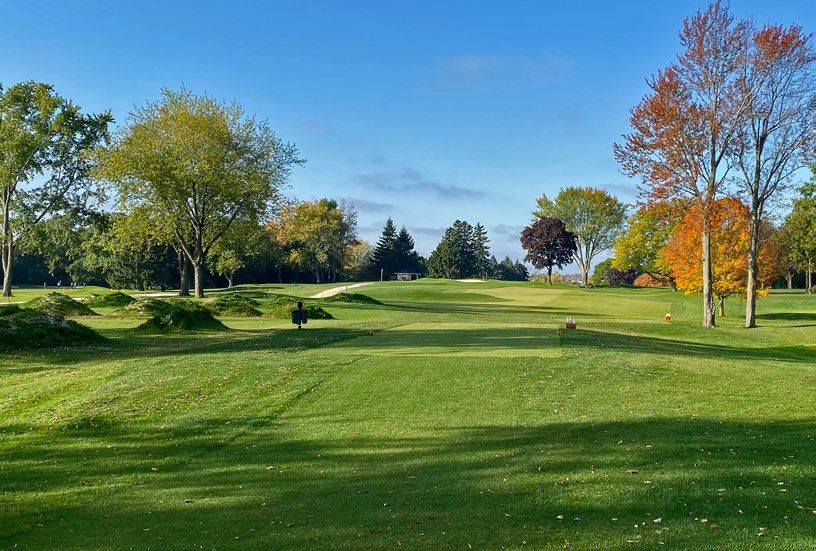
FOREWORD

Striving for excellence                                                                 CONTENTS

W
           elcome to this special edition of By Design, devoted to the eighth           Meet the designers 5
           annual Design Excellence Recognition Program from the American               Introducing the golf course
           Society of Golf Course Architects.                                           architects responsible for the
 Each year we work with a panel of golf industry leaders, including                     projects highlighted by the latest
representatives of the Club Managers Association of America, Golf Course                ASGCA Design Excellence
Builders Association of America and Golf Course Superintendents Association             Recognition Program.
of America, to select projects that represent design excellence and highlight the
innovation and problem-solving skills required to create successful golf facilities.    Bay Hill Club & Lodge 6
 This year, six facilities have been honored by the program, each of which are          A new practice facility for this
profiled on the following pages. We have an eclectic mix of projects from new           famous PGA Tour venue.
18-hole layouts to practice facilities and a putting course.
 Whether it’s creating a new design that will be playable and challenging for           Diamante Cabo San Lucas 8
PGA Tour players and everyday golfers alike, or designing a short game area             New ‘Dunes’ putting course for the
so that golfers can practice safely, the quality of work demonstrated by ASGCA          highly-regarded Mexican resort.
members at golf clubs across the world is second to none. One of the main
goals of the Design Excellence Recognition Program is to share examples of best         Maple Lane Golf Club 10
practice, so that owners and operators of all golf facilities can learn from others     Comprehensive redesign helps
before making plans to improve their own courses.                                       club deal with water issues.
 I hope you are able to find some inspiration from the stories on the following
pages, and that you enjoy this special edition of By Design.                            McLemore Club 12
                                                                                        Two ASGCA members collaborate
                                                                                        to create new Highlands course.

                                                                                        TPC Colorado 14
                                                                                        New course is playable for pros
                                                                                        and everyday golfers alike.

                                                                                        University Club
                         Jan Bel Jan, ASGCA                                             of Milwaukee 16
                         President                                                      State-of-the-art practice facility
                                                                                        includes four-hole short course.
                         American Society of Golf Course Architects

                                                                                        COVER

                                                                                          Issue 47 | February 2020

Editor and Publisher: Toby Ingleton
Editorial contributors: Richard Humphreys
                                                                                          BY DESIGN
                                                                                          Excellence in Golf Design from the American Society of Golf Course Architects

Design: Bruce Graham, Libby Sidebotham
ASGCA Staff: Chad Ritterbusch; Mike Shefky; Aileen Smith; Marc Whitney
Photography: Arnold Palmer Design Company; Diamante Cabo San Lucas—Gerardo Arias;
Raymond Hearn, ASGCA; Russell Kirk; University Club of Milwaukee; Dave Sansom;
Art Schaupeter, ASGCA; Devin Sena; Spence Golf Design; TPC Colorado

Subscribe to By Design at www.tudor-rose.co.uk/bydesign
                                                                                           Top-tier
© 2020 American Society of Golf Course Architects. All rights reserved. www.asgca.org         designs
                                                                                           Special edition for the eighth annual ASGCA Design Excellence Recognition Program

By Design is sponsored by:
                                                                                        McLemore Club in Georgia, designed
                                                                                        by ASGCA Past President Rees
                                                                                        Jones and Bill Bergin, ASGCA.
                                                                                        Photographed by Dave Sansom.

                                                                                                                                                                               3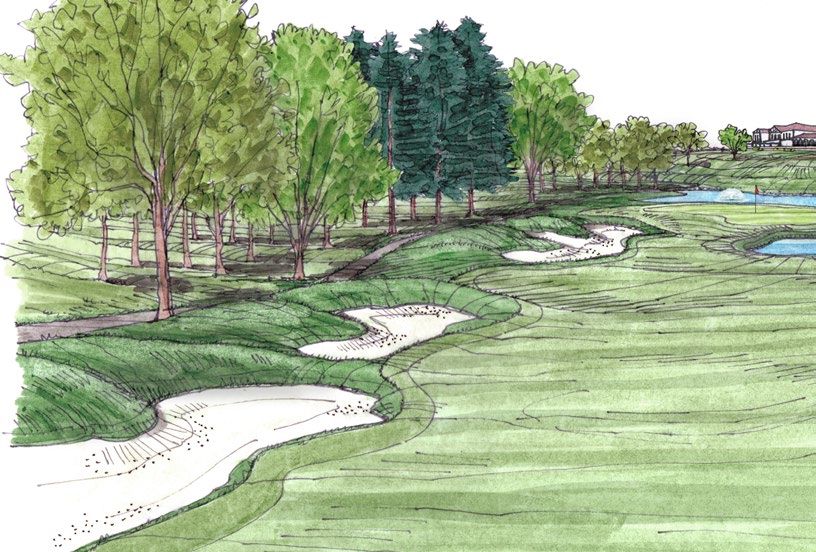
@RainBirdGolf

                            CONNECT to
                                            Upcoming technologies

                                            Simplified upgrades

                                            A partner dedicated solely to irrigation

                                                  the FUTURE

     “There are always upgrades coming out and nobody wants to feel left behind.
      If I can do just a quick upgrade and keep using what I already have, that
      feels great, and Rain Bird allows us to do that.”
      Stephen Rabideau, CGCS | Director of Golf Courses, Winged Foot Golf Club

      Discover the benefits of a Rain Bird system at rainbird.com/TheFuture.

Caption
INTRODUCTION

Meet the designers
Eight ASGCA members have led projects at the clubs
highlighted by this year’s Design Excellence Recognition Program.

                                      Brandon Johnson, ASGCA, and
                                      Thad Layton, ASGCA, are the
                                      principal golf course architects at
                                      Arnold Palmer Design Company.

                                      Read about their new short game area
                                      for Bay Hill Club & Lodge on page 6.

                                      Bill Bergin, ASGCA, competed in
                                      more than 50 PGA Tour events before
                                      becoming a golf course architect.      Paul Cowley, ASGCA, is president
                                      ASGCA Past President Rees Jones has    of Linksland Inc., a land planning,
                                      designed or redesigned over 200 golf   architectural and golf course design
                                      courses during his career.             company.

                                      Read about their collaboration on      Read about his design for the
                                      the new Highlands course at            new Dunes putting course at
                                      McLemore Club on page 12.              Diamante Cabo San Lucas on page 8.

 Art Schaupeter, ASGCA, has over      Raymond Hearn, ASGCA, has been         Andy Staples, ASGCA, helped to
 25 years experience in golf course   running his own golf course design     form Staples Golf Design in 2002.
 architecture.                        company for over 20 years.
                                                                             Read about his new state-of-the-art
 Read about his design of the new     Read about his redesign of             practice facilities for the University
 TPC Colorado course on page 14.      Maple Lane Golf Club on page 10.       Club of Milwaukee on page 16.

                                                                                                                      5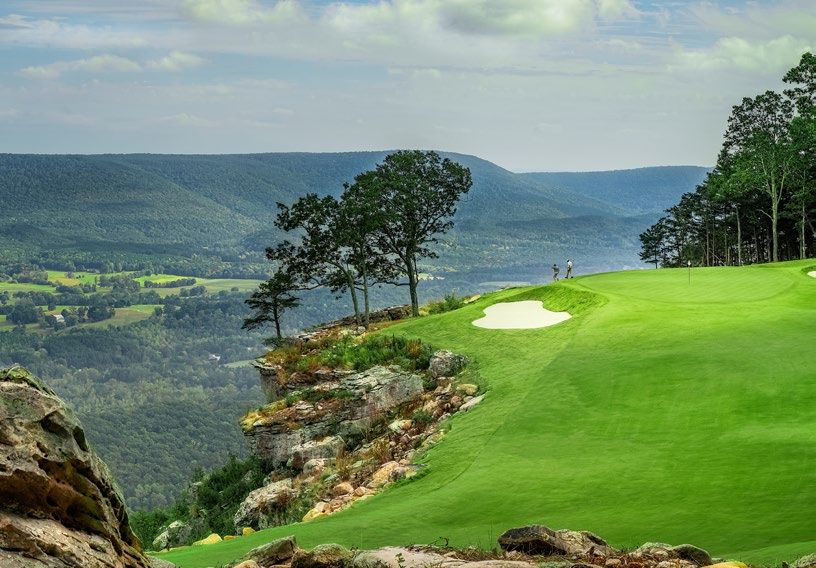
ASGCA DESIGN EXCELLENCE
           BAY HILL CLUB & LODGE

Practice made perfect
A new practice area at Arnold Palmer’s famous PGA Tour venue in Florida
is designed to enable golfers to hone a wide variety of short-game skills.

T
       he short game area at Bay Hill     “To make room for the new amenity,         Each of the four greens, the largest of
       Club & Lodge near Orlando,       we truncated Bay Hill’s twenty-            which is 12,000 square feet, differ in
       Florida, was previously quite    seventh hole [the ninth on its Charger     style and size. They are complemented
small for a club that hosts an annual   nine] from 467 to 308 yards, building      by bunkers that also have different
PGA Tour event, providing golfers       a completely new, drivable par four        characteristics, as described by Layton:
with limited opportunities to safely    that is the first of its kind on the       “A ‘splash’ bunker for practicing
practice anything more than chips       property,” says Layton. “This shift        downhill shots, a bunker with variable
and bunker shots.                       freed up two acres of prime ground         depths of three-to-six feet, a revetted
 With no land available adjacent to     adjacent to the clubhouse that was         ‘Road hole’ style bunker, a steep-faced
the practice area, opportunities for    reshaped into a robust short game          and flat-bottomed bunker built in
                                                                                                                               Image: Arnold Palmer Design Company

expansion were non-existent without     practice area featuring four greens,       the Raynor/Banks style, a large but
reconfiguring another component of      seven bunkers, swales, and equal           relatively-shallow teaching bunker,
the Bay Hill property.                  parts rough and fairway.”                  a small pot bunker, and a fairway
 Arnold Palmer Design Company’s           The area they designed allows            bunker to practice longer shots.”
Thad Layton, ASGCA, and Brandon         golfers to replicate every shot they         Bay Hill is also using its new short
Johnson, ASGCA, oversaw a project       could expect to hit inside 100 yards       game area to test different grass types
that would give the club a short game   on the Bay Hill course, with enough        and bunker liners for future use on its
area that matched its reputation.       space for 20 golfers to practice safely.   championship course.

6 | By Design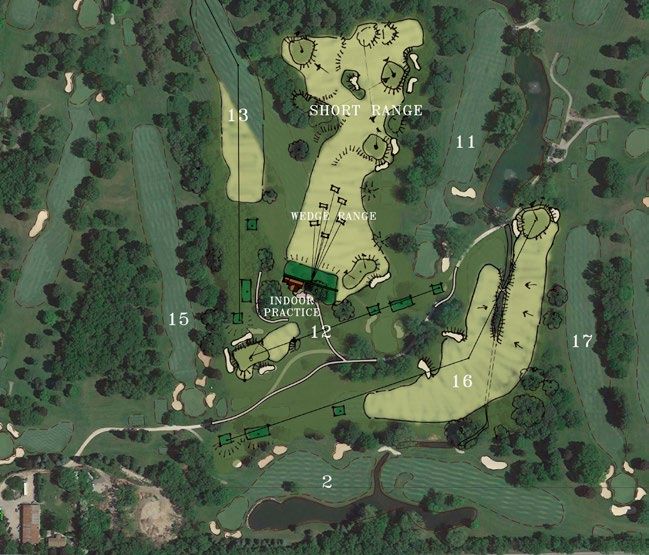
The new short game area at Bay Hill Club & Lodge
includes four greens and several bunkers of varying styles and sizes

 Photos: Arnold Palmer Design Company

                                                   BAY HILL CLUB & LODGE
                                                   Location:
                                                   Orlando, Florida
                                                   Golf course architect:
                                                   Thad Layton, ASGCA, and
                                                   Brandon Johnson, ASGCA
                                                   www.arnoldpalmerdesign.com
                                                   Project summary: The previous short game
                                                   practice area was limited in size. The
                                                   ownership and members wanted a short
                                                   game area to practice a larger variety of
                                                   shots up to 130 yards. Arnold Palmer Design
                                                   Company achieved this by shortening the
                                                   ninth on the Charger nine, which opened up
                                                   two acres for the development of a complete
                                                   short game complex.
                                                   Partners: Double Eagle Golf Works (golf
                                                   course builder); Leibold Irrigation; Rain
                                                   Bird (irrigation); Tony Altum (irrigation
                                                   consultant); Capillary Concrete (bunker
                                                   liner); Polylast (bunker liner); ZLine Bunker
                                                   Systems (bunker liner); Perma-Edge (edging)

                                                                                                   7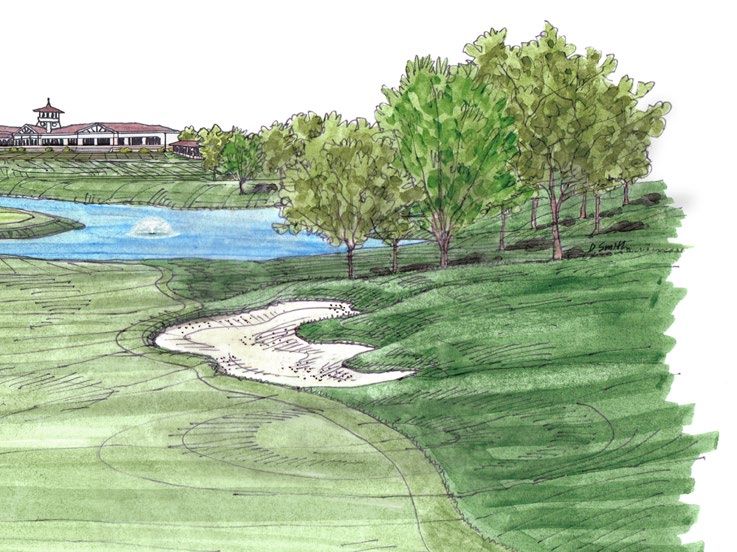
ASGCA DESIGN EXCELLENCE
           DIAMANTE CABO SAN LUCAS

Putting in style
A new 15-hole reversible putting course provides guests at a Mexican resort
with a fun golf facility that caters for families and friends.

T
       he operators of Mexican resort       The 15-hole putting course totals      next, with the numbered flags reversed
       Diamante Cabo San Lucas            507 yards, and is made up of three       on alternate days. Players tee off one
       turned to Paul Cowley, ASGCA,      par-two holes and 12 par threes, for a   flag length away from either side of
to create a putting course that would     total par of 42. Holes vary in length    the previous cup, and perpendicular to
join its other golf offerings: the 18-    from 14-to-64 yards.                     the centerline of play. Play starts and
hole Dunes and El Cardonal courses          “The course is laid out in a           finishes at the fifteenth flag.
and Oasis short layout.                   continuous loop of grass cut at green      The 15-hole layouts are named
 The new putting course is located        height, and the surrounding turf is      East and West, corresponding to the
next to the clubhouse and the first tee   cut at a fairway height,” says Cowley.   direction that the first hole is played
of the Dunes course—which Cowley          “There’s 25 feet of elevation change     into. A scorecard details both courses
co-designed with professional golfer      on the course, and the turf is Seaside   and a handicap rating for each hole,
Davis Love III and his brother Mark       Paspalum.. Each of the 15 pinnable       which allows players of different skill
Love. “It occupies three acres of turf    areas are big enough for three-to-five   levels to compete.
and is built on what was the second       pin locations. The greens are cut to a     “Opened in 2019, the new putting
half of the original eighteenth hole,”    stimp speed of between nine and 10.”     course has been very successful,” says
says Cowley. “It enjoys some of the         Designed to play in both directions,   Cowley. “It appeals to players wanting
best views and vistas of the golf         the course has a total of 30 different   to play more after a round, beginners
complex and also serves as an event       hole configurations—a downhill hole      of all ages, husbands with wives and
and activity lawn area.”                  one day becomes an uphill hole the       entire families. From the amount of

8 | By Design
Photos: Diamante Cabo San Lucas – Gerardo Arias
                                                             The new 15-hole putting course at
                                                 Diamante Cabo San Lucas in Mexico plays in
                                                   alternate directions from one day to another

beverage cups picked in the mornings,
it might bode well to have it lit at night!
It is a challenging course to shoot par
on, even for the better players.”

  DIAMANTE CABO SAN LUCAS
  Location:
  Cabo San Lucas, Mexico
  Golf course architect:
  Paul Cowley, ASGCA
  www.paulcowleygolf.com
  Project summary: A new reversible putting
  course that doubles as an event lawn has
  been created for the Diamante Cabo San
  Lucas resort in Mexico.
  Partners: Diamante Special Projects (shaping
  and greens construction); Toro (irrigation);
  Pikes Creek Nursery (turfing)

                                                                                             9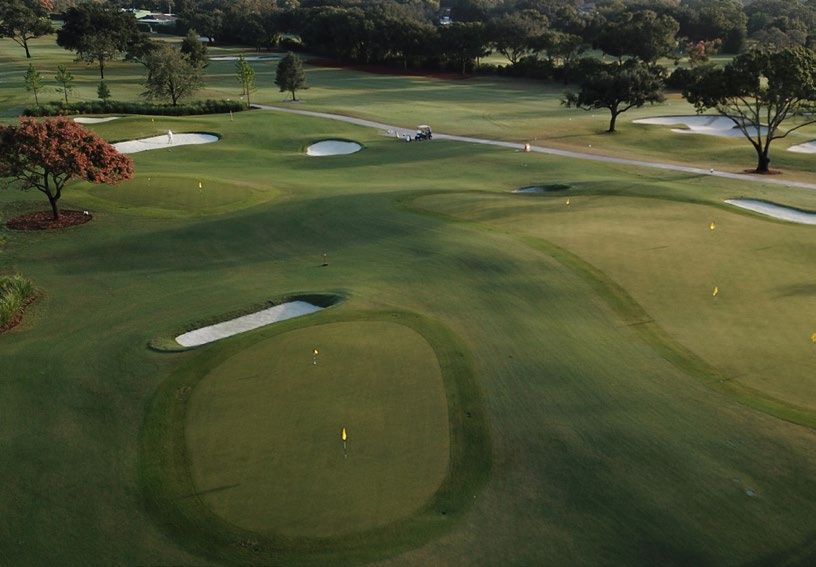
ASGCA DESIGN EXCELLENCE
          MAPLE LANE GOLF CLUB

A sustainable design
A complete redesign of a 54-hole Michigan facility helps improve water management,
while also freeing up land for real estate and additional amenities.

M
         aple Lane Golf Club in          also wanted new golf and non-golf           use less water through an advanced
         Sterling Heights, Michigan,     amenities that would appeal to people       system that will apply the exact and
         regularly suffered from         of all ages, skill levels and cultures.     minimal amount of water to specific
flooding after large rain events. It       By reducing the number of holes           turfgrass areas. My environmentally-
was susceptible to drought too,          from 54 to 27, Hearn was able to meet       sensitive design will require less water,
during which the course would run        all these requirements, and create a        fertilizer and pesticide use.”
short of irrigation water.               new 18-hole golf course with a six-           Hearn included a new nine-hole par-
  The existing layout’s failure to       tee system, making it appealing and         three course within the master plan.
capture rainwater led the club to hire   playable for golfers of all skill levels.   Some holes lie within the floodplain
Raymond Hearn, ASGCA, to deal              Hearn worked with engineers to            and are designed to store water during
with these issues and maximize the       develop a stormwater retention and          flood events. The area can also be lit to
potential of the club through new golf   detention network on the golf course        allow for play during the evenings.
and non-golf amenities.                  that maximizes the capture of rainfall        Areas have been identified for non-
  The owners wanted a unique golf        for irrigation, while also increasing       golf recreation such as bocce ball,
course in the floodplain, and it was     floodplain storage capacity.                pickleball, tennis and swimming,
decided that a new master plan would       “I also recommended disease-              and there are now also residential
be the best way to provide future        resistant and low water-use turfgrasses     opportunities on the property.
economic, environmental and cultural     throughout the golf course,” says             “Our goal is environmental, economic
sustainability for the club. They        Hearn. “The new irrigation system will      and cultural sustainability for this

10 | By Design
A sketch of the dramatic new eighteenth
hole shows a green enveloped by one of
the lakes on the Maple Lane property
entire development,” says Hearn.
“Sterling Heights is a renaissance city
with a wonderful blend of people from
many different cultures who will all
enjoy this very unique development.”
MAPLE LANE GOLF CLUB
Location:
Sterling Heights, Michigan
Golf course architect:
Raymond Hearn, ASGCA
Images: Raymond Hearn, ASGCA
Project summary: The redesigned course
has more floodplain storage capacity and
stormwater capture for irrigation and a lower
overall maintenance requirement.
Partners: Giffels Webster (engineers and land
planners); Toro (irrigation)
11ASGCA DESIGN EXCELLENCE
MCLEMORE CLUB
High drama
Architects collaborate to transform course on Lookout Mountain in Georgia,
with a dramatic new eighteenth hole perched on the edge of a cliff.
T
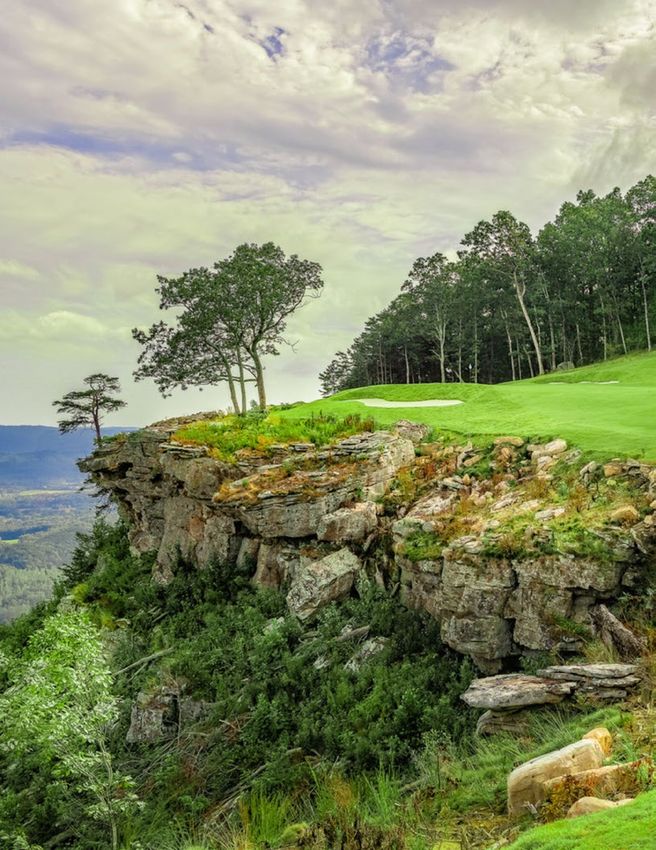
he creation of the new shift the eighteenth hole east 400 feet finishing holes in golf,” says Jones.
Highlands course at McLemore and drop it down over 100 feet to the “The hole may become one of the
Club in Rising Fawn, Georgia, edge of practically a sheer drop above most photographed in the Southeast.”
is the result of a collaboration McLemore Cove,” says Bergin. “The The area previously assigned to the
between Bill Bergin, ASGCA, and site was strewn with massive boulders clubhouse lacked space and missed
ASGCA Past President Rees Jones. and two large ravines, but there was out on the incredible views available
Their brief was to transform the enough width for the fairway and throughout this property. After
former Canyon Ridge golf course, built green site.” discussions that included both the
on dramatic topography along the Seven acres were cleared and burned design teams and developer Scenic
eastern brow of Lookout Mountain, as the site proved too difficult to Land Company, the clubhouse was
to take advantage of all aspects of the access to haul timber away. Minimal moved to the edge of the old eighteenth
property, making it more exciting but blasting was necessary to create a hole. “Its elevation, along with selective
also more playable for members and workable set of tees and all excavated tree removal, has created quite the spot
resort guests. rock was utilized to build up and to look over the new eighteenth and
“After walking the hiking trails level one side of the fairway. “The McLemore Cove,” says Bergin.
along a rock-faced cliff and obtaining owner gave us the opportunity to use A six-hole short course, the Cairn,
topographic information by hand, a spectacular part of the property was added, adjacent to the clubhouse
we determined that it was possible to to create one of the most dramatic on the old eighteenth fairway.
12 | By DesignThe dramatic new closing hole (left) at McLemore Club, designed by
Bill Bergin, ASGCA, and ASGCA Past President Rees Jones
Photos: Dave Sansom
MCLEMORE CLUB
Location:
Rising Fawn, Georgia
Golf course architect:
Bill Bergin, ASGCA, and
ASGCA Past President Rees Jones
www.bergingolf.com
www.reesjonesinc.com
Project summary: Bill Bergin, ASGCA and,
ASGCA Past President Rees Jones, have
completely transformed the former Canyon
Ridge club, located on a dramatic plateau of
Lookout Mountain, creating a destination that
aims to attract both resort guests and second-
home owners.
Partners: Southeastern Golf (construction); Toro
(irrigation); Better Billy Bunker (bunker liner)
13ASGCA DESIGN EXCELLENCE
TPC COLORADO
Designed for all
With wide fairways and tees ranging from just over 4,000 to nearly 8,000 yards,
TPC Colorado is playable for the everyday golfer as well as PGA Tour professionals.
A
rt Schaupeter, ASGCA, was sets of tees—playable from 4,157-7,991 understand how best to approach
hired by developer Heron yards. Greens vary in size, from 5,000- them depending upon the hole
Lakes Investments to create a 11,500 square feet, and have been location at the time. Much like the
new 18-hole golf course that would designed so that there are plenty of golf holes themselves, they are very
work as the centerpiece of an 800- pin positions available. Width was also individual in character.”
acre master-planned community. The important for his design. There are 55 Schaupeter also incorporated a
owners also reached an agreement acres of fairway which are upwards of variety of bunker styles, including
with the TPC Network for the course 60-70 yards wide on many holes. “It sod-walled hazards, for more strategic
to join the chain operated by the enhances playability by minimizing variety and interest.
PGA Tour and to host a top-tier the potential for lost balls and helps to “‘Put the golf in the golfer’s hands’
professional golf tournament. speed up play,” says Schaupeter. means creating a golfing experience in
Hosting a PGA Tour event added “The wide fairways create a larger which the golfers discover the course
multiple new considerations for the range of potential angles of approach for themselves, making active decisions
design of the course, including how to the green, which, when combined on how they want to play each hole,”
best to accommodate spectators, with the diversity of shapes, sizes and says Schaupeter. “This will provide
hospitality tents, parking and other contouring of the green surfaces, will a fun, engaging and adventurous
items of event infrastructure. add to the daily variety and interest experience for the golfer, putting them
But keeping everday golfers at the in play,” he adds. “The green surfaces in a positive mindset throughout the
forefront of his thoughts, Schaupeter have subtle breaks and plateaus round as they dictate and discover the
designed TPC Colorado with seven that enhance the need to learn and golf on their terms.”
14 | By DesignTPC Colorado is the first new course to
open in the state for over ten years
Photo: Devin Sena
Photo: Russell Kirk
TPC COLORADO
Location:
Berthoud, Colorado
Golf course architect:
Art Schaupeter, ASGCA
www.schaupetergolf.com
Project summary: Art Schaupeter, ASGCA,
was given the task of creating a golf course
that is a fun, engaging golfing experience
for recreational players during 51 weeks
of the year, but also a challenging and
entertaining PGA Tour-caliber tournament
venue for the other week.
Photo: Devin Sena
Partners: Oliphant Golf (contractor); Toro
(irrigation); Brian Keighan (irrigation
design); Jackson Seed Varieties (grass);
Profile Products (hyrdomulch)
15ASGCA DESIGN EXCELLENCE
UNIVERSITY CLUB OF MILWAUKEE
A change in approach
A new state-of-the-art practice facility and tie-in with Marquette University helps
Milwaukee-area club stand out from its competitors.
F
ormerly known as Tripoli clubs in the area near all-time highs, a the grand vision for the new practice
Country Club, and home to a change in approach was needed. facility came to life,” says Staples.
course originally designed by The member-owned club expanded “Fortunately for the U Club, the
Tom Bendelow, the University Club its network to partner with Marquette largely-intact original design of the
of Milwaukee in Wisconsin was in University’s men’s golf team, and course offered a compelling experience
need of improved practice facilities. engaged Andy Staples, ASGCA, to and historic story to help distinguish
The course—which still contains create a golf facility master plan, which it in the area. So, with a state-of-the-art
many of the classic Bendelow features, revolved around increasing the much- practice facility, the club would truly
such as 16 original greens—once needed practice offerings. stand out amongst its competitors.”
hosted the Miller Open and the The result was the development of Within the practice area Staples
Greater Milwaukee Open. a parcel of unused land and some created a short, four-hole course with
Nevertheless, the club’s only other redesign work on three holes to make a design to match the Tom Bendelow
offering was a short and narrow space available for the creation of a features of the course. The area also
practice range that amounted to new, state-of-the-art practice facility. includes a new putting green and a
little more than a warm-up area. This “By capitalizing on a 10-acre parcel of competition wedge range where golfers
put the club at a disadvantage with undeveloped forest terrain in the center can practice a range of shots up to 120
regards to membership recruitment of the property, modifying the tees on yards in length, from sand and grass
and ultimately, revenue generation. the thirteenth and sixteenth, as well as bunkers and from various lies on both
With competition among other private completely rebuilding the twelfth hole, fairway and rough grass.
16 | By DesignA new par-three twelfth hole (left) was designed to make room for
much-improved practice facilities at University Club of Milwaukee
Image: Staples Golf Design
Photos: University Club of Milwaukee
UNIVERSITY CLUB OF MILWAUKEE
Location:
Milwaukee, Wisconsin
Golf course architect:
Andy Staples, ASGCA
www.staplesgolfdesign.com
Project summary: The University Club of
Milwaukee was lacking adequate practice
facilities, so the member-owned club decided
to partner with Marquette University’s men’s
golf team and Andy Staples, ASGCA, to
create a state-of-the-art practice facility to
increase competitive appeal, revenue and
membership value.
Partners: Marquette University; Golf
Creations (construction); Eric Christensen
Design (irrigation consultant); Brian
Mavis (agronomy); Reindeers, Inc. (seed,
amendments and materials)
17Get to the Root of Your Course Renovation. In the Ground Profile Porous Ceramics (PPC) is the #1 inorganic amendment chosen for greens renovations and has been used on more than 1,000 courses, including many of the U.S. Top 100. On the Ground Profile offers FREE testing of soil, sands and trial mixes, and its agronomists are available to provide mix design recommendations and consultation. By Your Side Only Profile provides complete on-site project support through the entire renovation process. “I’ve grown in greens on both straight sand and peat moss. What you get visually with PPC is terrific, not just in year one, but even after year two and three. I wouldn’t go down without a fight trying to convince someone building a new golf course to really look into using Profile.” - Eric Bauer, Director of Agronomy, Bluejack National Contact us for your FREE on-site consultation and soil test. ProfileGolf.com Call (800) 207-6457 and ask to speak to a Profile Golf Business Manager.
SPONSORS

          Issue 47 | February 2020

         BY DESIGN
         Excellence in Golf Design from the
                                            American Society of Golf Course Architects

                                                                                           By Design would not be possible without the support
                                                                                           of its sponsors, who have played a key role in the
        Top-tier                                                                           publication of this magazine.
           designs
       Special edition for the eighth annual
                                             ASGCA Design Excellence Recognition
                                                                                 Program

Profile Products manufactures a comprehensive line of soil modification, erosion control and turf establishment products. Its experienced
team takes a consultative approach with golf course architects, builders and superintendents to design and specify customized solutions
for maintenance and construction.

Profile’s team designs root zone mixes utilizing Profile Porous Ceramics to meet USGA guidelines. Its ceramics permanently modify the
root zone to better conserve water and retain nutrients.

Profile’s complete line of hydro-seeding products is the leading specified brand by golf course architects. Profile works with architects and
project managers, establishing effective erosion control and vegetative establishment practices.

www.profileproducts.com

Since 1933, Rain Bird has built a reputation on delivering irrigation systems that combine performance with efficiency. Rain Bird leverages
state-of-the-art technologies to innovate and develop products that apply water in the most effective and efficient manner possible.

From highly-efficient sprinkler nozzles to cutting-edge control systems and pump stations, Rain Bird is widely recognized as the leader in golf course
irrigation control system technology. We take the challenge of using water responsibly very seriously. That’s why our over-arching philosophy, The
Intelligent Use of Water™, guides everything we do. The revolutionary Integrated Control System™ provides innovation at a lower overall cost to
golf courses enabling the user to maximize system efficiency and conserve water with a smaller environmental footprint.

For more information, please contact 1-800-RAINBIRD or visit:

www.rainbird.com

The Toro Company is proud of its legacy of quality and innovation. Customers around the world rely on Toro for high performing
products that include precision fairway and rough mowers, greens mowers, compact utility loaders, commercial zero-turn mowers, bunker
management machines, and water-efficient irrigation systems.

In 1921, Toro developed the first fairway mower and six years later shipped the company’s first golf maintenance products overseas.
Today Toro continues to lead the global market with best-in-class turf maintenance equipment and precision irrigation solutions.
Approximately two-thirds of the top 100 courses in the world use Toro irrigation systems. The company also leads the way in environmental
innovations, making products safer, cleaner and quieter whenever possible.

www.toro.com
ASGCA LEADERSHIP PARTNERS Supporting Education in the Golf Course Industry ASGCA thanks the following companies for their continued support of golf course development and renovation–helping ASGCA members do their jobs better, for the good of the game. MAJOR LEVEL PARTNERS MERIT LEVEL PARTNERS SPONSORS
You can also read


