Spotlight on Student Housing - Savills Research
←
→
Page content transcription
If your browser does not render page correctly, please read the page content below

Savills Research | Residential   Autumn 2011

Spotlight on
Student Housing

Savills
Research
savills.co.uk/research
Savills Research | Student Housing

This publication
This document was published in August 2011. The data used
in the charts and tables is the latest available at the time of
going to press. Sources are included for all the charts.

02
Autumn 2011

Spotlight on
student housing
Survival of the fittest: Buy, sell or hold?

 SUMMARY
 An overview of the market
 ■ An important combination of         ■ The ability of universities to attract   the residential market, especially in
 changes to the English higher         alternative sources of funding differs     London, where the development of
 education, combined with market       greatly but will substantially affect      high quality student schemes has
 forces, has created a market where    student numbers in a particular town.      continued to expand.
 there are distinct winners and        We have analysed this for English
 losers in both the development        universities and concluded how supply      ■ Universities are likely to seek private
 and investment arenas. So the         and demand is likely to change in          sector partnerships and outside
 prospects for student housing         given locations.                           investment in new accommodation
 as an asset class are diverging                                                  and management solutions. We
 between first class locations and     ■ Oversupply is a rare phenomenon          anticipate academic estates will seek
 third class ones.                     in student housing as the dramatic         agreements with leading student
                                       20% increase in student numbers over       housing operators.
 ■ Universities are now faced with     the last 10 years has left most higher
 massive funding challenges and we     education establishments short of          ■ The risks to the higher education
 expect to see a high degree of M&A    accommodation.                             sector have increased greatly over
 activity within the sector over the                                              the past year. The potential change to
 next few years with some English      ■ Student accommodation continues          immigration policy is the single biggest
 universities at risk of bankruptcy    to deliver strong returns compared         risk to the university sector because
 and closure.                          to other mainstream asset classes.         international students have become a
                                       Despite current economic and property      vitally important source of funding.
 ■ The combination of academic         market conditions, the volume of
 prospects and market prospects        recent deals has been high, pointing       ■ We have taken ths critical shift
 at a localised level will determine   to continued investor demand.              in policy and reform in England
 the fortunes of the student                                                      as a priority, and will analyse the
 housing investor. We anticipate       ■ Development funding has been less        opportunities that the impact of the
 performance in the next 10 years      constrained in the student housing         Browne Review will have for Scotland
 to be every bit as good as the last   sector than others, allowing it to         and Wales in a follow-up report once
 in our first class locations.         take advantage of the slowdown in          the new academic year begins.

                                                                                                          www.savills.co.uk/research   03
Savills Research | Student Housing

                focus on higher                            figure 1
                                                           Universities’ response to change A combination of
                education: ENGLAND
                                                           the ability to attract alternative sources of investment,
                Degrees of separation                      full time, international and postgraduate students
                The prospects for student housing as
                an asset class are diverging between                                           First
                first class locations and third class
                ones. An important combination
                of changes to higher education
                combined with market forces has
                created a market where there are
                distinct winners and losers in both the                                        35%
                development and investment arenas.

                It is hugely important for developers,
                investors and funders in the student
                housing sector to understand that          Third                 9%                             27%                  Upper
                there are some towns and cities                                                                                      second
                which now present a high risk and are
                likely to significantly underperform in
                future. Equally, there are still a large
                proportion of locations which now                                              29%
                present significant opportunity and
                are likely to show attractive returns
                in the foreseeable future at relatively
                low risk.

                Savills researchers have analysed                                          Lower second
                each of the factors which impinge
                on the prospects for student housing
                                                           Data source: Savills Research
                performance and have combined
                them in a unique scoring system to
                assess which locations are ‘buys’
                and which are ‘sells’ in the world         “There are potential opportunities in some of
                of student accommodation.
                                                           the locations that arise from the poor quality
                University degrees                         of the university-owned accommodation.”
                There have been innumerable stories
                in the press and media this year about
                the impact of changes to tuition fees      winners in our league who are easily        attract full-time and/or postgraduates
                and the impact of funding cuts in          identified, like Imperial College,          and foreign students, coupled in some
                the wake of the Browne Review of           London for example. Others, like            cases with a decision to charge high
                the Higher Education system. Some          Salford University, are perhaps less        tuition fees. We anticipate that student
                universities will see a negative impact    obviously able to compensate for            numbers, and hence demand for
                and dwindling student numbers while        the adverse impacts of the Browne           accommodation, in these institutions
                others will see positive impacts.          Review but, through other mitigating        will wane significantly in coming
                The ability of individual universities     factors are able to emerge winners in       years. They are locations for investors,
                to respond by attracting alternative       the process. Overall, we found that         developers and funders to avoid.
                sources of funding, foreign students       there were 40 institutions that might
                and postgraduate students differs          be described as first class and likely      A further 35 universities emerge as
                greatly but will make a difference to      to continue growing following the           lower second class, becoming overall
                how student numbers wax and wane           recent changes in higher education.         losers in this first analysis of university
                in a particular town and hence how         Upper second class degrees go to            prospects. In these institutions, it
                demand for student accommodation           31 institutions who are impacted by         is likely to be a struggle to maintain
                is likely to change in a given location.   changes but likely to survive, if not       student numbers and we believe more
                                                           thrive, in the new regime.                  caution is required when investing in
                Our analysis of 114 universities                                                       student housing in these locations.
                across England shows there is a            At the other end of the scale, we have
                very widely different capability and       identified 10 universities that are in      FE response
                potential for institutions to respond      distinct danger from a combination of       Despite the dangers of falling student
                to change. There are some obvious          Browne Review impacts, inability to         numbers, oversupply is a rare

04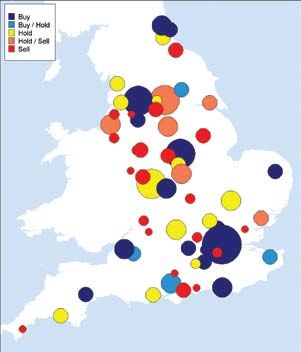
Autumn 2011

phenomenon in the world of student        We have therefore scored towns and         figure 2
housing. The dramatic 20% increase        cities on both their overall demand        Marked context Prospects for investors
in student numbers over the last 10       from higher education institutions         by town or city
years has left most higher education      (there is often more than one in
establishments very short of              a single city) and on the balance
accommodation – even for first year       between demand and supply factors.
undergraduates. Strong competition
from other sectors in the rental market   Our second analysis covers 58 towns
can keep rents high in these locations    and cities in which the 114 higher
and this in itself can act as a further   education establishments of our first
deterrent to growth.                      analysis are located. It takes into
                                          account the extent to which historic
Where universities are competing          growth in student numbers, regardless
to attract students, this                 of future trajectory, has been supplied
consideration will weigh hard with        – or undersupplied.
decisions on tuition fee levels and
the need to attract postgraduate          It also looks at the propensity of
and foreign students. Universities        students to need accommodation,
will therefore be faced with a need       how many stay in the parental home,
to upgrade and expand their student       it examines the number of international
accommodation wherever possible           students and full-time postgraduates
but at the same time face cuts to         as well as full-time undergraduates. We
finance which will severely limit their   have also taken into account the rent
ability to do so.                         levels in alternative accommodation
                                          in the town that might compete with
As a result of these conflicting          purpose built student accommodation.
needs, we anticipate that the time
is ripe for stock transfer to take        There are potential opportunities          Data source: Savills Research, HESA
place from universities to private        in some of the locations that
sector owners. This will have the         arise from the poor quality of the         figure 3
positive double whammy effect of          university-owned accommodation             Investment, funding and
raising revenues at a time of cuts        which is currently provided. This
                                                                                     development potential
while also enabling the upgrading         not only presents a potential
of accommodation and further              market for premium quality space                                                 Buy
investment to take place.                 but also creates the potential for
                                          stock transfers from cash-strapped
Universities are likely to want to        institutions. The quality variable,
retain nomination rights and may          in combination with a loss of
even retain operational management        funding/grant variable, is a powerful                                            27%
responsibilities but the opportunities    combination for identifying where                                                             Buy/hold
for the private sector to purchase        opportunity for stock transfer exists.     Sell
real estate and take on some                                                                               38%                         7%
management will increase. Under           It is the combination of academic
these circumstances, it is important      prospects and market prospects
to understand the market context in       at a localised level that will determine
which these, and other investment         the fortunes of the student housing                                                    21%
transactions, will take place.            investor. We anticipate that there                                     7%
                                          will be some very different outcomes
Market response                           for some schemes against others.
This understanding of the market          It will be vital for anyone putting
context forms the second tranche of       money into the sector going forward                                                               Hold
our research. While there are winners     to correctly identify which is which.             Hold/sell
and losers in the academic world          Our analysis provides the first step in    Data source: Savills Research
that are likely to impact student         doing this.
housing demand, this is not the
whole story for developers, funders       For those who eschew the third class
and investors. Even the best and          locations and establishments and
fastest growing institution will be a     who manage to find development and
poor prospect for student housing         investment opportunities in our ‘buy’
providers if accommodation is fully       towns, we anticipate performance in
supplied and/or rents are too low to      the next 10 years every bit as good as
make further development viable.          that seen over the last decade. ■

                                                                                                                     www.savills.co.uk/research    05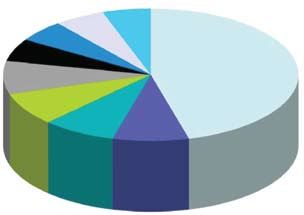
Savills Research | Student Housing

                                                                    figure 4
                    Investment                                      Yields by location and type
                    focus
                                                                                                                 Lease
                                                                                                                                                                   AVERAGE YIELD:
                                                                                                                                                                   ■ 6.50% – 7.50%
                    The student sector continues to                                                        10 – 20 years                                           ■ 6.25% – 6.50%
                                                                                                                                                                   ■ 6.00% – 6.25%
                    deliver strong returns compared to
                                                                                                                                                                   ■ 5.75% – 6.00%
                    other mainstream asset classes.                                                                                              >2
                                                                                      rs                     Tertiary
                                                                                                                                                   0               ■ 5.50% – 5.75%
                    Of the deals that involved direct let                           ea                                                                 y

                                                                                y

                                                                                                                                                       ea
                    schemes in 2010, the average net

                                                                              0

                                                                                                                                                         rs
Autumn 2011
figure 6
High levels of deals completed in 2010 and continuing into 2011 The number of deals completed
last year and during H1 2011 is evidence of the strong appetite for student investment across the UK
1,400 56
1,200 48
1,000 40
Student deals, £ millions
Major transactions
800 32
600 24
400 16
200 8
0 0
2005 2006 2007 2008 2009 2010 H1 2011
Graph source: Savills Research
three deals each in most of the major Star, RPS Capital and Carlyle Group
regional university towns - including as well as a number of contractors “Despite current economic and
Edinburgh, Glasgow, Sheffield, filling the void left by the demise of
Manchester and Nottingham. residential development. property market conditions, the
Recent investor demand has shown There are large sums of private equity
volume of deals in the student
a ‘flight to quality’ and focused on looking for exposure to the student sector has been surprisingly high”
Russell group and the 1994 group market, as well as middle eastern Yolande Barnes, Savills Research
university towns. This is interesting and far eastern investors seeking to
in the light of our analysis which access the market at all levels but
highlights some of the top Russell focusing on secure income streams. figure 7
group locations to be ‘holds’ rather Location of transactional
than ‘buys’. The smaller end of the market has
activity 2010/11
been very active, involving high net
■ London ■ Edinburgh ■ Manchester ■ Newcastle
Institutional investor appetite has worth’s and Prop Co’s looking to
■ Nottingham ■ Glasgow ■ Liverpool ■ Oxford ■ Sheffield
grown with preferences for long- enter the market and create boutique
dated, secure income streams. Some schemes that are situated close to
investors will look at short term lease university campuses with between
wrappers (say three years) and take 50 and 150 beds.
direct let risk thereafter – but location /
university specific risks become more Going forward, we are likely to see
important in this instance. UK universities increase their reliance
on private sector investment to provide
The major players active in the new accommodation and management
market over the last 18 months solutions. This may well lead to
included Urbanest, Mansion Group, academic estates being wrapped
McLaren Property and Unite Group up within agreements and to the
but there has also been an influx of emergence of education REITs. ■
new players.
These have included private equity
companies Oaktree Capital, Real Graph source: Savills Research
www.savills.co.uk/research 07Savills Research | Student Housing
development
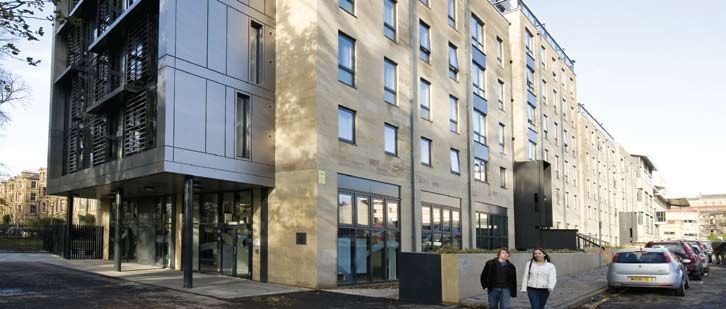
Image supplied courtesy of UNITE
focus: london
Since the financial crisis, funding
has been less constrained in
the student housing sector than
elsewhere. This has allowed it to
take advantage of the slowdown in
the residential market, especially in
London, where the development of
high quality student schemes has
continued to expand.
London’s student housing
development landscape is dominated
by higher risk, high density schemes
that require high levels of forward
investment. Seventy-five percent of
all student accommodation schemes
currently in the planning pipeline have
more than 110 bedspaces each, and
45% have over 250 bedspaces.
The sector dynamics have proven
to be resilient over the past three to
four years, outperforming many of the
other mainstream investment sectors.
One reason for the divergence of “London’s student housing development
student housing and the development
of residential and other property is
landscape is dominated by higher risk,
the counter-cyclical nature of student high density schemes that require vast
housing. During recessionary periods,
the student population has expanded
sums of investment.” Paul Savitz, Savills Research
more rapidly and so rents rise. In the
past year, the number of students be some additional refurbishment academic year. Our data suggests
accepted onto UK University courses units also ready for completion that there will be at least 5,000 beds
increased from circa 65,000 in 2008- that are not included in these delivered in 2012 which are currently
09 to over 92,000 in 2009-10, an figures). Griffon Studios situated in under construction.
increase of 40%. Wandsworth, a joint venture between
Berkeley First and Imperial College, We expect these schemes will be
Pipeline expands is the largest scheme under completed in the spring rather than
We estimate there are currently 21,500 construction with 452 beds. Other summer of 2012 so that they can
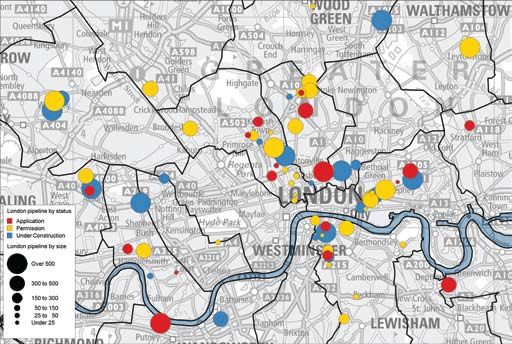
student beds in the London planning major schemes due for completion take advantage of the one-off wave
pipeline spread across 77 schemes in this autumn include: of demand for accommodation that
19 boroughs. These are split between there will be around the Olympic
4,600 planning applications (22%), ■ Victoria Hall/ Westbrook 435 Games. There will be considerable
8,900 permissions (41%) and 8,000 bed scheme, Wembley income for student operators if they
under construction (37%). ■ Blackstone / Nido 272 bed can deliver these schemes to meet
scheme, Notting Hill this demand, especially from the
Development starts were rare during ■ Quintain/ iQ Hoxton 257 bed media sector.
2008 and 2009. This has given rise to scheme, Hackney
a low level of completions in 2010 and ■ Quintain/ iQ 232 bed scheme Overall, the provision of student
2011. We estimate that completion Walworth Road, Southwark housing in London remains
levels were close to 3,000 bedspaces constrained in relation to the strong
during 2010 and will drop to circa Construction shortfall growth in student numbers over
2,300 in the whole of 2011. During 2010, the marginally improved the past 10 years and the projected
economic outlook, led to a bounce growth in the capital over the next
In total, there are nine schemes due in student housing development decade. The number of additional
for completion before the 2011-12 starts across London which means students in London has been steadily
academic year spread across eight a greater number of beds will rising with stronger growth in the last
different London boroughs (there may be delivered in time for the 2012 three to four years.
08Autumn 2011
In total, there are circa 285,000 full figure 8
time students studying in the capital. London planning pipeline Autumn 2011 Supply of student housing in
In 2009-10, there were an additional London continues to expand
17,000 students and 13,500 in the
previous academic year. This is
phenomenally strong growth which
is creating a cumulative shortfall in
housing provision as the delivery of
new bedspaces to the market has
slowed during the recession.
Based on the average annual number
of extra full-time students over the
last five years, we estimate there will
be an additional cumulative shortfall
in student bedspaces (above the
current shortage) of 33,350 by 2016.
A major risk to the future development
of new student housing schemes
in London is the introduction of
affordable housing requirements on
student sites. The London Borough
of Southwark (LBS) have introduced a
policy (SP8) requiring the provision of
affordable housing (subject to viability)
on student schemes. Note: 3 proposed London developments not shown totalling 210 beds (2 in Kingston upon Thames, 1 in Redbridge)
Data source: Savills Research
Although the policy broadly
conforms with the London Plan (due figure 9
to Southwark’s particular housing Construction shortfall will create opportunities across London
need) it does not reflect the Mayor’s
■ Cumulative shortfall in beds
approach of not seeking affordable ■ Annual shortfall (additional students versus new beds)
housing where student schemes are ■ Optimistic student bed completion forecast
35,000
linked to Higher Education Institutions
(HEI’s). While the policy was approved
30,000
in principle, the mechanisms for
operating the policy, particularly the 25,000
assessment of viability, have still to be
worked through. 20,000
Student housing viability 15,000
The viability of student housing
10,000
and general housing is quite
different, particularly with respect to 5,000
the exit points (where value/profit is
realised). It will also vary significantly 0
between proposals led by Higher 2009 2010 2011 2012 2013 2014 2015 2016
Graph source: Savills Research
Education Institutions (HEI’s) and
private developers. Resolving these
technical issues is complex and likely It remains to be seen whether or may have to be provided.
to be a lengthy part of the planning not Southwark’s new policy will In our view, affordable housing
process where viability is an issue. produce any additional affordable would make many proposed
housing or if the viability issues will schemes unviable and slow the
Recently, the policy had its first real make it unworkable. market substantially.
test with the planning application from
the Quill scheme adjacent to London There is also the issue of whether On the flip side, a further stall in
Bridge. The council decided not to affordable and student housing are the development pipeline will insulate
require any affordable housing despite practical and compatible within the values in London and attract a
the scheme being (potentially) liable same development. In practice, premium on both sites and built
to some £18 million under the new where development viability permits, stock alike. ■
policy approach. concessionary ‘off site contributions’
www.savills.co.uk/research 09Savills Research | Student Housing
figure 10
underlying Student population continues to grow
future risks ■ England (excluding London) ■ Scotland ■ Wales ■ London
100,000
The Browne Review 90,000
The Browne Review has been a key
80,000
event in higher education with far-
reaching implications for the sector. 70,000
In response to it, the government
60,000
is removing all public support for
Additional students
courses in arts, humanities and 50,000
social sciences and 80% of teaching
40,000
budgets. The clear outcome is that
universities will have to cover the 30,000
cost of classroom based subjects
20,000
with tuition fee income while funding
will be maintained for ‘priority’ 10,000
subjects (science and maths). To
0
survive, universities will need to
streamline their business operations, -10,000
maximise their resources (including 00/01 01/02 02/03 03/04 04/05 05/06 06/07 07/08 08/09 09/10
their property assets) and grow their Graph source: HESA
expertise in subjects that continue to
attract students. from domestic admissions, noticeably figure 11
encompassing the ability to pay higher Full-time student numbers, by region
One of the key principles from which rents. A change to UK immigration 300,000
the Browne committee undertook policy could be a far greater ■ 1995/96 ■ 1999/00 ■ 2004/05 ■ 2009/10
its review, was to increase student potential risk to many UK universities 250,000
numbers by 10% over the next three and, by extension, to the student
years. It is anticipated that removing accommodation sector, than the 200,000
Student numbers
the cap on student numbers and change to tuition fees has been.
funding students directly through the 150,000
student support system, will permit The Government’s proposal to
this expansion. The presumption restrict the number of non-EU Tier 4 100,000
made is that popular universities student visas and employment visas
with good teaching in priority subject for skilled graduates and migrants 50,000
groups will continue to grow. could have severe consequences,
potentially damaging the UK’s global 0
Immigration reforms competitiveness and stemming the nd
on East tland est Y&H nds nds
Lo outh Sco orth
W
Mi
dla idla th W
M u
es
t les nd
Wa ngla rth E
E
as
t NI
S N st ast So of No
A drive by UK universities to recruit flow of international staff and students We E Ea
st
higher fee payers and to diversify to UK universities. Graph source: HESA
their income sources has resulted in
rising international student numbers. It is estimated that the proposed
The increase is set to continue as
public funding of the UK higher
changes would reduce the number
of student visas by approximately
“The presumption made is that
education system is cut. International 230,000 over the next five years. popular universities with good
students make up 20% of enrolments
at UK universities, split between
This would further reduce fee income
for higher education establishments
teaching in priority subject
non-EU (14%) and EU students by around £170 million. This could groups will continue to grow.”
(6%). In 2008-09, UK universities present opportunities by encouraging
had the second highest share of future stock transfer. Most
Paul Savitz, Savills Research
all internationally mobile students importantly for the existing student
after the United States. The largest accommodation sector though, it of international students. Australia,
numbers of international students are would reduce demand for premium- Canada and New Zealand, for
from China and India. grade bed spaces, which are example, make it easy for foreign
overwhelmingly taken up by wealthier students who have studied in their
These students, either undergraduate overseas students and postgraduates. universities to settle permanently
or postgraduate, tend to occupy new, in the country by granting them
purpose built student accommodation In recent years, several OECD additional points for their immigration
for the majority of their university countries have relaxed their file. This makes these countries more
tenure. Across the sector, international immigration policies to encourage the attractive to students than a more
student prerequisites tend to differ temporary or permanent immigration restrictive UK regime would be. ■
10Autumn 2011
outlook
The key findings in this document
■ A divide is emerging between those signals and we would encourage some only increase this pressure and will
universities and locations able to providers to act on these. lead to greater competition for the
withstand, or even thrive, under the best and most lucrative students.
changed higher education funding ■ New opportunities are emerging
regime and those that cannot. This, for the private sector as a result of ■ High quality, good value student
and market forces and factors, are university funding cuts. The prospect accommodation will be seen as a
combining so that clear ‘buy’, ‘hold’, of raising cash by selling of stock will piece to be played in this game of
and ‘sell’ signals have emerged. be attractive to some educational strategy. Imaginative and well-informed
institutions. Many will start to see providers of accommodation will have
■ Analysis shows a combination the quality and price of the student great opportunities to expand their
of secure funding, ability to attract accommodation that they have to business in coming years.
students, low or poor-quality existing offer is an important component in
supply and viable rental levels will attracting fee-paying students. ■ Universities in Scotland and Wales
create distinct winners for developers, will look to take advantage of the new
funders and investors. ■ We expect the pressure on regime across England and will look
university funding to continue and to attract students across the border.
■ Meanwhile, there is a tranche of new ways to raise and save cash, Investment opportunities could arise
third-class universities where stock including stock transfer, to remain from greater demand, but like England
supply is high and student demand uppermost in the minds of university there will be distinct winners and
is dwindling alongside rents. This administrators. Any caps on the losers, buys, holds and sells, which
combination is sending strong ‘sell’ number of overseas students will will require investigation.
Please contact us for further information
Savills Research Student Investment & Development Team
Yolande Barnes Paul Savitz Marcus Roberts Natasha Ham Cheryl Jackson
Head of Research Associate Director Director Associate Director
020 7409 8899 020 7016 3835 020 7016 3799 020 7016 3761 020 7016 3762
ybarnes@savills.com psavitz@savills.com mroberts@savills.com nham@savills.com cjackson@savills.com
Gary East David Lindemann Lizzie Whetman
Consultant Associate Associate
020 7016 3762 020 7016 3790 020 7016 3863
geast@savills.com dlindemann@savills.com lwhetman@savills.com
Savills plc
Savills is a leading global real estate service provider listed on the London Stock Exchange. The company established in 1855, has a rich heritage with unrivalled growth. It is a company
that leads rather than follows, and now has over 200 offices and associates throughout the Americas, Europe, Asia Pacific, Africa and the Middle East.
This report is for general informative purposes only. It may not be published, reproduced or quoted in part or in whole, nor may it be used as a basis for any contract, prospectus, agreement
or other document without prior consent. Whilst every effort has been made to ensure its accuracy, Savills accepts no liability whatsoever for any direct or consequential loss arising from its
use. The content is strictly copyright and reproduction of the whole or part of it in any form is prohibited without written permission from Savills Research. © Savills (L&P) Limited
www.savills.co.uk/research011
www.savills.co.uk/research 11Lansdowne House 57 Berkeley Square London W1J 6ER 020 7499 8644 savills.co.uk
You can also read


