Spring 2015 - United States Naval Academy Sailing Squadron Safety Magazine usna.edu/sailing - United States Sailing Association
←
→
Page content transcription
If your browser does not render page correctly, please read the page content below
United States Naval Academy
               Sailing Squadron Safety Magazine
                        usna.edu/sailing
                        usna.edu/sailing
The Helmsman

                                      Spring 2015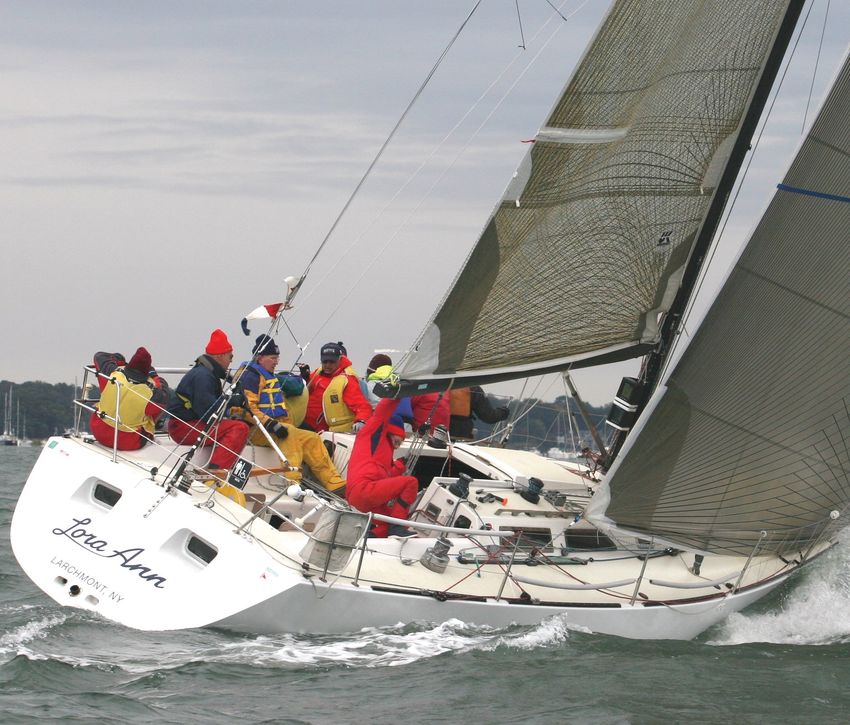
Our mission:

                                             The United States Naval Academy Sailing
United States Naval Academy                  Squadron directly contributes to the Naval
Sailing Squadron                             Academy’s overall mission of developing
                                             future naval leaders.        Naval Academy
Commander Les Spanheimer                     Sailing meets this goal by providing
Director of Naval Academy Sailing
dnas@usna.edu
                                             Midshipmen with hands-on leadership
(410) 293-5601                               development through sailing. Naval Academy
                                             Sailing believes in not only promoting
Lieutenant Commander Laurie Coffey
Deputy Director of Naval Academy Sailing     leadership development but also a culture of
lcoffey@usna.edu                             safety. With this in mind, we believe that shar-
(410) 293-5600                               ing firsthand experiences that occur both on
Mr. Jon Wright                               and off the water can lead to a higher aware-
Vanderstar Chair, Naval Academy Sailing      ness of sailing safety.
jnwright@usna.edu
(410) 293-5606

Lieutenant Rob “Jobber” Bowman
                                             Special Thanks to the following people for
Maintenance Officer, Naval Academy Sailing
“The Helmsman” Editor and Publisher          their article and photo contributions:
rbowman@usna.edu
(410) 293-5634                               Tim Queeney editor Ocean Navigator

                                             Mr. Frank Feeley

                                             Ben Spraque

                                             Richard Stevenson

                                             Commander Les Spanheimer, USN
USNA Sailing website: usna.edu/sailing

The Helmsman                                                                          Page 2
Volume 2, Issue 1
The Helmsman
Spring 2015
Naval Aviation has long enjoyed a free exchange
Special points of interest: of lessons learned. That tradition permeates
every post-flight debrief and is publicly revealed
Weather
in a bi-monthly Navy & Marine Corps Aviation
Safety Magazine entitled “Approach.” Published
Sailboat Maintenance by the Naval Safety Center, “Approach” is a col-
lection of first-person narrative accounts of Na-
val Aviation mishaps, close calls, and lessons
Situational Awareness learned. Such is the culture throughout the Navy
and Marine Corps that aircrew are encouraged
and lauded for submitting frank and honest arti-
Preparedness cles that serve as lessons for us all.
It is our hope that this culture of open exchange
can be spread to the recreational sailing com-
Emergency Procedures
munity throughout the country. We hope the
stories contained within this second edition of
“The Helmsman” can serve as lessons in what to
do and what not to do.
We welcome submissions throughout the year
Inside this issue: of other first person narratives (anonymous
submissions are welcome).
Disaster Averted Pg 4
Let’s get the conversation started and keep safe-
ty foremost in our minds as we enjoy the water.
Sinking of the Bowditch Pg 10
Commander Les Spanheimer
Director of Naval Academy Sailing
A Key Approach to Offshore Pg 20
Passage Making
Clobbered on the Delaware Pg 24
The Helmsman Page 33
Page
Disaster Averted

By Frank “Rich” Feeley
                              Rapf (all aged 65 to 67,
                              but fit). This crew had       projected tracks splayed
 An offshore                  more than 50 Bermuda          out from its center. Most
                                                            headed north to the Gulf
 rigging failure              races plus return passag-
                              es. Rich is a prime mover     Coast, but some crossed
 is handled                   in Safety at Sea training,    the Florida Peninsula
                                                            and moved out into the
                              so we knew that Lora Ann
 with team-                   would be well found and       Atlantic, crossing the
                                                            homebound course late
 work and                     well prepared for the pas-
                              sage. In the exhilarating     in the coming week. In
                                                            fact, this low developed
 some friendly                reach that was the 2012
                              race, she finished third in   into tropical storm Deb-
 help                         her class to Carina, which    by and did follow the
                                                            less probable track out
                              won the St. David’s Light-
                              house Trophy. Lora Ann        into the Atlantic.
 The return passage after
                              has been on the podium          The other prominent
 the Newport Bermuda
                              for six straight Bermuda      feature was a strong cold
 Race is often a pleasant
                              Races.                        front moving off the U.S.
 cruise. It is usually well
                                On Saturday, the day        coast. As it closed in on
 off the wind and without
                              before our planned de-        Bermuda in the daily
 the constant pressure to
                              parture, the briefing         projections, it squeezed
 make the last one-
                              room at the Royal Ber-        the isobars against the
 hundredth of a knot or
                              muda Yacht Club was           amoeba shaped western
 change sails at the first
                              packed for the presenta-      extremity of the Bermu-
 (or last) possible mo-
                              tion by the Bermuda Me-       da High. If we left on
 ment. For me it’s a
                              teorological Service. The     Sunday, southwest
 chance to catch up with
                              weather in Bermuda was        winds would increase to
 old friends in the crew.
                              benign, but the forecast      25 to 35 knots on Mon-
   Rich du Moulin needed
                              showed two worrisome          day night as we inter-
 crew to bring his Express
                              features. In the Gulf of      sected the front — condi-
 37, Lora Ann, back to
                              Mexico, a developing low      tions Lora Ann had en-
 New York. I joined him
                              seemed destined to be-        countered many times. It
 along with two experi-
                              come a tropical storm,        would be a bit bumpy on
 enced sailing friends
                              and perhaps a hurricane.      Monday night perhaps,
 from my college years,
                              A shower of computer          but preferable to a de-
 Lee Reichart and Bill
The Helmsman                                                                 Page 4
Volume 2, Issue 1                                                   The Helmsman

layed departure that might    Atlantic and Bermuda rac-      punctured lung, which
encounter a developing        es, slipped and fell against   fortunately were not pre-
hurricane later in the        the primary jib winch on       sent.
week. The skipper’s subse-    the port side. As we             As Lee’s condition
quent conversations with a    reached farther away from      worsened, so did the
private weather routing       Bermuda, Lee found it          weather. Throughout
service confirmed the pro-    more and more difficult to     Monday afternoon and
jections, and we left St.     move without severe pain,      evening, we shortened
George late on Sunday af-     and by Tuesday as the seas     down from the No. 3 jib
ternoon.                      built he was confined to his   to the Solent to reefed
                              bunk, the pain buffered by     Solent, and from full
                              Oxycodone and Valium.          main to one and then
  Crew casualty               (Once home, X-rays con-        two reefs. By dusk on
  Two hundred miles out       firmed a broken rib on his     Monday night, we were
of Bermuda, as the wind       left side.) Rich had e-        sailing with only the
was building, Lee, a veter-   mailed his wife Ann, a reg-    double reefed main.
an of 20 years racing on      istered nurse, who advised       A small boat that does
Lora Ann and many trans-      us on the drugs. She also      a lot of around-the-buoy
                              gave us the symptoms for a     racing, Lora Ann has a
                                                                         mainsail fit-
                                                                         ted with a
                                                                         boltrope and
                                                                         slot — no
                                                                         slides. Her
                                                                         reefs are se-
                                                                         cured by
                                                                         shackling
                                                                         each reef tack
                                                                         to a strop
                                                                         near the
                                                                         gooseneck ra-
                                                                         ther than
                                                                         hooks that
                                                                         tend to re-
                                                                         lease the sail
                                                                         as it is
                                                                         doused. But
                                                                         above the sec-
                                                                         ond reef the
                                                                         luff can blow
                                                                         away as the

 The Helmsman                                                                 Page 5
Volume 2, Issue 1                                                    The Helmsman

sail drops out of the slot. With one man     off near the deck. I yelled “tack” and Bill
down, and one having to steer in the big     immediately put the tiller down. Lora
seas (the autopilot was struggling at that   Ann promptly tacked to starboard, put-
point), two crew would be hard pressed       ting the load on the new windward side,
to control the mainsail when doused, so      taking the pressure off the port shrouds.
we deferred putting up the trysail.            This tack brought us into the heart of a
  Lora Ann sails remarkably well, how-       passing squall, sending the wind speed
ever, with a double-reefed main alone,       well up into the 40s. For the moment, we
and we had been through 50 knots with        were safe, but we were heading back for
this rig on many occasions so we did not     Bermuda. Could we keep the rig in the
change to the trysail. Lora Ann powered      boat, repair it and return to our course
on into the night on a close reach at full   for New York?
speed. As forecast, the winds built to         The port lower shroud turnbuckle
more than 30 knots. The seas were            threaded stud broke when the forged
clearly growing to impressive heights,
and the self-steering gear could not
cope, so we steered by hand. We were
almost glad we could not see the full
height of the waves. One boarding sea
threw the helmsman across the cockpit,
but the two men on deck were safely
strapped in and Lora Ann held her
course. Rich has a strict policy of all
crew tethered from the time one begins
to ascend the ladder to the cockpit until
back down below standing on the cabin
sole. There is a big padeye near the
companionway for this purpose.

The damage
By dawn on Tuesday the seas appeared
to be running 20 feet, with the wind         lower eye cracked. Fortunately the chain-
holding the anemometer well up in the        plate and barrel of the turnbuckle were
30s. Bill and I were on watch. As the        undamaged. At the spreaders, the mast
gray light grew, there was a sharp crack,    was bent 12 inches out of column but did
like a rifle shot. I looked up from my       not appear fractured or dimpled. Being
cockpit reverie to see the lower wind-       so out of column, the compression of the
ward shroud flapping free, and the un-       rig and seas could bring the mast down
supported mast violently flexing from        at any moment. The mast would have
port to starboard about two feet at the      broken quickly if we hadn’t tacked, but it
first spreader. The shroud had broken        was still in danger of collapsing.

The Helmsman                                                                   Page 6
Volume 2, Issue 1                                                   The Helmsman

The repair                      We tacked back on to        the mast. This meant car-
The first task was to re-     port, watching nervously      rying less sail area than
connect the remainder of      as the load from the reefed   optimal, and motorsail-
the shroud to the chain-      mainsail came on to the       ing when necessary. We
plate. Rich leaped on         repaired shroud. It held      carried extra jugs of fuel,
deck, and using a short       but we decided to motor       but not enough to reach
piece of green Spectra        until the seas subsided.      New York.
line saved for damage         With the mainsail down
control, fished the chain-    we were able to take a        Two pit stops
plate and stropped the        spinnaker halyard under       Choucas, sailed by a dou-
turnbuckle back together.     the lower spreader and        ble-handed crew that was
In order to tension the       around the back of the        friends with Rich, was
shroud, he secured a sec-     mast to the port rail and     the nearest boat on our
ond (red) line to the turn-   winch it tight. The mast      radio net. They arranged
buckle, led it down           was now supported by the      to meet us and transfer
through the chainplate,       two lines to the turnbuckle   10 gallons of diesel on
through a large block         and the halyard.              Tuesday evening. By the
(also kept for emergen-         When the storm subsid-      time we rendezvoused, a
cies) back to the primary     ed the following morning,     little before sunset, the
winch. With this winch,       Bill, sporting a helmet and   wind was down but the
we were able to tension       PFD as a flak jacket, was     seas still high. We mo-
the shroud and take up        hoisted to the lower          tored cautiously under
slack in the strop. Lora      spreaders to inspect for      Choucas’ stern as they
Ann now had all of her        cracks (none) and attach a    floated a line down to us.
rigging, but we were un-      strong Spectra line to the    Once we snagged it, they
sure how much load it         babystay toggle fitting       released the other end
could take.                   which we also led to the      attached to a five-gallon
   With a temporary re-       rail and aft to another       jerry jug of diesel, which
pair in place, we reported    winch. The babystay was       floated easily. We pulled
our predicament to other      perfectly located to sup-     in the line and hoisted
boats during our planned      port the lower shroud and     the jug aboard. We threw
morning SSB radio con-        bring the mast back into      back the line and repeat-
tact. All offered help. Af-   column. We then unrigged      ed the maneuver to ob-
ter considering the option    the supporting halyard        tain five gallons more.
of returning to Bermuda,      and hoisted the reefed        Choucas exhibited excel-
potentially encountering      main and Solent jib. Nerv-    lent seamanship and did
tropical storm Debby en       ous but comfortable with      not hesitate to come back
route, Rich decided to        our jury rig, we revised      to help us.
carry on for New York.        our plans to put as little       It was clear that we
Lee concurred from his        pressure as possible on       could not maintain our
bunk.                                                       original schedule of two-

The Helmsman                                                                  Page 7
Volume 2, Issue 1                                                 The Helmsman

man watches. Lee was confined to his       get through the harbor. Just before
bunk, and the skipper was navigating,      dusk, friends on the Tartan 47 Glory
doing damage control and maintaining       overhauled us and transferred an addi-
constant communications links. Fortu-      tional 10 gallons of diesel fuel. In snag-
nately, Lora Ann has excellent hydrau-     ging the floating jerry jug, the telescop-
lic self-steering gear that does as well   ing aluminum boat hook parted but we
as a skilled helmsman in all but the       were able to successfully complete the
highest seas. Bill and I shifted to one-   transfer.
man watches, letting the autopilot           Glory had Internet access and was
steer. The man on deck maintained the      able to track Lora Ann on Yellowbrick
look out and adjusted sails. As we         for the three days after the shroud inci-
gained more confidence in our jury rig,    dent. When we broke the shroud they
we added more sail, striving to main-      were 80 miles astern. Our Bermuda
tain six knots plus with sail and power,   Race navigator John Storck, Jr., in Hun-
but never pushing the boat to its nor-     tington, N.Y., knew of our problem via e
mal performance. When we entered           -mail from Lora Ann, and visiting the
the Gulf Stream on Wednesday night,        Yellowbrick site, identified Glory as the
we shortened down to the storm jib in      boat behind us on our track. He e-
case we                                    mailed both Lora Ann and Glory, put-
should en-
counter a
squall.
   By Thurs-
day, we were
through the
stream and
making nearly
seven knots
on a pleasant
beam reach
with just the
Solent jib and
double reefed
main. Still, if
the wind died,
we would not
have enough
fuel to reach
New York and

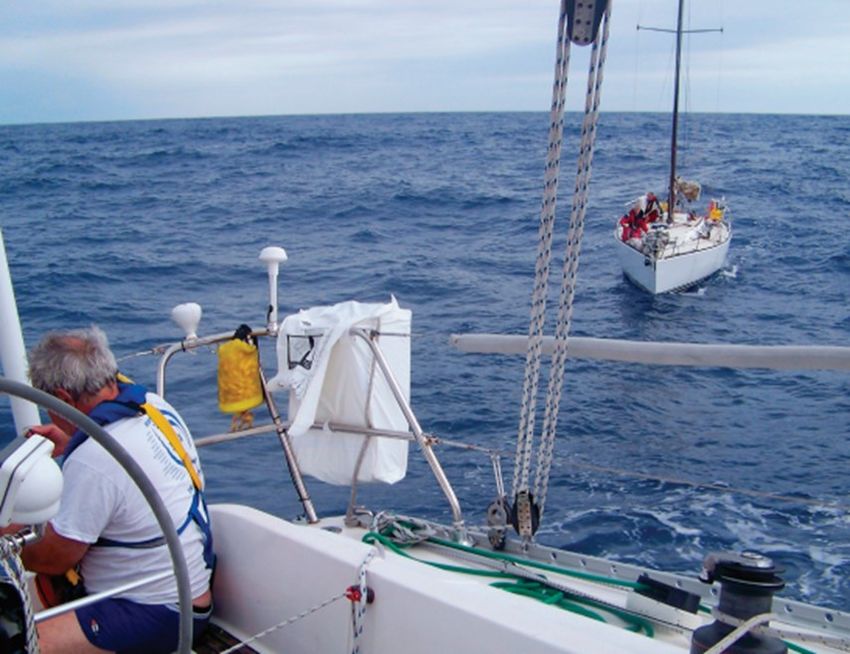
 Lora Ann as seen from the deck of Choucas following the transfer of diesel

The Helmsman                                                                 Page 8
Volume 2, Issue 1                                                 The Helmsman

ting us in e-mail and satphone touch        Seal rum on board was unharmed.
with each other. Like many newer            There were also serious injuries to
boats, Glory had no SSB. Thereafter         crewmembers on the return passage
they were kind enough to act as our         of three other Bermuda competitors.
“security blanket” and follow us until      Convictus Maximus sent a crew-
rendezvous three days later.                member with a spinal cord injury
  The reaching wind angle held through      back to Bermuda on a merchant
Thursday night, enabling us to main-        ship, while the U.S. Coast Guard ex-
tain nearly seven knots with minimal        tracted injured crewmembers from
pressure on the rig and no motoring.        Barleycorn and Conviction for medi-
We raised the New York Harbor ap-           cal treatment.
proach early on a steamy Friday after-
noon, and were safely secured in New
Rochelle before dinner, only a little
                                            Frank “Rich” Feeley is associate
more than five days out from Bermuda.
                                            professor at Boston University and
Other yachts                                owns a 34-foot Jenneau sloop Antig-
We later learned that Lora Ann was not      one.
the only yacht to suffer damage in that
squally front. The C&C 41 Avenir lost
her rudder at nearly the same time. Un-
                                            Special Thanks to Tim Queeney, ed-
able to steer or control the boat with a
drogue or a spinnaker pole steering oar,    itor of Ocean Navigator Maga-
the boat wallowed in the tumultuous         zine f0r permission to reprint this
seas. The crew eventually elected to        article.
abandon ship and was picked up by a
passing cruise liner. Avenir was later
recovered.
  The well-sailed J-120 Mireille owned
by Hewitt Gaynor is a regular competi-
tor of Lora Ann in double-handed races.
She was about 40 miles to the east dur-
ing the storm, sailing under full main-
sail (she is a much stiffer boat). In one
squall she was knocked down beyond
90 degrees by a sea. Water from the
boarding sea flooded out the navigation
station. Mireille also hit some floating
object and her retracted sprit was
shoved aft through a bulkhead. Fortu-
nately no one was hurt and our Black
The Helmsman                                                               Page 9
The Helmsman
           Sinking of the Bowditch
                                       of her senior year at Connecticut Col-
 By Ben Spraque                        lege. I found myself back in Prides
                                       Crossing, MA with only a vague idea of
                                       wanting to “get to the Caribbean to work
                                       on charter boats”.

                                       A week or two after Labor Day I was
                                       sailing with my neighbor Sam Batchel-
                                       der and family friend Bobby Hooper. We
                                       passed a dark blue ketch going the oppo-
                                       site direction and Bobby called over
September, 1978                        “hello” and later told me that was a boat
                                       belonged to his friend Fred Strenz. He
After graduating                       knew that Fred had taken his boat, the
                                       Bowditch, south to winter in the Baha-
college I really didn’t know           mas the last several years and that had
what I wanted to do with my life       heard Fred was planning to take her
much less with my Anthropology         south again that Fall. “Why don’t you
degree, so I happily deferred mak-     ask Fred if he needs any crew?,” Bobby
ing a decision until after a fun       casually suggested. I did just that.
summer working with Peter Clau-
                                       October, 1978
son waiting tables at the Harriet
Beecher Stowe House in Bruns-          We departed Manchester, MA, on Fri-
wick, ME. We lived with our friend     day, October 13, 1978, a clear sunny day
Ann Taylor in her grandfather’s        with blue skies and fair winds. On board
house next door to the Bowdoin         were Fred Strenz (age 57) from Man-
College Alumni House and had a         chester, owner and skipper, Dick Stanley
great time. Summer flew by and         (age 55) from Nahant, Malcolm Kadra
before I knew it Peter had headed      (age 38) also from Manchester, and me
back to Greenwich where he had         (age 22, referred to by all as “the kid”).
been lining up interviews with pro-    The plan was to sail to Bermuda, visit
spective employers and Ann had         and re-provision and continue on to
moved to Cundy’s Harbor with her       Man O War Cay, Abacos, Bahamas as
parents in preparation for the start   our final destination. It took us about a

The Helmsman                                                           Page 10
Volume 2, Issue 1 The Helmsman
week to get to Bermuda encountering schooner). We illuminated our mizzen
some of the nastiest weather I’d come masthead strobe light and the two ves-
across since the Jeffries Ledge Race on sels stayed well clear of one another. The
Saphaedra in 1972 and a passage off waves were so high that the mizzen
Utilla in Honduras’ Bay Island on Jose- strobe lit up the wave crests as they
phine in 1973. Winds were estimated at broke above the mizzen masthead.
60 knots, a full Gale where we towed a
A day or so before arriving in St.
warp (400 ft. of anchor rode) to help
George’s, Bermuda, we had flat calm
keep us in control. The waves were
conditions, a true Bermuda High with no
steep, 30-35 ft., but well patterned and
wind. I recall all four of us taking a dip in
spaced so handling the Bowditch was-
the water with the sails up (a maneuver
n’t untenable. Still under bare poles
I’ll never repeat).
During the gale I’d
become queasy
which was probably
from the permeating
odor below. A faulty
fuel injector was
spraying a mist of
raw fuel on the man-
ifold, creating a con-
stant smell of diesel
fumes aboard the
boat. For some rea-
son Fred Strenz
thought what I need-
ed was a shot of
whiskey. Shortly af-
Bowditch
ter, I broke out in hives—a reaction I
have since come to know as being caused
running before the wind and waves we
by severe dehydration, lack of sleep, ex-
were making in excess of 8 knots. At
cess physical exertion and a good shot of
one point during the storm we saw
carbohydrates. Part of what appealed to
lights to starboard, which later turned
me in taking a dip in the ocean was to
out to be the S.E.A. research/school
cleanse myself of the remnants of the
vessel Westward (125 ft. Staysail
The Helmsman Page 11Volume 2, Issue 1 The Helmsman
itchy hives and the overbearing diesel trip, Bermuda to Marsh Harbor, Man O
stench of the boat. War Cay, Abacos, Bahamas. The report
they gave us seemed to indicate we had
We spent about a week in Bermuda drying a good weather window for the project-
the boat out, re-provisioning, eating de- ed six or seven-day passage, there was
cent food and sampling the nightlife avail- one caveat however. The weatherman
able in St. George’s. Malcolm and I spent a mentioned a slight tropical disturbance
lot of time together as Dick was more that he didn’t think would affect our
closely connected to Fred than either Mal route(!!). We put fuel aboard and de-
or me. parted St. George’s, Bermuda on
Crew change – Dick Stanley left the boat to Wednesday, October 25 under fair skies
fly home for a family or business obliga- and moderate winds. Winds were W/
tion and Fred Nataloni (age 48 and also NW only because I recall being off the
from Manchester) arranged by Malcolm, breeze most of the two-to-three days
flew down to take his place. In 1978 I had before wind and weather began to
known Fred (or more accurately, known make up. By Saturday evening we had
who he was) for more than ten years, al- steady overcast skies and winds back
most idolizing him as a young junior sailor up in the 30-35 knot range, and I recall
in our yacht club’s sailing program. Fred thinking, “I hope we’re not going to
was the club steward, so he was in charge have a repeat of the trip down, are we?”
of all that went on at the club, launch driv- By noon on Sunday it was apparent we
ers, dock and club boats’ maintenance and were getting progressively deteriorating
commissioning. I don’t think he really weather; the wind speeds and wave
knew who I was, but he certainly recalled heights were increasing as the barome-
my name and he knew my parents. He’d ter dropped below 28 inches of mercu-
been out of that role at least eight years ry. By this time we had already short-
and was now the Director of Marine and ened sail as much as possible so by the
Recreational Vehicles for the State of Mas- end of the day the mainsail was fully
sachusetts and had survived/served a furled on the main boom and the stay-
number of gubernatorial administrations, sail secured to the club boom which
no easy task in the Massachusetts political was also lashed to the foredeck. As dark
arena. arrived the waves were exceeding the
We provisioned at the Piggly Wigley near height of those we’d experienced on the
St. George’s. Both Freds took a taxi to the trip to Bermuda but with a distinct dif-
Bermuda Airport at St. George’s to get a ference. These waves were not evenly
weather forecast for the second leg of our spaced and patterned as those from the
The Helmsman Page 12Volume 2, Issue 1 The Helmsman
gale the week before. These waves were Since I thought I would be on deck for
unpredictable in their direction, so that just 10 or 15 minutes (I was off watch) I
it was much harder to keep the boat put neither my safety harness nor life
running before them. Due to this the jacket back on (we had been wearing
boat was in constant danger of getting them on watch) as I went topsides. I re-
knocked down. Due to the unsettled call standing in the cockpit preparing to
state of the seas, Fred Strenz had decid- pump and tying a line around my waste
ed that towing warps wouldn’t be of and securing the other end to the miz-
much benefit, so we ran under bare zen mast, three feet from where I’d be
poles with the engine on in low rpms. pumping. I pumped standing just in-
The day before we had doubled up our board of the port cockpit locker/seat, it
watches to two- man shifts, (life jackets was maybe ten minutes until the Edson
and safety harnesses clipped in to jack pump sucked air. At that point Fred
lines for all on deck) and Fred Strenz Stenz said, “Kid, you go back down be-
and I were off watch in bunks sometime low and see if you can get us some
after 2200 when the boat took a knock- food.”, but I didn’t want to so Malcolm
down on her port side. Fred was said, “I’ll go below and get you a hunk of
launched across the cabin striking the cheese, Fred.” After the knockdown the
bronze supports for the port pipe berth binnacle light had gone out, so now
in his chest while I was dumped on the Fred Nataloni was kneeling forward of
cabin floorboards. We learned later that the helm facing aft holding a flashlight
he had cracked several ribs as a result. to illuminate the compass to help Fred
Fred was able to get up and go on deck Strenz maintain course and keep the
while I briefly remained below having Bowditch running before the seas. He
crawled back in my bunk. The main sa- was also calling each hill-sized wave as
lon was now in disarray. Many items it broke telling Fred Strenz which way to
had spilled from where they had been turn the helm. Sighting the monstrous
stored and now littered the cabin sole waves was made easier by the mizzen
which was under ankle deep water! A masthead strobe lighting the crests of
short time later the companionway the waves before they came crashing
hatch slid open and Fred called down to down toward our transom lifting it up at
me to come on deck and pump. “Not the last second to propel the 42 ft. ketch
good,” I thought to myself. surfing in an awkward motion that chal-
lenged the helmsman to keep her from
broaching. My task complete and not
The Helmsman Page 13Volume 2, Issue 1 The Helmsman wanting to return below I remained on proaching the depth of his chest. It was deck watching this desperate team effort a mutual determination that the cock- to keep our craft stable and upright in pit hatch, to the engine compartment the escalating maelstrom. The two Freds had been compromised during this last were still co-steering the boat as we were knockdown. When the Bowditch did overtaken by a thunder and lightning begin to right herself it was with a slug- storm the likes of which I had never ex- gish demeanor. By the time we were perienced (nor have I since) where the upright again we were noticeably lower two were occurring simultaneously. The in the water. lightning illuminated our immediate sur- About this time I noticed that the 8 ft. roundings as if it was daylight and the dinghy which we had stored forward of thunder crashed around us as the seas the main companionway hatch had thrashed at our hull. Were it not for the been dislodged aft during the knock- gravity of our situation you would almost down and that it was now resting use the word “exhilarating” to describe squarely on the hatch itself. Malcolm, the scene. About an hour later at approx- who had been below this whole time imately 2400 we took another knock- was trying to get back topsides but down. couldn’t because the sliding hatch was This time it wasn’t the 35-40 foot seas now jammed by the dinghy having alone that put us on our beam, it was a been knocked off its chocks. He was combination of waves and wind, wind screaming for me/us to let him out and colliding with our hull and bare poles, I asked Fred whether I could let him up that laid us over on our starboard side. on deck. Unbeknownst to me at the The wind was so strong it really did time was the fact that Malcolm was in sound like a freight train descending up- chest deep water in the salon and that on us. This time too, we didn’t just pop we were in fact, sinking fast. When I back up again but were held over fully told Malcolm to wait while we dis- capsized so that to remain vertical I was lodged the dinghy freeing the hatch he standing on the mizzenmast with my decided to come on deck through the arms wrapped around the primary cock- forward hatch. By this time the decks pit winch. Malcolm later told us that the were just starting to be awash when I salon hatchway to the engine compart- deliberately untied my tether from ment burst open and water was rushing around my waste to go forward to help into the main salon with great force. unlash the dinghy. This we did vehe- Within a few seconds the water was ap- mently with rigging knives to the inclu- The Helmsman Page 14
Volume 2, Issue 1                                                   The Helmsman

sion of severing the painter as well as     led to a rapid realization that the boat
the lashings.                               was sinking and that I was going down
                                            with it. For a split second I thought, “so
As we stood with three of us holding the    this is what drowning is like.” I kept
dinghy (I was a few feet aft next to the    swimming up the shroud I was holding
mizzen mast shrouds) a huge wave            and eventually kicked free and broke the
swept over the deck rising steadily. I      surface within fifteen feet of my crew-
held firmly to the shroud as the waves      mates who were hanging on to the up-
rushed up my body and over my head.         turned dinghy.
Growing up near the water I learned at      The salt stung my eyes and there was a
an early age that waves go up and they      strange haze and surreal feel to my pre-
come down, so I was expecting the water     sent surroundings. In the pitch dark-
to recede. It did not! The next sensation   ness I heard Malcolm calling my name
I felt was pressure on my sinuses like      and I thrashed over to my companions
what one experiences when diving into       despite the violence of the sea state I
the deep end of a swimming pool. This       was now a part of and grabbed the gun-

      The crew and their dinghy

The Helmsman                                                                 Page 15
Volume 2, Issue 1 The Helmsman
wales of the dinghy. Our location was in actually saw each other, the dinghy
the Sargasso Sea (approximately 28 de- (which we alternated upright and
grees 30’ N, 78 degrees 0’ W), with the wa- overturned) and the ever present
ter temperature well above 70 degrees, so breaking seas.
we had that in our favor. To say that our
situation was dire is nothing short of un- By 11:00 am Monday the sun was
derstatement. We had sent no SOS, none shining brightly, winds down to 25-30
of us had thought to retrieve the ditch bag knots and the seas 15-20 feet (more
which was stowed in the starboard aft evenly spaced) and breaking but not
cockpit locker (just feet from where I’d violently. To get into the dinghy, we
spent the last hour), and our life raft had righted her, the two Freds held the
been washed overboard during one of the bow into the seas and I pulled down
knockdowns. Consequently we had no hard on the transom while Malcolm
emergency rations, no water and no climbed up my back and shoulders
EPIRB! What we did have was a fiberglass and into the open boat. He then cut
dinghy with extra flotation, reinforced the hood off his foul weather jacket
gunwales and oars and oarlocks lashed se- and used it as a bucket and bailed the
curely inside. At eight feet in length it was water out over me while I continued
a foot shorter than a Dyer dhow and was to pull down on the transom stabiliz-
our only chance of survival. ing it in the stern. I climbed in next
and helped haul the two Freds aboard
While the time from our second knock- while Malcolm unlashed the oars and
down to the actual sinking of the Bowditch inserted the oarlocks. For much of the
was and still is tough to calculate, the time time aboard the dinghy the oars were
we spent clinging to that dinghy has been critical to keeping our bow into the
indelibly etched in my mind. We lost the seas to avoid being swamped or
Bowditch around midnight on Sunday, worse, capsized.
Oct. 29/Monday, Oct. 30 and were finally
able to right, bail out and climb into the To say it was a tight fit I again invoke
dinghy around 11:00 am Monday morn- understatement. You would no more
ing. Most of the eleven hours spent in the put four 6 ft. men in an 8 ft. dinghy to
water were like being in a giant washing cross a millpond than place them in
machine with the waves continually crash- an open sea environment. The next 31
ing down over us as if trying to rip us from hours were a mix of settling in to a
the dinghy. Our heads were under water routine, one man in the bow, two men
as much as they were above it, the occa- amidships sitting aft of the center
sional flash of lightning the only time we thwart seat and one seated on the aft
The Helmsman Page 16Volume 2, Issue 1 The Helmsman
seat. It was the stern man’s job to han- We naturally had a lot of, almost inces-
dle the oars keeping our bow into the sant conversation about many different
eastward setting seas (away from the subjects. Fred Strenz told us that he be-
busy shipping lanes). We established a lieved we were done in by a waterspout
watch system where we changed posi- as he saw a waterlogged seat cushion
tions every hour always vigilant about get sucked up out of the cockpit. He also
shipping water and averting capsize. We maintained seeing the compass card on
assessed our situation (not good). It the binnacle go through two 360 degree
would be at least three days until we circles as he struggled to get the
were reported overdue, our supplies Bowditch off her beam ends.
(meager – two knives, a flashlight, two
On Tuesday, October 31, late in the day
life jackets, a hundred dollar bill and a
I was on the starboard oar and spotted a
piece of gum), and kept an eye on the
glint of white that looked like more than
water for ships and an eye aloft for air-
a whitecap playing tricks with my eyes.
craft.
After what seemed a long time strug-
That night we saw two ships but both gling with what my eyes saw but my
were in excess of five miles away and mind dismissed, I pointed to it and said,
had no chance of sighting our flashlight. “I think that’s a ship.” Strenz was even-
The
The Helmsman
Helmsman Page 17Volume 2, Issue 1 The Helmsman
tually able to determine that in fact it ballast. We were treated very well on
was a ship and it was on an intersecting board and arrived in Havana Harbor
course with us. Thursday afternoon, November 2. From
there we received assistance from the US
Suffice it to say that we rowed like Hell
Consul working under the auspices of
at what we thought would be the closest
the Swiss Embassy who issued us pass-
point of contact with the ship’s heading.
ports and facilitated our purchase of
As we were within a mile of one another
tickets to Toronto on Air Canada trans-
Fred Nataloni in the bow began waving
ferring to Boston.
his orange foul weather jacket and Fred
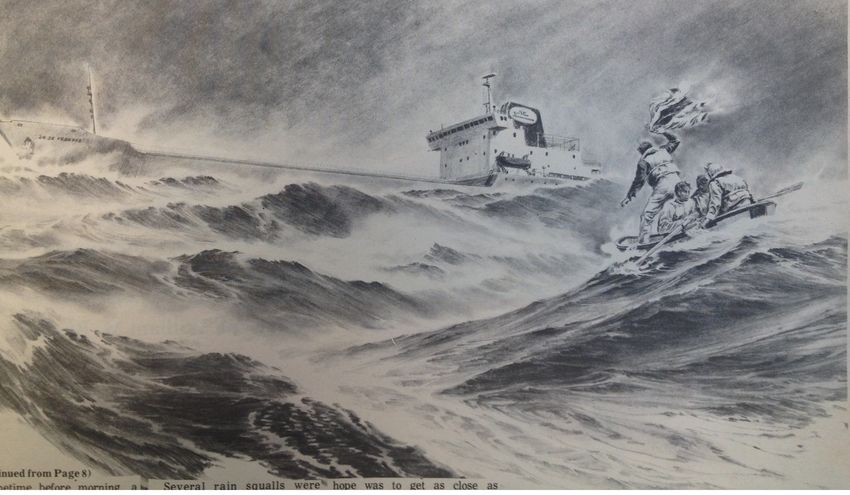
Strenz in the stern kept calling out to Lessons learned:
Malcolm and me who had to pull harder
Since that voyage 37 years ago, I have
to keep our heading. By the time we were
logged thousands of sea miles on both
abeam of the ship I chanced a look over
sail and power vessels. Suffice it to say
my shoulder and will recall what I saw
that I approach every offshore oppor-
until the day I die. We were within a ¼
tunity with a more practiced eye toward
mile of the ship (we were still in 15-20 ft.
every aspect of the vessel and captain I
swells so still had limited line of sight)
can fathom.
and I could tell she was a tanker with the
long catwalk running from the bow to After leaving Bermuda with the “mostly”
her massive white house and bridge favorable forecast, I recall little tracking
deck. In that instantaneous view I saw a of this “disturbance” during the days
man on the catwalk running aft toward leading up to the hurricane. 1978 tech-
the bridge deck. I took this as a good sign nology was archaic by today’s standards,
but kept rowing as hard as I could. The but we could have been better prepared
ship kept steaming by us (I later learned both equipment-wise and exercising
they were doing 18 knots) and was easily more vigilance. With today’s advances in
¾ of a mile past us when we noticed a electronics and available weather routing
change in her speed and course. As I saw services, we have a lot more tools at our
the ship turn around and head for us, I disposal, but we must still be actively en-
knew we had been saved! All four of us gaged in monitoring weather along one’s
shouted and screamed in unison and expected course.
tears of joy flooded out of my eyes.
That we lost our life raft during one of
The ship was the 24 de Febrero, a naptha two knockdowns illustrates another les-
tanker, en route from Rotterdam, Hol- son. My recollection was that the life raft
land returning home to Havana, Cuba in was simply lying on the cockpit sole, but
The Helmsman Page 18Volume 2, Issue 1 The Helmsman
in when on deck. It’s not just your life
others’ accounts recall it being secured
you’re protecting, but those of your crew-
to the mizzenmast with a lanyard. In ei-
mates as well.
ther case, we never got to it. So properly
securing the life raft to the boat and The night we were rescued we learned
ready for use is crucial. Drills reviewing that the ship had altered its course, out of
life raft deployment should be part of the shipping lanes to avoid the very same
abandon ship exercises. storm that sank the Bowditch (we were
told winds in our area had been reported
The fact that we had a ditch bag but
in excess of 100 mph). This fact generates
never got to it, for whatever reason,
the inference that “luck” and only luck
panic, distraction, or sheer terror at our
played a very big part in our rescue. The
predicament has always bothered me.
elements of “the rescue equation”, most
Compulsory abandon ship drills would
certainly, had to align themselves to an
do a lot to help prepare a crew for the
almost perfect scenario in order for the
unthinkable “abandon ship” moment.
rescue to happen. The reason we were
And further, in such drills assigning
seen was that a crewman aboard the
certain tasks to each crewmember
tanker completing his first voyage was on
might well enhance the effectiveness of
the catwalk near the bow, watching sea-
such drills. To this day Malcolm and I
birds off to port. When the birds disap-
disagree as to where the ditch bag was
peared in the trough of a wave we ap-
(he recalls it being in the large bag with
peared on the crest directly in his line of
the life raft and I in the starboard cock-
sight (waving jackets and screaming). No
pit seat locker), which further supports
one else saw us. He alerted the bridge
the need for drills.
who put binoculars on us and effected our
When I went on deck that Sunday night rescue.
to man the pump without my life jacket
and safety harness I should have been
sent below to get them. That said, I am The author is a yacht broker with
fortunate that I had to go forward to Nordhavn Yachts Northeast in Ports-
help unlash the dinghy forcing me to mouth, RI. He lives in Bristol, RI with his
untie my improvised tether. Having at wife, daughter and son. He divides his on
least one end of a tether on a quick- -the-water time between rowing his 19
release fitting provides an extra layer of foot ocean shell and delivering
safety in case the need arises. It proba- Nordhavns. This June he will join a for-
bly goes without saying but I’ll say it an- mer high school classmate on his Sabre
yway, we all need to take care and hook 38 for a passage to Bermuda.
The Helmsman Page 19A Key Approach to Offshore Passage Making
It was only much later and with some re-
By Dick Stevenson flection that I began to understand some
of the learning, even growing, that began
on that first passage. Twelve years of full-
time live-aboard life and numerous fur-
How you approach offshore sailing is ther passages have solidified these
key to the success of each passage. thoughts. In the following, I will attempt
Some of the most valuable, even cru- to spell out my observations on some of
cial, attitudes and skills may be little the relatively unique elements contrib-
learned or valued in everyday life on uting to success in making an offshore
shore, and may even fly in the face of passage on a small sailboat.
those that are greatly admired and But first, a few words on how we develop
sought after. The following is what I’ve life skills on our way to offshore sailing.
learned over years of sailing offshore. Generally, we learn the skills that best
After 15 years of coastal cruising, I de- get us through the life we are presented
cided to take my 38’ sailboat on my with, picking up techniques as we go
first offshore passage: round trip NY to along from our parents, our genetics, our
Bermuda to see if blue water sailing environment and our culture. What skills
was for me. We prepared endlessly, ex- one develops are in large measure deter-
pecting a six-day trip. The trip did not mined by the challenges that come one’s
go as planned. On day one we bumped way. One does not learn to paddle a ca-
our overloaded boat into a sand shoal noe living in the desert, nor cooperation
in NY harbor, followed by enduring a and compromise if most challenges have
couple days of near flat calm; then-- you on your own.
careful what you wish for--we were There are numerous methods to deal
chased by a tropical storm that forced with challenges. Many, including myself,
us significantly off course. We hove to take on challenges with a bit of aggres-
until the storm left us behind ending sion, total focus and a head set to com-
this now nine-day passage with a bois- plete the challenge as quickly and suc-
terous close reach. Like many I have cessfully as possible. This method works
talked with since, I was little prepared quite well in many instances where the
for how much I would be freaked out end is clearly in sight: in a competitive
by this anxious journey and all it would athletic endeavor you are coached to
stir up in me. Fortunately, the return “leave it all” on the field; you climb a
passage was far more what I expected mountain all the way to the top; term pa-
and hoped for. pers are sweated out, but (usually) hand-
ed in on time. Following these accom-
The Helmsman Page
Page 20
19Volume 2, Issue 1 The Helmsman
plishments is often collapse dents occur. You always end, the end is never in
and then recuperation, want to have reserve re- sight.
with rewards if you succeed sources, emotional and
and disappointment if you physical, just as you I remember a good exam-
do not. would not deplete your ple of this having left the
food or water. Fatigue is Bahamas, and after four
Offshore sailing with its likely the single most po- glorious but tiring days,
long passages presented tent factor in errors and we were approaching
me with a surprising (and accidents. On a passage, Cape May, New Jersey.
insistent) opportunity to there is always uncer- Pea soup fog had set in,
add to my repertoire of tainty. With the unpre- the wind was blowing
skills in responding to a dictability of weather along the shore and a tug
challenge. My usual set of (and numerous other and tow had decided that
“athletic” responses did not variables) it is not exag- ¼ mile was adequate
include: patience, rolling gerating that having a clearance as it started a
with the punches, flexibil- reservoir of resources broad curve that brought
ity, tolerating uncertainty can mean life instead of it our way. The Coast
and not knowing when, or death. Until the very Guard, Cape May, refused
even if, the goal would to answer ques-
be accomplished. tions about ob-
These were skills structions along
which had had little the breakwater or
value in the challeng- in the harbor that
es I had heretofore we needed to watch
faced. They were rare- out for, but the lo-
ly, if ever, taught to cal Sea Tow came
me, and, in general, back to us report-
had I had occasion to ing that we would
think much about see a dredge and
these skills, I likely barge in the turn of
would have down- the breakwater
played, even ridi- base.
culed, their value.
With the use of ra-
But offshore passage dar and GPS track-
making does not ben- ing our position,
efit from leaving it all we headed right in
on the field. You nev- believing our ducks
er want to become de- were in order. With
pleted, physically or our fatigue and de-
mentally, as this is sire to get anchored
when errors and acci- Alchemy inside, and all that
The Helmsman Page 21Volume 2, Issue 1 The Helmsman
was going on around us, gests that we patiently the boat safe. It also flies
we neglected to consider move at 2/3rd speed. It is in the face of the kind of
the quite strong cross cur- rare that one needs to mindset that is often ad-
rent and how disconcert- rush to do anything, so we mired in everyday life,
ing it would be. Not aware don’t; injury is far more characterized by a “going
we were unprepared to en- likely when hurried. The for it” attitude.
ter, we never considered same mindset goes with Listen closely to your own
anchoring off for the night the boat. We try not to and others’ language. Too
(conditions would have sail the boat at greater often sailing is embedded
been uncomfortable, but than 75-80% of its capaci- in an adversarial context.
safe enough) or heaving to ty. It is in the upper 20% I would suggest that an
for a while to get rest and where there is little room offshore passage is best
allow the fog to lift. We got for error and where dam- not seen as a competition.
in, safely finessing the age and accidents are If one sees the goal as
dredge, albeit daunting at more likely to occur, both conquering the ocean or
times! to person and to the boat. prevailing over the sea,
I will continue to use all As for pushing the boat then disappointment is
the skills at my disposal, hard, I remember a very guaranteed and loss (at
but there will never be a boisterous 2-day close some point) is inevitable.
time where luck is not in- reach from Florida to The task at hand is to
vited aboard. This is not Beaufort NC. From the reach your destination
only a good example of fa- beginning we were push- safely, and a far more effi-
tigue/depletion induced ing the boat as hard as we cient and accurate ap-
errors, but also (and most could to get in before proach is to think of your-
importantly) how fatigue nightfall. The next day we self and the boat as in a
operates such that you are lived on the foredeck dance with the wind and
unaware of its insidious ef- hand stitching the jib. It sea. More importantly,
fects. So, try not to run was also an impressively Mother Nature is the clear
your vessel in a way where rough trip where we were leader in this dance. Try-
depletion/fatigue is likely thrown around a good ing to lead, dominate or
to occur and triple check deal and felt fortunate not overcome is fruitless and
yourself when it does oc- to have experienced inju- likely dangerous; better to
cur. ry. In our 40 foot boat, al- practice the skills of ac-
most any time we exceed commodation and re-
On our 40-foot boat, Al- 7 knots we try to slow spect, aligning your re-
chemy, offshore sailing is down as the comfort level sources to what Mother
done as a couple, so inju- starts to slide and the Nature brings your way. It
ries are a large concern. chances of injury in- is our capacity to work
There is a guidance rule we crease. This is an ap- with the wind and the
try to follow which sug- proach that keeps us and seas that ultimately deter-
The Helmsman Page 22Volume 2, Issue 1 The Helmsman
mines the satisfaction one (and grows) a great deal
The above considerations
achieves. on the journey. As Ber-
make an offshore passage
nard Moitessier might
The above observation that a distinctly different op-
say, the destination pales
you are a follower in this portunity to develop skills
in comparison.
dance underscores a partic- that are an essential plat-
ularly potent emotional el- form for offshore passage
ement in offshore passage: making. Stamina is cer-
how much is out of your tainly more a key compo-
control. Rather than over- nent than in most endeav- Dick Stevenson is a retired
coming obstacles (running ors. Rather than going all Clinical Psychologist/
a faster mile, conquering a out, one searches for a Psychoanalyst who, with his
physical and emotional wife Ginger, has been living
mountain), your challenge
aboard their cutter, Alchemy,
is to work with the particu- output that is sustainable a Valiant 42, for more than
lar set of circumstances as for long periods without 12 years. They’ve cruised
they occur, to deal--and depletion. Balance, moder- from Bermuda to Maine with
deal well--with the unpre- ation and restraint are cru- their 3 children, and in 2002
dictable: increase in wind = cial skills to have ready at they retired, sold the house,
hand in sailing’s many and moved aboard full time.
change jib lead and reef;
Dick and Ginger have wan-
current against= tack out challenges. Respect and dered the NW Caribbean, Ba-
of it; headwinds = hunker accommodation are the or- hamas, and parts of the east-
down for the long haul; der of the day. The ocean ern Caribbean. Without crew,
equipment breaks=replace passage is a wonderful they crossed the North Atlan-
it, repair it or jury rig. Youtraining ground for the tic in 2006 with stops in Ber-
above skills and as they muda and the Azores and
wish to respond and align
spent 4 years in the Mediter-
yourself with the realities, develop, it will be seen ranean. More recently, they
dealing with the regularly how valuable they are in have spent winters in London
occurring “small” stuff: the other parts of your life. while doing the British Isles
small stuff that in aggre- one season and during the
Interestingly, one of the following, touched on all Bal-
gate makes for a seaworthy
areas many of us are first tic countries on their round
vessel and wise decisions.
introduced to tasks/roles/ trip to St. Petersburg, Russia.
There is rarely “one” prob- responsibilities where Norway, above the Arctic
Circle and the Northern Isles.
lem. One problem is usual- there is no end in sight
of Scotland are recent cruis-
ly workable. Problems with (and limited control) is in ing grounds. Dick is a mem-
a capital P are usually the parenthood. Like it or not, ber of the Cruising Club of
result of a cascade of small with parenting and off- America, The Ocean Cruising
problems that accumulate. shore passages, once start- Club and a Commodore of the
With this attitude you will ed you are in it for the du- Seven Seas Cruising Associa-
tion, and is an Amateur Ra-
give yourself and your crew ration, or, as some may ex-
dio operator, call sign
the greatest likelihood of a perience it, for the long KC2HKW.
successful passage. haul. The silver lining, if
you will, is that one learns
The Helmsman Page 23Clobbered on the Delaware
By CDR Les Spanheimer
emphasized.
The following week, NA-25 joined three
The U.S. Naval Academy’s Offshore other Navy 44 crews on a northbound
Sailing Training Squadron (OSTS) passage to Marblehead, MA where they
summer cruise program is an oppor- would enjoy a weekend of liberty and
tunity for Midshipmen to participate community service before returning to
in an offshore passage to a remote port Annapolis. The departure into the
during which they can further develop northern Chesapeake Bay and through
their seamanship, navigation and the C&D canal was uneventful. Upon en-
leadership skills. OSTS Block 2A tering the Delaware Bay, the Skipper
formed for local area training on June and four Midshipmen went off watch.
30, 2014. Local area training went The Executive Officer
well as the crew was introduced to big (XO) and a crew of three
boat sailing onboard the Navy 44 sail Midshipmen remained
training craft. The Midshipmen who on watch. During the
participate in this program have very early portion of the Del-
little previous offshore experience so aware Bay southbound
the learning curve is steep as the two transit the sky in the
qualified instructors (Skipper and XO) west had darkened, and
teach the crew various essential off- the No 4 jib was raised.
shore sailing skills (navigation plot- Clearly a storm front
ting, tacking & jibing a large keelboat, was approaching. The XO called up his
reefing the main, headsail changes, RadarCast application on his iPhone and
man-over-board “quick stop” maneu- confirmed that a fast moving storm was
vers, use of a “preventer” and a host of in fact bearing down on the Squadron
other skills). On day 4 the crew em- from the west. RadarCast is one of sev-
barks on their first over-night sail on eral smart-phone applications which
the Chesapeake Bay where Rules of provide a real-time feed of current
the Road and coordination with (and weather radar data. Additionally, it of-
avoidance of) commercial traffic is fers an animated predictive function
The Helmsman Page 24Volume 2, Issue 1 The Helmsman
which can be used to esti- man Watch Captain a ization that threating
mate storm-front move- proactive leadership weather was approaching.
ment and development. style. They are taught to At 2020 (8:20PM) Radar-
The XO was watching anticipate and endure dy- cast predicted that the
both the darkening skies namic weather events by storm front was 30
and RadarCast as the reefing the main, and minutes away, the Watch
squadron sailed south changing headsails; Captain suggested that
down the Bay. storm sails are carried for the crew reef the main, it
extreme conditions. The was 10 minutes prior to
A key objective of the
XO conversed with the sunset. OSTS policy
OSTS cruise experience is
crew, hoping to pull from states that all on-deck
to develop in the Midship-
the Watch Captain a real- crew members should be
tethered in from Sunset to
Sunrise and at any other
point when otherwise
deemed prudent. One of
the crew asked if tethers
were required – “not if
you’re quick” was the
XO’s reply. Ten minutes
later the leading edge of
the storm front hit the
squadron like a ton of
bricks. The overpowered
vessel was suddenly
heeled over as the novice
crew attempted to set the
first reef on the mainsail.
Positive control of the ves-
sel was increasing difficult
with the No. 4 headsail
still up.
Realizing that his on-deck
The Helmsman Page 25Volume 2, Issue 1 The Helmsman
watch team was over- side the crew had now lost passed to the helm and
whelmed the XO called sight of the passing north- AIS confirmed the tow
down below for assis- bound tug towing astern was continuing to open to
tance from the off-watch and the three other Navy the North, the other three
team –“wake the Skipper 44s in the squadron. Due Navy 44’s positions were
– we need some help on to the 50 knot squall the also confirmed. Once the
deck!” The Skipper boat rounded up and was boat had settled down and
awoke, glanced at the headed directly for shoal was back on course down
navigation chart plotter water, at what distance the bay NA-25 contacted
and scrambled on deck. was unknown. With the the other Navy44’s.
As the Skipper took the jib now down, the boat
helm and started the en- righted herself and posi-
Every Naval Aviator
gine the XO went for- tive control was regained;
is taught a valuable man-
ward to assist with drop- traffic and shoal water
tra in flight school: Aviate,
ping the No. 4 headsail. were the next immediate
Navigate, Communicate.
Heavy rain and a dark- concerns. The Skipper di-
As a pilot in command it
ened sky had reduced rected the XO to the navi-
represents the priorities
visibility to only 2-3 boat gation table to obtain a
during emergency situa-
-lengths. Operating in a good heading to clear wa-
tions. That order is re-
narrow channel with a ter. A good heading back
flected in the actions
shoal area to starboard into the channel was
NA 25 Tenacious headed for shoal water
The Helmsman Page 26Volume 2, Issue 1 The Helmsman
many take on the water as ways trumps training could have been mitigat-
well: we first depowered objectives. Setting up ed with one simple
the boat and got her under situations for the crew to change. Had the XO not
control (Aviate), we could make decisions in an im- waited for the Watch
then steer a course back portant part of the OSTS Captain to direct the
into the channel program, knowing when storm preparations, had
(navigate), and only then to step in and make the he directed it himself
was there time to confirm decisions for the Mid- when it was first apparent
the status of our squadron shipmen is an even more that the storm front was
mates. important safety func- approaching the situation
tion of the Skipper and likely would have unfold-
The danger had subsid-
XO. ed like this:
ed…many lessons were
learned: Lesson Three: Most It was clear from real
evolutions on a boat, world observations,
Lesson One: Over-
take longer than you backed up by the Weath-
reliance on digital prod-
think. This is especially er Radar application, that
ucts. Modern technology
true with a novice crew. the storm would be a fac-
is fantastic but it’s no sub-
Not clipping in because tor for the squadron an
stitute for real-world ob-
it was technically not re- hour in advance of its ar-
servations and sound
quired at the start of the rival. That was the time
judgment. In this case the
reefing evolution was to act. The No. 4 was
XO had been tracking the
not the prudent thing to raised early but a reef
approaching storm front
do. We could have paid should have also been
for an hour before it hit.
a heavy price for that. taken well in advance of
The predictive animation
the arrival of the storm
on his iPhone, however, Lesson Four: Small
front.
gave him a false sense of problems can quickly
security, believing that his cascade into larger is- That early decision to reef
crew had more time to sues. This was a great the mainsail could have
prepare. Keep your eyes example of how one bad been done in “slow time.”
on the horizon, the rest is decision can have in- A Midshipman could
supplemental. creasingly dangerous have been appointed to
consequences. Much of brief and lead the evolu-
Lesson Two: Safety al-
the drama that unfolded tion. This should have
The Helmsman Page 27Volume 2, Issue 1 The Helmsman
been done with the crew positive control (heeled
tethered not only as a over with reduced rudder
safety consideration but authority), the crew has
“In flying I have learned
as a training objective in lost sight of other traffic that carelessness and over-
itself as the crew needed and the navigation solu- confidence are usually far
more dangerous than delib-
the practice of foredeck tion was temporarily
erately accepted risks.”
operations with tethers. lost. Within ten minutes
the sails had been reefed — Wilbur Wright in a letter to
Loss of positive control his father, September 1900
and doused, a safe head-
would likely not have
ing to good water was re-
been a factor with a
established, position of
reefed main and down-
nearby traffic was con-
sized headsail. The Navy
firmed by AIS and the
44 is a robust craft, over-
boat was again headed
built to handle heavy
south down Delaware
weather when configured
Bay. No damage was CDR Les Spanheimer has spent
properly. most of his Naval Aviation career
suffered onboard NA-25
flying Command and Control mis-
Navigation (out of the but two other boats in sions onboard the E-2C Hawkeye
channel, towards shoal the squadron suffered and British AWACS aircraft. His
staff assignments include the Naval
water) would not have torn mainsails which re- Strike and Air Warfare Center in
been an issue with a quired replacement the Fallon, Nevada and the Joint Staff,
properly configured sail following morning. No in Washington DC. On his final sea
tour he was responsible for the self-
combination. Reduced injuries were suffered defense of a Nimitz-class aircraft
visibility would not im- but this situation clearly carrier on its maiden deployment
to the Arabian Gulf, he also served
pact the crew sailing in could have been far as the Search and Rescue coordina-
the channel and monitor- worse with the danger of tor for that entire multi-ship strike
ing other vessels via the man overboard, collision group.
AIS display on the chart and grounding all very CDR Spanheimer sailed Lasers in
college and has sailed offshore on
plotter. real possibilities during
both the east and west coasts. He
this episode of cascading includes a 2011 passage from
At the worst point in the
incidents. Ushuaia SA to the Antarctic Penin-
storm visibility was less sula via Cape Horn as one of his
than 100 feet, winds were most memorable trips. He is the
current Director of Naval Academy
gusting over 45kts, the Sailing.
boat was no longer under
The Helmsman Page 28You can also read


