A A - Susanne schulz-falster
←
→
Page content transcription
If your browser does not render page correctly, please read the page content below
Susanne Schulz-Falster
                  RA RE B O OK S

A                SPRING                       A
A                    2019
                                              A
A                                             A
A                                             A
A                                             A
A                                             A
A                                             A
A                                             A
A                                             A
    4 Harrison’s Lane Woodstock OX20 1SS UK

             www.schulz-falster.com

A              +44 (0)1993 811 100
            susanne@schulz-falster.com
                                              A
A                                             A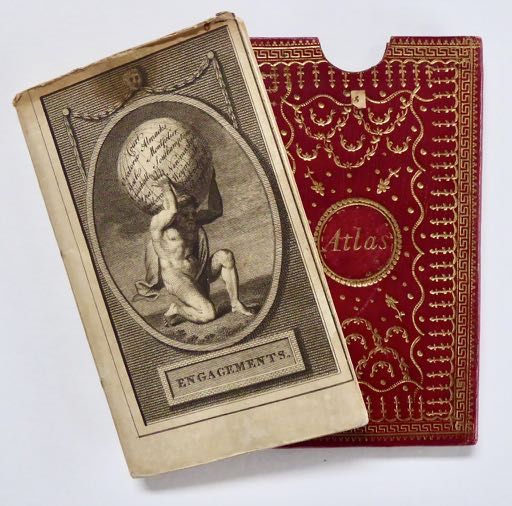
Susanne Schulz-Falster
                                                            RA RE B O OK S

ABC BOOKS                                                                       Sumptuous Architectural Alphabet
Rare Illustrated Alphabet                                                       PIAN, Jean Batiste de. 'Alphabet
                                                                                Pittoresque’ - Architectural Picture
HOFFMANN, Franz. Bilder-Quodlibet.                                              Alphabet. Vienna, J. de Pian & L. Müller,
Mit Denksprüchen und Fibelversen... Mit                                         1842-44.                         $32,000
24 colorirten Tafeln. Stuttgart, Schmidt &
                                                                                 Folio, ll. 26 (460 x 360mm, image size: 305 x
Spring, 1845.                       $3200                                        235mm), chromolithograph plates illustrating the
                                                                                 letters of the alphabet, after Jean Baptiste de Pian,
 4to (176 x 223mm), pp. [2], 42, with 24 hand-                                   printed and finished by hand by the well known
 coloured lithographic plates; text somewhat foxed                               Vienna lithographers Leopold Müller, Johann
 and browned, due to paper quality; plates clean and                             Höfelich and Matthias Rudolf Toma; housed in a
 crisp with elegant contemporary hand colouring;                                 custom-made fold-over cloth box; slight marginal
 slightly later cloth-backed marbled boards, lacking                             dust-soiling to first and last plates, one small repair
 front free endpaper.                                                            (15mm) to blank margin of final plate; a very fine,
                                                                                 clean and wide-margined set.
First edition, uncommon, of this charming
children’s primer, regarded as one of the most                                  A splendid set of architectural chromo-
beautiful picture alphabets of the German                                       lithographic plates illustrating the letters of the
children’s book literature. Each letter of the                                  alphabet. Each letter is fully integrated as an
alphabet is illustrated on a fine hand-coloured                                 architectural element into the internal or
lithog raphic plate show ing the letter                                         external architecture of various buildings, in
surrounded by a wide variety of illustrative                                    designs reminiscent of stage sets. The letters
objects, people, animals, some presented as if                                  illustrate both domestic and more fantastical
on alphabet blocks or cards. The letter F for                                   and exotic architecture, incorporate romantic
example is illustrated with flags, a fisherman, a                               ruins, country idylls, or more exotic scenery,
Flinte (gun), a fox, a Fasan (pheasant), a                                      such as an Indian portico with elephants, a
Fuhrwerk (carriage), Fledermaus (bat), fire,                                    quasi Egyptian temple with sphinxes, a Chinese
Flasche (bottle), flute, fan, flea and Faultier                                 palace, and a Moorish mosque.
(sloth). The two text pages which accompany                                        Giovanni de Pian (1813 – 1856) was from the
each letter present two-line verse on each of the                               de Pian family of artists who had emigrated
terms.                                                                          from Venice to Vienna in the late 18th century.
  Franz Hoffmann (1814-82) was a prolific                                       He worked predominantly as a set designer and
writer for children. Some of the fine                                           scene painter for the theatre, and produced a
lithographs are signed F. Elias, a well-known                                   number of architectural paintings. This
portrait painter, lithographer and lithographic                                 chromolithographic work combines the set
printer.                                                                        designs for the theatre with architectural
Schug, Bilderwelt im Kinderbuch 99;Wegehaupt IV,                                elements to stunning effect.
947; Kayser 9, p. 429; OCLC: Princeton, Berlin,                                    Particularly charming is the way the ‘telling’
Stuttgart.                                                                      letters correspond to the architectural elements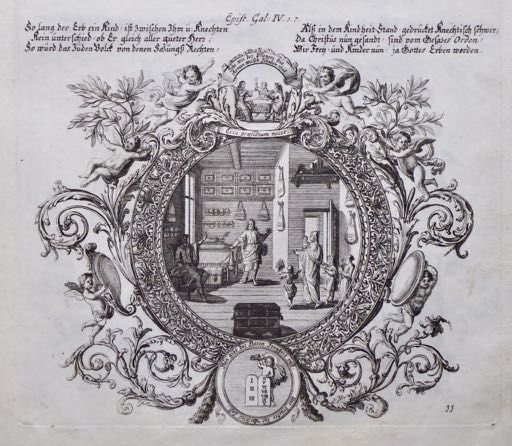
Susanne Schulz-Falster
                                                               RA RE B O OK S

of the scene; each letter is illustrated by a                                      A finely-bound miniature Hamburg Calendar
suitable scene for didactic effect. The letter ‘C’                                 for 1747, extra-illustrated with one double-page
stands for ‘carnival’ and shows a Venetian                                         and six single-page hand-coloured engravings
carnival ball with masked figures. ‘G’ is                                          by Joh. Georg Schmidt from Braunschweig.
illustrated with a ‘Galeere’, a powerful frigate or                                  The Hamburgisch-verbesserter Schreib-
warship. The illustrations are highly imag-                                        Calender was published from the late 17th
inative and executed with an exceptional atten-                                    century. It contains the usual information on
tion to detail.                                                                    sun and moon phases, church events, court
   A complete set of the plates, as here, is very                                  session dates, post and market dates, but also,
rare indeed, especially in such a wide-margined                                    rather appropriately for Hamburg, tide tables.
and crisp state. A small size facsimile was                                        Music clearly played an important role in
published in 1973 by A. Durstmüller, Ein                                           Hamburg life with church concerts listed. This
Schmuckalphabet aus Wien.                                                          was the final year under the editorship of
Thieme Becker XXVI, p. 562; OCLC records just the                                  Hermann Wahn (1678-1747), a theologian,
Princeton copy.                                                                    mathematician and astronomer.
                                                                                   Not in Köhring; for the engraver: Allgemeines
                                                                                   Künstlerlexicon, p. 1516.
ALMANACS
Bound in Red Velvet - Extra Illustrated                                            Illustrated Pocket Diary
CALENDAR - WAHN, Hermann.                                                          [ALMANAC.] The Royal Engagement
Hamburgisch- verbesserter Schreib-                                                 Pocket Atlas. For the year MDCCLXXXVI,
Calender aufs 1747. Jahr: darin hiesige                                            to be continued annually. Southampton,
Gerichts-Tage, Predigten, Music und                                                T. Baker, W. March & T. Davidson
Passion in allen 5 Haupt- und Neben-                                               London. 1786.                 $1250
Kirchen, wie auch Zucht- und Spinn-                                                  24mo, pp. 3-34, [28, engraved calendar section],
Hause, St. Georg, und St. Pauli. Hamburg,                                            63-92, [2], with an engraved title-page and a final
Conrad König, 1746.                $2000                                             engraved ‘memoranda leaf’; tax stamp to title-page;
 32mo, (80 x 50mm), interleaved copy, pp. [64],                                      gilt edges; a fine copy, complete, in the original
 printed in red and black, with one additional                                       engraved wrappers, showing a vignette of Atlas on
 double-page and six single-page hand-coloured                                       the front cover and the imprint at foot of rear cover;
 engravings by Joh. Georg Schmidt, Braunschweig                                      a little dog-eared; in the original red roan slipcase,
 auf der Höhe, 1747; fine red velvet binding, with                                   elaborately decorated in gilt, with ‘Atlas’ in gilt
 elaborate silver thread stitching, crowned initials AE                              within central circular surround.
 C H to upper board, lower board with crowned 1747                                 A charming and rare part engraved almanac-
 in silver stitching.                                                              cum-diary, with ‘twenty-four beautiful
                                                                                   descriptive vignettes’ of the most striking
                                                                                   picturesque scenes in Milton’s celebrated poem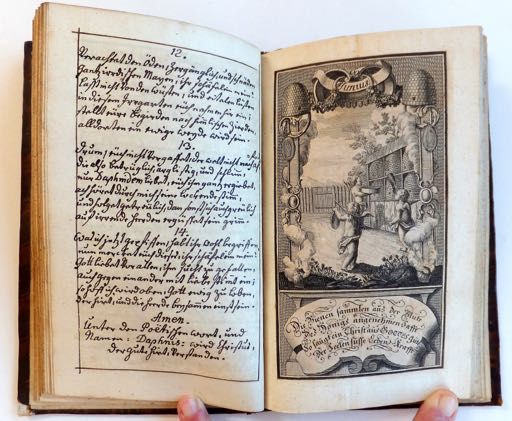
Susanne Schulz-Falster
                                                                     RA RE B O OK S

‘L’Allegro’. The designs, though unattributed,                                                           CALLIGRAPHY
are almost certainly by Thomas Stothard, who
provided illustrations for Baker for almost fifty                                                        By an Italian Writing Master
years. The Royal Engagement Pocket Atlas was
the earliest of the illustrated pocket diaries and
it ‘was unique in taking the illustration of
literary texts as its subject; it established a
pattern of paratextual composition that would
be found in the later pocket books of the period
and used marketing strategies -explicitly stated
in the bookseller's advertisements - which were
largely imitated by the producers of similar
publications. The most significant innovation
that Baker introduced concerned the
illustrations. Over the years illustrations for           Riders' British Merlin was one of the          [CASTELLINI, Giovanni Carlo.] La Penna
Thomson’s Seasons (1793 and 1796), and                    longest running British almanacs,              del maestro calligrafo ornata da 12
numerous scenes from Scott and Byron (for a               published under the control of the
                                                          Stationer's Company from 1656 to the           esemplari moderni. Florence, [colophon:]
full analysis see Sandro Jung in The Library).
                                                          early nineteenth century. It contains a        Stamperia Granducale, 1824.       $1250
ESTC t507048 (BL only); no copy in OCLC; see
                                                          calendar of the year together with some         Oblong Folio (260x440mm), engraved title and 12
Sandro Jung, Thomas Stothard's Illustrations for The
                                                          astronomical data, medical information,         engraved plates by Giovanni Carlo Castellini; a little
Royal Engagement Pocket Atlas, 1779–1826, The
                                                          interesting facts and statistics, moral         dog-eared and some light dust-soiling; occasional
Library, 12/1, March 2011, pp. 3–22.
                                                                                                          spotting, last few leaves with faint dampstain
                                                          precepts, and proverbs. The almanac thus        (40x40mm) to lower margin, not reaching the
                                                          fulfilled a variety of roles, providing         platemark; blue paper wrappers with unsigned neo-
Wallet-Style Binding                                      information and entertainment at a time         classical engraving with the inscription ‘Istruitevi e
                                                          when reading matter was scarce. At the          sperate’; rebacked in matching paper; a good copy.
[ALMANAC.] RIDERS, Cardanus                               same time it fulfilled a secondary role as a
[pseud.]. Riders British Merlin: for the                                                                 A fine example of a calligraphy and
                                                          diary and notebook, for which numerous
Year of our Lord God, 1790. With notes of                                                                penmanship manual by the writing master
                                                          blank pages were inserted, especially the      Giovanni Carlo Castellini. He gives detailed
husbandry, fairs, marts, high roads, and                  two leaves of specially coated paper, on       instruction on the correct formation of letters,
tables for many necessary uses. London,                   which one could easily write with a stylus,    before progressing to more elaborate letters.
Company of Stationers, 1790.        $1400                 and subsequently erase the information.        Each plate shows a different type of alphabet,
                                                            Even though these almanacs were              some highly elaborate, illustrated with simple
 12mo, pp. 60, first part interleaved; title printed in   produced in large numbers, only few            phrases or sayings. One plate is dedicated to the
 red and black, headlines and saints' days printed in     examples have survived. It is particularly     elegant composition of an invoice, decorated
 red throughout; contemporary London red goatskin         appealing to find it well-preserved in its     with a dragon flourish.
 wallet-style binding, sides decoratively gilt; with      original red goatskin binding.
                                                                                                         Bonacini 337; Berlin Katalog 5229; OCLC: Getty,
 silver clasp intact, but lacking stylus; a fine copy.    ESTC t45027.                                   Newberry, Harvard.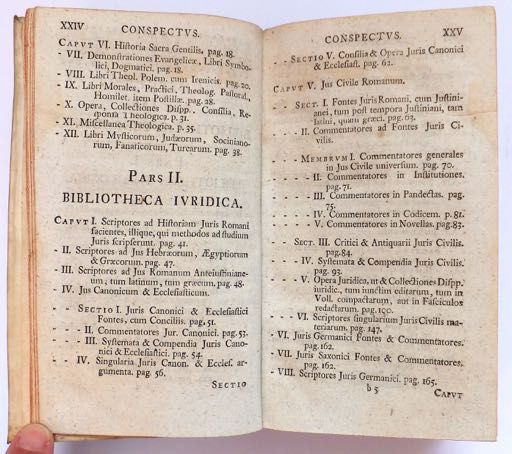
Susanne Schulz-Falster
                                                             RA RE B O OK S

Maître Ecrivain                                                                  German Calligraphy - a very Fine Copy
[DLIONVILLE.] L'Art ou Principes                                                 MUSCAT, Johann. Vorschrifft Teutsch und
d’Ecriture. L’Intelligence et la Pratique                                        Lateinischer Schrifften geschrieben von
sous les meilleurs Maitres. Manuscript                                           Johann Muscat. Nuremberg, Frankfurt
calligraphy manual in ink. [n.p] Paris, ca                                       and Leipzig, Christoph Riegel, 1692.
1791.                                $6500                                                                        $10,000
 Large Folio (410 x 272mm), ll. [124]; manuscript                                 Oblong folio (200 x 304mm), ll. 17 numbered and
 calligraphy samples and illustrations to the rectos;                             engraved highly decorated calligraphic plates,
 very light browning and the occasional spot, a clean                             including engraved title (which has plate
 tear to the lower margin of one leaf; contemporary                               numbering), very clean and crisp; contemporary
 French brown sheepskin, green labels, lettered                                   marbled boards, a.e.g., preserved in a later protective
 ‘Dlionville’; ownership inscription of Rosina Bini                               slipcase; a very fine and crisp copy.
 (dated 1887) to front endpaper.
                                                                                 Rare first edition of this spectacular writing and
A fascinating and full compendium of                                             calligraphy manual by the 17th century
eighteenth-century illustrative calligraphy by a                                 German writing master Johann Muscat
professional scribe known to have worked in                                      (1659-1711). The volume consists of seventeen
Paris. Each page features a unique combination                                   engraved plates (including title) which depict
of penmanship featuring both text and design,                                    elaborate alphabets, sayings, and short religious
evolving in complexity to include elaborate                                      phrases in different scripts, all surrounded by
borders in multiplied coloured inks.                                             richly illustrated borders with figures of beasts
  A visual tour de force, the designs are at their                               and birds, ranging from griffins to elephants,
most successful when they ape arabesque                                          eagles to horses, swans and lions. Four plates
forms. The text includes alphabetical exercises                                            show different alphabets and elaborate
and tables of conjugated verbs, place names and                                             initials. It is rare to find a manual
regions in France and further afield (Jamaica is                                            such as this in such perfect condition.
a recurring theme), bon mots and idioms,                                                    Muscat trained as writing and
prayers and other biblical excerpts, poetic                                                 arithmetic master at Nuremberg. At
offerings, and verse fragments.                                                             first he worked with his father, who
  Several of the pages are dated (1790 or 1791),                                            was cantor in Lauf, before being
and indeed the work goes beyond abstract                                                    appointed writing and arithmetic
exercises to offer tantalizing glimpses of                                                  master in Hersbruck. (Nürnbergisches
revolutionary France. There is a disparaging                                                Gelehrtenlexikon, VI, p. 483).
description of a provincial nobleman’s                                                      Later editions were published in 1709,
dissipated life and scathing references to the                                              1729 and 1773 - all are uncommon.
ancien regime. A fascinating book, which goes                                              Berlin Ornamentstichsammlung 4846,
beyond calligraphic exercises to reveal                                                    Bonacini 1254; Doede, 89 (later edition);
something about turbulent era in which it was                                              outside of Germany OCLC: Strasbourg,
produced.                                                                                  Bibliothèque Nationale, and Newberry.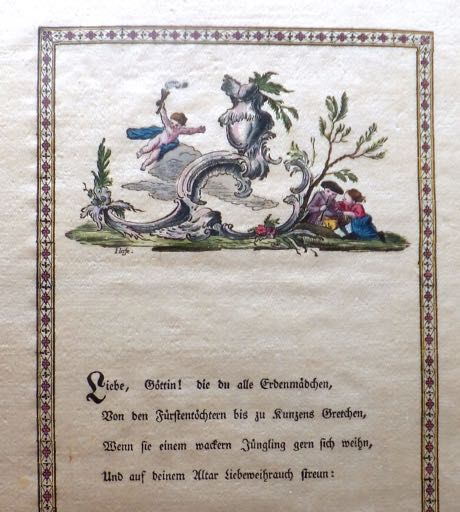
Susanne Schulz-Falster
                                                            RA RE B O OK S

COLLECTING                                                                        standard work, still used today, of Albert
                                                                                Jacquemart’s Histoire de la Céramique, etude
Private Collection                                                              descriptive et raisonnée des poteries de tout les
[COLLECTING.] Charming and                                                      temps et de tous les peuples (Paris, 1875).
mysterious album of watercolours, with
manuscript title; ‘Nos Bibelots, par J.
Delbaere imagier de Mesdames Brasseur’.                                         Law Libraries
[c. 1870.]                          $4200                                       [LIBRARY CATALOGUE - PLARRE,
                                                                                Ernst Martin.] Catalogus Bibliothecae
 Oblong 8vo (112 x 168 mm), ff. [30] of finely
                                                                                Plarrianae: Libris selectissimis, atque
 executed watercolours depicting ‘objects’ in the                               rarissimis.. Berlin, J. Wessel, 1717.
 collection, most captioned in manuscript; in                                   [bound after:] Bibliothecae a d. Francisco
 excellent condition; bound in a crème silk binding,                            Carolo Conradi... : divendendae tomus I.
 covers embroidered with green leafy borders and                                Helmstedt, P.D. Schnorr, 1749.        $3000
 delicate flowers, front cover with embroidered ‘A
 mon compere’, gilt edges.
An intriguing album of 30 very fine and                                          Two works in one volume, 8vo, Plarre: pp. [xvi], 400,
detailed watercolours depicting more than sixty                                  8; Conradi: pp. [xxxii], 528; mid eighteenth century
largely porcelain ‘objects’ in a collection.                                     full vellum over boards; spine label lettered in gilt;
Depicted are cups and saucers, plates, figurines,                                with library and deaccession stamp
large show pieces, and other porcelain objects                                   Universitätsibliothek Halle/Saale to verso of title
(one a ceramic shoe!) from a wide variety of                                     page, and shelf label to spine; a good tight copy.
ceramic manufactures in France and elsewhere,                                   Two fascinating and extensive auction
such as Sevres, Meissen, Delft (blue and white,                                 catalogues of the collections of important
and polychrome), Mennecy, Tournay, Chantilly,                                   German jurists, attesting to the breadth of their
Strasbourg, Rouen, Lille, St Cloud, Strasbourg,                                 interest.
and from China and Japan. There are only a                                         First edition of the uncommon auction
handful of objects which are not porcelain,                                     catalogue of the extensive juridical library of
such as a Renaissance ivory of two putti                                        the lawyer Ernst Martin Plarre (1684-1717).
playing, a collection of 18th-century red and                                   Over six thousand lots are listed, covering the
green morocco bindings, an early 18th-century                                   areas of theology, law, medicine, philosophy,
silver pitcher and plate, and four 18th-century                                 literature and history. The auction took place in
whistles in the shape of dogs.                                                  Berlin from 28 December 1717.
  The collection as illustrated here is typical of                                 Also included is the catalogue of his fellow
its time, with an interest in porcelain and other                               jurist Franz Karl Conradi (1701-1748), overseen
curious small-scale objets d’art. France at the                                 by the professor for history and constitutional
time was going through a craze of collecting                                    law Franz Dominicus Häberlin. The auction
porcelain and ceramics as can be seen in the                                    comprised nearly 6500 lots, of which nearly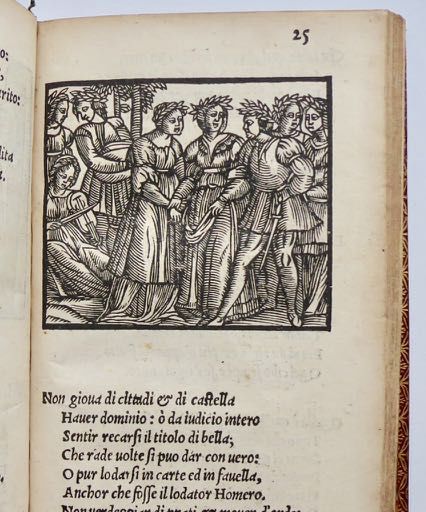
Susanne Schulz-Falster
                                                               RA RE B O OK S

2500 are legal titles, carefully subdivided into                                   The final sections deal with medals, which cities
Roman law, Canon law, civil and criminal law,                                      issued them, and which emperors were
and numerous questions regarding state or                                          d e p i c te d . In t h e co n c l u d i n g c h a p te r
constitutional law. The remaining books were                                       information is given on how to distinguish false
offered in a second auction 17 years later (not                                    medals from real ones. The engraved plates
present here).                                                                     depict a number of Greek and Roman coins.
VD18 11255811; Loh V, 187; OCLC: Halle, Weimar,                                      P i n ke r t o n , i n h i s E s s a y o n M e d a l s
Berlin, Hannover, Erlangen, no copies outside of                                   (Advertisement to the third edition, 1808),
Germany; OCLC: Harvard, Cambridge, Dresden,                                        called it ‘the best, and in every way superior to
(Vol 1 only); Tübingen & Zürich vols I & II.                                       Jobert’s [Science des medailles]’.
                                                                                   Cicognara 2890.

18th Century Numismatics
MONALDINI, Giuseppe Antonio.                                                       NUMISMATICS. Verzeichniss einer sehr
Istituzione antiquario-numismatica, o sia,                                         bedeutenden Münz- und Medaillen-
Introduzione allo studio delle antiche                                             Sammlung, welche nebst einem Anhange
medaglie. Rome, Venanzio Monaldini,                                                von numismatischen Büchern und
Giovanni Zempel. 1772.                 $900                                        heraldischen Sammlungen im C. O.
                                                                                   Weigel'schen Auctions-Lokale zu Leipzig
 4to, pp. xxxii, 487 with three folding engraved plates                            am 11. Juni 1860 (...) versteigert werden
 bound at the end; fine engraved title vignette and                                soll. [together with:] Register zum
 decorative initials; lacking front free endpaper, but                             Cataloge, manuscript. Leipzig, T.O. Weigel,
 with initial blank; contemporary sheep-backed red                                 1860.                                  $900
 paste-paper boards; corners a little worn; with later
                                                                                     8vo, pp. [iv], 260, priced and annotated throughout
 stamp of the English numismatics dealer F. J.
                                                                                     in ink, together with manuscript contents list and
 Jefferey; an attractive copy.
                                                                                     index pp. 11, written in ink; contemporary cloth-
A scarce work on classic numismatics and                                             backed boards, with manuscript label to upper
medals. Monaldini begins with a detailed                                             board; corners rubbed.
introduction to the manufacture of coins and                                       The auctioneer’s copy of the catalogue of a
medals, their shape, their iconography and                                         substantial collection of coins and medals. In all
symbolism. He provides a number of useful                                          6858 lots are listed, 3003 are of coins and
glossaries, of symbols used, be they based on                                      medals of all periods of the Roman empire,
deities of different ranks, animals, etc., or Latin                                with detailed descriptions, reference to
cyphers and abbreviations used on coins. A                                         Mionnet’s monumental catalogue of Greek and
listing of the coinage in use in different cities is                               Roman coins, estimates and hammer prices.
given, together with a table illustrating which                                    The remaining 3646 lots cover coins of the
coins were in use for what periods.                                                Middle Ages and Modern Times from the Holy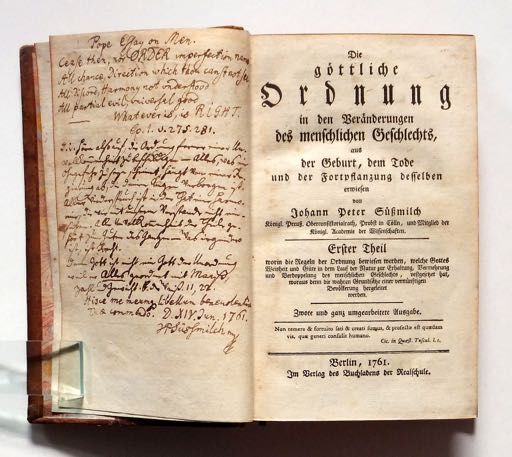
Susanne Schulz-Falster
                                                                 RA RE B O OK S

Roman Empire, the German Confederation,                                                            and which are now a collection, together with
Prussia, Austria and other European Countries.                                                     my explanatory text …’).
Again with attributions, extensive descriptions                                                      In his introduction Wach relates that he took
and hammer prices. A separate section lists over                                                   photographs of all the kakemono in the
200 manuscripts and books on numismatics                                                           collection; these photographs are not present,
and heraldry. Also included is a manuscript                                                        possibly now in collection of the Technical
index, written in the same hand as the hammer                                                      University in Munich. Wach discusses growing
prices.                                                                                            interest in Japanese art and in particular
                                                                                                   kakemono in Germany; the different types of
                                                                                                   kakemono and their various mounts (with
Japanese Kakemono                                                                                  annotated explanatory drawings, and textile
WACH, Hugo. ‘Einige Bemerkungen über                                                               samples of the backing); the use and purpose of
Kakemono’, German manuscript on                                                                    kakemono; what the various pictures show and
Japanese paper, explaining the concept of                                                          what their purpose; and a chapter on Buddist
Kakemono in Japanese culture, the art                                                              tempel kakemono.
involved, the various types and their                                                              Part of the manuscript appears was apparently
                                                                                                   privately printed under the same title (pp. 37, ll.
hanging, the materials involved and the                                                            [17]) and is very rare, OCLC: Berlin, National
backing textiles, all in relation to a                                                             Gallery of Canada, Jerusalem.
collection of Kakemono bought in Tokyo
for the Berlin banker Paul von
                                                       various types of kakemono. Kakemono
Mendelssohn Bartholdy. Tokyo, May,                                                                 Walpoleana - A Family Production
                                                       are Japanese scroll paintings or Japanese
1900.                           $6200                  calligraphy mounted with broads silk        WALPOLE, Hon. Frederick. Catalogue of
                                                       fabric edges.                               Political Pamphlets relating to Sir Robert
 4to (277 x 218 mm), ff. [2], 77, [1] blank, German       The manuscript was written by Hugo       Walpole’s Administration. [n.p. n.p.], ca
 manuscript in a neat readable hand, written on        Wach and sent to his uncle Ernst            1840.                               $4000
 rectos only, with 18 ink drawings (11 with wash) in   Mendelssohn-Bartholdy (1846-1909), so
 the text illustrating kakemono types, and 2 large     he could understand and appreciate the
 folding sheets with together 29 mounted fabric        kakemono collection bought by his eldest      Manuscript on paper, 12mo, ff. 77, including the
 samples of kakemono backings (annotated in            son, Berlin banker Paul von Mendelssohn       occasional blank, with further blanks at end, on
 Japanese mss), 1 mounted woodcut, 1 mounted           Bartholdy (1875-1935) in Tokyo. While         folded notepaper loosely inserted into a limp vellum
 photograph, and 4 Japanese textile pattern woodcut    living in Tokyo Hugo Wach and Paul von        tongued wallet, inscribed ‘Rt. Hble. The Earl of
 plates; in excellent condition, bound in Japanese     Mendelssohn-Bartholdy got interested in       Orford’ and ‘Walpole Pamphlets / Catalogue of’,
 style contemporary stab binding with floral gilt      kakemono and bought over 300 pieces.          stamp duty rates printed on the paper lining; from
 pattern on olive green silk covered boards.                                                         the Norfolk collection of Ronald Clive Fiske, with
                                                       The manuscript has a long signed mss
An illustrated manuscript by the architect Hugo        dedication: ‘enclosed I send you              his armorial bookplate and shelf-mark label,
Wach (1872-1939), based in Tokyo for part of                                                         occasional contemporary advertisements for similar
                                                       reproductive drawings and a catalogue of
his career, explaining the concept and art of                                                        works (some pasted to leaves), as well as more recent
                                                       the Kakemono Paul bought here [Tokyo]         bookseller’s descriptions loosely inserted.
Susanne Schulz-Falster
                                                         RA RE B O OK S

A handsome and extensive nineteenth-century                                  COURTESY
manuscript bibliography of pamphlets and
other printed ephemera relating to Britain’s de                              & EMBLEM BOOKS
facto first Prime Minister, Sir Robert Walpole                               Devotional Emblem Book
(1676-1745).                                                                 KRAUS, Johann Ulrich. Heilige Augen-
  Arranged alphabetically by title (as most
entries are anonymous), this document                                        und Gemüths-Lust. Augsburg, Johann
presents a remarkably detailed bibliographical                               Ulrich Kraus, 1706.              $4500
record of the Robinocracy - as Walpole’s
administration came to be known - and is also                                 Folio (326x210mm), two parts in one volume, ll.[ 6],
a fascinating labour of love and a record of                                  70 engraved plates; ll. [2], 50 engraved plates,
familial interest. Although apparently treasured                              numbered 71-120, with xylographic half title, two
by the naval officer and Tory M.P. Frederick                                  engraved frontispieces, letterpress title pages with
Walpole (1822-76), who has added a                                            large engraved vignettes; occasionally a little dust-
manuscript title-page, introduction (quoting                                  soiled, small marginal tear to foot of plate 94, not
Macaulay) and the occasional addition, the                                    touching the image; contemporary full calf, spine in
majority of the text is in at least one other                                 compartments, with ornamentation, sides ruled, gilt
distinct hand. We can speculate that the                                      mostly worn off; a very good copy.
catalogue was in the family’s possession for                                 First edition of this highpoint of religious book
some time prior to Frederick’s amendments, as                                illustration. Johann Ulrich Kraus (1655-1719)
the limp vellum wallet likely dates to 1815, with                            was one of the most successful engravers and
its printed reference to New Stamp Duties on                                 publishers at Augsburg in the latter part of the
the interior. Perhaps this was the work and                                  17th century. This monumental emblem book
possession of Frederick’s father, Horatio, 3rd                               was conceived as a suite to his famous Picture
Earl of Orford (1753-1858). Whatever its aegis,                              Bible or Bilderbibel (1698-1700), and follows
it is an important near contemporary piece of                                the same design. The upper half of each plate
Walpoleiana.                                                                 contains an illustration of a Bible scene and the
  Few figures incited the churning of the                                    lower portion an engraved circular emblem.
eighteenth-century popular presses like                                      Each plate is devoted to a different Saint's day,
Walpole. His actions, personality and lengthy                                and each emblem is printed within an elaborate
tenure were so controversial that a vast amount                              cartouche or frame, itself often incorporating
of printed material was produced both in                                     small medallion vignettes or emblems. In his
support of and opposition to his                                             artistic style Kraus's ornamental engravings -
administration, much of which is recorded in                                 represented here by the varied and imaginative
this impressive manuscript catalogue.                                        emblem cartouches - were widely influential in
                                                                             Germany, through their use as models for
                                                                             cabinetmakers, woodworkers and other
                                                                             craftsmen.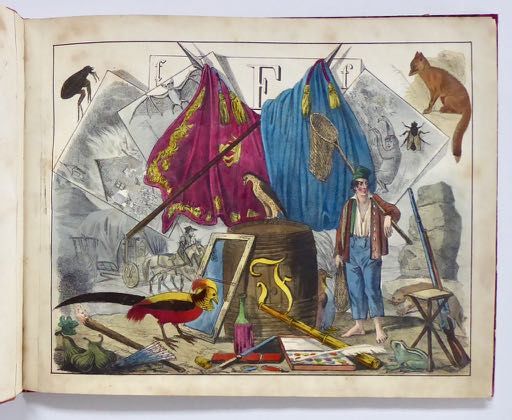
Susanne Schulz-Falster
                                                              RA RE B O OK S

 Kraus later published the Oratio Dominica -                                      grapes in October, and chopping wood in
printing the Lord's Prayer in more than one                                       November, when death – as a skull – stalks the
hundred different languages.                                                      earth.
Landwehr, German 390; Faber du Faur 1849; Praz,                                     The engravings are unsigned, but are
Studies in Seventeenth-Century Imagery, p.                                        evidently contemporaneous with the volume,
389;Thieme-Becker 21:440.                                                         which can be dated by the presence of a
                                                                                  chronogram for 1760 on several of the leaves.
                                                                                  The effect is of a seasonal devotional volume,
Illustrated Prayer Calendar                                                       with inspiring bon mots and verse for various
                                                                                  times of year.
[POPULAR PIETY.] F.P.W. Etwas
Lateinisches, und etwas Teütsches für ein
Jedes Monat des gantzen Jahrs, das ist                                            Illustrated by Bewick
allerhand Text, und Vers, Arien, Gesänger,                                        [TRUSLER, John.] Proverbs in Verse, or,
und Gemüthserhebungen zu Gott,                                                    Moral instruction conveyed in pictures,
Mariae der Jungfrauen, und zu denen                                               for the use of schools, with fifty-six cuts,
lieben Heiligen. [n.p.] Southern Germany                                          to which are prefixed rules for reading
or Austria, 1761.                 $1250                                           verse. London, I. Souter, [printed by
 8vo, (202 x 130mm), ll. 68 manuscript in ink, with                               Smith], not before 1817.             $1500
 13 mounted full page engravings, 12 of which
                                                                                   Small 8vo, pp. 122, [6], contents page and
 calendar plates, unsigned, ca 1760; contemporary
                                                                                   advertisements, with 56 nearly half-page woodcuts
 full polished sheep, spine on raised bands, corners a
                                                                                   by John Bewick and an equal number of telling
 little bumped.
                                                                                   vignettes; mid-nineteenth century full polished calf,
                                                                                   spine decoratively gilt in compartments, gilt-lettered
An eighteenth-century illustrated manuscript                                       spine label, triple filets to sides, gilt doublures, a.e.g.,
collection of prayers and verses, after the                                        finely bound by Francis Bedford, from the collection
fashion of a seasonal book of hours. The book                                      of Sydney Roscoe, who published on Bewick.
comprises German and Latin prayers as well as                                     First edition of the rhymed version of Trusler’s
‘arias and songs’ including a Pastorella. These                                   Proverbs Exemplified (first published in 1790).
are arranged according to the seasons, and are                                    In his preface Trusler comments that the moral
accompanied by a mounted engraving, one for                                       precepts would be more memorable for
each of the calendar months with the relevant                                     children if presented in verse. It was published
zodiac symbol added at the head and a printed                                     as a companion volume to Trusler’s Progress of
four-line verse within a cartouche beneath. The                                   Man and Society and includes ‘On reading
charming illustrations, which resemble emblem                                     English prosody, or, Rules for reading verse’.
plates, show putti engaged in seasonal                                              This elegant volume, published when Trusler
occupations. These include ploughing in April,                                    was already a well-known figure made wealthy
harvesting fruit trees in September, pressing                                     through various publishing schemes, features
Susanne Schulz-Falster
RA RE B O OK S
the sort of moralizing that was aimed at A very scarce guide to the gallant life by the
children throughout the 18th century. Each Bishop of Lesina (now Hvar, Croatia), which
proverb is accompanied by a woodcut was banned by the Catholic Church.
illustration by John Bewick, adding to the In this controversial work, Stratico frames his
vividness of the related narrative. For example, advice around a Socratic style of questions and
‘Birds of a Feather, Flock Together’, features an answers. He begins with basic questions about
image of men around a table, engaged in identity, and builds to more complex
gambling and drunkenness as the devil looms interrogatives which consider the nature of
above them. The dark nature of these proverbs work, sobriety, courage, family and love.
is undoubtedly due to the notion that was Although a product of the eighteenth century -
gaining traction in the 18th century, that and addressed to young nobleman Fanciullo
individuals, and perhaps children in particular, Fererico de’ Vecchi - it owes much to
needed to work diligently in order to suppress Ren a i s s a n ce hu m a n i s t t r a c t s su ch a s
immoral tendencies, lest they take root in one’s Castiglione’s Book of the Courtier. Rather more
character and persist into adulthood. devout than its fifteenth and sixteenth-century
Hugo 44; Bell 17; Osborne II, p.66; Schiller 231; predecessors, it evokes them as a conduct book
OCLC: Morgan, McGill. or preceptors for youth, and a life well lived. It
certainly provoked the ire of the Church as
Common Courtesy heretical when it was posthumously published
TRUSLER, John. A System of Etiquette, by in the early nineteenth century and appears on
the Rev. Dr. John Trusler, author of the much down-to-earth advice, on how to be the Index with a date of 2 July 1804.
Principles of Politeness; Honours of the a well-rounded, considerate human being. Stratico (1732-1799) was a fascinating figure,
Table, &c. &c. Bath, for the author, W. and a mass of contradictions. Italian by birth,
NSTC I T1757; COPAC: BL, Cambridge,
Meyler, 1804. $1050 he had studied at the Collegio della Minerva in
National Trust, UCL.
Rome, obtained the chair of biblical exegesis in
the University of Siena in 1763, and transferred
12mo, pp. iv, 92, 89-92; small woodcut vignette to to Pisa in 1769. As a friar he led a life of
title; without the advertisements bound in some Banned Book by a Bishop sybaritic licentiousness and was a close friend
copies; contemporary blind-stamped sheep, joints
and extremities a little rubbed, but still a good copy;
[STRATICO, Giovanni Domenico.] of Casanova, whom he met upon his arrival in
Catechismo del Galantuomo di Pisa. As a bishop however, he evinced a high
clean and crisp.
G.D.S.V. di L., dedicato al Fanciullo concept of the dignity of his ministry and
First edition of a charming little introduction worked hard to reform customs and promote
to etiquette by the prolific Dr Trusler, Federico de’ Vecchi. Zara, Domenico
Fracasso, n.d. [1804]. $2200 industry and agriculture in Dalmatia. He wrote
composed on the request of a letter-writer to several tracts and theological works in Italian
‘guide the novice thro’ the intricacies of polite and Latin, as well as pastoral letters, homilies,
life’ (p. iv). 8vo, pp. 48, woodcut vignette to title, funeral orations, poems, and agrarian
Trusler’s little manual can be seen partly as a contemporary blue wrappers overlayed with a
pamphlets.
kind of practical Debrett’s accompanied by pale paper wrapper, a contemporary
inscription on the back cover; a fine copy. Not fund in OCLC.Susanne Schulz-Falster
RA RE B O OK S
ECONOMICS Wealth of Nations
Mathematical Economics SMITH, Adam. An Inquiry into the
Nature and Causes of the Wealth of
AUSPITZ, Rudolf and LIEBEN, Richard. Nations. In three volumes. London, A.
Untersuchungen über die Theorie des Strahan and T. Cadell, 1793.
Preises. Leipzig, Duncker & Humblot,
1889. $4800 $3200
Large 8vo, pp. xxxi, [1]; 555, [1]; with diagrams in
the text printed in red and black; uncut in original Three volumes, 8vo, pp. xii, 499, [1]; [ii], vi, 518, [5]
publisher’s full cloth, spine and sides ruled and appendix; vii, [1] blank, 465, [1] blank, [49] index,
lettered in black; corners very slightly bumped, and [1] advertisements; with all three half-titles;
faint damp stain to fore edge of lower board; two attractively bound in contemporary full tree calf,
small private Japanese library stamps; a very good contrasting gilt-lettered lettering and numbering
copy in the original binding. pieces, flat spines with decorative gilt rule and
Very rare first edition of the important work by decoration, joints a little rubbed and small chip at
head of spine; a clean and crisp set.
Auspitz and Lieben, 'the book that assured its
authors of a place among the eminent An attractive eighteenth-century edition of The
mathematical economists. It is essentially an Wealth of Nations, the first and greatest classic
exhaustive partial-equilibrium analysis of price of modern economic thought (PMM). The
in terms of an ingenious geometrical Wealth of Nations did more than any other
apparatus.... Auspitz and Lieben, though highly book on economics in the West to create the
regarded by men like Edgeworth, Pareto and subject of political economy and to develop it
Fisher, never received the credit they into an autonomous discipline. It was the 'first
deserved.' (New Palgrave). Schumpeter called major expression of the freedom of the
the work 'one of the outstanding theoretical individual'. It developed the theory of laissez-
performances of the age' (Schumpeter p. 849). faire and the right of individuals and states to
The fundamental first chapter, ‘pre-printed in carry on their economic activity unimpeded.
1887 to fix priorities relative to Böhm-Bawerk, Smith ends with a history of economic
provides the basic tools. (...) In subsequent development, and virtually demolishes the basis
chapters this apparatus is applied to a wide of the mercantile system. There are some
range of microeconomic problems and cases... prophetic comments on the limits of economic
An important final chapter extends the analysis control.
to monopoly, monopolistic competition, excise Goldsmiths'-Kress 15565; ESTC t95380; Vanderblue
taxes and international trade, and includes a p. 4.
brilliant discussion of optimal tariffs’ (New
Palgrave, p. 145).
Batson, p. 40; Menger, col. 71; Theocharis pp. 151
and 218n; Einaudi 214.Susanne Schulz-Falster
RA RE B O OK S
The Foundation of Demographics -with Süssmilch presented this finely bound copy of
Autograph Notes volume I before the second volume appeared
SÜSSMILCH, Johann Peter. Die goettliche (1762), which explains its lack.
Ordnung, in den Veränderungen des Higgs 2572; Kress 5987; Menger I, c 66; all early
editions are uncommon.
menschlichen Geschlechs aus der Geburt,
dem Tode und der Fortpflanzung
desselben erwiesen. Berlin, Realschul-
buchhandlung, 1761. $5000 Moneychanger’s Manual
[VERDUSSEN, Jerome.] Ordonnance et
8vo, pp. [viii], xvi, 576, 114 of tables (with some
instruction selon laquelle se doibuent
irregularities in pagination), but complete, [1] conduire & regler doresenauant les
errata; numerous tables and calculations in the text; changeurs ou collecteurs des pieces d'or &
contemporary full sheep; spine decoratively gilt, d'argent Anvers, Hierosme Verdussen,
gilt-lettered spine label; head of spine a little 1633. $3800
chipped; presentation copy in a fine presumably Tall 4to, (310 x 95mm), pp. 248 including half title,
Berlin binding, inscribed and signed by the author. with 3370 woodcut figures of the obverses and
A fine autograph by Johann Peter Süßmilch, reverses of contemporary European coins; large
inscribed on the front free endpaper of the first armorial woodcut on title, a few leaves with
volume of the second, substantially enlarged, marginal dampstaining, paper fault to margin of K1,
edition of his classic contribution to the study not touching any text or image; original half calf,
of population figures and demography. The worn and repaired, endpapers replaced; still a good
autograph starts with a quotation from Pope's crisp copy.
Essay on Man in English, followed by a 16-line First edition in French of this comprehensive
text in German, which very clearly illustrates moneychanger’s manual, printed in a
his metaphysical position of proving a divine distinctive and oversized tall oblong format as a
order through the application of arithmetical handy reference tool. 1685 coins are depicted
and statistical methods to social life and nature. on the presumably full sized woodcut
This places him at the intersection of the illustrations (these range in size from 20mm to
dominant intellectual trends of his age. 40mm in diameter), with indication of their
Süssmilch was the first systematic student of value and prescribed weights. This
'political arithmetic', he was also the first to comprehensive guide to coins in circulation at
point out the law of large numbers, the basis of the beginning of the seventeenth century was
all scientific statistical inquiry. 'It is his published in Dutch the same year. The guide
conception of the 'divine order', evidenced by was designed to be used by bankers, money
the regularity and order underlying all changers and merchants as a handy guide to the
demographic phenomena, which makes his the prolific local coinages which were issued by
work especially noteworthy' (ESS). most electorate, city state, bishopric andSusanne Schulz-Falster
RA RE B O OK S
kingdom in Europe, and even includes a Tersteegen (1697-1769), originally trained as a
Mexican Real. merchant, but soon came under the influence
The illustrations are prefaced by the of Wilhelm Hoffmann, a pietist revivalist, and
Ordonnance, which regulated money changing. devoted himself to religious pursuits. His pietist
The first half contains gold coins, followed by message was highly influential in America.
silver coins, with a brief final section illustrating This is a case of ingenious re-packaging,
various counterfeit coins. turning religious education into a game. The
Lipsius, Bibliotheca Numaria, 1801, p. 298 for Dutch American publisher Christopher Sauer in
language edition of the same year. Germantown had gone one step further by
issuing this in the form of cards or tickets. ‘Each
containing a poetic gem composed by the
celebrated Gerhard Tersteegen, and a verse or
passage from the Scriptures. The good people
in olden time enjoyed themselves, generally on
Sunday afternoons, by drawing prizes out of
GAMBLING & LOTTERIES this sacred or spiritual treasury, and often when
Spiritual Lottery they felt gloomy or despondent, they would
resort to it in the hope of drawing some
T[ERSTEEGEN., G.[erhard]. Diss ist der promise or consolation to cheer their drooping
Frommen Lotterie. Wobey man kann spirits’ (Hildeburn Pennsylvania 905).
verlieren nie: Das Nichts darinn ist all so See Kaplan 284 (for card game).
groß, Als wann dir fiel das beste Loos. Mit
verschiedenen Reimen aufs neue
vermehret, und durchhin mit Biblischen
Sprüchen bekräftiget von dem Autore.
Solingen, Schmitz, 1754. $2250 The French National Lottery
Oblong 12mo (60 x 110mm), pp. [ii], 381, [1] errata; [LOTTERY.] Jeu de l'Etoile, avec
lacking front free endpaper; contemporary full l’explication des nouveaux jeux, chances et
blindstamped calf, with double filet, four corner calculs, pour gagner aux loteries
fleurons and central crowned urn; corners a little
bumped, and small piece of covering leather missing composées de 90 numéros. Chez les
on upper board; marbled edges; an attractive copy. receveurs de loteries, on verra annoncer
A charming prayer book under the guise of a sur le tableau intitulé: Jeu de l’étoile, les
spiritual lottery book, with 365 inspiring bible nouveaux jeu, chances et calculs pour la
citations and four line verse, one for every day loterie indiquée. Deuxième édition,
of the week, taken from Tersteegen’s Geistliches corrigée et augmentée. Paris, Delion
Blumen-Gärtlein (the Spiritual flower garden), (printed by Gillé fils), n.d., ca 1799? $5000
first published in 1729.Susanne Schulz-Falster
RA RE B O OK S
8vo (192 x 124 mm), pp. 16 and 16 woodcuts in the ouvrage fait connoitre toutes les manieres
text, all of them in brilliant contemporary hand- dont peuvent etre formez 31, 32, 33, 34,
colouring; printed on pale blue paper; uncut,
stitched, as issued, spine covered with marbled paper
35, 36, 37, 38, 39, & 40 par les XL. cartes
strip; a little dog-eared and some dust-soiling to du jeu d'hombre et etablit la proportion
upper outer corner of first two leaves; very crisp, a qui est entre chacun de ces dix nombres.
lovely copy printed on heavy paper. Par Mr. D. M. Florence, Paperini, 1739.
Very rare detailed pamphlet advertising the $6000
French state lottery, printed in Paris by Gillé 4to, pp. [viii], 90, with one large folding printed
fils. The half title indicates that it had first been table bound after D1, title in red and black, with
privately circulated: ‘La première édition de cet engraved vignette signed Fillosi, decorative initials
ouvrage a donné aux personnes qui en ont suivi and head and tail pieces; contemporary half sheep
les jeux et calculs, 368 extraits, 24 ambes, six over pattern paper covered boards, spine decorated
ternes et deux quaternes’. The pamphlet gives and lettered in gilt; with initials S A in ink to title,
details of different forms of lotteries, star and shelf mark to front free endpaper; a crisp and
lottery, a lottery based on the signs of the clean copy.
Zodiac - this has charming and hand-coloured First edition of the ‘first published calculation
illustrations of the signs of the Zodiac - an ABC of the probabilities of the ten possible trent-et-
lottery, a method of establishing lottery quarante totals’ (Ethier p. 638). ‘Trente-et-
numbers by ladies’ names, or by interpreting quarante’ is together with faro, baccarat and
dreams. poker one of the great card gambling games.
During the French Revolution the lottery was Invented in the 17th century, its exact origins
abolished, despite its importance for state are obscure, but it dominated the ‘gambling
finances, only to be re-established in 1798, as scene’ throughout the 17th and 18th century
the only means to curb the deficit. It was now and is still being played in Monte Carlo and
called the ‘Loterie Nationale’. The lottery other European Casinos. All betting is done
continued to prosper during Napoleonic times against the house, or bank, at even money.
and provided a substantial share of the state Before dealing begins, the player places his bet
revenue. on rouge, noir, couleur, or inverse.
Gerald Willman. The History of Lotteries. The anonymous author calculates the ten
Department of Economics, Stanford University possible totals when using a nonstandard deck
1999, pp. 9/10. composition, that is a 40-card deck obtained
from a standard 52 card deck with eights, nines
and tens removed.
Isaac Todhunter (1820 - 1884) cites this work
Probability applied to Gambling
as the ‘most conspicuous example of
[ANON.] Calcul du Jeu appellé par les misdirected industry which the literature of
françois le trente-et-quarante, et que l'on Games of Chance can furnish’ (Todhunter,
nomme à Florence le trente-et-un. Cet 1865, article 358), whereas Ethier takes a moreSusanne Schulz-Falster
RA RE B O OK S
charitable view and concludes that the and these are illustrated on the accompanying
probability calculations are mostly correct, plate. The bottom half of each page is taken up
having a ‘relative error of less than one percent, with a number of examples of moral
which is quite respectable for 18th century quotations, mottos or sayings, again illustrating
work of this complexity’ (Ethier p. 639). a term beginning with the letter. Thus the letter
The author, clearly French though published ‘B’ is illustrated with ‘Bienenstock, Bote,
in Italy, remains anonymous. His probability Besenhändler, Brief, Bataille, Bierkanne,
calculation is the first in a long line of attempts Bouteille, Blumenvase and Buch’ and the
at calculating the odds of sequencing in this abstract term of ‘Bescheidenheit’ (modesty),
gambling card game, Poisson, De Morgan, which is accompanied by a number of
Bertand and others followed in his footstep moralistic sayings.
(see Ethier p. 640). Thorp and Walden stated in Heinisus 7, c. 84; not found in OCLC.
the 1970s that no card-counting system at
trente-et-quarante can yield a practical player Dutch Primer
advantage, a view shared by the directors of the [ABC.] Nieuw Prentkundig ABC Boekje,
Monte Carlo Casino (ibid). voor lieve Kinderen, Met zes en twintig
Conlon 39:40; Murhard, Bibliotheca Mathematica p. plaatjes en toepasselijke versjes.
422; see Ethier, The Doctrine of Chances: Dordrecht, J. Zender, ca. 1830. $1250
Probabilistic Aspects of Gambling, Heidelberg 2010;
OCLC: BL, Bodley, UCL, Bibliothèque Nationale,
Waseda University; no copy found in the US. Oblong 8vo (97 x 128mm), pp. [30], with small title
woodcut and 26 nearly full page woodcuts
illustration the letters of the alphabet, printed on
card; reinforced in gutter margin; contemporary
JUVENILES blue wrappers.
ABC cum Emblem Book A fine and apparently unrecorded illustrated
Dutch ABC book. A number of versions of the
[ABC.] Neues Bilder - ABC zum... Nutzen
alphabet are given, both Roman and Fraktur,
und Zeitvertreib der kleinen Jugend. also italics, with capital letters and lower case.
Reutlingen, Verlag des Literarischen Then a page is devoted to each letter of the
Comtoirs, [1826]. $2200 alphabet. A nearly full page woodcut illustrates
A very unusual and charming illustrated a term starting with the appropriate letter, with
8vo, (155 x 97 mm), pp. [ii] title page, 24 of text and ABC book, taking up some of the a two-line explanation underneath and a little
24 plates (printed on recto and verso) with over 100 conventions of an emblem book. A full column to the side with further examples. A
coloured woodcuts; original printed boards with page is devoted to each letter, which is charming tightrope walker or ‘Koordedauser’
allegorical illustration within classicist pattern printed at the top of the page both in illustrates the letter K.
border; text lightly browned, due to paper quality; Fraktur and Latin typography in upper Not in Huiskamp, or Children’s World of Learning,
quite spotted, but plates clean and with very and lower case. A number of examples of not found in OCLC.
attractive contemporary colouring. words beginning with this letter are givenSusanne Schulz-Falster
RA RE B O OK S
Visual Education Home-made Encyclopaedia
[JUVENILE.] [ANON.] Bilder zum [BOSI, Guiseppe.] L'Italiano istruito della
Anschauungs-Unterricht für die Jugend. Sua Patria. Giovanni Ubaldini Cataloni,
Bestehend in vaterländ. Gegenständen Urbino, 1841. $1200
nach der Natur u. den besten Originalen
lithographirt. Esslingen, I.F. Schreiber,
Small folio (300x210mm), ll. 26, including
1835. $2200 manuscript title page and index, with in all 35 cut-
out tables pasted in and numbered in ink, [13]
4to (330 x 220mm), pp. [ii] title, 5, [1] blank, blank; roan-backed marbled boards, spine labels
lithograph title and contents, followed by 40 lettered in gilt; very clean and crisp; title page signed
chromolithograph plates, printed recto and verso and dated ink, Giacomo Uboldini Catalani, Urbino,
and mounted on board; some dust-soiling and 1841, together with a shelf mark.
fingermarks, occasional light dampstaining; A charming home-made encyclopaedia of
contemporary solid half sheep over marbled useful statistical information on Italy. The
boards, green paper label to upper board. tables cover anything from the location and
First edition of a charming visual description of the different states of Italy, to the
encyclopaedia for children. The coloured main islands, highest mountains, lakes or rivers,
lithographic plates, all mounted on board for also waterfalls, or volcanoes. City sizes and
added protection show schoolroom and writing inhabitants are listed, as are heights of
equipment, cutlery and crockery, musical prominent towers or churches. Economic
instruments, man, architecture, animals, plants, information is also included such as most
etc., clearly based on Comenius’ Orbis Pictus. important and typical products, such as vinegar
The number of illustrations per plate varies, from Modena, chocolate from Turin, Florence
some have 10 to 15, others show just a couple of and Rome, artificial flowers from Genoa,
scenes, such as a house or castle with varying maccheroni (but not yet pizza) from Naples,
amount of detail. The plates a clearly meant as a Mortadella from Bologna, salami from Ferrara,
picture textbook, taking a visual approach to silk from Bergamo, or truffles from Piedmont.
explain the world to the young reader. A large Italian history is presented and a list of the
number of plates are devoted to animals, most important universities is given, together
curiously with an indication of the size. The with information on the most important
horse is depicted 1/18th of its real size, whereas libraries and the number of volumes held.
mouse and hedgehog are life-sized. The vivid The work is possibly based on figures
colouring makes the plates particularly presented in Prospetto Geografico-Statistico
appealing. This is one of the earliest dell’Italia by Estore Lanzani, Vicenza, 1829, or a
productions of the Esslingen children’s book version of Giuseppe Bosi’s ‘La Bella Italia,
publisher J.F. Schreiber. ovvero L’Italiano istruito della sua Patria ne’ suoi
OCLC: no copy in the US. Rapporti storici, politici, geografici, etSusanne Schulz-Falster
RA RE B O OK S
commerciali’, first published in book form in National Dress
1846, but possibly first included in Bosi’s 1837 MILLS, Alfred. Costumes of different
L’Agricoltore Italiano. On the other hand, Nations, in Miniature, from drawings
according to the journal ‘Il Facchino, giornale di by Alfred Mills with descriptions.
scienze, lettere ed arti’, Bosi had been accused of
copying this information from Cav. Raimondo London, Darton, Harvey & Darton,
Raimondi in Reggio. 1814. $680
The lay-out of the 1846 edition of Bosi’s work
is similar, with familiar headings of the tables, 24mo (63 x 60mm), pp. 96 with ll. 47 of engraved
statistics and listings, even though some figures plates; contemporary dark green roan, neatly
have been updated, taking account of rebacked; a very good copy with early ownership
population increase or scientific advances. inscription of Maria Frances Pratt to front paste-
The Ubaldini Catalonis were a prominent down.
noble family in Urbino. A delightful miniature children’s book,
giving an introduction to the different
nations and countries of the world, by
depicting its people in national dress
accompanied by information on the
Lithographed Italian Primer respective country. This is the second edition,
and cities, and objects are named; the
FECIA, Agostino. Metodo Pratico e later ones illustrate actions, i.e. the verbs the first was published in 1811.
Progressivo per l'Insegnamento della are named. The nations are sorted by geography,
Lingua Italiana applicabile ad altre Lingue The chapters of the textbook refer beginning with the north of Europe and Asia,
con Proposte di una Poliantea universale specifically to the plates, giving further followed by Russia & Tartary; Turkey, Persia &
figurate. Biella, Ignazio Fecia, 1839. explanation to the vocabulary. More Egypt; Africa; East India; China; Americas; and
$2500 general chapters deal with grammatical ending with the inhabitants of the South Seas.
concepts, sentence structure etc. The charming illustrations show people either
Tall 4to (308x212mm), pp. 203, [1] errata; 52
Fecia also suggests using this textbook at work or at play, an African is sending his
lithographed illustrations on 26 plates; occasional
spotting and browning, due to paper quality; as the basis for a school, and sets out the slave up a palm tree, a Negro girl is studying the
contemporary half calf over marbled boards, spine general rules and parameters of such an game of ouri, a Chinese man with rats and
ruled, decorated and lettered in gilt; an attractive institution. The lithographed plates puppies for sale. Captain Cook makes an
copy. should be copied in a large format, so that appearance on his visit to Tahiti and the
First edition, very rare, of this appealing and they can be affixed to the black board and Otaheitee.
innovative handbook of the Italian language, used as the basis of each lesson. All new The Highlander of Scotland is described as
illustrated with large lithographs, which are an material is to be revised at the end of each wearing a ‘close vest, and a short, full petticoat,
integral part of the teaching process. Every plate week. that leaves the knees bare’.
shows scenes, figures and situations, with the Uncommon, OCLC lists copies at DLC and Darton G647 (2); Moon 541 (2), Osborne p. 187.
relevant items named. Whereas the first plates the BL only.
show scenes of nature, country life, architectureSusanne Schulz-Falster
RA RE B O OK S
PUZZLEWELL, Peter. The Phoenix or, A LAW & RHETORIC
choice collection of riddles and charades.
London, J. Harris and son, [ca 1820.] The Criminal Lawyer’s Desk Manual
$1950 [ADDINGTON, William, Sir.] An
Abridgement of penal statutes, which
8vo, pp. [2] advertisements, 38, with 33 and 32
hand-coloured illustrations (four to a page) and the exhibits at one view, the Offence; the
phoenix on the title page; original printed wrappers, Punishment or Penalty annexed to that
hand coloured with phoenix vignette on front cover, Offence; the Mode of Recovering and
and Harris’s Cabinet device on back; annotated and Application of the Penalty; the Number of
signed multiple places by one George Jackson (dated Witnesses and Justices necessary to
May 17 1822). convict the Offender; with a Reference to
A charming early nineteenth-century children’s the Chapter and Section of the enacting
book of riddles and puzzles, with hand- Statute. London, W. Strahan and M.
coloured illustrations giving clues to the Woodfall, 1775. $1400
solutions. The ingenious riddles aim to educate,
Oblong 4to, (134 x 272mm), pp. viii, 558, [38] index;
with historical facts and famous personages original half calf over marbled boards; spine in
interspersed among the clues. The illustrations compartments, head and tail of spine chipped,
include Regency dances and costume, a ship at corners rubbed; binding worn, but sound; early
sail, parks and buildings, plant life, and various ownership inscription by H.L. Brown to
contemporary objects and tools. front free endpaper and mss note to front
The work comprises a selection from Elizabeth pastedown.
Newbery’s ‘A choice collection of riddles, First edition of this remarkable tour-
charades, rebusses, &c., chiefly original, de-force, a painstaking classification
originally published in 3 parts, 1792-1796’. and tabulation of criminal law and
Harris had taken over Newbery’s illustrious handy desk manual for the criminal
publishing business in 1801. He acquired a lawyer.
large selection of her stock, which became the Sir William Addington was ‘one of
backbone of his stock in trade, usually reissued the magistrates presiding at the
under his own imprint. Over the years he Public Office in Bow Street’. The
reinterpreted and reformatted certain of her work is dedicated to Sir John
popular works, of which this is an example Fielding, his celebrated but
(See: Moon, pp. 1-4). controversial magistrate colleague.
Moon, M.J. Harris's books; 696(1) – gives date as Sweet & Maxwell I, p. 358; ESTC t89162,
1819-20 ‘based on titles in bk-list’, and cites another outside of the UK: Harvard, Princeton, National
edition, dated 1824; Gumuchian 4515; OCLC: Library of Australia.
Princeton, Indiana, Harvard, Morgan, UCLA, V &
A.Susanne Schulz-Falster
RA RE B O OK S
Eulogies for Pets 8vo, pp. 149, [3] blank; uncut in the original printed
buff wrappers, with typographical border to upper
LANDO, Ortensio. Sermoni funebri de and lower wrapper, title printed directly on spine;
vari authori nella morte de diversi some dampstaining to gutter margin of front
animali. Genoa, [n.p., but Bellone], 1559. pastedown, with some off-setting to title page, else
$3200 clean; a little dog-eared, but a good copy.
8vo (153 x 81mm), ll. 36, title with woodcut Rare first and only edition of this curious
printer’s mark, decorative initials; tile a little foxed, libertine novel in letter form. The work begins
else fine; eighteenth-century red paper boards with with a dialogue between the main protagonist
red morocco spine, spine ruled in gilt with lettering and his publisher, who tries to establish
and date directly to spine; a very attractive copy. whether the work is pure fiction, i.e. an
A charming copy of the Ortensio Lando’s outcome of the author’s imagination, or
whimsical funeral orations for animals, first whether the letters actually exist.
published in 1548 by Giolito. The letters are exchanged between two friends,
Lando (Milan c 1508 - 1553) frequently used an who muse on the possibility of happiness, but
element of surprise to make his readers reflect also commiserate on each other’s affairs. Letters
on their world. In his Paradossi (1544), he from various lovers of Signor dal Monte, the
amusingly defended thirty paradoxes, here he main character, are also included. Dal Monte
presents a satirical collection of eulogies on pets description of his pet satirises the real travels through Europe, reporting on another
and animals. Brother Puccio laments the death monks’ obsession with trivia, such as lover, who relocated to Berlin, as being the best
of his louse (’Di Frate Puccio nella morte d’un ceremonial piety, petty observances etc. location for causing a high number of young
suo Picocchio’), he prays for inspiration to do (see A. H. Tomarken, The Smile of Truth: men to lose their heads. The confusing story
justice to the ‘infinita gentilezza ‘un mio The French Satirical Eulogy and its line moves back and forth between a number of
Pidocchio’. He recounts how he first Antecedents, p. 98ff). Other eulogies are protagonists and appears to find a happy
encountered the louse, how it reminded him of for a cat, a cricket, a horse, a chimp, a cat, ending.
the Abbot of Cluny, and how he kept it safe and a dog etc. The Sermoni were translated OCLC: UCLA; ICCU records two copies in Italy.
fed it on a diet of ‘latte di Gallina, col grasso di into French and Latin and were reprinted
Zanzara’ (hen’s milk with mosquito grease). into the eighteenth century.
The louse was allowed to roam the monk’s cell Melzi III, p. 58; Passano, Novellieri in prova, I,
p. 393; OCLC: Manchester. International Diplomacy - the Perfect
with two small bells on its feet and a Parisian Ambassador
made chain round its neck - the perfect pet. It
proved not just a valued friend and companion VERA Y FIGUEROA, Juan Antonio. El
to Frate Puccio, but also highly accomplished: it Libertine Novel in Letter Form Embaxador. por Don Juan Antonio de
snuffed the candles, dusted books and cleaned [LIBERTINE - FICTION.] Sei anni Verga y Zuniger. Comendador de la Barra
the cell. della vita galante del signor dal en la orden de Santiago, Señor de la Villas
Puccio concludes by describing the gruesome Monte. [n.p.], Da' Confini d'Italia, de Sierra Brava, y San Lorenco. Seville,
death of his ‘friend’, murdered by a jealous (or 1818. $1250 Francisco de Lyra, 1620. $4800
possibly just bitten) monk. The lovingYou can also read


