STANDING FOR HUMANITY - Changing Amnesty to overcome the politics of "us vs them" - Amnesty International
←
→
Page content transcription
If your browser does not render page correctly, please read the page content below
STANDING FOR
 HUMANITY
Changing Amnesty to overcome the politics of “us vs them”

                                                        AMNESTY INTERNATIONAL   1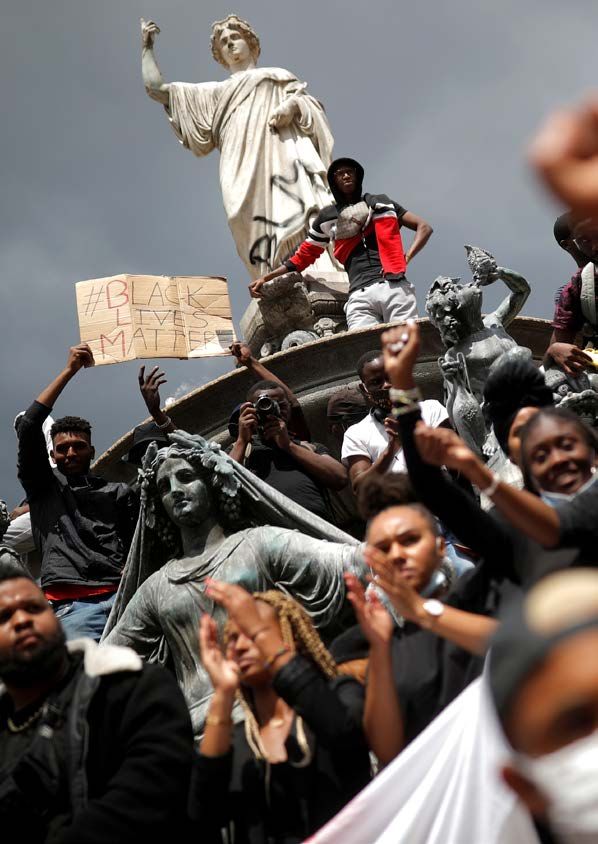
People attend a protest against
police brutality and the death in
Minneapolis police custody of George
Floyd, in Nantes, France, June 8,
2020. © REUTERS/Stephane Mahe

2      STANDING FOR HUMANITY
       CHANGING AMNESTY TO OVERCOME THE POLITICS OF “US VS THEM”
FOREWORD
We are one humanity.                                                  vision, how it offers nothing but chauvinism and misery. We have
                                                                      seen how demonizing and undermining the humanity of anyone
The COVID-19 pandemic has exposed yet again the frailty and           demeans us all. We have seen how questioning the rights of any
inadequacy of government built on narratives of “us vs them”, of      person because of who they are is a threat to the rights of all
blame and fear. Demagoguery and truth twisting have no power over a   of us.
pandemic, which ruthlessly exploits the weaknesses in our politics
and our societies.                                                    We also know that Amnesty International has not spoken out
                                                                      powerfully enough. We need to do more to persuade people that
In recent years many leaders, supported by tech algorithms and        human rights offer far more real, more compelling answers than
media tycoons that stand to benefit from growing polarization,        narratives of blame.
have invested great energy in dividing us and offering this as the
route to a better future.                                             It is time to stand up to the politics of “us vs them”, to assert
                                                                      that we are one humanity. This paper is about how Amnesty
Again and again, we have seen the hollowness of this political        International can play its part in doing that.

CONTENTS
INTRODUCTION                                                                                                                              05

SECTION I – UNDERSTANDING THE POLITICS OF DEMONIZATION                                                                                    06

   1. FERTILE GROUND FOR THE POLITICS OF DEMONIZATION                                                                                     08

   2. TARGETS OF DEMONIZATION			                                                                                                          09

   3. POLITICS OF DEMONIZATION TAKING ROOT                                                                                                12

   4. CONSEQUENCES FOR HUMAN RIGHTS                                                                                                       14

      THE UNIVERSALITY CHALLENGE: SELECTIVE REJECTION OF HUMAN RIGHTS                                                                     14

      THE SOLIDARITY CHALLENGE: SUPREMACIST POLITICS SETTING THE AGENDA                                                                   16

      THE PRIORITY CHALLENGE: HUMAN RIGHTS VS SECURITY AND THE ECONOMY                                                                    16

      THE EFFECTIVENESS CHALLENGE: HUMAN RIGHTS DON’T RESONATE WITH MAJORITIES                                                            17

SECTION II – RESPONDING TO THE POLITICS OF DEMONIZATION                                                                                   19

   APPROACH ONE: CHOOSING ISSUES THAT RESONATE WIDELY                                                                                     20

   APPROACH TWO: SPEAKING TO THE HEART                                                                                                    22

   APPROACH THREE: BUILDING MOVEMENT DIVERSITY                                                                                            23

   APPROACH FOUR: FOCUSING ON COMMUNITY ORGANIZING                                                                                        24

ENDNOTES                                                                                                                                  26

                                                                                                               AMNESTY INTERNATIONAL       3
Letter writing event at Amnesty
Korea’s offices in Seoul, South
Korea 20 December, 2019.
© Amnesty International

4      STANDING FOR HUMANITY
       CHANGING AMNESTY TO OVERCOME THE POLITICS OF “US VS THEM”
INTRODUCTION
The advance of the politics                     that specifically focus on shifts in            It is important to stress that, although
                                                public opinion.                                 this paper is critical of those who use
of demonization in recent                                                                       the politics of demonization, it is not a
years has posed a huge                          Second, we need to speak to people’s            political manifesto. Amnesty International
challenge to human rights.                      hearts as well as their minds and counter       is politically non-partisan. Our role is
                                                the narratives of those who undermine           to secure human rights for all – we do
The cynical discourse of division is            human rights through demonization.              not take positions on issues outside of
ideologically opposed to the core idea          We need to foreground our positive              that mandate. We advocate for changes
of human rights that we are all equal           message of how we all benefit when we           to government conduct to ensure
as members of the human family.                 move forward in unity rather than division,     compliance with human rights law and
The assault on human rights from those          a message that challenges their cynicism.       standards, but do not take a position on
who espouse a politics of “us vs them”          We need to communicate about human              which particular political party or political
has been strong and unrelenting, and it         rights in a way that relates to people’s own    leader should be in power, no matter how
is vital that human rights organizations        emotions, identity, values, beliefs and lived   objectionable their conduct or political
understand the nature of this challenge         experiences, as well as to their reason.        record is.
and how we should respond to it.                We have to spell out how threats to human
                                                rights are threats to society’s values.         This paper describes bigotry and
This is the second edition of a paper                                                           xenophobia deployed by a range of
originally produced in 2017 for internal        Third, we need to enhance our diversity         political leaders. Amnesty International
use only. When we shared the first edition      and ensure that our movement and its            opposes this conduct and seeks to
with partners, they told us it was useful and   workforce reflect the diversity of the          convince them to end it and to encourage
asked to share it further, so we decided to     societies in which we operate and with          their people to demand this. We do
update it and make it available publicly.       which we want to engage.                        not, however, endorse their political
                                                                                                opponents. We seek to change political
This is not a typical Amnesty International     The fourth approach is to engage more           culture, not individuals. Demonization
report. It is not seeking to expose or          with those seeking change at the local          is a disease that afflicts centrists as well
investigate a defined set of human rights       level. To do this we need to demonstrate        as radicals, the left as well as the right,
violations and make recommendations to          better the interconnection between the          elitists as well as populists. Human
those responsible for addressing them.          international, national and local.              rights are a cure that any and all of them
Nor does it set out a formal and binding                                                        can, and should, deploy. That is what
strategic framework; it sits alongside our      We believe it is useful to share this           societies must demand and the purpose
current Strategic Goals and aims to inform      paper with others in the human rights           of this paper is to suggest how Amnesty
our next Global Strategy.                       and social justice movement who are             International can play its part in making
                                                confronting similar challenges. We hope         this happen.
Rather, it is a reflection on the context in    it will contribute to the wider debate.
which we find ourselves and an honest           However, the recommendations in this            Numerous people from all corners of
reckoning of our limitations in dealing         paper are addressed to ourselves; we            the world, both within the Amnesty
with this. It is a warning to ourselves and     do not presume to advise the human              International movement and beyond,
a set of recommendations that we will           rights movement as a whole. The                 have contributed to the analysis and
take up.                                        recommendations are designed to                 ideas expressed in this paper. We
                                                address challenges Amnesty International        are grateful to each of them for their
This paper recommends four approaches           faces and the role that it can play in          contributions. The first version of the
for changing how Amnesty International          supporting the aims of the wider human          paper was the work of Osama Bhutta,
works. First, we need to ensure that            rights movement. We anticipate that             David Griffiths, Gauri van Gulik and
a significant part of our work in each          other organizations and groups may adopt        Ashfaq Khalfan. This second updated
country is on human rights issues that          very different strategies to achieve our        version contains additional input from
resonate widely and address the struggles       shared goals, making the human rights           Paola Roberta Gioffredi.
and concerns of most people in society          movement as a whole stronger, more
and carry out long-term campaigns               resilient and more innovative as a result.

                                                                                                                AMNESTY INTERNATIONAL      5
SECTION I – UNDERSTANDING THE
POLITICS OF DEMONIZATION
Over the past several                             These narratives are not new. Political       conflict is wrapped within or organized
                                                  leaders and opinion formers have always       around one or more dimension of group-
years, we have witnessed a                        resorted to “othering” as a way to            based difference. Othering undergirds
global rise in the politics of                    cope with rapid social change.1 Today,        territorial disputes, sectarian violence,
demonization.                                     divisive narratives of “us vs them” are       military conflict, the spread of disease,
                                                  poisoning public discourse and, aided         hunger and food insecurity, and even
From the USA to India, from Brazil to             and abetted by technology, becoming           climate change”.2
Hungary, and from Turkey to the Philippines,      progressively normalized. They are not
political leaders and opinion shapers are         only intensifying polarization in societies   The groups that political leaders
skilfully peddling narratives of fear and         – promoting ethnic, racial, religious and     demonize vary according to context,
division, successfully exploiting anxieties and   gender discrimination – but increasingly      but usually include those seen as easy
blaming entire groups for social or economic      they are setting the political agenda.        targets – religious minorities; migrants,
grievances. As the world tries to recover from                                                  refugees and asylum-seekers; women’s
the COVID-19 pandemic, leaders taking             In the words of John Powell and               rights advocates; lesbian, gay, bisexual,
advantage of the crisis to extend their powers    Stephen Menendian, “in a world                transgender and intersex (LGBTI)
and suppress human rights could deepen            beset by seemingly intractable and            people; human rights defenders; and
this trend and cause still more harm to the       overwhelming challenges, virtually            those challenging the status quo, such
prospect of a just recovery.                      every global, national, and regional          as protesters and climate activists.3

6     STANDING FOR HUMANITY
      CHANGING AMNESTY TO OVERCOME THE POLITICS OF “US VS THEM”
This continued, systematic demonization      brought into sharp relief the threats          Yet this experience of crisis has also led
has had alarming consequences on a           faced by marginalized communities              many to see the world anew and reassess
spectrum from exacerbating inequality,       and individuals4 and the potentially           the possibilities for building just and
discrimination and violence, to ethnic       damaging impact of a lack of trust in          equal societies. It is a moment for a fresh
cleansing. The apartheid system that         governments and institutions.5 It has          vision to shape a sustainable recovery
excluded Rohingya people in Myanmar,         also created cover for leaders seeking         that embraces solidarity and breaks down
followed by violent attacks to drive them    to entrench and expand their own power         the moribund ideologies of “us vs them”.
out of the country and China’s social        at the expense of people’s rights.             This is a time for bold action showing
re-engineering efforts targeting Uyghurs     The pandemic provided them with                that human rights are indispensable
and other predominantly Muslim ethnic        a new platform to relaunch their               for everyone. This unprecedented
groups in Xinjiang, offer some of the        scapegoating narratives and to deepen          shared challenge can be turned into an
bleakest warnings about the ultimate         the polarization they have been                opportunity to end the divisiveness of
consequences of failures to address the      fostering for years.                           the past and bring people closer together.
long-term and systematic demonization
of particular communities based on
their identity.                                THE POLITICS OF DEMONIZATION:
In a growing number of countries,              WHAT IS IT?
and often with public support, leaders
and opinion formers are combining             The politics of demonization is the deliberate and systematic scapegoating and
discriminatory policies with undermining      marginalizing of groups of people based on their identity or political beliefs by
international cooperation and norms           political leaders and other opinion formers. It is used to acquire, withhold or negotiate
by criticizing or ignoring international      power for political gain and to reinforce existing power structures. It often takes the
institutions and expressing open hostility    form of narratives of hate in the media targeting marginalized groups, creating a
towards human rights. The rise in the         dangerous self-reinforcing mechanism in moulding public opinion.
politics of demonization represents
a profound challenge – perhaps an             Three key components of the politics of demonization are:
existential threat – to human rights
mechanisms and to the whole idea of           Opportunism: capitalizing on irrational fears and stirring up social and economic
human rights.                                      frustrations.

In this context, the COVID-19 pandemic        Divisiveness: simplifying complex societal problems and dividing society into an
has starkly exposed flaws in social and             “us” (those who deserve security and rights) and “them” (those who are less
economic systems and the weaknesses                 deserving or represent a threat).
of the international system. The “us
vs them” approach adopted by many             Victimhood: feeding a false sense of victimhood among, for example, ethnic and
political leaders has both exacerbated              religious majorities.
harmful pre-existing inequalities
and hampered effective and timely             Many of those who engage in the politics of demonization have used populist
responses to the crisis. COVID-19 has         approaches, casting themselves as representing “the people” against a corrupt
                                              establishment. Their rhetoric often directs blame, either explicitly or implicitly,
                                              at an “other”. However, not all populists engage in demonization and not all
                                              who engage in demonization are populists. Populism is a style of politics based
A Tibetan exile shouts slogan
during a protest to support                   on anti-establishment approaches which involves challenging elites and may or
Hong Kong pro-democracy                       may not involve demonizing marginalized groups. Amnesty International takes no
protestors, in New Delhi,
India, 30 August, 2019.
                                              position for or against populism.
© REUTERS/Adnan Abidi

                                                                                                             AMNESTY INTERNATIONAL        7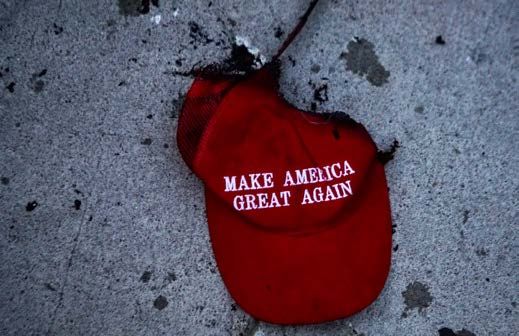
1. FERTILE GROUND                                       pandemic, but politicians and parts            political power and government failures
                                                        of the media have long intentionally           to fulfil their economic and social rights,
FOR THE POLITICS OF                                     tapped into people’s sense of fragility –      including the rights to work, an adequate
                                                        whether linked to shifting political           standard of living, health and housing.
DEMONIZATION                                            power, global financial volatility,            These underlying concerns may not be
                                                        technological disruption, the climate          new, but in some parts of the world
                                                        crisis, or other issues. They have             they have been accentuated by shifting
Since 2015, the politics of demonization                leveraged this to stoke feelings of cultural   labour markets, austerity, automation
has increased markedly and taken root in                displacement and to undermine faith            and, in some developed economies,
different contexts. The particular forms                in political institutions and the rule         by deindustrialization.
it takes and the conditions which allow                 of law, challenging their promise of
it to proliferate vary widely from country              guaranteeing long-lasting equality,            The COVID-19 pandemic has revealed in
to country and there is a significant risk              stability and justice for all.6                a new way the scale of existing structural
of over-generalization when trying to                                                                  inequalities and the economic fallout
describe this as a global phenomenon.                   One theme which has been exploited             could well exacerbate these grievances.
Nevertheless, its international dimensions              extensively (especially but not exclusively    We are already witnessing how it has
are clear: partly because its enabling                  in majority white societies) is the            become easier for politicians and others
factors are comparable in different                     combination of economic grievances             in power to instrumentalize or weaponize
contexts and partly because those who                   and migration. In the past decade, it          economic grievances.
promote the politics of demonization                    has become increasingly mainstream
emulate each other.                                     for politicians to blame migrants,             Politicians have long fomented and
                                                        refugees and asylum-seekers for real or        taken advantage of anxieties about
Uncertainty, disenfranchisement and                     perceived economic hardships in order          national security and terrorism, creating
discontent in many countries has been                   to gain popularity. These grievances are       stereotypes to justify restrictions of
fostered and manipulated for electoral                  often rooted in people’s experiences           human rights and generalized repression
advantage. This may well increase in                    of inequality, corruption, economic            of particular groups. Together with
a world recovering from the COVID-19                    stagnation, exclusion from economic and        the media, they have generated and

    A burnt Make America Great Again (MAGA)
    hat lies on the ground during a protest
    against racial injustice near the site of a rally
    by U.S. President Donald Trump in Tulsa,
    Oklahoma, U.S., 20 June, 2020.
    © REUTERS/Lawrence Bryant

8      STANDING FOR HUMANITY
       CHANGING AMNESTY TO OVERCOME THE POLITICS OF “US VS THEM”
reinforced a causal link between               2. TARGETS OF                                  opinion formers has created fertile
increased migration flows and (real or                                                        ground for such episodes of racism and
perceived) rising crime levels and terrorist   DEMONIZATION                                   xenophobia. The labelling of COVID-19 as
threats. Hungarian Prime Minister Viktor                                                      “the Chinese virus” by President Trump
Orbán described immigration as a “Trojan       In recent years, there has been a              and members of his Administration, for
horse of terrorism”.7 Immigration was at       strengthening of ethnic or religious           example, carried an insinuation of blame
the core of Donald Trump’s toxic rhetoric      supremacist narratives16 and                   that is hard to separate from heightened
during the 2016 USA presidential               discrimination across many of the              anti-Chinese and anti-Asian sentiment
campaign when he referred to Mexicans          world’s most influential countries,            in the USA.22 And in France, Germany,
as “drug dealers, criminals and rapists”.8     from Brazil to China to India to the USA.      Greece, Italy and Spain anti-immigrant
This narrative went on to inform               This is not accidental; it is systematically   politicians turned to the old trope of
President Trump’s introduction in 2018         stoked by politicians.17 Overt racism is       ethnic minorities and migrants as
of a “zero tolerance” immigration policy       becoming increasingly normalized and           carriers of diseases in order to justify
under which undocumented migrants              institutionalized in public discourse.         their stance.23
crossing the USA-Mexico border were            President Trump’s attacks on four
jailed and their children put into             Congresswomen of colour he accused of          People on the move (migrants, refugees
shelters or foster care.9                      hating the USA and urged to go back to         and people seeking asylum) have been a
                                               the “totally broken and crime infested         consistent target of demonization across
In the aftermath of violent attacks by         places from which they came” was a             the world, not just in Europe and the
al-Qaida and ISIS in Belgium, France,          particularly crude example of racist           USA. From Australia to South Africa,
Germany and Turkey between 2015 and            and misogynistic rhetoric aimed at             political figures present generalized
2017, politicians advocated for stricter       legitimizing hatred and division.18            claims that migration will “swamp the
asylum policies, criminalized certain acts                                                    majority”, dilute the country’s cultural
of solidarity by human rights defenders        The longstanding issue of systemic             and religious identity, undermine
and civil society organizations,10 and         racism in the USA reached a new                “national values”, weaken the welfare
targeted Muslims. By conflating Muslim         tipping point in the first half of 2020.       state and create new security threats.24
migrants, asylum-seekers and refugees          A string of acts of racist violence by
with terrorists, politicians contributed to    police forces against unarmed Black            In addition to these racist narratives,
reinforcing both the public perception         Americans – Ahmaud Arbery, Breonna             xenophobic and discriminatory policies
that closing borders is the most viable        Taylor and, more recently, George Floyd        have also increasingly been adopted.
way to guarantee national security11           – reignited the debate about structural        Denmark’s so called “anti-ghetto laws”
and fomented generalized prejudice             discrimination in the country and the          of 2018 are a case in point. By forcing
against Muslims.12                             issue of police reform in the USA and          the assimilation of “non-Western”
                                               globally. People protesting in the streets     migrants who live in low-income
Those promoting the politics of                have been met with the very same police        neighbourhoods and by imposing
demonization have also made successful         repression and excessive force they were       strict sanctions on those who do not
appeals to cultural anxieties, fear of         protesting against.19 President Trump and      comply, these measures exacerbate
identity and culture loss, as well as          various members of his Administration          marginalization and inequality.25 The
disquiet over major demographic shifts.13      have denied the existence of systemic          COVID-19 pandemic has facilitated this
Some analysts argue that cultural              problems in USA police departments             trend. In various European countries,
anxieties are at the heart of demonization     and attributed the recent events to a few      for example, the “lockdown” measures
projects and that mainstream politicians       “bad apples” in the police forces. Also,       enforced have disproportionately
and the media have shifted public              in several occasions, President Trump          impacted individuals and groups from
attitudes by racializing economic              resorted to antagonizing and violent           ethnic minorities who were subjected to
anxieties.14 For example, in the               language to address the protesters.20          violence, discriminatory identity checks,
2018 Italian national elections, anti-         His actions play to, and risk further          forced quarantines and fines.26
establishment parties gained traction          galvanizing white supremacists and
from soaring anti-immigrant sentiments         exacerbating the polarization around           In recent years, levels of hate crime
among large segments of Italian society,       social justice issues that have been           against ethnic and religious minorities
fanned by the often alarmist media             systemic in the country for years.             have soared in countries such as India,27
coverage of boat arrivals across the                                                          Myanmar,28 the UK29 and the USA.30
Mediterranean.15 Economic grievances,          At the outbreak of the COVID-19 crisis,        Similarly, levels of hate crime targeting
security fears and negativity about            anti-Chinese and anti-Asian racist             people because of their gender identity
migration were brought together in             sentiments erupted globally.21 The             and sexual orientation are increasing
a narrative about losing national              consistent use of scapegoating language        in several countries, including Russia,
identity and cultural homogeneity.             and its normalization by leaders and           Turkmenistan and Ukraine.31

                                                                                                              AMNESTY INTERNATIONAL       9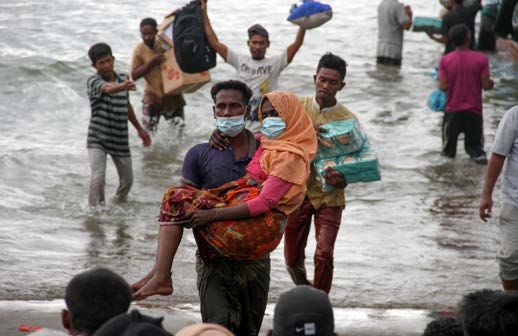
Rohingya refugees are evacuated
                                                                                                        by locals at a coast of North Aceh,
                                                                                                        Indonesia, 25 June, 2020.
                                                                                                        © Antara Foto/Rahmad/Reuters

Hatred towards religious and ethnic           Muslims and Christians.34 One of the most      demonization project has set a shocking
minorities and Indigenous Peoples             recent examples was the targeting of           and dangerous global precedent.
has substantially increased in the past       Muslims as responsible for the COVID-19
decade.32 By fabricating and feeding          outbreak in the country.35                     The 9/11 attacks in the USA in 2001
identity and security concerns, leaders                                                      and later the so-called “refugee crisis”
often deliberately stoke this hostility.      In China, in line with the struggle against    of 2015-16 have been instrumentalized
For example, in the latest Pew Research       the so-called “three evils” – terrorism,       by politicians and the media in ways
Centre Index for Social Hostilities, India    separatism and religious extremism             that have led to anti-Muslim sentiment
ranked as the country with the highest        – the government has presented the             becoming rampant in North America and
level of social hostility towards religious   mass detention of Uyghurs and other            most of Europe and resurgent in various
minorities.33 This can be attributed to       Turkic Muslims in Xinjiang province            countries in South and East Asia.
the country’s longstanding structural         as an innovative and effective way to          As Aristotle Kallis puts it:
issues, such as lack of adequate laws on      counter an alleged terrorist threat.36 For
hate crimes, historical impunity for such     some years, Amnesty International and              “the Islamophobic rhetoric of the
crimes and the debilitating caste politics.   other human rights organizations have              radical right has become more and
In recent years, the resurgence of the        documented a systematic escalation                 more pervasive, more radical in content,
Hindutva ideology which aims at building      of human rights violations against                 more extreme in scope and more potent
a Hindu nation, further exacerbated           Xinjiang’s Muslim population, amounting            in reach… But above all, Islamophobia,
social hostilities towards religious          to institutionalized persecution on a              like interwar antisemitism, seems to
minorities. In 2019, Narendra Modi of         scale not seen in China for decades.               have become so widely normalized
the Bharatiya Janata Party (BJP) secured      China’s policy in Xinjiang is implemented          because it has mined deeply held
a second term as prime minister with an       through internment in camps, where                 beliefs and activated fears located
aggressive Hindu-first agenda. Under his      torture and other ill-treatment are used           well within the so-called political and
premiership, inter-religious tensions have    to “transform through education”; a tight          societal mainstream. In this process,
soared; 90% of the religious hate crimes      surveillance regime; arbitrary detentions;         the radical right has functioned as the
in the last decade have occurred since he     and restrictions on the right to freedom of        taboo-breaker and arch-normalizer
came to power in 2014, mainly targeting       religion and belief.37 This industrial-scale       of Islamophobia, straddling fractious

10   STANDING FOR HUMANITY
     CHANGING AMNESTY TO OVERCOME THE POLITICS OF “US VS THEM”
boundaries between the extreme fringes in Hungary and Poland, have portrayed ideology” had been “encrypted” into it.58
of the political system and the heart of Jewish people as a cosmopolitan threat
the supposedly liberal centre. When it to national identity.49 At the other end In Europe, anti-gender campaigns were
comes to Islamophobia, the radical right of the political spectrum, some left-wing launched for public mobilization in Spain
has been pushing at the mainstream’s politicians and groups associate Jewish (2004, against a same-sex marriage bill),
half-open door”.38 people with the economic oligarchy or with Croatia (2006, against sex education),
the conduct of the State of Israel. An anti- Italy (2007, against same-sex civil
Again, it should be noted that racist Jewish rhetoric appears to be increasingly partnership), Slovenia (2009, against
discourse occurs across the political adopted and normalized by mainstream marriage equality) and France (2012,
spectrum. politicians on both sides of the political against same-sex marriage).59 Polish
spectrum.50 Events such as the mass debates on “gender ideology” started in
Fanning the flames of anti-Muslim shooting at the Pittsburgh synagogue in 2012 in opposition to the ratification
sentiment has become an indispensable the USA in 2018, the vandalization of the of the Council of Europe Convention
component in the toolkit of politicians Basateen Jewish cemetery in Cairo, Egypt, on preventing and combating violence
harnessing the politics of demonization.39 in 2018 and the string of acts against against women and domestic violence
Examples abound around the world: from Jewish communities in Paris in 2019, (Istanbul Convention).60 In 2018, Bulgaria
the banning full of face veils for women as well as other, less visible, expressions did not ratify the Istanbul Convention
in string of European countries, including of anti-Jewish sentiments,51 show how this after its Constitutional Court declared it
Austria, Belgium, Denmark, France and normalization is emboldening those who unconstitutional because it contained the
the Netherlands,40 to President Trump’s spread anti-Jewish hatred and causing term “gender”.61 Following this example,
travel ban;41 from Italian politician Matteo Jewish communities to feel increasingly Slovakia’s Parliament voted against
Salvini’s declaration that “if we do not targeted and unsafe.52 ratification in 2020.62 And in several
take back control of our roots, Europe European countries those who embrace
will become an Islamic caliphate”42 Discrimination, violence and systematic the politics of demonization are targeting
to UK Prime Minister Boris Johnson’s persecution targeting Christians has also academic and universities teaching gender
discriminatory remarks about Muslim escalated in the Middle East and Africa in studies, representing them as a threat to
women who wear full face veils, which countries such as Algeria, Egypt, Ethiopia, the “natural family” and a propaganda
coincided with a spike in anti-Muslim Iran, Iraq, Kenya, Libya, Mali, Mauritania, tool to indoctrinate young students.63
hate crime in the country;43 and from Morocco, Nigeria, Saudi Arabia, Somalia,
Myanmar’s de facto leader Aung San Sudan and Syria,53 and throughout Asia, Demonization of professionals such as
Suu Kyi lamenting the growing Muslim for example in China, India, Indonesia, social workers, sexuality education teachers
population,44 to Prime Minister Narendra Myanmar, North Korea and Sri Lanka.54 and abortion clinic workers, as well as
Modi’s government introducing a law disinformation about sexual and reproductive
restricting citizenship to migrants from In addition, many politicians and public health rights are also part of the offensive
Afghanistan, Bangladesh and Pakistan figures are deploying toxic narratives against advances in gender equality taking
to non-Muslims.45 The effects of these against advances in gender equality. place across Europe and the Americas.
leaders’ toxic narratives about Muslims, as They portray advances in respect for the For example, in Bulgaria, non-governmental
well as their overtly discriminatory policy rights of women and LGBTI people as organizations (NGOs) and social workers were
measures, are the demonization of and threats to “traditional” values or religious accused of kidnapping children to give them
discrimination against millions of people. identity. “Gender ideology” is a catch- away for adoption by gay couples in Norway.64
all term that has served as a basis for a In Spain, sexologists were threatened by
A new wave of acts of violence and hate disturbingly effective narrative and rallying religious and anti-human rights groups for
targeting Jews and/or Jewish community cry to attack human rights gains related to giving talks in community colleges65 and
and religious institutions has affected gender and sexuality in recent decades – a Vox party deputy offered ultrasounds to
multiple countries in Europe46 as well from access to abortion to gender equality women outside clinics to dissuade them
as the USA47 in recent years. As Ruth to LGBTI rights and comprehensive from having abortions.66 In the context of
Wodak states: “Anti-Muslim sentiments sexuality education.55 For example, the COVID-19 pandemic, anti-feminist
have not been substituted for anti- in 2017, the Minister of Education in groups in the USA welcomed lockdowns
Semitic beliefs; quite the contrary, in Paraguay removed all materials from the as an opportunity for women to “go back”
fact, as they frequently occur together.”48 national curriculum related to “gender”56 to their “traditional” roles at home and
According to experts, this resurgence and in 2019 a municipality in Paraguay around the world many politicians and
of anti-Jewish sentiment is showing a banned a pro-LGBTI rights march on the activists celebrated the stalling of key
convergence of views from both sides grounds that it was considered contrary debates on women’s rights caused by
of the political spectrum, including in to “public morals”.57 In 2016, the Peace the COVID-19 emergency.67
the USA and Europe. Right wing and Agreement in Colombia was rejected in a
national-conservatist parties, for example public vote after accusations that “gender
AMNESTY INTERNATIONAL 113. POLITICS OF introduce measures or laws that restrict messaging, mainstreaming less overtly
human rights beyond what is permitted xenophobic elements of their calls.
DEMONIZATION under international law and without any
safeguards to ensure the protection of Leaders who employ exclusionary rhetoric
TAKING ROOT human rights. and policies support and cite each other
approvingly, mutually reinforcing each
For example, in Hungary, the government other and their messages. Prime Minister
Although the politics of demonization is stepped up its efforts to undermine the Orbán addressed Matteo Salvini as his
nothing new, in recent years a growing rule of law by introducing an emergency “fellow combatant” in the fight for the
number of political leaders have actively law that allows the Prime Minister to rule “preservation of European Christian
and systematically propagated narratives by decree without any review or wtime heritage and against migration”.78
of demonization for political gain, limitations. The Orbán Administration has President Trump consistently expressed
increasingly setting the agenda. They also used this as an opportunity to push his support for leaders such as Prime
have used these narratives to boost its “anti-gender” agenda, submitting an Minister Modi, President Bolsonaro and
their legitimacy, appeal and resonance omnibus bill to parliament to ban gender President Duterte and was himself praised
among different demographic groups, recognition in law for transgender people. by them.79 Recently, attempts to build
emboldening others to follow suit. In the context of a doubling of levels of transnational alliances have also been
domestic violence during the COVID-19 made, although so far they have not
“Strongmen” leaders – and it is mostly lockdown, the Hungarian parliament has proved successful.80
men – have made a comeback. Roger also declared it will not ratify the Istanbul
Eatwell has identified four characteristics Convention.71 In this context, state authorities have
of so called “charismatic leaders” that often chosen to suppress dissenting
contribute to their electoral success and Poland sought to rush through two highly voices, thereby causing a culture of fear to
popularity: radical mission (presenting controversial bills banning abortion and take root. Increasingly they have silenced
themselves as embodiments of a special criminalizing sex education under the or created negative consequences for
mission), personal presence (confidence cover of the COVID-19 crisis.72 In the those who challenge the repression of
and attention to their image), symbiotic Philippines, President Duterte gave police demonized groups. Attacks on human
hierarchy (portraying themselves as and military officials orders to “shoot rights defenders and civil society
ordinary people) and binary narratives of to kill” what he called “troublemakers” organizations are escalating globally.81
demonization (targeting either internal or protesting during the quarantine.73 In State control over the media is growing,
external “enemies”).68 These traits can be Cambodia, the recently proposed State of even in countries with a relatively free
seen among many of today’s “strongmen” Emergency Law is a blatant power grab media, such as India and the USA.82 The
leaders. Whether convinced ideologues, that seeks to manipulate the COVID-19 authorities in many countries, from Egypt
fervent nationalists or opportunists, they crisis in order to severely undercut human to Iran to Venezuela, have a long track
are peddling simplistic and extreme rights.74 Additionally, some governments record of quashing protests violently in
solutions to complex societal problems. are introducing disproportionate digital order to muzzle critical voices. Now this
Many such politicians are undermining surveillance measures under the guise of playbook is being adopted more widely,
checks and balances, like the tracking the spread of the virus, without including in Chile and Hong Kong.83
independence of the judiciary and other adequate safeguards or sunset clauses,
safeguards to protect marginalized groups which leaves open the possibility for abuse Oversimplification and the increasingly
from discrimination and other violations of of rights in the future.75 binary nature of complex societal debates
their rights. around migration has generally favoured
In recent years, leaders have become more those who propagate anti-immigration and
Authoritarian tendencies and ideas are strategic in their rhetoric, playing off rights overtly racist or xenophobic messages.
emerging across and within different and communities against each other. In various European countries, including
countries.69 In countries such as Hungary For example, Matteo Salvini, leader of Croatia, France, Greece, Italy, Malta,
and Turkey, the balance of power has Italy’s League party, has targeted Muslim Spain and Switzerland,84 as well as
tilted strongly towards the executive, communities in the name of gender Australia85 and the USA,86 people seeking
allowing the rule and the cult of the equality. In some cases, racist groups have to protect the rights of refugees and
“strongman” to flourish.70 This trend moderated their image to appear more migrants are increasingly criminalized.
appears to be on the rise. The COVID-19 “acceptable”, built networks of activists The few voices attempting to present a
pandemic provided leaders around the and think-tanks76 and developed news compelling positive vision for migration
world with a pretext for grabbing more outlets or a strong social media profile to and refugee protection, including in the
power. In the name of a greater good, “market” their views.77 They have created human rights movement or among political
namely protecting public health, they an environment in which more mainstream leaders, have been highly stigmatized and
are using emergency legislation to politicians employ parts of their political often met with repression.
12 STANDING FOR HUMANITY
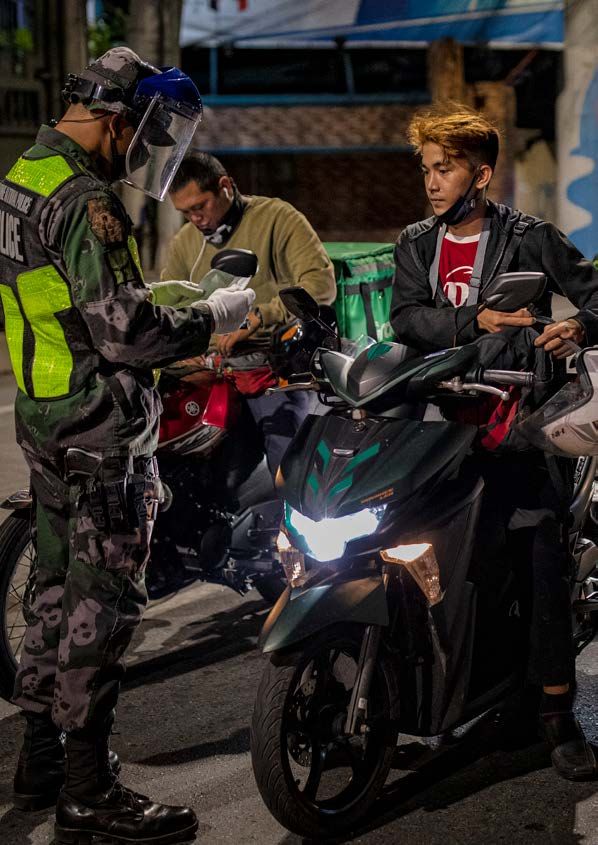
CHANGING AMNESTY TO OVERCOME THE POLITICS OF “US VS THEM”Policemen wearing face shields
inspect motorists at a quarantine
checkpoint on 2 April, 2020
in Marikina, Metro Manila,
Philippines.
© Ezra Acayan/Getty Images
AMNESTY INTERNATIONAL 13are no accident. They are in part a
consequence of the way algorithms filter
users’ online experiences.93 The major
social media platforms recommend and
promote new content based on opaque
algorithmic processes to determine what
will best engage users. Because people
are more likely to click on sensationalist
or incendiary material, the so-called
“recommendation engines” of these
platforms can send their users down
what has been called a “rabbit hole”
of toxic content.94 In addition to the
role played by algorithms in heightening
the levels of prejudice and hatred,
technology companies have often
failed to address the issue of hate
speech on their platforms.95
During the COVID-19 crisis, many confusion in response to the state of Sensationalism in the mass media is,
leaders have chosen to exploit emergency”.89 From India to Turkey, of course, not a new phenomenon and
people’s sense of uncertainty and from China to Venezuela, and from it is not limited to the internet. But the
fear. Some are instrumentalizing the Singapore to Tunisia, journalists, “recommendation engines” of social
emergency provisions introduced to bloggers and watchdogs are being media go well beyond the adage “if it
prevent the spread of disinformation targeted, intimidated and arrested for bleeds, it leads”. They can systematically
or misinformation about the pandemic allegedly spreading “fake news”.90 privilege demonizing content, including
to muzzle real critics and dissenting conspiracy theories, misogyny and
voices, restrict freedom of expression and Demonization has benefitted from bigotry racism, to keep people on their platforms
hamper people’s access to timely and promoted by the mass media going back for as long as possible and create echo
accurate information, a core feature of several decades. Such media outlets have chambers that give the appearance of
the right to health. In March 2020, for helped create narratives that make it momentum to toxic ideas. For example,
example, the Russian authorities passed easier for politicians to target particular a study into the spread of anti-refugee
amendments to the Criminal Code and groups and limit the scope for manoeuvre sentiment on Facebook found that
to the Code of Administrative Offences for their opponents. For example, Rupert “anti-refugee hate crimes increase
that introduced criminal penalties for Murdoch-owned outlets in Australia, disproportionally in areas with higher
the “public dissemination of knowingly the UK and the USA have consistently Facebook usage during periods of high
false information” in the context of spread fear of refugees, migrants and anti-refugee sentiment online”.96
emergencies and administrative Muslims.91 The role of social media A UN fact-finding mission on Myanmar
penalties for media outlets that platforms in mobilizing hate rests upon a highlighted that before and during the
publish such information.87 bedrock built by traditional broadcast and Rohingya crisis, “Facebook has been
print outlets over decades. Technology a useful instrument for those seeking
Hungary’s emergency law provides corporations are also playing a key role to spread hate, in a context where, for
for up to five years’ imprisonment in exacerbating political and ideological most users, Facebook is the Internet”.97
for those convicted of causing public polarization, providing an ideal space for Similarly, the algorithms behind Google’s
alarm or hindering government efforts the politics of demonization to thrive. YouTube platform have been shown in
to control the pandemic by spreading The global dominance and reach of multiple studies to privilege false and
false information.88 Cambodia’s draft online platforms like Facebook and incendiary content.98
emergency law envisages unprecedented Google mean they form a crucial part of
disproportionate powers, including the system that amplifies demonizing The Facebook-Cambridge Analytica
provisions for conducting surveillance on narratives and enables them to reach scandal, in which data from 87 million
all telecommunications mediums “using mainstream audiences. people’s Facebook profiles were
any means necessary” and the power harvested and used to micro-target
to ban or restrict the “distribution of Growing political segregation and and manipulate people for political
information that could scare the public, the surge in prejudice and hatred on campaigning purposes, drew attention
cause unrest, or that can negatively social media against marginalized and to the capabilities of the largest tech
impact national security, or cause oppressed groups and against women92 platforms to influence people at scale
14 STANDING FOR HUMANITY
CHANGING AMNESTY TO OVERCOME THE POLITICS OF “US VS THEM”– and the risk that these could be The use of digital platforms to spread an internationalist elite, or a globalized
abused. Although shocking, this was false information is intensifying worldview which is undesirable or even
only the tip of the iceberg, a logical ideological polarization and incentivizing dangerous. Such narratives are on the
extension of the very same model of the advocacy of hatred, violence rise in most regions and increasingly in
data extraction and analysis inherent to and discrimination.104 Yet, despite countries that have traditionally seen
both Facebook and Google’s business. consistent calls from international themselves as protectors of human rights.
This raises important questions about human rights mechanisms and civil For example, Denmark, one of the original
the human rights responsibilities of society organizations, these corporations initiators of the Refugee Convention, has
technology companies around the continue to fail in their responsibility to challenged the very concept of such a
development of these algorithms, as respect human rights.105 convention and questioned whether the
well as their harvesting and analysis full spectrum of rights applies to refugees
of users’ data.99 and migrants.106 Human rights are now
4. CONSEQUENCES FOR frequently portrayed as a mechanism
Linked to this is the phenomenon of to frustrate national interests or protect
online disinformation. Digital platforms HUMAN RIGHTS criminals or terrorists. Strikingly, in the
are used tactically to disseminate false Philippines, human rights defenders
information with the sole purpose of have been vilified as “protectors
manipulating opinions, behaviours and The politics of demonization creates of demons”.107
choices on a vast scale.100 many threats to human rights around the
world, in multiple and complex ways. Controversial proposals to review and
In recent months, President Bolsonaro’s The following highlights four particular reform the whole concept of human
denialist stance regarding COVID-19 has challenges that arise. rights in both public policy and academia
been sustained by spreading false and have emerged as a new challenge. In
misleading information online regarding THE UNIVERSALITY CHALLENGE: July 2019, the USA State Department
the virus’ symptoms, risks and cures, as SELECTIVE REJECTION OF HUMAN launched a Commission on Unalienable
well as by encouraging risky behaviours. RIGHTS Rights tasked with providing “fresh
A Parliamentary Commission is currently thinking about human rights” and
conducting an investigation into online Few leaders directly criticize the proposing “reforms of human rights
profiles spreading misinformation related human rights framework in its entirety, discourse where it has departed from
to the pandemic which is likely being but many do criticize the idea of our nation’s founding principles of
coordinated by a structure linked to the particular rights for particular groups natural law and natural rights”.108
Office of the President.101 Bolsonaro’s of people and attack the institutions Members of the Commission had
approach has resulted not only in a designed to protect rights. previously spoken out against established
patchy response to the health crisis, sets of rights such as reproductive,
but has also led to increased polarization Human rights actors have long been LGBTI and women’s rights.109
and heightened levels of social unrest associated by their detractors with foreign
and mistrust which are pushing the values or agendas, or manifestations of The COVID-19 crisis represents a perfect
country to the edge of a political crisis.102
The instant messaging application
WhatsApp is also widely used to circulate
false news and incendiary content with
the potential to exacerbate divisions and
swing people’s political choices. This
was the case in both Brazil’s presidential
election campaign in 2018 and India’s
general election campaign in 2019.103
Solidarity action by Lahore based NGO
Amnesty International Justajoo’s food
Spain, Madrid, July 2017. distribution operations
© Xavier Gil Dalmau in the city, providing
essential food relief
supplies to communities
in need, May 2020.
© Ema Anis
AMNESTY INTERNATIONAL 15storm for those political leaders who political project in which the general to global crises. No one can afford to
have been sowing hatred and divisions public is a passive participant. On the look after “our own first” if we are to
in recent years. A moment of global contrary, leaders who deploy the politics recover sustainably.
emergency and widespread uncertainty, of demonization and argue that it is
when people feel vulnerable and in need necessary to look after “our own first” Since the outbreak of COVID-19 we
of protection and clear answers, can be enjoy significant popular support. have also seen how human rights can
exploited to frame human rights and be part of the solution, if countries
public health as an either/or choice. Yet Across the world, many politicians who deepen and expand on their human
COVID-19 has shown how economic and have traditionally been supportive of rights obligations of international
social rights – such as the right to health, human rights have shown a lack of cooperation and assistance.118 While
job security, safety in the workplace and leadership and vision in their responses some countries have imposed trade
fair working conditions – are crucial to to the rise of the politics of demonization. restrictions on the import and export
human security and resilience. They have lacked the courage of their of essential commodities, which have
convictions and this has contributed included personal protective equipment
Another common feature of the to a perceived lack of alternatives to and other crucial goods to address the
politics of demonization is attempting to narratives of demonization that claim to effects of the pandemic, several states
delegitimize national and international be “in the name of the people”. Some have worked to provide materials and
institutions designed to safeguard potential opponents have either retreated resources to others.119 Development
human rights – such as the European (willingly or otherwise) into a defensive banks and international financial
Court of Human Rights, the Inter- posture, allowing demonizing narratives institutions, including multilateral
American Commission on Human to set the agenda. Others have absorbed institutions, have also responded to
Rights, the Inter-American Court of parts of those narratives – from loosening the challenges presented by the
Human Rights,110 the African Court hate speech protections in Australia COVID-19 pandemic.120 But they and
on Human and Peoples’ Rights,111 the to tightening immigration controls the most economically powerful nations
International Criminal Court (ICC)112 in Europe,115 and negotiating highly must do far more to meet the challenge,
and the World Health Organization.113 problematic international agreements, including cancelling the debt of the
A common line of attack is to claim that such as the European Union’s refugee world’s poorest countries, scaling
these institutions represent the agendas deal with Turkey116 and Italy’s deal up investments in health and social
of other countries or of elites and to with Libya.117 protections and phasing out fossil fuels,
invoke nationalist defences based to ensure a just and sustainable recovery
on sovereignty.114 Supremacist views may experience a from the pandemic.121
revival in the post-COVID-19 world,
THE SOLIDARITY CHALLENGE: but the crisis has clearly exposed THE PRIORITY CHALLENGE: HUMAN
SUPREMACIST POLITICS SETTING their limits. It has shown how the fate RIGHTS VS SECURITY AND THE ECONOMY
THE AGENDA of countries is deeply interconnected
and international cooperation and Demonizing narratives and actions often
The demonization agenda is not a solidarity are crucial when responding rest on the argument that the demands of
security and development – and perhaps,
in the post-COVID world, public health
– require human rights to be restricted.
Often politicians take it as a given that
security and economic concerns,
which are often legitimate and enjoy
popular support, require limiting human
rights and take primacy over human
rights considerations in a zero-sum game.
More than anyone, it is groups and
Wasanii Sanaa Youth Organization in
Kibera, Kenya, the largest slum in Africa,
this group of young activists are spreading
the importance of hope and human rights
through action-packed theatre, poetry and
dance. 8 May, 2018. © Amnesty International
16 STANDING FOR HUMANITY
CHANGING AMNESTY TO OVERCOME THE POLITICS OF “US VS THEM”people who face discrimination who been exploited by sitting governments to important by much of the human
bear the brunt of these limitations. justify repressive policies which demonize rights movement and therefore became
Human rights are often marginalized in and target particular groups of people more clearly established. There are,
debates about security or development, based on their identity.128 The COVID-19 of course, important exceptions to
or portrayed as an inconvenience, an crisis and the new economic and security these statements and the human
indulgence to be overcome. threats that arise in its wake are likely to rights movement as a whole has made
intensify and exacerbate this challenge. substantial changes in recent years,
In some countries, the security agenda but this organizational self-reflection
– whether framed as protecting national THE EFFECTIVENESS CHALLENGE: is important to continue and deepen
security or preventing crime – is based HUMAN RIGHTS DON’T RESONATE such changes.
on the implied idea that populations WITH MAJORITIES
need to be protected against whole It was not until 2001 that Amnesty
segments of people based on their Human rights organizations, including International decided to work on ESCR
identity. Counter-terrorism has become Amnesty International, have not been issues. Subsequently, in many countries,
a highly effective cover for limiting effective in convincing the majority of its campaigns on ESCR drew attention
human rights, including the rights to people around the world that human to the discrimination faced by women,
freedom of expression, association and rights are for everyone and speak to particular minority ethnic groups,
peaceful assembly. For example, Egypt their aspirations. migrants, refugees and asylum-seekers.
launched a crackdown on the rights of Only in some countries did our work
people identified as linked to the Muslim In a number of countries, notably the USA, include violations facing a wider range
Brotherhood and portrayed them as a human rights are often seen by people as of groups in society, such as the forced
threat to national security.122 In France, something for “other people” and therefore evictions of people living in informal
the long-term state of emergency after less relevant to present political debates settlements and those denied sexual
the violent attacks of 2015 imposed about “us”. In much of Africa and Asia, and reproductive rights. It was not until
disproportionate restrictions on the right with the exception of social movements 2018 that Amnesty International issued
to peaceful assembly, many elements of and grassroots groups that base their its first reports on the systematic effects
which were made permanent in 2017.123 work on human rights ideals, the term of austerity.130
In the Philippines, thousands of people, “human rights” is too often identified
most of them poor, have been killed since with secular or elite groups that are seen These choices, by Amnesty International
President Duterte launched a “war on as “westernized” and divorced from the and others, may have contributed to
drugs” in 2016 vowing to wipe out crime religious and cultural values of society. In three outcomes. First, we have missed
within six months and announcing a parts of Europe, human rights are viewed an opportunity to draw attention to the
policy that would target those using and as a liberal, cosmopolitan concern and full range of different ways in which
selling drugs.124 appear remote to many less privileged people are denied their rights. Second,
groups. And for many people around the we have missed the opportunity to
Human rights are also subordinated world, human rights campaigns have often identify commonalities between groups
or presented as obstacles to achieving been too complicated or technical facing different forms of discrimination
economic development or protecting the to resonate widely. and who are often cynically set against
welfare state. In India, human rights and each other by politicians. This has
environmental groups are demonized for In part, this is a legacy of the fact that made it harder to show how politicians
opposing controversial projects.125 many human rights NGOs, including the are deliberately seeking to divide groups
Across Latin America, land and larger organizations both globally and facing disadvantage and block potential
environmental defenders are threatened, nationally, have focused on certain areas alliances between them to push for more
arrested or killed for opposing of human rights – primarily civil and equal societies. Third, our approach has
governments or companies seeking political rights and non-discrimination perhaps contributed to a prevalent view
to profit from their land and natural – and paid much less attention to in some countries that human rights
resources.126 In several European economic, social and cultural rights are for “the other”. We have struggled
countries, refugees, asylum-seekers (ESCR).129 Most organizations have to create understanding of human rights
and migrants are presented by the press focused more on overt discrimination, issues through continued awareness raising
and politicians alike as a threat to the such as clear racial discrimination, and and education efforts and our effectiveness
sustainability of the welfare state.127 less on other forms of discrimination, in engaging people at community level has
such as exclusion from public resources been, at best, patchy.
Such narratives have been propagated on the basis of socio-economic
by a broad array of actors, whether status or poverty. These choices
political figures, corporations or media reflect the fact that civil and political
organizations. In many cases they have rights were historically deemed more
AMNESTY INTERNATIONAL 17You can also read


