Asset Test 2021: How the U.S. Can Keep Benefiting from Its Alliance with Israel
←
→
Page content transcription
If your browser does not render page correctly, please read the page content below

Asset Test 2021: How the
U.S. Can Keep Benefiting
f rom Its Alliance with Israel

MICHAEL EISENSTADT

                     W
AND DAVID POLLOCK             ith the Biden administration now in office, the
February 2021                 U.S. “special relationship” with Israel is entering a
                              new phase.* But its diverse roots remain firmly in
                     place: common values, democratic politics, and strategic
                     interests, as well as close intelligence, military, economic,
                     scientific-technological, cultural, and people-to-people
                     ties. At the same time, recent years have witnessed some
                     dramatic ups and downs in the relationship, along with
                     significant changes in the broader strategic context.
                     Given such parameters, this memo assesses the current
                     status of the U.S.-Israel relationship and offers
                     recommendations for realizing its full potential.

                                               *This paper is an update of the authors’
                                               2012 study, Asset Test: How the United
                                               States Benefits from Its Alliance with Israel.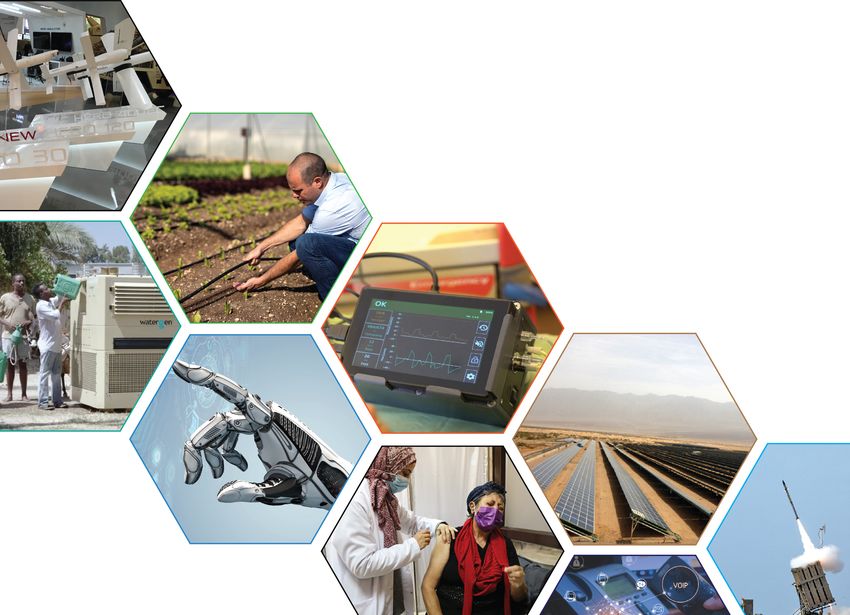
EISENS TADT AND P OL LOCK

                                                          Israel is also a world-class innovator in technologies
The New Strategic                                         that will be critical to meeting future challenges,
                                                          including artificial intelligence (AI), information
Context for the U.S.-Israel                               technology (IT), and cybersecurity; sustainable
Partnership                                               water, food, and energy solutions; and high-tech
                                                          medicine. All these areas are supportive of
                                                          America’s foreign policy priorities: pursuing
Over the next decade, the U.S.-Israel alliance will       peaceful Great Power competition; restoring global
be shaped by concurrent global, regional, and             economic competitiveness; and building climate
domestic transformations. Taking them all into            resilience, while addressing development, public
account will be key to sustaining the benefits of this    health, sustainability, and similar concerns. And
longstanding partnership. While Israel is not at the      in all these areas, the United States is the preferred
center of U.S. security and international economic        partner of Israeli firms seeking to expand opera-
policies, it will make an important contribution as       tions and access to the global market. Furthermore,
the new order emerges.                                    while Israel maintains ties with China, the latter’s
                                                          investment in the Israeli high-tech sector, for
At the global level, the sharpening U.S.-China—and,       example, is holding at just around 10 percent, while
to a lesser extent, U.S.-Russia—competition looms         the remaining 90 percent is overwhelmingly with
larger today than in the past, while Middle East oil      Western, and especially American, partners.
and gas have lost their centrality to the American
economy. Nevertheless, the Middle East is an              In the Middle East regional arena, a major recent
important arena in this new Great Power competi-          shift offers new horizons for U.S.-Israel cooperation:
tion due not just to growing Asian demand for its         the tide of Arab “normalization” with Israel, which
energy resources but also to its geographic location,     has occurred with active American support. This
political and religious significance, and continuing      current is embodied by the August 2020 Abraham
potential to export instability worldwide. To the         Accords with the United Arab Emirates and Bahrain,
extent that Great Power competition is increasingly       later joined by Sudan, along with a separate but
economic and technological as well as military and        parallel Israeli deal with Morocco. Saudi Arabia,
political, Israel is one Middle East state well-placed    Oman, and others could follow. This trend overturns
to deliver outsize contributions.                         the conventional wisdom that the unresolved
                                                          Palestinian conflict is an insurmountable obstacle
Exemplifying Israel’s seriousness as a player in this     to decent relations between Israel and Arab states.
new “great game” are its military activities since        Beyond that, it paves the way for U.S.-Arab-Israel
2017 to counter Iranian efforts to transform Syria        collaboration in a host of areas. The recent decision
into a forward military base in the Levant. Even          by the U.S. Department of Defense to move Israel
beyond the Middle East, Israel’s burgeoning arms          from the European Command (EUCOM) to the
exports, intelligence ties, and high-tech civilian        Middle East–focused Central Command (CENTCOM)
partnerships with India, Japan, South Korea, and          was greeted without objections by America’s Arab
other American allies advance the goals of the U.S.       allies and partners, and is another important
“rebalance” to the Indo-Pacific region. Moreover,         indicator of this new reality.
President Joe Biden’s declared intent to hold a
“Summit for Democracy” suggests a firm place              Partnerships between the United States, Israel, and
for Israel in a Trumanesque struggle between              Arab states that foster high-tech cooperation will
democracy and authoritarianism reminiscent of             be essential to meeting the defining challenges of
the dawn of the Cold War.1                                the future. Already, these actors have taken steps

2                                                       T H E WA S H I N G T O N I N S T I T U T E F O R N E A R E A S T P O L I C Y
HOW THE U.S. CAN KEEP BENEFITING FROM ITS ALLIANCE WITH ISRAEL

toward such cooperation in the energy, cyber,           borders, and proxy and partner militias in Lebanon,
and medical spheres, in addition to the recently        Syria, Iraq, the Gaza Strip, and Yemen—pose an
announced “Abraham Fund,” a $3 billion trilateral       urgent threat not just to Israel and its Arab neigh-
endowment meant to spur development and                 bors but to U.S. interests as well. Seen in this light,
economic cooperation in the Middle East and             the public jousting over the JCPOA is truly the
North Africa.2 One can also expect the Biden            exception that proves the rule.
administration to encourage tighter security
cooperation between its Arab allies and Israel          Similarly, regarding the Palestinians, Arab-Israel
to facilitate a lighter U.S. military footprint in      normalization could provide a path forward, or
the region.                                             at least a respite from bilateral tension. Today,
                                                        normalization itself signals the reduced salience
Regarding Iran, Washington and Jerusalem were           among many Arabs of the Palestinian cause, thereby
at odds during President Barack Obama’s second          reducing it as a priority for Washington as well. Still,
term, then in agreement in the era of President         one can readily foresee renewed diplomatic disputes
Donald Trump, as he withdrew from the Joint             over West Bank settlements, peace process terms
Comprehensive Plan of Action (JCPOA), as the            of reference, and the fate of the two-state solution.
nuclear deal is known, and reimposed stiff              Managing, if not resolving, such disputes will
sanctions against Tehran. Renewed disagreement          pose a complicated challenge for both Washington
can be expected as the Biden administration             and Jerusalem. To be sure, resolving the Israeli-
seeks to rejoin the nuclear accord in some form.        Palestinian conflict would be best for all parties,
As demonstrated by the recent controversy               but this issue is no longer central to U.S.-Israel
surrounding Israel Defense Forces chief of staff        bilateral ties or the region’s politics.
Lt. Gen. Aviv Kochavi’s public criticism of this U.S.
plan, it is best to air these differences privately.3   Looking ahead, however, a number of countervailing
Future consultations on this matter, moreover,          factors present major challenges. Center-right and
will likely include a number of Israel’s new Gulf       right-wing governing coalitions will likely dominate
Arab partners.                                          in Israel into the future, due to demographic and
                                                        political trends, including the perceived absence
Yet despite the serious Obama-era quarrel, both         of a peace partner on the Palestinian side, and
sides have long understood the value of coopera-        settlements and other facts on the ground. This is
tion against threats from Iran. This has included       likely to remain a long-term issue in any U.S.-Israel
intelligence sharing, missile defense, joint cyber      dialogue about the Palestinians—and indeed about
activities, and covert counterterrorism operations—     Israel’s destiny as both a Jewish and a democratic
including the 2008 killing of Hezbollah’s chief         state. In the United States, there is rising partisan
of external operations, Imad Mughniyah, in              polarization regarding Israel. Whereas a half-
Damascus, and of al-Qaeda’s number two, Abu             century ago polling showed Democrats to be more
Muhammad al-Masri, in Tehran in 2020. The               pro-Israel, today the trend is reversed, owing to
perceived threat of Israeli action against Iran’s       increased Democratic sympathy for the Palestinians
nuclear program has at times helped the United          and growing evangelical Christian influence in the
States marshal international support for sanctions      Republican Party.4 This trend, too, could affect the
or negotiated limits instead. And developments          tone if not the substance of future bilateral ties.
over the past five years have clarified to U.S.
policymakers that Iran’s growing conventional           Nevertheless, at least two mitigating factors should
military capabilities—including highly accurate         be borne in mind. First, the aforementioned polls
drones and missiles, military bases far from Iran’s     also demonstrate that, while Republicans and

     POLICY NOTES FOR THE BIDEN ADMINISTRATION                                                             3
EISENS TADT AND P OL LOCK

independents are more solidly supportive of Israel,
the majority of Democrats (who today are about a          The Enduring Strategic
third of the American public) still consider Israel an
ally or friend of the United States. More important,      Logic of the Alliance
American domestic politics is no longer the primary
driver of the informal U.S.-Israel alliance. Rather,
new regional and global realities, along with the         The U.S.-Israel special relationship has traditionally
tangible benefits to the United States of security        been defined in terms of a moral obligation, shared
and economic partnerships with Israel, now drive          values, and common interests. During the Cold
the “special relationship” to a greater extent.           War, Israel also came to be seen as a strategic asset
                                                          that served as a bulwark against Soviet influence
Internally, Israel’s prospects are on balance quite       and a counter to radical Arab nationalism. U.S.
encouraging. While the coronavirus emergency has          military assistance to Israel contributed to peace
exacerbated social tensions between the authorities       treaties with Egypt and Jordan, and has deterred the
and the ultra-Orthodox community (10% of the              outbreak of major interstate Arab-Israel conflicts
population), it has eased tensions with Israel’s Arab     since 1982. The U.S.-Israel relationship likewise
minority (20%), who participate in (as caregivers)        has helped spur closer U.S.-Arab ties ever since the
and benefit from (as patients) Israel’s inclusive and     1973 war, because most Arab leaders have believed
relatively effective national healthcare system. The      that only the United States could deliver the Israeli
macroeconomic indicators during this difficult            concessions they required. Yet because media and
period are naturally mixed. Unemployment and              policymakers tend to view Israel largely through the
poverty have spiked with each lockdown, but               prism of the Palestinian conflict, many of the “hard”
upward trends include start-ups, foreign direct           and “soft” security and other benefits of the U.S.-
investment, and overall economic growth. Societal         Israel alliance have often gone unrecognized.
resilience has so far withstood quarantine,
corruption, and election fatigue.                         In the Middle East today, the United States faces
                                                          a changed, more complex security environment
In the past decade, the Arab uprisings have               defined first by hard security challenges: terrorism;
highlighted the brittle foundations of some of            hybrid and nonconventional military threats; the
Washington’s regional allies. By contrast, Israel         proliferation of failed states; the rise of regional
is a vibrant and stable, if fractious, democracy—         powers such as Iran and Turkey; the greater
notwithstanding multiple parliamentary elections          assertiveness and independence of traditional
over the past two years. Moreover, Israel shares          partners such as Saudi Arabia, the UAE, and Qatar;
Washington’s interests in regional stability, in coun-    and the presence of Great Power competitors such
tering violent Islamist extremism, and in preventing      as Russia—and increasingly China. But it is also
additional nuclear proliferation in the Middle East.      defined by new and emerging soft security
And Israel’s high rates of political participation,       challenges related to: economic development;
including by its Arab citizens; its stubbornly            public health; water and food security in an era of
independent press, NGOs, and legal system; and its        accelerating climate change and environmental
very vocal but largely peaceful protests all clearly      degradation; the quest for sustainable energy
demonstrate the strength of its democracy—however         alternatives; and the IT, cyber, and AI revolutions.
imperfect it may be.                                      All these challenges will test U.S. resilience and
                                                          require broad international cooperation if they are
                                                          to be effectively managed. Israel is one of the few
                                                          countries positioned to help the United States deal

4                                                       T H E WA S H I N G T O N I N S T I T U T E F O R N E A R E A S T P O L I C Y
HOW THE U.S. CAN KEEP BENEFITING FROM ITS ALLIANCE WITH ISRAEL
with both these traditional and emerging security policies, while Israel is still seen as an address for
challenges. Arabs seeking to influence Washington. Indeed,
the recent Abraham Accords were at least partly
Many of the considerations that justified the U.S.- born of these kinds of calculations. And Israel is
Israel security relationship during the Cold War seen by a number of Arab states as a critical ally
and in the immediate post-9/11 era remain valid in the struggle to contain Iran’s influence, as the
today. Israel is an ally of Egypt in its fight against United States draws down its military presence in
an Islamic State insurgency in the Sinai Peninsula the region.
(providing intelligence and air support), a quiet
but effective ally of Jordan, and a bulwark against
radical Islamism in the Levant (as embodied by
Hezbollah in Lebanon and Hamas and Palestinian
Islamic Jihad in Gaza). Since 2017, Israel’s “gray
Countering Traditional
zone” campaign against Iran and its proxies in and Emerging Military
Syria has hindered efforts by these actors to
transform that country into a springboard for Threats
attacking Israel and projecting power regionally.
Israel is the only de facto nuclear weapons state To address common traditional hard security
in the region. While previously this may have threats, the United States and Israel collaborate in
contributed to initial, unsuccessful attempts at numerous areas: intelligence sharing, rocket and
nuclear proliferation by Egypt, Libya, and Syria, missile defense, military and defense-industrial
Israel’s policy of “opacity” also made it easier for cooperation, and, since 9/11, homeland security.
some of these countries to subsequently forgo
nuclear weapons. Its policy of prevention has, INTELLIGENCE COOPERATION. U.S.-Israel
moreover, precluded further nuclear proliferation intelligence cooperation dates to the early 1950s
in Iraq (1981) and Syria (2007)—and delayed an and has long been a pillar of the security relation-
Iranian bomb, at least thus far. ship.7 During the Cold War, Israeli intelligence
provided invaluable information regarding Soviet
Washington has demonstrated a commitment to intentions, weapons systems, and intelligence
preserving Israel’s “qualitative military edge,” activities, as well as the activities of Palestinian
bolstering Israeli deterrence against hostile state and other Arab terrorist groups, such as Hezbollah,
and nonstate actors. The United States has also that targeted both U.S. and Israeli interests.8
granted Israel “major non-NATO ally” status, signed Israeli intelligence played a key role in exposing
a free trade agreement with it, and provided it with Iraqi efforts to rebuild its nuclear program in the
substantial military and economic aid—topping decade following the Osiraq raid of 1981,9 helping
$146 billion since 1949.5 Moreover, military UN weapons inspectors dismantle Iraq’s WMD
equipment prepositioned in Israel, valued at around programs after the 1991 Gulf War,10 uncovering
$1.2 billion, is available to support U.S. contingen- Russian support for Iran’s missile program in the
cies in the eastern Mediterranean and Persian Gulf.6 mid-1990s,11 and exposing Syria’s nuclear program
This assistance has helped Israel build an extremely before Israel’s air force destroyed it in 2007.12
capable military that can independently ensure
the survival of the state, without U.S. military Today, Israeli intelligence remains a major source
intervention. Washington, moreover, is still seen of information regarding the activities of IS and
as an address for Arabs seeking to influence Israeli al-Qaeda and their affiliates,13 Hezbollah’s global
POLICY NOTES FOR THE BIDEN ADMINISTRATION 5EISENS TADT AND P OL LOCK
activities,14 as well as Iran’s nuclear program—as discussing joint R&D for laser weapons and hyper-
exemplified by its successful heist of Iran’s sonic missile defenses.22
pre-2003 nuclear archive.15 Israeli sabotage
operations, moreover, have helped delay Iran’s MILITARY COOPERATION. The U.S. and Israeli
nuclear program.16 Israel’s comparative advantages armed forces have benefited from decades of
include a sustained focus on key hard targets, the extensive collaboration in the fields of counter-
development of unique sources and innovative terrorism, military lessons learned, and UAS
methods, and a willingness to incur risk. And as employment.
U.S. intelligence increasingly turns its attention
to China, Russia, and North Korea and U.S. intelli- • Counterterrorism. The Israeli military
gence spending likely remains flat or decreases,17 conducted the first successful rescue of hostages
America will rely more on allies such as Israel to fill from a hijacked airplane in 1972 and pioneered
capabilities and knowledge gaps, manage risk, and many of the tactics eventually adopted by U.S.
maintain situational awareness in the Middle East. and allied counterterrorism units. Since then,
U.S. and Israeli special forces have forged
MISSILE DEFENSE. Israel—America’s most professional relationships and regularly train
sophisticated partner in this arena—is the only together.23 Israeli intelligence support has been
country worldwide with an operational national instrumental to the U.S. apprehension of wanted
missile defense system protecting major population terrorists, and Israel partnered with the United
centers. U.S. aid for this program since the early States in February 2008 to kill Hezbollah
1990s totals more than $7 billion.18 In return, the operational mastermind Imad Mughniyah.24
United States has obtained a deeper understanding Israel also reportedly provided intelligence that
of the rocket and missile threat in the Middle contributed to the 2011 killing of Osama bin
East, and lessons drawn from Israel’s extensive Laden.25 More recently, in August 2020, an Israeli
operational experience since 1991. Israel’s Iron hit team is reported to have killed al-Qaeda’s
Dome counter-rocket and mortar system—the number two, Abu Muhammad al-Masri, in
most active component of the country’s rocket and Tehran at the behest of the United States.26 The
missile defenses—is credited with more than 2,400 United States and Israel also conduct cooperative
intercepts and an 85 percent success rate, enabling R&D on promising technologies relevant to
Israel to act with relative restraint in the face of counterterrorism and irregular warfare, with a
frequent rocket attacks from Gaza.19 recent emphasis on subterranean warfare, as
part of the U.S. Combating Terrorism Technical
In light of this success, the United States has Support Office, which also counts Australia,
purchased two Iron Dome batteries—renamed Canada, Singapore, and Britain as members.27
“SkyHunter” by the U.S. Army—to fill an interim
cruise missile defense gap, and elements of the • Military lessons learned and concepts
system are being considered as a long-term answer development. Lessons learned from the 1973
to the growing rocket, unmanned aircraft system October War influenced the design of several
(UAS), and cruise missile threat. The first Iron key weapons systems and helped create the
Dome batteries have reportedly been approved U.S. military that prevailed in Operation Desert
for deployment to protect U.S. forces in the Gulf Storm in 1991.28 Lessons from Israel’s 1982
region.20 However, interoperability and cyber war in Lebanon regarding the use of decoys
vulnerability challenges may preclude their and UASs and the conduct of an integrated
integration into U.S. missile defenses.21 Looking air-defense suppression campaign were applied
toward the future, Israel and the United States are in subsequent U.S. operations over Libya, Iraq,
6 T H E WA S H I N G T O N I N S T I T U T E F O R N E A R E A S T P O L I C YHOW THE U.S. CAN KEEP BENEFITING FROM ITS ALLIANCE WITH ISRAEL
and the former Yugoslavia.29 And lessons from Israeli Hero-120 antiarmor loitering drone for
the 2000–2005 second intifada and subsequent use by Special Forces.41 Israeli quadcopter drones
Israeli operations in Gaza pertaining to counter- are used by civilian utilities in the United States
terrorism operations, tunnel and urban opera- as a consequence management tool to survey the
tions, and irregular warfare have been applied by aftermath of floods and fires.42 The United States
U.S. forces in Iraq, Afghanistan, and Syria.30 is also evaluating a handful of Israeli counter-
UAS systems to deal with the drone threat both
Israel’s experience integrating collection means overseas and at home, and several have already
and weapons platforms (attack helicopters, been field-tested.43
strike aircraft, and UASs) profoundly influenced
the U.S. approach to targeting violent extremist Israel is producing robotic systems for use on the
networks in Iraq, Afghanistan, Pakistan, and land and in the sea, and its military is pushing
Yemen.31 More recently, Israel has used AI to to rapidly integrate robotic systems into its force
identify “lone wolf” attackers during the structure.44 The U.S. military is evaluating a
Palestinian “knife intifada” (2015–16) and to number of Israeli robotic systems, including the
detect cross-border attack tunnels from Gaza unmanned Micro Tactical Ground Robot and
and Lebanon.32 It is also involved in a dialogue the manned EZRaider HD4 off-road vehicle.45
with the United States on AI issues.33 Israel’s Given its head start in this arena, Israel will
experience in waging a gray zone campaign likely play a leading role in the fielding of ground
against Iran and Iranian forces in Syria since and naval unmanned systems, constituting
2017 (its so-called campaign between wars)34 significant potential for future collaboration
has provided valuable insights for U.S. planners with U.S. industry.
waging their own gray zone campaign against
Iran in Iraq and the Gulf.35 And ongoing exercises • Defense-industrial cooperation. In the past
involving Israel’s Refaim (Ghost) unit,36 which two decades, Israel has emerged as a major
seeks to integrate air and ground elements, supplier of defense articles to the U.S. military,
physical and cyber activities, and men and with sales growing from $300 million annually
machines, will help the United States develop in the 1990s to nearly $1.5 billion annually in
its own joint warfighting concept of the future37— 2019—about 20 percent of Israel’s $7.2 billion
just as Israel will benefit from similar U.S. efforts.38 in arms exports in that year.46 Israeli firms
partner with American counterparts or create
• UAS, counter-UAS, and robotics. Israeli U.S. subsidiaries to enhance the prospects of
innovations in the use of UASs for intelligence, sales to the U.S. military and to third countries,
surveillance, reconnaissance, and combat thus preserving or creating American jobs.
unveiled during the 1982 Lebanon war and Israel-origin defense articles used by the U.S.
afterward helped jump-start the U.S. effort.39 military include unmanned aircraft and ground
Since purchasing its first Israeli UASs in the vehicles and counter-UAS systems, ISR systems,
mid-1980s, the United States has emerged integral and add-on vehicle armor, active
as the world leader in the production and defenses for armored fighting vehicles, helmet-
employment of unmanned systems. While the mounted sights used by Army, Navy, Air Force,
U.S. military is no longer a major operator of and Marine aviators, combat aircraft navigation
Israeli drones, the United States has purchased and targeting pods and passive airborne warning
Israeli Skystar-180 aerostats (unmanned aerial systems, long-range precision air-to-ground
surveillance balloons) for military surveillance munitions, naval point-defense weapons
missions,40 and is considering purchasing the systems, and lightweight armor for warships. A
POLICY NOTES FOR THE BIDEN ADMINISTRATION 7EISENS TADT AND P OL LOCK
number of Israeli firms are also trusted suppliers Specifically, by partnering with Israeli firms, U.S.
of major components for U.S. weapons systems.47 defense contractors have created new jobs and
Israel’s defense industries—working with U.S. expanded their market share, while benefiting
partners—will likely remain important niche from Israeli experience and gaining access to
suppliers of innovative high-tech items and technologies that enhance their qualitative edge
systems.48 and save lives on the battlefield.
• Homeland security. Following the 9/11 attacks,
homeland security became a major American
priority, and U.S.-Israel cooperation in this
area has expanded dramatically in the past two
Economic, Technological,
decades.49 The U.S. Department of Homeland and Sustainability
Security’s Science and Technology Directorate
and the Israel Ministry of Public Security, since Partnerships
2015, have jointly funded R&D in promising
technologies that address homeland security
needs. Current priorities for joint R&D include Global transformations in recent decades have
advanced first-responder technologies as well redefined notions of U.S. national security,55 with a
as technologies for combating cybercrime, variety of soft security challenges assuming greater
securing critical infrastructure and public salience. These include: revitalizing the American
facilities, ensuring safe and secure cities, economy; addressing the consequences of climate
protecting borders, and countering UASs.50 change and environmental degradation; improving
Moreover, since 9/11, thousands of U.S. law public health and fighting pandemics; securing
enforcement, homeland security, and emergency and exploiting the cyber domain; pursuing diverse,
services personnel have received training on renewable energy sources; and enhancing societal
emergency response, consequence management, resilience. Israel can make significant contributions
and counterterrorism tactics used in Israel.51 in nearly all these areas. Moreover, growing Arab
Many U.S. agencies and local security authorities receptivity to cooperation with Israel56 in both the
have studied Israel’s homeland security experi- soft and hard security domains creates opportuni-
ence,52 and have acquired Israeli technologies to ties for trilateral ventures involving governmental
secure border crossings, critical infrastructure, entities, as well as private sector researchers,
and air- and seaports.53 investors, and entrepreneurs.57
In sum, Israel is a leader in developing technologies ECONOMIC RENEWAL. Both major U.S. political
and concepts that will bolster U.S. deterrence parties recognize that revitalizing the American
and better equip it during an era of gray zone economy by rebuilding the manufacturing sector,
and Great Power competition. Some of the more restoring the middle class, and ensuring a living
critical examples include advanced analytics wage for workers is crucial to preserving U.S.
and AI, cyberwarfare, military robotics, drone/ global leadership and a viable national future.58
rocket/missile defenses, directed energy weapons, Technological innovation is key to achieving this
battlefield ISR, nanosatellites, long-range precision goal, and close U.S.-Israel ties have facilitated
strike systems, and passive and active defenses for remarkable economic synergies.
weapons platforms.54 Moreover, the United States
has benefited from indirectly helping foster one On several innovation indices, Israel scores
of the world’s most innovative defense industries. impressively (6th, 2020 Bloomberg Innovation
8 T H E WA S H I N G T O N I N S T I T U T E F O R N E A R E A S T P O L I C YHOW THE U.S. CAN KEEP BENEFITING FROM ITS ALLIANCE WITH ISRAEL
Index59; 10th, 2019 UN Global Innovation Index60; traditional high-tech areas where the country has
15th, 2019 World Economic Forum index61). It leads already established a niche advantage: medical
the world in both the number of engineers and R&D diagnostics, treatment, and recordkeeping;
investment per capita.62 And Israel now hosts more autonomous vehicles; computer-assisted design
“unicorns” per capita—privately owned companies and manufacturing (CAD/CAM), especially in
valued at over $1 billion—than any other country, nanotechnology and 3D printing; telecom and
marking its transition from “start-up” nation to social media optimization and analytics; facial
“scale-up” nation.63 Israel also leads in women’s and voice recognition; and engineering systems
entrepreneurship, topping the 2020 Mastercard for ultraefficient irrigation, human nutrition, and
Index of Women Entrepreneurs.64 energy conservation. In 2018, Israel hosted about
a thousand different AI start-ups, accounting for
Israel is among the top twenty-five sources of nearly 40 percent of all high-tech investment in the
foreign direct investment in the United States,65 and country that year.72
two-way U.S.-Israel trade is greater than that with
some much larger countries, such as Saudi Arabia In all these areas, Israeli developers and start-ups
and Poland.66 Even U.S. cities far from the tradi- are teaming up with American partners, from
tional coastal tech hubs—e.g., Tulsa, Oklahoma—are giant corporations to small- and medium-size
actively seeking to attract Israeli investment and entrepreneurs. To cite two recent examples, in 2019
start-ups, touting the digital infrastructures they Walmart purchased Israeli AI platform Aspectiva
have built to cope with the pandemic and the to produce better customer-satisfaction analysis.73
associated online economy.67 And in January 2021, Elon Musk, among the top
American pioneers in applied AI, cited a small
Because of Israel’s outsize role in high-tech fields Israeli start-up for its advanced work on autonomous
ranging from AI to clean technology, more than vehicles as his Tesla company opened a significant
three hundred U.S. companies, including tech presence inside Israel.74 U.S. growth and global
standouts (e.g., Microsoft, Apple, Cisco, Abbott leadership in this critical area, in the face of serious
Laboratories, IBM, Google, General Electric, and near-peer competition from China and perhaps
General Motors), have set up R&D centers in Israel.68 others, will depend to some extent on intensified
Several highly successful U.S.-Israel binational cooperation with Israel and emerging AI powers
foundations, in addition, have been created to spur like it. At the same time, Israel needs to address the
joint R&D and start-ups in emerging technologies, potential use of its AI products by customers
generating billions of dollars in additional revenues to perpetrate human rights violations, wage
in recent decades. And because of the longstanding disinformation, or conduct fraud or similar abuses.75
U.S.-Israel relationship, U.S. companies are This makes U.S.-Israel and multilateral cooper-
frequently the partners of choice for Israeli firms ation to define AI ethics and norms all the more
seeking to market their products in the United imperative, in order to enhance AI’s potential while
States and the world, leading to the creation of minimizing its risks.
tens of thousands of jobs in the United States.69
IT AND CYBERSECURITY. Israel has emerged
ARTIFICIAL INTELLIGENCE. The AI revolution as an information technology pioneer—becoming
promises to transform every aspect of human the world’s second largest exporter of cyber
activity,70 and Israel is poised to help lead it—ranking technology behind the United States in 2018.76
first globally in the number of AI companies per Moreover, U.S.-Israel cybersecurity cooperation in
capita, and third globally in the number of AI the private sector is substantial. Intel is one U.S.
start-ups.71 Israel’s AI activities tend to focus on firm with strong ties to Israel.77 The Israel-made
POLICY NOTES FOR THE BIDEN ADMINISTRATION 9EISENS TADT AND P OL LOCK
Sandy Bridge processor accounted for 40 percent of Israel is also a pioneer of drip irrigation for arid
Intel’s global sales in 2011, and the Israeli research regions. In 1965, the agricultural firm Netafim
facility responsible for the chip has been integral introduced the world’s first drip irrigation system,88
in designing two successive generations of Intel’s and today it has U.S. owners and major offices,
microprocessors.78 and is the second-largest drip irrigation producer
globally by revenue.89 Israel is also emerging as
Recently, Intel announced its planned acquisition a player in desalination, with the world’s third
of Israeli chip maker Habana Labs for $2 billion79 largest currently operating desalination plant,90
and smart-transit start-up Moovit for $900 million,80 and the largest existing facility that utilizes reverse
along with the machine-learning platform cnvrg. osmosis—a process that requires less energy than
io.81 Another industry giant, Apple, has recently other means.91 Israel is the only country worldwide
announced its plans to lease a 92,000-square-foot to appoint a water attaché in one of its embassies
office space in Haifa.82 Israeli researchers have (in India), reflecting its commitment to sharing this
also been central in developing other computer- know-how.92
related and telecommunications inventions and
applications, including instant messaging, Voice In seeking to enhance food security, Israel has
over Internet Protocol (VoIP), online money trans- established itself as a leader in precision agriculture
fers, network security, workforce management and “agtech,” with ten Israeli firms included in a
software, and data mining programs.83 Top 50 Agtech and Foodtech rankings for 2020
published by Forbes.93 An Israeli agriculture start-up
WATER/FOOD SECURITY AND CLIMATE is producing a system for vertical farming that can
RESILIENCE. In the coming years, large parts of be used in dense urban areas.94 Israel is also at the
the Middle East and the western United States will forefront of synthetic meat products, and Meat-Tech
likely experience severe water and food shortages 3D, which produces a meat substitute with 3D
due to rapid population growth, climate change, printing, recently filed for a public offering in the
and economic development—potentially creating United States.95 Israeli-designed GrainPro technol-
tens of millions of climate refugees.84 Israel has ogy, a storage container that preserves grains before
been navigating such issues since its establishment, they reach market, has achieved use in more than a
becoming a world leader in water management hundred countries.96 Such innovations support long-
and high-tech agriculture. Israel recycled nearly term U.S. national security objectives, including
90 percent of its wastewater in 2016, the highest sustainable development, water and food security,
level in the world,85 and continues to cooperate with climate resilience, economic development, and
the Environmental Protection Agency on planning political stability.
better water management strategies for the United
States.86 As of late 2020, the water distribution and RENEWABLE AND CLEAN ENERGY. In 2019,
conservation company Mekorot became the most the Israel Innovation Authority launched its
valuable Israeli company of the hundreds listed on sixth technological innovation laboratory, which
U.S. stock exchanges, with a market capitalization of will focus on environmental research and
over $16 billion—surpassing the “traditional” Israeli sustainability.97 Innovations like Israeli company
market leaders in cyber, pharmaceuticals, and SolarEdge’s HD-Wave solar inverter (winner of the
other high-tech sectors.87 This is especially notable 2018 Edison Award)98 and Raycatch’s AI-integrated
because a significant part of the company’s global DeepSolar technology (winner of the 2019 Intersolar
business involves sustainable technology transfer Award)99 are redefining the solar energy industry.
to underdeveloped countries suffering from water And Israeli cleantech often appears in the U.S.
shortages aggravated by climate change. market. For instance, in late 2020 the Israeli
10 T H E WA S H I N G T O N I N S T I T U T E F O R N E A R E A S T P O L I C YHOW THE U.S. CAN KEEP BENEFITING FROM ITS ALLIANCE WITH ISRAEL
renewables firm OPC announced plans to acquire of dangerous conditions.111 Israel’s VRHealth, with
U.S. counterpart CPV and intends to target the offices in Tel Aviv and Boston, has used virtual reality
American renewables market as a growing to assist with pain management and physical and
industry partner.100 One leading U.S. solar company, cognitive therapy.112 Other notable recent accom-
BrightSource, has Israeli origins.101 In 2019, the plishments include Israeli start-up Montfort’s use of
Israel-U.S. Binational Industrial Research and smartphone and AI technology to test for Covid-19
Development (BIRD) Energy program invested in with brain monitoring,113 as well as Israeli company
$15.4 million worth of joint clean energy ventures G Medical Innovations’ continued development of a
between Israeli and U.S. firms.102 Finally, as of wireless vital signs monitoring system.114
early 2021, an Israeli start-up producer of advanced
modular electric car platforms, REE, is ready to Israel’s medical accomplishments contribute to
launch its IPO estimated at over $3 billion, a market the health of the American public and economy
leader in this avant-garde niche.103 by helping reduce healthcare costs, increasing
the productivity of the American workforce, and
MEDICAL RESEARCH. In light of the Covid-19 adding to the commercial success of U.S. biomedical
pandemic, potential partnerships are emerging manufacturers. Furthermore, with six hundred
with Israel’s medical and public health sector. companies in the field, Israel is a leader in digital
After initially stumbling in its response, Israel’s health,115 a sector considered vital for pandemic
performance in acquiring and administering vacci- response—a public health problem that is likely to
nations is now among the world’s best—although not be exacerbated by climate change.116
all Israeli lessons learned may be applicable to the
United States, given vast differences in scale, social U.S.-Israel medical cooperation is extensive.
norms, and health systems. Still, rapid-response In 2020, Israeli and U.S. researchers at Cornell
Israeli medical technologies are ripe for American University made a neurological breakthrough
use, development, and distribution. Examples that could redefine the way the brain is mapped.117
include coronavirus testing techniques;104 air Mayo Clinic and Israel’s Vocalis Health have
filtration systems;105 and Israeli “big data” applica- announced a joint study using AI to identify vocal
tions for epidemiology.106 U.S. vaccine manufacture markers of pulmonary hypertension,118 and
Pfizer has been granted access to Israel’s national Houston Methodist Hospital has announced plans
medical database so that it can refine its product to to coordinate on innovation in telehealth and data
help both countries and their worldwide partners sharing with Israel’s Sheba Medical Center.119
confront the coronavirus.107 Johnson & Johnson’s strategic venture capital arm,
JJDC, currently has nine portfolio companies in
More broadly, the 2020 Bloomberg Healthiest the medical devices sector in Israel.120 Beyond the
Country Index ranked Israel 10th (and the United civilian sphere, the U.S. military and numerous
States 35th).108 Israel is a world leader in basic rese- emergency services have long relied on the
arch and clinical applications in the medical field. so-called Israeli bandage, which enables more
In 2017, Israel received the most U.S. Patent and rapid treatment of the injured, and the U.S.
Trademark Office medical patents per capita of any Department of Veterans Affairs recently expanded
country,109 and Israeli company Teva is the world’s access to an Israeli exoskeleton that allows wounded
largest generic drug manufacturer, with major U.S. veterans to walk again.121 Israel is also on the
operations.110 Israel is also a world leader in compu- cutting edge in medical imaging, nuclear medicine,
terized patient records, and an Israeli start-up and healthcare IT, with GE’s Israeli subsidiaries
has developed an algorithm for better managing contributing to the company’s role as a world leader
patient data in a way that can forecast diagnoses in these areas.122
POLICY NOTES FOR THE BIDEN ADMINISTRATION 11EISENS TADT AND P OL LOCK
SOCIETAL RESILIENCE. Having endured U.S.-Israel relations. This is the result of a number
numerous wars and acts of terrorism over its of events, including the 1980s-era Jonathan Pollard
seven-plus decades, Israel can offer insights into espionage affair, secret U.S. nuclear talks with
individual and societal resilience. Practitioners and Iran followed by Israel’s open lobbying against the
administrators from both countries collaborate on 2015 nuclear deal, and Israel’s commercial ties to
preventive education and information strategies, China. Even the 2020 killing of Iran’s chief nuclear
advances in emergency response, and mass weapons scientist, Mohsen Fakhrizadeh, was seen
casualty treatment.123 And Israeli programs have by some as an attempt by Israeli prime minister
served as models for U.S. Department of Veterans Binyamin Netanyahu to scuttle U.S. efforts to rejoin
Affairs programs helping U.S. veterans deal with the JCPOA.129 Mistrust also arises from inevitable
post-traumatic stress.124 Despite the pandemic, tensions caused by divergent approaches toward the
Israel experienced record capital investment in Palestinians, as well as an Israeli interpersonal and
domestic companies in 2020—an indicator of political style—and a tendency to overreach—that
economic resilience.125 And in January 2021, some American officials find off-putting. While
Israeli start-ups raised an all-time one-month differences between even the closest of allies are
record $1.2 billion.126 inevitable, the United States and Israel can do more
to avoid or defuse such tensions.
Many Israeli firms have been developing solutions
designed for a post-Covid world that will likely see SELF-RELIANCE. The U.S.-Israel relationship has
greater Internet activity and virtual learning. They thrived, in part, because Israel has never asked
include SentinelOne’s cybersecurity technology Americans to risk their lives on its behalf. However,
designed for periods of increased virtual traffic, policies that create the impression that Israel is
Intuition Robotics’ social robot designed for elder trying to maneuver the United States into launching
care, AgriTask’s program for remote management a military strike on Iran’s nuclear program, or indef-
of farms, and Class.Me’s virtual education plat- inite requests for U.S. military aid—especially if the
form.127 And these companies are active in the U.S. post-Covid U.S. economy remains in the doldrums—
market—in November 2020, Deloitte Technology could introduce additional tensions.
Fast 500 named SentinelOne one of the fastest
growing companies in North America.128 Israel is ECONOMIC CHALLENGES. Israel transformed an
poised to be a valuable U.S. partner in navigating economy with high unemployment and hyperin-
the post-pandemic economy. flation in the 1980s into one enjoying solid growth
ever since. This is a remarkable achievement. Yet,
economic danger signs abound. Israel also has one
of the highest poverty rates of any country within
Future Challenges the Organisation for Economic Co-operation and
Development,130 with dramatic disparities in the
distribution of wealth; a lackluster public education
While Israeli contributions to U.S. economic, system; and growing unemployment in the ultra-
national security, and foreign policy objectives Orthodox Jewish and the Arab communities—which
are substantial, achieving the full potential of the by 2060, according to one projection, may together
partnership will require both sides to address make up as much as half of Israel’s population.131
several challenges: And Israel’s innovative edge may dull without
proper tending.132 It remains to be seen whether
LINGERING MISTRUST. Despite enjoying intimate steps being taken to address these problems will
ties, an undercurrent of mistrust continues to affect prove sufficient.
12 T H E WA S H I N G T O N I N S T I T U T E F O R N E A R E A S T P O L I C YHOW THE U.S. CAN KEEP BENEFITING FROM ITS ALLIANCE WITH ISRAEL
DELEGITIMIZATION. Israel’s critics and enemies
are turning to boycott, divestment, and sanctions Policy Recommendations
(BDS) as a means of diplomatically isolating the
Jewish state, limiting its military and economic
options, and pressuring it to unilaterally withdraw The foregoing analysis has highlighted the
from the West Bank—which, for many BDS potential for broadening and deepening U.S.-Israel
proponents, is a first step toward dismantling cooperation to address both hard and soft security
Israel itself. Such efforts have not garnered wide- challenges. Indeed, cooperation between the United
spread support in the United States and have had States and allies such as Israel will be imperative
a limited impact thus far—the BDS movement has given that Washington cannot manage, or resolve,
established only a toehold in the far-left wing of these challenges alone. And while Iran and the
the Democratic Party. Nevertheless, they could, if Palestinian issue may be the most obvious candi-
successful, harm investment in Israel and hinder dates, U.S.-Israel cooperation on much broader
collaborative R&D and production efforts that are global issues is just as important to American
central to the Israeli economy, to high-tech sectors interests. Moreover, the normalization process
of the U.S. economy, and to the broader U.S.-Israel begun by the Abraham Accords creates the
relationship. potential for multilateral cooperation to address
many of these challenges. The following is an
PEACE WITH THE PALESTINIANS. The illustrative, though hardly exhaustive, menu of
perception that Israel bears significant options for expanded cooperation.
responsibility for the impasse with the Palestinian
Authority has gained traction in various U.S. circles,
and could eventually endanger the U.S.-Israel Regional Cooperation:
relationship. This is partly a self-inflicted wound A “New Normal”
by Israel; halting land expropriations and showing
greater restraint regarding settlement construction The past decade has shown the most promising
or the destruction of illegal Palestinian dwellings, areas for U.S.-Israel engagement to be in the wider
given the difficulties in obtaining building permits, regional and global arenas, rather than the narrow
would help avoid unnecessary U.S.-Israel tensions. Israeli-Palestinian framework. This contrarian
Such restraint will be increasingly necessary amid approach is based not only on growing, mutually
emphasis on this issue by progressives within the beneficial U.S.-Israel economic partnerships, and
Democratic Party. on the Arab normalization wave, but also on
the closer cooperation between Washington
COVID-19 AND GOVERNANCE FAILURES. The and Jerusalem on other important regional
Israeli government’s uneven management of the issues—including Syria, Iran, and the eastern
pandemic has heightened domestic social tensions, Mediterranean.
especially between secular Jews and the ultra-
Orthodox, and highlighted shortcomings of Israel’s Accordingly, the United States should work with
political system. The Israeli government is Israeli and Arab diplomatic partners to create
concurrently facing a period of gridlock, with the synergies between the normalization process and
country’s fourth election in less than two years Palestinian needs. If Palestinians resist joint
looming. Israel’s future effectiveness as a partner projects with Israel aimed at enhancing their
may suffer if social divisions fester and political quality of life, addressing water and food security
polarization deepens. challenges, and building climate resilience, then
POLICY NOTES FOR THE BIDEN ADMINISTRATION 13EISENS TADT AND P OL LOCK
perhaps Arab partners can help. Israel’s inclusion enlisting Israeli experts to create international
in any forthcoming “Summit for Democracy” or rapid-response teams to address this challenge
resulting global coalition, along with Arab and other in the Middle East and elsewhere. The Biden
Muslim-majority states, might likewise help create administration can, in turn, advance its
regional and global connections that could advance commitment to international engagement and
this goal. cooperation by sharing associated best practices
with the World Health Organization and other
This growing momentum on the regional front, international organizations.
moreover, could prompt Egypt and Jordan to warm
up their “cold” peace accords with Israel. While • Sustainable development and climate
they cooperate closely with Israel on border and resilience. The Abraham Fund—which seeks to
other security issues, and periodically on shared promote regional economic development and
energy or water issues, conspicuously lacking have cooperation—will reportedly focus on increasing
been the deeper economic, environmental, public agricultural productivity, improving access to
health, and other ties that would clearly benefit all clean water, and providing more reliable access
three countries. The United States should therefore to electricity, among other issues.134 The Biden
renew efforts to bring these two important Arab administration should work to find donors to
states into joint projects and business ventures ensure the fund is fully capitalized at $3 billion,
with Israel and its new peace partners in North and should energetically pursue its potential.
Africa and the Gulf. Saudi Arabia should likewise Climate change has probably contributed to
be enlisted in this common endeavor. Beyond regional conflicts in Syria, Yemen, and elsewhere,135
overflight rights or under-the-table cybersecurity and the United States should strongly encourage
deals, the Saudis might be coaxed to support the Abraham Fund to support Israel-Arab part-
inclusive regional economic development schemes, nerships that specifically enhance sustainable
interfaith dialogues, and international legal or development while building climate resilience.
maritime freedom of navigation measures—because The fund might also prioritize projects that
doing so is in their interest. And Saudi participation advance water management efforts in Jordan,
would provide major impetus to this normalization Sudan, and Egypt, with potentially beneficial
process. spillover effects for managing the conflict over
Nile River waters between Sudan and Egypt on
the one hand, and Ethiopia on the other.
Soft Security Partnerships: Public
Health, Sustainable Development, Washington might also consider increased
Cybersecurity funding for USAID’s Middle East Regional
Cooperation (MERC) Program—which sponsors
The soft security dimension of the U.S.-Israel joint Arab-Israel work on public health, water,
partnership is ready for another major expansion agriculture, and the environment,136 and the
through enhanced bilateral as well as multilateral U.S.-Israel Energy Center—which promotes
efforts involving select Arab partners—to include energy security and economic development,
Palestinians. with a focus on natural gas, more efficient
batteries, cybersecurity for energy infrastruc-
• Public health. Given the speed with which Israel ture, and the energy-water nexus.137 Likewise,
procured, distributed, administered, and tracked at least some funds authorized under the Nita
Covid vaccines,133 Washington should consider M. Lowey Partnership for Peace Act—which
14 T H E WA S H I N G T O N I N S T I T U T E F O R N E A R E A S T P O L I C YHOW THE U.S. CAN KEEP BENEFITING FROM ITS ALLIANCE WITH ISRAEL
was passed by Congress in 2020 to encourage Hard Security Partnerships: Drone and
Israeli-Palestinian cooperation and to build the Missile Defense, Cooperative Military
Palestinian economy as a foundation for peaceful
R&D, Growing Military Innovation
coexistence—should go to projects that advance
sustainable development and climate resilience
Despite longstanding U.S.-Israel cooperation on
goals.138 And USAID and its Israeli counterpart,
hard security issues, room exists for broader and
MASHAV, should look for opportunities to join
deeper engagement on several fronts.
with Arab counterpart development agencies
on projects in the region and beyond. Finally,
Israel already participates in several significant • A drone and missile defense “Manhattan
UN regional programs, with representatives at Project.” Increasingly, the United States faces
the Middle East Desalination Research Center adversaries such as Iran, China, North Korea,
in Oman (since 1996) and the International and Russia that rely on drones and surface-to-
Renewable Energy Agency headquarters in the surface missile systems as core components
UAE (since 2015). This is the ideal time for the of their antiaccess/area-denial (A2AD) and
United States to become more engaged in these warfighting capabilities.139 Everywhere, expen-
endeavors, which would serve multiple American sive U.S. and allied missile defenses risk being
and global objectives. overwhelmed by much cheaper and more
numerous adversary drones and missiles or
defeated by countermeasures. As these systems
• Cybersecurity and AI. For both the United
become more accurate, they will ensure that
States and Israel, IT plays a key role in
future conflicts are more costly, and they may
high-tech innovation, the economy, and critical
in fact determine the outcome of future wars.140
infrastructure. Protecting intellectual property
The heavy reliance of America’s adversaries on
from theft and industrial espionage, and
drones and missiles could, however, be trans-
protecting economic activity and infrastructure
formed into a vulnerability if these capabilities
from cyberattack, will therefore be critical to
can be neutralized. Given flat or declining U.S.
the economic future of the two countries. In
spending on missile defense, the United States
particular, protecting the fruits of joint U.S.-Israel
and Israel—longtime collaborators in this area—
investments and R&D in cutting-edge proprietary
should engage in a crash effort with high-tech
technologies, formulas, and processes—both
allies (e.g., France, Germany, Britain, Japan, and
civilian and military—will be key to preserving
South Korea) as well as deep-pocketed partners
U.S. and Israeli global competitiveness.
(e.g., the UAE and Saudi Arabia) to dramatically
Washington and Jerusalem should therefore
expand R&D and investigate promising cyber,
tighten and broaden cybersecurity cooperation
directed energy (laser), and kinetic solutions.141
and seek collaborative cybersecurity ventures
with other high-tech democracies. And they
should consider creating a joint AI R&D institute • Cooperative military R&D. In 2019, Congress
and a binational research foundation to facilitate directed the Defense Department and armed
AI collaboration and jump-start the pursuit of services to evaluate the feasibility of enhanced
promising technologies and approaches— cooperative R&D with Israel, resulting in a July
emulating successful entities in other areas, 2020 report.142 Congress should require the
such as the U.S.-Israel Energy Center and the Defense Department to regularly update this
BIRD Foundation. report and expand this effort to include other
POLICY NOTES FOR THE BIDEN ADMINISTRATION 15You can also read


