Startup Estonia White Paper 2021-2027 - Sten-Kristian Saluveer Maarika Truu Authors: voog-website-builder
←
→
Page content transcription
If your browser does not render page correctly, please read the page content below
Startup Estonia
White Paper
2021-2027

                                Authors:
                  Sten-Kristian Saluveer
                           Maarika Truu

                               July 2020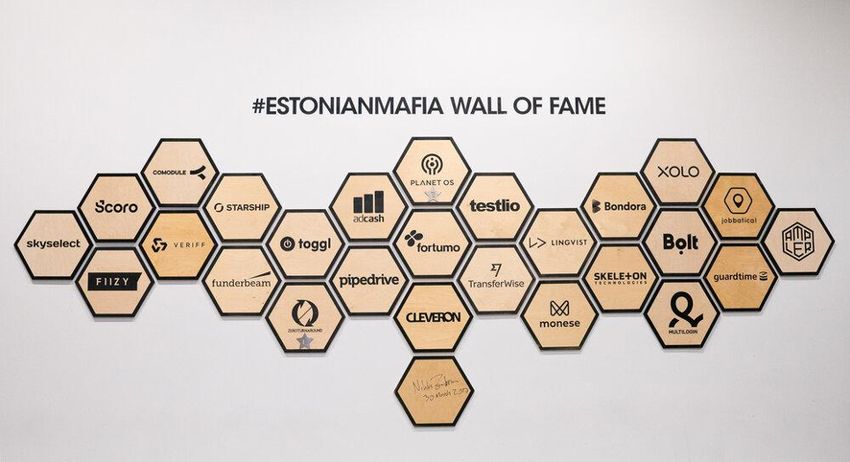
A foreword from the authors:
          A small country on course to
          a global startup mindset
In 2003, when four Estonian programmers                             evolved into a platform set to make Estonia
in Tallinn backed by a duo of Scandinavian                          one of the world’s best places for startups,
serial entrepreneurs released the first version                     partnering with and uniting the best startups,
of VOIP software that came to be known as                           incubators and accelerators in the private and
Skype, nobody could have anticipated the                            public sector.
scale of the impact for the small country of
Estonia. Before that moment, Estonia had                            Through various programmes, Startup Estonia5
already been transforming digital for almost a                      aims to strengthen the Estonian startup
decade 1, and so this was a pivotal moment.                         ecosystem, support and enable training
The skyrocketing success of Skype with exits                        programmes for startups, educate local
to eBay and Microsoft sparked a wave of first                       investors and promote foreign investments
and second generation “Skypers” founding and                        in Estonian startups, solve regulative issues
steering their startups to victory, setting an                      and barriers, monitor vital indicators, and
example for future founders to follow. Fuelled                      oversee and implement the Startup Visa for
by the Estonian spirit of inventiveness, enabling                   global founders and talent. As of the end of
smart policy and infrastructure decisions such                      2019, Estonia is home to four unicorns, 900
as the digitalisation of government services                        registered startups with approximately 6,000
and e-residency 2, plus investments both                            employees, paying more than €75 million
homegrown and international, two decades                            euros in annual workforce taxes, and annually
later Estonia is a startup nation, a destination                    attracting a healthy €266 million euros in
and a home to global unicorns including Bolt 3                      foreign investments. For a country and
and Transferwise. 4                                                 economy of 1.3 million inhabitants, these are
                                                                    humble yet significant beginnings.
Startup Estonia was initiated in 2015
by an executive order of the Minister of                            In 2021, Startup Estonia will be entering its
Entrepreneurship to draw from the successes                         sophomore edition with a fresh set of ambitious
of Estonian flagship startups and support                           goals for our small yet vibrant ecosystem and
the transformation from one-shot successes                          its impact on Estonia as a country. Over a
towards a fully-fledged startup ecosystem.                          year, we have been looking inside and outside,
Over these five years, Startup Estonia,                             seeking feedback and debating with local and
devised initially as a support mechanism for                        international founders, investors, ecosystem
disseminating European structural funds (2014-                      builders, and policymakers.
2020) to boost startup-focused initiatives, has

1
    https://e-estonia.com
2
    https://e-resident.gov.ee
3
    https://techcrunch.com/2020/05/26/bolt-the-european-on-demand-transport-company-raises-109m-on-a-1-9b-valuation/
4
    https://techcrunch.com/2020/07/28/transferwise-five-unicorns/
5
    https://startupestonia.ee

                                                                                                                       2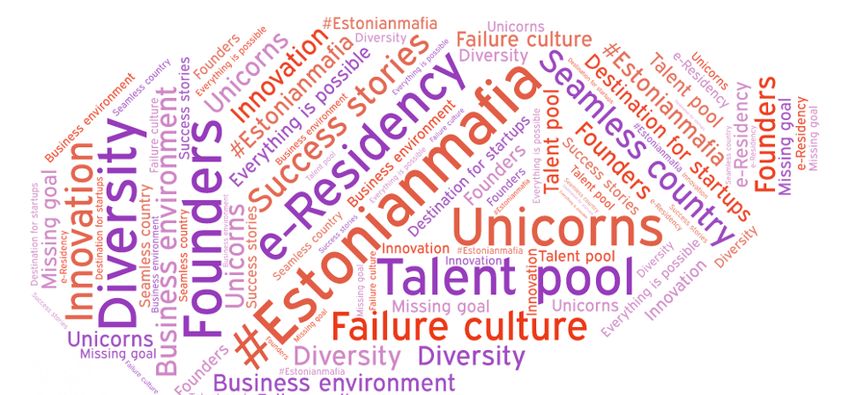
We had to evaluate how and to what extent the
Estonian startup ecosystem contributes to the
country as a whole, and what is, and should
be its global positioning and unique offering.
We also went back to basics to define the
core terms and definitions for all ecosystem
players for clarity in language, goals, and
understanding. As a result, the Startup Estonia
strategy and action plan was created, which
we are pleased to present to you in this white
paper.

Our strategy for 2021–2027 centres around the
importance of an all-inclusive startup mindset,
making this ubiquitous throughout the business
and public sector and society – making this
our unique offering in the world. We are set to
promote a locally global startup mindset across
all stages, encourage the step up from science/
inventiveness to creating more startups and
competitive scaleups, ensure all hands-on and
all-inclusive opportunities, and establish open
and data-driven steering and foresight for the
startup community.

We thank everyone who contributed to the
creation of the Startup Estonia strategy 2021-
2027, and above all, the founders and doers
hoping to kickstart the conversation about the
future of Startup Estonia, the Estonian startup
ecosystem and startup innovation at large.

 Maarika Truu        Sten-Kristian Saluveer

                                                  3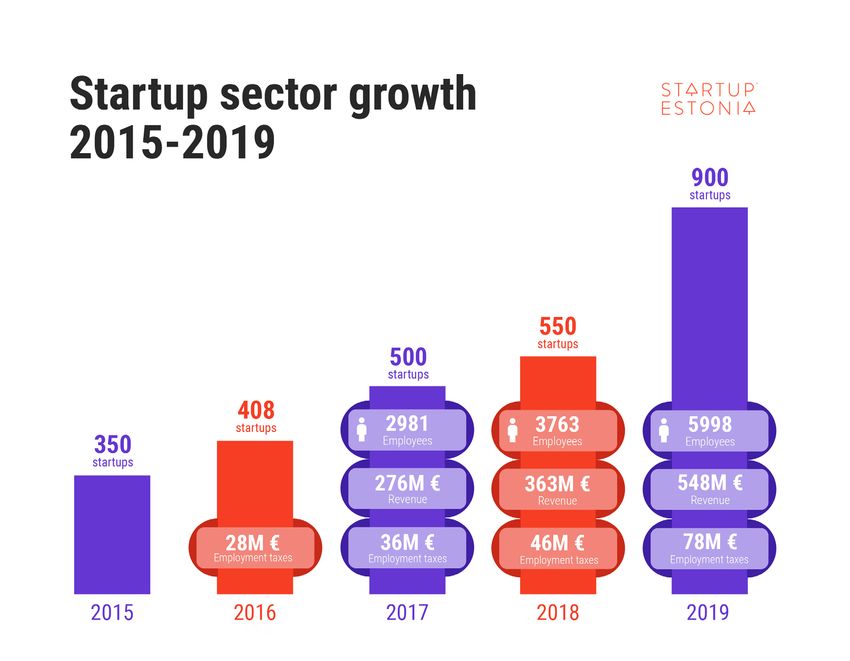
Table of Contents

Key enablers for Estonia’s startup success                     5

25 years of Estonian Startup History at a Glance               6

Key Ecosystem Organizations                                    10

Terms and Concepts and our Interpretation                      11

Startup Estonia in a Nutshell                                  12

What have we achieved in the past five years?                  13

What we need to improve                                        14

How the Estonian Startup Ecosystem sees itself          				   16

What is happening to the startup ecosystems globally?          16

Statup Estonia Vision & Action Plan 2021-2027                  19

Our Strategic priorities                                       20

Additional Graphs & Statistics                                 28

About the Authors                                              31

The Authors Thank                                              32

                                                                4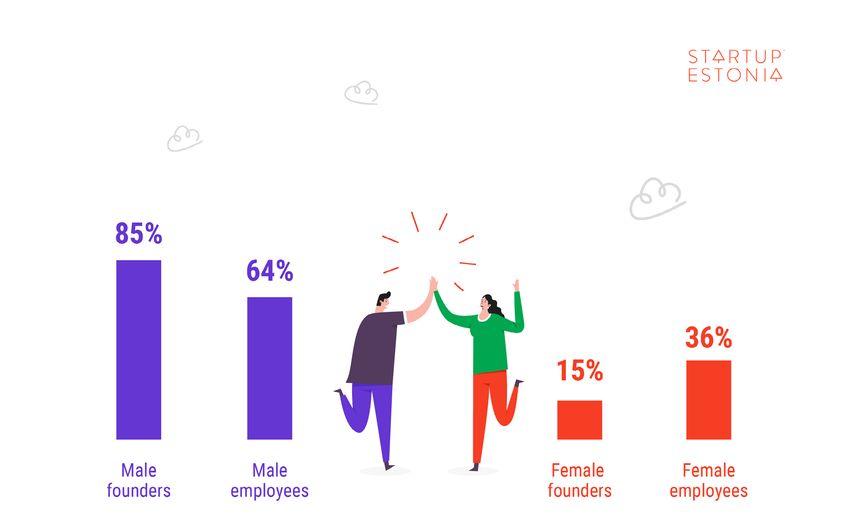
Key enablers
for Estonia’s startup success

01                High-quality local talent and education
                  Estonia frequently ranks high in international education benchmarks such as the
                  PISA tests. 6

02                Favourable economic and business climate
                  Estonia has relatively low bureaucracy, a fully digital business infrastructure (including
                  company founding, banking, digital contracts, and taxation) and a flat tax system,
                  allowing companies to reinvest their profits tax-free, except for distributed dividends
                  that have to be taxed at the corporate income tax rate. 7

03                Public sector innovation
                  Estonia has a strong history of publicly driven innovation, including the development
                  of the E-state, X-Road infrastructure, e-Residency, and most recently, the Accelerate
                  Estonia “moonshot lab” programmes. 8

04                Global “testbed” mindset
                  Due to our small domestic market of 1.3 million customers and a “let’s do it mindset”
                  Estonia has been an excellent testbed for innovations and startups prior to going
                  global. 9

05                Close knit community and founder to founder approach
                  Estonia’s startup community is down to earth yet vibrant, with superhero founders
                  supporting and inspiring newcomers whether through hands-on mentoring,
                  investments, or co-founding new startups.

6
  https://www.hm.ee/en/activities/statistics-and-analysis/pisa
7
  https://investinestonia.com/business-in-estonia/
8
  https://accelerateestonia.ee/en/
9
  Recent example being the KrattAI. #KrattAI will be an interoperable network of public sector AI applications (agents, bots, assistants, etc)
as well as private sector apps, working from the user perspective as a single, united channel for accessing direct public services and public
information. Alternatively, you can call #KrattAI an ecosystem of interoperable AI applications to provide or access digital public services.
https://www.kratid.ee/in-english

                                                                                                                                                 5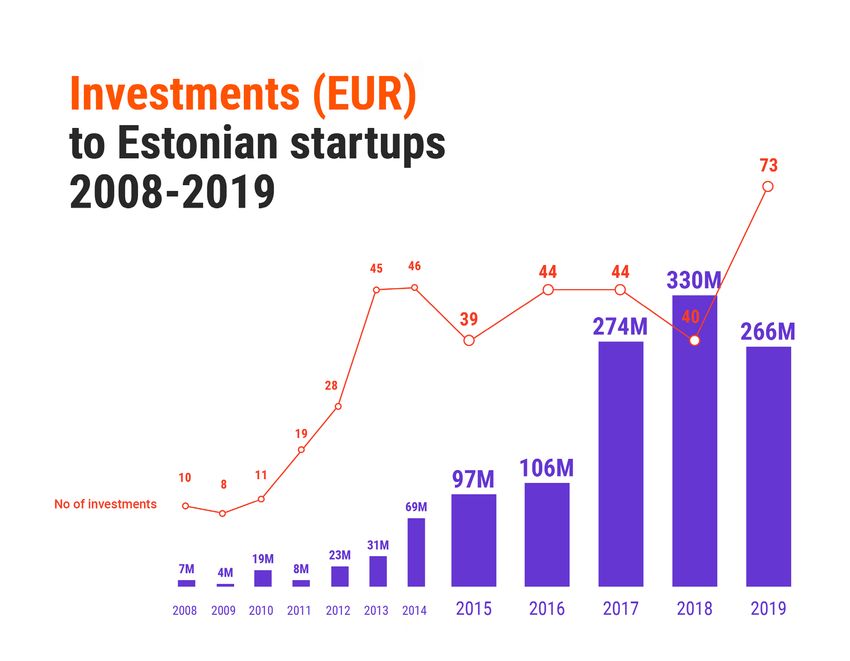
25 years of Estonian Startup
                        History at a Glance

                                                       Community & Ecosystem

                                                1992   Tartu Science Park
                                                       The oldest science park in the Baltics

                                Public Sector
                               Tiger Leap
  Development and expansion of computer         1997
and network infrastructure in Estonia, with a
         particular emphasis on education

                                                       Community & Ecosystem
                                                       Tehnopol
                                                1998
                                                       Tallinn University of Technology (TalTech)
                                                       science park

                          Superhero Startups
                                                1999
                                  Playtech

                                                       Public Sector
                                                       E-cabinet
                                                2000
                                                       All government proceedings are digitalised
                                                       and made accessible

                                Public Sector
                                   X-Road
                                                2001
       Country-wide API powering Estonian
                      digital infrastructure

                                                       Public Sector
                                                       ID Card
                                                2002
                                                       Digital authentification system for all
                                                       citizens and residents

                          Superhero Startups
                                     Skype

                                    Investors
                                                2003
  Ambient Sound Investments (ASI)
     Established as an equal partnership by
          four founding engineers at Skype

                                                                                                    6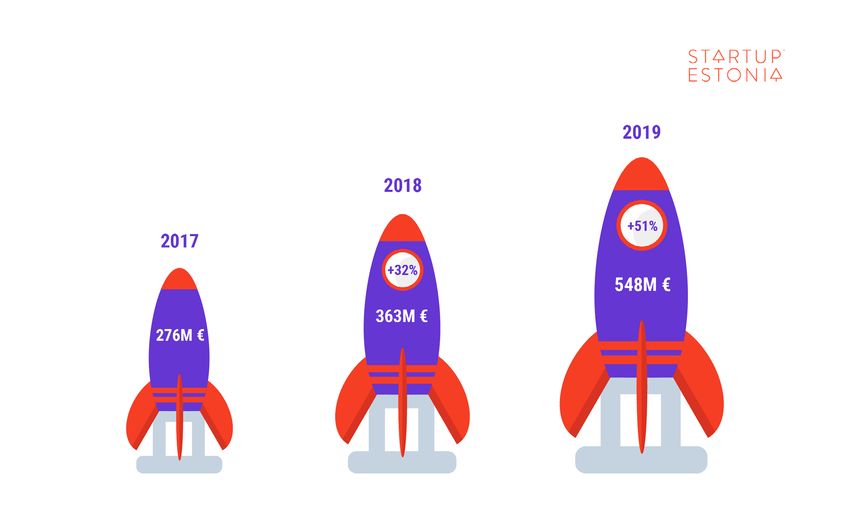
Public Sector
                                             2006
                                                    Arengufond (Development Fund)

                  Community & Ecosystem
                 Ajujaht (Brain Hunt)
   Largest competition of business ideas
           initiated by Enterprise Estonia   2007

                       Superhero Startups
                               Fortumo

                                                    Community & Ecosystem
                                                    Startup Leaders Club (SLC)
                                                    By first and second generation
                                                    of superhero founders

                                                    Superhero Startups
                                             2009   Grabcad
                                                    Zeroturnaround

                                                    Investors
                                                    Estonian Private Equity and Venture
                                                    Capital Association (EstVCA)

                  Community & Ecosystem
                             Garage48
Global hackathon platform with more than
          190 hackathons in 26 countries

                  Community & Ecosystem
                                             2010
                       Garage48 HUB
        First co-working space in Estonia

                       Superhero Startups
                              Pipedrive

                                                    Public Sector
                                                    Startup Estonia first pilot activities
                                                    under Enterprise Estonia
                                             2011

                                                    Superhero Startups
                                                    Transferwise

                                                                                             7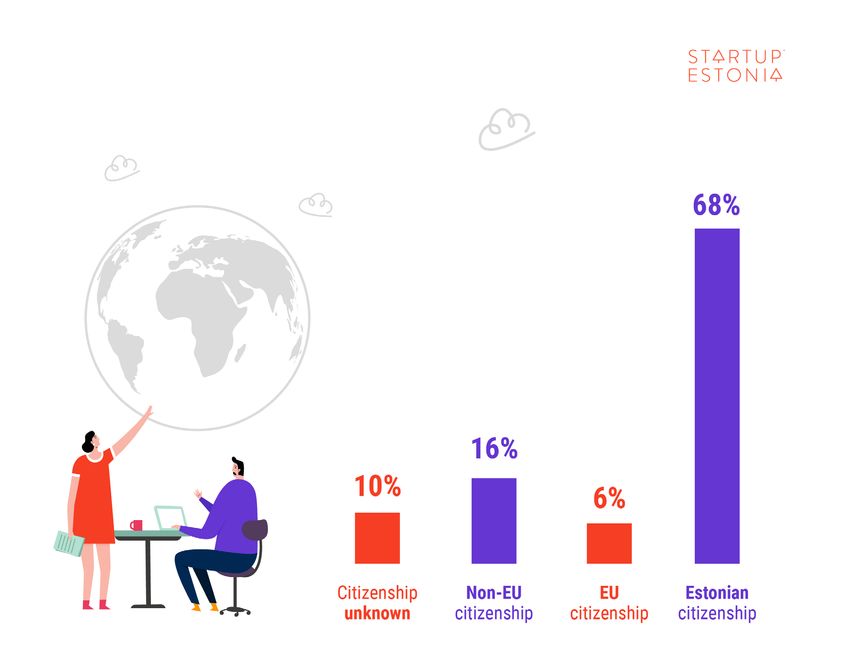
Investors
Estonian Business Angels Network
                         (EstBan)

                  Community & Ecosystem
  Crowdsourced Estonian Startup
           funding spreadsheet               2012

                            Latitude59
         Flagship startup and tech event

                                 Investors
                  Startup Wise Guys

                                                    Superhero Startups
                                                    Bolt (formerly Taxify)
                                                    FunderBeam
                                                    Lingvist
                                             2013
                                                    Investors
                                                    Baltic Innovation Fund
                                                    Fund-of-funds for later stage investments

                             Public Sector
                          E-Residency
    Opens Estonia’s digital infrastructure
                 to global entrepreneurs

                             Public Sector
                                             2014
                      Startup Estonia
                   Programme launches
               (EU SF period 2014-2020)

                       Superhero Startups
             Starship Technologies
                       COMODULE

                                                    Superhero Startups
                                                    Monese
                                             2015   Veriff
                                                    +350 Startups

                                                                                                8
Superhero Startups
                      SaleMove
                     eAgronom
                  +408 Startups

                           Investors   2016
                          EstFund
   Fund-of-funds, focusing on equity
investments into innovative and high
growth-focussed enterprises Estonia

                                              Public Sector
                                              Startup Visa
                                              Superhero Startups
                                              Seguru
                                              MeetFrank
                                       2017   Fractory
                                              +500 Startups

                                              Investors
                                              SuperAngel
                                              Accelerator fund supported by
                                              SmartCap and Startup Estonia

                  Superhero Startups

                          Klaus
                    OriginalMY         2018
                           Salv
                  +550 Startups

                                              Public Sector
                                              Estonian Startup Database
                                              Accelerate Estonia
                                              Startup minded agile public sector
                                       2019
                                              accelerator

                                              Superhero Startups

                                              +900 Startups

                                                                                   9
Graph 1: #Estonianmafia Wall of Fame in LIFT99.
Criteria for startups to get on the wall of fame: 80-100% revenue growth per year, 3M+ € annual
revenue and/or 5M+ € funding, 100 000+ € taxes paid to Estonian Government per year.

Key Ecosystem Organizations
Accelerators/Incubators
Alpine House, CleanTech ForEst Climate KIC, ESA Business Incubator Centre, Tehnopol Startup
Incubator, Startup Wise Guys, Storytek, Tallinn Creative Incubator, Tartu Biotechnology Park, Tartu
Science Park, Prototron, Ajujaht, Elevator Startups, TalTech Mektory

Conferences & Community
Latitude59, sTARTUp Day, North Star AI, Lift99, Garage48, Robotex, Forwardspace, Palo Alto Club,
Spring Hub, Vivistop, Future Heroes, Hüppelaud, Techsisters, Digigirls

Investors
EstBan, Contriber Ventures, Change Ventures, Fundwise, Funderbeam, Karma VC, Lemonade
Stand, Estonian Research Council, SEB Bank, Spring Capital, Superangel, Tera Ventures, Thorgate
Ventures, Trind VC, United Angels, United Partners, Nordic Ninja

                                                                                                  10
Terms and Concepts and our Interpretation
The following terms and definitions are used throughout the Startup Estonia strategy
and white paper.
Business angel - a wealthy individual with business experience investing in the early-stage or
seed round of a startup, usually within a sector or field
Exit - Generally, exit refers to the withdrawal of an investor from a startup in the most beneficial
way for the investor.
Moonshot mindset – an approach to solving an immense challenge or a problem facing the
whole society, and finding a breakthrough using a radical or previously untested approach,
process, scientific discovery or technology.
Startup - is a business entity (up to and including 10 years of operational history) belonging to
a company registered in Estonia, which is starting activity with the purpose of developing and
launching a business model or technological component with high global growth potential, that
is innovative and replicable and shall significantly contribute to the development of the Estonian
business environment. 10
Startup ecosystem - the field and network of all participants related to startup entrepreneurship,
which in sum impacts the development performance of startups and startup entrepreneurship in
Estonia.
Startup mindset - is an approach based on the cycle “Build, validate, learn” drawing heavily from
creativity, flexibility, and entrepreneurialism; it drives the rapid execution of ideas and learning from
results.
Startup sector - an economic sector consisting of startups founded, incorporated, and or doing
business in Estonia.
Scaleup - a startup that has raised investments of at least 1 million euros, has at least ten
registered employees and has an annual growth in employees and turnover of at least 20% within
three years.
STEAM education - educational approach to learning using science, technology, engineering,
design, and mathematics.
Unicorn - a rapidly scaling startup with a market capitalisation of over 1 billion euros.
10
In accordance to Estonian Alien’s Act: https://www.riigiteataja.ee/en/eli/ee/518112013013/consolide/current
11Startup Estonia in a Nutshell
Startup Estonia was initiated in 2015 by the executive order of the Minister of Entrepreneurship
with the goal of establishing the Estonian startup ecosystem through various grants and
community facing funding schemes between 2014–2020.
Today, Startup Estonia serves as the main supporter and enabler of the Estonian startup
community, mediating between founders, ecosystem members and the governance and public
sector. It is also the international representative of Estonian public sector driven startup initiatives.
The Startup Visa
https://startupestonia.ee/visa/
The Estonian Startup Visa programme, initiated by relocated to Estonia including from Russia, India, Turkey,
Startup Estonia in 2017, helps non-EU founders grow Ukraine, Iran, Pakistan and Egypt.
their startup in Estonia, and also facilitates Estonian
startups in the process of hiring non-EU talent. Altogether 1,351 employees have relocated to Estonia
to work in Estonian-based startups. In 2019, the top
In the past three years over 2,000 individuals from over 5 countries that were represented in the visa and
80 countries have successfully passed the application temporary residence statistics were Russia, Brazil,
assessed by the Startup Committee consisting of key Ukraine, India and Iran. Altogether, 701 people received
Estonian startup community stakeholders. the visa or temporary residence permit to relocate to
Estonia in 2019, which is significant growth from 483 in
Since the programme’s launch, 500 founders have 2018 and 167 in 2017.
Startup Estonia’s four core areas of activity
01 Strengthening the Estonian startup ecosystem – uniting and building the
community through different events and activities, creating and executing unified
marketing and branding strategies and providing funding for community initiatives.
02 Training startups and ecosystem members in areas they currently lack expertise
in that keeps them from achieving their (international) business goals.
Educating local investors to help them invest more and smarter, help attract
03 foreign investors to Estonia, and kickstart new accelerator funds in order to bring
more smart money into the local ecosystem.
04 Eliminating regulatory issues and barriers that complicate the process of operating
a startup, investing in startups or raising funding in Estonia, and ensuring there is a
startup-friendly environment through means like the Startup Visa.
12What have we achieved
in the past five years?
Due to the success of Startup Estonia, the Foreign investments in Estonian startups are
functioning flagship startups, founders, and steadily increasing with a record-breaking €328
community organisations, as well as the million invested in 2018, and €266.4 million
minimal bureaucracy and startup-friendly invested in 2019.
business environment, a small yet vibrant and
internationally visible and attractive Estonian Estonia has given birth to four unicorns
startup ecosystem has lifted off. in the past fifteen years (Skype, Playtech,
Transferwise, and Bolt), and ranks third in
The Estonian startup ecosystem consists of Europe in terms of the highest number of
more than 100 organizations with offerings for startups per capita. Bolt, the Estonian ride-
all stages of the startup life-cycle, starting from share platform, was recently named the hottest
innovation and entrepreneurship education for European unicorn at the Europas awards. 11
children to investments and business services
tailored to scaleups. International talent and e-residents see Estonia
as an attractive work destination. As of 2019,
The startup sector is the fastest-growing 22% of employees in Estonian startups are
economic sector in Estonia with annual foreign nationals, and the Startup Visa has
employment growth of 30% on average. enabled the relocation of more than 2,000
founders and startup employees.
By the end of 2019, Estonia has 900 registered
startups (per 1.3 million residents), making Many Estonian startups such as Transferwise,
a significant contribution to the country’s Bolt, and Skype have become globally
economy by employing ~6,000 and paying recognised brands, and startups are an
more than €75 million in employment taxes per indispensable part of Estonia’s international
year. relations.
11
https://techcrunch.com/2020/06/26/here-are-the-winners-of-the-europas-awards-2020-even-a-pandemic-cant-stop-these-startups/
13What we need
to improve?
The decision-makers have not systematically ahead in harnessing innovation spillover
addressed startups and the startup sector from universities and science producing
as a country-wide, cross-sectorial and cross- organisations, R&D and science to prototype to
discipline critical development priority. The startup and tech transfer commercialisation.
collection, analysis and implementation of real- Science, deep tech or creative vertical success
time, market-driven data to steer startup and stories are still hard to come by. The European
ecosystem focused policy is at an early stage. Innovation Scoreboard says, “Estonia shows
the highest positive difference to the EU in Total
The startup community has been lukewarm in Entrepreneurial Activity, Average annual change
its response to long-term proposals, strategies, in GDP and FDI net inflows, and the biggest
and actions by the public sector while being negative difference in Top R&D spending
strongly dependent on the legal environment enterprises.” 12
and public sector supported projects and
grants, especially for community organisations Successful startups depart Estonia to more
and service providers. attractive destinations, mostly due to access
to increased market, capital, or talents.
Estonian startups need talent and urgently Estonia lags in offering competitive business
– the demand in the startup sector exceeds development and relocation services for
what the market and the education system sustainable growth in foreign founder-driven
offers; a STEAM-driven approach is not startups or other highly sought after and skilled
widely implemented in universities and higher talents.
education institutions.
The Estonian startup ecosystem should be
Legal complexity constrains the growth of more diverse, as much of the startup and
foreign investments, domestic investments are startup related business (95%) is concentrated
angel driven and focused on the early stage around the major cities of Tallinn and Tartu
of the startup life-cycle, with the majority of and despite regional interest, the capacity
local investors with short term experience and to support entrepreneurship and startup
fragmented portfolios. businesses is low. Similarly, the ecosystem
could benefit from a more diverse set of
Exits are rare and mysterious – Estonian founders in terms of gender, age, and culture.
corporations and enterprises are still slow to While most of the founders are male, many of
adopt innovations, especially from startups. the highly-skilled startup employees in Estonia
Estonia also has a long road are women. 13
12
https://ec.europa.eu/growth/industry/policy/innovation/scoreboards_en
13
https://media.voog.com/0000/0037/5345/files/ESTaas.pdf
14Graph 2: Proportion of male and female employees and founders in startup sector.
Source: Startup Estonia statistics. Calculations are based on Statistics Estonia data.
15How Estonian startup ecosystem sees itself
– key themes from the Estonian startup
ecosystem 2019 moonshot workshop
Graph 3: Word cloud of keywords from Estonian startup community members.
Source: Startup Estonia
What is happening to startup ecosystems globally?
To understand global positioning and set strategic priorities for the Estonian startup
ecosystem, we investigated how other startup ecosystems have been performing and their
key characteristics. In the past year, we talked to ecosystem builders and leaders, successful
founders, and investors across the world and drew the following conclusions. 14
01 Startup sector development for economic, societal, and political reasons is a crucial
priority for policymakers and business leaders.
14
in August 2019 Kinnernet Venice Conference was held in Italy in H-Farm Innovation Centre for international innovation leaders and
specialists where Startup Estonia conducted qualitative interviews to investigate startup ecosystems and strategic priorities for development.
Interviews were done and expert opinions were shared by following people: Marie Wall (Ministry of Entrepreneurship and Innovation, Sweden),
Guido Van Nispen (Raad voor Cultuur, Holland), Vera Futorjanski (500 Startups, Dubai), Anthony Saccon (H-Farm, Italy), Arie Horie (Women’s
Startup Lab, USA) and Amit Shafir (investor, Israel). In September 2019 Startup Estonia took part in Startup Ecosystems Forum held in
Chicago, USA where experience was shared between the governmental and private sectors, including Intel, H-Farm, Kellogg / Twin Innovation
Network and 1871 Accelerator (Chicago).
1602 The world is not (exclusively) Silicon Valley Centric – startup ecosystem hotspots
are emerging across the globe with unique characteristics and unique competitive
advantages.
03 The role (and the need) for public sector or government-driven initiatives varies
immensely across ecosystems. It may yield minimal intervention and high corporate
involvement (US, Italy, Southern Europe) or focus on national tech excellence and
scaleups (La French Tech). Or it may stress creating hubs of innovation and world-
class talent (Dubai, New Zealand), or managing the social impact of the startup and
innovation sector for society (Sweden).
04 Vertical specialisation draws from specific local components and resources such
as talent specialisation, unique science and R&D capacity, and other locally unique
properties. Verticals emerge due to the needs and goals of the ecosystem as a
whole, and the transfer of knowledge, skills, and experience between experienced
and up and coming founders. Therefore, the role of governance is supportive of
ecosystem development and not prescriptive in terms of policy or regulation.
05 It’s a long-term, second generation game based on trust. Today’s strategic decisions
will yield long-term outcomes for ecosystems in 10–15 years, and open, trustworthy
dialogue and collaboration between ecosystem players is critical in ensuring success
to the whole.
06 Ecosystems are mostly self-evolving driven by local economic, societal, and political
factors and needs, and adapting a success formula from another ecosystem is not
easy.
07 The clash of ideas and cultures drives ecosystems, attracting and deliberately
creating conditions for the amalgamation of cultures; multi-experienced talents will
enable radical innovation.
08 Large scale corporates and enterprises are crucial for the balancing of ecosystems,
and especially in the later stages of ecosystem maturity through M&A and exits,
as well as corporate venture investments with the US leading by example. Europe,
especially the smaller member states, have a long way to go in catalysing CVC and
exits due to its long-term investment-return cycle and high costs 15, and general
innovation adoption and startup to corporate collaboration.
09 European collaboration between startup ecosystems is competitively fragmented,
missing not only standardised and comparable ecosystem benchmarking criteria but
also market-driven and rapidly scalable public sector financed R&D and innovation
financing and scaling measures. The slow reaction of the education sector to provide
STEAM-powered talent, brain drain to super platforms, the absence of a digital single
market, diverse national legal and business regulations, local market focused (angel)
investments, and competing national agendas all set barriers to Europe’s growth.
15
http://go.500.co/unlocking-corporate-venture-capital
17Startup Ecosystem models across the world through the lens
of public sector involvement and governance
Free Market (USA, Southern Free Market with vertical
Europe) ecosystem specialization (Israel)
The state does not steer the The state backs critical vertical(s)
ecosystem besides enabling free (i.e. cyber)
market(s)
Promoting Scaleups + National Free Market + Public Sector
Tech Excellence (France) Innovation (Chicago, Paris)
Startup
The state promotes national tech The public/municipal sector steers
Ecosystem
excellence and selected scaleups the ecosystem through infrastructure
globally or enabling specific corporate policy
Attracting Talent + Change Measuring + Balancing Social
Catalysts (Dubai, New Zealand) Impact (Sweden)
The state executes a focused pull-in The state measures and acts on non-
of talent and change catalysts through economic impact of startups for the
visa or residence programmes country and society
Graph 4: Qualitative research conducted by the order of Startup Estonia
18Startup Estonia Vision & Action Plan
2021-2027
The startup sector has been one of the fastest-growing industrial areas in Estonia from 2015
to 2019. The total turnover of the startup sector in 2019 was €548 million, with €266.5 million
in venture capital. Startups offered work to more than 6,000 employees and paid 68% higher
salaries than the Estonian average during the same period. The flagship unicorns Bolt and
Transferwise, even during the COVID-19 pandemic, are leading the ranks of Europe’s fastest-
growing startups with rapidly increasing valuations. 16
For Estonia, startups are:
01 The critical component of Estonia’s future innovation and success story in Europe
and globally, and a vital part of Estonia’s digital soft power and national strategic
interest.
02 Creating and driving innovation in the region and opening up entrepreneurship and
career opportunities outside major hubs.
03 Serve as role models for future innovators and founders. Becoming a startup founder
or an employee is becoming a career path.
Based on the previous, we have set two ambitious goals for
Startup Estonia for 2021–2027.
Enable an all-inclusive startup mindset, which offers lifelong self-realization and entrepreneurship opportunities for
every single Estonian and non-native resident regardless of age, gender, nationality, location or experience.
Support the growth and impact of Estonian startup and technology sector to 15% of GDP by 2025.
16
https://www.cnbc.com/2020/05/26/uber-rival-bolt-valued-at-1point9-billion-plans-for-coronavirus-recovery.html
19Our Strategic Priorities
01. Enabling a forward-looking startup ecosystem,
including regional hubs
The Estonian startup sector is a rapidly The development of Estonia’s startup
growing economic sector compared to ecosystem is a strategic priority at state
traditional industries in Estonia by comparing level ensured by low-bureaucracy and an
investments, employment rates, and taxation entrepreneurship-friendly regulatory and
to the state. In the context of the increasing economic environment.
digitalisation of the global economy to ICT and
knowledge-based models, the development of The ecosystem and business environment
forward-looking and globally connected startup for startups encompasses the whole of
ecosystems is a critical priority for Estonia to Estonia, with the focus of development
ensure the country’s competitiveness at local, on regional hubs and initiatives (incl. the
regional and international levels. availability of opportunities, services, necessary
infrastructure and financing measures in the
Startup ecosystem needs: major centres and regions).
Startup Estonia is the representative of the To this end, the state supports an ecosystem
Estonian startup ecosystem locally and that takes into account all stages of the
globally, and a mediating platform between the development of startups (including sector
members of the ecosystem and the legislator. development and (community) organizations
and initiatives, sector policy and monitoring,
Startup Estonia steers the development of startup creation, support, education,
the Estonian ecosystem by representing employment and other development measures)
the entrepreneurs and organisations in the and keeps pace with global developments;
community, monitoring and analysing, and Startups and innovation-based thinking
if necessary, launching (in the framework of and action will be extended to other sectors
its mandate) essential strategies, measures, in cooperation with ecosystem-building
grants, and other forms of support. organizations (including the public sector,
education and research sectors, the creative
industries and others);
Action Focus:
Locally Global Startup Mindset
across all levels of the country
20How are we going to measure this?
Growth of startup sector by 30% per year on average (by employees, employee taxes and
investments)
Growth of startups to scaleups or ventures with at least 10 years of operational history,
especially in high tech and high added value industries.
Growth of regional startups
Case Study:
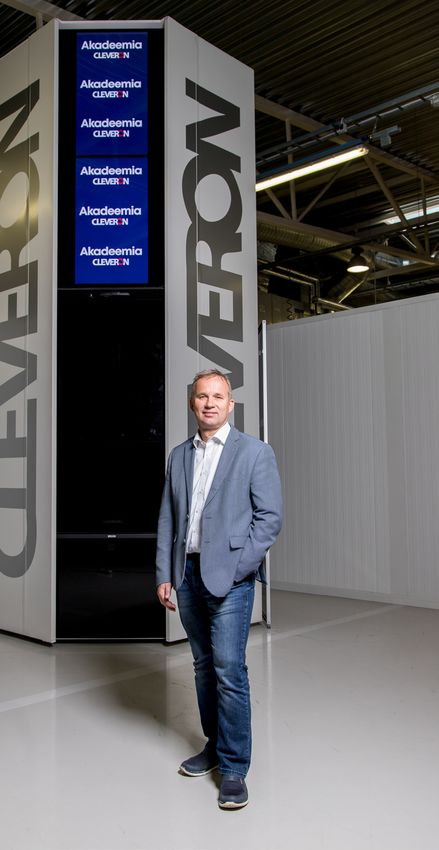
Cleveron – Driving global robotics innovation
from small town Estonia
www.cleveron.com
Cleveron, founded in 2007 and operating out In 2009, Cleveron launched an academy
of the small city of Viljandi in central Estonia, to provide professional higher education in
develops innovative parcel lockers and robots robotics software development in cooperation
to streamline omnichannel initiatives and offer with the Estonian Entrepreneurship University
a seamless customer experience. Cleveron´s of Applied Sciences.
solutions used by many industry heavyweights https://cleveron.com/news/cleveron-will-open-
including ASDA, Walmart and Zara reduce a-robotics-academy Cleveron Academy’s
last-mile delivery costs, enhance parcel students focus on developing solutions for self-
delivery and return operations, and improve the driving cars.
omnichannel customer experience.
“
Cleveron’s products are based on the notion that we are solving
problems for our clients: saving costs, time and making their services
more convenient. We have an attitude that if you see something which
needs to be improved, then go and improve it. And not just in business,
but also when it comes to community. We try to help out any way we
can.
– Arno Kütt, Co-founder and CEO of Cleveron
212. Promoting an entrepreneurship and startup mindset in
science and R&D, and supporting the growth of scaleups
The Estonian startup ecosystem is a the protection and monetisation of their IP
catalyst for innovation, economic and social and assets. That includes the promotion of
impact, driving R&D and science-derived a startup mindset in science and education,
entrepreneurship, tackling ambitious challenges increasing tech transfer, supporting startup and
and problems, and fuelling more significant R&D-driven competence centres, and backing
investments in Estonian startups. The effect IP protection and the creation of patents.
of scaleups is felt across the economy and
attracts domestic and international corporates In developing the collaboration between
through enterprise partnerships, CVC, and exits. science and the R&D community and the
startup ecosystem, the state focuses on
Startup ecosystem needs: enabling science and deep tech-driven
entrepreneurship. Risk leveraging will be
(Estonian) businesses, corporations, and allowed, such as through entrepreneurship
enterprises increasingly adopt and utilise or customised grants. These actions will be
innovations from the Estonian startup sector. implemented in collaboration with members of
the startup ecosystem and driven by its needs
To enable high innovation initiatives in and development priorities.
critical areas such as moonshots, circular Particular attention shall focus on attracting
economy and sustainability, frameworks and CVC investors or corporates with M&A
infrastructure shall be created either by the capacity to advance the exit capacity of
state or by public-private partnerships. Estonian startups and scaleups through
actions and support schemes focusing on
The state will initiate and apply policies, and startup to corporate collaboration and investor
actions supporting the growth of science networking, and increasing exit readiness.
and R&D-driven startups and scaleups, and
Action Focus:
From Science and R&D to Startups & Scaleups
How are we going to measure this?
Growth of science and technology intensive startups
Increase in patents from the startup sector
22Increase in specialist employees in startups with an academic, science or other high level
educational background
Increased adoption or utilization of startup innovation in other business and economic
fields via relevant product development, export and other business support actions
Case Study:
Skeleton Technologies - Fighting climate
change with industrial innovation
https://www.skeletontech.com/
Skeleton Technologies is the global leader in With offices in Estonia and Germany, Skeleton
graphene-based ultracapacitors and energy- has raised over 60 M EUR since its foundation
storage systems for automotive, transportation, in 2009 from private and public investors
grid and industrial applications. Thanks to including the European Investment Bank and
its patented ‘curved graphene’, Skeleton has EIT InnoEnergy, the innovation engine for
achieved global breakthroughs in performance sustainable energy across Europe. Skeleton is
and is the only manufacturer delivering solutions also a member of the European Battery Alliance,
with such high power, high energy, reliability and European Commission’s initiative to ensure that
long-lifecycles. The company operates Europe’s all Europeans benefit from cleaner vehicles and
largest ultracapacitor production facility and more sustainable technological solutions with a
works with some of the largest companies in competitive and sustainable cell manufacturing
the world to decrease carbon emissions and value chain in Europe.
fuel consumption, and to power electrification to
fight climate change.
“
Climate change is a threat to humanity but developing the technologies
to fight against it is the biggest business opportunity for Estonia and
Europe since the Internet revolution.
– Taavi Madiberk, Co-founder and CEO of Skeleton Technologies
233. Ensuring a diverse and competitive startup ecosystem
through greater diversity in gender, age, and cultural or
geographic background
A precondition for the growth and success of Startup ecosystem needs:
Estonian startups and the startup ecosystem
is the presence of multi-skilled and diverse The startup sector is driven by diversity,
talent, (in terms of gender, age, and culture). To ensuring equal opportunities for employment,
support this, the Estonian education system, career, and business regardless of gender, age,
and business and living environment needs location, cultural background, or education.
to be more inclusive, ensuring the nurturing
of talent in partnership with the needs of the The Estonian startup sector remains attractive
sector and enabling opportunities for fresh or for international, highly-skilled talent and
future founders as well as startup employees entrepreneurs. The startup sector’s needs and
regardless of their age, gender, age or position. requirements define the measures necessary
to ensure the inclusion of diverse talent, and
Taking into account the growing competition relevant benefits for the state.
between STEAM-powered talent, Estonia shall
remain an attractive destination for highly- The startup, science and education sector shall
skilled specialists. The focus is on talent who launch systematic collaboration in offering
seek long-term careers and the application of STEAM-powered education programmes and
their skills and knowledge in Estonian startups, related actions and initiatives to contribute to
such as via the Startup Visa programme, other future founders and employees.
present or forthcoming measures and actions.
To support the startup mindset, Startup Estonia
shall promote founder stories and role models
from diverse backgrounds.
Action Focus:
All hands on and (future) talent powered
How are we going to measure this?
At least 20% of the founders of startups (currently 15%), and 50% of their employees
(currently 46%) are female
At least 30% of people involved with startups are highly skilled specialists from abroad.
24Growth in the diversity of the founders and employees of startups on the basis of age,
education, and location
Case Study:
Nurturing future founders and innovators:
VIVITA
https://vivita.ee/en/
VIVITA is an international creativity accelerator collaborates with passionate innovators and
for youth and kids that develops an ecosystem inspiring practitioners from the local startup
of products and services (creative spaces, and design communities and the academia –
mentoring and technology) that help bring the inviting them to mentor the children, thus giving
ideas and visions of the children to life. VIVITA the children exposure to real-world learning
is headquartered in Tallinn, Estonia and as of opportunities alongside these practitioners.
September 2020 is operational in 7 countries Engaging in activities in VIVISTOPs (VIVITA’s
(EE, LT, USA, JP, SG, KR, PH). creative studios) is free of charge for all children
to ensure equal access to the space to all young
VIVITA’s main aim is to establish creative creative minds. The only precondition set is
ecosystems that foster and promote the the expectation for the child to be motivated in
development of interest in entrepreneurship, creating and experimenting and to be able to
STEAM subjects, self-directed learning and work self-directedly.
creative experimenting among 8-14-year olds.
VIVITA builds open makerspace facilities and In VIVITA there are no teachers nor formal
invention labs for children to turn their original curriculum. The activities are led by children
product ideas into working prototypes; develops themselves and grownup mentors in the space
a portfolio of educational technology software only play a supportive and inspirational role. This
and hardware tools for prototyping, robotics and results in an environment with an atmosphere
other creative activities; and actively that creates organic interest toward STEAM
related subjects, projects and professions.
“
VIVITA is striving to create a balance between self-directed activities and guided
activities for children that support them in acquiring new skills and confidence
needed for prototyping and bringing their ambitious ideas into life. This is done in
a form that is most suitable for children, through short courses and mentoring,
and additionally, what we consider the most important – by including children in
ideating, designing and developing solutions for various real life projects. Children
grow up fast and by giving them in the early age an opportunity to turn their
wildest fantasies into reality, we will be soon witnessing a new generation of young
entepreneurs that can venture global projects with an awe-stricken nonchalance.
– Mari-Liis Lind, Co-founder and CEO of VIVITA
254. Implementing Open data-driven steering and foresight for
the Startup Ecosystem
The foundation of the right development, decisions required to steer the ecosystem,
leadership, and policy for the startup derived from cross-sector and systemic data,
ecosystem is based on publicly and jointly research, and feedback.
defined terms and concepts, data and key
performance indicators allowing the automated The state commissions necessary research
and digitised gathering of relevant information, or supports relevant procurement actions for
and subsequent analysis and decision- the development and benefit of the startup
making. Hence, the legislator (the Republic ecosystem and prefers domestic scientific and
of Estonia), the public sector and ecosystem research efforts. The decisions required for
members have agreed on the definition of a rapid and agile responses impacting the startup
startup with additional parameters allowing sector based on the analysis and application of
the identification of such a venture during its real-time, open data.
registration or incorporation.
Within the Startup Estonia strategy 2021- State-validated data, statistics, timelines, and
2027, the state shall enable the creation and quality-driven databases related to the Estonian
implementation of a retrospective and forward- startup ecosystem are publicly accessible to
looking data infrastructure that also enables members of the ecosystem and governance
foresight. The goal of such an infrastructure bodies.
shall be to measure, evaluate and provide
actionable intel on the impact of the startup The creation of a startup sector-focused data
ecosystem on the Estonian economy in general taxonomy and data collection measures.
and specific fields of the economy and society. This enables the comparison of the startup
ecosystem’s performance in the context of
Startup ecosystem needs: the Estonian economy as a whole, as well as
correlation points with other sectors, including
The creation and implementation of policies, the monitoring of startup KPIs throughout the
related actions, or measures, including the life-cycle of the venture.
assessment of their impact and the necessary
Action Focus:
Open and Data Driven Steering & Foresight
26How are we going to measure this?
Further and continuous development of the Estonian Startup Database and other relevant
data collection, analysis and decision-making platforms
Collaboration with the Statistics Board on the collection, assessment, and analysis of data on
the Estonian startup ecosystem
Taking decisions on data:
The Estonian Startup Database
https://startupestonia.ee/startup-database
Startup Estonia launched new version of the come from Estonian Tax and Customs board
Estonian Startup Database in January 2020. public data. These numbers are updated
It is the most extensive source for Estonian quarterly. Other startups’ specific information is
startups. Estonian Startup Database to this updated by startup founders.
date holds the data of almost 1050 Estonian Depending on the users’ needs, it is possible to
startups. Estonian startups are technology- get an overview of Estonian startups by ranking
based businesses registered in Estonia, not and filtering them by sectors, technology, stage,
older than 10 years (including), have a goal employee count, turnover, etc. It is also possible
to develop and launch an innovative and to create custom reports of specific sectors.
repeatable business model with global growth Soon the database will also give an overview of
potential. the previous success stories. Separate section
Database consists of data about taxes paid, about former successful startups and biggest
turnover, and the number of employees that acquisitions in the ecosystem will be added.
27Additional Graphs & Statistics
Graph 4: The growth of Estonian startup sector by number of startups (2015-2019). Source: Startup Estonia statistics
Graph 5: Investments to Estonian startups 2008-2019. Source: Funding of Estonian Tech Startups #estonianmafia
28Graph 6: Number of employees in startup sector 2017-2019. Source: Startup Estonia statistics. Calculations are based on Estonian Tax and
Customs Board information on paid employment taxes, revenue and employee numbers.
Note: Growth from 2017 to 2018 is 36%, from 2018 to 2019 32%. Employee numbers are given by the last day of the quarter.
Graph 7: Estonian startups employee proportions by origin (2019). Source: Startup Estonia statistics. Calculations are based on
Statistics Estonia data.
29Graph 8: Estonian startups employee proportions by age (2019). Source: Startup Estonia statistics. Calculations are based on
Statistics Estonia data.
Graph 9: Turnover generated by Estonian startups 2017-2019. Source: Startup Estonia statistics. Calculations are based on
Estonian Tax and Customs Board information.
30About the Authors
Maarika Truu is Head of Startup Estonia (currently on maternity leave)
helping to make Estonia one of the best places for startups by supporting the
development of a vibrant and sustainable startup ecosystem. EU Startups
selected Maarika as one of the fifty most influential women in European tech
and venture capital (2020).
She has a background in sales and project management with 10+ years in
the international startup sector working in e-commerce, B2B Saas (Pipedrive.
com), HRtech startups and organising intensive weekend hackathon events
(Garage48.org) boosting the local startup communities around the CEE
region.
Her interests include: sustainable development and cleantech.
https://www.linkedin.com/in/maarikatruu/
Sten-Kristian Saluveer is an internationally acclaimed innovation strategist
and consultant, audiovisual producer, content and technology entrepreneur.
After more than 20 years in the audiovisual and content industry as a
producer, Sten dedicates his time to advising both private and public sector
organisations including the European Commission, DFFB, Accelerate Estonia,
VRT Future Hubs, Estonian Ministry of Culture, Marche du Film - Festival de
Cannes and others on future strategies, innovation and technology.
Sten is the Founder of Storytek /storytek.eu/ – a vertical focused mediatech
accelerator and innovation hub, and heads the Innovation track, NEXT, at
the Marche Du Film of the Festival de Cannes. He is also a partner at Exit
Academy – a tailor-made coaching and advisory programme that helps
passionate startup founders master the skills necessary for their companies
to realise successful exits. In a parallel universe Sten is a known specialist
on Japanese and Korean culture and cinema, a university professor, and an
occasional film and music producer.
https://www.linkedin.com/in/stensaluveer/
31The Authors thank
We would specifically and personally like to thank…
Moonika Mällo (Startup Estonia)
Viljar Lubi (Estonian Ministry of Economics and Communications)
Sten Tamkivi (Estonian Founders Society)
Mikk Vainik (Accelerate Estonia)
Marten Kaevats (Government Office of Estonia)
Ragnar Siil (Creativity Lab)
Martin Villig (Bolt)
Riina Einberg (Veriff)
Kat Borolongan (Le French Tech, France)
Marie Wall (Ministry of Enterprise, Sweden)
Guido Van Nispen (Raad voor Kultuur, Holland)
Vera Futorjanski (500 Startups, Dubai)
Anthony Saccon / Maurizio Rossi / Marta Caroti / Matteo Scanni (H-Farm, Italy)
Marc Goldberg (Maslow Capital Partners, France)
Jerome Wittamer (Expon Capital, Luxembourg)
Guy Philippe Goldstein (Makafriend, France)
Tariq Krim (Polite.one, France)
Jennifer Schenker (The Innovator, France)
Maks Giordano (Kreait, Germany)
Harald Neidhardt (futur.io - Germany)
Guillaume Klossa (Special Adviser to the Vice President, European Commission, France)
Sarah Geeroms (VRT Sandbox, Belgium)
Steffi Czerny / Alexandra Schiel (DLD Conferences)
Arie Horie (Women’s Startup Lab, USA)
Amit Shafrir (Strategic Investor, Israel-USA)
Peter Bryant (Clareo, USA)
Robert Wolcott (Twin Network, Kellogg School of Management, USA)
Jussi Tapio / Miika Leinonen (Ghost, Finland)
Kristen Davis (CinqC, France)
Todd Porter / Daniel Goldman (The EdgeOf, Singapore-Japan)
Jeremy Sim (Mistletoe, Singapore)
Luukas Ilves (Guardtime, Estonia)
…and many others who contributed to this report with their ideas,
knowledge, comments and critical feedback.
32KredEx implements the Startup Estonia programme with
the aim of creating more start-up success stories in Estonia
(https://www.kredex.ee/en)
Startup Estonia programme (project number:
EU50651) is financed by European Regional
Development Fund
33www.startupestonia.ee
You can also read


