STATE OF CONSERVATION REPORT - JAMAICA FOLLOW-UP 41COM 7B.35 - Blue and John Crow Mountains - UNESCO World Heritage Centre
←
→
Page content transcription
If your browser does not render page correctly, please read the page content below
UNESCO World Heritage Centre
State of Conservation Report
(Page created by WHC to facilitate reading)

            STATE OF CONSERVATION REPORT

                         Blue and John Crow Mountains
                                          (2015, Ref. 1356rev)

                                              JAMAICA

                              FOLLOW-UP 41COM 7B.35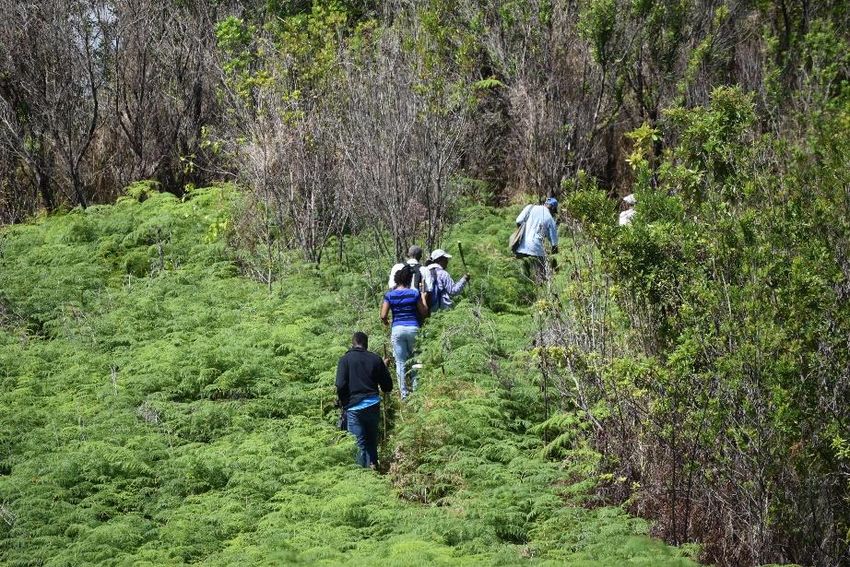
UNESCO World Heritage Centre
   State of Conservation Report
   (Page created by WHC to facilitate reading)

                                                   Index
                                         State of Conservation Report
                                Blue and John Crow Mountains - JAMAICA

A. State of Conservation Report (English)
B. Annexes:
       1. National Park Boundary Clarification
       2. Updated 3-year Joint Work plan (2015-2017)A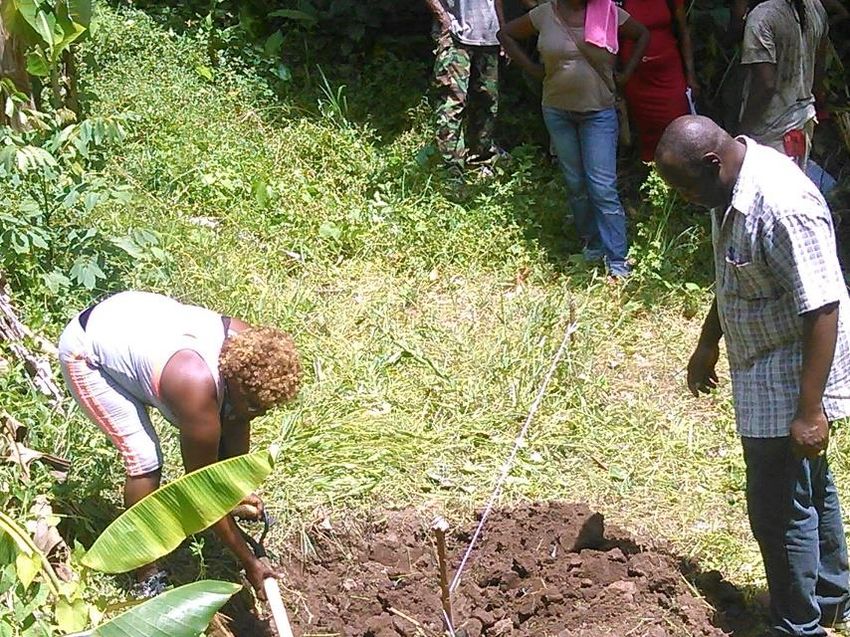
CONTENTS
                                                                   page

List of Acronyms                                                   3

Executive summary                                                  4-5

Responses to requests from the World Heritage Committee

Responses to request (a)                                           6-7

Response to request (b)                                            8

Response to Request (c)                                            8

Response to request (d)                                            9-10

Final report on the state of implementation of the 3-year joint    11-27
Work-plan proposed in February 2015

Conclusion                                                         28

Appendices
   •   Appendix A: National Park Boundary Clarification            30-33
   •   Appendix B: 3-year Joint Work plan (2015-2017)              35-68

                                                                  2|Page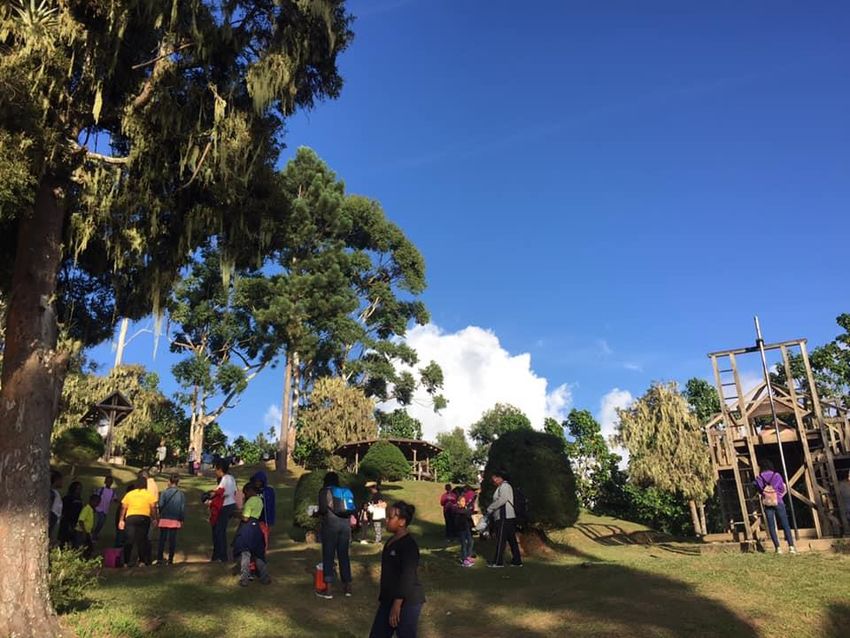
List of Acronyms

ACIJ/JMB           African Caribbean Institute of Jamaica/Jamaica Memory Bank
BJCM               Blue and John Crow Mountains
BJCMNP             Blue and John Crow Mountains National Park
FD                 Forestry Department
FCF                Forest Conservation Fund
GOJ                Government of Jamaica
GOJ/GEF/IDB        Government     of      Jamaica/Global   Environment    Facility/   International
                   Development Bank
IOJ                Institute of Jamaica
JCDT               Jamaica Conservation and Development Trust
JNHT               Jamaica National Heritage Trust
JSIF               Jamaica Social Investment Fund
NEPA               National Environment and Planning Agency
NRCA               National Resources Conservation Authority

NHMJ               Natural History Museum of Jamaica

MCGES              Ministry of Culture, Gender, Entertainment and Sport

TEF                Tourism Enhancement Fund

TPDCo              Tourism Product Development Company

GIZ/CATZ           German International Cooperation/Caribbean Aqua Terrestrial Solutions

                                                                                         3|Page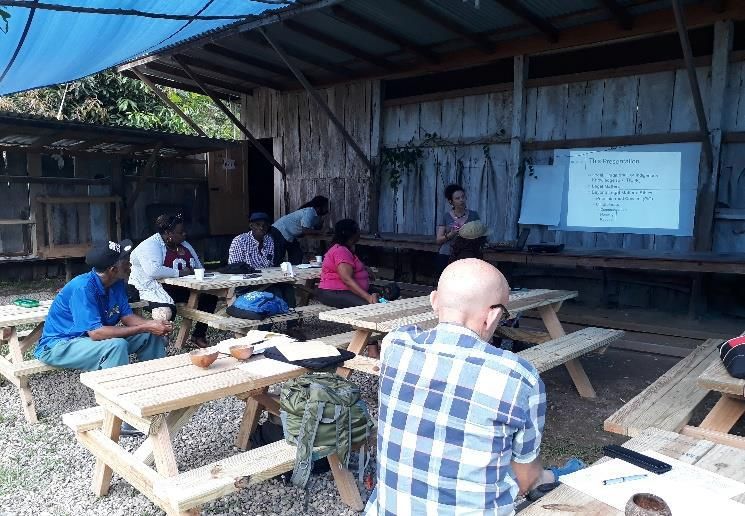
Executive Summary
The Blue and John Crow Mountains, Jamaica was inscribed by the World Heritage Committee
through Decision 39 COM 8B.7 on July 3, 2015. Since the site’s inscription, Jamaica has submitted one
state of conservation report, which focused on recommendations of Decision 39 COM 8B.7. These
included: advice on actions to address fully the threats from mining and encroachment; updated data
on the provision of adequate and sustainable financial resources to support the conservation of the
property; final report on the state of implementation of the 3-year joint Work-plan proposed in
February 2015 and the revised Management Plan for 2017-2027.
The decision of the World Heritage Committee at its 41st session indicated in 41 COM 7B.35 the
following requests:
       a) The amendments to the Draft National Minerals Policy so as to secure protection of
       sensitive cultural and natural areas sustaining the OUV of the property,
       b) The new overarching policy and legislation for the protected areas system,
       c) The training programme for Maroon Cultural Assistants and the Preservation Scheme for
       cultural heritage and
       d) The new Management Plan 2017-2027, underpinned by adequate human and financial
       resources, in close coordination and cooperation between governmental actors, civil society
       and the Windward Maroon communities, and fully considering the factors identified by the
       World Heritage Committee in Decision 39 COM 8B.7 as affecting the property
Request (a) has been addressed with the submission of an amendment to the Draft National Minerals
Policy by the Ministry of Culture, Gender, Entertainment and Sport which relates to the protection of
culturally sensitive properties, in particular world heritage properties. Dialogue continues to be
encouraged and facilitated between the Ministries responsible for Culture and Mining, with strong
commitments to the protection and preservation of Jamaica’s cultural and natural heritage.
In response to request (b), the Overarching Policy for Jamaica’s Protected Areas System is still in
draft, with its most recent revision conducted in March 2018.
Request (c) has been addressed through two training workshops of Maroon Cultural Assistants and
the finalisation of the Preservation Scheme by the Jamaica National Heritage Trust.
Request (d) indicates the revised 10-year management plan, is now at the final approval stage having
been through extensive stakeholder consultation. The document is now with the responsible agency,
the National Environment and Planning Agency and is expected to be finalized in early 2019.
The state of implementation for the 3-year work plan 2015-2017, has also been addressed and has
been actioned by the responsible agencies of the Co-Management Committee.
The Programmes referenced below continue to result in the effective management of the property
and are addressed in the three- year Work Plan 2015-2017 and into 2018.

                                                                                           4|Page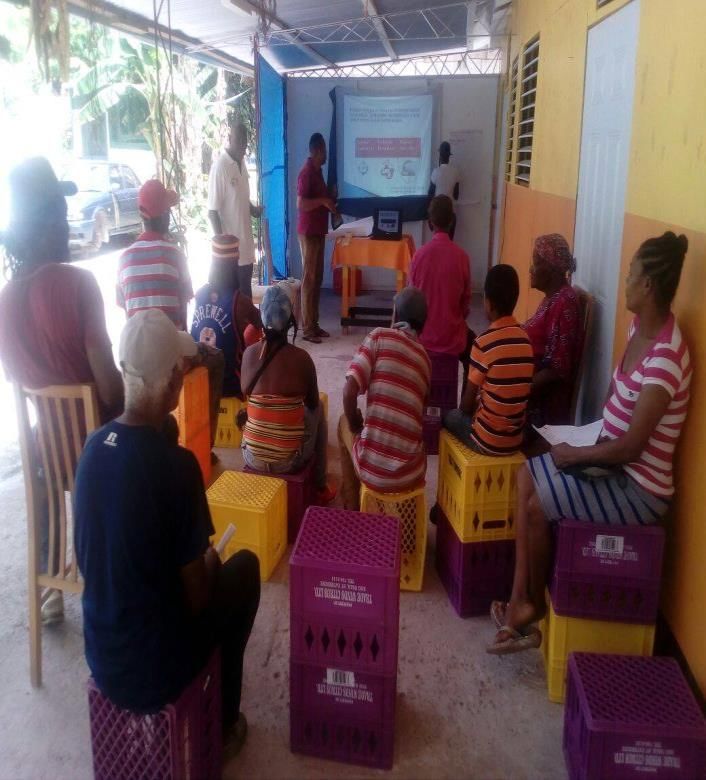
These are:
   • Conservation of Natural Heritage - To maintain and enhance the remaining area of closed
       broadleaf and disturbed broadleaf forest and component species of plants and animals that exist
       in the Blue and John Crow Mountains
   • Preservation of Cultural Heritage - To preserve the cultural heritage and enhance the
       appreciation for the tangible and intangible heritage of the Maroons associated with the Blue
       and John Crow Mountains
   • Enforcement and Compliance - To stop encroachment of the Blue and John Crow Mountains
       National Park (BJCMNP) boundary and the destruction of and damage to forest, wildlife and
       cultural heritage within
   • Public Education and Outreach - To increase support for preservation of the natural and cultural
       heritage values and for sustainable development of the communities in the Blue and John Crow
       Mountains
   • Recreation and Tourism - To provide and facilitate the provision of recreational opportunities
       using ecotourism principles to generate income and support for the BJCMNP
   • Monitoring and Evaluation - To increase support for preservation of the natural and cultural
       heritage values and for sustainable development of the communities in the Blue and John Crow
       Mountains.
   • Governance and Administration - To provide efficient, effective and sustained management
       that will allow the BJCMNP to achieve its mission and goals

                                                                                            5|Page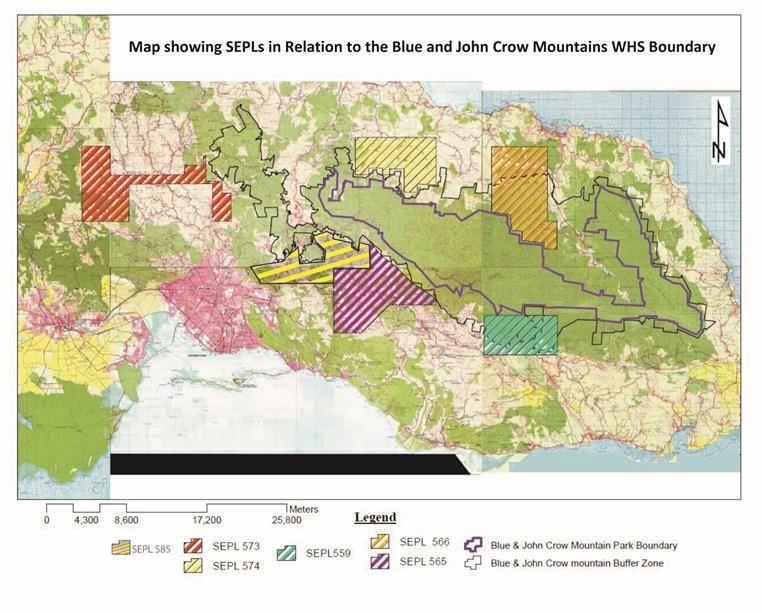
Responses to the requests of the World Heritage Committee
   a. Responses to address the amendments to the Draft National Minerals Policy so as to secure
      protection of sensitive cultural and natural areas sustaining the OUV of the property

The Government of Jamaica continues to be fully committed to the conservation and management
of the Blue and John Crow Mountains World Heritage property. Through continued dialogue and
collaboration between the Ministry of Culture, Gender, Entertainment and Sport and the Ministry of
Transport and Mining there has been increased understanding of the need to protect sensitive
cultural and natural sites. As the Ministry of Transport and Mining (MTM) recognizes the need for
sound conservation and management practices, it has reiterated its commitment to not issuing
additional licenses for mineral exploration, mining or quarrying within the World Heritage property
or its buffer zone.
The Ministry of Culture has submitted an amendment to the Draft Minerals Policy for inclusion which
takes into consideration that the International Council on Mining and Metals (ICMM) developed a
‘no-go commitment’ by which all ICMM member companies and associations commit to abstain from
any exploration or extractive activity in World Heritage properties. This submitted amendment is in
review with finalisation slated for 2019.
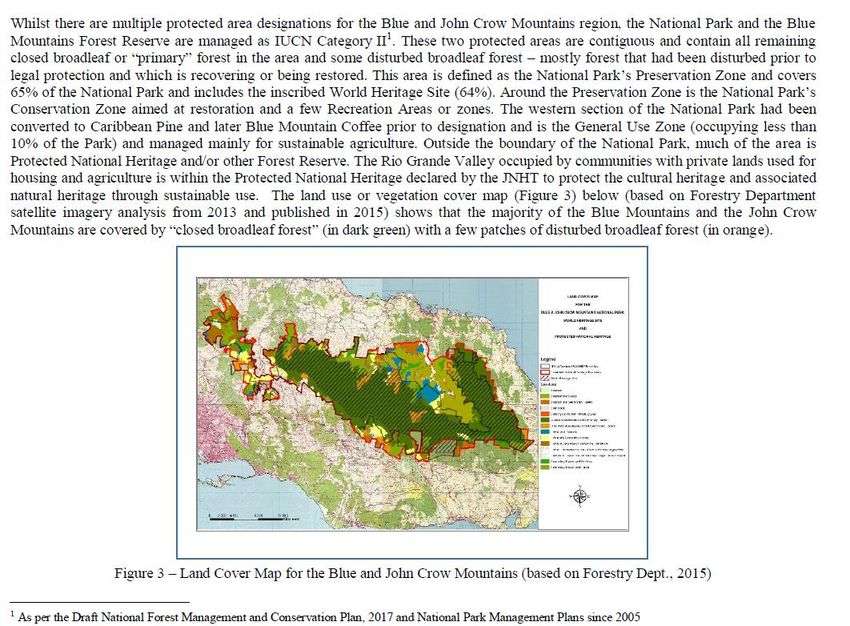
In relation to the Special Exclusive Prospecting Licenses (SEPLs), all five licenses have had their
boundaries adjusted to outside of the World Heritage Site. Although as indicated in the map below
additional licenses have been granted outside the buffer zone of the world heritage site, the Ministry
of Mining indicates that they are for explorations that are not ubiquitous but in concentrated shallow
areas. Further, any work near to the World Heritage property will require high-level approval by the
Cabinet and the application of strict environmental guidelines and monitoring. An Environmental
Impact Assessment is generally required, and more recently, an Archaeological Impact Assessment,
if the area is deemed of such significance.
Recalling the current legislation covering the World Heritage Site includes the Jamaica National
Heritage Trust (JNHT) Act (1985); the Forest Act (1996) and Forest Regulations (2001) the Natural
Resources Conservation Authority (NRCA) Act (1991) and National Park Regulations (1993) all aim
towards the conservation and management of the cultural and natural resources of the site.
In addition, there has been significant review over the past 2 years of the JNHT Act, to incorporate
not only considerations under the World Heritage Convention but other UNESCO conventions
around underwater cultural heritage and illicit trafficking of cultural objects. The JNHT Act is now
scheduled for placement on the national legislative agenda in early 2019. The Act is expected to cover
issues of compliance and enforcement and will result in stronger protection of cultural and natural
heritage assets across the island.

                                                                                            6|Page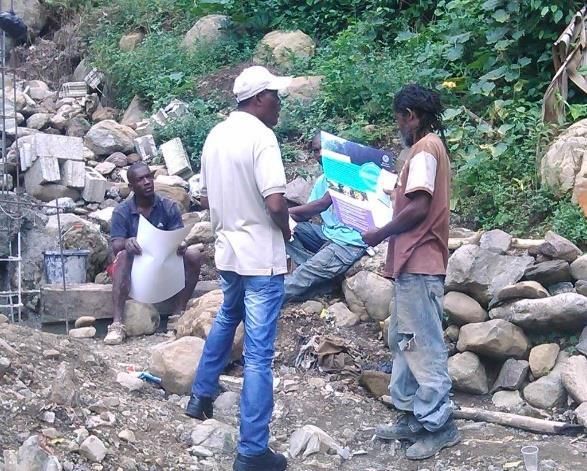
7|Page
b. Responses to the address the new overarching policy and legislation for the
      protected areas system
The Overarching, national policy and additional draft legislation for the Jamaica’s Protected
Areas (PA) System though still in draft, was revised in March 2018 by the Ministry of Economic
Growth and Job Creation. This draft Policy aims to increase the level of coordination and
collaboration among all the agencies with a role to play in PA management. Management of
the BJCMNP is consistent with and contributes to the achievement of the goals of the existing
Policy for Jamaica’s System of Protected Areas (GOJ, 1997), the draft over-arching policy and
the Protected Areas System Master Plan: Jamaica 2013-2017. The Overarching Protected Area
Legislation is at an early stage of the legislative development process. The Drafting
instructions are expected to be reviewed by March 2019 prior to forwarding to the Ministry
for review.

   c. Response to the training programme for Maroon Cultural Assistants and the
      Preservation Scheme for cultural heritage
The Jamaica National Heritage Trust (JNHT) in collaboration with the African Caribbean
Institute of Jamaica/Jamaica Memory Bank began the training of Maroon Cultural Assistants
in September 2018. The training sessions were held September 21, 2018 and October 25-26,
2018 with the involvement of the three Maroon communities in the Windward area of Moore
Town, Scots Hall and Charles Town. The meetings were held in the nearby Parish of Portland
to make it more practical and hands on for community members.
A total of ten (10) Maroons and two (2) Rangers participated in the training sessions held over
the above-mentioned periods. The participants were trained in the identification of artefacts
and tangible and intangible heritage assets, basic map reading and basic conservation
techniques. As part of the training and monitoring programme, the JNHT team along with the
participants hiked the John’s Hill Trail above the Moore Town Maroon community as the
practical aspect of the training. The Agency anticipates building on this training in 2019.

                                                                                     8|Page
              Participants learning to identify artifact types and map reading
d. Response to the new Management Plan 2017-2027, underpinned by adequate human
and financial resources, in close coordination and cooperation between
governmental actors, civil society and the Windward Maroon communities, and fully
considering the factors identified by the World Heritage Committee in Decision 39
COM 8B.7 as affecting the property
Having signed the most recent 5-year license agreement with the Natural Resources
Conservation Authority (NRCA), Jamaica Conservation and Development Trust (JCDT)
continues to collaborate with all co-management partners through a process of collaborative
management. The agreement was signed on June 28, 2016 and will see the JCDT managing
day to day operations of the world heritage property and National Park until 2021.
The co management partners include: the National Environment Planning Agency (NEPA),
Forestry Department (FD), Jamaica National Heritage Trust (JNHT), Divisions of the Institute
of Jamaica - African Caribbean Institute of Jamaica/Jamaica Memory Bank (ACIJ/JMB) and
Natural History Museum of Jamaica (NHMJ) and Windward Maroon Councils’ representatives.
The management plan prepared during 2016, included nineteen community meetings
reaching 21 communities with 356 participants. In addition, five stakeholder meetings
/programme workshops and a one-day workshop to review the draft plan was held in 2017. It
was reviewed by key stakeholder Government agencies in 2017 and re-submitted for final
approval to the National Environment Planning Agency in mid-2018. The plan is now before
the NRCA Board for ratification having already been approved by its Biodiversity Committee.
This ratification is slated for late December 2018 or early January 2019.
Funding support
As a Small Island Developing State, given the economic vulnerabilities and the limited fiscal
space, Jamaica operates within the context of an International Monetary Fund Agreement
with competing demands on stretched budgets. Nevertheless, the Government of Jamaica
recognizes the significance and obligation of fulfilling financial support for the Site and is
committed to its continued preservation and management.
Over the period, approximately US$150,000 sourced annually for recurrent budget including
an estimated amount of US$100,000-US$120,000 from the Government of Jamaica. In
addition, an approximate amount of US$60,000/year was earned from the operation of
recreation areas. Fifty percent (50%) of this amount is from legislated user fees which JCDT
collects and utilises for operations. NEPA has approved amendments to the Natural
Resources Conservation (User fees) Regulations (2003) and has forwarded same for
gazetting. It is expected that the Park’s income will increase in 2019 with the projected
increase in domestic user fees.
9|PageAn additional US$100,000 – US$300,000/year was raised for projects which support the
management programmes and for capital expenditure e.g. construction of recreation area
facilities. These funds were from a variety of sources including the Global Environment Facility
(GEF) Small Grants Programme (SGP). Annually, JCDT sourced:-
Table of sourced funds by the JCDT
Period Re-current Operational Expenditure Projects (support
Programmes) & Capital
Expenditure
2016 - 2017 US$165,973 US$380,000
2017 - 2018 US$170,000 (US$125,000 from GOJ US$250,000
directly, US$30,000 from recreation
areas & balance from projects)
2018 - 2019 US$200,000 (US$125,000 from GOJ, US$150,000
US$50,000 from recreation areas &
balance from projects)
Boundaries
During this period, work was done to analyze information from cadastral maps and other
records to clarify the boundary of the National Park and the Preservation Zone. Technologies
acquired were used to properly define the boundaries in addition to the previously mentioned
means. These actions resulted in the revision of the National Park boundary to accurately
reflect what is actually gazetted as the National Park under the NRCA Act. The Protected
National Heritage boundary remains the same and serves as a legally defined Buffer Zone for
the Preservation Zone which was designated as World Heritage. The details along with maps
are provided in the attached National Park Boundary Clarification document (Appendix A).
Revised boundaries of the protected areas in the Blue and John Crow 10 | P a g e
MountainsFinal report on the state of implementation of the 3-year joint Work-plan proposed in February
2015
All programmes as listed below continue to be addressed, with activities being accomplished
based on stated timeframes and others requiring additional time. Appendix A shows the work
plan in detail with the current status of implementation.
Programmes are as follows:
• NATURAL HERITAGE CONSERVATION PROGRAMME
• CULTURAL HERITAGE PRESERVATION PROGRAMME
• ENFORCEMENT & COMPLIANCE PROGRAMME
• EDUCATION & PUBLIC INVOLVEMENT PROGRAMME
• RECREATION & TOURISM PROGRAMME
• MONITORING & EVALUATION PROGRAMME
• GOVERNANCE AND ADMINISTRATION PROGRAMME
• NATURAL HERITAGE CONSERVATION PROGRAMME
In this programme, over the period September 2016 – October 2018, natural heritage
conservation has been focused around the areas of reforestation, and removal of invasive
species, where saplings are removed, and trees treated. To ensure efficient work in this area,
a Conservation Science Officer was employed to JCDT in September 2018.
Reforestation through the JCDT has taken place over 5ha on lands adjacent to the National
Park and 44.83ha of denuded lands were reforested by the Forestry Department. The JCDT
has sourced funding to reforest 20 ha near Moore Town and along the Abbey Green/Cinchona
boundary. Planting is expected to start in late 2018/early 2019. Funds were also obtained to
repair native species nurseries.
All forested lands reforested in previous years were maintained by the JCDT and the Forestry
Department. The Forestry Department also established and maintained fire line and roads and
trails. Areas such as Blue Mountain Peak trail, Mt. Horeb/Fairy Glade and Cinchona which were
cleared of invasive species such as wild coffee and wild ginger were maintained and additional
areas added.
Further, the NEPA conducted surveys of the orchid species in Catherine’s Peak which started
in March 2015 and continued in February 2016. The purpose of the survey is to establish
baseline data on the relative abundance of orchid species in Catherine’s Peak, Blue Mountain,
St. Andrew and to eventually increase the relative abundance of these species. This project
continued into 2017 and into 2018.
11 | P a g eNatural History Museum of Jamaica (NHMJ) facilitated research within the National Park and
World Heritage Site. Research conducted were with three sets of overseas researchers in 2018.
All three involved the recording and collection of species within the BJCMNP & WHS that will
inform or assist the management and conservation of the Park.
The focus of each research was as follows:
• Viburnum (Adoxaceae) research – NHMJ in collaboration with researchers Dr. Patrick
Sweeney, Dr. Deren Eaton, Dr. Erica Edwards and Prof. Michael Donoghue from Yale
University. The research involved fieldwork to make observations and to
collect herbarium specimens and leaf material that will be utilized for evolutionary
studies. Fieldwork was conducted in early May, 2019.
• Lichen research – NHMJ in collaboration with Dr. Manueal dal Forno and Mr. Joel
Mercado from the Smithsonian Institution and the Field Museum respectively. The
research is to investigate the Taxonomic and Evolutionary aspects of the lichen flora of
JamaicaFieldwork was conducted in April 2019.
• Mecranium (Melatomataceae) research – NHMJ in collaboration with Dr. Dan Skean Jr.
from Albion College. The goal of the study will be to better understand the morphological
variation in Jamaican Mecranium species and especially to collect and publish a paper
describing one (or possibly two) new species of this group. Fieldwork will be conducted
in late May 2019.
JCDT sourced funding from the Global Environment Facility (GEF) Small Grants Programme
(SGP) for a Natural and Cultural Heritage Conservation Project in Maroon Communities and
this was also supported by funds from the German International Cooperation (GIZ) in early
2018. Under these two projects, the following was facilitated in conjunction with Maroon
communities:
o Forest Assessments of two locations in the National Park (WHS Buffer Zone)
showing degradation based on satellite imagery in order to prepare
Conservation Plans for implementation.
o Forest restoration (10ha) near Moore Town – communal lands – this will see
planting of a combination of fruit, lumber and native, bird feeding trees and use
of the area for a guided tour.
o Jamaican Hutia (Geocapromys brownii) assessment in the Moore Town area to
estimate population and status - a wildlife research permit was obtained for one
year for the assessment of the in the Moore Town area, beginning in September
2018. This assessment is based on complaints from the farmers in the Maroon
communities of the species eating their crops. The Hutia is protected under the
NRCA Act and is historically eaten by Maroons.
o Agro-forestry/Sustainable Agriculture Training Workshops - 2 days with
distribution of seedlings:-
12 | P a g e▪ 2016 – Westphalia and Content Gap – 41 farmers and 700 tree seedlings
distributed
▪ 2017 – Johnson Mountain – 52 farmers and 456 tree seedlings distributed
▪ 2018 – Charles Town and Scott’s Hall (Maroon communities) – 66 farmers
and students and over 700 tree seedlings distributed
▪ 2018/19 Plans for: Bellevue, Comfort Castle, Moore Town, Cornwall
Barracks in the Rio Grande Valley.
Agro-forestry training in
Maroon communities
• CULTURAL HERITAGE PRESERVATION PROGRAMME
The preservation of tangible and intangible cultural heritage for the World Heritage Site is
ongoing.
Training activities were facilitated in several areas to include:
• Workshop for Maroon communities on Intellectual Property and Indigenous
Knowledge: held in Charles Town with one presenter from the Jamaica Intellectual
Property Office and another from the New York Botanical Gardens, doing research in
Jamaica
13 | P a g e• Jamaica and South Africa joint research, launching and indigenous knowledge-based
technology and innovation workshop through the National Research Foundation
(NRF) of South Africa and the Jamaican National Commission on Science and
Technology (NCST)
• training was provided within the Maroon communities through the Global
Environment Facility (GEF) Small Grants Programme (SGP) Visitor Management and
Conservation Plans for Sustainable Tourism in Maroon Communities.
Jamaica signed an agreement for a 3-year Indigenous Knowledge research project under
the South Africa-Jamaica Scientific & Technical Cooperation Agreement. This will see
research on:-
o Comparison of knowledge and perspectives in Indigenous communities
around protected areas including World Heritage in KwaZulu-Natal, South
Africa and Portland, Jamaica.
o Comparison of environmental management and governance issues in two
Maroon communities in Jamaica
o Agro-biodiversity and Indigenous Knowledge in Maroon communities in
Portland, Jamaica
The project has also facilitated the opportunity to develop a relationship between the
Ukhalhamba Drakensberg and Blue & John Crow Mountains World Heritage Sites.
The Maroon communities also sourced funding for themselves, from the Global Environment
Facility (GEF) Small Grants Programme (SGP) for improvements in tourism and other facilities
and training.
Under the guidance of the Maroon Communities, two sites and two trails were identified by
the Archeology Division of the Jamaica National Heritage Trust through an archeological field
survey. These include Grampian Ruins and Grampian Trail and Ladyfield Great House Ruin and
Johns Hill trail. This was in collaboration with the Maroons of the Hayfield community. The
sites were added to the regularly updated, database of sites.
Site monitoring activities were conducted in Moore Town, Charles Town, Scots Hall, Hayfield
and visits were also facilitated to Nanny Falls and the Blue Mountain Peak, Cunha Cunha Pass
and the Blue Mountain Peak trail.
The first phase of the development of the cadre of Maroon Cultural Assistants was facilitated
in September to October 2018, with a total of ten (10) Maroons and two (2) Rangers
participated in the training sessions held over the periods. The participants were trained in
the identification of artefacts and other heritage assists, basic map reading and basic
conservation techniques. In 2019, this training will be built upon with more advance
techniques for conservation f natural and cultural heritage resources.
14 | P a g eThe preservation activities associated with the intangible heritage values of the site continues
with ongoing research and community engagements through the National Intangible Cultural
Heritage Stakeholder Network. The African Caribbean Institute of Jamaica/Jamaica Memory
Bank (ACIJ/JMB) has continued to provide funding for Maroon festivals in addition to the JCDT
and the Ministry of Culture, Gender, Entertainment and Sport. In recent years the latter has
increased financial and in-kind support by 200%, to adequately address staging of annual
festivals. The Ministry has also supported entrepreneurship in the Maroon communities and
those surrounding the National Park through its Economic Opportunities workshop staged in
Kingston in 2016 and St. Thomas in 2017. Further, the Ministry was able to provide funding for
17 individuals form the communities in entrepreneurship and business startup.
Promotional activities continue to take place through preparing a total of 500 copies of The
Blue & John Crow Mountains World Heritage Site: Activity Booklet with 285copies distributed.
A total of 600 copies of The Blue and John Crow Mountains (BJCM) World Heritage Site
Handbooks were prepared and printed and 450 copies were distributed. Further, an exhibition
by the ACIJ/JMB was launched with a focus on the site and the intangible heritage of all
Windward Maroon communities. Equipment was funded through a UNESCO project with the
purchase of 2 computers, 2 hard drives, projector and Screen, digital camera to assist with the
documentation and public awareness of the project to safeguard the ICH of the BJCM as a
World Heritage site.
Dr. Ina Vanderbroek, New York Botanic
Garden addresses BJCMNP & WHS
Maroon Intellectual Property and
Indigenous Knowledge workshop at
Charles Town (7/3/18)
Training of Maroon Cultural
Assistants - hiking the Johns
Hill Trail
15 | P a g e• ENFORCEMENT & COMPLIANCE PROGRAMME
Enforcement and compliance of the site is within the scope of the Forestry Department (FD)
and JCDT Rangers. Through these entities over the period, 308 regular patrols were facilitated
through JCDT National Park Rangers and 795 critical patrols by the Forestry Department
Rangers. Collaborations among the JCDT, FD and NEPA resulted in 50 joint patrols and six
early morning patrols.
In facilitating greater levels of compliance, JCDT, FD, NEPA Rangers include community
outreach stops on patrols with consistent interactions within the buffer zone. As such
interpretive enforcement has been facilitated by more concerned and supportive
communities who are promptly reporting and providing information on any illegal activities.
This was done in 79 communities with over 1,200 community members engaged in sharing
National Park and World Heritage Site brochures and information on care of the environment.
Current plans are in place to hire two new National Park Rangers in 2019.
Patrols have led to warning notices and notices to quit being issued based on incidents of
breaches of the legislations (JNHT Act (1985); the Forest Act (1996) and Regulations (2001)
the NRCA Act (1991) and National Park Regulations (1993) reported to FD, NEPA, and JNHT.
One Hundred and fifty-two (152) breaches were reported to the Forestry Department via tip
line/hotline, letters and emails.
As part of the boundary marking project initiated on a challenging section of the boundary
(Abbey Green to Cinchona), tree planting was initiated in 2018 to help mark the boundary
where farm lands abut and often have encroachment. A fire-line was created and will be
maintained for protection of the boundary line trees being planted and to allow for patrols.
In addition, several small signs have been placed on the boundary line at this and other
locations. Further two National Park Rangers will be hired in early -2019.
The Forestry Department has between 2015-2017 served twenty-five (25) Notices of
Contravention. Twenty-four (24) of the twenty-five (25) Notices had full compliance and one
(1) had partial compliance, 20 Notices of Contraventions for various infractions, 9 of which
had full compliance; Two (2) Notices to Quit were served. One (1) had full compliance and the
other was not resolved as the offender had applied to NLA for a Lease; this was confirmed
with NLA. A total of one hundred and fifty-two (152) offences were detected for the period.
One (1) matter was successfully prosecuted in September 2016 and one (1) person charged
with cutting trees in the Hermitage block of the Blue Mountain Forest Reserve. The following
penalties were levied: Fine-$200,000 and 100 hours of community service.
The Preservation Scheme, which is critical to strengthening enforcement and compliance in
respect of the cultural heritage component of the site, is to be published by year-end. In the
absence of objections or clarifications within the three (3) months period following
16 | P a g epublishing, the Blue & John Crow Mountains Preservation Scheme will be gazetted and
confirmed.
NP Rangers conducting community outreach in
communities around the National Park
• EDUCATION & PUBLIC INVOLVEMENT PROGRAMME
Through activities in all co management partner agencies, several activities have been
undertaken in that has brought exposure to the Blue and John Crow Mountains (BJCM) World
Heritage site and National Park. The JCDT has engaged the BJCM National Park Knowledge,
Attitudes and Practices Survey carried out in over 40 communities around the World Heritage
Site Buffer Zone from mid-2017 to 2018 and data collation started. Analysis and reporting are
expected in 2019. The BJCM website https://www.blueandjohncrowmountains.org/ has been
updated with a new format.
Further capacity building has taken place in environmentally sustainable livelihoods. This has
resulted in Sustainable Community Tourism initiatives, working with five communities in the
world heritage buffer zone, namely the Rio Grande Valley area to prepare Sustainable Tourism
Plans. Further, sustainable Agriculture and Agro-forestry workshops were held to include
three (3) two-day training workshops in three communities with over 100 participants and
over 1,000 tree seedlings distributed.
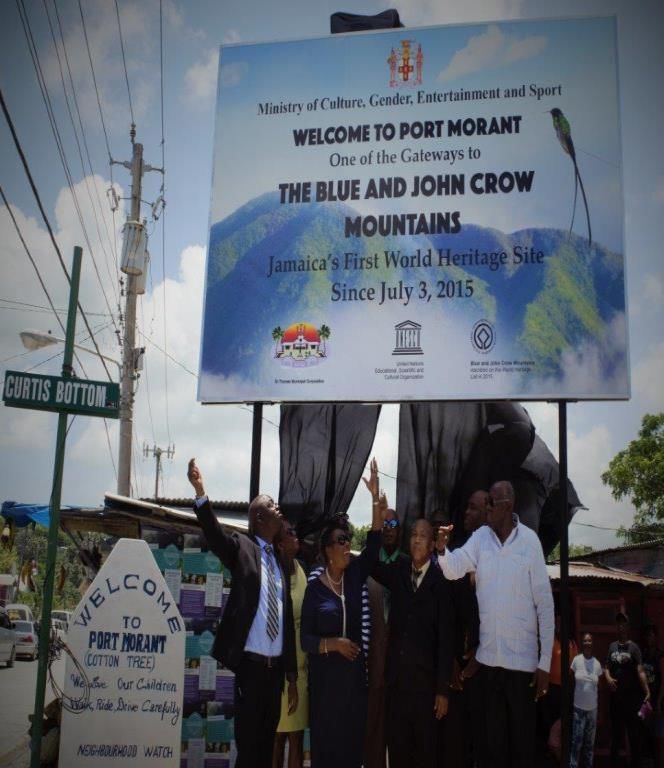
World Heritage Day activities included the erection of two additional gateway signs to the
BJCM World Heritage Site led by the Ministry of Culture. This culminated in three sites in total
for the gateway signs, located in Papine, St. Andrew; Port Antionio, Portland and Port Morant,
17 | P a g eSt. Thomas. In 2018, NHMJ mounted a temporary display on a View of the Blue and John Crow
Mountains World Heritage Site in collaboration with the MCGES and ACIJ/JMB at the “(He)Art
of the Matter: Talking On Purpose”, an initiative of the Edna Manley College of the Visual &
Performing Arts (EMCVAP). This commemorative presentation for World Heritage Day was
presented at The Library at the Edna Manley College of the Visual & Performing Arts. The
display consisted of medicinal plants found at the protected site as well as some key animal
specimens.
The BJCM Economics Opportunities Workshop series having been staged in 2016 and 2017 and
engaging over 250 individuals, was able to provide funding for 17 entrepreneurs between the
ages of 20-60 years in staring businesses. This Ministry of Culture initiative was also able to
provide in addition to grant funding, mentorship support. The project has been extended to
the Leeward Maroons in particular Accompong.
In early December 2018, a seminar was hosted by the JCDT at the University of the West Indies,
Mona campus on ‘Indigeneity, Maroon Communities, Conservation and Sustainable
Development in the Blue and John Crow Mountains’. The seminar provided opportunities to
discuss research in the site as well as the interaction and impact on the Maroon communities.
Public awareness activities were engaged in to promote the values of the site and Jamaica’s
world heritage status. This has been facilitated through brochures, posters, social media,
public service announcements, exhibitions, displays, media releases and advertorials. This also
occurs through all agencies to include the JCDT, JNHT, FD and NEPA.
In addition, the interpretative centre for the National Park and World Heritage Site has been
erected at Holywell and exhibits for the Discovery Centre are being constructed with local
talent and in collaboration with students of the Edna Manley College of the Visual and
Performing Arts. An initiative for local tour guide training of community youth has also been
facilitated at Holywell. All key stakeholders have been engaged including the Maroon
communities of Charles Town, Scots Hall and Moore Town. The clear objective of this plan is
to distinctly present the core themes of the intangible and intangible heritage of the
Windward Maroon community and the site’s biodiversity, ecosystems and endemism.
Youth from
communities around
Holywell participated
in 2 days training on
the WHS in September
2018
18 | P a g eUnveiling of third gateway sign in Port Scott's Hall community member participates in
Morant, St. Thomas agro-forestry training in July 2018
• RECREATION & TOURISM PROGRAMME
In facilitating greater visitor access to the recreational areas of the site, funding was obtained
from the Jamaica’s Social Investment Fund (JSIF) and the Tourism Enhancement Fund (TEF) and
Sandals Foundation to facilitate several developments. These included:
o Construction of two-story building at Holywell (main recreational area) to house
a café (which will be concessioned) and the Discovery Centre and Gift Shop.
o Remove and rebuild old dormitory cabins at Portland Gap and expand another
dormitory cabin.
o Adding a new Ranger Station beside the gate/sentry post on the Blue Mountain
Peak Trail to enhance user fee collection.
o Adding a gazebo shelter at Portland Gap and signage.
o Replaced dilapidated shelter at the Peak with a less obtrusive structure.
The NRCA also made amendments to the Blue and John Crow Mountains National Park (User
Fees) Regulations (2003). These included amendments to selected fees which would contribute
to an increase in revenue generated to the support the Parks operational activities. Holywell
experienced an increase in income by 47% and number of visitors by 41% whereas in 2017 there
was a decrease of about 8% and 3% respectively. Portland Gap/Blue Mountain Peak Trail
increased income by 100% and visitors by 23%. There was also an increase in 2017 over 2016 due
to renovations. The JCDT also engaged the services of a Tourism & Marketing Officer on staff
since 2017. This has resulted in major new marketing initiatives including participating in the
19 | P a g eNational Tourism Expo (JAPEX). Presentations were done on the National Park and World
Heritage Site at the RE-Imagine Kingston (UWI) Conference (10/11) and World Tourism
Organisation Conference in Montego Bay (27/11). The most recent event was the hosting of
‘Christmas Breeze’ at Holywell, an event geared towards families and learning about the National
Park.
Patrons enjoying Christmas Breeze event at Holywell recreational grounds
• MONITORING & EVALUATION PROGRAMME
The monitoring and evaluation programme maintain the consistent tracking and recording of
the threats and changes to the health of the site’s ecosystem. This is done through the
collaborative efforts of the JCDT, co-management partners and a team of experts in the field.
Information to determine whether the Park is achieving its conservation goal is gathered and
collated from monthly patrols, permanent point photo-monitoring, key and threatened
populations of endemic species and quality of freshwater ecosystems.
The bird monitoring analysis of existing data is completed. The requisite training was also
conducted, and new protocols prepared to start monitoring in November 2018. New
equipment and plans for Stream/Macro-invertebrate Monitoring is in place with upcoming use
of a drone to aid monitoring of the forest cover.
20 | P a g e• GOVERNANCE AND ADMINISTRATION PROGRAMME
The Co-management team meets on a consistent basis quarterly, with a clear direction for
continued integration in the activities associated with the World Heritage Site. Maroon
Community Advisory and BJCM National Park Advisory meetings are ongoing. Specific
meetings were engaged for completing the management plan and review as was needed.
The management plan as stated above is completed and having received approval from the
technical Biodiversity Committee of the NRCA is slated to be ratified by the NRCA Board by
late December 2018 or early January 2019.
The following are the operational activities of the JCDT for the Blue and John Crow Mountains
World Heritage Site and National Park for the period April 2018 – March 2019.
BJCMNP Workplan for Implementation by JCDT
Programme of Activities Activities Expected Outputs/Outcomes
Enforcement & Compliance Programme
Obj. 1. Increase level the 1.1 Conduct routine patrols 1.1 132 patrols/yr (11/mth)
effectiveness of the
1.2 Organise Joint Agency Patrols 1.2 At least 2 Joint Agency
Programme in terms of
Patrol/mth
increasing compliance and 1.3 Organise patrols during “off”
enforcement. hours 1.3 At least 4 “off” hours patrols/yr
1.4 Record information from patrols 1.4 Monthly Report & Map;
and report to relevant agencies Correspondence
1.5 Updated Policies & Standard 1.5 Forms and Reports completed
Operating Procedures (SOP) being regularly as per SOP
implemented
1.6 At least 4 sessions
1.6 Conduct training sessions
1.7 At least 7/11 patrols
1.7 Patrols include community
1.8 Rangers liaise with visitors on
outreach
Obj. 2. Mark National Park weekends
and other relevant PA 1.8 Increase visitor compliance at
boundaries that would allow recreational areas
access to the National Park
and World Heritage Site
2.1 Cinchona to Abbey Green
2.1 Re-establish boundary on the
(9.4km)
ground working with co-
management partners
2.2 Plant tree seedlings on boundary 2.2 Distinctive tree line (as per
above)
2.3 Place signs at boundaries
21 | P a g eProgramme of Activities Activities Expected Outputs/Outcomes
2.3 Small signs and Large Map signs
placed in strategic locations
Conservation of Natural Heritage
Obj. 1 Rehabilitate degraded 1.1 Prepare & Implement 1.1 Plans and Reports for two areas:
forest within the National Conservation Management Grand Ridge and Nanny Town
Park Plans for key areas using
ground-truthing & technology
1.2 Invasive species control at Mt. 1.2 Maintain 4 hectares
Horeb and Holywell -
maintenance 1.3 Maintain 1 hectare restored
1.3 Maintain reforestation at forest
Holywell 1.4 10 hectares
1.4 Forest restoration above 1.5 At least 2,000 seedlings
Moore Town
1.5 Produce native forest tree
seedlings as needed 2.1 1.2 hectares restored forest
2.1 Maintain 1.2 hectares of restored
Obj. 2: Restore forest & plant forest on NWC lands above
native trees in lands adjacent Hermitage 2.2 Agreements for new acreage or
to the National Park
2.2 Seek other opportunities with tree planting.
local stake-holders 2.3 2 days training & at 200
2.3 Agro-forestry training and seedlings (fruit, lumber & native) in
seedling distribution at least 3 communities
Obj. 3: Promotion &
Facilitation of Research 3.1 Implement Research Permit 3.1 Permit Applications Response
Process – liaise with NEPA & and File up-to-date
Researchers 3.2 Reports with information on
3.2 Organise field trips with relevant flora & fauna to guide management
researchers/agencies for flora/fauna 3.3 Report with information to
studies guide conservation management
3.3 Coney study in Moore 3.4 Report & Dissemination of
Town/Bowden Pen Information
and preparation of Conservation
Plan
3.4 One day Seminar at UWI
Preservation of Cultural Heritage
22 | P a g eProgramme of Activities Activities Expected Outputs/Outcomes
Obj. 1: Tangible Heritage 1.1 Prepare Management Plan for 1.1 Management Plan for
Nanny Town & Trail improved management
1.2 Prepare Conservation 1.2 Guidelines & training for
Guidelines for BJCM Trails improved management
2. Work with ACIJ & Maroon
2.0 Reports
Communities to implement
community-based strategies and
Obj. 2: Intangible monitoring reports
Heritage 3.1 Assist Maroon festivals by
seeking funding support and
promoting the events 3.1 Funding ($25,000/event) and
3.2 Draft booklet: Maroon & other Marketing support for Maroon
Communities: natural & cultural events
Obj. 3: Promote aware- heritage
3.3 Promote Maroon tours 3.2 Educational Booklet
ness & appreciation of
Maroon heritage & links 4.1 Assist JNHT & ACIJ to update &
improve research application
3.3 At least 4 tours being promoted
with natural heritage system
4.2 Workshop:Intellectual Property
protection
4.1 Draft Plan
Obj. 4: Promote research
4.2 Workshop
that aids management &
preservation
Monitoring & Evaluation
Obj. 1: Threats and 1.1 Collect & Enter Information from 1.1a. Information in Mthly Patrol
Patrols Reports
Impacts Monitoring
1.1b. Threats/Offences Map for
2017/18
1.2 Conduct Permanent Station
Photo-monitoring 1.2a. Photos of at least 8 of 10 sites
1.2b. Report on Comparison of
Obj. 2: Monitor Populations photos
2. Record all sightings etc. from
of Key Threatened Species
patrols, monitoring & communities
2. Records in Monthly Patrol
Obj. 3: Forest Area & Reports
Encroachment
23 | P a g eProgramme of Activities Activities Expected Outputs/Outcomes
3.1As per Conservation Programme –
assessment of sites in the Rio Grande
Obj. 4: FW Macro-
Valley
invertebrate Monitoring
3.1 Conservation Plans
4a Sample sites in both wet and dry
seasons
4b Update monitoring approach and 4a. 10 sites sampled (May/Nov)
Obj. 5: Bird Monitoring data collection; Analyze data and
Prepare Report. 4b. 2017/18 Monitoring report
5a. Prepare plan for improved
programme and conduct training
5b. Bird Monitoring in 2 seasons 5a. Plan and Report
(winter and summer) and Analysis of
data
5b. Monitoring and Report
Education & Public Involvement
Obj. 1: Increase public 1.1 Prepare Report on Knowledge, 1.1 KAP Survey Report
awareness about the Park, its Attitudes & Practices (KAP)
importance and relevant Survey in Buffer Communities
issues 1.2 Conduct & Participate in
community & other 1.2 Participate in at least 6 events
events/festivals with
information booth
1.3 New Interpretation at the
Park’s Recreation Areas
1.4 Outreach to 1.3 Holywell – New Visitors’ Centre;
community
schools – presentations (30) Peak at least 2 signs
1.5 Community schools 1.4 30 schools visited with
visit
Holywell presentations
1.6 Teacher Training Workshop 1.5 At least 4 l visit Holywell for tour
1.6 Knowledge and skills improved
for at least 20 teachers from
2.1 Assist local communities to local schools
prepare Visitor
Management/Conservation Plans
24 | P a g eProgramme of Activities Activities Expected Outputs/Outcomes
Obj. 2: Facilitate capacity 2.2 Training of community members 2.1 Plans for at least 6 Rio Grande
building of community in sustainable agriculture and agro- Valley and/or Maroon communities
members in Park’s buffer forestry to guide local sustainable tourism
zone, for sustainable
2.2 At least 3 workshops with 20
livelihoods & natural
community members each
resources management 2.3 Community Projects and
Activities in conjunction with JCDT
2.3 At least 3 communities with
joint projects or activities with JCDT
Recreation and Tourism
Obj. 1: Provide & facilitate 1.1 Prepare Blue Mountain Peak 1.1 Plan by June
opportunities to appreciate Trail Ecotourism Management
natural and cultural heritage Plan
1.2 Prepare Nanny Town 1.2 Plan by September
Ecotourism Management Plan
1.3 Holywell Cable Car Feasibility 1.3 Report by June
Study
Obj. 2: Raise visitor
awareness 2.1 Full complement of exhibits end
2.1 Holywell – New Visitors’ Centre
year
2.2 Peak Trail – Signage installed as
per Plan 2.2 Signage according to Plan by July
Obj. 3: Mitigate against
negative environ-mental &
socio-cultural impacts 3.1 Environmental/Visitor 3.1 Plans complete by June and
Management Systems within the training by October
Ecotourism Management Plans for
Holywell and Peak Trail
Obj. 4: Increase financial 3.2 3.2 Implementation of priority
Implementation of
benefits to Park Environmental/Visitor Management activities.
management Systems
4.1 Marketing activities as per Plan 4.1 Monthly events &/or
promotions
4.2 Gift Shop, Café & Tuck Shop
Obj. 5: Engender community operating at Holywell 4.2 Increased income by year end
support through benefits to 4.3 Portland Gap fully
community groups and operationalised
members 4.3 Increased income by year end
25 | P a g eProgramme of Activities Activities Expected Outputs/Outcomes
4.4 Tours and events 4.4. Increased income by year end
5.1 Assist communities with 5.1 Activities in at least 5
Sustainable Tourism Plans and communities
projects
5.2 Marketing of community tours &
5.2 Community tourism marketed
events
Governance & Administration
Obj. 1: Coordinate 1.1 Organise BJCMNP Advisory 1.1 Minutes from 2 meetings/year
management at through Committee meetings
various committee meetings 1.2 Organise Co-management
Committee meetings 1.2 Minutes from 6 meetings/year
on a regular basis
1.3 Organise Maroon Community
Meetings 1.3 Minutes from 4 meetings/year
1.4 Participatory Planning with 1.4 At least 4 meetings
Communities e.g. for Sustainable
Obj. 2: Provide for adaptive Tourism Plans
& effective management and 2.1 Management under approved
administrative support for 2.1 2017 - 2027 Management Plan Plan
the Park’s programmes approved
2.2 Annual Report & Work Plan by
2.2 Preparation of Annual Plans & 5/2/18
Reports
2.3 Monthly Reports by 15th of each
2.3 Preparation of monthly month
Programme Reports
2.4 Preparation of project reports
2.4 By 21st or 30th of each relevant
2.5 Regular meetings:- month
2.5a Prog. Mgmt & Rangers’ Roster 2.5 Monthly meeting notes &
Mtgs coordination
2.5b Staff meetings quarterly
2.6 Project Development and
Obj. 3: Source recurrent &
Management
capital funding for Park 2.6 Project proposals - 6/yr -
management in short and - as per Park Management Plan US$250,000; successfully
long-term implemented projects.
2.7. Staff training
26 | P a g eProgramme of Activities Activities Expected Outputs/Outcomes
2.8 Networking and Collaboration – 3.7. At least 4 Training days &
attend meetings, workshops etc to recognition
promote collab-oration that
2.8 Opportunities for collaboration
supports Park management
increased
3.1 Follow up with NEPA re: increases
in user fees requested in 2014
3.2 Proposals to NRCA/NEPA, donors 3.1New fees gazetted
& private sector
3.3 Friends of the Blue Mountains
Programme – Individual and
3.2 Minimum: JA$40 million
Corporate Membership
- Strategic Partners:
3.4 Increase income from Recreation
& Tourism Programme 3.3 Minimum: JA$2 million
3.5 Fundraising Events & Activities
e.g. Calendar and Coffee Table
Book for sale
3.4 By at least 60%
3.5 25th Anniversary Event &
Activities
27 | P a g eConclusion
The decision of the UNESCO World Heritage Committee at its 41st session focused on the
following main areas:
a) The amendments to the Draft National Minerals Policy so as to secure protection of
sensitive cultural and natural areas sustaining the OUV of the property,
b) The new overarching policy and legislation for the protected areas system,
c) The training programme for Maroon Cultural Assistants and the Preservation
Scheme for cultural heritage,
d) The new Management Plan 2017-2027, underpinned by adequate human and
financial resources, in close coordination and cooperation between governmental
actors, civil society and the Windward Maroon communities, and fully considering the
factors identified by the World Heritage Committee in Decision 39 COM 8B.7 as
affecting the property
The State of Conservation report for the Blue and John Crow Mountains World Heritage site
has sought to adequately address issues concerning these requests with clear indications on
future plans for greater implementation of management activities.
Responses provided within the body of this report to the areas above, indicates that the
Government of Jamaica, through its Ministries and Agencies are strongly committed to the
preservation and protection of the Outstanding Universal Value of the Blue and John Crow
Mountains.
Questions 1-4 are answered above.
5. Public access to the State of Conservation report
The State Party hereby consents to the publication of the full State of Conservation Report
on the World Heritage Centre’s website.
6. Signature of the authority
______________________
Denzil Thorpe
Permanent Secretary
Ministry of Culture, Gender, Entertainment and Sport
28 | P a g e• Appendix A: National Park Boundary Clarification
• Appendix B: Updated 3-year Joint Work plan (2015-2017)
29 | P a g eAppendix A
30 | P a g e31 | P a g e
32 | P a g e
33 | P a g e
34 | P a g e
Blue and John Crow Mountains National Park (BJCMNP) - Nominated Property & Buffer Zone 3 Year Joint Work-plan (January 2015 – December 2017)

In providing a 3 year work plan for the Blue and John Crow Mountains National Park, in which is contained both the inscribed property and the buffer zone, the Co management committee determines
that it has adequately provided for the management of all aspects of the nominated area and its buffer zone in respect to the preservation of the cultural and natural heritage of the Blue and John Crow
Mountains.
    BJCMNP Programme of                        2015                        2016                2017        Expected Outputs/Outcomes           Responsible Agency &         Funding            STATUS
             Activities                                                                                                                        Officer/Implementing
                                    Q1      Q2      Q3    Q4      Q5    Q6      Q7     Q8
                                                                                                                                                     Officer(s)
ENFORCEMENT & COMPLIANCE PROGRAMME – Whilst the BJCMNP Rangers employed to the Jamaica Conservation and Development Trust (JCDT) are the core team; Forestry Department (FD also
conduct patrols to monitor incidents of encroachment and compliance with notices served. Ideally, the number of Park Rangers should be 15 but currently there are 6 persons employed. To rectify the
shortfall, The Government of Jamaica through the Ministry of Culture, Gender, Entertainment and Sport will ensure that the additional Park Rangers are in place. The intention is to use some of these
funds to employ Rangers from the Maroon community and to provide stipends for community assistance e.g. Accompany Rangers on patrol near their communities. The National Environment and
Planning Agency (NEPA) has a team of Enforcement Officers and these are called on as needed to implement enforcement action.

Objective 1: Increase level of presence and effectiveness of Enforcement Officers – by patrolling      Outcome: Decrease in illegal activities and (outside the protected area) those harmful to natural
property, sharing personnel, conducting training and increasing number of Rangers                      and cultural heritage values.

1.1 Conduct routine                                                                                    2015 - 2016: 130 patrols/yr                JCDT: Chief of Corps     Funded: NEPA     2015: 125 patrols
patrols                                                                                                2017: 140 patrols/yr                       (C/Corps)   &     Park                    2016: 108 patrols
                                                                                                       N.B.: FD conducts additional patrols       Rangers Corps, FD                         2017: 140 patrols
                                                                                                                                                                                            31/09/18: 130
                                                                                                                                                                                            09/2016 –
                                                                                                                                                                                            12/2017
                                                                                                                                                                                            FD: 795 patrols
1.2 Organise Joint                                                                                     1.2 At least 1 Joint Agency                FD & JCDT: C/Corps       Funded: NEPA     2015: 33 joint
Agency Patrols                                                                                         Patrol/mth - shows strength of unity       liaises  with other      & FD             2016: 17 joint
                                                                                                       and numbers                                agencies                                  2017: 28 joint
                                                                                                                                                                                            31/09/18: 14 joint
1.3 Organise patrols during “off”                                                                      2015 – 2016: At least 6 “off” hours        JCDT: C/Corps,           Funded: NEPA     2015: 3 early
 hours                                                                                                 patrols/yr ; 2017: At least 10             Park Ranger Corps                         morning patrols –
                                                                                                                                                                                            warning notice
                                                                                                                                                                                            on encroaching
                                                                                                                                                                                            farmers;
                                                                                                                                                                                            2016: 2
                                                                                                                                                                                            2017: 4
                                                                                                                                                                                            31/09/18: 0
1.4a Prepare Training Manual                                                                           2015: Training Manual Draft finalised      JCDT: C/Corps liaising   Funded: NEPA     Finalised 2017 &
                                                                                                       by Sept 30, 2015                           with other agencies                       used 2018
1.4b. Conduct training                                                                                 2015: At least 5 sessions e.g. First Aid   JCDT: C/Corps            Funded 2015:     2015: 11 sessions
sessions                                                                                               & CPR, legislation(NEPA/FD) & field                                 Forest Conser-   including listed
                                                                                                       skills (JDF)                                                        vation Fund      2016: 7 sessions
                                                                                                                                                                           (FCF)            2017: 3 sessions
                                                                                                                                                                                            2018: 5 including
                                                                                                                                                                                            bird monitoring &
Blue and John Crow Mountains National Park (BJCMNP) - Nominated Property & Buffer Zone 3 Year Joint Work-plan (January 2015 – December 2017)
BJCMNP Programme of 2015 2016 2017 Expected Outputs/Outcomes Responsible Agency & Funding STATUS
Activities Officer/Implementing
Q1 Q2 Q3 Q4 Q5 Q6 Q7 Q8
Officer(s)
exchange with 2
NP Rangers to
Bavarian Forest
National Park,
Germany
1.5 Employ additional Park 1.5 At least 2 suitably qualified full- Ministry of Culture, Funded by 2018: JCDT has
Rangers time Rangers of Maroon heritage & Gender, Government sourced funds for
funds for community Ranger Entertainment and of Jamaica 2019 & 2020.
honoraria Sport (MCGES) (GOJ)
GoJ has
budgeted
funding support
Objective 2: Address & Resolve breaches of legislation - JCDT Park Ranger Corps observe, warn & Outcome: Decreased illegal and threatening activities
report breaches; FD &/or NEPA or JNHT Enforcement & Legal Officers investigate & take legal action
including prosecution as needed.
2.1 Record threats & 2.1 Monthly Report & Map JCDT: C/Corps Funded: NEPA All Monthly maps
offences from patrols prepared
FD: 25 Notices of
Contravention
were served
24 of the 25
Notices had full
compliance and
1 had partial
compliance.
-Two (2) Notices
to Quit were
served. One (1)
had full
compliance and
the other was
not resolved as
the offender had
applied to NLA
36 | P a g eBlue and John Crow Mountains National Park (BJCMNP) - Nominated Property & Buffer Zone 3 Year Joint Work-plan (January 2015 – December 2017)
BJCMNP Programme of 2015 2016 2017 Expected Outputs/Outcomes Responsible Agency & Funding STATUS
Activities Officer/Implementing
Q1 Q2 Q3 Q4 Q5 Q6 Q7 Q8
Officer(s)
for a Lease; this
was confirmed
with NLA.
2.2 Report breaches 2.2 Reports, Emails &/or Letters to JCDT:C/Corps Funded: NEPA All incidents
to NEPA, FD &/or JNHT relevant agency reported
2.3 Investigate & Take legal 2.3 Legal Reports NEPA, FD or Jamaica Funded: FD: A total of 152
action National Heritage Trust NEPA, FD & offences were
(JNHT): Legal Officers JNHT detected for the
period.
September
2016:1 matter
was successfully
prosecuted. One
(1) person was
charged with
cutting trees in
the Hermitage
block of the Blue
Mountain Forest
Reserve. The
following
penalties were
levied: Fine-
$200,000 and 100
hours of
community
service.
NEPA: Breaches
under the NRCA
(Permits and
Licences)
Regulations
37 | P a g eBlue and John Crow Mountains National Park (BJCMNP) - Nominated Property & Buffer Zone 3 Year Joint Work-plan (January 2015 – December 2017)
BJCMNP Programme of 2015 2016 2017 Expected Outputs/Outcomes Responsible Agency & Funding STATUS
Activities Officer/Implementing
Q1 Q2 Q3 Q4 Q5 Q6 Q7 Q8
Officer(s)
Breach Notices:
4; Warning letters
– 2; Notice of
intention to
suspend – 1
Breaches under
the NRCA Act:
Cessation order -
1; Breach notice
-1
Objective 3: Improve Boundary Clarity in the Field – whilst the boundaries are clear on maps Outcome: Reduction in encroachment of National Park boundary
and with use of GPS units are used, they are not clear in the field/on the ground.
3.1 Liaise with NEPA/FD/JNHT 2015: Plan for improved boundary Park Manager Funding – Co- 2016: updated
re: boundary clarification & and demarcation by August, 2015 NEPA/FD/JNHT management boundary map.
demarcation including 2016: Plan implemented by June, committee Boundaries
Inscribed property and zones 2016 agencies clarified weith all
key stakeholders
2017 - 2018:
Marking of 9km
NP boundary -
Abbey Green to
Cinchona - area
known to have
encroachment.
Use of ribbon of
trees and small
signs and
community
outreach.
3.2 Conduct mapping & 2015: Maps (2) and signage – Park Manager Small Grants & 2017 - 2018:
marking (signage) of Holywell Back Road (Communities: C/Corps Sponsorship Funding
key sites adjacent to Free-town/Woodford to Norbrook). being sought received in 2017
Park boundary Different areas each year. for signs In addition to
9km; work also
38 | P a g eYou can also read


