Statement of Intent Year ending 30 June 2019 - Christchurch Airport
←
→
Page content transcription
If your browser does not render page correctly, please read the page content below
Statement of
Intent
Year ending 30 June 2019
Contents
INTRODUCTION ..................................................................................................... 3

NATURE AND SCOPE OF ACTIVITIES ........................................................................ 4

PRINCIPAL OBJECTIVES .......................................................................................... 4

REAL GROWTH 2025 VISION AND STRATEGY ............................................................ 5

KEY INITIATIVES ................................................................................................... 7

BEYOND CIAL ........................................................................................................ 9

GOVERNANCE...................................................................................................... 11

FINANCIAL PERFORMANCE TARGETS ...................................................................... 16

HEALTH, SAFETY AND WELLBEING ......................................................................... 21

SUSTAINABILITY ................................................................................................. 23

COMMUNITY ENGAGEMENT ................................................................................... 25

OUR PEOPLE........................................................................................................ 26

DISTRIBUTIONS .................................................................................................. 27

INFORMATION TO BE PROVIDED TO SHAREHOLDERS............................................... 28

ROLE IN THE CCC GROUP & REGIONAL ECONOMY ................................................... 29

INNOVATION AND DISRUPTION ........................................................................... 30

COMPENSATION SOUGHT FROM SHAREHOLDERS .................................................... 30

FAIR EMPLOYER CHARTER..................................................................................... 31

REMUNERATION APPROACH .................................................................................. 31

ACQUISITION/DIVESTMENT PROCEDURES .............................................................. 31

ESTIMATE OF COMMERCIAL VALUE ........................................................................ 32

ACCOUNTING POLICIES ........................................................................................ 33

Statement of Intent - 30 June 2019                    2                      Christchurch International Airport Limited
INTRODUCTION

This Statement of Intent (“SoI”) is prepared by the Board of Directors of Christchurch
International Airport Ltd (“CIAL”) in accordance with Section 64(1) of the Local Government
Act 2002.

CIAL has five wholly owned subsidiaries. These wholly owned subsidiaries are currently
non-trading and are not holding any assets or liabilities.

This SoI sets out for CIAL (and subsidiary companies) the objectives, the nature and scope
of the activities to be undertaken, and the performance targets and other measures by
which the performance of the company may be judged in relation to its objectives.

CIAL’s achievements against the objectives outlined in last year’s Statement of Intent are
referred to in this year’s Annual Report.

The SoI is a public and legally required document, reviewed and agreed annually with its
shareholders and covers a three-year period. This SoI covers the period from 1 July 2018
to 30 June 2021.

Contact details for both the Chairman and Chief Executive are CIAL’s registered office:

Address:           Fourth Floor, Carpark Building
                   Christchurch International Airport
                   Memorial Avenue, PO Box 14-001, Christchurch

Telephone:         +64 3 358 5029

Website:           www.christchurchairport.co.nz

Christchurch International Airport Ltd is a council-controlled trading organisation (“CCTO”)
for the purposes of the Local Government Act 2002.

Statement of Intent - 30 June 2019            3              Christchurch International Airport Limited
NATURE AND SCOPE OF ACTIVITIES

Christchurch International Airport’s primary activity is to operate a safe and efficient airport in
accordance with the terms of its aerodrome licence, which define standards and conditions laid down
by the Civil Aviation Authority of New Zealand.

This encompasses providing appropriate landside and airside facilities for the airport and airport
users, including both commercial and non-commercial aviation users, and pursuing commercial
opportunities with wider complementary products, services and business solutions.

PRINCIPAL OBJECTIVES

Christchurch International Airport’s core business is being an efficient airport operator. CIAL’s key
objectives are to operate as a successful commercial entity and through that deliver sustainable
growth in long-term value and dividends to shareholders.

Consistent with these primary objectives, Christchurch International Airport will:

     provide well-designed and maintained runways, taxiways, turnouts and aprons in co-operation
     with the Airways Corporation of New Zealand and other airport users

     provide airfield and terminal facilities and infrastructure that deliver the required outcomes for
     CIAL and existing / potential operators, with an emphasis on efficient airside activities

     pursue activities designed to ensure the safe and effective utilisation of its assets and its people

     ensure the company adopts an environmentally sustainable approach to the operation of the
     business (including land use, water, energy, waste and noise management) and pursue a
     commitment to protecting the environment, minimising use of natural resources where possible
     and improving the quality of life for our community

     pursue initiatives to grow shareholder value and provide a sustainable revenue stream through
     continuing to increase the investment in, and development of, the company’s property holdings

     focus on the health, safety and wellbeing of our people through a culture of safety leadership, a
     strategic approach to risk management and a robust safety management system

     unequivocally champion Christchurch, Canterbury and the South Island’s social and regional
     economic contribution to New Zealand

     recognise that exponential technologies and the digital revolution will disrupt and reshape our
     business and embracing that challenge through a commitment to participating in and partnering
     to drive itself up the innovation curve

Statement of Intent - 30 June 2019              4                    Christchurch International Airport Limited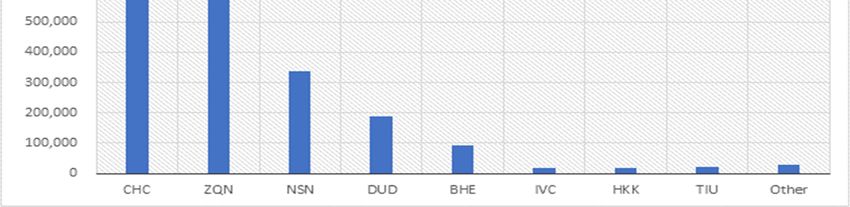
be a fair employer in providing a work place that values people and builds capable and confident
     human beings, through a focus on working together to be highly productive and to ensure all
     are fairly rewarded for success

     exhibit a sense of social responsibility by having regard to the interests of the community in
     which it operates

REAL GROWTH 2025 VISION AND STRATEGY

In 2014 CIAL completed a 10-year strategy review process and set a series of 2025 outcomes it is
targeting, entitled Real Growth 2025 (“RG25”). This was focused on understanding and being clear
on why CIAL exists and what success might look like in the years between then and 2025.

Our Mission

      “To be a champion airport, recognised at home and abroad as the
     engine room of the South Island’s social and economic prosperity”

FY19 will see us continue our focus of building a “Champion Airport”, recognised at home and abroad
as an engine room for the social and economic contribution of Christchurch and the South Island to
New Zealand.

At its centre will be a Champion Team that is strongly connected to this mission and focused on
building Leadership, Ambition and Capability within it.

Being a champion airport will be built on three pillars:

     Building a Stronger Business; and
     Enhancing our customer journeys; and
     Being good Kaitiaki (Guardians of Safety, Security & Sustainability)

Our Purpose

  “Unequivocally championing the South Island, changing residents and
                  visitors’ lives for the better, forever”

The activities at Christchurch Airport make a significant contribution to the social and economic
wellbeing of the communities and economies of Christchurch, Canterbury and in regional social and
economic development of the South Island – making a better contribution to the nation’s outcomes,
because building a socially strong and prosperous South Island helps build a strong New Zealand.

Airports have a strong multiplier effect on the economies they serve, and they are critical regional
economic development and social infrastructure. For CIAL, this has been independently estimated at
50:1, or for every $1 CIAL earns, the wider South Island economy earns $50.

Statement of Intent - 30 June 2019              5                 Christchurch International Airport Limited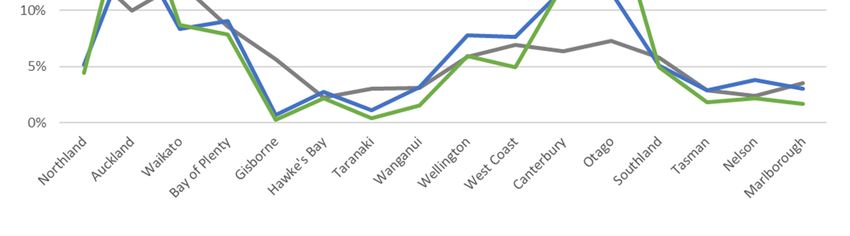
Over the last four years Christchurch Airport has seen record nominal passenger growth, adding
around 1.5 million passengers from post-quake lows, to be closing in on 7 million passengers a year.
That is, CIAL has just about added the equivalent size of total passengers at Queenstown Airport in
growth over this period. Christchurch Airport is driving the growth for the South Island, adding 1.52
international passengers for every 1 added at Queenstown Airport.

Christchurch Airport is the most powerful gateway for regional dispersal of tourists with 75% of
international visitors staying in regions outside of Canterbury. This compares to 67% for Auckland,
53% for Wellington and 46% for Queenstown.

We also know that when you add one international airline seat into Auckland it generates an average
of 1.5 commercial guest nights in the South Island. When you add one international airline seat into
Christchurch it generates an average of 7.5 commercial guest nights into the South Island.

Statement of Intent - 30 June 2019            6                   Christchurch International Airport Limited
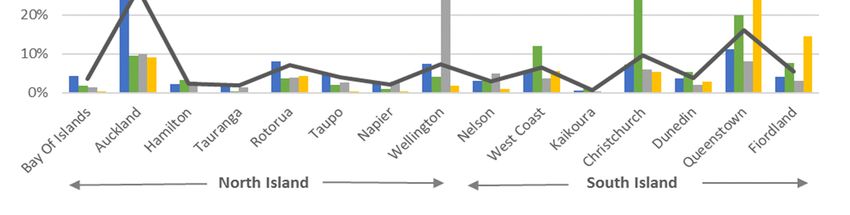
The regional dispersal effects of different airports are especially relevant as we have seen a narrowing
of the footprint of dispersal over time. (Refer to chart below)

KEY INITIATIVES

RG25 has three core strategic commercial pillars focused on building a stronger business and
enhancing customer journeys and being good Kaitiaki – Planes, Passengers and Property. These are
supported through enabling management strategies in the areas of People, Protection and Planet
which provide a more strategic approach to people’s performance and engagement, the safety of all
who enter onto the airport campus and our sustainability philosophies and objectives.

Within the RG25 framework, FY19 will be focused on Understanding the current outlook for the wider
environment in which each area operates, the risks and opportunities that these factors will create,
and the strategic activation projects required to address those risks and opportunities.

This will be complemented with an exploration of some external items that have the potential to re-
shape CIAL’s environment over the medium to long term including exponential technology and
sustainability.

Statement of Intent - 30 June 2019              7                   Christchurch International Airport Limited

Aeronautical (Planes)

     The aeronautical strategy remains focused on ‘finding planes’ and ‘filling planes’. However, with
     the changing aviation dynamics, rising oil prices, and with a new aeronautical pricing structure
     linked to passengers, CIAL’s focus, priorities and activation within this strategy have migrated
     accordingly.

     Having begun to see capacity increases from our strategy reset on Tasman and long haul routes,
     the focus will move to how to structurally improve CIAL’s position within the New Zealand
     aviation market.

     Priorities for aeronautical growth will focus on connectivity to our four key airport hubs –
     Melbourne, Sydney, Brisbane and Auckland, along with lifting regional feed into those hubs over
     Christchurch.

     Strategically CIAL’s most powerful opportunity is in strengthening its position as gateway into
     and out of the South Island and our role as a domestic hub and spoke to regional New Zealand.

     CIAL’s business development and passenger attraction activity will continue to focus on working
     narrower and deeper partnerships with existing and some new carriers, complimentary airports
     and tourism organisations.

Terminal (Passengers)

     CIAL’s ‘Park to Plane’ (“P2P”) strategy remains crucial to CIAL achieving its RG25 objectives
     because the terminal is our largest centre of business activity. Building from what we already
     have, to what we can achieve will depend on striking the optimal balance between increasing
     commercial outcomes, enhancing customer journeys and keeping people safe.

     The globally recognised Airport Experience Satisfaction (“AES”) Model sits at the heart of the
     P2P strategy and works off the basis that customer satisfaction is the sum of three dimensions
     – processes (service), drivers (experiences, which are often emotive factors), and the
     commercial offering. Delivering across the three dimensions will increase customer satisfaction.

     The key activations in developing the P2P strategy include:

     -   New and enhanced retail and food and beverage offerings in the right places along a
         customer’s journey, coupled with the development of new commercial models to meet the
         changes in retail, car-parking and ground transport.

     -   Improved way finding and information (digital, Augmented reality).

     -   Better utilising digital technologies and big data, developing digital platforms which allow
         customers to have access to entertainment and commerce i.e. virtual reality, QR codes,
         during and after they travel. Focus will be on widening CIAL’s retail throat and driving micro
         export lead parcel freight.

     -   Use of research to better inform the design and creation of new, more comfortable dwell
         spaces, coupled with bringing the South Island to life with a sense of a warm welcome and a
         combination of entertainment, interest and interaction i.e. gap filler.

Statement of Intent - 30 June 2019               8                   Christchurch International Airport Limited
- Improve operational efficiency and making better use of current assets before expansions.
Working with strategic partners to deliver enhanced terminal productivity (e.g. hours and
zones of operation, passenger flow paths, level of service objectives etc.). Long term focus
on creating a truly integrated terminal.
Property
CIAL’s commercial portfolio strategy remains to develop its bare land holdings by ‘being a
Landlord’.
CIAL’s property development program is focused on the development of quality income
producing properties for reputable, well-resourced tenants which meet CIAL’s long term
investment criteria.
Completing the development of the Novotel Christchurch Airport Hotel and continuing to progress
the on-going development of Dakota Park and Mustang Park is assumed under RG25.
Seek to diversify the property market segments in which CIAL participates, within those
permitted under Plan Change 84 (which defines the activities in which CIAL may engage within
the Airport Zone). For example – the development of a trade retail precinct (Harvard Park).
Focus on the planning environment in Christchurch and alignment with Christchurch City Council
planning regulations and policies.
CIAL’s investment strategy in this portfolio is to pursue new investment where the proposed
investment grows CIAL’s balance sheet, increases (and de-risks) revenue streams and enhances
dividend flows.
Active asset management focused on continued improvement of property investment
performance.
Refer to later sections in this document for discussion around People, Protection (Health & Safety)
and Planet (Sustainability).
BEYOND CIAL
CIAL is aware of and acknowledges that Christchurch City Council has objectives regarding
Community Outcomes under its Long-Term Plan and that the Crown also has objectives regarding
Regional Economic Development under its national growth agenda.
CIAL’s strategy is focused on more than just being an airport in Christchurch – our team is proud
that what they do makes a difference to the social and economic contribution our Airport, our City
and our Island make to New Zealand.
CIAL has played a significant role in supporting the tourism recovery of Christchurch, Kaikoura and
the Upper South Island (in conjunction with the City and MBIE). CIAL has made significant
contributions to the promotion of Christchurch and the South Island through its investment in
ChristchurchNZ, the South initiative (all 13 regions of the South Island) and New Horizons (small
business mentoring program)
Statement of Intent - 30 June 2019 9 Christchurch International Airport LimitedCIAL also recognises the key role it plays in supporting the Christchurch Antarctic Gateway Strategy,
and actively supports Antarctic entities at Christchurch Airport, most notably Antarctica New Zealand
and the Antarctic Heritage Trust.
As a commercial entity CIAL will always act and operate as a responsible corporate citizen, noting
CIAL must compete for its outcomes, especially in aviation, in a highly competitive environment with
a number of very strong commercial entities that have a purely commercial focus.
CIAL believes that the best way it can support both shareholders’ strategies in these areas is by
successfully executing its Real Growth 2025 strategy, which will not only deliver wide ranging social
and economic benefits to the City and the regions of the South Island, but also grow both the value
of CIAL and increase shareholder cash flows which will then be available for each shareholder for
investment in specific areas of interest as they see fit.
In addition, CIAL will continue to focus on the pursuit of essential on-going objectives that will be
important to the Council’s documented Community Outcomes and the wider local community in
general.
Ensure effective stewardship of the City’s airport asset, including meeting all relevant statutory
obligations.
Create and maintain an attractive and well-designed airport environment.
To operate the airport and its various activities in a way that supports Christchurch’s sustainable
economic growth.
Ability to operate 24/7 - The ability to operate under a 24/7 operating environment is essential
to the financial and economic well-being of both CIAL and the regional economy.
The continuing advancement of our Strategic Property Plan will require a continuing focus on
maintaining the planning environment to expedite and implement value-enhancing investment
initiatives.
Health and Safety as a priority with a commitment to a safe environment for all staff and airport
users.
CIAL will continue to ensure staff engagement remains high and CIAL continues to be regarded
as an employer of choice and is seen as a “great place to work”.
Minimise any adverse effects of CIAL’s activities and facilities on the environment (land, waste,
water, energy, noise and emissions), to be a responsible corporate citizen and to maintain strong
links and regard for the community.
Capital investment will continue to be carefully scrutinised to ensure investment is necessary,
having taken consideration of the prevailing economic environment and available financial
resources.
Statement of Intent - 30 June 2019 10 Christchurch International Airport LimitedGOVERNANCE
Commitment
Directors and management are committed to effective governance. As with safety and quality,
governance includes a set of systems and processes, supported by people with the appropriate
competencies and principles. This provides shareholders and other stakeholders with the assurance
that the company delivers on its promises.
Governance by its very nature is on-going; it does not have a finite end. Changing commercial
circumstances require regular review and continually evolving systems that implement newly
developed techniques and industry best practice.
Regulatory Framework
The company operates in New Zealand and is governed by a range of legislation and regulation. This
includes regulatory control under the Commerce Amendment Act; for the monitoring of Aeronautical
Economic performance under the Information Disclosure monitoring regime administered by the
Commerce Commission. In addition, it is regulated as an Airport under the Civil Aviation Act, Part
139, in terms of operational and safety performance.
Governance Objectives
The Board has adopted the following governance objectives:
Approve Corporate Strategy and direction, laying down solid foundations for management and
oversight
Structure itself to utilize the expertise of Directors to add value at a governance level
Promote ethical and responsible decision-making
Safeguard the integrity of its financial reporting and make timely and balanced disclosure
Recognise and manage risk and encourage enhanced performance
Ensure the occupational health and safety of the company’s people and contractors working
for CIAL across the Christchurch International Airport campus
Remunerate fairly and responsibly
Respect the rights, and recognise the legitimate interests, of stakeholders.
These objectives are reflected in the Board’s management of Board and Committee activities, CIAL’s
policies and governance practices.
Role of the Board of Directors
The Board is ultimately responsible for approving CIAL’s strategic direction; oversight of the
management of the company and achievement of its business strategy, with the ultimate aim being
to increase shareholder value while sustaining and ensuring the obligations of the company are
properly met.
Statement of Intent - 30 June 2019 11 Christchurch International Airport LimitedThe Board is accountable to shareholders for the performance of the company.
In carrying out its principal function, the Board’s specific responsibilities include:
Working with executive leadership to ensure that the company’s strategic goals are clearly
established and communicated, and that strategies are in place to achieve them;
Monitor management performance in strategy implementation;
Appointing the Chief Executive Officer (“CEO”), approving his or her contracted terms,
monitoring his or her performance and, where necessary, terminating the CEO’s employment;
Approving and monitoring the company’s financial statements and other reporting, including
reporting to shareholders, and ensuring the company’s disclosure obligations are met;
Adopting appropriate procedures to ensure compliance with all laws, governmental regulations,
applicable codes and accounting standards;
Ensuring that CIAL’s internal decision making and compliance policies and procedures are
implemented, to ensure that the business of the company is conducted in an open and ethical
manner;
Approving performance criteria for CIAL and monitoring the performance of the CEO and
executive leadership team against these;
Deciding necessary actions to protect CIAL’s financial position and the ability to meets its debts
and other obligations when they fall due, and ensuring that such actions are taken
Ensuring that the company adheres to high ethical and corporate behaviour standards;
Establishing procedures and systems to ensure the occupational health and safety of the
company’s people and contractors working for CIAL across the Christchurch International Airport
campus;
Promoting a company culture and remuneration practice which facilitates the recruitment,
professional development and retention of staff;
Ensuring that CIAL has appropriate risk management and regulatory compliance policies in place
and monitoring the appropriateness and implementation of these policies.
The Board delegates day-to-day operations of the company to management under the control of the
CEO. Such day-to-day operations are required to be conducted in accordance with strategies set by
the Board.
All directors are required to comply with a formal code of conduct, which is based on the New Zealand
Institute of Directors Code of Proper Practice for Directors.
Responsibility to Shareholders
In accordance with Section 64 of the Local Government Act 2002, each February the company submits
a draft SoI for the coming financial year to Shareholders. The SoI sets out the company’s overall
objectives, intentions and financial and performance targets.
Statement of Intent - 30 June 2019 12 Christchurch International Airport LimitedAfter due consultation and discussion with the Shareholders and completion of the annual business
planning and budgeting, the final SoI is approved by the Board of Directors and delivered to the
Shareholders in June.
Board Composition and Fees
The Board consists of six Directors, four appointed by majority shareholder, Christchurch City
Holdings Limited (“CCHL”) and two appointed by the Minister of Finance and the Minister for State
Owned Enterprises (on behalf of the New Zealand Government). From 1 July 2014, CCHL has also
been appointing an intern director for a period of eighteen months to enable prospective directors to
gain an insight into good governance practice and to observe the dynamics of sitting on a Board.
Directors’ appointments are for such periods determined by the relevant shareholder, but shall not
exceed three years. Retiring Directors may be reappointed by the relevant shareholder by way of
notice prior to the Annual General Meeting.
Fees for the Board are reviewed regularly by the shareholders using independent advice.
The Board generally meets at monthly intervals and at other times as required. To enhance efficiency,
the Board has delegated some of its powers to Board Committees and other powers to the CEO and
senior executives. The terms of the delegation by the Board to the CEO are clearly documented.
The CEO has, in some cases, formally delegated certain authorities to his direct reports and has
established a formal process for his direct reports to sub-delegate certain authorities.
The Board has four formally constituted committees: the Risk, Audit and Finance Committee, the
People and Culture Committee, the Property and Commercial Committee and the Aeronautical
Committee. All committees have Board-approved terms of reference outlining the committee’s
authority, duties and responsibilities, and its relationship with the Board. Additional committees may
be established based on need. Each committee must include a representative of each shareholder.
Risk Audit and Finance Committee
The Risk, Audit & Finance Committee consists of three Board members who have appropriate financial
experience and understanding of the company’s industry. The Board requires that at least one
member of the Committee be a “financial expert”.
The role of the Risk, Audit and Finance Committee is to act as an advisor to the Board of Directors to
assist them to discharge its responsibility to exercise due care, diligence and skill in relation to:
Risk management and systems of internal control
Business policies and practices
Protection of the company’s assets
Compliance with applicable laws and regulations
Reporting of financial information and regulatory disclosure requirements
Financial management.
Statement of Intent - 30 June 2019 13 Christchurch International Airport LimitedThe Board authorises and empowers the Risk, Audit and Finance Committee to:
Review and approve accounting policies and practices as they apply to the company
Review the current risk management framework, and associated procedures for effective
identification and management of the company’s financial and business risks
Review management’s approach to maintaining an effective internal control environment,
including implementation of relevant policies and procedures
Review the adequacy of insurance cover at each insurance renewal and recommend to the Board
any significant changes to insurance cover
Review and approve the annual business assurance plan, and regularly monitor business
assurance findings
Recommend to the Board the appointment of the external and business assurance advisor and
approve their fee
Provide advice on and review the company’s Annual Report and Financial Statements prior to
consideration and approval by the Board
Provide advice on and review the company’s regulatory Annual Information Disclosure prior to
consideration and approval by the Board
Review, on an on-going basis, the company’s capital structure and optimal funding portfolio
Establish procedures and systems to ensure the occupational health and safety of the company’s
people and contractors working for CIAL across the Christchurch International Airport campus
Seek any outside external advice it may require.
In order to fulfil this role, the Committee meets independently with both the business assurance
advisor and external auditors to provide a forum for open discussion regarding management’s
integrity and performance. The external auditors are only permitted to engage in assurance work.
People and Culture Committee
The People and Culture Committee’s role is to oversee the relationship of company values to the
People and Culture strategy and ensure that they are designed to support and deliver the Company’s
overall strategy and business plans. The responsibilities of the Committee are as follows:
Provide oversight and review annually the People and Culture strategy, implementation plan,
key sub-strategies and policies to ensure they are aligned with and support the delivery of the
overall company strategy
Provide oversight and review annually the Remuneration Strategy and policies
To oversee CIAL’s recruitment, retention and termination policies and procedures for senior
leadership, and the succession planning for senior leadership and the CEO
To review the performance of the CEO, the engagement agreement and benefit structure for the
CEO and the Executive Leadership Team, and recommend to the Board senior executive incentive
remuneration plans, other employee benefits, and key performance objectives
Statement of Intent - 30 June 2019 14 Christchurch International Airport LimitedProperty & Commercial Committee
The Property and Commercial Committee’s role is to assist the Board in ensuring that the Company
maximises the level of returns received (and wider economic value to the business as a whole) from
investments made in property development, on-going property management and other commercial
opportunities.
The responsibilities of the Committee are:
To regularly review, test and recommend for approval the company’s property and commercial
development and management strategy (including its priorities) to ensure that it remains
appropriate having regard to all relevant matters. Such matters shall include the company’s
financial position, maintenance of a balanced property portfolio, property market conditions,
regulatory planning issues, strategic focus and priorities, timetabling of investments, and any
other matters considered relevant by the Committee
To review and recommend for approval the principles and standards with respect to the
company’s property and commercial investment strategy, in respect of the type of property
investment, and rates of return parameters to be achieved.
Review and recommend to the Board approval of significant property and commercial investment
and development proposals.
Review and recommend to the Board the long-term property investment and commercial
development path to be pursued.
Aeronautical Committee
The Aeronautical Committee’s role is to assist the Board in overseeing aeronautical activity to ensure
that CIAL obtains the best level of return the aeronautical segment of the business is reasonably able
to produce, while ensuring its aeronautical operations are safe and efficient, and represent best
aviation practice.
The responsibilities of the Committee are:
To review and recommend to the Board strategies in respect of the provision of aeronautical
facilities, general aviation and aeronautical business development (including marketing and
pricing issues)
To review specific proposals, and subsequent post project reviews, relating to aeronautical
charging, commercial arrangements to support route development initiatives, and airline
incentives or promotions
To review the returns and aeronautical market position being achieved by CIAL’s aeronautical
business to ensure it is in line with the overall objectives of CIAL’s business strategy
To report to the Board annually, or as required, on; the safety, effectiveness and operational
bench-marking of CIAL’s aeronautical operations; the market position of its aeronautical
business; the returns being achieved on individual aeronautical initiatives; and, the effectiveness
and the implementation of CIAL’s aeronautical strategies.
Statement of Intent - 30 June 2019 15 Christchurch International Airport LimitedFINANCIAL PERFORMANCE TARGETS
CIAL’s key objectives are to operate as a successful commercial entity, actively benchmarked against
the industries we operate in and through that deliver sustainable growth in long-term value and
dividends to our shareholders.
It was previously recognised that an uplift in performance was required to achieve acceptable rates
of shareholder return, and as outlined earlier the RG25 strategy employed out to 2025 is focused on
an improved commercial performance and a target return on equity (“ROE”) for shareholders of a
consistent 7% p.a. (after tax and noting the FY14 starting point was a ROE of 2.6%).
When considering the sustainable target return on equity, it should be noted that:
it is forecast that for FY18, approximately 45% of CIAL’s operating revenues are regulated under
the Commerce Commission’s Information Disclosure Regime. This effectively caps the revenue
that CIAL can earn from its Regulated Asset Base for each 5-year pricing cycle relative to a
published mid-point WACC calculated by the Commerce Commission at the start of that period
(this was assessed at 6.41% for the most recent five year pricing period from 1 July 2017 to 30
June 2022).
CIAL holds land for long term airport development, for which a fair return is unable to be
achieved in the short term. In addition, CIAL’s Regulated Asset Base (value) on which it is
permitted to seek the Commerce Commission’s return is lower than the accounting asset base
(value). This arises via the difference in valuation methodologies required by the regulatory and
accounting frameworks.
The financial forecasts below identify the outcomes to be achieved over the ensuing three years;
however, it must be accepted that it will take some time to consistently achieve the targeted returns,
due to the following factors:
For CIAL to reach its RG25 aspirations, it needs to have both gateway and destination passenger
growth. The earthquakes significantly impacted Christchurch as a destination. CIAL’s view
remains that rebuilding this segment will only be possible through a combination of delivering
on the anchor projects and implementing a co-ordinated visitor strategy that covers both
destination management and destination attractions across all the sectors of the visitor
economy. The delay in these outcomes is still resulting in Christchurch not experiencing the level
of passenger growth experienced by other major New Zealand tourism destinations. This trend
is likely to continue over the near term, but will increase as the pace of the reinstatement of
Christchurch picks up.
the land bank can only be developed at a rate that planning requirements and market demand
allow; and
returns on new infrastructure development, predominantly the integrated terminal project, will
be determined by the market conditions of the aviation sector, external factors such as oil prices
and the levelised price path set to achieve the required economic return.
Statement of Intent - 30 June 2019 16 Christchurch International Airport LimitedCIAL has a key focus on capital management and only investing where investment is on strategy,
grow’s CIAL’s balance sheet, meets internal required return rates and enhances dividend flows long
term.
Current Financial Environment
When considering the financial forecasts of CIAL over the upcoming three years, the following points
should be noted to understand where CIAL is at in its current financial cycle:
CIAL’s current EBITDA margin (EBITDA as a percentage of operating revenue) is forecast to be
62.6% for FY18, with a goal of 70% at FY25. This still currently benchmarks below Auckland and
Wellington airports and is reflective of the relatively high incremental cost of revenue growth for
CIAL e.g.
- Whilst CIAL has enjoyed passenger growth since FY14, it continues to have to invest to
achieve that growth and hence the full revenue impact from increased capacity and
passengers is not experienced for a number of years following any such investments. In fact,
in some instances CIAL will have to invest ahead of the curve in respect to aeronautical
development and incentives to minimise exposure to a loss in aeronautical revenue.
- Similarly, whilst CIAL continues to invest in its property development portfolio, there is a lead
time of approximately 12-18 months on average from the time of the commencement of a
development to when rental income is reflected in CIAL’s revenue. CIAL has also had to
increase its operating costs and level of investment to crystalise increased property
development opportunities; and
- CIAL has a relatively fixed operating cost base, particularly in respect to its major terminal
and airfield assets and productivity gains are incremental in nature.
In June 2017, CIAL set its revised aeronautical prices for the period 1 July 2017 to 30 June 2022
(‘PSE3’). These prices came into effect from 1 July 2017. The result of CIAL’s price setting
process was that the allowable revenue that CIAL can earn from its regulated aeronautical
activities is circa $6m per annum lower than was earned during the last year of the previous five
year period, FY17. This was due to the lower than expected base interest rate environment which
lead to a lower return on our capital (“WACC”) that the Commerce Commission will allow.
CIAL’s revised pricing approach for PSE3 also uses a tilted annuity approach to depreciation,
which in effect smooths prices over the underlying life of the assets, hence deferring capital
recovery out into PSE4 and PSE5. Whilst this reduces aeronautical recovered in the early years
of the price path, it provides some certainty to revenue to be earned in the later years of that
path (i.e. PSE4 and PSE5 – assuming passenger growth forecasts can be achieved).
Statement of Intent - 30 June 2019 17 Christchurch International Airport Limited$m 2018 Forecast 2019 Forecast 2020 Forecast 2021 Forecast
Total Revenue 180.4 192.0 201.7 210.7
1
EBITDAF 113.5 123.8 133.3 140.3
Net Profit After Tax 47.5 49.7 52.0 56.0
EBITDAF as % of Revenue 62.9% 64.5% 66.1% 66.6%
2
Return on Average Equity 5.6% 5.9% 6.1% 6.5%
3
Return on Average Total Assets 3.5% 3.7% 3.8% 4.0%
The financial performance targets as detailed in the table above show the revenue, profit and financial
return expectations for the rest of the 2018 financial year and the following three years.
Key Financial Parameters
CIAL’s financial forecasts for the period of this SoI are subject to the following risks and sensitivities
that need to be understood:
Under PSE3 our aeronautical revenue (and therefore our aeronautical risk profile) shifts from
being driven by aircraft movements to passenger movements. Consequently, should CIAL not
achieve the passenger forecasts outlined below, then this will directly impact CIAL’s bottom line
financial performance.
CIAL’s current retail offering is the most likely to suffer disruption from the current traditional
“bricks and mortar” model meaning that concession based revenue streams from these
traditional retailers will come under pressure. (CIAL also expects car parking revenue to be
disrupted further out into the future).
CIAL’s revenue streams from the leases and concessions in the terminal have to some extent
been insulated from the changing retail landscape due to the legacy agreements that were signed
over five years ago. Several leases and concessions expire in FY18 and FY19 and are currently
in the process of being market tested. Until those processes have been completed and agreed
there is some uncertainty around these revenue forecasts.
Whilst CIAL has focused on increasing its property development program as a cornerstone to
RG25 to diversify its revenue streams, it should be noted that should the level of property
development spend be lower than the current forecasts (or the timing of the spend delayed
through extended commercial negotiations), then this will impact on any corresponding rental
streams accordingly.
1
Earnings before interest, tax, depreciation, amortisation and fair value movements.
2
Net profit after tax as % of average equity.
3
Net profit after tax as % of average total assets.
Statement of Intent - 30 June 2019 18 Christchurch International Airport LimitedAs an example of this, the forecasts above reflect deferred revenue from the delay in the
completion of the hotel construction project and also in securing an anchor tenant for the Trade
Retail Harvard Park precinct.
CIAL remains focused on reviewing the productivity and efficiency of its cost base in particular,
and has a number of initiatives underway currently. However, as noted above productivity gains
will incremental by nature across the next three year period.
Passenger Numbers
Passengers 2018 Forecast 2019 Forecast 2020 Forecast 2021 Forecast
Domestic 5,129,747 5,238,957 5,372,926 5,507,205
International 1,750,713 1,819,275 1,873,243 1,942,661
Total Passengers 6,880,460 7,058,232 7,246,169 7,449,866
CIAL continues to engage with Three Consulting to assist in forecasting demand for the next three
year period in conjunction with updating demand forecasts used for the most recent pricing
consultation process.
Key features of the demand calculation are:
Domestic – During FY17 and the first half of FY18, CIAL has continued to see domestic passenger
growth approximating 4.7% year on year. This growth is forecast to taper back over the next 3-
year period and track close to growth in GDP. The compound growth rate over the forecast
period is 2.4% per annum.
International – over the last three financial years, CIAL’s international traffic growth has trended
either with or slightly below the national average. This suggests that CIAL has not yet regained
its pre-earthquake proportion of national international passenger volumes. CIAL expects this
trend to largely continue over the next 3-5 year period. The compound growth rate over the
forecast period is 3.5% per annum.
In general terms, demand forecast is based upon known current and scheduled increases in
capacity, coupled with current assessment of load factors and increases in passenger demand.
The timing of the Christchurch City redevelopment will have an influence on the level of
passenger growth CIAL will achieve over the period of this SoI, especially during off season
months. Current forecasts out to FY21 are based on the completion of the current ‘anchor
projects’ (including the Convention Centre and Metro Sports). Major events are another key area
of development that would add growth at CIAL. Delays in the key anchor projects or a loss of
confidence in Christchurch as a destination may create some risk around these forecasts and
continue to influence the forecast growth patterns for international passengers in particular,
relative to growth being achieved nationally.
Statement of Intent - 30 June 2019 19 Christchurch International Airport LimitedRatio of Shareholders’ Funds to Total Assets
The forecast Capital Structure, ratio of shareholders’ funds to total assets and gearing ratios for the
next three years are:
$m 2018 Forecast 2019 Forecast 2020 Forecast 2021 Forecast
Shareholder Funds/Total Assets % 60.2% 59.1% 58.9% 58.7%
Gearing (debt/(debt + equity)) % 33.2% 34.5% 34.8% 34.9%
EBITDAF Interest Cover x 4.7 5.1 5.3 5.4
Free Funds Interest Cover x 4.0 4.4 4.6 4.7
Free Funds/Debt % 17.2% 18.7% 19.6% 20.4%
The maximum targeted ratio of debt-to-debt plus equity is 40%.
The target minimum floor for free funds from operations interest cover and target minimum ratio
for free funds from operations to debt is to be no less than 3x and 15% respectively.
Statement of Intent - 30 June 2019 20 Christchurch International Airport LimitedHEALTH, SAFETY AND WELLBEING
After over 100 years, safety is an embedded feature in aviation and the culture of those working in
aviation. For CIAL we are part of this legacy and we can borrow from aviation’s safety journey and
approach to continue our momentum towards building a culture of safety leadership, and to ensure
that our people feel protected, supported and have the tools to keep healthy, safe and able to perform
at their best.
At the core of our Health, Safety and Wellbeing Strategy is the ‘Protection of our People’. There is no
priority higher and protecting them is always the first step in anything we do.
In order to protect our people, we will further develop our:
Safety Leadership Culture – permits the presence of safety and drives behaviour
Safety Management Systems – drives continuous improvement
Risk Management – reduces the opportunity for incidents
Activating this through our Golden Rules of Safety:
SAFETY – before everything
STOP - and think before you do
SPEAK UP – so together we can fix it
Building a culture of safety leadership, taking a strategic approach to risk management, focusing on
our safety assurance program and extending this across airside and aviation operations, taking a
holistic approach to wellbeing and developing a framework to map our varied stakeholder
relationships and responsibilities will all support the achievement of our safety strategy of protection
of our people.
Performance Measures Performance Targets
2019 2020 2021
1. Safety Culture - through Year on year Year on year Year on year
leadership and improvements in our improvements in our improvements in our
accountability, continue to annual culture and annual culture and annual culture and
build our safety culture engagement survey engagement survey engagement survey
across both people and for health, safety and for health, safety for health, safety
aviation safety to permit the wellbeing. and wellbeing. and wellbeing.
presence of safety and drive Introduce safety-II Develop safety-II Continue to activate
behaviour. principles. philosophies and safety-II strategy
implement safety-II and build
strategy activation momentum.
initiatives.
Statement of Intent - 30 June 2019 21 Christchurch International Airport Limited2. Risk Management – reduce Year on year Year on year Year on year
the opportunity for incidents. reduction in high reduction in high reduction in high
potential and potential and potential and
significant outcome significant outcome significant outcome
safety risk safety risk measured safety risk
measured through through risk matrix. measured through
risk matrix. CIAL people and risk matrix.
CIAL people and aviation safety CIAL people and
aviation safety assurance program aviation safety
assurance program delivered. assurance program
delivered. delivered.
3. Safety Management Systems Bi-annual review of Bi-annual review of Bi-annual review of
to drive continuous SMS and HSMS to SMS and HSMS to SMS and HSMS to
improvement. identify and action identify and action identify and action
continuous continuous continuous
improvement improvement improvement
opportunities. opportunities. opportunities.
4. Lost Time Injuries Better than industry Better than industry Better than industry
standards, with standards, with standards, with
ultimate target of ultimate target of Nil. ultimate target of
Nil. Nil.
5. Near Miss Frequency Rate Year on year Maintaining strong Development of
(Near misses/million hours improvements, levels of near miss internal trend
worked) reflecting an reporting and reporting and risk
improved near miss development of near management
reporting culture. miss database. activity from near
miss database.
Emergency Response and Resilience
Operational readiness for emergency and business interruption events will continue to be a key focus
for CIAL’s operations and people safety teams.
Work has been completed to update CIAL’s Airport Emergency Plan in partnership with key airport
stakeholders (i.e. NZ Police, NZ Fire Service, St John Ambulance etc.). To assist operational readiness
for emergency events, CIAL leads and/or is involved various exercises including seismic events,
pandemics, acts of terrorism and an aeroplane incident.
CIAL also stands ready to assist in actual emergency events off campus, and has played significant
roles most recently in assisting Kaikoura and the regions of the top of the South Island following the
earthquake and the Port Hills fires.
Statement of Intent - 30 June 2019 22 Christchurch International Airport LimitedSUSTAINABILITY
Christchurch City, as the main gateway to the South Island, exists in an area of unique, spectacular
and beautiful geology. We believe, as citizens of the South Island, it’s our responsibility and privilege
to be one of many kaitiaki to this very special place and we take that role seriously.
We are passionate about protecting the environment, minimising the use of natural resources and
improving the quality of life for our community.
Our approach to sustainability is centred in the Maori concept of kaitiakitanga (responsibility, care
and guardianship). We continually challenge ourselves to seek out, develop and implement new
processes that make our business more sustainable.
CIAL has developed two guiding philosophies which will underpin our approach to sustainability at
CIAL.
1. If the change cannot be a permanent feature of the way we do business at the Airport, then it
is not sustainable.
2. If it’s green but puts us in the red, it won’t be permanent, then it’s not sustainable.
Our focus is to be ambitious in our approach to sustainability and be open to external input to our
sustainability journey, so we can seek out, develop and implement enduring changes to our business
that will create a sustainable long term evolution to our Airport.
In 2016 CIAL reset its Sustainability Strategy which focuses our sustainability efforts across five key
areas at the Airport – Water, Energy, Waste, Land and Noise. In addition, we established a
sustainability advisory group, consisting of internal team members who have a passion in this area
and complimented by several external stakeholders who are either experts or passionate stakeholders
in our sustainability journey.
This panel offers advice and, most importantly, challenges our thinking to help ensure we are doing
all we can to become even more sustainable.
Performance Targets
Performance
Measures
2019 2020 2021
Waste Work with airlines to Continue to work with Implementation of
Waste is a by-product achieve greater recycling airlines and tenants to waste weighing system
of operating a diverse of waste off aircraft. improve recycling and that makes tenants
and large organisation reduce waste. aware of the waste
Achieve 52.5% diversion produced by their
but we can work with all rate. Achieve 53.5%
our stakeholders to activities and
diversion rate. incentivises efforts to
reduce, reuse and
recycle so we minimise reduce waste.
the impact on our Increase waste diversion
environment. to 55%.
Statement of Intent - 30 June 2019 23 Christchurch International Airport LimitedEnergy 2 more domestic jet Continue to investigate Continue to investigate
By minimising our ground power stands and implement energy- and implement energy-
energy use, we reduce commissioned. saving initiatives that saving initiatives that
our carbon footprint, ensure energy ensure energy
Continue to investigate consumption is reduced. consumption is reduced
reduce costs to our
and implement energy-
businesses and reduce 50% of CIAL’s road Achieve the KPI metric
saving initiatives that
demand on the national
ensure energy vehicle fleet made up of of a monthly average
grid. We strive for
consumption is reduced. EV and hybrid vehicles. total terminal energy
growth without impact,
consumption at
and for our business to Introduce electric 23.5KWH/m2.
protect our city region vehicles to the CIAL fleet.
and island. 10% reduction on CIAL
carbon emissions
benchmarked against
FY16.
Water Install accurate water Ensure on-going Target a 10% reduction
Christchurch is unique metering devices to compliance with NZ in passenger terminal
in using 100% naturally better understand Drinking Water water usage from the
filtered water. Our passenger terminal Standards through FY18 base.
passion is to maintain water use. regular monitoring of
potable drinking Continue Environmental
its integrity, avoid Ensure on-going Compliance and
accidental groundwater supply
compliance with NZ Monitoring Programme
contamination and Drinking Water Continue Environmental with existing airport
minimise use of this Standards through Compliance and operators and new
precious resource as it regular monitoring of Monitoring Programme operators on airport
passes under the potable drinking with existing airport land.
airport. By doing so, we groundwater supply. operators and new
ensure water supply operators on airport
safety and security, Continue Environmental land.
protect the aquifer, Compliance and
reduce costs and our Monitoring Programme
business protects the with existing airport
city, region and island. operators and new
operators on airport
land.
Noise Continued commitment Noise complaints are Noise complaints are
Noise is the to an Airport Noise limited to 10 per 10,000 limited to 10 per 10,000
environmental issue of Liaison Committee to aircraft movements per aircraft movements per
greatest focus at improve communications annum. annum.
airports around the with our community.
Repeat complaints also Repeat complaints also
world. Successful limited to 10 per 10,000 limited to 10 per 10,000
Our responsibility and implementation of world aircraft movements. aircraft movements.
bias is to engage and leading engine testing
collaborate with all noise management
stakeholders, especially software.
residents and
businesses close to the Noise complaints are
airport and its flight limited to 10 per 10,000
paths. aircraft movements per
annum.
Statement of Intent - 30 June 2019 24 Christchurch International Airport LimitedLand Achieve a Bird Strike Achieve a Bird Strike Achieve a Bird Strike Our Place is an area of incidence rate of incidence rate of incidence rate of unique natural beauty.
OUR PEOPLE

A Champion Airport is the result of the efforts of a Champion Team. A champion team will always sit
at the heart of our success and our RG25 targeted outcomes and we are focused on building
Leadership, Ambition and Capability into our team through our People Strategy.

Our People Strategy is designed to build a Champion Team with the capability and passion to achieve
our purpose and our mission. We will do this by continuing our journey to develop a culture of high
performance driven by our purpose, with an engaged team who are motivated by, and connected to,
our success and by embedding our values into our culture.

Our People Strategy focuses on three key pillars, Purpose, Capability and Delivery. It is supported by
an embedded culture of leadership and ambition, high performance and accountability, connection
and collaboration.

                                                               Performance Targets
   Performance Measures

                                             2019                      2020                         2021

   1. To build a Champion Team who     Purpose        driven   Purpose          driven       Purpose        driven
      has the capability and passion   leadership        and   leadership and people         leadership        and
      to achieve our purpose to        people excellence,      excellence,       clear       people excellence,
      champion the South Island and    clear performance       performance                   clear performance
      our mission – to be a Champion   accountabilities and    accountabilities and          accountabilities and
      Airport.                         outcome      focused    outcome        focused        outcome      focused
                                       expectations      are   expectations are part         expectations      are
                                       part of the way we      of the way we do              part of the way we
                                       do business.            business.                     do business.
                                       Year     on      year   Year      on       year       Year     on      year
                                       improvements for        improvements         for      improvements       for
                                       common      purpose     common purpose and            common      purpose
                                       and leadership in       leadership in annual          and leadership in
                                       annual culture and      culture             and       annual culture and
                                       engagement              engagement survey             engagement
                                       survey.                 People        Strategy        survey.
                                       People      Strategy    Activation     Projects
                                       Activation Projects     delivered.
                                       delivered.
   2. To be a fair employer that       Activate       fair     Year    on     year           Year      on     year
      celebrates      equality  and    employer charter        improvements      in          improvements        in
      diversity that is renowned for   Develop a “being a      “being    a     fair          “being       a    fair
      going beyond compliance and      fair     employer”      employer” in annual           employer” in annual
      creating value and opportunity   category in annual      culture         and           culture           and
      for our people.                  culture        and      engagement survey.            engagement
                                       engagement                                            survey.
                                       survey.                                               Be         recognised
                                                                                             externally through
                                                                                             award            that
                                                                                             recognises     CIAL’s
                                                                                             for its fair employer
                                                                                             strategy.

Statement of Intent - 30 June 2019               26                      Christchurch International Airport Limited
You can also read


