Stepping through co-design in a local government setting - Stepping through co-design in a local ...
←
→
Page content transcription
If your browser does not render page correctly, please read the page content below
Case study

WalKyneton
Stepping through co-design
in a local government setting
Background
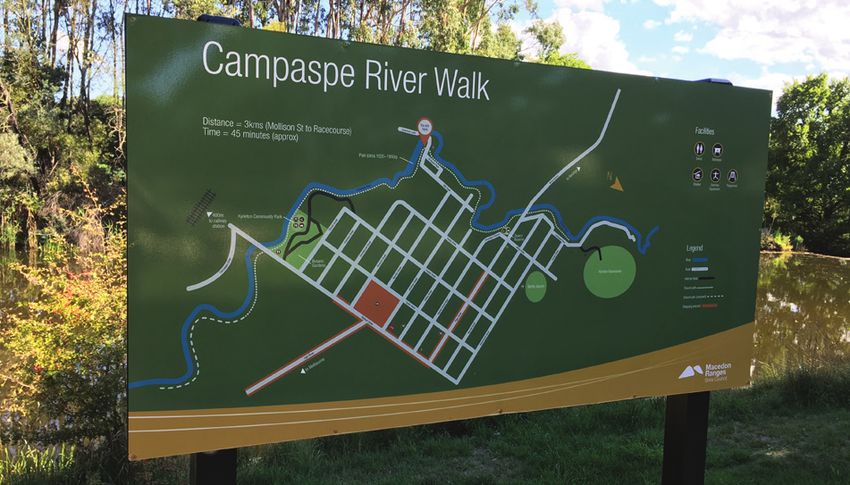
The Macedon Ranges Shire Healthy Heart of Victoria Project Control Group set
out to make the Campaspe River Walk more safe, inclusive, accessible and active
through the WalKyneton project. The project takes a multi-faceted approach to
addressing some of the barriers to participation, focusing on infrastructure needs,
culture, capacity building and engagement of less active community members,
who do not typically have input into recreation projects.

A substantial component of the infrastructure and activation was co-designed with community
members with known barriers to physical activity and footpath use. Through targeted consultation
and co-design, the Project Control Group hoped to better understand and address the health
infrastructure needs of people with low levels of physical activity, in an area of relative disadvantage.

                                                       What did you set out to achieve?
                                                       With the support of an external facilitator,
                                                       Council officer, and the Healthy Heart of Victoria
                                                       (HHV) Health Broker, the co-design group aimed
                                                       to design one infrastructure improvement (or
                                                       amenity) and one activation that encourages
                                                       more people to the Campaspe River Walk
                                                       precinct and exercise equipment. As co-design
                                                       was rarely used within Macedon Ranges Shire
                                                       Council, the Project Control Group also set out to
The WalKyneton co-design group invited                 document the process and learning, and develop
community members who are less likely to               a toolkit that Council officers could use to inform
meet physical activity guidelines and those            future co-design projects.
who rarely use public footpaths to take part,
as informed by the 2019 Active Living Census.
The co-design group was comprised of:
• People aged 70 and up
• People experiencing financial hardship and/
    or food insecurity
• People who require assistance with daily
    activities
• People who have poor health
• People who have low levels of satisfaction
    with life (poor mental health)
• People who are overweight or obese
• People who identify as LGBTIQ+
All co-design group members were
compensated for time spent to attend meetings
and follow-up tasks.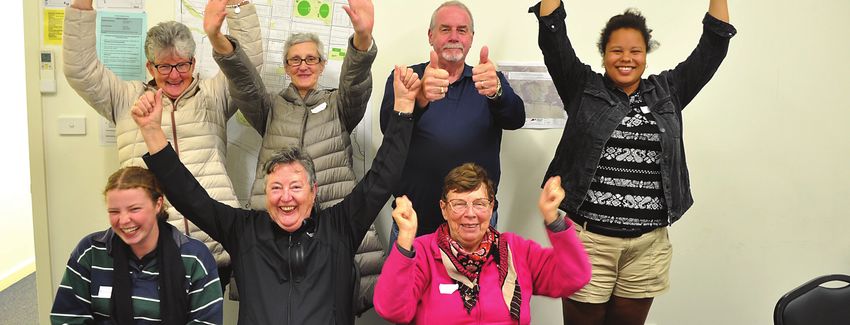
What was delivered?
1. The co-design group
It took approximately eight
weeks to engage with
stakeholder organisations
and community groups.
At the end of this process,
eight co-design group
members who represented the
target groups, either through
lived experience or through
indirect experience, had been
recruited.
                                   2. The design outcome           • Spaces that support
Community agencies                                                    different activities or
identified a number of             The key priorities identified
                                                                      experiences, including
barriers making it difficult for   and agreed to by the co-
                                                                      activity, rest and quiet
some of the target cohorts         design group were:
                                                                      meditation.
to participate in co-design
                                   • To develop a 1km best         • To incorporate interactive
meetings, particularly for
                                     practice showcase stretch        and interpretive elements
people with a disability
                                     of the River Walk (between       about the history and
and those with chronic ill
                                     the exercise equipment           culture of Traditional Owners
health. As such, stakeholder
                                     and Quarry Reserve)              and their relationship to
organisations provided
                                     incorporating:                   the Campaspe River and
feedback at strategic intervals
                                   • Signage (directional,            surrounding landscape.
that informed the discussion
and direction of the co-design       distance, locational,         The co-design group worked
group.                               interpretive, interactive)    with a landscape architect
                                   • Seating                       to deliver a Master Plan
                                   • Landscaping (shade,           that realises the varied but
                                     aesthetic, indigenous,        complementary priorities of
                                     interactive, sensory)         the group.
                                                                   The Master Plan incorporates
                                                                   a ‘spine’, with accessible
                                                                   and shaded seats spaced at
                                                                   regular intervals, accessible
                                                                   parking, improved path
                                                                   connections, a signature
                                                                   tree for wayfinding; and
                                                                   three experience areas: a
                                                                   contemplative garden, an
                                                                   Indigenous garden and a
                                                                   sensory garden.
                                                                   Taungurung Traditional
                                                                   Owner Mick Harding has been
                                                                   engaged to deliver artwork
                                                                   and audio narratives, to be
                                                                   activated via QR codes at
                                                                   each of the shaded seats.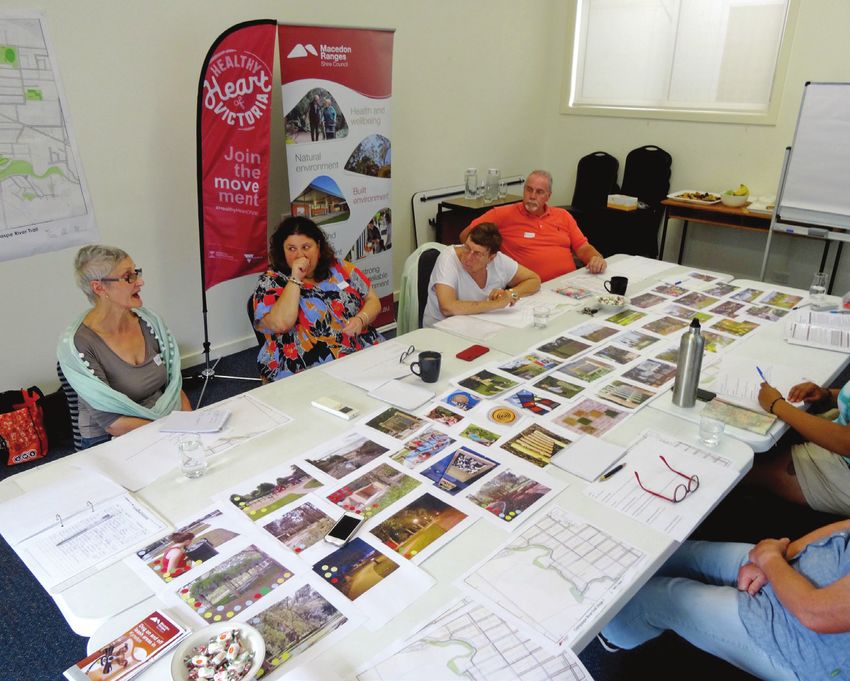
3. The evaluation and toolkit                      How HHV made a difference
The co-design facilitator captured the
                                                   The master plan developed for the 1km best
experiences of the co-design group and
                                                   practice showcase for the Campaspe River
lessons learnt in a final evaluation report
                                                   Walk is a direct reflection of the priorities and
and co-design toolkit.
                                                   aspirations the co-design group had for the
Overall, members of the co-design group were       River Walk and has delivered a thoughtful and
very positive about the co-design process, their   innovative template for the wider River Walk.
experience of it, and the outcomes achieved.
                                                   Integrating spaces for different experiences
They found it rewarding, interesting, a great
                                                   would not have been considered in a traditional
learning opportunity, and appreciated the way
                                                   infrastructure project but has great potential to
different perspectives were shared and listened
                                                   attract a wider audience to the precinct.
to. There was some concern about the length
of time the process took. Some co-designers        The co-design toolkit has been well received
also had concerns about whether their vision       within Macedon Ranges Shire Council and will
would be followed through and implemented          provide a practical template for other Council
by Council on conclusion of the design phase.      officers to conduct this work, and learn from the
                                                   experiences of this project.
                                                   This resource will be a useful tool to support
Key learnings                                      Council officers to use co-design more often
                                                   and more successfully in future.
Several factors increased the time required for
the design phase, and meant that flexibility
was needed for the timelines and approach.
The COVID-19 pandemic contributed to these         I have been involved in a lot of projects
delays, as did factors such as staff attrition,      with young people, but this was very
and additional engagement or planning               different. At the beginning I felt out of
requirements that were necessary to meet             my depth, I needed to learn the lingo.
the vision of the group. To deliver a genuine
co-design process, the Project Control Group
                                                   But my confidence has built up because
needed to be flexible around timeframes and             I have been exposed to different
budgets, and understand that project outcomes          information and ideas over time.
may differ from what was originally envisaged.
The project also required trust and flexibility             Co-design group member
with the co-design group, other Council staff,
and the State Government funding body.

More information                                                             The Healthy Heart of Victoria initiative is
                                                                             supported by the Victorian Government
   @HealthyHeartofVictoria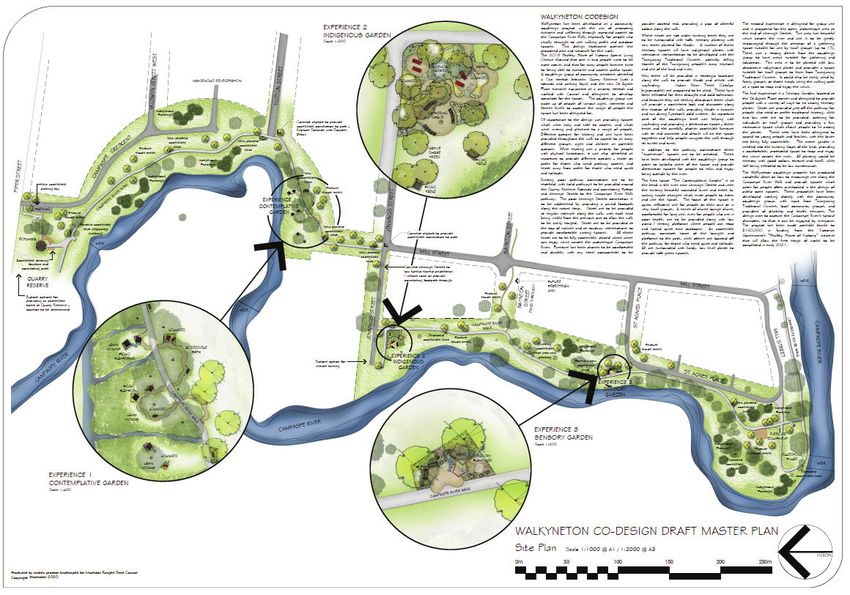
You can also read


