Stock Idea Indigo Paints Ltd - image
←
→
Page content transcription
If your browser does not render page correctly, please read the page content below
Stock Idea
Sector: Consumer Goods                                   August 23, 2021

                   Indigo Paints Ltd

                  Paint your portfolio bright

             Powered by Sharekhan’s 3R Research Philosophy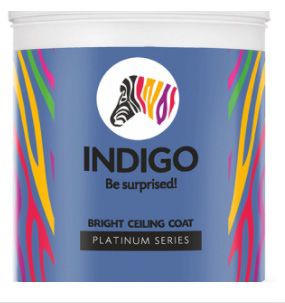
Stock Idea
Indigo Paints Ltd
Paint your portfolio bright
Powered by the Sharekhan 3R Research Philosophy Consumer Goods Sharekhan code: INDIGOPNTS Initiating Coverage
3R MATRIX + = - Summary
We initiate coverage on Indigo Paints Ltd (IPL) with a Buy and assign a target price of Rs. 3,305.
Right Sector (RS) ü Differentiated business model, excellent return profile and strong structural growth outlook will
keep valuation at a premium of 60x/44x its FY2023/24E earnings versus peers.
Right Quality (RQ) ü With a differentiated product portfolio and bottom-up approach, IPL is emerging as one of India’s
fastest growing paints companies. Revenues and PAT clocked a CAGR of 22% and 71% over
FY2018-21.
Right Valuation (RV) ü Gross margins are highest among peers at ~48% led by IPL’s locational advantage and healthy
mix of revenues from differentiated products.
+ Positive = Neutral - Negative Better working capital management has kept net working capital cycle low at 13-14 days.
Operating cash flows (OCF) improved from Rs. 42.8 crore to Rs. 101.4 crore over FY2019-21.
Reco/View Indigo Paints Limited (IPL) is an emerging player, which has created a niche for itself in the highly
competitive paints industry by launching differentiated products, creating brand equity through
one prominent brand ‘Indigo’ and follow bottoms-up approach to expand its distribution in the
Reco: Buy domestic market. It has market share of 2% but has strong potential to improve it in the coming
years. IPL was the first among its competitors to introduce coatings for ceilings, tiles and floors,
CMP: Rs. 2,431 with competitors entering this space only now. Further, differentiated products helped IPL expand
its dealers/distribution network into various markets. Differentiated products contribute ~30% of
Price Target: Rs. 3,305 overall revenues and fetch higher margins compared to other products. IPL has used a bottom-
up approach to expand its base in a particular market. To create demand for its differentiated
products, IPL initially taps tier-3 and tier-4 cities and rural areas, where brand penetration is easier
and dealers have a greater ability to influence customers’ purchase decisions. IPL subsequently
Company details leverages on this network to engage with dealers in tier-1/tier-2 cities and metros to expand its base.
It has presence in 27 states and is focusing on improving penetration in these states. The company
Market cap: Rs. 11,564 cr has also introduced tinting machines in target markets to increase sales of emulsions. IPL’s current
dealer reach is 16% of the top player and 40% of second-largest paint player in India. Revenue per
tinting machine is lowest at Rs. 14.5 lakh versus its peers, indicating a wide scope for growth. Further
52-week high/low: Rs. 3,348/2,192 the company has a unique brand strategy where all products are bundled under one brand ‘Indigo’
which is promoted by brand ambassador – Mahendra Singh Dhoni who has a pan-India appeal.
NSE volume: Being an emerging player, the company spends heavily on advertising (~Rs. 77 crore in FY2021,
0.6 lakh
(No of shares) second only to the top player) in the past few years which helped it to establish strong brand equity.
This differentiated approach for distribution expansion and higher brand investments will help it to
BSE code: 543258 promote conventional paint products in the coming years. A differentiated business model aided
the company to achieve strong revenue and PAT growth of 22% and 71% over FY2018-21 with the
highest gross margins of ~48% among peers. OPM improved to 16.9% in FY2021 from 6.5% in FY2018
NSE code: INDIGOPNTS (management targets to achieve OPM of ~18.5% in FY022). Differentiated product portfolio and
calibrated pricing strategy helped the company sail through the uncertain business environment
Free float: caused by second wave of COVID-19 and higher input prices by posting relative stable performance
2.2 cr
(No of shares) in Q1FY2022. With easing of lockdown norms and raw material prices correcting from its high, the
company expects much better performance in the quarters ahead. The rising urbanization, higher
willingness to spend behind home improvement in tier 2 and 3 towns, strong traction to differentiate
products and market share gains would help IPL to achieve faster recovery in the coming years.
Shareholding (%) Scale up in the business will help the operating margins to further improve and reach at ~22% in
FY2024. Better working capital management aided net working capital days standing low at 13-14
days. The operating cash flows (OCF) improved from Rs. 42.8 crore to Rs. 101.4 crore over FY2019-21
Promoters* 54.0 and with sustain scale up margins, cash flows are expected to further improve in the coming years.
FII 40.3 Our Call
View– Initiate with Buy assigning a Price Target of Rs. 3,305: We expect IPL’s revenue and PAT
DII 3.2 to grow at a CAGR of 31% and 55% over FY2021-24E driven by strong expansion in dealer network,
improving market share and margin expansion. The company has strong balance sheet with stable
Others 2.52 working capital management and strong operating cash flows (average OCF to EBIDTA ratio stood
at 78% for past three years). Moreover, its return ratios are expected to improve strongly in the
coming years (RoE and RoCE to stand at 26% and 34% in FY2024). The stock is currently trading at
60.4x its FY2023E EPS and 44.2x its FY2024E EPS (and 41.0x/30.1x its FY2023E/24E EV/EBIDTA).
Price chart Differentiated business model with industry leading gross margins, sustained focus on improving
3200 market share, strong return profile and the structural growth story of the paints industry will keep
3000 valuations at a premium as compared to close peers. We initiate our coverage on Indigo Paints
2800 with a Buy recommendation and price target (PT) of Rs. 3,305 (valuing the stock at 60x its FY2024E
earnings).
2600
2400 Key risk
2200 Late demand recovery or delay in expanding the distribution base or sustained increase in prices of
2000 crude oil and crude derivatives would act as a key risk to our earnings estimates.
Feb-21
Feb-21
Mar-21
Mar-21
Mar-21
Jun-21
Jun-21
Jul-21
Jul-21
Aug-21
Aug-21
Apr-21
Apr-21
May-21
May-21
Valuation (standalone) Rs cr
Particulars FY21 FY22E FY23E FY24E
Revenue 723 968 1,258 1,624
OPM (%) 16.9 18.5 21.6 22.3
Price performance
Adjusted PAT 71 127 191 262
(%) 1m 3m 6m 12m % Y-o-Y growth 48.2 79.8 50.3 36.8
Adjusted EPS (Rs.) 14.9 26.8 40.2 55.0
Absolute -7.4 -1.3 -4.4 - P/E (x) - 90.8 60.4 44.2
Relative to P/B (x) 20.5 16.7 13.1 10.1
-13.4 -12.9 -15.6 - EV/EBIDTA (x) 92.0 62.5 41.0 30.1
Sensex
RoNW (%) 18.6 20.3 24.3 25.8
Sharekhan Research, Bloomberg
RoCE (%) 23.3 25.9 31.4 33.6
Source: Company, Sharekhan estimates
August 23, 2021 2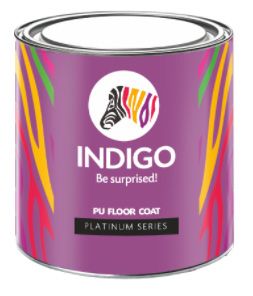
Stock Idea
Powered by the Sharekhan
 3R Research Philosophy

                                             Executive Summary

  3R Research Positioning Summary                           Valuation and return potential
  n Right Sector
  Low per capita consumption, improving demographics,       •   Valuations: IPL recently listed on bourses and the
  reduced re-painting cycle and higher spends on home           stock is currently trading at 60.4x its FY2023E EPS
  improvement will drive demand for paints.                     and 41x its FY2023E EV/EBIDTA.
  n Right Quality
  Emerging paints company with differentiated
                                                            •   Valuations to remain at a premium: Differentiated
                                                                business model with industry-leading gross
  portfolio, experienced management supported by a
  strong balance sheet.                                         margins, sustained focus on improving market
                                                                share, strong return profile and a steady structural
  n Right Valuation
                                                                growth outlook for paints industry will keep
  Structural growth story of paints industry,
                                                                valuations at a premium.
  differentiated growth strategies with strong growth
  prospects makes a good investment fit.

  Key Catalysts for growth
  Long-term triggers                                        Earnings and Balance sheet highlights
  •   Low penetration with dealership network standing
      at 16% of large players and a lower tinting machine   •   Consistent earnings growth: Revenues and PAT
      to dealer network ratio of 38% heightens the scope        grew at a CAGR of 22% and 71%, respectively,
      for growth in the long run.                               over FY2018-21.
  •   Sustained product additions in different categories
      will help IPL remain competitive.                     •   Differentiated products: These constitute ~30% of
  Medium Term Triggers                                          domestic revenues; have higher margins helping
  •   Consistent shift from unorganised to organised            IPL post industry leading gross margins of 48%.
      products (especially in tier-3/-4 towns) will help
      drive consistent volume growth.
  •   Higher gross margins and scale up in revenues
                                                            •   Strong balance sheet: Zero debt on books; stable
      would help OPM expand strongly in the coming              working capital with operating cash cycle of 13-
      years.                                                    14 days; operating cash flow improved to Rs. 101.4
  Key Risks                                                     crore in FY2021 from Rs. 42.8 crore in FY2019.
  Delayed volume recovery due to resurgence in
  COVID-19 cases and a sustained surge in crude oil
  prices would act as a risk to earnings estimates.

August 23, 2021                                                                                                        3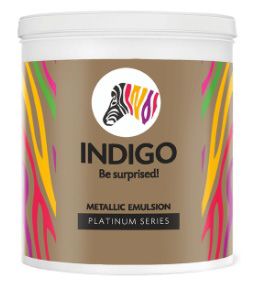
Stock Idea Powered by the Sharekhan 3R Research Philosophy Table of Contents Pages Right Sector - why we like industry 5 Paint industry to clock 17% CAGR over FY2020-24 5 Decorative paint industry grew at CAGR of 11.5% over 2014-19 5 Key growth drivers for paint industry 6 Right Quality - why we like IPL 13 Emerging player with distinctive growth strategies 13 Portfolio of ‘differentiated’ products distinguishes IPL from large peers 13 Focus on expanding distribution reach 15 Deepening penetration in existing market; expanding presence in select new geographies 17 Dependence on Kerala is reducing 18 Higher investment behind brand building activities to improve brand awareness 18 Capacity expansion on cards 18 Revenues to grow at CAGR of 31% over FY2021-24 19 Industry leading gross margins boosted by locational advantage and differentiated products 20 Advertisement spends as percentage to sales will reduce in the coming years 21 OPM to improve to 21-22% by FY2024; PAT to grow at CAGR of 55% 22 Better working capital management; operating cash flows improved consistently 22 Experienced management team 22 Financials in charts 24 Right Valuation - Strong growth potential with differentiated business model 25 Sector Outlook - Structural growth of the paint industry is intact 25 Company Outlook – growth levers in place 25 Valuation – Initiate with Buy assigning a Price Target of Rs. 3,305 25 Peer comparison 25 Key financials 26 P/L account 26 Cash Flow Statement 26 Balance Sheet 27 Key Ratios 28 IPL snapshot 29 About company 29 Investment theme 29 Key risks 29 Key management personnel 29 Top 10 shareholders 29 3R Philosophy definitions 30 August 23, 2021 4
Stock Idea
Powered by the Sharekhan
 3R Research Philosophy

Why we like paints industry – Strong demand for decorative paints to be key growth lever
The Indian paints industry is correlated to GDP and is growing at 2x the GDP, led by strong demand in
the decorative paints. The industry has registered a CAGR of ~10.4% during FY2008 to FY2020. Rising
income levels, rapid urbanisation, shift from unorganised products (especially at the bottom of pyramid) and
improving penetration for decorative paints are some of the key growth drivers. The industry size is expected
to grow to ~Rs. 971 billion by 2024.

Paints industry to clock 17% CAGR over FY2020-24

          1200

                                                                                                  971
          1000

           800
 Rs. bn

           600                                                                  520
                                                          435
           400
                                            261
           200        159

             0
                     FY2008             FY2012           FY2016                FY2020           FY2024E

Source: Company; Sharekhan Research

Decorative paint industry grew at CAGR of 11.5% over 2014-19
The domestic paints industry comprises the decorative and industrial segments. Decorative paints constitute
more than 75% of the market and are used mainly in the real estate sector for exterior and interior wall paints,
wood finishes, enamels, undercoats such as primers, putties, etc. The industrial segment refers to paints
that go into protective coatings largely for varied substrates like iron, galvanised iron, mild steel, aluminium,
chimneys, etc. This comprises automotive, marine, packaging, powder, protective, floor and other general
industrial coatings and accounts for the balance 25% of the paint market.

Paints industry – Broad structure

                   Decorative                                     Industrial
                   • Emulsions/Enamals                            • General and Industrial
                   • Distemper                                    • Automotive Coating
                   • Putty                                        • Protective Coating
                   • Wood Coatings                                • Powder Coating
                   • Cement Paints                                • Glass Coating
                   • Primers and Thinners                         • Pipe Coating

Source: Company; Sharekhan Research

August 23, 2021                                                                                                5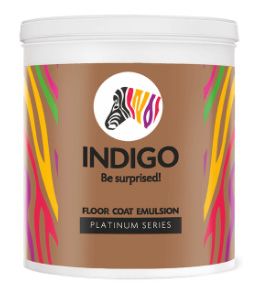
Stock Idea
Powered by the Sharekhan
 3R Research Philosophy

The decorative paints market clocked a CAGR of 11.5% during 2014 to 2019, led by an increase in consumption
of paints in the tier 2, -3 and -4 cities. Going ahead, the market is expected to clock a CAGR of 13% from 2019
to 2024 led by factors such as increase in disposable income of individuals and various housing schemes.
The industrial market grew at 9.5% during 2014 to 2019 and going ahead, it is expected to grow at 9.9% from
2019 to 2024.

Decorative paint industry – Growth path

           800                                     743
           700
           600
           500
                                          403
  Rs. bn

           400
           300               234                                                             228
           200                                                                    142
                                                                           90
           100
             0
                                      Decorative                                Industrial
                                                     2014   2019   2024E

Source: Company; Sharekhan Research

Indian paints industry - Growth drivers

Source: Sharekhan Research

August 23, 2021                                                                                              6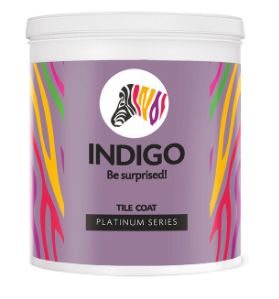
Stock Idea
Powered by the Sharekhan
 3R Research Philosophy

1. Higher growth opportunity due to low per capita paint consumption
   India’s per capita paint consumption recorded a CAGR of 6.8% in the last seven years from 2.6 kg in
   FY2012 to 4.1 kg in FY2019. Compared to the global average consumption of ~14-15 kg per capita, the per
   capita consumption of paints and coatings in India is low.

Lower per capita consumption

           USA                                                                                                                               15.8
     Singapore                                                                                                                        15.0
        Canada                                                                                                            13.7
         Japan                                                                                      10.5
      Malaysia                                                                         9.0
      Thailand                                                                   8.0
         China                                                           7.2
   South Africa                                                       6.8
     Indonesia                                                  6.0
   Middle East                                 4.1
          India                                4.1

                  0.0      2.0           4.0              6.0              8.0               10.0          12.0         14.0            16.0        18.0

                                                                               kg per capita

Source: Company; Sharekhan Research

   There is a significant opportunity for market penetration in India in both the decorative and industrial paint
   segments. Due to rising spends on infrastructure, the consumption of coatings is expected to increase.
   Increasing urbanization coupled with rise in disposable incomes is driving up spends on decorative paints.
2. Organised players account for ~70% of total paint industry
   The Indian paints industry is an oligopolistic market with a large number of regional, small players. It is
   dominated by the top four large and organised players who account for ~70% of the total market. Until
   2015, the unorganized sector had a market share of approximately 35% and remaining 65% was held by
   the unorganised players. With demonetisation and implementation of the GST regime, organised players
   penetrated the market taking advantage of challenges faced by smaller players. As of 2019, the organised
   sector had a 67% market share, while the remaining 33% was held by unorganised players.

Organised versus unorganized players

       80

       70                        65                  67

       60

       50

       40                                                                                                   35                   33
  %

       30

       20

       10

        0
                                      Organised                                                                   Unorganised

                                                                        2015       2019

Source: Company; Sharekhan Research

August 23, 2021                                                                                                                                            7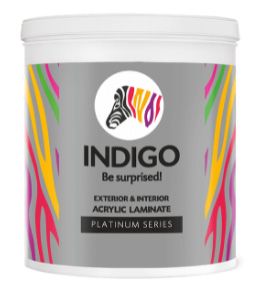
Stock Idea
Powered by the Sharekhan
 3R Research Philosophy

3. Reduction in re-painting cycle to boost the decorative paint industry
   As of 2019, fresh painting accounted for ~22% of demand for decorative paints, whereas the balance
   demand was due to the re-painting of households.
Repainting accounts for 78% of decorative paint industry

                                                                                      Fresh Painting
                                                                                          22%

                                       Re-painting
                                          78%

Source: Company; Sharekhan Research

   In the last decade, the average re-painting cycle has gradually shrunk from an interval of 7-8 years in 2010
   to 4-5 years in 2019 (mostly interiors). Earlier, repainting was done only when paint withered. However,
   a change in consumer behaviour with some consumers giving more importance to aesthetics, change in
   looks and appearance of their premises at regular intervals even while the condition of the existing paint
   is good, has shortened the re-painting cycle. Rising income levels, increase in number of rented houses
   (where the owners prefer re-painting to attract tenants) and significant ease of the painting process are few
   of the factors that have influenced reduction in the re-painting cycle.
4. Urbanisation and nuclearization of families led to increase in demand for paint
   In India, the rate of urbanisation has increased from 25.6% in 1990 to 34.5% in 2017. The rise in urbanization,
   supported by demand for real estate and improved infrastructure, has increased applications for paints.
   The UN expects that by 2030, ~40% of the population of India will reside in urban areas. Thus, going
   ahead as well, increasing urbanization will aid growth of the decorative paints industry. Another factor that
   contributes to the growth of paint industry is the nuclearization of families. With increasing nuclearization of
   families, there is an increase in the number of households in the country. Further, many state governments
   in the recent years have undertaken a lot of initiatives to focus on economic growth of smaller towns. This
   led to strong demand for affordable housing in India.
Rising Urbanisation
       40
                                                                                                        34
       35
                                                      29                               30
       30

       25

       20
  %

       15
                          11
       10

        5

        0
                         C1901                       C2001                            C2011            C2017

                                                       Urbanisation (as per Census)

Source: Industry; Sharekhan Research
August 23, 2021                                                                                                  8
Stock Idea
Powered by the Sharekhan
3R Research Philosophy
More towns to turn into metros by 2030
80
68
70
60
50 46
Nos
40
30
20
10
0
2011 2030
No of metro cities
Source: Industry; Sharekhan Research
The government launched the Pradhan Mantri Aawas Yojana Scheme (PMAYS) in 2015 with an aim to build
houses for all by 2022. Affordable and mid-segments accounts for 62% of new launches in India. Execution
in the first phase was successful and in the phase-II, the government is planning to build 1.95 crore houses
for the eligible beneficiaries. The three-year target appears realistic and achievable, considering that
more than 1.5 crore rural homes have been completed in the last five years. This will be one of the key
revenue drivers for building material companies (including paint manufacturers). Thus, rising demand for
housing and rising regulatory pressures on real estate sector (especially on small players) to provide
quality construction to the consumer will drive the demand for new painting (22% of overall decorative
paints industry).
Cumulative demand-supply over 2016-2020 in top 8 cities (‘000s) units
25
LIG
1982
647
MIG
1457
351
HIG
717
0 500 1000 1500 2000 2500
Supply Demand
Source: Industry; Sharekhan Research
5. GST rate cuts aided demand
The GST rate for paints was earlier at 28%, which has now been reduced to 18%. This has driven up volumes
of decorative paints, particularly in the lower-end segments like emulsions, distempers and putty. Further,
demand was higher as paint firms passed on the cost benefits to the customers leading to lower prices.
August 23, 2021 9Stock Idea
Powered by the Sharekhan
3R Research Philosophy
6. Innovation / differentiated products is the key driver of growth going ahead
In the past few years, the industry has witnessed a gradual change in consumer’s preference with shifts
towards 4upgrading/pre-minimisation. For example, there has been a substantial change in focus towards
waterproofing over the last decade, this was previously considered as an extra expense in India. A change
in trend is observed as consumers are moving from (i) distemper to interior emulsion; (ii) mid-segment to top-
end segment; (iii) low-end to top-end segment; (iv) cement paint to exterior emulsions; and (v) unorganized
to organized in smaller towns, especially in Tier-3 and -4 cities and rural areas.
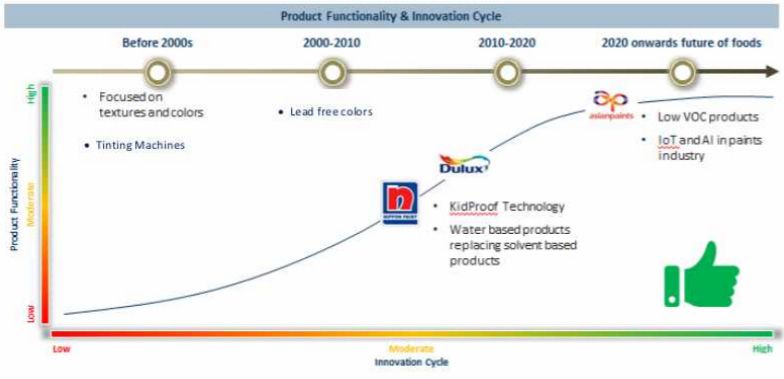
Product innovation cycle in the Indian Paint industry
Source: Company
People are now eyeing unique products, which has led to a rise in innovation in the industry with
companies coming out with differentiated, unique products to cater to this demand shift. Most companies
are now venturing into new product segments and focusing on diversifying their product portfolio. The
top-end market is led by the metros and tier-1 and -2 cities, but in the past few years, smaller towns have
also indicated increased interest in premium products. This is on the back of increased consciousness of
aesthetics and availability of resources to opt for better quality products at higher prices.
Demand for interior and exterior paints has been on the rise owing to customers’ growing preferences
to aesthetics. Demand for roofing and flooring paints is also gaining momentum mainly from residential
buildings. Paint companies are now promoting products and benefits associated with them, which has
heightened consumer awareness and a corresponding rise in sales of roofing and flooring paints.
Interiors & exteriors accounts for ~75% of decorative paints industry
Others
14%
Flooring
5% Interior
39%
Roofing
6%
Exterior
36%
Source: Company; Sharekhan Research
August 23, 2021 10Stock Idea
Powered by the Sharekhan
3R Research Philosophy
The decorative paints industry, in terms of technology, has been witnessing a higher inclination toward
water-based paints that are increasingly becoming the preferred choice for home interiors and exteriors.
Most companies are establishing manufacturing units for water-based paints.
Water based paints form 58% of overall industry
Powder based
8%
Solvent based
34%
Water based
58%
Source: Company; Sharekhan Research
For interiors, there is a rise in demand for economy emulsions in place of lower-priced distempers, which
has led to a higher growth of emulsion paints as compared to distempers. Even in the exterior category,
emulsion-based coatings are being preferred against the conventional cement-based coatings.
Enamels & emulsions are fastest growing paints categories
800
700
600
500
Rs. bn
400
300
200
100
0
2014 2019 2024E
Enamels Emulsions Primers Distempers Wood Coatings Putties Others
Source: Company; Sharekhan Research
Within the decorative paints market, enamels and emulsion paints are the fastest growing segments.
Increasing penetration of emulsions is driven by varying degrees of shine that manufacturers offer in these
paints.
Enamels and Emulsions are expected to grow faster due to uptick in demand
Enamels Emulsions Primers Distempers Wood Putties Others
Coatings
2014-2019 13.6% 11.4% 11.8% 9.9% 8.6% 10.0% 8.4%
2019-2024E 14.2% 13.6% 12.3% 10.95 9.6% 11.7% 11.0%
Source: Company; Sharekhan Research
August 23, 2021 11Stock Idea
Powered by the Sharekhan
3R Research Philosophy
Another reason behind customers opting for premium variants is inflexible labour cost at all levels, making
option of paint variant relatively indifferent. There have currently been fewer options available in the
value-added sub-category and mainly in the premium price range. However, with increasing demand for
these products, companies are likely to launch specialised variants.
7. Industrial paints constitute 25% of overall paint industry
Industrial paints and auto coating constitute about 25% of the overall Indian paints industry. This is lesser
as compared to developed economies where industrial paints constitute 50-75% of overall paint industry.
Industrial paint demand is heavily dependent on auto coating/replenish segment (constitutes two-thirds
of segment). Auto industry is cyclical in nature and currently reeling under pressure of slowdown and
pandemic situation. On the other hand, rapid urbanisation and infrastructure development of roads, ports,
refineries, etc. augured well for the industrial paint and protective coatings segment.
Industrial paints industry is yet to set a grip in India
100
90 25
80 35
52
70 60 65
72 67
60
50
%
40 75
30 65
48
20 40 35
28 33
10
0
World India South Korea China Japan USA Britain
Decorative paints Industrial paints
Source: Industry, Sharekhan Research
August 23, 2021 12Stock Idea
Powered by the Sharekhan
3R Research Philosophy
Why we like Indigo Paints – Carved out a niche for itself in high entry barrier industry
Indigo Paints Limited (IPL) is one of India’s fastest-growing paints companies which has carved a niche for
itself by developing and marketing differentiated products to establish its position in high-entry barrier
paint industry. The company has strong recognition in tier-3, tier-4 towns and rural India were the demand
for paint products is improving substantially in recent years due to rising income levels and large consumers
upgrading to branded products. Its unique multi-pronged strategies have helped it achieve strong double-
digit revenue growth with a consistent improvement in profitability.
Emerging player with distinctive growth strategies
Indigo Paints has created a niche for itself in the high entry barrier paint industry by launching differentiated
products, following a bottom-up approach to expand its distribution base in the domestic market and creating
brand-equity through one prominent brand ‘Indigo’. It has extensive distribution spread over 27 states and
seven union territories. Revenues grew at a CAGR of 22% over FY2018-21, which is way ahead of an 8% CAGR
growth achieved by industry leader Asian Paints during the same period. The company has clocked a market
share of 2% in the overall paints industry. It has gross margins of 48%, which is the highest compared to some
leading peers in India due to its close proximity to raw material sources and differentiated products garnering
higher margins. This along with a sharp expansion in the operating margins (OPM) led to 71% CAGR growth in
PAT over FY2018-21.
Fifth-largest player
Others
33%
Asian Paints
41%
Indigo Paints
2%
Akzo Nobel
5%
Kansai Nerolac
Berger Paints
7%
12%
Source: Company; Sharekhan Research
Portfolio of ‘differentiated’ products distinguishes IPL from large peers
IPL has effectively managed to establish itself as a differentiator in the existing product categories and has
also evolved as a category creator by bringing product innovations. IPL was the first among its competitors
to introduce coatings for ceilings, tiles and floors, with competitors entering this space only recently. These
products are differentiated based on the end-use they cater to, as well as added properties that they possess.
Further, the differentiated products helped IPL to expand the dealers/distribution network in various markets.
The company has introduced these products by identifying potential product needs from customers, thereby
creating an altogether distinct market for itself. In South India, the demand for clay tiles is higher due to a hot
and humid weather condition. With higher demand for clay tiles the demand for tile coating paints products is
high. IPL acquired a Kerala-based paint company Hi-build Coatings, which was into manufacturing of solvent-
based paints. Post this acquisition, IPL has strong market positioning in markets such as Kerala and Tamil
Nadu. The southern region contributed close to 46% of the company’s total revenues in FY2020.
August 23, 2021 13Stock Idea
Powered by the Sharekhan
3R Research Philosophy
Differentiated product portfolio
Product Features
Unique Products in the Existing categories
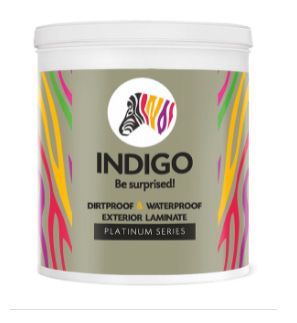
Product: Dirt-proof & Water-proof Exterior Laminate
Description: Paint with double protection from dirt and water
Application: Cement plaster, concrete and other masonry
Property: Water based
Product: Acrylic Laminate
Description: High sheen paint for both the exteriors and interiors
Application: Cement plaster, concrete and other masonry
Property: Water based
Product: PU Super Gloss Enamel
Description: Enamel paint with very high gloss and finish, protects wood and metal with its
anti-fungal and non-yellowing properties
Application: Wood and Metal
Property: Solvent based
Unique Products disrupting market to create a new category
(first company to launch these products)
Product: Metallic Emulsion
Description: Metallic finish paint for interior and exterior walls of homes and offices available
in shades of Gold, Silver, and Copper
Application: Wood, metal and masonry
Property: Water-based
Product: Tile Coat Emulsion
Description: A paint for external roof tiles that provides gloss and sheen with protection
against algae and fungus
Application: Concrete and roof tiles
Property: Water based
Product: Bright Ceiling Coat
Description: Offers brightness to the ceilings with a smooth matt finish to enhance the
brightness of the room
Application: Concrete and plastered ceilings
Property: Water-based
Product: Floor Coat Emulsion
Description: Paint that offers a glossy finish while also protecting the terrace floor, driveways,
walkways and cement surfaces
Application: Concrete, cement tiles, terrace floor tiles, paver blocks.
Property: Water-based
Source: Company; Sharekhan Research
August 23, 2021 14Stock Idea
Powered by the Sharekhan
3R Research Philosophy
The contribution of differentiated products to revenues has increased to ~30% in FY2021 from 26.7% in
FY2018. The company will continue to identify potential product opportunities in the market, and focus on
developing category-creator products to cater to distinct requirements in the Indian decorative paint industry.
To identify such opportunities, the company is regularly engaging with dealers and the painter community by
conducting training programmes/seminars for painters and meets with dealers/distributors. On ground, the
sales team is understanding demand dynamics for various products in the market. The company also seeks
to innovate and develop products with distinguished properties by undertaking research, attending industry
trade fairs, and keeping abreast with industry trends and practices. The company targets to increase the
contribution of differentiated products by 1% every year.
Different products contribute one-third of total revenues
30.0
29.5 29.5
29.0
28.5 28.6
28.0
27.5 27.6
%
27.0
26.7
26.5
26.0
25.5
25.0
FY18 FY19 FY20 FY21
Source: Company; Sharekhan Research
Focus on expanding distribution reach
Expansion in dealer network and increase in the number of tinting machines will act as the main engine of
growth for IPL in the next few years. The company has established its distribution network gradually and
strategically through the bottom-up approach. To create demand for its differentiated products, IPL initially
taps tier 3, tier 4 cities, and rural areas, where brand penetration is easier and dealers have greater ability to
influence customer purchase decisions. IPL subsequently leverages on this network to engage with dealers
in tier 1 and tier 2 cities and metros as well.
Further, the company has introduced tinting machines in target markets to increase sales of emulsion paints.
For tinting machines as well, IPL follows the same strategy of initially entering tier 3/4 cities and rural areas
where penetration is relatively low and eventually entering the nearby tier 1/2 cities and metros.
In comparison to peers, the tinting machine to dealer ratio and the revenue per tinting machine is very low in
case of IPL (38% vs 66% of APNT and Rs. 14.5 lakh vs Rs. 48.4 lakh of Akzo Nobel, respectively) and hence,
scope for further expansion is very wide for IPL.
August 23, 2021 15Stock Idea
Powered by the Sharekhan
3R Research Philosophy
Dealer network of paint companies
Asian Paints Berger Paints Kansai Nerolac AkzoNobel Indigo Paints
Tinting Machines (‘000s)
FY18 35 14 10 3.2 1.9
FY20 46 20 17 5.5 4.3
CAGR 14.6% 19.5% 30.4% 31.1% 51.2%
Dealer Network (‘000s)
FY18 53 21 25 16.5 9.2
FY20 70 27.5 30 15 11.2
CAGR 14.9% 17.3% 10.0% -4.7% 10.4%
Tinting Machine to dealer ratio
FY20 66% 67% 62% 37% 38%
Revenue from operations (Rs. cr)
FY20 17,194 5,692 4,943 2,662 625
Revenue/tinting machine (Rs. lacs)
FY20 37.4 28.5 29.1 48.4 14.5
Source: Company; Sharekhan Research
Despite COVID-19 led disruptions, IPL added 2,000 active dealers during the year to end FY21 at 13,214
dealers from 11,200 at the start of the year. In Q1FY2022, IPL further increased its dealer network to 13,884.
The company expects the active dealer count to reach 17,000 by FY2022-end. Addition of tinting machines
was very slow in H1FY21, but IPL gathered speed in this dimension in both Q3 and Q4 and IPL’s tinting machine
population increased by 1,200 during FY21 to end the fiscal at a population of 5,472 tinting machines on the
ground. In Q1FY2022, IPL added 328 tinting machines taking the total to 5,800 tinting machines as of the end
of the quarter. IPL targets to have 8,000 tinting machines by FY2022-end.
Steady increase in dealer network and tinting machines
18,000 17,000
16,000
13,884
14,000 13,214
12,000 11,230
10,246
10,000 9,210
8,000
Nos
8,000
5,472 5,800
6,000 4,296
3,143
4,000
1,808
2,000
-
FY18 FY19 FY20 FY21 Q1FY22 FY22E
Dealer Network Tinting Machines
Source: Company; Sharekhan Research
For efficient services, IPL engages with dealers through depots that are set up at major locations across the
distribution network. Finished products are dispatched from IPLs manufacturing facilities to the 22 depots,
and are subsequently dispatched from the depots to individual dealers. During FY2021, IPL added 8 new
depots in Jammu, Uttarakhand, Purnea, Silchar, Bhopal, Sambalpur, Kadapa and Aurangabad taking the
total depot count to 44 at the end of FY2021.
August 23, 2021 16Stock Idea
Powered by the Sharekhan
3R Research Philosophy
Total number of depots
180 164
156
160
138
140 130
120 104
102
100
Nos
80
60 52
46
33 36
40
20
0
Asian Paints Berger Paints Kansai Nerolac AkzoNobel Indigo Paints
FY18 FY20
Source: Company; Sharekhan Research
Deepening penetration in existing market; expanding presence in select new geographies
IPL has maintained its focus on increasing in penetration in the markets where it has attained certain scale
by using its bottom-up approach. It has strong presence in states of Kerala, West Bengal, Bihar, Jharkhand,
Chhattisgarh, Odisha and Uttar Pradesh. In these states, the company has already expanded its footprints in
tier 3, tier 4 cities and rural areas and focusing on expanding its reach in tier-1 and tier-2 cities. For example, IPL
has strong presence in larger cities including Kochi (Kerala) and Thiruvananthapuram (Kerala), Patna (Bihar),
Ranchi (Jharkhand) and Kanpur (Uttar Pradesh), and intends to continue to expand its network outwards into
other tier 1 and 2 cities and metros in these states. Further it has large scope for dealer network expansion
in recently entered states like Telangana, Gujarat, Maharashtra, Karnataka and Tamil Nadu. As on March 31,
2020, the company had a network of 3,292 active dealers in these five states, and intends to engage with
more dealers to strengthen its existing sales infrastructure and network in these regions. Further, it is also
strengthening its network in North India in Punjab, Uttarakhand and J&K. South India contributed ~46% of
overall revenues of the company in FY2020, but the contribution has reduced from upwards of 50% in FY2018
as the company’s penetration in other regions is improving.
Region-wise revenue contribution
100%
7.6 10.9
90%
12.0
80% 13.8
70%
26.7
60% 29.0
50%
40%
30%
53.8
20% 46.3
10%
0%
FY2018 FY2020
South East West North
Source: Company; Sharekhan Research
August 23, 2021 17Stock Idea
Powered by the Sharekhan
3R Research Philosophy
Dependence on Kerala is reducing
IPL has relatively higher market share in Kerala, which contributes about 30% of overall revenues (reduced
from 35% in FY2020 and from 55% in FY20216). The company acquired Hi-Build Coatings, a Kerala centric
company in FY2016 which led to higher contribution from Kerala. Kerala registered a revenue growth in low
single digit in FY2021, which affected IPL’s overall revenue growth. With strong distribution expansion in the
other states, the company is expecting the dependence on Kerala will further reduce to 15-20% in the coming
years. This will reduce the risk of one state not performing well during a particular year. Having said that,
Kerala will remain one of the key markets for the company.
Higher investment behind brand building activities to improve brand awareness
It is easier to create a brand recognition if all brands are brought under one brand. IPL followed the same
strategy and all its products (differentiated and base products) are marketed under one brand name, “Indigo”.
This strategy has helped the customers connect to the brand immediately without having to remember multiple
brand names. In order to enhance brand image among consumers, IPL engaged Mahendra Singh Dhoni, who
has a pan-India appeal, as their brand ambassador. IPL has also created a mascot for their brand, a zebra
with colourful stripes that regularly features on marketing materials, this helps to increase brand recall.
The paints industry is dominated by top players who have a very large share in the industry. To establish
itself and strengthen the Indigo brand, A&P spends of IPL are on a higher side. In the initial years, IPL’s
advertising campaigns revolved around differentiated products to create a niche for itself. With differentiated
products getting good recognition among dealers/distributors in various states. The company is leveraging
brand goodwill of differentiated products for introducing and improving visibility for its conventional paints
products (emulsion/distempers) in the markets where it already has extended dealers/distributor network.
Ad-spends % of revenues highest amongst the top players
14.0 12.7
12.6
12.0 11.2
10.0
8.0
5.8
%
6.0 5.0 5.0
4.6 4.6
3.8 4.2 4.2 3.9
4.0 3.3 3.1 3.3
2.0
-
Asian Paints Berger Paints Kansai Nerolac AkzoNobel Indigo Paints
FY18 FY19 FY20
Source: Company; Sharekhan Research
Capacity expansion on cards
IPL has periodically carried out capacity expansions at its facilities to cater to the increased demand for their
products. As of September 30, 2020, IPL owned and operated three manufacturing facilities in Rajasthan,
Kerala and Tamil Nadu. IPL’s installed production capacity has increased over the years.
August 23, 2021 18Stock Idea
Powered by the Sharekhan
3R Research Philosophy
Capacity expansion at regular interval
Mar’2018 Mar’2019 Mar’2020/Sep’2020
Liquid Paints (KLPA)
Jodhpur (Rajasthan) 22,312 39,244 45,544
Kochi (Kerala) 15,640 27,958 42,701
Pudukkottai (Tamil Nadu) 8,656 9,034 13,658
Total 46,608 43,939 101,903
Powder Paints (MTPA)
Jodhpur (Rajasthan) 48,944 48,944 93,118
Source: Company; Sharekhan Research
To capitalise on growing demand for water-based paints, IPL has proposed to expand their manufacturing
capacities at their existing facility at Pudukkottai in Tamil Nadu, by setting up an additional unit to manufacture
water-based paints. As of September 30, 2020, the Pudukkottai facility had an installed estimated production
capacity of 13,658 KLPA. The installed production capacity of the proposed additional unit is 50,000 KLPA
and it is expected to be operational during FY2023.
IPL is also in the process of carrying out capacity expansion at its Jodhpur facility. The putty plant’s capacity
in Jodhpur was doubled in FY2021. Expansion in water based paint capacities with respect to liquid paints
such as emulsions and primers is in progress.
IPL has made and intends to continue investing on expanding capacity of their manufacturing facilities to aid
in the company’s growth efforts and consolidate their pan-India presence.
Revenues to grow at CAGR of 31% over FY2021-24
IPL’s revenue growth saw strong pick in the H2FY2021 with revenues growing by 22% and 41% in Q3 and
Q4FY2021. Overall revenue growth stood at 16% in FY2021. During Q1FY2022, revenues grew by 49.2%
y-o-y on low base of Q1FY2021, sequentially revenues were down by 39% on account of the second wave
of COVID-19. However, the company has witnessed good recovery in June-July 2021. The management
is confident to grow by 35-40% versus the expected industry growth of 18-20% in FY2022. Going ahead,
expansion of the distribution network and strong traction to differentiated products would aid strong double-
digit revenue growth in the coming years. We expect IPL’s revenues to grow at CAGR of 31% over FY2021-24
driven by 26% volume growth over the same period.
Strong revenue growth expected
1,800
1,624
1,600
1,400 1,258
1,200
968
1,000
Rs. crore
800 723
625
600 536
395
400
200
-
FY18 FY19 FY20 FY21 FY22E FY23E FY24E
Source: Company; Sharekhan Research
August 23, 2021 19Stock Idea
Powered by the Sharekhan
3R Research Philosophy
Industry leading gross margins boosted by locational advantage and differentiated products
Gross margins have improved to 48% in FY2021 from 41.5% in FY2018. Its gross margins are higher compared
to some leading players in the industry. The consistent improvement in the gross margins is attributable to 1)
higher gross margins for differentiated products and 2) locational advantage with factories located close to
areas of sourcing of raw materials.
IPL has industry leading gross margins
Asian Paints Berger Paints Kansai Nerolac AkzoNobel Indigo Paints
FY18 42.4% 40.0% 38.3% 42.7% 41.5%
FY19 42.6% 38.1% 36.2% 42.1% 44.3%
FY20 44.7% 40.8% 38.1% 45.8% 48.5%
Source: Company; Sharekhan Research
Differentiated products contribute ~30% of IPL’s overall revenues. The company does not have to pay higher
trade margins to dealers for differentiated products as compared to conventional paint products. Also less
competition in these products gives an advantage of higher pricing power for IPL. Despite undertaking a price
hike of 5-6% during the quarter, margins declined sequentially in Q1FY2022 by 110 bps to 45.5% owing to
adverse revenue mix and input price inflation of ~10% during the quarter. Going ahead, as the raw material
prices cool down, the margins are expected to be normalised.
Gross margins to remain at about 48%
50.0
48.5 48.3 48.5
47.9
48.0
46.8
45.5
46.0
44.3
44.0
%
41.5
42.0
40.0
38.0
FY18 FY19 FY20 FY21 Q1FY22 FY22E FY23E FY24E
Source: Company; Sharekhan Research
IPL has three manufacturing facilities located in Rajasthan, Kerala and Tamil Nadu. The company’s
manufacturing facilities are in close proximity to raw materials. The locational advantage results in lesser
inward cost for the company compared to industry leaders.
Manufacturing facilities & locational advantage
Manufacturing facility Capacity (KLPA) Products Key raw material Locational advantage
manufactured
Jodhpur, Rajasthan 45544 water-based paints white cement and Raw material are available
93118 cement paints & putties minerals including lime, abundantly in Rajasthan
dolomite, calcite and and neighbouring parts of
talcum Gujarat
Kochi, Kerala 42701 water-based paints acylic emulsions Source from neighbouring
states of Tamil Nadu and
Karnataka
Pudukkottai, Tamil Nadu 13568 water-based paints alkyd resins and Source from manufacturers
turpentine oil based in Tamil Nadu
Source: Company; Sharekhan research
August 23, 2021 20Stock Idea
Powered by the Sharekhan
3R Research Philosophy
The material cost (excluding the freight cost) as a percentage of operating revenue is the lowest for IPL as
the company is closely located to the source of raw materials. However, this leads to IPL spending greater
amounts on outward freight charges to deliver the products to the consumption centers. The outward freight
charges for its peers are comparatively lower as their manufacturing facilities are located close to consumption
centers. On combining the material costs and freight and forwarding charges, IPL is effectively at par with
peers with the range being comparable to the industry leader.
Raw material cost (including freight cost) at par with Industry leader
72.0 70.2
70.0 69.0
68.3
68.0 67.2
66.4 66.5 66.1
65.6
66.0
63.7 63.7 63.1
64.0 62.7
61.6 62.1
Rs. mn
62.0
60.0 59.1
58.0
56.0
54.0
52.0
Asian Paints Berger Paints Kansai Nerolac AkzoNobel Indigo Paints
FY18 FY19 FY20
Source: Company; Sharekhan Research
Advertisement spends as percentage to sales will reduce in the coming years
In the advertising-intensive paints industry, it is difficult for new entrant to create brand equity. As a part of
strategy, large advertisement spends were done on the differentiated products. IPL’s advertisement spends
on absolute basis has grown at CAGR of 20% over FY2018-21 to Rs. 77 crore, which is equivalent to number 2
and number 3 player in the Industry. Going ahead the company expects absolute amount of ad-spends will
increase but with increase in scale of business the advertisement spends as percentage to sales will come
down. In FY2021, advertisement as percentage to sales was down to 10.7%.
Ad-spends highest amongst industry after the leader
100.0 92.9 16.0
90.0
79.0 77.4 15.0
80.0
67.6 14.0
70.0
60.0 12.6 12.7
13.0
Rs. cr
44.3
in %
50.0
40.0 12.0
11.2
30.0 10.7
11.0
20.0
9.6 10.0
10.0
- 9.0
FY18 FY19 FY20 FY21 FY22E
Absolute A&P spends A&P spends as % to sales
Source: Company; Sharekhan Research
August 23, 2021 21Stock Idea
Powered by the Sharekhan
3R Research Philosophy
OPM to improve to 21-22% by FY2024; PAT to grow at CAGR of 55%
IPL’s OPM improved to 16.9% in FY2021 from 6.5% in FY2018, largely driven by strong improvement in the gross
margins. Gross margins improved to 48% in FY2021 from 41.5% in FY2018. Also in FY2021 the management
focused on improving efficiencies, which resulted in reduction in the outward freight cost to 9.9% in FY2021
from 10.5% in FY2020 and overhead cost to 3.7% form 4% in FY2020. Further the ad-spends as percentage
to sales reduced by 200 bps to 10.7%, though it remains higher on absolute basis. All these factors aided the
company to post OPM improvement of 250 bps in FY2021 to 16.9% (despite Q1 sales were disrupted by first
wave of covid-19 and Q4 gross margins were down by ~600 bps due to higher input prices). With expected
strong scale-up in business led by distribution expansion, reduction in ad-spends as percentage to sales and
sustained focus on curtailing the operating cost, the OPM is expected to improve by 510 bps over FY2021-24
to 22%.
OPM expected to expand
25.0
22.3
21.6
20.0 18.5
16.9
14.6
15.0
%
10.1
10.0
6.5
5.0
0.0
FY18 FY19 FY20 FY21 FY22E FY23E FY24E
Source: Company, Shrekhan research
Better working capital management; operating cash flows improved consistently
Better working capital management aided net working capital days standing low at 13-14 days. The cash
generation from operating activities improved from Rs. 42.8 crore to Rs. 101.4 crore over FY2019-21. Average
OCF to EBIDTA ratio stood at 78% over the last three years. Higher cash generation took care of capex
program. Hence debt:equity remained lower at 0.3x. The company repaid its entire on books through funds
raised from IPO and currently stands debt-free.
Experienced management team
o Mr Hemant Jalan – Chairman & MD: He holds B.Tech Degree in chemical Engineering from IIT, Kanpur.
He holds Master degree in science from Stanford University and a business administration degree from
the University of Chicago. He has over 20 years of experience in paint industry. He is also directors in
Halogen Chemicals Pvt Ltd and Zeus Numerix Pvt. Ltd.
o Mr Thundiyil Surendra Suresh Babu – Chief Operating Officer: He holds a bachelor’s degree in mechanical
engineering from Sambalpur University and a post-graduate diploma in management from the Xavier
Institute of Management, Bhubaneswar. Pursuant to the Scheme of Amalgamation, he joined Indigo on the
effective date of the scheme, being April 19, 2017. He has over 16 years of experience in marketing and
sales. Prior to joining Indigo, he was associated with Berger Paints Limited, Idea Cellular Limited as deputy
general manager – sales, Etisalat DB Telecom Private Limited as an associate vice president – sales and
Hi-Build Coatings Private Limited as general manager – marketing.
August 23, 2021 22Stock Idea Powered by the Sharekhan 3R Research Philosophy o Mr Chetan Bhalchandra Humane - Chief Financial Officer: He holds a bachelor’s and a master’s degree in commerce from the University of Pune. He joined Indigo with effect from September 10, 2001 and has been appointed as the Chief Financial Officer of the Company with effect from March 11, 2020. He has over 19 years of experience in accounting and finance. Prior to joining Indigo, he was associated with Jenson & Nicholson (I) Ltd as a commercial assistant. o Mr Varghese Idicula - Vice President; Technical of Indigo: He holds a bachelor’s degree in science and a Master’s Degree in administrative management from the University of Bombay. He has also received a diploma in paint technology from the Colour Society and the Indian Paints Association. Pursuant to the Scheme of Amalgamation, he joined Indigo on the effective date of the scheme, being April 19, 2017. He has over 35 years of experience in research, development and production. Prior to joining Indigo, he was associated with Asian Paints (India) Limited in technical function, Pidilite Industries Limited as head of research & development (paint coating), Sherwin Williams Saudi Arabia Limited as technical and purchase in-charge and Hi-Build Coatings Private Limited as general manager – technical. August 23, 2021 23
Stock Idea
Powered by the Sharekhan
3R Research Philosophy
Financials in charts
Consistent growth in revenue and PAT Trend in GPM and OPM
1,800 1,624 60.0
1,600 48.5 47.9 46.8 48.3 48.5
50.0
1,400 1,258
1,200 40.0
968
1,000
Rs. cr
723 30.0
%
800 625
600 20.0
21.6 22.3
400 191 262 18.5
127 10.0 16.9
200 48 71 14.6
- -
FY2020 FY2021 FY2022E FY2023E FY2024E FY2020 FY2021 FY2022E FY2023E FY2024E
Revenue PAT GPM OPM
Source: Company, Sharekhan Research Source: Company, Sharekhan Research
Return ratios to improve Consistent working capital days
35.0 31.4 33.6 20
29.1 14
30.0 15 13 13 13
25.9
23.3 10
25.0 27.8
days
25.8
%
24.3
20.0 5
20.3
15.0 18.6 0
10.0 -5 -3
FY2020 FY2021 FY2022E FY2023E FY2024E FY2020 FY2021 FY2022E FY2023E FY2024E
ROE ROCE Working capital days
Source: Company, Sharekhan Research Source: Company, Sharekhan Research
Improvement in fixed asset turnover ratio Stable cash flow position
5.0 300 281 84
4.5 82
250 83
4.5 4.3 4.3 4.2 198 80
200
137 78
Rs. cr
4.0 150
3.7
x
%
101 77 76
100 77
3.5 65 74
50 72
73
3.0 0 72 70
FY2020 FY2021 FY2022E FY2023E FY2024E FY2020 FY2021 FY2022E FY2023E FY2024E
Fixed asset turnover ratio OCF OCF to EBITDA
Source: Company, Sharekhan Research Source: Company, Sharekhan Research
August 23, 2021 24Stock Idea
Powered by the Sharekhan
3R Research Philosophy
Valuation – Strong growth potential with differentiated business model
IPL’s differentiated business model would help it to achieve strong scale in the near to medium term. This
along with strong balance sheet with strong cash flow (OCF/EBIDTA of 78%) makes it an emerging play in
the paints industry. Differentiated business model, excellent return profile and strong structural growth
outlook will keep valuation at a premium at 60.4x/44.2 its FY2023/24E EPS.
n Sector View - Structural growth of the paint industry is intact
The Indian paints industry reported an 11% CAGR over FY2011-FY2019 and stood at Rs. 545 billion. The
decorative paint segment constitutes around 74% of total paint sales, resulting in the paint sector growing at
a robust rate even at the time of an industrial slowdown. April and May (constitute ~25% of total annual sales)
are two of the key months for re-painting activities in the domestic market. FY2021 was affected by COVID-19
lockdowns, resulting in almost NIL business in Q1FY2021. Paint industry registered a resilient performance in
the second wave of COVID-19 and is expected to post strong performance in the quarters ahead with strong
demand for decorative paint products. The decorative paints industry is expected to post a 13% CAGR over
FY2019-FY2024, led by reduction in the repainting cycle to 4-5 years (from 7-8 years earlier), acceptance for
better paint products in smaller towns, and upgradation of premium brands in cities and large towns.
n Company Outlook - Growth levers in place
A differentiated business model aided the company to achieve strong top and earnings growth of 22% and
71% over FY2018-21 with the highest gross margins of 48% among the peers. The OPM improved to 16.9% in
FY2021 from 6.5% in FY2018. Though near term pandemic-led uncertainties would impact the growth, the
rising urbanization, willingness to spend behind home improvement, strong traction to differentiate products
and market share gains would help IPL to achieve faster recovery in the coming years. A scale-up in the
business will help OPM further improve and reach at ~22% in FY2024.
n Valuation - Initiate with Buy assigning a price target of Rs. 3,305
We expect IPL’s revenue and PAT to grow at a CAGR of 31% and 55% over FY2021-24E driven by strong
expansion in dealer network, improving market share and margin expansion. The company has strong balance
sheet with stable working capital management and strong operating cash flows (average OCF to EBIDTA ratio
stood at 78% for past three years). Moreover, its return ratios are expected to improve strongly in the coming
years (RoE and RoCE to stand at 26% and 34% in FY2024). The stock is currently trading at 60.4x its FY2023E
EPS and 44.2x its FY2024E EPS (and 41.0x/30.1x its FY2023E/24E EV/EBIDTA). Differentiated business model
with industry leading gross margins, sustained focus on improving market share, strong return profile and
the structural growth story of the paints industry will keep valuations at a premium as compared to close
peers. We initiate our coverage on Indigo Paints with a Buy recommendation and price target (PT) of Rs. 3,305
(valuing the stock at 60x its FY2024E earnings).
Peer Comparison
CAGR %
P/E (x) EV/EBIDTA (x) RoCE (%)
Companies (FY21-24)
Revenue PAT FY21 FY22E FY23E FY21 FY22E FY23E FY21 FY22E FY23E
Asian Paints 16.6 18.8 93.1 75.8 64.1 57.3 48.5 41.2 22.9 23.8 23.7
Berger Paints* 15.6 25.9 110.3 87.8 66.4 66.5 54.4 42.4 20.7 22.3 25.4
Kansai Nerolac* 15 17.8 63.7 55.8 45.4 32.2 29.2 24.6 20.0 22.5 23.7
Pidilite Industries 17.1 20.8 102.6 86.4 69.1 66.2 56.4 45.7 16.7 17.4 19.9
Indigo paints 31.0 54.6 163.2 90.8 60.4 92.0 62.5 41.0 23.3 25.9 31.4
Source: Sharekhan estimates; * Consensus estimates
August 23, 2021 25Stock Idea Powered by the Sharekhan 3R Research Philosophy Financials Statement of Profit and Loss Rs cr Particulars FY2020 FY2021 FY2022E FY2023E FY2024E Revenues 624.8 723.3 968.0 1258.2 1624.3 y-o-y % 16.6 15.8 33.8 30.0 29.1 Raw Material Cost 322.0 376.5 515.5 651.1 836.5 Freight expenses 65.6 71.6 91.5 113.2 146.2 Employee Cost 42.0 48.3 57.0 66.1 78.0 Other Expenses 25.2 27.0 32.4 39.6 51.2 Advertisement spends 79.0 77.4 92.9 116.4 150.2 Total Operating Cost 533.8 600.8 789.3 986.5 1262.2 Operating Profit 91.0 122.5 178.8 271.7 362.2 y-o-y % 68.2 34.7 45.9 52.0 33.3 OPM(%) 14.6 16.9 18.5 21.6 22.3 Other Income 1.6 3.6 20.6 24.9 37.5 Interest & Other Financial Cost 5.6 3.8 0.9 0.7 0.7 Depreciation 19.6 24.4 28.2 39.9 48.9 Profit Before Tax 67.4 97.9 170.3 255.9 350.0 Tax Expense 19.6 27.1 42.9 64.5 88.2 Reported PAT 47.8 70.9 127.4 191.4 261.8 y-o-y % 77.9 48.2 79.8 50.3 36.8 Source: Company, Sharekhan estimates Cash flow statement Rs cr Particulars FY2020 FY2021 FY2022E FY2023E FY2024E Cash flow from operating activities 65.1 101.4 136.8 198.4 280.5 Cash flow from investing activities -67.4 -317.4 -144.7 -220.0 -240.0 Cash flow from financing activities -3.9 255.1 -5.0 0.2 0.2 Net change in cash and cash equivalents -6.2 39.1 -12.9 -21.4 40.7 Opening cash balance 11.8 5.7 44.8 31.9 10.5 Closing cash balance 5.7 44.8 31.9 10.5 51.2 Free cash flows -3.4 26.4 103.6 18.4 250.5 Source: Company, Sharekhan estimates August 23, 2021 26
Stock Idea
Powered by the Sharekhan
 3R Research Philosophy

Balance sheet                                                                           Rs cr
Particulars                              FY2020     FY2021    FY2022E     FY2023E    FY2024E
Sources of Funds
Equity Capital                             29.0        47.6       47.6        47.6       47.6
Instruments in the nature of equity         18.3          -           -          -          -
Reserves & Surplus                         149.7     515.9      643.3        834.7     1096.6
Net Worth                                  197.1     563.5      690.9       882.3      1144.1

Long term liabilities
Borrowings                                  24.7          -           -          -          -
Lease liabilities                           2.8        5.5         5.5         5.5        5.5
Other liabilities                            3.8        4.3        4.5         4.7        5.0
Deferred tax liabilities                     7.0        7.0        7.0         7.0        7.0
Total long term liabilities                38.4        16.7       17.0        17.2       17.4

Short term liabilities
Borrowings                                  14.5          -           -          -          -
Lease liabilities                            3.4        3.3        3.3         3.3        3.3
Other financial liabilities                 19.4       15.2       10.0        10.0       10.0
Total short term liabilities               37.4       18.5        13.3        13.3       13.3
Capital Employed                          272.8      598.7       721.1      912.8      1174.8

Application of Funds
Net Block                                  169.8      218.3      221.5       361.5     342.6
Capital WIP                                   1.1       3.1        5.0         5.0        5.0
Intangible Assets                            0.4       0.5         0.5         0.5        0.5
Goodwill                                   30.6       30.6       30.6        30.6        30.6

Investment                                 20.8        49.7       49.7        49.7       49.7

Current Assets                            199.3      509.0      681.5       795.8      1163.4
Other Current Assets                         4.2       8.0         8.8         9.6       10.6
Inventories                                76.8        94.7       111.2      146.4      189.5
Sundry Debtors                             104.5      121.2      173.8      228.7       296.1
Fixed Deposits with Bank                     0.0     213.5      325.0       365.0      575.0
Cash and Bank Balance                        5.7      44.8        31.9        10.5       51.2
Loans and Advances                          8.2       26.9       30.9        35.6       40.9

Less: Current Liab. & Provisions          149.2      212.4      267.6       330.3      416.9
Trade Payables                             138.6     185.6       237.9       297.3     380.4
Other Current Liabilities & Provisions      8.2       22.7       24.9         27.4      30.2
Provisions                                   2.4        4.2        4.8         5.6        6.4
Net Current Assets                          50.1     296.6      413.9       465.5      746.5

Net Assets                                272.8      598.7       721.1      912.8      1174.8
Source: Company, Sharekhan estimates

August 23, 2021                                                                            27
You can also read


