Strategic Plan 2017 2021 - Campaspe Primary Care Partnership - Campaspe Primary Care ...
←
→
Page content transcription
If your browser does not render page correctly, please read the page content below
Strategic Plan
          2017 - 2021
Campaspe Primary Care Partnership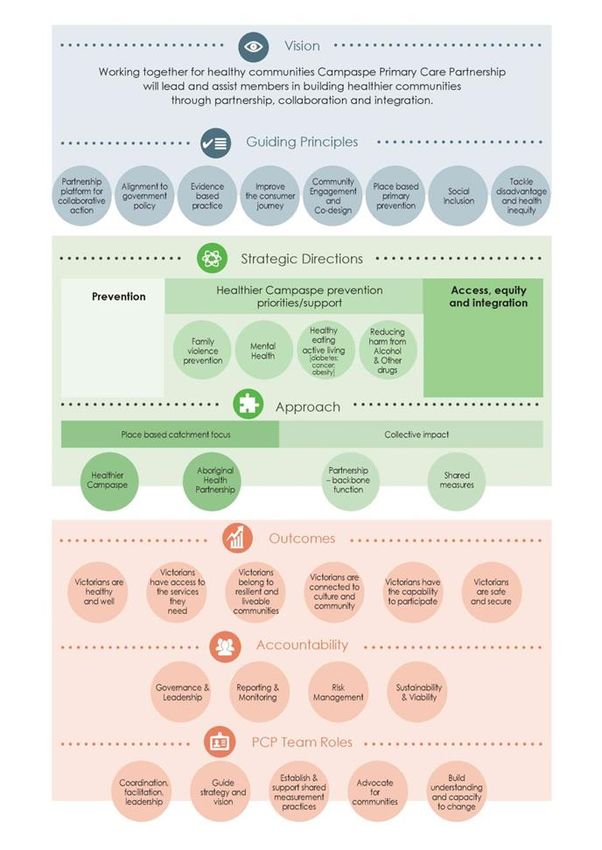
Contents

Vision                                                                                  1
About Campaspe PCP                                                                      1
About the plan                                                                          5
Strategic directions and partnership priorities                                         5
Prevention and Health Promotion - Strategic plan 2017 – 2021                           10
Prevention and Health Promotion - Operational plan                                     16
                  -    Healthy eating active living                                    19
                  -   Preventing family violence through gender equity                 23
Equity, Access and Service Integration – Operational plan 2017 - 2019                  26
                  -   Equity                                                           30
                  -   Access                                                           31
                  -   Service Integration                                              33

Acknowledgement of Country

The Campaspe Primary Care Partnership respectfully acknowledges the traditional
Aboriginal owners of country and pay our respects to them, their living culture and Elders
past, present and future.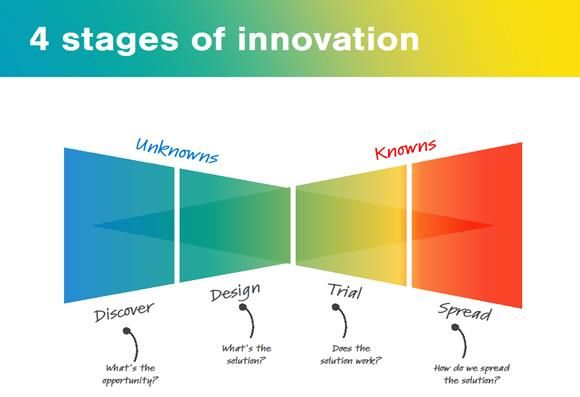
Vision
Working together for healthy communities

Campaspe Primary Care Partnership will lead and assist members in building healthier
communities through partnership, collaboration and integration.

About Campaspe PCP – who we are and what we do
Campaspe PCP is one of 28 PCPs in Victoria — we are a robust and diverse partnership of
providers that deliver services in the Campaspe catchment. Our membership reflects the
social determinants of health with 44 member organisations representing the health,
community services and the education sectors. Our local partnership has a proven track
record for driving primary care service integration and collaboration on significant local
health and wellbeing issues.

Campaspe PCP is governed by the Management Group who is responsible for the
governance and management of the Primary Care Partnership as it relates to the
municipality of Campaspe and is accountable to the voluntary partnership members. The
Partnership is supported by a Partnering Agreement which details the partnership governing
rules.

Campaspe PCP members have shared responsibilities through a portfolio structure related to
the the domain focus areas of Prevention and Health Promotion; and Equity, Access and
Service Integration.

Member organisations
Level 1: Campaspe   PCP Management Group members
L1 Members list                                  Roles & responsibilities
Bendigo Health                                   Campaspe PCP Management Group/board
Campaspe Shire Council                           member

Community Living & Respite Services              Signatory/accountability to Funding & Service
Echuca Regional Health                           Agreements and to the PCP Partnering
Goulburn Valley Health                           Agreement
Kyabram District Health Service
                                                 Implementation and monitoring of mutual
Rochester and Elmore District Health Service     partnership agreement responsibilities
Women‘s Health Loddon Mallee
                                                 Actively contributes to the key strategic
                                                 priorities and direction of the PCP and to the
                                                 portfolio areas

Level 2:   Active Members
L2 Members list                                  Roles & responsibilities
Anglicare                                        Signatory to PCP Partnering Agreement
Campaspe Cohuna Local Learning and
                                                 Capacity to contribute to at least one Portfolio

Campaspe PCP: Strategic Plan 2017 – 2021                                                            1
Employment Network area
Centre for Non Violence
Actively contributes to the development and
Echuca Specialist School implementation of the PCP Strategic and
Kyabram and Community Learning Centre operational/annual plans
Lifeline Central Victoria
Participate in some partnership projects/
Lockington & District Bush Nursing Centre
activities
Murray Shire Council
Murray Human Services
Murray Primary Health Network
Njernda Aboriginal Corporation
Victoria Police
Level 3: Network & Information Sharing Members
L3 Members list Roles & responsibilities
ACSO Stakeholders who wish to share and receive
Benetas information
Bendigo Regional YMCA Participate in dialogue/ discussion on local
Crossenvale Community House issues and problem solving
Catholic Care Sandhurst
Echuca Community for the Aged
Echuca Moama Family Medical Practice
Echuca Neighbourhood House
HAVEN Home Safe
Interchange Loddon Mallee
Intereach
Ian Collie Pharmacy
N8 Health Echuca
Rochester Community House
Rochester Secondary College
Rushworth Community House
Save the Children
Sports Focus
St Augustine‘s College Kyabram
St Joseph‘s College Echuca
Tongala Community Activities Centre
Tongala & District Memorial Aged Care Service
Inc
Uniting Age Well
Vision Australia
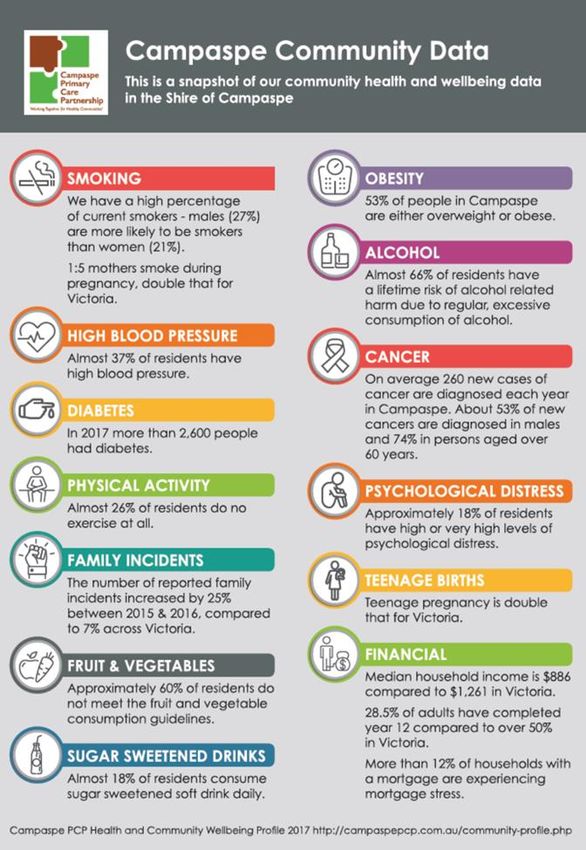
Campaspe PCP: Strategic Plan 2017 – 2021 2Our Catchment The Campaspe PCP catchment covers one local government area of Campaspe Shire Council with a total land area of over 4,500 square kilometres. Campaspe is located in north central Victoria, on the New South Wales border, and is approximately 180 kilometres from Melbourne. The regional centres of Bendigo and Shepparton are approximately 80 kilometres away. Campaspe has a population of 37,061 people (ABS 2016) with expected growth to almost 43,000 by 2036. Snapshot of issues For further information about our local population health and wellbeing data, please refer to our 2017 Community Health and Wellbeing profile. Additionally, the Campaspe Shire Council Demographic profile provides ABS based data. Campaspe PCP: Strategic Plan 2017 – 2021 1
About the plan
The Campaspe PCP Strategic Framework was developed in June 2017 with the Campaspe
PCP members. The framework details the long standing vision of the partnership, our agreed
guiding principles and the approach for how we will achieve our directions.

The Department of Health and Human Services program guidelines for PCPs are currently
being reviewed and will be available for PCPs in 2018 at which time we will consider any
necessary amendments. This local plan has considered both the Victorian PCP Future
Directions and the Loddon Mallee PCPs Strategic Directions to ensure alignment to the focus
areas for PCPs into the future.

The Campaspe PCP Strategic Plan for 2017-2021 reflects partner organisations commitment
and contribution to this catchment plan by way of aligning priority issues and sharing
responsibility for implementing objectives and strategies.

Linkages and Alignment to local approaches

Implementation of this plan is directly linked and aligned to existing approaches occurring in
Campaspe;

Campaspe Shire Council Plan
The Campaspe Shire Council Plan (2017-20121) incorporates the Municipal Health and
Wellbeing Plan with priorities established through the Healthier Campaspe Initiative. These
are obesity, diabetes, cancer, alcohol & other drugs and mental health. In addition to the
priorities of Healthier Campaspe, collective action to address family violence remains a high
priority for council.
Given Campaspe PCP is a single local government area catchment, this allows for complete
alignment of priorities between the MPHWP and the Prevention and Health Promotion Plan.
https://www.campaspe.vic.gov.au/assets/Strategies/Council-Plan-2013-2017.pdf

Healthier Campaspe
In 2016 a partnership including local government and health services in Campaspe began
working collaboratively to address health priorities which pose the most significant impact on
their services to support improved community health and wellbeing. This is known as the
Healthier Campaspe initiative.
These five key health priorities of Healthier Campaspe are: obesity, diabetes, cancer, alcohol
& other drugs and mental health. Shared implementation arrangements for each of the

Campaspe PCP: Strategic Plan 2017 – 2021                                                         2
priorities have been developed demonstrating a strong commitment to address these issues.
Each priority area has a working group and an executive sponsor, responsible for the Chair
and secretariat/convenor roles for the group.

    o   Obesity (Rochester and Elmore District Health Service)
    o   Diabetes (Kyabram District Health Service)
    o   Alcohol & Other Drugs (Campaspe Shire Council)
    o   Mental Health (Campaspe Primary Care Partnership)
    o   Cancer (Echuca Regional Health)
The partnership through the implementation of this work is aiming to enable communities to
increase control over, and to improve, their health and the health of the people they care
for through building knowledge and understanding. In addition, the strategies within the plan
range from primary prevention, early intervention, secondary intervention to tertiary care
recognising that improvements need to be made across the continuum in order to address
these chronic issues more comprehensively.
The Healthier Campaspe work is driving local collective effort to improve the way our
services address these issues systematically. Three of the health services – Echuca Regional
Health, Kyabram District Health Service and Rochester and Elmore District Health Service
have extended their support for this initiative through their health service statement of
priorities which is an annual accountability agreement between Victorian public healthcare
services and the Victorian Minister for Health.
Healthier Campaspe

Campaspe Family Violence Action Group
The Campaspe Family Violence Action Group (CFVAG) was established in late 2016 and has
recently undertaken strategic planning. The agreed purpose of CFVAG, is ‗to drive greater
integration and coordination of local services – both universal and specialist – for all those
experiencing family violence in Campaspe; and to prevent family violence before it occurs
through evidence-based action on gender inequality in settings across the community‘.

This group has agreed on four key strategic priorities as follows;

   1. Organisations that are gender equitable in their practices and promote equal and
      respectful relationships between women and men
   2. A Campaspe that promotes and values women‘s equal participation and leadership
      in public and private life
   3. A Campaspe that understands the gendered dynamics of family violence, the first
      causes of family violence, and that family violence can be prevented from
      happening in the first place
   4. A service system with the understanding and capacity to respond appropriately to all
      who experience family violence in Campaspe (‗no wrong door‘)

The Campaspe PCP Health Promotion Leadership group has a number of representatives on
the CFVAG and will participate and take leadership roles in the workgroups of the CFVAG.

Membership of the CFVAG includes:

   o    Shire of Campaspe,
   o    Echuca Regional Health
   o    Kyabram and District Health Service
   o    Campaspe Primary Care Partnership
   o    Njernda Aboriginal Corporation

Campaspe PCP: Strategic Plan 2017 – 2021                                                         3
o Centre for Non Violence
o Women‘s Health Loddon Mallee
o Haven Home Safe
o Crossenvale Community House
o Kyabram Community and Learning Centre
o Indigenous Family Violence Regional Action Group
o Bendigo Health
o Department of Health and Human Services Loddon Area
o Murray Human Services
o Community Living and Respite Services
o Victoria Police
o Anglicare Victoria
o Save the Children Program Coordinator –Northern
o Community Legal Services
o Local Aboriginal Justice Advisory Committee
o Indigenous Men‘s Resource and Advisory Service
o Rochester & Elmore District Health Service.
Aboriginal Health
Campaspe Aboriginal Health Partnership Group
Our local Aboriginal Health Partnership Group (AHPG) is led by Njernda Aboriginal
Corporation as the local Aboriginal Community Controlled Health Organisation with
participation from various local mainstream providers. It aims to improve the Aboriginal
health status of local aboriginal people in Campaspe and has been in existence for over
seven years. The Group is led by Njernda Aboriginal Corporation as the local Aboriginal
Community Controlled Health Organisation and has participation from many local
mainstream providers.
The Campaspe Aboriginal Health Partnership Committee has the following objectives:
1. To identify needs and priority areas for collective action by partners involved via
working groups established for each priority area
2. To support National and State government Aboriginal health priority reform areas
3. To maximise opportunities between members of this group to work together and
make linkages
4. To develop partnerships with other providers/groups to address issues as required
5. To seek additional resources to support the local priority action areas.
Campaspe PCP: Strategic Plan 2017 – 2021 4Strategic Directions and Partnership Priorities Guiding principles Partnership platform for collaborative action Foster and enhance cross sector partnerships that work towards shared priorities and measures through a collective impact approach. Alignment to government policy PCPs provide a platform locally to implement government health and social policy. Evidence based Apply evidence-based approaches to all aspects of our partnership activity to support accountable decision making; planning and design for maximum impact and evaluation of agreed outcome measures. Community engagement and co-design Community and services working together to co-design services and prevention programs; finding local solutions to complex social problems by seeking to understand experiences, perspectives and values to support intervention design. Place based primary prevention Focus on local needs and local priorities with active engagement of the community and the service system through co-design to create local solutions. To apply prevention ‗at scale‘ with a whole of community, whole of systems approach, based on a multi-risk factor approach for the Campaspe catchment. Social inclusion Continue to promote and apply social inclusion principles throughout partnership activity and actively use the Rural Social Inclusion framework to build capacity of services to implement socially inclusive practices. Tackle disadvantage and health inequity Apply a disadvantage and equity lens to address marked inequalities in health for people who have particularly poorer health outcomes. Campaspe PCP: Strategic Plan 2017 – 2021 5
Strategic Directions
Partnerships

The functions of PCPs align closely with the backbone organisation role described in the
Collective Impact Framework. The CI framework provides a mechanism to monitor and
improve partnership activity and will be used by the Campaspe PCP Management Group to
strengthen our partnership activity.

   Guide the vision and strategy       o   Partners accurately describe the common agenda
                                       o   Partners publically discuss/advocate for common
                                           agenda goals
                                       o   Partners individual work is increasingly aligned with
                                           common agenda
                                       o   Board members and key leaders increasingly look to
                                           backbone organisation for initiative support, strategic
                                           guidance and leadership
   Support aligned activities          o   Partners articulate their role in the initiative
                                       o   Relevant stakeholders are engaged in the initiative
                                       o   Partners communicate and coordinate efforts regularly,
                                           with, and independently of, backbone
                                       o   Partners report increasing levels of trust with one another
                                       o   Partners increase scope / type of collaborative work
                                       o   Partners improve quality of their work
                                       o   Partners improve efficiency of their work
                                       o   Partners feel supported and recognized in their work
   Establish shared measurement        o   Shared data system is in development
   practice                            o   Partners understand the value of shared data
                                       o   Partners have robust / shared data capacity
                                       o   Partners make decisions based on data
                                       o   Partners utilize data in a meaningful way
   Build public will                   o   Community members are increasingly aware of the
                                           issue(s)
                                       o   Community members express support for the initiative
                                       o   Community members feel empowered to engage in the
                                           issue(s)
                                       o   Community members increasingly take action
   Advance policy                      o   Target audience (e.g., influencers and policymakers) is
                                           increasingly aware of the initiative
                                       o   Target audiences advocate for changes to the system
                                           aligned with initiative goals
                                       o   Public policy is increasingly aligned with initiative goals
   Mobilise funding                    o   Funders are asking non-profits to align to initiative goals
                                       o   Funders are redirecting funds to support initiative goals
                                       o   New resources from public and private sources are being
                                           contributed to partners and initiative
Source: FSG and Greater Cincinnati Foundation

Campaspe PCP: Strategic Plan 2017 – 2021                                                                 6
Key domain/portfolio areas
The focus areas for key PCP activity include;
Equity Access and Service Integration
PCP members will work locally to support organisations to navigate health and social reforms;
effectively engage with community to meet local needs; assist consumers to access and
navigate services; and ensure consumers have a voice in determining how services are
delivered.
Priorities for the four year plan include;
Equity Health equity - strengthening service provider knowledge, skills and
resources related to vulnerable and disadvantaged groups
Access Better Access for people to navigate and be supported to the
appropriate services with a focus on vulnerable and disadvantaged
populations
Service Integration Facilitate how various parts of the system integrate with each other in
the context of current and future health and social reforms
Prevention and Health Promotion
Prevention and Health Promotion funded organisations, and Campaspe Shire Council will
work with local partners to align activities for collective impact across Campaspe. The
priorities selected are required to align with the Victorian public health and wellbeing plan
2015–2019 priorities.
Priorities for the four year plan include;
Healthy Eating Active Living Support the Healthier Campaspe priorities of obesity,
diabetes and cancer
Gender Equity Supporting prevention of family violence through
gender equity
Reducing harm from alcohol Reducing harmful alcohol and drug use and
and other drugs tobacco-free living
Mental Health Supporting improved mental health
Campaspe PCP: Strategic Plan 2017 – 2021 7Strategic Framework Campaspe PCP: Strategic Plan 2017 – 2021 8
Outcomes
The Victorian public health and wellbeing outcomes framework provides an opportunity to
collective monitor and report progress across the state. This is a longer-term approach and
includes a number of domain areas. Based on the priority areas Campaspe PCP will be
working on for the 2017-2021 period, we expect to contribute to all the domain areas;
Victorians are healthy and well; Victorians are safe and secure; Victorians have the
capability to participate; Victorians are connected to culture and community; Victorians
belong to resilient and liveable community; Victorians have access to the services they
need.
Both the Prevention and Health Promotion and Equity, Access and Service Integration
operational plans provide further detail on outcomes and progress measures.

PCP Team Roles
The Campaspe PCP staffing team provides coordination, facilitation and leadership of
partnership approaches and activity. It is our role to guide the strategy, vision and key
priorities for the partnership, support evaluation, advocate for communities and build
understanding and capacity for change with the service system. The PCP staffing group are
not service providers however work on behalf of the collective partnership group.

Campaspe PCP: Strategic Plan 2017 – 2021                                                      9
Prevention and Health
                                                  Promotion Plan

                                           Strategic Plan for 2017 - 2021

Campaspe PCP: Strategic Plan 2017 – 2021                               10
Strategic priorities
The Campaspe Primary Care Partnership Prevention and Health Promotion Plan is a strategic
document that captures and draws together the priorities from:
o Campaspe Primary Care Partnership Strategic Framework for 2017-2021;
o Campaspe Shire Council Plan 2017-20121 which incorporates the Municipal Public
Health and Wellbeing Plan;
o the local place-based approach of ‗Healthier Campaspe‘ and its Implementation
Plan for 2016-2020, and
o Campaspe Family Violence Action Group priorities developed in July 2017; three of
which relate to family violence prevention.
The nominated priorities within these plans include;
1. Healthier eating active living (to support prevention of obesity, diabetes and cancer)
2. Preventing Family Violence through Gender Equity
3. Reducing harm from alcohol and other drugs, and
4. Mental health
This Prevention and Health Promotion catchment plan for 2017-2018 will focus on two
priorities for the first annual plan; healthier eating active living and family violence
prevention.
Local context
Campaspe Shire Council Plan
Campaspe Shire Council Plan for 2017-2021 which incorporates the Municipal Health and
Wellbeing Plan with priorities established through the Healthier Campaspe initiative. These
are obesity, diabetes, cancer, alcohol & other drugs and mental health. In addition to the
priorities of Healthier Campaspe, collective action to address family violence remains a high
priority for council.
Healthier Campaspe
Healthier Campaspe which incorporates five key health priorities; obesity, diabetes, cancer,
alcohol & other drugs and mental health; with shared implementation arrangements by the
participating organisations.
Campaspe Family Violence Action Group
The Campaspe Family Violence Action Group was established in late 2016 with an agreed
purpose ‗to drive greater integration and coordination of local services – both universal and
specialist – for all those experiencing family violence in Campaspe; and to prevent family
violence before it occurs through evidence-based action on gender inequality in settings
across the community‘.
Aboriginal Health
Campaspe Aboriginal Health Partnership Group (AHPG)
Our local Aboriginal Health Partnership Group (AHPG) aims to improve the Aboriginal health
status of local aboriginal people in Campaspe and has been in existence for over seven
Campaspe PCP: Strategic Plan 2017 – 2021 11years. The Group is led by Njernda Aboriginal Corporation as the local Aboriginal Community
Controlled Health Organisation and has participation from many local mainstream providers.
Prevention and Health Promotion
Njernda Aboriginal Corporation utilise Closing the Gap/Koolin Ballit funding provided by the
Victorian state government to support health promotion activity and programs, however
they do not receive specific IHP funding. Alignment of the priorities between the AHPG and
the PCP Prevention and Health Promotion plan occurs to ensure consistency of effort. This
joint work is reflected throughout the plan.
Additionally, the Loddon Mallee Region Aboriginal Reference Group (LMARG) are in the
process of developing a regional health promotion plan with regional priorities which will
need to be considered once completed to support alignment.
Roles and Responsibilities
Campaspe Primary Care Partnership – contributing to a Collective Impact approach
Campaspe PCP will continue to play a lead role to support partnership activity by facilitating
and acting as the backbone organisation to;
o Guide the vision and strategy – provide strategic guidance and leadership
o Support aligned activities – roles articulated, stakeholders engaged, communication and
coordination, quality, efficiency
o Establish shared measurement practice – data usage and system development
o Build public will – awareness, engagement and involvement of community
o Advance policy – advocate, alignment of goals
o Mobilise funding – align, redirect and seek new resources
Campaspe PCP member organisations have had a long term commitment to catchment
planning with our first collective plan in 2004-2006.
It will be the Campaspe PCP‘s role to coordinate the evaluation and reporting of progress
against the measures listed in the Prevention and Health Promotion Plan.
Integrated Health Promotion (IHP) Funded Organisations
Echuca Regional Health
Echuca Regional Health is an IHP funded agency and is the portfolio holder for Integrated
Health Promotion within the Campaspe PCP. In this role, ERH chair the Health Promotion
Leadership Group meetings, participate in working groups and contribute to the
strategies/activities outlined in the plan. ERH will contribute to data collection and evaluation
of the strategic and operational plan. ERH is responsible for allocating health promotion
resources to implement the plan and is required to make transparent and explicit the IHP
funding and resources that are allocated (DHHS Advice for Health Promotion and Prevention
Planning and Reporting, 2017).
ERH are committed to the catchment approach and expect to make a 2.2 EFT contribution
to the plan which includes evaluation. ERH will also activity participate to provide annual
Campaspe PCP: Strategic Plan 2017 – 2021 12reporting to DHHS which will include the final and staffing commitment that has been made
to the plan.
Kyabram District Health Service
Kyabram District Health Service is the other IHP funded agency within the Campaspe
catchment. In this role KDHS will participate in working groups and contribute to the
strategies/activities outlined in the plan as well. KDHS will contribute to data collection and
evaluation of the strategic and operational plan. KDHS is responsible to allocate health
promotion resources to implement the plan and be clear about their contribution to the plan
and the resources that they allocate.
KDHS‘s commitment to the catchment plan will see a 1.62 EFT to the plan which also includes
evaluation. Annual reporting to DHHS will include the final and staffing commitment that has
been made to the plan.
Partner Organisations
Campaspe PCP level one members will actively participate in the Health Promotion
Leadership Group and relevant working groups and contribute to strategies within the plan.
Other Campaspe PCP members will be involved in relevant working groups. These members
include:
o Rochester & Elmore District Health Service
o Campaspe Shire Council
o Women‘s Health Loddon Mallee
o Goulburn Valley Health- Waranga (Rushworth Campus)
o Bendigo Health
o Community Living & Respite Services
o Njernda Aboriginal Corporation
o Sports Focus
o Centre for Non Violence
o Kyabram Community & Learning Centre
Application of the agreed principles
Co-design
The first year of the 2017-2021 Prevention and Health Promotion Plan will focus on co-design
and finding local solutions to complex social problems. This ground up approach will respect
community members as partners in initiatives for change and will begin with seeking to
understand their experiences, perspectives and values. Outcomes of developing human
centered interventions, services and programs not only work within the communities‘ context
but will reflect the values of the community. Co-design differs from traditional consumer
feedback where the user is asked to provide their satisfaction of the service, intervention or
program post planning or implementation phase. Expertise, professional input and research
are considered to determine effectiveness once consumers have provided their experiences
and perspectives.
The decision to focus on co-design for the first 12 months of the plan will provide us with
‗content-rich‘ information specific to the priority issues, to support advancing to the
intervention stage. The co-design process will enable a system‘s approach for prevention
activity in the Campaspe catchment.
Campaspe PCP: Strategic Plan 2017 – 2021 13Evaluation of the strategic plan will include evaluation of the co-design. This will take an
‗action- research‘ and narrative enquiry based approach given this will be our first
application of a co-design process. Evaluation will include;
o The extent to which the plan was able to implement co-design principles and
methods
o Evidence that consumer input has influenced the development of services and
programs within the plan
o Participant satisfaction
o Documentation of co-created knowledge about co-design.
Co-design Shared Perspective on authentic co-design: Putting consumers and carers at the
centre of mental health reform. 2016
Supporting place based approaches
A place based approach will be utilised for strategies that continue from the 2013-2017
Prevention and Health Promotion plan. Placed based approach and whole of community
approaches recognises the fundamental role location plays in health and wellbeing. A
placed based approach enables comprehensive action within and across a range of
settings in a particular location to promote health and wellbeing.
The place based approaches that will be used in 2017-2018 include early childhood settings
and schools and workplaces. Other settings such as sporting clubs may be identified through
the co-design process.
Contributing to the outcomes
Outcome measures that will be used over the life of the plan have been referenced from the
Victorian public health and wellbeing outcomes framework. As these are long term
measures and are not likely to change as a result of the work done in the 2017-20121 plan,
we are committed to setting localised progress measures when they become available from
DHHS.
Progress measures have been defined by DHHS (2017) as being ―outcome focussed
measures of development, advancement or improvement towards population level
outcomes‖. It is anticipated that progress measures for Healthier Eating and Active Living will
be available in early 2018. At that time the HPLG will review and allocate which of the
measures we are collectively striving to achieve at a local level.
Developing progress measures towards public health and wellbeing outcomes
Shared measurement
Shared measurement has been defined as the ―use of a common set of measures to monitor
performance, track progress towards outcomes and learn what is and is not working in the
group‘s collective approach‖ (Centre for Collective Impact). For shared measurement to
occur data collection tools and development of a data collection system or hub is required.
Collecting data and measuring results consistently on a short list of indicators at the
community level and across all participating organisations ensures that all efforts remain
Campaspe PCP: Strategic Plan 2017 – 2021 14aligned. It enables them to collectively track and evaluate their collective progress and also supports the participants to hold each other accountable and learn from each other‘s successes and failures. Data is collected to measure short, intermediate and long term indicators. Some of the short term measures may include process indicators in developing the Collective Impact infrastructure and the effectiveness of the ‗Backbone‘ function. The intermediate measures would focus on indicators of system change to achieve agreed outcomes and the long term measures are the population based indicators of change. These would align with the indicators identified in the Victorian Public Health and Wellbeing Outcome Framework. Campaspe PCP along with other PCPs in the Northern Division of DHHS, are committed to working together to build the capacity of our partnerships to implement a shared measurement system. This has been a key component of the North Division PCPs Reporting Proposal submitted to North Division DHHS in July 2017. Community Wellbeing Profile Campaspe PCP commissions the compilation of the Campaspe Community Wellbeing Profile to support planning and priority setting in Campaspe. The profile is a set of health and wellbeing indicators for the population of the region and is updated prior to PCP strategic planning. The 2017 Community Wellbeing profile contains the most recent data, that was available at the time of writing. This information is utilised to support the priority setting process undertaken by Campaspe PCP members. http://campaspepcp.com.au/community-profile.php Campaspe PCP: Strategic Plan 2017 – 2021 15
Operational Plan
                                                       Year One - 2017-2018

                                           Healthy Eating Active Living

                                           Preventing Family Violence
                                               through Gender Equity

Campaspe PCP: Strategic Plan 2017 – 2021                                 16
Introduction
Each year an annual operational plan will be developed which will deliver on the priorities of
the Campaspe PCP Prevention and Health Promotion Plan 2017-2021. This will be responsive
of co-design processes which are a feature of the plan and changing priorities of the
strategic directions within the Campaspe PCP Strategic Framework 2017-2021.
The operational plan will be evaluated on an annual basis and reported to DHHS. The
responsibilities of evaluation lie with the IHP funded agencies - Echuca Regional Health and
Kyabram District Health Service and will be coordinated by Campaspe PCP.
In progressively reviewing the plan we will:
o Provide quarterly progress reports to the Campaspe PCP Health Promotion
Leadership Group
o Provide quarterly progress reports to the Campaspe Family Violence Action Group
and relevant Healthier Campaspe working groups
o Develop a detailed evaluation report in consultation with our partners at the
conclusion of this plan in 2021.
A detailed annual action plan for members to reference and contribute to has been
created online to allow for real-time editing. Members of the HPLG will have access to this
resource to support sharing of progress for implementation of the plan along with monitoring
of evaluation requirements and timeframes.
Priorities 2017-2018
The two prevention and health promotion priorities for 2017-2018 are Healthier Eating Active
Living and Preventing Family Violence. Gender equity has been identified as an appropriate
focus for primary prevention work to prevent family violence as ―gendered drivers have been
shown to be most consistent with higher levels of violence against women‖. (Our Watch,
2015.)
Both Healthier Eating Active Living and Gender Equity are linked directly to the 2015-2019
Victorian Public Health and Wellbeing Plan priorities for Victoria.
In addition to the actions identified in this operational plan, Campaspe PCP members will
contribute to the full range of activities of Healthier Campaspe and Campaspe Family
Violence Action Group.
Co-design
Co-design is a methodology for human centred innovation which involves four stages:
1. Discovery, which attempts to understand the experiences, perspectives and
understanding of the community in relation to a particular issue
2. Design of possible solutions to a particular issue
3. Testing of solutions
4. Applying the solution
Campaspe PCP: Strategic Plan 2017 – 2021 17Phases of Co-design (TACSI, 2016)
During 2017-2018, work will be undertaken in the discovery and design phases of co-design
for Healthier Eating Active Living and Gender Equity.
The discovery phase involves:
o broad scoping to get a sense of people‘s situation
o a ―deep dive‖ into individual experience to deeply understand people‘s journeys
and stories, and begin to test assumptions raised in the scoping stage.
o generative design to understand the ideal experience; gather ideas and values for
an alternative.
The design phase of co-design involves experimentation though prototyping - building,
testing and learning. This involves generating and testing alternatives.
Funding Opportunities
As opportunities arise to strengthen the priorities in the Operation Plan Campaspe PCP
members will bring these to the attention of the group for consideration.
These include:
o potential Regional Development Victoria grants such as Healthy Heart Active Living
Program (including Active Communities Project and Active Living Census.)
o VicHealth grants
o Sponsorship.
Campaspe PCP: Strategic Plan 2017 – 2021 18OBJECTIVES, ACTIVITIES & OUTCOMES FRAMEWORK
Healthier Eating
A nutritious diet and adequate food supply are central for promoting health and wellbeing.
Excessive intake contributes to the risk of obesity, cardiovascular diseases, diabetes, some
cancers and dental caries. Increased consumption of fruit and vegetables helps reduce the
risk of overweight and obesity, heart disease and some cancers.
Healthier Eating Objective What we will do in 2017-2018 Partners
Promote consumption of o Conduct the ‗discovery‘ Healthier Campaspe
healthy, sustainable and safe phase of the co-design Action Groups
food consistent with the process which includes broad
Australian Dietary Guidelines scoping; deep dive into PCP members:
individual experiences; and o Echuca Regional
generative design. Health
Support healthy food choices
to be the easier choice for o Commence the ‗design‘ o Kyabram District
residents of Campaspe phase of co-design; Health Service
developing and testing
solutions o Campaspe PCP
o Support the Achievement o Rochester &
Program for participating Elmore District
schools and workplaces to Health Service
achieve benchmarks
o Women‘s Health
o Implement workplace Loddon Mallee
nutrition policies
o Campaspe Shire
o Ensure consistency with Council
Healthy Choices: healthy
eating policy and catering o Community Living
& Respite Services
guide for workplaces and
Healthy choices: food and o Goulburn Valley
drink guidelines for Victorian Health (Waranga
public hospitals Campus)
o Continue to advocate for o Njernda Aboriginal
fluoride access and improved Corporation
oral health outcomes for at
risk target groups
o Advocate for fluoridation
of Rochester water supply
o Continue the Smiles4Miles
programs in early years
settings
o Support LMARG Flouride
varnish program
implementation
o Promote changes to vending
machines within
services/partner organisations
to eliminate unhealthy foods
Campaspe PCP: Strategic Plan 2017 – 2021 19and high sugar drinks/ or
provide healthy options
o Provide leadership and
support to Campaspe Food
Security Network
o Apply a gender equity lens to
healthier eating strategies
that are developed for
implementation as a result of
the co-design process
(through use of gender equity
tools)
Outcomes
A variety of measures will be used throughout the plan. These include:
Outcome measures (Victoria wide, long term)
o Proportion of people who consume sufficient fruit and vegetables
o Proportion of people who consume sugar sweetened drinks
Progress Measures (Victoria wide, not yet available from DHHS)
DHHS plan to release progress measures relating to Healthier Eating in early 2018. Progress
measures relating to this plan will be used where applicable.
DHHS has provided examples of progress measures that may be included in their framework.
These include:
o Number and proportion of people confident to purchase and prepare nutritious
meals
o Proportion of people confident to prepare a range of vegetables
o Proportion of people who can identify what is (and isn‘t) a healthy food
o Proportion of patients provided a brief intervention for nutrition and weight
o Proportion of people who have taken steps to reduce the amount of unhealthy fast
food they consume
o Proportion of people who can identify an appropriate portion size
Impact measures (local Campaspe measures)
o 90% of partner organisations catering policies align to Healthy Choices guide
o 90% of partner organisations food and drink guidelines align to Healthy choices guide
o Participation and achievement of benchmarks from Campaspe based organisations
in the Achievement program
References:
Developing Progress measures towards public health and wellbeing outcomes
Victorian public health & wellbeing plan 2015-2019; Victorian public health & wellbeing
outcomes framework
Campaspe PCP: Strategic Plan 2017 – 2021 20Active Living
Low levels of physical activity and high levels of sedentariness are major risk factors for ill
health and mortality from all causes. People who do not do sufficient physical activity have a
greater risk of cardiovascular disease, colon and breast cancers, type 2 diabetes and
osteoporosis. Being physically active improves mental health and musculoskeletal health and
reduces other risk factors such as overweight, high blood pressure and high blood
cholesterol.
Active Living Objective What we will do in 2017-2018 Partners
Encourage and support o Conduct the ‗discovery‘ Healthier Campaspe
people to be as physically phase of the co-design Action Groups
active as often as possible process which includes broad
throughout their lives scoping; deep dive into PCP members:
individual experiences; and o Echuca Regional
generative design. Health
o Commence the ‗design‘ o Kyabram District
phase of co-design; Health Service
developing and testing
solutions o Campaspe PCP
o Support the Achievement o Rochester & Elmore
Program for participating District Health
schools and workplaces to Service
achieve benchmarks
o Women‘s Health
o Promote active transport Loddon Mallee
through ―Walk to School‖
initiatives in 2017 & 2018 o Campaspe Shire
Council
o Promote participation in
Active April throughout all o Community Living
level 1 & 2 Campaspe PCP & Respite Services
members in 2018 Inc
o Build capacity of health o Goulburn Valley
professionals to challenge Health (Waranga
acceptance of obesity & Campus)
promote physical activity
guidelines through Live Lighter o Njernda Aboriginal
& motivational interviewing Corporation
training.
o Advocate for the
improvement, development
and promotion of safe walking
and cycling tracks in
Campaspe
o Apply a gender equity lens to
active living strategies that are
developed as a result of the
co-design process (through
use of gender equity tools)
Campaspe PCP: Strategic Plan 2017 – 2021 21Outcomes
A variety of measures will be used throughout the plan. These include:
Outcome measures (Victoria wide, long term)
o Prevalence of insufficient physical activity
o Obesity prevalence
o Overweight prevalence
Progress Measures (Victoria wide, not yet available from DHHS)
DHHS plan to release progress measures relating to Active Living in early 2018. Progress
measures relating to this plan will be used where and when applicable.
DHHS has provided examples of progress measures that may be included in their framework.
These include:
o Proportion of people who are confident they can increase their physical activity
o Proportion of people who are confident in accessing public spaces for activity
o Proportion of adults using self-monitoring activity devices
o Proportion of school aged children who walk or cycle to school
o Proportion of people who use sit-stand desks
o Proportion of leisure time spent sitting
Impact measures (local Campaspe measures)
o Proportion of people who participate in Active April and increase their activity on a
regular basis
o Increased participation from Campaspe based organisations in the Achievement
program
o % of participants in Live Lighter training & motivational Interviewing training who feel
more confident to speak to people about weight loss and make practice change as
a result
o % of children who participate in ―Walk to School‖ Initiatives /of the children who are
driven to school; how many walk to school more frequently
References:
Developing Progress measures towards public health and wellbeing outcomes
Victorian public health & wellbeing plan 2015-2019; Victorian public health & wellbeing
outcomes framework
Campaspe PCP: Strategic Plan 2017 – 2021 22Preventing Family Violence through Gender Equity
To prevent violence against women we need to understand the universal gendered drivers
of violence as well as the local context in which that violence occurs. We need to change
attitudes, beliefs and behaviours that allow violence against women to occur.
Gender Equity Objective What we will do in 2017-2018 Partners
To change attitudes, beliefs o Conduct the ‗discovery‘ phase Campaspe Family
and behaviours that allow of the co-design process which Violence Action Group
violence against women to includes broad scoping; deep
occur dive into individual experiences; PCP members:
and generative design. o Echuca Regional
Health
o Commence the ‗design‘ phase
of co-design; developing and o Kyabram District
testing solutions Health Service
o Lead and/or participate in o Campaspe PCP
working groups which address
priorities of the Campaspe o Rochester & Elmore
Family Violence Action Groups: District Health
Service
1. Organisations that are gender
equitable in their practices and o Women‘s Health
promote equal and respectful Loddon Mallee
relationships between women
and men
o Campaspe Shire
2. A Campaspe that promotes Council
and values women‘s equal
participation and leadership in o Community Living &
public and private life Respite Services Inc.
3. A Campaspe that understands o Goulburn Valley
the gendered dynamics of family Health (Waranga
violence, the first causes of family
Campus)
violence, and that family
violence can be prevented from
happening in the first place
o Njernda Aboriginal
Corporation
o Build capacity of health and
community organisations staff
to understand the gendered
dynamics of Family Violence
through training
o Develop and implement a
communications strategy to
underpin and support all other
actions undertaken by the
partnership
o Develop/utilise specific primary
prevention messages that
clearly reference ideas such as
‗Preventing family violence is
everyone‘s business‘ or ‗Gender
inequality is the problem,
Campaspe PCP: Strategic Plan 2017 – 2021 23gender equality is the solution‘
o Develop a suite of information
or resources that include
primary prevention messages,
to support all other actions of
CFVAG
Outcome measures and indicators are available from Free from violence- Victoria‘s strategy
to prevent family violence and all forms of violence against women 2017 .
These measures also align with Loddon Mallee Action Plan for the prevention of family
violence against women.
Outcome Measures (Victoria wide, long term)
The outcome measures that will be collected by the Victorian Government for this priority
include:
1. Victorians hold attitudes and beliefs that reject gender inequality and family
violence
2. Victorians actively challenge attitudes and behaviours that enable violence
3. Victorian homes, organisations and communities are safe and inclusive
4. Residents live and practise confident and respectful relationships
Indicators (Victoria)
These indicators will be reviewed by the CFVAG working groups as they are recommended
for use in the Free from Violence strategy. It is anticipated our local indicators will align with
the following:
o Increased understanding of what constitutes healthy, supportive and safe
relationships
o Increased culture of challenging gender inequalities, across all settings and across all
life stages
o Increase in bystanders feeling supported to challenge sexism and discrimination
o Increase in positive bystander behaviour in the face of sexism and discrimination
Work Plan
The Annual Work plan 2017/18 (Campaspe PCP Prevention Health Promotion Operational
Plan 2017-2021) is available for all partners to monitor through the following link. Work Plan
Campaspe PCP: Strategic Plan 2017 – 2021 24Reference List Campaspe Community Profile Co-design Shared Perspective on authentic co-design: Putting consumers and carers at the centre of mental health reform. 2016 Change the Story, Our Watch, 2015. Developing Progress measures towards public health and wellbeing outcomes Free from violence- Victoria‘s strategy to prevent family violence and all forms of violence against women 2017 Healthier Campaspe Loddon Mallee Action Plan for the prevention of family violence against women Public Health and Wellbeing Outcome Framework. Shire of Campaspe Council Plan 2017-2021 TACSI, 2016) What is co-design and what does it take to do it well (presentation) http://www.campaspepcp.com.au/documents/Co-designpresentation.pdf Victorian public health & wellbeing plan 2015-2019; Victorian public health & wellbeing outcomes framework Campaspe PCP: Strategic Plan 2017 – 2021 25
Operational Plan
                                                            2017-2019

                                           Equity, Access & Service
                                                        Integration

Campaspe PCP: Strategic Plan 2017 – 2021                           26
Introduction
The expected direction for Primary Care Partnership work in 2017-2021 is Prevention and
Access, Equity and Service Integration and these have been adopted as the strategic
direction of the 2017-2021 Campaspe Primary Care Partnership Plan.
This two year operational plan has been developed for the Campaspe Primary Care
Partnership for the domains of access, equity and service integration.
The plan will be implemented by the Campaspe Primary Care Partnership and partners who
participate in the Equity Access & Service Integration (EA&SI) Steering Committee. Kyabram
and District Health Service is the portfolio holder for Campaspe PCP work in EA&SI and will
chair the steering committee meetings. Progress reports will be provided to the committee at
bi monthly meetings.
The Department of Health & Human Services will advise on reporting requirements
associated with the plan and Campaspe PCP will comply with these requirements.
Partner Organisations
Campaspe PCP level one members will actively contribute and participate in the Equity,
Access & Service Integration portfolio. Additionally a range of level two members that deliver
services within the Campaspe catchment will also contribute to strategies within the plan as
well as participate in the EA&SI Committee.
Priorities 2017-2019
The priorities of the 2 year plan within the EA&SI domains of equity, access and service
integration were developed by members of the steering committee in a planning workshop
facilitated by Campaspe PCP in August 2017. This was done by:
o Reflecting on the terms Access, Equity and Integration in relation to the
service coordination framework
o Identifying areas for partners to work together to achieve outcomes that
cannot be achieved by working alone
o Reflecting on the achievements of the past 4 years and identifying benefits to
organisations as a result of their involvement in the Early Intervention and
Integrated Care Committee
o Identifying priorities to be included in the plan and
o Ensuring relevance to members.
As a result of this workshop, priorities, objectives and strategies have been developed
to formulate an operational plan and work plan for 2017/2018.
Campaspe PCP: Strategic Plan 2017 – 2021 27Context State and Commonwealth Recent reform in Health and Human Services was taken into consideration during the planning process. These reform areas include: o Family Violence, o Vulnerable Children o Mental Health, o Aged Care o Disability, o National Digital Health Strategy. o The role of the Primary Health Network in chronic disease and early intervention Free from violence- Victoria‘s strategy to prevent family violence and all forms of violence against women 2017 Healthcare that Counts, a framework for improving care for vulnerable children in Victorian health services Mental health Reform National Digital Health Strategy Health 2040- Advancing Health Access and Care It was also acknowledged that the Victorian Service Coordination Framework remains relevant and important in a time of change to the service system and a critical aspect of Campaspe PCP work. Victorian Service Coordination Framework Local context The Healthier Campaspe Initiative is a partnership established in 2016 that involves local government and health services in Campaspe working collaboratively to address health priorities which pose the most significant impact on their services to support community health and wellbeing. These priorities are diabetes, obesity, mental health, drug & alcohol and cancer. There are a number objectives in the plan that align with the service priorities of access, equity and service integration that are activity areas of the Healthier Campaspe Working Groups. These objectives and associated activities are included on the plan for communication purposes and to prevent duplication of effort. The Municipal Health & Wellbeing Plan and the Campaspe Primary Care Partnership Community Wellbeing profile containing local health and wellbeing data were also utilised in the development of this plan. Healthier Campaspe Campaspe PCP: Strategic Plan 2017 – 2021 28
Shire of Campaspe Council Plan 2017-2021

Campaspe PCP Community Profile

Co-design
The first year of the 2017-2021 Equity, Access and Service Integration Plan will focus on Co-
design as a key component to understanding service system needs. This approach will
respect community members as partners in initiatives for change and will begin with seeking
to understand their experiences, perspectives and values. The decision to focus on co-design
for the first 12 months of the plan will provide us with ‗content-rich‘ information specific to the
priority issues, to support advancing to the intervention stage.

Reporting
Advice has not yet been received from the Department of Health and Human Services
regarding reporting requirements for 2017/2018. Campaspe PCP proposes that a case study
be completed capturing the work done in relation to equity, access and service integration.
The case study would be in relation to supporting:

   o   Organisations to navigate the health and social reforms
   o   Organisations to effectively engage with their community to meet their needs
   o   Consumers to access and navigate services.

Campaspe PCP: Strategic Plan 2017 – 2021                                                              29
Equity
Health equity is achieved by removing unfair and avoidable barriers that compromise health
and wellbeing. The practice of health equity is focused on supporting fair access, fair
chances and fair resource distribution to alleviate any disadvantage experienced by at-risk
or vulnerable groups. Health equity is concerned with ensuring the social determinants of
health do not act as barriers to individuals and communities improving their health and
wellbeing (Welcome to Working in Health Promoting Ways, Tasmanian Government).

Equity Objectives                 What we will do in 2017-2019       Partners
Improve service/ program          Collect & disseminate LBGTIQ       Equity Access & Service
knowledge and awareness of        resources through the              Integration Committee
barriers to accessing health      Campaspe PCP website.
within the LBGTIQ community                                          Level 1 & 2 Campaspe
                                  Map current work in Campaspe       PCP members
                                  that supports access of the
                                  LBGTIQ community to health
                                  and community service
                                  organisations.

                                  Identify & promote workforce
                                  development opportunities

                                  Include best practice examples
                                  regarding overcoming barriers
                                  to participation in health
                                  services by the LBGTIQ
                                  community in 2019 Service
                                  Coordination Forum
Health literacy barriers for      Support member organisations       Equity Access & Service
patients/clients are identified   to address health literacy         Integration Committee
by member organisations           barriers for patients/clients.
                                                                     Health Services
                                  Promote online health literacy
                                  training to members.

Implementation of the ―Child      Support member organisations       Equity Access & Service
first- healthcare that counts‖    to review ―Healthcare that         Integration Committee
framework                         Counts framework‖ by
                                  completing self-assessment tool,   Health Services;
                                  determining opportunities for
                                  shared capacity building,
                                  resources and improve
                                  communication and integration
                                  between services.

Campaspe PCP: Strategic Plan 2017 – 2021                                                       30
Access
Access refers to people finding their way or being supported to the appropriate service.
Ensuring fair and equitable access includes proactively reaching out to individuals and
community who experience barriers. Appropriate access is guided by relative need, and is
timely, equitable and non-discriminatory (Community health integrated program guidelines,
Department of Health and Human Services, 2015.).
Access Objectives What we will do in 2017-2019 Partners
Improved service system Facilitate workforce Equity Access & Service
understanding of requirements development for staff in health Integration Committee
to support consumer access and community services
to NDIS funded services regarding practical Level 1 & 2 Campaspe
requirements to be a NDIS PCP members
service provider.
Include NDIS as standing
agenda item at Management
Group Meetings and EI&IC
meetings to facilitate sharing of
information and identify
advocacy opportunities.
Service providers are aware of Map Campaspe service system Equity Access & Service
range of services that are to identify range of support Integration Committee
available for consumers to services that are available for
purchase with funding purchase by consumers in Level 1 & 2 Campaspe
packages Campaspe PCP members
Consumers are supported to Co-design social scripts with Equity Access & Service
access My Aged Care consumers in Campaspe to Integration Committee
support their access to My
Aged Care. Level 1 & 2 Campaspe
PCP members
Dementia Pathways in Document and promote local Equity Access & Service
Campaspe are appropriate dementia service pathways Integration Committee
and Accessible through:
o Distribution of pathways Level 1 & 2 Campaspe
to support groups, GPs, PCP members
Aged Care
Facilities/Programs LMR Primary Care
o Supporting agencies to Partnerships
update NHSD and Carer
Gateway information to
support pathway
o Development of action
plans to support
organisations to follow
Regional Dementia
Services Pathways listed
on Dementia Strategy
Campaspe PCP: Strategic Plan 2017 – 2021 31You can also read


