Strategies for Schools - COVID-19 JUNE 25,2020 - Colorado Health Institute
←
→
Page content transcription
If your browser does not render page correctly, please read the page content below
COVID-19
 Strategies
for Schools
          J U NE 2 5, 2 0 2 0

 Informing Policy. Advancing Health.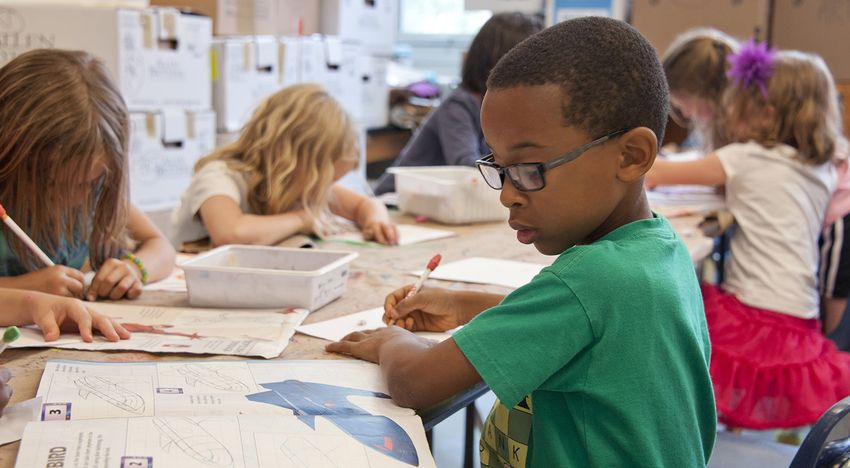
COVID-19
                                    Strategies
                                   for Schools
                              Recommendations from the
                           Metro Denver Partnership for Health

Continued school closures threaten the health and safety of Colorado children.
In addition to learning losses, children face increased risks of food insecurity,
potential abuse, poor mental health and social-emotional wellness, and lack of
physical activity. And these harms fall hardest on children from lower income
families.1
Colorado children need to get back to school. The         decision-making. For example, limited use of physical
Metro Denver Partnership for Health (MDPH) is             distancing will require schools to adopt other
pleased to provide evidence-informed guidance to          measures, including creating consistent cohorts of
our region’s school superintendents to support their      students and teachers; requiring face covering/face
efforts in reopening school safely.                       shields as much as possible; daily symptom checking
                                                          for students and staff; rigorous hand hygiene; access
MDPH is led by the six local public health agencies       to routine COVID testing; and vaccination for other
serving the seven-county Denver metro area: Boulder       infections that cause respiratory illnesses.
County Public Health, Broomfield County Department
of Public Health and Environment, Denver Department       Adjustments may need to occur over time based
of Public Health and Environment, Denver Public           on changing epidemiology in the community and
Health, Jefferson County Public Health, and Tri-County    evolving knowledge and prevention strategies. MDPH
Health Department serving Adams, Arapahoe, and            will work with our school leaders to ensure they
Douglas counties.                                         have timely data and information to support their
                                                          decisions and promote the health, safety, and well-
While at least six feet of physical distancing, as        being of students, teachers, staff, and families. This
currently recommended for other social settings, is       includes understanding community transmission, the
preferred in schools, we recognize this is difficult to   relative risk and disease burden in the community
ensure. Given the growing data on low transmission        and region, and communicating with parents and
potential from children to others and the relative        teachers.
harms of keeping kids out of school, we believe that
schools can implement a suite of complementary
infection control and prevention measures that can
                                                          Background
provide a comparably safe environment for students        More than three months after Colorado’s first
and staff.                                                reported case of COVID-19, and with almost 9 million
                                                          cases of COVID-19 diagnosed worldwide, several
This document provides guidance for in-person
                                                          patterns relevant to school re-opening are beginning
school attendance. It also identifies considerations
                                                          to emerge. First, children appear to have lower
that school superintendents can use to inform
2 Metro Denver Partnership for Health                                               COVID-19: Strategies for Schools
JUNE 25, 2020
                                                                                                        JUNE  2020

rates of infection than do older persons and, when         the evidence regarding COVID-19 continues to evolve.
infection does occur, are much less likely to have         No reopening structure can ensure zero transmission
serious complications than adults.2 Second, while          and some infections are likely to occur among
children (including those not showing symptoms)            students, staff, and families, whether from exposure
can transmit COVID-19, emerging evidence indicates         in the home, the community, or in school. However,
that children are not primary drivers of transmission      the American Academy of Pediatrics Colorado
and that school reopening is likely to have minimal        Chapter argues that the harms of school closures,
impact on transmission between students or between         including isolation and loss of community, will lead
students and staff.3,4                                     to adverse risks that can and should be mitigated by
                                                           thoughtful prevention measures to allow a return to
Much of the decision-making regarding school               school.8
closures in March was based on the decades of
research showing that schools are a major venue            On balance, we think the health benefits of in-
for influenza transmission. However, the emerging          person school attendance outweigh the health risks.
evidence suggests that COVID-19 transmission               Furthermore, school closures are likely to provide less
among children is quite different from influenza. For      net societal benefit than other closure strategies that
example, recently published contact tracing data           Colorado recently used in its Stay at Home and Safer
from several other countries indicate that children        at Home phases of physical distancing.
with COVID-19 illness transmitted infection to very
few other individuals in school settings: 0/122 other      Vaccines for COVID-19 are in development, but none
children in France, 0/924 children and 0/101 adults        are available at present. However, vaccination for
in Ireland, and 2/735 children and 0/128 adults in         other infections that involve the respiratory system
Australia.5,6 These observations are supported by          (influenza, measles, and pertussis [whooping
assessments of outbreaks in household settings             cough]) are available and are underused in our
where children rarely appear to be the primary             community. Preventing these infections will decrease
source of illness in other family members.7                the occurrence of symptoms that might suggest
                                                           COVID-19. Expanding access to vaccination among
In spite of these positive preliminary outcomes,           students and school staff will also help us prepare for
getting kids back to school involves risk, especially as   the time when a COVID-19 vaccine has been licensed.

                                                                                           Colorado Health Institute
Starting Dates
Guidance Other Considerations
• Students: Returning to school in August. • Consider condensing school calendar to maximize
• Principals and teachers: Returning prior to current low rates of transmission in anticipation of
student arrival. possible outbreaks later in the year. For example,
minimize student holidays and out-of-class days
until November or December break.
• Consider prolonging spring break for the same
reason if needed.
Resources
Centers for Disease Control and Prevention (CDC) School Guidelines
Masks and Other Protective Equipment
Guidance Other Considerations
• Students: Face covering strongly encouraged • Masks can reduce respiratory droplet
unless six feet of physical distancing can be transmission, especially indoors with less than six
maintained, or mitigating circumstances preclude feet of separation.
use. • Consider face shields (or N95 masks if feasible) as
• Teacher and staff: Face covering strongly added barrier option for staff and for teachers,
encouraged unless six feet of physical distancing especially when working in close proximity
can be maintained, or mitigating circumstances or when students are unable to wear masks
preclude use. consistently, such as in some special education
classes.
• Masks are strongly encouraged, except where
doing so would inhibit the individual’s health, in
which case reasonable accommodations should
be pursued to maintain safety and health.
Resources
Centers for Disease Control and Prevention (CDC) School Guidelines
Vaccination
Guidance Other Considerations
• Assure access to vaccination for influenza, • In-school immunization programs and
measles (MMR), and pertussis (DTaP) collaboration with healthcare systems can provide
access to current vaccines.
4 Metro Denver Partnership for Health COVID-19: Strategies for SchoolsJUNE 25, 2020
JUNE 2020
Cohort Grouping
Guidance Other Considerations
• Students and teachers: Keep same group • Create schedules that decrease opportunities for
together each day. group of students to mix such as limiting passing
• Use technology if/when new teachers need to join periods and in-between class times.
a classroom for a time-limited period. • For mixed cohorts (A/B, morning and afternoon
• Common space such as libraries and cafeterias cohorts) that cannot be physically distant:
should be accessed as a cohort. disinfect shared spaces/classrooms between
cohort changes; require face coverings as feasible
• Limit or discontinue use of lockers and locker under previous guidance; monitor daily symptom
rooms. screening checks; and promote hand hygiene.
• Indoor extracurricular programs should work
to adhere to physical distancing and masking
guidelines if cohorts are mixed.
Resources
Centers for Disease Control and Prevention (CDC) School Guidelines
Colorado High School Activities Association Athletics Guidance
Physical Distancing
Guidance Other Considerations
• Maintain six feet of distance in indoor and outdoor • Mandatory face covering (except where doing
settings if possible so would inhibit the individual’s health), hand
• One-way hallways hygiene, disinfection, cohorting, and daily
symptom checks are strongly encouraged if 6 feet
• Primary School: Stagger recess times not feasible.
• Secondary School: Limit or discontinue use of • Consider physical demarcations outlining six foot
lockers; limit in-between class time intervals for pick up, drop off, bus loading, etc.
• Avoid large groups, especially indoors
(performances, assemblies).
Resources
Reopening Schools in the Context of COVID-19: Health and Safety Guidelines from Other Countries
Center for Disease Control and Prevention (CDC) School Guidelines
Colorado Health InstituteBus Transportation
Guidance Other Considerations
• One student per seat • Masking should be required.
• Consider exceptions for members of the same
household, such as siblings, who could share a
seat.
Resources
Guidelines for Public Transportation Providers
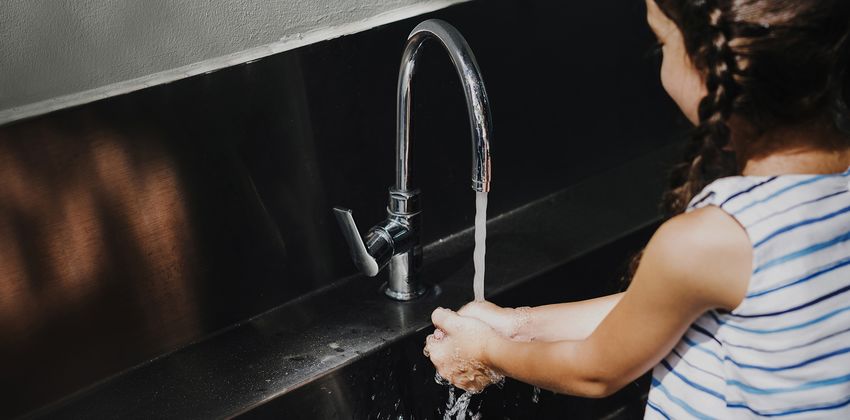
Hand washing and Sanitizing
Guidance Other Considerations
• Students: Observed hand washing/sanitizing at • Implement health hygiene education (covering
regular intervals coughs and sneezes in tissues/elbows).
• Teachers, staff: every few hours through the day • Consider sneeze guards in some settings such as
teacher or reception desks.
Resources
Centers for Disease Control and Prevention (CDC) School Guidelines
Temperature and Symptom Screening
Guidance Other Considerations
• Students: Self-reported by families (or self-report • Screen to include temperature checks.
for secondary school) prior to arrival on school • Designate a room to isolate any symptomatic
grounds. If incomplete, screened upon arrival. individuals until he/she can safely return home or
• School-based adults: Self-reported prior to seek care.
arrival on school grounds. If incomplete, screened • Develop streamlined process for same day testing
upon arrival. of symptomatic students and staff in partnership
with local health department and delivery system
or providers.
• Districts can collaborate with Gary Community
Investments for access to app-based symptom
Resources monitoring.
Centers for Disease Control and Prevention (CDC) School Guidelines
Contact Eric Parrie (eparrie@garycommunity.org) with Gary Community Investments for access to app-based
symptom monitoring and access to testing for staff and students through CovidCheckColorado.com.
6 Metro Denver Partnership for Health COVID-19: Strategies for SchoolsJUNE 25, 2020
JUNE 2020
Building Entry/Exit
Guidance Other Considerations
• Stagger drop-off/pickup times (assigned by • Establish pickup procedure for anyone with COVID
cohort) symptoms being sent home.
• Limit student and staff contact by parents or other
adults who do not need to be on school grounds.
Resources
Centers for Disease Control and Prevention (CDC) School Guidelines
Ventilation
Guidance
• Ensure that ventilation systems operate properly • Improve engineering controls using the building
per OSHA guidance. ventilation systems to maximize air exchange
• Increase circulation of outdoor air as much as rates.
possible by opening windows and doors and other
methods when indoor and outdoor conditions
safely permit.
Resources
Centers for Disease Control and Prevention (CDC) School Guidelines
CDPHE Guidance for Preventing, Reporting and Mitigating Workplace Outbreaks
Cleaning Procedures
Guidance
• Clean frequently touched surfaces in schools and • Primary School: Remove toys or classroom items
on buses at least daily and between use as much that cannot be easily cleaned or sanitized, such as
as possible plush toys.
Resources
CDPHE Environmental Cleaning Guidance
Centers for Disease Control and Prevention (CDC) School Guidelines
Colorado Health InstituteTesting
Guidance Other Considerations
• Develop systems for prompt referral of • While a negative test result does not necessarily
symptomatic teachers, staff, and students for fast- allow an adult or student with COVID-like
turnaround testing symptoms to avoid isolation at home, it can
enhance faster detection of outbreaks if positive
cases are detected
• Districts can collaborate with Gary Community
Investments for streamlined access to testing.
Resources
CDPHE Testing Overview
Contact Eric Parrie (eparrie@garycommunity.org) with Gary Community Investments for access to app-based
symptom monitoring and access to testing for staff and students through CovidCheckColorado.com.
Protocols for Positive Cases and Return to School
Guidance Other Considerations
• Symptomatic adults and students should not • Symptomatic students on school grounds should
come to school or should be sent home. be isolated until they can return home safely.
• Work with Colorado Department of Public Health
and Environment to develop guidelines on return
to school, contact tracing, and indications for
classroom to avoid school closure.
Resources
Centers for Disease Control and Prevention (CDC) School Guidelines
Comorbidities (Who is at greater risk and should not be in-person at school?)
Guidance Other Considerations
• Develop approaches to allow adults or students who are at greater • Consider offering use of
risk of serious complications from COVID to learn/work remotely. medical grade masks
• For students, this should be determined by a health care provider. (with appropriate fit) as an
alternative to remote work.
• For adults, highest priority for remote work should be given to those 65
and older or with highest-risk underlying illnesses (i.e, heart disease,
lung disease, diabetes).
Resources
Centers for Disease Control and Prevention Information People at Higher Risk for Severe Illness
8 Metro Denver Partnership for Health COVID-19: Strategies for SchoolsJUNE 25, 2020
JUNE 2020
Endnotes
1
Van Lancker W, Parolin Z. (2020). “COVID-19, school closures, and child poverty: a social crisis in the making”. Lancet Public Health.
2020;5(5):e243-4 https://www.thelancet.com/pdfs/journals/lanpub/PIIS2468-2667(20)30084-0.pdf
2
Bialek, S., et.al. (2020). “Coronavirus Disease 2019 in Children – United States, February 12 – April 2, 2020. Morbidity and Mortality Weekly
Report”. April 10, 2020. 69 (14). https://www.cdc.gov/mmwr/volumes/69/wr/pdfs/mm6914e4-H.pdf.
3
Ludvigsson, J. (2020). “Children are unlikely to be the main drivers of the COVID-19 pandemic — a systematic review”. Acta Paediatrica,
May 19, 2020. https://onlinelibrary.wiley.com/doi/abs/10.1111/apa.15371
4
Heavey, L. et al. (2020). “No evidence of secondary transmission of COVID-19 from children attending school in Ireland”. Euro Surveill.
2020; 25(21), May 28 2020. https://www.eurosurveillance.org/content/10.2807/1560-7917.ES.2020.25.21.2000903
5
Danis, K, Epaulard, O, Benet, T. (2020). “Cluster of coronavirus disease 2019 (Covid-19) in the French Alps, 2020”. Clin Infect Dis.
6
Heavey (2020).
7
Ludvigsson (2020).
8
Treitz, M., and Lev, R. (2020). “Guest commentary: Schools must reopen for the health of children”. The Denver Post. June 24, 2020.
https://www.denverpost.com/2020/06/24/colorado-schools-reopen-coronavirus-guest-commentary/
Addresses of Websites
• CDC schools guidance: https://www.cdc.gov/coronavirus/2019-ncov/community/schools-childcare/schools.
html
• CHSAA guidance: https://chsaanow.com/2020-05-22/chsaa-to-lift-moratorium-with-strict-guidelines-for-
resuming-in-person-conditioning-sessions/
• Health and Safety Guidelines from Other Countries: https://learningpolicyinstitute.org/product/
reopening-schools-covid-19-brief
• Public transportation guidance: https://drive.google.com/file/d/1F6ejkZlcwLOvmalkjo5Y9ksF-5CQ13Kp/view
• CDPHE workplace outbreak prevention: https://drive.google.com/file/d/1zDl1WVOEDSkmbN2qCF83W2jM7N
4ZcaZs/view
• CDPHE environmental cleaning guidance: https://covid19.colorado.gov/cleaning-guidance
• CDPHE testing overview: https://covid19.colorado.gov/covid-19-in-colorado/about-covid-19/testing-for-
covid-19
• CDPHE information for people at high risk: https://www.cdc.gov/coronavirus/2019-ncov/need-extra-
precautions/index.html
Acknowledgements
Special thanks to Steve Federico, MD, Director of General Pediatrics and School and Community Programs at
Denver Health, for his invaluable contributions to this document.
MDPH extends its thanks to the Colorado Health Foundation for providing support to the Colorado Health
Institute to facilitate MDPH’s COVID-19 activities.
Colorado Health InstituteNotes 10 Metro Denver Partnership for Health COVID-19: Strategies for Schools
JUNE 25, 2020
                     JUNE  2020

Notes

        Colorado Health Institute
1999 Broadway, Suite 600, Denver, CO 80202 • 303.831.4200
coloradohealthinstitute.org
The Colorado Health Institute is a trusted source of independent and objective health
information, data, and analysis for the state’s health care leaders. CHI’s work is made possible
by generous supporters who see the value of independent, evidence-based analysis. Those
supporters can be found on our website coloradohealthinstitute.org/about-usYou can also read


