Strategy framework 2021-2025 - JPI Oceans
←
→
Page content transcription
If your browser does not render page correctly, please read the page content below
www.jpi-oceans.eu          1   Strategy framework 2021 - 2025

                    Strategy
                    framework
                        2021-2025
Strategy framework 2021 - 2025   2   www.jpi-oceans.eu

                                                         STRATEGY FRAMEWORK
                                                                       2021-2025
Strategy framework 2021 - 2025   4                                 www.jpi-oceans.eu   www.jpi-oceans.eu                                                                        1    Strategy framework 2021 - 2025

                                                                                                           1.1. What is JPI Oceans?			                       3

                                                                                             2             1.2. Strategic role of JPI Oceans
                                                                                                           1.3. Building on Successes and Learnings
                                                                                                                                                             6
                                                                                                                                                             8

                                                                                                             12         2.1. Vision and Mission
                                                                                                                        2.2. Operational Goals and Objectives
                                                                                                                                                                         13
                                                                                                                                                                         14

                                                                                                                                      3.1.   Global                        17

                                                                                                                          16          3.2.
                                                                                                                                      3.3.
                                                                                                                                      3.4.
                                                                                                                                             European
                                                                                                                                             Regional
                                                                                                                                             National
                                                                                                                                                                           19
                                                                                                                                                                           22
                                                                                                                                                                           23

                                       1.0 Introduction
                                                                                                                                                        4.1. Ocean Health			                               28

                                      2.0 Strategic cornerstones                                                                      24                4.2. Ocean Productivity
                                                                                                                                                        4.3. Ocean Stewardship & Governance
                                                                                                                                                                                                           32
                                                                                                                                                                                                           37

                                      3.0 Policy Context
                                      4.0 Scope
                                      5.0 Implementation

                                                                                                                                                        5.1. Joint Actions			                              41

                                                                                                                                      40                5.2. Implementation Tools
                                                                                                                                                        5.3. Implementation Principles
                                                                                                                                                                                                           42
                                                                                                                                                                                                           44

                                     TABLE
                                     OF CONTENTS
Strategy framework 2021 - 2025   2   www.jpi-oceans.eu   www.jpi-oceans.eu                                                                   3   Strategy framework 2021 - 2025

                                                                                   1.1     WHAT IS JPI OCEANS?
                                                                                           The Joint Programming Initiative Healthy and
                                                                                           Productive Seas and Oceans (JPI Oceans) is a
                                                                                           pan-European intergovernmental platform that
                                                                                           increases the efficiency and impact of research
                                                                                           and innovation for sustainably healthy and
                                                                                           productive seas and oceans.

                                                                                           JPI Oceans was created in 2011 by request
                                                                                           of the Council of the European Union as
                                                                                           one of 10 JPIs, each focusing on a major
                                                                                           societal challenge. The original mandate
                                                                                           of JPI Oceans refers to the Europe 2020
                                                                                           strategy’s ambition to harness:

                                                                             (…) the contribution of EU maritime
                                                                             policies, among others, to achieve EU
                                                                             emissions reduction and biodiversity
                                                                             targets, address climate change
                                                                             adaptation, disaster prevention and
                                                                             response, more efficient use of
                                                                             resources and contribute to
                                                                             improving global food security.

                                                           Member countries
 1.0

Introduction
                                                           In negotiation

                                                         Figure 1: JPI Oceans membership
                                                         covers all European sea basins
                                                         with 18 member countries.
Strategy framework 2021 - 2025 4 www.jpi-oceans.eu www.jpi-oceans.eu 5 Strategy framework 2021 - 2025
2012 2013 2014 2015 2016 2017 2018 2019 2020 2021 2022 2023 2024
AquaticPollutants ERA-NET Cofund1
Science for Gold Environmental Status
JPIs were established to further align the Focused Joint Actions (Fig. 2) have been Figure 2: The suite of Joint
Actions carried out by JPI Oceans,
European Research Area (ERA) by enabling established as the central implementation Underwater noise in the marine environment
coloured according to the
multinational funding opportunities, better mechanism of JPI Oceans’ strategic predominating tool(s) applied
coordination, increasing cost-efficiency agenda. Joint Actions address urgent or for their implementation (see
Sea level rise2
chapter 5.2). Implementation
and synergies, and reducing fragmentation emerging topics that require knowledge
tools subsumed under supporting
in European research policy. Operating and solutions to fulfil existing policy activities were also applied to
Climate science for oceans2
in the vast marine environment is obligations. Joint Actions. Four Joint Actions
are collaborations with (1) JPI
challenging and costly. That is why marine Since 2018, JPI Oceans has been registered Water and JPI Antimicrobial
and maritime research and innovation Integrated assessment of new pollutants
as a legal entity under Belgian law. This Resistance (2) JPI Climate, (3)
is a particularly worthwhile sector to further consolidates the organisation’s Belmont Forum and Future Earth
and (4) JPI Agriculture, Food
obtain large-scale synergies among role in the European Research Area and Blue Bioeconomy ERA-NET Cofund
Security and Climate Change
countries and align their strategic resource reflects its increasing maturation. It is (FACCE) and JPI Healthy Diet
investments. financed through member and partnership for a Healthy Life (HDHL). The
Ocean Sustainability3
Joint Actions are complemented
The Council recommended a set of fees ensuring an equitable and stable by strategic engagements in
actions through which JPI Oceans should basis to play a long-term, independent Coordination and Support
Mar-TERA ERA-NET Cofund
Actions and other European or
pursue its mandate. These included strategic role in the European and
international initiatives.
identifying capacities and strategies international landscape. Its operational
Food and nutrition4
for transnational activities, undertaking hub is a secretariat located in Brussels. It
foresight exercises, developing joint calls facilitates strategic discussions, supports
for proposals, sharing and developing JPI Oceans’ activities and fosters dialogue European marine sensor calibration network
infrastructures, and developing efficient with stakeholders from science, industry
science-policy interfaces. and policy on European, Atlantic and Munition in the sea
JPI Oceans is currently an global scale.
intergovernmental partnership among Intercalibration for Water Framework Directive
18 countries (Fig. 1), represented by
governmental or national institutions Ecological aspects of microplastics Ecological aspects of microplastics
such as ministries and funding agencies
that develop, fund, and implement
Ecological aspects of deep-sea mining Ecological aspects of deep-sea mining
national research agendas and engage in
international cooperation. It is governed
by a Management Board composed Multi use of infrastructure
of representatives from the Member for monitoring
and Associated Countries. These
representatives have the authority to
agree on Joint Action plans and funding ERA-Net Cofund
initiatives across Europe.
Joint call
Knowledge hub
Joint public
procurement
Infrastructure
sharing
Strategy framework 2021 - 2025   6                                                                                 www.jpi-oceans.eu   www.jpi-oceans.eu                                                                              7     Strategy framework 2021 - 2025

        1.2         STRATEGIC ROLE OF JPI OCEANS
                                                                                                                                                           JPI Oceans operates with a high level of flexibility.
                    The distinctive role of JPI Oceans is that of an institutionalised, long-term                                                          It allows countries to participate on a case-by-
                    intergovernmental platform with the ability to strategically prioritise and                                                            case basis according to their different priorities,
                    fund transnational research and innovation. This enables JPI Oceans to act                                                             needs and capacities.
                    as an efficient facilitator and implementer of research and innovation on
                    marine and maritime challenges and opportunities.

                    National strategies and priorities are the       To generate impact through collaboration,                                                           To maximize the added value for                perspective, such as those on a Safe
                    main building blocks of JPI Oceans, also         JPI Oceans builds on national capacities                                                            participating countries, JPI Oceans            and Sustainable Food System, Water
                    informed by the efforts of organisations         and networks in the participating countries                                                         operates with a high level of flexibility.     security, Biodiversity, Waterborne
                    specialised in assessments, foresight and        and on engagement with policy and                                                                   It allows countries to participate on a        transport, Circular bio-based solutions
                    knowledge gap analysis, and the specialist       science-policy units in the European                                                                case-by-case basis according to their          and others. They bear good potential for
                    expertise and knowledge held in research         Union and global institutions like the                                                              different priorities, needs and capacities.    synergistic collaboration with JPI Oceans.
                    performing institutions and organisations.       United Nations (IOC, FAO, CBD, UNFCCC,                                                              Such flexibility and pragmatism also           However, most central to the scope of
                    JPI Oceans also serves as an umbrella for        UfM), OECD and others. As an intergovern-                                                           allow JPI Oceans to act fast when it           JPI Oceans is the new Partnership ‘A
                    cross-regional coordination of activities        mental partnership on research and                                                                  comes to identifying emerging topics           climate neutral, sustainable and productive
                    and exchange of experts, knowledge and           innovation, JPI Oceans offers a platform                                                            and implementing related actions, thus         Blue Economy’. Accordingly, the JPI
                    best practices between pan-European sea          for providing the European seas and                                                                 achieving quick outcomes.                      Oceans secretariat was instrumental
                    basin initiatives and their agendas.             oceans with an orchestrated voice in the                                                            Throughout its development, JPI                in the preparation of a proposal for
                    Countries engage in and support JPI              marine and maritime arena and in the                                                                Oceans has worked closely with the             this Partnership. It offers a platform
                    Oceans because they appreciate value             complementary relationship to the                                                                   European Commission. The Commission            for the coming years to synergistically
                    additions to their national efforts in several   European Commission.                                                                                is represented by DG Research and              implement shared strategic ambitions
                    ways. The interaction among countries                                                                                                                Innovation and DG MARE on the JPI              of JPI Oceans and of this Partnership in
                    through JPI Oceans has a mutual                                                                                                                      Oceans Management Board as an                  the area of ocean productivity and Blue
                    structuring effect on the marine and                                                                                                                 institutional observer. The European           Economy (cf. chapter 4.2). JPI Oceans
                    maritime strategic and funding landscapes                                                                                                            Commission has granted JPI Oceans two          will further be able to carry forward the
                    in Europe. Strategic alignment is the basis                                                                                                          Coordination and Support Actions and           Partnership’s legacy beyond its lifetime
                    for increasing the value of national                                                                                                                 participated in co-funding three joint calls   by implementing outstanding objectives
                    research and innovation investments                                                                                                                  for a total of EUR 22.5 million. JPI Oceans    or by adjusting intergovernmental
                    by implementing multi-national joint                                                                                                                 aims to continue reinforcing EU actions,       collaborations to the Blue Economy
                    activities. JPI Oceans also ensures a                                                                                                                building on solid foundations partnering       needs as they evolve over time.
                    level of independence that enables the                                                                                                               with the European Commission through
                    pioneering of forward-looking, innovative                                                                                                            Horizon Europe and beyond.
                    research and innovation in areas of                                                                                                                  The Horizon Europe Partnerships
                    gradually emerging relevance.                                                                                                                        between the European Union and Member
                                                                                                                                                                         States offers a format for continued
                                                                                                                                                                         collaboration with the European
                                                                                                                                                                         Commission. Several partnership
                                                                                                                                                                         topics demand a marine and maritime
                                                                                                              Photo credit: © VLIZ.
Strategy framework 2021 - 2025 8 www.jpi-oceans.eu www.jpi-oceans.eu 9 Strategy framework 2021 - 2025
JOINT ACTION EXAMPLE 1
ECOLOGICAL ASPECTS OF MICROPLASTICS
CUTTING EDGE RESEARCH FOR A GLOBAL PROBLEM
Since 2014, 15 European countries and Brazil have committed 18.2
million Euro for research on the ecological aspects of microplastics
in the marine environment under the framework of JPI Oceans.
In an initial phase, four projects were funded. They focused on
1.3 BUILDING ON SUCCESSES ecotoxicological effects of microplastics, the weathering of plastics,
and baselines and standards for microplastics analyses in European
waters. In a statement published in October 2015, the G7 Science
AND LEARNING Ministers acknowledged this work and called for actions and
solutions to combat marine litter. In addition, the coordinators of
the projects provided valuable input to the European Commission’s
Technical Group on Marine Litter. The latter supports and guides the
JPI Oceans can now build on a decade of experience (Fig. 3). The revised implementation process of the Marine Strategy Framework
strategy for the years following 2020 is motivated by previous successes and Directive in close collaboration with EU member states.
intends to capitalise on best practices.
Figure 3: Timeline outlining the Building on the results from the first transnational call “Ecological
development phases of JPI Oceans aspects of micro-plastics in the marine environment” and recent
until today and into the future;
JPI Oceans has succeeded in establishing a sister JPIs on Ocean & Climate, Aquatic with JPI Oceans’ establishment, scientific findings, a second call was launched by 13 JPI Oceans
network of actively participating countries Pollutants, and Food and Nutrition Security the co-design of the SRIA, member countries, Latvia and Brazil in November 2018. After
large-scale implementation of evaluation, six new JPI Oceans projects were selected for funding
that includes countries from all European built bridges with experts and communities R&I activities, broadening its
sea basins, as well as international of crucial importance to develop solutions organisational basis as an AISBL, to conduct research on sources of microplastics, methods for
partners. In addition, generous resourcing to cross-sectoral challenges. and – now – anticipated upscaling identifying smaller micro- and (nano-) plastics and monitoring their
of JPI Oceans Joint Actions and circulation in marine systems and the effects they have thereon.
was secured to maintain a strong of collaborations with European
secretariat and capacities to implement Areas of evolution and revision and international partners and
an increasingly diverse joint agenda. The 2015-20 strategy had developed stakeholder organisations.
Several Joint Actions were established a set of ten broad priority areas. The
and demonstrated that the instrument revised strategy by contrast defines the
is suitable for focusing capacities and thematic space and impact ambitions of
Establishment Strategy Activity Organisational Upscaling
resources on specific priorities. Among JPI Oceans, complemented by a clearly
phase development implementation transformation phase
them, three Joint Actions on maritime outlined procedure on how to establish
technology, blue bioeconomy and aquatic activities that contribute to our goals.
pollutants were jointly developed and co- This approach aligns with the JPI Oceans
funded with the European Commission. record of initiating activities related to 2021
They stand out as particularly broad and agreed topics of shared national interest First pilot action and beyond
well-funded calls (Fig. 2). and of quickly mobilising implementation
CSA Oceans CSA Oceans 2 AISBL operational Upscaling of
Different Joint Actions were successful for resources through voluntary commitments
by participating countries. JPI Oceans actions
different reasons. The Microplastics Joint
Action built knowledge and momentum has effectively operated without a 1st Management Implementation Decision to
on an emerging topic before the issue committed resource pool to pursue a Board Meeting plan establish Collaboration
received a lot of public and political multi-year research and innovation plan,
AISBL
attention. The MiningImpact Joint Action but by facilitating collaboration and Vision SRIA
was exemplary in raising infrastructure engagement among participating countries. document
sharing, including a research vessel, to The capacity of JPI Oceans to act as first
a new level of European collaboration, or early mover is ensured by maintaining
Strategy Framework
amplifying credibility as well as public and a flexible and pragmatic design of Joint
approved
political exposure. The Intercalibration Actions with low bureaucratic thresholds.
Joint Action had a proven effect on Increasing the creative space for topic
2011 2012 2013 2014 2015 2016 2017 2018 2019 2020
threshold definitions in the EU Water development makes JPI Oceans even more
Framework Directive. Joint Actions with agile, by avoiding overly specific and
Strategy framework 2021 - 2025   10                                                                                www.jpi-oceans.eu

                                      JPI Oceans is setting itself up for closer
                                      collaboration over the coming years with EU
                                      initiatives, sea basins, overseas countries,
                                                                                                                                       Photo credit:
                                      sister JPIs, and other partners.                                                                 ROV Team/GEOMAR (CC-BY 4.0).                      JOINT ACTION EXAMPLE 2

                                                                                                                                          ENVIRONMENTAL IMPACTS OF DEEP-SEA MINING
                                                                                                                                          A EUROPEAN VOICE TO THE GLOBAL MINING CODE

                                                                                                                                          The first research project 'MiningImpact', which ran from 2015 to
                                                                                                                                          2017, improved the understanding of deep-sea ecosystems and the
                                                                                                                                          impact of mining thereon. The project did not only attract interest
                                                                                                                                          from the G7 Science Ministers in their Communiqué from October
                    prescriptive priority areas which would          As an interface organisation, JPI                                    2015, but also delivered input towards the development of the
                    bind attention and resources. In addition,       Oceans has already been a catalyst in                                international Mining Code. The latter isthe set of regulations for the
                    opening up the proposition process for           communication and collaboration with                                 exploitation of polymetallic nodules in the deep seabed beyond the
                    interesting topics to stakeholder input at the   partners across structural, geographical                             limits of national jurisdiction, which the International Seabed
                    beginning of the Joint Action development        and sectoral boundaries. Following the                               Authority (ISA) is currently negotiating.
                    harnesses the knowledge and creativity of        formal transformation to a stand-alone,
                                                                                                                                          The second project, ‘MiningImpact 2’ will be able to reduce existing
                    external experts’ diverse perspectives.          non-commercial legal entity, and the
                                                                                                                                          knowledge gaps and uncertainties on the environmental impact of
                    The design of JPI Oceans as an                   more recent commitment to contribute to
                                                                                                                                          deep-sea mining of polymetallic nodules. The project will also
                    intergovernmental platform at the                interconnected cross-sectoral challenges
                                                                                                                                          specifically work towards policy recommendations and further
                    interface between science and policy             like the United Nation’s 2030 Agenda or
                                                                                                                                          contribute to the preparation of environmental impact assessments
                    ensures relevance of actions and efficient       the Marine Strategy Framework Directive
                                                                                                                                          (EIAs) for future European deep-sea pilot mining tests requested by
                    uptake of their outcomes. However, as            (MSFD), JPI Oceans is setting itself up for
                                                                                                                                          the ISA.
                    most of JPI Oceans Joint Actions are             closer collaboration over the coming years
                    still ongoing, their operational emphasis        with EU initiatives, sea basins, overseas                            With these projects, JPI Oceans is generating and providing the
                    has so far been on their initiation. As          countries, sister JPIs, and other partners.                          necessary evidence base to underpin the development of the
                    more Joint Actions are maturing towards                                                                               international governance framework for the exploitation of seabed
                    their concluding phase, JPI Oceans will                                                                               resources that is currently being negotiated. By funding top-notch
                    give more attention to ensure impactful                                                                               interdisciplinary science, JPI Oceans is giving the European science
                    syntheses or other output is produced,                                                                                community a common voice in these global negotiations, ensuring
                    tailored to target user groups and                                                                                    that global policies are based on the best available scientific
                    backed by communication and delivery                                                                                  knowledge.
                    campaigns.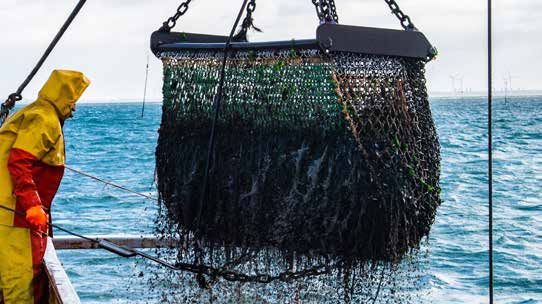
Strategy framework 2021 - 2025   12   www.jpi-oceans.eu   www.jpi-oceans.eu                                                               13     Strategy framework 2021 - 2025

                                                                              2.1   VISION AND MISSION
                                                                                    The following vision articulates at a high level
                                                                                    what JPI Oceans ultimately wants to achieve.
                                                                                    The mission describes the general approach to
                                                                                    achieve it. The vision is further broken down
                                                                                    into three strategic goals outlining tangible
                                                                                    accomplishments.

                                                                                                   is to enable the transformation towards a
                                                                                                   sustainable blue economy whilst fostering
                                                                                                   the health and productivity of seas and
                                                                                                   oceans.

                                                                                                   is to facilitate the efficient provision of
                                                                                                   expert knowledge and innovative solutions
                                                                                                   to enable informed policy delivery and
                                                                                                   economic development that ensures
                                                                                                   sustainably healthy and productive seas
                                                                                                   and oceans.

                                                                                    The pursuit of the vision and mission is
                                                                                    linked to an operational strategy with
 2.0                                                                                three complementary operational goals

Strategic
                                                                                    for the successful implementation of JPI
                                                                                    Oceans’ ambition and contribution to
                                                                                    national and international policymaking
                                                                                    and societal transformation (Fig. 4). Each
                                                                                    operational goal is pursued with a few

cornerstones
                                                                                    goal specific key approaches, described in
                                                                                    the objectives for each of the operational
                                                                                    goals.
Strategy framework 2021 - 2025 14 www.jpi-oceans.eu
...
to the
benefit of
... ...
to
inform healthy &
... ... productive
VISION & MISSION
increasing seas & oceans
impact and Policy &
efficiency of decision making For people &
... economy
Research &
JPI Oceans Policy
Innovation
facilitates obligations
... ...
Transnational Knowledge Policy require
collaboration generation mechanisms good and
dedicated
OPERATIONAL GOALS
GOALS & OBJECTIVES
Agenda Best practice Economic
2.2 convergence exchange decisions
...
Agenda
AND OBJECTIVES implementation
Resource
...
based on
the best
aggregation possible
... ...
optimised
To reach the vision and mission and fulfil its strategic role, JPI Oceans by
strives to achieve three overarching operational goals, each of them ...
pursued through several high-level objectives.
- Align priorities - Implement our agenda Figure 4: Illustration of the - Impact decision-making
narrative underlying the strategic
Align national and international R&I Implement collaborative R&I in a way elements of JPI Oceans. Ensure that R&I outcomes contribute
agendas by identifying and jointly that maximises resource efficiency and to relevant transformative policy and
addressing marine and maritime issues transformational impact. decision-making towards sustainable seas
of pan-European political and societal and oceans and a blue economy.
relevance.
Objectives: Objectives: Objectives:
• Engage countries in sharing their • Offer an attractive agenda, efficient • Ensure uptake of R&I outcomes
national priorities and in adopting implementation processes and clear by creating ownership among
jointly identified topics in their value proposition for countries to member countries and experts
national agendas and strategies. develop and participate in Joint from stakeholder groups through
• Engage in international science- Actions. co-development of JPI Oceans
policy processes at regional, • Involve stakeholders in the co- activities and products.
European and global levels to development of Joint Actions. • Ensure knowledge transfer to
contribute to the development of • Pursue opportunities for synergistic maximise update and impact of R&I
underlying agendas and identify collaboration of JPI Oceans at knowledge-generation and
opportunities for their activities with regional, European decision-making levels.
implementation. and global initiatives. • Increase ocean literacy among key
• Seek co-funding opportunities sectors of politics and society.
with Horizon Europe and other
champions of R&I support in both
public and private spheresStrategy framework 2021 - 2025 16 www.jpi-oceans.eu www.jpi-oceans.eu 17 Strategy framework 2021 - 2025
3.1 GLOBAL
Several global agreements provide a socio-
political framework for the oceans and seas sector.
The resulting global agendas are therefore highly
relevant to JPI Oceans and are reflected in the
revised strategy and scope. By participating in JPI
Oceans, countries can contribute to and shape
international processes, e.g. the UN Decade of
Ocean Science, and international agreements.
The United Nations 2030 Agenda Other highly relevant political agreements
provides the most comprehensive and under the auspices of the United Nations
interconnected framework with 17 goals include the Paris Climate Agreement,
for sustainable environmental, societal the Aichi Biodiversity Targets, and the
and economic development. Sustainable Sendai Framework for Disaster Risk
Development Goal (SDG) 14, dedicated Reduction. Their area-specific foci
to the conservation and sustainable use complement the 2030 Agenda in the
of oceans, seas and marine resources, fields of climate mitigation, biodiversity
calls for sustainable fisheries, curbing protection, and disaster risk reduction
pollution and acidification, the protection and provide additional motivation and
of marine and coastal ecosystems, and direction for JPI Oceans’ design of scope
implementation of protection measures and agenda.
such as international laws and protected All these UN agreements cut across several
areas, among others. Other SDGs, sectors of the Earth system, including
particularly those addressing climate oceans and seas. As a global mechanism
(SDG 13), land ecosystems (SDG 15), for efforts from an ocean-perspective, the
consumption & production (SDG 12), UN has called for a decade specifically
economic wellbeing (SDG 8), nutrition dedicated to ocean science for sustainable
(SDG 2), and health (SDG 3), also chiefly development. The Science Action Plan
depend on inclusion of direct effects or of the UN Decade of Ocean Science
3.0 indirect linkages of marine and maritime for Sustainable Development is based
Policy
factors. on major societal needs that require
the ocean to be clean, healthy, resilient,
productive, predicted, safe, accessible
and inspiring, all of which are attributes
that JPI Oceans generally adheres to.
Context
The Decade may also create significant
momentum for underlying ocean
infrastructures such as ocean monitoring
and observation, data sharing and access,
and ocean literacy.Strategy framework 2021 - 2025 18 www.jpi-oceans.eu
3.2 EUROPEAN
The European Union is developing and releasing
The report of the Organisation for
regulatory documents on all central areas relevant
Economic Co-operation and
to JPI Oceans, addressing maritime matters, blue
Development (OECD) ‘The Ocean
growth, protection of climate and environment,
Economy in 2030’ (OECD, 2016) states
and the organisation of European research and
that economic activity in the ocean is
innovation. With these regulations, EU Member
expanding rapidly but that an important
States are giving themselves a common policy
constraint on its development is the
framework partly echoing global policies and
current deterioration of ocean health.
obligations.
The report puts forward a set of
recommendations to enhance sustainable
development of the ocean economy. While not all documents are legally binding, systemic understanding, identification of
One of these is aimed at fostering greater they remain associated with widely criteria and thresholds, tailored monitoring
international cooperation in maritime shared and synchronised obligations to and observation, and assessment of
science and technology, to stimulate establish enforcement and implementation effective measures. This poses complex
innovation and strengthen the sustainable By participating in JPI Oceans, countries
measures for EU decisions, and to and costly challenges for countries,
development of the ocean economy. can contribute to and shape international
generally put legal frameworks into and the objective to achieve GES by
Another recommendation is to strengthen processes, e.g. the UN Decade of Ocean
practice. This often requires knowledge, the original 2020 target has not been
integrated ocean management. Science, and international agreements.
experience, innovation, coordination achieved. Accordingly, achieving the MSFD
The Intergovernmental Science-Policy The Science Action Plan of the UN and new infrastructure. Here, joint goals is a major driver for JPI Oceans in its
Photo credit:
Platform on Biodiversity and Ecosystem Decade is based on major societal needs Erlend Astad Lorentzen / programming can serve as the most strategic prioritisation and an important
Services (IPBES) released its Global that require the ocean to be clean, Havforskningsinstituttet. efficient mechanism to streamline national motivation for countries to undertake
Assessment Report on Biodiversity and healthy, resilient, productive, predicted, efforts across Europe by coordinating Joint Actions.
Ecosystem Services in 2019. It outlines safe, accessible and inspiring, all of which initiatives, sharing costs, aligning agendas, Other European legislation pieces address
that about 66% of the marine environment are attributes that JPI Oceans generally pooling expertise and exchanging results. specific marine and maritime areas that
has been significantly altered by human adheres to. The core European legislative piece for JPI Oceans considers strategic to its agenda
actions. The Intergovernmental Panel on JPI Oceans is arguably the Integrated setting, such as legislation on spatial
Climate Change (IPCC) Special Report Maritime Policy (IMP) (Fig. 5, next page). planning, biodiversity, blue growth,
on the Ocean and Cryosphere (2019) It sets the EU level framework by providing fisheries, sustainable food systems, blue
highlights the urgency of prioritizing a more coherent approach to marine and energy, maritime transport and climate
timely, ambitious and coordinated action maritime issues, as well as increased neutrality. The 9th Framework Programme
to address unprecedented and enduring coordination between different policy Horizon Europe for the term 2021-27
changes in the ocean and cryosphere. areas relating to Europe's oceans and seas. constitutes an agenda rich in opportunities
Both processes are a source of agenda Its implementation strategy foresaw the for partnering, collaboration and
information, and targets for knowledge need to partner with the member states complementarity. In 2019, the European
generated within JPI Oceans activities. through the establishment of a platform Commission presented the European
such as JPI Oceans. Green Deal – a roadmap to make the EU's
The Marine Strategy Framework Directive economy sustainable. The Green Deal and
(MSFD) is the environmental pillar of associated components such as the Farm
IMP, due to its integrated approach of to Fork Strategy, Climate Law and Zero
demanding Good Environmental Status Pollution ambition aim to make Europe
(GES) for the ocean and seas across all climate neutral by 2050 and provide
sectors. Its implementation requires a roadmap with actions to boost the
efficient use of resources by moving to a
clean, circular economy and revert bio-
diversity loss and cut pollution, all relevant
for JPI Oceans’ work going forward.Strategy framework 2021 - 2025 20 www.jpi-oceans.eu www.jpi-oceans.eu 21 Strategy framework 2021 - 2025
Animal Health
Regulation (2016)
Convention Biological
Diversity (CBD)
UN (2010) Marine Directive EU Blue Growth
EU Arctic Policy (MSFD) 2008 COM (2012) Strategy Reflection Paper Towards
COM (2008) Regional Conventions a Sustainable Europe by
HELCOM, OSPAR, 2030 COM (2019)
Bucharest, Barcelona EU Biodiversity
Food Safety Impact
Regional conventions: Strategy Com (2015)
EU Integrated Maritime Regulation (2002)
Bucharest, Barcelona, Common Fisheries EU Raw Materials
Policy COM (2007)
Helcom, OSPAR Policy Revised (2015) COM (2011)
climate, environment,
Water Framework Marine Spatial blue growth UNCLOS e.g. ISA Mining
Directive planning Directive including COM (2008) Code & BBNJ (2019)
European Union (2000) (2014) A European Strategy for Clean Energy Package
Regional Strategies Marine and Maritime Blue Energy Action Directives and
Eg. Baltic Sea Region Inspire Directive Research COM (2014) UNGA Initiated
regulations (2018-2019)
2009 (monitoring) JPI Oceans Council AoA (2005)
Atlantic MP action (2007) conclusion (2011)
plan 2013
A Clean climate
Plastics in a Circular Paris Climate Marine Knowledge 2020
neutral planet
Economy COM (2018) Agreement UNFCC COM (2010)
Towards full realisation COM (2018)
Declarations for international and Directive Single- of ERA Council (2016)
Cooperation at seabasin level Use plastics (2019) conclusion(2008)
Galway 2013 Horizon Europe Establishing European
Venice Declaration October 2015 (2020) Food Safety Authority
UN Agenda 2030 (2015) EU 2020 climate &
Blue - EuroMed Valetta May 2017 Regulation (2002)
energy package (2009)
Belem July 2017 UN Ocean Decade
Black Sea MP 2019
EU Multiannual FPs Launching JPIs
Regulation (1983) Council conclusion
(2008)
Regional examples
Make Europe Most
Mediterranean ICZM
competitive Globally
and marine protection
Lisbon (2000)
Council Decision
ERA establishment
(2010)
Figure 5: Map of policy drivers
at EU and global level. They are
arranged in tiers of increasing
relevance for JPI Oceans towards
the centre of the circle and colour
coded when associated with one
of the areas climate, environment,
or blue economy.
Climate-related policy driver
Environment-related policy driver
Blue growth-related policy driverStrategy framework 2021 - 2025 22 www.jpi-oceans.eu www.jpi-oceans.eu 23 Strategy framework 2021 - 2025
3.3 REGIONAL 3.4 NATIONAL
At the regional sea basin level, the European countries National strategies, agendas and resources are the
have adopted legally binding conventions for the building blocks of JPI Oceans. Their origins can vary
protection of the marine environment as part of the between countries, e.g. coming from one dedicated
regional seas conventions and action plans framework. national ministry or R&I funder, from an inter-ministerial
The four European regional seas conventions are the process or from national coordination by a reference
Helsinki Convention (HELCOM) in the Baltic Sea, the group of the main national actors. When significant
Barcelona Convention (UNEP-MAP) in the Mediterranean convergence between the national priorities of several
Sea, the Bucharest Convention in the Black Sea and the participating countries is identified, these priorities
OSPAR Convention in the North East Atlantic Ocean, can be aligned into Joint Actions and pursued in pan-
including the North Sea. European collaboration, adding value that goes beyond
national capacities.
In addition to these legally binding
conventions, the regional European In return, the joint programming process
ocean and sea basins have established of JPI Oceans also holds the potential
platforms for agenda setting and strategic and ambition to enrich national strategies
coordination of research and innovation: and coordination by inspiring the
Atlantic Ocean Research Alliance (AORA) national adoption of emerging topics
and All AtlaNtic Cooperation for Ocean of transnational attention, encouraging
Research and innovation (AANChOR) for the development of integrated national
the Atlantic Ocean, BONUS and BANOS for marine and maritime strategies and
the Baltic and the North Sea, BlueMed for generally incentivising cross-ministerial
the Mediterranean Sea and Black Sea and cross-institutional conversation within
CONNECT for the Black Sea. These groups members countries.
are of great value for engaging various
stakeholders in discussions and activities of
regional scope and in addressing sea- National strategies, agendas and
basin specific challenges. resources are the building blocks of
JPI Oceans. Significant convergence
between the national priorities can be
aligned into Joint Actions.
Regional platforms actively engage
local partners in two ways. They allow
local partners to set the agenda and
they strategically coordinate research
and innovation.Strategy framework 2021 - 2025 24 www.jpi-oceans.eu www.jpi-oceans.eu 25 Strategy framework 2021 - 2025
Ocean-society
(economy, health, cities, governance)
Ocean-rivers-land
Ocean-climate
(atmosphere, cryosphere) Coastal zone
Near shore / EEZ
Open ocean / high seas
Marginal seas
Deep sea
Sea floor
DOMAINS
Figure 6: Schematic of the central In its full name, JPI Oceans refers to seas and oceans as its domains
marine and maritime domains of main concern. While we often use the term "oceans" in a broader
addressed by JPI Oceans (in bold)
and the interfaces with other inclusive sense, the narrow definition relates to the open part of the
domains which JPI Oceans can ocean with a relatively uninhibited connection among the major ocean
address in collaboration with basins. Sea basins, on the other hand, are characterised by partial
external partners (in italics).
hydrographic isolation, which often leads to a more pronounced impact
of anthropogenic pressure compared to open ocean regions. Maritime
Europe is characterised by sea basins more than any other part of the
world, calling for common and coordinated scientific and political
approaches among different marginal sea basins.
Socio-economic and environmental domains that JPI Oceans
implicitly also considers central to its scope include the coastal zone,
small islands and the sea floor with all their resources, ecological
niches, economic activities, political constellations, and specific legal
conditions (Fig. 6). To adequately conduct R&I on such interconnected
complex systems, JPI Oceans speaks to a wide scope of expertise that
includes natural and social sciences, but can also reach out to the
humanities, engineering, law, economy and finance.
To solve many of the marine and maritime challenges, it is essential to
go beyond the core domains of JPI Oceans. The key to a comprehensive
grasp of interconnected problems and their effective solution often lies
4.0 at the interfaces with the climate system, with the land including inland
Scope
waters and upstream activities, and with societies including economic
practices and coastal and inland management (Fig. 6). JPI Oceans aims
to increasingly address these domain interfaces in collaboration with
suitable partners, such as sister JPIs, Horizon Europe partnerships, NGO
partners, among others.Strategy framework 2021 - 2025 26 www.jpi-oceans.eu www.jpi-oceans.eu 27 Strategy framework 2021 - 2025
SUSTAINABILIT Y
GEOGRAPHIC SCOPE
The geographic focus of JPI Oceans is on those Seas (Black Sea,
H OC
Mediterranean, Baltic and North Sea) and Oceans (Atlantic and Arctic)
LT Climate
EA
with extensive coastlines and exclusive economic zones of European
A
Change Health &
HE
NP
countries. However, this does not exclude activities in regions of the Wellbeing
Pacific, Indian, and Southern Oceans, should these be of relevance to
AN
RO
European interests. For example, research under the deep-sea mining Biodiversity
Deep Sea
OCE
D UC
impact Joint Action is carried out in the North Pacific because that is Resources
where the claims for the exploration of industrial mining techniques
are located. Research in the Ocean-Climate call is carried out in the Ecosystems
TIVITY
subtropical Atlantic given that ocean-atmosphere processes at low Food & Nutrition
latitudes strongly influence European weather and climate, as well as
climate prediction accuracy for Europe and elsewhere. Pollution
Bioeconomy
Observation &
R ES P
Y
modelling
NOM
THEMATIC SCOPE Technology &
Digitalisation
O NS
Ocean Literacy
ECO
The thematic space of JPI Oceans presented in this
Coastal /
document is developed on the basis of the ten thematic areas and three
OC
IBI
Maritime Planning
CE
UE
cross-cutting themes of the SRIA 2015-2020. The areas and themes
EA
LIT
were assessed for their continued timeliness and completeness.
NS N
BL
They were moderately modified to align with the latest priorities NA
Y
TEW E R
and framings in the field of marine and maritime R&I. The resulting
revised 12 areas were then arranged in a continuous framing (Fig. 7)
ARDSHIP & GOV
of ocean requirements with the three interconnected priority areas (1) Figure 7: Depiction of the thematic
Ocean Health, (2) Ocean Productivity, and (3) Ocean Stewardship & scope of JPI Oceans, with the three
development ambitions sustainability,
Governance. This moderate repositioning of the strategic blue economy and responsibility in
areas reduces their distinctness in favour of reflecting openness the outer ring and the three priority
towards systemic approaches to ocean challenges, such as looking at areas for a resilient ocean including
health, productivity and stewardship
cumulative effects of pollutants, at multiple impacts of climate change, & governance in the middle ring. The
or at observation and technology developments for environmental centre details the kind of topics of
improvements. interest that adhere to the higher-level
framing.
JPI Oceans is an effective platform to align national The open thematic scope (Fig. 7) with a clearly
and regional research strategies and investments but formulated ambition but no fixed delivery plan on
does not have a dedicated programme budget. The specific priorities also generates leeway for JPI Oceans
revised strategy was therefore designed as an open to adapt and react to challenges and opportunities
thematic space. This offers the flexibility to harness that emerge over the course of the strategy period.
converging national interests that contribute to meeting This reinforces JPI Oceans’ agility in the landscape of
the goals and challenges that lie within the scope of JPI R&I enablers, i.e. to act as first or early mover and to
Oceans through long-term structuring investments and mobilize resources relatively quickly through voluntary
commitments. This mode of operation can complement commitments of its members.
time-bound programmes with a fixed budget, such as
the EU Framework Programmes.Strategy framework 2021 - 2025 28 www.jpi-oceans.eu www.jpi-oceans.eu 29 Strategy framework 2021 - 2025
4.1 OCEAN HEALTH
Environmental integrity has become a concern among
European societies, an important element of political
discourse and a consideration for economic development.
The ambition to protect ocean health is embedded in this
thinking.
Research & Innovation
Opportunities
A healthy ocean will provide a rich basis acidification, two connected effects of To increase efficiency in the conservation and their associated ecosystem services.
for sustained economic activities and rising greenhouse gas levels, have a global and restoration of marine environmental With regard to the application and
people’s wellbeing. People’s drivers to impact on the oceans independent of the health across Europe, the EU has interpretation of ecosystem service
protect ocean health thus range from emission hotspots. implemented the Marine Strategy assessments, the scientific and regulatory
economic interest to ethical responsibility. The entirety of marine ecosystem services Framework Directive (MSFD). It aims to communities still lack consensus,
Sustainable development across all depends on ocean health. They offer achieve Good Environmental Status resulting in an incoherent operational
socioeconomic sectors is promoted a rich capital that can support a long- (GES) in the EU's marine waters and to framework. Different terminologies
as the United Nations 2030 Agenda. It term, thriving blue economy and human preserve the resource base which marine- and methodologies are used to assess,
explicitly includes the marine realm and wellbeing. However, ocean health is related economic and social activities value and map eco-system services
offers guidance to address ocean health threatened today by intensifying human depend on. Eleven qualitative descriptors and ecosystem service bundles. One
in connection with other Sustainable activities on land and in waters, resulting outline what GES means in practice, opportunity for improvement would
Development Goals. At the individual in chemical, biological and physical forms when achieved. Descriptors range from be a better integration of natural and
or sectoral level, Responsible Research of pollution, in habitat destruction and preventing harm from waste and litter to social sciences into ecosystem service
and Innovation has emerged as an ecosystem disturbance, and damage to minimising eutrophication and keeping assessment frameworks to combine
approach that appeals to all stakeholders coastal and seafloor integrity. The exact contaminants and energy emissions monetary and non-monetary valuations.
of Research and Innovation to take extent to which ecosystem services are below pollution levels to maintaining Other opportunities lie in a better
responsibility for ensuring solutions that impaired or what the critical causes biodiversity. understanding of interactions among
are societally inclusive and ecologically among multiple pressures are and how to Improvement of the description of Good different ecosystem services and the
sustainable. best protect or recover ocean health are, Environmental Status as a whole requires underlying ecosystem functioning.
however, in many cases unclear. an integrated approach to assessing any One of the European Green Deal’s main
Societal Importance
maritime activity or protection measure, targets is to have a major impact in halting
The rapid expansion of new ocean to ensure synergies between descriptors biodiversity decline and restoring eco-
industries, alongside the growth prospects are maximised and trade-offs minimised. systems. In that context, knowledge on
of traditional industries, puts increasing Achieving Good Environmental Status
The entirety of marine ecosystem status and trends, the causes and con-
pressures on the oceanic environment. requires a solid understanding of the
services depends on ocean health. sequences of biodiversity loss and
These increasing anthropogenic pressures structure, function, and connectivity
They offer a rich capital that can degradation of ecosystem services is
are intertwined with the historical and of marine ecosystems. Research on
support a long-term, thriving blue crucial to substantiate cost-effective
current threats and pressures from land- the functional links that connect marine
economy and human wellbeing. measures and management options.
based sources. The impact of the latter ecosystems and between physical
most intensely affects coastal areas but is processes and the biological environment
not limited to them, as the global spread is fundamental for understanding the
of ocean plastics pollution illustrates. On ecosystem services provided by the ocean
the other hand, ocean warming and ocean and the potential for restoration of habitatsStrategy framework 2021 - 2025 30 www.jpi-oceans.eu
Our ability to protect ocean health Anthropogenic greenhouse gas emissions
can be increased by extending our into the atmosphere add global-scale
knowledge about current and emerging pressures on the marine environment. The
environmental pressures such as ocean has taken up ca. 90% of the excess
pollution, overexploitation and climate heat from global warming, 30% of the
change and their impacts across longer emitted carbon dioxide (CO2), and basically
timescales, broader geographic scales all the water from melting continental ice.
and all essential ecosystem components. Ocean warming, ocean acidification,
Further key advancements can come sea level rise and oxygen loss put
from improving the tools to assess the multiple pressures on ocean health and
environmental impact of pressures and the communities that rely on predictable
the efficiency and socioeconomic impact climate change effects, productive The IPCC Special Report on the Ocean
of measures to reduce or eliminate them. ecosystems, biological resources, or and Cryosphere (2019) stated that observed
This is even more essential in the context safe coastal areas, infrastructures, and and projected changes will present us
of cumulative effects assessments where hinterlands. It will be necessary to with major adaptation challenges. In the
interactions between multiple activities, strengthen knowledge and develop Arctic, positive feedback mechanisms
pressures and ecosystem components innovative approaches to enable informed between warming and ice loss have
are investigated in a systemic way. The societal transformation that responds contributed to an amplified surface air
complexity in understanding synergistic, effectively to the multiple challenges of temperature increase at twice the rate
Our ability to protect ocean health
antagonistic and additive cumulative climate change to the oceans. compared to the global average. These
can be increased by extending our
effects, and the ways for managing the Major breakthroughs in research and changes will result in an Arctic Ocean
knowledge about current and emerging
causal human activities and pressures, innovation will be required to reach the free of sea ice during summers during the
environmental pressures such as pollution,
requires a new level of systemic research. mitigation targets of the Paris Climate second half of the 21st century and bring
overexploitation and climate change and
This can, for instance, take the form of the Agreement to which the European many ocean and cryosphere-dependent
their impacts across longer timescales,
development and validation of models, to countries have committed. Reducing communities to the limits of their adaptive
broader geographic scales and all essential
better understand and predict cumulative uncertainties of climate-ocean capacities. Research and innovation must
ecosystem components
effects on species and habitats. interactions and the ocean’s buffering deliver towards more effective adaptation
The research community is paying capacity for heat and CO2 absorption measures for strengthening the resilience
growing and emerging attention to call for more progress on observations of coastlines, coastal communities,
underwater noise emissions as a form and coupled modelling. Decarbonising and exposed ecosystems, while also
of pollution dominantly generated our ocean economy and infrastructures contributing to efforts that limit global
by maritime activities. Noise is now requires the development of innovative warming and atmospheric greenhouse
recognised as an impact on marine carbon-neutral options in sectors like gas concentrations to keep changes
populations’ health and biological maritime energy production and transport. manageable for adaptation.
productivity. Concerns about acoustic In addition, meeting the challenge of
pollution of the marine environment are “negative emissions”, i.e. carbon removal
therefore directing scientific interest to from the atmosphere, requires innovative
a better understanding of the problem research into “blue carbon”, ecologically
and possible solutions, with relevance viable carbon sequestration options in the
for national and international regulatory world's ocean and by coastal ecosystems.
frameworks and the blue economy. Both decarbonisation and carbon
removal offer wide fields for research
and innovation from basic science to
commercial applications.Strategy framework 2021 - 2025 32 www.jpi-oceans.eu
4.2 OCEAN PRODUCTIVITY
Photo credit:
Ocean productivity is the aggregate of the ecosystem goods Andrey Armyagov
Shutterstock.
and services that the ocean provides for the wellbeing of
people and socio-economies. Productive seas and oceans The sustainable use of aquatic biological
deliver the capital that sustains the ocean economy. To resources, subsumed under the term
ensure humanity can continuously and increasingly benefit Blue Bioeconomy, is expanding into
from marine resources, a knowledge-based approach that innovative fields of research and
integrates ambition for ecological sustainability with blue commercial applications. Traditionally,
economic development is pivotal. the Blue Bioeconomy was largely limited
to fisheries and aquaculture. More recent
innovations and prospects encompass
Societal Importance
new products and services in areas that
There is an enormous potential for Beneath the optimistic development include food, feed, chemistry, biomaterials,
healthy and sustainable seas and oceans prospects for the ocean economy lie health and cosmetics.
to deliver innovation, value creation and complex systems of overlapping activities,
Traditional sectors exploiting non-
employment. Furthermore, their role in often competing for limited space and
biological resources such as minerals, oil
addressing global challenges such as resources. Citizens’ growing awareness of
and gas have been declining in Europe.
energy security, healthy environment, environmental sustainability and societal
Meanwhile, new areas such as ocean
climate change and sustainable food equity requires economic sectors to merit
energy, particularly offshore wind, have
systems provision is substantial. In 2018, their social licence to operate in the
experienced strong growth. As Europe
the EU Blue Economy directly employed maritime space in order to thrive in wellbeing and cohesion. It is crucial to
transitions towards a carbon-neutral
close to 5 million people, generated the long term. These interconnected understand the natural and social systems
economy, demands and opportunities to
around €750 billion in turnover and €218 challenges can be met but require the related to the marine environment and
upscale and innovate ocean energy will
billion in gross value added. By 2030, the best possible basis of broadly co-designed the possible effects of ocean change on
further increase. In addition, mining of
OECD report “The Ocean Economy in knowledge, information and data. ocean productivity, enabling policymakers,
rare metals for technological applications
2030” stated that ocean-based industries businesses and citizens to base their
offer potential for new economic activity.
have the potential to double in size by decisions on scientific evidence.
Technological innovations, e.g. in the
2030 compared to 2010, outperforming
deep sea, or environmental changes like JPI Oceans’ approach is to ensure that the
the growth of the global economy.
a reduction of sea ice in the polar regions ocean’s productivity can be sustainably
These snapshots highlight the ocean’s
will expand our ability to reach previously utilised. Reducing the impact of existing
importance for the current and future Ocean-based industries have the unexploited areas of the ocean. economic activities and ensuring that
European economy. potential to double in size by 2030 emerging activities do not repeat past
compared to 2010, outperforming Research & Innovation counterproductive mistakes is the
the growth of the global economy. Opportunities benchmark of this approach. Science
Underpinning the European approach to can not only inform policymaking, but
developing the Blue Economy is the also assist individual decision-making
principle of sustainability, i.e. adopting to enable citizens to contribute to the
responsibility on a cross-generational sustainability of ocean economies through
time scale to maintain ocean integrity individual choices, e.g. through dietary
and productivity to the benefit of societal choices, purchases or holiday destinations.Strategy framework 2021 - 2025 34 www.jpi-oceans.eu www.jpi-oceans.eu 35 Strategy framework 2021 - 2025
Traditional sectors such as fishing and Understanding the impacts of new Understanding Ocean Productivity
tourism are already on the verge of activities in extreme environments such requires a systemic approach. This
eroding their own business capital by as deep-sea mining, offshore energy, applies to all sectors as nothing within
overexploiting seafood stocks or damaging aquaculture, and the move into polar the ocean occurs in isolation from other
the environment in tourism hotspots. At regions, will provide decision-makers with phenomena. New opportunities for
the same time, these well-understood a knowledge base to develop evidence- efficiency and sustainability gains lie in
sectors offer demonstrated opportunities and knowledge-based policies and viewing the role of food from the ocean in
and innovative potential for reducing their regulatory frameworks. If insufficiently the context of whole food systems from
ecological impact, e.g. by transforming regulated, the expansion of economic “farm to fork", e.g. by considering overlaps
them into circular economy practices such activity into new spaces of high growth with land-based systems in the area of
as closed-loop aquaculture designs and potential would likely cause irreversible feed or by optimising the production of
further develop offshore and low- and ecological damage to some of the most food from the sea to ensuring that the
multi-trophic aquaculture. pristine yet most fragile ecosystems overall nutritional needs and choices of
Challenges in overfishing, pollution from on the planet, such as the deep sea or consumers can be met.
aquaculture and the development of new polar waters. Monitoring the impacts of Other opportunities for synergies between
marine-based products require solutions economic activity, exploring possibilities land and sea-based production lie in the
to ensure that aquatic living resources for responsible exploitation and assessing application of biotechnology. With a
are used and managed in a sustainable effective protective measures can be R&I growing awareness of the potential of
way, enabling these sectors to continue contributions to new sustainable practices. marine microbiomes, biotechnology will
growing without adverse effects. The last Ocean productivity contributes continue to underpin developments in
decade has seen a steady increase of substantially to food and nutrition understanding the oceans and exploiting
interest in deep-sea resources to secure security, providing essential macro- them sustainably. Microorganisms
mankind’s future demands in raw materials. and micro-nutrients for people’s represent 70-90% of the marine biomass,
This requires a knowledge-informed diets. Overfishing and harmful marine including bacteria, viruses, fungi and Technology can help meet the challenges
discourse on the trade-offs between aquaculture practices are still a concern some algae. Their genetic material is a we face, both in reducing the ecological
environmental risks and development across Europe, amplified by a desire rich source for industrial products and impact of activities and in unlocking and
opportunities and the establishment to increase the production of food medical applications. They may hold the enabling new activities and blue economic
of good governance for existing and from the sea to meet future demands. key to solutions related to human health, developments. Advancements in areas
emerging activities. Diversification, value creation for pharmaceutical cures, climate change such as robotics and artificial intelligence
less exploited ocean products, and and ocean pollution. Marine organisms offer great potential but will require
technological developments will be key to generally provide rich chemical diversity ongoing efforts in their development and
meeting the challenge of ensuring food, for the drug development pipeline. application in the ocean environment.
feed and nutrient security. Although most drugs are still derived The application of sensors, robotics and
from terrestrial sources, more than 34,000 automation can increase the safety of
Traditional sectors such as fishing molecules of pharmaceutical or cosmetic operations and provide more cost-effective
and tourism are already on the verge interest have been discovered in the alternatives to manned operations. The
of eroding their own business marine environment. With 50 to >90% sector can build on technologies that are
capital by overexploiting of marine species still undescribed by already applied in non-marine settings and
seafood stocks or damaging the science, the marine environment offers could lead to significant blue economic
environment in tourism hotspots. a vast resource for the development of advances. The maritime application
drugs to combat diseases. of information and communication
technologies such as artificial intelligence,
automation and distributed ledgers in
fisheries and aquaculture could increase
transparency, traceability and trust in the
sustainability of marine resources utilisation.You can also read


