Stroke recoveries at risk
←
→
Page content transcription
If your browser does not render page correctly, please read the page content below

Stroke recoveries
at risk
How the Covid-19 pandemic has
affected stroke survivors’ lives
and recoveries
September 2020

Rebuilding lives after stroke

                                   “ The care I received while in hospital has been
                                     fantastic! Sadly, in the outside world, it’s nothing
                                     but Covid-19, all else has been ignored.”
Contents
    Forewords                                                          4
    Executive summary                                                  6
    Key findings and impacts                                           8
    Methodology                                                       16
    Delaying national progress                                        18
    Treatment                                                         20
    Rehabilitation                                                    30
    Life after stroke                                                 40
    Impacting stroke research                                         54
    Stroke and Covid-19 across the UK                                 58
    How has Covid-19 affected stroke survivors in England?            60
    How has Covid-19 affected stroke survivors in Scotland?           64
    How has Covid-19 affected stroke survivors in Wales?              70
    How has Covid-19 affected stroke survivors in Northern Ireland?   74
    References                                                        80
2
3
Forewords
    “Covid-19 has turned all of our lives upside down this year. What used to feel safe and secure is
    now unpredictable. Everyday tasks require planning. Communicating with loved ones is different.
    New technology has to be embraced. Isolation and loneliness can loom large.
    For stroke survivors, these sorts of challenges are           One of the best parts of my job is seeing the remarkable
    nothing new. When stroke strikes, part of your brain          recoveries that many stroke survivors achieve, due in
    shuts down. And so does a part of you. It’s closer than       large part to the ongoing care and support they receive.
    you think – around 100,000 people will have a stroke in       I am sure you will be deeply concerned to read of so
    the UK this year.                                             many recoveries being put at risk due to Covid-19, despite
                                                                  the outstanding efforts of healthcare professionals. If
    Stroke is a sudden brain attack and the leading cause of      people continue to miss out on the physiotherapy they
    adult disability in the UK. Almost two thirds of survivors    need, or suddenly find themselves isolated with nobody
    leave hospital with a disability, and many will experience    to talk to, there is a very real danger that the impact of
    depression and anxiety as they adjust to life after stroke.   Covid-19 on stroke survivors and their carers will remain        Juliet Bouverie OBE
    To be a stroke survivor during a pandemic, whether the        unchecked for years to come. Many could lose out on the          Chief Executive
    stroke happened years ago or more recently, intensifies       opportunity to make their best possible recovery.                Stroke Association
    existing challenges, and creates significant new ones.
                                                                  You may also be concerned to read of the damaging
    This timely report is based on the experiences of nearly      impact that pandemic has had on stroke research,
    2,000 people affected by stroke, who have shared their        and the growing evidence of a possible link between
    experiences of the pandemic and lockdown with us.             Covid-19 and strokes. In light of this, it’s vital that stroke
    You’ll read about some of them in greater detail on the       research is restarted and appropriately funded as soon
    coming pages. Thank you very much to everyone who             as possible.
    took the time to share their story, and to the researchers
    and stroke professionals whose insights we’ve drawn           We have a chance to get stroke treatment, care and
    upon too. The views of people affected by stroke and the      recoveries back on track, but only if we act quickly and
    stroke clinical community inform not only this report, but    with genuine commitment. This report offers clear,
    everything we do.                                             achievable recommendations for policy makers across
                                                                  the UK. If you feel you can help implement them, I urge
4      Return to Contents                                         you to get in touch – we’d love to work with you.”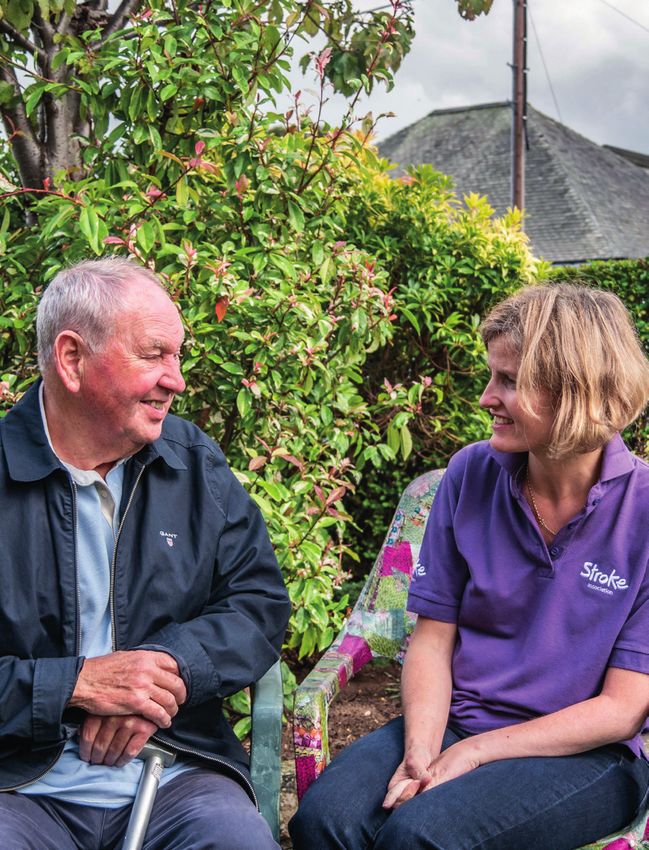
Rod is a Sky Sports Darts Commentator. He is 52 and from Halifax.
Rod had a stroke in May 2020, during the UK lockdown.

“I was out in the garden in May this year, when I started   I’m continuing with regular physio now - some provided
to feel uncomfortable, woozy and unwell. My face and        by the NHS and some that I’m able to pay for privately.
mouth were drooping. My wife, Louise, immediately           It’s exhausting, but I am determined to keep giving
knew I was having a stroke.                                 100%, because I know that will help my recovery. I am
                                                            proof of the difference that intense and personalised
Louise followed the FAST advice and dialled 999             rehabilitation can make. My stroke affected my speech,
immediately. The ambulance came in 15 minutes, and          but I’m making real progress which is great! Being a
I was taken to Calderdale Royal Infirmary. I feel lucky –   Darts Commentator, speech is vital to my career and I’m
I could have been on a long walk in the middle of           hoping to get back behind the mic in time for the World
nowhere and not got to hospital as quickly.                 Championship in December.                                        Rod Studd
                                                                                                                             Darts Commentator
The care I received during my five weeks at the             This report shows the variety of ways that the pandemic          Sky Sports
Calderdale Royal stroke unit was simply magnificent.        has affected stroke survivors and those around them.
I have nothing but praise for the NHS nurses, doctors       Seeing what others have been through during lockdown,
and physiotherapists that helped me when I needed           I feel fortunate about the treatment and care I received,
them most. I’ve had to learn to walk again and I received   and I have had great support from Louise. I hope that
physio and occupational therapy every day. I should         decision-makers make sure that all those affected by
have had a face-to-face appointment with the Stroke         stroke get the support they need to rebuild their lives.”
Association whilst I was in hospital, but that couldn’t
happen because of Covid-19 restrictions.

                                                                                                                        Return to Contents       5
Executive summary
    Almost all aspects of stroke treatment and care have been impacted by the pandemic.

                               Calling 999                         Stroke research

                           Hospital                                          Life after stroke

                           Discharge                                          Mental health
                                                                              and wellbeing

                              Rehab and
                              physical therapy                      Carers

6     Return to Contents
Our survey of almost 2000 stroke
survivors and their carers across the
UK found that the Covid-19 pandemic
has affected every aspect of stroke
treatment and care. This includes delays
to calling 999 and going to hospital
with stroke symptoms and hospital care
and discharge. It’s also impacted access
to rehabilitation and ongoing support,
causing significant challenges for stroke
survivors trying to rebuilding their lives,
no matter when they had their stroke.
Unsurprisingly, survey respondents have
also reported feeling more anxious and
concerned about the future, and carers
have felt the significant pressures of
lockdown.

                  Return to Contents          7
Key findings and impacts
    National stroke initiatives                  Treating strokes in hospital - 76% of
                                                 stroke survivors who had a stroke this year
    Delaying stroke commitments -                felt satisfied with the care they received
    The disruption to health and care services   in hospital, and stroke professionals
    caused by Covid-19 meant national stroke     reported innovations and improvements
    initiatives across the UK were paused        to stroke care. However, only 20% of
    or slowed. This is putting the progress      surveyed stroke physicians reported
    made in stroke care over recent years at     no impact on stroke care in April, with
    significant risk.                            the majority saying thrombolysis and
                                                 thrombectomy treatments were affected.3
                                                 In April, the overall risk of stroke patients
                                                 dying in hospital increased by 12%, with
    Treatment                                    Covid-positive stroke patients especially
                                                 at risk (41%).4
    Delays accessing stroke treatment –
    30% of those who had a stroke during the
    pandemic delayed seeking emergency           Being discharged from hospital - 69%
    medical attention due to Covid-19. In        of people who had a stroke during
    England, Wales and Northern Ireland          the pandemic were satisfied with their
    the number of stroke admissions fell by      discharge from hospital, but 21% were
    around 13% in April, with fewer people       dissatisfied. Around 1 in 3 people (38%)
    experiencing milder stroke presenting at     also felt they hadn’t received enough
    hospital.1 In England and Wales, stroke      support from health and care services
    deaths in private homes were 52% higher      since leaving hospital.
    than usual during the Covid-19 surge.2

8      Return to Contents
Rehabilitation                                                                   of stroke survivors who had a stroke this
                                                                                 year said they had not received enough
Problems accessing rehabilitation and support - 39% of stroke            39%     rehabilitation therapies
survivors who had a stroke this year felt they had not received enough
rehabilitation therapies, including physiotherapy. 34% of those who
had their stroke in 2019 or before said the support they received from           of those who had their strokes in 2019
health and care services had been worse than before the pandemic.                or before said the support they received
Around half of all stroke survivors had therapy appointments             34%     from health and care services had been
cancelled or postponed, and 56% have not felt safe to go to                      worse than before the pandemic.
scheduled appointments - demonstrating the significant disruption to
rehabilitation and support that Covid-19 has caused.
                                                                               Around half of stroke
Using virtual rehab and healthcare - Some stroke survivors have had
appointments (45%) and therapy (28%) online or over the phone, but
                                                                               survivors have had therapy
many others have gone without their usual rehabilitation and support.          appointments or home
This could be because they were not offered virtual appointments, or           care visits cancelled or
didn’t accept them. Satisfaction with telehealth was high among 52%
of stroke survivors. Yet 17% reported negatively on the experience,            postponed
and virtual appointments are clearly not suitable for everyone.

                                                                               56% have not felt safe to go
                                                                               to scheduled appointments
                                                                               a demonstration of the
                                                                               significant disruption to
                                                                               rehabilitation and support
                                                                               caused by Covid-19.

                                                                                               Return to Contents            9
Life after stroke
     Declining mental health and wellbeing – The pandemic and                Caring during lockdown - The pandemic has had a stark mental
     lockdown have taken their toll on stroke survivors’ mental health,      health impact on informal carers, many of whom say they need more
     exacerbating a significant and pre-existing unmet need. 7 in 10 (69%)   wellbeing support and respite care. 77% of carers and family members
     stroke survivors have felt more anxious and depressed lately, with      have been providing more care during lockdown. Worryingly, over half
     68% saying they feel more worried about their health and 69% more       (56%) feel overwhelmed and unable to cope, particularly those caring
     worried about what the future holds.                                    for someone who had a stroke this year (72%).

                               7 in 10 (69%)                                                77% of carers and family members
                               of stroke survivors have                                     have been providing more care
                               felt more anxious and                                        during lockdown
                               depressed lately

                               saying they feel more                                                  of carers feel overwhelmed
     68%                       worried about their health                    56%                      and unable to cope

                               more worried about what                                                of those caring for someone who had a
     69%                       the future holds.                             72%                      stroke this year feel overwhelmed and
                                                                                                      unable to cope

10      Return to Contents
Finances and employment – 4 in 10 (41%) stroke survivors have
worried more about their finances and employment during the
pandemic, particularly those of working age. The Stroke Association
has awarded more hardship grants than usual, as individuals turn to
our charity to fund vital home or personal equipment to cope with the
effects of their stroke.
Staying safe during lockdown - Nearly one fifth of stroke survivors
(20%) were advised by the NHS or government that they were in the
shielding category. Over a third (37%) followed shielding guidance by
choice, despite not being officially advised to shield. Stroke survivors
reported uncertainty and confusion over whether they were more at
risk if they contracted Covid-19, which increased their levels of anxiety.
Stroke research
Impacting stroke research – The majority of stroke research
stopped completely due to Covid-19. 3 in 4 Stroke Association funded
researchers have had their research paused. Although some studies
have restarted, including recruitment, it may take substantial resource
to restart or replan others. Stroke research is historically underfunded,
and Covid-19 threatens the funding available to drive much needed
improvements in stroke care and treatment.
Return to Contents 11Our recommendations
1. All UK governments must urgently 4. Health and care systems should 7. Stroke must be prioritised when
progress - or commit to - national involve stroke survivors and research is restarted. Non-Covid-19
stroke initiatives, and deliver professionals in evaluating all stroke studies should be at level two
commitments made prior to the changes to the stroke pathway in the National Institute for Health
pandemic, acknowledging that stroke in response to Covid-19, using the Research’s Restart Framework, defined
is one of the biggest health challenges pandemic as a catalyst for positive as studies providing access to life-
of our time, and the damaging effects of change and mitigating any negative preserving or life-extending treatment.
the pandemic on stroke survivors. impact on people affected by stroke. Future research should also explore
the possible link between Covid-19 and
2. All stroke rehabilitation must meet 5. Health and care systems and local stroke.
national clinical guideline levels, to authorities should prioritise increasing
mitigate the disruption to recoveries the provision of, and access to, mental 8. All UK governments should commit
caused by the pandemic, addressing the health services, to respond to the to investing in Act FAST public health
individual needs of stroke survivors and significant demand and unmet mental messaging, given its success as a
maximising their potential for recovery. health and wellbeing needs of people behaviour change intervention and
affected by stroke, exacerbated by particularly in preparation for any future
3. Stroke teams should follow up Covid-19. surge in Covid-19 cases.
with all stroke survivors who had 9.
a stroke this year to review and 6. Governments and local authorities
address their rehabilitation needs, to must provide adequate support 10.
avoid a ‘forgotten’ cohort of patients to carers to help them to cope with 11.
caused by the pandemic. the additional pressures of Covid-19,
supporting them to take regular breaks
and maintain their wellbeing.
12 Return to ContentsOur additional Our additional
recommendations recommendations
for England for Scotland
• NHS England and Improvement must • the Scottish Government must make
prioritise stroke commitments in the urgent progress on its 2019-20 and
Long Term Plan, to mitigate against 2020-21 Programme for Government
stroke survivors being further impacted stroke commitments:
by the pandemic and to make sure that
stroke care in England continues to make • Define [and implement] a progressive
the progress it needs to. stroke service, covering the full
pathway, including rehabilitation and
• ISDNs should work with people long-term support.
affected by stroke and other system • Improve stroke care bundle
partners to deliver on commitments in performance in hospitals.
the National Stroke Programme in local Increase awareness of the signs of
areas and enable stroke services to meet stroke, and stroke prevention.
the national clinical guidelines for stroke. • Make thrombectomy available for
everyone who needs it by 2023.
• the Scottish Government should
establish a regular reporting
mechanism for the Programme for
Government stroke commitments
to Parliament, to track progress on
commitments, ensuring transparency and
accountability.
Return to Contents 13Our additional recommendations Our additional recommendations
for Northern Ireland for Wales
The Department of Health and Northern Ireland Executive should • The Welsh Government should replace the Stroke
stand by commitments they made before the pandemic and urgently: Delivery Plan when it expires with a new national
plan for stroke, with hyperacute stroke units as its
• Roll-out a new, regional long-term support pathway, which is priority, in order to drive improvement across the
appropriately funded to meet the needs of people affected by stroke pathway.
stroke. In particular, the new pathway should address the following
issues which have been exacerbated by the pandemic: • As part of developing a new plan for stroke, the Welsh
Government should develop national standards for
1. The provision of the right rehabilitation support for people when stroke rehabilitation, as well as prioritising increasing
and where they need it and for as long as they need it. the provision of, and access to, mental health services
for stroke survivors. Local health boards should also
2. Increased investment in psychological and emotional support ensure they have short- and medium-term plans for
services for people affected by stroke. improving rehabilitation services in their local area
while reconfiguration is ongoing.
3. Enhanced support for carers to take regular breaks and maintain
their wellbeing, as well as a legal recognition of the vital role
they play in our health and social care system.
• Progress with the planned reform of stroke services to create
a sustainable and high-quality service for everyone affected by
stroke in Northern Ireland.
14 Return to ContentsAbout us
The Stroke Association is the UK’s leading stroke charity.
We’re here to support people to rebuild their lives, because
we believe everyone deserves to live the best life they can
after stroke. We provide specialist support, fund critical
research and campaign to make sure people affected by
stroke get the very best care and support.
The Stroke Association is committed to working with decision-
makers and system partners to act on the recommendations
in this report. Across the UK, we’re supporting progress
on national and local stroke initiatives, drawing on stroke
survivors’ insights and our expertise as delivery partners,
and bringing people together to improve the lives of stroke
survivors. To find out more, email campaigns@stroke.org.uk.
In response to the pandemic, we have rapidly developed
new support services and innovations to help meet the most
pressing needs of stroke survivors. These include Stroke
Connect, a partnership with the NHS and Stroke Association
that provides stroke survivors with personal, specialised
support, information and reassurance in the early days
following hospital discharge, and Here for You, a volunteer-
run telephone support service to help stroke survivors who
are feeling lonely or isolated.
Return to Contents 15Methodology
We surveyed 1,949 people We received responses from When stroke survivors had their strokes
affected by stroke in June
2020, to build a clear picture 21%
of how the Covid-19 pandemic
has affected the care they
received, as well as their lives
79%
and recoveries.
This research is the most comprehensive Stroke survivors (79%) During the pandemic (5.49%)
survey of the stroke community since the Carers or family members (21%) January or February 2020 (3.08%)
pandemic began. We had a strong response 2019 (15.19%)
rate from each of the four nations across the 2018 or before (74.76%)
UK. We received responses from 1,546 (79%) 7% were recent (this year) Don’t know (1.49%)
stroke survivors and 403 (21%) carers and stroke survivors
family members. This includes 110 people 93% were stroke survivors
who had their stroke this year, and 69 people who had their strokes in Age ranges:
whose stroke has happened during the 2019 or before
Covid-19 pandemic (since March 2020). Under 18 (0.1%)
8-24 (0.36%)
14% were recent (this year)
carers/family members of
25-34 (1.59%)
someone who had a stroke 35-44 (4.21%)
86% are carers/family
45-54 (14.47%)
members of someone who 55-64 (22.57%)
had a stroke in 2019 or
before.
65+ (34.33%)
Not provided (22.37%)
16 Return to ContentsNations representation Stroke survivors, their carers and family members shared their views
with us by completing an online survey, answering questions and
leaving free-text comments about how the Covid-19 pandemic had
affected their experiences of treatment and care, and impacted
different aspects of their lives.5
9% Scotland
We are aware of the limitations of our survey results. Compared to
the general population, we received an overrepresentation of survey
responses from those aged 65 and over, and an overrepresentation
from those whose ethnicity is White British. We mainly heard from
people who are already in touch with our organisation, often because
they’ve accessed our stroke support services. This could mean the
Northern 5% findings in this report overrepresent those who have received more
Ireland support than the general stroke population.
78% England We’ve also used evidence gathered by the wider stroke community
to increase our understanding and build a comprehensive picture of
Wales 7% how Covid-19 has affected all aspects of stroke treatment and care.
We conducted a survey of our Stroke Association Research Award
holders about the impact on the research community, asked stroke
professionals their views through our Professional’s Network in June,
and commissioned Eden Stanley market research data in May, to
explore the drop in stroke patients in emergency departments. We
have also featured the findings from the British Association of Stroke
Physicians (BASP) Covid-19 members’ survey, and drawn upon national
stroke clinical guidance in response to Covid-19 and Office of National
Statistics data on non-Covid-19 deaths.
Return to Contents 17Delaying national progress
Before the pandemic began, most stroke survivors received
less than half the amount of rehabilitation recommended by
national guidelines, and many reported feeling ‘abandoned’
after leaving hospital. Across the UK, access to high quality
stroke care and life-saving treatments has been variable.
Now, the pandemic has served to magnify the challenges that
stroke survivors already faced, particularly when accessing
rehabilitation after hospital, and getting support to address
their mental health needs.
The pandemic has had a positive effect in some cases. Rapidly
produced national stroke guidance helped to maintain standards
of stroke care,6 as have the tireless efforts of stroke clinicians. We
have also seen some brilliant innovations in stroke care over the
past months, as health systems adapted in response to the virus.
Virtual appointments and phone consultations have broadened
access to stroke care, and stroke teams have quickly adopted pre-
hospital assessments and remote working that may have actually
improved care in places.
Yet it’s vital governments and health systems do not overlook
their existing commitments and proven interventions - such
as hyperacute stroke care, thrombectomy treatment and Early
Supported Discharge - which save lives and reduce disability. Now
is also the time to embed networked approaches to stroke care, so
that systems can collaborate and pool resources and expertise to
create the best stroke pathways for local residents.
18 Return to ContentsAnd national programmes must recognise The pandemic has also brought existing Our recommendations
stroke prevention as a cost-effective health inequalities into sharp focus.
investment. 9 in 10 strokes can be Like Covid-19, the impact of stroke is The Covid-19 pandemic cannot
preventable. In the midst of this pandemic, disproportionate in some communities. jeopardise the lives and recoveries of
decision-makers cannot overlook the huge Strokes are more likely to happen to those those affected by stroke any more than
potential to save lives, and lessen pressures from socially deprived areas, and these are our findings show it already has. We
on the health system in coming years, with often more severe. People from black and recommend that:
the right investment in stroke prevention South Asian communities are more likely to
programmes now. have a stroke than white people. Risk • All UK governments must urgently
factors such as high blood pressure and progress - or commit to - national
Governments and health and care systems diabetes also disproportionately affect stroke initiatives and deliver
across the UK must take urgent action to these communities, contributing to their risk commitments made prior to the
deliver on the stroke ambitions they had of stroke. pandemic, acknowledging that
already committed to before the pandemic stroke is one of the biggest health
took hold. With strong national and local In light of the pandemic, and the structural challenges of our time, and the
leadership, and stroke priority programmes, disadvantages it has brought to the fore, damaging effects of the pandemic
we must overcome the significant recent understanding health inequalities must be a on stroke survivors. National
disruption to stroke treatment and support. priority for all aspects of stroke prevention, initiatives should consider the full
Addressing the problems highlighted in this treatment and post-hospital care. The pathway, from prevention through to
report will allow future policy and practice Stroke Association has already embarked life after stroke.
to truly support stroke survivors to rebuild on developing its own strategy to highlight,
their lives. challenge and address or tackle health • All national stroke initiatives should
inequalities that exist in stroke health. consider how to reduce health
inequalities as a key focus of their
activity, and this should also be a
priority for future research.
1.
2.
Return to Contents 19Treatment We received responses from 110 stroke survivors who had their stroke this year, including 69 whose stroke happened during the Covid-19 pandemic (since March 2020), to understand more about their stroke, hospital and discharge experiences. We also received responses from 57 carers or family members of those who had a stroke this year. Delays accessing stroke treatment Stroke is a medical emergency. The sooner somebody receives a brain scan to diagnose their stroke, the quicker they will receive appropriate treatment and the more likely they are to survive and make a good recovery.7 At the start of the pandemic, hospitals across the UK saw a significant drop in stroke patient admissions, and many stroke patients presented to hospital later than usual,8 reflecting wider trends in non-Covid use of A&E departments across the UK.9 10 11 29% of the 69 survey respondents who had their stroke since March 2020 agreed that they had delayed seeking emergency medical attention because of cornavirus. This supports market research we commissioned in May, which found that 68% of the public were less likely to contact emergency services if ill with non-Covid-19 symptoms due to the pandemic.12 42% hadn’t wanted to burden emergency services, while 34% were afraid of catching Covid-19 in hospital.13 National stroke audit data from April shows that stroke admissions fell by 13% in England, Wales and Northern Ireland.14 In a British Association of Stroke Physicians members survey, 42% of stroke physicians reported reduced activity at TIA and stroke clinics in April.15 20 Return to Contents
“I waited longer to report [my stroke] in the first place as I dreaded   This has sadly resulted in more people dying from stroke in care
going to the hospital as I and my daughter had been isolating            homes and private homes during recent months - a wider effect
ourselves since 9 February. My most recent stroke was about              of the virus. ONS data shows that stroke deaths in care homes
mid-April and eventually I went to hospital mid-May as I had started     were 39% higher than the five-year average in England and Wales,
having fits and paralysis down my left side, which were symptoms I       and stroke deaths in private homes 52% higher, during the Covid-19
had not experienced before… I feel that it will now take me longer to    surge from mid-March until May (68% and 57% for April alone).16
recover than it did before.”                                             As the pandemic has continued, the number of stroke
Stroke survivor who had their stroke since March 2020                    presentations has gradually returned to normal levels.

“Fewer strokes presenting at hospital as people are scared
of catching the virus, so they are staying home and their
symptoms are worsening.”                                                               29% of people who had their
Stroke professional
                                                                                       stroke during the pandemic
                                                                                       (since March 2020 onwards)
“We do not know where new patients with stroke have gone!                              delayed seeking emergency
The stroke unit is low on numbers and anecdotally General Practice
staff locally do not report seeing people with stroke or TIA.”                         medical attention due to the
Stroke Association funded researcher                                                   coronavirus pandemic.

                                                                                                                   Return to Contents         21
Worryingly, some stroke survivors told us they felt that their stroke was not seen as Our recommendation
a priority by NHS staff, or reported issues getting their stroke diagnosed. We also
heard from people who had received conflicting advice, and cases where healthcare To avoid excess stroke deaths and disability
professionals had advised patients experiencing stroke symptoms not to visit hospital as the pandemic continues, it’s vital that both
because of the virus. This culmination of delays to stroke treatment may have created the public and health professionals continue
a cohort of stroke survivors whose rehabilitation and recovery needs are greater and treating stroke as a medical emergency.
more complex as a result. We also recommend that:
• All UK governments should commit to
“It’s frightening, because stroke was not seen as a priority to A&E. The most important continued investment in Act FAST public
thing in the world was Covid-19. It might have been to them but, to me, I was having a health messaging, given its success
stroke, and that’s what I needed help with at that time. They couldn’t scan me, and the as a behaviour change intervention and
stroke unit would not see me, and they chose not to admit me “because we couldn’t particularly in preparation for any future
examine you properly anyway” because of social distancing and no scans taking place surge in Covid-19 cases.
at the moment. Is it ok that people die with stroke just as long as they don’t die from
Covid-19? I live alone and I was sent home still unable to move, dribbling, dropping 1.
mouth, and not being able to walk properly. There was no follow up at all. I live alone
and I have been left with no advice and no concern that what happened might happen 2.
for a third time.” 3.
Stroke survivor who had their stroke since March 2020
“I should have gone into hospital for an extra brain scan due to headaches but it was
deemed more dangerous to have one during the height of the pandemic. Extra worry as
it was suggested that I caught a bus to A&E if headache got really bad.”
Stroke survivor who had their stroke since March 2020
22 Return to ContentsTreating strokes in hospital
The majority of survey respondents (72%) said they understood
Covid-19 prompted inevitable changes to the care delivered in the hospital treatment they received when they had their stroke
hospitals, as health systems responded to the virus surge. 70% of (7% disagreed). However, worryingly less than half (45%) felt that
those who had a stroke during the pandemic were satisfied with they were involved in decisions about plans for their recovery (28%
the care they received in hospital while only 12% reported feeling disagreed) during this time, suggesting a lack of personalised care
dissatisfied, in line with similar survey findings from before the that is vital for recovery. The main issues cited by those who’d had a
pandemic. Evidence suggests that the pandemic impacted stroke negative experience in hospital were feeling like their stroke care was
care in hospital, in both positive and negative ways. compromised, and feeling that their stroke was not seen as a priority
by staff.
70% of stroke survivors felt
“Having a (second) stroke in lockdown has been a nightmare. I got to
satisfied with the care they hospital after my stroke and a clinician told me they could not confirm
received in hospital, while only stroke because all scans are on hold and not currently being carried
out. They said they would “ordinarily” admit me to the stroke unit, but
12% of stroke survivors reported they felt it was “too risky”. The A&E clinician said they would get a
stroke doctor to come down to A&E to see me instead, but they never
feeling dissatisfied. did. I couldn’t speak properly or walk properly or stand well on my
own, and they told me to go home. They didn’t even tell me how
I should get home. I couldn’t feel half of my body.”
Stroke survivor who had their stroke since March 2020
72% understood the hospital
treatment they received when
they had their stroke, while
7% disagreed with this statement.
Return to Contents 23Encouragingly, recent interim audit data from England, Wales and NI shows that key Our recommendations
stroke care indicators were largely maintained in April, May and June 2020, if not slightly
improved. This includes the time taken to carry out a brain scan, to admit to a dedicated Timely and high-quality hospital stroke
stroke unit and the number of patients who received thrombolysis (clot-busting drugs) care is essential to maximise the number of
treatments17. These achievements, however, are balanced against the reduced number of people who survive their stroke, and begin a
stroke admissions seen in the same period. good recovery journey. We recommend that:
Positively, many stroke professionals have also reported innovations and improvements • Health and care systems should
in stroke hospital care and team working during the pandemic. These include pre-hospital involve stroke survivors and
triage services, telephone consultations and more use of Early Supported Discharge. We professionals in evaluating all changes
praise the dedicated and hard work of stroke clinicians throughout the pandemic so far, to the stroke pathway in response
and welcome any effective innovations that can demonstrate improvements to patient to Covid-19, using the pandemic as
care. It’s vital that recent changes to stroke care in hospital are evaluated, to identify a catalyst for positive change and
sustainable and long-term improvements that can be embedded across the UK. mitigating any negative impact on
people affected by stroke.
Although most stroke units have been able to submit data during the pandemic, the true
impact on stroke care, including the delivery of thrombolysis and thrombectomy, remains • Stroke services should renew their
an incomplete picture. In the British Association of Stroke Physicians members’ survey, focus on implementing mechanical
for example, only 20% of physicians reported no impact on stroke unit care in April. thrombectomy, committing to ambitious
59% and 75% of members also reported an impact on the provision of life-changing targets to increase provision to all
thrombolysis and thrombectomy (surgical clot removal) treatments in the same month.18 patients who would benefit.
1.
Thrombectomy is a game-changing procedure that is suitable for around 10% of all stroke
patients. Before the pandemic, access to thrombectomy was already variable across the 2.
UK, and there has been no thrombectomy service in Scotland since summer 2018. It is 3.
concerning to hear anecdotally that thrombectomy services have been affected by the
pandemic, given the existing challenges and delays to rolling out the procedure more
widely. It is now paramount that national and local decision-makers prioritise broadening
access to thrombectomy to all that would benefit as soon as possible.
24 Return to ContentsReturn to Contents 25
Being discharged from hospital
 Discharge from hospital to home is a key point of transition in a        Many then commented on issues they had with lack of support once
 stroke survivor’s recovery. It requires the support of both health       they reached home, highlighting the problems with joined up care
 and social care services, working together in a joined up way to         between hospital and community settings in some cases. Less than
 ensure that patients return home safely, with all the support            half (49%) felt they had received enough support from health and care
 they need in place. We’d previously heard about some of the              services since leaving hospital, with over a third (38%) saying they
 issues people face when being discharged from hospital in our            hadn’t. Key themes from respondents’ comments included a rushed
 2016 New Era for Stroke report. Then, 30% of people told us              discharge process, poor communication from stroke services and too
 they felt unprepared when it was time to go home, and 45% felt           little support to help them rebuild their lives at home.
 abandoned once they’d left hospital.19
                                                                          Respondents highlighted issues caused by a lack of communication
 Our recent survey findings present a mixed picture of discharge          between hospitals and local authorities, such as not being provided
 during Covid-19, with the majority of stroke survivors who had a         with home assessments or adaptations. Carers also mentioned a lack
 stroke this year saying that the discharge process itself worked well,   of information around what should happen next, including details
 but reporting issues accessing care and support once home. Overall,      of what the stroke survivor in their care could safely eat and drink,
 69% of stroke survivors who had their stroke during the pandemic         contributed to ongoing health worries.
 were satisfied with their discharge from hospital, while 21% were
 dissatisfied.

 “I’ve had all of my therapy and stroke nurse visits at home weekly
 since my discharge from hospital in April, I’ve just had one
 phone consultation up to now, I have been most fortunate
 considering because of the Covid-19 outbreak.”
 Stroke survivor who had their stroke since March 2020

26   Return to Contents
I felt satisfied with the way I was discharged from hospital “Discharge from hospital was rushed and we had no home
assessment. I had to pay my neighbour to fit a stair rail.”
Carer of a stroke survivor who had their stroke Jan/Feb 2020
69% agree
“In some ways it has helped as he wouldn’t have come out of hospital
8% neither agree not disagree so quickly and I have no doubt that being at home has helped with
his recovery, but we do feel like we’re in limbo now… communication
hasn’t been great.”
21% disagree Carer of a stroke survivor who had their stroke since March 2020
2% don’t know “The care I received while in hospital has been fantastic! Ambulance
crew, doctors and nurses, all wonderful! Sadly, in the outside world,
it’s nothing but Covid-19, all else has been ignored.”
Stroke survivor who had their stroke since March 2020
I felt I received enough support from health and care services
since leaving hospital
49% agree
10% neither agree not disagree
38% disagree
3% don’t know
Return to Contents 27“If my wife hadn’t been there, I would have struggled”
David, 59 from Leeds, had “The whole of my right side has been
his stroke at the end of affected, and also my speech. I could walk
February 2020, just a few a little before my stroke with crutches but Our findings show the pandemic
weeks before lockdown. now I can’t walk at all without my frame. The had more of an adverse effect for
movement in my arm is coming back but I those who had a stroke in January or
“I was driving on the still can’t write or pick up a cup. Mentally, I February this year, than those who
motorway when I starting get very emotional and very, very tired. Not had a stroke during the pandemic.
feeling woozy. I couldn’t really see properly, being able to see my kids and grandkids Those who had their stroke in January
but fortunately managed to get home. I just when I was feeling down really got to me. or February reported higher levels of
thought I was feeling a bit fluey but my wife dissatisfaction with discharge (32% vs
recognised it was a stroke and dialled 999. “I’ve had physiotherapy and occupational 19%) and more uncertainty over when
I was talking and thought I was fine, but therapy. But they didn’t come out [to my their care plans would next be reviewed
she said I wasn’t making any sense. I’m in a house] as much as I would have liked, and a (34% vs 25%).
wheelchair from a previous illness, but I was lot was over the phone or by video.
leaning and started to slide over. My face Medical professionals have also
had also dropped. “I had carers come to visit me for the first highlighted their concerns about
few weeks to help me because I couldn’t get stroke patient discharge during the
“Luckily the ambulance arrived within 10 dressed or do anything myself and my wife pandemic. In their comments to us,
minutes. I went to Pinderfields Hospital – I Lee was at work. Unfortunately, they had to some noted that the discharge process
live in the middle of Leeds and Wakefield stop because of Covid-19 and had to focus was rushed and, as a result, stroke
so they gave me the choice of where to go. on other cases who needed the support survivors received much less support
I didn’t go to A&E but was taken straight to more – they were short staffed. My wife was and rehabilitation than they usually
the stroke ward, where they did a CT scan put on furlough and she could then support would in hospital settings. Some stroke
and put me on me a drip over night to clear me. If Lee hadn’t been there, I would have professionals were also concerned
any blood clots. struggled.” about patients returning to unsuitable
home environments with little support
David talks of the impact of his stroke and and rehabilitation in the community to
how Covid-19 has meant he has received less help them rebuild their lives.
care and support with his recovery than he
would have liked.
28 Return to Contents“Patients are being discharged from However, other professionals Our recommendations
hospital sooner that they would, so reported improvements to patient
they are getting less rehab’ in hospital, discharge. For example, the British As health and care systems evaluate all
and maybe they are going back to Association of Stroke Physicians’ changes made to the stroke pathway,
environments where the support is not survey found that 32% of members including to hospital discharge, we
suitable. It is not unusual for the team reported an increased use of Early recommend that:
at hospital to identify issues through Supported Discharge (ESD) services.20
discussion with patients/ families / social ESD services are recommended in Royal • Stroke teams should proactively follow
workers etc - I worry that people may be College of Physicians clinical guidance up with all stroke survivors who had a
being sent back to environments where and play a vital role in joining up care stroke this year, to review and address
support (practical / emotional....) has not as stroke survivors make the crucial their rehabilitation needs, to avoid a
been implemented.” adjustment from hospital and home.21 ‘forgotten’ backlog of patients caused by
Stroke professional It shortens the length of time patients the pandemic. Appropriate and additional
spend in hospital, making sure they support should be provided, as well as
receive the same levels of appropriate additional mechanisms to re-refer to the
“All existing Early Supported Discharge support in their own home instead. A well- system.
patients had to be referred on to the functioning ESD service improves patient
community stroke team (prematurely) and outcomes and reduces disability. However, • Stroke services should ensure that
as a consequence some of them are still it is essential that the service is properly Early Supported Discharge services are
waiting to be seen 10 weeks later.” implemented as the pandemic continues, properly established during and beyond
Stroke professional and that stroke survivors receive the full the pandemic, and that all eligible stroke
ESD package recommended in guidance. survivors receive the full ESD package
recommended in guidance to improve
outcomes and reduce disability.
1.
2.
Return to Contents 29Rehabilitation The consequences of stroke are life changing and often devastating - two thirds of survivors have disabilities caused by stroke.22 With effective rehabilitation and support, the first few weeks and months after leaving hospital offer a particular window of opportunity, in which stroke survivors can often make significant strides towards recovery. Yet we know that long-term personalised support is also essential, and stroke survivors can still benefit from therapy and interventions years after their stroke. We asked all 1,546 stroke survivors who took part in our survey about their experiences of stroke support and their ability to recover during the pandemic. This is because the majority of stroke survivors experience long-term impacts on their daily lives, and many still benefit from rehabilitation therapies years later. We also asked the 403 carers or family members about the support and rehabilitation they and their loved ones had received. 30 Return to Contents
Accessing rehabilitation and support                                                       Have had appointments related to stroke
                                                                                           cancelled or postponed
Our findings suggest that access to rehabilitation services has                               55% Yes           4% Don’t know
significantly deteriorated since the Covid-19 pandemic, and is                                41% No
threatening to put stroke recoveries at risk. 39% of stroke survivors who
had a stroke this year said they had not received enough rehabilitation                    Have had therapy cancelled or postponed
therapies, including physiotherapy, occupational therapy and speech                          54% Yes            3% Don’t know
and language therapy. This figure is even higher (56%) for those who                         43% No
had their stroke just before the pandemic (in January or February),
further suggestion of a ‘forgotten’ cohort of stroke survivors in the rush
to respond to Covid-19. These individuals are now at risk of experiencing                  Have had some or all home care visits
more long-term and complex disabilities than they otherwise would                          cancelled or postponed
have – impacts that are devastating for the stroke survivors themselves                       49% Yes            4% Don’t know
and also more costly to the health and social care system.                                    47% No

34% of those who had their strokes in 2019 or before said the support they
received from health and care services had been worse or much worse since     How has support received from health and care services
the UK was affected by coronavirus. 55% said it had been the same, and        been since the UK was affected by coronavirus
8% said it had been better or much better. Reduced access to community
rehabilitation has had a negative affect even for those who started their       3% Much better
recovery journey long before the pandemic.
                                                                                  5% Better
Some respondents highlighted long-term issues they still required support
                                                                                                              55% Neither better or worse
with, such as swallowing problems, memory issues and anxiety. Their
comments show that the pandemic has caused recoveries to stall, or in some                20% Worse
cases actually contribute to making the effects of their stroke - including
fatigue, decreased mobility and anxiety – worse or more difficult to deal             13% Much worse
with. A large proportion report that the pandemic has had a negative effect
on their progress, and that it will subsequently take longer for them to         3% Don’t know
recover.
                                                                                                                Return to Contents          31
“Everything was cancelled due to Covid-19
and lockdown. It all fell apart”
Colyn, 76 from the Lake District, had a stroke in
Comments show that the pandemic has caused their recoveries 2019 while he was on holidays in the Scottish
to stall, or in some cases the effects of their stroke - including Highlands. A former teacher and professional
fatigue, decreased mobility and anxiety – to worsen. A large mountaineering instructor, Colyn was left with
proportion report that the pandemic has had a negative effect one-sided weakness and fatigue following his
on their progress, and that it will subsequently take longer for stroke. He received occupational therapy and
them to recover. physiotherapy while in hospital. While this should
have continued at home, the Covid-19 pandemic prevented this from
We feel that my father’s care, follow up and any further happening.
rehabilitation has been zero since discharge. We feel we are
not being given information regarding his prognosis or future. “I didn’t have my first physiotherapy session until the end of January
We feel he has been pretty much left to lie in bed with 4 x daily [2020]. The physiotherapist then went off sick so it wasn’t until
carers (fantastic carers). He feels he has been left to die.” February that I started properly with two brilliant physiotherapy
Carer of a stroke survivor who had their stroke in January or sessions. I asked to use the gym equipment and managed to use
February 2020 the rowing machine, static bike and the cross trainer. I’m a hard task
master for myself and was determined to get better. Then everything
was cancelled due to Covid-19 and lockdown. It all fell apart.
“My mum has severe dysphasia and with no speech therapy
for 5 weeks while with me, and limited speech therapy while in “I think lockdown has made a massive impact on my recovery. I’ve
hospital, her progress is not what it should be. This is severely had no physiotherapy at all since. In fact, it may be September when
impacting on her recovery and wellbeing.” I can start again. I live in the middle of the Lake District. The nearest
Carer of a stroke survivor who had their stroke in January or swimming pool is Kendal and I don’t drive at the moment, which
February 2020 means I have to get a bus which takes hours there and back. I’ve done
some exercises but it doesn’t have the same effect as being there with
the physiotherapist.
“I have felt my mobility worsen as my usual exercise activities were
not available (swimming, guided seated yoga). Walking is not as “I’m 76 now and have always been fit. I played football and basketball,
good activity for me and some days I cannot manage a walk.” went fell running, I climbed all manner of mountains for years, and
Stroke survivor who had their stroke 2018 or before used to cycle. But I can’t do any of that now. The government has
failed vulnerable people in lockdown.”
32 Return to Contents53% of all stroke survivors who responded to the survey also “Reduced space and personnel available for rehabilitation; pressure
had therapy (including physiotherapy, occupational therapy and to discharge patients too early, losing opportunity for restoration of
speech and language therapy) cancelled or postponed, and nearly independence.”
half (49%) have also had some or all home care visits cancelled or Stroke professional
postponed. These could have been cancelled by health professionals
or stroke survivors themselves - as 56% have not felt safe to go to
scheduled appointments and 41% have not wanted health and care “The vast majority of moderate to severe have received no rehab.
workers to visit at home due to fear of the virus. Accessing health Window of opportunity for max benefit missed (…) There is no point
services during the pandemic has caused anxiety and stress for many saving lives if we can’t provide rehabilitation to optimise the quality
stroke survivors. of that life.”
Stroke professional
Stroke professionals also highlighted their concerns with
rehabilitation during the pandemic. 33% of British Association of
Stroke Physicians’ survey respondents reported reduced activity “Patients are being discharged from hospital sooner than they would,
in rehabilitation services in April, with 30% reporting reduced so they are getting less rehab’ in hospital, and maybe they are going
quality, mainly due to less opportunity for rehabilitation in hospital back to environments where the support is not suitable.”
and reduced community rehabilitation.23 Our own survey of stroke Stroke professional
professionals highlighted these issues too. Stroke professionals raised
concerns that key opportunities to restore independence and improve
quality of life through rehabilitation were being missed. Some said “Significant impact on rehab in community as not able to provide
their patients had reported feeling abandoned once in community face-to-face contact ( …) Community patients have reported feeling
settings. “abandoned” [and it] has put pressure on family dynamics as families
having to provide more support.”
Stroke professional
Return to Contents 33Our Stroke Helpline is a place
for information and support.
Our Helpline Manager explains how These problems are not new - the pandemic has exacerbated existing
the pandemic has affected the calls our problems accessing sufficient rehabilitation and support. Pre Covid-19,
Helpline receives: there were already significant shortfalls in the amount, duration and
“Access to rehabilitation after discharge is quality of rehabilitation stroke survivors received across the UK.
a concern that may people have when they National guidelines say that stroke survivors must have access to
call us on the Helpline. During the pandemic rehabilitation for as long as they show benefit, but adherence has
these concerns and the uncertainty felt by been patchy. In our 2016 New Era for Stroke survey, 45% of stroke
stroke survivors has increased significantly. Many hospitals survivors said they felt abandoned once leaving hospital, commenting
are discharging patients more quickly which means that some on a lack of joined up hospital and community care, too little support
stroke survivors are not getting the amount of intense in- available once returning home and missed follow-up reviews.24
patient therapy that they would normally receive. This can
mean that their care needs on discharge are higher than they Our recent Covid-19 survey results also highlight general problems
would normally be. accessing routine healthcare during lockdown. A large proportion of
stroke survivors told us that they were unable to, or did not want to,
“We are also hearing from stroke survivors and their families access GPs, pharmacies and other healthcare services to help them
that access to face-to-face physiotherapy and speech and manage their condition. The majority of respondents also reported
language therapy when they return home from hospital is routine appointments and scans being delayed or cancelled.
generally not happening, although this does vary from area to
area. Some therapists are providing virtual therapy sessions
and some are leaving exercise sheets for family members
to practice. However, there’s a real sense that people feel
abandoned. I’ve also heard from other colleagues that some
stroke survivors are fearful that they will be ‘left behind or
forgotten about when services resume’ or that it will be ‘too
late’ for their recoveries by the time much-needed therapy and
support can be accessed.”
34 Return to Contents“Consultant said I need an ECG and yet my While the Covid-19 surge necessitated Our recommendations
appointment isn’t until September, which changes to post-stroke care, it is now vital
is a major concern.” to fully restore and expand rehabilitation Going back to pre-pandemic levels of access
Stroke survivor who had their stroke services to meet national guidelines. This to rehabilitation for stroke survivors is not
since March 2020 is essential to avoid stroke recoveries enough. All stroke survivors across the
stalling and prevent the problem getting UK should receive joined-up personalised
worse. Failure to do so is likely to lead to care and rehabilitation to support their
“Felt like I had fallen off the health care increased needs and a rising tide of future recoveries. We recommend that:
system a little bit, all appointments demands on already stretched health and
cancelled and local GP not able to see me care systems. • All stroke rehabilitation must meet
even though I was sure I had a mini stroke national clinical guideline levels, to
since being in lockdown.” Life after stroke support need not only mitigate the disruption to recoveries due
Stroke survivor who had their stroke be provided by health and care bodies. to the pandemic, addressing the individual
since March 2020 Voluntary sector organisations, including needs of stroke survivors and maximising
the Stroke Association, can help to their potential for recovery.
provide the space and support necessary
“There has been very limited contact from - through peer support groups, exercise • Stroke services should complete a
any statutory services since then and no classes and one-to-one engagement – to 6-month review for all stroke survivors,
indication how or when he will be able to ensure that stroke survivors are able to with particular attention paid to those who
engage with services in the future.” access the support they need to continue had a stroke recently who may have more
Carer of a Stroke survivor who had their their recoveries. pronounced unmet needs.
stroke in 2019 1.
2.
Return to Contents 35You can also read


