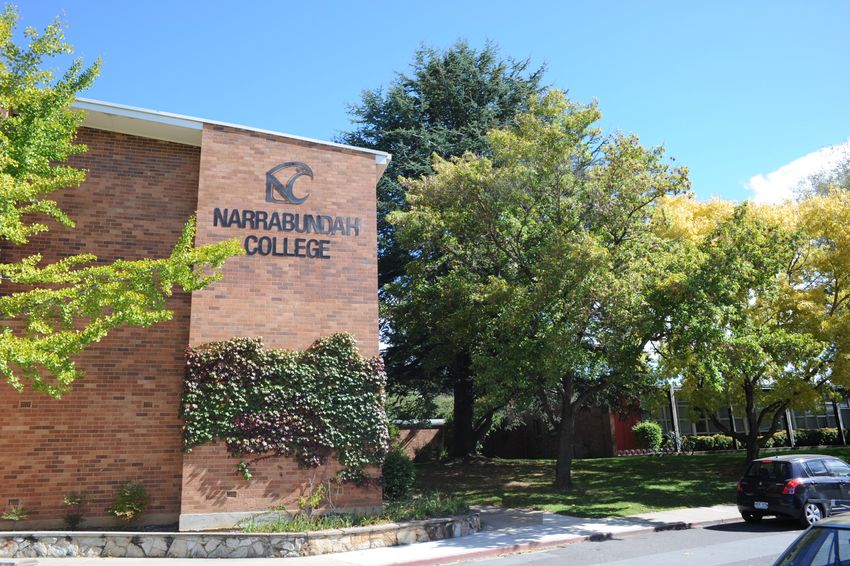
Student Info - Narrabundah College
←
→
Page content transcription
If your browser does not render page correctly, please read the page content below
Student Info
Narrabundah College                                                                           Student Info 2019

                                             Table of Contents
WELCOME TO NARRABUNDAH ......................... 1 COURSES AND CAREERS                                                            20
COLLEGE CORE VALUES ................................. 1              Course     Selection      and    Career      Planning      . 20
                                                                     Student Pathways Plan                                        20
NARRABUNDAH COLLEGE MAP ....................... 2                    Unit Selection ....................................... 21
  College Calender 2019 ............................. 3                    Each Session................................. 21
  Timetable.................................................. 3            Changing and Withdrawing from Units
KEY PEOPLE, TELEPHONE NUMBERS &                                            ...................................................... 21
WEBSITE ........................................................ 4   Work experience………………………....21
  Principal, Deputies, Faculty Heads ........... 4                   Australian School Based Apprenticeships
  Student Advisers ...................................... 5            (ASBA)                                                     21
  Transition and Careers Officer.................. 5 STUDENT LEADERSHIP……………………….22
  School Psychologist ................................. 5            Student Governance Group, College
  N Groups .................................................. 5      Governance, Peer Education, College
  Indigenous Students’ Contact Officer ....... 5                     Events, Charities and Community.
  Anti-Racism Contact Officers.................... 5 ACT SENIOR SECONDARY CERTIFICATE AND
  Anti-Sexual Harassment Contact Officers 5 THE ATAR…………………………………….23
  College Canteen ....................................... 6          ACT Senior Secondary Certificate
GENERAL ....................................................... 7    requirements ........................................ 23
  Absences.................................................. 7       ATAR – Tertriary Entrance Statement .. 23
     Procedures – when absent .................. 7                   Course Patterns ................................... 23
     Approval for Leave ............................... 7            How are Scores derived ....................... 23
  Accidents .................................................. 8     How is a ATAR calculated .................... 24
     First Aid................................................ 8     Course Types ....................................... 24
     Absence Note Form ............................. 8               AST ...................................................... 24
     Dangers from Sharps in the School ..... 9                           AST Program – Year 11 & 12 .......... 24
  Caring for Your Property........................... 9                  The Writing Task ............................. 25
  College Rules ......................................... 10             The Multiple Choice Paper ............... 25
  Computer Use Agreement ...................... 11                       The Short Answer Response Paper . 25
     Parent Information Sheet on Internet                          ASSESSMENT GENERAL .............................. 27
       and E-mail access for Students ....... 11                     ACT Board of Senior Secondary Studies
     Guide to the Code of Practice for                                   Assessment Policies......................... 27
        Students using the internet ............ 11                  Essay Draft Policy .............................. 28
     Student Internet Access ..................... 14                Personal Study Plan ............................. 30
  Contributions .......................................... 15        Unit Outlines and Assessment Procedures . 31
     Payment of Voluntary Contribution ..... 15                      End of Unit Testing ............................... 31
     Payment of Optional Parent                                      Assessment         and Absences .................. 31
       Supported Items .............................. 15             ‘V’ Grades       ........................................... 31
     Cash Register - Open 8.30am Close                               Test Procedures ................................... 31
       2.00pm ............................................ 15        Appeals Policy ...................................... 32
     Payment for Consumables ................. 15                    Plagiarism ............................................ 33
  Excursions .............................................. 16           Penalties for plagiarism.................... 33
  Wellbeing ............................................... 17           How to avoid plagiarism ................... 34
     Useful Health Phone Numbers .......... 17                       Student Support & Study Assistance: ... 34
  ID Cards ................................................. 18          Study Hub ........................................ 34
  Lockers ................................................... 18         Registered ESL/IPS ......................... 34
  Sport....................................................... 18        Practice sessions for the AST writing
  Outdoor Education ................................. 18                 task .................................................. 34
  Student Noticeboard ............................... 18 SPECIFIC POLICIES ..................................... 35
  Text Books ............................................. 18        Drug Policy ........................................... 35
  Transport ................................................ 19      BSSS LOTE Enrolment Policy ............. 39
  Travel Concessions ................................ 19             Criteria for Permission to Enrol
  Visitors to the College ............................. 19           in a BSSS Language Course................40
                                                                     Student Management Policy ................. 41
                                                                   FREQUENTLY ASKED QUESTIONS ................ 43
                                                                     Advisers’ Noticeboards ......................... 43
                                                                     Assessment Methods ........................... 43
                                                                     Careers ................................................ 43

                                                          -2-
Narrabundah College                                                                  Student Info 2019

Daily Notices on Electronic                                  Selecting information.............................48
 Noticeboards ....................................... 43     Books to help with Study Skills &
Feeling Sick or Needing First Aid .......... 43              Essay Writing........................................48
Holidays and Assessment Week Dates 43                        Turnitin..................................................50
International Exchange ......................... 43          Student access to the internet and
International Private Students ............... 43             school computer network                                  51
Library Material Overdue ...................... 43           The ACT Public Library service and full
Lost Something ..................................... 43         text online resources                                  52
N Groups .............................................. 43   Presenting a Talk                                         53
Study Techniques ................................. 44        Help with Written Expression and Essays
Thinking of Leaving?............................. 44                                                                   54
Your Welfare ........................................ 44     Writing the Essay                                         54
                                                             Plagiarism                                                56
Welcome to Narrabundah College                               Referencing Your Work and
  Library                                         45         Bibliographies                                            57
Opening Hours                                     45         History Essays                                            58
What’s in our library?                            45         Language Study Skills                                     59
Printing and Photocopying                         45         Humanities Report Writing                                 60
Audio-visual equipment                            45         Mathematics                                               61
Borrowing                                         46         Science Practical Reports                                 62
Textbooks                                         46         Science Essays/Major Assignments                          62
Fines                                             46
Search the library using Oliver                   46         COURSE RULES……………….. ….….63-67
Personal Devices                                  46
Overdue Books & Other Overdue Items 46                       ATTACHMENTS
Lost/Damages Books                                46         Unit Planner Sessions 1-3 2019
Planning on Leaving or taking extended
leave                                             47
Getting started on assignments                    47
Locating information..............................48

                                       College Drama Production 2018 – The Idiot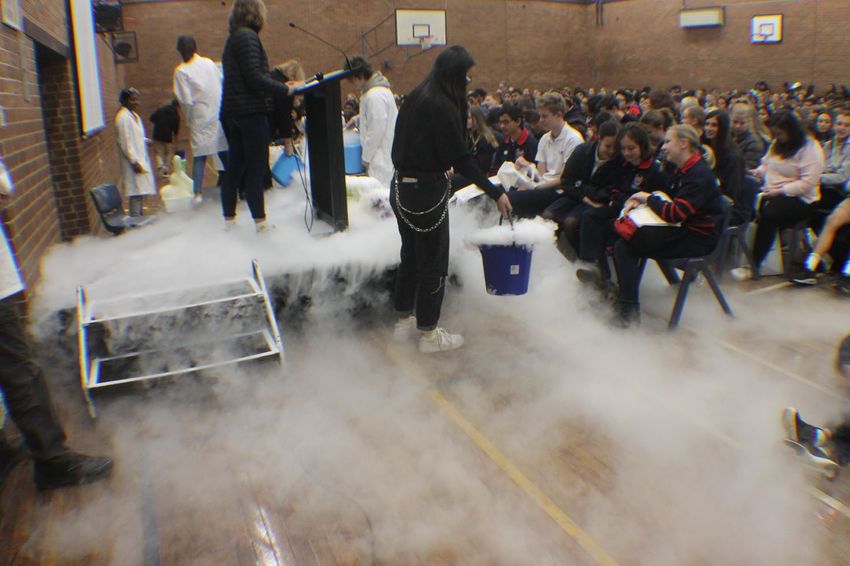
Narrabundah College                                                           Student Info 2019

               WELCOME TO NARRABUNDAH COLLEGE
                        DISCOVER, DEVELOP, EXCEL.
We hope your stay will be both happy and productive.

During your first weeks here, you will receive a lot of information. It is important to
read the information carefully.

Please refer to this online resource as necessary to help you make the most of your
time at College.

You will be allocated to an N Group for your two years at Narrabundah. If you have
any questions - make sure you ask your N Group teacher.

                           COLLEGE CORE VALUES
       •   CHALLENGING CURRICULUM
       •   RESPECTFUL, SUPPORTIVE AND GIVING ENVIRONMENT
       •   INTERNATIONAL COMMUNITY

   We strive to:
   • Lead students to become resilient, independent and compassionate
      adults prepared for a life in a rapidly changing world;
   • Encourage students to fulfil their potential and to become critical
      thinkers responsible for their own learning;
   • Deliver a challenging academic curriculum in a supportive and
      stimulating learning environment;
   • Cater for individual differences in a socially and culturally diverse
      student community.

   We foster:
   • Academic excellence;
   • Creativity and innovation in our students;
   • Student engagement in community.

Narrabundah College offers a challenging curriculum in a caring environment to meet
the needs of students in an international community.

This printed information provides the best information available at the time of publication.

                                           1
Narrabundah College       Student Info 2019

                      2
Narrabundah College Student Info 2019
TIMETABLE
The school day at Narrabundah College consists of six lines each day. The college
weekly timetable is shown below:
Timetable and N Groups are scheduled
Session Monday Tuesday Wednesday Thursday Friday
1 5 6 7 1 4
9:00
2 2 4 1 5 3
10:00
Recess
11:00
3 7 5 3 6 1
11:15 11:15 – 12:10
12:10 - 12:25
N Groups
4 3 7 2 2 6
12:15 12.25 – 1:20
Lunch Lunch
1:15 1:20
5 1 2 4 8 5
2:00
6 4 3 6 8 7
3:00
NOTE: Variations of Wednesday’s scheduled times to allow for N
Groups.
NOTE: Be considerate to all concerned and arrive on time.
If you arrive late to your class you may disrupt others and may not be allowed
to enter the class.
COLLEGE CALENDAR 2019
Please refer to Narrabundah College website, under Our Students College Calendar.
WEBSITE: www.narrabundahc.act.edu.au
3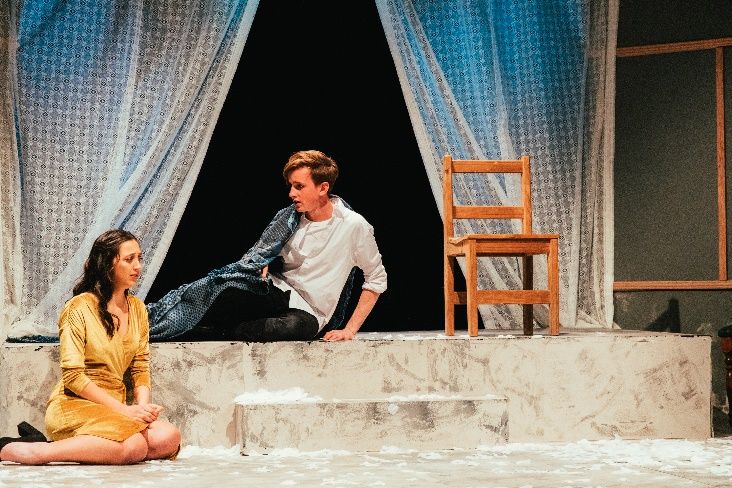
Narrabundah College                                  Student Info 2019

        KEY PEOPLE, TELEPHONE NUMBERS AND WEBSITE

PRINCIPAL
     Kerrie Grundy                                  6142 3200
DEPUTY PRINCIPAL (Assessment and Students)
     Jenny Budd                                     6142 3200
DEPUTY PRINCIPAL (Curriculum and Staffing)
     Tom Kobal                                      6142 3200
BUSINESS MANAGER
     Karen Fraser                                   6142 3200
EXECUTIVE OFFICERS/FACULTY HEADS:
     Arts Jacqui Ockwell                            6142 3200
     English Anni Medway                            6142 3200
     ESL/Languages Miyuki Shino                     6142 3200
     Humanities/Social Sciences/
     Media/IT Archana Aggarwal                      6142 3200
     International Baccalaureate Christine Ward     6142 3200
     Mathematics Nicole Burg                        6142 3200
     Science Cate Rosier                            6142 3200
     Student Services Delisia Wiild                 6142 3200
STUDENT ADVISERS:
     Julie Bauer                                    6142 3200
     Andrea Trappes                                 6142 3200
     Birgit Matwijiw                                6142 3200
     Delisia Wiild                                  6142 3200
TRANSITION AND CAREERS OFFICER:
     Glenda Nimmo                                   6142 3200
STUDENT PSYCHOLOGIST:
     TBA                                            6142 3200
SWITCHBOARD:                                        6142 3200
FAX:                                                6142 3209

     WEBSITE:         www.narrabundahc.act.edu.au

                                4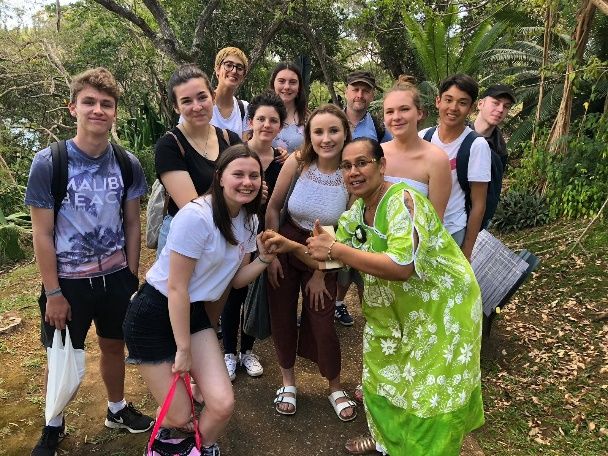
Narrabundah College                                                    Student Info 2019

                            STUDENT ADVISERS
                            Worried about your subjects?
                      Confused about your majors and minors?
                             Having personal problems?
                       Wondering what to do when you leave?
                      Wanting to discuss universities or careers?
                         Confused?       Lost?      Anxious?

If the answer to any of these questions is “YES”, then see a Student Adviser. You can
make an appointment on their door and see them during a free line.
If your adviser needs to see you they will email you or contact you on your mobile
phone, so please make sure the college has the correct number.
Transition and Careers Officer
This teacher will be primarily available to support students with transition from High
School to College and with post school options. The officer will also assist with
career advice, work experience and ASBAs (Australian School Based
Apprenticeships).

School Psychologist
The School Psychologist is available to assist students or their parents with any
issue that may impact on their learning and their ability to achieve their potential.
Issues may include health problems, family or relationship conflicts, and motivational
difficulties. Appointments can be made on the timetable on the psychologist’s door or
by telephoning the school.

N Groups
N Groups are Narrabundah’s version of home groups. All students are placed into an
N Group when they arrive at the college and they remain in these groups for their
time at the college. The function of the N Group is a weekly contact to give important
information about college and events and advice about packages. N Group runs on
Wednesday from 12.10pm to 12.25pm unless there is an assembly and attendance
at both is compulsory.

Indigenous Students Contact Officer
There is one indigenous contact officer who is available, to students. The teacher’s
name for the current year is listed on the Student Services noticeboard.
Anti-Racism Contact Officers
There are two anti-racism contact officers who are available to students. The
teachers’ names for the current year are listed on the Student Services’ noticeboard.
Anti-Sexual Harassment Contact Officers
There are two Anti-Sexual Harassment Contact Officers (one male and one female)
who are available to students. The teachers’ names for the current year are listed on
the Student Services noticeboard.

                                       5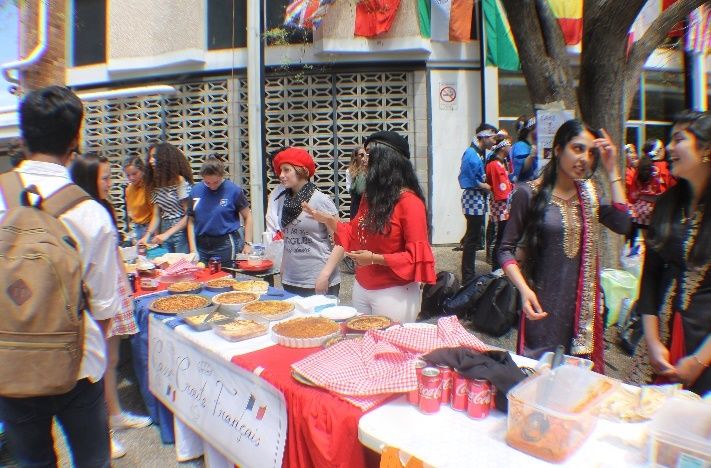
Narrabundah College Student Info 2019
COLLEGE CANTEEN
The Canteen operates between 9:00am - 2.00pm and supplies a large variety of hot
and cold foods, drinks and vegetarian meals.
A lunch ordering service is available each morning - this will save time at lunch
and eliminate the possibility of missing out on your lunch choice.
Most requests can be made up even when shelves are empty near closing time -
just ask.
Prices are always competitive with similar food outlets.
Profits from canteen sales go to the college and help buy equipment you use.
Suggestions for new or improved lines can be made to canteen staff or the
canteen committee or the Student Governance Group.
Please give the canteen staff your feedback – we thrive to improve.
A detailed menu and price list is displayed in the canteen area.
Happy to discuss food intolerance and open to suggestions.
Drama Students 2018
6Narrabundah College Student Info 2019
GENERAL
Absences
Attendance at all classes in which you are enrolled is compulsory. When you enrol
in a class you agree to attend every timetabled lesson for that class.
If you are a member of our international student population who travels overseas
please remember your responsibilities to your studies when you are arranging travel.
DO NOT make reservations during term time as you MUST be present for all
teaching and assessment periods. International Private Students risk having their
student visas withdrawn if their college attendance is less than 90% of required
classes, that is more than 3 unexplained absences in Session 1 and 3 and more
than 6 unexplained absences in Session 2.
Procedures - when absent
1 ALL absences from class must be explained within ONE WEEK of your return
to College. Students needing to miss classes during the day for appointments
must provide documentary evidence. Reasons such as studying for another
subject are not acceptable.
2 Parents replying to absences using the SMS notification is strongly
encouraged and we are hoping to move to this portal as our sole absence
explanation to become a greater environmentally friendly school.
Alternatively, students collect an Absence Note (see next page) from the
advisers’ area, fill in all the details, attach any documentation (i.e. note signed by
parent/guardian with a legitimate reason or doctor’s certificate) and place the
form with attached documentation in the absentee box located outside the
Advisers’ area.
3 For absences of a lesson to three days a note/sms response from
parent/guardian or doctor’s certificate is required. For four days or longer periods
of absence a doctor’s certificate is necessary. On every document, ensure that
your full name, year, ID number and date/week of absence/s are given.
4 If you are absent for any assessment item a medical certificate is required.
5 Find out from your teacher what work you may have missed - it is your
responsibility to catch up.
6 Students attending excursions should let their teachers know in advance.
NOTE: Absences are checked on a weekly basis. Your parent/guardian will be
contacted regarding repeated unexplained absences, or if your attendance
falls below 90%, that is more than 3 unexplained absences in Session 1
and 3 and more than 6 unexplained absences in Session 2. This is to
meet BSSS requirements.
Approval for Leave (For Long-term foreseeable absence)
Students seeking leave for one week or more must seek approval from the Principal
or Deputy Principal (Students). This approval needs to be sought well in advance of
the leave requested. Leave outside holiday periods is generally discouraged, as our
courses have minimum attendance requirements and we value class time.
Students whose attendance is unsatisfactory will not normally be assessed in the
unit. You will receive a ‘V’ grade, which means the unit does not count towards your
ACT Senior Secondary Certificate. Poor attendance restricts achievement and so
results in lower grades.
7Narrabundah College Student Info 2019
NARRABUNDAH COLLEGE ABSENCE FORM
Student name:………………………………… ID:…………. Year 11/12 (circle)
Student Mobile:………………………………..
Date(s) of Absence:…………………………………………. Week: ………
Period of absence: All day / partial day
(please select one: if partial sign/ initial the lessons missed on the timetable below)
Explanation of Absence
Session Mon Tues Wed Thurs Fri
9.00 5 6 7 1 4
10.00 2 4 1 5 3
Recess
11.15 7 5 3 6 1
12.15 3 7 2 2 6
Lunch
2.00 1 2 4 8 5
3.00 4 3 6 8 7
Signature
Parent/Guardian………………………………Date…...
An explanation of the absence(s) needs to be written in the space above and hand signed
by a parent/ guardian. If assessment has been missed, this note must be attached to
appropriate documentation eg a medical certificate or letter from a health professional. An
email or phone call on the day of missed assessment is also appreciated.
Accidents
First Aid
If you need first aid, report to reception. If you have had an accident a staff member
may need to fill in a Student Accident/Injury Report.
8Narrabundah College Student Info 2019
Dangers from Sharps in the School
All school communities are aware of the risks from sharps and take the necessary
actions to ensure that schools and their environs are safe. During out-of-school
hours, school grounds sometimes become dumping grounds for all kinds of
unsavoury items, such as syringes, broken glass and glass bottles and other
hazardous waste.
The ACT Department of Territory and Municipal Services recommend that when
syringes are found, you should follow the simple rules below:
Don’t Touch - Stand Guard
(The guard should not stand too close to the item)
Send for Help
(Send for a staff member or call the Sharps Hotline)
The Sharps Hotline (13 22 81) is a free 24 hour emergency service that will respond
immediately to remove the item.
When broken glass, condoms or other hazardous waste is found you should follow
the rules above. Staff should be contacted to remove these items with care and
dispose of them properly. You are encouraged at all times to report the whereabouts
of such hazardous waste.
Caring for your Property
You are reminded not to leave personal property unattended around the college. The
college does not have insurance to cover theft or loss of student property. Valuables
should be left at home. If you need to bring sums of money or valuables to school
they should be kept on your person or locked in a locker.
No responsibility can be accepted for any property which is left on the school
premises.
UN Day 2018
9Narrabundah College Student Info 2019
COLLEGE RULES
As it is considered that college students are sufficiently mature to act appropriately,
the number of general rules is minimal:
MOBILE TELEPHONES, IPODS OR SIMILAR DEVICES must be turned off during class time
and assemblies unless being specifically used for classwork. Students are
encouraged to have mobiles and check emails and missed messages regularly.
CAMERA/MOBILE PHONE VIDEO USE: Students need to use technology responsibly
and respect the privacy of others. When using cameras or mobile phone videos,
permission should be sought from students before taking their photograph or video.
PLEASE NOTE: No liability will be accepted by the college in the event of the loss,
theft or damage of such a device. If your mobile phone is stolen you may be
interested to know that both the telephone and the Sim card can now be tracked
separately. There is an agency that tracks mobile phones reported stolen or lost.
MEDICATION: Students who are required to take medication prescribed by a doctor
should inform the advisers. No student should have other DRUGS at college or come
to college (or any college activity) while affected by drugs. This includes ALCOHOL.
SMOKING: Government regulations prohibit SMOKING in any of the college
buildings or on college grounds.
DON'T LITTER AND AVOID DAMAGING SCHOOL PROPERTY. Please help to preserve the
environment.
FOOTWEAR: is to be worn at all times in the college buildings.
CLOTHING: MUST BE APPROPRIATE FOR A SCHOOL SETTING.
PETS:are not allowed on the college premises. Pets can threaten other people and
cause distress and their unsanitary habits can spread a number of diseases.
NO BALL GAMES in the Quad or canteen or near windows.
PLEASE NOTE: Different faculties may have rules which relate to their specific areas
and they will be made known to the students either enrolled in their faculties or using
the equipment.
10Narrabundah College Student Info 2019
COMPUTER USE AGREEMENT
Parent Information Sheet on Internet and E-mail access for
Students
The Internet and other information and communication technologies including email
can provide a range of positive experiences in teaching and learning in ACT schools.
The internet allows for:
• the use of a range of information sources in class work, projects and
assignments; and
• collaboration and communication with other students across the ACT, or the
world, sharing ideas, knowledge and information.
Using these technologies will assist students in developing skills in electronic media
that they will use throughout their lives in everyday situations. ACT schools are
currently involved in striving to integrate the use of information and communication
technologies where relevant and appropriate into all curriculum areas, and all levels
of schooling.
It is important to introduce students to these technologies in a safe environment,
where students are taught how to discriminate between relevant and irrelevant
information, use and cite online sources, and share knowledge and information with
others using appropriate language for the online environment. There are a number
of ways the school, and the department endeavours to minimise the risk to students
accessing inappropriate information that is available on the internet and some of
these are outlined below.
All staff, students and parents in this school are required to read the Acceptable Use
of Internet, Email, Computer Facilities and Networks Policy and sign the Code of
Practice. This Information Sheet also provides information on how this school is
monitoring use of the internet and email to protect the security and privacy of all staff
and students.
Parents and guardians should also encourage children to access the internet during
their class work, and to follow the basic guidelines and procedures through
discussion, and where possible, demonstration of acceptable behaviours.
Guide to the Code of Practice for Students using the internet:
The notes refer to the Code of Practice for Students:
(1) Examples of unsafe actions
• inappropriate use of social media sites.
• revealing your full name, address, phone number, etc. to an unknown person
by email or chat session.
• using a chat facility that is not supervised by your teacher.
• placing your personal details on a web page.
• giving out credit card details to strangers or to unverified or unsecure
websites.
• putting personal details in your email signature.
• accepting offers to meet strangers who you have met via an electronic
medium, unless you are confident of your safety and you are accompanied by
an adult.
11Narrabundah College Student Info 2019
(2) Examples of illegal activity:
• copying software onto computers, disks or networks without permission by the
copyright owner.
• sending threatening or profane electronic mail.
• ordering materials over the Internet using other people's credit cards.
• copying digital art works, music or printed material without permission by the
copyright owner.
• using the Internet to distribute pornographic material.
(3) Examples of dishonest activity:
• copying another person's work and submitting it as your own.
• using others passwords.
• trespass in others folders, files or systems.
• claiming personal ownership of material that was developed by a group.
• setting up an unofficial web site which claims to be the official school site.
• sending electronic mail using a faked e-mail address or someone else’s
account.
• Use the network for commercial purposes.
• Violating any laws, for example, those related to copyright and privacy.
(4) Things which could upset others:
• spreading untrue rumours and gossip or using obscene language through
email/Facebook/other social media sites.
• publishing racist, sexist or any potentially inappropriate material.
• Downloading, displaying or emailing offensive pictures or messages.
• playing offensive songs from websites.
• use of inappropriate language.
(5) Things which could disrupt other users:
• breaking or damaging the computer equipment or computer network.
• spilling food or drink on computer equipment.
• downloading large files from the Internet during class time without seeking
approval.
• propagating viruses into the system or interfering with system configurations.
• deleting or changing critical files, or the files of others.
• attempting to hack into the school computer system.
• using the computer system to gain unauthorised entry into other computer
systems.
(6) Examples of irresponsible actions:
• leaving a computer logged on after departing the room.
• Intentionally waste limited resources.
• leaving personal information on a shared computer where others can access
it.
• neglecting to backup important pieces of work.
• telling other people your password.
12Narrabundah College Student Info 2019
Digital Backpack – Google Applications for Education (GAFE)
Most ACT Government schools and colleges use GAFE (Google Applications for
Education) as their Virtual Learning Environment. Each student has an individual
web space, and can access classes online, submit assignments if deemed
appropriate, and access email through an ACT Schools’ Gmail account. It is
important that students remember their username and password. GAFE is a closed
system and, although students can log in from any computer with an internet
connection, it is not available to the general public. Our students in all subject areas
can access course content through GAFE.
World Wide Web filter
The department uses Contentkeeper to provide web filtering for ACT Government
Schools. Contentkeeper is updated on a regular basis by the department and from
other sources. However due to the nature of the Internet, the number of sites that
host inappropriate and/or offensive material is growing rapidly and the actual web
addresses of these sites are constantly changing. It is therefore extremely difficult to
block them all. If students do encounter inappropriate material when using the
Student Network, they should immediately inform their teacher and arrangements will
be made to block access to the site.
E-mail filter
GAFE is a closed system, so although students can receive messages from anyone
in the ACT schools’ network, no email addresses are assigned and therefore
students will not receive emails from outside the system.
Monitoring
Each user has an individual username and password which identifies them on the
GAFE and enables tracking of all movements and communication while logged on.
Breaches (attempts to reach blocked sites) can also be reported through the use of
ContentKeeper.
Disciplinary action may result from breach attempts, including warnings, loss of
access to the Internet, e-mail and /or networks for a specified period of time or other
action at the discretion of the Principal on a case-by-case basis.
Access Rights
GAFE Coordinator in this school manages all users accounts. Information stored at
the school when creating accounts includes full name, class, password and group.
Further Information
Please contact the school on ph. 6142 3200 should you wish to discuss this
information sheet, or to discuss access options for your child.
Noumea Trip 2018
13Narrabundah College Student Info 2019
Safe Areas
The Australian education community appreciates the need for students and teachers
to have access to fully evaluate safe sites that enhance learning and teaching. Most
state departments have their own network of resources that teachers and students
can use.
Examples are:
EdNA Online - A national database of evaluated educational resources
http://www.edna.edu.au/
NetAlert
http://www.netalert.com.au/
Online Publications and Resources (Victoria)
http://www.education.vic.gov.au/about/publications/archiveonline.htm
DISCOVER (Tasmania)
http://discover.tased.edu.au/
Student Internet Access
The college has extensive computing resources and Wi-Fi access. The Library can
assist with forgotten passwords.
N Day 2018 – Manuka Pool
14Narrabundah College Student Info 2019
CONTRIBUTIONS
Payment of Financial Contribution
The payment of the financial contribution is voluntary. The Education Act (ACT)
states that your child will not be refused benefits or services if you choose not to
contribute. Individual records of contributions are confidential.
Payment of parent supported items, activities and services
There are activities and services for which parents will be required to pay if they
want their child to access them. These are as follows:
International Baccalaureate
French Baccalauréat
All international excursions
Camps and excursions that are not essential to, but enrich, curriculum
outcomes
All school trips conducted during school holidays
Academic competitions
High level sporting competitions (eg state representation, interstate
competitions)
Activities provided by external providers that are not essential to, but enrich,
curriculum outcomes
Attendance at public performances of school productions outside of school
hours
Graduation dinners/formals
Canteen services
Private tutoring
Water safety and swimming programs
Cash Register Hours at reception
Open: 8.30am Close: 2.00pm
Payments by Visa or Mastercard can be made over the telephone by calling
reception on 614 23200. Payments by Internet go to:
www.narrabundahc.act.edu.auContact UsPaymentQuickweb payment system.
Payment for Consumables
Narrabundah College is able to offer students significant savings over the prices they
would pay for consumable materials (computer consumables, paint, films, etc)
required in some subjects.
Students are asked to pay for consumables by the end of week 3 of each session.
Your cooperation in this will allow the college to have all the material ready when
needed by the students. If you have difficulty meeting this request, please discuss
alternative arrangements with the Business Manager.
Payment for consumables is made at Reception in A Block. You will be issued with a
receipt which you should keep as evidence that the amount has been paid.
15Narrabundah College Student Info 2019
The following subjects require payment for consumables each session:
Session 1 and 3 Session 2
Creative Art $50 $100
Ceramics $50 $100
Food and People $50 $100
Textiles & Fashion $30 $60
Photography $55 $110
Graphic Design $30 $60
Design $30 $60
Architectural Studies/CAD $30 $60
Digital Photography $40 $80
Film Making (Super 8) $50 $100
Media $20 $40
Woodwork $40 $70
Music $20 $40
IT Programming $10 $20
Web Design $20 $40
IT Animation 3D $20 $40
Computer Applications $10 $20
Excursions
Money must be paid to Reception at least three days in advance of the excursion
date. It is important not to lose your receipt if a refund is required and has been
approved.
Noumea Trip 2018
16Narrabundah College Student Info 2019
Wellbeing
The Curriculum of Giving Framework underpins the college’s philosophy to promote
student wellbeing through giving back to the community.
Our school psychologist has had experience in dealing with a wide range of health
issues and their impact on young people. If you have a problem of any sort that is
affecting your performance at school, you should talk with your student adviser or the
school psychologist as soon as possible so that you can take advantage of any
support we can offer.
Health education is delivered at Narrabundah College through N-Groups, Special
Programs, SHLiRP, Guest Speakers and Peer Education Model.
Our Peer Educators are selected from our student body at the end of Year 11. This
group of students provides a support network for the incoming students at the start of
the new College year. They work intensively with the new students on their
Orientation Day and assist with the activities on N Day. They also can volunteer on
Open Day and Open Night as tour guides for prospective students and their parents.
Peer Educators often become members of the Student Governance Group which
provides a liaison between students and the College Executive, promotes various
fund raising activities and provides members with the opportunity for further training
in leadership activities. Information re joining the Governance Group will come
through N groups early in session 1.
If you are interested in joining Peer Education, speak to your Student Adviser during
Session 3. A notification of recruitment will also be circulated through N Groups.
There are two phone numbers that we recommend students be aware of in case they
need to seek advice or crisis help for themselves or for friends; the first is the Kids’
Helpline number and the second is Lifeline. Both numbers can be relied upon to
provide accurate up-to-date information and sound advice about dealing with
problems. They are free call, twenty-four hour services.
During Orientation Day, students are given a wallet card with emergency contacts for
a number of services.
USEFUL HEALTH PHONE NUMBERS:
Health
Junction Youth Service 6232 2423
Canberra Sexual Health Centre 6244 2184
SHFPACT (Sexual Health) 6247 3077 www.shfpact.org.au
DIRECTIONS ACT 6132 4800 www.directionsact.com
Winnunga Nimmityjah Aboriginal Clinic 6284 6222
Depression Website www.beyondblue.com.au
Crisis Support
Poisons info line 131 126
Lifeline 13 1114
E headspace 1800 650 890
Emergency 000 or Mobile 112
Mental Health Crisis 1800 629 354
Domestic Violence Crisis Service 6280 0900 www.dvcs.org.au
Rape Crisis (sexual assault) 6247 2525
SAMSSA (Male Survivors of Sexual Abuse) 6292 7377
Housing
One link 1800 176 468
Youth services
Family Relationship Centre 6122 2444
17Narrabundah College Student Info 2019
Legal and general service
Youth Law Centre ACT 6173 5410
Legal Aid ACT 6243 3411
Transport Canberra www.transport.act.gov.au
Taxi 6228 1848 or 6126 2600
Phillip Medical and Dental Clinic 6112 7000
Centrelink (Youth/Student) 132 490
Recommended Advice/Counselling Lines
Alcohol and Drug Info Service 1800 422 599 www.adin.com.au
Kids Help Line 1800551800 www.kidshelp.com.au
Lifeline 131 114 www.lifeline.org.au
ID Cards
Students will be issued with college ID cards in Week 1 during N Groups. If your card
is lost, stolen or damaged, replacement ID cards can be obtained from Reception for
$5. Students must carry their ID card at all times and if requested by a teacher
to show his/her ID card it is expected they comply.
Lockers
Student lockers are situated in various locations in the college. These are available
on a first come, first served basis and all that is required is for a student to place
his/her personal lock on the locker and register ownership of locker number at
Reception to gain possession. Sturdy combination locks can be purchased at the
front office for $10. At the end of each school year you are asked to clear your locker
and remove the lock. The janitor will clear out and clean all lockers over the
Christmas break.
Sport
See the Sport noticeboard in B Block foyer, announcements during N Group and
daily notices about sports available.
Outdoor Education
Outdoor Education is a rewarding activity offered at the college. Many outdoor
activities are pursued including caving, camping, bushwalking, scuba diving,
canoeing, cross country skiing, rock climbing and orienteering.
The program runs off line and is flexible enough not to clash with any other college
courses. Outdoor Education aims to develop attitudes and skills associated with
various wilderness activities. Trips give plenty of experience in navigation, trip
planning, route planning, rope skills and camping skills. First aid is taught and there
is an emphasis on safety, especially through cooperation at group level. The
program aims to foster wilderness appreciation and respect for conservation issues.
Text Books
Text books will be issued by the library staff. Your ID card will need to be presented
at all times for borrowing books. Borrowing times are posted outside the book room
window in A block.
18Narrabundah College Student Info 2019
Transport
Buses: There are a number of school special and regular route
buses serving Narrabundah College. Details of these
can be obtained from:
Outside Student Services
ACTION buses
Cars and Motorcycles: There is ample parking space at the REAR of the college
as well as beside the gymnasium and the oval. Some
areas are designated “STAFF ONLY”. Please respect this.
No student parking is allowed at the front of the
college. This includes the circular driveway and the
areas under the trees between S Block and the
library.
Bicycles:
Owners should take the normal necessary precautions to
ensure their bicycles are secured against theft. There
are designated bike racks in the College.
Do not park in front of the bus garage,
garbage hoppers or the quadrangle access area.
Travel Concessions
Apply at Reception - you will need to produce your ID card for identification.
Visitors to the College
All Colleges have a NO Visitor Policy.
19Narrabundah College Student Info 2019
COURSES AND CAREERS
Course Selection and Career Planning
Your Student Adviser is there to help you with all aspects of course selection and
career planning. All Year 11 students should make a time to see their student adviser
some time during the first four weeks of the first session to discuss their courses and
review their Student Pathways Plan. Additionally you may like to speak with the
Transitions and Careers Officer in Student Services to gain further information
regarding possible future career options. It is important to check that you have
chosen the most appropriate subject to fit with your future career plans.
Student Pathways
Student Pathways Plan
Student Pathways Plan provides an opportunity for students to explore their unique
set of needs and capacities through identifying their personal strengths, interests
and goals. This exploration supports their planning of potential pathways through
school to further study, training and/or work. The Student Pathways Plan will be the
form that our students will use as a guide to help them with their Pathways
Planning.
All students are required to fill in a Student Pathway Plan. This plan is on the
college GAFE (see the Careers page) and students may download and save it.
This Pathways Plan should be updated regularly.
Students 2018
20Narrabundah College Student Info 2019
Unit Selection
Each Session
All students must enrol in five or six classes every session. This does not include
registered units
If you are not studying full-time, you may be deemed a part-time student, unless the
Principal or the Deputy Principal gives approval for a reduced load (eg because of
serious illness). Enrolment is processed using software that gives the best match
between student choices and unit and teacher availability
Changing and Withdrawing from Units
Class changes to be done in Student Services, the only changes allowed are:
1. where students have a clash (2 classes on the same line) or
2. where students want to change a course, eg Biology to Psychology.
3. Once the above two priority class change requests have been made,
student services may be able to accommodate other class changes for you
depending on the availability in the class.
Important - please note: No student may voluntarily withdraw from a short
session unit after Week 5 or from a long session unit after Week 7.
Work Experience
This is offered at the end of each session. See Student Calendar for dates.
Students have the opportunity to complete up to 5 Work Experience placements
during their two years at the College.
The Transition and Careers Officer will assist students in setting up Work Experience
placements. It is essential that all Work Experience placements be processed
through the Transition and Careers Officer. This ensures that all necessary
requirements such as Education and Training Directorate notification, union
notification and matters such as insurance are all in place. Please check Work
Experience opening and closing dates on the school calendar as these need to be
strictly adhered to.
Australian School Based Apprenticeships (ASBA)
ASBA is a 12-18 month program that allows you to combine your college studies with
an apprenticeship involving 8 or more hours of paid work and 3 hours of training,
leading to a nationally recognised Certificate II or III in the specific industry area
involved.
Please discuss your interest in undertaking an Australian School Based
Apprenticeship (ASBA) with the college’s Transition and Careers Officer.
Scholarships and Tertiary Information
See Student Advisers for all the up-to-date information.
21Narrabundah College Student Info 2019
Student Leadership
Narrabundah College is committed to developing the leadership skills of all students
and provides a number of opportunities for both leadership and community
involvement including:
• Student Governance Group, providing significant Leadership opportunities
for all students.
• College Governance, including student involvement on the College Board.
• Peer Education, where students are trained in delivering positive health
message across the college and in supporting college events.
• College Events, including taking a lead role in events such as the Year 12
Formal, Trivia Nights, College Yearbook.
• Charities and Community, where students foster links with local and
international community organisations and promote the work of charity
organisations.
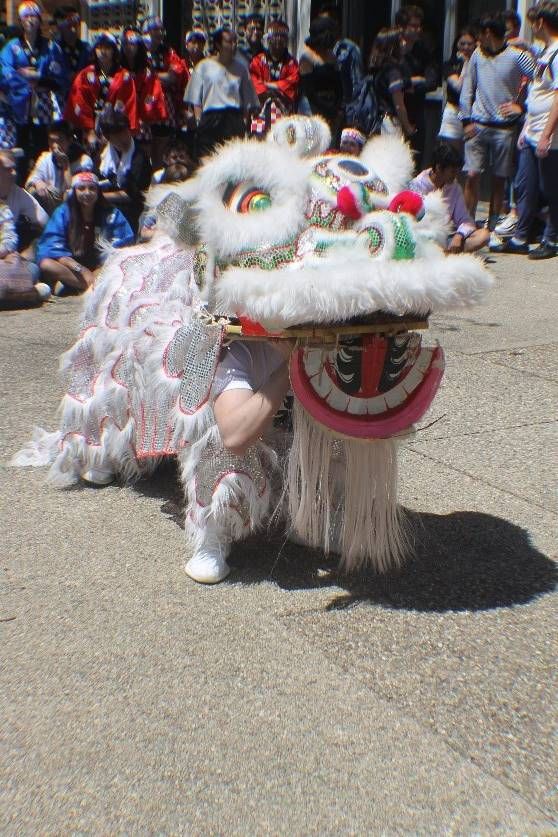
UN Day 2018
22Narrabundah College Student Info 2019
ACT SENIOR SECONDARY CERTIFICATE
The ACT BSSS requirements for an ACT Senior Secondary
Certificate standard package are:
You must study in at least 3 different course areas and be assessed in at least 17
standard units and must include at least 4 minors and an English course is
compulsory.
Employers, The Canberra Institute of Technology and Private Providers of training
will be interested in your grades, as they indicate your potential to complete further
training on and off the job and are a means of comparing you with other Year 12
students seeking employment or enrolment in courses.
English and Mathematics are essential skills used in every occupation, so
although English is compulsory, Mathematics is highly recommended.
Your package can be made up of A, T, V and R units and you should aim to study
courses for one or two years to give a variety of minors and majors.
ATAR - Tertiary Entrance Statement
An English course is compulsory.
You must be assessed in at least 20 standard units.
At least 12.5 of these must be T units and only 2 may be R (registered units).
You must have a study pattern of at least 3 majors and 3 minors OR
4 majors and 1 minor OR
5 majors
In all instances at least 3 majors and 1 minor must be T units.
You must sit the Australian Scaling Test (AST) in the later part of Year 12.
The Student Advisers have more details including practice tests.
Course Patterns
MINOR – a minimum of 2 standard units (a minimum of 110 hours of timetabled
class time)
MAJOR – a minimum of 3.5 standard units (a minimum of 220 hours of timetabled
class time)
MAJOR/MINOR – a minimum of 5.5 standard units (a minimum of 330 hours of
timetabled class time)
DOUBLE MAJOR – a minimum of 7 standard units (a minimum of 400 hours of
timetabled class time)
Note: for an ATAR, a maximum of a DOUBLE MAJOR can come from any ONE
curriculum area and you cannot count any more units than a Double
Major in that course or for music in that area.
NOTE: STUDENTS ARE GUARANTEED A COURSE AND THIS MAY ONLY BE A
MINOR.
How are Scores derived?
Unit Outlines – are issued for each class, setting out assessment tasks with
weightings, due dates, late work policies, moderation procedures etc.
Moderation of assessment tasks occurs to produce a comparative rank order list.
This produces a RAW SCORE.
Standardising of RAW SCORES occurs on an open ended scale.
In unit 1, Year 11, raw scores are set to means and standard deviations based on
historical data and the performance of students in this session. All subsequent
units are back scaled to the previous units’ scores.
23Narrabundah College Student Info 2019
Ultimately the Board of Senior Secondary Studies will scale the courses based on
the performance of the cohort on the AST and in their other courses.
How is an ATAR calculated?
Assessment Item Scores
Unit Scores
Course Scores
Aggregate Score
ATAR
Course Types
An R course is usually designed to provide personal development, recreational or
community service activities.
An A course is one which is accredited by the ACT BSSS as educationally sound
and appropriate for students in Years 11 and 12.
A T course is one that is accredited by the ACT BSSS as providing appropriate
preparation for higher education. In determining the T classification of a course,
specific consideration is given to course content, presentation and methods of
assessment.
A V course is a learning program that leads to a Vocational Certificate or Statement
of Attainment as defined by the Australian Qualifications Framework. V classification
may also be given to T or A courses.
AST
AST Program – Year 11 & 12
The ACT Scaling Test (AST) consists of a series of tests undertaken in the first week
of September by all Year 12 students wishing to gain an Australian Tertiary
Admission Rank (ATAR). The tests will include a multiple choice paper, a short-
answer paper and a writing task of around 600 words.
All students in Year 12 who want an ATAR will indicate they intend to sit for the
ACT Scaling Test (the AST) in September by signing the application form. These
forms will be distributed in N Groups during the year.
Trials will be undertaken by Year 11s and Year 12s - these are noted on the
college calendar. Year 12s will also complete an AST preparation program for 4
weeks (Thursday afternoon) in Session 2. They will be issued with an information
booklet during the program which will give them comprehensive information
about the AST and some sample questions and answers.
Please note that attendance is mandatory on both the days in September by
all students wanting to gain an ATAR, including students from a non-English
speaking background. It is essential that no students make other commitments,
such as family holidays, for these two days.
One of the reasons Narrabundah has done well in the past on the AST is that our
students take all the trial sessions and the testing each September seriously and
apply themselves fully. How well Narrabundah goes in the AST depends on how
well all our students go in all three parts of the testing. We encourage our current
students to be confident in their ability and do the best that they can.
24Narrabundah College Student Info 2019
The Writing Task
Students are given a range of stimulus material and they are required to write a
600 word essay in two and half hours. The trial writing task is marked by
experienced markers from outside the college and returned to students with
feedback. These markers spend quite a while on each essay, as they are keen to
provide valuable feedback to students. For the actual AST, markers spend much
less time on each essay. This means that you need to make your essay easy to
read and well structured, your point of view or your argument needs to be clear
and well expressed and the essay should be around the correct length (600
words). In other words, you need to make an impact in a short space of time.
The stimulus material provided each year is usually based on a current issue and
is usually of relevance to young people. Some issues will be easier than others to
argue a case and the topic changes each year. Some of issues presented over
the last few years have been: “Australians and Sport”, “Extreme Sports”, “Civil
Disobedience”, “The Australian Flag”, “Crime and Punishment”, “Anzac Day” and
“Science and Progress”.
The Multiple Choice Paper
The multiple-choice questions are grouped into sets or units, each based on a piece
of stimulus material. The material is drawn from the areas of humanities, social
sciences, sciences and mathematics. The questions are intended to test general
reasoning skills and should be accessible to all senior students.
The Short Answer Response Paper
In addition to the multiple choice paper and the writing task, a short answer
response paper was included to broaden the base of the AST so that a wider
range of intellectual skills and processes can be assessed.
Tasks are based on the types of thinking necessary for success in tertiary
education. The short answer questions differ in style from the multiple choice
papers and they are not intended to be divided into courses such as: Humanities,
Arts and Social Science and Mathematics, Science and Technology.
The tasks are generic in nature being approximately evenly divided over the
broad domains of the Human World (more typical of and related to the
Humanities, Arts and Social Sciences) and the Natural World (more typical of
and related to Mathematics, Science and Technology).
The questions are designed to measure, in the main, the skills and processes of
comprehension and interpretation, analysis and synthesis of information, critical
thinking, decision-making, problem solving and evaluation and response. There
should be opportunities for students to demonstrate lateral and creative thinking.
Although the answers are written, the Short Response Paper is not a test of
candidate’s writing ability or control of language. It is a test of their reasoning and
thinking processes and the ability of candidates to explain and justify their views.
Students should be confident in their approach to the testing as the skills and
processes being assessed are those necessary for success in courses currently
offered at the college. To give an idea of the types of questions you might meet
we have included a few examples and sample responses here:
25Narrabundah College Student Info 2019
SAMPLE 1
The first example is a critical thinking question that asks candidates to present
two arguments supporting and two arguments opposing a proposition.
Should the unemployed have to do community work to receive the dole?
SAMPLE 2
The third example is a kind of interpretative response and evaluation item.
Candidates are expected to describe and interpret the image.
The question was as follows.
What impressions are we given of the illustration below, and what does it seem to
suggest?
We hope these examples give some indication of the type of questions in the
Short Answer paper.
Science Students 2018
26Narrabundah College Student Info 2019
ASSESSMENT GENERAL
ACT BOARD OF SENIOR SECONDARY STUDIES ASSESSMENT POLICIES
Attendance
It is expected that students will attend all scheduled classes for the units in which
they are enrolled, unless there is due cause and adequate documentary evidence is
provided. Any student whose attendance falls below 90% of the scheduled classes
in a unit will be deemed to have VOIDED (V grade) the unit - that is more than 3
unexplained absences in Session 1 and 3 and more than 6 unexplained absences in
Session 2. The Principal has the right to exercise discretion in special circumstances
if satisfactory documentation is supplied.
Completion of assessment
Students are required to complete all assessment items that contribute to the
assessment of a unit unless due cause and adequate documentary evidence is
provided. Exemption from an item and/or alternative assessment without penalty is
available to students providing adequate documentary evidence. Any student who
submits assessment tasks worth less than 70% of the total unit assessment will be
deemed to have VOIDED (V grade) the unit. The Principal has the right to exercise
discretion in special circumstances if satisfactory documentation is supplied.
Late submission of work policy/application for extensions
1. Students can apply for an extension of time for assessments. This should be
done in advance through the executive teacher of the facility providing due cause
and adequate documentary evidence for late submission. Extension forms are
available through individual facilities or through student services.
2. If an extension is not granted, the penalty for late submission is 5% (of possible
marks) per calendar day (including weekends and public holidays) to a maximum
of 7 days. Submission of work on a weekend or public holiday is not acceptable.
3. In some units it may not be possible to accept late work after marked work is
returned to other students.
What is adequate documentary evidence?
1. For Attendance – See Page 7
2. For Assessment – See Page 31
Please Note: It is a requirement that all work or assessments be submitted by
4.30pm on the due date.
Emailed work to staff computers, corruption, lost flash drives, etc. are NOT
acceptable excuses for lost or late work.
Some teachers may accept or prefer emailed work, however, it is the responsibility of
the student to have a hard copy of work to their teacher by 4.30pm on the due date.
After this time, late penalties will be applied.
Word lengths on essays
Rationale
Students should develop the skills to write a succinct and effective essay.
Each assessment task states a word limit which will allow students to give a
substantial response. Word limits are standard practice in tertiary study and attract
similar penalties as outlined below. A penalty for below a certain limit is not required
as shorter papers usually do not allow for sufficient development of an argument, so
the penalty will come in the marking against criteria. There also needs to be a
distinction between an at-home, polished task completed over several weeks and an
in-class task completed under pressure of time and exam conditions.
27Narrabundah College Student Info 2019
At home tasks
• Students to include the word-count for their essay/report/etc on the
coversheet of their submission.
• In setting the task, an essay/report/etc can be given a range, eg 800-1000
words, or an upper bound, eg 1000 words.
• An allowance of the limit + 10% is acceptable without penalty.
• If the submission is more than 10% longer than the specified length, the
additional material will not be marked.
• The word limit for essays includes all verbal material except for the
bibliography and any appendices. It excludes quotes, footnotes, tables and
graphs. If additional material is presented in an appendix, the essay must
stand as a coherent whole without the appendices.
In-class/exam tasks
• Similar approach that the AST takes. For the AST task:
o An indication of length should be given on the task
o If the word length is indicated as approximately 600 words, anything
between 400-800 is acceptable.
o Over 800 is regarded as excessive and attracts a penalty.
o A 400 word essay would have to be particularly strong to attract good
marks.
o Less than 200 is regarded as a non-completion.
Essay Draft Policy for Take Home Assessments
Rationale
For a take-home assessment task students are expected to engage with a significant
task over an extended period of time and submit a considered and polished piece of
work. In assessing this task, teachers focus on how well the subject matter has been
grasped, how effectively the students have practised the critical and analytical
techniques which the discipline calls for and how clearly and cogently they have
communicated the ideas and evidence. Drafting is an important step in this process.
As a senior college we expect students to come in with some skills from Year 10, but
we will provide scaffolding in all subject areas at the start of Year 11. This will involve
detailed modelling in class and having exemplars readily available to students.
Gradually over the two years students will increase their skill levels in this area and,
at some point in Year 12, we expect students to submit assessments without
submitting a draft for comment.
In the case of drafts submitted in English, History, Theory of Knowledge & Politics
feedback will be given in interviews in the week leading up to the task. Students will
make appointments for this purpose during class time or in times allocated outside of
teaching time by their classroom teacher.
Purpose of the draft
• The purpose of submitting a draft is:
o to ensure students are addressing the requirements of the task, and
o to receive suggestions as to how to improve their response.
28You can also read


