Successful development of the Catalan ecolabel for Clean Fleets - María José Sarrias - GPP 2020
←
→
Page content transcription
If your browser does not render page correctly, please read the page content below
Successful development of the Catalan
      ecolabel for Clean Fleets

                                   María José Sarrias
              Directorate General of Environment Quality
                   Ministry of Territory and Sustainability
                        Barcelona, 8th september 2014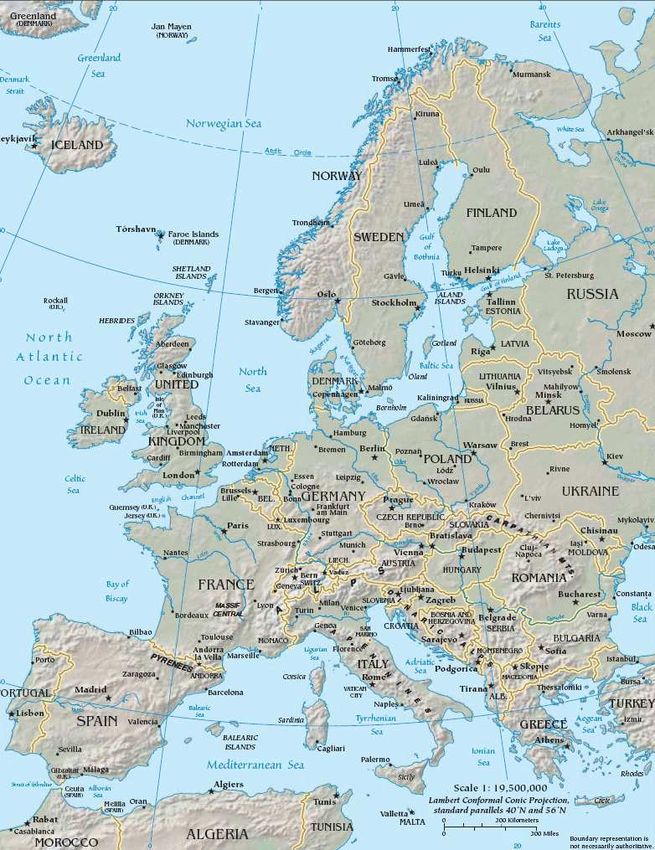
Air Quality Plan in the Metropolitan Area of Barcelona

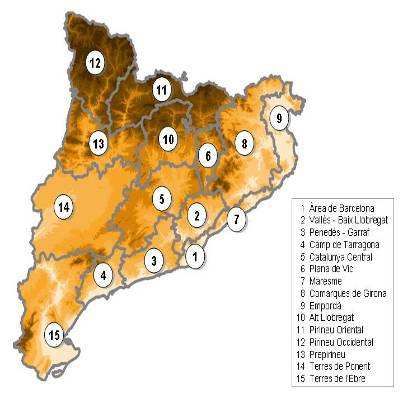
Territorial delimitation of the Air
Quality Plan: 40 municipalities
of the Metropolitan Area of
Barcelona (regions of
Barcelonès, Baix Llobregat,
Vallès Oriental and Vallès
                                           Now all 40 municipalities declared
Occidental)                               as protected areas for PM10 and NO2
The new eco-label category for vehicle fleets
 Reasons: The creation of the vehicle fleet category has been
 specifically included in the Action Plan for Improving Air Quality
 in Barcelona Metropolitan Area, as we have to improve the
 quality of air in relation to PM10, NOx in urban areas.

         Air Quality Plan in the Metropolitan Area of Barcelona
 Main problems: NO2 annual mean limit value exceedances and PM10 daily limit
 value exceedances.
 Main challenges: Road transport (47% NOx emissions; 45% PM10 emissions),
 port (16% NOx; 21% PM10), industry (24% NOx; 20% PM10).

 Creation process: The category has been prepared and discussed
 during one-year in a working group, which brought together more than
 20 experts and representatives from both public and private sector.
 Approval: December 2012, Resolution TES/2970/2012
 Publication: January 2013, DOGC 6288
                                                                            3
The Catalan Ecolabel: the Emblem of Guarantee of
Environmental Quality
 What is it?
   It is a regional ecolabel, awarded by the Catalan Government.
   It recognizes products and services that comply with defined
   environmental quality requirements.

 Who manages it?
   It is managed by The General Directorate for Environmental Quality of the
   Ministry of Territory and Sustainability of the Catalan Government.

 How many categories does the Catalan ecolabel has?
   It has 32 categories (17 categories of products and 15 categories of services).
   Some of these categories are water-saving systems, paper products, vehicle
   garage, car parks, vehicle fleets and tourist accommodation services.

                                                                                4
Vehicle fleets category - Objectives

 To minimize environmental impacts and to
   promote sustainable development going further
   the current regulations.

 To reduce contaminating emissions (PM10, NOx)
   from transport in the metropolitan region of
   Barcelona.

 To reduce greenhouse gases emissions from
   transport and therefore increase competitiveness
   thanks to the reduction of energy costs

 To promote eco-efficiency and energy savings in
   the planning, design and management of the
   transport system (people and goods).

                                                      5
 .
Who can participate/apply to the catalan ecolabel?
The category includes different types of fleets:

        Subcategory        Type of fleets      Type of applicant
              1                                    Freelance
                                Cars
              2                                Company or Entity

              3                                    Freelance
                       Vans and light trucks
              4                                Company or Entity

              5                                    Freelance
                           Heavy trucks
              6                                Company or Entity

              7         Collective transport   Company or Entity

              8           Special Services     Company or Entity

       Type of vehicles: M1, M2, M3, N1, N2 i N3, according Directive
           2001/116/CE from Commission, 20 de December.

                                                                        6
Which are the Environmental Criteria?
     The criteria have been structured into 6
      sections, and we have developed both
         mandatory and optional criteria

               1. Fleet Management
               2. Efficient driving
               3. Maintenance
               4. Age of vehicles
               5. Low-emissions vehicles *
               6. Other actions of environmental commitment

* Low – emissions vehicles as defined in the catalan ecolabel are those vehicles using
  electricity, GLP, natural gas or hydrogen as a source of energy, hybrid vehicles and also
  those using diesel or fuel that complies a minimum Euro technology, a maximum fuel
  consumption and a maximum CO2 emissions.

                                                                                              7
Example
Fleet: Passenger cars
Applicant: Company MANDATORY CRITERIA
Subcategory: 2 Fleet Management
Fleet description
Environmental management plan
OPTIONAL CRITERIA (mín. 8 points) Efficient driving
Fleet Management Efficient driving manual for each vehicle
Record of monthly fuel consumption 30%of drivers trained in efficient driving
Trip optimization Maintenance
Efficient driving Following manufacturer’s specifications
50/70% Training in efficient driving
Vehicles age
Maintenance
Garages with the Catalan ecolabel + Minimum Euro 3 technology
Low-emissions vehicle Low-emissions vehicle
50/70% Low-emission vehicles 30%of the fleets vehicles have to be Low-
Other environmental actions emission vehicles
EMAS or ISO 14001 Other environmental actions
Offsetting emissions, etc. Promotion of the Catalan ecolabel
8How much does it cost?
Application
Applicant
Report
Assessment and
Evaluation
Payment of the
catalan ecolabel by
tax (150-300€) Directorate General of
Environment Quality
9Innovative aspects and benefits
The vehicle fleets category pools public health
& environmental goals as one of the measures
foreseen in the Action Plan for Improving Air
Quality in the Barcelona Metropolitan Area.
Benefits
Polluting emissions and environmental impacts of vehicles are reduced
Air quality and public health are improved;
Fuel consumption is reduced;
It prepares companies for future European environmental requirements;
Added value when entering into contracts with the public administration.
Potential economic benefits from local authorities (taxes, toll
payments, HOv-lane…)
10Results achieved
Nowadays, 12 companies belonging to very different areas of activity,
have applied for, and obtained, the ecolabel:
Urbaser SA in Barcelona and Calafell (waste management)
APSA group of Girona (driving school)
Transports de Barcelona SA (public passenger transport)
Repsol Butano SA (commercial fleet)
Danone SA (commercial fleet)
Hermanos Alum SL (waste management)
IMET (taxi fleet) Nº vehicles ≥ 4.500;
FCC SA (waste management) Area = Mainly 40
municipalities within
Port Authority of Tarragona (commercial, representation…) the special protection
air pollution in
Falck VL (ambulance fleet) Barcelona
Metropolitan Area.
Ministry of Territory and Sustainability – Service Directorate
(employees and representative fleets)
11Other initiatives related to purchasing vehicles
The Guide for green public procurement of vehicles gives public
procurers clear and simple criteria (tables) to buy low emissions vehicles
and to contract services with more environmentally friendly fleets.
The guide has already been applied successfully in the tendering
procedures of different Departments of the Catalan government, as
the procurement of postal and courier services.
The Guide for the private purchasing of
vehicles (businesses & individuals) include
other aspects not covered in the first guide like
what car you have to buy according on different
uses and other factors and other issues related
to mobility.
www.gencat.cat/territori/guies/compraverda
12Lessons learned
The criteria were approved on 8 January 2013,
after a one-year participation process, it’s
necessary to involve the stakeholders.
Eco-label and Guides were developed at the same
time, so they are based on the same criteria and
use the same reference values.
This procedure gave the market a clear an a global
common signal and is on the basis of the prompt
results obtained.
The alignment of the criteria with the EU policies
and directives, enabled that even international
companies, already settled in Catalonia, applied for
a regional eco-label.
13Thank you for your attention!
mjsarrias@gencat.cat
www.gencat.cat/territori/distintiuambiental/You can also read


