Improving air quality in London - Clare Healy City Planner, Transport Strategy Transport for London - Polis Network
←
→
Page content transcription
If your browser does not render page correctly, please read the page content below
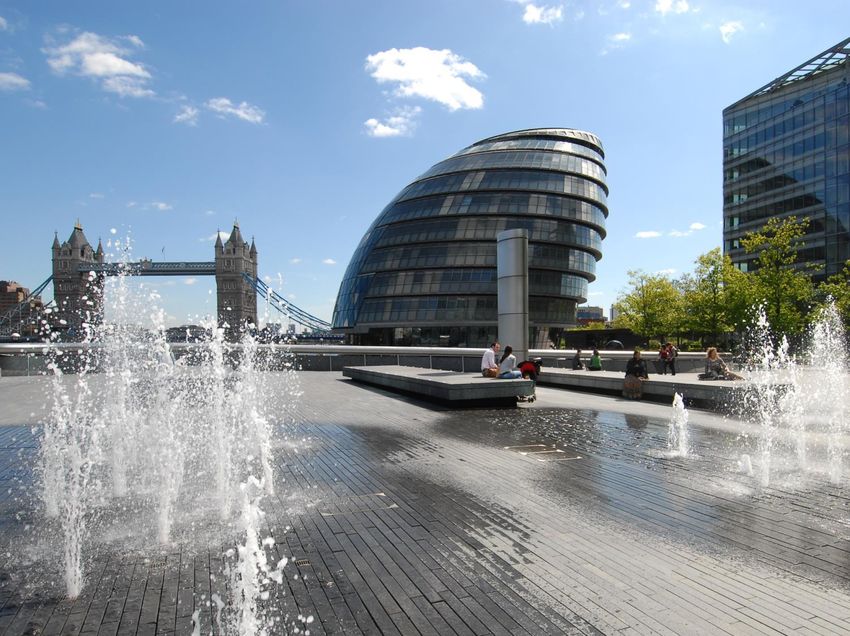
Improving air
quality in London

Clare Healy
City Planner, Transport Strategy
Transport for London
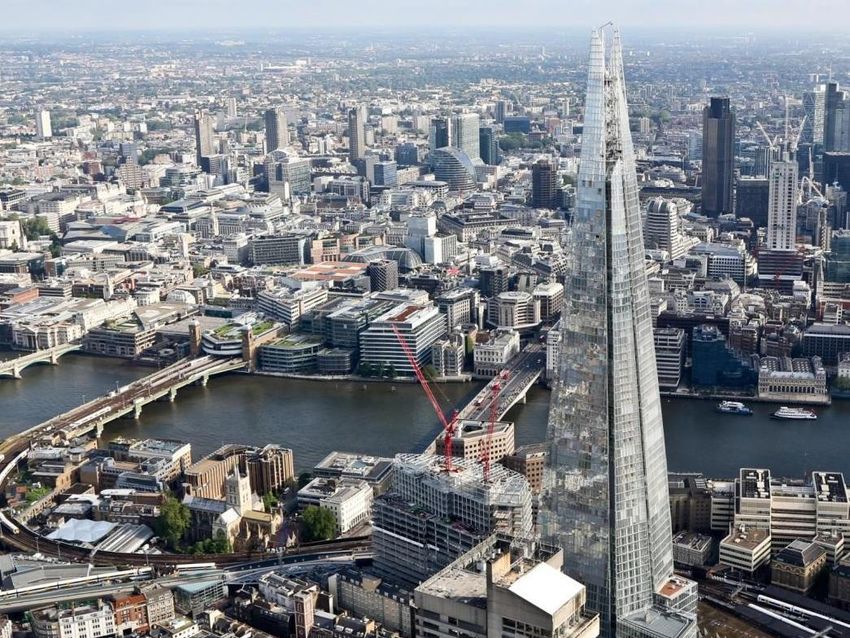
Media interest in air pollution is growing
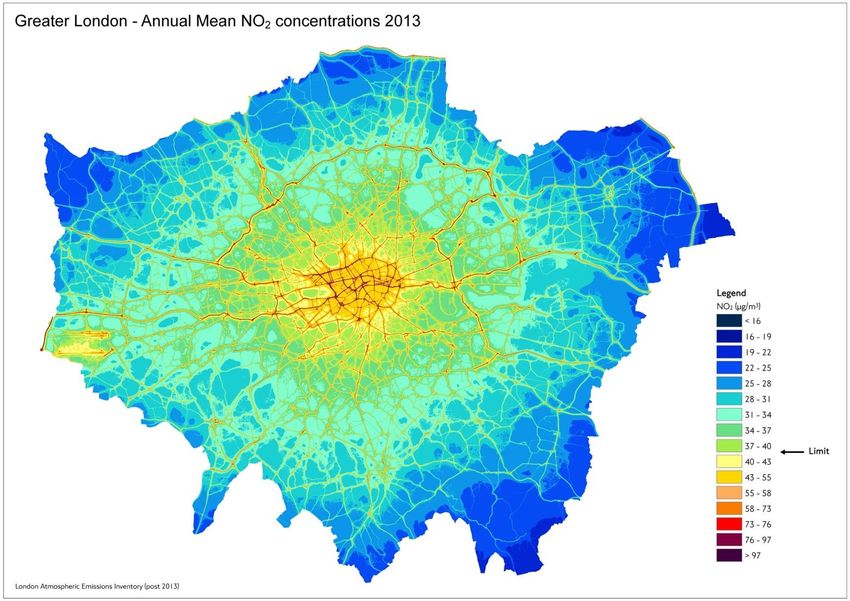
Scale of air quality problem in London

                        3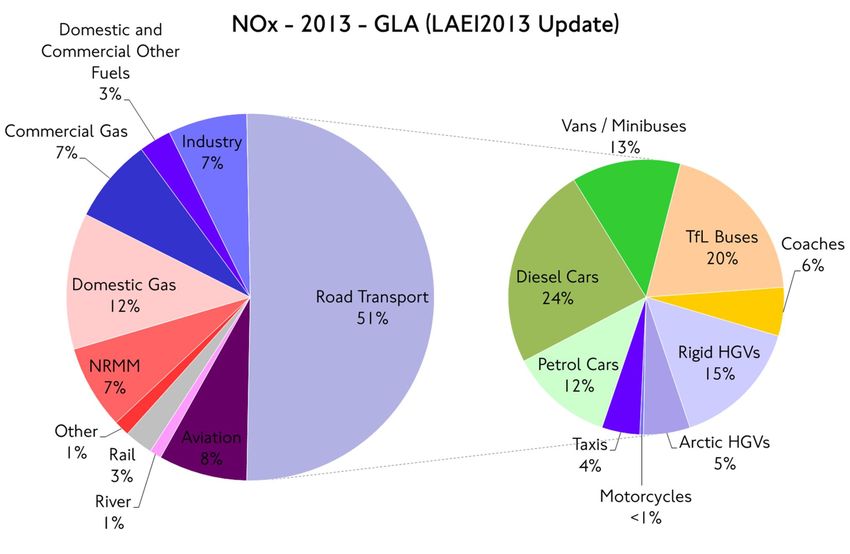
Road transport is a major source of air pollution
The majority of NOx emissions in London are from transport, particularly
where concentrations are highest and legal limit values are exceeded.
Therefore, achieving compliance requires a focus on transport emissions.

                                      4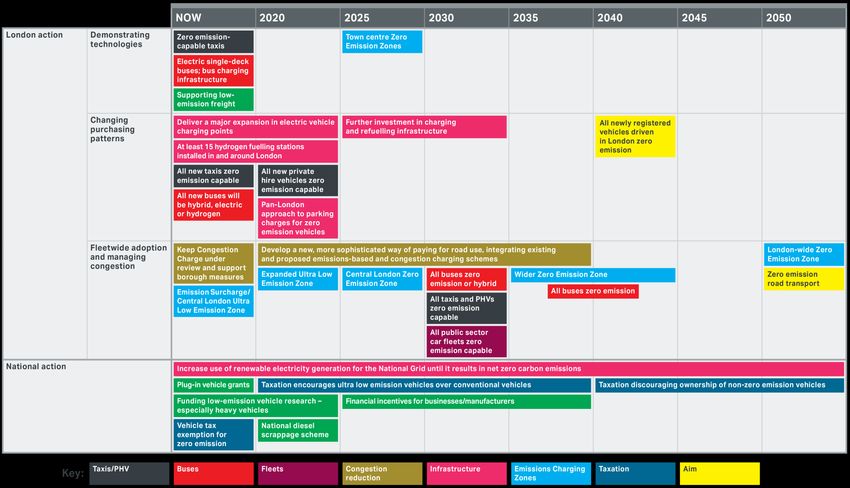
Aim for London to have the best air quality of
any world city by 2050

                        5
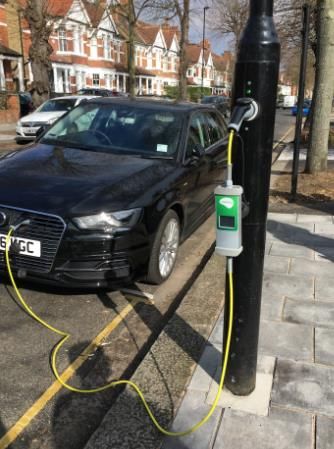
T-Charge
• Launched on 23 October
  2017
• Same boundary and time as
  Congestion Charge
• £10 surcharge on top of
  Congestion Charge
• T-Charge standard is Euro 4
• Stepping stone to ULEZ
Ultra Low Emission Zone proposed for 2019
 From 8 April 2019

                                    Euro VI (c.2014)
                                    ...or £100 a day
Euro 4 petrol (c.2006)
Euro 6 diesel (c.2015)
                                   Euro 3 (c.2007)
...or £12.50 a day
                                   ...or £12.50 a day

         Exempt but                        Additional hybrid or
         new licencing rules               electric standard
                               7
Existing situation                         Note: In the hatched areas, standards indicated
                                           by both colours apply.
                                           *Vehicle class is indicative only, additional
                                           vehicles are affected
                                           **Minimum emissions standard is for NOx and
                                           PM unless otherwise stated

                                          T-Charge and LEZ in operation

                                                     Min emission
                         Vehicle class*                           or       Daily Charge
                                                     standard**

                                                         Euro 4
                                                                              £10
                                                        Euro IV          (CC Hours Only)

                                                      Euro IV PM               £200

                                                       Euro 3 PM               £100

                     8
April 2019 – Central London ULEZ
                                           Note: In the hatched areas, standards indicated
                                           by both colours apply.
                                           *Vehicle class is indicative only, additional
                                           vehicles are affected
                                           **Minimum emissions standard is for NOx and
                                           PM unless otherwise stated

                                  ULEZ replaces T-Charge. Introduction of
                                  Euro 6/VI diesel standard and change in
                                             charge and hours
                                                     Min emission
                           Vehicle class                          or Daily Charge
                                                      standard
                                                         Euro 3              £12.50

                                                     Euro 4 petrol
                                                          or                 £12.50
                                                     Euro 6 diesel

                                                        Euro VI               £100

                                                      Euro IV PM              £200

                                                       Euro 3 PM              £100
                       9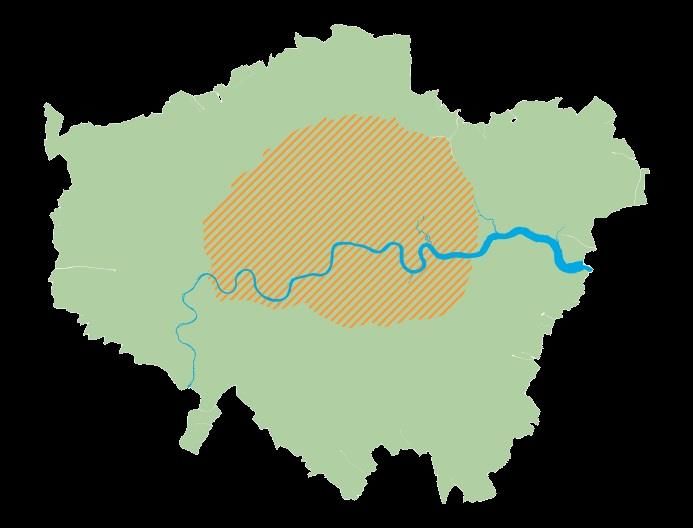
October 2020 – Strengthening
LEZ standards                                Note: In the hatched areas, standards indicated
                                             by both colours apply.
                                             *Vehicle class is indicative only, additional
                                             vehicles are affected
                                             **Minimum emissions standard is for NOx and
                                             PM unless otherwise stated

                              Euro VI standard applies London-wide for heavy
                                                 vehicles
                                                       Min emission
                            Vehicle class*                          or Daily Charge
                                                       standard**

                                                           Euro 3               £12.50

                                                        Euro 4 petrol
                                                             or                 £12.50
                                                        Euro 6 diesel

                                                           Euro VI               £100
                                                         Euro IV PM              £300

                                                         Euro 3 PM               £100
                       10
October 2021 – Expanding ULEZ
Note: In the hatched areas, standards indicated
by both colours apply.
*Vehicle class is indicative only, additional
vehicles are affected
**Minimum emissions standard is for NOx and
PM unless otherwise stated
ULEZ expands to inner London
Min emission
Vehicle class* or Daily Charge
standard**
Euro 3 £12.50
Euro 4 petrol
or £12.50
Euro 6 diesel
Euro VI £100
Euro IV PM £300
Euro 3 PM £100
11Impact on population exposure
Baseline With proposals
• Over 100,000 fewer
people living in areas
exceeding legal NO2 limits
London-wide in 2021
• 77 per cent reduction
London-wide, 96 per cent
reduction in Outer London
• 71 per cent fewer schools
in areas exceeding legal
limits in 2021TfL is using its influence to enable a switch to zero
emission transport
Technology trials:
Leading by example: All single wireless bus charging
deck buses in central London will and new electric
be zero emission by 2020 double deck buses
Regulation:
New licencing
requirements for zero Infrastructure:
Funding: emission capable taxis Charge point delivery in
Supporting and private hire partnership with boroughs
innovation e.g. vehicles and private sector
through MAQF,
NoF, LENs
Stakeholder engagement:
LoCITY programme helping the
freight industry adopt ULEVsMove to zero emissions zones
1.Paris 10.Mexico City 19.Vancouver
2.London 11.Milan 20.Warsaw
3.Los Angeles 12.Oslo 21.Birmingham
4.Copenhagen 13.Quito 22.Honolulu
5.Auckland 14.Rome 23.Oxford
6.Barcelona 15.Rotterdam 24.Greater Manchester
7.Cape Town 16.Seattle 25.Santa Monica
8.Heidelberg, 17.Seoul 26.West Hollywood
9.Medellin 18.Tokyo
14Clare Healy City Planner, Transport Strategy Transport for London
LAEI 2013
 What it is...
 • A full inventory of London’s emissions, by source and locations for 2013.
 • Future year emissions estimated for 2020, 2025 and 2030.
 • 2008 and 2010 emissions recalculated with method updates.
 • Provided inputs for London Toolkit Air Quality Model

                                             Key users:
  Analytical evidence base essential
  for policy development and
                                             •   Boroughs (LLAQM, Planning and
  planning:
                                                 Health)
                                             •   GLA and TfL policy and strategy
  •   Strategic emissions modelling
                                                 development
  •   Concentrations modelling & air
                                             •   GLA/Defra – reporting to EC
      quality mapping
                                             •   Consultancies, Developers (EIA
  •   Hotspot identification
                                                 & planning)
  •   Source contributions
                                             •   Public Information systems
  •   Vehicle Fleet Compositions
                                                 (Kings – Nowcast, Cleaner Air
  •   Traffic flows and vkm
                                                 For London)
  •   LEGGI

                                        16
Overview of modelling process
Vehicle counts, speed, age Validation
LAEI Weather
emissions
Concentrations
+
inventory
Other transport
Topography
Non-transport sources
17We have been testing the effectiveness of Euro 6/VI
New European Drive Cycle (NEDC)
140.0
NEDC Cycle - 2 Phase Test
Phase 2 - EUDC Cycle
Phase 1 - ECE Cycle - 0 - 800 Seconds
Phase 2 - EUDC Cycle - 801 - 1200 Seconds
120.0
100.0 TfL Passenger Car Drive Cycle
Speed (km/h)
Phase 1 - ECE Cycle
80.0
120
60.0
100
80
Velocity (km/h)
40.0
20.0
60
0.0
40
0 200 400 600 800 1000 1200
20 Time (Seconds)
0
121
361
1081
1201
1321
1441
1561
1681
1801
1921
2041
2161
2281
241
481
601
721
841
961
1
Time (seconds)
18Emissions based charging schemes – T-Charge and ULEZ
• Schemes where vehicles must meet minimum emissions standard or pay a daily
charge
• The Low Emission Zone (LEZ)
– operates London-wide, 24/7
– Since 2008, tightened 2012
– Has saved 28t of particulate matter
• The T-Charge
– covers the CC zone and hours
– A 28 percent reduction in non-compliant
vehicles entering the CCZ
• In 2019 the Ultra Low Emission
Zone (ULEZ) will replace the T-
Charge in central London and
operate 24/7
• Expected to save 20 percent of
road transport NOx in 2019 in
central London
19The ULEZ is designed to ‘clean up’ diesel and petrol
• When setting the emissions standards, we had to consider the number of
vehicles that would need to upgrade and the likely technological solutions.
• A lot of vehicles enter central London over any given year:
5,000,000 40,000 660,000 118,000
• The Government currently estimated there would be around 110,000
plug-in cars registered in the UK by 2020.
• This meant it would be difficult to set a ‘non ICE’ standard in 2020.
• Therefore, our starting point was to ensure the petrol / diesel fleet is as
clean as possible
20Understanding how polluting different vehicle types are:
legislated emissions standards
Euro 4 petrol is an equivalent
NOx standard to Euro 6 diesel
21How people might respond to the charge
All vehicles in zone
Will meet the emissions Will not meet the emissions
requirement requirement
• Charge has to make the cleaner,
compliant vehicle the cost Buy a
Pay the
Change
effective option for people compliant
charge
travel
vehicle behaviour
• Want to encourage frequent
users of the zone (and therefore
contribute most to pollution) to Re- Forgo
Divert Re-time
change their vehicles mode trip
• Want to still allow low levels of
infrequent travel but at a cost
22There is a daily charge for ‘non-compliance’
Stay in non-compliant vehicle Buy compliant vehicle
1000
900 The value (cost) per day of a
compliant vehicle will
800 always be higher than a
Cost of vehicle per day in CCZ
non-compliant vehicle
700
600 ...so that for
Adding a daily charge to the
500 non-compliant vehicle frequent users it
increases the cost per day of becomes cost
400 the non-compliant vehicle....
effective to buy a
300 compliant vehicle.
200
100
0
x
Number of days in CCZ per year
Non-compliant vehicle Compliant vehicle Non-compliant vehicle + daily charge
23Emissions-based charging schemes – Stronger LEZ and extended ULEZ
• 2020: to strengthen LEZ standards to
a Euro VI requirement for heavy
vehicles
• Expected to reduce NOx emissions by
19 per cent London-wide
• 2021: to expand the ULEZ so that all
vehicles entering inner London are
subject to emissions controls from
this date forward
• Combined impact is expected to
reduce NOx emissions by 28 per cent
London-wide
24Many more residents
Central ULEZ Inner ULEZ
Less than 30 per cent of 45 per cent of households in
households in the zone have Inner have a car or van
220,000 a car or van available 3.6 million available
(residents) (residents)
85,000 1.3 million
(households) (households)
45,000 815,000
(cars registered with DVLA (cars registered with DVLA
which includes business vehicles) which includes business vehicles)
30,000 780,000
(cars or vans available to (cars or vans available to
households) households)
25,000 600,000
(households with at least (households with at least
one car or van available to them) one car or van available to them)
25Roadmap to zero emission road transport
You can also read


