Surviving & Thriving COVID-19 Pandemic Survival Guide - FOR BLACK WOMEN AND THEIR FAMILIES 2021-2022 - Black Women's Health Imperative
←
→
Page content transcription
If your browser does not render page correctly, please read the page content below
Surviving
& Thriving
COVID-19 Pandemic
Survival Guide
FOR BLACK WOMEN
AND THEIR FAMILIES
2021–2022
ACKNOWLEDGMENTS

PREPARED BY
Linda Goler Blount, MPH

                               Contents
Tammy Boyd, JD, MPH
Kimberly Rodgers
Steven Owens, MD, MPH, MA

CONTRIBUTORS
Angela F. Ford, PhD, MSW       A Message from Our CEO .  .  .  .  .  .  .  .  .  .  .  .  .  .  .  .  .  .  .  .  .  .  .  .  .  .  .  .  .  .  .  .  .                             3
Alanna Murrell
Kineta Sealey, JD              The Problem .  .  .  .  .  .  .  .  .  .  .  .  .  .  .  .  .  .  .  .  .  .  .  .  .  .  .  .  .  .  .  .  .  .  .  .  .  .  .  .  .  .  .  .  .   4
                                     Here’s How to Survive & Thrive .  .  .  .  .  .  .  .  .  .  .  .  .  .  .  .  .  .  .  .  .  .  .  .  .  .                                    6
COVID-19 STORY CONTRIBUTORS
Paula Green-Smith                    Here’s What We Need from Policymakers  .  .  .  .  .  .  .  .  .  .  .  .  .  .  .  .                                                          6
Cole Lawson
Jasmine Brooks                 Economic Impacts . . . . . . . . . . . . . . . . . . . . . . . . . . . . . . . . . . . . . . .                                                       7
Deborah Mitchell
Linda Yelder
                                     Here’s How to Survive & Thrive  .  .  .  .  .  .  .  .  .  .  .  .  .  .  .  .  .  .  .  .  .  .  .  .  .  .                                   8
                                     Here’s What We Need from Policymakers  .  .  .  .  .  .  .  .  .  .  .  .  .  .  .  .                                                          8
COPY EDITOR
Pam Eidson, MEd                Social Impacts .  .  .  .  .  .  .  .  .  .  .  .  .  .  .  .  .  .  .  .  .  .  .  .  .  .  .  .  .  .  .  .  .  .  .  .  .  .  .  .  .  .  .       9
                                     Here’s How to Survive & Thrive  .  .  .  .  .  .  .  .  .  .  .  .  .  .  .  .  .  .  .  .  .  .  .  .  .  . 10
PROOFREADER
Laura J. Nadel                       Here’s What We Need from Policymakers  .  .  .  .  .  .  .  .  .  .  .  .  .  .  .  . 10

DESIGN                         Protecting Black Women
Dana Magsumbol                 Through the Power of Partnerships  .  .  .  .  .  .  .  .  .  .  .  .  .  .  .  .  .  .  .  .  .  .  .                                              11
______________________         Vaccines: The Key to Ending the COVID-19 Pandemic .  .  .  .  .  .  .  . 12
                               Can Employers Mandate COVID-19 Vaccinations? .  .  .  .  .  .  .  .  .  .  .                                                                        14
BLACK WOMEN’S
HEALTH IMPERATIVE STAFF        Surviving & Thriving: Faces of Resilience  .  .  .  .  .  .  .  .  .  .  .  .  .  .  .  .  .  .                                                     16

Linda Goler Blount, MPH              Paula Green-Smith .  .  .  .  .  .  .  .  .  .  .  .  .  .  .  .  .  .  .  .  .  .  .  .  .  .  .  .  .  .  .  .  .  .  .  .  . 17
President & CEO                      Cole Lawson  .  .  .  .  .  .  .  .  .  .  .  .  .  .  .  .  .  .  .  .  .  .  .  .  .  .  .  .  .  .  .  .  .  .  .  .  .  .  .  .  .  . 18
Mae D. Jones, PhD, MBA               Jasmine Brooks .  .  .  .  .  .  .  .  .  .  .  .  .  .  .  .  .  .  .  .  .  .  .  .  .  .  .  .  .  .  .  .  .  .  .  .  .  .  .            19
Chief Operating Officer
                                     Deborah Mitchell .  .  .  .  .  .  .  .  .  .  .  .  .  .  .  .  .  .  .  .  .  .  .  .  .  .  .  .  .  .  .  .  .  .  .  .  .  .             20
Angela F. Ford, PhD, MSW
Chief Program Officer                Linda Yelder .  .  .  .  .  .  .  .  .  .  .  .  .  .  .  .  .  .  .  .  .  .  .  .  .  .  .  .  .  .  .  .  .  .  .  .  .  .  .  .  .  .  . 21
                               Practice Self-Care for Life!  .  .  .  .  .  .  .  .  .  .  .  .  .  .  .  .  .  .  .  .  .  .  .  .  .  .  .  .  .  .  .  . 22
Tammy Boyd, JD, MPH
Chief Policy Officer,          References  .  .  .  .  .  .  .  .  .  .  .  .  .  .  .  .  .  .  .  .  .  .  .  .  .  .  .  .  .  .  .  .  .  .  .  .  .  .  .  .  .  .  .  .  .  . 26
Senior Counsel

Ann McMikel
Chief Development Officer

Monica Coleman
Chief Communications Officer

Kineta Sealey, Esq
Policy Counsel

Angelica Geter
Chief Strategy Officer

Paula Green Smith, MA
Chief Training Officer

Kaie (Kay) Collins
Executive Assistant to CEO

                               700 Pennsylvania Avenue SE, Suite 2059 | Washington, DC 20003
                               202.787.5930 | www.bwhi.org        © 2021 Black Women’s Health Imperative. All rights reserved.
A Message from Our CEO

Dear Black Women,

When 2020 began, there was a distinctly optimistic feeling about what was
to come. It was to be a year of clarity, with many wishing for “20/20” vision
to guide them through. None of us could have seen the global pandemic that
was unfolding as we rang in the year. In the United States, Black communities
were blindsided, and the sudden realization of the all-too-familiar patterns
of racial disparities reminded us of the old saying, “When white folks catch a
cold, Black folks get pneumonia”—or, in this case, die from COVID-19.

Throughout the pandemic, the disparities in health, economic, and social outcomes have been stark
for Black women and their families. Black Americans experience disproportionate rates of COVID-19
cases and deaths. We are more likely to have underlying conditions that worsen the severity of cases
and less likely to have access to timely testing and treatment services that could save our lives.
Economically, women of color are facing high levels of unemployment and financial uncertainty.
This, in turn, is creating negative social impacts for Black women and girls, including a higher risk of
housing instability, food insecurity, and education inequality. Black women live at the intersection of
racial and gender oppression and economic and health adversity.

Structural racism—which has perpetuated centuries of anti-Black discrimination in health care,
education, housing, and labor—is at the root of this intersectional reality. Our nation’s systems were
designed to produce the outcomes we are seeing.

We at Black Women’s Health Imperative (BWHI) may not be able to predict the future, but we did, in
fact, predict the disparities in COVID-19 in March. We can expect these disparities to continue in the
way the COVID-19 vaccine is distributed in 2021.

Black women have the power to push back—we have and we must. With no way to know when the
pandemic will end, and no certainty about when, or if, the federal response will meet our needs, we
have to create our own path forward.

To equip Black women to protect themselves, their families, and their communities, BWHI is pleased
to release Surviving & Thriving. This pandemic survival guide tells the story of how the COVID-19
pandemic is affecting us, Black women, and empowers us to take actions that keep us healthy,
safe, and resilient. The guide describes the scope of the health, economic, and social impacts of the
pandemic; provides practical tips and resources that Black women can use to mitigate the severity
of those impacts; and calls policymakers to account with lists of concrete recommendations for
addressing our needs and ending the disparities we experience.

We know what it means to be Black women in this country, in this moment. We know the stakes are
high and the consequences are quite literally life or death. And so, we offer this guide to amplify
Black women’s voices, to assert, more powerfully than ever, that our lives matter.

We hope you find it useful.

Linda Goler Blount, MPH
President & CEO
Black Women’s Health Imperative
                                    Black Women’s Health Imperative | 3
The Problem
SARS-CoV-2, the coronavirus that causes                  of gendered and racialized oppression and are
COVID-19, continues to infect and kill                   experiencing disastrous impacts on their health,
unprecedented numbers of people across the               economic stability, and social well-being.
world. In the United States, the pandemic has
exposed a range of inequities that put people            Black communities are 13% of the total U.S.
and communities of color at increased risk for           population but account for 18% of COVID-19
illness and death. These inequities are the result       cases and 21% of deaths.7 In almost every state,
of long-standing pre-pandemic policies and               the pattern is the same: Black Americans’ share
beliefs that perpetuate systemic and structural          of COVID-19 cases and deaths exceeds their
racism in every sector from health care and              share of the population.8 The spread of the virus
housing to labor and education—and Black                 in Black communities has forever changed lives,
Americans bear the burden.1                              and the health impacts of the pandemic on Black
                                                         women are both physical and mental.
Nationally, Black people are dying from COVID-19
at a rate 2.8 times greater than white people.2          Black women are disproportionately impacted
At earlier points in the pandemic, the outcomes          by underlying health conditions linked to severe
were even worse: Black Americans in some                 COVID-19 cases, including obesity, cardiovascular
states were dying of COVID-19 at up to six times         disease, and diabetes. Nearly 60% of Black
the rate of white Americans.3 In October 2020,           women live with obesity, close to half (43%)
COVID-19 became the third leading cause of               suffer from hypertension, and one in 10 has
death for all Americans, but the virus has been          diabetes.9 The high incidence of chronic disease
the third leading cause of death for African             is a consequence of America’s long history of
Americans since August.4,5 These outcomes are            structural racism and gender oppression. The
not surprising.                                          confluence of the gender pay gap and the racial
                                                         wealth gap have made economic instability a
                                                         harsh reality for Black women. One in five live
                                                         in poverty, resulting in food insecurity and a
   Dr. Susan Moore pleaded for pain                      reliance on low-cost, low-nutrition foods that
   medication—and to be taken                            contribute to obesity.10,11
   seriously. Even being a doctor
                                                         Neighborhood environments also play a critical
   didn’t protect her from racism and                    role in Black women’s COVID-19 outcomes.
   its implicit bias. She pleaded for                    The historic practice of redlining served to
   medication and better treatment.                      segregate neighborhoods by race, making it
                                                         easier for policymakers to disinvest resources
   She posted her story on social
                                                         from Black communities. Today, research shows
   media in December 2020, then                          that redlined neighborhoods—which are home
   died a few days before Christmas.                     to predominantly low-income minorities—have
                                                         higher rates of chronic disease (e.g., asthma and
                                                         COPD) and greater overall risk factors for COVID-
                                                         19.12 Racist policies and practices like redlining
Black communities have long experienced                  are a reason African Americans are more likely
alarming inequities across key factors, called           to be essential workers,13 live in high-density or
social determinants, that contribute to health           multi-generational housing,14 rely exclusively
and well-being, such as income, employment,              on public transportation,15 and experience
housing, and education.6 The impacts of these            homelessness16—all of which increase Black
inequities were devastating pre-pandemic, but            women’s risk of contracting the deadly virus.
only worsen as COVID-19 rages on. The heavy
toll of COVID-19 on Black America is sharpened           What is perhaps most frustrating, though, is
for Black women, who live at the intersection            that the same structural racism that produces

                           4 | Surviving & Thriving: COVID-19 Pandemic Survival Guide
disease in Black communities is also creating             of access to testing has in turn created treatment
barriers to treatment, care, and comfort—and              delays that have contributed to worse outcomes.
worsening existing health crises. One in 10               Black patients are more likely to need a higher
African Americans is uninsured, which limits              level of care at the time they test positive and also
both access to and affordability of health care.17        have significantly higher rates of hospitalization
Even when Black people do have access to care,            and death.22
medical racism lowers the quality. Racial bias
in medicine has been linked to less access to             The physical health impacts of COVID-19
pain medication for Black Americans, as well              are clear, and the psychological stress of
as the false belief that Black patients feel less         the pandemic is certain to have long-term
pain and that Black patients claiming pain are            effects on Black women’s mental health. The
usually seeking drugs.18 Such bias is apparent in         convergence of this pandemic with daily and
the Black maternal health crisis, which is likely to      often public racial violence has been emotionally
worsen amid the pandemic as social distancing             overwhelming. It is exhausting to have to be
requirements limit social supports and maternal           hypervigilant about COVID-19 while also staring
depression increases.19                                   down racism at work, in the classroom, at the
                                                          doctor’s office, and everywhere in between.
It is no surprise that early in the pandemic, when        Black women are experiencing increased anxiety,
hospitals were overwhelmed and under-resourced,           sadness, and depression as they try to survive
Black patients with COVID-19 symptoms were                this pandemic while also surviving being Black in
more likely to be sent home without being                 America.23,24 Violence and related stressors also
tested.20 Or that minority communities in big cities      disproportionately impact Black women.25 But
had fewer testing sites and longer wait times; they       with the right tools, resilience is possible.
were also more likely to run out of tests.21 This lack

                                       Black Women’s Health Imperative | 5
Here’s How to Survive & Thrive
Wear a mask, wash your hands, and keep your distance. Don’t have indoor family gatherings.
Stay away from bars, indoor restaurants, and other places where people are close together.
When you are in public and cannot maintain social distance, wear your mask. Make sure it covers
both your mouth and your nose. Keep a bottle of alcohol-based hand sanitizer with you when
you are out and about. Wash your hands with soap and water for at least 20 seconds as soon as
you return home. And, of course, maintain at least six feet of distance from others when you are
indoors. These simple steps can help lower your risk of contracting COVID-19.
Know your COVID-19 status. One of the biggest challenges to slowing the spread of COVID-19 is
that the virus can be asymptomatic. This means that you could feel fine and show no symptoms
but still be carrying, and potentially spreading, disease. Periodic testing can help you remain
aware of your status so that you can get the care you need while also protecting others. Many
local health departments and community pharmacies are offering free testing. Encourage other
people in your life to get tested.
Don’t skip out on annual and/or recommended doctor’s appointments. Black women are at
greater risk of a range of diseases, including those in which early detection could be lifesaving. If
you are hesitant about going into a clinical office, check with your providers to see if they offer
virtual appointments. Ask what is being done to protect patients coming into the clinic. You
can also use this digital health directory to find telehealth services for both your physical and
mental health needs. Do get your screening tests.
Practice self-care. The pandemic is placing us all under a great deal of physical and mental
stress, even when we don’t necessarily feel it. Nurturing your mind and body can go a long way
in keeping you healthy. Take walks when possible. Meditate. Watch your favorite show, read a
good book, or listen to an interesting podcast. Limit access to news and devices. Set boundaries
that allow you to maintain work-life balance and nurture social connections that make you feel
good and supported.
Here’s What We Need from Policymakers
Ensure access to adequate and affordable health insurance. Nearly 28 million Americans, and
14% of Black women, are uninsured. Regardless of income or job status, everyone deserves to
have insurance that allows them to seek quality medical care when necessary—especially in a
pandemic.
Ensure equitable access and distribution of the vaccine.
Invest in initiatives that address systemic racism within health care. From COVID-19 to the
maternal health crisis, medical racism is harming Black women. We urgently need legislation,
such as the recently introduced Equal Health Care for All Act, that calls for substantial
investments in research, workforce training, and reforms that capture the scope of and provide
solutions in response to racial bias in health care.
Expand Medicaid coverage in all states. Twelve states, primarily in the U.S. South, where more
than half of Black Americans live, have yet to expand Medicaid. Expansion would fill coverage
gaps for low-income Black women, increasing access to essential preventive care as well as
critical maternal health services such as doulas and care for a full year postpartum.
6 | Surviving & Thriving: COVID-19 Pandemic Survival Guide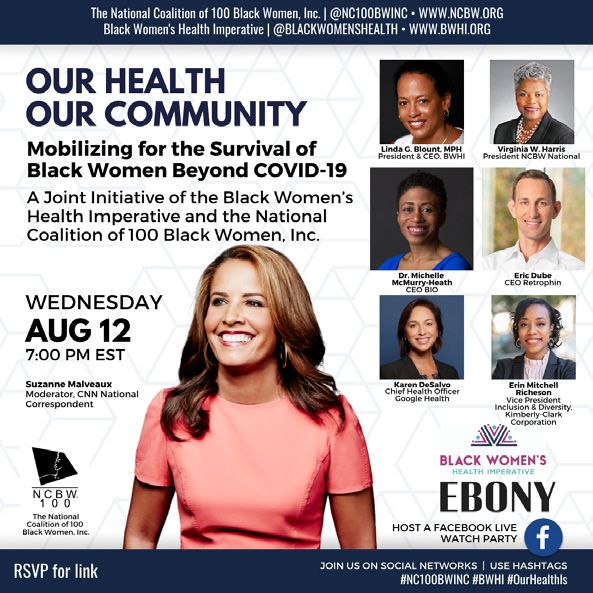
Economic Impacts
The economic fallout of COVID-19 extends
beyond what many of us could have ever
imagined. Sixty percent of Black households
report facing serious financial problems.26
Unemployment rates are at levels unseen since
the Great Depression. Many people cannot pay
their rent or mortgage. Families are struggling to
put food on the table, and bills are going unpaid.
Economic recovery will be an uphill battle for
those who survive, and this is especially true for
Black women.

Black women have had the second-highest
probability of unemployment during the
pandemic. Compared to white men, Black women
are significantly more likely to experience job
loss, even when employed in telework-friendly
jobs.27 Black workers are also more likely to be
permanently laid off, and Black women have
recovered just one-third of jobs lost during the
pandemic (compared to 61% recovery for white            a white man makes—less than all other groups
women).28,29 This pattern is similar to the one that    except Hispanic women—and have a median
emerged in the wake of the Great Recession, in          wealth of just $200.35,36 This translates to lower
which it took nearly a decade for Black workers’        earnings and fewer assets with financial value,
incomes to return to prerecession levels.               which means Black women have less financial
                                                        security to fall back on.
Black-owned businesses, more than a third
of which are women-led, are also suffering.30           Black women are overrepresented in low-
Black business owners were more likely to have          wage, frontline jobs (e.g., cashiers, health aides,
their applications for funding relief denied by         food service workers).37 This work is essential
the Paycheck Protection Program (PPP) and               to COVID-19 recovery, yet the compensation
Economic Injury Disaster Loans program.31               does not sufficiently reflect workers’ vital
Less than 1 percent of PPP loans went to Black          contributions. Despite facing heightened risk
women. Nearly 50% of Black-owned businesses             of contracting COVID-19 on the job, low-wage
have closed permanently as a consequence of             essential workers often do not have the benefit
inequitable access to government relief and             of paid sick leave, forcing many to choose
pre-pandemic funding gaps that left them with           between their health and their basic economic
smaller cash reserves.32,33                             survival.38 Even in the professions, Black women
                                                        in other COVID-critical roles such as doctors,
With four in five Black mothers serving as a            nurses, and teachers earn up to 27% less than
principal source of economic support for their          white men in those same jobs.39
families, and more than half as the sole source,34
the pandemic’s financial consequences on                Ultimately, pre-pandemic experiences of
Black women are bound to have trickle-down              economic inequality, combined with the added
effects on the broader Black community. Yet             financial challenges of COVID-19, have left Black
structural inequities such as wage disparities and      women with a great deal of ground to cover as
occupational segregation have whittled away the         they try to attain or regain financial stability for
buffers Black women need to absorb the shock            themselves and their families.
of COVID-19’s economic impacts. For example,
Black women earn just 62 cents for every dollar

                                     Black Women’s Health Imperative | 7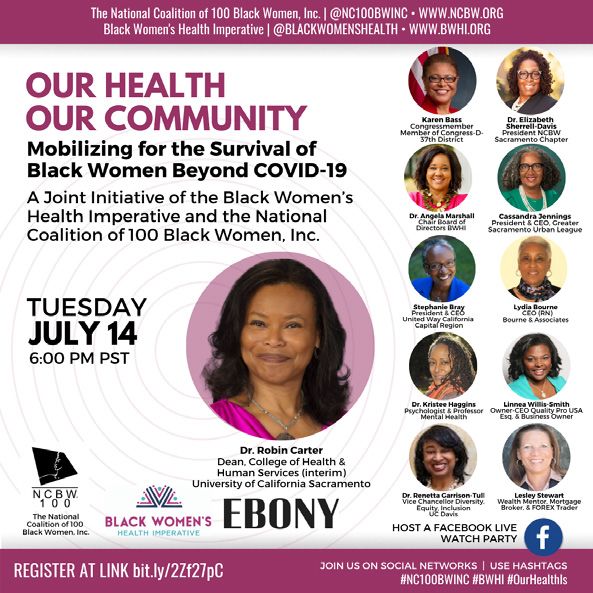
Here’s How to Survive & Thrive
Get familiar with community-based social services in your area. The lack of a coordinated federal
response to COVID-19 has left many Black women with few options for economic relief. But where
government assistance falls short, community-based organizations and mutual aid initiatives,
which connect people in need with fellow community members who can provide direct support,
can help fill the gap. Check out this database to find mutual aid groups near you.
Strengthen your financial literacy to mobilize for the future. While financial literacy alone cannot
solve the economic disparities Black women experience, it can provide a buffer that helps to minimize
the impacts. Browse this list of trusted resources from the National Endowment for Financial
Education to learn how to manage your finances during the pandemic and plan for the future.
Take advantage of opportunities to kickstart or sustain your small business. The convergence
of COVID-19 with several high-profile cases of racial violence has resulted in a surge of small business
grants and relief funds focused on women of color, including some specifically for Black women. If you
are a small business owner or are considering entrepreneurship in response to the employment crisis,
be sure to research where there is funding available to support you. One resource: https://www.sba.
gov/page/coronavirus-covid-19-small-business-guidance-loan-resources.
Monitor the job market to track which industries are most likely to be hiring. With so many
people out of work and fewer openings available, the job market is even more competitive than
usual. Tracking hiring trends can help you focus your job search on industries with more job
openings, such as retail, delivery, and health care. One resource: The Muse. Another resource
lists platforms to find jobs working from home.
Here’s What We Need from Policymakers
Implement universal paid sick leave and expand eligibility for family and medical leave. The
United States is one of the only wealthy, developed countries that does not guarantee some form
of paid leave. Implementing a federal paid leave mandate would ensure that working people do
not have to choose between keeping their jobs or caring for the health and safety of their families.
Paid leave helps the economy by keeping people in their jobs and can improve population health by
allowing sick workers to stay home without worrying about losing earnings.
Raise the federal minimum wage. The current federal minimum wage doesn’t provide a
foundation for survival, and leaving wage legislation to states creates a slippery slope of
inequity. Increasing the federal minimum wage to at least $15 would allow Black women to earn
a living wage that allows them to access basic human needs.
Establish an independent equity committee to review and revise the eligibility criteria for
economic relief programs. The current criteria for small business relief programs hinges on
thresholds (e.g., number of employees, revenue, prior banking relationships) that Black business
owners are less likely to meet due to preexisting economic inequality. Convening a committee to
conduct an independent review of program criteria through a lens of equity will help to identify
criteria that perpetuate inequity and to develop recommendations for updating the criteria.
Develop a long-term funding strategy to support and increase businesses owned and operated
by Black women. Almost half of Black-owned businesses have permanently closed during the
pandemic. The economic consequences are vast, and the road to financial recovery will be long.
A long-term approach for delivering funding and resources to sustain existing and start new
Black women-owned businesses is a critical and necessary step toward economic justice. Take
advantage of opportunities to kickstart or sustain your small business.
8 | Surviving & Thriving: COVID-19 Pandemic Survival Guide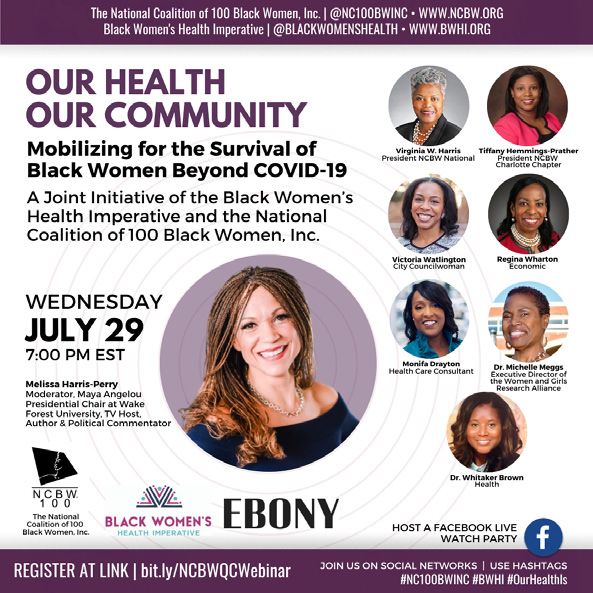
Social Impacts
As highlighted in the previous sections, the
impacts of COVID-19 on Black Americans are
deeply rooted in social inequities. For centuries,
policies and practices have been intentionally
(and often subtly) designed and re-designed
to preserve the power of the white majority by
allowing the dehumanization of Black Americans.
In turn, this has created a standard of implicit
and explicit bias that perceives Black people as
disposable.40,41 This perception, and the treatment
of Black Americans as expendable, has created
especially traumatic social impacts throughout
the pandemic.

We are bearing witness to mass death across            Working mothers are balancing their jobs with
racial lines, but Black communities are most           caregiving and handling the bulk of unpaid
often the ones left grieving. One out of three         domestic labor.46 For some, the burden of doing
African Americans personally knows someone             double duty has proved to be too difficult to
who has died from the virus.42 We are mourning         manage. Around 58,000 Black women left the
more because we are dying more, and we are             workforce between August and September
dying more because this nation’s systems, from         2020.47 Throughout the pandemic, layoffs have
education to health care to housing, were built        left others without much-needed work.48 This
for us to fall through the cracks. The human           exodus of women from the workforce could undo
cost of the pandemic in Black communities              critical workforce gains and increase the already
is shocking in itself, yet Black Americans—            large pay and promotion gaps that Black women
particularly Black women and girls—are also            experience.49
contending with the worst outcomes across
important social indicators of prosperity.             COVID-19 is also exacerbating housing instability.
                                                       Fewer than half of Black families own their
Education is a key indicator of social mobility.       homes, leaving many at the mercy of landlords.50
While virtual learning could potentially offer         In 17 states, Black women are twice as likely as
some protective benefits to Black girls, who are       white renters to be evicted.51 Evictions not only
disproportionately punished and criminalized           place Black women at increased risk of job loss
within school settings, some home learning             and homelessness; evictions can contribute to
environments lack the resources needed to              the spread of COVID-19.52 The federal eviction
succeed. Ten percent of Black teens do not             moratorium delays payments rather than
have access to a home computer, one in                 canceling rent outright. This means that Black
five have to rely on public Wi-Fi for internet         women, who are already disproportionately
access, and one in four report that these issues       affected by COVID-19’s economic impacts, will
sometimes prevent them from completing their           face further hardship when the bill for back rent
homework.43 This digital divide may further            comes due.
widen the achievement gap, which has already
increased 15–20 percent since COVID-19 school          The social impacts of COVID-19 are wide reaching
closures began.44 Further, schools offer more          and closely intertwined with the health and
than education, providing social welfare supports      economic impacts of the pandemic—all of which
such as free or subsidized meals, behavioral           affect Black women’s quality of life. To survive
counseling, and a safe place to play and socialize.    this triple bind, we must leverage community
With Black children more likely to be learning         resources and supports while demanding urgent
from home, access to those critical resources and      systemic change from policymakers.
opportunities may be interrupted or unreliable.45

                                     Black Women’s Health Imperative | 9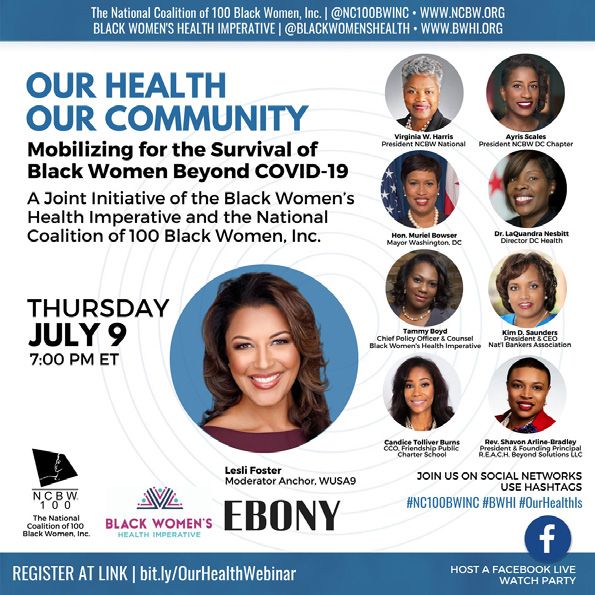
Here’s How to Survive & Thrive
See if you’re eligible for a free laptop or low-income internet. As we adjust to life in a socially
distant environment, we need the internet to keep us connected. It is where we get the news,
search for jobs, access information for school, and talk to friends. If you need access to a laptop
or internet service at a low cost, check out national organizations such as PCs for People and
The On It Foundation. You can also connect with community-based organizations in your area
to see what support they offer.
Maintain social connections with friends and family—virtually. Socially distant does not have
to mean socially isolated. Between the pandemic and the constant reminders of anti-Blackness,
Black women are emotionally exhausted and under a great deal of stress. Maintaining a sense
of community by keeping in touch with friends and family via virtual channels can help you feel
supported, stay positive, and be resilient.
Here’s What We Need from Policymakers
Extend the federal eviction moratorium and cancel debts. Congress should extend the eviction
moratorium indefinitely and amend it to include debt cancellation so that low-income Americans are
not saddled with thousands of dollars of back rent they cannot afford to pay.
Increase the availability of affordable housing. Safe and stable housing is a right, yet there
is not enough affordable housing to meet the needs of low-income people and families. The
shortage has created a crisis that forces many people to spend over half their income on rent
and, in turn, limits their ability to save. Investing in the development of additional affordable
housing units will allow more low-income Americans to access stable housing, which can
contribute to better health and educational outcomes.
Expand quality broadband access across the country, with particular investments in low-
income and rural communities. The internet is a primary source of information for a majority
of people, yet the digital divide remains a barrier to the internet access that every American
needs right now. With everything from school to work happening online due to the pandemic,
it is critical to ensure that quality broadband internet access is affordable and accessible to all
people, regardless of income or geographic location.
Provide resources for quality distance learning and training. Far too many children lack the
resources needed to succeed in virtual learning environments, such as internet access and a
computer. Similarly, low-income workers—especially those who are currently unemployed—may
also face barriers to the resources needed to access job training or search and apply for jobs.
Now is the time to provide funding to entities such as school districts and nonprofits so they can
secure critical resources that help people learn and thrive.
10 | Surviving & Thriving: COVID-19 Pandemic Survival GuideProtecting Black Women Through
the Power of Partnerships
In the summer of 2020, with the pandemic’s impact
on Black communities becoming increasingly clear,
BWHI saw a need to provide critical information and
resources to support Black women. In response, we
joined forces with the National Coalition of 100 Black
Women, Inc. (NCBW) to launch a webinar series
entitled Our Health, Our Community: Mobilizing the
Survival of Black Women Beyond COVID-19. The
initiative aimed to mobilize, support, and advocate for
Black women and their families in an effort to create
post-pandemic solutions that contribute to healthy,
resilient Black communities.
Together, BWHI and NCBW hosted one national
webinar and six locally focused webinars featuring
expert speakers from the health and business sectors.
More than 10,000 viewers tuned in for the series, which
served to raise awareness around the roots of health
disparities, advocate for systems and policy solutions,
and provide access to health information and resources
that promote healthy behaviors and safe environments
for Black women through the pandemic and beyond.
The recording from the national webinar that kicked off
the series is available on the BWHI YouTube channel.
Black Women’s Health Imperative | 11Vaccines: The Key to Ending the COVID-19 Pandemic
Each of us has a role to play in slowing the communities.53 You are justified to be hesitant
spread of COVID-19. We should wear a mask, or fearful about a newly developed vaccine, but
wash our hands frequently, maintain social BWHI wants to reassure you that we will provide
distancing, and limit our trips to public places scientific and factual information on COVID-19
such as grocery stores. But the most effective vaccines.
way to protect ourselves and our communities
from this deadly disease will be to get From the moment a manufacturer begins
vaccinated. Vaccines minimize and can even working on a vaccine, there are a series of
eliminate the spread of infectious diseases; ongoing checks and balances in place that
they are the reason we are able to control viral ensure safety, quality, and effectiveness.
infections like measles and why we no longer The U.S. Food & Drug Administration (FDA)
have to worry about smallpox or polio. independently reviews and assesses whether
a vaccine is safe for public use. The agency’s
BWHI is a strong supporter of vaccination as a rigorous scientific and regulatory standards must
critical tool for keeping the public healthy from be met before any vaccine, including those in
illnesses like the flu, measles, and COVID-19. development for COVID-19, is approved.54 Even
But we also recognize that within the Black after a vaccine is available to the public, its
community, there are concerns about receiving safety and efficacy are meticulously monitored.
the vaccine—and those concerns are valid. Too The U.S. Department of Health & Human
many times, health research and advancements Services (HHS) tracks, monitors, and studies
have come at the expense of Black bodies. From instances of adverse reactions to vaccines
the Tuskegee study that let Black men suffer through the Vaccine Adverse Event Reporting
from untreated syphilis to the unauthorized System. Thanks to the careful development and
use of Henrietta Lacks’s cervical cancer cells to monitoring of vaccines, the current U.S. vaccine
the exploitation of enslaved Black women for supply is the safest it has ever been in history.55
surgical practice by J. Marion Sims, America’s
history of harmful, unethical medical practices For both the Pfizer-BioNTech and Moderna
has created deep medical mistrust in our vaccine trials, 10 percent of study participants
12 | Surviving & Thriving: COVID-19 Pandemic Survival Guidewere Black—roughly 3,000 per study. That is less you to stay up to date on how the vaccine is
than we would have liked. We believe that Black being distributed, talk to your health care provider
representation in the trials should have exceeded about your risk for COVID-19, and get yourself
our percentage of the general U.S. population and your family members vaccinated when
because we are more likely to contract COVID-19 appropriate. Continue to wear masks and keep
and die. However, the data that we have so far your distance, because although a vaccine is
indicates that neither vaccine has any serious your best means of protection against the virus,
side effects outside of pain at the injection site, there’s still a small chance of becoming infected.
short-term fatigue and mild fever. These vaccines We want to assure you that our team at BWHI
are more than 94% effective after two doses. will monitor developments with the COVID-19
vaccines and keep you informed. When we get
As FDA-approved COVID-19 vaccines become vaccinated, we will say so on social media.
available to the general public in 2021, we urge
At the National Institutes of Health (NIH), Black women are playing an
intricate role in the development of vaccines. One of the key scientists
developing the approach to a vaccine against COVID-19 is a viral
immunologist named Dr. Kizzmekia Corbett. After majoring in biological
sciences at the University of Maryland, Baltimore County, the now-34-
year-old Corbett earned a PhD in microbiology and immunology at the
University of North Carolina at Chapel Hill.67 She has been working on
vaccines for coronaviruses since long before the one causing COVID-19
came along.
Dr. Corbett explains in several interviews that years of work went into
preparing for a coronavirus vaccine. The process she and others patented
years ago became the basis for the types of vaccines that have been
approved so far. Those years of work were integral to the vaccine’s quick
development. She emphasizes that the vaccine’s testing process has not
been shorted.
Dr. Kizzmekia Corbett Dr. Corbett told Black Health Matters, you can do things to “keep your
Viral Immunologist immune system healthy, but nothing other than a vaccine can tell your
National Institutes of Health
Twitter @KizzyPhD immune system to recognize a particular virus and prevent that virus from
getting into a cell.”
Dr. Valerie Montgomery Rice is dean of the Morehouse
School of Medicine. Dr. Rice trained as a researcher and
was an infertility specialist and founding director of the
Center for Women’s Health at Meharry Medical College.
Dr. Rice points out that Black scientists sit on the advisory
committees at the FDA and the CDC. Dr. Rice encourages
Black Americans to get the vaccine to help them protect
themselves from COVID-19.
Valerie Montgomery Rice, MD, FACOG
Morehouse School of Medicine
Black Women’s Health Imperative | 13Can Employers Mandate COVID-19 Vaccinations?
Now that vaccines have been approved, one risk of COVID-19 transmission is likely or where
pressing question is on people’s minds: Can COVID-19 has been detected in the workplace.
workplaces require employees to take vaccines? Under OSHA guidelines, employers have wide
Also, can you as an employee resist taking a latitude during a pandemic in what they can ask
vaccine if requested to do so by your employer? to ensure workplace safety.61 Barring religious or
health-related exemptions, private businesses
The Big Picture: The FDA has approved for have the specific right to maintain their own
emergency use authorization two vaccines for the health and safety standards and are legally able
prevention of COVID-19, which allows vaccines to fire workers who violate their rules, including if
to be distributed in the U.S. In December, the they do not get certain vaccinations.
FDA first approved Pfizer-BioNTech’s COVID-19
vaccine for emergency use, and later authorized Of Note: Vaccine mandates are not unheard
Moderna’s as the second vaccine.56 More vaccines of. Hospitals have long required the flu vaccine
are expected to be approved in 2021. for their employees as a condition of their
employment. Schools have long mandated
The Considerations: Only 42 percent of Black preventive care immunizations and vaccinations
Americans say they intend to be vaccinated, to protect against infections and diseases that
according to a Pew Research poll.57 Historical frequently arise during childhood.
injustices in the Black community with
exploitation,58 distrust in government and What complicates a COVID-19 vaccine mandate
political rhetoric, swift development of vaccines, in the workplace is that the vaccine has been
and the politicization of science are all commonly approved for emergency use, which means
cited as factors contributing to uncertainty and the vaccine is still considered experimental
doubt in our communities. and does not have full FDA licensure. There
is little precedent for requiring a vaccine that
Employers, particularly in sectors that have is still under an emergency use authorization.
been hard hit by the pandemic, have shown Further complicating efforts is that the vaccine’s
an eagerness to get their workers vaccinated. side effects have not been fully studied and
Although the vaccine will not be widely available determined. The expectation is that some
to the public until summer 202159, there is serious employers will move forward and mandate the
debate over whether businesses should mandate vaccine, and the mandate will be challenged
the COVID-19 vaccine for their employees to ensure in court. Given the fast-evolving nature of
things return to normal as quickly as possible. the situation, whether the courts will allow
the mandate to stand is unclear at this point.
The Context: Employers generally have the However, the more likely it is that nonvaccinated
right to require employees to get vaccinated. employees put customers, fellow employees, or
Health and safety in the workplace is regulated the general public at risk, the more compelling
by the federal Occupational Health and Safety the case will be for a vaccination mandate.
Administration (OSHA). OSHA requires that
employers maintain a workplace free from Part of the answer to whether the COVID-19
recognized hazards that may cause, or are vaccines can be mandated is based on specific
likely to cause, death or serious injury to guidance offered by other federal agencies. The
their employees.60 And it’s equally clear that Equal Employment Opportunity Commission
COVID-19 is a recognized hazard. The failure to (EEOC), the federal agency that enforces laws
be vaccinated constitutes a direct threat to other against workplace discrimination as well as
employees in circumstances when the virus is medical and privacy issues under the Americans
rampant and easily transmitted in the workplace. with Disabilities Act (ADA), issued new guidance
this month affirming that employers can require
An employer’s failure to take appropriate action workers to get a COVID-19 vaccine and bar them
may form the basis of a violation where the from the workplace if they refuse.62 Generally, the
14 | Surviving & Thriving: COVID-19 Pandemic Survival GuideADA limits employers’ ability to require medical
examinations. However, the administration of a
For More Information
COVID-19 vaccine by an employer to a worker
does not fit that definition under EEOC’s Centers for Disease Control and Prevention
interpretation. “If a vaccine is administered to https://www.cdc.gov/coronavirus/2019-ncov/
vaccines/index.html
an employee for protection against contracting
COVID-19, the employer is not seeking information American Diabetes Association
about an individual’s impairments or current health How COVID-19 Impacts People with Diabetes
status,” which is prohibited under privacy laws. Frequently Asked Questions: COVID-19 and
While the EEOC has offered specific guidance, Diabetes | ADA
employers may seek to determine to what extent
American Heart Association
the CDC or other agencies offer guidance about
Heart Disease and COVID
how and whether to mandate vaccinations,
Coronavirus (COVID-19) | American Heart
and who gets it when and in what way, before
Association
finalizing plans and setting corporate policies.
Mental Health First Aid (for Youth)
A further complication is whether employers Youth - Mental Health First Aid
can require teens in the workplace to be
Morehouse School of Medicine
vaccinated. Many Black families have seen
COVID Prevention Network: Prevention Guidance |
economic hardships and collapse due to the
Morehouse School of Medicine (msm.edu)
surging pandemic. The number of minors in
the workplace may have even increased during Black Women’s Health Imperative
the pandemic due to closed schools and the https://bwhi.org/
economic difficulties of families. In some cases, https://twitter.com/blkwomenshealth
teenage children have gone to work to help https://www.youtube.com/c/
support their families, as parents’ incomes have BlackWomensHealthImperative
fallen or vanished as schools have closed and https://www.facebook.com/
gone to virtual learning. Fewer children have BlackWomensHealthImperative/
been sick with COVID-19 compared to adults, https://www.instagram.com/blkwomenshealth/
and most children with COVID-19 have mild
symptoms or no symptoms at all.63 Significantly,
the FDA authorized the COVID-19 vaccines
for use in persons aged 16 years or older, but Watch this space: While employers are
not for vaccination of younger children.64 contemplating whether to make vaccinations
Minors are among the last group of the public mandatory, some question whether they
recommended for COVID-19 vaccinations.65 All should. Some employers are asking how they
the while, scientific researchers are conducting can encourage employees to get vaccinated
studies to review the safety and efficacy of the without mandating it. There are concerns that, by
vaccine in younger populations. mandating the COVID-19 vaccine, employers may
risk sowing distrust in the vaccine and further
The Bottom Line: Employers can require workers the anti-vaccine schism, thereby causing longer-
to get a COVID-19 vaccine and bar them from the term harm to communities of color. Rather than
workplace if they refuse. As long as corporate mandates, employees are more likely to see
vaccination policies have certain exceptions, are incentives to get vaccinated. Employers may use
job related, and are consistent with business wellness programs to encourage vaccinations,
necessity, employers have wide latitude to including gift cards or discounts on health
institute safety programs mandating COVID-19 insurance, much as they would with flu shots or
vaccinations. following healthy habits.66 Small inducements
may not only prove more common but more
effective than mandates.
Black Women’s Health Imperative | 15Surviving & Thriving:
Faces of Resilience
Black women are resilient—we have to be. Our
capacity to navigate ourselves and our families
through unthinkable conditions and circumstances is
a hallmark of who we are. As Strong Black Women,
we do what it takes to make sure our people survive.
But that resilience takes a toll on our physical,
mental, and economic health. We deserve to have
that same level of care, support, and sacrifice
reciprocated toward us. Below are stories of Black
women who have overcome the difficult challenges
created by the COVID-19 epidemic. As you read
them, know that we at BWHI know you are them
and they are us. Share in their pain, rejoice at their
triumph, and remember that, like them, you can
always overcome.
16 | Surviving & Thriving: COVID-19 Pandemic Survival GuidePaula Green-Smith (Age 60)
Chief Training Officer of BWHI
Paula Green-Smith is a mother, a wife, and a proud Black woman.
Thinking back on 2020, she explains her personal experience as
challenging, emotional, and illuminating. Paula and her husband
both contracted COVID-19 in March when U.S. cases were just
beginning to spike. Neither one of them had typical symptoms,
and they don’t know how they contracted the virus. Together,
they endured COVID-19 for about three weeks. Paula describes
COVID-19 as “unbelievable” and the most challenging thing she
has ever been through physically in her life. She also lost her
mother in July, which added to her and her family’s emotional
stress. Despite everything, Paula labels the year as illuminating.
“It wasn’t all bad,” she says. “I learned how to maneuver through
everything—and how to keep moving forward. I’ve learned not
to ask, ‘Why me?’ but to ask, ‘What is in it for me? What am I
supposed to learn and get from this situation?’” A few residual
effects that she and her husband experienced post-COVID
were shingles, electric tingly sensations throughout the body,
muscular aches, and mild eye issues.
Paula’s Advice:
For those who currently have the virus, “My advice to everyone whether
move when you can, rest as much as you they have had COVID or not is to
can, and stay hydrated! Drinking water is do whatever it takes to get healthy.
extremely important. Also, call your family
Move more, eat right, because I am
and friends. Having support is so helpful
when you feel like giving up. My husband absolutely certain we wouldn’t have
and I had each other, and I recognize that been able to pull through it like we
some people are home alone taking this did if we hadn’t lived healthy lives.”
on. It’s imperative that people call any and – Paula Green-Smith
everyone who will boost your mood and
send you love.
Paula on Black Women’s Health:
I want people to stop talking about the social determinants of health and be about doing
something about it. I want us to have policies in place that force our health care systems,
our legislators, our funders, etc. to create opportunities for us to make a difference where it
really matters. We need resources; nothing in America works on just talk. I want us to stop
talking and do.
Black Women’s Health Imperative | 17Cole Lawson (Age 27)
Vegan Chef
When asked to share her 2020 experience, Cole Lawson labeled
last year as awakening, tumultuous, and graceful. She was taught
to be more understanding of the world around her. We all go
through life with our minds on our own issues, but 2020 forced
everyone to look up and recognize that everyone has something
to conquer. “I had to ask myself what should be different in the
world. How am I showing up? What do I care about?”
Cole went from working at a café in Los Angeles and starting her
own business to filing for unemployment within two months. Soon
after layoffs, the café closed. Unfortunately, the owners did not
have the funds to reopen their doors, and the community they
built suffered greatly. In the midst of unemployment and a cluster
of new worries, she lost her grandfather to the COVID-19 virus in
June. As time went by, she was forced to reevaluate who she was
as a woman, what she wanted, and how she was living. With 2020
being a major election year and protests happening nationwide,
Cole grounded herself and made mental health her first priority.
Through it all, Cole had many “micro
So many of us were living life out awakenings” throughout the year. She
channeled the strength should could from
of habit, and 2020 made everyone
within and started taking better care of her
question everything about their health, focusing on her purpose, and giving
day-to-day choices. It shook us, more attention to loved ones. She realizes
and it was necessary. that she provides a luxury service working
– Cole Lawson as a personal chef. Business slowed down
toward the end of the year, but she continues
to take everything in stride. Her focus now
is to teach others virtually how to eat better, cook nutritious meals, and provide food for
those who need it.
Cole’s Advice:
Practice mindfulness. It doesn’t have to be grand, but meditating and slowing down to
focus on the present is key.
Cole on Black Women’s Health:
I would like to see the doctors learn what isn’t in the books, and to ask questions even
when things seem familiar. I would like to see people take Black women seriously. The
reason Black women don’t feel okay is because we constantly feel like we have to be
strong. I would like to see Black women know that it’s okay to be soft and vulnerable. It’s
okay not to have the answers. It’s okay to not know what to do, and it’s okay to ask for
help. I’d like to see Black women receive grace and understanding.
18 | Surviving & Thriving: COVID-19 Pandemic Survival GuideJasmine Brooks (Age 28)
Actress
Jasmine Brooks is a mother and an actress in the Washington,
DC area. When the pandemic hit, she was furloughed from her
part-time job at the Kennedy Center. When all other performing
arts venues shut down, she was left with no choice but to file for
unemployment. Adapting to the “new normal” was a struggle.
With quarantine in full effect, she had to get creative and find
new ways to keep her 3-year-old daughter busy during the
day. Her partner, a teacher, was simultaneously adjusting to
virtual school while she entertained their daughter, searched for
work, and kept the house intact. Fellow mothers can probably
relate to the increased number of hats she had to wear. Acting
is her passion; it was extremely difficult to lose what brought
her peace. With the free time she found, painting and writing
became cathartic for her.
Fortunately, Jasmine landed a role in a virtual performance. Even
though the experience is new, she feels as though the future of
performing arts will be changed forever. She sees innovative
ways people have come together to
share their art and perform for the
world virtually. Whenever things do go I was missing art a lot. I missed
back to normal, it’s possible for folks to
receiving it and giving it the most.It’s
stay home and enjoy a show.
a connection—it’s a relationship that is
Personally, she did not contract the formed between the audience and the
virus, but her relatives in Tennessee actor when you get in there. We are
did. When she heard the vaccine was joining each other, we are here for the
coming out, she had second thoughts. same reason, and we unite because we
Like many others, she felt they needed have the same needs. I want you to feel
more research time. “I plan on taking it
me and you want to feel something. It’s
in the future, but I think it needs some
time. I don’t like anything that seems personal and intimate. It’s important
rushed. This seems rushed and driven and hard to re-create virtually.
by greed and capitalism.” – Jasmine Brooks on acting
Jasmine’s Advice:
You just have to fight for your sanity and find ways that you can get that release. Explore
other things and use the internet as a resource. Trainers have gone virtual and are helping
people use things in their homes to get the same results. Virtual gymnastics and exercises
for kids really get them moving. You have to search for your wellness.
Jasmine on Black Women’s Health:
Things have to be more specific for us. When I gave birth, I learned that Black women have the
highest maternal mortality rate of all women in America. There need to be more resources for
Black women. We are different, and we need specific things based on our history and what we
are predisposed to. Black women also deserve resources whether they are insured or not.
Black Women’s Health Imperative | 19Deborah Mitchell (age withheld)
Deborah Mitchell says that 2020 was a “totally challenging year”.
In early March, everyone started working remotely. She didn’t
mind it much, but there were a few instances when she had to
go to the office, which gave her anxiety. As the virus progressed,
she unfortunately had multiple friends and loved ones pass away.
She lost one of her closest friends and her mother. Her brother
thought he caught the virus before it became an issue in the
United States. He said to her that he felt like he was going to die
and had all of the well-known symptoms; even after beating the
virus, he still suffers from residual effects. Deborah has diabetes,
and as a high-risk individual, she knew that everyone was not
taking the virus seriously. Seeing cases and deaths rapidly rise
contributed to the paranoia and stress in her household, but she
turned to God for peace.
“You aren’t supposed to worry, so I try not to worry. I’m very
prayerful and place everything at His feet. It’s too much for me
to handle alone.” – Deborah Mitchell
When Deborah contracted COVID-19,
“We don’t know anything. I don’t think the she ended up with pneumonia and an
upper respiratory infection. She lost
people in charge know either. I just don’t
her sense of smell and taste. She no
understand why so many people have had longer has the virus, but her senses
to die. I just don’t get that part. My best have yet to return completely.
friend just lost her dad three days ago.
He went to the hospital, they gave him “What quality of care are people
oxygen, and they sent him home. The next getting?” Deborah feels that some of
day, they had to call the ambulance again! us are being treated as “just a number
or statistic”. She doesn’t know how
He was taken to the ICU, they put him on
she got COVID-19 when the only place
a respirator, and then he died. Why would she had been was the grocery store.
they send him home?” People have relaxed a great deal
– Deborah Mitchell since March, but we need to continue
social distancing, wearing masks, and
washing our hands.
Deborah’s Advice:
When you go out, please keep your distance. You should Zoom with your friends and
family; meeting in person may not be a safe as you think. Call your doctor if you have
symptoms. If you have COVID, you need guidance regarding what to do.
Deborah on Black Women’s Health:
I just want us to have more awareness and access to information. We should give people
information that has helped us. Knowledge is everything, and we have the ability to share
from personal experience. Sharing information with and getting information from friends
who also have diabetes is extremely helpful.
20 | Surviving & Thriving: COVID-19 Pandemic Survival GuideLinda Yelder (Age 63)
In the first week of November, Linda Yelder began her adventure
with COVID-19. For her, 2020 was scary, long-lasting, and lonely.
In the days leading up to her positive diagnosis, she felt very
strange. She couldn’t put her finger on what had changed, but she
experienced mild chills and knew she needed to get tested. With
her sister going through chemotherapy, she had to be sure it was
safe to continue helping her. She tested positive. She began to feel
weak and lost her appetite as her symptoms progressed. She had
diarrhea, nausea, large painful hives, and loss of taste and smell.
Fortunately, Linda got the help she needed and was able
to recover, but her experience with the medical system was
frustrating. Getting the tests scheduled, getting calls back from
providers, and feeling like they cared was impossible.
“I called my doctor and told them that I felt like they weren’t
looking out for me properly. As Black people, we feel slighted
sometimes, and I really felt that.” – Linda Yelder
Linda’s biggest fear is getting COVID-19
again, so taking the vaccine is something “I stay by myself, and it was horrible
she is willing to do. Now that she feels and scary to be so sick and alone. My
better, she is careful about being around
daughter was a great help to me, and
too many people and where she goes.
A few Sundays before she contracted people would bring me meals even
COVID-19, she went to dinner with a though I couldn’t eat anything. It was
few friends. She isn’t sure how she got lonely not having someone who could
the virus because everyone else at that be around. It’s hard to do everything
dinner tested negative, and she had been for yourself when you feel that weak.”
extremely careful otherwise.
– Linda Yelder
Linda’s Advice:
Part of me believes that since I stayed on top of taking my vitamins I didn’t get as sick as
I could’ve been. If you have any preexisting conditions, take them seriously. Don’t think it’s
“just the flu”. Get tested! Do it for yourself and your loved ones. Also, speak up for yourself
when it comes to your doctors. I felt like they let me down, so I felt it was important to call
them and let them know. Also, be honest with your doctors about what you are feeling
and whats going on with you. The side effects of Covid, continue, as I still have shortness of
breath today, months later.
Linda on Black Women’s Health:
Doctors need to listen to us when we tell them we have concerns. People must reach out to
Black women to get their side of the story. We go unheard most of the time, so this is important.
Black Women’s Health Imperative | 21You can also read


