Sustainable Finance in Germany: Discourses, Stakeholders & Policy Initiatives - Dr. habil. Berthold M. Kuhn Freie Universität Berlin - Freie ...
←
→
Page content transcription
If your browser does not render page correctly, please read the page content below
University Alliance for Sustainability
Workshop Series
20. October 2020

Sustainable Finance in Germany:              See
                                             Endnote 1

Discourses, Stakeholders &
Policy Initiatives

               Dr. habil. Berthold M. Kuhn
                 Freie Universität Berlin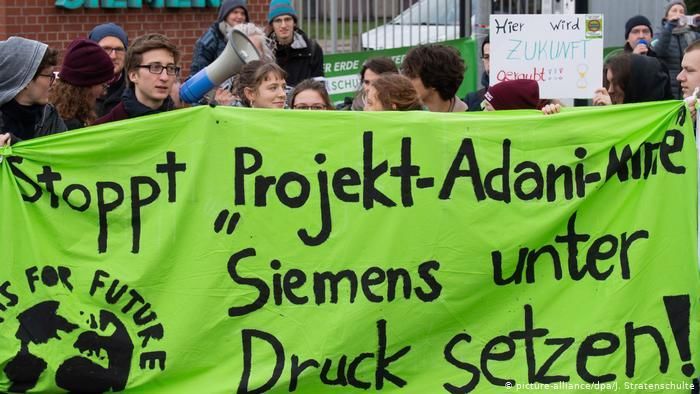
2
Terms related to sustainable finance
• Sustainable finance, responsible finance, green finance,
  ethical investment, and impact investment are terms
  closely related to each other.
• Sustainable Finance (SF) has a more comprehensive
  meaning than other terms. Proponents of sustainable
  finance are concerned with political supervision,
  regulation and better macro-management of the
  financial sector.
• Pro-active role of political authorities has long received
  strong criticism by financial industry. It is still the case,
  but many big players started to catch up with this new
  trend and present themselves as part of the solution
  rather than part the problem.
                                                            3
Perception and use of terms
related to sustainable finance
                                 See
                                 Endnote 2

                                             4
Emergence of sustainable finance actors:
from pioneers to mainstream banks
See
Endnote 3
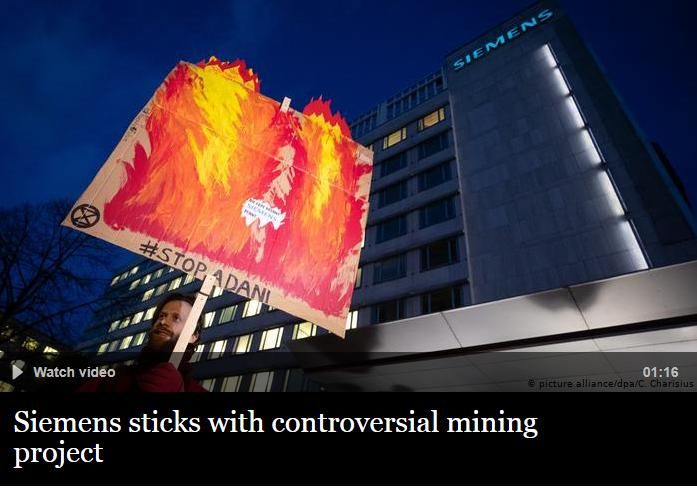
5Jan. 13, 2020
Fridays for Future Movement
https://www.dw.com/en/australia-activists-outraged-as-siemens-backs-adani-mining-project/a-51977565
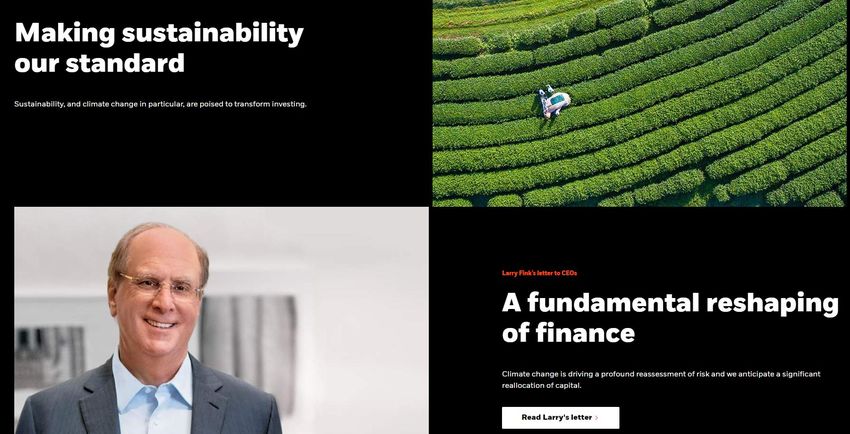
6Public controversies and with whom to engage?
Example: Blackrock –world's largest asset manager
7
www.blackrock.com, Jan 22, 2020ESG and selection crriteria
• The topics of Sustainable Finance (SF) and Sustainable
Investment (SI) primarily refer to the integration of
Environmental, Social and Governance criteria (ESG) in
investment decisions
…and to different types of negative exclusion criteria and
positive selection criteria for investment decisions. Norm
and theme based positive selection criteria have recently
got more attention.
Please refer to my paper for further details:
Berthold M. Kuhn (2020) Sustainable finance in Germany:
mapping discourses, stakeholders, and policy
initiatives, Journal of Sustainable Finance &
Investment, DOI: 10.1080/20430795.2020.1783151
8Research Agenda
• Which are the key drivers of Sustainable Finance in
Germany, looking at political initiatives, regulatory
authorities, banks, asset managers, certification and
consulting firms, nonprofits and initiatives of retail
investors?
• What is their exposure, involvement in global
initiatives (PRI, GRI, CDP)
• What explains their engagement with sustainability
issues? How did it evolve over the past years?
• Which are the major reference frameworks for their
actions? (Agenda 2030, Paris Agreement 2015, others?)
• What sort of policy-making and new regulatory
changes could we possibly expected within the next
years?
9Case Study: Weberbank, Berlin
The Path Towards Sustainable Investment
2020
2019
Cooperation with
2017 MSCI ESG and
Weberbank Guidelines for
Responsible and extended reporting
2016 Member of UN PRI coverage
Sustainable
Extension of Investments
2014 sustainability
oriented
Research approach to
partnership with bonds
2008 weberbank.de/nachhaltiges-investieren
and first
First asset institutional client
management
considering
sustainability criteria
10Findings…
• Historically, some smaller “ethical banks” (e.g. GLS,
Triodos), churches (e.g. EKD) and nonprofits (e.g. FNG)
promoted an approach that challenged the conventional
rational of investors by integrating ethical and sustainability
issues.
• The many initiatives from different types of stakeholders,
including civil society organisations, contributed to
broadening and deepening discourses and debates and, thus,
contributed to promoting the mainstreaming of sustainable
finance in Germany.
• The process of mainstreaming of SF/SI is underway.
However, Germany is still far from being a frontrunner...
11Possible Trends…
• Sustainable finance will continue to mainstream into
German and EU politics and lead to reorientations of
investment strategies of major players of the financial
industry, including banks, insurances, and wealth managers.
• Big financial players tend to highlight their commitment to
sustainability issues. They also get ready to intensify lobby
activities for softer regulations.
• Given the relatively broad alliance of organisations with
experience in sustainable finance in Germany, I tend to be
optimistic with regard to the effectiveness of the
implementation of new policies, particularly at the level of
the EU.
• Initiatives such as the proposed EU taxonomy clearly
prioritise green finance. Measuring investments along
ethical criteria will remain difficult and also controversial.
12Endnotes:
(1) This chart just serves as an example to illustrate the upward trend of sustainable
finance in Germany and worldwide. It is the chart of Tomra Systems, a recycling
company that aims to optimize resource recovery and minimize waste in the food,
recycling and mining industries. I personally consider Tomra as one of the companies
that clearly benefits from the sustainable finance trends. I had some professional
exposure to Tomra during a conference in Xiamen, China (2012) and own a few
shares of Tomra but me or family members were involved in the management of the
company. This is a rough sketch of mine that aims to provide an idea of perception
and use of terms related to sustainable finance.
(2) This is a rough sketch of mine that aims to provide an idea on drivers of sustainable
finance in Germany and worldwide.
Contact:
Berthold.Kuhn@fu-berlin.de
Reference:
Berthold M. Kuhn (2020) Sustainable finance in Germany: mapping discourses, stakeholders,
and policy initiatives, Journal of Sustainable Finance &
Investment, DOI: 10.1080/20430795.2020.1783151
13You can also read


