Energy Efficiency Policy Workshop 2019 Test protocols underpinning fuel economy regulations: the transition to Worldwide Harmonised Light Vehicle ...
←
→
Page content transcription
If your browser does not render page correctly, please read the page content below
Energy Efficiency Policy Workshop 2019
Test protocols underpinning fuel economy regulations:
the transition to Worldwide Harmonised Light Vehicle
Test Procedure (WLTP) and its inclusion in CO2 policies
Name          Andrew Campbell
Institution   Fuel Technology Limited, New Zealand
Date          18 March 2019, Hong Kong

Why do we have standards?

                            2
Different forms of standards:

                             Since start
             Mandatory    (NZ wiring rules)                      Mar ‘18
                          “it must be safe”                     RCD detail
             Industry
             Voluntary
               Codes
   Level       Best
              Practice
    Of         Codes
                                                            Oct ‘16
Stringency
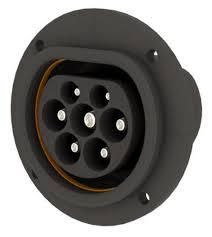
             Guidelines                                     Type 2
                                                            Socket
                                                            Outlet
             Examples

             Facebook!

                          Concepts                           Detailed
                                              Specificity
                                                                             3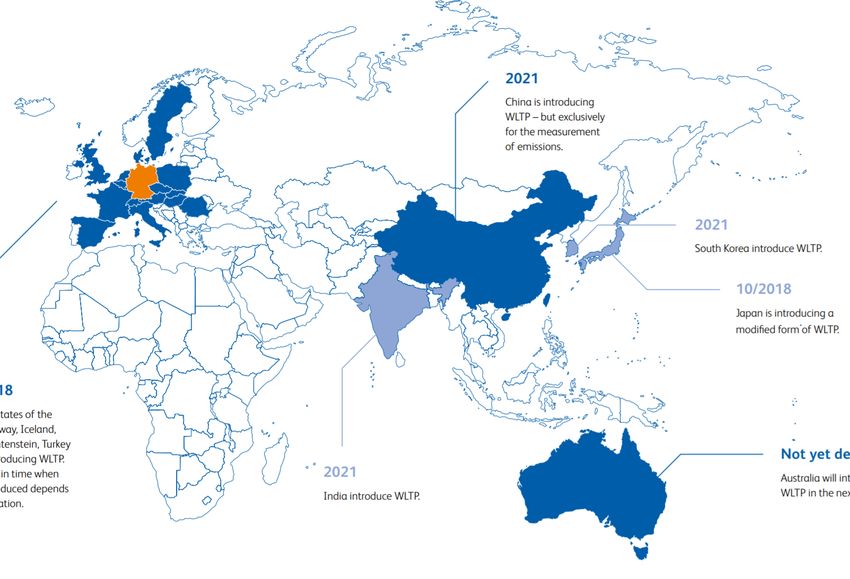
Vehicle Testing History
1950-60s: US studies identified vehicles as significant source of air pollution.
1960-70s: establishment of environmental agencies in California, then
across US, later across Western Europe, Canada, Australia and Japan.
Required ability to refer to results from a repeatable test that aimed to
simulate typical vehicle use.
Mid 1970s: tightening emission standards required de-tuning of engine
resulting in higher fuel consumption.
Energy crisis of 1970-80s fuel consumption result underpinned many
energy reduction policy initiatives.
Fuel consumption result now underpins many GHG reduction policy
initiatives.
4
Vehicle Emissions (and Fuel Consumption) Testing:

             Mandatory

             Industry                              $Billions at stake
             Voluntary
               Codes
   Level       Best
              Practice
    Of         Codes
Stringency
             Guidelines

             Examples

             Facebook!

                          Concepts                   Detailed
                                     Specificity
                                                                        5
Vehicle Emissions (and Fuel Consumption) Testing:
$Billions at stake – test must be acceptable industry wide, repeatable and robust.
Ideally providing a range of speeds and loads (and operating temperatures)
representing typical vehicle use.
Standardised: accurately specified to provide repeatability.
Despite tight specification and staged development of previous tests:
Experienced testers could “game” and get better results.
Vehicles could be calibrated to (recognize and) perform well under the specific test conditions.
Test cycle specification considered vehicle technology available at the time.
Over time, greater divergence of test results and “real world” results.
New technologies (e.g., EVs) not well catered for (New European Driving Cycle 20 years old).
Different test cycles in different jurisdictions. Global vehicle supply more
efficient/cost effective with one test (homologation).
undermining policy efforts
6
Introduction of the Worldwide Harmonised Light Vehicle
Test Procedure (WLTP)
Development process began in 2007.
Developed by the UN ECE GRPE (Working Party on Pollution and
Energy) with inputs from wide-ranging economies.
An approximation of real-world operation.
Stricter test conditions, higher speeds, longer test duration.
Consideration of vehicle’s “special equipment”, including weight
of A/C units, aerodynamics, and others.
Consideration of different power trains … EV technology.
7
The Test Arrangement

                       8
9
NEDC                        “Extra-urban”   Combined

              CITY   MOTORWAY

                                                         Combined
                                              MOTORWAY
WLTP                               RURAL

       CITY          TOWN

                                                               10
New European Drive Cycle (NEDC) vs Worldwide
Harmonised Light Vehicle Test Procedure (WLTP)
11The WLTP for PEVs, PHEVs and (Non-P)HEVs
EVs
12Introduction of World Harmonized Light Vehicle Test
Procedure (WLTP)
2021 for
Emissions
From
09/2018
2021
10/2018
modified
version
2021
TBA
13EU target WLTP timeframes
Type Approval
NEDC WLTP
NEDC WLTP
Customer Information
NEDC NEDC based on WLTP
Technical Docs
(Cert. of Compliance) WLTP
Labelling and taxation NEDC WLTP
2000 09/2017 09/2018 01/2019 2020 2021
14Implications of Higher WLTP Value:
Tax implications with g/km increase???
OEM obligations with g/km increase???
150 g/km
g/km +15-25%
120 g/km
NEDC WLTP
15Consequences of WLTP Introduction
Vehicle Type Approval data uses WLTP test, but labelling still requires
NEDC data high risk of confusing consumers where both NEDC and
WLTP are displayed.
European Union CO2 targets for 2021, for vehicle manufacturers, based
on old NEDC test.
European Commission developed a WLTPNEDC translation algorithm.
Not exact, which has potential for significant cost implications.
UK example: changes to the label are proposed for April 2020, when
taxation will switch from NEDC to WLTP. Yet to be determined how
difference in fuel consumption result/tax will be managed.
EU automotive industry suggesting revision of labelling once WLTP
transition complete harmonised consumer information.
16WLTP Summary
Developed by the UN ECE GRPE (Working Party on Pollution and Energy)
Part of the Worldwide harmonized Light vehicles Test Procedures (WLTP).
The WLTP procedures define a number of other procedures.
Cycle based on real-driving data with low, medium, high and extra high
speed sections expect closer to real-world fuel consumption.
Phase-in began 2017. Few light vehicle models/vehicles now not tested
to WLTP protocol.
Introduction of modified form in Japan, and for exhaust emissions in
China. Australia, India and South Korea will also implement the WLTP
at a later stage
Many factors involved in vehicle’s fuel consumption and CO2 emissions.
Despite expected improvements, care still required interpreting WLTP.
Fuel consumption labelling and other use of WLTP data yet to catch up.
17Thank You
http://aperc.ieej.or.jp/
Thanks also to Gloria Esposita
for supporting materialsYou can also read


