SX-Aurora TSUBASA Generation 2 - NEC Vector Supercomputer October 2020
←
→
Page content transcription
If your browser does not render page correctly, please read the page content below

NEC Vector Supercomputer

SX-Aurora TSUBASA
Generation 2
                           October 2020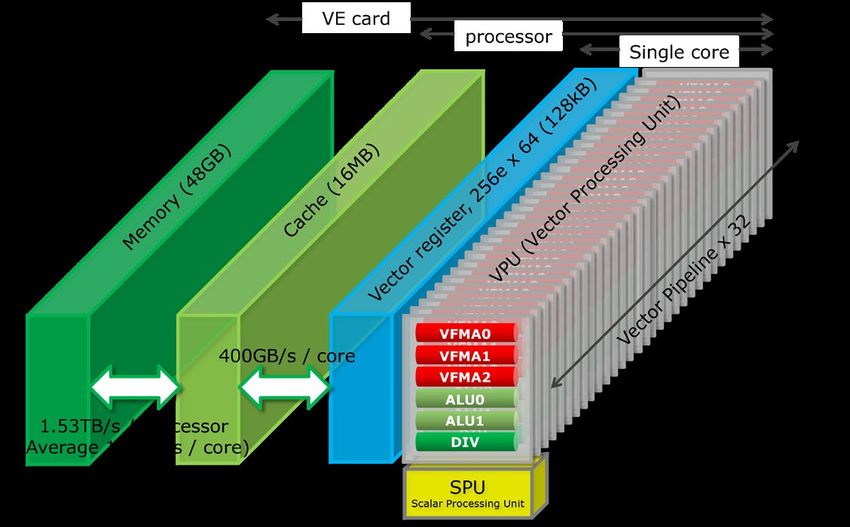
NEC SX-Aurora TSUBASA

     Future Technology for Today
     Supercomputing has a long history, yet it continues to evolve at a rapid rate. Not only applications
     but also computer-architectures have become more complex. We increasingly cooperate with scien-
     tists to overcome such obstacles, to bridge the gap between computer science and computational
     science, which leads to the application itself.

     The NEC SX-Aurora TSUBASA is an integral part of our strategy. SX-Aurora TSUBASA’s goal is to
     provide both high efficiency and power efficiency whilst still being simple to use, and it is based on
     standard programming paradigms and very elaborate software components like compilers and libraries.

     NEC SX-Aurora TSUBASA is the legitimate successor of our former very successful SX-product
     line. It is the only remaining real vector architecture, but at the same time it is a different concept
     in terms of openness and availability. While the former SX-systems were heavy and expensive,
     the “Aurora” is available in the form of a PCIe-based cards, thus ensuring compliance with modern
     hardware interface standards. While the former SX-systems featured their own operating system,
     the “Aurora” appears to the user like a normal Linux system, and it surely is one. Moreover, the sys-
     tem interoperates openly with all other kinds of systems, so it can easily be integrated into every
     environment.

     NEC is honoured to support the German Weather Service (DWD) and the Czech Weather Service
     (CHMI) as customers. Both are using our vector architecture. Our customers value our solutions due
     to the superior power efficiency of our systems. They continuously run mission-critical operations,
     which are consequently very demanding. And from their feedback and requirements we ourselves
     learn a lot to improve the product and our long-term HPC-strategy.

     In recent years new aspects of supercomputing became very important, with those applications
     emerging dubbed as “Deep Learning” or “Machine Learning” or even “Artificial Intelligence”. While
     we have to think carefully about the societal and even ethical aspects of these developments, we
     also see the huge potential for unprecedented achievements in science and technology. Especially
     in times like this, one would specifically think about those numerous possible applications in biolo-
     gy, pharmacology and medicine.

     The computational challenges of such applications are often similar to other more traditional fields
     of HPC, which we know well from close to 40 years of experience in the market. Our technology is
     perfectly optimized and has always been, and we prove this in the frameworks we provide like Ten-
     sorflow or PyTorch, which excel in performance on “Aurora”. NEC’s research labs all over the world
     are actively engaged in continuously improve our developments.

     We are innovating both based on our experience, but also with an eye on the ever-changing tech-
     nology landscape. We also utilize this technology as a contribution to a better society. We summa-
     rize this approach in our business message: Orchestrating a brighter world.

                                    Akio Ikeda
                                    Deputy General Manager
                                    AI Platform Division

02
                                                                          2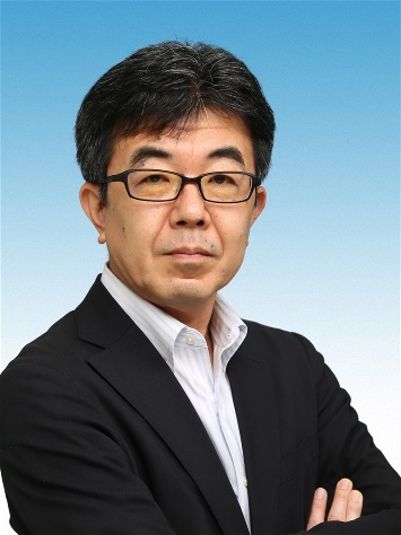
NEC SX-Aurora TSUBASA

Vector Computing: A New
Paradigm, With a Long History
HPC and AI have always been at the cutting edge of technology looking for an advantage.

Now is the time for a breakthrough. NEC’s legacy in vector computing has always been an engine and a story
of success, and our vector technology addresses issues found in other systems and provides this breakthrough
in HPC.

Technical or scientific problems are expressed in the language of mathematics, and this mathematics needs
to be reflected in the way the applications for solving these problems are written. Algorithms need to be
optimized, and the variables need to be organized in memory accordingly. The vector computing paradigm is
simple: “I have to execute a mathematical operation. On which elements, grids, variables, particles, equations,
structures, can I apply it simultaneously?”.

If this is your way of thinking, you will inevitably write vector code. For example, it is one of the best practices
in C to organize variables as a structure of arrays, not as an array of structures. It is also this understanding
that leads to the idea of “domain specific languages” (DSL) – frameworks for describing actions to be applied to
a whole field. NEC provides the hardware and software environment necessary to apply this vector paradigm
to the solution of real-world problems.

                                     Input                  Pipeline                 Result

 Scalar

 SIMD

 Vector

 SX
 Vector

                                    Arithmetic operations of each architecture

                                                                     3
NEC SX-Aurora TSUBASA

NEC SX-Aurora TSUBASA – The New
Generation Vector Architecture

The SX Vector Architecture from Past to Present
NEC has developed and provided the SX supercomputer series since 1983. The development concept of “pur-
suing higher sustained performance with higher usability” has not been changed from our very first machines,
SX-1 and SX-2, launched more than 35 years ago. Each generation of the SX supercomputer used cutting edge
technology then available to implement the SX vector architecture into the processors of the then current
generation. With the latest generation, the SX vector supercomputer adopted a new hybrid architecture, the
SX-Aurora TSUBASA architecture. This hybrid architecture consists of a computation part and an OS function
part. The heart of the new SX architecture is the vector engine (VE) contained in the vector host (VH). The VE
executes complete applications while the VH mainly provides OS functions for connected VEs.

Series of the SX vector Supercomptuer

Model
                                                                                                                                                                       SX - Aurora
                                                                                                                                                         SX - Aurora
                     SX - 1/2        SX - 3      SX - 4            SX - 5          SX - 6         SX - 7           SX - 8/8R      SX - 9     SX - ACE                  TSUBASA
                                                                                                                                                         TSUBASA
                                                                                                                                                                          Gen2

Year                   1983          1989        1994              1998            2001           2002               2004         2007         2013         2018          2020

Technology            Bipolar       Bipolar     350 nm         250 nm             150 nm         150 nm             90 nm        65 nm        28 nm        16 nm         16 nm

CPU frequency        166 MHz       340 MHz     125 MHz         250 MHz           500 MHz        552 MHz             1.0 GHz     3.2 GHz      1.0 GHz      ~1.6 GHz      ~1.6 GHz

CPU performance       1.3 GF        5.5 GF      2.0 GF         8.0 GF             8.0 GF         8.8 GF             16.0 GF     102.4 GF     256.0 GF     ~2.45 TF      ~3.07 TF

CPU
                     10.7 GB/s     12.8 GB/s   16.0 GB/s      64.0 GB/s          32.0 GB/s      35.3 GB/s          64.0 GB/s   256.0 GB/s   256.0 GB/s   ~1.22TB/s     ~1.53TB/s
Memory bandwidth

SX-Aurora TSUBASA Architecture
The heart of the NEC SX Aurora TSUBASA architecture – the vector engine (VE) – offers a hitherto unparalleled
performance especially for memory-bound applications. As a standard PCIe card, it fits effortlessly in a stand-
ard x86 server host environment. Each vector CPU has access to six extremely high-bandwidth HBM2 memory
modules, which allows for unprecedented performance for memory-intensive applications. With the first gener-
ation of SX-Aurora TSUBASA, the world’s first implementation of a CPU design with six HBM2 memory modules
using a “chip-on-wafer-on-sub-strate” technology (CoWoS) applications were provided with the world-record
memory bandwidth of 1.22TB/s. The second generation of SX-Aurora TSUBASA equipped with the second
generation VE is continuously leading the world’s highest memory bandwidth of 1.53TB/s.

                           Controlling                               Processing

                                                                     Vector                                            • Vector Processor
 X86
                     Standard                                                                                          • 1.53TB/s Memory Bandwidth
 CPU                                                                 Engine
                    X86/Linux                                                                                          • Low Power 200W/VE
                      Server
 Linux                                                                                                      VE
   OS                                            VE                                                        tools
                                                 OS

          Library                                                                               VE
                                         APP              Vector
                                                           CPU               Vector          library
                       Tools
                                                                            compiler

                                 SX-Aurora TSUBASA architecture

                                                                                        4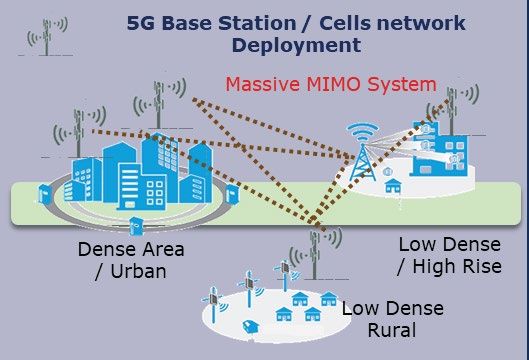
NEC SX-Aurora TSUBASA

The second generation VE, Vector Engine Type 20 (VE20) is equipped to the latest model of the SX-Aurora
TSUBASA supercomputer. The VE20 generation is mainly improved memory bandwidth of 1.53TB/s, and the
number of cores per processor. NEC continuously pursues to provide higher sustained performance for the
memory bandwidth bound applications by continuously providing highest-level memory bandwidth per pro-
cesser in each VE generations.

The VE20 generation has two VE types, Vector Engine Type 20A and Type 20B. VE Type 20A is 3.07TF peak
performance with 10 vector cores, and VE Type 20B is 2.45TF peak performance with eight vector cores. Each
vector core and 16MB shared cache are connected by a two dimensional mesh network and its bandwidth per
vector core is 400GB/s maximum. The vector processor is based upon a 16 nm FinFET process technology for
extremely high performance and low power consumption.

The vector core on the VE is the most powerful single core in HPC available today, thus keeping the design
philosophy from the previous SX series. It achieves the industry-leading performance of 307GF per core, and
an average memory bandwidth of 150 GB/s per core for the 10 cores configuration per the VE processor.
A vector engine processor has up to 10 independent vector cores. Each vector core mainly consists of 32 vec-
tor pipelines, and three FAM units (“fused multiply-add”) are implemented into each vector pipeline. The vector
lengths of 256 is processed by 32 vector pipelines with eight clock cycles. 64 fully functional vector registers
per core – with 256 entries of 8 bytes width each – can feed the functional units with data or receive results
from those, thus being able to handle double-precision data at full speed.

                                     Vector Engine processor: single core and memory subsystem

The next generation, VE30 is planned to be released as the successor of the VE20 generation. The main improve-
ment from the predecessor is memory bandwidth of 2+TB/s, and the memory subsystem of the processor will be
reinforced to achieve higher sustained performance with lower power consumption.

                                                                                                                                                         VE50
  Memory bandwidth / VE

                                                                                                                                VE40           2++TB/s memory bandwidth

                                                                                                   VE30              2+TB/s memory bandwidth

                                                                      VE20               10C/3.07TF
                                                                                         1.53TB/s memory bandwidth

                                           VE10E             8C/2.45TF
                                                             1.35TB/s memory bandwidth
                                 8C/2.45TF
                          VE10   1.22TB/s memory bandwidth

                          2019              2020                         2021                         2022                        2023                      2024

                                                                Roadmap of Vector Engine

                                                                                                  5
NEC SX-Aurora TSUBASA

SX-Aurora TSUBASA Product Portfolio
Vector Engine
The latest vector engine models from the second generation are VE Type 20A and 20B. The VE Type 20A
processor has 10 cores running at 1.6GHz with the 1.53TB/s high memory bandwidth. Since each core per-
formance is more than 300GFlops, the VE processor reaches 3.07TFlops peak performance. VE Type 20B has
less number of cores, thus allowing for a higher maximum memory bandwidth per core for memory bandwidth
intensive applications.

         Memory                        Memory
         Capacity                     Bandwidth
                                      1.53TB/s                                                     20B                                        20A

         48GB                     1.35TB/s                      10BE*                             10AE*                   *10AE is 1.584GHz
                                                                                                                          *10BE is 1.408GHz

                                  1.22TB/s                      10B
         24GB                     1.00TB/s                      10CE
                                                            2.15TF                            2.45TF                                    3.07TF
                                        Frequency           1.4GHz                                                 1.6GHz
                                                Cores                           8core                                                   10core

                                                            Vector Engine specifications

SX-Aurora TSUBASA
Currently, SX-Aurora TSUBASA consists of three product types, which are the 500/400 series for large-scale
supercomputers, the 300 series for standard operation environment, and the 100 series as the entry or devel-
opment model.

                                                                                                                                               A511-64
                                                                                                                                               Supercomputer

                       DLC

                                          DLC
                                                                                                                      B40
                                                                                                                      B401-8
                                                                                                                      Supercomputer
                                                                                                                      Superco

                                                                                              B
                                                                                              B300-8
                                                                                              8VE rackmount server

                                                                       A3
                                                                       A311-4
                                                                       4VE rackmount server

                                                        A111-1/A101-1
                                                        Tower

                                                                           Air cooling
                             VE10AE
                    VE10BE
           VE10CE
 VE10B

                                       VE20B

                                               VE20A

                                                                                                                       Water (DLC)
                                                                                        *A511 -64: Special order is needed to ship to outside of Japan

                                                        SX-Aurora TSUBASA product portfolio

The latest product of the SX-Aurora TSUBASA 500 and 400 series are A511-64 and B401-8. To fulfil current
requirements of large-scale supercomputers, direct-liquid-cooling (DLC) is applied to those models. The SX-Au-
rora TSUBASA 300 series is the mid-range line, and the latest models are B300-8 and A311-4. These models
can operate in a standard rack with standard air-cooling environment. The SX-Aurora TSUBASA 100 series
consists of the A111-1 and A101-1 models, providing VE capability to be used in a desktop environment.

                                                                                              6
NEC SX-Aurora TSUBASA

SX-Aurora TSUBASA A511-64
Supercomputer
At the high-end of our range is SX-Aurora TSUBASA A511-64. This
model is single rack product offering an optimized full-rack cooling
fit for large-scale supercomputer solutions. The A511-64 mainly
consists of eight VHs per rack of 4U height each and with eight VE
cards with DLC. This model supports VE Type 10AE and Type 10BE.
In order to reduce the cooling costs, an inlet water temperature of up
to 40 °C is supported (hot water cooling).

The figure below shows one A511-64 vector host configuration with
eight VE cards, two Xeon processors, and two Infiniband HCAs. Two
PCIe switches connect each VE, Xeon, and IB HCA. Each VE card is
equipped with a DLC cold plate, while other components including
the Xeon processors are cooled by air.                                                     SX-Aurora TSUBASA A511-64

                                                                                      VE Type 10AE
                                                                                      VE Type 10BE

                     IB      VE      VE       VE            VE     VE      VE        VE            VE   IB

                                          PCIe Gen.3 x16

                                                           PCIe   PCIe
                                                           SW     SW

                                           PCIe Gen.3 x16

                                                       Xeon®      Xeon®   Intel Xeon®
                                                                          Gold 6200, Silver 4200

                                  SX-Aurora TSUBASA A511-64: topology of single VH

SX-Aurora TSUBASA B401-8
Supercomputer
The B401-8 model provides both high vector processing capability and higher density. This model
equipped with eight VE cards per VH. The main difference between the A511-64 and B300-8
models having the same eight VEs per VH is the higher density of 2U height per chassis, the AMD
EPYC host processor, and a rack mount 2U server implementation. The below figure shows a block
diagram of the B401-8 model. Each pair of VE cards is connected to PCIe switch. The supported VE
cards are Type 20A and Type 20B.

In the B401-8, DLC is applied to eight VE cards and the AMD EPYC processor, while all other com-
ponents are cooled by airflow. Up to 40°C water and air can be used for the cooling. Thus the NEC
design is a hybrid cooling concept that optimizes the ever-existing trade-off between implementa-
tion cost, floor load, cooling cost, maintainability. For the DLC cooling, NEC manifolds support up to
18 VH units per rack. In total, up to 144 VE cards can be mounted per rack and in the case of using
VE Type 20A, peak performance reaches 442TFlops with more than 220TB/s aggregated memory
bandwidth.

                                                                          7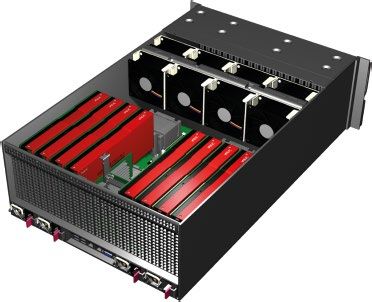
NEC SX-Aurora TSUBASA

                                                                                                          VE Type 20A
                                                                                                          VE Type 20B

                     IB        VE          VE           VE            VE           VE          VE        VE            VE          IB

                                           PCIe Gen.3 x16

                                    PCIe                     PCIe                       PCIe                  PCIe
                                    SW                       SW                         SW                    SW

                                                 PCIe Gen.3 x16

                                     PCIe Gen.4 x16                        EPYC™    AMD
                                                                                    A   EPYC™                     PCIe Gen.4 x16
                                                                                    EPCY2(Rome)

                                     SX-Aurora TSUBASA B401-8: topology of single VH

SX-Aurora TSUBASA B300-8
Rackmount Server
The SX-Aurora TSUBASA B300-8 model is designed for an air-cooled large-scale SX-Aurora TSUBASA system.
Its configuration is up to eight VE cards in an 4U height VH, and the VH configuration is basically the same as
the A511-64 DLC supercomputer, supporting VE Type 20B. As the following figure shows, eight VE cards and
two Infiniband HCAs are connected to Xeon processors via two PCIe switches. This model allows up to 40°C
airflow temperature, thus enabling to use an indirect water cooling with up to 35°C water temperature in com-
bination with side coolers. This contributes to reducing power consumption of chillers for the cooling.

                                                                                                      VE Type 20B

                IB        VE          VE           VE            VE           VE          VE        VE            VE         IB

                                             PCIe Gen.3 x16

                                                              PCIe           PCIe
                                                              SW             SW

                                                PCIe Gen.3 x16

                                                             Xeon®          Xeon®        Intel Xeon®
                                                                                         Gold 6200, Silver 4200

                                SX-Aurora TSUBASA B300-8: topology of single VH

SX-Aurora TSUBASA A311-4
Rackmount Server
A block diagram of A311-4 is shown in the following figure. The A311-4 model consists of four VE cards of type
10BE and two Xeon processors. Moreover, up to two IB HCAs can be deployed with this server to enhance inter-
connect bandwidth. All components are implemented into 1U form factor.

                                                                                                8
NEC SX-Aurora TSUBASA

                                                                            VE Type 10BE

                                           IB     VE     VE            VE            VE        IB

                                                                                   PCIe Gen.3 x16

                                                        Xeon®      Xeon®          Intel Xeon®
                                                                                  Gold 6200, Silver 4200

                                       SX-Aurora TSUBASA A311-4: topology of single VH

SX-Aurora TSUBASA A111-1/A101-1
Tower
The SX-Aurora TSUBASA A111-1/A101-1 models are entry models of SX-Aurora TSUBASA, specially adapted
for desktop computing and software development. It mainly consists of one Xeon processor and one VE card of
VE type 10CE and 10B.

                                                                  VE    VE Type 10B/10CE

                                                                   PCIe Gen.3 x16

                                                                            Intel Xeon®
                                                                Xeon®       Silver 4200

                                 SX-Aurora TSUBASA A111-1/A101-1: topology of single VH

Vector Programming with Accomplished
Development Tools
A supercomputer is a tool to increase the productivity of re-
                                                                        [Compiler diagnostic message]
searchers and developers. Writing software should be as simple          nfort -mparallel -O3 -report-all -c ex.f90
                                                                        nfort: par(1801): ex.f90, line 6: Parallel routine generated.: DEL$1
as possible, and the efficiency and the effectiveness of the            nfort: par(1803): ex.f90, line 6: Parallelized by "do".
                                                                        nfort: opt(1592): ex.f90, line 7: Outer loop unrolled inside inner loop.: J
researcher is most important. NEC will always use and promote           nfort: vec( 101): ex.f90, line 8: Vectorized loop.

the use of standard programming languages and parallelization
                                                                        [Format list]
paradigms and not require exotic proprietary paradigms like
                                                                             1:             subroutine del( l, m, n, f, del_f, a )
CUDA.                                                                        2:
                                                                             3:             real(kind=8) :: f(l,m,n), del_f(l,m,n)
                                                                             4:             real(kind=8) :: a(7)
                                                                             5:
                                                                             6:   P------> do k = 2, n-1
For the NEC SX-Aurora TSUBASA software developers will find                  7:   |U----->     do j = 2, m-1
                                                                             8:   ||V---->       do i = 2, l-1
a plethora of accomplished development tools and an elaborate                9:   |||      F        del_f(i,j,k) = &
                                                                            10:   |||                 a(1) * f(i,j,k-1) + a(2) * f(i,j-1,k)                     &
programming environment for writing superb vector code. Soft-               11:   |||               + a(3) * f(i-1,j,k) + a(4) * f(i,j ,k) + a(5) * f(i+1,j,k) &
                                                                            12:   |||                                   + a(6) * f(i,j+1,k) + a(7) * f(i,j,k+1)
ware development is conducted on the vector host, a standard                13:
                                                                            14:
                                                                                  ||V----
                                                                                  |U-----
                                                                                                 end do
                                                                                               end do
                                                                            15:   P------    end do
LINUX-system familiar to every user. A vector cross-compiler                16:
                                                                            17:             return
translates the code into an executable SX-Aurora TSUBASA bina-              18:             end

ry. At runtime, the VE operating system (VEOS) loads the binary
into the vector engine, where it then executes.                                               Automatic vectorization by NEC compiler

                                                                   9
NEC SX-Aurora TSUBASA

The vector cross-compiler supports advanced automatic vectorization and parallelization for industry-leading
sustained performance and highly optimized MPI libraries in a GNU/Linux environment. The NEC SX-Aurora
TSUBASA programming environment comprises a feature-rich compiler supporting several modern program-
ming language standards, as well as a set of precompiled mathematical libraries for easy development of
scientific code, including BLAS, LAPACK, ScaLAPACK, and FFTW3 Interface.

                                 SX-Aurora TSUBASA programming environment

 C                                                      C11 (ISO/IEC 9899:2011)
 C++                                                    C++14 (ISO/IEC 14882:2014)
                                                        Fortran 2003 (ISO/IEC 1539-1:2004)
 Fortran
                                                        Fortran 2008 (ISO/IEC 1539-1:2010)
 OpenMP                                                 Version 4.5
 C Library                                              GNU C Library
 MPI                                                    Version 3.1
 Numeric libraries                                      BLAS, LAPACK, ScaLAPACK, FFTW3 Interface
                                                        GNU profiler (gprof)
                                                        GNU debugger (gdb)
 Further tools
                                                        ECLIPSE Parallel Tools Platform (PTP)
                                                        Ftrace Viewer / PROGINF

Superior Energy-Efficiency of the
Vector Architecture
In recent years, power consumption has become a major topic in the HPC-market. The new generations of
semiconductor technology lead to increasing core-counts, but at the same time increasing power consumption.
This cannot be sustained in the long run, both for cost-reasons and for the environment’s sake. Consequently,
architectures need to be evaluated with regard to their energy efficiency.

From very basic considerations it is clear that a vector architecture must be more power efficient than a scalar
system. In a vector CPU, many actions are conducted for a large amount of data, not just for one operation on
one number. Finally, this should have been one reason for the introduction of SIMD-instruction-sets by almost
all scalar processor vendors.

In recent large installations, NEC SX-Aurora TSUBASA solutions could successfully provide its superiority in ar-
chitecture and design just because of the power efficiency it provides. In some cases, NEC SX-Aurora TSUBASA
even outperformed competing systems within a given power-envelope of an HPC-site. NEC SX-Aurora TSUB-
ASA therefore not only excelled in terms of efficiency, but also on total computational capacity within a given
power limit.

HPCG Benchmark
The High Performance Conjugate Gradient (HPCG) benchmark complements the TOP500-defining High Perfor-
mance Linpack (HPL) as it uses real-world applications data access patterns, inverting a sparse matrix with a
conjugate gradient algorithm that uses a symmetric Gauss-Seidel smoothed multigrid preconditioner. Opposed
to HPL, which is a compute bound benchmark with performance close to the peak performance of a super-
computer, HPCG is a much more realistic benchmark with a memory bound problem and achieves only small
fractions of the peak performance, reflecting the reality of most of today’s HPC compute centers and their real
world application performances.

As the following figure shows, due to the SX vector architecture and the 1.53TB/s high memory bandwidth
per processor, SX-Aurora TSUBASA provides almost 6% of execution efficiency, and it is much higher efficien-
cy compared to other architectures. SX-Aurora TSUBASA also provides the highest power efficiency between
Xeon, Tesla, and SX-Aurora TSUBASA architectures.
                                                                      10
NEC SX-Aurora TSUBASA
Execution Efficiency Power Efficiency Ratio
• Xeon 6148: Dual socket Xeon Gold 6148 (2 x 20 cores, 2.4GHz)
• Tesla V100: V100 x1 per host
• SX-Aurora TSUBASA: VE20B x1 per VH
Performance and power efficiency of HPCG on SX-Aurora TSUBASA
Ab Initio Theoretical Chemistry calculation – VASP
VASP (Vienna Ab initio Simulation Package, www.vasp.at), the well-known ab-initio theoretical chemistry ap-
plication, is widely used by academia and industry. NEC has ported and optimized the VASP code for SX-Aurora
TSUBASA. Adaptations due to the vector architecture have been necessary, straightforward. Coding for SX-Aurora
TSUBASA is just based on standard languages and standard parallelization paradigms, which is a huge advantage
compared to other computing and programming paradigms like GPU computing.
As a result, a single vector engine card VE type 20B of SX-Aurora TSUBASA provides 0.86 - 1.74 times the sus-
tained performance compared to an x86 single node with two Intel Xeon Gold 6252 processors. When measur-
ing the power consumption SX-Aurora TSUBASA provides even 2.5 - 5.0 times the power efficiency in terms of
performance per Watt compared to the x86 system.
Throughput/node or /VE Power Efficiency Ratio
SX-Aurora TSUBASA
VASP: 5.4.4, patch 5.4.4.16052018
VE: Type 20B, Partitioning mode ON, NEC compiler 3.0.30, NEC MPI 2.6.0, NLC 2.0.0
VH: B401-8, VE20B x8, EPYC Rome x1, HDR200 x2, DLC/Air cooling
Intel Xeon Gold 6252
VASP: 5.4.4
Xeon: Gold 6252 (CLX Generation), 2 socket per node, 48 cores per node, 2.1GHz, air cooling
Performance and power efficiency of VASP on SX-Aurora TSUBASA
11NEC SX-Aurora TSUBASA
Meteorology
Meteorological sites very often require power efficiency because of their need for very big configurations
while at the same time budgets for electricity and cooling are limited, as is the available power at their premis-
es. Meteorological codes are mainly limited by memory bandwidth. Consequently, SX-Aurora TSUBASA has an
advantage because it is the leading architecture in the market in this regard. With a very high computational
efficiency, the system can reach a higher percentage of peak performance on the real application, which in turn
results in improved power efficiency.
The following graph shows the “performance per Watt” comparison between SX-Aurora TSUBASA and a system
based on AMD EPYC Rome. Each code, namely ALADIN, ICON-ART, ICON-NWP, and COSMO, is well known and
frequently used in meteorology. On the HPL-benchmark, aka LINPACK, or TOP500, the AMD EPYC Rome system
approximately provides the same power efficiency as SX-Aurora TSUBASA, but HPL is not a realistic code. On
the real meteorological applications, the Aurora provides a 2.3 - 7.2 times higher power efficiency, which saves
cost and enables bigger configurations.
Power Efficiency Power Efficiency Ratio
• EPYC Rome 7542: EPYC Rome 7542 32 cores/socket, 2.9GHz. 2 sockets per node
• SX-Aurora TSUBASA: VE10AE x8 / VH (single socket Rome)
• ICON-ART: Status as of 2019 for ICON-ART
Power efficiency of meteorology codes on SX-Aurora TSUABASA
Resource Exploration
The energy sector, especially resource exploration for oil and gas production, is another large field of ap-
plication for HPC. An advantage in performance generates a real and immediate competitive advantage for
the customer. At the same time, Oil & Gas companies also face limitations due to the ever-increasing power
consumption of the HPC-equipment. The relevant codes crucially depend on memory bandwidth, and therefore
NEC SX-Aurora TSUBASA provides an ideal platform for such applications. Again, the computational efficiency
leads to a significant power-efficiency.
The following figure shows the ratio of power efficiency comparing Intel Xeon, NVIDIA Tesla, and SX-Aurora
TSUBASA. The benchmark codes are an acoustic algorithm and an elastic algorithm, which are widely used in
resource exploration. Again, a single VE of the SX-Aurora TSUBASA has the lowest peak performance among
these three architectures, and it still provides the highest power efficiency.
Power Efficiency Ratio between Xeon/Tesla/VE
• Xeon 6148: Dual socket Xeon Gold 6148 (2 x 20 cores, 2.4GHz)
• Tesla V100: V100 x1 per host
• SX-Aurora TSUBASA: VE20B x1 per VH
Power efficiency of resource exploration algorithms on SX-Aurora TSUBASA
12NEC SX-Aurora TSUBASA
Conclusion of Application Performance
It is the real application performance that counts in HPC, not peak performance. It takes an efficient architecture
both in terms of computational efficiency, i.e. application performance compared to peak performance, and power
efficiency, because HPC-sites are hitting limits of power consumption and total cost of ownership. NEC SX-Aurora
TSUBASA is a superior solution, and this has been proven on real applications.
NEC HPC Platform for Machine Learning
and Deep Learning
Simulation
Higher Lager
Resolution Scale
Financial Simulation Whole Airplane Simulation
Computing
Resource
Demand
More Bigger data
Complication
Security, Marketing AI, ML, DL, BDA Larger Input, Larger Output
HPC capabilities have been used for scientific simulations to pursue higher simulation resolution, larger simu-
lation scale, and therefore more accurate scientific result. Those HPC capabilities have contributed to scientific
advancements through computation sciences. They have now started to be used for emerging technologies like
Artificial Intelligence (A.I.), Machine Learning (ML), Deep Learning (DL), as well, with Big Data Analytics a vital
ingredient of it all.
ML and DL have been used to empower business, research, and development competitiveness. These methods
make suggestions and even decisions by processing huge amounts of data, therefore typical HPC capabilities are
needed to get results faster, to handle larger data sets, and to produce results that are more accurate.
Faster
Machine Learning
Deep Learning
Larger
More Accurate
13NEC SX-Aurora TSUBASA
There are several applications in the ML and DL field, and those have different algorithmic characteristics. In
the ML field, Apache Spark or Scikit-learn are widely used, often in applications that require a very high memory
bandwidth. On the other hand, frameworks like TensorFlow or Pytorch are very famous in the DL field. Those
applications require higher peak performance rather than memory bandwidth.
The Vector Engine processor of NEC SX-Aurora TSUBASA supercomputer excels in memory bandwidth because of
an elaborate memory architecture based on six HBM2-modules per CPU. Due to these characteristics of the CPU,
such a Vector Engine can accelerate applications of the ML field and a portion of the DL field.
Vector Engine
Demand
Memory bandwidth
Prediction
Price
Prediction
ML
Recommendation
GPU MLP
(General Purpose)
LSTM DL
(Translation)
Voice/Image
Recognition (CNN)
CPU
Peak performance
ML/DL performance characteristics and each suited architectures
Machine Learning Acceleration by
the NEC Frovedis Library
Frovedis (FRamework Of VEctorized and DIStributed data analytics) is an Open Source unified middleware
implemented in C++ for NEC SX-Aurora TSUBASA. It covers a large part of Apache SPARK, implementing the
same API for the domains Machine Learning, Matrix Libraries and Data Frame. Frovedis transparently supports
multiple VE cards and VH servers by using MPI-based parallelism for scalable distributed processing.
Frovedis is very easy-to-use as the following figure shows. Only a changed import line in the source file and
two added lines for starting and stopping the MPI based Frovedis service are required.
Normal Spark Code
…
import org.apache.spark.mllib.classification.LogisticRegressionWithSGD
…
val model = LogisticRegressionWithSGD.train(data)
…
Frovedis Code
…
import com.nec.frovedis.mllib.classificaiton.LogisticRegressionWithSGD
D Change import
…
FrovedisServer.initialize(…) Start server
Val model = LogisticRegressionWithSGD.train(data)
FrovedisServer.shut_down() Stop server
…
Frovedis execution compared with the normal Spark execution
14NEC SX-Aurora TSUBASA
This framework has been developed to fully utilize the vector architecture and in particular take advantage of
the superior bandwidth of the SX-Aurora TSUBASA. It supports the MLlib and scikit-learn libraries and achieves
speedups of 10 to 100 in standard CPU versus VE comparisons.
The Frovedis Machine Learning Library is implemented with Frovedis Core and Matrix Libraries and supports both
dense and sparse data. The huge bandwidth of VE contributes to the high performance of the sparse algorithms
that are key to large scale ML. The figure below is a snapshot of the growing list of MLlib supported algorithms.
Linear model K-means Naïve Bayes
Logistic Regression
Word2vec Frequent Pattern Mining
Multinomial Logistic Regression
Factorization Machines Spectra Clustring
Linear Regression
Linear SVM Decision Tree Hierarchical Clustering
Graph Algorithms Latent Dirichlet Allocation
ALS
Shortest Path
Random Forest
Preprocessing Page Rank
SVD PCA Connected Components Gradient Boosting Decision Tree
Snapshot of list of supported algorithms in the ML library
Examples of real world use cases of ML algorithms
Supported Algorithm Type Assumed Usecase
Linear Regression • Sales prediction
Prediction
Naive Bayes (Multinomial) • Supply and demand forecast
Logistic Regression (Binary, Mulit)
• Customer purchasing analysis
SGD Classifier (Logistic Regression) • Recommend
Classification • Churn analysis
Nearest Neighbors (k-Nearest Neighbors) • Credit screening
• Fraud detection
Decision Tree (Classifier)
PCA • Understanding Customer needs
Dimensionality reduction • Fraud detection
Latent Dirichlet Al Location (LDA) • Recommend
KMeans Clustering • Customer segment analysis
The following figure shows three examples from memory-intensive ML where the SX-Aurora TSUBASA vector
architecture significantly increases the processing speed: (1) recommendation engines, (2) demand/price pre-
diction, and (3) risk mitigation analysis.
• Xeon Gold 6226: 12 cores/socket, 2 socket/node, CentOS8.1
• SX-Aurora TSUBASA: A311-8, VE Type 10BE
• Spark: 3.0.0 for K-means and SVD, 2.2.1 for LR
• Frovedis: as of 2020/09/08
Sustained performance advantages of Frovedis on SX-Aurora TSUBASA
15NEC SX-Aurora TSUBASA
DataFrame performance is also accelerated significantly, as demonstrated in TPC-H SF-20 benchmark runs
shown below. The test comparing again a Xeon Gold 6226 are Q01: group by/aggregate, Q03: filter, join, group
by/aggregate, Q05: filter, join, group by/aggregate (larger join), and Q06: filter, group by/aggregate.
• Xeon Gold 6226: 12 cores/socket, 2 socket/node, CentOS8.1
• SX-Aurora TSUBASA: A311-8, VE Type 10BE,
compiler 3.0.7, MPI 2.9.0
• Spark: 3.0.0
• Frovedis: as of 2020/09/08
TPC-H SF-20 benchmark acceleration by Frovedis on SX-Aurora TSUBASA
One of the major fields for ML is “optimization”. For example, ML-methods are applied to optimize each location
of 5G network base stations used for telecommunication. Frovedis on SX-Aurora TSUBASA reaches a shorter
time to solution, it can therefore reduce the amount of HPC equipment needed for operational ML, and conse-
quently the user can save budget, space, electricity, thus operational and maintenance costs.
Demand Optimizing location of 5G network base stations
!"SX-Aurora
#$%&'&(
Solution Optimization by Machine Learning )!*+$!$
TSUBASA
Learning Parameters
• Real State Infrastructure
• Population Density
• Weather Condition / Seasons [ Humid / PPT / Dry]
• Employment / High Speed connectivity need
• Usage Pattern / Data Consumption
• Traffic Route / Across a day
• Technology Infr./ Proposed Antennas [ 64 – 256]
• Desired Latency
• Signal Propagation Strength
• 5G Network frequency – High [ 24Ghz – 100 GHZ ], Mid [ 2Ghz – 6 Ghz] & Low [ 500MHz – 2 Ghz]
etc….
CPU NEC
Reducing Servers
Benefit
for Machine Learning
20 racks 1 rack
5G Network Optimization by Frovedis on SX-Aurora TSUBASA
16NEC SX-Aurora TSUBASA
NEC HPC platform for Deep Learning
The last few years have seen a growing interest in Deep Learning techniques, thanks to the major break-
throughs achieved in the fields of computer vision and natural language processing. These successes have
encouraged researchers to explore many areas of application for such techniques. For example, even large
computation tasks generally belonging to the high-performance computing domain, such as fluid mechanics,
biology and astrophysics, may benefit from the application of Deep Learning to improve quality of simulations
and increase computation performance.
At the core of Deep Learning, there is a set of algorithms called artificial neural networks (ANN), and their quick
evolution has been propelled by the availability of a number of software frameworks that simplify develop-
ment. NEC has been a pioneer in developing such frameworks, contributing to one of the first instances of such
software: Torch. Currently, a number of alternatives have emerged, with PyTorch, TensorFlow, MXNet, CNTK
being among the most popular deep learning frameworks.
Conceptually, these frameworks provide a ready-to-use set of neural network building blocks, and a high-lev-
el API to implement the neural network architecture. Writing a new neural network is as simple as sticking
together a few lines of code using the python programming language. The frameworks will then take care of
all the operations required to enable the training of the neural network and its execution. Given the high-level
API, the user of the framework can ignore the low-level hardware details, focusing on the neural network algo-
rithm design. However, the high-level API abstractions may also affect the overall efficiency of the implement-
ed low-level computations. For instance, the high-level APIs generally expose neural network layers as atomic
components of a neural network, requiring their execution to happen serially on the underlying hardware.
NEC Deep Learning Platform
Building on its large experience in both AI applications and platforms, NEC designed a next generation deep
learning platform aiming at portability, extendibility, usability and efficiency. The NEC’s deep learning platform
(DLP) seamlessly integrates into popular frameworks, rather than introducing “yet another API”. As such, in
contrast to other techniques, it does not replace any of the original functionality of the original deep learning
frameworks but complements them.
Users continue writing neural networks using their favorite frameworks, e.g. TensorFlow or PyTorch. The NEC
platform seamlessly analyses the neural network descriptions to provide additional hardware compatibility
and improve performance. This step leverages the expertise of NEC in automated code generation techniques,
allowing the system to create on the fly a computation library that is optimized specifically for the user’s neu-
ral network. The generated code is compiled in implementations that are functionally equivalent for the user,
performing the exact same set of computations on the data, but more efficiently. A code snippet that uses the
NEC DLP looks as follows.
import framework
Import necdlp.framework as dlp
Model = framework.ModelZoo.init(“MyNeuralNetwork”, …)
Model = dlp.optimize(model)
Input = (…load input…)
Result = model(input)
NEC Deep Learning Platform: A code snippet
Two lines of code is everything that the user has to add to her deep learning code, in order to use NEC DLP and
benefit from its optimizations. From an architectural perspective, NEC DLP is shown in the following figure.
17NEC SX-Aurora TSUBASA
TensorFlow Interface PyTorch Interface MxNet Interface CNTK Interface
Interface
Runtime Compiler
Framework Runtimes Framework Compilers Optimizers
TensorFlow PyTorch TensorFlow PyTorch Opt module Opt module
MxNet CNTK MxNet CNTK
Device Runtimes Device Compilers
CUDA X86 CUDA X86
SX-Aurora TSUBASA ARM NEON SX-Aurora TSUBASA ARM NEON
NEC Deep Learning Platform Architecture
A peek into the optimization techniques
Deep Learning frameworks, like TensorFlow and PyTorch, execute their neural networks on a layer-by-layer
basis, which can result in an inefficient use of the hardware executor’s memory hierarchy and thereby in long
execution times. NEC DLP addresses the problem by generating a new custom computation graph customized
for the neural network at hand. The NEC platform: 1) analyzes the neural network structure to extract its
computation graph; 2) then it performs transformation on this graph to generate more efficient computations
taking into account the structure of the graph itself; 3) finally it generates computation libraries that are spe-
cific to the newly designed computation graph and to the target hardware. NEC DLP comes with a large set of
optimization patters that can modify the network’s structure, improve the reuse of data buffers, optimized the
use of the device’s memory hierarchy and computation units.
Neural Network Deployment
When a neural network model has been trained, it is supposed to be integrated into an application. Since
models are developed using a Deep Learning framework, running the developed neural network requires
shipping the entire framework together with the application. This is often too inefficient, in particular for some
deployments where performance is critical. As such, often a developed neural network goes through expen-
sive engineering efforts to port it into a stand-alone implementation that can be run independently from the
original framework.
NEC DLP addresses this problem by supporting the deployment of the neural network models for any hardware
supported by the framework. When required, NEC DLP can generate a software library that implements the
neural network for the selected target device, e.g. NEC SX-Aurora TSUBASA. The deployment function relies
on the same optimization engine and architecture of NEC DLP. The generated libraries only contain the neural
network execution functions, parameters and a minimal set of helper functions, which significantly reduces the
size of these libraries and simplifies their integration in the applications that need them.
18NEC SX-Aurora TSUBASA
Technical Specifications
SX-Aurora TSUBASA specifications
Tower Rackmount Supercomputer
Models
Model name A111-1 A101-1 A311-4 B300-8 B401-8 A511-64
Max. Vector Engines (VEs) 1 1 4 8 8 64
# of Vector Hosts (VHs) 1 1 1 1 1 8
Form Factor Tower Tower 1U rackmount 4U rackmount 2U rackmount Proprietary rack
Vector Engine (VE)
# of VEs 1 1 2, 4 8 8 64
Type 20A Type 10AE
Supported VE type Type 10CE Type 10B Type 10BE Type 20B
Type 20B Type 10BE
Max. VE performance (TF) 2.15 2.15 8.65 19.66 24.57 155.71
Max. VE memory bandwidth
1.00 1.22 5.40 12.28 12.28 86.50
(TB/s)
Max. VE memory capacity (GB) 24 48 192 384 384 3,072
Vector Host (VH)
Processors/VH 1 1 2 2 1 2
AMD EPYC™ Intel® Xeon® Scalable
Processor Intel® Xeon® Scalable Processor
Processor Processor
Max. memory configuration DDR4 DIMM x 6 / CPU DDR4 DIMM x 8 / CPU DDR4 DIMM x 6 / CPU
Max. memory capacity (GB)/VH 96 96 192 192 512 192
OS Red Hat Enterprise Linux 8.1 - 8.x / CentOS 8.1 - 8.x
Interconnect
InfiniBand – – EDR/HDR100 HDR100 HDR200 EDR/HDR100
Max. HCAs (InfiniBand EDR) – - 2 2 2 16
Bandwidth per direction (GB/s) – - 25 25 50 200
Power and Cooling
Power consumption (HPL) 0.6 kW 0.6 kW 1.9 kW 3.3 kW < 3.3 kW < 28.0 kW
Cooling Air Air Air Air Water + Air Water + Air
Software
Bundled software VE controlling software, VE driver
Software developers kit Vector compiler/debugger/libraries/profiler for VE
MPI MPI library for VE
Vector Engine (VE) Specifications
Type 10B Type 10CE Type 10BE Type 10AE Type 20B Type 20A
Core Specifications
Clock speed (GHz) 1.400 1.400 1.408 1.584 1.600 1.600
Performance (GF) 268.8 268.8 270.3 304.1 307.2 307.2
Average memory bandwidth (GB/s) 153.6 125.0 168.9 168.9 192.0 153.6
Processor Specifications
# of cores / processor 8 8 8 8 8 10
Peak performance (TF) 2.15 2.15 2.16 2.43 2.45 3.07
Memory bandwidth (TB/s) 1.22 1.00 1.35 1.35 1.53 1.53
Cache capacity (MB) 16 16 16 16 16 16
Memeory capacity (GB) 48 24 48 48 48 48
19NEC Corporation Headquarters, NEC Supertower, 5-7-1, Shiba, Minato-ku, Tokyo Japan email: info@hpc.jp.nec.com www.nec.com NEC Deutschland GmbH HPC Technology Center HPC EMEA Headquarter Raiffeisenstraße 14 Fritz-Vomfelde-Straße 14-16 D-70771 Leinfelden-Echterdingen D-40547 Düsseldorf Tel.: +49 (0) 711 78 055 0 Tel.: +49 (0) 211 5369 0 email: info@nec.de HPCE France Division HPCE UK Division 3 Parc Ariane NEC Europe Ltd Immeuble Saturne Athene, Odyssey Business Park F-78284 Guyancourt West End Road, South Ruislip, Middlesex, HA4 6QE, GB Tel.: +33 (0) 139 30 66 000 DDI: +44 (0) 7876 651495 NEC Laboratories Europe GmbH Kurfürsten-Anlage 36 D-69115 Heidelberg Tel.: +49 (0) 621 4342-0 email: hdoffice@neclab.eu Aurora Forum www.hpc.nec
You can also read


