Symalign Allograft Wedge System - Surgical Technique Overview Allograft Osteotomy Wedges - J&J Medical Devices
←
→
Page content transcription
If your browser does not render page correctly, please read the page content below
Evans Wedge Osteotomy and Cotton Wedge Osteotomy using

Symalign™ Allograft Wedge System

 Surgical Technique Overview
 Allograft Osteotomy Wedges
Symalign™ Allograft Wedge System
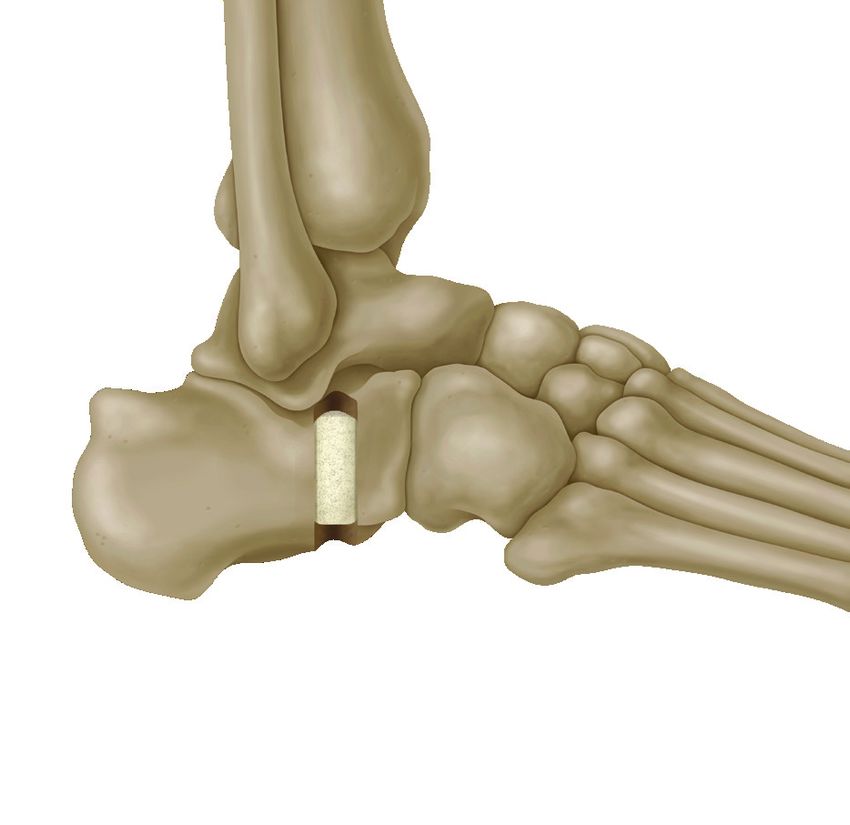
   Evans Wedge Osteotomy                                                 Cotton Wedge Osteotomy
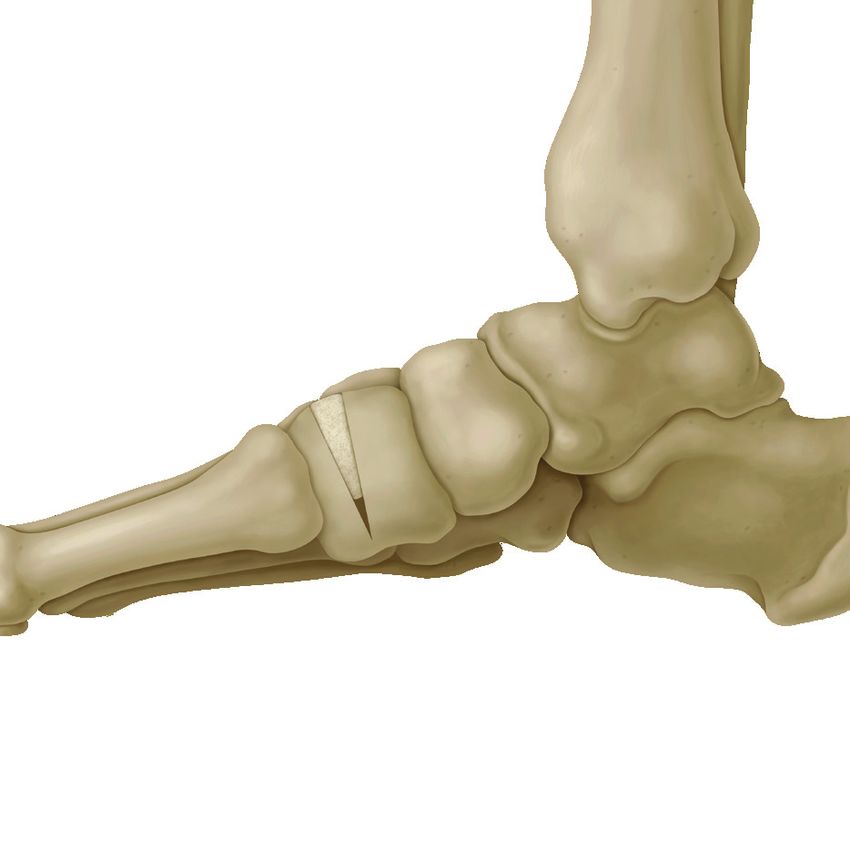
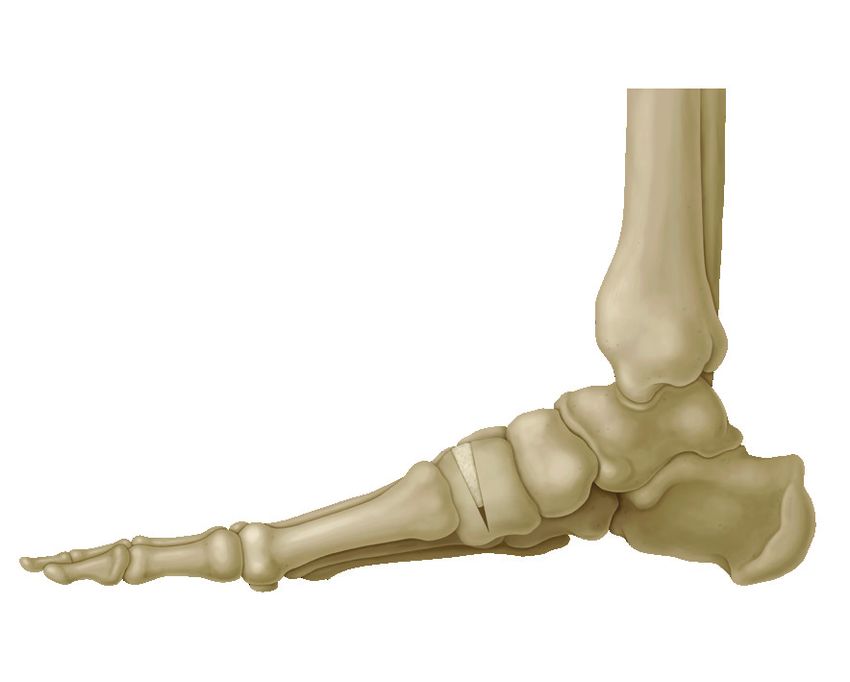
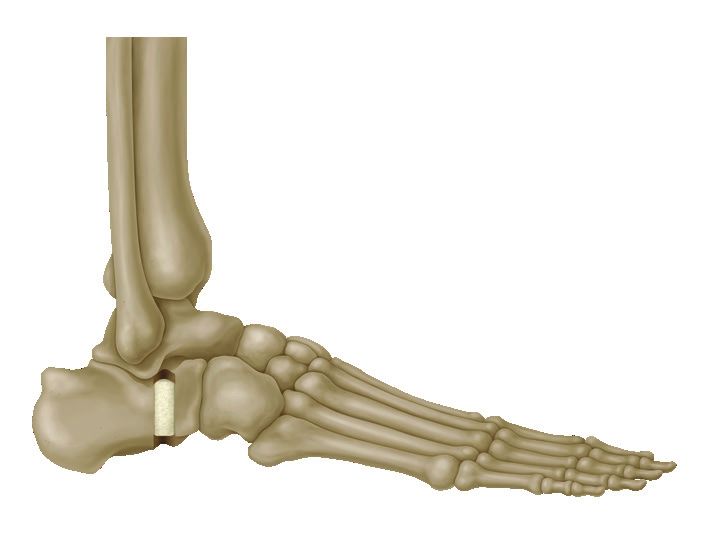
                          The Evans calcaneal osteotomy is a                                      The Cotton osteotomy is a medial
                          lateral column-lengthening procedure                                    cuneiform dorsal opening wedge osteotomy
             aimed at preserving the calcaneocuboid joint.                           typically used to correct the forefoot varus deformity
             This procedure uses a laterally based opening                           associated with advanced pes planovalgus foot
             wedge osteotomy to provide multi-planar                                 deformity. The wedge is placed dorsally to plantarflex
             correction in both pediatric and adult pes                               the medial column with the goal of increasing medial
             planovalgus deformities.1 An additional benefit                           arch height while preserving the medial column
              to lengthening the lateral column and reducing                            joints. This procedure is often performed as a
                   forefoot abduction, this calcaneal osteotomy                                 component of multi-step surgical correction
                         realigns the midtarsal joint and                                             of flatfoot deformity (to include an
                                      reduces calcaneal eversion.                                                       Evans osteotomy).

SymALIGN Foot and Ankle Allograft Wedges
Evans and Cotton Osteotomy Wedge Solutions
SymAlign Evans and Cotton Osteotomy wedges are intended for use in foot procedures. Evans and Cotton allograft wedges are processed
and sterilized to a Sterility Assurance Level (SAL) of 10-6 using Allowash XG® technology. Preservon® technology, another patented process
developed by LifeNet Health allows for ambient-temperature storage without the need to hydrate the graft. This method of preservation
maintains osteoconductive properties and compressive strength when compared to competitive frozen and freeze-dried graft options.1
The wedges are sourced from cancellous bone from the femoral heads and condyles, talus and calcaneus, which have been determined to
have appropriate strength for these procedures.2 This, along with specific donor and graft selection criteria, ensures the high density and
strength necessary to maintain the deformity correction during impaction as well as throughout the healing/incorporation process.

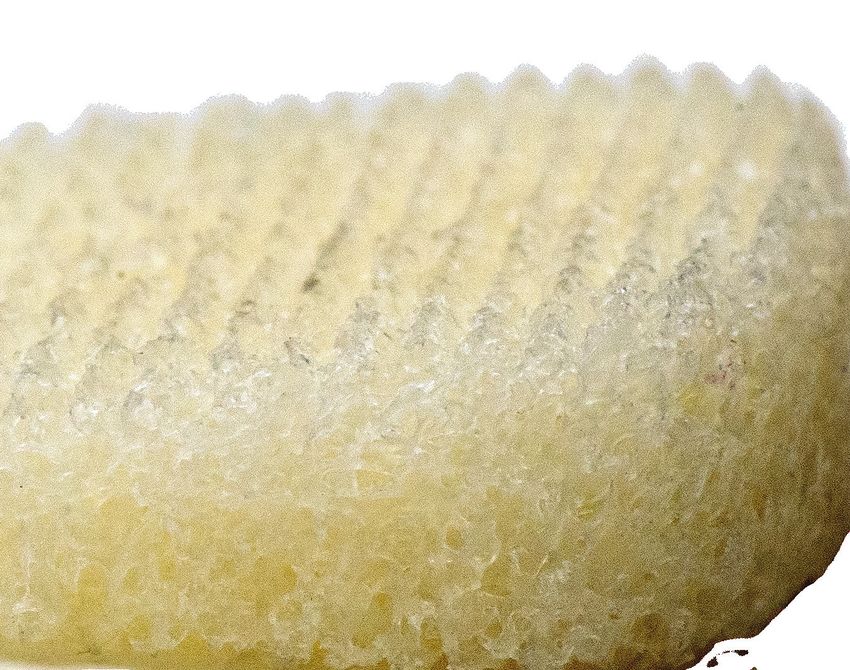
Unique Texturing
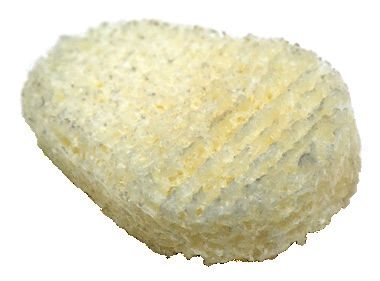
The patent-pending, unique texturing design found on the wedges has been proven to reduce migration while increasing the coefficient of
friction between the graft and the bone at the implant site. Bench testing showed the wedge texturing led to an increase in graft surface
area from 260 mm2 to 564 mm2, an increase of nearly 50 percent3 which allows greater area for cellular attachment.

                                                    Features & Benefits
                                                    • First and only textured allograft foot wedge designed to resist migration4
                                                    • Stringent donor and graft selection ensures high density and strength to maintain
                                                      deformity correction5
                                                    • Sterility without mechanical compromise protects the graft’s inherent
                                                      osteoconductive properties6
                                                    • Osteoconductive matrix for cell attachment and proliferation7
                                                    • Pre-hydrated SymAlign grafts maintain compressive strength and increase
                                                      intra‑operative efficiency1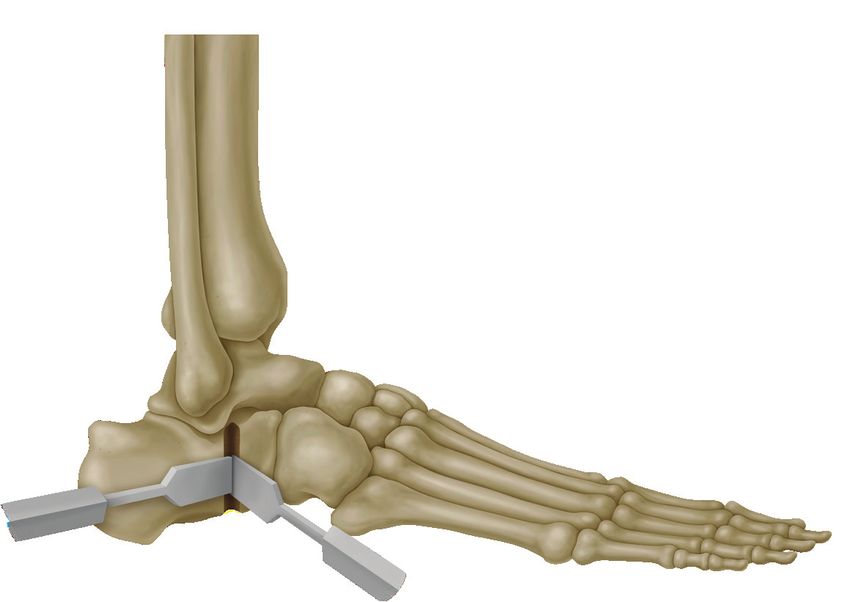
Surgical Technique
Site Preparation
To prepare the site, a longitudinal incision should be made directly over the planned osteotomy
site. Soft tissues are then carefully dissected and retracted to allow for proper visualization. For the
Cotton osteotomy, the extensor halluces longus (EHL) and medial branch of the dorsal cutaneous
nerve (superficial nerve) must be carefully protected. The peroneal tendons and branches of the
sural nerve must be protected for the Evans osteotomy.

Typically, a k-wire is used to mark the planned osteotomy site with c-arm imaging. This step insures
proper placement and angulation of the osteotomy. The Cotton osteotomy should be centered within
the long axis of the medial cuneiform, and the Evans osteotomy should be made transversely in the
calcaneus, approximately 15 mm proximal to the calcaneocuboid joint.

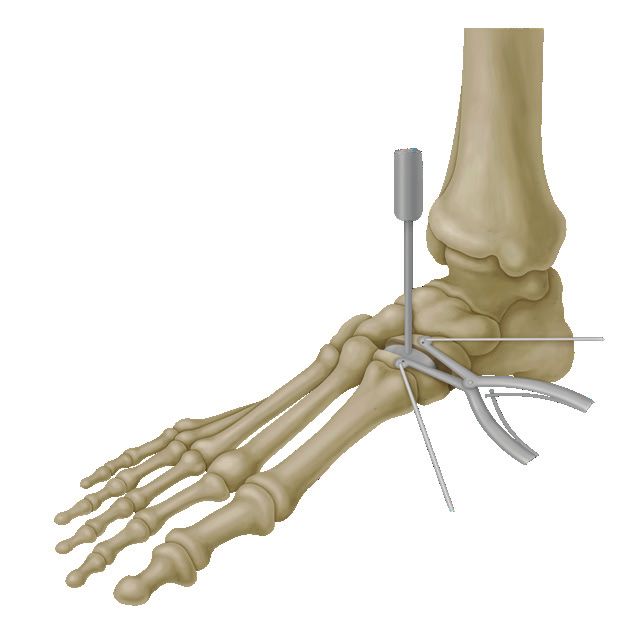
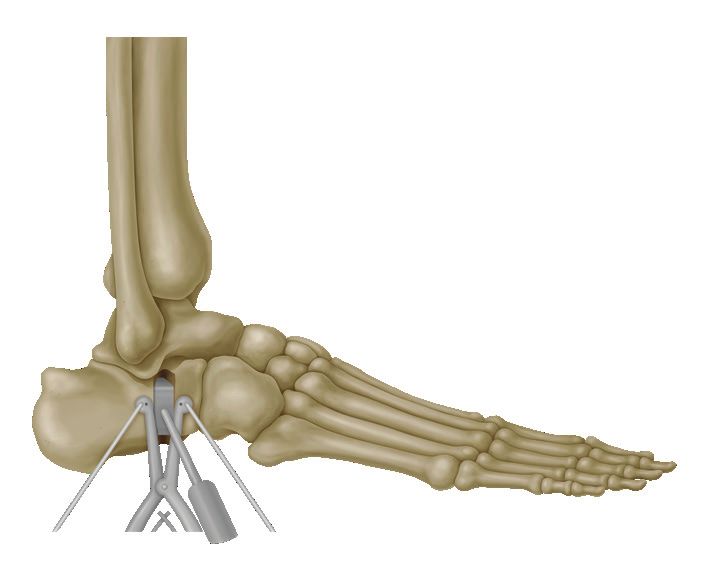
Begin the osteotomy using a sagittal saw to cut through approximately 80 percent of the
bone. Care should be taken not to violate the plantar cortex of the medial cuneiform or
through the medial cortex of the calcaneus. The osteotomy is gradually opened with two
osteotomes, gently levering each in opposing directions as they are slowly advanced.

Note: The DePuy Synthes distractor can also be used to open the osteotomy bone space.

Implant Size Determination
Attach the appropriate size trial to the inline inserter and modular handle. Beginning with the
smallest size, sequentially impact trials of increasing size until optimal fit and desired correction is
achieved. Ensure that the wedge trial has direct contact with the native bone to ensure for proper
reincorporation once the allograft is inserted.

Note: DePuy Synthes trials are offered in identical size configurations as the allograft wedge offerings.

Note: DePuy Synthes trials are not for implantation and must be removed prior to inserting the
allograft wedge.

Allograft Implantation
Once the correct allograft wedge size has been determined, carefully insert the wedge into the
osteotomy site. The Cotton allograft wedge should be inserted until it sits flush with the dorsal
and medial sites of the cuneiform while the Evans wedge should be inserted until flush with
the lateral cortex of the calcaneus. Care should be taken to avoid rotation of the graft as it is
inserted. If there are remaining gaps between the cuneiform and the allograft or between the
calcaneus and the allograft, fill the site with bone graft material. The allograft wedges match the
exact size of the trials and should provide interference fit when impacted into the osteotomy.

Note: If needed, using gentle force, the allograft wedge can be impacted into the implant site using
the DePuy Synthes “V” tamp. Care should be taken to ensure the surface of the tamp is properly
seated against the implant and light force only should be applied. If significant force is required,
greater distraction of the osteotomy using the osteotome technique may be required. Using
excessive force will increase the chance of damage to the allograft wedge or subsidence of the
graft into the cuneiform or calcaneus.

Supplemental Fixation
If desired, fixation can be achieved with:

• DePuy Synthes Plating Systems • Nitinol Continuous Compression Implants
• Headless Compression Screws

Fixation should be achieved so that it does not come into contact with the allograft wedge.
If the second cortex of the cuneiform or calcaneus has been violated with the osteotomy,
supplementary fixation is strongly recommended to prevent shift or displacement of the allograft
wedge. Care must be taken to avoid violation of the adjacent joints with screw or staple fixation.
Symalign™ Allograft Wedge System
                                 Implant Size Offerings

         Product Code                      Height (mm)              Thickness (mm)                  Length (mm)                                         Evans
          FA-EVN-1808                              18                         8                            18

          FA-EVN-1810                              18                        10                            18

          FA-EVN-1812                              18                         12                           18

          FA-EVN-2008                             20                          8                            20

          FA-EVN-2010                             20                         10                            20

          FA-EVN-2012                             20                          12                           20

          FA-EVN-2208                             22                          8                            22

          FA-EVN-2210                             22                         10                            22

          FA-EVN-2212                             22                          12                           22

         Product Code                      Height (mm)              Thickness (mm)                  Length (mm)                                        Cotton
          FA-CTN-1604                              14                        4.5                           16

          FA-CTN-1605                              14                        5.5                           16

          FA-CTN-1606                              14                        6.5                           16

          FA-CTN-2004                              14                        4.5                           20

          FA-CTN-2005                              14                        5.5                           20

          FA-CTN-2006                              14                        6.5                           20

References
1. Sohoni, P., Morris, A. Balsly, C., Cotter, A., and Sander, T., The Effects of a New                4.   Data on file LifeNet Health, ES-17-108
   Preservation Method on the Biomechanics and Shelf Life of Allograft Bone.                          5.   Data on file LifeNet Health, ES-18-031
   ORS 2011 Annual Meeting, 2011.                                                                     6.   Data on file LifeNet Health, 68-20-010
2. Data on file LifeNet Health, ES-17-051                                                             7.   Cornell, C. N. & Lane, J. M. Current understanding of osteoconduction in bone
3. Data on file LifeNet Health, 68-20-198                                                                  regeneration. Clinical Orthopaedics and Related Research, 1998; Number 355S
                                                                                                           pp S267-273.

                                       www.depuysynthes.com                                                                             LifeNetHealth.org
            The third party trademarks used herein are the trademarks of their respective owners.                 The LifeNet Health logo is a registered trademark of LifeNet Health.
                                 © D ePuy Synthes 2018. All rights reserved.                                    Preservon and Allowash XG are registered trademarks of LifeNet Health.
                                                                                                                               SymAlign is a trademark of LifeNet Health.
                                               092147-180521
                                                                                                                      ©2018 LifeNet Health, Virginia Beach, VA. All rights reserved.

                                                                                                                                           68-00-066 .00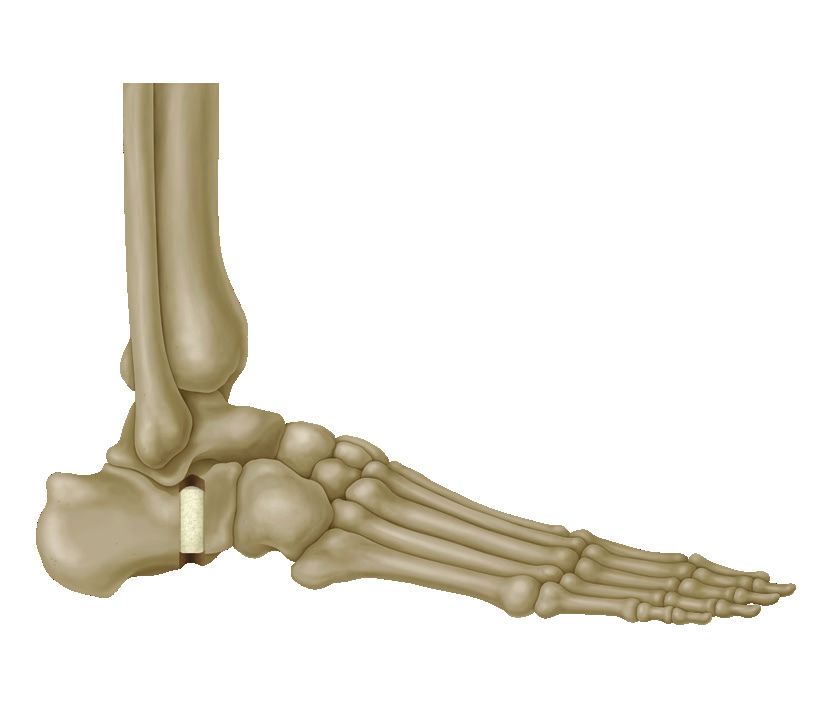
You can also read


