TAKING AIM AT A FAST-MOVING TARGET: TARGETS TO WATCH FOR SARS-COV-2 AND COVID-19 - CLARIVATE
←
→
Page content transcription
If your browser does not render page correctly, please read the page content below
Drugs of the Future 2020, 45(4): 1-6 (Advanced Publication)
Copyright © 2020 Clarivate Analytics
CCC: 0377-8282/2020
DOI: 10.1358/dof.2020.45.4.3150676
Targets to Watch
Taking aim at a fast-moving target: targets to
watch for SARS-CoV-2 and COVID-19
L.A. Sorbera, A.I. Graul and C. Dulsat
Clarivate Analytics, Barcelona, Spain
Contents six coronaviruses had been known to cause disease in
humans: HCoV-229E, HCoV-OC43, HCoV-NL63, HCoV-HKU1,
Summary . . . . . . . . . . . . . . . . . . . . . . . . . . . . . . . . . . . . . . . . . . . . 1 severe acute respiratory syndrome coronavirus (SARS-CoV)
Introduction . . . . . . . . . . . . . . . . . . . . . . . . . . . . . . . . . . . . . . . . . 1 and Middle East respiratory virus coronavirus (MERS-CoV).
SARS-CoV-2 and COVID-19 . . . . . . . . . . . . . . . . . . . . . . . . . . . . . 1 The first four are endemic locally; they have been associ-
Targets . . . . . . . . . . . . . . . . . . . . . . . . . . . . . . . . . . . . . . . . . . . . . . 2 ated mainly with mild, self-limiting disease, whereas the
latter two—both betacoronaviruses—can cause severe
References . . . . . . . . . . . . . . . . . . . . . . . . . . . . . . . . . . . . . . . . . . . 5
illness (1-3).
Given the high prevalence and wide distribution of coro-
naviruses, their large genetic diversity as well as the fre-
Summary quent recombination of their genomes, and increasing
Severe acute respiratory syndrome coronavirus 2 (SARS- activity at the human–animal interface, these viruses
CoV-2) is characterized as a betacoronavirus and recog- represent an ongoing threat to human health (4). This fact
nized as the seventh discrete coronavirus species capable of recently became starkly evident, with the emergence and
causing human disease. This new coronavirus causes febrile rapid spread of a novel coronavirus, first in mainland China
respiratory illness and on March 11, 2020, was character- and now globally. The virus—provisionally designated
ized as a global pandemic. Investigators have accelerated 2019-nCoV and later given the official name SARS-CoV-2,
the search for a vaccine to prevent infection and for agents due to its similarity to SARS-CoV—was quickly isolated
to treat it. This article presents those drug targets that (as of and the viral genome sequenced. SARS-CoV-2 was char-
March 20, 2020) are currently under active investigation for acterized as a betacoronavirus and recognized as the
the treatment of COVID-19, the disease caused by SARS-CoV-2 seventh discrete coronavirus species capable of causing
infection. human disease (5).
Key words: SARS-CoV-2 – COVID-19 – Coronavirus – Therapeutic
targets
SARS-CoV-2 and COVID-19
In late 2019, the new coronavirus began causing febrile
Introduction respiratory illness in mainland China; 2 months later, the
Coronaviruses are a group of large, enveloped, positive- rapidly spreading disease was officially named Coronavirus
sense, single-stranded RNA viruses belonging to the Disease 2019 (COVID-19) by the World Health Organization
order Nidovirales, family Coronaviridae, subfamily Corona (WHO). Earliest reports of the illness were issued by doctors
virinae. More than two dozen different species are known in the densely populated city of Wuhan, Hubei province.
and have been divided into four genera (alpha, beta, gamma Index cases were linked to the Huanan wholesale seafood
and delta) characterized by different antigenic cross- market, which was immediately closed. Although the initial
reactivity and genetic makeup. Only the alpha- and beta cases were traced to zoonotic transmission, human-to-
coronavirus genera include strains pathogenic to humans human transmission was soon documented, both in
and other mammals (1-3). healthcare settings and in familial clusters (6, 7). In fact,
Coronaviruses have long been recognized as important following the initial leap across the species barrier, human-
veterinary pathogens, causing respiratory and enteric dis- to-human transmission quickly became responsible for
eases in mammals as well as in birds. Before 2019, only widespread and rapid dissemination of the virus across
populations with no pre-existing immunity; the disease
spread from a single focal point across the entire country of
Correspondence: lisa.sorbera@clarivate.com. China in just 30 days, and within 3 months had established
1Targets to watch for SARS-CoV-2 and COVID-19 L.A. Sorbera et al.
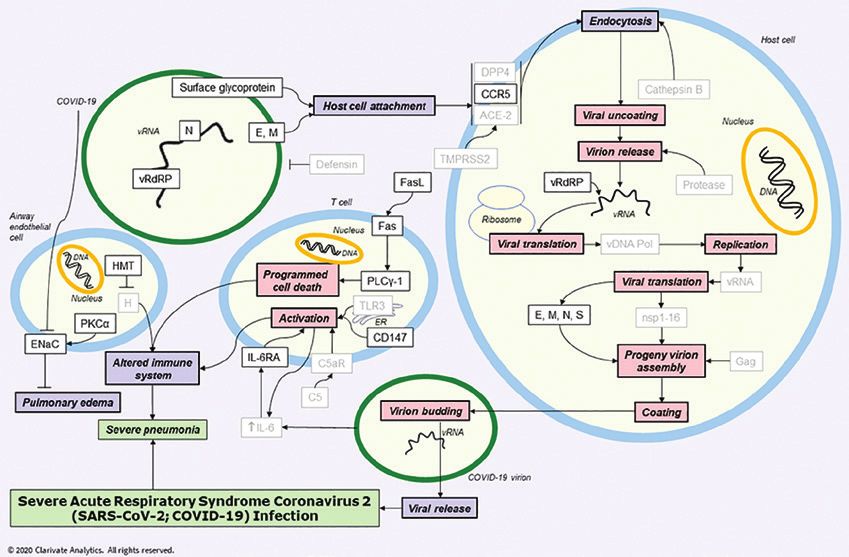
Figure 1. SARS-CoV-2 (COVID-19) infection targetscape. A diagram showing an overall cellular and molecular landscape or comprehensive
network of connections among the current therapeutic targets for the treatment of SARS-CoV-2 infection and their biological actions. Gray
or lighter symbols are targets that are not validated (i.e., targets not associated with a product that is currently under active development
for SARS-CoV-2). ACE-2, angiotensin-converting enzyme 2; C5, complement C5; C5aR, C5a anaphylatoxin chemotactic receptor 1 (CD88);
CCR5, C-C chemokine receptor type 5; CD147, basigin; DDP4, dipeptidyl peptidase 4; E, envelope protein (SARS-CoV-2; COVID-19); ENaC,
epithelial sodium channel; Fas, tumor necrosis factor receptor type 6 (FASL receptor); FasL, tumor necrosis factor ligand superfamily
member 6 (FASLG; FAS ligand); H, histamine; HMT, histamine N-methyltransferase; IL-6, interleukin-6; IL-6RA, interleukin-6 receptor subunit
α; M, membrane glycoprotein (SARS-CoV-2; COVID-19); N, nucleocapsid (SARS-CoV-2; COVID-19); nsp1-16, nonstructural proteins 1-16
(SARS-CoV-2; COVID-19); PLCγ-1, 1-phosphatidylinositol 4,5-bisphosphate phosphodiesterase γ-1; PKCα, protein kinase C α type; GDP, RNA-
directed RNA polymerase (viral); S, surface glycoprotein (SARS-CoV-2; COVID-19); TMPRSS2, transmembrane protease serine 2; TLR3, Toll-
like receptor 3; vDNA pol, viral DNA polymerase; vRNA, viral RNA.
footholds in more than 100 countries. On January 30, Targets
2020, under recommendation from the International
Basigin (CD147)
Health Regulations (2005) Emergency Committee, the
Director-General of the WHO declared the COVID-19 out- CD147 is a member of the immunoglobulin superfam-
break a Public Health Emergency of International Concern ily of receptors involved in cell growth. It activates matrix
(PHEIC). On March 11, it was characterized as a global metalloproteinase-9 (MMP-9) and membrane type 1-matrix
pandemic. metalloproteinase (MT1-MMP) synthesis. Its expression is
detected on the surface of tumor cells. CD147 also medi-
Enabled by open access to prepublication articles and ates viral entry into host cells. Interaction of measles virus
collaboration across borders, the pace of drug and vac- bound to cyclophilin B (a ligand of CD147) mediates entry
cine development during the COVID-19 outbreak has been of the virus into host cells. Studies have shown that nucle-
unprecedented. This article provides a snapshot in time ocapsid protein (N; COVID-19) binds to cyclophilin A (also
(as of March 20, 2020) of validated therapeutic targets, as a ligand for CD147). Interaction of CD147 with virion-
reflected by the R&D pipeline on that same date. Those tar- associated cyclophilin A plays a functional role in facili-
gets which are currently under active investigation for the tating invasion of host cells by SARS-CoV. CD147 may also,
treatment of COVID-19 are discussed (see also Fig. 1). Table I therefore, be implicated in host cell invasion by the closely
provides a selection of products under active development related virus SARS-CoV-2 and represents a therapeutic
for each target. target for the treatment of COVID-19 (8).
2 Drugs of the Future 2020, 45(4)L.A. Sorbera et al. Targets to watch for SARS-CoV-2 and COVID-19
Table I. Selected targets and products being actively investigated for SARS-Cov-2.
Target name Product/description Source Phase
1-Phosphatidylinositol 4,5-bisphosphate Lopinavir/ritonavir AbbVie Clinical
phosphodiesterase γ-1 (PLCγ-1)
Basigin (CD147) Meplazumab Fourth Military Medical University I/II
Chemokine receptor CCR5 Leronlimab CytoDyn IND filed
Complement C5 IFX-1 Staidson Biopharmaceuticals IND filed
Defensin (nonspecified subtype) Brilacidin Innovation Pharmaceuticals Preclinical
Elongation factor 1-α2 Plitidepsin Pharmamar Preclinical
Envelope protein (SARS-CoV-2; COVID-19) LV-SMENP-DC Shenzhen Genoimmune Medical I/II
Institute
Epithelial sodium channel (ENaC) Solnatide APEPTICO Clinical
Histamine N-methyltransferase Chloroquine phosphate Guangdong Zhongsheng Clinical
Pharmaceutical
Human coronavirus Human COVID-19 coronavirus (SARS-CoV-2) CureVac Preclinical
(SARS-CoV-2; COVID-19) proteins mRNA vaccine
LUNAR-COV19 Arcturus Therapeuticus Preclinical
mRNA-1273 Moderna Preclinical
TNX-1800 Tonix Pharmaceuticals Preclinical
Membrane glycoprotein (SARS-CoV-2; LV-SMENP-DC Shenzhen Genoimmune Medical I/II
COVID-19) Institute
Nucleocapsid (SARS-CoV-2; COVID-19 virus) Lopinavir/ritonavir AbbVie Clinical
Darunavir/cobicistat Shanghai Public Health Clinical Center Clinical
Protein kinase C α type Solnatide APEPTICO Clinical
RNA-directed RNA polymerase Remdesivir Gilead III
Favipiravir Sihuan Pharmaceutical Clinical
Surface glycoprotein (spike glycoprotein) Human COVID-19 coronavirus (SARS- Jenner Vaccine Foundation Preclinical
(SARS-CoV-2; COVID-19) CoV-2) vaccine comprising replication-
deficient simian adenovirus vector
ChAdOx1 encoding spike glycoprotein of
COVID-19 virus
Human COVID-19 coronavirus (SARS-CoV-2) Novavax Preclinical
vaccine comprising recombinant COVID-19
spike glycoprotein; encapsulated in
nanoparticles
LV-SMENP-DC Shenzhen Genoimmune Medical I/II
Institute
Toll-like receptor 3 Rintatolimod AIM ImmunoTech Preclinical
Tumor necrosis factor ligand superfamily Lopinavir/ritonavir AbbVie Clinical
member 6
Tumor necrosis factor receptor type 6 (FASL ASC-09/ritonavir Ascletis Clinical
receptor; Fas) Lopinavir/ritonavir AbbVie Clinical
Unknowna APN01 Apeiron Biologics Clinical
Unknown a
Danoprevir Ascletis Clinical
Unknowna INO-4800 Inovio Pharmaceuticals Preclinical
Unknown a
Oseltamivir phosphate Wuhan Tongji Hospital Clinical
Unknowna Umifenovir hydrochloride Wuhan Tongji Hospital Clinical
a
Target unknown for SARS-CoV-2 virus.
Source: Cortellis Drug Discovery Intelligence as of March 20, 2020.
Drugs of the Future 2020, 45(4) 3Targets to watch for SARS-CoV-2 and COVID-19 L.A. Sorbera et al.
C-C chemokine receptor type 5 (CCR5) Interleukin-6 receptor subunit α (IL-6RA)
CCR5 is a G protein-coupled, 7-transmembrane receptor IL-6RA is the α chain of the IL-6 receptor complex (IL-6R).
expressed on monocytes, macrophages, T cells and B cells IL-6R is a class I cytokine receptor for IL-6. Association with
that binds the CC chemokines MIP-1α (macrophage inflam- the IL6ST subunit is required for a full functional receptor.
matory protein 1α), MIP-1β and RANTES with high affinity. It The complex is involved in immune response regulation,
also binds viral MIP-2 with high affinity and has been shown acute-phase reaction and hematopoiesis. When SARS-CoV-2
to bind cyclophilin-18 and histidyl-tRNA synthetase. CCR5 infects the upper and lower respiratory tract, the results can
acts as a coreceptor with CD4 for HIV type 1 infection and be mild or highly acute respiratory syndrome with conse-
it functions as a fusion cofactor for macrophage-tropic and quent release of proinflammatory cytokines, including IL-6.
T-cell line-tropic isolates of HIV-1. Moreover, studies have Suppression of inflammation in inflammatory diseases can
shown that CCR5 is involved in host defense playing a role be achieved by inhibiting IL-6 activity. Anti-IL-6RA agents
in T-cell recruitment. Targeting of CCR5 may be effective in would render IL-6R inactive and attenuate pulmonary
the treatment of SARS-2-CoV-2 (9-11). inflammation in patients with COVID-19 (18-20).
Envelope protein (E) (SARS-CoV-2; COVID-19 virus) Membrane glycoprotein (M) (SARS-CoV-2; COVID-19)
Envelope protein is a component of the viral envelope of Membrane glycoprotein M is a component of the viral enve-
COVID-19 that plays a central role in virus morphogenesis lope of SARS-CoV-2 that plays a central role in virus mor-
and assembly via its interactions with other viral proteins. phogenesis and assembly via its interactions with other
Agents that are envelope protein-directed immunity induc- viral proteins. Agents which are membrane glycoprotein-
ers may be effective in developing a vaccine against SARS- directed immunity inducers may be effective in the preven-
CoV-2 (12-14). tion of COVID-19 (12-14).
Epithelial sodium channel (ENaC) Nucleocapsid (N) (SARS-CoV-2; COVID-19)
ENaC is a non-voltage-gated, amiloride-sensitive, membrane- Nucleocapsid packages the positive strand viral genome
bound ion channel (SCNN1) that is involved together with RNA into a helical ribonucleocapsid (RNP) and plays a fun-
the Na+/K+-ATPase in transepithelial Na+ transport and damental role during virion assembly through its interac-
is considered rate-limiting for Na+ reabsorption in many tions with the viral genome and membrane protein M.
tissues. It is also permeable for lithium (Li+) and protons. It plays an important role in enhancing the efficiency of
These channels are found on apical membrane of polarized subgenomic viral RNA transcription as well as viral rep-
epithelial cells of many tissues. ENaC channels are hetero- lication. The N protein of SARS-CoV has been shown to
multimeric proteins composed of three homologous sub- induce apoptosis and actin reorganization. Targeting of
units (α-, β- and γ ENaC or SCNN1A, SCNN1B and SCNN1G) this molecule by nucleocapsid-directed immunity induc-
that have been proposed to be arranged in either an α2βγ ers may be effective in the prevention of SARS-CoV-2
or a higher ordered configuration; a δ subunit (SCNN1D) infection (12-14, 21).
can replace the α subunit. In the lung, these channels reg-
ulate airway surface liquid volume and the efficiency of
1-Phosphatidylinositol 4,5-bisphosphate
mucociliary clearance. Mutations of ENaC can result in pul-
phosphodiesterase γ-1 (PLCγ-1)
monary disease. Studies have shown that following host
cell infection, SARS-CoV proteins (S and E) are involved in PLCγ-1 is an enzyme (EC 3.1.4.11) that mediates the pro-
the regulation of alveolar fluid clearance through reducing duction of the second messenger molecules diacylglycerol
cell surface expression and activity of ENaC. Thus, agents (DAG) and inositol 1,4,5-trisphosphate (IP3). Upregulation
activating ENaC could also be effective in attenuating can occur with viral infections, resulting in increased proin-
pulmonary edema associated with SARS-CoV-2 infection, flammatory cytokine release. Inhibition of this enzyme and
given the similarity of the viruses (15). its interaction with tumor necrosis factor receptor super-
family member 6 (CD95; FAS ligand) may be be effective in
Histamine N-methyltransferase (HMT) relieving respiratory distress in patients with COVID-19 (20,
22, 23).
HMT (EC:2.1.1.8) is a transferase that inactivates histamine
by N-methylation. It plays an important role in degrading
histamine and in regulating the airway response to hista- Protein kinase C α type (PKCα)
mine. Histamine causes narrowing of the bronchial tubes PKCα is a membrane-associated protein and member of
and difficulty breathing. Inhibitors of HMT would therefore AGC Ser/Thr protein kinase family. It is involved in mitogen-
be effective in the treatment of respiratory distress second- activated protein kinase pathway, cell polarization and
ary to SARS-CoV-2 infection (16, 17). motility. PKCα has been shown to mediate lung endothelial
4 Drugs of the Future 2020, 45(4)L.A. Sorbera et al. Targets to watch for SARS-CoV-2 and COVID-19
injury; thus, inhibition of PKCα may be effective in attenuat- 2. Paules, C.I., Marston, H.D., Fauci, A.S. Coronavirus infections-
ing lung injury in patients with COVID-19 (20, 23-25). more than just the common cold. JAMA 2020: Advance
publication.
3. Chen, Y., Liu, Q., Guo, D. Emerging coronaviruses: genome
RNA-directed RNA polymerase (RdRP) (viral) structure, replication, and pathogenesis. J Med Virol 2020,
RdRP is an unusual viral coded enzyme involved in the syn- 92(4): 418-23.
thesis of negative-sense RNA strand during viral RNA repli- 4. Hui, D.S., E, I.A., Madani, T.A. et al. The continuing 2019-nCoV
epidemic threat of novel coronaviruses to global health - The
cation within the nucleus of a host cell. The negative-sense
latest 2019 novel coronavirus outbreak in Wuhan, China. Int J
strand of viral RNA acts as a template for synthesis of the Infect Dis 2020, 91: 264-6.
positive-sense RNA strand, which in turn acts as a tem- 5. Zhu, N., Zhang, D., Wang, W. et al. A novel coronavirus from
plate for synthesis of the negative-sense stand of viral RNA. patients with pneumonia in China, 2019. N Engl J Med 2020,
Inhibition of this enzyme would block viral replication 382(8): 727-33.
and therefore be effective in the treatment of viral infec- 6. Li, Q., Guan, X., Wu, P. et al. Early transmission dynamics in
tions such as influenza, hepatitis C, Ebola and coronavirus Wuhan, China, of novel coronavirus-infected pneumonia. N Engl
(26-28). J Med 2020: Advanced publication.
7. Chan, J.F., Yuan, S., Kok, K.H. et al. A familial cluster of pneumo-
nia associated with the 2019 novel coronavirus indicating person-
Surface glycoprotein (S) (SARS-CoV-2; COVID-19) to-person transmission: a study of a family cluster. Lancet 2020,
Surface glycoprotein attaches the virion to the cell mem- 395(10223): 514-23.
8. Chen, Z., Mi, L., Xu, J. et al. Function of HAb18G/CD147 in inva-
brane by interacting with human ACE-2 (angiotensin-
sion of host cells by severe acute respiratory syndrome corona-
converting enzyme 2) and CLEC4M/DC-SIGNR (C-type lectin virus. J Infect Dis 2005, 191(5): 755-60.
domain family 4 member M) and initiates the infection. 9. Lin, M., Da, L.T. Refolding dynamics of gp41 from pre-fusion to
Binding to the receptor and internalization of the virus into pre-hairpin states during HIV-1 entry. J Chem Inf Model 2020,
the endosomes of the host cell probably induces confor- 60(1): 162-74.
mational changes in the S glycoprotein. Targeting of this 10. Chen, J., Lau, Y.F., Lamirande, E.W., Paddock, C.D., Bartlett,
molecule by nucleocapsid-directed immunity inducers may J.H., Zaki, S.R., Subbarao, K. Cellular immune responses to
be effective in the prevention and treatment of SARS-CoV-2 severe acute respiratory syndrome coronavirus (SARS-CoV)
infection in senescent BALB/c mice: CD4+ T cells are important
(12-14, 21, 29, 30).
in control of SARS-CoV infection. J Virol 2010, 84(3): 1289-301.
11. Glass, W.G., Lane, T.E. Functional analysis of the CC chemokine
Tumor necrosis factor ligand superfamily member 6 receptor 5 (CCR5) on virus-specific CD8+ T cells following coro-
(FASLG; FAS ligand; FasL) and tumor necrosis factor navirus infection of the central nervous system. Virology 2003,
receptor type 6 (FASL receptor; Fas) 312(2): 407-14.
12. Cascella, M., Rajnik, M., Cuomo, A., Dulebohn, S.C., Di Napoli,
FAS ligand (FasL) is a type-II transmembrane, homotri- R. Features, Evaluation and Treatment Coronavirus (COVID-
meric protein that belongs to the tumor necrosis factor 19). StatPearls Publishing: Treasure Island (FL) 2020.
(TNF) family. It is a ligand of Fas, a member of the TNF 13. Schoeman, D., Fielding, B.C. Coronavirus envelope protein: cur-
receptor family that is involved in the induction of cell rent knowledge. Virol J 2019, 16(1): 69.
death through caspase-mediated signaling. FasL/Fas 14. Liu, C., Zhou, Q., Li, Y. et al. Research and development on ther-
apeutic agents and vaccines for COVID-19 and related human
interactions play an important role in the regulation of
coronavirus diseases. ACS Cent Sci 2020: Advanced publication.
the immune system and the progression of cancer. Fas 15. Ji, H.L., Song, W., Gao, Z. et al. SARS-CoV proteins decrease
signaling also appears to regulate endothelial func- levels and activity of human ENaC via activation of distinct
tion and neutrophil lifespan. Studies have shown that PKC isoforms. Am J Physiol Lung Cell Mol Physiol 2009, 296(3):
caspase-dependent FasL-mediated apoptotic pathways L372-83.
play a central role in SARS-CoV-induced apoptosis which 16. Barnes, W.G., Hough, L.B. Membrane-bound histamine
facilitates viral replication. Thus, inhibition FasL/Fas N-methyltransferase in mouse brain: possible role in the syn-
interaction may be effective in the treatment of SARS- aptic inactivation of neuronal histamine. J Neurochem 2002,
82(5): 1262-71.
CoV-2 (22, 31-34).
17. Wang, L., Thomae, B., Eckloff, B., Wieben, E., Weinshilboum,
R. Human histamine N-methyltransferase pharmacogenetics:
Disclosures gene resequencing, promoter characterization, and functional
studies of a common 5'-flanking region single nucleotide poly-
The authors are employees of Clarivate Analytics. morphism (SNP). Biochem Pharmacol 2002, 64(4): 699-710.
18. Conti, P., Ronconi, G., Caraffa, A., Gallenga, C.E., Ross, R.,
Frydas, I., Kritas, S.K. Induction of pro-inflammatory cytokines
References (IL-1 and IL-6) and lung inflammation by Coronavirus-19 (COVI-
1. Integrity Disease Briefings: Coronaviruses (online publication). 19 or SARS-CoV-2): anti-inflammatory strategies. J Biol Regul
Accessed March 19, 2020. Homeost Agents 2020, 34(2): e12943.
Drugs of the Future 2020, 45(4) 5Targets to watch for SARS-CoV-2 and COVID-19 L.A. Sorbera et al.
19. Zhang, X., Zhang, Z., Ju, M. et al. Pretreatment with interleu- deltacoronaviruses with a highly divergent RNA dependent RNA
kin 35-engineered mesenchymal stem cells protected against polymerase. Antiviral Res 2019, 169: 104541.
lipopolysaccharide-induced acute lung injury via pulmonary 28. Malet, H., Masse, N., Selisko, B. et al. The flavivirus poly-
inflammation suppression. Inflammopharmacology 2020: merase as a target for drug discovery. Antiviral Res 2008,
Advanced publication. 80(1): 23-35.
20. Mahmud-Al-Rafat, A., Majumder, A., Taufiqur Rahman, K.M., 29. Guo, Y.R., Cao, Q.D., Hong, Z.S. et al. The origin, transmis-
Mahedi Hasan, A.M., Didarul Islam, K.M., Taylor-Robinson, sion and clinical therapies on coronavirus disease 2019
A.W., Billah, M.M. Decoding the enigma of antiviral crisis: (COVID-19) outbreak - an update on the status. Mil Med Res
Does one target molecule regulate all? Cytokine 2019, 115: 2020, 7(1): 11.
13-23. 30. Hoffmann, M., Kleine-Weber, H., Schroeder, S. et al. SARS-
21. Surjit, M., Liu, B., Jameel, S., Chow, V.T., Lal, S.K. The SARS CoV-2 cell entry depends on ACE2 and TMPRSS2 and is blocked
coronavirus nucleocapsid protein induces actin reorganization by a clinically proven protease inhibitor. Cell 2020: Advanced
and apoptosis in COS-1 cells in the absence of growth factors. publication.
Biochem J 2004, 383(Pt 1): 13-8. 31. Hornick, E.E., Dagvadorj, J., Zacharias, Z.R. et al. Dendritic
22. Guegan, J.P., Legembre, P. Nonapoptotic functions of Fas/CD95 cell NLRC4 regulates influenza A virus-specific CD4 T cell
in the immune response. FEBS J 2018, 285(5): 809-27. responses through FasL expression. J Clin Invest 2019, 129(7):
23. Mizutani, T. Signal transduction in SARS-CoV-infected cells. Ann 2888-97.
N Y Acad Sci 2007, 1102(1): 86-95. 32. Chen, H., Feng, R., Muhammad, I. et al. Protective effects of
24. Liu, M., Yang, Y., Gu, C., Yue, Y., Wu, K.K., Wu, J., Zhu, Y. Spike hypericin against infectious bronchitis virus induced apoptosis
protein of SARS-CoV stimulates cyclooxygenase-2 expression and reactive oxygen species in chicken embryo kidney cells.
via both calcium-dependent and calcium-independent protein Poult Sci 2019, 98(12): 6367-77.
kinase C pathways. FASEB J 2007, 21(7): 1586-96. 33. Zhang, J., Han, Y., Shi, H. et al. Swine acute diarrhea syndrome
25. Siflinger-Birnboim, A., Johnson, A. Protein kinase C modulates coronavirus-induced apoptosis is caspase- and cyclophilin D-
pulmonary endothelial permeability: a paradigm for acute dependent. Emerg Microbes Infect 2020, 9(1): 439-56.
lung injury. Am J Physiol Lung Cell Mol Physiol 2003, 284(3): 34. O’Donnell, J.A., Kennedy, C.L., Pellegrini, M. et al. Fas regu-
L435-51. lates neutrophil lifespan during viral and bacterial infection. J
26. Dong, S., Sun, J., Mao, Z., Wang, L., Lu, Y.L., Li, J. A guideline Leukoc Biol 2015, 97(2): 321-6.
for homology modeling of the proteins from newly discovered
betacoronavirus, 2019 novel coronavirus (2019-nCoV). J Med
Virol 2020: Advanced publication.
27. Brown, A.J., Won, J.J., Graham, R.L. et al. Broad spectrum
antiviral remdesivir inhibits human endemic and zoonotic ..............................................................................
6 Drugs of the Future 2020, 45(4)You can also read


