DIVE INTO THE What do you think this image shows? Hint: It's NOT an underwater - Scholastic
←
→
Page content transcription
If your browser does not render page correctly, please read the page content below
SCHOLASTIC and associated logos are trademarks and/or registered trademarks of Scholastic Inc. All rights reserved. © 2021. 715984
Images courtesy of NIGMS.
                                                                                                                                                          Sponsored Educational Materials

                                                                                                                                     DIVE INTO THE

                                                                            ocean scene! (Answer inside)
                                                                        Hint: It’s NOT an underwater
                                                                      What do you think this image shows?
                                                                                                                                                     The Imaging Issue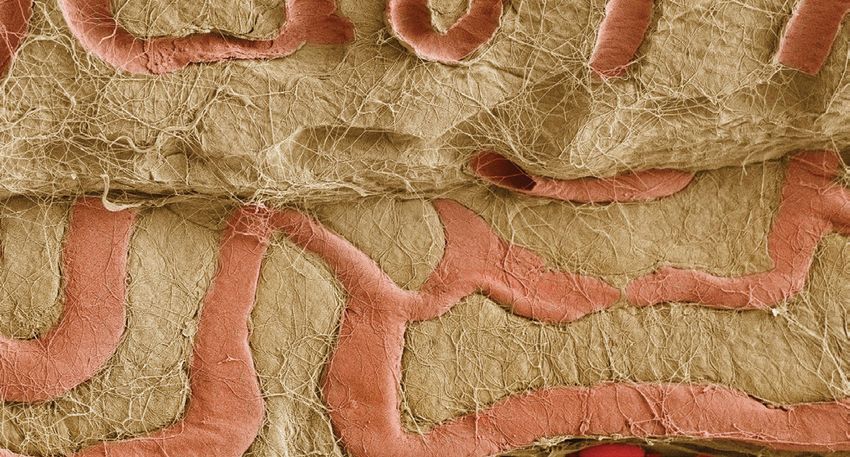
Feature

    Discover how scientists unlock
                                                              How do you digest food?
    the big (or very small!) mysteries
    of our cells and molecules.                                Cool image fact The protein ribonuclease A is found in all living cells.
                                                              It is an enzyme that breaks down the RNA found in foods like meat and
        magine you’re trying to take a photo of               legumes, helping with digestion.
        something small—say, a bug with a cool
        pattern on its back. You zoom in, but the
    image gets grainy and blurry.
        Bugs can get pretty tiny, but they’re huge
    compared to your cells, let alone your atoms.
    About 5 million hydrogen atoms can fit on                    Crystallizing this
                                                                 enzyme (main image;
    the head of a pin. How can something so                      about the size of a
    astonishingly small be photographed?                         grain of salt) allowed
        Over the past century, scientists have                   scientists to map its
                                                                 atomic structure (inset).
    developed a variety of ingenious technologies
    to answer this question. Using increasingly
    advanced imaging tools, scientists have                    How scientists created these images Using chemistry, scientists
    peered at protein molecules folded like                   prompted the protein sample to grow into a highly organized form
    origami, cells pushing out harmful particles,             called a crystal (over months). Then they fired X-rays through it. The
    and much more. (Check out some examples                   X-rays bent in different directions upon hitting the individual atoms in
    featured on these pages!) Studying the body’s             the protein crystal, forming a dot pattern. Scientists used a formula to
    normal and abnormal processes can lead to                 infer what 3D structure would cause that pattern. This process, X-ray
    developing more effective, targeted treatments.           crystallography, only works with specimens that can be crystallized.

     How does your brain send messages?
                                          Cool image fact This nerve ending has been broken open to reveal
                                         vesicles containing chemicals called neurotransmitters that pass
                                         messages in the nervous system. Researchers colorized the vesicles in
                                         orange and blue to help viewers see the different parts of the image.

                                          How scientists created this image A scanning electron microscope
                                         works by moving (scanning) a narrow beam of electrons across a sample
                                         (which is often coated in gold to make it conductive). By detecting how        ON THE COVER
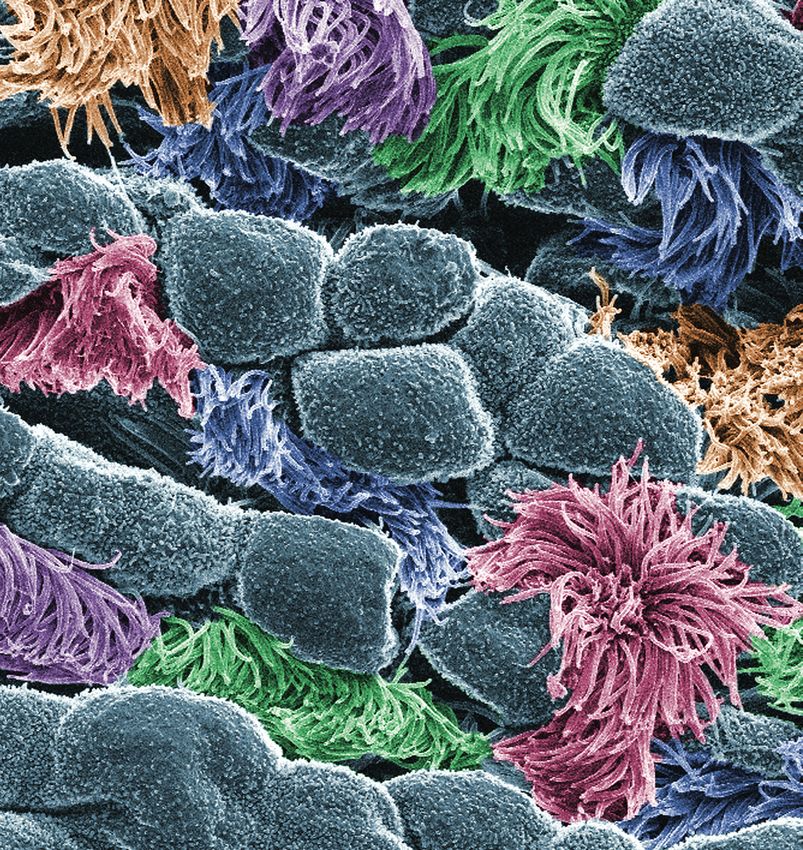
                                         electrons are reflected or absorbed, scientists can create an image. But     Magnify a throat 10,000x
                                         why not just shine a light? Light is made up of photon particles that        and you’d find a “sea” of
        This vesicle is                                                                                               mop-like cells that sweep
                                         reflect off objects and into our eyes. But some specimens are too tiny for
        part of a nerve                                                                                                out unwanted particles
                                         a photon’s wavelength! Electrons have a smaller wavelength that can          with a continuous motion,
        cell, or neuron.
                                         interact with tiny specimens, such as the one pictured here.                 as shown in this colorized
                                                                                                                            mouse throat.

2    PATHWAYS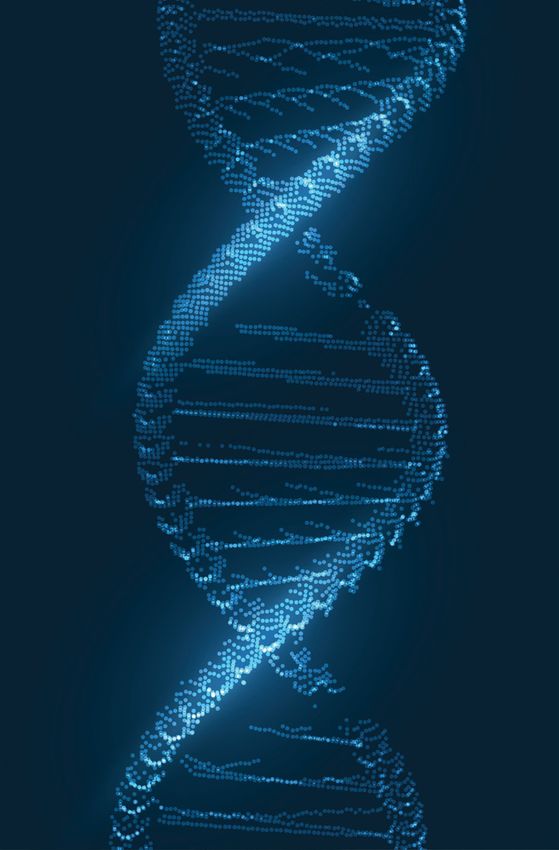
How do you sense pain? How do cells take out the trash?
Cool image fact Did you notice those stringy things on the
cover? Called cilia, they wiggle in a wavelike motion to sweep
Images: 3D Cilia Rendering, from Jianfeng Lin and Daniela Nicastro, "Asymmetric distribution and spatial switching of dynein activity generates ciliary motility." Science 360 (2018). Reprinted with permission from AAAS;
out debris or propel cells forward. Defects in cilia can cause
several diseases, so uncovering how healthy cilia move is an
This structure important foundation for developing treatments.
could help
scientists
develop drugs
to block pain!
Cool image fact This is a molecular model of the TRPA1
protein, which is involved in sensing pain. It is responsible for Inside a 3D
the burn you feel on your tongue when you eat hot mustard or model of a cilium
(singular of cilia)
wasabi. It’s informally known as the “wasabi receptor”!
How scientists created this image Scientists flash-froze How scientists created this image Cryo–electron
the protein by plunging it into liquid ethane to preserve it. tomography (cryo-ET) is similar to cryo-EM but used for cell
A cryo-electron microscope (cryo-EM) recorded how structures that are too big for standard cryo-EM. Scientists
the protein deflected electron beams to map the protein’s capture high-resolution images of the sample tilted at many
structure. (Cryo- means extreme cold.) angles, then combine the images into a 3D model.
Explore technological advancements
Scanning Electron Microscope photo, Prof. Dr. h. c. mult. Manfred von Ardenne; all other images courtesy of NIGMS.
in scientific imaging through the decades.
Hair follicle stem
With this technique, cells (in red and
future scientists were orange) activating
able to map this inner to regrow hair
ear protein (a mutation
here causes deafness).
Modeling Milestone: Modeling Milestone:
Rosalind Franklin uses Using cryo-EM and improved
X-ray crystallography to The first practical cameras, researchers
produce images from DNA confocal laser scanning break resolution barriers
fibers, which leads to the microscope creates to produce the first
X-ray crystallography discovery of DNA’s double- detailed images with a image of the individual
is invented. helix structure. focused laser beam. atoms in a protein.
1912 1937 1950s 1960s 1970s 1980s 2020
The scanning electron Osamu Shimomura discovers Cryo-EM is invented, allowing
microscope is invented. glowing green fluorescent protein specimens to be examined in
(GFP) in jellyfish. It’s used to label high-resolution in their natural
biological parts and track state—without the need for
processes under a microscope. crystallization.
A cell (green) leaves a trail of
fluorescent material. Scientists
can trace its path and how
long its journey took.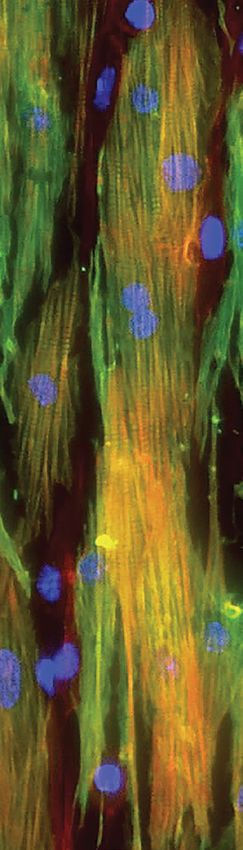
NEWS
    Caption Challenge
    Complete the captions for these microscopic images using concepts you’ve picked up in class.

           Model of a           A time-lapse sequence              These thin, fibrous         Scientific illustration        The dendrites of this
     bacterial __________        of mitosis in a flower           tubulin proteins help         shows an enzyme             __________ located in
         created using             cell. Also known as             to make up a cell’s           wrapping around            the brain’s hippocampus
         cryo-electron             __________, this             skeleton, also known as a       a broken strand of          transfer electrochemical
          tomography.            process was captured              _____________.                __________ to                 signals to the body’s
                                with a light microscope.                                             repair it.              central nervous system.

      Word Bank                 Cytoskeleton                   ◆    Cell Division            ◆     Neuron            ◆    DNA          ◆    Cell

     Scientists in the Spotlight
    Meet four scientists who use cool imaging tools and tech in their work.

                  Sudha Chakrapani, Ph.D.                                                        Christopher Barnes, Ph.D.
                  Professor, Case Western Reserve University                                     Postdoctoral Fellow, California Institute of Technology

                                                                                                                                                           Caption Challenge images courtesy of NIGMS; Scientists in the Spotlight photos courtesy of interviewees.
                  Type of Scientist: Structural biologist, researching how                       Type of Scientist: Structural biologist, researching
                  the brain communicates with the body                                           how viral proteins infect human cells
     How could your work lead to new medicines? We recently                      What’s the coolest part of your day as a scientist? No
     solved the first cryo-EM structures for a type of serotonin                 question—it’s the chance to use high-powered tech to
     receptor [serotonin is a kind of neurotransmitter that                      collect datasets! A few years ago, I worked with an X-ray
     sends messages in the brain]. We went on to show how                        free electron laser. At the time, there were only two of them
     blocking this serotonin channel could help treat nausea                     in existence. Sitting at the controls, knowing I was one of
     and vomiting in cancer patients.                                            only two scientists in the world doing this work—it’s so cool!

                  Shraddha Nayak, Ph.D.                                                          Melody Campbell, Ph.D.
                  Postdoctoral Fellow, University of Utah                                        Assistant Professor, The Fred Hutchinson Cancer
                  Type of Scientist: Molecular animator, using graphic                           Research Center
                  design software, coding, and images of protein structures                      Type of Scientist: Biophysicist, using cryo-EM,
                                                                                 physics, chemistry, and math to research how cells communicate
     Tell us about the tools you use in your work: The 3D
     animation software I use has mind-blowing capabilities!                     Why do you study proteins? Protein structures not only
     It lets me create a setting within a cell, simulate a                       tell us about shape, but also if the protein is more likely to
     process that is taking place, and show movements and                        interact with things like water or things like soap or oil. We
     changes over time. The tools I work with allow scientists                   can then make small changes to a drug so it binds more
     to see their hypotheses and communicate their findings.                     tightly in a patient and becomes more effective.

4    PATHWAYS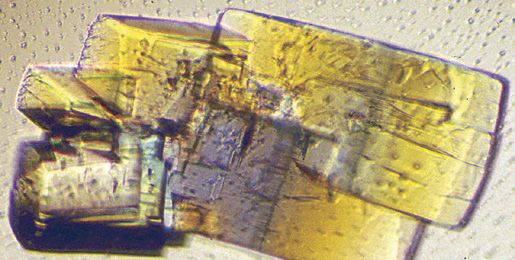
Sponsored Educational Materials
                                                                                                                                                                                                                        G R A D E S 6 –1 2
SCHOLASTIC and associated logos are trademarks and/or registered trademarks of Scholastic Inc. All rights reserved. © 2021.

                                                                                                                              MAGAZINES
                                                                                                                                                                                                    Unlocking the
                                                                                                                              & ACTIVITY
                                                                                                                                SHEETS                                                               Mysteries of
                                                                                                                                                                                                   Cells & Proteins

                                                                                                                                                                TEACHING GUIDE
Photo: SDI Productions/Getty Images.

                                                                                                                                                                About Microscope Technologies,
                                                                                                                                                                Biological Discoveries, and Research Careers
                                                                                                                                                                Visit scholastic.com/pathways for
                                                                                                                                                                additional lessons, videos, and more.
                                                                                                                                                                                                        BROUGHT TO YOU BY: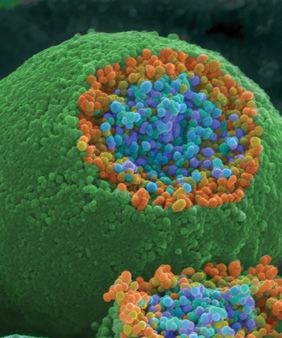
Teacher Instructions

    A Closer Look at Scientific Imaging
   Discover the stunning images created with advancing microscope
   technologies. Then have your class create a gallery of colorful
   scientific illustrations of their own.
    Objective                       PART A
                                                                                     Inside an Imaging Lab
                                    1
    Students will model cell            Hold up a pin. Ask students how
    parts and functions, plus           many cells they think could fit on its
    learn about technologies                                                     Meet STEM pros who work with
                                        head. Reveal that about 10,000 cells
    used to capture cellular            can fit on the head of a pin.            exciting imaging technology:
    and molecular structures.                                                    scholastic.com/pathways/techlab

    NGSS Standards                  2   Ask: What kinds of challenges might
                                        researchers and structural biologists
                                        encounter when studying cells,               compare with static 2D images in
    Grades 6–8                                                                       helping students better visualize
    MS-LS1-2. Model a cell’s            proteins, molecular structures, or
                                        their atoms? Prompt for ideas like:          energy production in mitochondria
    parts and its function.                                                          or the process of mitosis?
                                        size (too small to be seen without

                                                                                 6
    Grades 9–12                         the help of imaging technology),             Discuss the career profiles on
    HS-LS1-4. Model the                 appearance (can be translucent or            the bottom half of the last page.
    process of mitosis.                 require staining to visualize), and          Have students imagine they are a
                                        movement (a biological process               structural biologist or molecular
    HS-PS4-5. Communicate
                                        could be moving too fast to capture,         animator with access to high-
    how technological devices
                                        or the requirements of the imaging           powered microscopes. Ask: What
    use waves to transmit and
                                        technology could kill the specimen,          would you want to study?
    capture information.
                                        stopping the biological process).
    Time
    60 minutes                      3   Distribute and have students explore
                                        the themes in Pathways student
                                                                                 7   Distribute and have students
                                                                                     complete the Create a Scientific
                                                                                     Illustration activity sheet, referring
    Allow extra work periods            magazine.                                    to the Imaging Resource sheet if

                                    4
    to complete scientific              Have students read the main text             needed. (You may wish to assign
    illustrations and imaging           on pages 2–3. After they read,               Challenge A for middle schoolers
    research projects.                  ask them to quickly sketch one of            and Challenge B for high schoolers.)

                                                                                 8
                                        the imaging processes they read              Hang or compile completed student
    Materials
                                        about. In small groups or as a class,        diagrams for a physical or digital
      Pin (or image of a pin)           have them discuss their sketches             gallery walk. Have students take in
      Pathways student                  and collaborate to deepen their              and respond to one another’s work.
      magazine                          understanding of the processes.
      Create a Scientific
      Illustration activity sheet   5   Direct students to complete the
                                        caption activity on the last page of
                                                                                 9   Extend the learning for high school
                                                                                     students. Distribute the Research
                                                                                     Imaging Tech activity sheet. Once
     Research Imaging Tech              the magazine. Have them consider             research projects are complete,
     activity sheet                     advancements like 3D imaging                 have students present or share their
                                        and time-lapse imaging and make              work in small groups.
      Imaging Resource sheet
                                        connections to ongoing lessons. For
      (bit.ly/imagingresource)
                                        example, how might these techniques
                                                                                      NSWER KEY Caption Challenge
                                                                                      A
                                                                                      in the student magazine: cell; cell
                                                                                      division; cytoskeleton; DNA; neuron

                                Protein Alphabet
                                Researchers have found a protein in the shape of every letter of the alphabet!
                                Have high schoolers play with the protein alphabet at: bit.ly/proteinABC or, for
                                middle schoolers, project and play with the alphabet together as a class!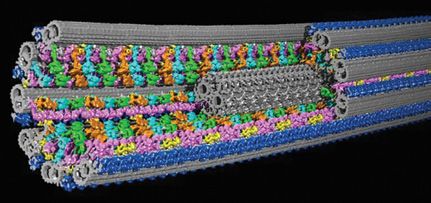
Activity

Name

Create a Scientific Illustration
Staining is a technique biologists can use to better visualize cells, their
components, and their functions under a microscope. Researchers can
“label” parts of biological specimens with different dyes to add color (in
microscopes that use light) or contrast (in microscopes that use electrons).
A few examples of staining:
   › Crystal violet can be used to tint cell walls purple.
   › Nile blue can stain a cell’s nucleus blue.
   › Green fluorescent protein (GFP) can be used to label organelles and proteins a glowing green.
In addition, when scientists combine photos to create a 3D model of a specimen, they may add color to the
illustration (known as colorizing) to help viewers differentiate the parts.

Colorizing Cells
Give the colorizing concept a try for yourself. On a separate piece of paper, complete challenge A or B.
Optional: Access the Imaging Resource at bit.ly/imagingresource to check out brightly colored examples
of staining and colorizing.

                    CHALLENGE A                                              CHALLENGE B

  Create an eye-catching visual aid that helps its        Create an eye-catching visual aid that helps
  viewers understand the function of a cell and the       its viewers better understand the process of
  ways parts of cells contribute to its function.         mitosis (cell division).
  ➜ Draw a diagram of a bacterium or a plant or           ➜ Diagram the stages of mitosis.
    animal cell.                                          ➜ “Stain” centrioles, chromosomes,
  ➜ “Stain” each component of the cell structure            centromeres, the nuclear membrane, and the
    a different color.                                      cell membrane different colors.
  ➜ Create a key to link your chosen stain color          ➜ Create a key to link your chosen stain color
    with each cell component.                               with each cell component.
  ➜ Provide a brief explanation of the function of        ➜ Provide a brief, written explanation for each
    each cell component.                                    stage of the process.

Think About It
1. What are the advantages of adding color to an image of a microscopic specimen?

2. What are the limitations of looking at single, static photographs of cells to understanding biological processes?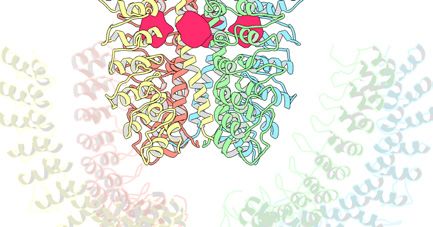
Activity

Research Imaging Tech                                                                    Drawing
                                                                                         of the first
                                                                                         commercialized
Learn more about the imaging technologies researchers use                                confocal
                                                                                         microscope:
to make basic science and structural biology breakthroughs.                              the tandem
Plus, explore some of the educational and career pathways                                scanning
                                                                                         microscope,
that have led researchers to their areas of study.                                       developed by
                                                                                         Mojmír Petráň

1    SELECT the imaging technology of your choice or one from the list below.

    ❒    Confocal Laser Scanning Microscope       ❒ X-Ray Crystallography
    ❒    Scanning Electron Microscope             ❒ Raman Spectroscopy
    ❒    Scanning Tunneling Microscope            ❒ Nuclear Magnetic Resonance (NMR)
    ❒    Cryo-Electron Microscope                   Spectroscopy
    ❒    Lattice Sheet Microscope                 ❒ Cryo-Electron Tomography
    ❒    Fluorescence Microscope                  ❒ Digital Scientific Illustration or
                                                    Animation (3D or 4D Modeling)

2       CONDUCT research to find out:

    ➜ How the technology works
    ➜ Which fields of study it’s used in
    ➜ The imaging result it produces (example: 3D model, molecular-level resolution, etc.)
    ➜ Examples of specific images it has produced
    ➜ Major milestones or discoveries associated with the technology or its advancement
    ➜ How it can be used to learn more about life or human health

                                                                                                          Confocal microscope drawing: United States Patent and Trademark Office.
    ➜ Types of careers that use this imaging technology

3     PACKAGE and PRESENT your research findings using the method of your choice:

   Create a handy          Write a blog post or    Storyboard or create       Write a journal entry
user manual or guide,     design an informative      a short video for         or letter to yourself
     with images.               webpage.              presentation to               or a friend.
                                                        your class.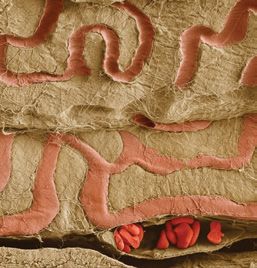
THE IMAGING ISSUE

                                    V O C A B U L A RY L I ST

                 BIOLOGY                                                          IMAGING

DNA (noun): the molecule found in cells                    crystallize (verb): to cause a material to organize into
that carries instructions for cell structure               a crystal form in which its atoms or molecules are
and processes in the body. DNA contains                    arranged in a highly ordered structure.
genes that are passed on from parents to
offspring and give living things their inherited           diffraction (noun): the slight bending of light, or other
characteristics. The letters DNA stand for                 waves (like X-rays), when passing around something in
deoxyribonucleic acid.                                     its path.

enzyme (noun):                                             electron (noun): a particle that orbits the nucleus of an
a type of protein                                          atom and carries a negative electrical charge.
found in animals
and plants that                                            fluorescence (noun): light that a substance (like a
speeds up chemical                                         protein) first absorbs and then emits (gives off).
reactions by                                               imaging (noun):
reducing the amount                                        techniques used by
of energy needed for                                       scientists that make
the reactions to proceed.                                  cellular, molecular, and
gene (noun): a small section of DNA that                   atomic structures and
contains instructions, usually for making a                processes visible.
specific protein.
                                                           laser (noun): a very
mitochondrion (noun; plural is                             narrow beam of light,
mitochondria): an organelle (part of a cell)               or a device that uses
that converts food and oxygen into energy to               the vibrations of
fuel the cell.                                             atoms or molecules to
                                                           generate light.
neuron (noun): a cell within the nervous
system that transmits information to other                 light microscope (noun): a type of microscope that
nerves, muscles, or gland cells.                           uses light rays and curved glass lenses to magnify a
                                                                specimen; also known as an optical microscope.
proteins (noun): large, complex
molecules that are essential for all life                                 specimen (noun): a sample or example
processes, playing a key role in the                                       of something that is used for scientific
                                                              HER
structure, function, and regulation           TAKE IT FURT                  study.
                                                            cabulary
of the body’s cells, tissues, and           Choose five vo
                                                             think will       structural biologist (noun): a
organs.                                     words that you
                                                              member,         scientist who studies how biological
                                            be hardest to re
                                                               agraph
RNA (noun): the molecule                     then write a par                molecules are built. Using a variety
                                                              nfiction
that delivers a copy of the                   with them (no                  of imaging techniques, structural
instructions in DNA so that cells can               or fiction).            biologists view molecules in three
produce proteins according to the                                         dimensions to see how they are
instructions. The letters RNA stand for                                assembled, how they function, and how
ribonucleic acid.                                                  they interact.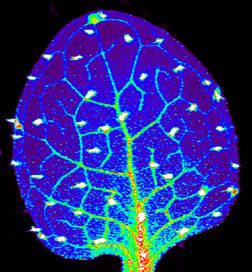
Imaging Resource

                  The Colorful World of
                   I m a g i n g Te c h n o l o g y
          Check out some of the ways color and contrast can help scientists better
          visualize tiny specimens, and how this research can help human health!

                              Staining and Colorizing Specimens
Cryo-ET image before and after colorizing
Specimen: Caulobacter bacterium
Color key: In the second image, cell membranes are
highlighted in red and blue, protein shell in green,
ribosomes in yellow, and storage granules in orange.
Why study this? By studying this bacterium, scientists
learn more about asymmetric cell division—an important
factor in our understanding of human disease and the
growth of tumors.

Light sheet fluorescence          Confocal microscope +            Scanning electron              X-ray fluorescence
microscope                        fluorescence                     microscope                     technology
Specimen: Jellyfish               Specimen: Fruit fly brain        Specimen: Leg muscle           Specimen: Leaf
Color key: Nervous system         Color key: To create this        Color key: Blood vessels       Color key: The levels of zinc
is stained green. Musculature     digital, 3D color-coded map,     are colorized pink (with red   in the leaf from lowest to
is stained red. Cell nuclei are   scientists labeled the brain’s   blood cells at the bottom).    highest are marked in blue,
stained blue.                     parts with fluorescence,         The light brown marks the      green, red, and white.
Why study this? By                then captured and combined       extracellular matrix (ECM),    Why study this? Zinc is
studying jellyfish tissues,       thousands of photos.             made up of molecules like      required for the function of
scientists learn more about       Why study this? By studying      proteins that physically       more than 300 enzymes in
the evolution of animals,         the brain of fruit flies,        support the muscle.            the human body. With a goal
including humans!                 researchers aim to learn         Why study this? Disruption     of improving human health,
                                  more about the functions         of the ECM is associated       researchers are investigating
                                  and structures of the            with many muscle disorders.    how plants distribute zinc to
                                                                                                                                    images courtesy of NIGMS.

                                  human brain.                     Scientists hope to learn       find ways of increasing the
                                                                   more about how the ECM         zinc content of crops.
                                                                   functions and how muscle
                                                                   disorders can be treated.
You can also read


