TAKING THE HEAT OUT OF OUR DIABETES HOTSPOT - Western Sydney Diabetes enhancing NSW Diabetes Prevention Framework NSW Premier's Priority National ...
←
→
Page content transcription
If your browser does not render page correctly, please read the page content below

TAKING THE HEAT
OUT OF OUR
DIABETES
HOTSPOT

Western Sydney Diabetes enhancing…
NSW Diabetes Prevention Framework
NSW Premier’s Priority
National Diabetes Strategy

2

CONTENTS

           A reason to act............................................ 3

           The burning platform................................. 4

           Diabetes management challenge............. 6

           Western Sydney hotspot............................ 8

           Commitment to change...........................10

           Framework for action...............................12

           Prevention and screening........................14

           Enhanced management ..........................20

           Specialised consultation..........................26

           Research driving innovation....................30

           It’s time for action.....................................32
3

A REASON TO ACT

INTRODUCTION
‘Taking the heat out of our diabetes hotspot’ outlines the
Western Sydney Diabetes (WSD) initiative’s response to the
growing threat diabetes poses to our health and wellbeing.
It calls for all levels of government, the private sector and
non-government partners to work together. Western Sydney
is a diabetes hotspot with disease rates higher than the New
South Wales (NSW) average. If this ‘hotspot’ is not addressed,
within a decade it will cause an unsustainable economic and
societal burden on the state’s healthcare system.

We are not alone in recognising the need for action.
Diabetes is a mounting problem for all of NSW.
In 2014, 9.4% of the state’s population had diabetes or
high blood glucose, up from 6.4% in 2002. The NSW Premier
has included obesity in his own and State-wide priorities.
The pending launch of the NSW Diabetes Prevention
Framework co-ordinates diabetes-related work across the
state, identifies enhancements to evidence-based practice
and sets a range of strategic directions for NSW Local
Health Districts (LHDs) for decreasing the risk of developing
diabetes or diabetes complications in local populations.

The Australian Government recently released
‘The Australian National Diabetes Strategy 2016-2020’
in which it was estimated that diabetes is costing Australia     The WSD initiative recognises that diabetes is everybody’s
$14 billion per year. The Strategy states that “overcoming the   business and that partnerships between community health
many barriers to improving diabetes prevention and care          services, general practice, hospitals, specialist practices
requires a multi-sectoral response led by governments and        and allied health need to be improved so that people
implemented at the community level”.                             with diabetes or at risk of diabetes have access to more
                                                                 integrated and comprehensive diabetes services.
In response to this health crisis, Western Sydney Local
Health District (WSLHD) and WentWest as the Western              WSD does not plan to go it alone in turning the tide but
Sydney Primary Health Network (WSPHN) have facilitated           to be an exemplar of best practice, linking with State and
a whole-of-district methodology through Western Sydney           Commonwealth efforts to tackle the problem.
Diabetes (WSD) Initiative.                                       The WSD initiative with strong leadership has built a
                                                                 strategic platform on which it is possible to bring to
The partnership and the project leaders of the programs          appropriate scale a constructive response to the diabetes
working together in the WSD have an excellent track              problem. This is illustrated in the range of connected and
record of success.                                               innovative solutions in the following pages.
4

THE BURNING PLATFORM

THE FACTS
Diabetes is the world’s fastest growing chronic condition     Diabetes trajectory for prevalence
and is becoming the largest burden of disease in Australia.   overtaking other diseases
•   Every six seconds a person dies from diabetes
•   Every five minutes a person is diagnosed with diabetes
•   The number of people with diabetes in Australia                      Heart
                                                                                 Disea
    is three times higher than 25 years ago                                           se
                                                                                                       etes
•   One in four Australians aged over 25
                                                                                                   Diab
    years has diabetes or pre-diabetes.                                                    Anxiety & De
                                                                                                         pression

                                                                                                    ntia
                                                                                               Deme
                                                                                                Stroke

          of the NSW population
           had diabetes or high
          blood glucose in 2014,
          up from 6.5% in 2002.

                                                              Projected change in expenditure
                                                              for type 2 diabetes in Australia

     Type 2 diabetes and the lifestyle
     risk factors of overweight and
     obesity, physical inactivity,
     unhealthy eating and smoking
     have a large impact on the
     health of both individuals and
     the community in NSW.

     Jillian Skinner
     NSW Minister for Health and Medical Research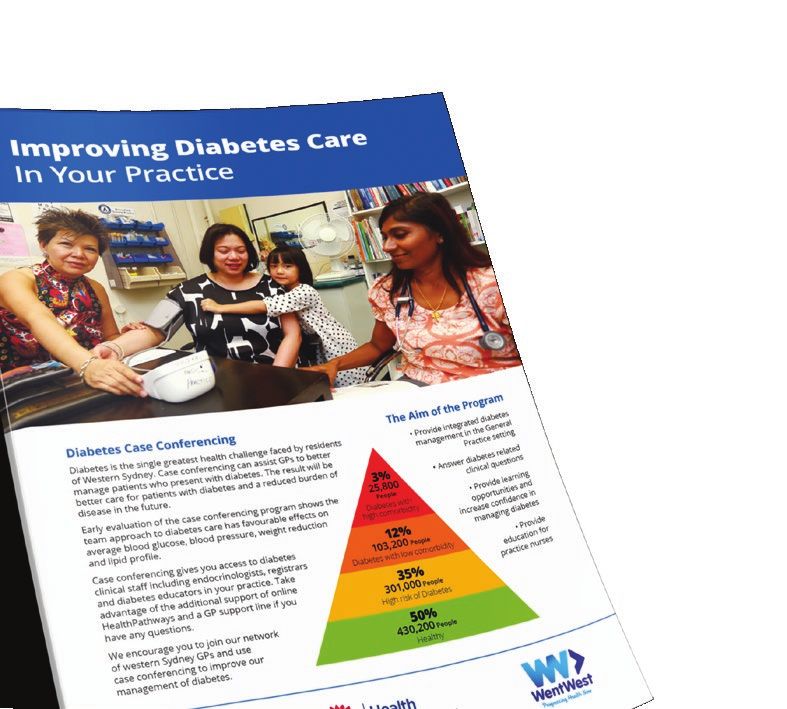
5

OVERWEIGHT PROBLEM
Almost two-thirds of Australian adults and one in four
children are overweight or obese. Excess weight is
responsible for 7200 deaths each year in Australia.
Obesity costs the Australian economy $38 billion a year,
through more than four million days lost from work,
over $1 billion in medical costs, as well as the cost of
premature death.

It has taken 20 years for Australian adults on average to gain
4kg in weight, and this is a primary driver of the diabetes
epidemic. An average weight loss of 4kg in adults will
prevent most people getting diabetes. An average weight
loss of 2kg in adults will reduce the conversion of people
with pre-diabetes to diabetes by 30%. Our challenge is to
roll back the advancement of diabetes in our community to
achieve the same weight we averaged in 1995.

Turn back
   the clock 20 years
        Lose 4 kgs
                 and STOP DIABETES.

People in Western Sydney are living in a diabetogenic
environment where the population, community, local
economy and built environment make it difficult for the
residents to engage in a healthy lifestyle. We need to
urgently change the environment in which people live, work
and play to address the social determinants of poor health
in Western Sydney.
6

DIABETES MANAGEMENT CHALLENGE

DIABETES RISK                                               POOR HbA1c CONTROL
Pre-diabetes is estimated to affect about 16.4%             Most Australians have poor diabetes control so the risk
of Australians and it is associated with an increased       of complications is increased. HbA1c levels are a measure
risk of developing diabetes, cardiovascular and other       of control. A level of 7 percent is considered good control.
vascular diseases. Preventative action taken at this time   Those individuals not reaching the

7

GESTATIONAL DIABETES
Gestational diabetes leads not only to ill health for the                                                CHILDREN OF GESTATIONAL DIABETES
mother but often leads to premature birth, excessive birth                                               MORE LIKELY TO DEVELOP DIABETES
weight, infants who struggle with hypoglycaemia after birth
and ongoing health issues for the child such as an increased
likelihood of developing type 2 diabetes later in life.

Research over recent years has found that
‘pre‑programming’ of children’s health conditions can
occur before conception and during pregnancy, and is
influencing new thinking in clinical practice for maternity
care and the importance of a healthy diet for mothers
prior to conception.

Recent years have seen a dramatic growth in gestational
  Staff Requirements              FTE
diabetes in Western Sydney, predominantly in at-risk
ethnic groups.
  Diabetes     The statistics are 0.2
              specialist          alarming with the rate
approaching 15% of all pregnancies. Half of these mothers
will develop T2D within 10 years.0.4
  Malformation                     30% of the children of
gestational diabetes are likely to develop T2 Diabetes.
  Dietitian                                             0.2

                                          Diabetes                    Overall NSW
  Stillbirth                                 1.4%                               0.6%
  Malformation                               4.3%                               0.9%

GDM Pregnancies

500
450
400
350
300
250
200
150
100
 50
  0                                                                                               Year
       2002

              2003

                     2004

                            2005

                                   2006

                                          2007

                                                 2008

                                                        2009

                                                               2010

                                                                             2012

                                                                                    2013

                                                                                           2014
                                                                      2011
8

WESTERN SYDNEY HOTSPOT

50% OF POPULATION                                                                                                                                                                                Gosford

DIABETES RISK
                                                                                Hawkesbury
                                                                                                                                                                                       Pittwater

More than half of Western Sydney’s population is
overweight and at risk of developing type 2 diabetes.                                                            Baulkham Hills            Hornsby
The red areas on the map show the odds ratio of having
diabetes is 1.5 in the areas including Western Sydney.
This is much higher that the odds ratio in the blue                                    Blacktown                                                         Ku-Ring-Gai                 Warringah
                                                                  Penrith
areas, which are as low as 0.5 in the beachside and
northern suburbs. This data was compiled by University
of Wollongong researchers Dr Thomas Astell-Burt and
                                                                                                                                                     Ryde             Willoughby           Manly
                                                                                                                              Parramatta
                                                                                                                                                                  Lane Cove
Dr Xiaoqi Feng from a 45 years and up population                                                             Holroyd
                                                                                                                                                         Hunters Hill
                                                                                                                                                                             North
                                                                                                                                                                            Sydney Mossman

health study.                                                                                 Fairfield
                                                                                                                                  Auburn
                                                                                                                                                    Canada Bay

                                                              Local Government Area                                                              Burwood Leichhardt
                                                                                                                                                                                     Woolhara
                                                              Odds Ratio                                                               Strathfield   Ashfield
One of the key goals of the WSD initiative is to turn                                                                                                              Sydney
                                                                                                                                                            Marrickville
                                                                                                                                                                                          Waverley
                                                                   0.5-0.7                                                 Bankstown
the red hot-spots in our region into blue.                                                                                                  Canterbury
                                                                   0.7-0.9                           Liverpool                                                          Botany Bay
                                                                                                                                                      Rockdale                        Randwick
                                                                   0.9-1.0                                                             Hurstville
An extensive screening program of 4000 residents                                             Campbelltown
                                                                   1.0-1.1                                                                       Kogarah
throughout Western Sydney during 2013-15 using the
                                                                   1.1-1.4
AUSDRISK assessment tool identified that up to 50% of
                                                                   1.4-1.5                                                          Sutherland
the population were at high risk of developing the disease.
This went as high as 100% in some high-risk populations.

Factors such as age, family history and place of birth
can contribute to an increased risk of developing
diabetes. However, some groups are at even greater
risk of developing diabetes or complications from their
diabetes and therefore require targeted actions.

All these groups are strongly represented amongst
Western Sydney residents:
•   Indigenous people – type 2 diabetes is more
    frequent and has an earlier onset in this population
•   People with mental health problems –
    41.6% of adults with diabetes reported having medium,
    high or very high levels of psychological distress.
•   People affected by psychotic illness–
    experience a range of risk factors that place
    them at significant risk of developing diabetes
    compared to the general population.
•   Women in their childbearing years – the percentage
    of gestational diabetes in Western Sydney tends to
    be higher than for NSW, and it also has a high birth
    rate, with four out of the five local government areas
    having higher fertility rates than the rest of NSW.

                                                                   AUBURN - HOLROYD - PARRAMATTA -
                                                                   BLACKTOWN - HILLS DISTRICT LGAs
9

DIABETES CASE FINDING                                          FOOD DESERTS AND MAPPING
USING HbA1c TESTING
Western Sydney LHD conducted a pilot study on                  Dr Thomas Astell-Burt and Dr Xiaoqi Feng, senior faculty
patients presenting to the Emergency Department (ED)           at the University of Wollongong, have been working with the
at Blacktown Hospital to assess the efficacy of HbA1c          WSD initiative to geo-map food accessibility within Western
testing to detect diabetes and pre-diabetes in an area         Sydney. This has plotted the availability of healthy food in
of high diabetes prevalence. Opportunistic blood glucose       comparison to energy-dense, nutrient-poor foods within
levels were measured in all non-pregnant individuals who       walking distance of residences.
had blood collected after presenting to the ED for any
clinical indication. HbA1c was automatically measured          The research has identified so-called ‘food deserts’ where
if the random glucose level was ≥ 5.5mmol/L.                   healthy food is not easily available and also that areas with
Diabetes was diagnosed if the HbA1c was ≥ 6.5% and             higher rates of type 2 diabetes have fewer healthy food
pre-diabetes if HbA1c was between 5.7-6.4%.                    options for the people who live there. The resulting maps
                                                               have contributed to explaining the inequality in health
There were 4580 presentations to the ED and 1267               outcomes between areas of differing socio-economic status
(27%) HbA1c measurements were obtained over the                within Sydney. For example, residents in Blacktown have a
6 week period. In this cohort:                                 three times greater risk of developing diabetes than in more
                                                               affluent coastal suburbs such as Mosman.
•   Diabetes (HbA1c of ≥ 6.5%) was present in 38.4% (n=487)
•   Diabetes was newly diagnosed in 32.2% (n=157)              This research has significant implications for the way
                                                               we plan communities. Jobs, transport and urban amenities
•   Pre-diabetes (HbA1c of 5.7-6.4%) was
                                                               are key features of urban planning; however health should
    diagnosed in 27.4% (n=347)
                                                               also be a priority. By increasing access to green space and
•   Hospital coding analysis revealed 28% (n=88) of patients   fresh food, it will be possible to reduce the rates of
    identified as having diabetes through ED HbA1c testing,    lifestyle-related diseases like type 2 diabetes.
    were not coded for a diagnosis of diabetes on discharge

Opportunistic testing for diabetes is effective as almost
a third of individuals tested had undiagnosed diabetes.
In addition, more than a quarter of individuals were at
risk of developing diabetes. Early detection provides an
opportunity to initiate preventative measures such as
NSW Government’s ‘Get Healthy’ program.
10

COMMITMENT TO CHANGE

STEERING CHANGE                                                Senior
                                                               health
                                          Aboriginal          managers       Diabetes
                                            health                          specialists

                              Property                                                    University
                             developers                                                   academics

                 NSW Health                                                                            GPs

               Premiers
              Council for                                                                               Diabetes
             Active Living                                                                             educators

                   Diabetes                                                                         WSROC
                     NSW                                                                            councils

                              Allied                                                      Integrated
                              health                                                         care

                                                                             Dept. of
                                          Population
                                                                           Premier and
                                            health
                                                          IT services        Cabinet

The Western Sydney Diabetes (WSD) Steering                         The CEO of Diabetes NSW has been a particularly active
Committee was established in 2012, meeting quarterly               partner in progressing the cause of the Steering Committee
since, demonstrates the high level of commitment of both           and supporting numerous projects resulting from the
Western Sydney LHD and WentWest (Western Sydney                    WSD initiative.
PHN) towards addressing this issue. It provides leadership,
strategic direction and the structure to support the
implementation of the initiative.                                  THE EXECUTIVE MANAGEMENT TEAM
                                                                   An Executive Management Team (EMT) has been
Co-chaired by the CE of LHD and CEO of WentWest, and
                                                                   established, chaired by the Co-chairs and including
supported by the Chair of the LHD Board, the Steering
                                                                   the Director of Integrated Health, WSLHD, Heads of
Committee facilitates the interface with numerous other
                                                                   Endocrinology from Westmead and Blacktown Hospitals,
partners including NSW Department of Premier and Cabinet
                                                                   Business Development and Program Director Wentwest Ltd,
(DPC), Premiers Council for Active Living, NSW Health,
                                                                   Program Lead WSD and the WSD Coordinator.
WSROC, Councils and Universities.
11
• Western Sydney Gateway a patient self-
management app and website (including
partners WSLHD, Wentwest Ltd, NSW Diabetes,
Telstra, Sanofi and other industry partners)
Recognising the impact of the diabetes
epidemic now and in the future in MEDIA
The Media Team WSLHD are highly supportive of WSD
Western Sydney we need a larger, and create opportunities for engagement with National
comprehensive approach to stop it Broadcasters, State and Local Papers and radio to raise
the profile of key events and findings.Edge Marketing has
overwhelming our health system. been engaged to assist with communication. A WSD web
portal is being developed on Diabetes NSW website to
facilitate the communication.
Danny O’Connor
Chief Executive FORUMS
Western Sydney Local Health District We have quarterly forums on key topics of interest to WSD
and its active members. These have included topics such as:
The EMT meets quarterly before the Steering Committee to • Western Sydney a diabetes hot spot: understanding
agree and manage the resource inputs of both the LHD and the geo-epidemiology, economics and environment
Wentwest and review other important management • Diabetes is Everyone’s Business
decisions.
• Diabetes Prevention and the NSW
Healthy Worker Initiative
THE CORE TEAM
The Program Lead manages a core team who work on a • Metabolic and Psychosocial Care for People
full-time basis to support the work of WSD including the with Mental Illness and Diabetes
clinical interface between the hospital and community. • Planning for our Healthier Future
This includes the Coordinator WSD, Prevention Program
Manager, Community Diabetes Nurse Consultant, • Implementing the New Standards
Community Advanced Trainee Endocrine Registrar for High Risk Foot Services
Blacktown and Mt Druitt Hospital (BMDH), RMO Diabetes • Developing A Model of Care for Diabetes
BMDH and Public Health Scientist (Wollongong University). Eye Care in Western Sydney
This team is part of the Integrated Health Portfolio in the • Building the Capacity of General Practice
LHD and report to the Director of Integrated Health and for Diabetes Management and Highlighting
Chair of Medicine BMDH.The WSD core team meet monthly the Role of the Practice Nurse
with a similar core team of WentWest lead by Business • Diabetes in Aged Care
Development and Program Director and Primary Health
Care Manager.
PARTNERSHIP
The initiative is an open and active partnership for local,
WORKING GROUP state and national interested organisations to join in on
A number of working groups are active on projects under the common cause to slow the progression of diabetes
the oversight of the WSD Steering Committee including: in Western Sydney and turn our red map into blue.
• A Prevention Alliance (includes leadership from NSW The invitation is open to people who share this vision
DPC with support from Population Health in WSLHD) and align with the initiative.
• A Food Working Group
• A Research and Evaluation Group (with major
collaborative input from Department of
Endocrinology BMDH, University of Western
Sydney and University of Wollongong)12
FRAMEWORK FOR ACTION
1 PREVENTION
ADDRESSING THE SOCIAL DETERMINANTS 2 SCREENING
AND LIFESTYLE COACHING
FOUR DOMAINS FOR CHANGE
pre-diabetes, uncomplicated diabetes to a condition of
The distinguishing aspect of the Western Sydney Diabetes
diabetes with devastating co-morbidities. Given the right
program is the targeting of four core domains to achieve
strategy, commitment and resources the diabetes epidemic
optimal results:
can be turned around.
1. Prevention
The healthy benchmarks for Western Sydney are aimed
2. Screening at turning our diabetes red spot on the map into blue.
3. Enhanced management A patient-centred approach is designed to create an
4. Specialised consultation efficient and higher quality of experience for patients.
This approach is ultimately aimed at reducing the
Recognising that diabetes is a critical health priority for burden and costs of diabetes in the district.
Western Sydney, the goals of the WSD initiative are to
increase the proportion of the healthy population, slow This district approach recognises that diabetes care
the progression towards being at risk of diabetes, and is multi-disciplinary and occurs in a variety of settings
reduce the size of the at-risk population. In patients with and the prevention is multi-sectoral, so a partnership
diabetes, the aim is to prevent and to slow their health approach needs to be mobilised to support the initiative.
deterioration through a continuum of obesity,
TURNING RED TO BLUE – FRAMEWORK FOR ACTION13
3 ENHANCED MANAGEMENT
BY GPs AND ALLIED HEALTH 4 SPECIALISED CONSULTATION
AND ENHANCED HOSPITAL CARE
HEALTHY BENCHMARKS FOR WESTERN SYDNEY14
PREVENTION AND SCREENING
ADDRESSING THE SOCIAL DETERMINANTS
UNDERSTANDING CO-ORDINATING THE PARTNERS
OUR ENVIRONMENT
As part of our ‘all of community approach’, an Alliance
People in Western Sydney are living in a diabetogenic has been set up between government, health and a number
environment where the population, community, local of sectors to address the social determinants of diabetes
economy and built environment make it difficult for the in Western Sydney. Representatives from urban planning,
residents to engage in a healthy lifestyle. There is an urgent property development, universities, population health, local
need to change the environments in which people live, work government, Premier’s Council for Active Living, WSROC,
and play to address the social determinants of health in Diabetes NSW, SALSA and education have combined efforts
Western Sydney. to map, identify gaps and implement initiatives to improve
the local environment.
The most recent data indicates that only 7.1% of Western
Sydney residents (NSW 8.4%) are eating the recommended These organisations have been involved in a number of
daily intake of vegetables. Compared with other Local Health activities including geo-mapping, screening to identify
Districts, Western Sydney rates of physical activity are the high‑risk individuals, the promotion of Get Healthy and
lowest in NSW. Much of this is related to the diabetogenic other lifestyle programs, signing councils to the Walk 21
environment in which the residents live. Charter and increasing the scope of education programs.
Change is required to enable the residents to purchase A Food Working Group has resulted from the Alliance
affordable fresh food, to have access to safe areas for to specifically address the availability and affordability
physical exercise and to reduce the dependency on car of fresh food as well as education of residents about
travel in favour of active transport. Such change cannot its preparation. This group has engaged participants
be elicited through the health sector alone but requires from the supply, education and community engagement
a combined effort from government, community and the areas including organisations such as Ozharvest, Jamie’s
private sector. Kitchen, SALSA, Stephanie Alexander Kitchen Garden,
YMCA, Go4Fun, Woolworths, Get Healthy, WSROC and
A multi-sectoral approach is needed to engage decision local councils.
makers and a united effort required to commit resources
to facilitate, educate and motivate the residents to adopt Plans are underway for the launch of new initiatives in
healthier diets and to incorporate physical activity into their 2016 involving collaboration between member partners.
daily lives. To generate this community-wide involvement is
a major goal of the WSD initiative.
The key drivers of obesity, diabetes and chronic disease
epidemic are reduced physical activity, unhealthy food
consumption and lack of a socially inclusive environment. Our primary function is to care for people in
These are the key elements to be addressed within the need and to find practical and feasible ways
prevention program. to assist our citizens to experience the best
possible health. This requires us to take hold
of the hands of other social agencies such as
education, community services, transport,
Social and planning to advocate for better and safer
inclusion environments, more walkways and parks in
our suburbs, more community interaction,
Physical fewer liquor outlets and easier access to fresh
activity
food. No other way exists to deal definitively
with the massive problem of diabetes.
Food
Professor Leeder
Chair of Western Sydney Local Health District Board15
ALLIANCE UNDER THE MEDIA CAMPAIGN
PREMIER’S DEPARTMENT
Media interest regarding diabetes in Western Sydney
has already been demonstrated through national
Following this positive start, an elevation of the Alliance television, radio and press coverage. Interest in both the
has been planned early in 2016 with support from the unhealthy Western Sydney environment and food deserts
Department of Premier and Cabinet. This partnership have gained particular attention. This coverage has been
will enable the involvement of senior management from generated from media interest, however a concerted
a variety of non-health-related government departments local media campaign will be required to supplement the
including Planning and Environment, Transport (RMS and marketing provided by the proposed State and National
Transport Systems), Education, Parklands, TAFE, Sport Diabetes Prevention Campaign.
and Recreation and Agriculture.
Additional resources are needed to ensure the campaign
An event to mark both the establishment of the has sufficient reach and coverage, and to produce
Diabetes Prevention Alliance and to engage the multiple information targeted at the various at-risk populations
partners within Western Sydney is scheduled, and including lower SES, Indigenous and CALD groups that
will be a collaboration between the DPC and WSLHD. make up a large proportion of Western Sydney residents.
Participants will be invited to form Leader Groups with
the capability of acting on specific issues relevant to Due to the severity of the disease in Western Sydney,
Western Sydney. a long- term and sustained local campaign is essential
to successfully educate and embed long-term behaviour
changes in this high-risk population. This campaign will
require many differing elements with multiple focal points
to fit the differing requirements of the many diverse
groups living in the area.
Universities
ets
WSROC
ark
WSLHD
WSPH
Au
yM
th
on
YM
bu
al
ti
Wa
rn
He
da
Te dne
Can
ACI
N
CA
cer Co un
lk2
ra
un o
Sy
Cou tF
lst
cil ch
1
nci
l NS e ar d Coa
G e o rg W H Foo
The rs
e Inst
itute l P r a c titione
G e n e ra
University of Wollongong A strong alliance NSW Health Ministry
emier and Cabinet
of partners Premiers Cou
Department of Pr Step
ncil for Active
Living
est
r y Har v b He
hani
e Ale
u
a w ke s b s tH
u
W a l t hy xand
er K
H e oo Lun i t ch e
rv
ap il
lw
e-H unc
Ha c hbo n Ga
py
or
Lo oy d C o
x rd e n
Co
ers
th
Hol
ca
n
Jamie’s Min
OzHarvest
s
NEST
n
Go4Fu
lG
elop
ow
r
ov
-M
kt
er
ac
Dev
ok
nm
Bl
Co
unc
en
t
istr y
il16
PREVENTION AND SCREENING
ADDRESSING THE SOCIAL DETERMINANTS
IMPLEMENTING HEALTHY
EATING AND ACTIVE LIVING (HEAL STRATEGY)
The NSW Ministry of Health’s Healthy Eating and Active Munch & Move is NSW Health initiative that supports the
Living (HEAL) Strategy 2013-18 is a strategic, coordinated healthy development of children from birth to five years
investment across agencies and sectors of the NSW by promoting physical activity, healthy eating and reduced
government to change environments and support small screen time.
individuals to achieve and maintain a healthy weight
throughout life to prevent the development of Munch & Move offers training and resources
type 2 diabetes and cardiovascular disease. to educators working in NSW early childhood education
and care services. The training aims to assist educators
to implement a fun, play-based approach to supporting
healthy eating and physical activity habits
CURRENT PROGRAMS in young children.
The WSHLD has implemented a number of programs The Go4Fun program, a healthy lifestyle program for
funded under this initiative for both children and adults. families with children who are overweight. Go4Fun is a
ten-week healthy lifestyle program for children aged 7 to
The Healthy Children’s Initiative is a range of evidence-based 13 years, run by qualified health professionals. Sessions are
programs, which aim to increase levels of physical activity two hours long and held after school, once a week running
and promote healthy eating habits. The WSHLD successfully parallel with school terms.
implemented three of these programs.
The program aims to improve the health of the child
Live Life Well @ School is a joint initiative between the through the development of healthy lifestyle behaviours, as
NSW Department of Education and NSW Ministry of Health well as educating and positively affecting children’s attitude
to get more students, more active, more often and to focus to food and exercise. The program includes nutritional
on healthy eating habits. All government, Catholic and information, support and advice, personal improvement and
independent primary schools are eligible to participate. fun games.
Live Life Well @ School assists schools to develop
whole school strategies that support physical activity and Other HEAL services to have been implemented
healthy eating. This is done by improving the teaching of in Western Sydney include:
nutrition and physical education, fostering community
partnerships and providing opportunities for more students Healthy Workers Initiative: A strong start to this
to be more active, more often. campaign has been achieved in Western Sydney.
This will be further built upon by supporting the
Local Health Districts provide ongoing support to Live Life implementation of the Get Healthy at Work Program
Well @ School trained schools via site visits, phone calls and through all government agencies.
email follow-ups. Local Health Districts provide assistance
through planning, supporting, providing information and Get Healthy Information and Coaching Service:
access to teaching resources. A free six-month telephone coaching service conducted
by qualified health coaches to enable participants to reach
their health goals. Major expansion of this program is
possible through promotion in workplaces, community
groups and the CALD community. Priority will be given to
increasing the number of referrals from health professionals
to this service.
Walking promotion: Walk 21 Charter partnership with
Western Sydney Councils.17
CREATING ENVIRONMENTS SCREENING
TO SUPPORT HEAL
The results of the HbA1c screening within hospitals
This strategy contains many recommendations for validates its adoption as ongoing practice and plans
improving food environments to encourage healthy eating exist to continue screening within the hospital setting
and promoting a healthy built environment to support for opportunistic identification of high-risk patients.
physical activity. New initiatives are proposed for WSLHD
Within the community, ongoing support for the
ADDRESSING PREVENTION IN HIGH-RISK POPULATIONS identification of individuals at high risk of developing
diabetes is provided by training courses for practice nurses,
Raise the awareness of basic risk screening and increasing
collaboration with Diabetes NSW and through the Healthy
referrals to the Get Healthy Service, and increasing Bilingual
Workers Initiative.
Educator Diabetes Prevention Programs.
This work builds on the experience gained through the
completion of a screening program conducted from an
IMPROVING FOOD ENVIRONMENTS ANPHA grant where 4000 residents were screened for
Involvement in the Diabetes Prevention Alliance and Food their risk of developing diabetes in over 70 local venues.
Working Group. Knowledge gained regarding results from specific venues,
individual CALD populations, engagement in LMP programs
Working with the LHD, schools, workplaces and community and retention within the programs is providing direction for
groups to promote healthy eating and subsequent screening efforts.
water consumption.
Those found at high risk are encouraged to follow up
with their GP and to participate in the Get Healthy
FOSTERING A HEALTHY BUILT ENVIRONMENT telephone coaching. GP training will be ongoing to support
the testing of individuals and the provision of a series of
AND OPPORTUNITIES FOR PHYSICAL ACTIVITY options for a variety of local, online and telephone lifestyle
Support the efforts of the five local governments in modification programs.
WSLHD to promote walking and physical activity in their
locality through the Walk 21 Charter. Particular emphasis will be placed on high-risk populations
through basic risk screening and increasing referrals to
Work through existing public health/local government the Get Healthy Service, and increasing Bilingual Educator
partnerships to implement additional specific strategies Diabetes Prevention Programs.
in Parramatta and Blacktown to address urban density,
redevelopment and active transport connections.
MAJOR ENHANCEMENT OF EXISTING Schools Social Media
STATEWIDE PROGRAMS IN WSLHD
Expand the Get Healthy Service – Room for
a major expansion of this program is possible.
Workplace Pharmacy
Support implementation of the Get Healthy at Work
Program across all agencies.
Community Groups General Practice
Cultural and
Hospitals
Religious Organisations18
PREVENTION AND SCREENING
ADDRESSING THE SOCIAL DETERMINANTS
STUDENTS AS LIFESTYLE
ACTIVISTS (SALSA)
SALSA is a unique primary‑prevention peer-educational The SALSA program meets this gap in service provision, and
program for high school students. The program motivates we are seeking continued funding support to maintain the
and guides young people to make better dietary choices program in our current schools and extend the program to
and to be more physically active. Key to the SALSA work towards a potential state-wide scale-up opportunity.
program’s success is the strong partnership between Health
and Education sectors which has supported the program The positive reception of the SALSA program in high
since its development a decade ago. schools is evident through its recognition in 2014/15.
This includes the Western Sydney Local Health District
A key component of the SALSA Program is when Quality Awards for the categories of: Building Partnerships,
students create a school action plan for a more supportive Community Choice, Innovation and Excellence; from the
environment within their school. The program targets Australian Medical Association for Excellence in Health Care
the most disadvantaged communities, where overweight Award; and the United Nations Inter-Agency Technical Task
and obesity are most prevalent. It is currently running in Team on Young People in the Middle East and the North
19 Western Sydney high schools and is easily scalable. Africa (MENA) region as a “good practice program for youth”.
Australian adolescents remain a relatively under-served
group in the provision of nutrition/physical activity
programs targeting obesity and chronic disease prevention.
I learnt that if you
put your mind to
it, you can achieve
anything.
Year 10 peer leader,
201519
I learned the importance of being My involvement is SALSA has been
healthy and passing on knowledge. extremely rewarding.
...I got involved with SALSA to enable
these students to take control of their
Year 10 peer leader, 2015
health early on in life.
University student educator, 201520
ENHANCED MANAGEMENT
BY GPs AND ALLIED HEALTH
MANAGEMENT
Type 2 Diabetes is best managed by general practice and The development of a health-care system that delivers
allied health in the community, leaving the specialised better care to patients in the community supported by
hospitalised services to manage the more complex cases improved linkage with hospital-based care when needed
of type 2, type 1 and gestational diabetes. However, when has been a major focus. This is supported by building the
the patients need specialist care or hospitalisation, the eHealth systems and the capacity of healthcare workers
journey should be better connected. In Western Sydney, to better manage diabetes. This is a coming together of
we have developed an innovative approach involving a more routine healthcare with the Western Sydney Integrated
integrated healthcare system that includes the components Care Demonstrator project and the WSD initiative to build
described below. an enhanced model of care. This model of care is consistent
with, and an exemplar for, the Agency for Clinical Innovation
(ACI) new diabetes model of care.
Seven reinforcing components of Enhanced Management Program21
WESTERN SYDNEY
DIABETES GATEWAY
e to
Digital technology is transforming the healthcare landscape Welcom y
Gatewa
by empowering patients to track, manage and improve Health
their health, and the Western Sydney Diabetes Gateway health
e your
app is at the forefront of this change. As patients can at manag .
Everyth
in g to e menu
t click th
best only see their GPs for a few hours a year, the Gateway n e p la ce - jus
in o
app complements clinical care by providing education and Menu
support for patients on a daily basis to encourage self-
e
management of their condition.This innovative consumer Manag
portal is unique in that it links patients with the core health Vie
care system and incorporates their data into their care THIS W
plans, thus improving both self and clinical management. 0.2
This is coupled with ongoing two-way communication
between the patient and their GPs, allowing patients to
share data updates and goals and receive results and De
feedback – all from their smartphone or tablet.
PATIENT BENEFITS
This app is expected to greatly benefit those in the most
need especially populations that are poorly educated,
have poor health literacy, and lower socio-economic
backgrounds. Feedback and advice on their clinical
data, including alerts to seek medical assistance, as well
as reminders to update their data. This will increase
compliance and improve medication use.
GPs
An added incentive is patients will be aware that their GPs
are monitoring their results. Patients can use the app to
receive reminders for regular checkups. The app allows Hospital
Optical
the patient to receive: Services
• Reminders to fulfil prescriptions at a selected time
and nominated pharmacy through eRx Express.
• Feedback on their progress towards predetermined
goals, as well as management and motivational support Patient
on a regular basis will improve self-monitoring. Allied
Health Podiatry
• As an example, a drop off in exercise may prompt
a check on whether the patient is unwell.
• Relevant educational material specific to their condition
and results will improve their health literacy.
• Enhanced control through coordination of healthcare
Health
Pharma
provider services – the ability to receive reminders Insurers
on health services: from foot and eye checks, to
care plans and medication management.
Positioning the Diabetes Patient at the heart of health networks22
ENHANCED MANAGEMENT
BY GP AND ALLIED HEALTH
CASE CONFERENCING
To build the clinical skills, confidence and capacity of GPs
and practice nurses to better manage diabetes in primary The mere fact of discussing such
care, the Blacktown Hospital Outpatient Diabetes Specialist complex cases with Glen (endocrinologist)
and Credentialled Diabetes Educator visit general practices
to deliver Joint Specialist Case Conferences (JSCC).
proved to be invaluable. We were able
to exchange ideas, Mx strategies and
More than 600 patients participated in the case conferences
it was very welcoming, most of all the
involving more than 100 GPs from 35 different general VIP (the patient) being included in the
practices. Early evaluation of this program found that three
management was the crowning glory!
to six months post-session, the patients showed a clinically
significant reduction in HbA1c (0.87%), along with beneficial
effects on systolic blood pressure, weight and lipid profile.
Dr S Seelan
GPs reported the program improved the relationship Bridgeview Medical Practice GP
and communication between the GPs and specialist.
While the majority of GPs reported more confidence in
managing diabetes, this program is expected to decrease
referrals to specialist services.
98% of clinicians
This work is further enhanced by the WSPHN practice
support team ongoing activity to to build practice capability
and capacity including aligned to the Patient Centered
Medical Home principles.
surveyed
Case Conferencing is expanding to the majority of recommend Diabetes
Case conferencing to
general practices in Western Sydney.
a colleague23
SAVE A LEG
Every 30 seconds, a lower limb is lost to diabetes
somewhere in the world! Diabetes is responsible for
60% of all amputations in Australia, and it has one of
the worst diabetes-related lower limb amputation rates
in the developed world, with nearly 20 per 100,000 people
with diabetes losing a limb compared to an average of
12 per 100,000 elsewhere. More recent data suggests
that diabetes-related amputations have also increased
in Australia by over 30% for the period between 1998
and 2011.
Diabetes-related foot complication results in a longer
average length of hospital stay when compared to all
other diabetes - related complications.
Amputations and foot ulcers are consistently the
second and third most expensive acute diabetes
complications respectively to treat in terms of both
TOP 3 SOLUTIONS FOR
hospital and out-of-hospital costs.
Furthermore, mortality data associated with diabetes IMPLEMENTATION
complications suggests foot complications are the second
leading cause of diabetes- related death second only to
cardiovascular disease.
WSLHD has fragmented diabetes foot services and
1 DEVELOPMENT AND IMPLEMENTATION OF
TWO STAGE DIABETIC FOOT SCREENING TOOL
inconsistent foot screening and risk stratification.
Western Sydney Diabetes Initiative, through this
redesign project, is aiming to:
2 PRACTICE NURSE/GP LIAISON NURSE/CHRONIC
DISEASE NURSE/INDIGENOUS HEALTH WORKERS
TO PROVIDE DIABETES FOOT SCREENING
• Increase screening rates of patients with
diabetes and reduce the variation of
screening practices in Western Sydney 3 ELECTRONIC REFERRAL TEMPLATES AND PATHWAYS
• Increase patient awareness of diabetic foot
complications and to empower the patient to
seek active treatment in a timely manner
• Increase timeliness and appropriateness of complexity
of referral of patients into Hospital Podiatry Services
in accordance with foot screening (risk stratification) OBJECTIVES
A 60-second diabetic foot screening tool was developed and
educated patients, nurses and clinicians on the importance
of using the tool and conducting regular foot checks at least
annually. Electronic referral templates and clinical pathways
1 INCREASE SCREENING RATES OF PATIENTS WITH
DIABETES FROM 21% TO 50% AND REDUCE THE
VARIATION OF SCREENING PRACTICES IN PILOT
were also developed, to facilitate the improvement of timely GENERAL PRACTICES IN WESTERN SYDNEY BY
access to hospital foot services. DECEMBER 2015
2 INCREASE PATIENTS AWARENESS OF
DIABETIC FOOT COMPLICATIONS FROM 76%
TO 95%, TO EMPOWER THE PATIENT TO SEEK ACTIVE
TREATMENT IN A TIMELY MANNER BY JUNE 2016.24
ENHANCED MANAGEMENT
BY GP AND ALLIED HEALTH
COMMUNITY EYE CARE
Diabetic eye disease is one of the most common ACI C Eye C project team for optometrists to report
complications of diabetes. Diabetic retinopathy is one back to the GP.
of the major causes of blindness and vision impairment
in Australia. More than a third of people with diabetes The use of electronic referral system using Linked EHR
will develop diabetic eye disease in their lifetime. and incorporating the standardised referral system from
Almost everyone with type 1 and more than 60% of those both general practice and optometrists will be available.
with type 2 diabetes will develop some form of diabetic This will facilitate easy tracking of reports, which will help
eye disease within 20 years of diagnosis. GPs to accurately update the diabetes annual cycle of
care of their patient thus improving health outcomes,
Currently, up to 50% of Australians with diabetes do and potentially benefitting the general practice by
not undergo eye examinations at the recommended increasing Service Incentive Payments.
frequency of every two years.
Updating the referral system process in HealthPathways
The Western Sydney Diabetes Eye Screening Project is would provide an easy access to the referral process,
developing a standardised referral system with adequate and updating the NHMRC guidelines in HealthPathways
medical information for GPs to provide to optometrists. will increase awareness of the diabetes eye screening
and management as per the guidelines.
Following screening, a standardised comprehensive
diabetes eye screening report has been developed
in consultation with the Westmead Eye Service and
Western Sydney Diabetes Community Eye Care Project
Primary care Secondary care
General Practice Blacktown Eye Clinic Westmead Eye Clinic
Diabetes annual cycle of care Injection
Active treatment
Preferred Optometrist
Secondary assessment and triage
Annual primary assessment Laser25
HEALTHPATHWAYS LinkedEHR
HealthPathways is a web-based information portal LinkedEHR, developed by WSPHN, is an electronically
supporting primary care clinicians to plan patient care shared care plan that connects patients’ clinical records with
through primary, community and secondary health care members of their multi-disciplinary team (MDT). The care
systems within Western Sydney. It is like a ‘care map’, so plan is created by a GP for patients with a chronic disease
that all members of a health care team – whether they work and is based on the diagnoses held in the GP’s Clinical
in a hospital or the community – can be on the same page Management System (CMS).
when it comes to looking after a particular person.
LinkedEHR records goals, targets, referrals and activities
HealthPathways is designed to be used at the point of care, for each and all diagnoses so patients will receive the right
primarily for General Practitioners but is also available to level of care required to manage their chronic condition(s).
Hospital Specialists, Nurses, Allied Health and other Health The referred activities are updated by the recipient in real
Professionals within Western Sydney. time and GPs see all updates.
LinkedEHR, HealthPathways and the PCEHR/My Health
Record are integrated to provide many clinical management
BUILDING PRACTICE and referral resources to support the goals and activities
for each patient’s care plan.
NURSE CAPACITY
Integration with Western Sydney LHD is currently taking
place to give amongst many other features, direct
Practice Nurses can play a pivotal role in prevention of, access to a patient’s care plan via Cerner – the hospitals’
and management of diabetes in general practice leading Electronic Medical Record (EMR); to send from LinkedEHR
to improved patient outcomes, improved team work and comprehensive NEHTA standard eReferrals to WSLHD
revenue for the practice. Education was given to them in hospital clinics and dashboards for Care Facilitators.
the form of short courses to help them better understand
their role in identifying diabetes, when to refer patients to
specialist services, and providing basic self-management
diabetes education. It also aimed to give the nurses
confidence to educate their patients about diabetes
progression and the importance of timely medication.26
SPECIALISED CONSULTATION
AND ENHANCED HOSPITAL CARE
COMPONENTS
As the more integrated enhanced model of care for
diabetes evolves in our district it is providing an opportunity
to also change the in-hospital and out-patient diabetes
services and connect them better with the community care.
Some of these opportunities are described below.
ENHANCED MODEL
OF CARE IN HOSPITALS
A pilot study was conducted in 2014 under the guidance
of the Western Sydney Diabetes initiative. The results
confirmed the high rate of diabetes and is now the basis
for recommending HbA1c testing as a routine approach.
It will be part of an enhanced diabetes model of care
which will enable patients with diabetes to be identified
when admitted through ED for more appropriate
hospital management.
The blending of this program with the current in-hospital
diabetes service and the Western Sydney Integrated Care
demonstrator project described in the next section allows
better hospital management of patients with diabetes and
with the more comprehensive community-based part of
the service. OUT-PATIENT CLINICS
Since 40% of patients admitted from ED have diabetes, it is
important that the capacity of all clinical services to better The role of the Diabetes outpatient clinics at BMDH and
manage diabetes be enhanced. This is currently being Westmead Hospital are changing. Many of the patients with
piloted with the Mental Health Service (especially patients type 2 diabetes who have been reviewed every six months
requiring Clozapine and more long-term follow-up) and or annually have been discharged back to routine care by
geriatric and rehabilitation services. Endocrinologists and general practice. This is made possible by all the capacity
Diabetes Educators are seeing patients in joint consultation building especially around HealthPathways and Case
with care teams from these services to build their capacity Conferencing for local GPs.
to manage patients with diabetes – similar to the GP case
conferencing approach. The more specialised management of more complex cases
has remained especially for type 1 diabetes, gestational
This is working well and will soon be extended to other diabetes and patients with advanced renal, foot, vascular
services. Patients and general practices will be notified of the and cardiac disease. A special effort has been made to
result of HbA1c testing allowing for earlier lifestyle coaching build the capacity of psychiatrist and mental health hospital
and better management of diabetes in the community. based clinicians to better manage diabetes in the Mental
A collaboration with NSW Health ‘Get Healthy’ program is Health clinics.
being developed to encourage patients with pre-diabetes and
recently diagnosed diabetes to enrol in this program. The Diabetes outpatient clinics have been adapted to
become the Rapid Access and Stabilisation clinics for the
Integrated Care demonstrator project.27
BARIATRIC SURGERY
The default now being that most patients in the type When primary prevention fails, surgery has a modest but
2 complex management clinics would be enrolled in critical role in managing type 2 diabetes with and without
Integrated Care. associated obesity. About 75% of patients attending
Westmead Hospital Obesity Clinic meet current criteria for
Patients now identified with poor diabetes control or bariatric surgery. One third of patients seen need bariatric
just diagnosed with diabetes, are being followed-up on surgery because it is the only treatment that will allow them
discharge in the clinic for a short time prior to discharge to to lose enough weight to improve their comorbidities.
GPs for ongoing care.
Metabolic surgery is readily available for the privately
The diabetes clinics have expanded their multidisciplinary insured, but the majority of patients who require it are of
team to include more diabetes nurse educators, podiatrists, lower socioeconomic background. We know that 65% of
dieticians and in the future, psychologists and exercise patients who attend the Clinic cannot afford surgery if they
physiologists. A team management approach to OPD must pay for it. Until recently the bariatric surgery standard
management exists with receptionists, OPD nurses and the was lap banding which required hospital admission for
clinical team meeting regularly to make the experience work implantation of a $4,000 device and lifelong follow up.
best for the patient, achieve the best clinical outcomes and
work efficiently and cost-effectively. The current standard operations for severe obesity with
co-morbidities are now laparoscopic sleeve gastrectomy
A general practice support line promoted through case and gastric bypass, which require a skilled surgical team
conferencing and the Integrated Care program is active performing a surgical procedure, but no expensive implant.
and being used several times a week to avoid unnecessary
admissions and continue to build general practices skills in Surgery is highly effective in producing durable glycaemic
diabetes management. control and disease remission with reductions of 31% to
88% in diabetes related mortality. With appropriate patient
selection by an MDT process the cost of surgery to the
LHD can expect to be recovered in 1-2 years from reduced
DIABETES EDUCATION SERVICES medical costs.
The Diabetes Education team is multi-skilled and able to
provide comprehensive diabetes education on all aspects of
diabetes management by Credentialled Diabetes Educators
or educators working towards credentialing, and dietitians
at both Blacktown and Mt Druitt hospitals.
The education is tailored to the patients’ needs, taking into
account the type of diabetes and co-morbidities, health
literacy, need for healthcare interpreters and stage of
disease process.
The diabetes educators provide education for inpatients
and outpatients referred by their GP or endocrinologist.
Outpatient education can be delivered in a group setting
for people with type 2 diabetes or women with gestational
diabetes if the patient is eligible, or on an individual basis.28
SPECIALISED CONSULTATION
AND ENHANCED HOSPITAL CARE
ENROL PATIENTS IN INTEGRATED CARE
The Western Sydney Integrated Care Program (WSICP) Sydney Integrated Care Demonstrator is a partnership
framework aims to bring together a range of existing initiative with the Western Sydney PHN (WentWest).
initiatives, programs and services to provide seamless This initiative will provide a new model of care for the
care for people to address their healthcare needs across management of a chronic disease.
the primary care, community and specialist settings. The
goals of the WSICP are to improve the care experience To be eligible for this service, patients must have at least
for patients, carers, families and providers, improve the one chronic disease of diabetes, COPD, or congestive
health of the population and achieve better use of health cardiac failure/CAD, and who are risk stratified as being
resources by providing the right care in the right setting. at significant risk of requiring hospital care.
The following services and initiatives are included -
Patients within this cohort will be enrolled by either primary
• Connecting Care
care, community or hospital specialist teams, depending on
• HealthOne the point of first contact and registered in a patient registry.
A range of coordinated interventions and clinical
• The Partnership Advisory Council with WSPHN
services will be implemented to improve the health care
• HealthPathways management of these patients. Services will be provided
by a range of health professionals, including Primary Care
• Western Sydney Diabetes Initiative
teams, Care Facilitators and Multidisciplinary Teams (MDT),
• Heart to Heart Program, and in an integrated fashion.
• NSW Integrated Care Demonstrator The formal communications link between the care providers
will be a dynamic, accessible Shared Care Plan, which will be
The WSICP also partners with a range of Western Sydney web enabled and have input from all care providers.
PHN (WentWest) initiatives including:
• After Hours GP Services
• Access to Allied Psychologists Services (ATAPS) THE ROLE OF PRIMARY CARE
• Partners in Recover (PIR)
The Primary Care Team will consist of GPs, practice nurses,
• Close The Gap (CTG) and allied health providers where patients can expect to
• Care Coordination & Supplementary Services (CCSS) receive preventive and holistic care, ongoing chronic and
acute care management and referral and ready access to
community, specialist, and acute services when needed.
Services to be provided by the Primary Health Care
THE WESTERN SYDNEY Team include patient self-management support, health
coaching, care planning, care navigation, multidisciplinary
INTEGRATED CARE team care planning and case management as their chronic
disease progresses and care becomes more complex.
DEMONSTRATOR Patients will be managed and monitored by their GP
supported with the assistance of community based Care
As part of the NSW Integrated Care Strategy announced Facilitators and specialist teams.
by the Ministry of Health in 2014, Western Sydney is one
of three lead demonstrator sites across NSW engaged in The primary care goals will be to maintain good health,
developing an innovative, system wide and sustainable prevent acute or chronic deterioration of the patient’s
service model for providing coordinated and integrated condition, identify any deterioration promptly, provide
care services. The LHD is required to deliver several key immediate intervention, and determine when specialist
achievements for this initiative, which has an initial focus services are required. The patients’ health status and
on the management of chronic disease. The Western care plans will be regularly reviewed by the Primary Care29
Demonstrator – Model of Care
Integrated Hospital Specialist Services Care facilitators Primary Care
Connecting Care
GP support line
Hospital Accident and HealthOne
Emergency or Admission Closing The Gap
Patient-centred
Rapid access and Stabilisation service Community Health medical home
CERNER – Linked EHR
Building capacity in Primary Care Service
Key components of model: Supported by
Focus on supporting Chronic Disease Patient cohorts – from GP and hospital Care facilitators – registered nurses Specialty Rapid Access enablers and tools:
Management in General Practice and supporting care planning and delivery and Stabilisation service
the Community HealthPathways
Patients + GP practices registered Dynamic Shared Care Planning Risk stratification – targeting the care Building capacity in Linked EHR and Cerner
for ICP Primary Care/General Practice
GP Support payments
Disease cohorts – COPD, heart failure, Whole person / PCMH approach GP Support Line Optimising access to
coronary artery disease, diabetes Community Based Services
Team. The Patient Centred Medical Home (PCMH) concept
advocates enhanced access to comprehensive, coordinated, ROLE OF SPECIALIST SERVICES
evidence-based, interdisciplinary care. The GP model of
care to be provided to patients eligible for Integrated Care is The Specialist Services will contribute to the integrated
based on the Patient Centred Medical Home Model (PCMH), care services by providing the following new services:
which sees a focus on the provision of whole person, • Rapid access to specialist assessment and treatment
accessible and comprehensive care. This means a focus on
the patient rather than their presenting problem. • Transition patient care back to primary care and the
community setting following engagement with the
For Integrated Care patients, this means a commitment hospital, facilitated by the development of
to monitor and manage the patients and their health multidisciplinary care plans and the involvement
record over time, to maintain a dynamic shared care of care facilitators
plan for the patient, and to work with the patients Care • Support patients and GPs to reduce the
Facilitator to integrate the patients’ care with other need for acute hospital presentations
relevant health care providers.
• Build capacity in primary care to better
manage the complex patients
ROLE OF COMMUNITY SERVICES The Specialist Teams will provide rapid evaluation of any
acute deterioration, through either intervening promptly to
The new model of care will be integrated with current avoid hospital admission or expediting admission to hospital
community based chronic disease services including as required. The pathway for referral for these patients will
HealthOne and the Connecting Care Program to build be via the Rapid Access Specialist Service thereby bypassing
capacity in the system to support care co-ordination, unnecessary ED presentations.
case management and direct clinical services (e.g. wound
management, palliative care, incontinence) for those with Specialist Teams will also provide stabilisation services/
chronic disease. Care Facilitators will work closely with clinics as required and work with the patient’s GPs and
chronic disease nurses, HealthOne and General Practice Care Facilitators to transition these patients from the
Liaison Nurses (GPLN’s) to facilitate appropriate community hospital environment back to primary care and the
based care. Similarly, they will facilitate referral to level community setting.
2 and 3 care of the Connecting Care program when
appropriate home based reviews and direct service
coordination is necessary.You can also read


