Taobao Villages The Emergence of a New Pattern of Rural Ecommerce in China and its Social Implications - Bibliothek der Friedrich-Ebert-Stiftung
←
→
Page content transcription
If your browser does not render page correctly, please read the page content below

Taobao Villages
The Emergence of a New Pattern of Rural Ecommerce
in China and its Social Implications

Fan Lulu

Taobao Villages
The Emergence of a New Pattern of Rural Ecommerce
in China and its Social Implications

Fan Lulu

    This discussion paper is based on the research project “Employment conditions and changes of work
    in Taobao Villages” Principal Investigator: Prof. Boy Luethje, Volkswagen Endowed Chair Industrial
    Relations and Social Development, School of Government, Sun Yat-sen University, Guangzhou, P.R. China
    The research was supported by Volkswagen Group China

                                             February 2019
Contents

Foreword                                                                  4
Executive Summary                                                         5
Introduction                                                              6
1.   The development of Alibaba and Taobao.com                            7
     1.1   Start-up (1999-2003)                                           7
     1.2   Growth (2004–2007)                                             7
     1.3   Maturity (since 2008)                                          7

2.   Reasons behind the success of Alibaba and Taobao.com                 9

3.   The concept of Taobao villages, their whereabouts and specialties   10

4.   The emergence of Taobao villages and driving factors                12

5.   Employment in Taobao villages                                       13

6.   The impact of Taobao villages on rural economy and society          19

7.   Policy recommendations on reducing the negative impact
     of Taobao villages on labor                                         22

8.   Suggestions to other countries interested in developing
     Taobao villages                                                     23

References                                                               24

Notes                                                                    27

                                        3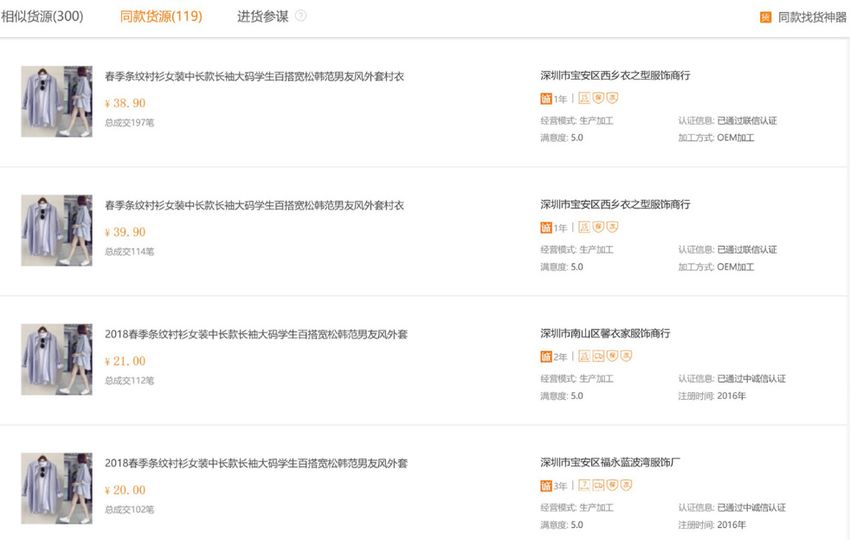
The Emergence of a New Pattern of Rural Ecommerce
in China and its Social Implications

                                                    Foreword

Ecommerce has become increasingly important in              no taxes and second, they often do not apply basic
Asia, particularly in China, where it is making an          labour and safety standards. Also, most of them
increasingly important contribution to the service          operate informally and the workers therefore rarely
sector, which itself has grown to 56 per cent of            have social security. While some observers in China
the total GDP. Taobao (Chinese:        ; approximate        highlight that the Taobao shop workers earn more
English translation: “digging for treasure” or              than they would in factories, others warn against
“treasure hunt”) is a Chinese online shopping               the emergence of “rural sweatshops 4.0”. These
website and ecommerce platform, headquartered               contradictions need to be further analysed by
in Hangzhou, East China. Founded by Alibaba                 collecting and analysing data as well as assessing
Group in 2003, Taobao and its sister website Tmall          the situation of Taobao shops on site, which this
facilitate both Consumer-to-Consumer (C2C) and              study aims to do.
Business-to-Consumer (B2C) retail commerce by
providing a platform for businesses large and small         But if the negative aspects of Taobao villages can be
as well as individual entrepreneurs to open online          mitigated, they might not be merely an interesting
stores. It mainly caters to consumers in Chinese-           development programme for rural and remote
speaking regions (Mainland China, Hong Kong,                areas in China, but also in other Asian countries.
Macau and Taiwan) and has had over 580 million              In Indonesia for example, the government puts a
monthly active users in 2018. The enormous                  lot of emphasis on reducing the development gap
amounts of data thus collected (such as user                between cities and villages to improve people’s
interests and shopping trends) fuel the algorithms          welfare and strives to create employment in rural
of the platform itself as well as the services and          areas. Fostering the growth of ecommerce in rural
research into artificial intelligence applications of       economies (“Villages 4.0”) might be an attractive
its parent company Alibaba, which is one of China’s         solution to connect unique local products with
three online giants besides Baidu and Tencent.              urban purchasing power as an economic and
                                                            employment stimulus for countries with a distinct
China’s countryside remains a crucial part of the           rural character.
country’s economic (success) story as over 40 per
cent of its population is still rural. But Chinese
urban-rural inequality is quite high - like in many                                          Stefan Pantekoek
other countries. Against this background the                                    Resident Director FES Shanghai
growing number of so-called “Taobao villages”                                            Representative Office
has been identified by Alibaba and the Chinese
government as a potential solution to reduce the                                                Sergio Grassi
                                                                              Country Director FES Indonesia
growing urban-rural divide. While Taobao villages
                                                                     Coordinator Economy of Tomorow in Asia
contribute to the economic development of rural
areas in China, they need to be analysed critically,
especially because of the contradictions between
the typically low-cost mode of production of most
goods sold in Taobao shops and the priorities of                                         Jakarta, February 2019
local governance. First, Taobao shops pay almost

                                                        4
Executive Summary

•   The key success factors for Alibaba and its                   The lifecycle of clothing products has become
    subsidiary online marketplace Taobao are:                     shorter and shorter. Businesses/organizations/
    aggregation of supply and demand information,                 individuals along the clothing supply chain are
    free user registration and high-quality value-                more specialized, therefore claiming unique
    adding services. Furthermore, together with its               competitive advantages in certain domains
    Alipay payment platform and Cainiao Logistics                 while collaborating with others to achieve all-
    it has become a quasi-monopoly platform for                   win synergy.
    trading, data and web flow.
                                                              •   Low production and low living cost in urban
•   The growth of Taobao.com has created new                      villages, informal employment and distributed
    clusters of commerce, production and services.                production might be more suitable for the low-
    Ali Research (a research institute of Alibaba                 price small-batch orders from Taobao.com.
    Group) defines a Taobao village as follows: a large           But the workplace as well as living conditions
    number of online merchants co-exist in a village              in many Taobao villages and urban villages
    that do business mainly through Taobao.com,                   producing for Taobao are poor. Informal
    depend on the Taobao ecommerce ecosystem,                     employment gives rise to thorny labor issues,
    and achieve economy of scale and synergy.                     such as child labor and wage arrears. Local
    In 2018, there were 3,202 “Taobao villages”                   governance is challenged because governance
    in 24 provinces, municipalities directly under                costs are disproportionately high compared
    the central government and autonomous                         to the rather low contribution of the informal
    regions in China. Taobao villages were highly                 economy to local fiscal revenue.
    concentrated on the east coast of China, where
                                                              •   The lessons learnt from the Taobao village
    the biggest marketplace of the world – the
                                                                  experience in China are: It takes the concerted
    city of Yiwu – and the Alibaba headquarters is
                                                                  efforts of the government, private companies
    located.
                                                                  behind the platforms as well as organized
•   In the garment industry, the search function                  labor to mitigate the drawbacks of informal
    for identical products on Taobao.com and                      employment related to Taobao villages and
    Alibaba.com has exacerbated the price war                     to fully benefit from the inequality-reducing
    among producers and sellers. The emergence                    potential of the platform economy in a rural
    of online trading platforms has led to more                   setting.
    clothing categories and smaller order sizes.

                                                          5
The Emergence of a New Pattern of Rural Ecommerce
in China and its Social Implications
Introduction
The platform economy is a new economic pattern GMV of RMB 3 trillion speaks volumes of the rapid
based on modern information technology including growth of such an ecosystem as well as that of the
the Internet and cloud computing that aims at global new digital economy. Underlying the GMV
meeting diverse demands by integrating industrial of RMB 3 trillion are greater socio-economic value,
supply chains and value chains and by improving entrepreneurship and job creation. According to
the allocation of available market resources. Alibaba, its ecommerce ecosystem has created
The platform economy is of great importance to over 15 million retail jobs and made possible over
Chinese socio-economic development. The retail 30 million indirect employment opportunities (Ali
platform operated by the Alibaba Group is a poster Research, 2016).
child of the Chinese platform economy, with its
Gross Merchandise Volume (GMV)1 during the Before referring to the driving economic force,
Alibaba Group’s 2016 fiscal year exceeding RMB 3 the inequality-reducing potential as well as the
trillion (more than USD 430 billion). Representative challenges of the Taobao villages, a review of the
of the new economy, Alibaba’s business ecosystem major milestones in the history of Alibaba and
spans production and distribution while also Taobao.com is necessary to understand why they
securing a strong presence in the service sector have succeeded.
through its logistics and finance activities. The
61. The development of Alibaba and Taobao.com2
1.1 Start-up (1999-2003)
Founding of Alibaba Founding of Taobao.com and making inroads
In February 1999, Jack Ma3 and his team of 17 people into C2C
founded Alibaba in his apartment in Hangzhou, On May 10, 2003, Taobao.com went online. Free
a city in Southeast China in Zhejiang province. access aside, Taobao.com launched multiple
Their goal was to set up an online B2B platform services tailor-made to the Chinese market and
to facilitate Chinese small and medium-sized culture, therefore differentiating itself from eBay in
enterprises’ (SMEs) participation in global trade. its customer base, product development, pricing,
On April 15, 1999, Alibaba.com, the company’s and customer service.
first website, dedicated to global wholesaling, was
launched.
Table 1. A comparison of the Competitive Strategies of Taobao and eBay
Platform strategy Taobao.com eBay
Customer base broad white collar
Alitalk Skype (later than Taobao)
Product development
Alipay Paypal (later than Taobao)
Free access: transaction price Fee-based: transaction price
Pricing
is flexible. is fixed.
Active communication with
Customer service Less communication
customers
Source: Yang, Fei. (2017). Evolution of Ecommerce Players’ Strategy – the Cases of Alibaba and JD.com. Master’s Thesis.
Jilin University: p. 37.
1.2 Growth (2004–2007) 1.3 Maturity (since 2008)
Launching Alipay and improving service From “Greater Taobao” to “Greater Ali”, developing
In 2003, Taobao.com launched Alipay, an “escrow the Chinese ecommerce infrastructure
account” type of payment service whereby the In November 2007, Alibaba’s B2B business was
buyer will agree to release the payment to the listed on the Hong Kong Stock Exchange, raising
seller only when he/she is happy with the purchase. USD 1.69 billion to further drive growth. In 2008,
This service reduced transaction risks for the Alibaba announced the “Greater Taobao” strategy,
buyer drastically. In August 2008, the number of claiming that it would invest RMB 5 billion in
Alipay users exceeded 100 million, bigger than the the next five years to upgrade its ecommerce
number of Taobao users, which stood at 80 million infrastructure centered around Taobao.com into a
at the time, accounting for 40 per cent of internet better consumer-oriented ecommerce ecosystem,
users in China. Alipay thus became China’s largest so that all ecommerce activities, including payment,
third-party payment platform. marketing and logistics, could be done on the
“Greater Taobao” platform.
7The Emergence of a New Pattern of Rural Ecommerce
in China and its Social Implications
Figure 1. Alibaba’s ecommerce infrastructure
Cainiao Logistics
Taobao
Cloud computing, big data
wholesalers
Tmall
Consumers
Retailers
Alibaba
B2B
Juhuasuan.com
AliExpress
Ant Financial
Source: Yang Fei. (2017). Evolution of Ecommerce Players’ Strategy – the Cases of Alibaba and JD.com.
Master’s Thesis, Jilin University: p. 53.
82. Reasons behind the success of Alibaba and Taobao.com
According to the 2018 Global Digital Economy (4) the value-adding services provided by
Index jointly published by Digital Economy Forum, Alibaba facilitate transactions on this online
Ali Research and KPMG, which measures the marketplace and diversify Alibaba’s sources of
level, structure and pathway of digital economic profitability (Tang, 2009).
development in different countries on the five
dimensions of digital infrastructure, digital Researchers also attempted to identify the key
consumers, digital industry formats, digital success factors of Taobao.com by contrasting its
public services and digital R&D, the top-10 digital strategy with that of eBay. On the pricing front,
economies in the world are the US, China, UK, Korea, eBay, started as an auction site and therefore (at
Sweden, Norway, Japan, Denmark, Singapore, and least for a long time) did not give fixed prices for
the Netherlands (Digital Economy Forum et. al. many products, whereas Taobao adopted a fixed-
2018). Analyses of data from 150 countries and price model right from the start. There is basically
regions point to a high correlation between digital a one-on-one relationship between the buyer and
economic development and per-capita GDP. All seller (except for payment) on Taobao.com. They
top-20 countries with the exception of China are communicate online through Taobao’s proprietary
high-income countries. China is placed on top of Alitalk (an instant messaging tool). They can write
the ranking for the sub-index of digital consumers. reviews and make recommendations on the
Chinese digital consumers are not only numerous platform. When it comes to product categories,
but also extraordinarily active. There were 772 Chinese online shoppers buy different things than
million internet users in China by December 2017. their US-American counterparts. As for sources
It took 14 years for ecommerce penetration rate of revenue, nearly 90 per cent of eBay’s revenue
to reach 50 per cent in the US, but only nine years comes from commissions. In contrast, 80 per cent
in China. Chinese digital consumers paved the way of Taobao.com’s revenue comes from advertising,
for Alibaba and Taobao.com through large scale something that consumers – at least directly – do
societal collaboration on these platforms. not have to pay for, and another 20 per cent comes
from commissions on Tmall plus charges for value-
Researchers attempted to identify the operation adding services (Bechir, 2010).
model and key success factors of Alibaba and
Taobao.com. Alibaba has the following distinctive With the Alibaba portal, Taobao.com, tgc.1688.com,
operation features: the Alipay payment platform, Cainiao Logistics,
(1) it is an aggregator of supply and demand among others, Alibaba Group has monopolized
information; the platforms for transactions, data and traffic.
(2) it pays attention to localization. The web portal Manufacturers as well as merchants on Tmall and
is translated into different languages to suit Taobao.com must follow the rules set by Alibaba
local needs. Also, it is user friendly. As a result, in order to gain traffic and subsequent sales.
country markets merge into one big market; Interviews with owners of Taobao.com clothing
(3) free membership at the initial stage attracted shops reveal that advertising and operation eat
businesses to become registered users; away a big chunk of their sales, sometimes as high
as 35 per cent.
9The Emergence of a New Pattern of Rural Ecommerce
in China and its Social Implications
3. The concept of Taobao villages, their whereabouts and specialties
The growth of Taobao.com has created new and 0.7 per cent of the total, respectively, with an
clusters of commerce, production and services. especially high concentration in the eastern coastal
The emergence of Taobao villages is a good case provinces of Zhejiang, Guangdong and Jiangsu
in point. Ali Research defines a Taobao village as which topped the list with over 100 Taobao villages
follows: a large number of online merchants co- each. Next in line are Fujian Province, Shandong
exist in a village that do business mainly through Province and Hebei Province with over 55 Taobao
Taobao.com, depend on the Taobao ecommerce villages each.
ecosystem, and achieve economy of scale and
synergy. According to Ali Research’s 2014 Research In November 2017, KPMG and Ali Research jointly
Report of Taobao Villages in China, a village has published a report titled Metamorphosis: Garment
to meet the following three criteria to qualify as Industry Powered by New Retail – Transformation of
a Taobao village: (1) merchants are registered as the Number One Online Category. According to this
residents of the village and conduct business there; report, clothes were far ahead of any other category
(2) the annual ecommerce GMV should be no less of products shopped online in China. In 2016, the
than RMB 10 million; (3) the number of online online penetration rate for the garment industry
merchants registered at the village should be no was 37 per cent, much higher than the 12 per cent
fewer than 50, or at least 10 per cent of the village online penetration rate of overall retail business. In
households. In 2009, only three villages in China GMV terms, the top online retail categories were
met the above criteria. In 2017, there were 2,118 clothes (21 per cent), home improvement (16 per
Taobao villages in 24 provinces, municipalities cent), house appliances (11 per cent), computer,
directly under the central government and communication, and consumer electronics (so-
autonomous regions. called 3C products, 9 per cent), food and beverage
(8 per cent), mother and baby products (7 per cent).
According to data in 2015, the number of Taobao
villages decreased sharply from coastal regions According to the 2017 Research Report of Taobao
in the east to the hinterland in the west. Taobao Villages in China, the top-10 clusters of Taobao
villages in Eastern China, Central China and Western villages specialize in the following products:
China accounted for 97.8 per cent, 1.5 per cent,
10Table 2. Bestsellers for top-10 clusters of Taobao villages 2017
Number of Taobao
Ranking Country (City) Province Bestsellers
villages
1 Yiwu Zhejiang 104 petty commodities
2 Wenling Zhejiang 75 shoes
3 Caoxian County Shandong 74 costumes
4 Ru’ian Zhejiang 54 shoes
5 Puning Guangdong 52 leisure wear
6 Suining Jiangsu 51 furniture
7 Jinjiang Fujian 48 shoes
8 Cixi Zhejiang 44 house appliances
9 Yongkang Zhejiang 44 fitness equipment, hardware
10 Shuyang Jiangsu 41 flowers and trees
11 Yueqing Zhejiang 40 electrical & electronic products
Source: 2017 Research Report of Taobao Villages in China
11The Emergence of a New Pattern of Rural Ecommerce
in China and its Social Implications
4. The emergence of Taobao villages and driving factors
The 2017 Research Report of Taobao Villages in Ali Research categorizes county-level ecommerce
China attributed the emergence of Taobao villages cases into seven types on the basis of the dominant
to grassroots entrepreneurship, enabling platforms driving force (Taobao University & Ali Research,
and favorable government policies. Grassroots 2016): (1) government-driven; (2) service provider-
entrepreneurs are considered the strongest force driven; (3) online business owner-driven; (4)
behind the emergence of Taobao villages. By 2017, industry-driven; (5) comprehensive development;
they had set up over 490,000 active online shops. (6) business line-driven; (7) public service system-
Enabling platforms offer comprehensive assistance driven.
to grassroots entrepreneurs in transaction,
logistics, finance and data, with over 100,000 Zeng et al. (2015) summarized the evolution of
express delivery routes, more than RMB 58 billion’s Taobao villages as “two phases–five steps”. The
(USD8.4 billion) worth of bank loans. Favorable five steps are: starting of the first online business in
government policies give support in infrastructure, the village, initial take-up by villagers, accelerated
public services and create a business-friendly take-up, village businesses working together, and
atmosphere. Zhejiang Province spends tens of the formation of an entire value chain. The two
millions of RMB on supporting Taobao villages. phases are: villagers rely on their own resources to
Shuyang and Suining in Jiangsu Province, Yucheng develop the Taobao village; once the Taobao village
in Shandong Province, and Xifeng in Guizhou has developed to a considerable size, the second
Province established training bases for ecommerce phase then sees interventions by the government,
professionals. Researchers summarized four the formation of industry associations and the
reasons why Taobao villages emerged: (1) the entrance of service providers into the village. Zeng
boom in online shopping presents huge business et al. (2015) believed that government support
opportunities, attracting the inflow of capital and is necessary to speed up the growth of Taobao
labor; (2) the symbiotic growth of express delivery villages. It could offer guidance, regulation and
services, Internet financing and telecommunication provide better services. It could act as an incubator
infrastructure facilitates transactions while making for Taobao villages by improving infrastructure,
the process more convenient; (3) the government strengthening the cost advantages of starting
and ecommerce platform providers guide, nurture businesses in rural areas, tapping into the
and invest in the development of Taobao villages; potential of traditionally strong local industries and
(4) Social factors such as neighborhood effects encouraging younger migrant workers and college
and the traditional business culture contribute to graduates to return to villages.
the flourishing of Taobao villages. The above four
factors interact with each other and jointly fuel the
rapid growth of Taobao villages (Xu et al. , 2017).
125. Employment in Taobao villages
One study divides the symbiotic rural ecommerce There are sub-units within units. They hire workers
system into a number of functionally different of different skill level, gender and age to produce
units. Core units are sellers on the ecommerce or provide service. The employment contract terms
platform; closely adjacent units supply products vary as does workers’ negotiation power.
to core units; auxiliary units supply ingredients,
parts and components to closely adjacent units;
support units serve auxiliary units. Logistics units
and service units are on the periphery (Guo, 2015).
Figure 2. The symbiotic rural ecommerce system
Natural Economic Technology
Environment Environment Environment
External Environment
Core Units Consumption
Operations Units
Service
Units
Graphic
Design
Consumption
Individual
Customer
Service 3rd-party Trade Platforms
(Taobao, etc)
Marketing
Order Picking
Logistics
Units
Ecommerce
Association
Supply Units Auxiliary Units
Consumption
Organized
Production
Parts of
Ingredients Packaging
Components
Warehousing
Support Units
Purchasing Equipment Ingredients Supply
Financing Units Training Units
External Environment Product Flow
Political/Policy Environment Social/Cultural Environment
Information Flow
Source: Guo, 2015. An Analysis of Rural Ecommerce Business Model – Based on Investigations of Taobao Villages.
Reform of Economic System (5): p.113.
13The Emergence of a New Pattern of Rural Ecommerce
in China and its Social Implications
Different units combine to form different rural highly-skilled online freelancers. Those who have
ecommerce business models. The same study sums a high wage and low autonomy are mainly drivers
up four major business models. working for online ride-hailing services or domestic
workers hired through online platforms. Those
In the first model, a business buys ingredients, who have a low wage and low autonomy get work
engages in production and sells final products mainly from crowdsourcing platforms. Those who
online. This model emerges spontaneously. For have a low wage and high autonomy are absent
example, businesses in Shaji Town of Jiangsu from such platforms (Kalleberg and Dunn, 2016).
Province process lumber into furniture to sell
online. In the second model, an online seller that Liang (2017) also identified four types of jobs by
does not have enough production capacity and looking at the importance of employer-employee
outsources production orders out. For example, contracts and employer control over employees.
online sellers located in Xi’ao Village with annual Jobs in traditional industries are strong on both
sales of over RMB 10 million find further capacity contract and employer control. Domestic workers
expansion limited by space. Therefore, they acquire take strong-control weak-contract jobs. Knowledge
equity in other producers and sell the latter’s workers have weak-control strong-contract jobs.
products online. In the third model, an online seller Freelancers and people in the traditional service
is present on multiple online platforms, adopting sector have jobs that are weak in both employer
a different brand name for each platform. In the control and contract.
fourth model, different units develop a symbiotic
relationship. Although a Taobao village may have Previous research on ride-hailing services and
many similar businesses, it may at the same time Taobao merchants showed that the platform
see businesses forming a relatively complete value economy had greatly reduced the headcount
chain. In other words, there are upstream suppliers of employees, given birth to huge numbers of
to the principal businesses in the village and organizations in the informal economy, enhanced
downstream buyers. They form an optimal team to the adoption of flexible employment, challenged
compete against other value chains. For example, the traditional definition of industrial relations,
product photographers, graphic designers, logistics reduced the stability of industrial relations, and
providers and packaging specialists design or posed new challenges to collective bargaining and
manufacture for a particular principal business; traditional labor dispute resolution mechanisms
industry associations coordinate relationships (Wang and Li, 2017). Other researchers found
among ecommerce businesses and with the out that since the platform economy stresses
government (Guo, 2015). the participation of specialists who work with
businesses in product/service design, production
The development of the platform economy has and sales, a win-win outcome for labor and capital is
reshaped industrial relations. Its impact and possible. Both could increase income while workers
challenges are deeply felt by the social security get to enjoy flexible working hours and better
system and governance. Western literature built a work-life balance (Ji and Lai, 2016). Platform jobs
matrix of platform jobs out of two axes, one being affect employment stability – with huge numbers
wage level and the other being worker autonomy, of informal economic organizations, more varied
thereby creating four quadrants. Those who have a forms of flexible employment, bankruptcy of and
high wage and high autonomy at work are mainly mergers between platforms leading to a fast track
14of establishing, changing and terminating industrial workers producing products for sale on Taobao.com
relations. Employment in Taobao villages is affected in the (South) Eastern Chinese cities of Guangzhou,
in various degrees as well. Hangzhou and Changshu:
(1) The search function for identical products on
With the development of the platform economy,
Taobao.com and Alibaba.com has exacerbated
Internet-based platform companies are getting
the price war among producers and sellers.
bigger and bigger while business entities operating
Photo 1 and 2 show search outcomes of
on such platforms are shrinking in size. Take
such a function on Taobao.com (B2C) and
Alibaba’s retail division as an example. By 2015 its
Alibaba.com (B2B), respectively. A Taobao
number of merchants had exceeded 11 million,
clothing store owner in Hangzhou said:
but the average number of jobs created per
‘Taobao now has a function to search for the
Taobao.com merchant stood at only 1.6, and that
same products, and because Taobao platform
of a Tmall merchant at 6.9. Owing to their size,
does not allow pirates of the photos, so the
low headcount, high turnover, short life spans,
same clothes wore by the same model come
poor human resources management expertise,
from the same source. If someone does not
small and micro businesses have long been high-
purchase the products from the supplier that
risk in terms of labor protection and industrial
provides this photo, he will be reported and
relations. As the platform economy grows, more
his photo cannot be used anymore. Therefore,
of these businesses will crop up. It is high time to
the function of search for the same products is
find targeted solutions to industrial relationship
to make profits more transparent.’ (Interview
issues in such businesses. The number of informal
by the author, 20180520)
employers also grows with the platform economy.
Unincorporated entities such as individuals,
households and partnerships can now participate Photo 1. Search outcome for identical products
on Taobao.com
in the economy on an unprecedented scale and
scope, which presents unprecedented challenges
to the traditional administrative authorities of
industry and commerce. Under current rules and
regulation, natural persons need not register
with the industry and commerce administration
to conduct online trade transactions. They only
need to submit authentic identity information to
the platform on which the business operates. The
fast expansion of the informal economy, which
was historically exempt from supervision and
administration, creates daunting difficulties to labor
security supervision as well as the enforcement of
employment contracts (Wang and Li, 2017).
This research is based on key findings, which
includes over 20 interviews with Taobao clothing
shop owners, suppliers to Taobao merchants and Source: screenshot by Fan Lulu
15The Emergence of a New Pattern of Rural Ecommerce
in China and its Social Implications
(2) The emergence of online trading platforms has (4) Urban villages with low living costs, informal
led to more clothing categories and smaller employment and distributed production are
order sizes. The lifecycle of clothing products more suitable for the low-price small-batch
has become shorter and shorter. orders from Taobao.com. The Photo 2 and
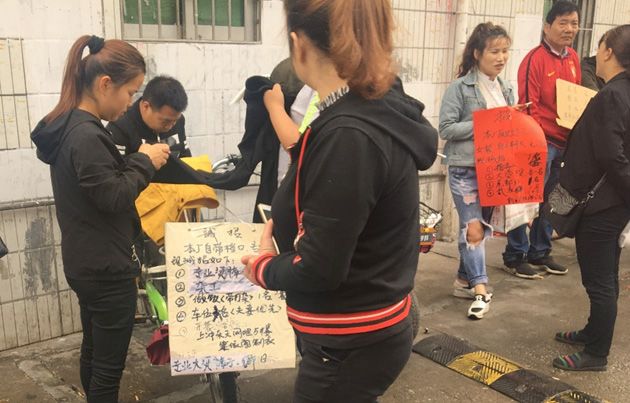
(3) The ownership structure in the clothing 3 below were taken in urban villages where
supply chain has changed. Businesses/ production for Taobao clothing shops took
organizations/individuals along the chain are place. In such places, workers are hired on
more specialized, therefore claiming unique the sidewalk and can quit any time. The bed
competitive advantages in certain domains the worker rents to sleep in is paid for daily,
while collaborating with others to make in keeping with the flexible employment
optimal use of synergies. arrangements.
Photo 2. Search outcome for identical products on Alibaba.com
Source: screenshot by Fan Lulu
16Photo 3. Hiring in an urban village by Taobao garment factories
Source: Fan Lulu, Guangzhou.
Photo 4. A Taobao garment factory’s advertisement for temporary workers
The advertisement shows that this factory/ workshop recruits temporary thread-cutting workers
and the workers can receive wages whenever they leave. Source: Fan Lulu, Guangzhou.
17The Emergence of a New Pattern of Rural Ecommerce
in China and its Social Implications
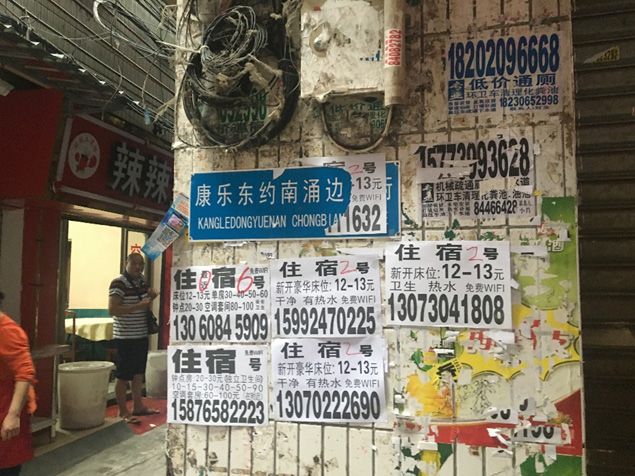
Photo 5. Bed-a-day advertisements in an urban village specializing in clothes making for Taobao
The advertisement shows that the rental price of a bed in the dormitories of this urban village is 12 to 13 RMB per day.
The single room’s rent is 30-60 RMB per day. The air-conditioned suite’s price is between 60 to 100 RMB per day.
Source: Fan Lulu, Guangzhou
(5) The workplace as well as living environment (6) The boom of Taobao-related businesses
in many Taobao villages and urban villages has created employment opportunities for
producing for Taobao are poor. The workshop, women who would otherwise have stayed at
the warehouse, and workers’ dormitory are home. Interviews with Taobao shop owners
sometimes all co-located in one building, done for this research show that these women
exacerbating fire risks. Informal employment had previously often been excluded from
gives rise to thorny labor issues, such as child fulltime employment because of pregnancy,
labor and wage arrears. Social governance childbirth, and breastfeeding, but running a
is challenged because governance costs are Taobao shop or working as a Taobao customer
disproportionately high compared with the service representative allowed them to work
informal economy’s contribution to local fiscal wherever and whenever convenient, thereby
revenue. As a result, Guangzhou, Hangzhou increasing employment rate and income.
and Changshu have begun initiatives to shut
down and rectify garment factories producing
for Taobao.
186. The impact of Taobao villages on rural economy and society
On October 13, 2014, Alibaba Group announced at reached RMB 16,200, 17 per cent higher than the
the First Zhejiang County-level Ecommerce Summit county average. In the same year, Dinglou Village
that it would invest RMB 10 billion in the next in Caoxian County, population 1100, boasted more
three to five years in developing 1,000 county-level than 240 automobiles, averaging 21.8 automobiles
operation centers and 100,000 village-level service per 100 people, 1.23 times of the provincial average.
stations. For this purpose, according to Daniel In 2009, there was no Taobao village in Daji Town of
Zhang, COO of Alibaba Group, the Group had Caoxian County. Most adults migrated to cities for
identified several priorities for its rural endeavor: work, leaving children and elderly people behind.
(1) investing in infrastructure. To be more specific, In 2013, the first online sellers in Dinglou Village
it would set up operations on the county and and Zhangzhuang Village started selling costumes
village level and strengthen logistical capabilities; on Taobao.com. In 2014, there were already six
(2) growing the ecosystem. It would nurture more Taobao villages in Daji Town. In 2015, the town
buyers, sellers, service providers, and focus on talent had 16 Taobao villages, with ecommerce pioneer
development. (3) innovation in rural purchasing Ren Qingsheng elected Party Secretary in Dinglou
agents, rural financing, and rural ecommerce Village. In 2016, there were more than 24,000
Online-to-Offline (O2O). (4) value creation, helping online merchants in the town, with total sales
farmers gain higher income, creating jobs, and exceeding RMB 2 billion. There were also close to
facilitating urbanization. According to the author’s 20 logistics providers. Thanks to Taobao villages in
investigations in Taobao Villages in Guangdong and the town, about 20,000 townsfolk were engaged
Zhejiang Province, the first two items is the bases in online selling and offline production, more than
for the development of the latter two items. 5,000 villagers came back to start businesses.
The 2017 Research Report of Taobao Villages in The 2017 Research Report of Taobao Villages in
China states that in 2017, there were 2,118 Taobao China claims that the average income of Taobao
villages and 242 Taobao towns in China. Among the villagers is higher than that of other villagers
Taobao villages, 33 were in national-level poverty- and that Taobao villages have better living
stricken counties4, close to 400 were located environments. In Taobao villages, there are
in provincial-level poverty-stricken counties. In barely any left-behind children or elderly empty-
2017, 95.8 per cent of Taobao villages pledged to nesters, relationships between mother-in-laws and
donate a certain percentage of profits to charities, daughter-in-laws are better, and crime rates are
and over 600 million donations were made. Some lower. For example, there are 50 per cent fewer
online merchants also give a certain amount back criminal cases in Taobao villages in Heze than the
by mending roads, assisting the elderly and helping city average. Taobao villagers live and work in peace
the underprivileged. Yet, this is of course always and contentment. Many issues have been solved
dependent on the good will of the respective because of the economic growth and development
merchant. There are, nevertheless, a number of of new business formats.
Chinese regions which have benefited from being a
Taobao village, at least regarding average numbers. Huang (2016) sums up three approaches to poverty
Take Suining County for instance. In 2016, the elimination through rural ecommerce. They are
average annual income in 40 Taobao villages there either government-driven, platform-driven, or
19The Emergence of a New Pattern of Rural Ecommerce
in China and its Social Implications
villager-driven. The government-driven approach The best example of the villager-driven approach is
is embodied in the prosperity of Tongyu County, Shaji Town, Suining County, Jiangsu Province. This
Baicheng City, Jilin Province. Tongyu used to be a town used to be the most backward town in northern
typical farming county. A national-level poverty- Jiangsu Province. The working-age population
stricken county in a remote area with poor access found jobs in the cities and only children and the
to transportation, its products had been sold elderly stayed. This has changed now, and a lot of
through the traditional distribution channels. At young people have returned to their home to start
the end of 2013, with the support of the county businesses which, so they hope, will make them
government and the Chinese Communist Party rich. For example, Dongfeng Village, with fewer
(CCP) committee, a private ecommerce entity than 3,000 people and an area of less than eight
named Clouds and Cranes was founded to sell square kilometers, achieved an annual ecommerce
produce (millet, mung beans, oat, and other GMV of RMB 2.6 billion in 2014. Underlying the
products) on Taobao platforms on behalf of local success of the “Shaji Model” were villagers finding
producers (farmers, production bases, cooperatives, the right products to sell online. These online
agriculture product processors) under the brand pioneers, after trials and errors, had their eyes on
name “San Qian He”. To facilitate the development easily assembled furniture. The demand for such
of ecommerce, the county government and party products was huge, entry barriers low, storage
committee set up the Tongyu County Ecommerce and long-distance transportation convenient, and
Promotion Center staffed by officials from various product range extension highly possible. The first
government agencies. Ten free ecommerce training three pioneering villagers who believed in “making
sessions enrolling 3,000 low-income people and money together” volunteered to help others start
handicapped persons were held to help the latter similar businesses. Consequently, ecommerce had
open online shops and increase income. taken off in Dongfeng Village since 2009 (Huang,
2016).
Suichang County, Lishui City, Zhejiang Province
is a good case in point for the platform-driven However, poverty reduction through ecommerce
approach. The core to the “Suichang Model” is a must not be regarded as a panacea. There are
localized service provider: The Ecommerce Service wrong perceptions and pitfalls in practice. The
Center under the Suichang Chamber of E-business. common misperceptions held by local governments
It is engaged in three key activities: integrating are: “selling agricultural products online equals
available supply, organizing online selling across ecommerce equals poverty reduction; maintaining
merchants and centralizing warehousing and a presence on major ecommerce platform equals
delivery. As a result, it is very easy for farmers in rural ecommerce development and ecommerce
Suichang to open an online shop. Both producers poverty reduction”. Often, platform service
and sellers can focus on their strengths without providers and industrial parks are set up blindly and
worrying about excellence in other steps of the lack verification of the qualification and potential
value chain. Local ecommerce operators gain of ecommerce operators. There are also common
efficiency and competitiveness (Huang, 2016). misperceptions among ecommerce operators:
20ecommerce is a way to sell products at dumping aware of the means of poverty reduction. Besides,
prices; ignoring the development of ecommerce sending children to school, a natural disaster, some
talents; growing ecommerce at the cost of society. misfortune or an illness in the family could easily
There are intricate challenges to poverty reduction reduce them to poverty. Consequently, there are
through ecommerce. Many poverty-stricken areas often bottlenecks in developing ecommerce in
are located in remote mountains or on plateaus, poor rural areas, including logistics bottlenecks,
afflicted with endemic diseases, lacking resources lack of industrial-size production, challenges
and access to transportation. Consequently, in commercialization and lack of talent. Not
development becomes a daunting task. The all poverty-stricken rural areas are suitable for
poverty-stricken population usually has poor engaging in poverty reduction through ecommerce
education, low skills, low income and may not be (Huang, 2016).
21The Emergence of a New Pattern of Rural Ecommerce
in China and its Social Implications
7. Policy recommendations on reducing the negative impact
of Taobao villages on labor
It takes the concerted efforts of the government, employment. To strengthen social protection for
platforms and labor organizations to mitigate the people in informal employment, South Korea has
drawbacks of informal employment related to promulgated the Law on Informal Workers and
Taobao villages. developed a five-year comprehensive plan for them.
India protects the rights and interests of informal
The current legal framework and social security workers through the Factories Act, Employee State
system in China can hardly apply to people in Insurance Act, and Equal Remuneration Act (Shi,
informal employment. At present, adjustments to 2007).
informal employment relations are made mainly
through policy documents issued by the State While there are chambers of eBusiness, logistics
Council and its ministries. Since many people industry associations and employer associations,
in informal employment work outside of the informal workers such as those who work for
geographic area specified by their household Taobao shops, factories producing for Taobao shops
registration, they cannot participate in or benefit and logistics companies serving Taobao lack formal
from social insurance systems provided for local organizations to address common challenges.
residents in flexible employment. To address these The government and platform companies should
problems, it is worthwhile to learn from practices therefore support the orderly development of such
in countries of the European Union and some organizations, to work with them to address issues
Asian countries. EU countries advocate social that arise from informal employment, to reduce
partnership in balancing flexible employment with labor disputes and social risks.
job security, and equal rights for people in informal
228. Suggestions to other countries interested in developing
Taobao villages
Jack Ma, Chairman of Alibaba Group, is an advisor index for digital consumers. These five countries
to national governments in Indonesia, Malaysia are: China, Brazil, Mexico, Peru, and Indonesia.
and Thailand on digital economy development. He Middle-to-low-income countries could draw on the
has also acquired a controlling interest in Lazada, positive and negative experiences in China, convert
an ecommerce platform in South East Asia. Jack the labor dividend into a digital consumer dividend,
Ma is developing logistics bases in Malaysia and and unleash the inequality reducing potential of
Thailand and has indicated on multiple occasions the digital economy.
his willingness to help young people, SMEs and
farmers in South East Asia to gain a better income But if the negative aspects of Taobao villages can
and prospects through the platform economy. He be mitigated, it might not only be an interesting
stressed that the success of Alibaba was the success development programme for rural and remote
of an entire ecological chain, and that to nurture areas in China, but most probably also for other
such a chain, infrastructure, platforms, product Asian countries. In Indonesia, the government puts
R&D and promotion, financing, and logistics were a lot of emphasis on reducing the development gap
all indispensable as well as the increase of online between cities and villages to improve people’s
shop owners and digital consumers. welfare and strives to create employment in rural
areas. Fostering the growth of ecommerce in rural
Countries like Indonesia enjoy advantages in the economies (Villages 4.0 or eVillages) might be
number of digital consumers. According to the one solution to boost job creation and to connect
2018 Global Digital Economy Index, middle-to-low- unique local products with urban purchasing power
income countries lag behind in all sub-indices of as an economic and employment stimulus package
digital economic development, but they take up for countries with a distinct rural character and a
five places among the top-25 ranking in the sub- rural-urban divide.
23The Emergence of a New Pattern of Rural Ecommerce
in China and its Social Implications
References
ABDELMOMEN, Bechir . (2010). Taobao: A Chinese Legend – Key Success Factors of Taobao. Market
Modernization Magazine, (5): 71-72.
BECHIR, Abdelmomen. (2010). 淘宝:中国式的传奇——淘宝成功的关键要素. 商业现代化,(5): 71-72.
KALLEBERG, Arne. L., DUNN, Michael. (2016). Good jobs, Bad Jobs in the Gig Economy. Perspective on Work,
20(2):10-14.
Ali Research, 2014 Research Report of Taobao Villages in China,阿里研究院,中国淘宝村研究报告(2014),
http://www.199it.com/archives/316574.html
Ali Research. (2016). The Emergence of the New Economy: Business Logic behind Alibaba’s Three Trillion.
Beijing: China Machine Press.
阿里研究院. (2016). 新经济崛起:阿里巴巴3万亿的商业逻辑.北京:机械工业出版社.
Ali Research, 2017 Research Report of Taobao Villages in China,阿里研究院,中国淘宝村研究报告(2017),
http://i.aliresearch.com/img/20171211/20171211101359.pdf
Ali Research, 2018 Research Report of Taobao Villages in China,阿里研究院,中国淘宝村研究报告(2018),
http://i.aliresearch.com/img/20181031/20181031144508.pdf
BAN Xiaohui. (2017). On the Expansion of Labor Law Protégées in China Resulting from the Sharing Economy–
the Case of Online Ride-hailing Services. Journal of Sichuan University (Philosophy and Social Sciences),
(2): 154-161.
班小辉. (2017). 论“分享经济”下我国劳动法保护对象的扩张——以互联网专车为视角. 四川大学学报
(哲学社会科学版) ,(2):154-161.
CHEN, Chaoxiang. (2017). The Impact of Internet on the Spatial Organization of Garment Companies – the
Case of Jeans Wear Manufacturers in Xintang, Guangzhou. Master Thesis, Guangzhou University.
陈朝相. (2017). “互联网 ”对服装企业空间组织的影响——以广州新塘牛仔服装企业为例,广州大学硕
士学位论文.
CUI, Xiaoxing. (2016). Domestic Workers’ Industrial Relations in the Internet Era–the Case of Online Domestic
Workers’ Agencies in Wangjing, Chaoyang District, Beijing. China Social Welfare, (3): 45-48.
崔小行. (2016). 互联网与信息化条件下的家政工劳动关系——以北京市朝阳区望京地区互联网家政公
司为例.社会福利,(3): 45-48.
Digital Economy Forum, Ali Research, KPMG (2018). Global Digital Economy Index, http://i.aliresearch.com/
img/20180918/20180918153226.pdf. (Last accessed 2018-10-02.)
数字经济论坛,阿里研究院,KPMG. (2018). 全球数字经济发展指数,http://i.aliresearch.com/
img/20180918/ 20180918153226.pdf.
24FANG, Guanxin. (2016). Taobao Villages in China: An Attempt to Break the Dilemma of Urbanization in Rural
Areas – An Urban Sociological Perspective. China Rural Survey, (3):71-81.
房冠辛. (2016). 中国“淘宝村”:走出乡村城镇化困境的可能性尝试与思考——一种城市社会学的研究视
角.中国农村观察,(3):71-81.
GUO, Chenglong. (2015). An Analysis of Rural Ecommerce Business Model – Based on Investigations of Taobao
Villages, Reform of Economic System, (5):110-115.
郭承龙. (2015). 农村电子商务模式探析——基于淘宝村的调研. 经济体制改革,(5):110-115.
HU, Yao & LIU, Li. (2016). Spatial Distribution of Taobao Villages in Guangzhou and Impact Factors. Planners,
(12):109-114.
胡垚,刘立. (2016). 广州市“淘宝村”空间分布特征与影响因素研究.规划师,(12):109-114.
HUANG, Haizhou. (2016). Poverty Reduction through Ecommerce: Innovation and Breakthrough. Hefei: USTC
Press.
黄海洲. (2016). 电商扶贫:创新与突破. 合肥:中国科学技术大学出版社.
JI, Wenwen & Lai, Desheng. (2016). Impact of Platform Employment on Industrial Relations. Journal of China
Institute of Industrial Relations, (4):6-16.
纪雯雯,赖德胜. (2016). 网络平台就业对劳动关系的影响机制与实践分析.中国劳动关系学院报,
(4):6-16.
KPMG, Ali Research. (2017). Metamorphosis: Garment Industry Powered by New Retail – Transformation of
the Number One Online Category, http://www.sohu.com/a/205515969_483389. (Last accessed 2018-10-
02.)
毕马威,阿里研究院. (2017). 破茧成蝶:新零售赋能服装业——互联网第一大品类的魅力变革告,
http://www.sohu.com/a/205515969_483389.
LI, Feng. (2017). An Exploration of Industrial Relations against the Background of Sharing Economy – The Case
of Online Ride-Sharing Services. China Labour, (1): 13-17.
李峰. (2017). 分享经济背景下劳动关系探析——以网约车为例.中国劳动,(1): 13-17.
LI, Anthony Ho-fai. (2017). Ecommerce and Taobao Villages: A Promise for China’s Rural Development? China
Perspectives, (3): 57-62.
LIANG, Meng. (2017). Strong Control and Weak Contract: Domestic Worker Employment Impacted by
Internet Technology. Collection of Women’s Studies,(5):47-59.
梁萌. (2017). 强控制与弱契约: 互联网技术影响下的家政业用工模式研究.妇女研究论丛,(5):47-59.
25The Emergence of a New Pattern of Rural Ecommerce
in China and its Social Implications
SHAO, Zhanpeng. (2017). Rules and the Logic of Capital: The Shaping of Taobao Shops Run by Rural Residents.
Journal of Northwestern A&F University (Social Sciences), (4):74-82.
邵占鹏. (2017). 规则与资本的逻辑:淘宝村中农民网店的型塑机制. 西北农林科技大学学报,(4):74-82.
SHI, Meixia. (2007). A Research on Industrial Relations in Informal Employment – Exploring Models and
Policy Alternatives for China from an International Perspective. Beijing: China Human Resources & Social
Security Publishing Group.
石美遐. (2007). 非正规就业劳动关系研究——从国际视野探讨中国模式和政策选择. 北京:中国劳动社
会保障出版社.
TANG, Liang. (2009). An Analysis of Alibaba’s Success Model. Modern Business Trade Industry, (11): 259-260.
唐亮. (2009). 阿里巴巴网站成功模式分析,现代商贸工业,(11): 259-260.
Taobao University, Ali Research. (2016). Internet+ Counties: A Book to Comprehend County-Level Ecommerce.
Beijing: Publishing House of Electronics Industry.
淘宝大学,阿里研究院. (2016). 互联网+县域:一本书读懂县域电商,北京:电子工业出版社.
WANG, Wenzhen & Li Wenjing. (2017). The Impact of Platform Economy on Industrial Relations in China.
China Labour, (1): 4-12.
王文珍,李文静. (2017). 平台经济发展对我国劳动关系的影响.中国劳动,(1): 4-12.
XU, Zhibang, WANG, Zhonghui, ZHOU, Liang & WANG, Huilong. (2017). Characteristics of Spatial Distribution
of Taobao Villages in China and Their Drivers. Economic Geography, 37(1): 107-114.
徐智邦,王中辉等,周亮,王慧荣. (2017). 中国“淘宝村”的空间分布特征及驱动因素分析. 经济地
理,37(1): 107-114.
YANG, Fei. (2017). Evolution of Ecommerce Players’ Strategy – the Cases of Alibaba and JD.com. Master’s
Thesis. Jilin University.
杨斐. (2017). 电商企业战略演进过程案例研究——以阿里巴巴、京东为例. 吉林大学硕士学位论文.
ZENG, Yiwu, QIU, Dongmao, SHEN, Yiting & GUO, Hongdong. (2015). A Study of the Formation of Taobo
Villages: The Case of Dongfeng Village and Junpu Village. Economic Geography, (12): 90-97.
曾亿武,邱东茂,沈逸婷,郭红东. (2015). 淘宝村形成过程研究:以东风村和军埔村为例. 经济地理,(12):
90-97.
ZHOU, Zifan. (2018). A Study of Remuneration for Takeout Delivery Employees in the Internet Era. Journal of
China Institute of Industrial Relations, (3): 96-104.
周子凡. (2018). “互联网 ”时代外卖骑手薪酬探究.中国劳动关系学院学报,(3): 96-104.
26Notes
1 Gross Merchandise Volume indicates the total sales value for merchandise sold through a particular marketplace
over a certain time frame. [Source: https://en.wikipedia.org/wiki/Gross_merchandise_volume; last checked 2018-
10-29]
2. This part is based on Yang, Fei. (2017). Evolution of Ecommerce Players’ Strategy – the Cases of Alibaba and
JD.com. Master’s Thesis, Jilin University.
3. Jack Ma is “马云” in Chinese.
4. Also referred to as key counties for national poverty alleviation work. These counties have a large number of people
in poverty and are normally located in remote areas.
27www.fes-indonesia.org www.fes-asia.org www.fes-china.org
About the
About  the author:
           author:                                                    Imprint
                                                                      © 2019 Friedrich-Ebert-Stiftung |Indonesia Office
 Fan Lulu
Fan   Lulu isisaaresearch
                  researchstaff
                             staffofofSun
                                       SunYat-Sen
                                           Yat-Sen University         Jl. Kemang Selatan II No. 2A
 –Volkswagen (China) Industrial          Relation and Social          Jakarta 12730, Indonesia
University–Volkswagen         (China) Industrial
 Development
Relation           Project.
          and Social          She obtained
                         Development            a doctor of
                                          Project.
                                                                      Responsible:
 philosophy
She   obtained in sociology.
                  a doctor Her      research interests
                               of philosophy    in     include        Sergio Grassi | Resident Director
 labour process
sociology.    Her and   platform
                    research       economy.
                               interests  include
labour process and platform economy.                                  Phone: +62 21 719 37 11
                                                                      Fax: +62 21 717 913 58
                                                                      Website: www.fes-indonesia.org

                                                                      © 2019 Friedrich-Ebert-Stiftung
                                                                      Shanghai Representative Office
                                                                      Yan’an Zhong Road 829
                                                                      Da An Plaza East Tower 7A
                                                                      Shanghai 200040, PR China

                                                                      Responsible:
                                                                      Stefan Pantekoek | Resident Director
                                                                      Yannick Ringot | Project Manager

                                                                      Phone: +86 21 6247 2870
                                                                      Fax: +86 21 6279 1297
                                                                      Website: www.fes-china.org

                                                                      Commercial use of all media published by
                                                                      the Friedrich- Ebert-Stiftung (FES) is not permitted
                                                                      without the written consent of the FES

                     Friedrich-Ebert-Stiftung (FES) is the oldest political foundation in Germany.
         The foundation is named after Friedrich Ebert, the first democratically elected president of Germany.

      FES established its Indonesia Representative Office in 1968 and has since 2012 been in cooperation with
            the Coordinating Ministry of Human Development and Culture of the Republic of Indonesia.
     In order to pursue social justice in politics, the economy and in the society as one of FES leading principles
worldwide, FES Indonesia has been conducting various activities in recent years to support the Social Security Reform,
    Welfare State, and Social Economic Development in Indonesia as well as promoting Indonesia as a reference
         to other countries in the region and at the international level for democratization, socio-economic
                                                and peaceful development.

           For more than 30 years, the Shanghai Office of Friedrich-Ebert-Stiftung (FES) has been supporting
   its Chinese partners to strengthen mutual understanding and trust, to constructively support China in its policy
       of reform and opening-up, to exchange experiences on the respective development path in order to learn
       from each other, and finally, to identify answers, in open dialogue, on how to tackle the most important
                         development challenges for China and Germany in the 21st century.

www.fes-asia.org
                                                                 30
You can also read


