TESTED & TRUSTED City of Lake Oswego
←
→
Page content transcription
If your browser does not render page correctly, please read the page content below
2
0
1
8

    TESTED        &  TRUSTED.
    Your drinking water is pure & safe.

     City of Lake Oswego Water Quality Report
          Drinking water quality data from 2017
    LOOREGON     @CITYOFLAKEOSWEGO       @LAKEOSWEGOINFO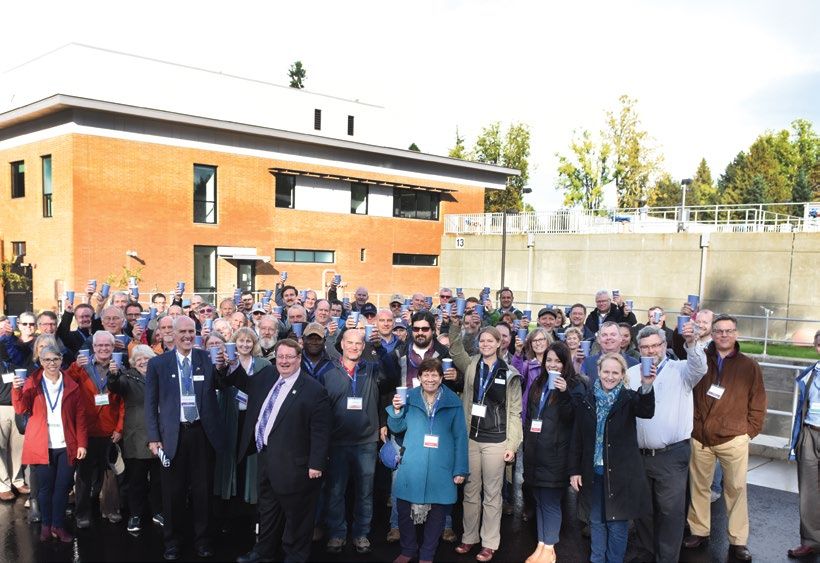
TESTED & TRUSTED.
      2
      0
      1
      8

                                   YOUR WATER IS PURE AND SAFE.
LAKE OSWEGO WATER QUALITY REPORT

                                   The 2018 Water Quality Report is based on data collected during the 2017 calendar
                                   year. The City prepares this report in accordance with Federal and State regulations to
                                   bring our citizens the best available information about the water they drink.

                                                                        Welcome to the City of Lake Oswego’s
                                   KNOW YOUR WATER:
                                   YOUR WATER SOURCE AND       PAGE 3
                                                                        2018 Water Quality Report.
                                   TREATMENT PROCESS                    The past three years have brought major upgrades and changes to our water system
                                   YOUR 2017 WATER QUALITY     PAGE 4   infrastructure and water treatment process through the Lake Oswego Tigard Water
                                   TEST RESULTS                         Partnership Project. I want to thank you for supporting these much needed investments.
                                   GLOSSARY OF TERMS           PAGE 5
                                   FAQ & LEAD SAFETY           PAGE 6   I am happy to announce that these changes have resulted in significant measurable
                                   BACKFLOW TESTING            PAGE 6
                                                                        improvements in the drinking water quality that we provide to you, and in our water
                                                                        system resiliency. Important water quality parameters, such as disinfection by-products,
                                   VALUE OF YOUR WATER         PAGE 7
                                                                        have been reduced by over 55% due to the system upgrades and are now less than
                                   WATER AUDITS                PAGE 7   half of the Maximum Contaminant Level (MCL) set by State and Federal Safe Drinking
                                   ENTER TO WIN $100 TOWARDS   PAGE 8   Water requirements. State licensed drinking water operators work around the
                                   YOUR NEXT UTILITY BILL
                                                                        clock to make sure that the water is there every time you turn on the tap, and is the
                                                                        highest quality.

                                                                        I am very proud to state that your tap water is safe to drink and better than ever!
                                                                        Please review this report and find out why the drinking water that is delivered to your
                                                                        tap every day - for less than a penny per gallon - is indeed tested and trusted.

                                                                        Kari Duncan
                                                                        Water Supply and Treatment Manager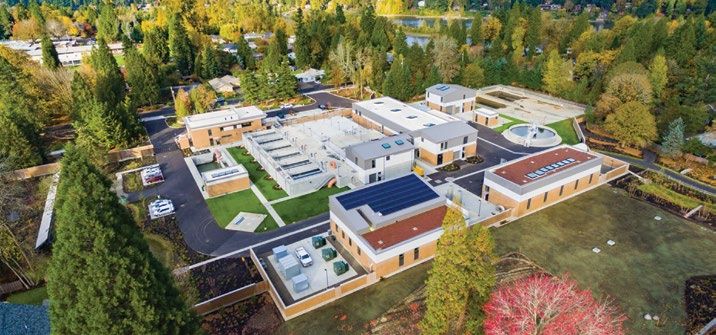
Sourced from the Clackamas River                                                                                                         3

                                                                                                                                         PAGE
Your drinking water originates in the Clackamas River watershed, which is one of the highest quality in the state.

This watershed encompasses 940 square miles and begins in the Mount Hood National Forest. Water is withdrawn from the
Clackamas River, then pumped through a pipeline buried beneath the Willamette River to the Lake Oswego-Tigard Water Treatment
Plant located in West Linn.

A Clackamas River Watershed Source Water Assessment was completed in 2003. The report is available at
www.deq.state.or.us/wq/dwp/swrpts.asp.

                                                                                            How is your drinking
                                                                                            water treated?
                                                                                            The new treatment process is
                                                                                            conventional treatment using ballasted
                                                                                            flocculation and filtration, plus ozone:

                                                                                            Ballasted flocculation uses micro-sand
                                                                                            and a coagulant to settle dirt, sediment
                                                                                            and contaminants out of the water.

                                                                                            Ozone is then added to remove
                                                                                            unpleasant taste and odor compounds
                                                                                            and to provide advanced treatment.

                                                                                            Filtration through a deep bed of granular
                                                                                            activated carbon and silica sand removes
                                                                                            any remaining tiny microbes and
                                                                                            contaminants, such as cryptosporidium.

                                                                                            Disinfection is accomplished using a
                                                                                            small amount of chlorine. pH is adjusted
                                                                                            to prevent corrosion of household
                                                                                            plumbing.

                                                                                            ‹   Top to bottom: Water Treatment Plant
                                                                                                Manager, Kari Duncan, showing the
                                                                                                LO Junior High Robotics Class the
                                                                                                micro-sand used during the ballasted
                                                                                                flocculation process; one of two ozone
                                                                                                generators that uses electrical energy
                                                                                                to transform oxygen into ozone gas;
                                                                                                residents touring the new granular
                                                                                                activated carbon filters at the water
                                                                                                treatment plant, guided by Operator,
                                                                                                Cole Trusty.

                                                                                            For more information on
                                                                                            how your drinking water
                                                                                            is treated, visit
                                                                                            www.lotigardwater.org
2
      0                            YOUR LO WATER BY THE NUMBERS
      1                            Your Drinking Water Meets or Exceeds Every State and Federal Standard
      8
LAKE OSWEGO WATER QUALITY REPORT

                                   Your drinking water is tested every day. More than 90                           The accompanying table shows the results of water quality
                                   contaminants are regularly sampled, both before and after the                   testing for 2017. Every regulated substance detected in Lake
                                   water is treated, to ensure it meets the more than 120 water                    Oswego’s drinking water is listed. All of the substances were
                                   quality standards for drinking water set by the Environmental                   either not detected or were detected at levels well below limits
                                   Protection Agency (EPA) and the State of Oregon.                                set by the EPA and State of Oregon for safe drinking water.

                                   For a complete listing of all test results, go to the Oregon Drinking Water Service website:
                                   https://yourwater.oregon.gov/inventory.php?pwsno=00457.

                                                                           MCLG                                          Range
                                                                                   MCL, TT,                                            Sample
                                         Contaminants (Units)                or                 Your Water                                      Violation          Typical Source
                                                                                   or MRDL                            Low     High      Date
                                                                           MRDLG
                                    Disinfectants & Disinfection By-Products
                                    Chlorine (CL²) (ppm)                     4        4              0.83             0.55     1.03     2017       No       Water additive used to control
                                                                                                  (average)                                                 microbes
                                    Haloacetic Acids (HAA5) (ppb)           NA        60             13.3              1.4      8.0     2017       No       By-product of drinking water
                                                                                              (highest quarterly                                            chlorination
                                                                                                   average)
                                    Total Trihalomethanes/ (TTHMs)          NA        80             20.2              5.5     21.0     2017       No       By-product of drinking water
                                    (ppb)                                                     (highest quarterly                                            disinfection
                                                                                                   average)
                                    Bromate (ppb)                            0        10        Not Detected           ND       ND      2017       No       By-product of drinking water
                                                                                                    (ND)                                                    treatment with Ozone

                                      "Since the introduction of the new treatment process, disinfection by-products have decreased over 55%. This and other water quality
                                      parameters demonstrate that the improved treatment process has resulted in better water quality for our residents!"
                                      — Kari Duncan, Water Supply and Treatment Manager

                                    Microbiological
                                    Fecal Coliform/E. Coli (positive         0        0               0               Not Detected      2017       No       Human and animal waste
                                    samples)
                                    Total Coliform (% positive samples/      0        5               0               Not Detected      2017       No       Naturally present in
                                    month)                                                                                                                  the environment
                                    Turbidity (NTU)                         NA        TT      100% of samples         Highest single    2017       No       Soil runoff
                                                                                     0.3 in    meet turbidity         measurement:
                                                                                    95% of       standards                0.16
                                                                                   samples
                                    Inorganic Contaminants
                                    Copper - action level at consumer       1.3     AL=1.3           90th percentile: .039              2017       No       Corrosion of household
                                    taps (ppm)                                                      Homes exceeding AL: 0                                   plumbing systems; erosion
                                                                                                                                                            of natural deposits
                                    Lead - action level at consumer taps     0      AL=15             90th percentile: 3                2017       No       Corrosion of household
                                    (ppb)                                                           Homes exceeding AL: 2                                   plumbing systems; erosion
                                                                                                                                                            of natural deposits
                                    Nitrate (ppm)                           10        10                       0.10                     2017       No       Runoff into river from fertilizer
                                                                                                                                                            use; erosion of natural deposits
                                    Barium (ppm)                             2        2                       0.004                     2015       No       Erosion of natural deposits;
                                                                                                                                                            discharge of drilling wastes;
                                                                                                                                                            discharge from metal refineries
What Else Do We Look For In Our Water?                                                                                                          5

                                                                                                                                                PAGE
The following list of chemicals and compounds are what we test for on a regular basis.
Most chemicals are measured in parts per billion (ppb) or parts per million (ppm).

  oo Volatile Organic Compound: (21 compounds) manmade chemical
     compounds such as cleaning fluids, degreasers and plastics.
  oo Synthetic Organic Compounds: (30 compounds) manmade chemicals,
     including insecticides and herbicides.
  oo Inorganic Compounds: (16 compounds) naturally occurring minerals and
     chemicals that are released into water through erosion and leaching of
     mineral deposits.
                                                                                            Glossary: EPA Water Quality
                                                                                            Definitions
Cryptosporidium in Untreated                                                                Action Level (AL): the concentration of a
                                                                                            contaminant which, if exceeded, triggers a
Clackamas River Water                                                                       treatment or other requirements a water
                                                                                            system must follow.
Cryptosporidium is a harmful micro-organism found in surface water throughout the
U.S. Two years of monthly Cryptosporidium monitoring of raw, untreated Clackamas            Maximum Contaminant Level (MCL): the
                                                                                            highest level of a contaminant that is allowed
River water, started in October 2016.
                                                                                            in drinking water. MCLs are set as close to the
                                                                                            MCLGs as feasible using the best available
  oo 2017: 12 samples, 0 had detectable Cryptosporidium.                                    technology.

  oo 2016: 3 samples, 1 had detectable Cryptosporidium Oocysts at 0.1 Oocysts/Liter         Maximum Contaminant Level Goal (MCLG):
     of water.                                                                              the level of a contaminant in drinking water
                                                                                            below which there is no known risk to health.
Comparable with historical results, the samples from recent testing indicate very low       MCLGs allow for a margin of safety.
occurrence of Cryptosporidium. The water treatment process used includes coagulation,       Maximum Residual Disinfectant Level
settling, ozonation, and filtration processes optimized for Cryptosporidium removal.        (MRDL): the highest level of a disinfectant
                                                                                            allowed in drinking water. There is convincing
                                                                                            evidence that addition of a disinfectant is
                                                                                            necessary for control of microbial contaminants.
Sources of Contaminants                                                                     Maximum Residual Disinfectant Level
                                                                                            Goal (MRDLG): the level of a drinking water
In order to ensure that tap water is safe to drink, the EPA sets regulatory limits on the   disinfectant below which there is no known or
amount of certain contaminants in water provided by public water systems. The U.S.          expected risk to health. MRDLGs do not reflect
Food and Drug Administration sets limits for contaminants in bottled water which            the benefits of the use of disinfectants to
must provide the same protection for public health.                                         control microbial contamination.
                                                                                            Nephelometric Turbidity Units (NTU): the
The sources of drinking water (both tap water and bottled water) include rivers, lakes,     standard unit of measurement used in water
                                                                                            analysis to measure turbidity in a water sample.
streams, ponds, reservoirs, springs and wells. As water travels over the earth’s surface    Turbidity is a measure of how clear the water
or through the ground it dissolves naturally occurring minerals and, in some cases,         looks.
radioactive material. Drinking water can pick up substances resulting from the presence
                                                                                            Parts per Million (ppm): one part per million is
of animals or from human activity.                                                          equivalent to half of an aspirin tablet dissolved
                                                                                            in a full bathtub of water (approximately 50
Contaminants that may be present in source water throughout the United States               gallons).
include:                                                                                    Parts per Billion (ppb): one part per billion is
  oo Microbial contaminants, such as viruses and bacteria, which may come from              equivalent to half of an aspirin tablet dissolved
     wildlife or septic systems e.g. coliform and Giardia.                                  in 1,000 bathtubs of water (approximately
                                                                                            50,000 gallons).
  oo Inorganic contaminants, such as salts and metals, which can occur naturally
                                                                                            pH: a scale that measures how acidic or basic
     or result from urban stormwater runoff, industrial or domestic wastewater              drinking water (or another substance) is.
     discharges or farming.
                                                                                            Treatment Technique (TT): a required process
  oo Pesticides and herbicides, which may come from a variety of sources such as            intended to reduce the level of a contaminant
     farming, urban stormwater runoff and home or business use.                             in drinking water.

  oo Organic chemical contaminants, including synthetic and volatile organic
     chemicals, which are byproducts of industrial processes and may come from gas
     stations, urban stormwater runoff, and septic systems.
  oo Radioactive contaminants, which can occur naturally, e.g. radon.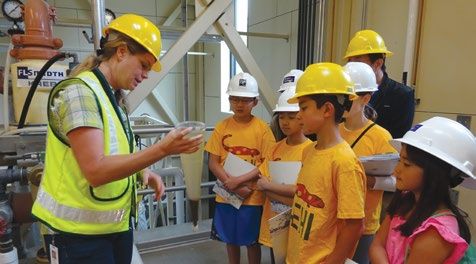
Frequently Asked Questions
      2
      0
      1                            Q: Why is my water pressure too high/too low?                                                              Lake Oswego
      8                            What should my water pressure be?
                                                                                                                                                offers FREE
LAKE OSWEGO WATER QUALITY REPORT

                                   A: Water pressure varies through the City but pressure at your
                                   home should be between 30-100 psi. If you have a question
                                   about your home water pressure please call Public Works at
                                   503-635-0280 or visit www.lakeoswego.city/publicworks/water.
                                                                                                                                               lead testing
                                   Q: Is there fluoride in my water?
                                                                                                                                                to its water
                                   A: Lake Oswego does not add fluoride to the water and there
                                   is no detectable natural fluoride in the Clackamas River source.
                                                                                                                                                customers.
                                   Please consult your dentist or pediatrician to determine if
                                   fluoride supplements are needed for dental health.

                                   Q: My water is discolored and/or tastes bad, what                         Lead Safety
                                   should I do?                                                              If present, elevated levels of lead can cause serious health
                                                                                                             problems, especially for pregnant women and young children.
                                   A: We do not recommend that you drink the water if it is
                                                                                                             Lead is rarely found above detectable levels in the City of Lake
                                   discolored, please flush the lines until the water runs clear. If it
                                                                                                             Oswego’s source water, the Clackamas River.
                                   does not clear up after a few minutes of flushing, call 503-635-
                                   0280. Water taste changes may be due to a variety of factors in
                                                                                                             The main source of lead in drinking water is typically from
                                   the home or in the water system. It is best to consult our water
                                                                                                             household plumbing or components associated with water
                                   quality experts at the Water Treatment Plant on 503-635-0394
                                                                                                             service lines. The City of Lake Oswego is responsible for
                                   for advice or check our website for tips:
                                                                                                             providing high-quality drinking water, but cannot control the
                                   www.lakeoswego.city/publicworks/water.
                                                                                                             variety of materials used in private plumbing components.
                                                                                                             When your water has been sitting for several hours, you can
                                   Special Notice for Immuno-                                                minimize the potential for lead exposure by flushing your tap
                                   Compromised Persons                                                       for 30 seconds to two minutes before using water for drinking
                                                                                                             or cooking.
                                   Some people may be more vulnerable to contaminants
                                   in drinking water than the general population. Immuno-
                                   compromised persons such as persons with cancer undergoing                Free Lead Testing
                                   chemotherapy, persons who have undergone organ transplants,
                                                                                                             If you are concerned about lead in
                                   people with HIV/AIDS or other immune system disorders, some
                                                                                                             your water, you may wish to have your
                                   elderly persons, and infants can be particularly at risk from
                                                                                                             water tested. The City offers FREE lead
                                   infections. These people should seek advice about drinking
                                                                                                             testing to its water customers– you can
                                   water from their health care providers. EPA and Centers for
                                                                                                             pick up a test kit and instructions at the
                                   Disease Control guidelines on appropriate means to lessen the
                                                                                                             3rd floor reception desk at City Hall.
                                   risk of infection by cryptosporidium and other microbiological
                                   contaminants are available from the Safe Drinking Water
                                                                                                             Information on lead in drinking water,
                                   Hotline 1- 800-426-4791 or visiting www.epa.gov/safewater.
                                                                                                             testing methods, and steps you can
                                                                                                             take to minimize exposure is available
                                   Drinking and Bottled Water Notice                                         from the Safe Drinking Water Hotline
                                   Drinking water, including bottled water, may be reasonably                or at www.epa.gov/safewater/lead.
                                   expected to contain small amounts of some contaminants.
                                   However, the presence of contaminants does not necessarily
                                   indicate that the water poses a health risk. More information
                                   about contaminants and potential health effects can be
                                   obtained by calling the EPA’s Safe Drinking Water Hotline at
                                   1-800-426-4791.

                                    BACKFLOW TESTING
                                    It is once again time to think about backflow testing. Backflow assemblies separate potable water from non-potable water sources such as
                                    irrigation systems, medical equipment and private pump systems to name a few. These devices help protect the public water system from
                                    possible contamination. Backflow devices are required by the City of Lake Oswego and the State of Oregon and must be tested annually.

                                    As of 2017, all backflows must be tested no later than July 15th of each calendar year. For more information and a complete list of certified
                                    backflow testers, please visit City of Lake Oswego’s website at www.lakeoswego.city/backflow or call 503-534-5674.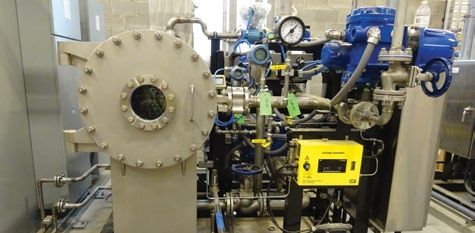
UNDERSTANDING THE                                                   USE LESS SAVE MORE                                              7

                                                                                                                                    PAGE
VALUE OF YOUR WATER                                                 SAVE WITH A WATER AUDIT
                                                                    Kevin McCaleb, our Water Concervation Specialist, offers home
                                                                    visits to Lake Oswego residents to find ways to help you save
                                                                    water and money.

                                                                          "[When we moved into our home] we were
                                                                          struggling to get a handle on our water use.
                                                                          We had plenty of interest in using water
                                                                          efficiently and cost-effectively, but we lacked
                                                                          information and expertise.

                                                                          Kevin had exactly the information and
            1 gal.                               16 oz.                   expertise we needed. He spent the time
                                                                          with us to go through our indoor/outdoor
                                                                          water savings priorities, answering all our
                                                                          questions along the way. We were very

        $0.01                                $1.00                        impressed with his knowledge and his
                                                                          recommendations.

                                                                          I am really excited to address all the areas
A Penny Per Gallon                                                        where we were previously wasting water.
You pay less than a penny per gallon of high-quality tap                  I can't thank you and your team enough
water, delivered to your home. By comparison, a 16-ounce
                                                                          for creating this water audit program. I'm
container of bottled water costs approximately $1.00 and is
not required to meet the same rigorous testing standards                  looking forward to getting the irrigation
as tap water. The true value of safe tap water cannot be                  system back in shape and cutting out that
quantified, considering all that customers receive when                   wasted water from our monthly bill."
you turn on the tap.
                                                                                                                 Eliot,
Keeping You Healthy and Safe                                                                      Lake Oswego Resident
A safe water supply is critical to protecting public health - the
first obligation of all water suppliers. Without our modern
water systems, diseases such as cholera and dysentery would
be a part of everyday life.
                                                                    To schedule a FREE water audit with Kevin,

         90+                           120
                                                                    call 503-675-3747 starting May 1.

       Contaminants                    Standards                    OTHER WAYS TO SAVE
                                                                    From your kitchen to your garden, there
In the United States, water utilities monitor for more than
90 contaminants and must meet close to 120 standards for
                                                                    are little things you can do to make a big
water safety and quality. Those water standards are among           difference on your bill. Get all the tips at:
the world’s most stringent.                                         www.lakeoswego.city/publicworks/water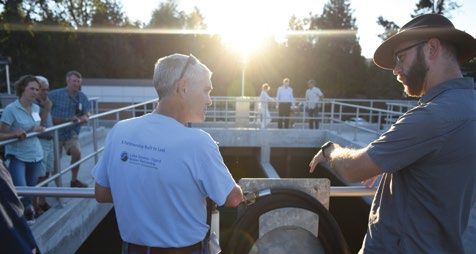
2                                      THANK YOU FOR TAKING THE TIME                                                       MORE INFORMATION?
      0
      1                                          TO KNOW YOUR WATER!                                                             The City of Lake Oswego is here
                                                                                                                                 for you!
      8                                              WWW.LAKEOSWEGO.CITY/2018-WATER-REPORT
                                                                                                                                 www.lakeoswego.city/publicworks
LAKE OSWEGO WATER QUALITY REPORT

                                                                                                                                 Water Quality and Treatment:
                                                                                                                                 503-635-0394 or
                                                                                                                                 WaterTest@ci.oswego.or.us
                                                                                                                                 Utility Billing: 503-635-0265
                                                                  WIN $100                                                       Water Operations: 503-635-0280
                                                               TOWARDS YOUR                                                      Water Conservation: 503-675-3747
                                                                                                                                 or kmccaleb@ci.oswego.or.us
                                                               NEXT UTILITY BILL
                                                               To enter to win, visit                                            Lake Oswego Tigard Water
                                                            bit.ly/YourLOWater then                                              Partnership
                                                                                                                                 www.lotigardwater.org
                                                            complete and submit the
                                                              form by July 31, 2018                                              United States Environmental
                                                                                                                                 Protection Agency
                                                                                                                                 Safe Drinking Water Hotline
                                                                                                                                 1-800-426-4791
                                                                                                                                 www.epa.gov

                                   Contest Rules:                                                                                Oregon Health Authority
                                    oo Entrants must be a Lake Oswego water customer to win.                                     Drinking Water Services
                                    oo Only one entry is allowed per customer.                                                   1-503-731-4010
                                                                                                                                 www.public.health.oregon.gov/
                                    oo Entrants must complete and submit all the required information                            HealthyEnvironments/
                                        on the online form by July 31, 2018.                                                     DrinkingWater/Pages/index.aspx
                                    oo One winner will be randomly selected and announced in
                                        August 2018.                                                                             Regional Water Providers
                                                                                                                                 Consortium
                                                                                                                                 www.regionalh2o.org

                                                                                                                                 Clackamas River Water Providers
                                                                                                                                 www.clackamasproviders.org

                                                                                                                                 Clackamas River Basin Council
                                                                                                                                 www.clackamasriver.org

                                                                                                                                 Get Involved
                                                                                                                                 Interested citizens are invited to attend
                                                                                                                                 Lake Oswego City Council meetings or
                                                                                                                                 Lake Oswego – Tigard Water Partnership
                                                                                                                                 Oversight Committee meetings. Visit
                                                                                                                                 www.lakeoswego.city/citycouncil or
                                                                                                                                 www.lotigardwater.org for details.

                                   City officials, staff, consultants and contractors celebrate completion of the $249 million water
                                   project, and a toast to clean drinking water for Lake Oswego and Tigard communities.
You can also read


