The Agency's Budget Update for 2021 - International Atomic ...
←
→
Page content transcription
If your browser does not render page correctly, please read the page content below

The Agency’s
                                     Budget Update for
                                     2021

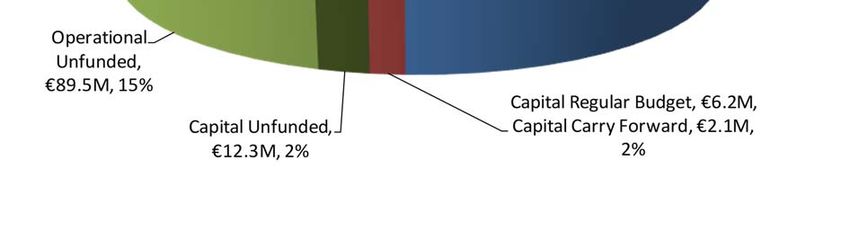
           Printed by the
International Atomic Energy Agency
              July 2020

                                                         GC(64)/2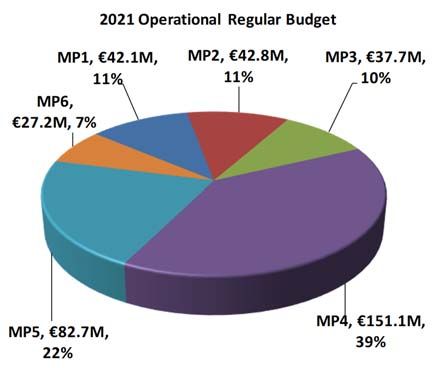
The document is accessible electronically on the IAEA’s website at:

                          www.iaea.org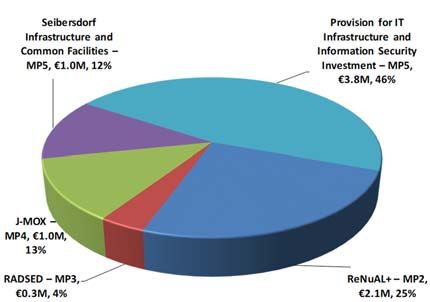
The Agency’s
Budget Update for
2021

                                           GC(64)/2

                                      Printed by the
                International Atomic Energy Agency
                                           July 2020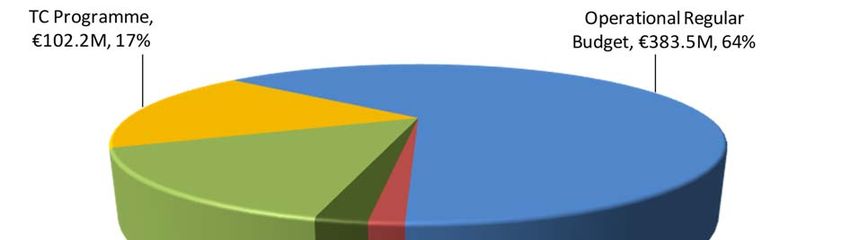
The document is accessible electronically on the IAEA’s website at:

                          www.iaea.org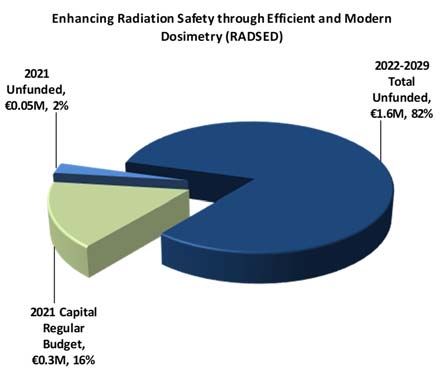
GC(64)/2
                                                                                                                                                Page i

                                                              Contents

Introduction.......................................................................................................................................... iii
       2021 Total Resources at a Glance ..................................................................................................v
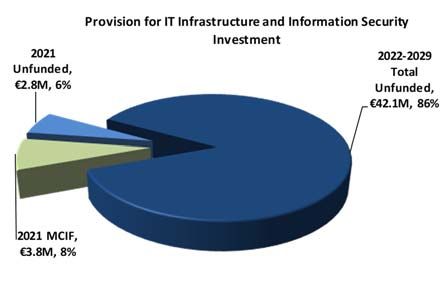
1. Overview............................................................................................................................................1
2. Financial Overview ............................................................................................................................3
       Total Resources ..............................................................................................................................5
       Operational Regular Budget Resources .........................................................................................5
       Capital Resources ...........................................................................................................................6
       Other Financial Considerations ......................................................................................................6
       Price Adjustment ............................................................................................................................6
       After Service Health Insurance Liabilities .....................................................................................6
       Working Capital Fund ....................................................................................................................7
       Budget Currency and Exchange Rate ............................................................................................7
3. Budgetary Requirements by Major Programme ................................................................................9
       Table 1. The Regular Budget — By Programme and Major Programme ....................................11
       Table 2. The Regular Budget — Summary of Income ................................................................12
4. Major Capital Investment Plan for 2021–2029 and Major Capital Investment Fund for 2021 .......13
       Major Capital Investment Plan.....................................................................................................15
       Capital Investments ......................................................................................................................15
       Overview by Major Programme...................................................................................................16
       Major Programme 1 — Nuclear Power, Fuel Cycle and Nuclear Science ..................................16
       Major Programme 2 — Nuclear Techniques for Development and Environmental Protection ..16
       Major Programme 3 — Nuclear Safety and Security ..................................................................17
       Major Programme 4 — Nuclear Verification ..............................................................................17
       Major Programme 5 — Policy, Management and Administration Services ................................18
Annex I. Draft Resolutions for 2021 ...................................................................................................23
       A. Regular Budget Appropriations for 2021 ................................................................................26
       B. Technical Cooperation Fund Allocation for 2021 ...................................................................30
       C. Working Capital Fund for 2021 ..............................................................................................30
Annex II. Cost Savings and Efficiencies .............................................................................................31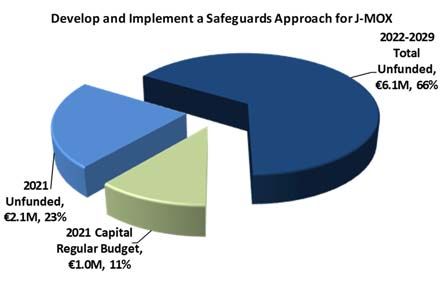
GC(64)/2
                                                                                                                 Page iii

                                                  Introduction

The Agency’s programme for the 2020–2021 biennium, adopted by the Board of Governors, was
presented to the General Conference in September 2019 in The Agency’s Programme and Budget 2020–
2021 (document GC(63)/2). The document included budget estimates for both 2020 and 2021. However,
until biennial budgeting is introduced,1 the Board of Governors is required by the Statute to submit to
the General Conference annual budget estimates for approval; the estimates presented for 2021 were
therefore only preliminary.

In line with the procedures adopted for biennial programming (document GOV/1999/23), the budget
estimates for the second year of the biennium are contained in a concise summary document — The
Agency’s Budget Update. This document introduces the applicable price adjustment for the second year
of the biennium, highlights any significant changes to preliminary budget estimates, and sets out the
draft appropriations and other resolutions.

As per previous decisions made by the Board of Governors, The Agency’s Budget Update for 2021
reflects the Regular Budget for 2021 amounting to the same level as the Regular Budget for 2020, with
the addition of the price adjustment for 2021.2

1 As of June 2020, the Agency had been informed by the depositary Government that 60 of the Agency’s 171 Member States
had accepted the amendment to Article XIV.A of the Statute. Acceptance by two thirds of Member States is necessary for the
amendment to enter into force.
2   See document GOV/2019/25.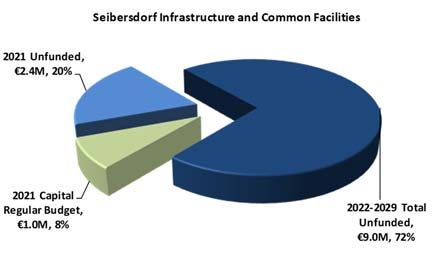
GC(64)/2
                                                                                                                        Page v

                      2021 Total Resources at a Glance
                                                 (at 2021 prices)3

                                                 €595.7 million

 Zero real growth                        2021 Regular Budget over 2020
 €389.7 million                          2021 Regular Budget
     €383.5 million                      Operational Regular Budget
     €6.2 million                        Capital Regular Budget (excluding capital Carry
                                         Forward)
 1.6%                                    Price adjustment for 2021
 €6.7 million                            Savings and efficiencies in the 2021 Regular Budget,
                                         of which:
                                         €5.2 million            Savings and efficiencies other than travel
                                         €1.5 million            Savings related to travel

 €0.7 million                            Additional savings of 0.2%, incorporated in the price
                                         adjustment

3 All figures in this document are presented in euros at 2021 prices, unless otherwise indicated. Figures in tables might not add

up to corresponding sums owing to rounding.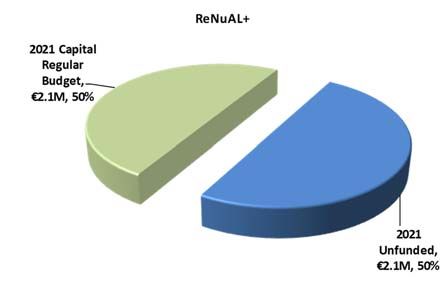
1. Overview
GC(64)/2
Page 1
The Agency’s Budget Update for 2021
Overview Efficiencies
1. In the preparation of The Agency’s 6. In June 2018, the Board of Governors
Budget Update for 2021, the Director General requested the Secretariat to “strengthen efforts
has carefully considered the proposal by the to further identify and implement cross-cutting
Co-Chairs of the Working Group on the Regular savings and efficiencies to be outlined in an
Budget and the Technical Cooperation Fund annex to The Agency’s Programme and Budget
Targets for 2020–2021.4 2020–2021”. 5 In this context, the Secretariat
was “also requested to conduct a holistic review
2. The Agency’s Budget Update for 2021 of the Agency’s travel policy, taking into
includes: account recommendations from the Office of
The applicable price adjustment of 1.6%; Internal Oversight Services and the best
As requested by Member States, an annex practices of other United Nations-system
outlining cost savings and efficiencies, organizations, carefully evaluating their
including those of a cross-cutting nature, potential financial and programmatic impact
identified by the Secretariat during the and bearing in mind the importance of avoiding
preparation of The Agency’s Programme a negative impact on the participation of experts
and Budget 2020–2021 (document from Member States in the Agency’s
GC(63)/2), as well as a list of cost saving activities”.5 Cost savings and efficiencies of
measures to absorb the impact of the higher €6.7 million per annum, including those of a
than anticipated increase in the Agency’s cross-cutting nature, identified and reported in
Professional staff costs. The Agency’s Programme and Budget 2020–
2021, remain to be equally applicable to the
3. For 2021, the Director General proposes second year of the biennium and will continue
a total Regular Budget of €389.7 million, to be implemented in 2021. Details are
which represents an overall increase of highlighted in Annex II.
€6.1 million, or 1.6%, over 2020.
7. In addition, Annex II contains a list of
4. Both the operational Regular Budget cost saving measures identified by the
(€383.5 million – an increase of €6.0 million) Secretariat to absorb the impact of the higher-
and the capital Regular Budget (€6.2 million – than-anticipated increase in the Agency’s
an increase of €0.1 million), are proposed at Professional staff costs, following the
zero real growth and include the 1.6% price International Civil Service Commission (ICSC)
adjustment. review of the post adjustment classification for
5. No significant changes to the Agency’s Professional staff effective as of 1 February
programme for the 2020–2021 biennium, as 2019. These measures account for additional
presented in The Agency’s Programme and cost savings of €0.7 million, or 0.2% of the total
Budget 2020–2021, are proposed. Regular Budget for 2021, as requested by the
Board of Governors and documented in
GOV/2019/25, para. 12.
4 5
Summarized in documents GOV/2019/25, See document GOV/2018/30, para. 11.
GOV/OR.1514.2. Financial Overview
GC(64)/2
                                                                                                                                    Page 5

Total Resources                                                         11. For       the    technical      cooperation
                                                                        programme, €102.2 million is expected to be
8.     The Agency’s total resources consist of                          available for 2021 — €84.2 million for
the Regular Budget, extrabudgetary resources                            estimated core project funding, supplemented
and resources for the technical cooperation                             by €1.0 million in National Participation Costs
programme. For 2021, the Agency’s total                                 and €17.0 million in estimated extrabudgetary
resources amount to €595.7 million at 2021                              funds.
prices, including unfunded requirements for
which extrabudgetary resources will be sought.                          Operational Regular Budget Resources

                       2021 Total Resources at a Glance                 12. The chart and the table below depict the
                                 (in € millions)
                                                                        operational Regular Budget.
Funding Source                                            2021

Operational Regular Budget                                   383.5

Capital Regular Budget, including Carry Forward                   8.3

Operational Unfunded                                             89.5

Capital Unfunded                                                 12.3

TC Programme                                                 102.2

TOTAL                                                        595.7

9.    The Regular Budget consists of an
operational portion and a capital portion used to
fund major infrastructure investments in line
with the Major Capital Investment Plan                                                           2021 Operational Regular Budget
(MCIP). Regular Budget estimates are                                                                      (in € millions)

presented in six Major Programmes (MP1 to
                                                                        Major Programme                                             2021
MP6), in accordance with the structure of the
Agency’s programme of work.                                             1 Nuclear Power, Fuel Cycle and Nuclear Science                    42.1

10. The Agency continues to rely on                                     2 Nuclear Techniques for Development and Environmental
                                                                                                                                           42.8
extrabudgetary funds to carry out some of its                           Protection

activities for which funding is not foreseen in                         3 Nuclear Safety and Security                                      37.7
the Regular Budget. As reported in The
Agency’s Programme and Budget 2020–2021,                                4 Nuclear Verification                                         151.1
activities currently unfunded in the Regular
Budget for which extrabudgetary resources                               5 Policy, Management and Administration Services                   82.7

would be required for 2021 amount to
                                                                        6 Management of Technical Cooperation for Development              27.2
€89.5 million. The categories shown as
‘unfunded’ 6 in the budget tables of this
                                                                        TOTAL                                                          383.5
document represent all extrabudgetary and
unfunded financial needs.

6   Programme Support Costs are included in the
‘unfunded’ category as an integral part of the estimate for
activities funded through extrabudgetary contributions.
GC(64)/2
Page 6
Capital Resources Other Financial Considerations
13. The capital resources for 2021 have been Price Adjustment
allocated with a view to addressing the
continuing capital priorities of the Agency 15. The price adjustment applied for 2021 is
while minimizing the overall growth of the 1.6% and is in line with the Board of
Regular Budget. The Director General is Governors’ request documented in
therefore proposing to maintain the allocation GOV/2019/25, para 12. This percentage is
of the Major Capital Investment Fund (MCIF) based on the Harmonised Index of Consumer
at the level set out in The Agency’s Programme Prices forecast of 1.4% for the euro area for
and Budget 2020–2021 to finance major 2021, as provided in the fourth quarter report of
infrastructure investments in line with the the European Central Bank Survey of
MCIP. Out of the MCIF allocation of Professional Forecasters, issued in October
€8.3 million for 2021 (after price adjustment), 2019, plus a correction of 0.2% to the 2019
€6.2 million is proposed to be funded from the price adjustment to partially offset the impact of
capital Regular Budget to be assessed to the higher than anticipated increase in the
Member States and €2.1 million is proposed to Agency’s Professional staff costs, following the
be offset by the Carry Forward from the unspent ICSC review of the post adjustment
balances of operational Regular Budget classification for Professional staff in 2019.
appropriations from prior years previously
After Service Health Insurance Liabilities
transferred to the MCIF.
14. The table below depicts the 2021 capital 16. The Agency fulfils its obligations in
investments. respect of the financing of health insurance for
2021 Capital Investments former staff from the Regular Budget, on a pay-
(in € millions) as-you-go basis. It does not currently set aside
any funds to meet this long-term financial
Capital Project 2021 liability, which amounts to €222 million7 (as of
31 December 2018). Most United Nations
ReNuAL+ 2.1
system organizations are facing the issue of
Enhancing Radiation Safety through Efficient and Modern funding after service staff liabilities. A
0.3
Dosimetry (RADSED) recommendation from the External Auditors to
the Agency to consider the implementation of a
Develop and Implement a Safeguards Approach for J-MOX 1.0
long term funding strategy for After Service
Provision for IT Infrastructure and Information Security
3.8
Health Insurance (ASHI) was first made in 2013
Investment
and was reiterated by the External Auditors in
Seibersdorf Infrastructure and Common Facilities 1.0 their reports of 2014 and 2017.
Total 8.3
17. Following the proposal to establish an
ASHI liability funding mechanism, presented to
Financing the Board of Governors in document
GOV/2019/7, the Secretariat was requested to
From Member State Assessments 6.2 keep Member States abreast of relevant
processes and discussions in the United Nations
From Capital Carry Forward 2.1 General Assembly. The Secretariat was also
requested to present more options for
Total 8.3 addressing the important issue of ASHI, taking
into account good practices from United
Nations system organizations and other
7 As contained in The Agency’s Financial Statements for
2018 (document GC(63)6).GC(64)/2
Page 7
international organizations and considering cost However, Member States are hereby informed
containment measures that would mitigate of the risk insufficient funds in the WCF pose
ASHI liabilities. The requested additional to the Agency. Furthermore, the External
information was presented to Member States in Auditors made a recommendation in 2018 to
document GOV/INF/2020/1. consider a change to the level of the WCF to
meet the Agency’s needs. The Secretariat will
Working Capital Fund consult Member States to find a solution to this
18. The main purpose of the Working Capital situation.
Fund (WCF) is to make temporary advances to Budget Currency and Exchange Rate
the Regular Budget Fund, which are then
reimbursed to the WCF as soon as possible and 20. The Agency’s functional currency is the
to the extent that money in the Regular Budget euro. As in the past, Regular Budget estimates
Fund is available for that purpose. In 2018 and have been prepared in euros, using a budget
2019, the Agency used the WCF in the last exchange rate of US $1.00 to €1.00. All tables
months of the year, owing to late receipt of and charts in this document are in euros, based
assessed contributions from Member States. on this budget exchange rate. The Agency
The Secretariat has consistently held the assesses Member States in euros and US dollars
opinion that a WCF level equivalent to one in accordance with the scale of assessment fixed
month’s expenditure would be appropriate. by the General Conference and the required
Currently, the average monthly expenditure split between the two currencies.
from the Regular Budget exceeds the level of Approximately 88% of the Agency’s
the WCF, which constitutes a significant risk to expenditure is in euros. The split assessment
the Agency. protects the Agency in the event of currency
fluctuations between the euro and the US dollar.
19. During its 63rd regular session, the
General Conference approved a continuation of 21. The Secretariat monitors any changes in
the WCF at the level of €15 210 000 for 2020. the proportion of the currency of expenditures
No change in this level is proposed for 2021. and will report to Member States if required.3. Budgetary Requirements by Major Programme
GC(64)/2
                                                                                                                                                           Page 11

Table 1. The Regular Budget — By Programme and Major Programme

                                                                                                   2021        Variance over 2020                            2021
                                                                                                                                              Price
                             Programme/Major Programme                          2020 Budget    Estimates at                                              Estimates at
                                                                                                                                           Adjustment
                                                                                               2020 Prices     EUR            %                          2021 Prices
1. Nuclear Power, Fuel Cycle and Nuclear Science
   Overall Management, Coordination and Common Activities                          3 307 427       3 307 432            5         0.0%            1.6%       3 360 351
   Nuclear Power                                                                   9 093 995       9 094 118          123         0.0%            1.6%       9 239 624
   Nuclear Fuel Cycle and Waste Management                                         7 801 710       7 789 578    ( 12 132)      -0.2%              1.6%       7 914 211
   Capacity Building and Nuclear Knowledge for Sustainable Energy Development     10 759 795      10 753 024     ( 6 771)      -0.1%              1.6%      10 925 073
   Nuclear Science                                                                10 449 764      10 468 544      18 780          0.2%            1.6%      10 636 041
   Major Programme 1                                                              41 412 691      41 412 696            4           0.0%          1.6%      42 075 299
2. Nuclear Techniques for Development and Environmental Protection
   Overall Management, Coordination and Common Activities                          8 280 760       8 281 368          608         0.0%            1.6%       8 413 870
   Food and Agriculture                                                           12 065 295      12 065 295          ( 0)        0.0%            1.6%      12 258 340
   Human Health                                                                    8 848 499       8 847 803      ( 696)          0.0%            1.6%       8 989 368
   Water Resources                                                                 3 753 133       3 753 129          ( 4)        0.0%            1.6%       3 813 179
   Environment                                                                     6 692 542       6 692 670          128         0.0%            1.6%       6 799 753
   Radioisotope Production and Radiation Technology                                2 473 852       2 473 822         ( 31)        0.0%            1.6%       2 513 403
   Major Programme 2                                                              42 114 082      42 114 086            4           0.0%          1.6%      42 787 912
3. Nuclear Safety and Security
   Overall Management, Coordination and Common Activities                          4 081 889       4 081 894            5         0.0%            1.6%       4 147 204
   Incident and Emergency Preparedness and Response                                4 468 227       4 468 227            1         0.0%            1.6%       4 539 719
   Safety of Nuclear Installations                                                10 702 937      10 702 937          ( 1)        0.0%            1.6%      10 874 184
   Radiation and Transport Safety                                                  7 664 880       7 664 878          ( 3)        0.0%            1.6%       7 787 516
   Radioactive Waste Management and Environmental Safety                           3 865 473       3 865 473          ( 0)        0.0%            1.6%       3 927 320
   Nuclear Security                                                                6 305 773       6 305 773            0         0.0%            1.6%       6 406 666
   Major Programme 3                                                              37 089 180      37 089 182            2           0.0%          1.6%      37 682 609
4. Nuclear Verification
   Overall Management, Coordination and Common Activities                         14 125 413      14 125 429           16         0.0%            1.6%      14 351 436
   Safeguards Implementation                                                     131 398 051    131 398 051             0         0.0%            1.6%    133 500 420
   Other Verification Activities                                                   3 185 925       3 185 925             -        0.0%            1.6%       3 236 900
   Major Programme 4                                                             148 709 390    148 709 406            16           0.0%          1.6%    151 088 756
5. Policy, Management and Administration Services
   Policy, Management and Administration Services                                 81 376 955      81 376 968           12         0.0%            1.6%      82 678 999
   Major Programme 5                                                              81 376 955      81 376 968           12           0.0%          1.6%      82 678 999
6. Management of Technical Cooperation for Development
   Management of Technical Cooperation for Development                            26 731 414      26 731 414            0         0.0%            1.6%      27 159 116
   Major Programme 6                                                              26 731 414      26 731 414            0           0.0%          1.6%      27 159 116
   Operational Regular Budget                                                    377 433 712    377 433 751            39           0.0%          1.6%    383 472 691
   Major Capital Investment Funding Requirements
   Capital Regular Budget                                                          6 102 000      6 102 000             0         0.0%            1.6%      6 199 632
   Total Agency Programmes                                                       383 535 712    383 535 751            39         0.0%            1.6%    389 672 323
   Reimbursable Work for Others                                                   3 129 353      3 129 353             -          0.0%            1.6%      3 179 422
   Total Regular Budget                                                          386 665 065    386 665 104            39         0.0%            1.6%    392 851 746
   Less Miscellaneous Income                                                      3 679 353      3 679 353             -          0.0%            1.6%      3 729 422
   Assessment on Member States                                                   382 985 712    382 985 751            39         0.0%            1.6%    389 122 323
GC(64)/2
Page 12
Table 2. The Regular Budget — Summary of Income
2020 2021 Variance 2021
Budget at Estimates at 2021 over Estimates at
2020 Prices 2020 Prices 2020 2021 Prices
a
Operational Regular Budget 376 883 712 376 883 751 39 382 922 691
Capital Regular Budget 6 102 000 6 102 000 0 6 199 632
Assessed Contributions on Member States 382 985 712 382 985 751 39 389 122 323
Miscellaneous Income
Reimbursable Work for Others
Printing Services 422 055 422 055 - 428 808
Medical Services 850 185 850 185 - 863 787
Nuclear Fusion Journal 399 332 399 332 - 405 721
Publications of the Agency – Other 40 680 40 680 - 41 331
Laboratory Income 254 250 254 250 - 258 318
Amounts Recoverable Under Safeguards
1 162 851 1 162 851 - 1 181 457
Agreements
Subtotal Reimbursable Work for Others 3 129 353 3 129 353 - 3 179 422
Other
Travel Rebates 200 000 200 000 - 200 000
Investment and Interest Income 350 000 350 000 - 350 000
Subtotal Other 550 000 550 000 - 550 000
Total Miscellaneous Income 3 679 353 3 679 353 - 3 729 422
Total Regular Budget Income 386 665 065 386 665 104 39 392 851 746
a
Does not include estimates for Other Miscellaneous Income.4. Major Capital Investment Plan for 2021–2029
and
Major Capital Investment Fund for 2021GC(64)/2
Page 15
Major Capital Investment Plan contributions. The MCIF is reviewed by the
Board of Governors in the framework of the
22. The MCIP presented below includes the established Programme and Budget approval
Agency’s major capital projects for the period process.
2021–2029. The MCIP is updated annually and
25. In accordance with document GC(53)/5,
is derived from the needs of the Agency to
the MCIF is funded by the entire amount
maintain an adequate, up to date and well
appropriated for the capital portion of the
functioning infrastructure. An overview of the
Regular Budget, unspent budgetary balances
plan with annual projections is presented in
from the operational Regular Budget in prior
Table 10.
years, if any, and any other source as the Board
23. For 2021, major capital investment of Governors may determine.
requirements total €20.6 million. The
breakdown is shown in the table below. 26. Since the inception of the MCIF in 2009,8
unspent balances from past operational Regular
Major Programme/Major Capital Item
2021 Budget appropriations have been transferred to
(in € millions)
the MCIF and reported in the respective financial
1. Nuclear Power, Fuel Cycle and Nuclear Science
statements in accordance with Financial
Integrated Information Management Systems Upgrade 1.1
Regulation 7.02(b)(4). In the same manner,
Neutron Science Facility based on DD and DT Neutron
Generators
0.2 unspent budgetary balances from the operational
Major Programme 1 1.3 Regular Budget for 2018–2019 will be
2. Nuclear Techniques for Development and Environmental transferred to the MCIF.
Protection
ReNuAL+ 4.1 Capital Investments
Major Programme 2 4.1
27. The Director General is proposing, as in
3. Nuclear Safety and Security
Enhancing Radiation Safety through Efficient and Modern
the 2020 Budget, to fund €2.1 million of the
0.4
Dosimetry (RADSED) capital Regular Budget for 2021 from the
Major Programme 3 0.4 unspent balances of past operational Regular
4. Nuclear Verification Budget appropriations previously transferred to
Develop and Implement a Safeguards Approach for J-MOX 3.1
the MCIF.
Develop and Implement SG Approaches for a SF EPGR 1.6 28. A total of €8.3 million of MCIF funding
Major Programme 4 4.7 (€6.2 million from the capital Regular Budget
and €2.1 million from the capital Carry Forward)
5. Policy, Management and Administration Services
Provision for IT Infrastructure and Information Security
will be distributed to the following projects:
6.7
Investment
Seibersdorf Infrastructure and Common Facilities 3.5
Renovation of the Nuclear Applications
Laboratories (ReNuAL+) — Major
Major Programme 5 10.1
Programme 2 — €2.1 million;
Total Major Capital Investment Plan 20.6
Enhancing Radiation Safety through
24. The MCIF is a reserve fund established in Efficient and Modern Dosimetry
accordance with Financial Regulation 4.06 (RADSED) — Major Programme 3 —
(document INFCIRC/8/Rev.4) to help to provide €0.3 million;
for the Agency’s major infrastructure Develop and Implement a Safeguards
requirements that are included in the MCIP. It Approach for J-MOX — Major
provides an opportunity to fund capital Programme 4 — €1.0 million;
requirements that might otherwise face Provision for IT Infrastructure and
continued deferral or require substantial Information Security Investment — Major
increases in Member States’ annual Programme 5 — €3.8 million;
8 See documents GOV/2009/1 and GOV/2009/52/Rev.1.GC(64)/2
Page 16
Seibersdorf Infrastructure and Common However, these systems are currently at the end
Facilities — Major Programme 5 — of their life cycle and need to be updated to
€1.0 million. ensure the integrity of the information and their
access by Member States. The objective of this
project is to update and secure these information
systems, and to ensure their continuity.
32. The overall project needs for 2021 of
€1.1 million are currently unfunded.
Neutron Science Facility based on DD and DT
Neutron Generators
33. The Nuclear Science and Instrumentation
Laboratory helps Member States to establish,
operate and maintain various nuclear
29. While the present document presents the
instrumentation and spectrometry techniques in
MCIP for the period 2021–2029, a significant
support of a wide range of applications in areas
amount of capital investment proposed in 2020
such as health care, food, agriculture, the
remains unfunded. Currently, a total of
environment, forensics, cultural heritage and
€16.2 million of capital requirements remain
materials science. The in-house laboratory’s
unfunded for 2020, while investments unfunded
facilities are currently limited to X-ray based
for 2021 amount to €12.3 million. It is hoped that
analytical techniques and gamma spectrometry.
these requirements will be funded through
These will be expanded to neutron based
extrabudgetary contributions. The unfunded
techniques based on deuterium–deuterium (DD)
requirements for 2020 and 2021 are presented in
and deuterium–tritium (DT) neutron generators.
Table 12.
34. The overall project needs for 2021 of
Overview by Major Programme
€0.2 million are currently unfunded.
30. A programmatic overview of major
Major Programme 2 — Nuclear Techniques
capital investments that are part of the MCIP for for Development and Environmental
2021–2029 has been included in The Agency’s Protection
Programme and Budget 2020–2021 (document
GC(63)/2). The following paragraphs provide an Renovation of the Nuclear Applications
overview of funding requirements for 2021 at Laboratories (ReNuAL+)
2021 prices as well as project updates. No 35. In 2021, the follow-up to ReNuAL
changes in funding are proposed compared with (referred to as ReNuAL+) project will focus on
The Agency’s Programme and Budget 2020– completing the furnishing and equipment of
2021, other than the 2021 price adjustment. buildings already built under the project,
transitioning laboratories into these buildings
Major Programme 1 — Nuclear Power, Fuel
Cycle and Nuclear Science and carrying out capacity enhancement activities
in existing laboratory space. These activities will
Integrated Information Management represent the completion of the overall ReNuAL
Systems Upgrade initiative and will result in significantly
enhanced capabilities to ensure that the
31. Major Programme 1 maintains a set of
Agency’s laboratories in Seibersdorf can
information systems for the collection and
continue to meet the needs of Member States.
timely dissemination of validated, authoritative
nuclear data, information and knowledge
resources on peaceful uses of nuclear energy.GC(64)/2
Page 17
36. The overall project needs for 2021 are Major Programme 4 — Nuclear Verification
estimated at €4.1 million, €2.1 million of which
Develop and Implement a Safeguards
will be offset from the capital Regular Budget. Approach for J-MOX
39. Japan Nuclear Fuel Limited is building a
large scale plant to produce mixed uranium and
plutonium oxide fuel for light water reactors at
its site in Rokkasho-mura.
40. The capital requirements in 2021 total
€3.1 million, of which €1.0 million is funded
from the capital Regular Budget. An amount of
€2.1 million remains unfunded in 2021.
Major Programme 3 — Nuclear Safety and
Security
Enhancing Radiation Safety through
Efficient and Modern Dosimetry (RADSED)
37. This project, to be carried out over ten
years, aims at implementing the best dose
assessment technologies in order to compare
their efficiencies with regard to the end point of
biodosimetry.
38. The overall project needs for 2021 are Develop and Implement Safeguards
€0.4 million, of which €0.3 million is funded Approaches for a Spent Fuel EPGR
from the capital Regular Budget. An amount of
€0.05 million remains unfunded in 2021. 41. Finland and Sweden are each planning to
construct an encapsulation plant and geological
repository (EPGR) to store their spent fuel
permanently.
42. The overall project needs of €1.6 million
for 2021 remain unfunded.GC(64)/2 Page 18 Major Programme 5 — Policy, Management Seibersdorf Infrastructure and Common and Administration Services Facilities Provision for IT Infrastructure and 45. The objective of this project is to ensure Information Security Investment the safety and security of the Seibersdorf site 43. This project covers costs associated with through fitting and upgrading the physical safety maintaining up to date the information and and security measures, and integrating the communication technology (ICT) infrastructure surveillance and other security systems. and services. It includes four components: 46. The 2021 funding requirement for the equipment replacement; disaster recovery project is €3.5 million, of which €1.0 million is infrastructure; the future upgrade of the Oracle funded from the capital Regular Budget. An eBusiness Suite (the platform for the Agency- amount of €2.4 million remains unfunded in wide Information System for Programme 2021. Support, AIPS); and a new data integration network. 44. The needs of €6.7 million for 2021 are offset by €1.8 million from the capital Regular Budget and €2.1 million from the capital Carry Forward, while an amount of €2.8 million remains unfunded.
GC(64)/2
                                                                                                                                                              Page 19

Table 10. Major Capital Investment Plan 2021–2029

    Major Programme/Major Capital Item                2021       2022        2023        2024        2025        2026        2027        2028        2029         Total

1. Nuclear Power, Fuel Cycle and Nuclear Science
  Integrated Information Management Systems
                                                     1 126 482    346 146            -           -           -           -           -   1 587 204   1 587 204    4 647 036
  Upgrade
  Neutron Science Facility based on DD and DT
                                                      165 324     123 993            -           -           -           -           -           -           -     289 316
  Neutron Generators
  Major Programme 1                                  1 291 806    470 139            -           -           -           -           -   1 587 204   1 587 204    4 936 353
2. Nuclear Techniques for Development and
   Environmental Protection
  ReNuAL+                                            4 133 088           -           -           -           -           -           -           -           -    4 133 088
  Calibration and Auditing Services for the
                                                             -           -           -           -    206 654            -    258 318    3 099 816           -    3 564 788
  Dosimetry Laboratory (Seibersdorf)
  Major Programme 2                                  4 133 088           -           -           -    206 654            -    258 318    3 099 816           -    7 697 876

3. Nuclear Safety and Security
  Enhancing Radiation Safety through Efficient
                                                      359 226     463 276     368 600     394 483     378 703            -           -           -           -    1 964 288
  and Modern Dosimetry (RADSED)
  Radiation Safety Technical Services                        -           -    270 800            -           -    310 380            -           -           -     581 180
  Major Programme 3                                   359 226     463 276     639 400     394 483     378 703     310 380            -           -           -    2 545 469

4. Nuclear Verification
  Develop and Implement a Safeguards
                                                     3 099 816   3 099 816   2 996 489           -           -           -           -           -           -    9 196 121
  Approach for J-MOX
  Develop and Implement SG Approaches for a
                                                     1 555 016   1 206 101           -           -    867 601    1 555 016   1 555 016   1 206 101           -    7 944 853
  SF EPGR
  Major Programme 4                                  4 654 832   4 305 917   2 996 489           -    867 601    1 555 016   1 555 016   1 206 101           -   17 140 974

5. Policy, Management and Administration Services
  Provision for IT Infrastructure and Information
                                                     6 666 671   3 688 781   6 282 294   5 331 684   7 728 875   3 854 105   5 042 367   5 228 356   4 939 040   48 762 172
  Security Investment
  Seibersdorf Infrastructure and Common
                                                     3 461 461   1 730 731   1 369 085   1 162 431   1 007 440    929 945     929 945     929 945     929 945    12 450 928
  Facilities
  Major Programme 5                                 10 128 132   5 419 512   7 651 379   6 494 115   8 736 315   4 784 049   5 972 312   6 158 301   5 868 985   61 213 100

  Total Major Capital Investment Plan               20 567 085 10 658 843 11 287 268     6 888 597 10 189 274    6 649 446   7 785 647 12 051 422    7 456 189   93 533 772
GC(64)/2
Page 20
Table 11. Capital Regular Budget Details 2021
2020 2021 2021
Major Programme / Major Capital Item
Budget at Estimates at Estimates at
2020 Prices 2020 Prices 2021 Prices
2. Nuclear Techniques for Development and Environmental Protection
ReNuAL+ 2 034 000 2 034 000 2 066 544
Major Programme 2 2 034 000 2 034 000 2 066 544
3. Nuclear Safety and Security
Enhancing Radiation Safety through Efficient and Modern Dosimetry (RADSED) 305 100 305 100 309 982
Major Programme 3 305 100 305 100 309 982
4. Nuclear Verification
Develop and Implement a Safeguards Approach for J-MOX 1 017 000 1 017 000 1 033 272
Major Programme 4 1 017 000 1 017 000 1 033 272
5. Policy, Management and Administration Services
Provision for IT Infrastructure and Information Security Investment 3 762 900 3 762 900 3 823 106
Seibersdorf Infrastructure and Common Facilities 1 017 000 1 017 000 1 033 272
Major Programme 5 4 779 900 4 779 900 4 856 378
Major Capital Investment Fund 8 136 000 8 136 000 8 266 176
Capital Carry Forward (2 034 000) (2 034 000) (2 066 544)
Capital Regular Budget 6 102 000 6 102 000 6 199 632GC(64)/2
Page 21
47. The table below lists capital needs for 2020 and 2021 that will not be funded from the MCIF. It
is expected that these needs will attract extrabudgetary pledges from Member States.
Table 12. Unfunded 2020–2021 Capital Needs
Major Programme / Major Capital Item 2020 2021
1. Nuclear Power, Fuel Cycle and Nuclear Science
Integrated Information Management Systems Upgrade 1 052 299 1 126 482
Neutron Science Facility based on DD and DT Neutron Generators 193 230 165 324
Major Programme 1 1 245 529 1 291 806
2. Nuclear Techniques for Development and Environmental Protection
ReNuAL+ 2 034 000 2 066 544
Calibration and Auditing Services for the Dosimetry Laboratory (Seibersdorf) 203 400 -
Major Programme 2 2 237 400 2 066 544
3. Nuclear Safety and Security
Enhancing Radiation Safety through Efficient and Modern Dosimetry (RADSED) 176 765 49 245
Seibersdorf Infrastructure and Common Facilities* 1 728 900 -
Major Programme 3 1 905 665 49 245
4. Nuclear Verification
Develop and Implement a Safeguards Approach for J-MOX 2 034 000 2 066 544
Develop and Implement Safeguards Approaches for a SF EPGR 2 384 466 1 555 016
Major Programme 4 4 418 466 3 621 560
5. Policy, Management and Administration Services
Provision for IT Infrastructure and Information Security Investment 4 667 013 2 843 565
Seibersdorf Infrastructure and Common Facilities* 1 718 730 2 428 189
Major Programme 5 6 385 743 5 271 754
Total Unfunded Capital Needs 16 192 803 12 300 909
* Jointly financed by Major Programmes 3 and 5 in 2020.Annex I. Draft Resolutions for 2021
GC(64)/2
                                                                                                 Page 25

48. This section presents the draft resolutions for 2021, including the appropriations for the Regular
Budget for 2021, the allocation for the Technical Cooperation Fund (TCF) in 2021 and the Working
Capital Fund (WCF) in 2021.

A. The Regular Budget

49. Regular Budget appropriations for 2021 are presented in two parts: one for the operational
Regular Budget (paras 1 and 2 of resolution A); and one for the capital Regular Budget (paras 3–5 of
resolution A). The expenditures against these appropriations will be recorded separately, so that funds
appropriated for the operational Regular Budget will not be used for major capital investments and vice
versa. The total amount of appropriations for the capital Regular Budget will be transferred to the Major
Capital Investment Fund.

50. The resolution for the Regular Budget appropriation contains an adjustment formula to take into
account the exchange rate variations during the year. Member State contributions will be based on the
scale of assessment to be fixed by the General Conference in September 2020.

B. Technical Cooperation Programme

51. The technical cooperation activities of the Agency are financed from the TCF and extrabudgetary
contributions. The TCF mainly comprises voluntary contributions, for which a target is recommended
each year by the Board of Governors, and National Participation Costs paid by recipient Member States.
The target for voluntary contributions to the TCF recommended by the Board of Governors amounts to
€89 558 000 for 2021.

52. The forecast of the resources for the technical cooperation programme for 2021 amounts to
€102 184 520, comprising €84 184 520 for estimated core project funding, €1 000 000 for National
Participation Costs (to be added to the estimated core funding) and €17 000 000 for the estimated
implementation levels of extrabudgetary activities.

53. These amounts do not constitute a target for, or limitation on, funds and do not in any way
prejudge the technical cooperation programme for 2021.

C. Working Capital Fund

54. During its 63rd regular session, the General Conference approved a continuation of the WCF at
the level of €15 210 000 for 2020. No change in this level is proposed for 2021, although it should be
borne in mind that the average monthly requirement of the Regular Budget exceeds the level of the
WCF, which constitutes a significant risk to the Agency.
GC(64)/2
Page 26
A. REGULAR BUDGET APPROPRIATIONS FOR 2021
The General Conference,
Accepting the recommendations of the Board of Governors relating to the Regular Budget of the
Agency for 2021,1
1. Appropriates, on the basis of an exchange rate of US $1.00 to €1.00, an amount of €386 652 113
for the operational portion of the Regular Budget expenses of the Agency in 2021 as follows:2
€
1. Nuclear Power, Fuel Cycle and Nuclear Science 42 075 299
2. Nuclear Techniques for Development and 42 787 912
Environmental Protection
3. Nuclear Safety and Security 37 682 609
4. Nuclear Verification 151 088 756
5. Policy, Management and Administration Services 82 678 999
6. Management of Technical Cooperation for 27 159 116
Development
Subtotal of Major Programmes 383 472 691
7. Reimbursable work for others 3 179 422
TOTAL 386 652 113
the amounts in the appropriation sections to be adjusted in accordance with the adjustment formula
presented in Attachment A.1 in order to take into account the exchange rate variations during the year;
2. Decides that the foregoing appropriation shall be financed, after the deduction of:
Revenues deriving from reimbursable work for others (Section 7); and
Other miscellaneous income of €550 000;
from contributions by Member States amounting, at an exchange rate of US $1.00 to €1.00, to
€382 922 691 (€328 661 712 plus US $54 260 979), in accordance with the scale of assessment fixed
by the General Conference in resolution GC(64)/RES/ ;
1 Document GC(64)/2.
2 Appropriation Sections 1–6 represent the Agency’s Major Programmes.GC(64)/2
Page 27
3. Appropriates, on the basis of an exchange rate of US $1.00 to €1.00, an amount of €6 199 632 for
the capital portion of the Regular Budget expenses of the Agency in 2021 as follows:3
€
1. Nuclear Power, Fuel Cycle and Nuclear Science -
2. Nuclear Techniques for Development and 2 066 544
Environmental Protection
3. Nuclear Safety and Security 309 982
4. Nuclear Verification 1 033 272
5. Policy, Management and Administration Services 2 789 834
6. Management of Technical Cooperation for -
Development
TOTAL 6 199 632
the amounts in the appropriation sections to be adjusted in accordance with the adjustment formula
presented in Attachment A.2 in order to take into account the exchange rate variations during the year;
4. Decides that the foregoing appropriation shall be financed from contributions by Member States
amounting, at an exchange rate of US $1.00 to €1.00, to €6 199 632 (€6 179 654 plus US $19 978), in
accordance with the scale of assessment fixed by the General Conference in resolution GC(64)/RES/ ;
5. Authorizes the transfer of the capital portion of the Regular Budget to the Major Capital
Investment Fund; and
6. Authorizes the Director General:
a. To incur expenditures additional to those for which provision is made in the Regular Budget
for 2021, provided that the relevant emoluments of any staff involved, and all other costs
are entirely financed from revenues arising out of sales, work performed for Member States
or international organizations, research grants, special contributions or other sources
extraneous to the Regular Budget for 2021; and
b. With the approval of the Board of Governors, to make transfers between any of the Sections
listed in paras 1 and 3 above.
3
See footnote 2.GC(64)/2
Page 28
ATTACHMENT
A.1. APPROPRIATIONS FOR THE OPERATIONAL PORTION OF THE
REGULAR BUDGET IN 2021
ADJUSTMENT FORMULA IN EUROS
€ US$
1. Nuclear Power, Fuel Cycle and Nuclear 35 718 706 + ( 6 356 593 /R)
Science
2. Nuclear Techniques for Development and 37 942 246 + ( 4 845 666 /R)
Environmental Protection
3. Nuclear Safety and Security 30 861 467 + ( 6 821 142 /R)
4. Nuclear Verification 127 315 286 + ( 23 773 470 /R)
5. Policy, Management and Administration 74 220 661 + ( 8 458 338 /R)
Services
6. Management of Technical Cooperation 23 153 346 + ( 4 005 770 /R)
for Development
Subtotal of Major Programmes 329 211 712 + ( 54 260 979 /R)
7. Reimbursable work for others 3 179 422 + ( - /R)
TOTAL 332 391 134 + ( 54 260 979 /R)
Note: R is the average United Nations dollar to euro exchange rate which will be experienced during
2021.GC(64)/2
Page 29
ATTACHMENT
A.2. APPROPRIATIONS FOR THE CAPITAL PORTION OF THE
REGULAR BUDGET IN 2021
ADJUSTMENT FORMULA IN EUROS
€ US$
1. Nuclear Power, Fuel Cycle and Nuclear - +( - /R)
Science
2. Nuclear Techniques for Development and 2 046 566 + ( 19 978 /R)
Environmental Protection
3. Nuclear Safety and Security 309 982 + ( - /R)
4. Nuclear Verification 1 033 272 + ( - /R)
5. Policy, Management and Administration 2 789 834 + ( - /R)
Services
6. Management of Technical Cooperation for - +( - /R)
Development
TOTAL 6 179 654 + ( 19 978 /R)
Note: R is the average United Nations dollar to euro exchange rate which will be experienced during
2021.GC(64)/2
Page 30
B. TECHNICAL COOPERATION FUND ALLOCATION FOR 2021
The General Conference,
(a) Noting the decision of the Board of Governors of June 2019 to recommend the Technical
Cooperation Fund target of €89 558 000 for voluntary contributions to the Agency’s
Technical Cooperation Fund for 2021; and
(b) Accepting the foregoing recommendation of the Board;
1. Decides that for 2021 the target figure for voluntary contributions to the Technical Cooperation
Fund shall be €89 558 000;
2. Allocates, in euros, contributions of €89 558 000 for the Agency’s technical cooperation
programme for 2021; and
3. Urges all Member States to make voluntary contributions for 2021 in accordance with
Article XIV.F of the Statute, with para. 2 of its resolution GC(V)/RES/100 as amended by resolution
GC(XV)/RES/286 or with para. 3 of the former resolution, as appropriate.
C. WORKING CAPITAL FUND FOR 2021
The General Conference,
Accepting the recommendations of the Board of Governors relating to the Agency’s Working Capital
Fund for 2021,
1. Approves a level of €15 210 000 for the Agency’s Working Capital Fund for 2021;
2. Decides that the Fund shall be financed, administered and used in 2021 in accordance with the
relevant provisions of the Financial Regulations of the Agency;4
3. Authorizes the Director General to make advances from the Fund not exceeding €500 000 at any
time to finance temporarily projects or activities which have been approved by the Board of Governors
for which no funds have been provided under the Regular Budget; and
4. Requests the Director General to submit to the Board of Governors statements of advances made
from the Fund under the authority given in para. 3 above.
4 Document INFCIRC/8/Rev.4.Annex II. Cost Savings and Efficiencies
GC(64)/2
Page 33
1. In June 2018, the Board of Governors Travel policy and rationalization of
requested the Secretariat to “strengthen efforts travel
to further identify and implement cross-cutting
savings and efficiencies to be outlined in an 4. The travel related cost savings and
annex to The Agency’s Programme and Budget efficiencies of €1.5 million comprise:
2020–2021”. 1 In this context, the Secretariat €0.3 million from the holistic review of,
was “also requested to conduct a holistic review and adjustments made to, the travel policy
of the Agency’s travel policy, taking into and procedure; and
account recommendations from the Office of €1.2 million from the rationalization of
Internal Oversight Services and the best travel.
practices of other United Nations-system
organizations, carefully evaluating their Travel policy
potential financial and programmatic impact
5. A holistic review of travel was conducted
and bearing in mind the importance of avoiding
with the goal of identifying the potential for
a negative impact on the participation of experts
efficiencies and cost savings. Travel patterns
from Member States in the Agency’s
were analysed, and alignment to UN system
activities.”
organizations’ best practices were also
2. This Annex highlights cost savings and considered.
efficiencies of €6.7 million per annum,
6. Both policy and procedure were changed
including those of a cross-cutting nature,
to reflect:
identified and reported in The Agency’s
Programme and Budget 2020–2021. These cost Increasing the threshold for business class
savings and efficiencies, of which €1.5 million travel from flights longer than seven hours
relate to travel and €5.2 million relate to other to flights longer than nine hours for staff
areas, remain to be equally applicable to the members at or below the D-2 level;
second year of the biennium and will continue Eliminating the business class entitlement
to be implemented in 2021. for short haul flights (less than four hours)
for staff members at the DDG level;
3. In addition, this Annex contains a list of
Eliminating higher daily subsistence
cost saving measures identified by the
allowance entitlements for staff members
Secretariat to absorb the impact of the higher
at or above the D-1 level;
than anticipated increase in the Agency’s
Strengthening accountability for managing
Professional staff costs, following the
travel and related expenditures, including
International Civil Service Commission (ICSC)
implementing tools to facilitate periodic
review of the post adjustment classification for
monitoring.
Professional staff effective as of 1 February
2019. These measures account for additional Travel rationalization
cost savings of €0.7 million, or 0.2% of the total
Regular Budget for 2021, as requested by the 7. The Secretariat has also reduced the
Board of Governors and documented in proposed travel budget in absolute terms for
GOV/2019/25, para. 12. 2021 compared with 2019 through the
rationalization of the number and length of trips
as well as the number of staff travelling to
attend events.
1
See document GOV/2018/30, para. 11.GC(64)/2
Page 34
Examples include: Development of the Nuclear Knowledge
Management Digital Hub, resulting in
Combining meetings and hosting reduced reliance on consultants;
counterparts at the Agency’s Mobilizing cost free expert services from
Headquarters; non-traditional partners;
Rationalizing the number of staff travelling Increased utilization of in-house expertise,
to the same event or mission without for example to accelerate the drafting
negatively affecting the delivery of process of safety standards documents;
mandated activities; Improved management of consultancy
Increasing the use of web and video work through enhanced interaction using
conferencing for technical meetings, web conference and home based
workshops and training activities; assignments, and through regional experts
Optimizing the number of duty travel and partnerships with other organizations;
missions, team size or duration of expert Competitive procurement of IT consulting
missions and maximising use of video services at a rate lower than previously
conferencing, home based assignments, available.
self-study packages and grouping of expert
missions. Meetings, events and training
Other cost savings and efficiencies 11. Optimized planning, where possible, of
technical and consultancy meetings, resulting in
8. The following cost savings and
reduced duration of events.
efficiencies of €5.2 million have been identified
in areas other than travel. 12. Combining of Agency meetings with
non-Agency meetings to allow for participation
HR costs and consultancy
of those experts attending the non-Agency
9. Streamlining and automation of business meeting.
processes, including through AIPS, allowing
13. Enhanced intra- and inter-Departmental
for the redistribution of tasks and downgrading
coordination, including the organization of joint
or reduction of a number of staff positions.
technical and consultancy meetings, workshops
10. Optimization of consultancy costs through and training on activities relevant to both
extensive use of web and video conferencing for nuclear energy and nuclear safety and security,
consultancy meetings, as well as reducing such as the development of a tool for planning
reliance on consultants through greater use of and decision making on remediation of post-
internal expertise. accident sites.
Examples include: 14. Increased use of distance learning tools,
based on web and video conferencing for
Combining missions, for example for education and training activities.
preparing self-evaluation reports and main
review missions into one back to back 15. Increased use of online conferencing for
mission to reduce costs relating to staff and meetings and workshops, for example for
external experts; training on the features of the Unified System
More effective use of consultants as senior for Information Exchange in Incidents and
instructors, for example in the Nuclear Emergencies and the display of the monitoring
Energy Management and Nuclear data on the International Radiation Monitoring
Knowledge Management School Information System, and Member States using
programmes, resulting in the reduction of Agency tools for assessment of the situation
the internal costs to support these schools; during a nuclear or radiological emergency.GC(64)/2
Page 35
16. Use of video teleconferences for 21. The following cost saving measures, of a
preparing international exercises as well as to temporary nature, will be implemented by the
take part in national exercises and to conduct Secretariat in 2021 to absorb 0.2% of the higher
Inter-Agency Committee on Radiological and than anticipated increase in Professional staff
Nuclear Emergencies meetings. costs, which otherwise would have been
included in the 2021 price adjustment. These
Printing, distribution and subscriptions measures account for additional cost savings of
17. Increased use of electronic reporting, €0.7 million and will be implemented in a way
including newsletters, instead of hardcopy and to ensure that the overall Agency’s programme
DVD distribution. for the 2020–2021 biennium will not be
negatively impacted.
18. Improved inter-Departmental coordina-
22. These additional cost savings will be
tion on new publications.
implemented in 2021 through a number of
19. Sharing of subscriptions. measures, such as:
Cost saving measures to absorb the Enhanced scrutiny of travel plans;
impact of the higher than anticipated Optimization of recruitments,
increase in the Agency’s Professional consultancies and the amounts of Research
staff costs Contracts and Coordinated Research
Projects;
20. In early 2019, the ICSC promulgated an Extended use of virtual meetings and
increase in Professional staff costs which livestreaming of conferences;
resulted in an increase to the Agency’s total Increased issuance of digital publications
Regular Budget of 0.8% compared to the instead of printed versions;
estimate in the approved price adjustment for Reduction in general operating
2019. In response to this, the Secretariat expenditure (e.g., communication costs,
proposed a correction of 0.4% to be included in maintenance of equipment and software),
the price adjustment for both 2020 and 2021. considering operational needs.
The Board of Governors approved a correction
of 0.2% in both 2020 and 2021 and requested
the Secretariat to find further cost savings and
efficiencies of 0.2% in the 2020 and 2021
budgets.The Agency’s
Budget Update for
2021
Printed by the
International Atomic Energy Agency
July 2020
GC(64)/2You can also read


