The Coppice Primary School Homework Policy - Written by Approved by Trustees Date for Review
←
→
Page content transcription
If your browser does not render page correctly, please read the page content below
The Coppice Primary
        School
      Homework Policy

Written by             Bill Heptinstall ;Lindsey
                       Ashwell;Caroline Keight;
                       Callum McGarry

Approved by Trustees   March 2018

Date for Review        March 2021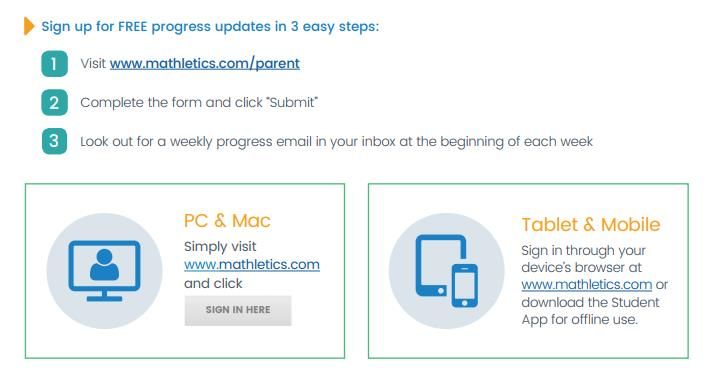
Homework Policy 2018
Sharing homework expectations with parents and children
It is important that children and parents appreciate our rationale behind homework, that is,
homework is set to practise key skills, primarily in Reading, Spelling and Mathematics.
Accordingly, children’s lack of engagement with homework will hamper academic progress.
Certainly, with Reading in particular, school has not enough capacity to give every child the
support they need when it comes to the necessary practise required to become a competent
reader. Because of this, there is an expectation that homework will be completed.
Teachers will contact parents where there is a shortfall in children’s engagement with
homework. If this persists, then a standard letter will be sent home and SLT informed.
At the beginning of every academic year, each teacher participates in a Meet the Teacher
session with parents. This is a time when homework expectations for the year will be shared
with parents; Parents’ Evenings, at other times during the year, will be a good time to discuss
homework too. At these times, it is worth sharing with parents and children that we have
pared homework down to the bare essentials, and have attempted to make it as engaging as
possible with budget investments in Mathletics and Spellodrome.
Every child from Year 2 to Year 6 will be issued with a Homework Log. This keeps a record of
children’s homework, and is something that teachers, parents and children need to engage
with.
There will always be an expectation for children to do homework. Accordingly, there will never
be a school week where children have no homework except, maybe, on the week prior to a
holiday. Sometimes, particularly with homework projects, additional information will be made
available to parents via a letter or Year Group Newsletter.
Additional optional homework
Every half term, Class Teachers will set an additional, optional homework. This will usually link
to the broader curriculum (or ‘Topic’) that the children are studying, and be set as a ‘project’. It
is an ongoing homework (i.e. set over a number of weeks within a school half term). Children
should never receive this homework over holiday periods as The Coppice recognises that
‘family time’ is important during these periods.
Normally, such homework will be set at the beginning of the half term, and might include:
research;
collation of an associated information text;
construction of a model;
collecting things (e.g. autumn leaves for a collage)
art work;
conducting an activity (e.g. Science experiment) and being expected to report on the
outcome;
watching a particular TV programme and being prepared to comment on it.
The above list is not comprehensive but gives examples of the sort of activity that might be set.
It may be that other optional homework is offered throughout the year from time to time (e.g.
the Headteacher’s Black History Month biography). These are often set up as competitions with
rewards for the best entries.

Homework in Reception.
We work on the basis that a strong link between home and school with good quality, regular
communication is very important and supports children succeeding well at school. In Reception
we therefore ask children to read at home as often as possible. Accordingly, they are given a
new book every week and are given sets of tricky words to learn by sight. Once children can
read all these 45 words, we give work on spelling them from memory. Each child has a reading
Log to enable communication between home and school on reading progress and
development.

In Communication Books, each child has a reading / writing and maths target to work
towards. Parents / carers can see when the child has achieved these as they are stamped with
a trophy and dates. All children are encouraged to work on these next steps at home. The
teacher will also use the communication books to give individual targets to the children such as
practising a certain letter formation they are finding tricky to write in school, if this is needed.

The Teaching Assistants check Communication Books on a daily basis and, where needed, will
inform the Class Teacher of any notes and messages or significant learning experiences from
home. The books stay in school each Thursday evening, where the class teacher will make an
individual comment on significant learning and behaviour, next step targets or celebrations
(because a child has worked particularly hard and achieved a next step). There is information
in the front of each of the Communication Books for parents/carers that explains how to use
them effectively and examples of home/school comments that are useful and informative.

Each week the Reception Team send a newsletter home that explains areas of learning for the
upcoming week so that they can be discussed at home with their children. On this newsletter, it
also has an optional homework that is usually creative or experience led such as: go on an
autumn walk; find a picture by the artist ‘Kandinsky’ and say what you like/don’t like about
it. This is all recorded in the Communication Book.

Homework in Year 1.
Homework in Year 1 follows a similar pattern to Reception classes (above), with the children
being set a list of tricky words. The children have to be able to both read and write all of the
words on the list before a new set is given.

Communication Books are still used, but only Writing and Maths targets are set (Reading
targets are written into the children's Reading Diaries); any targets that have been achieved are
dated and then a stamp or sticker is awarded. Communication Books stay in school on a
Monday and Teaching Assistants check them then.

Each week a Mathletics task is set which the children must complete. They are more than
welcome to complete further activities if they so wish. Class teachers monitor the use of
Mathletics weekly, celebrating achievements of the children by checking their points and giving
certificates.

An optional topic homework is included within the Year 1 weekly newsletter.

MATHS HOMEWORK (YEARS 1 - 6)

Homework tasks: Teachers will set weekly Maths homework tasks on Mathletics. One or two
tasks will be set each week, which will either support recent learning or consolidate a previously
taught concept. It is expected that all children complete the tasks set.

Homework expectations differ slightly as the children progress through school. The Maths
homework expectations are as follows:

Year One and Year Two: Mathletics tasks set by the teacher must be completed

Year Three and Year Four: Mathletics tasks set by the teacher must be completed and a
minimum of 500 points should be achieved

Year Five and Year Six: Mathletics tasks set by the teacher must be completed and a
minimum of 800 points should be achieved

Additional points / Rewards: Once the set homework task/s on Mathletics are completed,
additional points can be earned by completing other activities or by playing Mathletics
Live. Points earned are monitored and tracked weekly by the class teacher. Achieving 1000
points in a week will earn your child a certificate. Scores of 1000 (or more) are recorded on
classroom charts and Silver and Gold certificates will be given out during Celebration
Assemblies. The school celebrates our weekly ‘Mathletics Superstars’ (those children with the
highest scores from each class). In addition to this, children who are identified for their excellent
efforts or achievements in Mathletics throughout the year, may also receive rewards such as
badges, wristbands or medals.

Mathletics homework will be set for two terms of the year with one term (usually the Spring
term) being set aside for a Times Tables Challenge and Problem Solving activities. During this
time no additional Mathletics tasks will be set but of course the children can still log on, practise
their skills and earn points.

Homework Log: The children should attempt the Mathletics tasks independently, however if
they are struggling, then please encourage and support your child as required. We ask that
each week you sign your child’s Homework Log confirming they have completed the tasks and
also record the total points they have achieved. Teachers will check and sign the Homework
Logs weekly.

If your child struggles to access the homework due to Internet problems, they are able to use
the school computer room every morning 8.25am - 8.45am where computers will be available.

Additional information regarding Mathletics can be found on the ‘Guide to Using Mathletics at
Home’ document, which is available on the school website.
READING HOMEWORK YEARS 2 - 6

At The Coppice, we try to make all homework purposeful and meaningful. Therefore we ask
that:
From Years 2 to 6: Children should read an age appropriate text for the minimum of one hour
per week.
Within this time, both parents and children have the flexibility to split their reading over the
week as needed. The time given to reading is the same across all age groups as we believe
that the greatest and most valuable homework that children can do is to read consistently and
regularly.
At the beginning of the year, during Meet The Teacher, teachers should share the expectations
for Homework Logs. Once a child has read at home, the log must be dated, pages read must
be recorded and parents must sign to acknowledge and agree to the time spent reading.
Teachers will collect in logs and check that reading, as well as other homework, has been
completed.
In addition to this, children are expected to complete quizzes (linked to the Accelerated Reader
scheme) during school time ONLY, once they have finished their book. These quiz scores
should be recorded in their Homework Log in the front pages, either by the Teacher, Teaching
Assistant or the children themselves.
The amount of quizzes taken every week or half term are related to the difficulty of the text and
the amount of time spent reading at home. There is not a maximum for the amount of quizzes
that can be taken in a week or half term but we suggest that a minimum be:
Years 2-4: At least one quiz completed per week (depending on the length and difficulty of the
text).
Years 5-6: At least one quiz every half term (depending on the length and difficulty of the text).
Teachers and Teaching Assistants will monitor the amount of quizzes completed in relation to
the difficulty of the text, and will prompt both parents and children if necessary to discuss
reading at home (e.g. this will happen if your child has not read and understood the book).
Parents should be aware of reading tasks that are set and should support their child
accordingly.
SPELLING HOMEWORK YEARS 2 – 6 At The Coppice, we expect all children from Years 2 to 6 to use Spellodrome for 20 minutes per week. The homework expectations for Spellodrome do differ slightly across the different Key Stages. The spelling expectations are as follows: Year 2, 3 and 4: Children should earn a minimum of 500 points by completing any of the spelling activities. Teachers will set a maximum of 6 wordlists to be used at any one time. Year 5 and 6: Children should earn a minimum of 500 points by completing any of the spelling activities. Teachers will set a maximum of 10 wordlists to be used at any one time. Class teachers will set new wordlists based on what the children have been taught in their RWI Spelling or phonics lessons. Spellodrome Points: Points earned are monitored and tracked weekly by your child’s class teacher. Achieving 1000 points in a week, will earn your child a Millennium Helmet/Star Certificate and 100 credits. Achieving 5 Millennium Helmets will earn your child a Golden Bike/Galaxy Certificate and 250 credits. Golden Bike/ Galaxy certificates will be printed out and awarded during Celebration Assemblies. Points are gained through: Word Detective win = 50 points Word List Workout (1 correct answer) = 10 points Words in Pieces completion = 50 points Crossword completion = 100 points Find a Word completion = 100 points Live Spellodrome: Rookie correct answers = 10 points Master correct answers = 15 points Champion correct answers = 20 points High score = 10 credits Win race (100% accuracy) = 5 credits Weekly ‘Spellodrome Superstars’ are also celebrated. The names of the children with the highest scores from each class will appear on the ‘Spellodrome Superstar’ board and they will also earn additional team points. Homework Log: We ask that each week you sign your child’s homework log book confirming and recording the total points they have achieved. Teachers will check and sign your child’s Homework Logs weekly. Additional information regarding Spellodrome can be found on the ‘Spellodrome Parent Information Sheet’, which is available on the school website.
Spellodrome Parent Information
What is Spellodrome?
Sheet
Spellodrome is a web-based learning program that integrates home and school learning via the internet. As an online
learning resource, Spellodrome is the next generation in learning, helping students enjoy English while learning.
Spellodrome uses play and practice as the vehicle to encourage students to enjoy and improve their spelling skills.
Spellodrome provides instant feedback on student’s performance, maintain a high level of motivation, and offer
teachers the opportunity to address children’s learning strength and needs. Is my child’s learning
protected?
Yes… As long as the
Why is The Coppice Primary School using Spellodrome? user name and
password has been
How will Spellodrome benefit my child? How will Spellodrome benefit me? kept confidential.
Improves achievements by supporting teachers in designing Gives you a window into your child’s learning. Each student’s
personalised and engaging learning experiences which It is a convenient, quick way to monitor your child’s progress Spellodrome account
respond to individualised English needs. by way of the internet. holds information
Provides immediate feedback as students know instantly Provides the perfect link between home and school as you relating to individual
how they are progressing. can sign up to receive weekly emails updating you on your results and progress.
Empowers students to become more independent in their child’s progress.
learning. Educational and fun activity to engage your child in learning Please ensure that
Studies show increased engagement and motivation for when at home. your child is the only
learning when using tools like Spellodrome. one to access and
use their account.
Accessing Spellodrome: If you or your child
Logging on thinks that someone
You can now access Spellodrome from almost any
knows the password
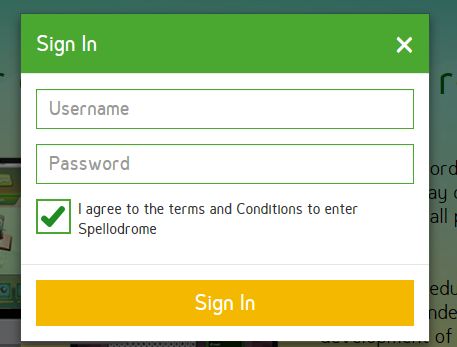
mobile device, more details regarding devices can Your child’s username and password for Spellodrome
please see your
be found at are the same as Mathletics. Your child’s login can be
child’s class teacher
http://www.3plearning.com/tech/spellodrome/ found out the back of their Homework Log. If your
ASAP.
child loses this for any reason please speak to your
You may need to update your Adobe Flash Player.
child’s class teacher.
Homework: As Spellodrome is now part of our weekly homework at The Coppice, we ask that your child achieves 500 points
per week.Your guide to using Mathletics at home
Your child is using Mathletics as part of their mathematics program at school and also forms the basis of their
homework. Mathletics is a targeted, rewarding and captivating online resource which is aligned to curriculum
standards. Your child can access Mathletics by signing in with their school username and password, using any
compatible computer or mobile devise.
Weekly tasks will be set by the class teacher which must be completed. Completing extra Mathletics activities
at home can make all the difference to your child’s progress. Please encourage them to achieve a weekly
target of 1000 points to earn a certificate, working through bronze, silver and gold throughout the school
year. (3 x 20 minute sessions per week should enable 1000 points to be achieved.) If 20 certificates are
achieved during the school year, your child will receive a special ‘Coppice Mathematics Award’.
POINTS SYSTEM
1 point – for each Live Mathletics question
correctly answered.
10 points – for each activity question
correctly answered.
CREDIT SYSTEM
5 credits – when you win whilst playing Live
Mathletics.
10 credits – when you beat your ‘High
Score’.
1000 points a week gains you a certificate.
We run a Mathletics club before school every morning 8.25am – 8.45am. If your child has not
been able to complete their homework or would like to earn some extra points then they can
come along to the computer room (accessed directly from the playground).
The scores are reset on Sunday evening so they will start each Monday morning from zer
Why is The Coppice Primary School using Mathletics?
How will Mathletics benefit my child? How will Mathletics benefit me?
Improves achievements by supporting teachers in Gives you a window into your child’s
designing personalised and engaging learning learning.
experiences which respond to individualised It is a convenient, quick way to monitor
Mathematical needs. your child’s progress by way of the
Provides immediate feedback as students know internet.
instantly how they are progressing. Provides the perfect link between home
Empowers students to become more independent and school as you can sign up to receive
in their learning. weekly emails updating you on your
Studies show increased engagement and child’s progress.
motivation for learning when using tools like Educational and fun activity to engage
Mathletics. your child in learning when at home.What is Mathletics?
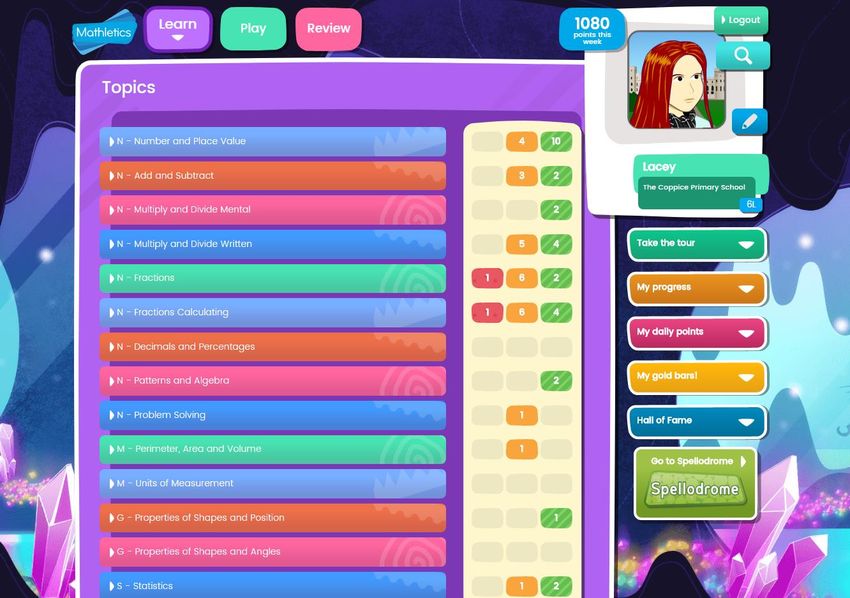
Student Console It is a web-based
learning program that
integrates home and
Map
Play – Takes you to Live Review-
school learning via the
Internet. Mathletics
Mathletics. Here you can Check to see Bars – keeps you informed uses play and practise
challenge each other from all if you have of your achievements
over the world in real-time
as a vehicle to
any
games that will test their speed activities or
encourage students to
Home page
and accuracy. Rainforest tests set by Weekly points enjoy and improve
Maths and Times Tables Toons your teacher Keeps a running total – their number skills,
can also be accessed here. aim for 1000! Avatar - Personalise with instant feedback
and modify their on their performance.
avatar and spend
Learn – Test your credits to purchase
skills by accessories.
completing the Is my child’s
activities to learning protected?
practise different
skills and earn
Yes…As long as the
points.
username and password
has been kept
Progress –View your confidential.
achievements and see
Each student’s Mathletics
all the certificates
account holds information
you have achieved
relating to individual
results and progress.
Gold bars –Indicates
when a score of 85%
Please ensure your child
has been achieved.
is the only one to access
and use their account.
Quick link to If you or your child thinks
Spellodrome. that someone knows their
password, please see the
teacher and get it
READING SPELLING MATHEMATICS EXTRA
changed ASAP.HOMEWORK OVERVIEW
Reception Targets are set by the class teacher and will be written in the children’s communication Optional homework linked to topic
books. work in class.
Communication books will remain in school on Thursdays for teachers to check.
Year One Tricky words are set which the children need to be able
to read and spell before they are given a new list. Reading Additional topic related homework
Complete weekly Mathletics
targets are set in the Reading Diaries and Writing is set weekly (via the tear group
tasks online.
targets in the Communication books newsletter)
Number Bond homework will
Year Two At least one hour of be set at some point in the
Complete activities on
reading each week (chunked year.
Spellodrome using the
accordingly). weekly wordlist/s created Complete weekly Mathletics
Year Three At least one quiz per week by the teacher (up to a tasks online and achieve a
should be completed in maximum of 6 wordlists at a Optional homework tasks will be
minimum of 500 points
school (depending on the time). set each half term linked to the
Year Four length and difficulty of the A minimum of 500 points
A ‘Times Table Challenge’ will
broader curriculum (usually topic
be set at some point during
book) should be achieved. related).
the year.
Year Five At least one hour of Complete weekly Mathletics These should be completed during
Complete activities on
reading each week (chunked Spellodrome using the tasks online and achieve a the half term and should not be
accordingly). weekly wordlist/s created minimum of 800 points set over half term / holiday
At least one quiz per half by the teacher (up to a periods.
A ‘Times Table Challenge’ will
Year Six term should be completed in maximum of 10 wordlists at
school (depending on the a time). be set at some point during
length and difficulty of the A minimum of 500 points the year.
book) should be achieved.
Please refer to the full Homework Policy (available on the School website) for more information regarding Homework
expectations.Data Protection Statement
The procedures and practice created by this policy have been reviewed in the light of our GDPR Data Protection Policy.
All data will be handled in accordance with the school’s GDPR Data Protection Policy.
Reason for Who does it Where is it
Name of policy Content
policy relate to? stored?
Homework Policy Guidelines for To provide clarity Parents Secure Network
homework drive
As such, our assessment is that this policy:Has A Moderate Level of
Has Few / No Data Has a High Level Of Data
Data Compliance
Compliance Requirements Compliance Requirements
Requirements
√You can also read


