The EU budget at a glance - europa.eu
←
→
Page content transcription
If your browser does not render page correctly, please read the page content below

The EU budget
at a glance

            May 2019

Budget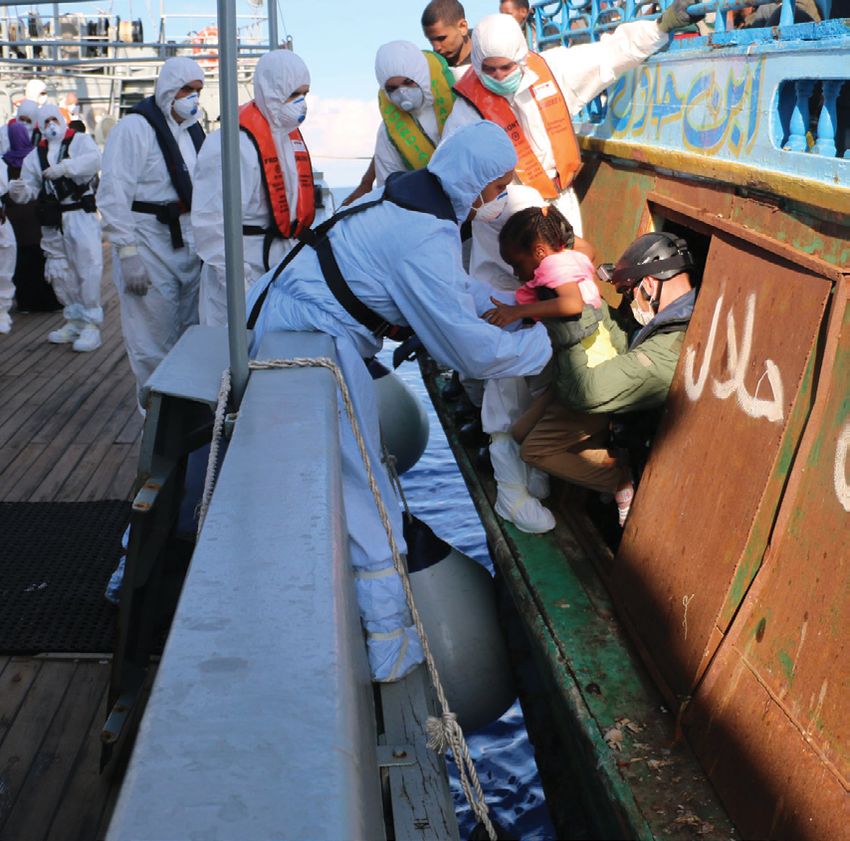
The EU budget
       at a glance
       May 2019

      #EUBudget
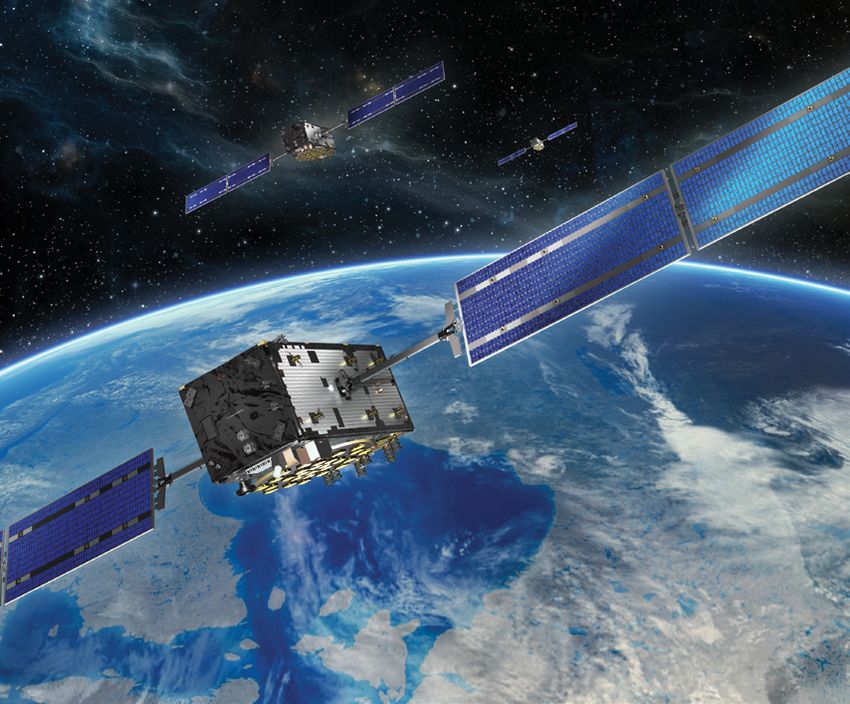
Table of Content

I.     Why do we need an EU budget?              4

II.    How does the EU budget make a
       difference?                               8

III.   How does the EU budget work?             14

V.     The EU budget is spent in a democratic
       and responsible way                      20

V.     The EU budget contributes to defining
       Europe for the next decade               26

VI.    The results of the EU budget are all
       around you                               30

                                                     3
Why
       do we
    need an EU
4
        budget?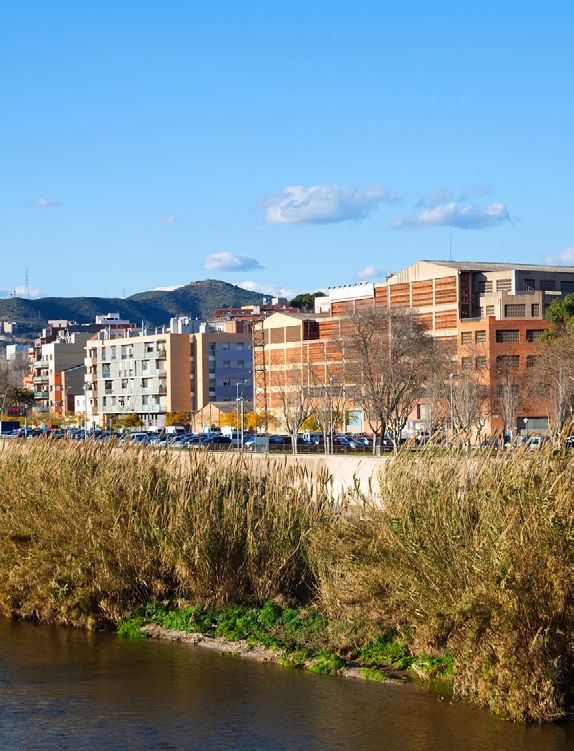
Why do we need an EU budget?

The European Union budget helps to deliver on things that
matter for Europeans. At the origin of the European project
was the idea that pulling resources together would make
Europe stronger and be the key to prosperity and peace.
The EU budget continues to do that by financing projects
that make a difference in the life of European citizens.

THE EVOLUTION OF THE EU BUDGET

For the past 60 years, the EU budget has progressively changed with the building of
the European Union.

                                                             Since 2004
                                                             • 13 new Member States.
         1960s                                               • Growing role of the EU in the world, as a
                                                                leader in the fight against climate change
         Agriculture first major
         common policy.                                         and as the largest donor of humanitarian
                                                                and development aid in the world.

                               1980s and 1990s
                               • Single market.
                               • New domains: economic, social and
                                   territorial cohesion; transport; space;
                                   environment and research.

The EU budget is the tool to ensure that Europe remains a democratic, peaceful,
prosperous and competitive force. It provides the means to make Europe a global leader
facing today’s and tomorrow’s challenges.
                                                                                                             5
What makes the EU budget unique?

    By pooling resources at the European level, Member States can achieve more than they
    could by acting alone.

                Public goods requiring financing               IT BRINGS ADDED VALUE

                                                                 Every euro invested under the EU
                                                                 budget should bring added value.
                               Full
                                                           Significant investments are needed at
                                                              the European level to compete with
                                                                 other global players. They cannot
                               Some                             be financed by one Member State
                                                                  alone because of their scale. For
                                                                instance, the EU budget promotes
                                                             infrastructure and research projects
                               No
                                                              by creating economies of scale and
                                                                   leverage effect, and by avoiding
           EU ADDED VALUE
                                                                             duplication of efforts.
    Criteria: Treaty objectives and obligations - Public
    goods of a European dimension - Economies of
    scale - Spillover effect - Subsidiarity - Benefits
    of EU integration - European values: peace,
    democracy, rule of law

    IT IS DIFFERENT FROM NATIONAL BUDGETS

    Unlike national budgets, the EU budget
    is an investment budget:
    it does not fund social protection, primary
    education or national defence, but rather
    the key areas that provide European
    added value by boosting growth and
    competitiveness. It intervenes only when
    it is more effective to spend money at the
    European level than at local, regional or
    national level.

    An emergency at sea or during a road trip? The
    EU’s Galileo satellites can help locate anyone in                                        ©OHB
    need of assistance and save many lives.
6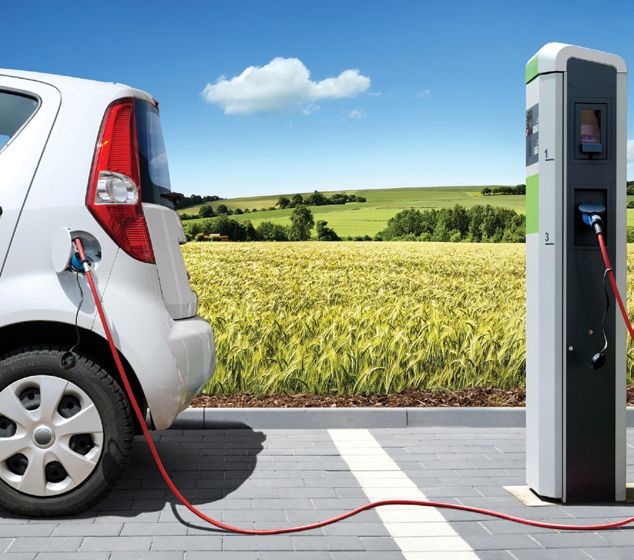
Why do we need an EU budget?

    IT ENSURES EUROPE’S ROLE AS A GLOBAL ACTOR

    The challenges we face are global.
    The EU budget provides the means for a
    global response to tackle transnational
    issues that affect all its citizens. Faced
    with the most severe refugee crisis
    the world has seen since the Second
    World War, the EU managed to bring
    about a profound change in migration
    management and border protection.
    The EU has offered protection and
    support to millions, saved lives,
    dismantled trafficking networks and
    brought irregular arrivals to Europe down
    to the lowest level recorded in five years
    at the end of 2018.
                                                     Operation Themis 2018 ©2018 FRONTEX

                                                     IT PROMOTES AMBITIOUS AND
                                                         INNOVATIVE INVESTMENTS

                                                       The EU budget provides the guarantees
                                                         needed for risky or long-term projects,
                                                            which could never be financed by a
                                                         single EU country by itself. It improves
                                                      the business environment by unleashing
                                                          the potential of European companies,
                                                        and by removing regulatory barriers to
                                                        investments both nationally and at the
                                                                                          EU level.

    ©tilialucida - Fotolia

    Example
    In 2014, the EU launched the Investment Plan for Europe to get Europe investing again.
    By 2020, it will have mobilised €500 billion of private and public investment to ensure
    Europe’s competitiveness in key sectors such as artificial intelligence and digital and
    ecological transition.
7                                                                                                     7
How does
    the EU
      budget
      make a
8
    difference?
How does the EU budget make a difference?

    It increases shared prosperity and
    solidarity
    The EU budget contributes to reducing disparities within Europe and between regions.
    Average gross domestic product per capita in the EU has almost doubled over the past
    twenty years. The increase has been over tenfold for some of the poorest members. It is
    estimated that the return on investment of regional spending by 2023 will be €2.74 for
    every €1 invested between 2007 and 2013 — that is a 274% return.

    REGIONAL POLICY IN FIGURES
    For 2014-20, the EU allocated over €460 billion to regional spending. This should result in:

    broadband                         better healthcare                  flood and fire
    access for                                 for                       prevention for
    14 million                                 44 million               27 million
    additional                                 Europeans                   people
    households
    nearly                              over                           new, modern schools
    17 million                                 420,000                 and childcare for
    people                                     new jobs                        6.9 million
    connected to                        in companies                              children
    sewage plants
                                    help for over
                                             1,100,000
                                             companies
    Figures from April 2018

    Example
    To bridge the digital divide, the EU is supporting access to broadband. This is vital for
    ensuring the balanced development of all EU regions and allowing citizens and businesses
    to benefit from new digital services. In France, the EU invested €600 million in the
    “Enhanced Broadband for All” project to bring very high speed broadband to the whole of
9   the country by 2022.                                                                           9
It leads the fight against climate
change
Almost one fifth of the EU budget is currently dedicated to climate actions, from
sustainable agriculture to investments in energy efficiency in buildings and renewable
energy. It represents €200 billion for the period 2014-2020.
EU TARGETS FOR REDUCING GREENHOUSE GAS EMISSIONS BY 2030
At least 40% cuts in At least 32% share of At least 32.5%
greenhouse gas emissions renewable energy improvement in energy
(from 1990 levels) efficiency
2018 forecast
Example.
New bioproducts from crop
oil in Italy
First2Run aims to demonstrate the
technical, economic and environmental
sustainability of a biorefinery making
bioproducts using oil from crops grown in
arid or marginal zones. Oils are converted
via chemical processes into plastics,
lubricants, cosmetics and plasticisers.
Integration of all phases, from crop
cultivation to product synthesis, benefits
the economy, the environment and the
©Makuba2018 - fotolia.com
region. (EU contribution: €17 million).
10How does the EU budget make a difference?
The EU budget empowers
The EU budget creates opportunities for millions of students, thousands of researchers,
cities, businesses, regions and NGOs through its programmes.
Young people have the opportunity to study, volunteer and work abroad
through the Erasmus+ programme and the European Solidarity Corps. The Youth
Employment Initiative helps young jobseekers develop their skills and find the right
opportunity.
Regions and cities have access to European structural and investment funds,
investing in job creation and a sustainable and healthy European economy and
environment.
Researchers can benefit from partial financing through Horizon 2020.
Thanks to the EU budget, the European Union is a world leader in research and
innovation. It is responsible for one quarter of global expenditure on research
and one third of global patent applications.
Small and medium businesses benefit from grants, loans and in some
cases guarantees, as well as better access to finance and markets under the
competitiveness of enterprises and SMEs (COSME) programme.
Farmers receive aid to bolster their income, as well as environmental
funding from the European Agricultural Fund for Rural Development and LIFE
programme to promote sustainable agriculture.
NGOs have access to EU funding if their area of activity relates to an EU
policy.
EU membership benefits all European citizens by creating the conditions for personal and
professional well-being.
‣‣ Peace ‣‣ More affordable air travel
‣‣ Security and stability ‣‣ Healthy and safe food
‣‣ Freedom to live, travel, and study ‣‣ New and better roads
everywhere in the EU ‣‣ Cleaner rivers, beaches, and air
‣‣ Improved consumer protection ‣‣ Lower mobile charges
‣‣ Single market ‣‣ Better data protection 11The EU budget protects
Terrorism, organised crime, climate change, natural disasters or epidemics do not have
borders. The EU budget helps protect our safety, our health, our environment and our
society against these global threats.
OUR SAFETY
©European Union ©European Union ©Shutterstock
From awareness to No man is an island: Safe surfing:
prevention: the European Border and the EU protects us online.
the EU is combating Coast Guard Agency is
radicalisation across Europe. helping protect borders.
OUR HEALTH
©Shutterstock ©Shutterstock ©European Union
Hidden hazard: Keeping cool: A humanitarian crisis:
a surprise toy put European Europe is using natural the EU helped contain Ebola
countries on high alert. solutions to fight in Africa.
heatweaves.
12How does the EU budget make a difference?
https://europa.eu/euprotects/ #EUprotects
OUR ENVIRONMENT
©European Union ©European Union ©European Union
The distress signal: The burning issue: A safety net for sea
Europe came together to the EU is helping fight deadly turtles:
fight forest fires in Italy. air pollution in Poland. the EU is helping protect our
marine ecosystems.
OUR SOCIETY
©Shutterstock ©Shutterstock ©Shutterstock
From war-stricken Syria to Building foundations: Escaping energy poverty:
safety: the EU is helping to break the the EU is making sure
the EU helped refugees build a cycle of poverty. families are not left out in
new life in the Netherlands. the cold.
13How does
the EU
budget
14
work?How does the EU budget work?
Long-term budget versus annual
budget
LONG-TERM BUDGET
As the EU budget is mainly an investment budget, it needs to be decided on a long-term
basis to ensure stability. A long-term spending plan, called the Multiannual Financial
Framework (MFF), is adopted for a period of at least five years (generally seven years).
The MFF lays down the maximum annual amounts (ceilings) that the EU may spend in the
different categories of expenditure (headings) for each of the five to seven years.
2013 2014 2015 2016 2017 2018 2019 2020 2021
Multiannual
Financial 34%
39%
Framework Sustainable Growth/
Natural resources
Economic, Social and
Territorial Cohesion
2014-2020 € 1 087
in billion,
expressed in
commitment 2%
6%
13%
6%
appropriations Competitiveness for
Security and
Citizenship Growth and Jobs
Global Europe Administration
ANNUAL BUDGET
Each annual budget is adopted within the limits of the MFF
and usually remains below the MFF expenditure ceilings to 2018 2019 2020
guarantee flexibility. MFF ceilings can be compared to credit
card limits for the period of one year.
Did you know?
The EU budget is expressed in commitment and payment appropriations.
• Commitments are legal pledges to provide finances.
• Payments are cash or bank transfers to the beneficiaries to cover expenditure due in
the current year, arising from legal commitments entered in the current year and/or
earlier years. 15How big is the EU budget?
The EU
€148
Denmark
€157
Poland
€223
Belgium Germany
€242 €1,552
Austria
France €192
€1,342
Italy
Spain €871
€516
In billions, in 2019. Forecast from May 2019. The EU budget is expressed in payment appropriations.
The EU budget costs the average citizen less
than a cup of coffee per day.
Did you know?
At some €148 billion (2019 figure), the annual EU budget is in fact smaller than the
budgets of Austria or Belgium. The EU budget represents a small part of total public
expenditure in the EU: around 1% of combined EU income and only around 2% of public
spending in the EU.
16How does the EU budget work?
What does the EU budget finance?
The EU budget is broken down into five headings, which represent spending areas. The
lion’s share of the EU budget (around 75%) goes to regional development, agriculture and
fight against climate change (headings 1b and 2). Only 6% of the EU budget goes towards
administrative costs.
Smart and inclusive growth
a. Competitiveness for growth and jobs. The EU invests
in research and innovation, education and training,
trans-European networks in energy, transport and
telecommunications, development of enterprises, etc.
b. Economic, social, and territorial cohesion. The EU finances
regional policy to help the least developed EU Member States
and regions catch up with the rest, strengthening all regions’
competitiveness and developing inter-regional cooperation.
Sustainable growth: natural resources. The EU budget finances
agriculture – including rural development, fisheries, and environmental
and climate action.
Security and citizenship. It invests in justice and home affairs, border
protection, immigration and asylum policy, public health, consumer
protection, culture, youth, civil protection and dialogue with citizens.
Global Europe. It covers all external action (foreign policy) by the EU
such as development assistance and humanitarian aid.
Administration. The EU budget covers the administrative expenditure
of all the European institutions. It includes staff salaries, pensions,
buildings, information technology, trainings, translation and European
schools.
17EU BUDGET IN 2019
36% 35%
€ 165.8
billion
2%
14%
7%
6%
Adopted budget for 2019 expressed in commitment appropriations.
Competitiveness for Growth
and Jobs Security and Citizenship
Economic, Social and
Global Europe
Territorial Cohesion
Sustainable Growth: Administration
natural resources
Too much money for agriculture?
In 2017, the share of EU spending on farming was 41%. In 1985, 70% was spent on
farming. Over the past decade, 13 countries – most of them with large farming sectors –
have joined the EU. However, the common agricultural policy budget has not risen. In fact,
spending continues to fall. For 2021-2027, the Commission proposed to dedicate less
than 30% of the EU budget to agriculture. Its relatively large share of the EU budget is
justified: it is the only policy funded almost entirely from the EU budget. This means that EU
spending replaces national expenditure to a large extent.
18How does the EU budget work?
How is the EU budget financed?
RESOURCES COME MAINLY FROM MEMBER STATES
The EU budget is always balanced: it can never run a deficit. The EU budget is financed
from the following sources:
• customs duties on imports from outside the EU;
• a small proportion of the value added tax collected by each Member State;
• a proportion of Member States’ gross national income in line with how wealthy they
are;
• other revenue, notably including tax and other deductions from EU staff remuneration,
contribution from non-EU countries to certain programmes, interest on late payments
and fines, as well as surplus from the previous year.
EU REVENUE IN 2018
65%
Gross national
income
Own resources
11%
Value added tax
13%
Customs duties
11%
Other revenue
19The EU
budget is
spent in a
democratic
and
responsible
20
wayThe EU budget is spent in a democratic and responsible way
The EU budget is decided
democratically
Every year, the European Parliament and the EU Member States agree on what part of the
seven-year budget will be spent over the following 12 months. They also decide on where
the money will go. This procedure takes into account the positions of the institutions that
represent EU citizens and Member States, and involves the following steps.
1. The European Commission proposes a draft annual budget.
2. The draft budget must be approved by the national governments in the Council of
the EU and by the European Parliament, which is elected by European citizens.
3. Both the Council and the Parliament can amend the draft.
4. The Council and the Parliament approve the final version.
Amount of money
allocated to each
spending programme
Implementation
The Member States in the can begin
Council examine the draft January year N
and express an opinion
The Commission Negotiations Annual budget
proposes a draft budget Agreement reached approved
May-June N-1 November N-1 December N-1
The European Parliament
examines the draft and
expresses an opinion
September-October N-1
Did you know?
When the European Parliament and the Council do not agree on a common text,
they engage in a negotiation process known as the “conciliation procedure” which
can last up to 21 days. 21The EU budget is implemented
mainly by the Commission and the
Member States
• Only 18% of the EU budget is directly managed by the Commission.
• 8% the EU budget is managed indirectly by international organisations, decentralised
agencies, third countries, etc.
• The lion’s share of the EU funds (74%) is spent together
with Member States under what is known as shared management. The authorities
in the Member States (for instance the ministries for regional development), rather
than the Commission itself, manage the expenditure under the supervision of the
Commission. The ultimate responsibility for the implementation of the budget lies with
the European Commission.
DIRECT MANAGEMENT
European Commission, including its delegations and
18%
executive agencies
SHARED MANAGEMENT
74% Member States
INDIRECT MANAGEMENT
International organisations, decentralised agencies and joint
undertakings, national agencies, specialised union bodies, third
8%
countries
EU’s central online database
If you want to know who receives EU money and how much, you can use the
EU’s central online database. For EU funds distributed by national authorities, the
information is available on national websites.
https://europa.eu/!xK97cQ
22The EU budget is spent in a democratic and responsible way
SHARED MANAGEMENT
A big part of EU budget expenditure is managed by Member States under so-called shared
management in areas such as agriculture and regional development.
Benefits of shared management
EU funding under shared management has been a major and stable source of
public investment in many Member States.
It acts as a catalyst for further public and private investment. Member States
or private partners are more likely to finance projects if they can share the
funding and the associated risks with the EU.
It encourages Member States to implement necessary structural reforms to
make efficient and effective use of the European funds. All these measures
benefit the economy as a whole, creating a more favourable business
environment.
Territorial cooperation between neighbouring countries is a way to strengthen
the internal market and reduce barriers between Member States.
Example.
EU funds help renovate one of
Catalonia’s most densely populated
areas
EU funding and private investment have
enabled the council of Santa Coloma
de Gramenet, Catalonia to renovate
neighbourhoods in the Serra d’en Mena area.
Upgrades include construction of a multi-
purpose building with a market, a library
and a crèche. This is an example of how
neighbourhoods can be made more welcoming
and economically and environmentally
sustainable. EU funding covered more than half
of the total investment (€7.3 million out of €14
©JackF - fotolia.com
million).
23 23The EU budget is one of the most
controlled in the world
How Recommenda-
Reporting ECA Vote in the
tion by
process Reports Parliament
the Council
Discharge
to the
Commission
given by the
European
Who Parliament
The European
European Court of Council European
Commission Auditors (ECA) Parliament
TRANSPARENT REPORTING
The EU is one of the most transparent institutions in the world as far as accountability
reporting is concerned. Every euro the EU spends is recorded in the books and accounted
for. The Commission presents in a transparent manner the results of controls and audits
carried out by the Commission, the Member States and other organisations, as well as the
actions taken to address any weaknesses found. The European Court of Auditors is the
external auditor for the EU budget.
The Commission and the Member States work together to make sure that taxpayers’
money is spent well and in an appropriate manner. There are different types of safeguards
in place: preventive and corrective measures.
Errors versus fraud
Errors do not mean that EU money is lost, wasted or affected by fraud. In fact, fraud
affects approximately 0.2% of the total EU budget. Errors mainly stem from
misinterpretations of public procurement rules or from administrative mistakes in
applications submitted by beneficiaries, for example when documents are missing.
24The EU budget is spent in a democratic and responsible way
Preventive measures. The Commission puts much emphasis on preventive measures,
such as sharing good practices, providing guidance and training, mandatory control and
audit structures in Member States as well as interruption and suspension of payments.
Corrective measures. The Commission applies corrective mechanisms as a last resort
where preventive mechanisms were not effective. They typically include financial
corrections and the recovery of irregular expenditure declared by Member States or
beneficiaries.
DISCHARGE PROCEDURE
The European Parliament decides on the discharge to the Commission. By granting
discharge, the European Parliament approves how the Commission has implemented the
EU budget.
This procedure ensures that the management of European taxpayers’ money is under
democratic control, and that the Commission is always held accountable.
When deciding on the discharge,
the European Parliament takes into account
accountability reports from replies from exchanges of recommendation
reports the European the Commission views with from the Council
by the Court of Auditors to questionnaires Commissioners
Commission about the EU
budget
EU’s financial regulation
The rules governing the actual spending of EU funds are contained in the EU’s financial
regulation. They are regularly reviewed and simplified to make life easier particularly for
small beneficiaries.
https://europa.eu/!kF47JM
25 25The EU
budget
contributes
to defining
Europe
for the next
26
decadeThe EU budget contributes to defining Europe for the next decade
The challenges the EU is facing
are huge
Security and safety Economic strength, Migration External challenges,
for the citizens of sustainability and management humanitarian aid
the Union solidarity & development
The EU budget will serve Europe for the next decade and beyond. The next long-term EU
budget will run until 2027, and it is designed to ensure a Europe that empowers, protects
and defends. In May 2018, the European Commission made its proposal for the next
long-term EU budget.
PROPOSED NEXT LONG-TERM BUDGET 2021 - 2027 IN FIGURES
Security and defence
Single market, innova�on and
Security
digital Defence
Research and innova�on €187.4 Crisis Response
European Strategic Investments
Single Market €27.5
Space
Neighbourhood and the world
€442.4 €123
Cohesion and values €1 279.4 €85.3
Regional Development
and Cohesion €34.9 European public
Economic and Monetary Union administra�on
Inves�ng in People, Social Cohesion and
Values European Public Administra�on
€378.9 Migra�on and border
Natural resources and management
environment Migra�on
Agriculture and Mari�me Policy Border Management
Environment and Climate Ac�on
In billions, commitment appropriations expressed in current prices.
27How can the next EU budget help?
MORE FUNDING FOR PRIORITY AREAS
To tackle known and unforeseen global challenges, the EU budget needs to have the
means commensurate to its ambitions. In May 2018, the Commission proposed to
increase the funding for research, youth, climate action, migration and borders, security
and external action. These areas are key to helping Europe remain a global leader
for a sustainable and green future, and contribute to making the world safer through
development assistance and humanitarian aid.
Strengthened support for political priorities under the new long-term budget
Increase under the new
long-term EU Budget
Research, Innovation & Digital x 1.6
Single market, innovation and digital
Youth x 2.2
LIFE Climate & Environment x 1.7 Cohesion and values
Migration & Borders x 2.6
Natural resources and environment
Security x 1.8
External Action x 1.3 Migration and border management
Combined increase = + €109 billion
Security and defence
Climate Mainstreaming x 1.6
contributing to climate objectives
Neighbourhood and the world
20% of Multiannual Financial Framework 25% of the Multiannual Financial Framework
2014-2020, EU 28 = €206 billion 2021-2027, EU 27 = €320 billion
Combined increase = + €114 billion
A MODERN, SIMPLE AND FLEXIBLE BUDGET
Modern. The Commission proposes to further cut red tape for beneficiaries and managing
authorities.
Simple. The structure of the budget will be clearer and more closely aligned with the EU’s
priorities. The Commission proposes to streamline the number of programmes by more
than a third (from 58 currently to 37 in the future).
Flexible. The Commission’s proposal includes increased flexibility within and between
programmes, to better manage crises, tackle unforeseen events, and respond to
emergencies in areas such as security and migration.
28The EU budget contributes to defining Europe for the next decade
PROTECTING THE RULE OF LAW
At the heart of the European project is the protection of fundamental freedoms, human
rights and the rule of law. Now, the EU needs the resources to protect and build on this
legacy. Therefore, the Commission proposed a new mechanism to protect the EU budget
from financial risks linked to generalised deficiencies regarding the rule of law in the
Member States. It would allow the EU to suspend, reduce or restrict access to EU funding
in a manner proportionate to the nature, gravity and scope of the rule-of-law deficiencies.
SIMPLIFYING AND DIVERSIFYING FINANCING
FOR A MODERN BUDGET
To reduce the weight of the gross national income contribution for the Member States and
to reflect the EU’s policy priorities, the Commission proposes to introduce a basket of new
own resources consisting of:
• 20% of the revenues from the emissions trading system;
• a 3% call rate applied to the new common consolidated corporate tax base;
• a national contribution calculated from the amount of non-recycled plastic packaging
waste in each Member State (€0.80 per kg).
The Commission proposes the elimination of rebates that were granted to some Member
States to re-balance their excessive contributions to the EU budget.
These new own resources will represent about 12% of the total EU budget, and could
contribute up to €22 billion per year to funding the new priorities.
1%
65% 11% 14%
6%
13%
2%
2018 2027
4%
11%
16%
57%
Traditional own resources Own resource based on the common consolidated
(mainly customs duties) corporate tax base
Statistical value added tax-based Own resource based on the auctioning revenue
own resource of the EU emissions trading system
Other (surplus, fines,...) Own resource based on non-recycled plastic packaging waste
Simplified value added tax-based own resource
Own resource based on
gross national income
29The results
of the EU
budget
are all
30
around youThe results of the EU budget are all around you
Whether you are aware of it or not, the EU budget has a huge impact on your
life. The following are just a few examples among many.
Your education
Ten million people have been able to
study, train, volunteer or gain professional
experience abroad since the start of
Erasmus+. Boris Kuzmanov, a young
Bulgarian from Kozloduy, has achieved
his dream of becoming a highly qualified
nuclear engineer thanks to a loan granted
©Rido - Fotolia under an EU master’s degree programme.
(EU funding under the MicroBank
programme under Erasmus+: €12,000
a year for a master’s degree and up to
€18,000 for a two-year course)
Your personal
and professional
development
The European Solidarity Corps creates
opportunities for young people to volunteer
or work in projects in their own country or
abroad that benefit communities and people
©European Union around Europe. (EU funding: €143.3 million
in 2019)
31Your job
Are you a Spanish nurse? A Lithuanian
software developer? Or a Dutch interior
designer? You are ready to work anywhere
in Europe. The EURES portal helps
jobseekers to find jobs and employers to
recruit from all over Europe.
©pressmaster- Fotolia
Your health
Health-i-care is a project in which Dutch
and German experts from healthcare,
science and business are developing
innovative products and technologies to
protect the population against infections
and prevent antibiotic resistance. (EU
funding: €3.5 million)
©Hoda Bogdan – Fotolia
Your well-being
The new EU school fruit, vegetables and
milk scheme promotes healthy eating habits
among children. It includes the distribution
of fruit, vegetables and milk products, as
well as programmes to teach pupils about
the importance of good nutrition. (EU
funding: €250 million agreed for 2017-
©mizina – Fotolia 2018)
32The results of the EU budget are all around you
Energy security
The Baltic connector will be the first gas
pipeline to connect Estonia and Finland and
will significantly increase energy security
in the eastern Baltic Sea region. It will be
able to transport gas in both directions and
– together with the gas interconnection
Poland-Lithuania – will help finalise the
©European Union ‘Baltic gas ring’ and end the isolation
of the Finnish gas market. (EU funding:
€192.8 million)
Your travels
In 2018, a pilot project from the European
Commission enabled 15,000 young people
turning 18 to travel around Europe by train
between July and the end of September.
(EU funding: €12 million for 2018)
©nd3000-Fotolia
Your free time
The EU’s Creative Europe MEDIA
programme supports the development of
around 430 films and the distribution of
some 500 films every year. In 2019, five
EU-supported films were nominated for the
Oscars. “The Favourite” by Greek director
Yorgos Lanthimos won the award for best
©Pixabay actress. (EU funding for the whole MEDIA
programme: €120 million a year)
33Your peace of mind
With the single digital gateway, citizens
and firms will gain access to information
and administrative procedures online,
for example to apply for study loans or
register a car. This European single entry
point will be integrated into the ‘Your
Europe’ portal, available in all languages.
©Tierney - Fotolia
Your region
A project in Greece’s Attica region foresees
the building of 24 high-quality state
schools and the maintenance of the
buildings by the construction company for
25 years. (EU funding: €71.6 million)
©Romolo Tavani - Fotolia
Your planet
Under the EU-funded Central European
Green Corridors project, 115 fast-charging
stations for electric cars have opened
in Germany, Austria, Slovenia, Slovakia
and Croatia – allowing cross-border
electromobility with your e-car between
Munich and Zagreb. (EU funding: €6.3
million)
©Petair - Fotolia
34The results of the EU budget are all around you
Your world
The EU provided €475 million to the
Global Fund to fight AIDS, Tuberculosis and
Malaria for 2017-2019. The EU supports
the Global Fund’s objective to help save
8 million lives during 2017-2019 and
reach the Sustainable Development Goals
target of ending the epidemics of AIDS,
©sveta - Fotolia
tuberculosis and malaria by 2030.
FIND OTHER EXAMPLES OF THE CONTRIBUTION OF THE EU BUDGET
TO YOUR EVERYDAY LIFE
https://what-europe-does-for-me.eu/en/
THE EU BUDGET FOCUSES ON RESULTS
Today, demand for EU funding is rising and in many Member States the EU budget is a
key source of investments. The pressure is greater than ever to make sure EU money is
well spent. The Commission ensures that the EU budget is focused on priorities. Projects
are selected, depending on the case, either directly by the Commission or by national
and regional authorities in EU countries, third countries, international organisations, etc.
They are chosen to meet local needs, in line with strategies and priorities that have been
agreed in advance with the Commission.
35KV-02-19-429-EN-C
Find out more about the EU budget here
Find out more about the EU’s financial programming
and budget by visiting our website regularly:
https://ec.europa.eu/info/about-european-commission/eu-budget_en
Fact check on the EU budget, https://europa.eu/!Gg36rf
FOLLOW US ON:
Facebook: facebook.com/EuropeanCommission
Twitter: twitter.com/EU_Budget
twitter.com/EU_Commission
Print ISBN: 978-92-76-08270-5 doi: 10.2761/679678 KV-02-19-429-EN-C
PDF ISBN: 978-92-76-08271-2 doi: 10.2761/963945 KV-02-19-429-EN-NYou can also read


