The FDI-ICHOM Adult Oral Health Dataset: applications and implications for improved oral health outcomes - Professor David M. Williams Professor ...
←
→
Page content transcription
If your browser does not render page correctly, please read the page content below
The FDI-ICHOM Adult Oral Health
    Dataset: applications and
 implications for improved oral
       health outcomes
            Professor David M. Williams
          Professor of Global Oral Health,
  Bart’s and the London School of Medicine and
                     Dentistry,
        Queen Mary, University of London
Five practical actions for Europe.

•Identify key knowledge gaps and target priority areas
•Implement what we know to be effective
•Integrate oral health messages into all health promotion
 strategies
•Recognise the importance of partnership across disciplines.
 We need to get out of our silos – and our comfort zone
•The role of civil society. Working with our communities.
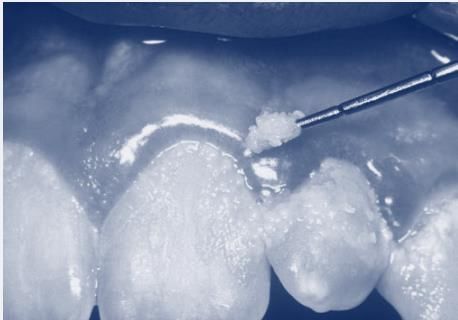
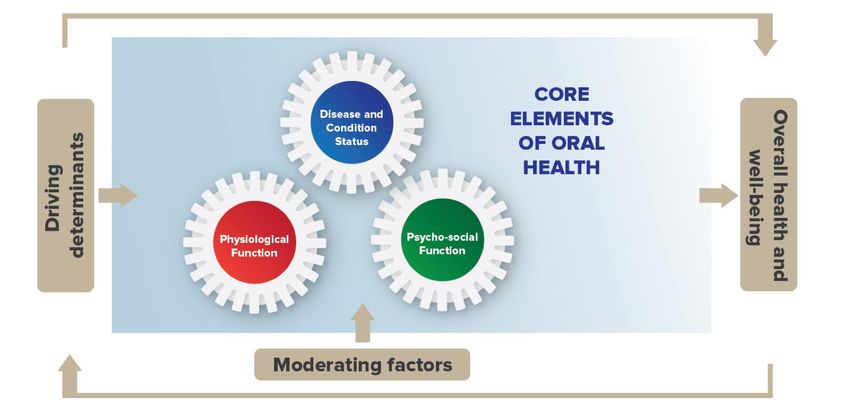
The FDI definition of oral health

Oral health is multi-faceted and includes, but is not limited to,
the ability to speak, smile, smell, taste, touch, chew, swallow
and convey a range of emotions through facial expressions
with confidence and free of pain or discomfort, and disease of
the craniofacial complex.
Framework for oral health
Collaboration with ICHOM

• In late 2016 FDI was approached by the International Consortium for Health
  Outcomes Measurement (ICHOM).
• ICHOM is an independent, not-for-profit organization dedicated to support
  value-based healthcare, by facilitating the measurement and comparison of
  healthcare outcomes. They had just announced a project aimed at developing
  a standard set of oral health outcome measures.
• A formal collaboration was approved to develop a standard set of outcome
  measures for oral health.
• The latest version of the Adult Oral Health Outcomes Standard Set was
  presented at the FDI World Dental Congress in Buenos Aires on 3 September
  2018. The paper based on the final version will be submitted for publication
  later this year.
ICHOM: value-based health care
   ICHOM believes in a model where value is at
          the center of health care...            ... which will impact every stakeholder

                                                       Patients will choose their provider based on its expected
                                                       outcomes and their share of the cost
                        Payers
          "Contain costs by paying for results
                      achieved”

                                                       Providers will differentiate into areas where they deliver
                                                       superior outcomes at competitive prices

                       Patient health outcomes
                               achieved
            Value =
                       Cost of delivering those        Payers will negotiate contracts based on results and
                              outcomes
                                                       encourage innovation to achieve those results

                      Providers                        Suppliers will market their products on value, showing
           “Compete to deliver high-quality            improved outcomes relative to costs
             results at competitive prices"
Why measuring and reporting outcomes matters

                           Focusing on                                                         …may obscure large differences
                         mortality alone…                                                 in outcomes that matter most to patients

     %100         94,0    94,0     95,0
       90
                                                                                                   80,0
       80                                                                                75,5
       70
       60
                                                              50,0
       50                                            43,3
       40                                                                                                  34,7
       30
       20
       10                                                             6,5
        0

                             5 year survival                                     1 year incontinence                            1 year severe erectile dysfunction

                                                            Germany         Sweden              Best-in-class: Martini Klinik
      Swedish data rough estimates from graphs; Source: National quality report for the year of diagnosis 2012 from the National Prostate Cancer Register (NPCR) Sweden,
      Martini Klinik, BARMER GEK Report Krankenhaus 2012, Patient-reported outcomes (EORTC-PSM), 1 year after treatment, 2010
ICHOM is supported by the health care community
     STRATEGIC
     PARTNERS

     PLATINUM

     GOLD

     SILVER

     BRONZE

        *As of August 2016
ICHOM: 21 Standard Sets completed, covering 45% of the disease burden

                                                          2016-2017 commitments

                                                          1.   Chronic kidney disease
                                                          2.   Oral health
                                                          3.   Inflammatory arthritis
                                                          4.   Congenital hand and
                                                               upper limb malformations
                                                          5.   Facial palsy
                                                          6.   Hypertension*
                                                          7.   Diabetes
                                                          8.   Atrial fibrillation

                                                           In discussions to launch
                                                          1.   Mental health package
                                                          2.   Overall adult health
                                                          3.   Overall child health
                                                          4.   Pediatric epilepsy

                                                           Numbers not representing
                                                            prioritization/ likelihood

            *Focused on low and middle income countries
Aim and expected outcomes

 Aim
       • To develop an ICHOM-FDI adult set of measures that will enable the
         evaluation and monitoring of oral health.

 Expected outcomes
       • A consensus-based Adult Oral Health Outcome Standard Set
         (AOHOSS).
       • A peer-reviewed publication with a focus on the methodology
         employed to develop a consensus-based AOHOSS
Benefits of the AOHOSS
Patients Clinicians Policy-makers Researchers Third-party payers
Verbalizing oral Basis for
Initiate dialogue with patient Advocacy Surveys
health communication
Patient Better informed patients as co- Influencing policy- Paying for value,
empowerment decision-makers makers not activity
Improved OH Dialogue with other health professionals, policy-makers and researchers
awareness Why OH matters
Being perceived as a caring and
Oral health literacy
compassionate practitioner
OH as an PATIENT CENTRED CARE
attribute/asset More comprehensive
understanding of the patient
Improved OH perspective, experience and
Contributes to well- expectations
being Competitive edge
Common language for all stakeholdersProject methodology and workload
Consumer
survey:
ongoing
Open Adult Oral
7 face-to- Regular review: Health
Delphi
face telecon- Outcome
surveys 347 Standard
meetings ferences
responses Set
More than 2,500 hours of collective work
Kick-off Dec. 2016 Draft set Dec. 2017 Final set Sept. 24th 2018FDI-ICHOM Timeline
Nov 16 Feb 17 March 17 June 17 November 17 Feb 18 Sept 18
MEETINGS
FDI V2020
Lon Gen Lon Lon Gen
SF
don eva don don eva
Call 6 Call 7
ICHOM CALLS
Call 2 Call 8 Call 9
Working Call 1 Call 5
Adult Calls 3 - 4 Adult Adult Adult
Group Adult Adult Adult
define and Adult periodontal case mix, Final
Launch outcome caries Open review
measure tool review disease data validation
Scope domains measures discussion
domains measures collection
Breakout 1 Breakout 2 Additional breakout groups as needed
Research &
propose
Literature
scope
input
Literature review of Literature review of
outcome domains and definitions case-mix domains and definitions
Patient
input
Adult Patient Adult consumer
Advisory Group validation survey
External
Adult open
Input
review periodOpen review: participation and feedback
Open review results: Response summary
Core outcome domains

   Psychosocial          Physiological          Disease and
     function               status            Condition status
                     Ability to sleep          Dry mouth      Patient
General OH status
                     Social participation      Sensitivity
Self-confidence
                                               Oral pain      reported
Ability to eat       Aesthetic satisfaction
                     Productivity              Caries
Food alteration
                                               Periodontal disease
Ability to speak
                                               Bleeding on probing
Physiological Status/Psychosocial Function
Measure Question & response option Feedback
Professionals Patients
General Oral Health Change “oral health to patient
How would you rate your oral health today?
Status friendlier “mouth, teeth and gums”
Agree.
To what extent are you satisfied with the dental care you … satisfied with you
Patient Satisfaction Change “oral health” to “mouth,
received? oral health
teeth and gums”
Self-confidence
To what extent did you feel nervous or self-conscious because of
problems with your teeth, gums, or dentures?
Ability to eat
To what extent have you have difficulty eating food due to
problems with you mouth teeth, or dentures?
To what extent did you change your food/drinks that you usually
Alteration consumed because of problems with your mouth, teeth, or
dentures?Physiological Status/Psychosocial Function
Measure Question & response option Feedback
Professionals Patients
Ability to speak
To what extent have you had difficulty speaking clearly due to
problems with your mouth, teeth, or dentures?
Ability to sleep
To what extent have you had difficulty sleeping clearly due to
problems with your mouth, teeth, or dentures?
To what extent have you had difficulty enjoying the contact of, or
Social
interact with, other people due to problems with your mouth, teeth,
Participation
or dentures?
Aesthetic
Satisfaction
To what extent were you pleased or happy with the look of your
teeth, gums, or dentures?
Productivity
To what extent have you had difficulty carrying out your usual work,
job, or tasks due to problems with your mouth, teeth, or dentures? Disease and Condition Status: General
Measure Question & response option Feedback
Professionals Patients
Dry Mouth
Experience
Are you bothered by a feeling of dry mouth? (Y/)
Oral Pain To what extent have you had pain in your mouth?
Sensitivity
Experience
Are you experiencing any sensitivity to hot or cold foods/drinks?
(Y/N)
Mobility
Experience
Do any of your teeth feel loose to you?
X X
Mobility Grading Record location of teeth patient indicated as feeling loose
X X
DMFT Collected for each tooth
X XDisease and Condition Status: Dental caries
Measure Question & response option Feedback
Professionals Patients
Collected for each tooth (if not recorded as Missing Strongly agreed with
missing during DMFT)
• Sound – correlates to proposed revision
Sound
ICDAS Code 0
• Initial Stage - correlates to Restored (with no new/untreated
ICDAS Codes 1 & 2
Caries Staging • Moderate Stage - correlates to ICDAS disease)
Codes 2 & 3
• Extensive Stage - correlates to ICDAS Enamel Involvement
Code 4 & 5
Dentin Involvement
Pulp involvementDisease and Condition Status: Periodontal disease
Measure Question & response option Feedback
Professionals Patients
Basic Periodontal Examination (BPE); collected at sextant level
• Healthy (pristine, well maintained clinical health, periodontal
Periodontal
Disease Staging
stability)
• Pocketing 7 mm
Bleeding on
Probing
• Bleeding on probing? (Y/N)
Peer-reviewed publication

Title: Adult Oral Health Outcome Standard Set: The       Timeline: manuscript almost final. It will be
FDI and ICHOM collaboration                              submitted for publication following FDI/ICHOM
List of authors: Richeal Ni Riordain, Michael Glick,     Working Group’s final voting round.
Shiamaa Shihab Ahmed Al Mashhadani, Krishna
Aravamudhan, Jane Barrow, Deborah Cole, Jim Crall,
Jenny Gallagher, Jacqui Gibson, Rebekah Kaberry,
Elsbeth Kalenderian, Anup Karki, Roger Keller Celeste,
Stefan Listl, Stacie N. Myers, Richard Niederman,
Eyitope Ogunbodede, Tania Severin, Mark W. Smith,
W. Murray Thomson, Georgios Tsakos, Marko Vujicic,
Richard Watt, David Williams
Validating the Adult Oral Health
Outcome Standard Set
Validation study: Steps

                     • Qualitative study among a) practicing dentists and b) patients, to evaluate the
                       relevance and comprehensiveness of the items included in the minimum set of
Content and face
    validity           measures. ~100 patients, 30 clinicians.

                     • Administration of the FDI/ICHOM questionnaire followed by short individual
 Feasibility and       interviews ~100 patients, 30 clinicians.
  acceptability

                     • Assessment of the internal consistency of the instrument and test re-test analysis,
 Reliability and       using the technology developed by the OHO. ~350 participants.
construct validity
Today
The definition is now being used to create a measurement tool
that addresses health outcomes:
• Individuals are seen as co-producers of their own health;
• Dentists can enter into a dialogue with their patients
• Dentists can better meet patient expectations
• The attainment and maintenance of oral health can be
monitored
And oral health professionals have an objective basis to enable
oral health to be integrated into general healthTomorrow
• The introduction of a robust tool paves the way for
using oral health outcome measurement as the
basis for remuneration schemes.
• The tool will facilitate dialogue between oral and
general health practitioners, in particular with
regard to NCDs.
• Forms the basis to advocate for oral health in all
policies.Thank you
You can also read


