The Financial Impact of Cancer - Managing A guide for patients and their families
←
→
Page content transcription
If your browser does not render page correctly, please read the page content below

Managing

The Financial
Impact of
Cancer
A guide for patients and their families

Managing the Financial Impact of Cancer
A Guide for Patients and their Families
This booklet has been written to help you learn more about managing the
financial impact of cancer. You may be eligible for some social welfare
supports if you have cancer. The booklet gives details of types of hospital
cover, waivers and refunds of medical expenses, social welfare supports,
disability and mobility supports, living at home or nursing home supports,
help for carers, travelling expenses, and coping with financial difficulties.

 Useful contacts

 Medical social worker             Tel:

 Citizens Information              0761 07 4000

 Citizens Information Centre       Tel:

 National Cancer Helpline          1800 200 700

 Specialist nurse                  Tel:

 Family doctor (GP)                Tel:

If you like, you can also add:

Your name

Address
Contents
                                                                                             Introduction                                             5
This booklet has been produced by Nursing Services of the Irish Cancer Society to meet
the need for improved communication, information and support for cancer patients and         Health cover
their families throughout diagnosis and treatment. We would like to thank all those          Public hospital entitlements                             6
patients, families and healthcare professionals whose support and advice made this
                                                                                             Private health insurance                                 6
publication possible.
                                                                                             Medical card                                             8
                                                                                             GP visit card                                           10
REVIEWERS
                                                                                             Short-term illness                                      14
Tony Carlin, Principal Medical Social Worker
                                                                                             Long-term Illness Scheme                                14
Johanna Howlett, Medical Social Worker
                                                                                             Primary Care Reimbursement Service                      15
Irish Oncology and Haematology Social Workers Group
                                                                                             Cross-Border Healthcare Directive                       15
CONTRIBUTORS                                                                                 sick pay entitlements
Sherina Geraghty, Grants Administrator                                                       Sick pay and sick leave                                 16
Lisa Redmond, Grants Administrator                                                           Becoming ill when self-employed                         17

EDITOR                                                                                       Waivers and refunds of medical expenses
Antoinette Walker                                                                            Drugs Payment Scheme                                    18
                                                                                             Waiver of medical expenses                              18
SERIES EDITOR                                                                                Tax relief for medical expenses                         19
Joan Kelly, Nursing Services Manager
                                                                                             social welfare supports
                                                                                             Applying for social welfare payments                    20
                                                                                             Types of cash payments                                  21
Published in Ireland by the Irish Cancer Society.                                            Means testing                                           22
© Irish Cancer Society, 2010, reprinted 2011, revised 2012, 2014
Next revision: 2016                                                                          Illness Benefit                                         23
                                                                                             Invalidity Pension                                      24
The information in this booklet is accurate at time of printing, April 2014. The
                                                                                             Farm Assist                                             25
information is of a general nature and may not address your specific circumstances. If you
have an enquiry about your own entitlements, please contact the agency responsible.          Supplementary Welfare Allowance                         25
                                                                                             Social welfare appeals system                           28
Product or brand names that appear in this booklet are for example only. The Irish Cancer
Society does not endorse any specific product or brand.                                      Disability and mobility supports
                                                                                             Disability Allowance                                    30
All rights reserved. No part of this publication may be reproduced or transmitted, in any    Partial Capacity Benefit                                31
form or by any means, electronic or mechanical, including photocopying, recording or
                                                                                             Mobility Allowance                                      31
any information storage and retrieval system, without permission in writing from the Irish
Cancer Society.                                                                              Housing Adaptation Grant for People with a Disability   32
                                                                                             Mobility Aids Grant Scheme                              33
ISBN 0-95323-690-1                                                                           Disabled Person’s Parking Card                          34
                                                                                             Tax credits and reliefs for people with disabilities    35
Introduction
Living at home or nursing home supports
Rent Supplement                               36
Mortgage Interest Supplement                  37
                                                   A diagnosis of cancer can sometimes bring the added burden of financial
Mortgage Arrears Resolution Process           37
                                                   worries. This booklet has been written to help you learn more about
Heating your home                             39
                                                   managing the financial impact of cancer. If you have cancer or any type of
Heating Supplement                            40
                                                   illness, you may qualify for a range of benefits provided by the State through
Fuel Allowance                                40
                                                   the Department of Social Protection and Health Service Executive (HSE).
Diet Supplement                               41
Meals on Wheels                               41   This booklet gives details of types of health cover, general hospital
Health appliances                             42   entitlements, social welfare supports, nursing care and living supports, both at
Housing Aid for Older Persons Scheme          42   home and in hospital. If your cancer or cancer treatment gives rise to a
Nursing Homes Support Scheme                  43   disability, you might also be eligible for disability and mobility supports, which
Irish Cancer Society Night Nursing service    44   are discussed in the booklet. Advice is also provided about tax reliefs, waivers
                                                   and refunds of medical expenses and how to appeal social welfare decisions.
Help for carers                                    There is also advice for carers and about travel expenses and what to do if you
Carer’s Allowance                             45   are in financial difficulties. Tips on how to cope with financial stress are also
Half-Rate Carer’s Allowance                   46   given.
Carer’s Benefit                               47
Respite Care Grant                            48   If you need more support or have queries, ask to meet with the medical social
Carer’s Leave                                 48   worker. A member of your healthcare team can let you know if there is a
Domiciliary Care Allowance                    48   medical social work service based in your hospital. You can also call the
Home Care Package Scheme                      49   National Cancer Helpline on 1800 200 700 and speak to one of our specialist
Private carers                                50   nurses. All calls are strictly confidential. Or you can also visit a Daffodil Centre,
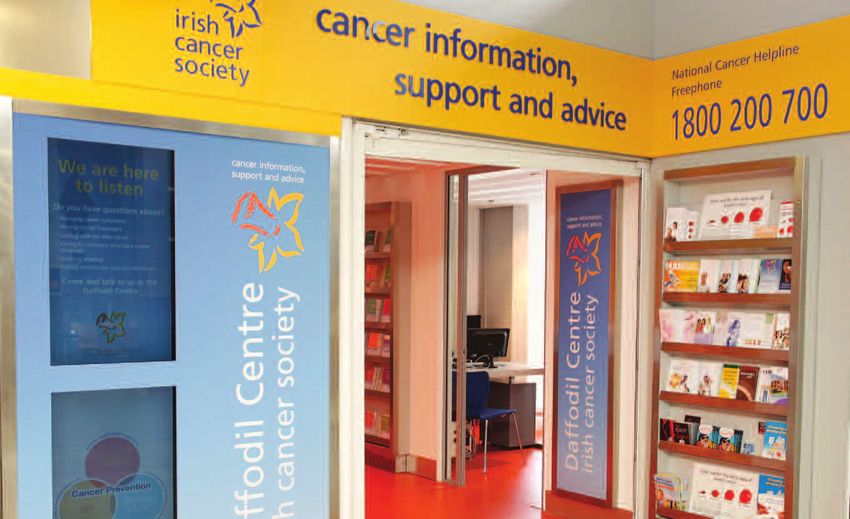
                                                   if one is located in your hospital.
travel to hospital
Care to Drive scheme                          52    Citizens Information
Travel2Care scheme                            53
                                                    The Citizens Information website provides information on all public services
Tax relief on travelling expenses             53
                                                    and entitlements in Ireland. The Citizens Information Board gathers this
experiencing financial difficulties                 information from various government departments and agencies so that
Exceptional Needs and Urgent Needs Payments   54
                                                    you have all the information you need. You can contact Citizens Information
Society of St Vincent de Paul                 54
                                                    online or by post or telephone. They can also tell you where your nearest
Money Advice and Budgeting Service (MABS)     55
                                                    Citizens Information Centre is located. Some hospitals have Citizens
Irish Cancer Society Financial Aid            56
                                                    Information stands on certain days of the week. Do check with your nurse
Managing financial distress due to cancer     57
                                                    for more details.
                                                    Citizens Information                Email: information@citizensinformation.ie
other support resources                             Tel: 0761 07 4000                   Website: www.citizensinformation.ie
Other Irish Cancer Society services           63
Useful organisations                          65

                                                                                             5
Health cover

Public hospital entitlements                                                            should I use public or private cover?
                                                                                        The decision to opt for public or private cover is obviously a personal one,
At present, everyone is entitled to hospital inpatient services in a public ward        based on your income and circumstances. The real benefit of private health
in all public hospitals. There is a €75 a night charge up to a limit of €750 in a       insurance in Ireland is that it cuts waiting times to see a specialist and have
12-month period. These charges do not apply to medical card holders. Higher             tests carried out. But in recent years with the introduction of rapid access
rates apply for semi-private or private care.                                           diagnostic clinics for cancer, public patients around the country are being seen
If you go to the outpatients or emergency department of a public hospital,              much quicker than before.
without being referred there by a GP, you may be charged €100. There is no              Tests and investigations are available to all public patients. If you have private
charge if you have a medical card or are admitted to hospital because of                insurance, it may not always be possible to have your tests done as quickly as
attending the emergency department first. Some hospitals are charging for               you would like. Your health insurer has to approve some tests in advance, for
the first chemotherapy visit, if you were diagnosed as an outpatient and never          example, MRI and PET scans. In some cases, it may take 24‒48 hours to get
admitted to the hospital. This cost could be €75 or more. This is part of the           approval from your health insurer.
hospital inpatient services charge.
                                                                                        Once diagnosed with cancer, as a public patient, you will receive the best
The HSE can reduce or waive the above charges entirely in cases of hardship.            possible care in one of the eight cancer designated centres around the
See page 18 for more details.                                                           country, or in an approved satellite centre.

Private health insurance
Private health insurance pays for private care in hospital or from various
specialists in hospitals or in their practices. In Ireland, this is available through
the VHI, Laya Healthcare, AVIVA Health, GloHealth, HSF Health Plan and other
schemes. They provide cover for day care and inpatient treatment as well as
hospital outpatient treatment. Before attending hospital, do check the level of
cover provided by your insurer, both for inpatient and outpatient services.
More information on private health insurance is available from the Health
Insurance Authority.

Contact details:

 Health Insurance Authority               Tel: 01 406 0080
 Canal House                              LoCall: 1850 929 166
 Canal Road                               Email: info@hia.ie
 Dublin 6                                 Website: www.hia.ie

                                          6                                                                                      7
Medical card                                                                              to qualify for a medical card, you must:
The HSE issues medical cards that allow you to have free medical care. Medical            • Pass a means test*
cards are means tested. This means you will have to give details of your                  • Rely totally on social welfare payments, such as:
income and circumstances to make sure you are eligible for the card. Your                   – State Pension (Non-Contributory)
spouse (wife/husband) and children may also be entitled to free medical care.               – Deserted Wife’s Allowance
                                                                                            – Disability Allowance
 A medical card entitles you to:
                                                                                            – One-Parent Family Payment
 • Free GP (family doctor) services
                                                                                            – Widows Non-Contributory Allowance
 • Free prescribed drugs and medicines*
                                                                                          or
 • Free appliances, for example a wig/hairpiece (up to a certain value) every 6
                                                                                          • Satisfy EU Regulations about EU members receiving medical cards in Ireland
   months or colostomy bags, etc.
                                                                                          • Be a child in foster care
 • Free inpatient services in a public ward in a public hospital
 • Free outpatient services                                                               • Be a full-time student aged between 16 and 25 and financially
                                                                                            independent of your parents
 • Free accident and emergency care
 • Free dental services                                                                  * Medical cards are no longer automatically given to those aged over 70. If you are
 • Free eye (optical) services                                                             over 70 and your gross weekly income is €500 or less (or €900 for a couple), you can
 • Free ear (aural) services                                                               apply for a card.

 • Free maternity and infant care services                                               If you are aged between 16 and 25 years and dependent on your parents,
 • Free community services, such as public health nurse, transport, home                 your entitlement to a medical card will be based on your parents’ means.
   help, chiropodist, etc.
                                                                                         How to apply: The quickest way to apply for a medical card is online at
* You may have to pay a prescription charge of €2.50 per item up to a limit of €25 per   www.medicalcard.ie. You can also download an application form from
  family per month.                                                                      www.hse.ie or collect one from your local health office. Return the
                                                                                         completed form to HSE Central Medical Card Office, Client Registration Unit,
 other benefits                                                                          PO Box 11745, Finglas, Dublin 11. For any queries, call LoCall 1890 252 919
 You may also be entitled to other benefits if you have a medical card:                  or contact your local health office. You can also check the status of your
 • Exempt from paying the health portion of your social insurance (PRSI)                 application online if you have your registration number.

 • Free transport to school for your children if you live 3 miles or more from           For useful tips on filling out a medical card application form, see page 62.
   the nearest school
 • Exempt from paying State examination fees in public second-level schools
 • Financial help with buying schoolbooks
 The above benefits are available from the relevant government department.                          National Cancer Helpline Freefone 1800 200 700

                                          8                                                                                        9
Hardship/special circumstances                                                         Hardship/special circumstances
Medical cards can sometimes be issued on hardship grounds, even if your                GP visit cards can be issued on hardship grounds, even if your income is
income is above the income guidelines. If you have a specific hardship or              above the income guidelines. For example, if you have exceptional and
special circumstances due to your cancer, do apply for a medical card. Make            regular medical treatment or visits to your doctor or hospital due to your
sure to attach copies of all relevant evidence about your circumstances. But           cancer. A card may be granted for your whole family or just for you. Make
remember a cancer diagnosis does not automatically entitle you to a medical            sure you attach copies of all relevant evidence about your circumstances
card.                                                                                  when you apply for the card. You will also be entitled to the Drugs Payment
                                                                                       Scheme card. Under this scheme, you and your family spend a limit of €144
Appliances                                                                             each month on approved prescribed drugs and medicines. You may apply for
If you are diagnosed with cancer, you may need various appliances after                the scheme from your local HSE office or health centre.
treatment. For example, wigs/hairpieces after chemotherapy or colostomy                How to apply: Use the same application form as that for a medical card (see
bags after bowel cancer surgery. If your mobility becomes a problem, you may           page 9). Once completed, return the application form to your local health
need a walking aid or wheelchair for a time. A medical card will cover the cost        centre. While your application is being processed, the HSE will also check if
of these appliances. Do ask your healthcare team for advice about any                  you are entitled to a full medical card. For more information on GP visit cards,
appliances you may need after treatment. You might be referred to an                   contact your local health office.
occupational therapist for assessment.
                                                                                       How do I know if I am eligible for services provided by the Hse?

GP visit card                                                                          The most direct way to check your eligibility is to contact your local health
                                                                                       centre or the medical social worker in your hospital. You can also contact the
A general practitioner (GP) visit card will only allow you to visit your GP free of    HSE office in your area. At present, the HSE is divided into four regions: HSE
charge. You will have to pay for drugs, outpatient/inpatient charges and               Dublin North East, HSE Dublin Mid-Leinster, HSE South, and HSE West. See
medical appliances yourself. You qualify in the same way as for a medical card         overleaf for contact details of HSE local health offices.
except that the income guidelines are much higher.
                                                                                       For more information, contact:
 to qualify for a GP visit card, you must:                                              HSE infoline: 1850 24 1850 (Monday‒Saturday; 8am‒8pm)
 • Pass a means test*                                                                   Email: infoline1@hse.ie
 • Be living in Ireland continuously (habitual resident)                                Website: www.hse.ie
 or
 • Have financial hardship due to your circumstances

* The combined income of you and your spouse is assessed after tax and PRSI have
  been deducted. Reasonable expenses for childcare, rent/mortgage and travel to work
  are also considered and can bring your income within the guidelines..

                                        10                                                                                    11
Hse Local Health offices                 Dublin North Central                      Laois and Offaly                      Roscommon
Carlow and Kilkenny                      Local Health Office, Civic Centre,        Laois Community Services, Dublin      Local Health Office, Roscommon Town,
Carlow Community Care, Athy Road,        Ballymun, Dublin 11. Tel: (01) 846 7000   Road, Portlaoise, Co Laois.           Co Roscommon.
Carlow. Tel: (059) 913 6520                                                        Tel: (057) 862 1135                   Tel: (090) 663 7500
                                         Dublin North West
Kilkenny Community Care, James’s         Units 4&5, Nexus Building, Block 6A,      Offaly Community Services, Arden      Sligo, Leitrim and West Cavan
Green, Kilkenny. Tel: (056) 778 4600     Blanchardstown Corporate Park,            Road, Tullamore, Co Offaly.           Community Services, Markievicz House,
                                         Dublin 15. Tel: (01) 897 5100             Tel: (057) 934 1301                   Sligo, Co Sligo.
Cavan and Monaghan
                                                                                   Limerick                              Tel: (071) 915 5100
Local Health Office, Lisdaran, Cavan.    Dublin South City
Tel: (049) 436 1822                      Local Health Office, Carnegie Centre,     Local Health Office, Ballycummin      Tipperary North / East Limerick
                                         21–25 Lord Edward Street, Dublin 2.       Avenue, Raheen Business Park,         Civic Office, Limerick Road, Nenagh,
Local Health Office, Rooskey,
                                         Tel: (01) 648 6500                        Limerick. Tel: (061) 326 677          Co Tipperary. Tel: (067) 46600
Monaghan Town. Tel: (047) 30400
                                         Dublin South East                         Longford and Westmeath                Tipperary South
Clare
                                         Local Health Office, Vergemount Hall,     Local Health Office, Health Centre,   Local Health Office, Western Road,
St Joseph’s Hospital, Ennis, Co Clare.
                                         Clonskeagh, Dublin 6.                     Mullingar, Co Westmeath.              Clonmel, Co Tipperary.
Tel: (065) 686 3555 / 3556
                                         Tel: (01) 268 0300                        Tel: (044) 939 5111                   Tel: (052) 617 7000
Cork North
                                                                                   Louth
Community Services, Hospital Grounds, Dublin South West                                                                  Waterford
                                      Old County Road Health Centre,               Louth Community Care Services,        Local Health Office, Cork Road,
Newberry, Mallow, Co Cork.
                                      Crumlin, Dublin 12. Tel: (01) 415 4700       Dublin Road, Dundalk, Co Louth.       Waterford. Tel: (051) 842 800
Tel: (022) 31855
                                                                                   Tel: (042) 933 2287
Cork North Lee                           Dublin West                                                                     Wexford
                                         Local Health Office, Cherry Orchard       Mayo                                  Local Health Office, George’s Street,
St Finbarr’s Hospital, Douglas Road,
                                         Hospital, Ballyfermot, Dublin 10.         Local Health Office, Westport Road,   Wexford. Tel: (053) 23522
Cork. Tel: (021) 496 6555
                                         Tel: (01) 620 6300                        Castlebar, Co Mayo.
Cork South Lee                                                                     Tel: (094) 902 2333                   Wicklow
St Finbarr’s Hospital, Douglas Road,     Dún Laoghaire                                                                   Local Health Office, Glenside Road,
                                         Local Health Office, Tivoli Road,         Meath                                 Wicklow, Co Wicklow. Tel: (0404) 6840
Cork. Tel: (021) 496 5511
                                         Dún Laoghaire, Co Dublin.                 County Clinic, Navan, Co Meath.
Cork West                                Tel: (01) 284 3579 / 236 5200             Tel: (046) 902 1595
Local Health Office, Coolnagarrane,
Skibbereen, Co Cork.                     Galway
Tel: (028) 40400                         Local Health Office, 25 Newcastle Road,
                                         Galway. Tel: (091) 523 122
Donegal
Local Health Office, Isaac Butt House,   Kerry
Ballybofey, Co Donegal.                  HSE South, Rathass, Tralee, Co Kerry.
Tel: (074) 913 1391                      Tel: (066) 718 4500

Dublin North                             Kildare and West Wicklow
Local Health Office, Cromcastle Road,    Local Health Office, St Mary’s,
Coolock, Dublin 5. Tel: (01) 816 4200    Craddockstown Road, Naas, Co Kildare.
                                         Tel: (045) 873 200

                                         12                                                                              13
Short-term illness                                                                     Primary Care Reimbursement Service (PCRS)
If you are sick, have no income or do not qualify for any social welfare payment,      This HSE service deals with payments to all GPs, dentists, pharmacists and
like Illness Benefit, you may be eligible for the Supplementary Welfare                other professionals who provide free or reduced-cost services to the public.
Allowance (SWA). If your weekly income is below the SWA rate for your family           These services include medical cards, the Drugs Payment Scheme, long-term
size, a payment may be made to bring your income up to the SWA appropriate             illness scheme, and the dental treatment services scheme. If you have any
rate.                                                                                  complaints about the cost of the services of doctors, dentists or pharmacists,
                                                                                       the PCRS will investigate them.
If you are self-employed, there is no limit to the number of hours you work in
your business, but your overall income must be below the limit for the SWA.
                                                                                       Contact details:
The means test looks at your gross income minus PRSI and reasonable travel
expenses and other necessary expenses. See page 25 for more about                       HSE Primary Care Reimbursement Service
Supplementary Welfare Allowance.
                                                                                        Exit 5 M50                                  Tel: 01 864 7100
You may also be eligible for the Long-Term Illness Scheme, Farm Assist,                 North Road                                  Email: pcrs@hse.ie
a medical card or GP visit card, and the Drugs Payment Scheme.                          Finglas                                     Website: www.hse.ie/eng/staff/PCRS
                                                                                        Dublin 11

Long-Term Illness Scheme
If you have certain long-term conditions and are not a medical card holder, you
                                                                                       Cross-Border Healthcare Directive
can get free drugs, medicines, and medical and surgical appliances for the             A new EU law gives you the right to get healthcare treatment in another EU or
treatment of that condition. These are provided under the Long-Term Illness            EEA member state or Switzerland. It only applies if you normally live in Ireland
Scheme, which is run by the HSE. The medical conditions that qualify under the         and are entitled to public patient healthcare here, but it means you
scheme are: mental handicap, mental illness (for people under 16 only),                automatically qualify for the Cross-Border Healthcare Directive.
diabetes mellitus, diabetes insipidus, haemophilia, cerebral palsy,                    The HSE operates the Cross-Border Healthcare Directive and you can apply if
phenylketonuria, epilepsy, cystic fibrosis, multiple sclerosis, spina bifida,          you wish to get treatment in the EU. There is no charge for applying to the
muscular dystrophies, hydrocephalus, parkinsonism and conditions arising from          HSE. It is a free public service. But it is advised that you still take out travel
use of the drug thalidomide. Acute leukaemia is also included but not cancer in        insurance. You may have to pay for the cost of the treatment upfront and the
general. The scheme does not depend on your income or other circumstances              HSE will then reimburse you.
and is separate from the medical card scheme and the GP visit card scheme.
If you qualify, you will get a long-term illness book. This book lists the drugs and   Contact details:
medicines for the treatment of your condition. You will receive these medicines
                                                                                        National Contact Point
free of charge through your community pharmacist. Other drugs and medicines             Cross-Border Healthcare Directive Department
not related to your condition must be paid for by yourself.
                                                                                        HSE Overseas Section                        Tel: 01 635 2375
How to apply: Fill in an application form from your family doctor (GP) or your          Dr Steevens' Hospital                       Email: crossborderdirective@hse.ie
local health office.                                                                    Dublin 8                                    Website: www.hse.ie

                                        14                                                                                     15
Sick pay entitlements
Sick pay and sick leave If you are likely to be out sick for a longer period, your employer may ask you
to send in a medical certificate every week. If you are entitled to sick pay, your
Am I entitled to sick pay? employer will probably ask you to sign over any Illness Benefit payment from
the Department of Social Protection to your employer for as long as the sick
You may need to take some time off work for your tests, treatment and
pay continues. Usually your contract of employment will place a maximum
recovery afterwards. How much time taken will depend on your type of
period of sick pay entitlement in a stated period. For example, one month’s
cancer and treatment. In general, as an employee, you have no right under
sick pay in any 12-month period.
Irish employment law to be paid while on sick leave. It is usually up to your
employer to decide their own policy on sick pay and sick leave, so it will all What happens if I am not entitled to sick pay?
depend on your contract or terms of employment.
If you are not entitled to sick pay, you may apply for Illness Benefit if you have
Find out from your employer if you are entitled to sick pay. If you are a public enough social insurance contributions. If you do not have enough
servant, for example, you can usually get certified sick leave for 6 months on contributions, you should contact your local social welfare office or health
full pay and a further 6 months on half pay, followed by the pension rate of centre for advice.
pay for an unspecified length of time. However, these periods will be halved
from 2014 for non-critical illness. You will be only entitled to 3 months on full
pay and 3 months on half pay in any rolling 4-year period. But if you have a
critical illness, like cancer, the cover will be provided at 6 months on full pay
Becoming ill when self-employed
and 6 months on half pay. In the public service, uncertified sick allowance of If you are self-employed and become ill and are unable to work, you are
7 days per year will be stretched to 7 days over a 2-year period. generally not entitled to any social insurance-based payments. That is unless
you have paid the right amount of PRSI contributions (generally at Class A).
You may get similar benefits if you are employed by a large company. Other Self-employed people normally pay PRSI contributions at Class S. Social
employers may pay you for less time off, while some do not pay for sick leave insurance-based payments include Illness Benefit and Invalidity Pension.
at all. If you are self-employed, you are likely to suffer some drop in your
income because of your illness. But if you have critical illness or income You have the option of applying for a means-tested social assistance payment.
protection insurance, you can claim against it if you become seriously ill or are For example, a Disability Allowance or Supplementary Welfare Allowance. In
unable to work for some time. See page 17 for more about self-employment. general, to qualify for a social welfare payment because you are sick or have a
disability, you must be certified as sick or disabled by a doctor.
What happens if I am entitled to sick pay?
Usually an employer will ask you to send in a medical certificate from your GP
or family doctor when you are on sick leave. For example, you may have to
send in a medical certificate if you are out sick for more than two consecutive
days. The medical certificate should state the date you are likely to return to
work.
National Cancer Helpline Freefone 1800 200 700
16 17Waivers and refunds of medical expenses
Drugs Payment Scheme Tax relief for medical expenses
You can get help with the cost of medicines under the Drugs Payment Scheme If you pay medical expenses that are not covered by the State or by private
(DPS). In this scheme, individuals and families, including spouses and health insurance, you can claim tax relief on some of those expenses. But you
dependent children, pay a limit of €144 each month to cover the cost of cannot claim tax relief on the following:
prescribed drugs, medicines and appliances. The scheme is aimed at those • Any medical expenses that have been, or will be, reimbursed by another
who do not have a medical card, but you can avail of the scheme if you have a body such as the VHI, Laya Healthcare, Aviva Health, the HSE, etc.
GP visit card. The scheme is not means tested.
• Any medical expenses that have been, or will be, the subject of a
How to apply: You can apply for cover under the scheme by contacting your compensation payment
local health office. You can also register for the scheme by filling in a • Any expenses relating to routine dental and eye care
registration form at your local pharmacy. If you have any difficulties filing in
the form, the staff at the pharmacy or health office will be happy to help. How to apply: You can apply online by registering on the Revenue website
Send the completed application to your local health office. www.revenue.ie or complete Form Med 1 and return it to your local Revenue
office. Remember a claim for tax relief must be made within 4 years after the
It can take up to 4 weeks to process your application for a card. If you have end of the tax year to which the claim relates. Do ask your medical social
any expenses that qualify in the meantime, keep your receipts until you receive worker or local Citizens Information Centre for more advice.
your card. You can then send these receipts to the Drugs Payments Scheme
division of your local health office with a note explaining them.
Waiver of medical expenses
There is help available if you are finding it difficult to pay your medical
expenses, especially hospital charges. By law the HSE must reduce or waive a
charge imposed on you if it is causing you severe financial hardship. You or a
family member can ask the HSE to reduce or waive the charge on financial
hardship grounds. You will need to show the HSE officer the extent of your
financial hardship for them to be satisfied. For more advice, talk to your
medical social worker or your local health office.
National Cancer Helpline Freefone 1800 200 700
18 19Social welfare supports
Applying for social welfare payments Contact details:
In general to qualify for a social welfare payment, you must satisfy a means Department of Social Protection Tel: 1850 500 000
test and the habitual residence test. This means you must prove that you have Information Section Leaflet line: 1890 202 325
been living in Ireland for some time. When you are making enquires to the Social Welfare Services Office Email: info@welfare.ie
Department of Social Protection regarding any benefits and entitlements, they College Road Website: www.welfare.ie
will ask you for your PPS number. This is your personal public service number, Sligo
previously known as your RSI number. Always make sure you have this number
to hand. Otherwise, the officials will not discuss your case with you.
You may be entitled to certain payments if you have an illness such as cancer. Types of cash payments
But remember payments will not be offered automatically to you. It is up to
Most payments are made by the Department of Social Protection or the HSE.
you to apply for them. You or your spouse (wife/husband) can apply separately
There are three main types of cash payments:
for benefits, as you may have individual entitlements in some cases.
If you or your spouse/partner are already receiving a social welfare payment, • social insurance payments:
you may or may not be entitled to another payment. Contact the medical These are based on your PRSI* contributions. They include Illness Benefit
social worker at your hospital or your local Citizens Information Centre for and Invalidity Pension.
more advice. • Means-tested payments:
These are based on your income being below a certain level. They include
sometimes social welfare application forms can be difficult to Disability Allowance and Supplementary Welfare Allowance.
complete. If you need help filling in a form, contact your local • Universal payments:
Citizens Information Centre. they will be happy to help you. These are payments made regardless of your income or social insurance
record. They do not have to depend on your health or social
What do I need when applying for payments? circumstances. For example, Child Benefit, which is also known as the
Depending on the payment you apply for, you may need the following: Children's Allowance.
• PPS numbers for yourself, your spouse and your children
Disability payments are made if you have an illness, injury or a recognised
• Proof of where you live disability. For these schemes, you must be incapable of work due to illness and
• Proof of identity. For example, a passport, driving licence, work permit, be medically certified by a doctor. For this, your doctor needs to fill in a special
immigration (GNIB) card, etc. form, which you then send to your social welfare office.
• Evidence of any income you and your spouse and children have * Pay-Related Social Insurance (PRSI): When you are employed, you make PRSI
• Your child benefit book or birth certificates for any children you may be contributions each week. These are often called ‘stamps’ and are taken directly from
your wages. They go towards any ‘benefit’ social welfare payments you might need.
claiming for, if you do not have PPS numbers for them
This can happen if you become unemployed (Jobseeker's Benefit) or if you are ill and
• Documents to show your income and financial situation. This includes pay cannot work (Illness Benefit, etc.). These contributions can also go towards your
slips, P45, P35, P60, bank statements, etc. contributory old age pension in the future. The PRSI and social insurance system are
managed by the Department of Social Protection.
20 21Means testing Benefit and privilege
When your means are being tested, they are looked at under four categories:
Tax relief for medical expenses
• If you are living at home with your parents, benefit and privilege is used to
assess the value of your claim.
• Cash income • It applies to all single people under 25 who are claiming Supplementary
• Property Welfare Allowance.
• Investments • You are excluded if you are from a one-parent family or living in a household
• Benefit and privilege where the only income is from a social welfare payment.
• Your parents’ income from all sources is considered. This includes income
Cash income from insurable employment, self-employment, Community Employment
• This includes any income from part-time employment or farming. schemes, occupational pensions, etc. It excludes payments made by the
• It includes maintenance paid to you. Department of Social Protection and the HSE.
• It includes your partner or spouse’s earnings.
• It includes rental income from renting a room in your own home.
Illness Benefit
In the first two cases, a certain amount of income is allowed before it affects
This is a payment from the Department of Social Protection to insured people
the payment rate.
who cannot work due to illness. It is aimed at those with a short-term illness.
Property The benefit lasts for two years, if you have more than 260 weeks’ PRSI
contributions. Illness Benefit is now taxed from the first day of payment.
• The value of all your property (after the mortgage is deducted), except your
Previously, the first 6 weeks (36 days) were exempt from tax.
own home, is assessed as means.
• Any income received from the use of your property is not assessed as cash to qualify for an Illness Benefit payment, you must:
income. For example, rent from property let.
• Be aged under 66
• The value of property owned but not personally used or enjoyed by you is
• Be medically unfit for work
assessed as means.
• Have at least 104 weeks’ PRSI contributions since you first started work*
Capital/Investments and
• The value of any stocks, shares, savings or assets you have may be assessed • Have 39 weeks’ PRSI contributions paid or credited in the relevant tax year
as means. (13 of these must be paid contributions)
• The first €20,000 of any capital you have is not taken into account. If you or
are receiving a Disability Allowance, the figure is €50,000. • Have 26 weeks’ PRSI contributions paid in the tax year immediately before
the year in which the claim is being made
• Capital includes money in the bank, building society, credit union, money
under the mattress, or actual stocks and shares.
* Depending on how much PRSI contributions you paid since you first started work,
you may get Illness Benefit for 2 years at most.
22 23How to apply: You must apply for Illness Benefit within 7 days of becoming
ill. If the delay is longer than that, you may lose some of your payment. But If
Farm Assist
there is a good reason for the delay, your payment might be backdated. Your Farm Assist is an income support scheme for farmers that is means tested. It is
GP or hospital doctor will supply you with the application form and will fill in like Jobseeker’s Allowance but has a more generous means test. Also, you do
the necessary parts. not need to be available for work to qualify for the scheme.
Each week, for as long as you are ill, you must send in the medical certificate,
known as MC2, unless told otherwise. These are often called sick certs. The means test takes account of every form of income but assesses it in
Depending on your medical condition, your doctor may agree to send in different ways and disregards various amounts. There are different rules
monthly certificates. Before you go back to work, you need to get a final applying to income from farming and other forms of self-employment, income
medical certificate from your doctor. Call your local social welfare office if you from certain schemes, income from employment and income from property
have any queries, or ring the Illness Benefit enquiry line at (01) 704 3300. and capital.
See page 30 for information on Disability Allowance.
to qualify for Farm Assist, you must:
• Be a farmer
• Be farming land in the State
Invalidity Pension • Be aged between 18 and 66
• Pass a means test
This is a long-term payment for insured people who cannot work permanently
due to illness or disability. It is usually given after having claimed Illness Benefit
How to apply: You can download and complete the form Farm 1 from
for at least 12 months. You will also be entitled to a free travel pass and you
www.welfare.ie and return it to your local social welfare office. After you
may get extra social welfare benefits, like the household benefits package.
apply for Farm Assist, a social welfare officer will call to your house and ask to
This includes allowances for gas and electricity and a free television licence.
see various documents. For example, accounts prepared for tax purposes,
creamery returns, cattle registration cards, details of headage payments, area
to qualify for an Invalidity Pension payment, you must: aid, and so on.
• Be medically unfit for work
If you have further questions, contact your local social welfare office. There is
• Have at least 260 weeks’ PRSI contributions since you first started work
also a similar payment for fishermen and women called Fish Assist.
and
• Have 48 weeks’ paid or credited PRSI contributions in the tax year
immediately before the year in which the claim is being made
Supplementary Welfare Allowance
How to apply: You will need to fill in an Invalidity Pension application form. If you are sick and do not qualify for any of the payments discussed so far, you
You can also get a form from your local social welfare office. You may qualify may be eligible for Supplementary Welfare Allowance (SWA). This also applies
for a Supplementary Welfare Allowance while you are waiting for your claim if you have little or no income and cannot provide for yourself and your family.
to be processed. Further help and advice can be given by your local Citizens The payment is a basic weekly allowance for eligible people and is means
Information Centre or social welfare office. tested.
24 25The payment helps to tide people over emergencies and difficult times. It can
to qualify for a supplementary Welfare Allowance, you must:
also be paid if your main social welfare payment does not cover your ongoing
needs. You may get help with certain special needs like rent or mortgage • Pass a means test*
interest payments or for urgent or exceptional needs. But remember the • Be living in Ireland continuously (habitual resident) †
allowance will only be paid out if you are in severe financial difficulties. • Have applied for all possible benefits or help from the Department of Social
If you have claimed for a social welfare benefit or pension but it has not yet Protection or the HSE
been paid, and you have no other income, you may qualify for the allowance • Satisfy the community welfare officer that you need the particular payment
while waiting for the payment.
* If you are under 25 years and living with your parents, their income may be assessed
Community welfare services used to be provided by the HSE, but since as means.
2011 are part of the Department of Social Protection. Community welfare † If you are an EU member or Swiss national living in Ireland, you do not have to be
continuously living here to get the Exceptional Needs Payment (see page 54).
officers are based in health centres or social welfare offices and are
responsible for the day-to-day administration of the Supplementary Welfare How to apply: You can apply for a Supplementary Welfare Allowance from
Allowance Scheme. Sometimes they are known as 'relieving officers' or the Department of Social Protection. This can be done at your local health
Department of Social Protection representatives. centre as soon as the need arises. You will need to fill in the claim form and
supply the following:
types of sWA payments
• PPS numbers for yourself, your spouse, civil partner or cohabitant and your
There are different types of Supplementary Welfare Allowance payments: children
• Entitlement-based payments
• Proof of where you live
• Discretionary-type payments
• Proof of your identity. For example, a passport, driving licence, work permit,
entitlement-based payments immigration (GNIB) card, etc.
If you pass a means test and other conditions, you are entitled to the • Evidence of any income you and your spouse, civil partner or cohabitant and
payment. These payments include: children are getting
• Basic Supplementary Welfare Allowance • A note from your local social welfare office as well as your last wages slip if
• Weekly supplements or allowances to cover rent, mortgage, heat, diet and you have just applied for Jobseeker’s Benefit or Allowance
other ongoing needs • Your Child Benefit book, or birth certificates for any children you may be
Discretionary-type payments claiming for, if you do not have PPS numbers for them
If it is not clear that you are entitled to the payment, the community welfare • Documents to show your income and financial situation. For example, pay
officer can decide in this case. The officer makes a decision based on your slips, P45, P35, P60, bank statements, etc.
circumstances and using legal guidelines. These payments include:
Remember if you are not satisfied with the outcome of your claim, you have
• Exceptional Needs Payments the right to appeal the decision. The Social Welfare Appeals Office deals with
• Urgent Needs Payments appeals relating to basic SWA and SWA supplements. For more about
appealing a decision, see overleaf.
26 27Social welfare appeals system Welfare Appeals Office. In your appeal, you must include the following
information so the appeals officer can fully deal with your appeal:
social Welfare Appeals office • Your name
If you think you have been wrongly refused a social welfare benefit, you can • Your address
appeal this decision to the Social Welfare Appeals Office. You can also appeal
• Your PPS number
if you are unhappy about any decision of a deciding officer within the
Department of Social Protection. Remember you have the right to request and • The type of payment you are claiming
receive the decision of the deciding officer within the department. His or her • The decision you are appealing against
decision must be in writing and say why the refusal was made. Although • The reasons why you disagree with the decision that has been made
deciding officers use guidelines when making decisions on claims, they must
• A copy of the deciding officer’s written decision
also rely on the information and evidence supplied by you when making their
decision. Remember appeals can take a number of months to process. More
information about the Social Welfare Appeals Office is available from your
The Social Welfare Appeals Office is an independent agency. It is not part of
local social welfare office or from the Social Welfare Appeals Office directly
the Department of Social Protection. The office also deals with appeals for
(see page 67 for contact details). It does not cost anything to make an appeal.
some payments under the Supplementary Welfare Allowance Scheme, but
does not deal with the discretionary part of the scheme. For example,
Exceptional Needs Payments and Urgent Needs Payments.
Remember you must make your appeal within 21 days. In exceptional cases,
appeals received outside of this period may be accepted.
supplementary Welfare Allowance appeals
If your application for SWA has been refused:
• Contact the community welfare officer (might also be called the relieving
officer). Check that all the details were available to them and if there is any
chance the decision could be reversed. Find out exactly why the payment is
being refused and ask for the reasons to be given in writing.
• You should appeal a decision as soon as possible after the first decision has
been made.
How to apply to the social Welfare Appeals office
Fill in the special Social Welfare Appeals application form, which is available
from your local social welfare office or the Social Welfare Appeals Office. You
can also explain the grounds of your appeal in a letter addressed to the Social
28 29Disability and mobility supports
If you are getting a social welfare payment, you may qualify for additional
financial support because of your illness or disability.
Partial Capacity Benefit
Partial Capacity Benefit is a new social welfare scheme that allows you to
return to work, if you have reduced capacity to work, and continue to receive
Disability Allowance a payment from the Department of Social Protection. To qualify for this
benefit, you need to be receiving either an Illness Benefit (for at least 6
This is a long-term payment if you do not have enough PRSI contributions. It is months) or an Invalidity Pension. Do ask your medical social worker or Citizens
means tested. Information Centre for more advice.
to qualify for a Disability Allowance, you must:
• Be aged between 16 and 66* Mobility Allowance
• Pass a means test The Mobility Allowance is a monthly payment paid by the HSE that is means
• Be medically examined tested. It is paid if you have a disability and are unable to walk or use public
• Have an injury, disease or illness, or have a physical or mental disability, transport and if you would benefit from a change in surroundings. For
that has continued or is expected to continue for at least one year. As a example, being able to pay for an occasional taxi journey.
result, you must be unable to do work that is suitable for a person of
your age, experience and qualifications to qualify for a Mobility Allowance, you must:
• Be living in Ireland continuously (habitual resident) • Be aged between 16 and 66 years
• Be unable to walk, even with the use of artificial limbs or other suitable
aids, or your health is such that the exertion needed to walk would be
* When you reach 66 years of age you will no longer qualify for a Disability
dangerous
Allowance, but you will be assessed for a State pension.
• Be unlikely to walk for at least a year
If you are getting Disability Allowance and go into hospital or residential care,
• Not be medically forbidden to move
you may continue to get your payment. Remember if your spouse or partner is
working, it can affect your Disability Allowance. • Be able to benefit from a change in your surroundings
• Be living at home or in a long-term institution
Depending on the disability payment you are receiving and your circumstances,
you may be entitled to other benefits. You may also qualify for certain • Pass a means test
education and employment schemes.
The HSE senior area medical officer for your area will decide if you meet the
How to apply: Contact your local health office for an application form or
medical conditions or not. If you are awarded an allowance, it will be
download it from www.welfare.ie or www.citizensinformation.ie
continued beyond the age of 66, but you may not apply for the allowance if
you are aged 66 or over.
How to apply: Contact your local health office for an application form or
National Cancer Helpline Freefone 1800 200 700 download it from www.welfare.ie or www.citizensinformation.ie
30 31Housing Adaptation Grant for People with Mobility Aids Grant Scheme
a Disability If you have mobility problems in your home, you may be eligible for the
Mobility Aids Grant Scheme. It is mainly aimed at older people but anyone
A housing adaptation grant is available if changes need be made to your with a disability can apply. The grant allows for work to be done in your home
home to make it suitable for someone with a disability to live in. This includes to help your mobility. For example, putting in grab-rails, an easy access
a physical, sensory or intellectual disability or mental health difficulty. Your shower, stair lift or access ramps.
application will be prioritised based on medical need. The more unwell you
are, the higher the priority. The grant can be paid if you are in:
• Owner-occupied housing
The grant can help you to make changes and adaptations to your home. For
example, making it wheelchair-accessible, extending it to create more space, • Houses being purchased from a local authority under the tenant purchase
adding a ground-floor bathroom or toilet or a stair-lift. In some cases, scheme
provision for heating can be included, but only under certain conditions. • Private rented accommodation (how long you have been a tenant can affect
Contact your local authority for more details. grant approval)
The grant is means tested. The income of all the household members will be • Accommodation provided under the voluntary housing Capital Assistance
included in the means test, except for the Carer's Allowance. Your total and Rental Subsidy schemes
household income will be assessed to find out if you qualify for the grant and • Accommodation occupied by persons living in communal residences.
the amount payable. You must also prove that you have paid the local
To qualify, your total household income must be less than €30,000. The
property tax, if you are a homeowner. The grant can be paid to people in:
scheme is means tested, and the income of all the household members will be
• Owner-occupied housing included, except the Carer's Allowance. You will also have to prove that you
• Houses being purchased from a local authority under the tenant purchase paid the local property tax, if you are a homeowner. The most that can be paid
scheme out is €6,000, and may cover the total cost of the work. Remember you
• Private rented accommodation (how long you have been a tenant can affect cannot apply for both the Mobility Aids Grant Scheme and the Housing
grant approval) Adaptation Grant for People with a Disability at the same time. But you can
withdraw your application for one scheme and submit a new application
• Accommodation provided under the voluntary housing Capital Assistance
under the other.
and Rental Subsidy schemes
• Accommodation occupied by persons living in communal residences How to apply: Contact your local authority for an application form and more
advice. When your local authority receives your application, it may ask for an
How to apply: Fill in the application form and return it to your local authority. occupational therapist (OT) to assess your home. Or you can pay for the OT
When your local authority receives your application, it may ask for an assessment and your local authority will refund you the money. The grant will
occupational therapist to assess your home. The grant will not be paid if you not be paid if you start work before the grant is approved. But it is expected
start work before the grant is approved. But it is expected that the work that the work would start within 6 months of your grant being approved.
would start within 6 months of your grant being approved.
32 33Disabled Person’s Parking Card Tax credits and reliefs for people with
Disabled person’s parking permits or cards are available if you live in Ireland disabilities
with certain disabilities, whether you are a driver or passenger, or if you are
registered blind. These permits are also known as European parking cards or You may quality for the following tax credits and reliefs if you or someone in
disabled parking badge. your family has a disability:
• Incapacitated child tax credit
You can use the parking card in any vehicle in which you are travelling. This
means that if you are being driven at different times by different people, you • Tax reliefs for people with a visual impairment
can bring the parking card with you and display it in the appropriate vehicle. • Dependent relative tax credit
The parking card is valid for 2 years from date of issue. Generally, the card is • Trust funds for permanently incapacitated people
not issued to anyone under 5 years of age. • VAT refunds on aids and appliances used by people with disabilities
Remember the scheme applies to public car parking areas only. But it also • Tax relief for disabled drivers and disabled passengers
helps the likes of private car parks and supermarkets to better control parking • Tax relief on nursing home fees and for dependent relatives
in areas designated for people with disabilities.
• Tax relief on the costs of employing a home carer
How to apply: To get an application form for a parking card, write to either • Home carer’s tax credit
the Disabled Drivers Association or the Irish Wheelchair Association, enclosing
a stamped self-addressed envelope. They will decide if you are eligible for a Do ask your medical social worker or local Citizens Information Centre for
parking card. In your letter, give details about your disability and how it affects more advice. You can also call the National Cancer Helpline on 1800 200 700
your mobility and let them know if you have a Primary Medical Certificate. The or visit a Daffodil Centre.
application form must be completed and certified by your doctor and signed
by a Garda.
Contact details:
Disabled Drivers Association Irish Wheelchair Association
Parking Card Section National Mobility Centre
Ballindine Ballinagappa Road
Claremorris Clane
Mayo Kildare
Tel: 094 936 4054 Tel: 045 893 094/5
Email: info@ddai.ie Email: maats@iwa.ie
Website: www.ddai.ie Website: www.iwa.ie
34 35Living at home or nursing home supports
Rent Supplement
Disabled Person’s Parking Card Mortgage Interest Supplement
A Rent Supplement may be paid if you are living in private rented This supplement was set up to help you pay the interest part of your mortgage
accommodation and cannot pay the rent. Usually you will qualify for Rent only. You do not get help with the part that pays off the actual loan and house
Supplement if your only income is a social welfare or HSE payment and you insurance. The payment was only given if you could make the repayments
satisfy the other conditions (see below). when you first applied for the mortgage.
The supplement is available under the Supplementary Welfare Allowance The supplement was closed to new entrants in January 2014 and is being wound
scheme through the community welfare officers in your local health centre. down over the next few years. They will not accept any new applications. If you
There is no set amount for the payment. The community welfare officer have difficulty paying your mortgage, do contact your lender to discuss repaying
decides the amount, depending on how much rent you pay. the actual loan. See also Mortgage Arrears Resolution Process (MARP) below.
to qualify for a Rent supplement, you must:
• Pass a means test Mortgage Arrears Resolution Process
• Be receiving a social welfare payment
• Be living in Ireland continuously (habitual resident) If you have mortgage difficulties in the short term, your lender must support
and engage with you under the Mortgage Arrears Resolution Process (MARP).
• Be living in accommodation that is suitable for your needs
In 2013, the Central Bank published A Code of Conduct on Mortgage Arrears.
• Be paying rent that is below the maximum rent level set for your county The code applies to a mortgage on a property that is your family home (primary
• Be living for 6 months (183 days) out of the last 12 months in one or residence). It does not apply to residential investment properties. The code sets
more of the following: out four steps in the above process that lenders must follow when dealing with
– private rented accommodation (which you could pay for at the start of borrowers in mortgage arrears or those in danger of going into arrears (pre-
renting but now cannot because of your illness/cancer diagnosis) arrears). These are:
– accommodation for homeless people • Communication: This step deals with the lender communicating with you in
– an institution, like a hospital, care home or prison writing if you fail to make a full mortgage repayment or make only a partial
or repayment. The lender must send you full information on the arrears,
• Be in need of social housing (had a housing need assessment by a local cooperating with the lender, consequences of non-cooperation, impact of
authority in the last 12 months) missed repayments/repossession on your credit rating, contact details, sources
of help, alternative repayment arrangements, written updates of your status
If you do not have a housing need assessment, you must go to the local every 3 months, etc.
authority to have it done. The local authority must be in the same area that • Financial information: Your lender must give you a standard financial
you intend to live and claim Rent Supplement. statement (SFS) form to fill in. You will have to supply all financial information
How to apply: Fill in the application form for Rent Supplement, which is about yourself, if in arrears or pre-arrears. This includes your account and
available from your local health centre or from the website www.welfare.ie. personal details like your monthly income and any social welfare benefits
Part of the form will need to be filled in by your landlord or their agent. Return received, your monthly household expenditure, your current monthly debt
the completed form to the community welfare officer at your local health centre. payments, property assets, and non-property assets like savings.
36 37• Assessment: With the information in the form, your lender can work out
your financial position and identify the best course of action. Your lender
Heating your home
must pass the completed financial statement to its Arrears Support Unit for If you are finding it hard to pay your fuel bills, contact your gas or electricity
assessment in a timely manner. The Central Bank code recognises that each supplier straightaway. All suppliers offer different ways to pay. You should be
case of mortgage arrears is unique and needs to be considered on its own able to agree a payment plan that you can afford with your supplier.
merits. As a result, the Arrears Support Unit must assess your personal Remember that your gas or electricity will not be cut off between November
circumstances, your overall level of debt, information in the financial and March for non-payment of bills if you are:
statement, your ability to repay, and your previous payment history. Do make • Registered on the industry Special Services Register
known that you have a cancer diagnosis and are receiving treatment for it. It • Aged 66 years or over
can help to get letters from your cancer specialist, GP, or medical social
– Living alone or with another elderly person
worker at your hospital to support your case.
– Living with a child under the age of 16
• Resolution: Once the assessment is complete, your lender must explore all
• A person with a mobility, hearing or sight disability
options for you to make an alternative repayment arrangement. For
example, paying interest only, deferring payment for a period, extending the To find out if you are eligible for the register, please contact your electricity
mortgage term, etc. or gas supplier directly. Your electricity supply will not be cut off if you are on
the register and rely on medical machines at home. If there is an unexpected
Lenders must deal with you sympathetically and positively to help you pay
power failure in the network, your electricity supplier will restore your
your mortgage debts or come to some arrangement.
electricity as a priority.
Mortgage Arrears Information Helpline Prepayment and pay-as-you-go meters
The Mortgage Arrears Information Helpline was set up by the Government Another option if you are finding it difficult to manage your energy bills is to
and is run by the Citizens Information Board. It offers independent, install a prepayment or pay-as-you-go meter in your home. Your electricity or
confidential and high-quality information if you are in mortgage arrears or natural gas supplier is usually able to do this for you. These meters let you
reaching that stage. The helpline number is 0761 07 4050. It is open Monday pay for small amounts of energy before using it. This system can help you to
to Friday, from 9.30am to 5pm. manage your energy budget, avoid a larger energy bill every 2 months and
avoid building up debt.
Keeping your home.ie
For more information and to see if a prepayment meter will suit your needs,
This website gives detailed information on the services and entitlements
contact your energy supplier directly.
available if you are having difficulties making your mortgage repayments. See
www.keepingyourhome.ie
Money Advice and Budgeting service (MABs)
You can also contact MABS if you find it hard to pay your mortgage or other
debts. See page 55 for more details.
National Cancer Helpline Freefone 1800 200 700
38 39You can also read


