The Future of the Past starts at Leiden University - Faculty of Archaeology - Strategic Plan 2020-2025 - Universiteit ...
←
→
Page content transcription
If your browser does not render page correctly, please read the page content below
The Future of the Past starts at Leiden University Faculty of Archaeology Strategic Plan 2020-2025 April 2020 Discover the world at Leiden University
The Future of the Past starts
at Leiden University
Faculty of Archaeology
Strategic Plan 2020-2025
April 2020
Table of Contents
An Introduction to the Faculty................................................................................................................................. 7
Ambitions.................................................................................................................................................................. 8
Maintaining High Standards...................................................................................................................................10
Archaeology: Connecting Science and Society.......................................................................................................... 10
The Changing Landscape of Finances........................................................................................................................ 12
Acties 2020-25.............................................................................................................................................................. 12
Improving the Curriculum.......................................................................................................................................15
The New Bachelor Programme................................................................................................................................... 15
The New Master Programme....................................................................................................................................... 16
Measures to be taken in Education 2020-25............................................................................................................ 17
Strengthening the Organisational Structure: Towards an Efficient and Fair Faculty............................................18
The Departmental Structure........................................................................................................................................ 18
The Faculty Community................................................................................................................................................ 19
Academic Staff............................................................................................................................................................... 20
Facilities and the Faculty’s Laboratories.................................................................................................................... 22
Communications............................................................................................................................................................ 22
Improving the Faculty’s Financial Situation.............................................................................................................. 23
Actions 2020-25............................................................................................................................................................ 23
The International Community and Diversity..........................................................................................................24
Contributions to the Hague Campus......................................................................................................................25
Implementation of the Strategic Plan....................................................................................................................26
Planning for 2020......................................................................................................................................................... 26
The Power of Connection.......................................................................................................................................27
An Introduction to the Faculty
Since 1997, the University of Leiden has European Prehistory, the Archaeology of The Faculty’s most treasured asset is its staff,
boasted an independent faculty for research Western Asia, the Mediterranean and the who have great expertise and a wide range
and education in Archaeology, although Americas; Human Origins, Science-based of skills. The Faculty is also fortunate in its
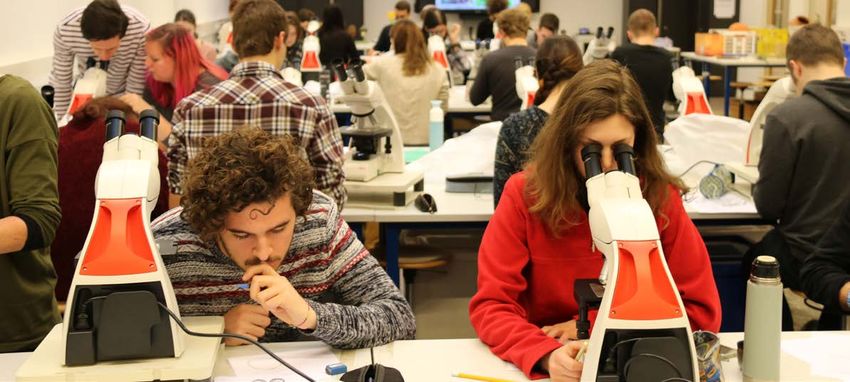
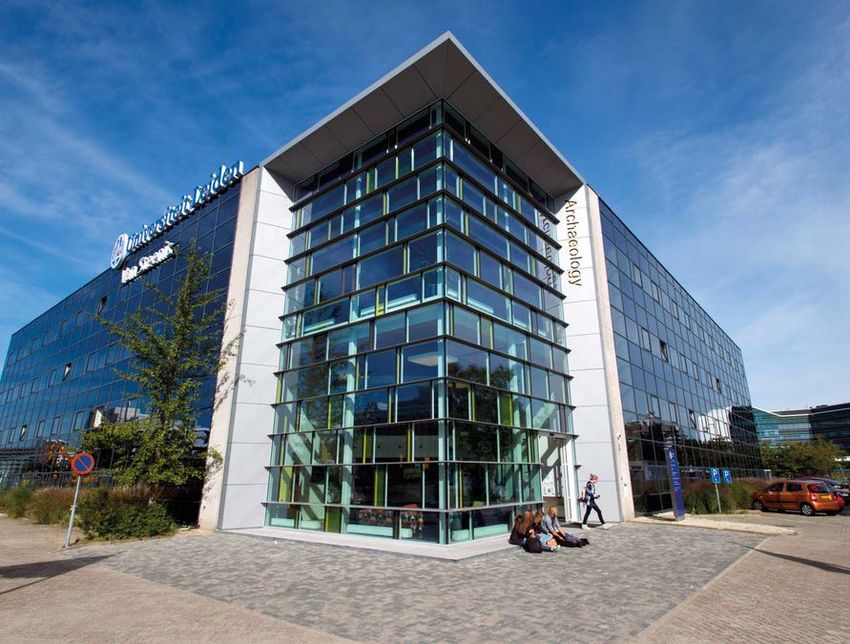
the history of Archaeology as a discipline Archaeology, Heritage and Museum Studies. first-rate facilities, located since 2014 at the
at Leiden goes even further back. As early These many strands have become woven Van Steenis Building in Leiden’s Bioscience
as 1818, Casper Reuvens was appointed as together and have formed the Faculty Park. Here, researchers, teachers and students
the first ever Professor of Archaeology (in a of Archaeology into a rich tapestry of benefit from advanced laboratory facilities
specific field), and, at the same time, as the specialisations. in the fields of Material Sciences and
first Director of the National Antiquities Bioarchaeology.
Museum (the RMO). Research and education at the Faculty are
coordinated by means of three Departments:
In the years that followed, the university World Archaeology, Archaeological Sciences
established specific profiles for Egyptology, and Archaeological Heritage & Society,
Assyriology and Classical Archaeology. each with its own focus and international
Gradually, new disciplines were added: network.
education and research are expected, such
as those advocated in the Plan Van Rijn
Ambitions
(Wissels Om) 2019. (The so-called Van
Rijn Committee was commissioned by the
Education Minister in October 2018 to
conduct research into the funding of higher
education in the Netherlands. One of the
committee’s recommendations is that more
In the past ten years, the Faculty of • Expand the social impact of our We intend to realise these targets in the money should be spent on Science and
Archaeology has grown enormously. Our research. period 2020-25 by: Technology. This means the four technical
academic reputation is distinguished, as • Work to remain in the top five education universities in the Netherlands will receive
evidenced by the high position the Faculty programmes in Archaeology, and 1. Developing new strategies to maintain more funding at the expense of other
holds in the QS World University Ranking. Heritage Studies in Europe. the high standard of research in terms of universities, including UL.)
The Faculty draws students and researchers • Actively contribute to innovative, fund-raising, publication and impact.
from the Netherlands and beyond, and has international and more effective (and 2. Renewing and strengthening the Below, new actions will be separately cited
become a major player internationally. efficient) collaborations in education Faculty’s teaching programme to for Education, Research and Organisation
and research between faculties at the safeguard the future of the discipline (people, resources and facilities). We indicate
It goes without saying that we intend not University of Leiden. and to optimally prepare future which actions are planned for the coming
only to consolidate this strong position but • Make an active contribution to the archaeologists and heritage specialists years for each sector, which have already
to develop it further in the coming years. To quality of archaeological practice and for the employment market. been initiated and, where possible, the effect
this end, the Faculty will: heritage policy in the Netherlands, and 3. Developing new formulae for achieved.
in other regions where the Faculty is collaborations and interdisciplinarity in
• Consolidate our excellent global active. a rapidly-changing academic setting and Collaboration and Connection is the key
reputation in the fields of Archaeology a dynamic society. philosophy behind the new Strategic Plan
and Heritage Studies 4. Streamlining the organisational 2020-25, both within and beyond the Faculty.
structure of the Faculty. The Faculty of Archaeology will cooperate
5. Bolstering the financial position of the with other faculties at Leiden to provide
Faculty. more appealing, innovative and efficient
education to future generations of students.
The Strategic Plan 2020-25 further elaborates
on these goals, outlines priorities, and The Faculty aims to become a partner with
explains how these will be developed into “added value” in research, primarily within
concrete actions. The plan builds on the the university’s new so-called Stimulation
earlier Strategic Plan of 2015-20 (The Future Programmes, which contribute to a shared
of the Past 2.0) in which the emphasis lay, vision of stronger interdisciplinary research
for the most part, on strengthening the and a sharper profile at regional, national
Faculty’s research programmes and portfolio; and international levels. Collaboration will
an objective we consider to have been very also focus on institutes at home and abroad,
successful. and the formation of strong consortia, and
on social partners who have an interest
The Strategic Plan 2020-25 anticipates a fast- in our expertise and vice versa. Within
moving academic and social environment for the Faculty, internal collaboration will be
Archaeology. Implementation of some fairly encouraged and activities and resources will
drastic policy developments in academic be equitably distributed.
Maintaining High Standards
Research at the Faculty of Archaeology is
highly-regarded internationally, and in
certain areas is among the best in the world.
The Faculty has acquired this position
through a broad and holistic approach to
Archaeology, in which various theoretical
orientations, and observations from field
projects, laboratories, and Heritage Studies
complement each other in thematic lines of
research.
If the Faculty of Archaeology is to remain a
leading player on the international stage, it
will have to maintain its broad and integral
profile. In 2017, the Faculty adopted a new
research programme, with five major themes,
to increase the interdisciplinary strength
and scope of research at the interface of the
Natural, Social and Human Sciences. These
are: • Museums, Collections and Society for fund-raising, publication and impact. DNA and isotopes, mean that our knowledge departments and includes the most extensive and opportunities for Science-based
• Liveable Planet Some of these changes relate to scientific of the human past is constantly changing. variety of specialisations. World Archaeology Approaches and Heritage Perspectives.
• Human Niche Construction • SAILS (artificial intelligence) developments, including social questions At the same time, society has a growing forms the backbone of the Faculty’s research * By developing new, cross-cultural
• The Human Body • Social Resilience and Security addressed by research, and others concern interest about its ‘own’ past and heritage. and will continue to fulfill that role in the and cross-continental perspectives
• Urban Pasts: Managing Diversity and general shifts in the funding system for New challenges and opportunites include the future. There are at least three ways to on important transitions in human
Inequality It is expected that by combining the strengths scientific research and education. We explain applications of Citizen Science, Community achieve this: evolution and the deep history of
• Interaction and Identity and knowledge of diverse faculties, Leiden these below. Archaeology and community-driven • By developing theoretical societies, and the increasing impact
• Crafting Societies University will lift research to an even Heritage Management. frameworks and formulating of humankind on the Earth System.
higher level and provide it with a readily Archaeology: Connecting Science and over-arching research questions
Working together with other faculties, the recognizable profile. Society So far, we may have given the impression that appeal to interdisciplinary In this context, complex thematic
Faculty of Archaeology also participates that the challenges ahead are mainly for the cooperation. relationships take precedence, rather than
intensively in the new Stimulation In the coming years, the Faculty of Currently, a scientific revolution is taking Departments of Archaeological Science and * By further elaborating the themes the traditional geographical division into
Programmes at Leiden University, in Archaeology faces a number of radical place within Archaeology. New applications, Archaeological Heritage & Society. However, of the Faculty research programme, area-oriented specialisations. By emphasizing
particular: changes in the area of research. These methods and techniques from the Natural the Department of World Archaeology the University’s Stimulation connecting issues such as the deep history
will require new strategies and formulae Sciences, such as the analysis of Ancient plays a pivotal role in the connection of Programmes, and by working and historical backgrounds of globalization,
these domains. It is the largest of the three together to identify specific roles migration and human niche construction,
interdisciplinary research is better connected. research is increasingly characterized by the Netherlands. In this context, the Faculty strategy for research funding which will
Such a unifying and integrating role for interdisciplinary collaboration, consortia, of Archaeology - as the largest domestic combine its current strength in the field
Global Archaeology and the Department entrepreneurship and ethical reflection. university player in the field of Archaeology of personal grants with a greater strength
of World Archaeology is not only of great and Cultural Heritage - is expected to provide in the field of consortium applications
importance to the coherence of the Faculty’s Nationwide, the Plan Van Rijn (2019) a quality impulse for implementation practice and - where possible - consultancy. To
research and education programmes, but will lead to major shifts in the funding of in the context of national Archaeology this end, the Faculty will work closely
also for developing large, interdisciplinary academic research. A larger proportion of legislation and government policy on Cultural with LURIS and the Leiden Research
research applications (consortia) and for money is being invested in research in the Heritage. Support (LRS). Attention will also be
increasing the social impact of the research. field of beta technology, while resources paid to aspects of academic integrity,
New developments also require critical for research in the field of Archaeology and Actions 2020-25 and, in particular, intellectual property.
choices in investment in facilities and Cultural Heritage are becoming scarcer. 3. 2020: The Faculty will draw up a plan
research infrastructure. Given the stringent Against this background, there is also rapidly Against this background we have identified for improving its research infrastructure,
economic situation, new cooperation increasing competition at European level, the following action points: including its laboratory facilities. To this
strategies will be necessary to ensure the high for meagre funding for Archaeology, Social end, we will pursue collaboration with
standard of future research at the Faculty. Sciences and Humanities. 1. 2020-25: Existing research, composed other parties at Leiden (the faculties
of five interdisciplinary core themes of Science, of Social Sciences and
The Changing Landscape of Finances The Faculty of Archaeology will have to (Perspectives on the Past), will continue to Humanities, and the Leiden University
become more inventive in combining concentrate efforts on broader initiatives Medical Centre), at other Dutch
The scientific and social developments personal research funding, forming successful and collaboration in research. However, universities (in particular TU Delft, VU
mentioned above, together with new pre- consortia and utilizing opportunities in the programme will be explicit in terms and WUR) and with partner institutions
conditions for the organisation and financing the consultancy sphere. The latter is also of how the Faculty’s own research themes and renowned research institutes with
of scientific research, will be decisive for important seen against the accelerating can add value to the new Stimulation whom the Faculty already has long-
the Faculty’s research agenda. University scaling down of Archaeology at universities in Programmes of Leiden University standing collaborations, such as institutes and the Centre for Digital Scholarship at regions where the Faculty is active in
and the LDE alliance. In particular, of the Max Planck Society (Germany). In Leiden University, especially with regard research and education (such as the
we will focus on collaboration with drawing up this plan, we will investigate to Open Access and Linked Open Data Caribbean). The Faculty will not only
the LDE Centre for Global Heritage & the concrete opportunities which are (LOD). Explicit attention will also be evaluate the potential of its subject
Development and the SRON Netherlands expected to arise from integrating paid to aspects of academic integrity, in specialisations, but will also consider
Institute for Space Research. The our diverse laboratories into Leiden particular with regard to guidelines for pricing for specialists (consultancy) and
Faculty is confident that there are good Archaeology Labs, with the intention of (co-) authorship. Existing guidelines, the use of the laboratories. ARCHOL,
opportunities at the latter institute for marketing its services and facilities to such as the Vancouver Recommendations, Leiden University’s professional
technological developments which are sister institutions and other parties. will serve as a starting point in this archaeological company will be closely
interesting to both Field Archaeology 4. 2020: The Faculty will draw up regard. involved in these developments.
and Heritage Management. The Faculty guidelines for Scientific Ethics, in line 6. 2021: The Faculty will develop an
intends to investigate further how the with the Code of Conduct, Integrity of impact strategy to increase the social
research profiles of Heritage, Museum Leiden University. value and visibility of its research, based
Studies and Archaeological Sciences can 5. 2021: The Faculty will develop a on best practices from recent research
be better attuned to archaeological issues Publication Strategy that optimizes projects.
and interpretation frameworks, so that the scientific visibility of its research 7. 2022-23: The Faculty is investigating
the links between the three departments results, taking into account the different ways in which it can develop as a
can be further strengthened in research. publication cultures that exist within the centre of expertise for wider society
Finally, we want to make better use of the Faculty and the desire for more intensive in the near future. This could include
possibilities afforded by Citizen Science internal cooperation (for example by parties involved in archaeological
within our research themes. producing handbooks). The Faculty will market and heritage organisations in
2. 2020: The Faculty is developing a new work closely with the University Library the Netherlands, and possibly in other
Improving the Curriculum
The New Bachelor Programme
The renewal of the BA programme began
in 2017 and will be completed in 2020. The
following changes have already been made:
• In addition to the Dutch-language
Traditionally, the Faculty of Archeology has In 2016, an internal evaluation of the Bachelor specialisation Archaeology,
offered a wide range of specialisations within programmes concluded that education and the English-language Bachelor
its programmes. The Bachelor’s degree (BA) in both the Bachelor and Master phases specialisation World Archaeology, a
has a broad structure and includes a Dutch required a thorough overhaul. A variety of specialisation in Heritage and Society
and English language variant. Education reasons precipitated this review: shrinking is now being offered jointly with the
is offered in both Dutch and English in the student numbers (to less than 55 in the Institute for Cultural Anthropology
first Bachelor year only, and subsequently BA), large drop-out rates, and poor rates of of the Faculty of Social Sciences. This
exclusively in English, though with the completion (especially in the BA programme new specialisation is interdisciplinary
option to complete assignments, exams and where less than 40% of the students obtained in nature and prepares the student
the thesis in Dutch. In the Master phase, the a degree after four years). Additionally, for Master programmes in either
specialisations are recognizable as foci and students expressed increasing dissatisfaction, Archaeology or Cultural Anthropology.
are linked to the work of the Faculty research there were shortcomings in the way students In the programme, students learn to
groups. They are differentiated according to were prepared for employment, and the set current social issues against the
period (from Human Origins to Medieval work-load for teaching staff had increased, background of their long history and to
Archaeology), geographical region (Europe, due to the extensive, unique education on use and manage the legacy of this history
Mediterranean, Near East, Americas), offer in the Master phase. for reflection and education.
theme (Heritage and Museum Studies), • In both Bachelor specialisations, teaching
methodology (Bioarchaeology, Digital Furthermore, the Faculty’s teaching has been intensified into continuous
Archaeology) or a combination of these (for programmes did not sufficiently meet the blocks which include lectures, tutorials
example, Material Culture Studies). The last “new learning paradigm”. The current and laboratory training. Assignments
three specialisations are categorised as Master generation of students studies in new ways: provide moments for interim testing and
of Science (MSc), the others as Master of Arts often online, using digital sources, and this experimental use is made of new forms
(MA). In addition, the Faculty also offers presents great opportunities for intensive, of activated learning.
a two-year Research Master programme activated and blended learning. • The BA programme is more emphatically
(RMA) in which students can further aimed at combining the learning of
specialize and train their research skills more In 2017 we began the journey, setting out generic skills with knowledge acquisition.
intensively. The RMA is considered to be on a renewal process to improve the quality The programme provides degree-wide
the best preparation for a PhD track, and of the Faculty teaching programmes. This curricula for academic, professional
about 75% of our RMA students succeed in process is driven by the Faculty’s new and transferable skills, and individual
obtaining a PhD position after completion. educational vision, which is in turn based on curricula for World Archaeology, Heritage
All Master specialisations are offered in the ambitions of the university educational and Science.
English only. vision (Learning @ Leiden). • Field training (Field School) has been
redesigned to include a variation for
Heritage & Society.
• In the third year of the Bachelor, room with the Graduate School so that they can The New Master Programme • In all Master specialisations, students
has been created to follow a minor or to strengthen their CV with experience in general may choose, in the final phase, to focus
make a study trip abroad. Other options and specialized teaching (“BKO Light”). A A revision of the Faculty’s Master on the archaeology or heritage of a
include an internship, which allows Recruitment and Communication Plan was Programme began in 2019. specific area or a specific period. In this
students to gain practical experience drawn up to recruit more students for the BA, • The huge number of specialisations (in way, the breadth of the specialisations at
outside the university, and a BA thesis. To and, finally, a model has been developed to total 21) previously offered in the Master Leiden remains visible.
provide internships, cooperation has been optimize process support for teaching, which phase (including the Research Master) • The Research Master programme will
intesified with social partners, such as the includes a clear description and distribution have been reduced to four Master provide for flexibility in personal study
National Museum of Antiquities, Heritage of tasks, roles and responsibilities in the specialisations: Global Archaeology paths, so that tailor-made education can
Leiden, the Cultural Heritage Agency of Education Office. (MA), Archaeological Science (MSc), be offered to prospective researchers.
the Netherlands and knowledge-intensive Heritage & Museum Studies (MA) and In order to be able to offer a wide
companies. The results of these adjustments are Applied Archaeology (MA). This makes and varied range of courses, we will
• The study profile at completion is a positive. The intake figures now show an the courses offered more transparent for collaborate with other faculties.
better fit with the Dutch labour market increase in the number of BA students, the student and contains the workload • A new Recruitment and Communication
for archaeologists. A graduate at Leiden which is expected to stabilize at an entry of for teaching staff. Strategy will be developed for the
is recognised under the existing laws and approximately 100 new students annually. • In 2019, the Faculty began a Master programme, specifically aimed at
regulations as formally qualified to engage The premature drop-out of students has collaboration with the Saxion University recruiting students from abroad.
in the field of Dutch Archaeology. been greatly reduced and the study-yield of Applied Sciences (Deventer),
has increased significantly. Course and creating the Leiden-Saxion Master in Measures to be taken in Education
Other changes have also been made. For teacher evaluations show that students Applied Archaeology. This new Master’s 2020-25
example, particularly gifted and motivated are satisfied with the programme and the specialisation links directly to Saxion’s
students are challenged to broaden, or deepen, quality of education. These improvements BSc Archaeology and prepares students The Faculty of Archaeology will be
their skills and knowledge within the Honours are confirmed by the Education Review at an academic level for a professional introducing the following measures in the
Programme of Leiden University. Education (onderwijsvisitatie) of 2019. career outside academia. period 2020-25: Master tracks, such as the Master in teaching and learning (for example, the
plans for PhDs are drawn up in collaboration Applied Archaeology. so-called “micromasters”) for students
1. 2020-22: Priority will be given to the 4. 2022-24: The Faculty is considering working remotely, for example in Asia or
full implementation and to the final offering a measured number of minors, Africa. These courses would be based on
evaluation of the new BA programme, preferably as a collaboration with other the current teaching programme.
and for the identification of areas for faculties on interdisciplinary themes. 7. Apart from the innovations summarised
improvement. Priority will also be given 5. 2022-24: The Faculty is looking into here, the Faculty does not forsee any new
to the continued implementation and to the development of a joint Advanced Bachelor or Master specialisations being
the mid-term evaluation of the Faculty’s Masters with Campus The Hague. This developed in the coming years, unless
new Master programmes (including the would be offered to professionals and an attractive, and efficient, opportunity
Research Master). others interested in Lifelong Learning. arises in combination with other
2. 2020-25: External and internal The study would not simply cover new faculties.
communication about the teaching developments in the academic field of
programmes will require continued, Archaeology, Heritage and Museum
structural consideration in the coming Studies, but more specifically the legal
years. and administrative aspects of policy-
3. 2020: The Faculty is investigating the making (Heritage and Environmental
desirability of using the BSc classification legislation).
for the Bachelor programme, and the 6. 2024-25: The Faculty will investigate
MSc classification for a number of opportunities for combining online
appointment of Departmental Chairs, an struggles with issues of social safety, scientific more supportive atmosphere of cooperation,
Strengthening the Organisational Structure:
extra management layer has been added, so integrity and transparency. in which, habitually, staff value each other’s
that the running of the research groups is qualities, offer peer support and have a
more effective and administrative tasks can There was dissatisfaction with the unclear genuine desire to see each other succeed.
Towards an Efficient and Fair Faculty
be better divided. distribution of opportunities for developing In recent years, the Faculty has launched
careers, and with the uneven allocation of initiatives to tackle these issues in a solution-
The detailed workings of the new resources, tasks and responsibilities. Early oriented manner, such as developing a
departmental structure, however, have not career researchers (PhDs and postdocs) transparent policy for career development
yet been sufficiently well-articulated. Many seem to be particularly vulnerable, having and promotion, implementing a new
staff perceive the departmental structure a high workload and ill-defined position distribution model for tasks in education,
as unclear, or even as counter-productive within the Faculty. Furthermore, their work research and management, and addressing
to cooperation. Although steps have been is (too) heavily dependent on the leadership concerns in the field of social safety.
taken to give the departments more weight capacities of their supervisors, and the way
in the Faculty organisation, research in which these supervisors carry out their In addition, the Faculty has undertaken the
groups and project teams still form a loose duties. Finally, their future is uncertain: their following improvements:
conglomerate within their department, and perception is that they are used for research
true cooperation requires something more. and teaching, while being allowed little • In 2018, a full-time Communication
influence on the direction of the Faculty, nor Advisor was appointed, who is tasked
In recent years, therefore, the Faculty has on the development of the field as a whole. with strengthening the community by
focused on further streamlining the primary These are, of course, the very circumstances improving internal communication, and,
processes in relation to the departments, that determine their futures. for example, maintaining a Faculty Event
and the mandate of the Departmental Calendar.
Chairs. The starting point is a relatively light A specific point of issue with the academic • In recent years, the Board has chosen to
organisational structure. A matrix model, in staff is “culture”. It is our intention to create a have certain events, such as the Faculty
which the Faculty’s education and research
programmes intersect departments, creates a
greater opportunity for shared responsibility,
cooperation and flexibility. New prospects
and initiatives to enhance the international
and national profile of the Faculty can be
The Departmental Structure quality research performance and a wide The formation of these groups underline more easily identified. Finally, the Faculty,
range of options for advanced students who the high degree of interdisciplinarity of with its high-quality research and education,
The organisational structure of the Faculty want to specialize; but, on the other hand, Archaeology and Heritage Studies at Leiden. can participate more effectively in cross-
of Archaeology has been in transition for it also led to undesirable competition for Insights and methods drawn from the faculty developments, such as Leiden
several years. In the past, the Faculty had a resources, facilities and positions, to limited Natural, Social and Historical Sciences are University’s new stimulation areas and inter-
large number of research groups (formerly transparency and to inadequate faculty increasingly being combined and integrated. faculty education programmes.
“Chair groups”), each with a high degree coordination of research and teaching. This interdisciplinarity has become a
of autonomy. This autonomy led to the trademark of the Faculty, and the various The Faculty Community
development of independent research In 2013 it was decided to organize the disciplinary components can no longer
agendas and specialist programmes in Faculty more efficiently and transparently by be separated from each other, without The Faculty’s working climate and corporate
education, as well as to relatively free access arranging the groups into three departments: weakening the Faculty’s clout in research and identity will require extra attention in the
to a personal (materials) budget. On the World Archaeology, Archaeological Science, education. Moreover, with the introduction coming years. The 2017 Staff and PhD
one hand, independence resulted in high- and Archaeological Heritage and Society. of the departmental structure and the Monitor revealed that the Faculty community
Lectures and PhD Debates, realised fruition, staff capacity will be sufficient for
bottom-up by the Faculty community. the new training programmes, the execution
The community is also expressly involved of management tasks and the consolidation
in university and social events, such as of the quality of scientific research.
the Dies Natalis, Open Days and the
National Archaeology Days. With a view to the academic stability of the
• In 2018, we appointed a Confidential Faculty, the Board is developing a new vision
Advisor for PhDs to address the concerns of the use and occupation of professorial
and complaints from this group quickly, chairs. In 2018-19, the Faculty discontinued
confidentially and effectively. Complaints a number of chairs, including those in
are a signal that the system has already the Heritage of Indigenous Societies and
failed, and it is hoped that measures to Archaeozoology. With the appointment
be undertaken in 2020-25 in the field of of three new Westerdijk professors, the
scientific and academic ethics will create continuation of three other chairs has been
a healthy environment where complaints anticipated. In 2019, work was begun on a
become rare and exceptional. new Chair Plan, which should be finalized in
• In 2018, a start was made on a 2020 - after widely harvesting opinions from
transparent policy on career development various fora and from our professors. The
at the Faculty, including clear promotion following principles are being employed:
criteria and the establishment of a Career
Committee. • A number of long-term core Chairs
• In 2018, a new model was implemented have been designated within the
for the allocation of a budget for material Department of World Archaeology.
resources to the research groups, based The teaching assignments for these
on the number of FTEs. This, so that the As we have said before, the true assets of our Academic Staff Chairs are being updated by means of
budget can be spent more transparently Faculty are our knowledgeable and highly- a renewed geographical/chronological
and in consultation. skilled staff. Our colleagues include academic The number of academic staff in 2019 was interpretation and by linking them to
• In 2019, a new Planning & Evaluation staff and support staff, and both permanent 80 FTE. In 2018 a Reinforcement Plan was new scientific and social themes, such as
cycle was designed that better supports and temporary staff (including PhDs and written, with the intention of expanding urbanization, globalization, migration,
the staff in making choices and schedules, postdocs). Support staff are crucial for the academic capacity at the Faculty, and to sustainability, etc. This means that
and which also better correlates with the organisation and implementation of the provide extra scope for carrying out the professors may function more effectively
university cycle. primary processes: a role that is often under- new teaching plans. By 2021 the plan will be and widely in the teaching programmes
• In 2019, the Faculty adopted a estimated in academia.. In recent years it has fully realised. This plan provides five new of the Faculty, as well as in inter-faculty
distribution model (parameters model) become apparent that support roles could positions (lecturers or Assistant Professors) teaching collaborations and in the new
for the division of tasks in education, be organized more effectively at the Faculty, for young, promising talents who have stimulation areas of Leiden University.
research and management. After and we will shortly be inventorising support already proven themselves in research and • In World Archaeology, one or two new
gathering the greater experience and services. The Faculty Board will also look at education, and who are demonstrably skilled domains are identified which offer
the calculation models used at fellow where there are gaps in provision of support, to perform well as team players. The new new development opportunities, for
faculties, the model was implemented. and how these gaps can effectively be filled. Assistant Professors are deployed broadly example where expertise in these areas
A clear and fair distribution of tasks, As far as possible, we will employ flexible and flexibly in teaching, and are given the is no longer present at other Dutch or
roles and development opportunities deployment and the utilization of expertise space and support to develop themselves as European universities, or where they have
contributes to a stronger and more already available at the university. More real innovators in the field of Archaeology, an exceptional attraction for students
cohesive community. generally, the integration of academic and Heritage and Museum Studies. Once the and/or social partners.
support staff deserves attention. reinforcement plan has been brought to • A limited number of new chairs will be
designated for Heritage, Museum Studies Leiden Archaeology Labs. Under this new methodological innovation. In addition, against this background that the established
and Archaeological Science, - disciplines branding, the labs can develop cohesively. the basic infrastructure for paleobotany, system of personal budgets (BSFs) will
that are quickly gaining in scientific and Leiden Archaeology Labs will identify new archeozoology, computational archaeology be abandoned in due course, and more
social interest and importance. opportunities, set priorities for the demand and archeo-ostology (physical anthropology) emphasis will be placed on the strategic use
• In the coming years, the appointment from teaching, and for activites emanating and for various material analyzes must be of resources in the collective interest.
procedures for Chairs will focus from second and third stream funding, as well maintained.
on internal progression, based on as for third parties. To this end, an inventory Actions 2020-25
outstanding performance. This will, in of all interested parties will be made, and Communications
principle, take precedence over external internal and market rates set for the use of the To further shape the ambition of a healthy,
recruitment for the foreseeable future. facilities and the deployment of specialists. Communications are not only about the transparent and fair organization, the
In selecting candidates, it is not just effective exchange of information and the following actions are planned:
earning capacity, scientific output and The Faculty of Archaeology will have to coordination of processes internally, but
social valorisation that is considered, make smart choices regarding investments also ensure that the Faculty’s research and 1. 2020: Designing, executing and
but explicit attention will be given to in laboratory personnel and materials. education becomes even more prominent in monitoring clear HR guidelines that
leadership skills, team spirit, managerial These will include strategic cooperation the world beyond the university. In January are objective and verifiable, not only
experience and a combination of with partners, both in the Netherlands and 2018, the Faculty appointed an all-round for appointment and promotion policy,
experience and success in teaching Europe, so that the Faculty can maintain the Communication Advisor (1.0 FTE). This was in June 2018 with the establishment of a • Subsidy providers, journalists and other but also for tenure track policy and the
(curriculum development, SKO, etc.) and high standard of its research in specialised a step towards centralizing communications Communication Department, in which interested parties (ditto). system of sabbatical leaves.
research. areas and continue to be a centre for at the Faculty. The next step was taken the Communications Advisor was joined 2. 2020: Drawing up, testing and
• In 2020-25, the creation of special chairs by an Event Coordinator and a Student When implementing action points from implementing a new long-term Chair
will be very targeted and strategic. Ambassador. the new Communications Plan, care will Plan (2020-2030).
be taken to align communication activities 3. 2020: Developing clear and verifiable
Facilities and the Faculty’s In 2018 and 2019, the foundation was laid at the Faculty of Archaeology with the financial regulations with regard
Laboratories for new, improved internal and external communication goals of Leiden University as to invoices, (central and decentral)
communications at the Faculty. This remains a whole. This does not mean that goals and payments, expenditure and investments.
The Faculty’s laboratories are an important high on the agenda in 2020. In 2019, a new methods have to be identical, but that the 4. 2020: Implementation of the new
asset for both teaching and research. Faculty Communications Plan was written, same general direction is followed. Communications Plan 2020-2025.
Currently, the Faculty has facilities for which will be implemented from 2020. 5. 2020-21: Implementation of the
preparing samples for isotope analysis, and This will lead to a professionalization of Improving the Faculty’s Financial aforementioned planning and evaluation
five specialised laboratories: communications targeted at the following Situation cycle, setting fixed times each year
groups: when attention is paid to personnel
• Archaeo-osteology In the past decade, the financial fortune of (development), finances, project
• Archaeozoology • Faculty staff (sub-plan for internal the Faculty has waxed and waned in terms of portfolio, investments, etc. The associated
• Computational Archaeology communication) income from teaching and from the second consultation takes place in and with the
• Material Studies • Prospective Bachelor and Master and third flow of funds. The Faculty has departments, relevant committees and
• Palaeobotany students (sub-plan for recruitment and been adversely affected by cuts that have the Faculty Council.
marketing communication); been implemented since 2017, and these, 6. 2020-21: Development of a Faculty “Code
The current laboratories are high-class • Alumni (now also specifically aimed at together with some unfortunate choices of Conduct” with house rules, partly on
facilities, although the quality of some will alumni outside the Netherlands) made in the past, means that it is now crucial the basis of recommendations from the
need upgrading in future. The laboratories • External researchers for partnerships and to strengthen the Faculty’s financial situation. 2017 personnel and PhD monitor.
are managed by staff and research groups of research consortia (sub-plan for external Its financial position will therefore remain 7. 2020-25: Further professionalization
the Department of Archaeological Science. communication); one of the most important Faculty issues for of educational support, in line
The Board has taken the decision to integrate • The professional field, in particular the coming years and the Faculty community with developments taking place at
the laboratories into a central facility: professionals (ditto); should be made aware of the urgency. It is institutional level.
The International Community In recent years, the LAS Terra study
association has been highly motivated and
and Diversity
hard-working in strengthening the Faculty’s
international profile. This study association is
very active, popular among students, and has
explicitly placed the internationalization of
the student population on its agenda.
The internationalization of the university Continuing the international exchange, our
community, and in particular of the student Master students are, in turn, given plenty Although the Faculty of Archaeology aims to
population, is an important issue on the of opportunities for research outside the further strengthen its international profile,
political agenda in the Netherlands. The Netherlands and Europe. The profile of the it will, of course, continue to safeguard the
Contributions to the Hague Campus
discussion focuses in particular on the academic staff of the Faculty has mirrored interests of Dutch students, Dutch-language
importance of Dutch-language education this development and now also largely education and Dutch academic culture.
as a factor in the preservation of Dutch consists of colleagues bringing their talents in The Faculty will ensure that the influx of
identity, and on the recognisability of Dutch from abroad. Dutch students is not compromised, but will
university culture. preserve a heallthy “mix” of students from
The Faculty intends to further develop its different countries and cultures. In addition,
Over the past five years, the Faculty has international profile in the next five years. the Faculty will make more concerted efforts
acquired a distinctly international character. This is necessary for the following reasons: to ensure that staff members from abroad Over time, the different components of the The Faculty has responded positively to • Offering Lifelong Learning courses in
This is due to the rapid increase in numbers make progress with their Dutch language university, in Leiden’s city centre, the Leiden an invitation from Campus the Hague to Archaeology, Cultural Heritage and
of students from abroad, as well as the • Internationalization contributes to skills, so that they can actively participate in Bio Science Park and the Hague’s Leiden contribute to dialogue about the design Collection Building.
international orientation of the Faculty’s the quality of the courses. Worldwide, university administration and Dutch society. University Campus, have become inseparable of new interdisciplinary and interfaculty • Providing postgraduate education to
research. Another contributor is the success Archaeology is characterized by a mosaic from each other. As we move forward, UL Master programmes, although the Faculty’s professionals, following the example of
of English-language courses in the field of of intellectual and cultural traditions The diversity of the Faculty community is increasingly becoming a civic university commitment to its own ongoing programme the success formula of the Advanced
Archaeology and Heritage. The Faculty’s that feed the profession in different will require extra attention in the coming as it responds to developments largely of educational innovations makes us Masters of the Faculty of Law.
international reputation has strengthened ways. The latter may apply even more years. Although the community has a emanating from the Hague campus. The cautious at this stage. We do, however, • Connecting the Faculty of Archaeology,
(as is evidenced by the Faculty’s high strongly to the Heritage disciplines. A distinct international character, it is still social embedding of university education and see great opportunities in the context of LDE Center for Global Heritage and
position in the QS Ranking by subject) diverse learning environment is the best predominantly “European”. Archaeology research, the strengthening of the regional the proposed Academie Boulevard, which the Centre for Museums, Collections &
and the network of international partners preparation for working in this sector. and Cultural Heritage, however, are exactly network of partners around the university, the Hague campus envisages as a means Society with national and international
has been further expanded. The share of • Many of the career prospects of the kind of scientific and societal domains and the connection with the ‘DNA’ of the city of promoting intensive cooperation with partners and institutions in the region.
international students in the Bachelor and Archaeology and Heritage students that interface with issues of origin, cultural are central to this. the city of the Hague, and with its other • Strengthening the regional network
Master programmes has grown to >30% are located in an international context. identity and inclusivity. The Faculty seeks to higher education institutions. Together of partners and centering it around
and >50% of the student community, Our students should be prepared for a better reflect the social diversity associated The Hague Campus Strategy 20-25 with the LDE Center for Global Heritage the Faculty of Archaeology, creating
respectively. Dutch students are increasingly roaming existence and cultural flexibility with these issues: not just cultural diversity, & Development and the new Centre for a physical meeting place for heritage
opting for the English-language programmes in order to take full advantage of but also gender diversity, for example. To So far, the Faculty of Archaeology has not had Museums, Collections & Society, in which services, archaeological services and
offered by the Faculty in order to increase scientific and professional opportunities. encourage Faculty policy development in a significant role in developments at Campus the Faculty is closely involved in the relevant knowledge-intensive companies.
their international outlook and their • To provide the Faculty with sufficient the field of diversity, a Faculty Diversity The Hague. This will change in the next five context of the new university Stimulation
opportunities. More than 50% of the PhD critical mass to guarantee the high Committee has been set up, which will years. The Faculty sees good opportunities to Programmes, a plan is being developed to
community comes from abroad: from other quality of research and education in the develop its own agenda in 2020. actively contribute to, and take advantage of, create a Heritage Academy on the Academie
European countries, North and Central future, continued internationalization is the new civic profile of the university as set Boulevard. This Heritage Academy will focus
America, the Caribbean, Asia and Australia. necessary., out in the new plans for the Hague campus. in particular on:
It is also essential to intensify cooperation
The Power of Connection
with fellow institutes outside the
Netherlands, so that the Faculty can be
a partner in consortia, helping to shape
fresh, innovative interdisciplinary research.
Collaboration with social partners and
partners of industry will allow the Faculty to
It is the power of connection that is the Opportunities for collaboration with other develop successful formulae for increasing
common thread that runs through the plans groups, study programmes and faculties the impact of our research.
of the Faculty of Archaeology in the period will also be explored, such as in the fields
2020-25. of Human Evolution, Heritage Studies and The Faculty realises that a successful long-
Advanced Masters. The LDE Center for term impact is mainly guaranteed by the
The Faculty has identified exciting new Global Heritage & Development and the new teaching programmes. Impact is what our
opportunities, such as the intensification of Centre for Museums, Collections & Society students deliver! It is they who potentially
inter-faculty cooperation in education, the will act as “connectors” in the latter context. make the greatest contribution to society,
establishment and implementation of new In addition, there will be more intensive by innovative, unconventional and
Stimulation Programmes and a developing collaboration with Leiden University College critical thinking; by devising creative and
university profile as a civic university, forging (LUC), both in the Bachelor programmes original solutions for social issues and by
Implementation of the Strategic Plan
even stronger links between academia and and in research. participating in ground-breaking advances.
society. Cooperation with other faculties will
be more important than ever, particularly Collaboration with fellow institutes in the Finally, the principles of cooperation and
those with related research groups, and Netherlands, such as the archaeological connectiveness also apply to the Faculty
courses in which cooperation is obvious, institutes in Amsterdam (ACASA), community itself. If our Faculty is organized
such as: Groningen (RUG) and Deventer (Saxion), in a fair way and has a strong sense of its
as well as the National Cultural Heritage own identity, then our staff will have a
• Cultural Antropology (Social Agency (RCE), is important. Through this sense of belonging; they will work together
The planned actions of the new Strategic In autumn 2020, the implementation of to the Faculty committees for advice. Sciences) cooperation, it is hoped to halt the decline in with greater pleasure, perform better and
Plan of the Faculty of Archaeology will planned actions can be included in the Q2: The Faculty Committees translate the • Biology and Environmental Sciences academic Archaeology and to arrest the loss really commit to being part of a close and
be prioritized by the Faculty Board in the budget. This process can be repeated for action points into implementation (Science) of unique expertise, while giving new quality authentic community. These core values
Spring of 2020 and will be included in a the years 2022-25. The Faculty will strive plans and business cases. • Ancient History, Antiquities, and impulses to archaeological performance are just as important to the Faculty of
Faculty Road Map that provides for a phased to keep the implementation of the planned Q3: Where appropriate, the business cases Museum Studies (Humanities) practice and the heritage sector. Archaeology as scientific reputation.
approach with milestones and products actions and implementation plans within the will be included in the budget for 2021.
marked in time. Faculty’s (long-term) budget. Q4: Start of the implementation of
prioritized actions for 2020-21.
The action points selected for 2020-21 will be Planning for 2020: Q4: The Faculty Board makes a final
submitted to Faculty committees, for advice selection and prioritization of action
and further elaboration. The prioritized Q1: The Faculty Board makes a final points for 2022.
actions will be developed by the committees selection and prioritization of the
into concrete implementation plans with action points, and visualizes and
SMART-formulated goals and business cases. communicates these in the form of a
Road Map.
It should be noted that much work cited Q1: The Faculty Board presents the
here has already been done since 2018-19. prioritized action points for 2020-21
You can also read


