The Heart and Brain Connection - Neelum T. Aggarwal, MD - Healthy Brain Aging: Lifestyle ...
←
→
Page content transcription
If your browser does not render page correctly, please read the page content below

The Heart and Brain
      Connection

Neelum T. Aggarwal, MD
Objectives Definition of a "Healthy" Heart - Brain Connection Modifiable Risk Factors for Cognitive Decline ( and AD ) and review the evidence to prevent cognitive decline and AD by controlling risk factors Discuss the Role of Lifestyle Changes in decreasing the risk of cognitive decline and dementia and improving the quality of health and longevity Conclusions

Brain Aging
• Characteristics include loss of brain volume (white
  matter > gray matter) especially in the hippocampus
  and frontal lobes; loss of myelin; synapses and the
  dendrites
• Increase amount of neurofibrillary tangles and
  deposition of amyloid in brain and blood vessels).
  Infarcts of various sizes and other evidence of
  cerebrovascular disease
• Aging is associated with progressive losses in function
  across multiple systems (sensation, cognition, memory,
  motor control and affect) and they occur with increasing
  age
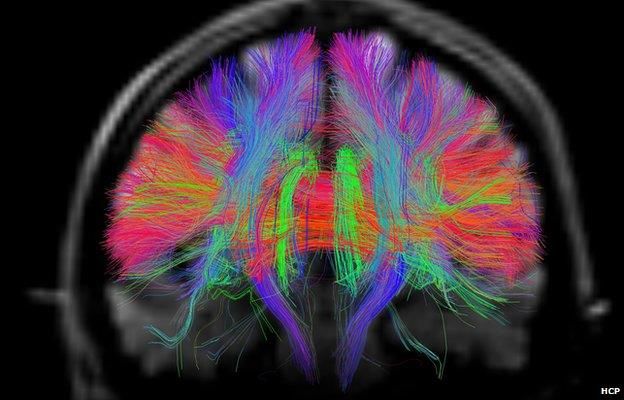
Healthy Brain Aging Maintenance or improvement of cognitive performance Larger brain and hippocampal volumes were associated with preserved cognitive function Ability to make decisions and remain independent Avoidance of disease and disability by maintenance of physical, cognitive and sustained social engagement

Example of Healthy
    Brain Aging
Madame Jeanne Calment 1875-1997

        Lived 122 years!

 Guinness Book of Records as the
      “Oldest person Ever”

    What was her secret????
Road to Healthy Brain Aging: Preserve cognition (identify modifiable risk factors for AD) Improve physical function - get MOVING Make lifestyle changes like..... Improve social engagements ( ....with people you LIKE!) Eat a healthier diet - Heart Diet = Brain Diet Reduce Stress and reduce risk factors
Barriers to Healthy Aging
Modifiable Risk Factors Intermediate Risk factors
Raised blood pressure
Unhealthy Diet
Raised Blood glucose
Physical Inactivity Abnormal lipids
Tobacco Use Over weight /obesity
Alcohol Use Heart disease
Drug use Pulmonary disease
Mental Illness
Polypharmacy
Arthritis
Stress/Sleep
Osteoporosis
Dental care
Non-Modifiable Risk Factors Age Family History Genetic Factors For AD Early onset AD mutations: Presenilin-1 (30-70%); APP (10-15%); Presenilin-2 (

Alzheimer’s Disease 5.3 million Americans have AD (Alzheimer’s Association 2009). By 2021 the number is expected to increase to 7.5- 9 million and by 2051 it could reach 12.6-16 million It accounts for 66% of dementias in older adults 33-50% of people aged 85 and older have AD Women account for 66% of cases AD develops over decades and dementia can affect a person over 3-20 years
Cognitive Continuum

Birth       Childhood-
            2nd decade              ?
                                  Adult life-
                                  Middle age         Transition
                                                                       Old
                                                                       age

  Healthy brain

        0                20                     60                75
Probable Modifiable Risk factors for Cognitive Decline - Top 3 are Cardiovascular Risk Factors Hypertension Diabetes mellitus Hyperlipidemia Smoking/Drinking Head Trauma Depression
Dementia in advanced age

            Alzheimer’                     Vascular
               AD                              VaD
            s disease             MCI
                                           dementia

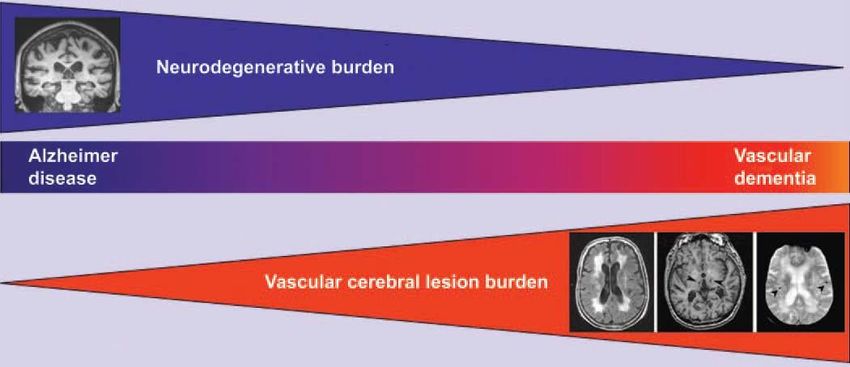
****Both vascular and degenerative mechanisms often contribute to dementia
                        development in older adults***

                                        Viswanathan, et al., Neurology 2009
Heart - Brain (aka- Neurovascular) Coupling in the Normal Brain and in Hypertension, Stroke and Alzheimer’s disease Regulation of cerebral blood flow (CBF) involves coordinated interaction of neurons, glia, and vascular cells
Neurons & glia generate signals → vascular change → increased CBF Pathological conditions such as AD, hypertension, atrial fibrillation, ischemic stroke disrupt neurovascular coupling → CBF not matched to metabolic needs Cerebrovascular dysregulation mediated by the enzyme, NADPH oxidase - a major source of cerebral vascular free radicals develop and kill cells
Diabetes – A Strong Risk Factor for Cognitive
Decline and Alzheimer’s disease (AD)
Type I and Type II diabetes can → heart disease, stroke, renal
failure, cognitive decline and AD
Duration of diabetes esp. important risk factor for AD
Hyperinsulinemia and hyperglycemia preceding overt
diabetes, also increase risk of cognitive changes and AD
Metabolic changes associated with diabetes such as:
oxidative stress, inflammation are also associated with ADDiabetes
Insulin resistance and hyperinsulinemia both alter
insulin signaling in the brain – this may contribute to the
impact of type II diabetes on cognition and
development of AD
Using transgenic mouse model of AD → diabetes can
accelerate AD – associated changes in the brain.
ADCS Clinical Trial will be recruiting soon- Nasal
Insulin to prevent worsening of cognitive decline
www.adcs.org
Serum Lipids are Related to Alzheimer’s
Pathology in Nursing Home Residents(1)
A study at nursing home in NYC
Nursing home residents, serum lipids were determined
at admission and neuropathologic diagnoses were
established at brain autopsy
Residents with any AD pathology vs. those without AD
pathology had higher mean serum total cholesterol
and higher mean low-density lipoprotein
Ref: Lesser GT, et al. Dement Geriatr Cogn Disord, 2009;27:42-49Moderate Alcohol Intake is Associated with Lower
Dementia :Results from the Ginkgo Evaluation of
Memory Study (GEMS)
3,069 community dwelling adults aged 75 or above without
dementia in the GEMS study were followed for 6 years
- 2,587 were cognitively normal at beginning of study
- 482 had MCI ( Mild Cognitive Impairment = “The Gap” between
normal thinking and dementia)
Goal: To determine the relationship between alcohol intake and
developing dementia
- intake determined by self-reports as –
- light = 1-7 drinks/week
- moderate = 8-14 drinks/week
- heavy = > 14 drinks/week Moderate alcohol intake (1-2 drinks/day) associated with a
37% lower risk of dementia in participants with normal
cognition at baseline, but not in MCI patients
For those with MCI at baseline:
- any alcohol intake was associated with a faster rate of
cognitive decline
- heavy drinkers (> 14 drinks/week) were nearly twice as likely
to develop dementia compared to non-drinkers with MCI
Recommendations to not exceed one drink/day for
women and 2/day for men
Ref: Sink KM, et al. ICAD, July 2009Amyloid Precursor Protein (APP) and Traumatic
Brain Injury (TBI)
A-Beta peptides accumulate rapidly after TBI in
animals and humansChange in Depression Symptoms During the Prodromal Phase of Alzheimer’s Disease Rush Religious Orders Study followed 917 older Catholic clergy for 13 years – 190 developed AD Having more depressive symptoms at baseline was associated with increased incidence of AD and MCI Ref: Wilson RS, et al. Arch Gen Psych, April 2008; 65(4):437-45
Alzheimer's Disease IS A MULTIFACTORIAL
            DISEASE

                                Dyslipidemia
            Unhealthy                   Stroke
                              Diabetes
APOE,         diet    Smoking              Neuronal damage
                Adult life        Mid-life        Late-life
Other                                Transition                          DEMENTIA
genes   0      20                            60       75

            Physical         Cognitive and                    Brain reserve
            activity         social activity                      ?
                 Education
                        PROTECTIVE FACTORS
PREVENTION OF COGNITIVE
IMPAIRMENT AND AD
HOW AND WHEN???
A4 Study ( www.a4.org) or www.adcs.orgThe Role of Lifestyle changes to Prevent AD and Promote Healthy Brain Aging Nutrition/Diet Physical Activity Social Activity Spiritual Activity Meditation Control of Stress Humor/Attitude
Mediterranean Diet                       (Mostly Plants)

  NEJM June 26, 2003
                       High Consumption of:
                       Fruits (4-6 servings daily)
                       Berries (flavanoids, phytochemicals)
                       Vegetables (4-6 servings daily)
                       Beans (3-6 servings daily)
                       Nuts (3-5 pieces)
                       Whole grains (3-6 servings daily)
                       Olive oil (monounsaturated fatty acids)
                       Fish – broiled or baked
                       Alcohol – red
                       Spices (turmeric, ginger, garlic)
                       Low Consumption of:
                       Saturated fat
                       Dairy products
                       Red meat and poultry
Conclusions: Healthy Nutrition Eat fruits, vegetables, whole grains, and fat-free or low- fat milk and milk products Include fish, beans, eggs, and nuts Water (24-40 ounces daily) Spices (turmeric, cinnamon, ginger, garlic) Chocolate?- Yes Low in saturated fats, trans fats, cholesterol, salt, and added sugars How healthy is your diet?????
Mediterranean Diet and Mild Cognitive
Impairment
1393 community based, cognitively normal elders in
New York
Of those with MCI comparing to subjects in the lowest
Med Diet adherence tertile
Middle tertile had a 45% less risk of converting to AD
(p=0.01)
Those in the highest tertile had a 48% lower risk of
converting to AD (p=0.02)
Ref: Scarmeas N, et al. Arch Neurol, Feb 2009, 66 (2) 215-25Physical Activity
Do You Like to Dance? Need Some Inspiration ? Check out Dancing Grandma http://www.youtube.com/watch?v=5qMCyyM_AtE
1880 community-dwelling elders without dementia in New York City Followed from 1992-2006 Mediterranean-type diet and physical activity profile were measured, relative to correlation with time to develop AD Both higher adherence to a Mediterranean-type diet and higher physical activity were independently associated with reduced risk for Alzheimer's Disease Ref: Scarmeas N, et al. JAMA, Aug 12, 2009; 302(6)627-37
Physical Activity and Dementia Risk Results from a Prospective Italian Study A study of 749 subjects 65 years or older who were cognitively normal followed for 3.9 years Vascular Dementia risk was significantly lower for the upper levels of walking, moderate and total physical activity (HR=0.24) compared to corresponding lowest level Ref: Ravaglia G, et al Neurology, Dec 2007
Studies that Illuminate the Role of
Physical Activity
Stevens and Killeen (2006) demonstrated that 12
weeks of exercise (3x/week) on demented pts
improve their performance on the Clock Drawing Test
and Revised Elderly Persons Disability Scale
compared to control and social interaction
Adlard et al (2005) demonstrated that five months of
exercise decrease amyloid plaques in frontal cortex
and hippocampus. Showed enhanced rate of
learning The proposed mechanism: neuronal
metabolism change that affects APP processing.
J of Neuroscience 25 (17) 4217-4221
Exercise Training Increases Size of
Hippocampus
120 older adults assigned to two groupsmoderate intensity
aerobic exercise 3 days/week pr stretching and toning exercises
for one year
MRI before and after exercise
Aerobic exercise increased anterior hippocampal volume after one
year leading to improve memory
In summary the one year of aerobic exercise was sufficient
to increase the hippocampal volume by 2% - Start moving!
New Exercise Study on delaying memory loss slated to start
latePhysical, Mental, and Social
Activity Stave Off Dementia!
Study after study has demonstrated that staying
physically active is one of the best ways to protect
your brain- WALK!!!
Mental activity is equally important to brain health. So
exercise your brain!
Research has also shown that socially connected people
are less likely to develop dementia than their isolated
peers. Engage in Social Activity- join groups, discuss
topics, travel with friends
Have a Spiritual Belief System
Mental Activity – learn something new
(language, game, music, instrument, dance, video games, computers..)
Meditation (Mindfulness, Transcendental)
Yoga, Tai-chi 512 participants 60 years or older Four categories of leisure time activities - physical - intellectual - social - recreational Higher levels of leisure-time activity, in particular, intellectual activity, were associated with better cognitive function Ref: Leung GT, et al. Int Psychogeriatr, Feb 2010; 22(1)2-13
Example of Healthy
  Heart and Brain
      Aging
 Madame Jeanne Calment 1875-199

   5 Lifestyle Secrets: Exercise,
     Nutrition, Stress Control,
   Social Activities, Great Sense
             of Humor!

“If you can’t do anything about it, don’t
                 worry”

 “I’ve never had but one wrinkle and

           I am sitting on it”
You can also read


