The influence of review formats on consumers' purchasing intention of fitness supplements.
←
→
Page content transcription
If your browser does not render page correctly, please read the page content below
The influence of review formats on consumers'
           purchasing intention of fitness supplements.
                                                               Author: Dewin Broers
                                                             University of Twente
                                                       P.O. Box 217, 7500AE Enschede
                                                              The Netherlands

ABSTRACT,
In recent years, influencer marketing has become increasingly popular. Since it is a relatively new
practice, marketers still lack a complete understanding of it. As of now, not much is known about
the effectiveness of the format by which influencers post sponsored content. The purpose of this
research is to find the most effective review format in terms of purchase intentions by which fitness
influencers post product recommendations on social media platforms. Two frequently used
formats are being compared in this study: the product-only format and the influencer-included
format. A sub-objective of this research is to examine the relationship between source credibility
and purchase intention in influencer marketing. Correlations between source credibility
characteristics and purchase intention are used to determine the most effective format. Data was
collected using an online experiment with a between subjects design and was later analyzed using
SPSS. The findings of this research support earlier findings that source credibility has a
significantly positive relationship with purchase intentions. As for review formats, no statistically
significant differences were found between the majority of the source characteristics. This study
did find that consumer perceive an influencer as more likeable when he is not visually present in
the product review as a significantly higher mean score was found for the product-only format as
opposed to the influencer-included format. Moreover, no evidence was found that the influencer-
included format leads to higher purchase intentions.

Graduation Committee members:
First Supervisor: Dr. A. Leszkiewicz
Second Supervisor: Dr. E. Constantinides

Keywords
Review format, Influencer marketing, fitness, source credibility, purchase intention, social media

 This is an open access article under the terms of the Creative Commons Attribution
 License, which permits use, distribution and reproduction in any medium, provided
 the original work is properly cited.
                                                                                                     CC-BY-NC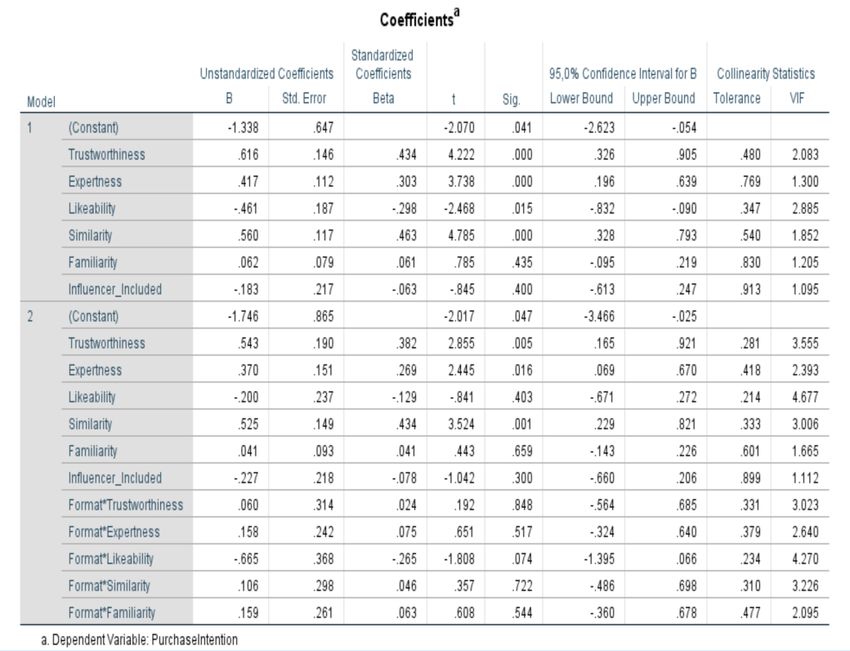
1.        INTRODUCTION                                                 difference on purchase intention as opposed to a product-only
The increasing use of the internet has brought challenges to the       review where the influencer is thus visually absent. Influencers
online advertising world. Recent statistics show that 47% of the       operate in many different fields, such as fashion, cosmetics and
internet users use some form of ad blocker (GlobalWebIndex,            fitness but this research focuses specifically on fitness influencers.
2019) and the increasing trust in word-of-mouth over companies’        The main focus of this study is therefore on the impact of the format
marketing messages, resulted in brands looking for other methods       of these reviews on purchase intention by looking at two formats:
of getting their messages across to the consumers and see influencer   the influencer-included format and the product-only format. Both
marketing as an attractive method (Woods, 2016; Constantinides &       formats are frequently used by fitness influencers on social media.
Fountain, 2008; Hashoff, 2017). Influencer marketing can be            We will examine this by conducting an online experiment with a
described as the practice of engaging influential social media users   between subjects design. A sub-objective of this study is to examine
to communicate brand messages in the form of sponsored content         the relationship between source credibility characteristics and
with their social network (Sammis et al., 2016). It has rapidly        purchase intention. The effectiveness of an influencer in creating
become a multi-billion dollar industry, worth an estimated $8          purchase intentions depends on the source’s credibility and will
billion in 2019 and with a predicted growth rate of almost 90% by      subsequently be used to determine the most effective review format
2022, making it a practice which cannot be ignored                     in creating purchase intentions (Yoon et al., 1998; Pornpitakpan,
(Businessinsider, 2019).                                               2004; Samarasinghe, 2017; Erdogan, 1999).

Since online product recommendations are being posted online,          1.2 Research question
influencer marketing is often regarded as a form of eWOM               As the main objective of this research paper is to find the influence
marketing (Erkan and Evans, 2016), as brands try to create positive    of review format on purchase intention, the following research
reviews by partnering with online celebrities to better reach the      question is formulated: What is the influence of review formats on
consumers. However, there has been little research done on the         consumers’ purchasing intention of fitness supplements?
format of the reviews that are posted by these influencers. A post
on social media that displays just the product accompanied with a      This study also aims to examine the relationship between the source
written recommendation, for example, could yield different results     credibility characteristics and purchase intention and therefore the
compared to a photo posted on social media where the influencer        following sub-question is formulated: What is the relationship
poses together with the advertised product. A study by Jin and         between the source credibility characteristics and purchase
Muqaddam (2019) looked at these different review formats but did       intention of fitness supplements?
not make any conclusions about the effectiveness of the formats in
terms of purchase intentions. Their main findings were that source
credibility was higher when consumers were exposed to influencer-      1.3 Academic and practical relevance
included posts compared to products-only posts which suggests that     As influencer marketing is still a relatively new practice, research
the presence of the influencer is an important factor. Research has    hasn’t covered all aspects of it. Most studies focus on the benefits
also found that online reviews posted by sources who are perceived     of it on multiple dimensions such as brand attitude and purchase
as highly credible have more persuasive power than reviews posted      intention but research about formatting is very limited. Also
by sources who are perceived as less credible. (Sertoglu, Catli, &     marketers still lack a clear understanding of the processes around
Korkmaz, 2014; Ohanian 1990; Pornpitakpan, 2004). Marketers            influencer marketing (Childers et al., 2019). This study contributes
therefore partner with influencers on social media as they expect      to a study by Jin and Muqaddam (2019) by placing the researched
them to be more credible and thus more persuasive. Additionally,       topic in a different context. Instead of looking at influencers
research has found that opinions of others have a strong influence     operating in the field of fashion, this study focuses on another
on the purchase behaviour of online consumers (Cantallops &            popular field which is fitness. In addition, purchase intentions were
Salvi, 2014; Almana & Mirza, 2013).                                    not directly examined in their study and will be the main point of
                                                                       focus in this study. A better understanding of these topics could be
The global fitness supplements industry is a growing market            used by marketers to improve the effectiveness of influencer
(Statista, 2019). Not just professional athletes but also casual gym   marketing campaigns. If the results show that either one of the
goers resort to supplements like whey protein, pre-workout and         formats is significantly better at leading to purchase behaviour,
creatine to enhance their dietary needs that could help them reach     marketers would want their partnered influencers to use this format
their goals. With the many different brands offering these products,   more often and perhaps differentiate in price per post based on the
consumers can find it hard to decide on what to purchase and as        format of the post.
literature has shown people tend to refer to other people’s opinion
to help them in this decision process (Constantinides and              1.4 Outline of this paper
Holleschovsky, 2016; Dellarocas, 2003). On social media                In the next section of this paper we will have an overview of the
platforms, there are many fitness celebrities who have an              existing literature relevant to the topics of this paper. Based on the
exemplary physique for the majority of their followers. Promoting      literature in the theoretical framework, a research model is
fitness supplements through these influencers could have a strong      developed and hypotheses are formulated. This will be followed by
impact on consumers purchasing decisions as Zak and Hasprova           the research methodology as well as the analysis of the gathered
(2020) found that influencers from the sports field are more trusted   data. This paper ends with a conclusion and discussion about the
than influencers from any other field.                                 findings in. Recommendations and implications for further research
                                                                       will also be discussed.
1.1       Research objective
This study aims to examine if the inclusion of an influencer in a
product review in the form of a social media post has a significant
2.        THEORETICAL FRAMEWORK                                            of compliance, which occurs when individuals accept influence
                                                                           from others because they hope for a favorable reaction. They might
                                                                           be interested in a specific reward or avoid disapproval by the
2.1 Research context                                                       influencer if the consumer complies with his message.
Current research on review formats, specifically the role of the           Identification occurs when individuals accept influence because
influencers presence in creating purchase intention, is very limited.      they want to maintain or create a self-defining relationship with a
Most prior studies about review formatting focus on effects of             person. An individual might even attempt to become like the other
advertisement disclosure (Evans et al., 2017; Carr & Hayes, 2014;          person and buying the advertised product could help them in this
Hwang & Jeong, 2016) or product placement (Liu, Chou & Liao,               process or at least make them look alike (McCormick, 2016). It is
2015; Alassani & Göretz, 2019; Russell & Rasolofoarison, 2017)             expected that identification has a big impact in this study. Fitness
but not many researchers have considered the importance of                 influencers have an exemplary physique and promoting products
influencers appearing together with the product. The presence or           by saying they helped them get into this shape could lead to
absence of an influencer in a sponsored post can be of great               persuasive behaviour by the consumers since they may believe that
importance. When a post contains solely the advertised product, the        this will make them look like the influencer. Internalization occurs
post might look too much like a traditional advertisement which            when the proposed behaviour from the influencer is congruent with
can lead to negative attitudes towards it (Althoff, 2017). In contrast,    their value system. This process explains how a message can
a post which includes the presence of the influencer can be seen as        influence consumers’ beliefs, opinions, attitudes and behaviours
part of the influencers normal life and prevents their followers to        (Erdogan, 1999). Consumers will buy the products from the
assume that there is an advertisement strategy behind it (Althoff,         influencer if they believe that they possess a certain degree of
2017).                                                                     expertise.

Source credibility can be defined as “the communicator’s positive          The term purchase intention is described by Lu et al., (2014) as “the
characteristic that affects the receiver’s acceptance of a message”        consumers’ willingness to buy a given product at a specific time or
(Ohanian, 1990, p41). Numerous prior studies have linked source            in a specific situation” (p261). Purchase intentions is often used as
credibility with purchase intentions and the vast majority support         a predictor of consumers' actual buying activities. (Kamalul Ariffin,
the idea that source credibility is positively related to purchase         2018). Many prior studies have examined the relationship between
intentions (Ohanian 1990; Yoon et al., 1998, Pornpitakpan, 2004;           source credibility and purchase intentions. In online reviews,
Erdogan ,1999). A study by Jimenez and Mendoza (2013) found                consumers determine the credibility of the review by considering
that reviews that are perceived as more credible lead to higher            the source. They do this by estimating how trustworthy and expert
purchase intentions for both experience and search products.               the source is (Chakraborty, 2019). Conflicting findings have been
Therefore, this study makes the assumption that a review which is          found as some researchers have failed to find a significant effect of
perceived as highly credible leads to more purchase intentions than        one or more source credibility characteristics on purchase
a review which is lower in credibility. This will be tested by             intentions. Ohanian (1991) only found that expertise had a
examining the relationship between the different source                    significant effect on purchase intention. However, other studies
characteristics (discussed in 2.2) in a product review and purchase        have found significant effects of all source credibility
intention. After examining this relationship, we will test if the          characteristics on purchase intentions. Yoon et al. (1998) looked at
influencer-included format significantly moderates the relationship        the influence of the source credibility characteristics on purchase
between the source characteristics and the consumers intention to          intentions between Americans and Koreans and found similar
purchase. This is visualized in our research model (Figure 1).             results across the two cultures. The source credibility variables
                                                                           were all significantly correlated with purchase intentions. These
                                                                           findings were further supported by Pornpitakpan (2004) who
2.2 Source credibility, attractiveness and                                 argued that high-credible sources are superior in creating purchase
                                                                           intentions over low-credible sources. With the previous findings in
purchase intentions.                                                       mind, this study predicts that a credible reviewer leads to greater
According to the source credibility theory, the acceptance of a
                                                                           purchase intentions. This is hypothesized in 2.4 and will be tested
message from a source is depending on the trustworthiness and the
                                                                           as part of this study.
expertness of the source (Ohanian, 1990). The components
trustworthiness and expertise were adapted from an earlier study by
Hovland, Janis, and Kelley (1953) who defined expertise as “The            In addition to the source credibility theory by Hovland and
extent to which a communicator is perceived to be a source of valid        associates (1953), Ohanian (1990) included a third component;
assertions” (p21). In other words, expertise refers to the extent to       attractiveness, adopted from another frequently used model, the
which others view a source as well-informed about a certain topic          source valence model (McGuire 1985). However, in his model
(Stiff & Mongeau, 2003). It therefore does not matter if the               attractiveness mostly focused on physical attributes of the source,
influencer is in fact an expert, it is only important that an influencer   whereas Erdogan (1999) argued that attractiveness is not solely
is perceived as such by the consumers (Erdogan, 1999; Hovland et           based on physical attributes. Since we try to examine the
al., 1953) Hovland and associates define trustworthiness as “The           differences between product-only and influencer-included reviews,
degree of confidence in the communicator’s intent to communicate           it does not make sense to solely focus on physical attractiveness.
the assertions he considers most valid” (p21). In short,                   For example, items by which Ohanian (1990) measured
trustworthiness refers to the perception that the source knows the         attractiveness were ‘sexiness’ and ‘handsomeness’ which are not
truth and speaks the truth (Stiff & Mongeau, 2003).                        typically associated with product-only reviews where the physical
                                                                           appearance of the influencer is absent. Therefore, we exclude
The social influence theory by Kelman (1958) explains how                  physical attractiveness in this study. Instead, we use the other
celebrities can influence consumers. He first describes the process        components from the source attractiveness model (McGuire 1953)
                                                                           to measure attractiveness. The components used in this model are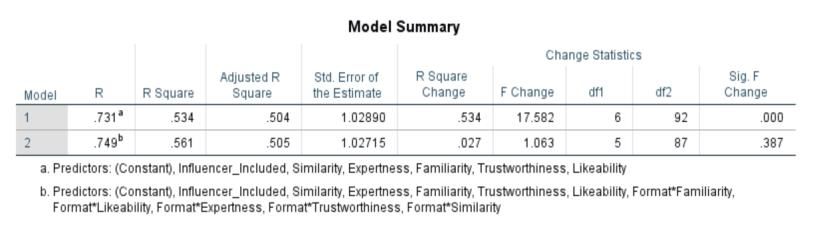
familiarity, similarity and likeability. Familiarity refers to “the      In recent years, with the rapid increase in social media use, a new
level of knowledge of a source through exposure” (Erdogan, 1999,         type of celebrity emerged: the so-called micro-celebrity. Micro-
p299). Familiarity implies that when a source has established a          celebrities are influencers who operate on social media platforms
relationship with consumers and is easily recognized, they are more      and have acquired a sizable network of followers who are unknown
likely to trust the source which facilitates the decision making         to most and ignored by mainstream media but are considered
process (Lee & Yurchisin, 2011, p276). Prior research has found          experts and trendsetters in one or several niches (Marwick 2015;
that information coming from a source who is similar or familiar         Veirman et al 2017). Whereas traditional celebrities gained their
produces greater levels of trust, appears more authentic and has a       status through their professional talent and their achievements,
greater effect on consumers purchasing behaviour as opposed to the       influencers gained their popularity by successfully branding
same information received from marketing messages created by             themselves as experts in specific niches on social media (Khamis
brands (Harmeling et al., 2016; Trusov et al., 2009; Arndt, 1967;        et al., 2017). The term influencer marketing refers to the marketing
Brown & Reingen, 1987). Similarity is defined as “a supposed             practice of engaging influential users on social media platforms to
resemblance between the source and the receiver of the message”          communicate brand messages in the form of sponsored posts with
(Erdogan, 1999, p299). In the context of this study, with similarity     their social network (Sammis et al., 2016). It can be regarded as
we mean the extent to which a consumer identifies with an                one of the fastest growing marketing practices in reaching new
influencer. Woodside and Davenport (1974) studied the effect of          customers online (Kadekova and Holiencinova, 2018). The
perceived similarity of the consumers with a salesperson and found       effectiveness of this marketing practice lies in the fact that
a significant relationship between similarity and the likelihood of      consumers put more trust in, and react more positively towards,
purchasing. Salesmen who are perceived as similar to the consumer        messages that come from a trusted source as opposed to sponsored
generated 22% more sales than salesmen who were perceived as             posts created by brands. (Colliander and Dahlen, 2011; Childers et
dissimilar. In a more digital context, this relationship has also been   al., 2019; Woods, 2016). Compared to traditional celebrity
supported by a study from Fu and colleagues (2019), who looked           endorsers, social media influencers have the advantage that their
at the effects in the context of online movie ticket purchases and       followers feel that they have more in common with them as the
found that similarity has a positive relationship purchase intentions.   traditional celebrity is seen as someone from a different class in
The last source component is likeability which refers to the             society making them less relatable for their followers (Woods,
“affection for the source as a result of the source’s physical           2016). Since it is a relatively new trend in marketing, marketers still
appearance and behaviour” (McGuire, 1985, p239). According to            lack a clear understanding of how to effectively carry out the
a study by Samarasinghe (2017), when a celebrity possesses a             practice of influencer marketing. (Childers et al., 2019). This study
charismatic personality, attractive physical appearance and a good       aims to contribute to this understanding by examining the best
sense of humor, the celebrity will be liked by the consumer. This        format by which influencers can post their sponsored content in
will subsequently lead to higher intention to purchase the               creating purchase intention for their audiences. Based on previous
advertised product by the liked celebrity. Similarly to source           literature about source credibility and attractiveness this study
credibility, literature suggests that source attractiveness is           predicts that the influencer-included review format has a positive
positively associated with purchase intentions.                          impact on the relationship between the source characteristics and
                                                                         purchase intention. This is visualized in 2.4 below and hypotheses
This study looks at the purchase intentions of fitness supplements.      are formulated reflecting this prediction.
A fitness supplement is a form of dietary supplement which is
defined by the Health and Education act (1984) as “a product other       2.4 Hypotheses and research model
than tobacco intended to supplement the diet that bears or contains
one or more of the following ingredients: a vitamin, a mineral, an
                                                                         Figure 1: Research model
herb or other botanical, an amino acid, a dietary substance for use
by man to supplement the diet by increasing the total daily intake,
or a concentrate, metabolite, constituent, extract or combination of
any of the above”. To classify this into a fitness supplement, the
supplement must be taken with the purpose of increasing muscle
mass, losing weight, improving endurance or any other sports
related purpose.

2.3 Influencer marketing
The practice of promoting products through celebrities is not a new
one. Brands would traditionally partner with professional athletes,
actors and supermodels to endorse their products (Friedman and           The following two hypotheses are formulated to examine the
Friedman, 1979). The purpose of celebrity endorsement is to use          relationship between the source characteristics and consumers’
their public image to draw more attention to the advertised product      purchase intention. This study predicts that there is a positive
and thus increase the consumers intention to purchase the product        relationship between the source characteristics and purchase
(McCormick, 2016). This is effective as celebrities have the ability     intention as that is what the majority of prior studies have found.
to enhance the readership or viewership of the advertisement and
are able to associate their positive personality characteristics with
                                                                         H1: There is a positive relationship between source credibility
the promoted product or brand (Vijayakumar & Ramakrishnan,
                                                                         (trustworthiness, expertness) of an influencer in a product review
2016).
                                                                         and purchase intentions.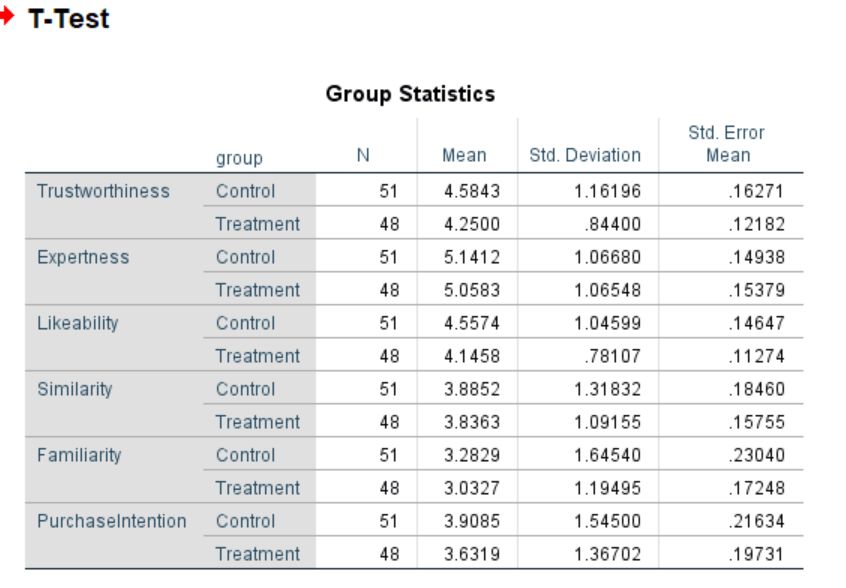
H2: There is a positive relationship between source attractiveness      the advertised product. Therefore, we use an influencer popular in
(likeability, similarity, familiarity) of an influencer in a product    the fitness scene to endorse the product. Merijn is one of the most
review and purchase intentions.                                         popular fitness personalities in the Netherlands and has a
                                                                        partnership with Myprotein which is why this brand was chosen.
To answer the main research question, the following two                 The survey encompasses 35 (sub)questions., and starts with 5
hypotheses are formulated. This study predicts that the review          general information questions about the population and 1 screening
format where the influencer is present will result make the             question. Gender, age, level of education, employment status and
relationship between the source credibility and attractiveness          country of residency are being asked to get a better image of the
characteristics and purchase intentions stronger, and thus positively   sample. No personal identification information like the
moderates it.                                                           respondent's name or email address was asked. All respondents
                                                                        participated on a voluntary basis and had the option to interrupt and
H3: The visual inclusion of an influencer in a product review would     continue the survey at a later time.
affect the relationship between source credibility (trustworthiness,
expertness) and purchase intention in a way that influencer-
included posts on influencers' social media accounts will increase      3.2 Sampling
the effect of source credibility on purchase intention.                 A total of 218 respondents participated in the experiment. Before
H4: The visual inclusion of an influencer in a product review would     the respondent would start, a screening question was asked to
affect the relationship between source attractiveness (likeability,     ensure relevancy to this study. The question asked if the respondent
similarity, familiarity) in a way that influencer included posts on     uses any kind of fitness supplements or is interested in doing so. If
influencers' social media accounts will increase the effect of source   this question was answered by ‘no’, the survey was terminated
attractiveness on purchase intention                                    immediately. If the question was answered by ‘yes’ the participants
                                                                        would proceed to the main survey questions. The decision for the
3.        METHODOLOGY                                                   inclusion of this question was made by keeping in mind that
In this chapter we will describe the methodology used in this           respondents who don’t use some type of fitness supplements or are
research. This section starts by discussing the research design of      not interested in them at all will not show any intent to purchase
this study. After that we will look at the sample and lastly we         these products, no matter how persuasive the influencer is.
elaborate on the measurements used in this research.                    Furthermore, participants who completed the survey in less than
                                                                        two minutes were also excluded from the survey to make sure that
                                                                        people who would just randomly click through the survey without
3.1 Research design                                                     reading the questions would not have an impact on the data. It was
To find an answer to the main research question and sub-question,       estimated that the survey takes approximately five minutes to
data was gathered from the sample using a quantitative data             complete so anything under two minutes was considered
collection approach. This was in the form of an online experiment       unrealistic. With the aforementioned criteria, to ensure enough
which was conducted using Qualtrics. Due to the recent COVID-           participants for the experiment, the non-probability sampling
19 pandemic, the data gathering options were limited. The               method convenience sampling was chosen. This method has the
advantage of using a survey is that it enabled us to get a larger       advantage that data is assembled in an efficient manner and quickly
number of participants regardless of geographical barriers and          available for further evaluation (Marshall, 1996). It was shared
limitations regarding the pandemic.                                     among the authors social network on online platforms such as
A survey was prepared with a treatment group where a stimulus           Facebook, Instagram and LinkedIn and on survey sharing platforms
was present and a control group for comparison where the stimulus       and was available for a 3 week period. The survey could be filled
was absent. The stimulus was in this case the visual inclusion of the   out using any display device that has an internet connection
influencer together with the product. The only difference between       (smartphones, tablets, computers).
the groups was that the control group would be exposed to just a        After excluding respondents who said no to the screening question,
photo of a product, accompanied with a written review by the            removing partially filled out surveys and surveys that were filled
influencer. The treatment group would have the same written             out in 2 minutes or under, the total data set was reduced to 99
review but with a photo of the influencer together with the product;    complete surveys. After the screening question, participants would
the stimulus (Appendix 1). This represents the two different review     be randomly assigned to the control group (product-only) or
formats. By conducting an experiment with this design allows us         treatment group (influencer-included). This resulted in a control
to make a potential conclusion that a difference between the two        group of 51 respondents and a treatment group of 48 respondents.
groups is in fact caused by the added stimulus to the treatment         All the questions were identical for both groups.
group, in this case the inclusion of an influencer (Babbie, 1998).
We measure this through the effects on the relationship between the
source characteristics and purchase intention.                          3.3 Measurement
The product in this survey is a pre-workout supplement by the           All the measures used in this survey were adopted from previously
brand Myprotein. The influencer used in the review is Merijn            validated scales. A complete overview of the operationalization
Schoeber, a Dutch fitness influencer who has a YouTube channel          used in this study can be found in Table 1. The source credibility
with nearly 300.000 subscribers. We based the decision for              characteristics ‘trustworthiness’ and ‘expertness’ were measured
selecting the combination of this influencer with this product on the   by Ohanian’s (1990) frequently used scale. We measured these
match-up hypothesis. This states that the advertisement is more         variables on a 7 point semantic differential scale. An example of an
effective in creating purchase intention if a ‘fit’ between product     item used for ‘trustworthiness’ is reliability where 1= “unreliable”
and the influencer exists (Santos et al., 2019; McCormick, 2016).       and 7= “reliable”. For ‘expertness’ an example of an item used is
In other words, the source should have a natural relationship with      experience where 1= “inexperienced” and 7= “experienced”. The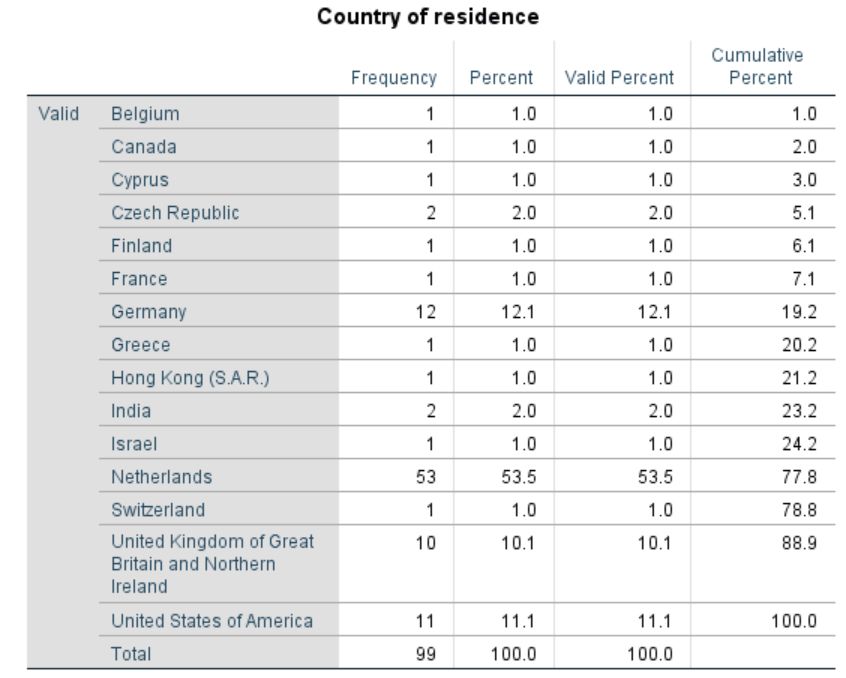
variables ‘familiarity’, ‘similarity’ and ‘likability’ were adopted      tested with hypotheses 3 and 4.. In this chapter, The treatment
from the source attractiveness model (McGuire, 1985). A scale to         group refers to the respondents who were exposed to the influencer-
measure these variables was later constructed by Peetz, Theodorne        included review. The control group refers to the respondents who
Byrne (2012). We measured the variables from this model on a 7           were exposed to the product-only review.
point Likert scale with 1= “strongly disagree” and 7= “strongly
agree”. An example of an item by which ‘familiarity’ is measured
is “When I read the product review above, I recognized the
                                                                         4.1 Descriptive analysis
                                                                         The general information questions asked in the survey provided us
reviewer”. An example of an item by which ‘similarity’ is measured
                                                                         with a better image of the respondents. Of the respondents 53 were
is “When I read the product review above, I identified with the
                                                                         male (53.5%) and 46 were female (46.5%). Almost 70% of the
reviewer”. The last variable, ‘likability’ was measured with for
                                                                         respondents were between 18 and 25 years of age. The second most
example “When I read the product review above, I liked the
                                                                         represented age group was 26 to 34 years of age, with just over 22%
reviewer”. The dependent variable ‘purchase intention’ was also
                                                                         of the respondents belonging in this group. The remaining 8% of
measured. The items were borrowed from MacKenzie, Lutz and
                                                                         respondents were aged between 13 to 18 years of age and 35 to 54
Belch (1986) and we measured purchase intention on a 7 point
semantic differential scale. An example of an item used is               years of age with 3% and 5% respectively.
‘likelihood of buying the product’ where 1= “unlikely” and 7=            Most of the surveys were taken by people living in the Netherlands
“likely”. Table 1 below displays an overview of the measurements         (53.5%). 12.1% of the respondents live in Germany, 11.1% in the
used in this research. The full list of questions used can be found in   US, 10.1% in the UK, 2% in India and another 2% in Czech
the appendix (Appendix 1).                                               Republic. The remaining respondents lived in single represented
                                                                         countries, these can be found in the Appendix (x).
Table 1: Operationalization of the source characteristics and purchase   The majority of the respondents have received at least a bachelor’s
intention.                                                               degree (48.5%) or a master’s degree (25.3%). Furthermore, 2%
                                                                         received less than a high school diploma, 7.1% a high school
Concept         Component         Source           Questions             diploma or equivalent, 8.1% are enrolled in some college but have
Source          Trustworthiness   Ohanian (1990) 5 semantic
                                                                         not yet received a degree, 7.1% did receive a college degree and
credibility                                      differential scale      lastly 2% received a doctoral degree.
                                                 questions               The employment status was also asked. 48.5% of the respondents
Source          Expertness        Ohanian (1990) 5 semantic              are employed, with an additional 11.1% being self-employed.
credibility                                      differential scale      22.2% of the respondents are unemployed while 18.2% have
                                                 questions               reported their employment status as ‘other’ A full overview of the
                                                                         descriptive statistics can be found in appendix 2.
Source         Likeability/simil McGuire           /
attractiveness arity/familiarity (1985)
Source         Likeability        Peetz, Theodore 7 Likert scale         4.2 Reliability
attractiveness                    Byrne (2012)    questions              Before any statistical tests can be performed, we must recode the
Source         Similarity         Peetz, Theodore 7 Likert scale         values of some items to represent their true value. Specifically the
attractiveness                    Byrne (2012)    questions              items Q15_2, Q16_4, Q17_5, Q27_2, Q28_4 and Q29_5 had to be
                                                                         reverse scored as they were negatively asked (see Appendix 1 for
Source         Familiarity        Peetz, Theodore 7 Likert scale
attractiveness                    Byrne (2012)    questions
                                                                         the full list of items). Now to measure internal consistency of the
                                                                         scale items, Cronbach’s alpha was run. The minimum value for
Purchase        /                 MacKenzie,       3 semantic            Cronbach’s alpha should be 0.7 or higher to be adequate (Nunnally,
intention                         Lutz & Belch     differential scale    1978). The results indicate that all measures show good reliability,
                                  (1986)           questions             as can be found in table 2. Therefore the decision was made to keep
                                                                         all items from the scale.

4.            RESULTS                                                    Table 2: Reliability coefficients.
In this chapter of the report, the collected data from the survey will   Group               Variable              Cronbach’s Alpha
be analyzed using SPSS. We will first have a closer look at the
respondents by reporting descriptive statistics about the sample.        Control             Trustworthiness               0,930
Then we will check the reliability of the items in the construct by      Treatment           Trustworthiness               0,789
testing the internal consistency using Cronbach’s alpha. As our          Control             Expertness                    0,935
hypotheses stated, we must test whether or not the source                Treatment           Expertness                    0,924
characteristics have a significant influence on purchase intentions.     Control             Likeability                   0,942
We will use the results to accept or reject hypotheses 1 and 2.
                                                                         Treatment           Likeability                   0,751
Further statistical testing will allow us to make comparisons
between the two groups in terms of the source characteristics and        Control             Similarity                    0,931
purchase intentions by performing a t-test. Lastly we will look at       Treatment           Similarity                    0,866
the moderating effect of review formats on the relationship between      Control             Familiarity                   0,928
the source characteristics and purchase intention to test if             Treatment           Familiarity                   0,790
influencer-included review format significantly affects this             Control             Purchase Intentions           0,905
relationship, which is the main objective of this study. This will be    Treatment           Purchase Intentions           0,927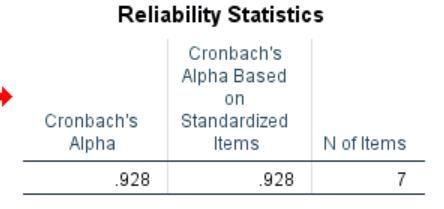
4.3 Effects on purchase intention                                            First, the differences between the formats for the source credibility
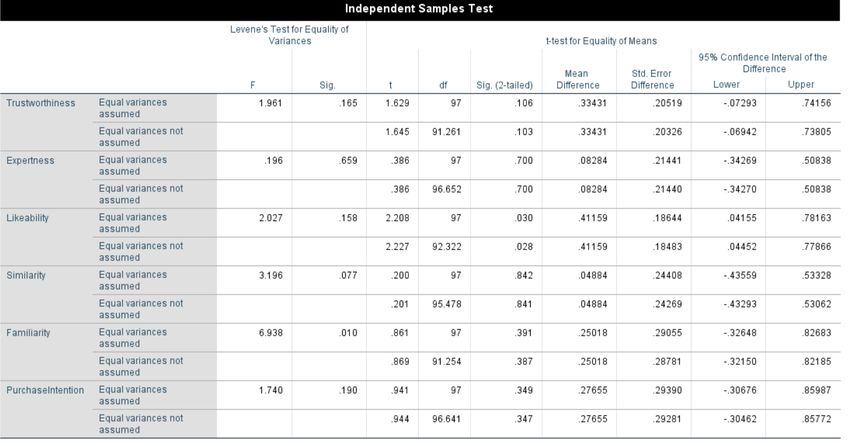
Before we can examine if the visual inclusion of an influencer in a          characteristics is being looked at. Between the two groups, no
product review has an effect on the relationship between the source          statistically significant difference was found for trustworthiness,
characteristics and purchase intention, we must test whether or not          with the product-only group attaining a higher mean score than the
a significant relationship between trustworthiness, expertness,              influencer-included group. This was also the case for expertness
likeability, similarity, familiarity and purchase intention exists.          where the product-only group also attained a higher mean score
Previous studies did find this relationship and therefore we                 than the influencer-included group.
hypothesized that there is indeed a significant relationship between
the source characteristics and intention to purchase. This will be           For the source attractiveness characteristics we did find a
tested using Pearson’s correlation through SPSS and a complete               statistically significant difference between the formats for
overview of the results can be found in table 3 below.                       likeability, with the product-only group attaining a higher mean
                                                                             score than the influencer-included group. No statistically
First the source credibility characteristics were tested and results         significant difference was found between the groups for similarity
indicated that there was a moderate significant positive association         and familiarity, with the product-only group attaining a higher
between trustworthiness and purchase intention with a Pearson’s              mean score than the influencer-included group for both
coefficient of 0.571. For expertness, results indicated that there was       characteristics.
also a moderate significant positive association with purchase
intention with a Pearson’s coefficient of 0.408. Based on existing           Lastly we compared the means of purchase intention between the
literature we hypothesized that there would be a significant positive        two groups. The results indicate that there is no statistically
relationship between the source credibility characteristics and              significant difference for purchase intentions, with the product-only
purchase intention (H1). These results allow us to accept H1 as a            group attaining a higher mean score than the influencer-included
significant positive relationship was found between both the source          group.
credibility characteristics and purchase intention. Trustworthiness
and expertness both showed a significant relationship with                   4.5 Moderating effect of review formats
purchase intention at a p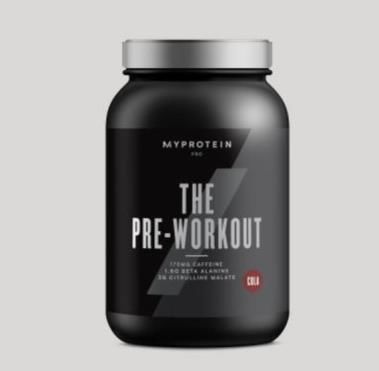
Table 4: Differences between the formats
                      Influencer-included format              Product-only format

                      Mean              SD                    Mean             SD              Difference in means    T-test
                                                                                                                      significance
Trustworthiness       4.25              0.84                  4.58             1.16            0.33                   0.106

Expertness            5.06              1.07                  5.14             1.07            0.08                   0.700

Likeability           4.15              0.78                  4.65             1.05            0.41                   0.030*

Similarity            3.84              1.09                  3.89             1.32            0.05                   0.842

Familiarity           3.03              1.19                  3.28             1.65            0.25                   0.387

Purchase Intentions   3.63              1.37                  3.91             1.55            0.28                   0.349

*p
that the difference was only significant for likeability. A possible suboptimal replications of review formats. Even though this study
explanation for these differences in findings could be that their did not focus on a particular social media platform, it might have
study used an influencer from the fashion field as opposed to the been more effective if the product-only photo and influencer-
fitness field. This could mean that the importance of seeing an included photo were photoshopped to replicate an authentic post by
influencer wearing a fashion item is greater than an influencer an influencer on Instagram. A final limitation comes from the
appearing together with a fitness supplement. The products used in sample as the initial plan was to only include respondents from the
the studies have different purposes as the fashion item is something Netherlands. This did not yield nearly enough completed surveys
you wear and a supplement something you consume. It could also and therefore the decision was made to remove this restriction and
be based on the fact that their data was gathered from a female-only open the experiment to anyone around the world. Eventually just
sample. This could mean that female consumers are differently 53.5% of the respondents live in the Netherlands. This can be seen
influenced by influencers on social media than male consumers as a limitation because the influencer used in the review is most
since our sample consisted of 53.5% males and 46.5% females likely not well-known in countries outside of the Netherlands and
(Appendix 2). Further research is necessary to provide better may therefore have influenced people who never heard of him to a
clarification. lesser extent.
The main aim of this research was to find the impact of the review 6.2 Future research
format on purchase intentions. This was examined by taking the As little research has been done on this topic, further research is
previously established relationship between the source necessary. This study focused on the fitness industry, with fitness
characteristics and purchase intention and see if the inclusion of an supplements as the advertised products but there are many different
influencer would make this relationship significantly stronger. We fields in which influencers operate. It might therefore be useful to
hypothesized that for both the source credibility characteristics see if the impact of review formats is different between fitness
(H3) and source attractiveness characteristics (H4), the relationship supplements and other frequently advertised products such as
with purchase intention would be stronger for the influencer- cosmetics or fashion items, on dimensions such as brand attitude
included format. However, results indicated that the inclusion of an and purchase intentions. As was mentioned in the discussion, a
influencer in a product review does not have a significant impact fitness supplement has a completely different purpose than a
on purchase intentions. This suggests that the influencer-included fashion item and results from a previous study by Jin and
format is not more effective in leading to purchase behaviour Muqaddam (2019) already showed that the influencer-included
compared to the product-only format. The previously mentioned format creates more positive brand attitudes than the product-only
explanations for the non-significant differences between the two format for fashion items which suggests there could be differences
formats may apply here as well. It is possible that review formats between product types. Another suggestion for further research is
are more important for other product types such as fashion items or to look at the effect of gender as an all-female sample resulted in
that female consumers are more easily influenced by an influencer. significantly different results compared to our mixed-gender
Further research might point this out. It was also predicted that sample (Jin and Muqaddam, 2019). Lastly, due to the time
identification would have a big impact in this study. According to constraint and the COVID-19 pandemic the sample size was very
McCormick (2016), consumers might buy a product from an limited. Further research should focus on getting a larger sample
influencer in an attempt to become them or at least look alike. A size which will contribute to the reliability of the results.
fitness influencer posing with a product that helped them reach their
exemplary physique was therefore predicted to have a significant
impact on the consumers’ purchase intentions. This was not the
case as indicated by the results.
7. IMPLICATIONS
This research provides first insights into the effectiveness of review
formats used by influencers on social media. Since little research
has been done, further research is needed on the topic of review
6. LIMITATIONS & FUTURE formats by influencers to provide more insights about the
RESEARCH effectiveness of the formats and to add to the literature around
In this section, the limitations of the research are being discussed influencer marketing. The framework in this study can be used and
and recommendations for future research are being made. modified by other scholars to help them in this further research. The
results of this research do not provide marketers with evidence that
6.1 Limitations either format is more effective in leading to purchase intentions.
There are some limitations to this study that must be addressed. The However, it does confirm the importance of all source
first is the lack of respondents resulted in a relatively small data set characteristics which should be carefully considered by marketers
which severely limits the reliability of the results. A larger sample in deciding on which influencer to partner with. The influencer
size may produce significantly different results. This was partly must be trustworthy, and expert in the field of the advertised
contributed to the recent COVID-19 pandemic, which has had a product, likeable, similar and familiar to the consumer to best
great impact on people’s lives. Therefore, data gathering options influence the consumer. It is therefore important that the influencer
were limited by the pandemic as a lockdown did not permit has a natural relationship with the product that is being advertised
unnecessary contact with people outside of one’s household. This and it is recommended that for the advertisement of fitness
meant that data could only be gathered online. The pandemic also supplements, an influencer from this field should be partnered with.
caused the gyms in the Netherlands to be closed for the complete
duration of this study. The initial plan was to ask people in the gyms
in my area to participate in the experiment but this was 8. CONCLUSION
unfortunately not possible anymore and with a limited target group The main aim of this research was to find whether or not the
it was difficult to find many respondents online. Furthermore, the effectiveness of product recommendations posted by influencers on
lack of time combined with my lack of photoshop skills resulted in social media depends on the formats by which they are posted. Twofrequently used formats, the product-only and influencer-included Caleb T. Carr & Rebecca A. Hayes (2014) The Effect of
format were compared in terms of leading to purchase intentions. Disclosure of Third-Party Influence on an Opinion Leader's
A sub-objective of this research was to find the relationship Credibility and Electronic Word of Mouth in Two-Step
between the influencers’ credibility and attractiveness and the Flow, Journal of Interactive Advertising, 14:1, 38-50, DOI:
consumers intention to purchase. This was examined by conducting 10.1080/15252019.2014.909296
an online experiment. This research did not find evidence for the Chakraborty, U. (2019). The impact of source credible
most effective review format in terms of purchase intentions. online reviews on purchase intention. Journal of Research
However, it does open the door for further research opportunities in Interactive Marketing, 13(2), 142-161.
as influencers operating in different fields may produce different
results. An interesting finding of this research is that the influencer Colliander, Jonas & Dahlen, Micael. (2011). Following the
is perceived as more likeable when he does not visually appear with Fashionable Friend: The Power of Social Media - Weighing
the product, as the mean score for likeability was significantly the Publicity Effectiveness Of Blogs versus Online
higher for product-only format compared to the influencer-included Magcarrevaazines. Journal of Advertising Research. 51.
format. Furthermore, this study did find the importance of a 313. 10.2501/JAR-51-1-313-320.
credible and attractive source in influencer marketing and Constantinides, Efthymios & Fountain, Stefan. (2008).
marketers should take note of that. As of now, fitness influencers Web 2.0: Conceptual Foundations and Marketing Issues.
do not seem to shape their physique for marketing purposes as their Journal of Direct, Data and Digital Marketing
presence does not appear to be an important factor in persuading
Constantinides, Efthymios & Holleschovsky, Nina. (2016).
their audiences to buy the advertised product.
Impact of Online Product Reviews on Purchasing
Decisions. 271-278. 10.5220/0005861002710278.
9. ACKNOWLEDGEMENT Courtney Carpenter Childers, Laura L. Lemon & Mariea G.
First and foremost, I would like to express my gratitude towards my Hoy (2019) #Sponsored #Ad: Agency Perspective on
first supervisor A. Leszkiewicz for her ideas and feedback during Influencer Marketing Campaigns, Journal of Current Issues
the process of writing this thesis. I would also like to thank my & Research in Advertising, 40:3, 258-274, DOI:
second supervisor E. Constantinides for his final review of the 10.1080/10641734.2018.1521113
thesis. Finally I would like to thank the respondents of the survey De Veirman, Marijke & Cauberghe, Veroline & Hudders,
for their time and providing me with valuable insights. Thank you Liselot. (2017). Marketing through Instagram influencers:
all. the impact of number of followers and product divergence
on brand attitude. International Journal of Advertising. 36.
1-31. 10.1080/02650487.2017.1348035.
10. REFERENCES Dellarocas, Chrysanthos. (2003). The Digitization of Word
of Mouth: Promise and Challenges of Online Feedback
Added by @myproteinnl Instagram post Wat nemen jullie Mechanisms. Management Science. 49.
voor de workout? @merijn #FuelYourAmbition 10.2139/ssrn.393042.
#Myprotein. Retrieved June 16, 2020, from
https://www.picuki.com/media/2252449075948873884 Erdogan, B. Z. (1999). Celebrity Endorsement: A
Literature Review. Journal of Marketing Management,
Alassani R., Göretz J. (2019) Product Placements by Micro 15(4), 291-314. doi:10.1362/026725799784870379
and Macro Influencers on Instagram. In: Meiselwitz G.
(eds) Social Computing and Social Media. Communication Erkan, Ismail & Evans, Chris. (2016). Social media or
and Social Communities. HCII 2019. Lecture Notes in shopping websites? The influence of eWOM on
Computer Science, vol 11579. Springer, Cham consumers’ online purchase intentions. Journal of
Marketing Communications. 1-17.
Almana, Amal & Mirza, Abdulrahman. (2013). The Impact 10.1080/13527266.2016.1184706.
of Electronic Word of Mouth on Consumers' Purchasing
Decisions. International Journal of Computer Applications. Ermeç, Ayşegül & Catli, Ozlem & Korkmaz, Sezer. (2014).
82. 23-31. 10.5120/14145-2286. Examining the Effect of Endorser Credibility on the
Consumers' Buying Intentions: An Empirical Study in
Althoff, M. (2017). Product Placement on Instagram: the Turkey. International Review of Management and
Power of shaping Consumers’ Attitudes and Intentions? Marketing. 4. 66-77.
Arndt, J. (1967). Role of product-related conversations in Fanoberova, A., & Kuczkowska, H. (2016). Effects of
the diffusion of a new product. Journal of Marketing source credibility and information quality on attitudes and
Research, 4(3), 291–295 purchase intentions of apparel products : A quantitative
Babbie, E. R. (1998). The practice of social research. study of online shopping among consumers in Sweden
Belmont, CA: Wadsworth Pub. Co. (Dissertation). Retrieved from
Belch, G. and Belch, M., 2003. Advertising And Promotion. http://urn.kb.se/resolve?urn=urn:nbn:se:umu:diva-123550
6th ed. The McGrawHill. Friedman, H. H., & Friedman, L. (1979). Endorser
Brown, J. J., & Reingen, P. H. (1987). Social ties and word- effectiveness by product type. Journal of Advertising
of-mouth referral behavior. Journal of Consumer Research, Research, 19(5), 63–71.
14(3), 350–362. GlobalWebIndex (2019) Ad-Blocking: Consumer Trends,
Behaviors and Motivations. Retrieved fromhttps://www.globalwebindex.com/reports/global-ad- Internet Research. 25. 300-316. 10.1108/IntR-12-2013- blocking-behavior 0267. Harmeling, Colleen & Moffett, Jordan & Arnold, Mark & Lu, Long-Chuan & Chang, Wen-Pin & Chang, Hsiu-Hua. Carlson, Brad. (2016). Toward a theory of customer (2014). Consumer attitudes toward blogger’s sponsored engagement marketing. Journal of the Academy of recommendations and purchase intention: The effect of Marketing Science. 45. 10.1007/s11747-016-0509-2. sponsorship type, product type, and brand awareness. Hovland, C. I., Janis, I. L., & Kelley, H. H. (1953). Computers in Human Behavior. 34. 258–266. Communication and persuasion; psychological studies of 10.1016/j.chb.2014.02.007. opinion change. Yale University Press. MacKenzie, S.B., Lutz, R.J., & Belch, G.E. (1986). The Hwang, Yoori & Jeong, Se-Hoon. (2016). “This is a role of attitude toward the ad as a mediator of advertising sponsored blog post, but all opinions are my own”: The effectiveness: A test of competing explanations. Journal of effects of sponsorship disclosure on responses to sponsored Marketing Research, 23(2), 130- 143. blog posts. Computers in Human Behavior. 62. 528-535. Martin N Marshall, Sampling for qualitative research, 10.1016/j.chb.2016.04.026. Family Practice, Volume 13, Issue 6, 1996, Pages 522– Jiménez, Fernando & Mendoza, Norma. (2013). Too 526, https://doi.org/10.1093/fampra/13.6.522 Popular to Ignore: The Influence of Online Reviews on Marwick, A.E. (2015). Instafame: Luxury Selfies in the Purchase Intentions of Search and Experience Products. Attention Economy. Public Culture, 27, 137-160. Journal of Interactive Marketing. 27. 226-235. McCormick, Karla. (2016). Celebrity endorsements: 10.1016/j.intmar.2013.04.004. Influence of a product-endorser match on Millennials Jin, S. V., & Muqaddam, A. (2019). Product placement 2.0: attitudes and purchase intentions. Journal of Retailing and “Do Brands Need Influencers, or Do Influencers Need Consumer Services. 32. 39-45. Brands?” Journal of Brand Management. 10.1016/j.jretconser.2016.05.012. doi:10.1057/s41262-019-00151-z McGuire, W.J. (1985) Attitudes and Attitude Change. In: Kadekova, Z., & Holiencinova, M. (2018). Influencer Lindzey, G. and Aronson, E., Eds., Handbook of Social marketing as a modern phenomenon creating a new frontier Psychology, 3rd Edition, Vol. 2, Random House, New of virtual opportunities. York, 233-346. Kamalul Ariffin, S., Mohan, T., & Goh, Y.-N. (2018). Nathaniel J. Evans, Joe Phua, Jay Lim & Hyoyeun Jun Influence of consumers’ perceived risk on consumers’ (2017) Disclosing Instagram Influencer Advertising: The online purchase intention. Journal of Research in Effects of Disclosure Language on Advertising Interactive Marketing. doi:10.1108/jrim-11-2017-0100 Recognition, Attitudes, and Behavioral Intent, Journal of Kelman, H. C. (1958). Compliance, identification, and Interactive Advertising, 17:2, 138-149, DOI: internalization three processes of attitude change. Journal 10.1080/15252019.2017.1366885 of Conflict Resolution, 2(1), 51–60. Nunnally, J. C. (1978). Psychometric theory (2nd ed.). New https://doi.org/10.1177/002200275800200106 York, NY: McGraw-Hill. Khamis, S., L. Ang, and R. Welling. 2017. Self-branding, Ohanian, R. (1990). Construction and validation of a scale ‘micro-celebrity’ and the rise of social media influencers. to measure celebrity endorsers' perceived expertise, Celebrity Studies 8, no. 2, 191–208. trustworthiness, and attractiveness. Journal of Advertising, Khamis, Susie & Ang, Lawrence & Welling, Raymond. 19(3), 39–52. (2016). Self-branding, ‘micro-celebrity’ and the rise of https://doi.org/10.1080/00913367.1990.10673191 Social Media Influencers. Celebrity Studies. 1-18. Ohanian, R. (1991). The impact of celebrity spokespersons' 10.1080/19392397.2016.1218292. perceived image on consumers' intention to purchase. Khamis, Susie & Ang, Lawrence & Welling, Raymond. Journal of Advertising Research, 31(1), 46–54. (2016). Self-branding, ‘micro-celebrity’ and the rise of Paster, F. (2017, April 27). Hashoff: Instagram Dominates Social Media Influencers. Celebrity Studies. 1-18. Influencer Marketing (Report). Retrieved from 10.1080/19392397.2016.1218292. https://www.slideshare.net/FilippPaster/hashoff- Kim, Minjeong & Lennon, Sharron. (2008). The effects of instagram-dominates-influencer-marketing-report visual and verbal information on attitudes and purchase Peetz, Theodore Byrne, "Celebrity Athlete Endorser intentions in Internet shopping. Psychology and Marketing. Effectiveness: Construction and Validation of a Scale" 25. 146 - 178. 10.1002/mar.20204. Pornpitakpan, C. (2004). The Persuasiveness of Source Lee, Z. C., & Yurchisin, J. (2011). The impact of website Credibility: A Critical Review of Five Decades' Evidence. attractiveness, consumer-website identification, and Journal of Applied Social Psychology, 34(2), 243-281. website trustworthiness on purchase intention. doi:10.1111/j.1559-1816.2004.tb02547.x International Journal of Electronic Customer Relationship Reijmersdal, Eva & Rozendaal, Esther & Hudders, Liselot Management, 5(3/4), 272. & Vanwesenbeeck, Ini & Cauberghe, Veroline & van doi:10.1504/ijecrm.2011.044692 Berlo, Zeph. (2020). Effects of Disclosing Influencer Liu, Su-Houn & Chou, Chen-Huei & Liao, Hsiu-Li. (2015). Marketing in Videos: An Eye Tracking Study Among An exploratory study of product placement in social media.
You can also read


