The many fictions of Heman Chong - Rossi & Rossi
←
→
Page content transcription
If your browser does not render page correctly, please read the page content below
The many fictions
of Heman Chong

In conversation with                                          Heman Chong___Since 2000 I had been away from
                                                              Singapore for long periods of time, but I had more or less
Aileen Burns and Johan Lundh
                                                              decided that I would never leave Singapore permanently. I
                                                              would be living in another city for two or three months and
                                                              then I’m back in Singapore, in my studio, surrounded by
                                                              all my books, my past work and all my shit. Back in 2004,
                                                              I wanted very much to write fiction, but I was completely
                                                              unable to. I was quite depressed for a few years, trying to
                                                              deal with this incapacity, and something that I could still do
                                                              was to walk aimlessly around Singapore. I started to play
                                                              this simple game in which I would wait for a moment where
                                                              there is absolutely no one in the frame before releasing the
                                                              shutter. The idea of using the photographs to accompany
                                                              calendars of future years came about much later, around
                                                              2008 or 2009, in a conversation with Zhang Wei and Hu
                                                              Fang of Vitamin Creative Space (Guangzhou). I didn’t see
                                                              the spaces as bleak or “soul-less”, a term that is often used
                                                              to describe Singapore. For me, these public interiors are
                                                              full of personal stories. I’ve always found it interesting that
                                                              the built environment in Singapore is made up of mainly
                                                              generic materials: glass, brick, concrete, steel—materials
                                                              which can be bought in bulk, and for cheap. The result is
                                                              an interconnected series of spaces that look like every other
Aileen Burns and Johan Lundh___Going into this                space. It’s no coincidence that we have the best airport
conversation, we are conscious that it will be published      in the world. The entire city is built around this airport.
in the context of a focus on science fiction. Your work       Transient workers, mill in and out with great ease, and with
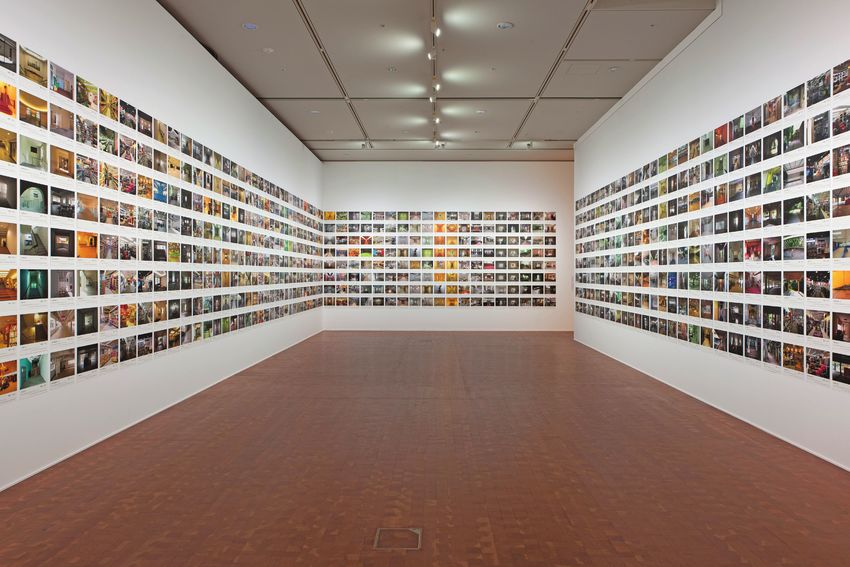
Calendars (2020–2096), made up of 1001 photographs,           a high turnover. But, even so, these interiors still function
addresses a long future timeline and is also resolutely       as spaces in which people interact and communicate with
grounded in our time. The photographs were taken              each other. I feel strongly that the project will mean a lot to
in Singapore over the course of seven years and we            people who have spent a substantial amount of time here.
understand that you established a set of rules to guide       I’ve always wanted to produce a work that has multiple
the work: spaces such as malls, cafeterias, airports,         functions. Calendars (2020–2096) begins a set of usable
and housing estates were documented at times when             calendars over 77 years into the future. It is a catalogue of
they were open to the public but empty of people. If this     all these generic architectural materials that are used; not
is a projection of the future, it is pretty bleak. If these   only in Singapore, but in major cities around the world,
calendars are for a future audience, what are they telling    out of which I can imagine a science fiction photo novel.
people about our time? And if they are a project of a         I’m only interested in things that can be more than one
future reality, what can be learned from this cold and        thing at a time, open to all sorts of misinterpretations,
un‑fantastical future?                                        like falling into all the wrong cracks and crevices.

64 | Artlink Issue 36:4 | December 2016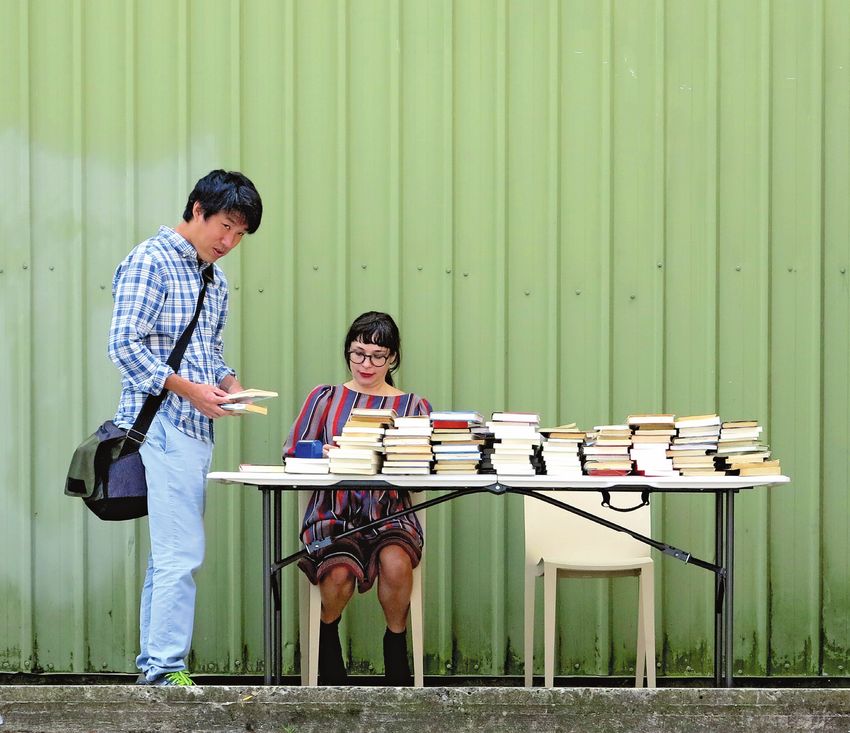
Heman Chong
             Calendars (2020–2096), 2004–10,
       1,001 offset prints with matt lamination.
                       Photo: Kazuo Fukunaga
Courtesy of The National Museum of Art, Osaka

  Issue 36:4 | December 2016 Artlink | 65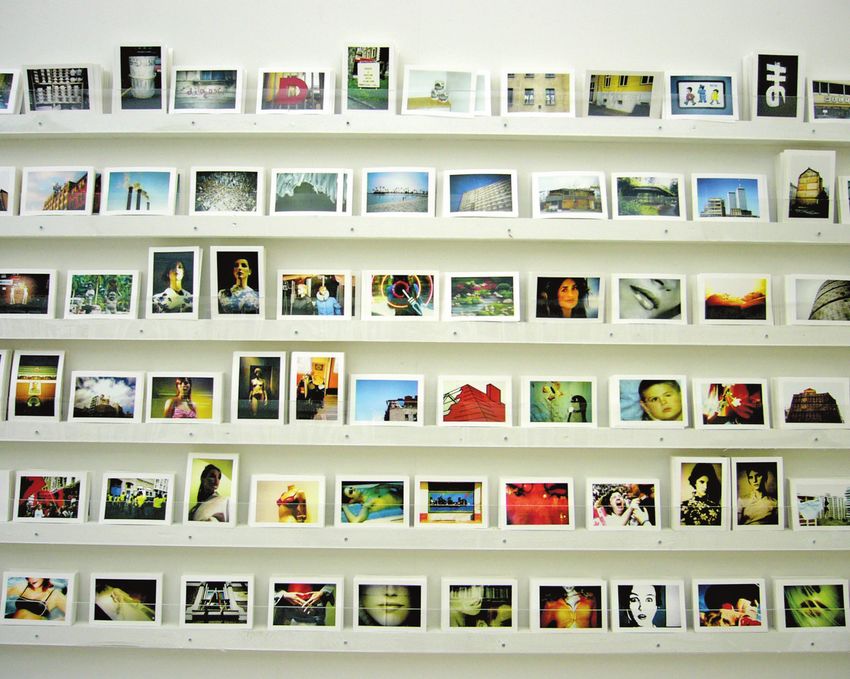
Heman Chong
                                                God Bless Diana, 2000–04,
                                                            550 postcards.
                                          Kroeller-Mueller Museum, Otterlo,
                                                           The Netherlands
                                                     Photo: Heman Chong

66 | Artlink Issue 36:4 | December 2016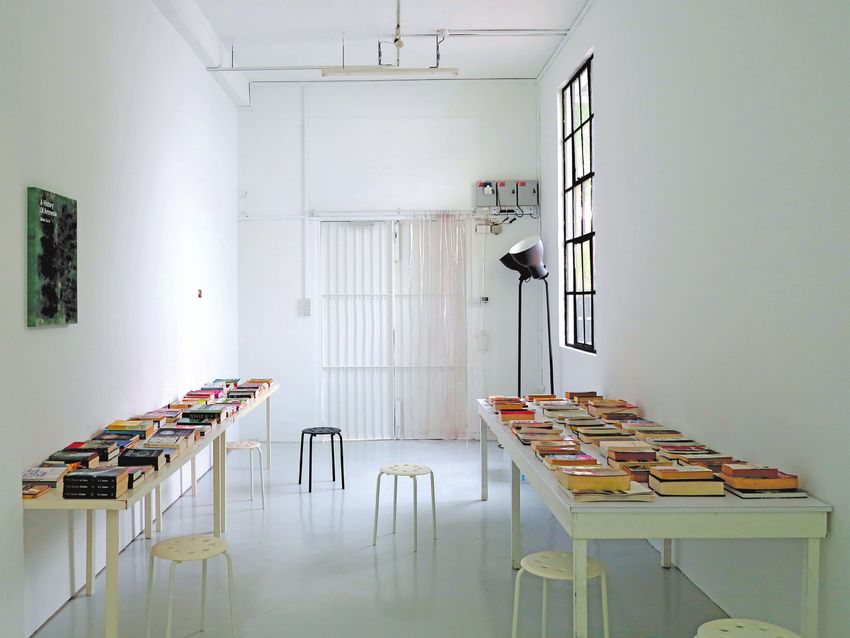
It sounds like Calendars served an important transitional         God Bless Diana was the photographic project that preceded
role both emotionally and artistically, opening up the            Calendars. The methodology behind all my projects that
possibility of writing fiction.                                   involve photography is ritualistically similar: walking,
2006 was an important year for me because I decided to            waiting, collecting, discarding, indexing, and so on. I’m
leave Berlin and return to Singapore. It was a decision based     obsessed with the idea of note-taking and it became very
on an exhaustion with my work, and I wanted to be in a            important in my practice, this accumulation of notes. That
situation, a context that didn’t feel so alien. This transition   stack of notes would become a massive collection, based
introduced a certain slowness, pockets of idleness in which       on certain guiding concepts and ideas. Very little is wasted.
I could just sit and write. Writing was something that had        The 550 images found in the work are selected out of a
been on my mind since I met the writer Alfian Sa’at in            personal archive of 6,000 photographs I shot on 35‑mm
1999. But somehow I couldn’t bring myself to begin to             film over the course of five years in 2000–04. I thought
write. I’ve worn many hats over the years, beginning as           for a very long time about a way to create some sort of
a graphic designer, designing flyers and posters for The          intimacy between the audience and these images and
Necessary Stage and The Substation. I then moved on to            finally settled on the idea of making a postcard shop where
making videos between 1999 and 2003, videos which I               people can select and purchase each postcard at one euro.
have since disavowed and destroyed. I’ve tried my hand            I didn’t want to give them away for free because I wanted
at curating since my time in Berlin, and still maintain an        people to choose their sets of images carefully. I’ve always
approach to art via curating and thinking about exhibitions       wanted to produce photographic images—not as fine art
as a method of producing meaning. I found writing fiction         prints, but as completely mundane and accessible objects.
difficult until 2006. Back then, I was also extremely poor.
My financial situation propelled me towards writing, not          It’s interesting that you talk about collecting and
because I’m deluded in thinking that I can make money             hoarding, also in relation to giving away the work. So,
from it, but because sitting down in a library and cranking       with God Bless Diana, these postcards are your version
out a couple of hundred words cost me nothing. I was also         of everyday life that anyone can go and buy. You are in
deeply influenced by the writings of Lawrence Weiner              effect redistributing your existence. That same strategy
at that point, and what I took away from him is that              comes back in the Embassy of Stanislaw Lem at the
sometimes all it takes is a couple of words to trigger off a      Biennale of Sydney. Can you talk a bit about that kind
large image in the mind. The basis of all my writing begins       of contradiction around collecting and hoarding, the
with spring-boarding off this legacy of 1960s American            disbursement of things?
conceptualism, leading up to recently being influenced            A lot of curators and critics speak about my work in
heavily by writers like Roberto Bolaño and Clarice Lispector.     relationship to the idea of archives. But I am not interested
                                                                  in building an archive. None of my collections have an
Your conceptual approach to photography, like seminal             index. I’m not interested in attempting to make a list of
works such as Ed Ruscha’s Every Building On The                   things or to become an archivist or an anthropologist or
Sunset Strip (1966) and Dan Graham’s Homes For                    a scientist or a museum. What interests me is how a part
America (1967), documents seemingly mundane subject               of something can become a part of something else, and
matter that becomes revelatory through repetition,                that many things are connected and it doesn’t take very
accumulation, and unusual approaches to presentation              much to reveal those connections, or to build new ones. A
and circulation. As with Every Building On The Sunset             curator once told me to stop making things up. But I don’t
Strip that was printed as an artist’s book, and Homes             see what else I am supposed to do as an artist. There’s a
For America, first printed in Arts Magazine, in Calendars         trend now where artists are asked to be everything else but
and your prior piece God Bless Diana (2005) you                   artists. And that exhausts me. But it’s also true that these
adapt existing printed formats for presentation and               days I involve myself in many diverse and strange things,
distribution. The calendar and the postcard are a means           like running a bookshop that sells only books by Stanislaw
of distributing vast numbers of pictures, that might              Lem or a library made up of unread books from individuals
otherwise seem unremarkable, into the world.                      who have donated them. I am happy when things are left

                                                                                            Issue 36:4 | December 2016 Artlink | 67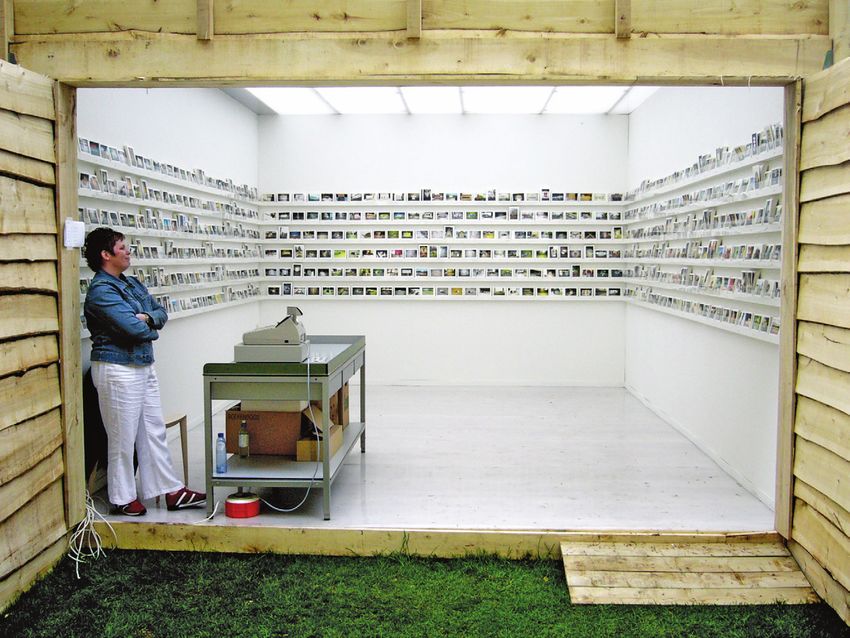
to chance and where accidents can happen; things that we         we’re really stuck in someone’s very terrible idea of a
don’t plan for can totally produce the work. It’s really about   computer game which replicates the grueling day-to-day
not developing a master plan for absolutely everything. I am     situations in life, a game like The Sims. I’m just sticking
not into this Richard Florida bullshit suggesting that we can    around to find out what happens when the simulation
grow everything in a vitrine and produce culture via public      ends. So, to answer your question in a massive round-
policy. I hate his assumptions about life in urban centers       about-way, yes, Singapore is very obviously a dystopia
and how we should instrumentalise gay communities etc.           for me; and, yes, all of reality is also just as terrible.

This refusal of the master plan is also in response to the       So, the reworking of sci-fi and then other book
situation in Singapore.                                          covers is about this kind of writing and rewriting as
The People’s Action Party (PAP) that has run Singapore           things circulate through the world? Or is that another
for the past 50 years is clearly obsessed with infiltrating      trajectory in your practice?
every single blade of grass found on the island. I have          That project really started as a strategy of introducing
developed terrible reactions to this, especially after serving   conversations into my exhibitions. Nobody seemed
28 months in the conscript military. These days, I find it       interested in talking about my work, so it became much
hard to be in the same room with anyone who displays             more interesting to talk about my work through the
an authoritarian attitude, and this does not only apply to       work of someone else. I find it hilarious, in a totally
politicians or corporate types, but to artists and curators as   un-cynical way. In any case, I often tell people that
well. It’s incredible how much and how often we are told         making paintings is more or less a day job. This does
what we can or cannot do, how we can or cannot behave,           not mean that I dislike painting or that I do it with a
and this irritates me profusely. I try and address these         grudge. On the contrary, I love making these paintings,
forms of control when I build my projects, so that things        and there is an immense amount of psychological and
remain as loose as possible and nobody gets told how             physical pleasure in producing each and every single one
they should look at the work or what they can do with the        of them. I don’t see why artists should be asked or, in
work. This guides my research into the work of On Kawara         some cases, pushed to try and earn money from another
and Felix Gonzales-Torres. I feel very strongly that both        job or, worse, to pick up a new skill, just to make ends
their practice are crucial in this non-instructive way of        meet. But I don’t want to be prescriptive in dishing out
engaging with people. They never attempt to over-prescribe       advice about what artists must do in order to survive.
but also refrain from talking down the big ideas. As an
artist, I like to think that I have inherited their legacies.    Better to talk about fiction. As I understand it you’ve
                                                                 recently in the last year or so done a residency with
I guess the question in the context of this conversation         Spring Workshop in Hong Kong, writing fiction again,
that we’re having is that Singapore lends itself to the          and we haven’t really talked about Philip. Do you want
work of science fiction. Does it seem like a dystopia, or        to talk a bit about current and past writing projects?
a place where you can find some sort of freedom?                 Philip worked because the people who were involved—
The reason why I’m attracted to fiction (not just science        Leif Magne Tangen, Francis McKee, Steve Rushton, Mark
fiction) is because, for me, everything surrounding us,          Aerial Waller, Rosemary Heather, David Reinfurt and
our “reality”, is in fact drawn up as some kind of fiction       Cosmin Costinas—were so incredibly open and generous
in someone’s mind. I think we can all mostly agree that          with their writing. If you are able to data‑dump your own
nationalism and fundamentalism requires a certain group          writing into a deep nebulous pool and allow that writing
of people to believe in various aspects of uniformity            to be torn apart and reworked into something that works
to produce what William Gibson often refers to as a              as part of a larger narrative—that takes real guts. The
“consensual hallucination”. He coined this term to refer to      project wouldn’t have been possible without Francis and
how we would exist in cyberspace (what an ancient word),         Steve, just because they were such amazing editors who
a kind of infinite dreaming and waking, all rolled into one,     made the entire text so unbelievably readable, although
and I think that’s how I mostly feel about existing: that        I wouldn’t go as far as to call Philip great literature.

68 | Artlink Issue 36:4 | December 2016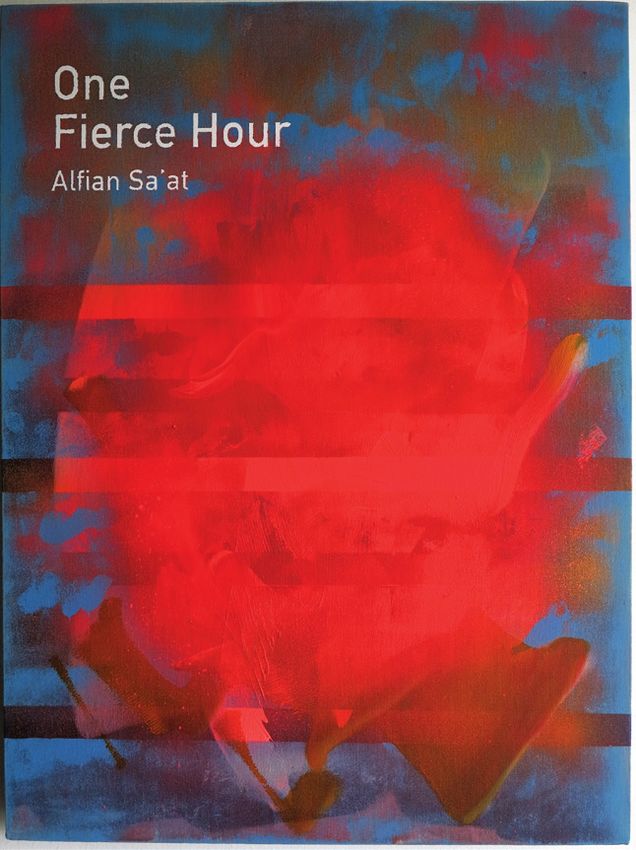
Clockwise from top left:

Heman Chong
The Tower / Isa Kumari, 2015,
acrylic on canvas.
Courtesy and © the artist

Heman Chong
One Fierce Hour / Alfian Sa’at, 2015,
acrylic on canvas.
Courtesy and © the artist

Heman Chong
LEM2 (The Embassy of Stanislaw Lem), 2016,
Books written by Stanislaw Lem, performance
by sales assistant.
Installation view, Carriageworks, the 20th
Biennale of Sydney

                                              Issue 36:4 | December 2016 Artlink | 69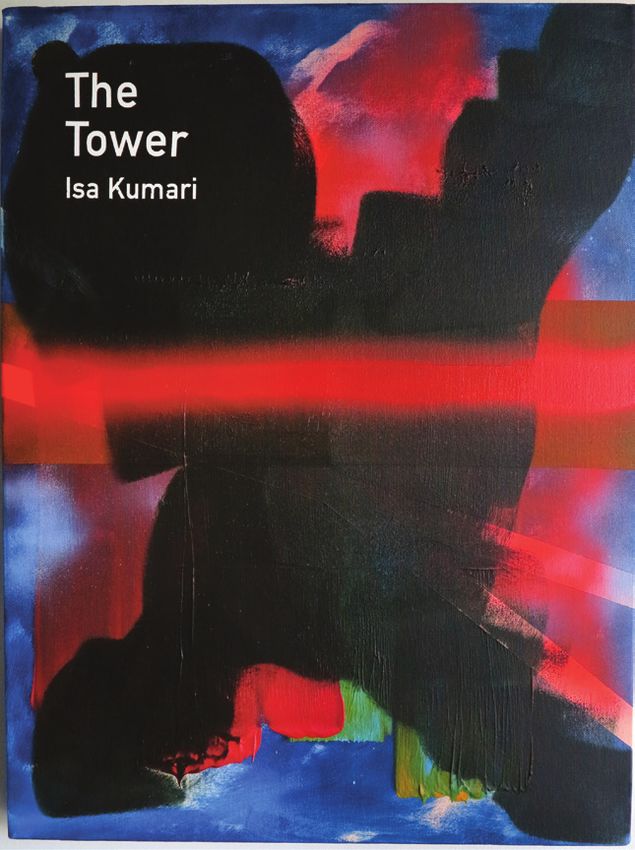
Heman Chong
Installation view, The Library of Unread Books 2016–2026,
                                                              At this point, I am leaning more towards longer fictions.
donated books.                                                Who knows? I think there’s a lot of unlearning to do before
NTU Center for Contemporary Art, Singapore
Photo: Heman Chong                                            I can actually figure out the kind of fiction that I can write;
                                                              after years of writing grant applications, project proposals
Is that because art people describe everything instead        and artist statements, so much of my writing revolves
of actually making something happen?                          around trying to make a point in the smallest possible real
None of us were writing fiction consistently at that point,   estate. I want to attempt fictions which are very simple and
and it seems unrealistic to expect this of an art project.    upfront. Just stories that have a beginning, a middle and an
There’s a huge difference between being able to write         end. I’m currently working on an idea which is a serialised
and being able to push a narrative forward. It often seems    novel called “The Book of Drafts” where the narrative
like there’s a lot of writing happening in the artworld,      surrounds a couple of artists giving up being artists, and
although I don’t really understand more than half of what     a couple of writers giving up being writers, but slowly
I read. I do enjoy the writings of artists like Miranda       entering other worlds, only to realise that they will forever
July, Matias Faldbakken and occasionally Paul Chan.           be haunted by their own ways of seeing. The novel is
                                                              written on my Macbook, but also on my iPhone, so you can
So are we to understand that you’re currently playing         imagine, there are many passages that are patched together
writer and being writer rather than artist? What              in order to give a semblance of a coherent narrative. I need
approach do you think you’ll take going forward?              to channel my inner editor in order to make this work.

70 | Artlink Issue 36:4 | December 2016
Can we talk about your projects where you play prescriptive or long-winded. People can make up their
bookseller? How did that come about? minds about how they want to engage with the bookshop:
I was offered a solo show in 2012 at Rossi & Rossi, a browse, read, not browse, not read. I don’t really mind
commercial gallery in London. Fabio Rossi was very kind how an audience interacts with and/or uses my work.
to accommodate the first iteration of a bookshop; in this
case, one that carried sci-fi and fantasy books. This was We heard you recently began a new project. A library?
LEM1. We had a lot of books for LEM1 as I had found Of unread books?
numerous people in the UK trying to offload their entire The Library of Unread Books will be a library built with
collections of books. So what I did was to buy up entire individual donations over a period of ten years. I started
private collections and dismantle them for the science collecting books from my friends this June and this
fiction and fantasy titles and resell the rest of the books accumulation will continue till June 2026. Each book is
in order to buy more books, although I had saved all an unread book from their book shelf, so I’m immediately
the espionage novels to make another work. LEM1 later bringing an object that has been inanimate for a long
travelled to the Sharjah Art Foundation and that was pretty time in a personal space, activating it in a more or less
interesting too, as it was a city almost devoid of bookshops. public space by inviting people to come and sit and read
LEM2 came about when Stephanie Rosenthal had the books. I’ve always been interested in developing an
approached me to be involved in the Biennale of Sydney artist-run space, but I wanted to completely avoid the
with a very specific task: to repurpose a small bookshop. idea of making exhibition after exhibition, sinking myself
I pondered over her request and came up with the idea to further into the art-world machine. I wanted this space
produce a small retrospective of the science fiction writer to avoid becoming a pawn of the system. I envision a
Stanislaw Lem. Through our discussions, it also made space where people can come and really spend hours
sense that this bookshop became an embassy within the away from their routine—to read something that they
constellation of all the other embassies supporting her don’t usually think about reading. So, again, this idea of a
framework for the biennale. We carried both English and chance encounter is brought into play. Just the other day,
Polish editions of his books that we trawled on eBay and two young artists, Yu Tong Lai and Marcus Yee, came to
other secondhand book sites. Unfortunately, the bookshop the library and sat and used the space to discuss a work
closed before the biennale opened. Stephanie was really that they wanted to make together. And I think these are
upset about this. We tried to find another bookshop in the kind of spaces which are lacking in Singapore; spaces
Sydney to work with but that didn’t work out at all. After where people can discuss their work and their lives.
a couple of weeks, I told myself that since the project has
been set adrift from the original premise I should just keep
it afloat, and that it would be a bookshop without a home.
And that is exactly what you see in the biennale, a small
bookstall made up of a table, two chairs and some books.
For my solo show, Ifs, Ands or Buts at the Rockbund Heman Chong has recently held a trilogy of interconnected solo
Art Museum in Shanghai earlier this year, I collaborated exhibitions at Rockbund Art Museum in Shanghai (Ifs, Ands or Buts,
with the science fiction writer Ken Liu, on a bookshop 2016), South London Gallery (An Arm, A Leg and Other Stories, 2015),
that completely displaced the gift shop in the museum. and Art Sonje Center in Seoul (Never, A Dull Moment, 2015). Between
The bookshop was called Legal Books (Shanghai) and 2012–14, he was guest curator at Witte de With in Rotterdam and
it was made with a list of books that Ken had provided Spring Workshop in Hong Kong and produced Moderation(s), a
me with, based on my instruction to him that I wanted sprawling program involving more than 50 artists across conferences,
a list of books that would assist me in navigating the exhibitions, performances, residencies, and writing workshops.
nebulous legal system in China. The idea of running a
shop as an art work or as an artist-run space is not new, Aileen Burns and Johan Lundh are curators and writers working
although it is particularly useful within my practice internationally. Since 2014, they are Executive Co-Directors of the
as a way of revealing my references without being Institute of Modern Art, Brisbane.
Issue 36:4 | December 2016 Artlink | 71You can also read


