Tasmania's Plan for Physical acTiviTy 2011-2021 - Developed by the Premier's Physical Activity Council in consultation with the Tasmanian community
←
→
Page content transcription
If your browser does not render page correctly, please read the page content below
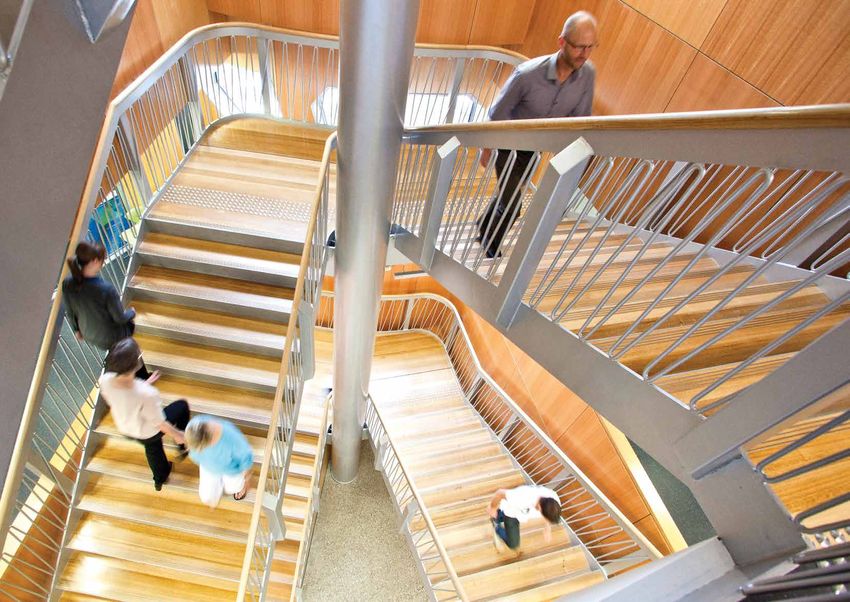
Tasmania’s Plan
                                           for Physical Activity
                                                       2011–2021
Developed by the Premier’s Physical Activity Council in consultation with the Tasmanian community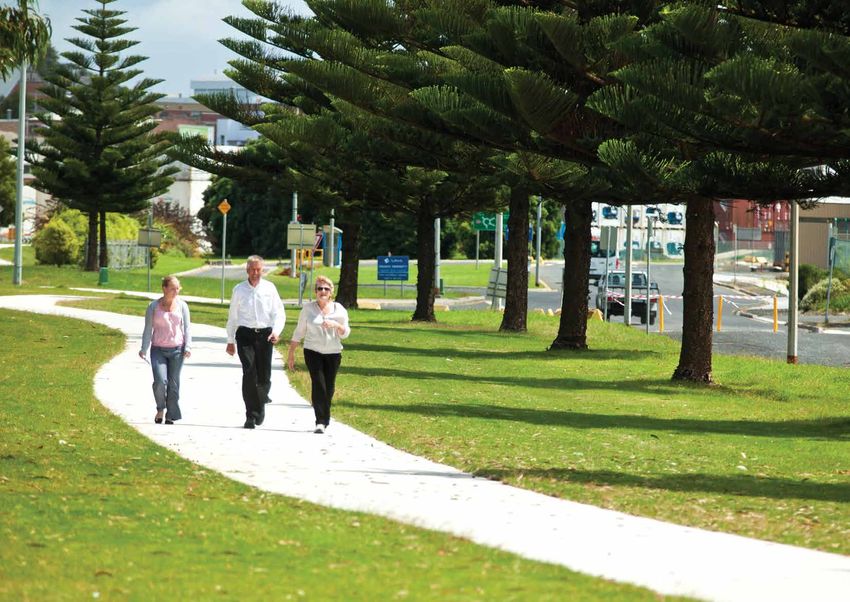
CONTENTS

About this plan                                                                        4

A message from Tasmania’s Premier                                                      5

The vision for Tasmania                                                                7

Why we need a physical activity plan for Tasmania                                      9

The first plan, 2005–2010                                                             10

What we’ve learnt and what the evidence tells us                                      11

The new plan, 2011–2021                                                               13

Monitoring and evaluation                                                             16

Goals                                                                                 18

References                                                                            22

Other useful documents                                                                22

About the Premier’s Physical Activity Council                                         23

                                                    TASMANIA’s PLAN FOR PHYSICAL ACTIVITY   3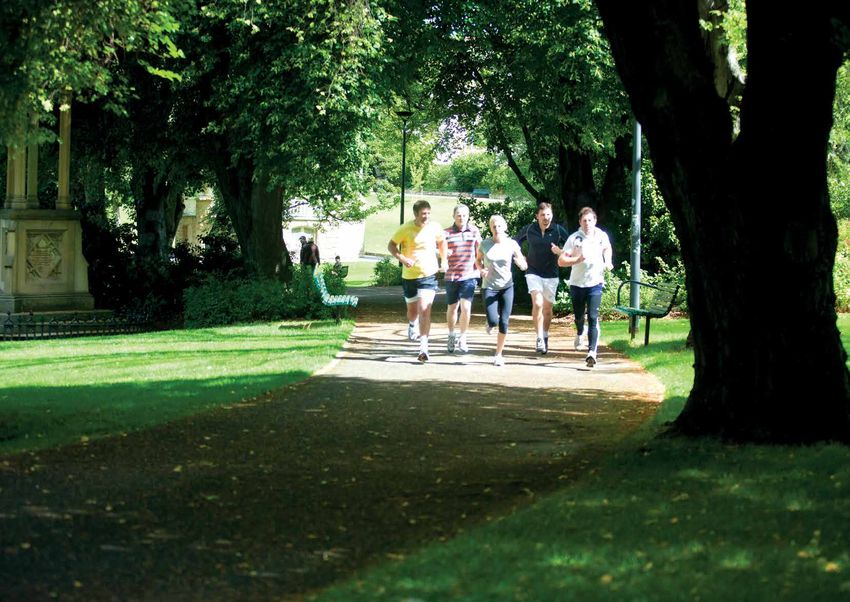
About this plan

Tasmania’s plan for physical activity 2011–2021 is a long-term plan for all of Tasmania.
Prepared by the Premier’s Physical Activity Council, in consultation with many other
Tasmanians interested in physical activity, it sets a unifying direction and framework
for action.

The plan is for anyone involved in physical activity, whether as a participant, promoter,
provider, researcher, policy maker or funder.

If you would like to be part of this work – now or in the future – you are warmly invited
to contact the Council.

Premier’s Physical Activity Council
GPO Box 646
Hobart, Tasmania 7001

Ph: 1800 252 476 (freecall)
Fax: (03) 6233 5800
Email: ppac@getmoving.tas.gov.au
Website: www.getmoving.tas.gov.au

Acknowledgements
Sincere thanks to the many people who assisted in developing this plan. In particular,
thanks to those who contributed ideas at the statewide consultation forum in Launceston
in August 2010, to those who provided valuable feedback on the various drafts, and to
those who featured in the photographs.

Suggested citation
Premier’s Physical Activity Council, Tasmania’s plan for physical activity 2011–2021,
Tasmanian Government, Hobart, 2011.

                                                                                            TASMANIA’s PLAN FOR PHYSICAL ACTIVITY   5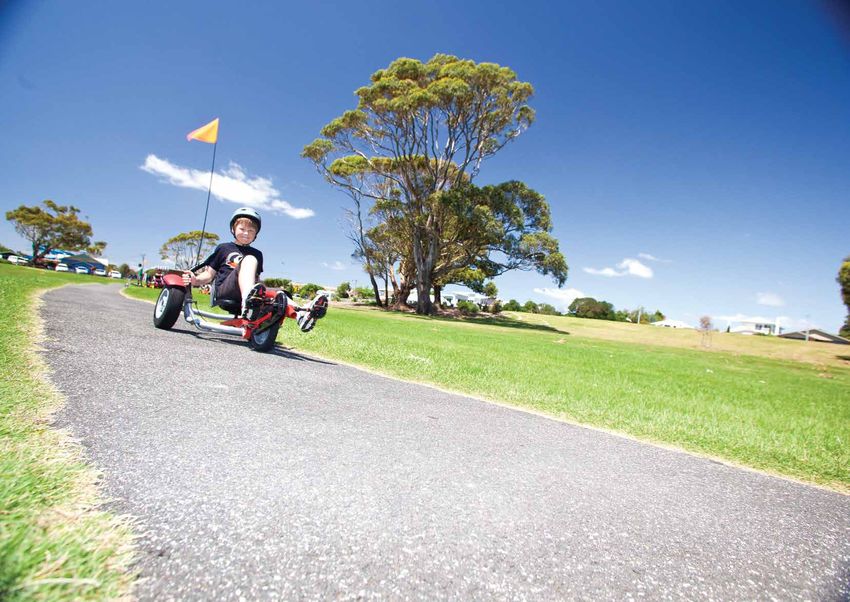
The vision for Tasmania

                                            All Tasmanians experience and enjoy the many benefits of regular physical activity.

                                            To make our vision a reality, we have set four goals. While each has its own distinct
                                            focus, they are all connected.

                                                                                      GOAL 1
                                                                                Become a community
                                                                              that values and supports
                                                                                   physical activity

                                                             GOAL 2                                           GOAL 3
                                                            Create built                                       Develop
                                                            and natural                                     partnerships
                                                           environments                                       that build
                                                          that enable and                                    and share
                                                             encourage                                       knowledge
                                                              physical                                     and resources
                                                              activity

                                                                                      GOAL 4
                                                                             Increase opportunities for
                                                                                all Tasmanians to be
                                                                               physically active where
                                                                                    they live, work
                                                                                       and play

                                            More details about each of the goals and why they have been chosen are on pages 18–21.

                                            We will keep an eye on how well we are going through two main measures of progress:
                                            statistics and stories.

                                            1. Statistics – 10 per cent in 10 years
                                            We are aiming for a 10 percentage point increase in the rates of participation
                                            in physical activity by different age groups by 2021. Specific indicators are on page 16.

                                            2. Stories – 1000 stories in 10 years
                                            We are aiming to gather stories about people participating in regular physical activity
                                            and how it has made a difference to their enjoyment of life. Tasmanians are invited to
                                            submit stories in text, images, video, audio and other art forms, by either uploading
                                            them onto an interactive website or posting them in to be uploaded. The target is 100
                                            stories each year, which will be publicised throughout the state to help inspire and
6   TASMANIA’s PLAN FOR PHYSICAL ACTIVITY   encourage us all. All up, we are aiming for 1000 stories by 2021. Further information
                                            is on page 17.
Why we need a physical
                                            activity plan for Tasmania

                                            Physical activity is any sustained body movement that uses energy. It is widely recognised
                                            that we all need regular physical activity for good physical and mental health, and for
                                            achieving and maintaining a healthy weight.

                                            Regular physical activity by individuals also brings many benefits to the whole community.
                                            At a social level, it encourages family and community connectedness, improves social
                                            skills and networks, and reduces isolation and loneliness. Economic spin-offs include
                                            increased employment, improved workplace productivity and reduced health costs.

                                            Increased physical activity can also bring environmental benefits. Traffic congestion,
                                            air pollution and greenhouse emissions reduce when people choose to use cars less,
                                            and walk and cycle more.

                                            Currently, many Tasmanians are not enjoying the benefits of regular physical activity.
                                            In 2007–08 seven out of 10 Tasmanians aged 18 years and over were classified as sedentary
                                            or having low exercise levels.1

                                            The extent of problems associated with being inactive is increasing. Studies show that
                                            physical inactivity contributes to 6.6 per cent of the overall health burden in Australia,
                                            measured by the number of years lost due to ill-health, disability and early death.2 It
                                            also contributes to over 16 000 deaths per year in Australia. The impact on the Australian
                                            economy in terms of direct healthcare costs, reduced productivity and increased mortality
                                            is estimated to be $13.8 billion each year.3

                                            The reasons for the current high levels of inactivity are varied, and are happening not just
                                            in Australia, but in all developed countries.

                                            The ways our towns, suburbs and cities are laid out influences how active we are. In
                                            some communities, physical infrastructure and public spaces – footpaths, cycle ways,
                                            roads, mixed-use activity centres, parks and sporting facilities – are abundant and
                                            well-designed. In others, they are less so.

                                            Meanwhile, technology is encouraging us to be less active than at any other time in
                                            history. Many of us now do our work and seek information and entertainment through
                                            screens, and most of us travel by car.

                                            Some of us face barriers to taking part in physical activity because of an absence of
                                            programs in our local areas, or lack of childcare, or low incomes. Some of us find it
                                            difficult to take part because of health conditions or disabilities. For some of us, it is
                                            hard because of language or cultural differences.

                                            The good news is that barriers can be addressed and many different opportunities
                                            created to suit our diverse community.

                                            This 10-year plan is a plan for the whole Tasmanian community. No one organisation or
                                            agency can do this work alone – it requires a truly collaborative effort from hundreds and
                                            thousands of people across the state.

                                            While ambitious, with many of us contributing – individual advocates, grassroots groups,
                                            community organisations, the private sector and government agencies – together we can
                                            make it possible for all Tasmanians to take part regularly in physical activity and enjoy its
8   TASMANIA’s PLAN FOR PHYSICAL ACTIVITY
                                            many benefits.
What we’ve learnt and
The first plan, 2005–2010                                                                     what the evidence tells us

In 2005, the Premier’s Physical Activity Council consulted widely with the community          In developing this new plan, members of the Council and others who contributed
to develop the first state plan for a more active Tasmania. Many people were involved         considered several sources of information:
in the work of Live life, get moving: the Tasmanian physical activity plan for 2005–2010 ,4
                                                                                              • what was achieved over the five years of the first plan
 which helped bring about a number of significant achievements. These included:
                                                                                              • what we have learnt in Tasmania during that time†
• raising the profile of physical activity in the state

• recognising the various stakeholders involved in physical activity                          • the growing body of scientific evidence about the conditions needed for people to be
                                                                                                 able to take part in regular physical activity.
• increasing the investment of national funding for physical activity in Tasmania
                                                                                              Drawing on this collective knowledge, a set of principles and practices is recommended
• taking an increasingly coordinated approach to improving physical activity levels.          to guide this work:

The Council, in its coordinating role, began to gather information on the many activities     • All of us can benefit from regular physical activity, whether we are a young child,
that offer opportunities for Tasmanians to be physically active. Listed are some examples        a teenager, an adult or an elderly person, and whatever our individual ability.
that show the range of effort already underway and making a difference.
                                                                                              • The physical activities we prefer and are able to do may change over the course of our lives.
•P
  rograms within local communities, such as Active Launceston, the Fit Club,
 the Get Active Program and Heart Foundation Walking Groups.                                  • Our individual physical activity level is influenced by many factors including social and
                                                                                                 economic conditions, the design of the built environment in which we live and travel,
•S
  uccessful collaborations across sectors to develop programs such as Move Well                 local facilities and resources available to us, and our individual motivation.
 Eat Well in primary schools (Department of Education and Department of Health and
 Human Services) and Partnering Healthy@Work (Department of Premier and Cabinet,              • Reliable evidence about what helps to increase physical activity levels is now readily
 Menzies Research Institute, University of Tasmania and Department of Health and                 available and informs our efforts.
 Human Services).                                                                             • More public health gains are made when people who have very low levels of activity
•U
  nique opportunities created for the community by sectors not traditionally involved           move towards moderate activity levels, than when people who are already active
 in physical activity such as the Walking and Cycling for Active Transport Strategy              become very active.
 developed by the Department of Infrastructure, Energy and Resources, as part of the          • It makes good sense to work cooperatively on common interests and programs,
 Tasmanian Urban Passenger Transport Framework.                                                  and to share information, research, facilities and ideas.
  roduction of resources such as the Get moving at work kit, developed by the Council
•P                                                                                            • Lasting change is more likely if we take a long-term view and work together.
 with support from WorkCover Tasmania; and Healthy by design: a guide to planning and
                                                                                              †Detailedinformation is contained in a context document, Physical activity in Tasmania: a discussion
 designing environments for active living in Tasmania, developed by the Heart Foundation       paper to assist in the development of the Tasmanian physical activity plan for 2011–2021, available
 with support from the Council and the State Government.                                       from the Council. Other useful documents are listed on page 22.

•A
  ward programs such as the Medibank Active Tasmania Awards, National Heart
 Foundation Local Government Awards, WorkCover Safety Awards and the Fitness
 Industry Awards of Excellence, which recognise the efforts of people working to
 promote active and healthy lifestyles.

•N
  umerous tracks and trails for walking and cycling, built by local and
 state governments.

• Numerous community events across Tasmania such as fun runs and walks, festivals
   and come and try days.

•S
  trong political leadership and support for increasing individual and community
 participation in physical activity.

                                                                                                                                                                    TASMANIA’s PLAN FOR PHYSICAL ACTIVITY   11
The new plan, 2011–2021

                                             A useful way to think about how to plan for a better future is to consider it in light of the
                                             society in which we live. Researchers call this a social ecology approach, suggesting
                                             that we each have a greater chance of reaching our potential when the whole system is
                                             supportive of our efforts.

                                             Social ecology as it relates to physical activity is made up of individuals; families, friends
                                             and others; organisations; the built and natural environment; and public policy. All are
                                             closely connected.

                                                                                               bling public policy
                                                                                         Ena
                                                                                                     and natura
                                                                                              built                l en
                                                                                       n ed                              vir
                                                                                   sig            tive or g a nisa           on
                                                                                  e            o r                t i
                                                                                 d       u pp                         on
                                                                                                                        s
                                                                                       S

                                                                                                                              m
                                                                                                   nds and socia

                                                                           ll-
                                                                                               frie

                                                                                                                                  en
                                                                         We
                                                                                             ,                     lc

                                                                                                                                  ts
                                                                                           ly

                                                                                                                     on
                                                                                           i
                                                                                        fam

                                                                                                                       ne
                                                                                                  Individual

                                                                                 Active

                                                                                                                         ction
                                                                                                 enjoying the
                                                                                                  benefits of

                                                                                                                              s
                                                                                               regular physical
                                                                                                    activity

                                                                            The social ecology of physical activity‡

                                             During 2010, the Council worked with many individuals and groups from the Tasmanian
                                             community to develop this new plan, which looks ahead 10 years to 2021. It sets out a vision
                                             for Tasmania, with four interconnected goals to make that vision a reality (see page 7).

                                             Many activities arising from this plan will cross traditional sectors and organisations.
                                             Working in a spirit of collaboration and cooperation will be crucial for success.

                                             While the Council is coordinating the overall work in this plan, various organisations will
                                             be taking the lead role for different strategies. At times, one organisation may take the
                                             lead role and also provide resources such as skilled people, specific funds and other
                                             materials. At other times, several organisations may contribute a share each of the total
                                             resources needed. Significant funding may be needed for some strategies. Others may be
                                             low cost or no cost.

                                             ‡Adapted from Child outcomes: a series of bulletins on how Victoria’s children and adolescents are faring,
                                              Victorian Department of Education and Early Childhood Development, March 2008, drawing from the work of
                                              Urie Bronfenbrenner, The ecology of human development, Harvard University Press, Cambridge, 1979.

12   TASMANIA’s PLAN FOR PHYSICAL ACTIVITY
To ensure Tasmania’s plan for physical activity 2011–2021 remains relevant, useful
and practical, it will be broken down into a series of three-year implementation plans,
annual action plans, and routine processes for monitoring and evaluating progress.

                                                                     Annual
                                                 Annual action       monitoring and
                                                 plans               three-yearly
                             Three-year                              evaluation
         10-year plan        implementation                          reports
                             plans

                   Key planning and reporting documents, 2011–2021

Implementation plans
While it is anticipated that the goals in the plan will remain fixed over the 10 years,
strategies and tasks are likely to change in response to new opportunities and challenges.

The first implementation plan will cover 2011–2014. At the end of this period, progress will
be evaluated (see ‘monitoring and evaluation’ on pages 16–17) and a new implementation
plan developed for the next three-year cycle.

It is anticipated that these three-year cycles of implementation and evaluation will continue
over the life of the plan. In the tenth year, a comprehensive evaluation will be undertaken
prior to considering a new long-term planning cycle.

Annual action plans
In February each year, the Council will develop an annual action plan in partnership with
relevant organisations. This will cover detailed tasks for each of the major strategies for
that year. It will set out responsibilities, timelines, funding and other resources required.
It will also suggest how other government, not-for-profit, volunteer and private sector
organisations at local, regional and national levels can be involved if they wish to.

                                                                                                TASMANIA’s PLAN FOR PHYSICAL ACTIVITY   15
Monitoring and evaluation

Each year, the Council will prepare a simple report on progress being made. Every                Measure 2: Success stories
three years, it will analyse progress in more detail and the findings will shape the             Target: 1000 stories in 10 years
next three-year implementation plan. This approach will allow for continuing
evaluation of how well we are going in achieving the goals and making our vision                 We are aiming to gather stories about people participating in regular physical activity and
a reality. Two specific measures will be monitored.                                              how it has made a difference to their enjoyment of life.

Measure 1: Increasing rates of participation                                                     Tasmanians are invited to submit stories in text, images, video, audio and other art
                                                                                                 forms, by either uploading them onto an interactive website or posting them in to be
Target: 10 per cent in 10 years
                                                                                                 uploaded. The target is 100 stories each year, which will be publicised throughout the
We are aiming for a 10 percentage point increase in the rates of participation in physical       state to help inspire and encourage us all.
activity by different age groups by 2021.

                                                                                                                                                 2021       STORY sources
                                                   2021     Information sources                  Indicator                         BASELINE      target     (and expected release dates)
Indicators                             BASELINE    target   (and expected release dates)
                                                                                                 Stories in text, images, video,   0             1000       Submissions by Tasmanians
Percentage of children aged 5–12       62%         72%      Tasmanian Child Health and           audio and other art forms.                                 • online
who are physically active for at       (2009)               Wellbeing Survey, Tasmanian                                                                     • mail
least 60 minutes each day.                                  Government5 (unknown)                                                                           (listed continuously,
                                                                                                                                                            counted annually)
Percentage of students aged            15%         25%      Australian Secondary Students’
12–17 who are physically active        (2008)               Alcohol and Drug Survey,
for at least 60 minutes each day.                           Cancer Council Tasmania6
                                                            (2013, 2016, 2019)

Percentage of people over the age      27%         37%      National Health Survey,
                                                                                                 About the stories
of 18 who are physically active for    (2007-08)            Australian Bureau of Statistics1
at least 30 minutes on at least five                        (2012, 2015, 2018, 2021)             It is expected that each story will have one or more of these features:
days of the week.
                                                                                                 • creates a physical activity opportunity that didn’t exist before
                                                                                                 • previously inactive children or adults have become more active
                                                                                                 • resources and infrastructure are being shared within and across communities

About the information sources                                                                    • a new partnership has been formed that encourages participation in physical activity
The Tasmanian Child Health and Wellbeing Survey, an initiative of the Tasmanian                  • a program that has resulted in ongoing regular physical activity of participants
Government, has been conducted once to date, in 2009, and is currently the only source
                                                                                                 • those taking part feel fitter and healthier
of physical activity information for Tasmanian children aged 5–12. At the time of printing,
it is unknown if and when this survey will be repeated.                                          • those taking part have formed new social connections and networks

The Australian Secondary Students’ Alcohol and Drug Survey is coordinated by Cancer              • those taking part have enjoyed themselves while being physically active
Council Victoria, with the Tasmanian component funded by Cancer Council Tasmania,                • contributes to one or more of the goals in the 10-year plan.
the Premier’s Physical Activity Council and several state government agencies. It has
been conducted every three years since 1984. Physical activity questions were first              Further details are available on the Get Moving Tasmania website.
introduced in 2002, with further questions added in 2005 and repeated in 2008.

The National Health Survey is conducted by the Australian Bureau of Statistics every
three years and collects information on the frequency, intensity and duration of structured
physical activity. While it does not include incidental forms of physical activity such as for
work, transport or gardening, the overall trends revealed are valid.
                                                                                                                                                             TASMANIA’s PLAN FOR PHYSICAL ACTIVITY   17
goals

Goal 1: Become a community that values and supports physical activity                      Goal 2: Create built and natural environments that enable and encourage
There are many good reasons for becoming a community that values and supports                       physical activity
physical activity. Improved health and wellbeing for individuals, more sustainable         The way our built environment is designed and maintained impacts on our levels
modes of transport, and economic benefits through reduced healthcare costs are some.       of activity more than we often realise.
For many people, regular physical activity also brings positive social connections and
                                                                                           Thoughtfully designed built environments can provide many opportunities for incidental
long-lasting friendships.
                                                                                           activity as we go about our daily routines: staircases that are welcoming and attractive
Physical activity can range from incidental activity – moving from one place to another,   to use; footpaths, walking and cycling paths that are safe, pleasant, well-connected and
using the stairs at work, gardening, walking the dog – through to more organised and       with end-of-route facilities; public transport linked to walking and cycling routes; public
structured activity like taking gym classes and playing sport.                             land set aside as open space for recreational use.

Ideally, physical activity is enjoyable and fun. Having a diverse range of opportunities   Active transport – walking or cycling to school, work, the shops, the playground
on offer makes this more likely.                                                           and so on – is better for our health and wellbeing than driving or being driven all the time.
                                                                                           Creative combinations of active and passive transport, like catching the bus and getting
We know from other campaigns for health and wellbeing that when people see the             off early, or driving and parking the car some way from our destination, can quickly build
benefits of a particular activity they are more likely to change their attitudes and       up our levels of activity.
behaviour. We can learn from current research in this area and also be creative in
coming up with ideas and approaches that suit our Tasmanian setting.                       Meanwhile, the natural environment – bushland, rivers, mountains and sea – offers great
                                                                                           scope for incidental activity, as well as a wide variety of sport and recreation. We can
Over the next 10 years, we envisage that more and more people will understand the          extend what is already possible by having well-maintained parks that encourage public
importance of physical activity, take part in it regularly, and encourage it among their   use of walking tracks and trails, and guidelines that make activities in nature as safe as
families, friends, neighbours and colleagues.                                              possible.
The main work in achieving this goal will involve leadership and advocacy.                 The main work in achieving this goal will involve modifying building standards and
Many people working in their local communities will play a part, along with people in      codes of practice, tailoring the design of buildings and infrastructure, making sure
sectors like transport, urban planning, arts, health, education, sport and recreation,     planning schemes adequately zone and protect open spaces, and marketing and
and economic development.                                                                  promoting what is on offer.

                                                                                           Over the next 10 years, architects, engineers, urban and regional planners,
                                                                                           urban designers, park and open space planners, and health and community
                                                                                           development professionals will come together to do this work alongside people
                                                                                           in their local communities.

                                                                                                                                                     TASMANIA’s PLAN FOR PHYSICAL ACTIVITY   19
goals
Goal 3: Develop partnerships that build and share knowledge and resources Goal 4: Increase opportunities for all Tasmanians to be physically active where they
Many people in Tasmania are passionate about being physically active, and readily see live, work and play
its value for themselves, their families and their communities. They lead and support Currently, not everyone has the same opportunities to be physically active on a regular
a variety of activities and, collectively, hold a great deal of practical wisdom. There are basis. There can be many barriers to participating in physical activity. These are minor
also people who have in-depth knowledge of academic research, government policies, for some individuals and communities; for others, they are significant.
specific programs and inspiring studies and stories related to physical activity.
Barriers can include:
Across the state, there are many wonderful places and spaces where we can be • financial costs for individuals and organisations
physically active. We have public parks, sport and recreational facilities, private gyms,
school grounds, public roads, cycle ways, footpaths and walking tracks, as well as great • limited access to equipment and infrastructure
scope for activity offered by the natural environment. Some communities have easy • poorly planned built environments
access to resources for physical activity; for others, it is more difficult.
• poor access to transport
In Tasmania, with our small population of half a million, it is relatively easy for people
• lack of childcare
to make contact with each other and build productive relationships. This is aided by
developments in information technology which are giving us new ways of sharing • safety concerns
knowledge and resources across the whole community. • lack of social support
The main work in achieving this goal will involve sharing information, supporting • low self-esteem and self-confidence
locally relevant research, and extending the use of existing infrastructure for
• inclement weather
physical activity.
• lack of knowledge about services, facilities and support available
With people from all areas of life – within and across communities, the private sector,
academic institutions, professional associations and governments – working together • unintended consequences of legislation and policies
cooperatively, the gains for the whole state will be significant. • having physical or mental health conditions
• different physical and intellectual abilities
• limited literacy skills
• poorly understood cultural differences
• lack of time
• increasingly sedentary workplaces.
The main work in achieving this goal will involve supporting and expanding programs
that are working well, and systematically analysing barriers and finding solutions.
The wisdom and expertise of many people working together will break down barriers
and create more opportunities, particularly in communities where physical activity
rates are currently low to very low. As a result, many more Tasmanians will be able
to experience and enjoy the benefits of regular physical activity.
TASMANIA’s PLAN FOR PHYSICAL ACTIVITY 21About the Premier’s
REFERENCES Physical Activity Council
1. Australian Bureau of Statistics, National health survey 2007–08, Canberra, 2009. The Premier’s Physical Activity Council was set up by the Premier in 2001. Its role is to
lead a coordinated approach to promoting and providing opportunities for physical activity
2. DA Cadilhac, A Magnus, T Cumming, L Sheppard, D Pearce & R Carter, The health in Tasmania.
and economic benefits of reducing disease risk factors, VicHealth, Melbourne, 2009.
Members of the Council and its sub-committees represent many sectors and organisations
3. Medibank, The cost of physical inactivity, Medibank Private, Sydney, 2008. with an interest in physical activity. They come from state and local government, community
epartment of Economic Development, Live life, get moving: the Tasmanian physical
4. D organisations, business, research, planning and industry.
activity plan for 2005–2010, Tasmanian Government, Hobart, 2005. The Council’s responsibilities in relation to coordinating opportunities for physical activity
5. The Social Research Centre, Tasmanian child health and wellbeing survey, Tasmanian are to:
Government, Hobart, 2009. • consult with the community to create a vision and specific action, set out in a plan
Smith, Prevalence of sun-related, diet, and physical activity and sedentary
6. G • monitor that plan and report on progress to the Premier and Parliament
behaviours, of Tasmanian secondary school students in 2008 and trends over time,
Cancer Council Tasmania, Hobart, 2010. • set up and support links between people and organisations interested in physical activity
• support and foster community leaders
• take on initiatives in response to specific gaps and demand.
The Council is not a central body directing work or providing funding. It is a coordinating
body, and is most effective when it is linking people involved in physical activity. The ways
that the Council, its sub-committees and its small support team work on a day-to-day
Other useful documents basis include:
• building and supporting relationships among people interested in physical activity
• making the range of practical wisdom within the state more widely available
• gathering together people’s ideas and incorporating them into the different levels
A fair go: working together for a fair and healthy Tasmania, Department of Health of planning
and Human Services, Tasmanian Government, Hobart, 2010.
• advocating and negotiating for funding of strategies on behalf of organisations
A social inclusion strategy for Tasmania, D Adams, Tasmanian Government, Hobart, 2009. and communities.
Collaboration: a Tasmanian Government approach, Department of Premier and Cabinet, This long-term plan is the main vehicle for the work of the Council. It is endorsed by the
Tasmanian Government, Hobart, 2010. Premier and other political leaders. As part of its role, the Council works closely with
government agencies, assisting and supporting them to implement specific strategies
Physical activity in Tasmania: a discussion paper to assist in the development of the and incorporate relevant sections of the plan into routine policy and planning processes.
Tasmanian physical activity plan for 2011–2021, M Whitbread, Tasmanian Government,
Hobart, 2010. Council members and staff are committed to working collaboratively with everyone who
wants to be involved in making the vision set out in this plan a reality. They look forward
Reduce inactivity: a review of potential strategies, J Salmon, Tasmanian Government, to meeting, talking and working on this plan with many Tasmanians over the next ten years.
Hobart, 2007.
Tasmania Together 2020 Plan, Tasmania Together Progress Board, Tasmanian Government,
Hobart, 2009.
The Toronto charter for physical activity: a global call for action, Global Advocacy Council for
Physical Activity, International Society for Physical Activity and Health, 2010.
TASMANIA’s PLAN FOR PHYSICAL ACTIVITY 23Premier’s Physical Activity Council GPO Box 646 Hobart, Tasmania 7001 Ph: 1800 252 476 (freecall) Fax: (03) 6233 5800 Email: ppac@getmoving.tas.gov.au Website: www.getmoving.tas.gov.au © State of Tasmania February 2011
You can also read


