THE REAL DEAL Meet Dean Jane Aiken 2020 - Wake Forest University
←
→
Page content transcription
If your browser does not render page correctly, please read the page content below
THE MAGAZINE OF WAKE FOREST LAW                                     2020

          THE REAL DEAL
                    Meet Dean Jane Aiken   Wake Forest Jurist   |    1
WAKE FOREST JURIST

                                                2020 Volume 50
                                                   ON THE COVER
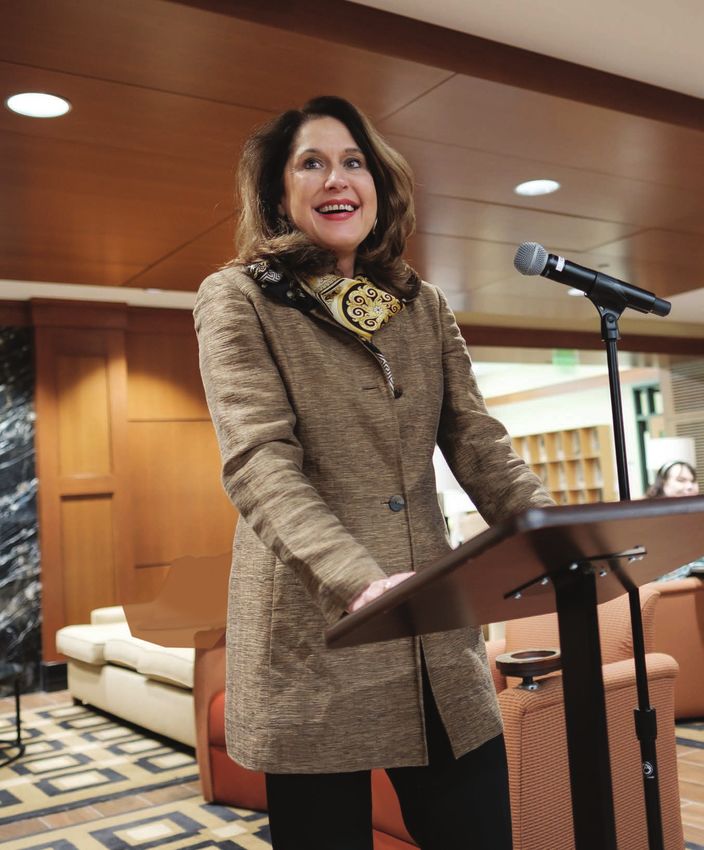
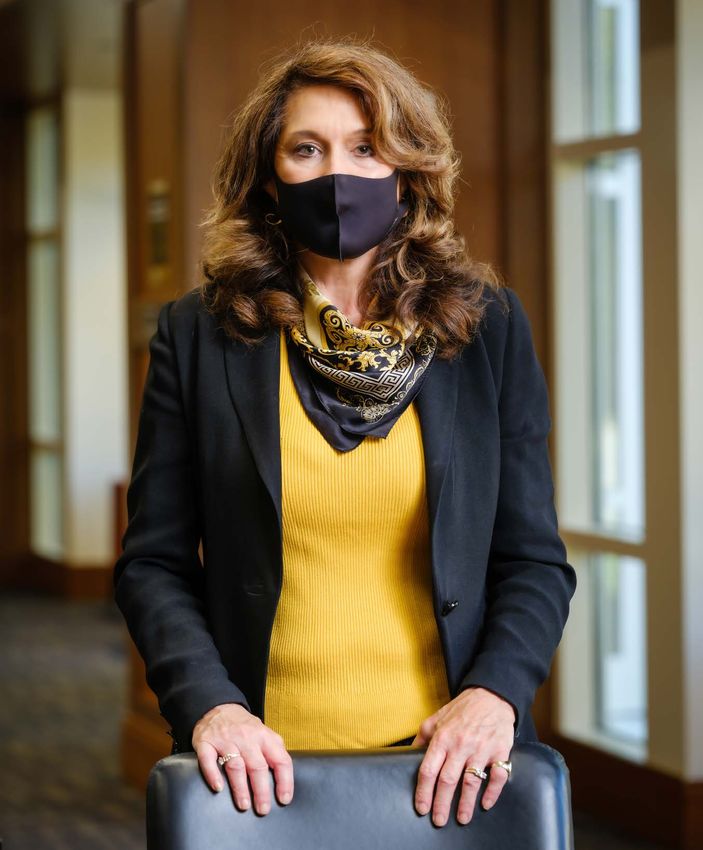
                                Jane Aiken, Dean of Wake Forest University School of Law

EXECUTIVE DIRECTOR              PHOTOGRAPHY                                      Wake Forest Jurist is published by
Jorge Reyna                     Allen Aycock                                     Wake Forest University School of
                                Ken Bennett                                      Law. All rights reserved. The views
EDITORS                         Bladen Journal                                   expressed herein do not necessarily
Stephanie Skordas               Shawn Miller (New York Times)                    reflect those of Wake Forest Univer-
Kaitlyn Ruhf (BA ’13, MA ’20)   Robert Ross                                      sity School of Law.
                                Kaitlyn Ruhf (BA ’13, MA ’20)
ASSOCIATE EDITOR/ART            United States Senate Photographic Services       SEND CLASS NOTES TO:
DIRECTOR                                                                         classnotes@wfu.edu
Holly Swenson                   WEBSITE                                          or
                                Trevor Hughes                                    Jurist Notes
CONTRIBUTORS                    Matt Nelkin                                      P.O. Box 7205
Michael Breedlove                                                                Winston-Salem, NC 27109
                                                                                 or
                                                                                 The Jurist Website
 2    |    law.wfu.edu                       jurist.law.wfu.edu
WAKE FOREST JURIST

4    THE REAL DEAL

16    EFFECTIVE
      IMMEDIATELY    24   PANDEMIC
                          PRO-TEMPORE   38        A FOND
                                                  FAREWELL

EVENTS                    48

FACULTY HIGHLIGHTS        50

CLASS NOTES               54
                                        Wake Forest Jurist   |   1
2 | law.wfu.edu
A MESSAGE FROM THE DEAN

DRAWING ON OUR STRENGTHS,
OUR RESILIENCE, AND OUR HOPE
When the dust settles, we will likely be looking back on 2020 as a generation-defining year for our communities, our
country, and our world. But perhaps it need not be because of the limitations that the virus suddenly imposed upon
us, but because of the resilience, ingenuity, speed, and commitment with which we are adapting and rising to meet
the momentous challenge being thrust upon us.

This issue of the Wake Forest Jurist was being conceived to be much different back in the Spring than the version you
are about to read now. While we were always planning on highlighting the outstanding work of our students and
faculty, and the exciting achievements of our alumni that are the hallmark of our Class Notes section, their work
took on a heightened significance in a world in which so many of the problems we as lawyers work to resolve have
risen to prominence.

Over the summer, the disparities in economic and racial justice came to the forefront once again with a backdrop
of a country mired in isolation and confusion. Our communities were being forced to deal with these big questions
while we also faced a frightening new pathogen that continues to claim the lives of many of our people at alarming
rates. The work being done by our faculty shifted some to issues ranging from analyzing potential breaches of civil
liberties including the deleterious effects from unchecked police brutality upon our society, the legitimacy of public
health initiatives like quarantine, curfews, and mask requirements to the consequent economic impact of policies
designed to address the pandemic.

We have become adept at teleconferencing via Zoom, Webex, and other technologies. We have become accustomed
to—though not necessarily fully adapted to—interacting with each other behind masks. We have even become well-
versed in terms like parts-per-million, contact-tracing, and social distancing that were once the purview of epidemi-
ologists studying how to prevent the spread of a disease. We have enhanced our focus on leadership and character,
developing more effective methods to teach problem-solving skills, communicating across differences, and seeing
through others’ eyes. Despite the difficulties we face today, we have continued our work, perhaps more determined
than ever before, to provide a world-class, relevant legal education to some of our country’s brightest minds.

It has been a trying year, but one that has only clarified and strengthened our vision: that our graduates will leave
our law school prepared to meet the challenges of the future, with a broad range of practical and technological skills
and a commitment to acting with compassion and integrity. Wake Forest Law grads have, and will continue to have,
a measurable impact at the local, state, and national levels, and make a lasting difference in their communities any-
where they choose to practice.

So I call upon you, my wonderful Wake Forest Law community, to continue to be the problem-solvers the world
needs right now. Let’s become the bridges upon which our communities will begin to rebuild the trust necessary to
flourish once again. Let’s continue our work in all aspects of life in which the access to and advancement of justice
matters. Because now more than ever, our work does matter.

With my warmest regards,

Dean of Wake Forest Law
                                                                                          Wake Forest Jurist    |   3
THE
 REAL
4
    DEAL
    |   law.wfu.edu
Jane Aiken's path from fearless
attorney to visionary educator has
seen her influence and transform
legal education. As our Dean, she
is poised to usher Wake Forest
Law into the future.
T    he story began, perhaps, with a sub-
     way stop. Jane Aiken was a community
organizer in Washington, D.C., when the
                                                  wandered through a world of random jus-
                                                  tice. Jane Aiken knew she needed to become
                                                  a lawyer. She wanted to develop the skills that
Metro system put in a new station in north-       would allow her to make an impact locally
west D.C., then a struggling part of the city.    and at the state level, already envisioning
Almost immediately, the rents began to rise       how they could be of use nationally across
and the evictions increased. “I’ll never forget   socio-economic strata.
my first experience in the neighborhood. As
I was walking down the sidewalk, I looked up      Those who have worked or studied with Jane
and saw a U.S. Marshal throwing furniture         Aiken describe her as “visionary,” “coura-
out of a fifth floor window. Someone’s per-       geous,” “brilliant,” “leader.” “She is absolutely
sonal possessions came crashing down and          a fighter in every sense of the word—a leader,
splintered on the sidewalk like so much trash.    a fighter, and an advocate, but all with such
I was stunned and saddened,” Aiken recalls.       extraordinary grace,” said Kristin Henning,
                                                  law professor and director of the Juvenile
As the community organizing group coped           Justice Center at Georgetown Law Center,
with mass evictions, Aiken began working          who worked with Aiken for 13 years.
with women who were victims of domes-
tic violence. “At the time, judges were not       Georgetown Law Dean Bill Treanor adds, “I
awarding these women protection orders un-        think, more than anybody, Jane has really
less they had six stitches or a broken bone. If   thought through what legal education should
you didn’t have that degree of physical harm,     be, and how you make that vision a reality.
then your only remaining choice was to file       She’s a major figure in legal education, well-
for divorce. These women couldn’t afford at-      known through her work on the Council
torneys for the protection orders. How were       of Legal Education, and very prominent in
they supposed to find representation for an       shaping policy with the ABA.”
expensive divorce proceeding?”
                                                  Vicki Arroyo, Executive Director of the
At that point, Aiken realized that lawyers had    Georgetown Climate Center, continues,
the keys to the courthouse, and that their        “Jane is a force of nature. She accomplishes
problem-solving abilities had the potential       so much and she cares so much. And she
to make a huge impact that could be truly         manages to do that while supporting people
felt in people’s lives. She also saw the gap-     who work for her and for the broader com-
ing social divide between those who could         munity more than anyone I’ve ever met. She
afford legal representation and those who         is the real deal.”

                                                                 Wake Forest Jurist          |    5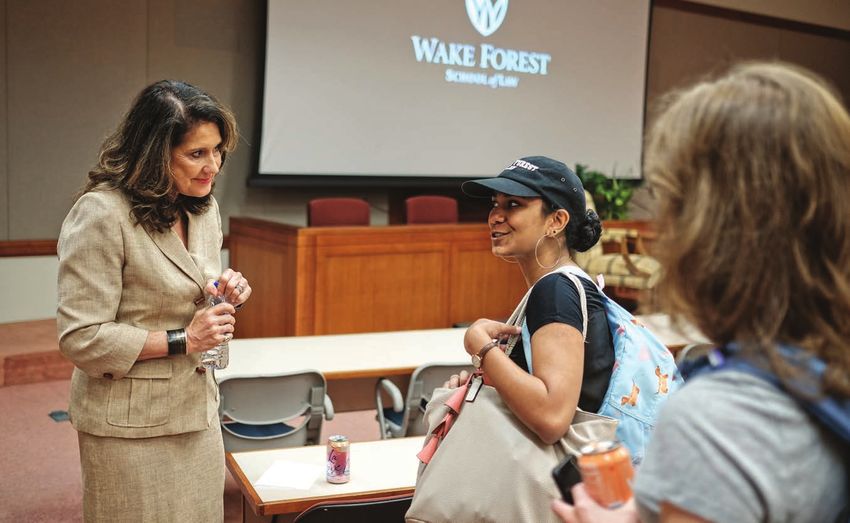
EarlyYears
Growing up in Greenville, South Carolina,       It would be a landmark legal action that         “The new private school had not even been
Aiken witnessed the transformative years of     would leave a lasting impression on a young      built. We spent that first year at the YMCA.
the Civil Rights Movement and the shift in      Jane Aiken. A U.S. Supreme Court ruling in       The second year, they opened up the textile
thinking about gender. “I grew up in a con-     1968 forced Greenville schools to fully inte-    hall and put up screens to delineate make-
servative southern family during the 60s. It    grate, but the plan would not take effect un-    shift classrooms,” Aiken said. “It really af-
was a hostile environment around the issues     til September 1970, 16 years after Brown v.      fected me to see that so much was happening
of race, and it was a time when women didn’t    Board of Education. Black parents and the        in the world, and that my home community
have many choices beyond being a wife and       NAACP legal fund pushed to integrate im-         had such a narrow view. My political sci-
a mother.” Aiken adds, “My politics were        mediately, and the U.S. Fourth Circuit agreed.   ence teacher threw me out of class for sug-
different from the worldview of my family                                                        gesting that communism might have some
and neighbors.”                                 Because of desegregation, Aiken’s parents        approaches that were better than the capi-
                                                moved her from public to private school.         talist approach.”

                                                                                                 Even as Jane was beginning to seriously
                                                                                                 question issues around race, gender, and so-

            PULL QUOTE
                                                                                                 cial structures, family pressure channeled her
                                                                                                 to Hollins College, a traditional southern in-
                                                                                                 stitution for women. At Hollins, Aiken found
                                                                                                 much conservative thinking, but the college
                                                                                                 professors presented interesting horizons in
                                                                                                 psychology, sociology and political philos-
                                                                                                 ophy. For her capstone work, Aiken spent
                                                                                                 time in Berkeley, California, and then wrote
                                                                                                 her thesis on the social and political impact
                                                                                                 of people’s perceptions of gender norms.

Jane Aiken served as a member of the Gender Equity Committee at University of South Carolina.

Amendments & Activism
                                                After Hollins, Aiken moved to Washington,        cus on health and safety led him to sponsor
                                                D.C., without a job, but with the vision of      a bill to stop the spraying of the herbicide
                                                making a difference. After asking her state      paraquat on Mexican marijuana. “When
                                                representative for a position, Aiken says she    marijuana from Mexico came over the bor-
                                                ended up in the Senate mailroom. “It was         der illegally into the U.S., it was coated in this
    My politics were                            full of machines that folded letters. We’d       chemical that caused serious lung damage.
                                                catch them, stack them, put them in a box,       At the time, Mexico was the source of more
    different from                              and then put the box up. I was the first wom-    than half of all the marijuana smoked in the
                                                an they ever hired because I could lift the      United States,” Aiken explains. After only five
    the worldview                               heavy boxes over my head.”                       months with Senator Percy’s office, Aiken
                                                                                                 wrote what eventually was passed as the 1978
    of my family                                One of her housemates was working as a con-      amendment to the Security Assistance Act
                                                gressional fellow with the Senate Subcom-        blocking use of the harmful herbicide.
    and neighbors.                              mittee on Investigations. He encouraged her
                                                to seek a fellowship herself. She found one      After her fellowship ended, Aiken became
                                                working with Senator Charles Percy (R-Ill.),     that community organizer whose work with
                                                who was minority leader at the time. His fo-     battered women led her to law school.
6   |     law.wfu.edu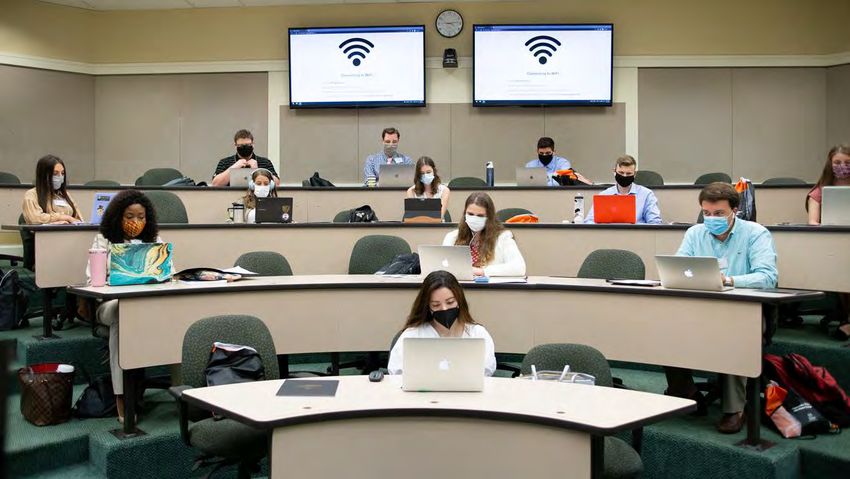
Public Interest & Professorships
Jane entered New York University (NYU)           26-year civil lawsuit “one of the longest and     Aiken taught at Arizona State from 1985 to
law school with the Root-Tilden Scholarship.     ugliest chapters in criminal justice history.”    1991 as a classroom professor. She also helped
The scholarship (now Root-Tilden-Kern) is                                                          establish the HIV Legal Clinic “This was ear-
awarded to students who intend to pursue         “I learned an enormous amount about being         ly in the epidemic. The clinic served people
public interest law careers after graduation.    an effective lawyer from this experience. The     who had been fired from their jobs for being
The program supported how she saw herself        two of them were a single firm and they did       HIV positive, or had been evicted from their
as a lawyer and connected her to the public      almost all political criminal cases in Federal    houses. At that time, people with AIDS often
interest law community.                          District Court,” Aiken said.                      became very sick, very fast, only to find that
                                                                                                   their partners were prevented from visiting
Going to New York for law school became          With policy and criminal law experience           them in the hospital because they were not
an important step in her life. While she had     under her belt, Aiken moved back to Wash-         ‘relatives.’ Our clients were newly deprived of
been an outlier in her politics and worldview    ington to start a position as a clinical fellow   the privileges they had come to expect.” They
in her family and college circle, she found no   at Georgetown Law School in the Center for        vividly described the harms they were expe-
such limitations in her chosen law school.       Applied Legal Studies. Her plan was to get        riencing. Of course these harms were part
“In New York you really had to think about       experience with consumer cases related to         of the daily lives of the clinic’s other clients,
yourself, think about your identity, and think   Social Security Disability regulation, some-      poor, LatinX women who students assisted
about how you wanted to be in the world, be-     thing she hoped would help her decide what        with many of the same benefits matters. This
cause there were so many unique, motivated       she wanted to do in terms of practicing law.      contrast created opportunities for significant
people there.”                                                                                     lessons for students and reinforced for Aik-
                                                 “And then the teaching bug basically took         en the power of clinical education. Through
                                                 over,” Aiken said. “It felt like community or-    their service to clients with AIDS, they be-
                                                 ganizing again, where the goal is
                                                 to make people feel empowered
                                                 by working together to make a
                                                 difference in their lives. When
                                                 you teach, you teach students
                                                 how to understand what power
                                                 they have and to recognize the
                                                 responsibility that comes from
 NYU School ID                                   that to do important and good
                                                 things in the world.”
During her years at NYU, Aiken worked with
attorney Liz Fink and paralegal/investigator     Seeking a place where she could
Frank “Big Black” Smith, who is well-known       further develop her teaching, Aik-
for his role in the Attica Brothers Legal De-    en found Arizona State University
fense Committee. Together they brought a         School of Law offered a uniquely
civil lawsuit from inmates involved in the       supportive environment for law
1971 uprising at Attica Correctional Facili-     professors on the tenure track.
ty in New York. It was a critical moment in      This became her next stop. “Their
the movement for prisoners’ rights. Smith, a     attitude of ‘we will work with
former inmate, was among the most brutally       you to get you where you need to
injured in the reprisals that followed the up-   be’ created the kind of situation
rising. The event ended with 43 people dead      that has informed how I am as a
and more than 80 wounded. The New York           faculty member.”
Times called the uprising and the subsequent
                                                                                        While on Arizona, Dean Aiken chaired the Governor's
                                                                                        Task Force on AIDS. Her 174 page comprehensive report
                                                                                        resulted in the passage of an omnibus AIDS bill.

                                                                                                                  Wake Forest Jurist          |    7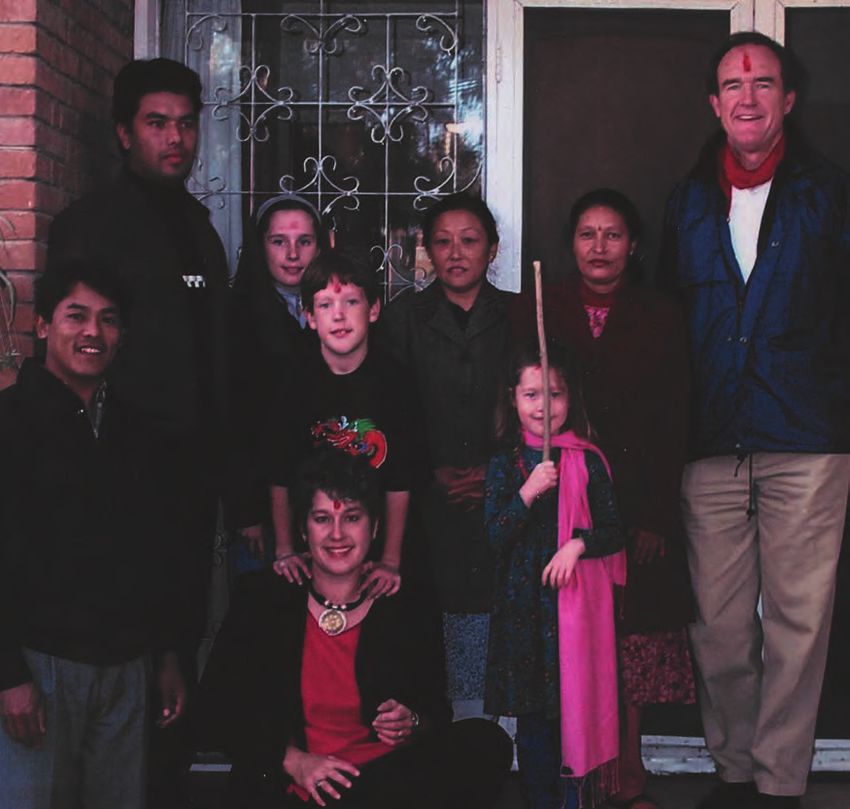
came even more articulate in advocating for    asked me to marry him after only 20 dates,
their poor, less privileged clients.           and I said yes. I can usually make decisions
                                               pretty quickly, but this was a doozy. We’ll be         In recent decades
Returning to South Carolina for her young-     married 30 years in January.”
est sister’s high school graduation, Aiken
                                                                                                      people have thought
encountered another significant event on       Professorships at the University of South              about traditional
that trip home — a blind date set up by a      Carolina School of Law from 1992-97 and
friend. “It was one of those dates where you   Washington University in St. Louis School              legal education
go to dinner at seven and you still haven’t    of Law from 1997-2007 followed, as Aiken               and clinical legal
ordered by quarter to 10 because you’re so     developed clinics, taught courses in Evidence
busy talking.”                                 and Torts, and won multiple awards for her             education. Jane
                                               teaching and scholarship. At Washington                really conceptualized
Her date, Thomas Hagerty, earned his JD        University, she was Director of the Civil Jus-
from the University of South Carolina School   tice Clinic and became the inaugural William           a vision that’s
of Law in 1982. His background also includ-    Van Cleve Professor of Law from 2004-07.               much more holistic.
ed Harvard College, the Marine Corps, and      During her tenure at Washington Universi-
investment banking on Wall Street. A month     ty in St. Louis, Aiken served as a Fulbright                         —William Treanor
later, Aiken traveled to the North Carolina    Scholar to teach at Tribhuvan Law School in
mountains to work on a book, where the         Kathmandu, Nepal. She also spent time in
dates with Thomas Hagerty resumed. “He         Ethiopia working with lawyers and activists

                                                                                                there on women’s issues as a State Depart-
                                                                                                ment senior specialist.

                                                                                                While building her career as a professor, Aik-
                                                                                                en had three children. She said motherhood
                                                                                                was always part of her plan, but like many
                                                                                                working mothers, she had to juggle myriad
                                                                                                obligations. “I worked full time, and there
                                                                                                was no maternity leave. I remember with my
                                                                                                last child I was teaching two classes. Three
                                                                                                days after a C-section, I was sitting in a chair,
                                                                                                teaching. I had a beeper for when I needed to
                                                                                                go home and nurse. I guess it’s not surprising
                                                                                                that my latest article is entitled ‘Motherhood
                                                                                                as Misogyny.’”

                                                                                                Aiken’s three children are now adults. Her
                                                                                                oldest daughter is in her second year at Co-
                                                                                                lumbia University studying urban planning;
                                                                                                her son is starting his residency in pediatrics
                                                                                                at Mount Sinai Hospital in New York; and her
                                                                                                youngest child is an organizer in Chicago.

                                                                                                Dean Aiken with family and friends at the
8   |     law.wfu.edu                                                                           Fulbright House in Kathmandu, Nepal.
Aiken delivering the inaugural Bloom Profes-
sorship address at her Chair installation.
him after graduation, becoming Prewitt’s at-
torney of record.
“I believe in the cause. It’s something wrong
that needs to be corrected,” Reichart said. “A
big reason why I feel that way, so invested,
was Jane’s style. The way she ran that clinic,
the way she taught you. She gave us the tools
to be effective advocates, but also gave us the
encouragement young lawyers need to have
the courage of their convictions.”
“It seems to be that every single professional
discipline, doctors, architects, school teach-
ers, they all have a component of their edu-
cation that is deeply practical,” Aiken said.
“When I started teaching it was not an ex-
Experiential Education
pectation that there would be clinics. The
ABA didn’t require them. It took awhile for
us to shift our thinking that this was a critical
component of legal education.”
In 2007, Georgetown University Law Center worked on in groups where you were encour-
asked Aiken to return as a professor. Aiken aged to take a non-traditional look at how to Treanor credits Jane Aiken with leading
said it was a hard decision, because her aca- be an effective advocate,” said Brian Reichart, Georgetown Law’s strong clinical program
demic and professional life was full and active, who earned his JD in 2012 and is now a staff and creating 19 centers and institutes that
and her family had been happy in St. Louis. attorney with the Massachusetts Law Reform provide hands on training and policy for law
Institute. Reichart was one of the first stu- students. During her time at Georgetown,
“Georgetown said to me, come here and do dents in the Community Justice Clinic. His she served as associate dean of experiential
whatever you want, you can create any clinic nontraditional case? Patty Prewitt, a Missou- education, associate dean for academic af-
you want, you can teach whatever you want. ri woman serving life in prison for the mur- fairs, and vice dean. Along the way she made
How could I turn that down? I also felt as der of her husband. Prewitt maintains that an it her mission to diversify the clinical faculty.
though Washington, D.C., would be a dy- intruder committed the crime and assaulted “I was pretty aggressive about hiring people
namic place for my children, even though they her. (Read more about this case on pg. 12.) of color in leadership roles,” Aiken said.
would have to change schools,” Aiken said.
“Jane was very much convinced that Patty “In recent decades people have thought
As one of her first projects at Georgetown, was innocent and her case was really about about traditional legal education and clini-
Aiken established the Community Justice confining women to the ‘proper’ gender cal legal education. Jane really conceptual-
Project. “Her primary focus, particularly in roles,” Henning said. ized a vision that’s much more holistic. It’s
initiating that project was to serve women, focused on, how do you prepare a lawyer?
and in particular, women in the criminal le- Reichart and students in the clinic prepared what are the learning outcomes you want
gal system,” said Henning, law professor at a clemency petition for Prewitt, and present- to advance? And then, how do you achieve
Georgetown Law. ed it to the new Missouri governor. Several these in a multitude of ways? She is really
governors later, that petition is still in play. incredibly deep and thoughtful and creative
“Every student took on a traditional litigation And so is Reichart. He kept working on the about pedagogical goals and how you realize
case, combined with another matter that you case while at Georgetown, and took it with them,” Treanor said.
Wake Forest Jurist | 9The Health Justice Alliance
Many of her former colleagues describe Jane improves the health and well-being of D.C. establishing a medical legal partnership.’ And
Aiken as a persistent partner, a force of na- children and families with law students offer- until that moment, I didn’t quite believe it
ture, a collaborator who works tirelessly ing free legal services to low-income patients was going to happen, but when Jane champi-
to effect change. “She is both so strong and at MedStar Georgetown health clinics, often oned the project, I knew it would.”
firm in her own beliefs, but also diplomat- working on teams with Georgetown medical
ic and highly personable,” said Georgetown students. Founding Co-Director and Profes- The Health Justice Alliance became a fact
Chief of Staff Alison Spada. “She finds a sor of Law Vicki Girard says she had been less than a year later, and it is training the
way to get people to compromise and arrive toiling away on the idea since about 2014, and next generation of leaders in medicine and
at a place where everyone feels really good presented on the topic at an Association of law to work together to improve the lives of
about the decision. That’s a real skill.” A good American Law Schools (AALS) conference. children and families living in poverty, ac-
example of this ability to build consensus cording to its website. While service is one
and get results is the creation of the Health An audience member asked Girard if the component of the clinic’s mission, it offers
Justice Alliance. concept was so great, why didn’t Georgetown medical and law school students the ability
have one? “I looked into the audience and to further their education and gain prac-
The Health Justice Alliance is a medical-le- there was Vice Dean Jane Aiken marching tical experience.
gal partnership (MLP) between the George- up to the microphone. She said, ‘Oh, George-
town Law and Medical Centers. The MLP town will have one. We are in the process of
Describing the clinical program to accepted students
Clinical Education
From very early in her teaching career, Jane professors, they need the practical skills. No
Aiken focused on clinical education, which one is going to hand a new lawyer a rubric or
gives law students the opportunity to learn a syllabus. They must exercise responsibility
how to practice the law in a safe and super- and judgment and communicate clearly and
vised environment. This allows students to crisply both in written form and verbally.”
use their creativity to apply the legal theories
learned in the classroom. Jane Aiken wrote Aiken’s work on the ABA Council for Legal
the book on clinical education, literally. She Education between 2011 and 2017 has helped
co-wrote The Clinic Seminar and Teaching make experiential education the norm for
the Clinic Seminar, both published in 2014 all accredited law schools. “When I was on
so that other professors could combine legal the Council we moved it from two credits of
education in a clinical setting.. Additionally, experience learning to six credits,” she said.
Aiken co-authored Putting the “Real World” “The focus is on education rather than ser-
into Traditional Classroom Teaching, pub- vice. Our robust pro bono program gives
lished by Cambridge University Press in them service opportunities. We need experi-
2016, along with other scholarly articles on ences where students can feel responsible and
clinical education. deal with clients and handle situations. We
need to create situations in which students
“Dewy, who is one of the premiere education- can exercise judgment, take risks and even
al theorists said many years ago, the best way fail in a safe environment where someone’s
to learn is to do. I believe that, but traditional watching to make sure the client isn’t harmed
legal education hadn’t changed in 150 years,” and you don’t lose your job. That’s when you
Aiken said. “Since 95 percent of our students can reflect on your decisions and learn.”
go on to practice law, and not become law
10 | law.wfu.eduThe “Low-Bono Model”
According to Treanor, one of the crises in the
provision of legal services are the people who
earn a little bit too much to qualify for free
legal services, but don’t make enough to pay
for a lawyer. He credits Aiken with being the
driving force behind the D.C. Affordable Law
Firm (DCALF) modeled after the residency
doctors go through after medical school. In
an op-ed in the Washington Post, the pair
described the “low-bono” model that led to
DCALF. Georgetown Law offers six fellow-
ships, in partnership with area firms to pro-
vide salaries, space, support, training, and
mentorship for the new lawyers.
“Part of the money for their salary comes
from philanthropy, part of it comes from
the fees the clients pay,” Treanor explained.
The result is a tremendous training ground
for public interest lawyers. “She’s a leader
who listens, builds agreement, and moves
things forward.”
Dean Aiken working with International Students during her Human
For their work on DCALF, Jane Aiken, Wil-
Rights Simulation Course at Georgetown Law.
liam Treanor, and Peter Edelman of George-
town were recognized among the Top 25
Most Influential People in Legal Education
by National Jurist Magazine.
Externship Program
Kennisha Austin worked with Aiken to expand Georgetown Law’s
JD externship program, where Austin is director and assistant dean
Dewy, who is one of the of experiential education. “It’s one of the largest externship programs
premiere educational theorists in the nation,” Austin said. “Jane worked closely with me on a com-
said, many years ago, that the plete revision of the curriculum. We added a required one cred-
it letter-graded seminar and Jane was instrumental in making that
best way to learn is to do. I all come about.”
believe that, but traditional
legal education hadn’t changed Rachel Taylor is currently the managing director of ideas42, after 12
in 150 years. Since 95 percent years at Georgetown Law. “By the time I left, a quarter of Georgetown
Law’s curriculum was experiential. Jane just kept building things out
of our students go on to and in a very thoughtful way,” Taylor said. “She created the Delaney
practice law, and not become postgraduate program which was an opportunity for some of our
law professors, they need the postgraduate students or graduates who were interested in public
interest to get professional development instruction tied to the Law
practical skills. Center while they were doing their postgraduate work.”
—Dean Aiken
Wake Forest Jurist | 11NOTABLE As a lawyer, professor, clinician, adminis-
trator, and dean, Jane Aiken has worked
on many cases with justice in mind.
CASES Here are three cases that she considers
important milestones.
Susan Rosenberg Gaining the Release of the
“A coalition of people and I managed to get
Oldest Woman in Missouri Prison System
President Bill Clinton to give clemency to Shirley Lute was convicted of helping souri law professors formed the Mis-
Susan Rosenburg who was serving a 58-year her son kill her husband, who had been souri Clemency Coalition. Aiken and
service for a first offense that other people abusing her. “She had been told that if her students in the Washington Univer-
got 18 months for because she was consid- she didn’t plead guilty, the prosecutor sity Civil Justice Clinic worked with the
ered a political activist,” Aiken said. Susan would seek the death penalty for her Governor to commute her sentence, but
Rosenberg spent 16 years of her sentence son.” Sentenced to life without the pos- the State Parole Board denied her pa-
in prison for possession of weapons and sibility of parole for at least 50 years, role. Next step, the State Supreme Court
explosives. Her lawyers maintained that a Lute was 77 when she was released which ordered her release.
more usual sentence for the same offense is from prison in 2007—the oldest female
about five years. inmate in the Missouri Department of “The most telling thing she said to me
Corrections at the time. Her case was was that she finally felt free after a life-
President Clinton commuted Rosenberg’s prosecuted in 1978 when spousal abuse time of abuse,” said Aiken. “And her
sentence to time served on his last day in of- wasn’t considered a mitigating factor. children called me to tell me that she
fice—January 20, 2001. The pardon was one “She had been in prison for 32 years tucks them in at night, even though they
of 140 granted on Clinton’s last day in office, when the clemency petition I drafted are adults in their 30s. She was impris-
and politically controversial due to Rosen- was granted,” Aiken said. Aiken’s work oned when they were babies and had
berg’s identity as a political prisoner.. on the case began when a group of Mis- missed that maternal life."
Patty Prewitt: Wrongly Convicted
Jane Aiken became acquainted with the case nomic and social costs of keeping a woman parole bill, religious support of a petition,
of Patty Prewitt while at Washington Univer- like Patty in prison until the age of 86, which and working with legislators to create bipar-
sity School of Law in St. Louis in 2004. Pre- is when she would have first been eligible tisan support for clemency.
witt has steadfastly maintained her innocence for parole,” Kristin Henning said. “That’s the
despite being charged with and convicted of kind of work that Jane does. She seeks justice.” “It’s almost 10 years later and we are still
her husband’s death in 1984. Aiken brought working on a clemency petition,” Reichart
the case to students in the new Communi- “We did submit a clemency petition,” Reich- said. “Believe it or not, the clemency peti-
ty Justice Project she started at Georgetown art recalled. “Within a few days we were in- tion we submitted back in December 2010
Law. Brian Reichart was in her first group of vited to present it to the Board of Parole in is the petition that remains pending with the
clinic students. Missouri, the body that recommends wheth- governor, even though we are now on gover-
er or not to grant it to the governor. That had nor number three.”
Reichart said the autonomy Jane Aiken pro- never happened before, despite other similar
vided to students working on the cases in- petitions being submitted in the past.” While that may sound daunting, Reichart
spired him to use a broad approach to gain remains optimistic. “During this time, hun-
Prewitt’s release. The semester ended, and Reichart asked to dreds of petitions have been rejected, but
remain involved in the case. After graduation Patty’s hasn’t. Jane continues to be a tremen-
“Jane worked with her students to draft a in 2012 Reichart took the case with him, be- dous mentor to me on this specific case and
clemency request to the governor and spear- coming Prewitt’s attorney of record. He has in my law career.”
headed a media campaign about the eco- tried creative approaches, such as a geriatric
12 | law.wfu.eduMany women stay as second in command
because it’s natural to support someone. As
women, we have learned that so well. It’s
hard to take yourself seriously to become
number one. I think you just have to make
the decision to do it and draw on all your
talents and take the leap.
— Dean Aiken Dean Jane Aiken and Dean Emerita Suzanne Reyn-
olds (JD ’77), Wake Forest Law welcome event.
Welcome to Wake Forest
Aiken served as vice dean from 2015-18 at becoming dean,” Treanor said. “Wake For- tration to fundraising to academics and lead-
Georgetown Law. “Many women stay as sec- est was the school that she was interested in ership. “When we finally become dean can-
ond in command because it’s natural to sup- because it spoke to her at every level with a didates, we look really good compared to our
port someone. As women, we have learned strong feeling of community, academic ex- male counterparts who may raise their hands
that so well. It’s hard to take yourself serious- cellence and concern for practice. I wasn’t earlier without quite as much experience,”
ly to become number one. I think you just happy she was leaving, but it was an oppor- she said. “Talking about that with career ad-
have to make the decision to do it and draw tunity that really made sense for her. She’s a visors was an eye-opener for me about how
on all your talents and take the leap.” gifted educator and administrator.” much women hold themselves back and how
much we haven’t learned to self-promote.”
As Aiken pondered that leap, Wake Forest “She’s a confident leader,” Austin said.
University reached out during its nation- “She leads by example and excels at every- “It’s a hard line to walk, because it’s important
wide search for the new dean of Wake For- thing she does.” to be authoritative and respected, and also to
est Law. And for the first time, Aiken said, be kind and accessible and service-oriented,”
she heard from a law school that really cap- Aiken said the rising number of women Arroyo said. “I think Jane is really one of the
tured her attention. deans is not surprising because women have few people of either gender that I’ve seen
traditionally worked hard in that number pull that off.”
“A lot of schools were very interested in Jane two role, handling everything from adminis-
Wake Forest Jurist | 13Dean Jane Aiken speaks with students after her “Conversation With” event in Fall 2019.
As the interview process intensified, Aiken said she realized Jane Aiken sought opportunities to understand the commu-
that Wake Forest felt like home. And then her family shared nity and look for strengths and challenges in the institution.
the reason—deep ties to Wake Forest Law. “It turns out that my
grandfather, Henry Russell Harris, Jr. (LLB ’30) graduated from Determined to ensure Wake Forest Law was more integrated
Wake Forest Law. And his father, my great-grandfather, Henry with the main University, Aiken secured a seat on the Cab-
Harris Sr., graduated from Wake Forest College in 1903.” inet and volunteered to serve as the head of the COVID-19
Academic Planning Committee. “This com-
“Jane Aiken’s distinguished career as an at- mittee looks at academic decisions for the
torney, an advocate, and a teacher-scholar whole University. I’m excited to be in this
—particularly in the areas of legal educa- role, because we can focus on not just mak-
tion, women’s rights, and evidence—makes ing undergraduate academic decisions, but
her exceptionally well-qualified to lead the choices for the graduate and professional
Wake Forest University School of Law,” said schools,” Aiken said. “Through the Cabinet,
Wake Forest President Nathan Hatch in the I’ve gotten to know so many talented admin-
April 2019 announcement. “Her leadership, istrators, and learn so much about budgets
vision, and energy are exactly what we need across the University so I can help the law
to develop the brightest legal minds in the school gain the recognition it deserves.”
tireless pursuit of justice.” Given by Wake Forest Law School to Dean
Aiken's grandfather, Class of 30. Her Georgetown colleagues universally noted
Aiken began her deanship on July 1, 2019. Her Aiken’s ability and interest in getting to action,
first order of business: one-on-one appointments with every describing her as a force, persistent, supportive, and avail-
faculty and staff member who wanted to meet to talk about how able. “I love making things happen, thinking creatively, and
they experienced Wake Forest Law. From this listening tour, thinking about how to empower students, how to make
14 | law.wfu.eduDean Jane Aiken talks with Wake Forest
University Provost Rogan Kersh.
Jane Aiken’s distinguished career
as an attorney, an advocate, and a
teacher-scholar—particularly in the
areas of legal education, women’s
rights, and evidence—makes her them realize how talented they are, how im-
exceptionally well-qualified to lead portant their work is, and how much differ-
the Wake Forest University School ence they can make,” Aiken said.
of Law. Her leadership, vision, and Creative ideas Aiken planned for Wake For-
energy are exactly what we need to est Law in her first year include increasing
JD dual degree offerings, establishing a co-
develop the brightest legal minds
hort of six Leadership and Character Schol-
in the tireless pursuit of justice. ars, refreshing clinical education offerings,
—President Nathan O. Hatch expanding executive education, exploring
the law school’s role in Charlotte, creating
a medical-legal partnership, and embarking
on a listening tour around North Carolina,
New York, Washington D.C., and other cities
to meet with law alumni.
About halfway into her first year as Dean, the
COVID-19 pandemic hit. “It has been in-
credibly frustrating. It’s frustrating for every-
body,” Aiken said. “How do we handle this?
It’s difficult to make plans when things are so
unpredictable, there are so many unknowns,
and things change regularly.”
But frustration and unpredictability hav-
en’t stopped Jane Aiken yet. The pandemic
is no exception.
Dean Jane Aiken teaches evidence
during Spring 2020.
Wake Forest Jurist | 15EFFECTIVE
IM MEDIATELY
When law school goes online
OVERNIGHT
16 | law.wfu.eduSunday, March 15, 2020 6:48pm
Dear Wake Forest Law students,
I write to give you some sense of how we will be proceeding in going forward in
light of the COVID-19 social distancing restrictions. Please know that student
health and safety is our top priority, followed closely by your education...
It’s the email no dean wants to write or send, coming on the heels missed being in class and missed each other, but we could still see
of Wake Forest University’s decision to close campus during Spring each other online. We could joke and have our inside jokes and still
Break to keep students, staff, and faculty safe as the COVID-19 have those ties we made in person,” Jones continued.
pandemic escalated. For Dean Jane Aiken and other leaders, both
at Wake Forest and across the nation, the crisis caused by the Professors used their virtual office hours, class sessions, and email
COVID-19 pandemic can be summed up in one word no one wants to check in with students and offer their encouragement and sup-
to hear anymore—unprecedented. port. They also recorded video encouragement for exams to help
students get through it.
Aiken credits a Law School Board of Visitors (LBOV) meeting just
PIVOT before the campus shut down with helping to lay the groundwork
for the transition to remote education. Kellogg’s Vice Chairman of
“We have extensive experience in online teaching and we are small Corporate Development and Chief Legal Officer Gary Pilnick led
and nimble,” Aiken said in that email. “Indeed, we are spending a session on crisis management that addressed the short decision
time thinking not only about how we meet these challenges but times, high stakes, need for decisive action, and cross-functional
also how we can create even more learning as we face this pan- issues arising in a crisis. “Many of us had been through crisis plan-
demic together.” ning before, but this session allowed us to switch into high gear
quickly at Wake Forest Law,” Aiken said. “At the end of the presen-
Wake Forest Law’s years of experience with the fully online Mas- tation, we talked about how to use a crisis as an opportunity to do
ter of Studies in Law (MSL) program allowed faculty and staff to something better going forward. That resonated with me.”
more quickly pivot to remote education for all
law students. Scaling up systems and software
already used for online education, training ses-
sions for faculty members who had exclusively
taught in-person helped them convert the sec-
ond half of the semester. Furthermore, the per-
sonal relationships the professors, students, and
staff had already developed allowed them to
weather the abrupt change as best as possible.
“We had a fully immersed first semester and
we had a fully immersed first half of the sec-
ond semester. We had already gotten the brief
out of the way, and we had already established
relationships and friendships,” said Darrien
Jones, (JD ’22). “I think if I hadn’t had that
first semester and the first half of the second
semester, I think it would have been a much
harder experience.”
With a mixture of synchronous and asynchro-
nous classes, students faced midterms and then
finals, attending classes in their bedrooms,
dens, or kitchen tables. “In my section, we President Hatch meets with University leaders following the closure of campus due to COVID-19.
Wake Forest Jurist | 17PROACTIVE
As Aiken laid out in her first email to students, faculty, and staff, ing such a great response from these experts at a time when the
Wake Forest Law would not just weather the pandemic, but use this pandemic was creating havoc shows how vital the collaboration be-
time away from campus to proactively plan for the future. tween scientists, lawyers, and public health professionals remains.”
Associate Dean for Strategic Initiatives Ellen Murphy (JD ’02) and As law students, professors, and staff members adjusted to virtual
MSL Adjunct Professor Bryan Arkwright quickly updated their classes in Zoom or Webex, such as remembering when to mute and
successful telehealth executive education program with new in- unmute during discussions, and the value of breakout rooms, Dean
formation directly related to COVID-19. In partnership with phy- Aiken and the leadership team focused on important upcoming
sician-services company Curi, the four-week course offered both milestones: graduation and summer employment.
Continuing Legal Education (CLE) and Continuing Medical Edu-
cation (CME) credits beginning on April 1, 2020. While an in-person Hooding Ceremony and Commencement
could not be held in May, plans for a virtual celebration moved for-
“We pivoted quickly. Within two weeks we had the coursework up- ward. Mirroring Wake Forest University’s plans, a celebratory video
dated and opened for registration,” Murphy said. “With the pan- was created, featuring School of Law faculty, students, and staff de-
demic requiring new systems like telehealth to be widely used, we scribing the Class of 2020, wishing them well, and celebrating their
knew we needed to help educate the advisors who would be imple- accomplishments. Unlike the University, the School of Law was
menting telemedicine to treat patients.” able to read the names of the graduating JD, SJD, LLM, and MSL
students with class honors noted. (You can watch the video here.)
Also in April, Wake Forest Law launched a fully online self-paced
symposium. Isolated by the Law features 18 nationally recognized As the Class of 2020 was honored, rising 2L and 3L JD students
experts who examine domestic and global health policy from dif- faced displacement from their summer employment. While some
ferent perspectives, and all related to the COVID-19 pandemic. It organizations converted internships and other employment to re-
is an update of the 2018 symposium presented by the Wake Forest mote positions, others canceled those summer plans.
Journal of Law and Policy that explored the legal and ethical impli-
cations surrounding quarantine during public health emergencies. “I was supposed to be at a naval base outside Seattle,” remembers
Dakota Baccus (JD ’21), who plans to join the Navy Judge Advo-
“We couldn’t know then how critically important the work we be- cate General Corps after he graduates. “At first I hoped I might be
gan in the 2018 symposium would become,” said Professor Chris switched to another base. Then I had to face the unknown—am I
Coughlin (JD '90), who led Isolated by the Law. “In just two weeks the only person who’s not going to have an internship? But I heard
we reached out to former speakers and new experts, created a web- about ways I could still get great experience over the summer.”
site, and launched this symposium in a new online format. Hav-
A professor records himself teaching in an empty classroom during the COVID-19 campus closure.
18 | law.wfu.eduWait Chapel on an empty, foggy day during the COVID-19 campus shutdown.
Dean Aiken worked to create five one-week, one-credit courses ers to show they took action even if the pandemic interfered with
called Summer Intensives that would provide Wake Forest Law stu- their summer plans.”
dents with real-world experience in distinct practice areas of the
law. The courses in business litigation skills, leadership and adver- “It’s already helped me. When I sent my resume to my placement
sity, business negotiation in a time of crisis, transactional practice this fall, he was impressed that I had lined up an internship, and
skills, and artificial intelligence and the practice of law were taught when that fell through, I took the intensives and the seminars
by law school faculty or Wake Forest Law alumni. Discounted tu- which he said showed real initiative,” Baccus said.
ition was offered due to generous donors. Additionally, students
who registered for three courses were eligible for financial aid.
The Pro Bono Project also created learning opportunities for stu-
“I took leadership and adversity with Professor Townsend, his line- dents over the summer. Working under the supervision of their
up of guest speakers included U.S. Senator Cory Booker and oth- professors, a team of Wake Forest Law students offered guidance
er people with amazing trajectories after law school,” Baccus said. and consultation to North Carolina residents who had questions
“The business negotiations course was also super beneficial.“ about unemployment insurance, furloughs, and federal supple-
ments as part of the Pro Bono Unemployment Project.
Baccus also registered for three courses in the Summer Practice Se-
ries, developed by Dean Aiken and the Office of Career and Profes- “We answered more than 200 questions over the summer,” said
sional Development (OCPD). Held on Thursdays from the end of Professor Marie-Amélie George, who served as one of the faculty
May through the beginning of August, these virtual 2-4 hour class- advisors. “Our students researched answers to questions such as
es offered practical skills at no charge. The training by Wake Forest going back to work after furlough, options for self-employed or in-
Law faculty and alumni we provided this not for credit training. Stu- dependent contractors, and how long benefits might last and what
dents who completed three of the workshops received a certificate. information did the state need to help qualify them for assistance.”
“We wanted to offer our students an educational opportunity “Supporting our students with these opportunities to enhance their
that would give them the kinds of experiences they would gain if resumes and further their legal education is something I’m very
they were working at a law firm or at another organization,” Aik- proud of,” Aiken said. “It’s a bright spot in the midst of the pandemic.”
en said. “Both the Summer Intensives and Summer Practice Se-
ries gave them experiences they could later discuss with employ-
Wake Forest Jurist | 19Students in the JD Class of 2023 watch Foundations Week presentations in a modified classroom.
PREPARATION
During the watchful waiting months of summer, Wake Forest Law’s “It’s hard to make plans when things are so unpredictable, when
building remained empty with just Officer John Long standing sen- there are so many unknowns, and when things change regularly,”
tinel, but its community was active and planning for the start of the Aiken said. “Much of the work is invisible, but our students will
fall semester — no matter how it looked. be the beneficiaries of all the heavy lifting that has been done
on their behalf.”
“Wake Forest Law has always prided itself on its teaching,” said Ex-
ecutive Associate Dean of Academic Affairs Wendy Parker. “We en- Under Aiken’s leadership, a plan to redefine clinical education for
gaged experts in digital learning to ensure our faculty had the best Wake Forest Law students took shape. “It’s important that all our
guidance in developing and presenting their courses whether they clinics focus on education first,” Aiken said. “The practice-ready
are in front of a newly-configured classroom or teaching online.” skills students learn from working with clients in a safe environ-
ment under supervision of an attorney are a vital piece of their
Wake Forest Law welcomed new faculty members whose expe- legal education.”
rience will enhance courses and clinics in areas ranging from
health justice, to environmental issues, to reproductive rights, Part of this change is the formation of a medical-legal partnership.
and legal writing. Professor Emily Benfer is working with School of Law and School
of Medicine students students to define the issues in Winston-Sa-
Parker, who chaired the COVID-19 Task Force for the law school, lem and Forsyth County. (More about the medical-legal part-
explained that all faculty members were enrolled in a course on nership on p.46.)
technology and pedagogy, met weekly in June for lessons on the
same, and also received 40 hours of personalized training in July The preparations wouldn’t be complete without a plan for starting
and August to prepare for the fall semester. the fall semester. As Wake Forest University’s task force prepared to
20 | law.wfu.eduStudents interacting mask-to-mask during the first day of 1L Foundations Week.
reopen the Reynolda campus, the School of Law became the van-
guard for the effort.
Aiken and Chief Administrative Officer Aurora Edenhart-Pepe
created the plan to de-densify Worrell Professional Center—from
classrooms to courtrooms to the Commons. In many cases, the two
of them physically moved tables and chairs to create the required
six-foot distance between people.
“We got everything started because we were the only two people
who had access to the building over the summer,” Edenhart-Pepe
said. “It gave us the chance to rework some of our office spaces
and make changes like moving admissions, academic affairs, and
other student-facing teams to the first floor to be more convenient
for our students.” Students talk in the Commons during the first day of 1L Foundations Week.
“We welcomed our 1L JD students for Foundations Week on Au-
gust 10 and LLM students on August 12, two weeks before under-
graduate students returned to Wake Forest,” Aiken said. “About 75
percent of the 1L JD coursework is in-person instruction, with all
students and faculty members required to wear masks during class
sessions and anytime they are inside the building.”
Wearing masks inside, even in a one-person study room, became
part of the Code of Conduct, and Aiken and other faculty members
found the students didn’t require many reminders to take safety
precautions. As everyone keeps a watchful eye on the coronavirus
dashboard, the “new normal” campus operating status remained
steady, even as other schools sent students home just a few days
into the semester.
Bronze Demon Deacon statue wearing a Wake Forest mask in front of McCreary Tower during the COVID-19 pandemic.
Wake Forest Jurist | 21The Summer that COVID-19 Made
By Brenda D. Gibson
Associate Professor of Legal Writing
No one could have imagined the present circumstances in
which academia finds itself. Undoubtedly, the COVID-19
pandemic has brought out the best and worst in us all.
I posit more best than worst.
This summer, after proverbially “flying by the seat of our pants” as In that same vein, Wake Forest University School of Law put to-
we made the pivot to online teaching in a week or two (but what gether learning communities to support our faculty in improving
seemed like a moment), we all came together to determine how to the delivery of materials in the COVID-19 “new normal.” We need-
do a better job under less than perfect circumstances. The Legal ed to prepare for a return to the classroom teaching with masks
Writing community, of which I am a member, started discussing with limited physical contact, online teaching without any physical
the topic. As we always do, we started developing new materials, contact with our students, and anything in between. We needed to
sharing those materials, and wondering what the next academ- figure out how to give our students a quality education regardless of
ic year would bring. We recognized that many of us had done an the unusual circumstances under which were living.
awesome job of teaching online on the fly, but as the Legal Writing
Community often does, we wanted to put together some strategies Wake Forest Law embraced this idea of learning communities and
to support everyone to be better. In lieu of our larger, in-person it became, for me who was new to the law school, a wonderful en-
conferences, we put together some smaller, virtual conferences; we trance to the Wake Forest Way. My learning community was com-
had virtual front porches; we formed informal writing circles to posed of clinical and legal writing faculty. We were a collegial group
support our scholarship—we had a little bit of it all and there was that really bonded over the task of making this academic year better
something for everyone. than the end of the last one—better for our students and for us. Not
only did I learn some really cool technology stuff, but I also began
to feel supported and included, despite still being at home in Wake
County, North Carolina. We spoke candidly and a bit self-depre-
To be clear, I had not lost my catingly about our struggle to embrace all that was happening. We
excitement about teaching, but
spoke about the toll it was taking on us, but we spoke even more
about the toll it must be taking on our students. We were willing to
the fatigue of online teaching work to make it better.
had taken away my edge. Many In cognitive science, there are the concepts of growth mindset and
fixed mindset. These are concepts about which I often speak with
of us were so tired, we just my students. Without boring the reader, I will just say that during
our summer learning community, I discovered that the stress of the
didn’t want to try anything new. spring 2020 semester had moved me (and perhaps some of my col-
The learning community helped leagues) back to a fixed mindset. And it had happened while we
were doing our best to make the spring semester palatable for our
us to get that back. students. In our earnest attempt to make things better for our stu-
dents, we had unknowing lost something, our growth mindset—
our ability to manage our expectations, to turn failure into oppor-
22 | law.wfu.eduYou can also read


