The Shooting Star - Sierra Foothills CNPS
←
→
Page content transcription
If your browser does not render page correctly, please read the page content below
The Shooting Star
SIERRA FOOTHILLS CHAPTER                 CALIFORNIA NATIVE PLANT SOCIETY                                    JUNE 2021

                                           Farewell to Spring
    When I checked on May 23, central Sierra Nevada (SN) precipitation was at 48% of average (18.3
in.). The southern SN is at 35% (9.6 in) – even lower than 1976-77, the driest water year on record.
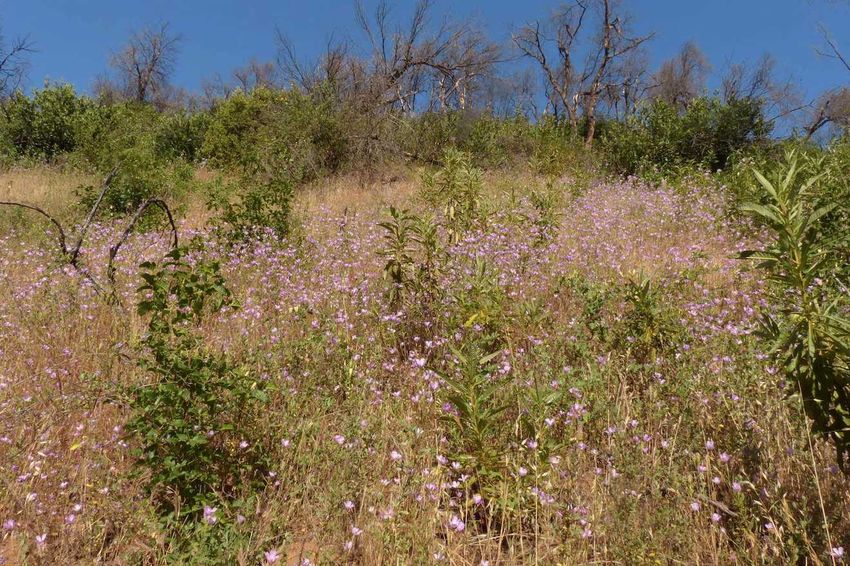
Given these facts, I am not surprised that wildflowers are struggling; I am surprised that many are doing
as well as they are.
    Karen Orso continues her excellent reporting from the northern end of our chapter area, with
highlights from two May visits to Big Trees State Park (p. 2) – which straddles Calaveras and Tuolumne
Counties – plus two other Calaveras County locations (p. 3). I paid my monthly visit to Hite Cove on
May 17 and found 102x species in bloom – almost the same number as on April 15, but with lots of
turnover (54x new sp. appeared, 55x old sp. disappeared). A hundred is below average for Hite Cove in
May, but enough to keep one busy as a bee from sunrise to sunset. I prepared another Hite Cove puzzle
for those who have not lost interest (pp. 4-6). Answers to the April puzzle are given on p. 7. I visited
Yosemite on May 18 and saw a nice selection of wildflowers along the Four Mile Trail and at the Fen.
Hite Cove becomes somewhat of an endurance test in June because of the heat, but Big Trees and
Yosemite are excellent June choices for Do-It-Yourself botanizing expeditions. – Editor

If you change your mailing or e-mail address, please    California Native Plant Society   Sierra Foothills Chapter
inform Melissa Booher (ellenbooher@gmail.com) and/or    2707 K. St. Suite 1               www.sierrafoothillscnps.org
the CNPS state organization in Sacramento so that the   Sacramento, CA 95816              Dedicated to the Preservation of
change(s) get recorded.                                 www.cnps.org                      California Native Flora.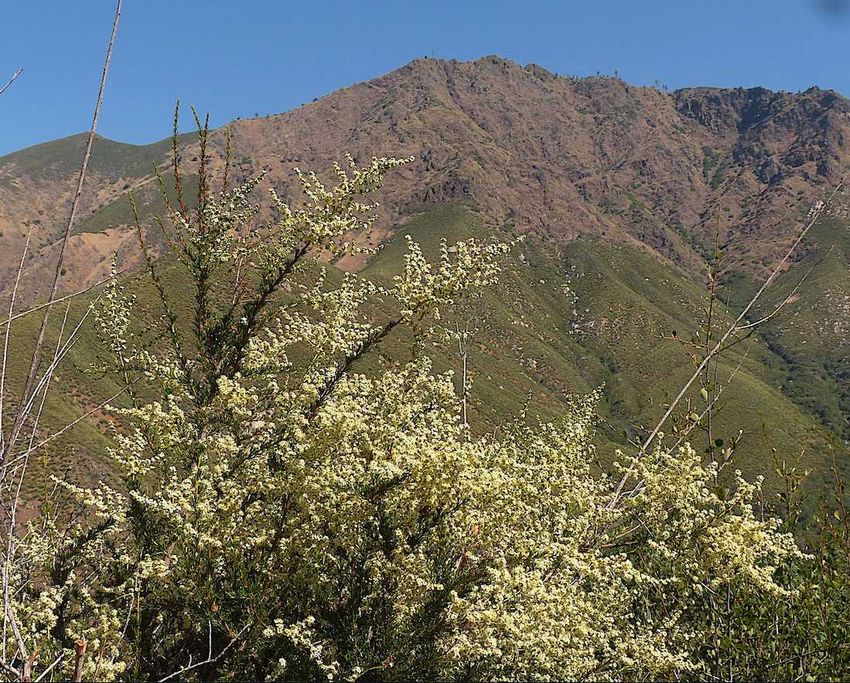
Highlights from Two Visits to Calaveras Big Trees SP
                                              by Karen Orso
Calaveras Big Trees State Park straddles Calaveras & Tuolumne counties. The park entrance is on Hwy. 4
just east of Arnold. Plants (a), (d), (g) were observed on May 9 on the Lava Bluffs Trail; (b), (c), (e) on May
17 on the South Grove trail; (f) on May 17 at the Beaver Creek Picnic area and other park locations.

(a)                                     (b)                                   (c)

(d)                                     (e)                                   (f)

                                                      (a) Phacelia vallicola aka Mariposa Phacelia.
(g)                                                   (b) Corallorhiza striata aka Striped Coralroot Orchid. This
                                                      orchid has a symbiotic relationship with mycorrhizae
                                                      which explains the total absence of green coloration.
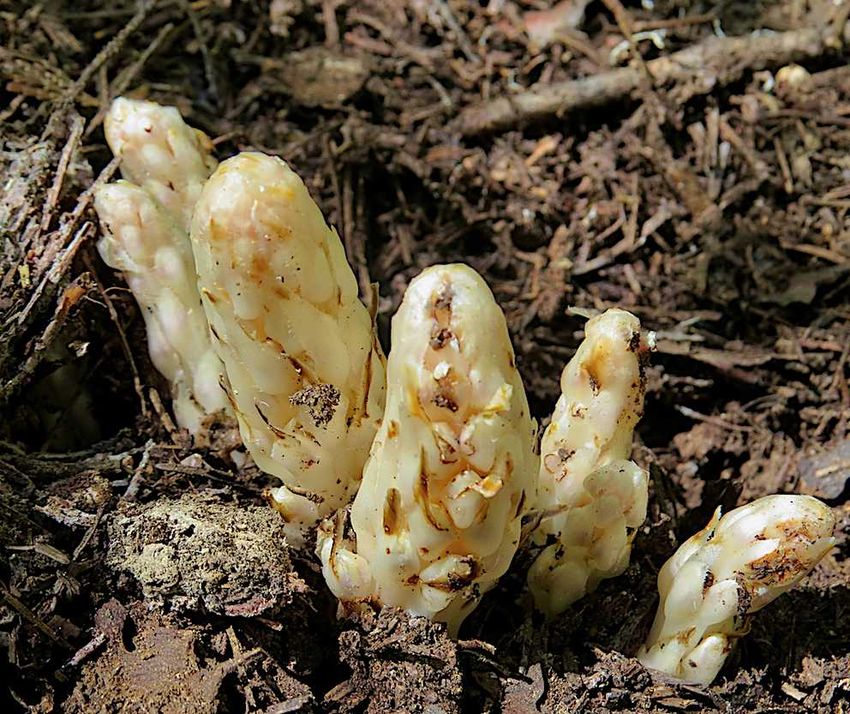
                                                      (c) Pterospora andromedea aka Pinedrops. A myco-
                                                      heterotroph closely related to Snow Plant.
                                                      (d) Prosartes hookeri aka Drops of Gold. A perennial with
                                                      greenish twin flowers hidden under the leaves.
                                                      (e) Pleuricospora fimbriolata aka Fringed Pinesap. These
                                                      plants were just emerging and really looked more like fungi
                                                      than flowering plants.
                                                      (f) Sarcodes sanguinea aka Snow Plant.
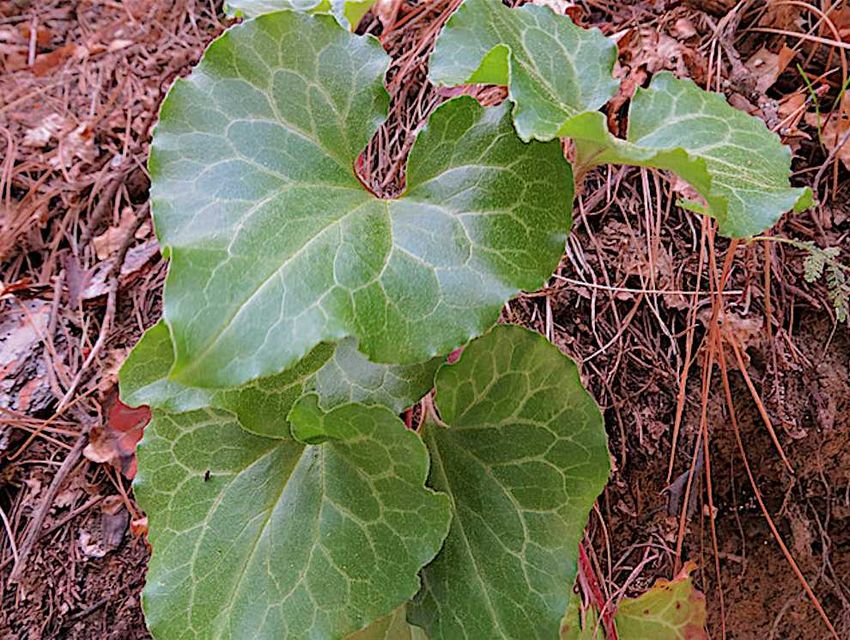
                                                      (g) Asarum hartwegii aka Wild Ginger. You have to peek
                                                      under the leaves to find the flowers (inset).
                                                                                            Photos © Karen Orso
More Calaveras County Wildflowers
                                           by Karen Orso
Plants (h), (i) were observed on May 6 on BLM land along the Middle Fork of the Mokelumne River at
2,600' elevation; (j), (k), (l) were observed on May 7 on rhyolite talus near Esperanza Creek at about
2,600' elevation; (m) was observed along Esperanza Creek and tributary on May 7.

 (h)                                                    (i)

 (j)                               (k)                                 (l)

 (m)                                                    (h) Darmera peltata aka Umbrella Plant (or
                                                        Indian Rhubarb). This perennial grows along
                                                        creeks. The flowers appear before the
                                                        umbrella-sized leaves.
                                                        (i) Trillium angustipetalum.
                                                        (j) Diplacus kelloggii aka Kellogg's
                                                        Monkeyflower.
                                                        (k) Githopsis pulchella aka Largeflower
                                                        Bluecup. I witnessed an amazing mass display
                                                        of this species.
                                                        (l) Comandra umbellata aka Bastard Toadflax.
                                                        (m) Limnanthes alba aka White Meadowfoam.
                                                                                  Photos © Karen Orso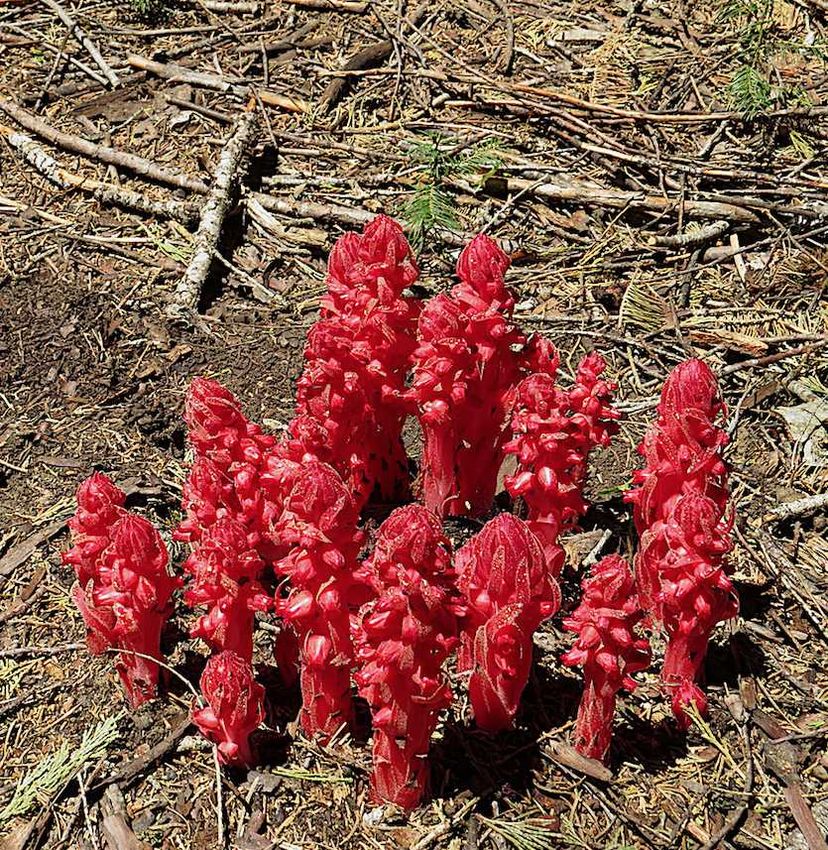
May Hite Cove Wildflowers –
                    presented in the form of a puzzle, for children and adults
                                               Prepared by Doug Krajnovich

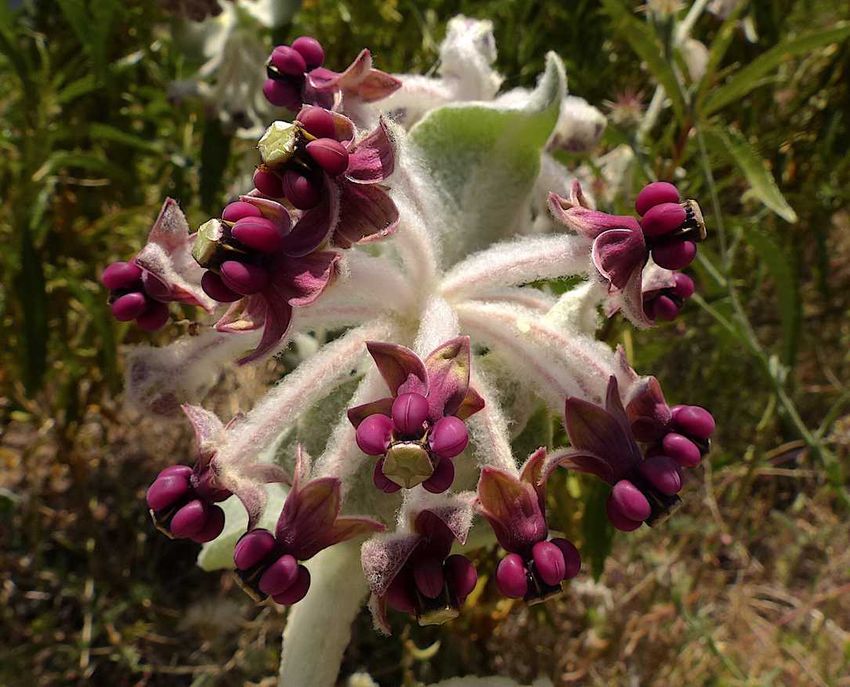
54. Other species use the common name       55. Monarch butterflies adore me. If you       56. I am a vine. My tiny flowers produce
“Farewell to Spring,” but at Hite Cove, I   cut me, I bleed (latex). My fruits are pods    clusters of edible fruit.
am THE ONE. Note that my ovary has 8        packed with seeds wrapped in silky
grooves (inset).                            parachute filaments.

57. I am thriving this year, esp. in the    58. I am a small tree with a delightful        59. I am a relative of #54 and my flowers
yellow trail section. My “flowers” are      citrusy scent. Look (or sniff) for me in the   are roughly the same size. I occur
composite: – disk flowers and rays.         red and blue trail sections.                   sparingly on the red trail.

60. I am a thriving member of the           61. I occur at low abundance along the         62. I am a very abundant Hite Cove
chaparral community. I got a big boost      red trail. My opposite leaves and square       wildflower. Use my bracts (inset) to rule
from the Ferguson Fire.                     stem give you a hint as to which family I      out a non-native species with similar-
                                            belong to.                                     looking flowers.

  All of the flowers in this puzzle were photographed on May 17, 2021. Numbering picks up
  where the April puzzle left off. See February puzzle for a map with color codes to red-
  yellow-orange-blue trail sections. An answer key will accompany the next Newsletter.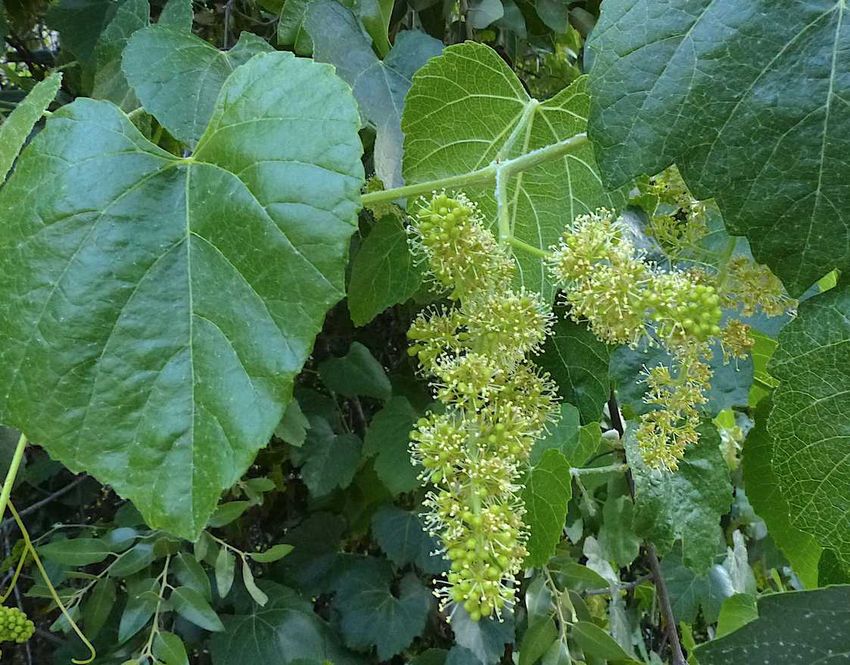
May Hite Cove Wildflowers (cont’d.)

63. I’ll add “spice” to your life if you    64. My family fared poorly this year on      65. I am the #1 chaparral shrub at Hite
explore the blue and red trail sections.    account of the drought. I did my best to     Cove. My cream-colored flowers have
                                            produce a few flowers for you to admire.     five petals and a pleasant scent.

66. Look for my dangling pitcher-shaped     67. I am the only member of my genus         68. I am one of five members of my
flowers in the blue and orange trail        that grows at Hite Cove. The square          genus in this month’s puzzle. Not the
sections.                                   nectary at the bottom of each petal will     most abundant, but I do think I am the
                                            help you guess the correct species.          most elegant.

 69. I am easy to overlook until May and    70. The Ferguson Fire signaled my seeds      71. Most members of my family have
 June, when I am decked out in tall white   to germinate. I live for a few years, then   yellow or white flowers. I “buck” the
 candles.                                   die, while my seeds lie dormant, waiting     trend by dressing in pink. Locally
                                            for the next fire.                           abundant at the top of Pinoche Ridge.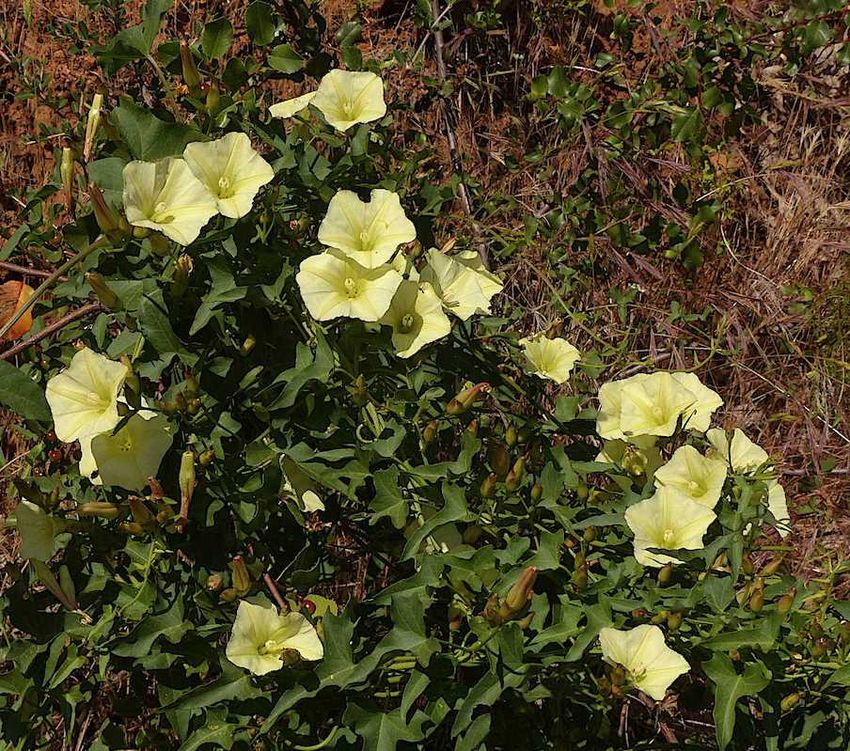
May Hite Cove Wildflowers (cont’d.)

72. I have the largest flowers of all plants   73. I resemble #59 but my flowers are         74. I am a showy non-native with a spike
in the Jepson Manual. You will find a big      smaller – about the size of a nickel – and    inflorescence. I have established a strong
patch where the orange trail starts behind     the dark spots extend to the edges of my      presence along Hwy. 140.
Cedar Lodge.                                   petals.

75. I am a relative of #55 with deep red       76. Like #74, I am non-native. My petals      77. No one calls me “Farewell to Spring,”
flowers and leaves that are as soft as         have black spots along the edges, and my      but I am just as deserving of the name.
velvet. You are most likely to encounter       leaves have tiny “spots” that look like       When I appear, spring is almost done.
me in the yellow trail section.                “windows” on the back side.

78. My cute little flowers are hard to put     79. My white flowers have green spots,       80. I am fairly abundant along the orange
into words – distinct from all other Hite      making me one of the easiest members of      trail, but my flowers and fruits are so small
Cove species.                                  my genus to ID to species.                   that you might overlook me.
Answers to April Puzzle
NOTE: All except 32, 51, 53 are included in Yosemite Wildflowers by Judy & Barry Breckling.
31. Common Madia (Madia elegans) in the Sunflower family (Asteraceae).
32. Blue Fiesta Flower (Pholistoma auritum) in the Borage family (Boraginaceae).
33. Twining Snake Lily (Dichelostemma volubile) in the Brodiaea family (Themidaceae).
34. Bush Lupine (Lupinus albifrons ssp. albifrons) in the Legume family (Fabaceae).
35. Indian Pink (Silene laciniata ssp. californica) in the Pink family (Caryophyllaceae).
36. Pipestem (Clematis lasiantha) in the Buttercup family (Ranunculaceae).
37. Sulphur Pea (Lathyrus sulphureus) in the Legume family (Fabaceae).
38. Mustang Clover (Leptosiphon montanus) in the Phlox family (Polemoniacea).
39. Pretty Face (Triteleia ixioides) in the Brodiaea family (Themidaceae)
40. Blazing Star (Mentzelia crocea) in the Stickleaf family (Loasaceae).
41. Mountain Jewelflower (Streptanthus tortuosus) in the Mustard family (Brassicaceae).
42. California Thistle (Cirsium occidentale var. californicum) in the Sunflower family (Asteraceae).
43. Liveforever (Dudleya cymosa) in the Stonecrop family (Crassulaceae).
44. Pacific Hound's Tongue (Cynoglossum grande) in the Borage family (Boraginaceae).
45. Fairy Lantern or White Globe Lily (Calochortus albus) in the Lily family (Liliaceae).
46. Glassy Onion (Allium hyalinum) in the Onion family (Alliaceae).
47. Birch-leaf Mountain Mahogany (Cercocarpus betuloides) in the Rose family (Rosaceae).
48. Western Wallflower (Erysimum capitatum) in the Mustard family (Brassicaceae).
49. Chinese Houses (Collinsia heterophylla) in the Plantain family (Plantaginaceae). Tincture Plant
(C. tinctoria) looks similar except that its “freckles” appear on the lip instead of the banner. At Hite
Cove, Tincture Plant appears later than Chinese Houses, although there is some overlap. On my April
visit, I only saw Chinese Houses.
50. Spear-leaved Agoseris (Agoseris retrorsa), a ligulate member of the Sunflower family (Asteraceae).
If you only see oversized, dandelion-like seed heads, check the basal leaves to see if they match
retrorsa.
51. Leafy Daisy (Erigeron foliosus) in the Sunflower family (Asteraceae).
52. Dense-flower Owl's Clover (Castilleja densiflora) in the Broomrape family (Orobanchaceae). The
sister plant mentioned in the clue is Purple Owl's Clover (C. exserta). Both occur at Hite Cove. You need
to look closely at the corolla to tell them apart.
53. Two-petaled or California Ash (Fraxinus dipetala) in the Olive family (Oleaceae).
CNPS Sierra Foothills Chapter

                   RETURN SERVICE REQUESTED

                      Chapter Officers and Chairpersons                                                   JOIN NOW
             (All phone #'s are 209 area code unless otherwise specified.)                 PLEASE INCLUDE ME AS A CNPS MEMBER!
PRESIDENT                     OPEN                                                       Student/Retired/Limited income ...$25
VP AMADOR CO.                 OPEN                                                       Individual ...................... $45
                                                                                         Family or Group ................. $75
VP CALAVERAS CO.            Judy Dean         754-5887    No E-Mail                      Library.......................... $75
                                                                                         Plant Lover .................... $100
VP MARIPOSA CO.           David Campbell    (612) 867-8700 moonwort.campbell@gmail.com   Patron.................. .......$300
                                                                                         Benefactor .............    .... $600
VP TUOLUMNE CO.               OPEN
                                                                                         Mariposa Lily................. $1,500
SECRETARY                Stephanie Garcia     586-3593    sjgarcia@mlode.com
                                                                                         As always, donations above the membership
TREASURER                   Pat Gogas         586-9043    pfgogas@yahoo.com              level chosen will be greatly appreciated.

CONSERVATION CHAIR           Bob Dean         754-5887    goldrushdean@yahoo.com         Name____________________________
EDUCATION CHAIR               OPEN                                                       Address_________________________
                                                                                         City___________State____Zip_____
FIELD TRIP COORDINATOR    David Campbell    (612) 867-8700 moonwort.campbell@gmail.com
                                                                                         Telephone______________
GROWING AREA MGR.        Stephanie Garcia     586-3593    sjgarcia@mlode.com
                                                                                         e-mail_________________
HOSPITALITY COORD.            OPEN                                                       (Dues and gifts to CNPS are tax
                                                                                         deductible)
INVASIVE EXOTICS              OPEN
                                                                                            I Wish to affiliate with the Sierra
MERCH./SALES COORD.                                                                      Foothills Chapter.
                                                                                         Please make your check payable to “CNPS”
MEMBERSHIP COORD.         Melissa Booher    (918) 285-6544 ellenbooher@gmail.com         and send it to:
                                                                                         2707 “K” street, Suite 1, Sacramento, CA
NEWSLETTER EDITOR         Doug Krajnovich     580-4595    djkran@comcast.net             95816 Tel. (916) 447-2677.
PLANT SALES CHAIR        Stephanie Garcia     586-3593    sjgarcia@mlode.com             Join or renew on-line at www.cnps.org.
                                                                                         Membership includes the journal
SPRING PLANT SALES                                                                       Fremontia, CNPS Bulletin and the Sierra
                              OPEN
COORD.                                                                                   Foothills monthly newsletter, The
PROGRAM COMM. CHAIR           OPEN                                                       Shooting Star.

PUBLICITY COORD.              OPEN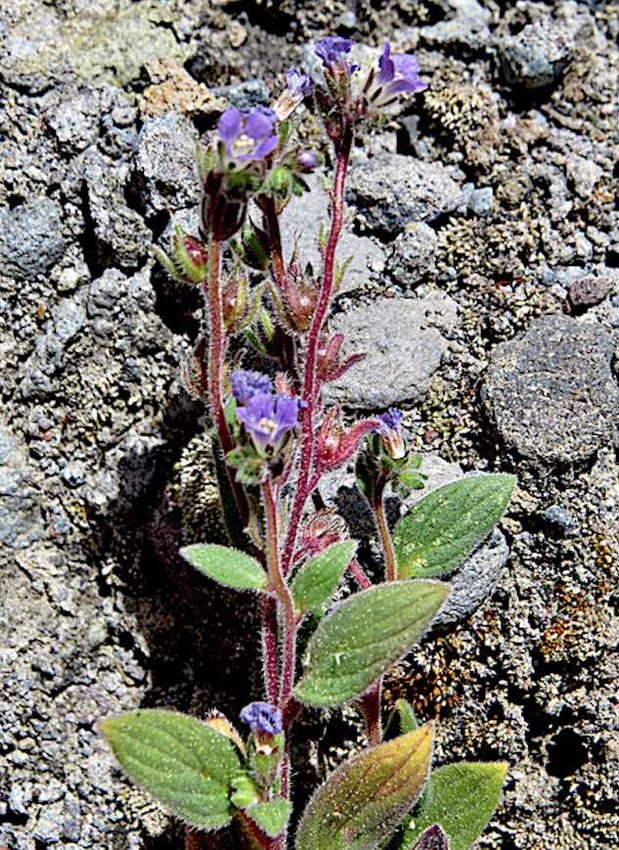
You can also read


