THE UNITED REPUBLIC OF TANZANIA MINISTRY OF HEALTH, COMMUNITY DEVELOPMENT, GENDER, ELDERLY AND CHILDREN - NATIONAL AIDS CONTROL PROGRAMME
←
→
Page content transcription
If your browser does not render page correctly, please read the page content below
THE UNITED REPUBLIC OF TANZANIA
MINISTRY OF HEALTH, COMMUNITY DEVELOPMENT, GENDER,
               ELDERLY AND CHILDREN

      NATIONAL ACCELERATED ACTION PLAN ON HIV TESTING
                    SERVICES 2019 - 2020

           NATIONAL AIDS CONTROL PROGRAMME
NATIONAL ACCELERATED ACTION PLAN ON HIV TESTING SERVICES
Ministry of Health, Community Development Gender Elderly and Children
National AIDS Control Programme (NACP)
P.O. Box 734,
DODOMA.
Website: www.nacp.go.tz
Email: info@nacp.go.tz

Suggested citation: National Accelerated Action Plan on HIV Testing Services; NACP; 2018.

©2018 Ministry of Health, Community Development, Gender, Elderly and Children,
Tanzania

Any part of these can be reproduced or translated provided the Ministry of Health, Community
Development, Gender, Elderly and Children is acknowledged. Comments and inquiries should be
addressed to:

The Permanent Secretary,
Ministry of Health, Community Development, Gender, Elderly and Children,
P.O. Box 40478,
DODOMA

                                              2
Table of Contents
FOREWORD.............................................................................................................................5
ACKNOWLEDGEMENT ...........................................................................................................6
  Chapter 1: Overview of HIV Identification for PLHIV ................................................................ 11
      1.1  Introduction............................................................................................................ 11
      1.2  Tanzania HIV Strategic Scenario Over the Implementation Years ................................... 11
      1.3  Justification of the Accelerated Action Plan for HIV testing in Tanzania .......................... 12
      1.4  The process of developing the “Accelerated Action Plan................................................ 13
  Chapter 2: Current Situation.................................................................................................... 14
      2.1  The Health Sector HIV Strategic Plan......................................................................... 14
      2.2  Regional HIV Prevalence data................................................................................... 15
      2.3  Identification gaps by different population groups ........................................................ 17
      2.4  Burden of disease by geographical location................................................................. 18
      2.5  Awareness of HIV Positive Status in Tanzania.............................................................. 21
      2.6  Number of people who were tested in 2017 .................................................................. 22
  Chapter 3: About Accelerated Plan for HTS .............................................................................. 23
      3.1  Goal, Objectives and Targets .................................................................................... 23
      3.2  Conceptual Framework on Accelerated Plan on HTS.................................................... 24
      3.3  The Planned Outputs on Accelerated Plan on HTS ....................................................... 24
      3.4  Determining the targets to be used for HTS.................................................................. 25
  Chapter 4: Implementation...................................................................................................... 29
      3.1  Approaches in Accelerated Plan ................................................................................ 29
      4.2  Mix HTS modalities for Accelerated Plan.................................................................... 30
      4.3  Linkages ................................................................................................................ 30
      4.4  Different Population groups ...................................................................................... 30
      4.4.1Key and Vulnerable Populations................................................................................ 30
      4.4.2Adolescent Girls and Young Women ........................................................................... 31
      4.4.3Orphans and Vulnerable Children.............................................................................. 32
      4.4.4Men....................................................................................................................... 32
  Chapter 5: Efficient HTS modalities ......................................................................................... 34
      5.1   Provider Initiated Testing and Counselling.................................................................. 34
      5.2   Differentiated HTS Models to facilitate referral and linkage to ART ................................ 34
      5.3   HIV Index Testing.................................................................................................... 35
      5.4   Prevention of Mother to Child Transmission ................................................................ 36
      5.5   Community Initiated Testing and Counselling .............................................................. 36
      5.6   Strengthening monitoring and evaluation systems for HTS............................................. 36
      5.7   Strengthen coordination, monitoring and management of supply chain ............................ 37
      Annex: Accelerated Plan Indicator matrix ............................................................................. 38

                                                                   3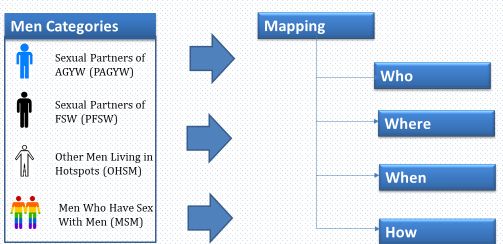
List of Table
Table 1: Regional HIV Prevalence
Table 2: Tanzania HIV Statistics’ Synopses
Table 3: National gaps by population groups to be tested to reach 90% by 2020
Table 4: Regional rates of HIV Burden of disease for above and below 10,000 population
Table 5: Annual HTS targets, disaggregated by population groups and HIV testing modalities for
2019 and 2020.
Table 6: Annual regional HTS targets for 2019.

List of Figures
Figure 1. Development of the Accelerated Action Plan for HIV Testing
Figure 2: Using burden of disease to determine the HTS Gap
Figure 3: Percentage of PLHIV who do not know their HIV Positive Status
Figure 4: HIV Testing by regions in 2017
Figure 5: HIV Positive yield from HTS in 2017
Figure 6: The Conceptual Framework in reaching the remaining PLHIV identification gap by 2020
Figure 7: Creating the HIV Testing targets

                                              4
FOREWORD
In the last fifteen years, our HIV response has undergone a remarkable evolution. The introduction
of Antiretroviral therapy has converted HIV infection from a deadly illness to a chronic
controllable disease. The tone of public health messages has changed from that of instilling distress
to that of promoting acceptance and support. The proactive involvement of key stakeholders has
broadened the coverage and strengthened the scope of HIV programs in meeting the needs of more
diverse populations.
In contrast, however, there are more that 546,000 of People Living with HIV who are undiagnosed
in the community and that cause a grave concern towards the control of the epidemic by 2020. It
is evident that HIV testing services (HTS) serves as a critical gateway for treatment and prevention
services, which reduces HIV transmission.
While it is clear that diagnosis of HIV is a critical intervention, the selection of strategy for HTS
is not straight forward as it depends on several factors including: the nature of the HIV epidemic
in different geographical areas, the socio-cultural context, gender, current services for different
population groups, structures, and resources available. In this Accelerated Plan for HTS, a mix of
HTS strategies are presented that can increase the number of people who test and receive care and
treatment services, including approaches that reach more clandestine populations or those that may
not identify themselves as at-risk for HIV. The Plan further accentuates on quality, efficiency,
yield and linkages as these are prerequisite for the country to attain stated targets. Moreover, the
Plan consolidates existing and new guidance for HTS for all population and settings and for various
approaches while considering the National and Sub National targets for different population
groups.
We thank all our stakeholders as we mark the progress made in our AIDS response and call upon
their continued support to achieve the targets set out in this Accelerated Action P lan as well as
those of the 2020 global fast track targets.
Dr. Zainab A. S. Chaula
PERMANENT SECRETARY (HEALTH)
5ACKNOWLEDGEMENT
This Accelerated Action plan for HTS 2018, is as a result of a participatory process involving
numerous stakeholders including International Agencies, Implementing Partners and Non-
Governmental Organizations.
The Ministry of Health, Community Development, Gender, Elderly and Children (MOHCDGEC)
appreciates and acknowledges contribution of implementing and development partners who
worked tirelessly and dedicated their time, intellectual and financial resources during the process
of developing the plan.
Special thanks go to Consultative Task Team members involved in thinking through the idea for
development of the Accelerated plan. This include; Ms.Peris Urasa ( NACP), Ms. Bahati Mfaki
(NACP), Mr. James Juma (NACP), Mr. Pavel Mtango (NACP), Dr. Bhavin Jani (WHO Tanzania),
Mr Koech Rotich (UNAIDS Tanzania), Dr. Sajida Kimambo (UNICEF Tanzania), Dr. Nyagonde
Nyagonde (CDC Tanzania) and Dr. Ramadhani Gongo (CDC Tanzania). The MoHCDGEC would
like to thank Dr. Stella Kasindi for facilitating the whole process including review of the literature
surrounding HIV testing strategies. The MoHCDGEC is also grateful for financial support offered
by WHO and UNAIDS during the process of developing this Accelerated plan.
For the coordination during the revision process, MOHCDGEC thanks the National AIDS Control
Program’s management, in particular, Dr. Angela A. Ramadhani, Program Manager; Strategic
Information and HIV Prevention Units staff, led by Dr. Geofrey Somi and Dr. Gissenge J.I. Lija
respectively.
Finally, this effort brought together many individual and institutional capacities and experiences,
and the MOHCDGEC is very grateful to all individuals and institutions for their dedication and
commitment towards the content and finalization of this document.
Prof. Muhammad Bakari Kambi
Chief Medical Officer
6ACRONYMS
AFS Adolescent Friendly Services
AGYW Adolescent Girls & Young Women
AIDS Acquired Immuno-Deficiency Syndrome
CDC Center for Disease Control
CHW Community Health Workers
COP Country Operational Plan
EID Early Infant Diagnosis
EQA External Quality Assurance
HIV Human Immuno-Deficiency Virus
HSHSP Health Sector HIV Strategic Plan
HTC HIV Testing and Counselling
HTS HIV Testing Services
IDU Injecting Drug Users
IEC/BCC Information Education Communication & Behavior Change
Communication
IQC Internal Quality Control
KVP Key Vulnerable Population
M&E Monitoring & Evaluation
MOHCDGEC Ministry of Health Community Development, Gender, Elderly
and Children
MSM Men Who Have Sex with Men
MTCT Elimination of Mother to Child Transmission
NACP National Aids Control Program
NMSF National Multi-Sectoral Framework
OVC Orphans and Vulnerable Children
PEPFAR Presidential Emergency Plan for Aids-Relief
PITC Provider Initiated Testing and Counselling
PLHIV People Living with HIV
7PWID People Who Injects Drugs
PWUD People Who Use Drugs
STI Sexually Transmitted Infections
TB Tuberculosis
THIS Tanzania HIV Impact Survey
TWG Technical Working Group
UNAIDS Joint United Nations Program on HIV/Aids
VMMC Voluntary Medical Male Circumcision
WHO World Health Organization
8Executive Summary
The Accelerated Action Plan has been designed to respond to challenges in reaching the 90, 90,
90 targets by 2018 that were observed from previous experience of the HIV Program, and respond
to the identified gaps as stipulated in prior National guidance, therefore presenting a ne ed for a
comprehensive, rapid, targeted and focused implementation plan that will be practical in
responding to guidance from HSHSP IV and NMSF IV in achieving HTS targets in Tanzania,
The following priority strategies were narrated in the HSHSP IV as guide for implementation:
o Community-based HTS and mobile HTS targeting hotspots, prisons, orphanages and selected
workplaces.
o Voluntary Assisted Partner Notification (VAPN) will also be scaled up to support index client
testing as part of a comprehensive package for testing and care.
o Strengthen and scale up integration of HTS into other health services (TB, STI, OPD, ANC,
FP, BTS, etc.).
o In addition, male involvement promoted through couple/partner testing, targeted combination
prevention (CP) and workplace HIV testing campaigns.
o Demand creation activities (e.g. use of index clients and peers) implemented to promote HTS
uptake, promotion of HIV testing for adolescents through youth-friendly services.
o Strengthen health systems to support HTS: monitoring the qua lity of HTS, strengthening the
supply chain for HTS commodities to eliminate stock outs of test kits and accountability for
test kits at all levels, strengthening M&E system for HTC and improving data utilization at all
levels.
o Address human resource needs for the scaling up HTS while improving quality of HIV testing:
In this effort, capacity building of providers on HTS will be enhanced, improve linkage to care,
treatment and support through task-sharing using community health care workers, community
development officers and social welfare officers, a framework for sustainable stepwise
improvement and certification for these testers and testing points established.
o The HIV rapid testing quality improvement initiative (RTQII) will also be expanded.
o Link clients who are identified positive from testing centers to those who are enrolled to care
(completed referral)
o Voluntary medical male circumcision and early infant male circumcision provided in priority
regions with low coverage and high HIV burden as one of the entry point in HIV Testing.
o It has also clearly identified that targeted services for adolescent girls and young women
(AGYW) need to be expanded to provide tailored services for this vulnerable group in terms
of HIV incidence and prevalence.
o Scale up provision of comprehensive HIV prevention, care and support services to KVP groups
implementers and to track interventions for KVP
o Strengthen M&E system and operational research so as to inform policy makers.
The services need to be prioritized, targeted and coordinated in terms of resources allocation, data
reviews and analysis using an effective monitoring and evaluative system and re-planning for
quality and efficiency as they are supported at all levels from National, Sub-National up to
community levels.
9While the National Multi-Sectoral Framework IV Guidance, clearly states that there are strategies
to address factors / bottlenecks that prevent Tanzania from achieving the optimal level HIV and
AIDS programmes efficacy.
The identified bottlenecks include;
• Weak Procurement and Supply Chain Management (PSCM) systems
• Poor linkages between health facilities and communities
• Shortages of human resources
• Inadequate funding and use of appropriate technologies to support implementation
• High numbers of people lost to follow-up
• Weak monitoring and evaluation (M&E) system
The NMSF IV and HSHSP IV recommend strengthening of the socio-policy and legal
environment, strategic partnerships and alliances necessary to support and complement
community efforts including sustained demand creation and social protection, as well as stigma
and discrimination reduction.
The Accelerated Action Plan for HIV Testing Services (HTS), in summary, aim to increase
HIV testing in high-burden regions and targeted and focused HIV testing in low burden regions.
There will be review of targets and data quality, review of geographical status through regional
targets and HIV burden of disease, prioritization of men, KVP and adolescents. There will be
community-based outreach for hot-spots and KVP while ensuring linkage and retention to care.
All HTS facilities will aim to be linked electronically to the National data system such as DHIS 2.
10Chapter 1: Overview of HIV Identification for PLHIV
1.1 Introduction
Aligning to the WHO Global strategy of 2016 to 2021, continued support of the health sector
response is needed to build on universal health coverage, potentiating people-centered approach
addressing human rights and equity, with radical decline in new HIV infections and reducing
deathsi.
UNAIDS 2015, stipulates a fast-track combination strategy to reduce new infections to less than
500,000 by 2020 as a global target, and end HIV as a public health threat by 2030ii.
UNAIDS has stipulated on focusing on pockets of high-transmission rates, expanding the
dimension of service delivery to community levels for demand creation and treatment adherence
support, while PEPFAR 3.0 enhances data-driven approaches, targeting geographical areas and
populations so as to reach the highest impact for the 90, 90, 90 targetsiii.
The Global Fund strategy 2017 – 2020, clearly directs on investing to end epidemics, maximizing
impact against TB, HIV and Malaria by building resilient and sustainable health systems,
promoting and protecting human rights and gender equality while mobilizing resources to support
countries to achieve Sustainable Development Goals (SDGs)iv.
These initiatives focus the health sector response for HIV services, HTS inclusive, and in Tanzania,
the government’s expectations by 2020 is envisaged that the coverage of the national response to
HIV and AIDS will have improved to ensure that 90% of all people living with HIV know their
HIV status, and 100% of pregnant women with HIV receive anti-retroviral treatment for
prevention of mother to child HIV transmission (PMTCT).
1.2 Tanzania HIV Strategic Scenario Over the Implementation Years
Tanzania is the biggest country in East Africa with a total of 31 regions, whereby 26 are in the
mainland and a total of 169 districts. The population is skewed to young people whereby the under
24 contribute to 63% of the total population. In the country 68% of the population live in rural
areas.
New infections in Tanzania occur in the context of stable heterosexual relationships (38.8%),
casual heterosexual sex (28.9%), sex workers (1.3%) clients of sex workers (8.7%), partners of
sex worker’s clients (3.3%), partners of people engaged in casual sex (7.6%), PWID (2.1%) and
MSM (6.8%)v.
During the implementation of HSSP III, number of health facilities with Care and Treatment Clinic
(CTC) Services increased from 1,176 out of 6,342 (18.5%) health facilities in 2012 to 6,155 out
of 7,494 (82%) health facilities by December 2016. These facilities provided care, treatment and
support services through CTCs and RCH clinics that provide Option B+ for pregnant women.
The National Multi-Sectoral Framework IV stipulates that during the above period, effective
coordination of HIV and AIDS programs at all levels continued to be critical to guide cost-effective
resource allocation and planning of service delivery tailored for local epidemiology.
11In Tanzania the HSHSP IV has specified that HTS are provided through a mix of modalities
including Client Initiated Testing and Counselling (CITC) and Provider-Initiated Testing and
Counselling (PITC) provided in both health facilities and community settings.
The Accelerated Action Plan for HTS is meant to consolidate different priority guidance for HIV
services in Tanzania and include other key documents for example the National Multi-Sectoral
Framework – IV, PEPFAR Country Operational Plan – 2018, Key and Vulnerable Population
mapping – 2018 and Tanzania HIV Impact Survey for 2016 – 2017 to come out with a cost-
effective, quality and targeted roadmap.
Different initiatives will be undertaken for regions with low HIV yield for example screening
before testing and concentrating with clients with high-risk symptoms while in community HIV
testing will be used in regions/locations with high HIV burden, similarly for targeted population
groups will receive a package of HTS care as per need.
1.3 Justification of the Accelerated Action Plan for HIV testing in Tanzania
The country efforts have always embraced global and in-country best practices and evidence. The
fourth NMSF (2018/17 to 22/23) is therefore informed by the UNAIDS Fast-Track Commitments
to End AIDS by 2030 and the country is working to achieve 90-90-90 targets by 2020vi; The
country implementation of the 90,90,90 goals were still low particularly for the first component of
HIV Testing which was at 61% by end of 2017, the linkage to ART of those identified was 90%
while viral suppression rates has reached 88%. Review of this status necessitated for a targeted
Accelerated Action P lan, that will consolidate evidence-based priorities for a roadmap that will
define the needed interventions to reach the 90, 90, 90 goals.
The Accelerated Action Plan consolidates existing and new guidance for HTS for all populations
and settings and for various approaches while taking into consideration the National and Sub
National targets for different population groups to identify HIV positives efficiently. The Plan
provides guidance on what needs to be undertaken for HIV testing in Tanzania (what); the
responsible entities for the actions (who); the appropriate timelines for the relevant actions (when).
Prioritization of services as per need will be effectively done, for equitable consideration.
The broad aim being to make sure that 90% of the people living with HIV know their status by
2020, and 95% by 2023. The targets emanate from the requirement to achieve sustainable
development goals to end HIV by 2030 and eliminate new HIV infections.
Reviewing the previous trend of HIV Testing services (HTS) over the past 3 years, it has been
documented that 2,891,391 were tested in 2015, whereby 157,496 (yield of 5.45%), 4,848,615
were tested in 2016, whereby 212,221 (yield of 4.38%) and in 7,362,222 people were tested in
2017 and 227,879 (yield of 3.01%) HIV Positive.
Reviewing the on-going initiatives including recent HIV Testing campaigns, it is clear that there
is a decreasing yield over the years, whereby from the above figures narrated for 2018, the yield
is anticipated to reach less than 2.4% seen from experience; if the total number culminates at
9,678,254 people tested out of whom 241,956 were found HIV positive (by end of December
2018).
12This demonstrates that, reaching the last mile of the HIV Testing goal of 90% of people knowing
their status by 2020, then, if we will continue with the current methods and yield, then large number
of people will have to be tested to reach the remaining gap of more than 440,000 unidentified HIV
positive. Using the same trend noted above, it will mean that 10,162,166 people will need to be
tested by 2019, to get about 233,243 (yie ld of 2.0%) HIV Positive and test 10,670,274 to get a
yield of 213,405 HIV Positive people, again a yield of 2.0%.
There is a need to conduct cost-effective, comprehensive and targeted actions to increase yield
using acceptable numbers of HIV Test kits, testing in areas and population groups who have higher
number of people that do not know their HIV status; this Plan aims at contributing the solution in
finding the remaining unidentified PLHIV in the country.
1.4 The process of developing the “Accelerated Action Plan
This is the result of activities that began with significant stakeholder consultations. The
stakeholders, including government, funding partners, technical partners met to update each other
on the global, regional and national HIV epidemic. The first meeting was addressing “target
setting” whereby technical officers from the National AIDS Control Program, UNICEF, UNAIDS,
WHO, CDC, implementing partners, Global Fund representatives/consultants met and went
through the different situations observed at the country level and started to pave a way towards a
comprehensive, but targeted, cost-effective accelerated action plan for Tanzania.
The follow-up review and in-depth discussions were done through a series of two focus group, in-
depth discussion, first by the members of the UN (WHO, UNAIDS) followed by a technical group
of implementing partners who went on in detail describing the current landscape as it is now and
what have been their best practices. The partners that attended came from Health Policy Plus,
JHPEIGO, ICAP, AMREF, MDH, AGPAHI, EGPAF and HQPIA.
In-puts from these round-table discussions have complimented the detailed literature review of
key Tanzania Policy documents. These are the Health-Sector HIV Strategic Plan IV, the National
Multi-Sectoral Framework IV, the PEPFAR Country Operational P lan 2018, The Key Vulnerable
Population guiding documents and different operational plans from other countries (Zimbabwe
and Ghana) and the Tanzania HIV Guideline, amongst others.
Figure 1. Development of the Accelerated Action Plan for HIV Testing
Document review and designing of the Accelerated Action Plan
Stakeholders inputs during target Agreement on set targets by the
setting and review meetings TWG
Creation of indicators to address quality and modalities of the HTS
Accelerated Action Plan
Monitoring and evaluation Detailed prioritized implementation
framework created for the designed
plan for HIV Testing
plan
13Chapter 2: Current Situation
2.1 The Health Sector HIV Strategic Plan
The HSHSP IV (2017-2022) has identified some of the gaps observed through prior
implementation experience as;
1. Recurrent stock outs of HIV rapid test kits.
2. An inadequate health workforce for maximum coverage of HIV testing according to set
standards.
3. Inadequate infrastructure to support HTS.
4. Low uptake of HTS among adolescents and children mainly constrained by the existing
age of consent (18 years) which affects access to HTS especially for AGYM who are often
vulnerable to HIV, stigma, and lack of appropriate community-based HTS for children and
their families.
5. Low up-take of HTS among men. Despite an increase in partner testing there is still low
involvement of male partners in HIV testing especially outside the PMTCT setting.
6. Lack of a reliable data collection and reporting mechanism which can provide updates on
progress toward increased numbers of people with HIV who know their status
7. Poor quality of rapid HIV testing in terms of compliance to testing standards among testing
points and testers.
8. HIV testing does not always reach the people at highest risk of HIV, particularly those who
do not interact regularly with the health system.
The HSHSP IV has clearly stated what needs to be done, if we are to reach the targets that have
been set. These include the following key areas;
i. Intensify existing and/or identify new alternative service delivery models for HTS:
ii. Service delivery models that have proved to and/or can increase uptake of HIV testing
services and improve yield will be intensified and/or introduced to meet the fast track target
for HIV testing (first 90).
iii. Since HIV testing services are provided in both facility and community settings, the
delivery of these services will include integration of HTS into all entry points including
STI, TB, FP
iv. The overall quality of HIV testing is of paramount importance to ensure quality (reliable,
efficient and effective) results and improve interventions.
v. Scale up targeted HIV testing: The implementation of targeted HIV Testing, will be
conducted by scaling up index client HIV testing either through facility and community
level.
The HSHSP IV specifies that efforts to meet the ambitious targets for coverage and uptake of HIV
testing, ART enrolment, retention, adherence and viral suppression, PMTCT, VMMC, condoms
and demand creation, should be reinvigorated and where necessary strategic shifts made towards
achieving the 90-90-90 targets.
142.2 Regional HIV Prevalence data
Prioritization by population-group and geographical location will be critical, and will be informed
by more granular data generated from the active involvement of decentralization, coordination and
implementation structures of the national response.
Table 1: Regional HIV Prevalence
Regions HIV Prevalence ≥ 4.7% Regions with HIV Prevalence < 4.7%
1. Kagera 6.5 Mara 3.6
2. Geita 5.0 Simiyu 3.9
3. Mwanza 7.2 Arusha 1.9
4. Tanga 5.0 Manyara 2.3
5. Dodoma 5.0 Kilimanjaro 2.6
6. Pwani 5.5 Kigoma 2.9
7. Iringa 11.3 Lindi 0.3
8. Mbeya 9.3 Mtwara 2.0
9. Songwe 5.8 Singida 3.6
10. Tabora 5.1 Morogoro 4.2
11. Katavi 5.9 Rukwa 4.4
12. Njombe 11.4
13. Ruvuma 5.6
14. Shinyanga 5.9
15. Dar-es-Salaam 4.7
Reviewing these regional prevalence, there are regions that have a prevalence equal or higher than
the National average of 4.7% and the other group whose prevalence is below 4.7%. This average
has been conveniently used to ease creation of targets and review the numbers reached in a
systematic manner.
Table 2: Tanzania HIV Statistics’ Synopses vii
2017 Targets by 2019 By 2020 (90%)
Total Population 54,199,163 - 2018;
2012 projections)
Sex disaggregation of Female – 27,689,068
the total population
Male – 26,510,095
(2018)
Number tested (HTS) 7,362,222 10,162,166 10,670,274
Yield from testing 241,956 233,243 213,405
People Living with 1,500,000
HIV
15HIV Prevalence – 4.7%
general population 15-
49 years
HIV Prevalence Female – 6.2%
disaggregated by sex
Male – 3.1%
15 - 49 years
Population who know 61% 90%
their HIV Status
(65.3% females and
52.4% males)
PLHIV on ART 93.7% 90%
PLHIV Virally 87% 90%
Suppressed
Annual Estimated 33,800 50% reduction by
Mortality 2020
Incidence of HIV (15- 81,000 (0.29) 75% reduction by
49 yrs) 2020
Incidence of HIV in 43% of the incidence
youth (Female Sex Workers 155,450 - 69%
Reached (HIV
Prevalence 26%)
Prison inmates HIV Prevalence 6.7% 28% Reached with
HIV services
(Female -14.7%, Male
5.2%)
Fishermen 28% Reached with
HIV services
Miners 225,000 60% Reached
As the target setting process the key issue is, what are the number of clients that need to be provided
services to reach the goal of 90% information by PLHIV by 2020 and 95% by 2023
2.3 Identification gaps by different population groups
Table 3: National gaps by population groups to be te sted to reach 90% by 2020
Population HIV Population Estimated 61% know 29% to reach
Prevalence magnitude Number their HIV the gap –know
HIV status their HIV
Positive status
2018
Adults 4.7% 54,199,163 1,500,000 854,000 440,000
General
population
Women 6.2% 27,689,068 975,000 595,000 283,000
Men 3.1% 26,510,095 525,000 259,000 157,000
Total HIV population by gender
MSM 25% 49,000 10,800 6,588 4,212
FSW 25% 155,465 39,000 23,790 15,210
PWID 36% 30,000 10,800 6,588 4,212
PWUD 22% 300,000 66,000 40,260 25,740
Sub-population total 126,600 77,226 49,374
Pediatrics, 2% 32,886,000 657,720 401,209 256,511
Adolescents
and youth
17If the estimated 440,000 to 500,000 figures are the number to target within the coming two years
to reach PLHIV who do not know their HIV Positive status, it is important to find out which
population sub-group is anticipated to yield more HIV positive while the program is also giving
out prevention services to those who are negative to remain negative. This is due to the fact that
reaching the last mile is more challenging and calls for targeted, focused efforts.
This means that the program need to identify 150,000 – 200,000 men who test HIV Positive, find
256,511 – 270,000 young people (including AGYW) who are HIV Positive and about 49, 371 –
60,000 Key and Vulnerable Population who test HIV positive to be identified by 2020.
Young people and men have to be targeted to reach the HTS goal. The key and vulnerable
populations will create the low hanging fruits as through a combination of methods they will easily
lead to a possible HIV Positive client than the general population. Different strategies such as a
combination of PITC and Index testing will need to be employed.
2.4 Burden of disease by geographical location
Burden of disease is the clearer way to understand the HIV population load as it depicts the true
number of HIV populations per region. Burden of disease also reflects the interventions that are
needed to comprehensively reach the target set by the health system. Burden of disease is
determined by the regional population and therefore is diluted in regions with high population
groups.
By means of the burden of disease, there are regional variations in terms of the number of people
who are HIV positive but do not know their HIV status. From the National data the number of
people who need to receive HTS in the regions is as detailed below.
Figure 2: Using burden of disease to determine the HTS Gap
18Table 4: Regional rates of HIV Burden of disease for above and below 10,000 population
Region Total Population Region Total Burden Population
Burden of who do not of HIV Who do not
HIV know know
(>10,000)
(2.5 Awareness of HIV Positive Status in Tanzania
In the country, there are 16 regions with more than 10,000 people “who are not aware” that they
are HIV positive. The regions are Kagera (6.5%), Mwanza (7.2%), Tabora (5.1%), Kigoma (2.9%),
Mara (3.6%), Songwe (5.8%), Dar-es-Salaam (4.7%), Dodoma (5.0%), Morogoro (4.2%), Simiyu
(3.9%), Iringa (11.3%), Geita (5.0%), Ruvuma (5.6%), Tanga (5.0%), Pwani (5.5%), Njombe
(11.4%).
All these facts direct to a geographical and hot-spots view for a cost-effect intervention for HTS,
using HIV Burden of disease in considering regional targets and for geographical analysis within
these regions with high HIV disease burden. The hotspots in these regions such as fishermen,
mines and targeted programs for men and the youth including AGYW.
Figure 3: Percentage of PLHIV who do not know their HIV Positive Status in 2017
% of PLHIV who do not know their HIV Positive status
in 2017
70
60
50
40
30
20
10
0
The above graph analyses the burden of HIV among the regions when you compare with the total
estimated PLHIV in these regions. The highest fraction is again Kigoma at 65% of the estimated
HIV prevalence not knowing their HIV status, followed by Kagera at 55%, Mwanza at 48%,
Dodoma at 43%, Simiyu at 42%, Mara at 41% and Manyara at 40%.
202.6 Number of people who were tested in 2017
From the experience of implementation of 2017, Dar-es-Salaam has the highest numbers followed
by Kagera, Mbeya, Mwanza, Tabora and Shinyanga.
Figure 4: HIV Testing by regions in 2017
HIV Testing by Regions - 2017
1600000
1400000
1200000
1000000
800000
600000
400000
200000
0
Kilimanjaro
Mara
Tanga
Rukwa
Geita
Iringa
Arusha
Kagera
Manyara
Mwanza
Ruvuma
Kigoma
Mtwara
Mbeya
Shinyanga
Dodoma
Dar es Salaam
Morogoro
Simiyu
Lindi
Katavi
Pwani
Njombe
Songwe
Singida
Tabora
Positive 2017 Tested 2017
From this information it was possible to determine the yield of the HIV testing for HIV Positive
status and Njombe (8%) had the highest yield, followed by Iringa (6%), Mwanza (5%), Morogoro
(5%) Dar-es-Salaam (5%), Geita (5%) and Mbeya (5%).
Figure 5: HIV Positive yield from HTS in 2017
HIV Positive
Yield in 2017
9
8
7
6
5
4
3
2
1
0
21Chapter 3: About Accelerated Plan for HTS
3.1 Goal, Objectives and Targets
Goal:
To design a two-year, targeted and prioritized, Accelerated Action Plan for HIV Testing Services
to reach 95% of PLHIV who know their status by 2020.
Program Objective:
To integrate existing and new guidance for HTS for all populations settings and explicit modalities
to improve access to HTS in Tanzania
Broad Objective :
To extend identification, linkage and retention of HIV positive clients synchronized to an efficient
record-keeping system
Purpose:
Instituted targeted, prioritized and cost-effective HTS program linked to ART
• Efficient data and recording system for HIV Testing in place for both health facilities and
communities
• Comprehensive, targeted HIV testing to all prioritized population groups in high HIV
prevalent regions and councils
• Efficient and targeted demand-creation for HTS such as through use of IEC/BCC
Specific Objectives:
1. To revise HIV testing targets and institute a program that consider age, gender, key and
vulnerable populations
2. To establish efficient practice of HTC approaches (PITC, VCT, CITC, Index Testing,
PMTCT, VMMC and Community outreach)
3. To monitor quality of HIV Testing and take it to scale, (repeat testing and differentiated
service delivery models) oriented to HTS human resource.
4. To enable consistent supply for HIV testing kits and health system support structures in
an efficient manner as per targets used to inform the quantification and procurement of
HIV Test kits.
223.2 Conceptual Framework on Accelerated Plan on HTS
Figure 6: The Conceptual Framework in reaching the remaining PLHIV identification gap
by 2020
Who and where are the What is the anticipated
How do we reach the What are the HIV positive yield
remaining gap of strategies and
PLHIV? remaining gaps based on our
resources needed? strategies?
3.3 The Planned Outputs on Accelerated Plan on HTS
Outputs I Low uptake of Guidance on Quality-centered Consistent supply
HTS by men, HTS approaches (IQC and EQA), of HIV testing kits
pediatrics and to HTS workers compliance to the to all testing sites,
adolescents (PITC, VCT, HIV testing provided
addressed. CITC, Index algorithm for HTS
Testing, program instituted
PMTCT, in all testing sites
VMMC,
Community
outreach)
provided
Outputs II Supported hot- Clear pre- Differentiated System support
spots for high determined service delivery structures for HTS
HIV positives targets at models of care managed
yield – fishermen National, Sub- used to provide
camps, long- National and HTS services
truck drivers’ Community
stopovers, levels for testing
mining areas and modalities
prisons
Outputs III Prioritized key A clear system Validation Integrated
and vulnerable for supportive mechanisms in screening of HIV
population for supervision place for true HIV Testing clients for
HTS – AGYW, integrated within Positives low yield areas
OVC, MSM, HTS (sensitivity) and such as OPD and
IDU, Prisoners HIV negatives low prevalence
and Female Sex (specificity) regions for HIV
Workers
23From the above detailed objectives, different indicators will be developed aligning to identified
outcome and outputs across key areas that will guide the implementation of the Accelerated Action
Plan.
This plan will help in managing the provision of equitable HIV Testing Services (HTS) while
governing consumption of HIV Test kits in a cost-effective manner, and prioritizing specific
population groups and geographical locations affected by HIV using appropriate modalities.
3.4 Determining the targets to be used for HTS
Figure 7: Creating the HIV Testing targets
2. Set key assumptions to Address different
1. Identify remaining gaps identify targets- review approaches for
and populations to be
guiding documents and populations groups - men,
identified
experience pediatrics, KVP
Integrated quality of HIV Detailed costed and
Start target setting from
Testing - IQC, EQA, prioritized
the National level to Sub-
Repeat testing, service implementation
National level
delivery models and M&E plan/roadmap
The HIV Testing targets have been set following the above flow of initiatives us ing guiding
documents at the National level and integrating key components such as quality initiatives and
different approaches in HTS. The process started with National level so as to set the ground for
other SUB-National levels.
Targeting Considerations
- General Population, 15-64 years (Men, Women)
- Key population groups, (FSW, IDU, etc.)
- Children 0-14
- Adolescents, 10-19, (AGYW, others)
- PITC, CITC, Community (Others), Index (facility/community)
- Over-testing as it happens with testing campaigns to be factored in, as a matter of
fact to be able to address campaigns in the future,
- Targets be set through top down approach; i.e. national, regional, council
24Source Documents
- Global Funds gap Table, Routine Program (Government & PEPFAR) data,
UNAIDS SPECTRUM PLHIV estimates, Country Performance framework, and
Some key considerations in HSHSPIV, NMSF, and THIS (2016/7) report,
Key assumptions used,
- Number of PLHIV from the UNAIDS Spectrum 2018 was estimated to be constant
(only insignificant variations are expected) over the next three years,
- Baseline Counts of people who had received ART by quarter four in 2017, and
people who received HIV tests in 2017, were used to guide identification of the
gap to reach the first 90% (global target),
- The 2% increase in successful linkages was assumed from baseline of 74% to
estimate number of people to be initiated in ART yearly, towards 2020,
- Looking at data trends estimated the number of individuals to be diagnosed each
year, towards 2020,
Process of target setting
- Established the structures of the HTS data outputs from DHIS2 database. This was
necessary to help a team identify key trends in data structures and reports over
time. On few interventions that were lacking data (e.g. index testing, information
from Implementing Partners pilots were used).
- The team identified reasonable contributions of individual HIV testing modalities
(testing approaches) and key interventions on populations groups (such as KVP,
CBHTS etc.), from 2017/2018 routine data,
- Crude contributions of individual modalities were standardized and used for
setting up the targets for similar “HIV testing modalities” and “population
groups”,
National Targets, 2019 and 2020
The numbers allocated in 2018 are actual test expected by December 2018 based on current
reach and testing trends over next three months. By end of September, the program had already
reached approximately 11 million tests.
25Table 5: Annual HTS targets, disaggregated by population groups and HIV testing
modalities for 2019 and 2020.
HTS Mode and % TOTAL TESTS
Pop GRPs Contribution 2018 2019 2020
PITC (Adults) 44.6% 6,289,694 4,532,319 4,758,943
CBHTS 10.5% 1,480,758 1,067,026 1,120,379
INDEX-FACILITY 6.1% 860,250 619,891 650,887
CITC 5.5% 775,635 558,918 586,865
KVP 1.6% 225,639 162,594 170,724
PEDS ( Age ≤14) 1.3% 183,332 132,108 138,714
PMTCT 30.0% 4,230,736 3,048,645 3,201,083
TB/HIV 0.4% 56,410 40,649 42,681
TOTAL 100.0% 14,102,453 10,162,150 10,670,277
GENERAL POPULATION
MEN 6,050,295 4,359,809 4,577,808
WOMEN 8,052,158 5,802,341 6,092,469
TOTAL 14,102,453 10,162,150 10,670,277
Regional Target Setting
Key Assumptions
- Number of people receiving ART as of September 2018 from the DHIS2 database,
- Estimated counts of PLHIV in each region, using the UNAIDS spectrum files,
- Estimated Regional contributions to the national first 90’s gap,
- Based on data trends, estimated Number of PLHIV to be diagnosed,
Table 6: Annual regional HTS targets for 2019.
Targets New HIV+ to be
Region
(Total tests) Identified
Arusha 134,598 3,500
Dar es Salaam 476,446 12,388
Dodoma 447,900 11,645
Geita 352,696 9,170
Iringa 366,716 9,535
Kagera 1,638,959 42,613
Katavi 68,093 1,770
Kigoma 560,040 14,561
Kilimanjaro 155,951 4,055
Lindi 60,312 1,568
Manyara 141,208 3,671
Mara 549,455 14,286
26Mbeya 36,079 938
Morogoro 443,724 11,537
Mtwara 31,432 817
Mwanza 1,517,517 39,455
Njombe 292,263 7,599
Pwani 300,020 7,801
Rukwa 139,690 3,632
Ruvuma 342,270 8,899
Shinyanga 110,722 2,879
Simiyu 407,969 10,607
Singida 151,195 3,931
Songwe 490,386 12,750
Tabora 612,101 15,915
Tanga 334,406 8,695
National 10,162,150 264,216
Since the country is still to introduce Unique Identifiers and the successful linkages of patients is
not 100%, the target of 264,216 identified tests positives has accounted for repeat tests and
linkage failure in the annual target of 233,243 PLHIV to be identified in 2019.
The above targets are crude for all interventions. To be more precise, these targets will be
aggregated by age groups and sex to ensure close monitoring of key groups like children,
Adolescents’ boys and girls etc. This will be done during revision of country HIV
performance framework.
27Chapter 4: Implementation
3.1 Approaches in Accelerated Plan
The plan is to increase HIV testing in high-burden with large gap of unidentified PLHIV regions
and implement targeted and focused testing in low positivity with few unidentified PLHIV regions.
There will be review of targets and data quality, review of geographical status through regional
targets, prioritization of men, KVP and adolescents. There will be community-based outreach for
hot-spots and KVP while ensuring linkage and retention to care. All HTS facilities will aim to be
linked electronically to the National data system such as DHIS 2.
Task shifting is advocated especially for community HTS use of service delivery models to
improve community and health facility testing. Such models for HTS include those used to reach
key and vulnerable populations. For instance, JHPIEGO is focused on testing for high-risk
population with intensified index testing and FIKIKA- ICAP using anonymous index testing using
cards that has phone numbers, whereby the clients are asked to come to the health facilities. They
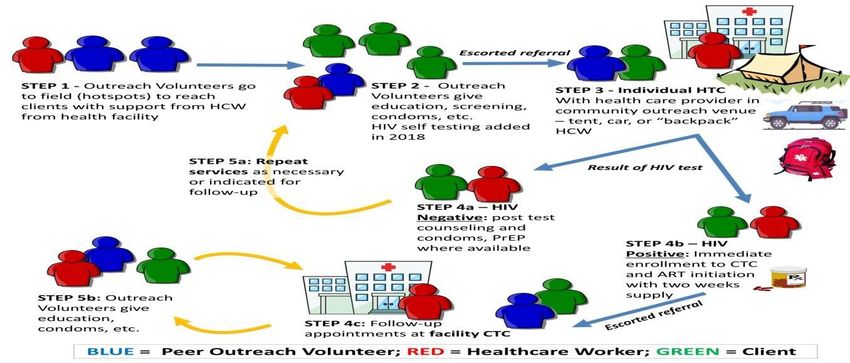
also map all the hotspots and involve peers to identify the KVP rather than using the health care
workers. Boresha Afya North and Central has a different model whereby men-friendly clinic,
supported by men HCW are able to provide integrated clinics near hot-spots of high HIV prevalent
areas such as fishermen camps and long-truck drivers stop-over junctions.
ICAP – Fikia model on the use of peer outreach support for HTS service delivery and linkages
The Ministry of Health, Community Development, Gender, Elderly and Children has been leading
the process by setting the policy environment through a variety of policy guidelines and standard
operating procedure that has enabled significant HIV testing and linkage of HIV positive to ART,
while monitoring retention to HIV services. Integration of services will then account for a
sustainable, cost-effective program.
284.2 Mix HTS modalities for Accelerated Plan
Regions with High Burden of
HIV above 10,000 Un-
• Provider Initiated identified PLHIV • Screening measures in
Counselling and Testing at low-burden regions and
Health facilities • Key and Vulnerable zones (e.g OPD)
• Community Index testing Population through peer • Targeted outreach to hot-
targeting men and to peer methods spots using CITC and
adolescents • Community Outreach to Community Index-Testing
high HIV hot-spots such as
mines, fishermen Regions Regions with low burden of
High HIV Zones disease below 10,000 Un-
identified PLHIV
Combining all these analysis, automatically there are converging regions which are therefore the
areas for priority when conducting the Accelerated Action plan. However, the burden of disease
will be used, and the 16 regions with burden of HIV more than 10,000 are the recommended
regions of priority.
4.3 Linkages
All HIV-positive clients testing positive at a facility should be escorted (with their consent) to the
point for ART registration and clinical assessment. This should ideally be done by the HCW who
has performed the test or by a lay worker. All clients who have tested HIV positive in the
community should be linked, with their consent, with a community health nurse or other
community-based lay worker.
The person who has performed community testing should link the client to their ART site of choice
and, after one month, follow up to ensure that linkage has occurred. If not linked, tracing should
be performed by the community-based HCW.
4.4 Different Population groups
4.4.1 Key and Vulnerable Populations
KVP are at a high risk of HIV transmission; there is a need for an aggressive scale up of targeted
services tailored to the unique requirements of these groups. These services should as much as
possible be integrated into the health service delivery system – both facility and community based.
Key and vulnerable population (KVPs) are defined within the World Health Organization (WHO)
Global health sector strategy on HIV/AIDS 2011-2015 to include both vulnerable and populations
who are at higher risk for HIVviii. They often have legal and social issues related to their behaviors
29that increase their vulnerability to HIV. Several vulnerable groups such as street children, long
distance truck drivers, miners and fishermen remain at high risk of HIV infection and are included.
In the HSHSP IV, it has been detailed that combination prevention interventions such as HTS,
condom programming, STI management and ART initiation were implemented to reach KVP
using both static and outreach services.
Key intervention areas for this population group will be the following;
• Community mapping for high HIV prevalence areas for KVP
• KVP offered an integrated package of services, HTS as a core service, (Condom
distribution, FP, STI screening and treatment, GBV services, PEP)
• Targeted community testing will be provided with escorted referrals and use of CHW
• Linkage initiatives to ART for key and vulnerable population groups while tracking
retention rates through detailed data system follow-ups and review
Key and Vulnerable populations therefore need to be provided with an aggressive, targeted, scale-
up services that are integrated into the health service delivery system at the levels of the health
facilities and community.
4.4.2 Adolescent Girls and Young Women
Some of the challenges and gaps in addressing AGYW population include:
• Inadequate prevention strategies focused on adolescents and young people and locations
of high risk
• Age-of consent for HIV testing, (currently at 18years), affects HTS access especially for
AGYW who are more vulnerable to HIV
• Inadequate integration of HIV and AIDS services in school health program interventions
• Inadequate SBCC programs focusing on young people
• Inadequate community-based HIV and AIDS interventions targeting young people
• Inadequate focus on AGYW interventions due to lack of age disaggregated data on care
and treatment services for adolescents and young people
• Few health facilities offering adolescent-youth friendly HIV services
• Lack of a standard service package for adolescents and youth living with HIV Strategic
outcome
The aim is for reduction of new HIV infection among adolescents and young women by 50% by
2022 and the overall goal is that 95% of adolescent living with HIV will be on ART by 2022
Key intervention areas to improve AGYW will focus on the following;
• Strengthen linkage mechanisms for facility and community-based services to increase
retention in care and treatment services for adolescents and youth
• Improve coordination among stakeholders working on adolescent and youth HIV and SRH
services and sensitize on HIV testing for treatment and prevention linkages.
30• Provision of adolescent friendly services (AFS) integrated into all councils is
recommended, and use of community health workers (CHW) to support HIV testing.
• Advocate for policy changes to include lowering age of consent and self-testing services.
• Expand access to and utilization of integrated quality HIV and AIDS services by
adolescents and youth.
4.4.3 Orphans and Vulnerable Children
One of the strategies to increase the uptake of HTS is to extend HIV testing beyond health facilities
and community-based initiatives. The program will strengthen linkage mechanisms for
MVC/OVC services to enhance identification, enrolment and retention of OVCs into care and
treatment services.
4.4.4 Men
HSHSP IV has noted low focus on comprehensive, age-appropriate, gender-sensitive sexual
education that addresses prevention of HIV and GBV. There is a need to strengthen demand
creation and promotion of comprehensive services for HIV and AIDS prevention, treatment, care
and support especially HTS, ART (treat all), VMMC and Condoms at all levels. These will
synergize with promotion of evidence based and targeted SBCC interventions, through
strengthening coordination of partners and sharing of best practices among implementers of SBCC
Suggested Key intervention areas in the HSHSP IV, to facilitate male participation in HTS include;
• Establish a routine combined HTS HIV prevention campaign in workplaces including the
informal sector and hard-to-reach communities such as mining areas, fishing camps, and
plantation workers
• Expand workplace programs that sensitize men to participate in sexual, reproductive,
maternal and child health for better health outcomes of their families
• Introduce services for men, such as screening for prostatic cancer or non -communicable
diseases (NCDs) in reproductive and child health services, especially for spouses of
PMTCT clients
• Engage male community leaders to address the needs and role of men in sexual,
reproductive, maternal and child health services both as peer motivators and influencers
• Joint clinics that will cater for both men’s and women’s needs. For example,
partners/spouses of women receiving PMTCT services to receive their ARVs at the PMTCT
site until their partner/spouse graduates then they will continue at the CTC together. This
will enhance compliance.
31Example of approaches that have been used to engage and reach the men is done at community.
Sauti Approach for engaging and reaching men
32Chapter 5: Efficient HTS modalities
5.1 Provider Initiated Testing and Counselling
Modification in testing approach from the usual testing of the general population to a more
prioritized, targeted testing was suggested within geographical areas with high burden of HIV and
low coverage of individuals who have tested for HIV and know their sero-status and more focused
testing in health facilities. Scale up implementation of focused PITC in all health facilities
attending children (RCH clinics, OPD, hospital pediatric wards) has also been advocated including
all other population groups.
PITC based strategies to health facilities with high HIV positive numbers and high yield, and
introduction of “screening’ measures in facilities/areas with low yields of HIV positive while
focusing on clients with high-risk symptoms is recommended. It is also advocated for community-
based testing in high-burden areas including key and vulnerable populations specially to target
high-yield for HIV positives for men.
For PITC, the country advocates scale-up the Combination Prevention approach for PITC to
facilities with both high numbers of HIV-positive test results and high yield to ensure that it
maximizes the value from this investment. The result of this effort will be to increase yield for
PITC.
Key Interventions that will be used for PITC include the following;
• Scale-up of differentiated HTS models such as PITC and CITC and facilitate referral and
linkage to ART
• Integration of HIV testing within other services at the health facilities
• Quality provision of services by reducing re-testing and double-testing
• An effective, linked M&E system for monitoring outcomes and assisting in reporting to
DHIS 2
• Strengthen and improve integration of TB, HIV and other sectors such as Reproductive
and Child Health at all levels to reduce the burden of HIV among TB patients and TB
among PLHIV
• Strengthen effective linkages and referrals between community and clinic-based services.
5.2 Differentiated HTS Models to facilitate referral and linkage to ART
HTS Guidance for PITC, CITC and Index-testing
• Any client voluntarily attending the health facility for HIV testing should be provided with
the service directly.
• All clients presenting to any service with signs or symptoms of HIV should be offered
HTS.
• For clients attending for another health reason, PITC should be prioritized/Integrated in the
following entry point for both adults and children, regardless of whether there are signs or
symptoms suggestive of HIV: TB Clinics, STI Clinics, In-patient departments, ANC/PNC
33• For all other clients attending OPD, specialist clinics and the laboratory, HTS should be
promoted by explaining the benefits of HIV testing and directing clients who choose to be
tested to the appropriate HCW, who is trained to perform HTS, or to the laboratory. Use of
a screening form is recommended at these testing points.
• Community-based HIV testing services that is generalized campaigns are low yield and
hence may not be cost effective in a lower-prevalence setting. In order to practically use
them there is a need for screening of clients in such campaigns so that clients who are not
at defined risk or have already tested are not re-tested. Community-based testing activities
should be targeted at;
o Men
o Key populations (female sex workers, MSM, PWID)
o Testing partners and children of an identified index client.
• Self-testing may have a role in the testing and re-testing of high-risk key populations and
in performing index client testing. Self-testing could be one of the modalities to use for
young people, although as a strategy it is still being discussed in Tanzania. Once the client
is HIV positive, they will still need to be confirmed at the health facility level. As a country
the use of media for country-wide sensitization is key so that the population groups that
will use self-testing are already informed and know what to do. HIV self-testing may be
implemented using a range of strategies:
o Distribution: from the facility or in the community
o Testing: supervised, semi-supervised or unsupervised.
• In community-based testing (including community-based index client testing), an
integrated approach to HTS should be taken. During community testing, the following
health screening activities may be offered - Screening for malnutrition, BP check, Glucose
check, TB screening, STI screening and HIV testing.
5.3 HIV Index Testing
The suggested key interventions have been index-testing to improve finding of men in care. For
COP 2018, major shifts that PEPFAR/T will implement to address the broad gaps in coverage
include three key aspects of HIV case finding: index testing, provider-initiated testing and
counseling (PITC), and community-based testing.
The proportion of positive results coming from index testing increased from 1% in FY2017 Q1 to
17% in FY2017 Q4. PEPFAR/T advocates increasing the scale-up of testing with a focus on sexual
and needle-sharing partners to ensure high fidelity. Through this PEPFAR/T estimates that 30%
of all HIV-positive people are identified through index testing. Index testing will accelerate
progress broadly but will especially help to close the gap in men, since most HIV-positive clients
are currently women.
Modalities of conducting index-testing are elaborated below;
• Passive notification is when HIV-positive clients are encouraged by a trained healthcare
worker to disclose their status to their sexual or drug injecting partners by themselves and
to suggest HTS to the partner.
34You can also read


