The Year at the Border 2012/2013
←
→
Page content transcription
If your browser does not render page correctly, please read the page content below
The
Year
at the
Border
2012/2013

Best People, Safe Borders
The
    Year
    at the
    Border
    2012/2013

    ISSN: 2324-3082 (Print)
2   THE YEAR AT THE BORDER    2012 - 2013
    ISSN 2324-3090 (Online)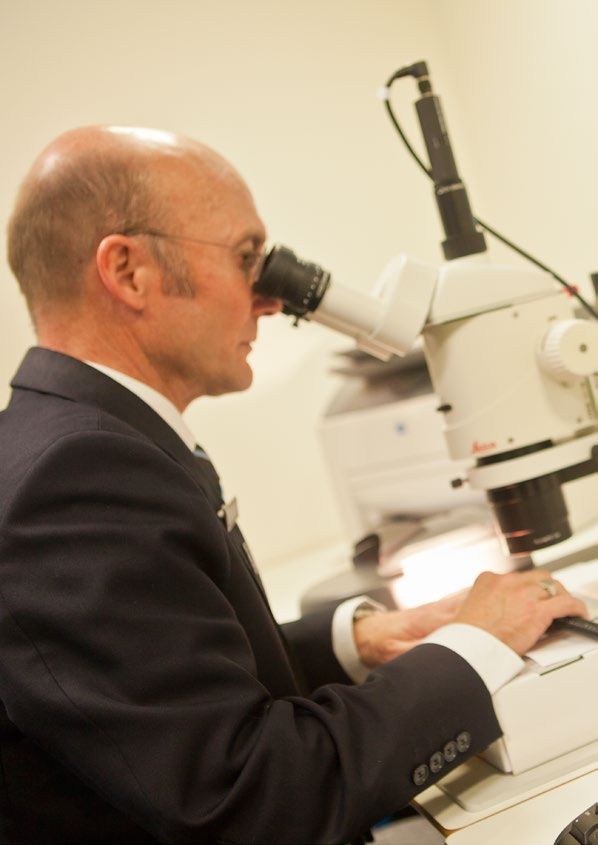
Introduction

In the 2012/2013 financial year over 4.9 million passengers crossed
New Zealand’s borders; our Australian cousins represented the
greatest number with nearly one million of them flying across the
Tasman. With the explosive growth in the Chinese tourism market,
Chinese nationals made up our third highest visitor group with
nearly 300,000 passengers arriving from China.

Such growth is not however without risk. Unscrupulous people often attempt to use identities
from these emerging markets to smuggle in people who would otherwise fail to meet New
Zealand’s entry criteria. This means that Immigration New Zealand (INZ) Border Officers must
manage the difficult balance between the facilitation of genuine passengers and those who
present a risk to New Zealand.
In managing risk INZ strives to intervene at the earliest point in the traveller pathway. In
order to achieve this border officers are constantly profiling flights destined for New Zealand.
This team of staff works 24/7, vetting passenger lists against databases of persons known
to present a risk as well as looking for passengers whose personal details and travel plans
match certain profiles. These passengers are intercepted at check-ins all around the world
and interviewed by an INZ border officer. After interviewing the passenger the officer will
make a decision whether or not to allow the passenger to board the flight. Last financial year
1696 passengers were denied boarding after being interviewed. By keeping these passengers
offshore New Zealand’s security is greatly enhanced and the integrity of our immigration
system is preserved.
It would be impossible for INZ to achieve these results without the collaborative efforts of
other border agencies. INZ works closely with the New Zealand Customs Service and the
Ministry for Primary Industries to achieve positive outcomes for New Zealand. This means
that INZ border officers need to have a robust understanding of the risks presented to
New Zealand by passengers who wilfully violate our biosecurity regulations and those who
attempt to smuggle in narcotics and other items of contraband. In this report you will read
stories that demonstrate the benefits of agencies working together to manage risk, providing
New Zealand with the highest level of protection at our borders.
Last financial year was a great year for INZ’s Border Operations and within these pages you
will see the results that show these dedicated, and highly skilled staff have provided New
Zealand with a service that they can be proud of, I know I am.

Karen Urwin
Manager - Border Operations
Immigration New Zealand

                                                                      THE YEAR AT THE BORDER       2012 - 2013   3
BY THE NUMBERS 2012/2013

           4.9M
       ARRIVING PASSENGERS IN 2012/13,
                                                                   PASSPORT                PASSPORT      PASSPORT

                                                                   36
       INCLUDING SHORT TERM VISITORS,
     COMPARED WITH 4.86 MILLION IN 2011/12
                                                                                                FALSE PASSPORTS
                                                                                                DETECTED (OFFSHORE
                                                                                                & ONSHORE)

                                                                                      29
                                                                                                        KNOWN
                                                                                                        CRIMINAL GANG
                                                                                                        MEMBERS
                                                                                                        OFFLOADED

               AUSTRALIA 48%
               GREAT BRITAIN 18%
               CHINA 17%
               UNITED STATES OF AMERICA 12%
               JAPAN 5%

                                    ››   AIR NEW ZEALAND
                                    ››   AIR PACIFIC
                                    ››   AIR TAHITI NUI
                                    ››   EMIRATES
                                    ››   KOREAN AIR
                                    ››   MALAYSIA AIRLINES
                                    ››   QANTAS AIRWAYS
                                         INTERNATIONAL
                                    ››   SINGAPORE AIRLINES
                                    ››   THAI AIRWAYS
                                         INTERNATIONAL
                                    ››   CHINA SOUTHERN AIRLINES

                                    ››
                                         COMPANY LIMITED
                                         CHINA AIRLINES LIMITED          35,500
                                                                                PASSENGERS

    18
                                    ››   JETSTAR
                                    ››   VIRGIN AUSTRALIA
                                                                              TRANSITED NZ TO
                                                                              SOUTH AMERICA
                    AIRLINES        ››   LATAM
                                    ››   AIR CALEDONIE
                    FLYING          ››   AIR VANUATU
                    TO NZ           ››   HAWAIIAN AIRLINES
                                    ››   CATHAY PACIFIC

4   THE YEAR AT THE BORDER   2012 - 2013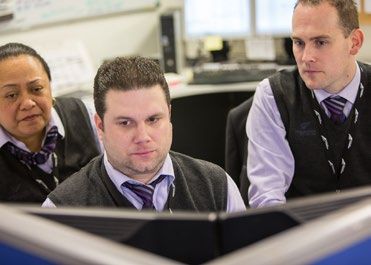
777
  REFUSED ENTRIES
                                                        1,696
                                                      PEOPLE DENIED BOARDING BECAUSE
TOP FIVE BY NATIONALITY                                  OF PRE-ARRIVAL SCREENING
                         55
         HONG KONG (PEOPLE’S RUPUBLIC OF CHINA)

                                        46
                                       TAIWAN

                     59                     40
                                          AUSTRALIA
                    CHINA

                        68
                       MALAYSIA

                                                           NO VISA 47%
                                                           ALERTS 23%
                                                           NO VALID PASSPORT 14%
                                                           NO ONWARD TICKET 7%
                                                           ENTRY REQUIREMENTS NOT MET 6%
                                                           FALSE PASSPORT 3%

                                                                     THE OLDEST
                                                                     ARRIVING

                                                                     101
                                                                     PASSENGER WAS
                                  91,320
                                    PASSENGERS
                                  TRANSITED NZ TO
                                     AUSTRALIA

                                                               THE YEAR AT THE BORDER   2012 - 2013   5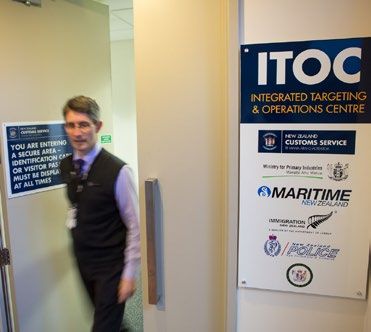
Immigration at the Border
             We protect New Zealand’s borders offshore and onshore. Pre-
             embarkation assessment of passengers for risk, and decisions
             on whether passengers meet entry requirements are undertaken
             every day by INZ.
             Onshore, the New Zealand Customs Service (Customs) acts as INZ’s agent at the border,
             processing passengers arriving at major international airports. Overlaying this and using
             advanced profiling, risk assessment techniques, and the latest anti-fraud technology, INZ
             provides passenger risk profiling and assessment.

             WHERE ARE WE?
             Border Operations staff are based at the three major international airports, delivering
             immigration services as two teams – Immigration Border Operations Centre (IBOC) and
             Onshore Border Operations (Auckland, Christchurch and Wellington).
             Through screening and profiling systems, IBOC addresses any immigration risk presented by
             potential travellers while they are offshore. Onshore Border Operations manages immigration
             risk at the air and marine borders. We make entry decisions for all passengers referred to INZ
             by Customs on arrival and lead the immigration response to critical incidents and emergencies.
             Immigration Officers at the border interact with arriving passengers around the airport such as
             in the Customs search area.
             Border Operations facilities at Auckland airport include interview rooms, overnight
             accommodation where people refused entry can wait for the next flight out, a document
             examination laboratory and a secure communications room.
             INZ border staff also work with other agencies such as Maritime New Zealand, Ministry for
             Primary Industries and Customs at Customs’ 24/7 Integrated Targeting and Operations Centre
             (ITOC), based at the Auckland Customhouse in Anzac Avenue. As the first of its kind outside the
             United States, the ITOC supports a multi-agency response to targeting risk at the border and
             provides planning and co-ordination of border protection responses.
             As well as Customs, INZ works closely with a number of other partners at the border – Airport
             Police, Ministry for Primary Industries, Aviation Security, international airlines and airport
             companies.

6   THE YEAR AT THE BORDER   2012 - 2013
INZ at Integrated Targeting and
Operations Centre
OVERVIEW
In 2011 the New Zealand Customs Service (Customs) set up the
Integrated Targeting and Operations Centre (ITOC) based in
Auckland. ITOC serves as an inter-agency targeting and operations
centre and is designed to bring representatives from all border
agencies together to collaborate and coordinate on border
targeting, operational planning and coordination.
Two Border Operations staff are seconded into ITOC from front line operations. They conduct
risk targeting activities on a range of flights into New Zealand and work closely with other ITOC
agencies such as Customs, Ministry for Primary Industries, NZ Police, and Maritime NZ.
The ITOC provide IBOC with an opportunity to undertake dedicated and concerted profiling
activities.
The ability to leverage resources and skills of partner border agencies has proven highly
valuable with INZ’s ITOC staff recording high success rates from profiling activities, many of
which are a direct result of collaborative efforts with other agency staff.

                                                                      THE YEAR AT THE BORDER        2012 - 2013   7
Integrated Targeting and
             Operations Centre Success
             Story
             In September 2012, staff at ITOC identified a French male travelling
             to New Zealand on a flight from Sydney.
             The client had been in New Zealand for three weeks earlier in the year accompanying his
             partner who had been studying. On examination of the client’s file, ITOC staff discovered
             that the New Zealand Police had contacted INZ on four separate occasions during the client’s
             previous stay in relation to domestic violence incidents with his partner. Further investigation
             by ITOC agencies revealed that the couple had been living in Australia and when the abuse
             began his partner fled to New Zealand. The client then followed her to New Zealand where the
             abuse continued. Enquiries with NZ Police staff based at ITOC revealed the client was arrested
             in New Zealand after allegedly causing heavy bruising to his partner’s face. He had then
             departed New Zealand to avoid further police action but was now returning. NZ Police advised
             that if granted a visa, he would likely be subject to further Police charges.
             Based on information that was gathered and shared by partner agencies at ITOC, the client was
             placed on border alert by ITOC staff and subsequently refused entry permission on arrival.

8   THE YEAR AT THE BORDER   2012 - 2013
Working with MPI
BANQUET IN A BAG
A Chinese national referred to Immigration New Zealand Border
Operations from the Ministry for Primary Industries (MPI) was
interviewed at Auckland International Airport.
The passenger declared to MPI Biosecurity that she had no meat or fish in her possession.
When the passenger’s handbag and checked baggage were searched beef, duck, chicken and
fish were found.
The passenger claimed that she was not aware that her mother had placed meat in her
handbag or luggage.
During the INZ interview the passenger was informed that the meat she had brought with her
did not meet the entry requirements under Import Health Standards.
The passenger admitted to providing false information and at the time did not consider the
consequences.
When asked why the meat was important as meat was readily available in New Zealand, the
passenger stated that she liked the meat from her home town, and every time she travels her
mum packs such food for her. The passenger was refused entry and the meat was seized.

SEED SMUGGLERS REFUSED ENTRY
Two Chinese nationals, who arrived from Shanghai, were referred
to Customs for a luggage search by a Ministry for Primary
Industries biosecurity officer.
The search revealed 14 foil-wrapped packages of seeds concealed under the inner soles of
shoes, within a carton lining, in a handbag and in wedding invitations.
As a result of the seed find, Immigration Border Operations refused the husband and wife entry
permission to New Zealand. They were sent back to China that night and are now subject to
alerts to prevent any future travel to New Zealand.
With an ever increasing rate of arrivals to New Zealand, the risk of unwanted pests and disease
introduction increases. Illegal importation of goods (e.g. seeds) has the potential to cause
significant damage to New Zealand’s horticulture industry.
The successful outcome was the result of positive interaction between all border agencies.

                                                                     THE YEAR AT THE BORDER       2012 - 2013   9
Document examination
INZ’s Border Operations maintains a specialist Forensic Document
Examination Laboratory located at the Auckland International
Airport. The Lab is maintained by the Immigration Border
Operations Technical Adviser, who is trained and experienced in
forensic document examination.
Attached to this laboratory is a reference library of specimen passports, sourced from
countries around the world. Having this reference library co-located with the document
examination laboratory enables swift comparisons of questioned documents against genuine
specimens and enables forgeries or alterations to be identified immediately and without delay
while the passenger in question waits.
In any given year, the Border Operations Document Examination Laboratory might be called on
to examine over 200 questionable passports and documents. While many of these documents
are found to be legitimate, others are examined and identified as being altered or else
fraudulently manufactured.
When fraudulent or altered passports are identified, the passengers holding them are then
interviewed. The document examiner is also responsible for compiling forensic document
examination reports and briefs of evidence for criminal prosecutions as these are required.
December 2012 saw two
Iranians and one Iraqi
DID YOU KNOW
national offloaded from the
same China Airlines flight.
They attempted travel on
counterfeit Norwegian,
Swedish, and Danish
passports respectively.
10 THE YEAR AT THE BORDER 2012 - 2013INZ
EXCELLENCE AWARD
MOST UNIQUE
CONTRIBUTION
At the annual excellence awards, Border
Operations staff member Kevin Browne received
an award for the most unique contribution to
Immigration New Zealand in recognition of his
dedication and expertise in the area of forensic
document examination.
THE YEAR AT THE BORDER 2012 - 2013 11Case study: False passport
In March 2012 an Indonesian national was discovered to be holding
a fraudulent passport.
The passenger was issued a visa by INZ to attend a conference in Auckland. The individual
declared a six day stay on his arrival card.
On arrival discrepancies were noted in information provided to Customs and INZ.
According to information provided to Customs the passenger was married with two children
and worked as a shop salesman. In contrast, visa application notes stated the man had six
children, not two, and was a senior staff trainer for an electricity company.
During the Customs search, two Indonesian driving licences, and a Bali ID card were found. The
photo on the identification documents was of the passenger; however the name and date of
birth were different to the information provided in the visa application.
The photo on the passenger’s passport biodata page was also different to the photo supplied
to INZ in the visa application.
The passport was forensically examined at INZ Border Operation’s Document Examination
Laboratory. This found that the entire passport booklet had been dismantled, the plastic
lamina on the biographical details page removed, the original photograph erased, a new
photograph printed, the passport booklet reassembled and re-stitched and the biographical
covered with a counterfeit plastic laminate.
Due to identity concerns an Indonesian interpreter was brought in to assist an Immigration
Officer with the interviewing process. The passenger’s real name was the one in the driving
licences and Bali ID card. The passenger admitted to using a fraudulently altered Indonesian
passport with his photograph but with someone else’s name.
He was refused entry permission, the passport was seized and the passenger was returned to
Denpasar Airport on the next available flight.
IMAGES
Please note that the green edged images are from a genuine Indonesian passport and red
edged images are from the fraudulently altered Indonesian passport.
Examination under high powered magnification revealed that completely different (and
incorrect) screening and printing processes were used to create the photograph onto the
biographical details page.
12 THE YEAR AT THE BORDER 2012 - 2013When viewed with differing angles of light, the plastic laminate covering the biographical
details page of the fraudulently altered passport was revealed as being counterfeit. The
optically variable kineographic designs contained in the counterfeit laminate differed subtly in
design and form when compared with those on the laminate of a genuine Indonesian passport.
When viewed under ultra-violet light (at 365nm), differences were noted in the security
printing when comparing between the plastic laminas of the fraudulently altered Indonesian
passport and a genuine Indonesian passport.
Under magnification, the centre stitching and binding thread found in the fraudulently altered
passport appeared loose and there was damage to both the thread and the stitching holes.
The binding thread in a genuine Indonesian passport is tight, undamaged and without excess
damage to the booklet’s paper fibres around the stitching holes.
THE YEAR AT THE BORDER 2012 - 2013 13Foreign Nationals Refused
Entry
CONVICTED SEX OFFENDER ATTEMPTS TO ENTER NEW ZEALAND
A German passenger who arrived on an Emirates flight from
Frankfurt to New Zealand had previously been twice convicted of
sex offences against children, and had previously tried to abscond
to New Zealand following conviction but was returned by New
Zealand officials to serve his sentence in Germany.
Because of these convictions, German authorities alerted Immigration New Zealand of his
imminent arrival. An open source search against this passenger’s name revealed a site
containing pictures and film footage designed to create the impression that the passenger
lived and worked in Christchurch.
A further search of an alias known to be used by this passenger revealed another website
where this individual advertised a service for parents to purchase personalised books for
their children. The website required parents to provide details of their children including sex,
name, date of birth and other information such as the name of their pet or best friend. While
searching this website the border officer noted that other known sex offenders had interacted
online with this site meaning that it was highly likely that the personalised book service was in
fact a means of identifying and grooming victims for paedophiles.
Left, are two re-occurring
characters, each with their own
social networking accounts
that have been created by the
passenger.
The border officer alerted Customs to this passenger’s imminent arrival and it was quickly
decided that his baggage should be subject to a full search. Forensic examination of the
laptop found over 570 electronic books compiled from over 35,000 images of sexual acts
between young children. The passenger was charged, convicted and sentenced to ten months
imprisonment. The passenger has since served the sentence and has now been deported back
to Germany.
14 THE YEAR AT THE BORDER 2012 - 2013CHINESE MAN PAYS $20,000 FOR FRAUDULENT PASSPORT
The interception of people travelling to New Zealand on fraudulent documentation is a key
priority for Immigration New Zealand.
In September 2012, Customs referred a passenger arriving from China to Immigration New
Zealand because of his minimal luggage, very recently purchased tickets and lack of ability to
explain why he was visiting New Zealand.
The Chinese passenger admitted that he was travelling under a false name and that he had
paid a ‘deposit’ of $200 for a false Taiwanese passport, and that he was expected to pay an
additional $20,000 for his passport upon it successfully gaining him entry to New Zealand.
The passenger was refused entry by INZ’s border officers and returned to China.
PASSENGERS ON PRIVATE JET REFUSED ENTRY
Unwanted arrivals to New Zealand can appear from any number of sources. Border officers
work hard to ensure that a watchful eye is kept over all possible entry points.
In November 2012 a private jet landed at Queenstown airport from Tahiti. One of the
passengers on board was identified by border officers as having charges pending against him
in Canada on 36 counts of fraud and forgery.
Border officers refused his entry into New Zealand, which meant the Canadian visitor had to
vacate the private jet, purchase his own tickets home, and return to Vancouver under police
escort that same day.
THE YEAR AT THE BORDER 2012 - 2013 15SECONDED STAFF TO QUEENSTOWN
In response to an increase in flights to Queenstown airport, two immigration officers were
seconded to Queenstown airport during the 2013 winter season.
The seconded staff provided training sessions with customs officers and utilised Police
fingerprinting facilities when necessary for identification purposes.
Being on the ground at Queenstown meant the immigration officers were able to vet
passengers at gates, turning around arrivals with criminal convictions or those detected trying
to enter with contraband.
QUEENSTOWN ARRIVAL STATISTICS
Queenstown has seen a significant increase in the number of arrivals as illustrated in the graph
below. The growth in non Australian/New Zealand passports has presented an area of emerging
risk.
Arrivals of non Australian/New Zealanders for the last financial year were 31,353 in comparison
with total arrivals of 125,750.
94,397 31,353
AUSTRALIANS & OTHER
NEW ZEALANDERS NATIONALS
125,750
ARRIVALS TO
QUEENSTOWN
QUEENSTOWN
16 THE YEAR AT THE BORDER 2012 - 2013Hong Kong Airline Liaison
Officer (ALO)
Ensuring that border related risk is kept offshore is of pivotal
importance for INZ Border Operations (IBO).
In addition to Advance Passenger Processing and the Risk Targeting Programme, IBO deploy
staff to high-risk overseas airports as Airline Liaison Officers (ALOs). This year INZ has had ALOs
stationed at Kuala Lumpur, Hong Kong and Bangkok.
ALOs are responsible for physically profiling all passengers destined for New Zealand at check
in and at boarding. They carry document examination equipment and are able to verify the
authenticity of passports and visa labels. In conjunction with IBO staff back in New Zealand,
ALOs manage the offload of any passenger who presents as not having bonafide reasons for
visiting New Zealand.
Immigration Manager Angela Ross was stationed at Hong Kong International Airport, which is
one of the busiest airports in the world. While stationed in Hong Kong Angela also provided
training to airline staff in respect to Immigration’s entry requirements. As well as training
airlines based in Hong Kong, Angela also travelled to China to provide training to China
Southern Airlines staff based in Guangzhou.
THE YEAR AT THE BORDER 2012 - 2013 17The Results
WHO COMES HERE
Breakdown top five nationals + NZers
New Zealand 2,267,840
Australia 826,900
Great Britain 307,464
China 284,688
United States of America 207,663
Japan 90,188
Country with the fewest arrivals
And the fewest? One visitor from each of the following 8 countries came to New Zealand:
Benin, Cape Verde, Equatorial Guinea, Cayman Islands, Martinique, Niger, Pitcairn Islands,
Reunion.
ALGERIA LIBYA
NIGER
CHAD PITCAIRN
ISLANDS
18 THE YEAR AT THE BORDER 2012 - 2013PASSENGERS DENIED BOARDING
Who were they?
China 184
Fiji 140
New Zealand 135
India 116
Great Britain 100
Reasons for offloading
No visa 744
Alerts 356
No valid passport 217
No onward ticket 106
Entry requirements not met 95
False passport 39
135
DID YOU KNOW
New Zealanders were
unable to produce a
valid passport and
were denied uplift to
New Zealand.
THE YEAR AT THE BORDER 2012 - 2013 19Case Studies from Around the
World: Offloads & Refused Entry
FRAUDULENT PASSPORTS FROM SOUTH AFRICA
A South African passenger was noted during routine profiling of a
Singapore Airlines flight by a border officer. The officer noted the
passenger presented possible risk factors.
The passenger was intercepted in transit in Singapore; the border
officer briefly interviewed him and was able to ascertain he had little
idea of what he was going to do in New Zealand apart from meet an
internet friend. The Singapore Airlines security team also assessed
the South African passport as counterfeit and consequently the
passenger was offloaded from the flight.
In a subsequent interview with Singapore authorities the passenger
confessed to being a Ghanaian national. The passport was obtained
via an uncle in Johannesburg who posted it to him in Calcutta. The
passenger used the fraudulent passport to enter Nepal in August 2012
where he established himself as a football player playing for a club in
Kathmandu.
FRAUDULENT SOUTH AFRICAN
PASSPORTS
South African passports are the most common
document targeted by identity fraudsters
attempting travel to New Zealand.
40 South Africans were offloaded last financial
year and 15 refused entry. Of the passengers
offloaded, it is estimated 50% had counterfeit
or fraudulently obtained passports.
20 THE YEAR AT THE BORDER 2012 - 2013ROMANIAN THIEVES
A group of Romanians were profiled by a
border officer in September 2012 as possible
non-genuine travellers. Further investigations
determined two of the group were part of
another large group of Romanians who had
been offloaded from a flight to New Zealand
in 2009.
Good use of open source information also
located a number of news articles discussing
a group of Romanian ‘gypsies’ who had
been arrested in the USA for theft, had been
convicted and sentenced to 18 months in SIX TAIWANESE WORKERS
jail and subsequently been deported. In one A border officer working in the Integrated
particular article names of the group were Targeting and Operations Centre screened
stated - these names matched the majority of six profiled Taiwanese males in May 2013
passengers travelling in this particular group. and placed them on alert for interaction
by border officers on arrival.
The escort of the group was located on
a separate booking reference (he had
checked in with the other five and had
similar booking details).
Upon arrival in New Zealand the six
passengers were interviewed and it was
determined that five were likely being
facilitated into New Zealand to work (as
unskilled labourers as they stated they
were builders). The five plus the escort
were all refused entry.
Subsequently a further four Taiwanese
with very similar profiles to those six were
refused entry into New Zealand in June
2013.
TWO SUSPECTED IRANIANS ......
Two Bulgarian passport holders were noted during routine profiling of a Malaysian
Airlines flight by an Immigration Border Operations (IBO) officer.
An interdiction with the passengers was undertaken in transit in Kuala Lumpur,
Malaysia. The IBO officer was able to briefly interview one of the passengers
finding that the two passengers were friends, spoke little English, and did not
know much about New Zealand even though one stated they both worked for a
company called Travelina in Sofia and were travelling around different countries
investigating experiences relating to tourism, i.e. hotels, etc. They did not have any
accommodation booked and just wanted to “come and see”.
It was not long into the interview that the airline security officer took the phone
off the passenger and advised the IBO officer that both Bulgarian passports were
counterfeit. Consequently they were both offloaded from the flight and returned to
their port of origin.
It is suspected the pair were Iranian nationals based on their appearance and the
fact a Persian (Farsi)/English dictionary was located during a search by airline
security.
THE YEAR AT THE BORDER 2012 - 2013 21Carrier Infringements
The Immigration Act 2009 provides for an infringement regime for
carriers who breach legal obligations when carrying people to
New Zealand.
Among other obligations, carriers must provide Advance Passenger Processing (APP) data for
everyone travelling to New Zealand, comply with APP boarding directives and ensure persons
have correct travel documentation before boarding.
Infringement notices may be issued for breaches of these obligations and form part of a multi-
layered strategy to increase carrier compliance. Border Operations Infringement Officers work
to support carriers in compliance with their obligations while undertaking enforcement action
where required.
Infringement action provides an alternative to prosecution action which can be costly and time
consuming.
The infringement regime went live in July 2012 and since then, 906 infringement notices have
been issued across all airlines.
Infringements issued to airlines 2012/2013
Carrier did not provide
APP information 793
Carrier provided incorrect
APP information 79
Carrier ignored a
‘Do not board’ request 31
Passenger did not hold a visa 2
Passenger did not hold a valid
travel document 1
Carrier infringement levels appear to have decreased since the start of the infringement
regime. This decrease in infringements and corresponding increase in compliance with carrier
obligations is likely due to enhanced training delivered by Border Operations staff and the
investments that many carriers have made in their IT systems to prevent offences such as
failure to submit correct APP information. Many carriers have seen decreases in offending, with
the bulk of offences now resulting from a small number of carriers or from one-off incidents.
22 THE YEAR AT THE BORDER 2012 - 2013Total infringement notices - all carriers 2012/13 year
INFRINGEMENT NOTICES ISSUED
MONTH
No visa No APP
No travel document Incorrect APP
Ignored deny board
THE YEAR AT THE BORDER 2012 - 2013 23Biometrics at the Border
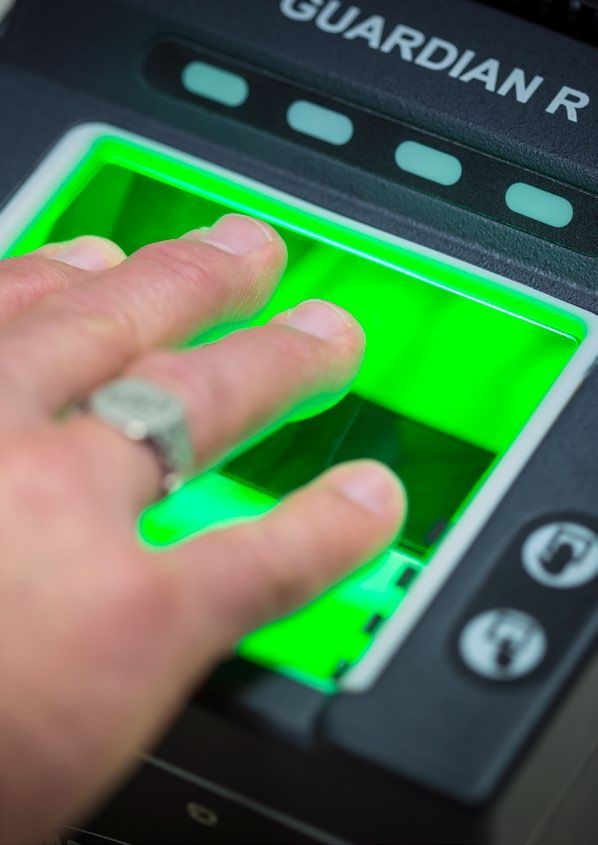
In the year ending 31 July 2013 fingerprints were collected from
585 passengers interviewed by Immigration New Zealand officers
at the border. The fingerprints were checked against immigration
fingerprint holdings of our Five Country Conference (FCC) partners,
Australia, Canada, United Kingdom and United States. From across
INZ’s wider operations a total of 2,340 individual checks were
carried out, these resulted in 142 matches.
In 14 cases the searches returned adverse information on the passenger including; criminality,
drug use, undeclared deportation, refused entry, fraudulent asylum claims, false identity
documents and, in one case, a known people smuggler.
Implementation of the biometric matching capabilities in INZ’s new Immigration Global
Management System, ‘Immigration online’, currently under development, will enhance the risk
assessment capability of border staff. The Immigration online system will conduct automatic
real time fingerprint and face matching against INZ holdings as well as provide border staff
with the ability to initiate real time fingerprint searches against the holdings of our FCC
partners.
FINGERPRINT MATCH AVERTS CONVICTED DRUG CRIMINAL
A Venezuelan national was denied entry in to New Zealand by Border Operations as a result
of a fingerprint match against FCC holdings. The match showed that the passenger had been
previously deported from the USA following a conviction for possessing heroin. Due to this
conviction and deportation from the USA, he was returned to Venezuela on the first available
flight.
24 THE YEAR AT THE BORDER 2012 - 2013THE YEAR AT THE BORDER 2012 - 2013 25
Our Mission
Responsive and agile teams providing expertise,
information and services to manage risk and
protect our borders.

BEST PEOPLE, SAFE BORDERS

How can you help?
To report immigration fraud

Call Crimestoppers anonymously on 0800 555 111

Or complete an online Crimestoppers message
form www.crimestoppers-nz.org
You can also read


