TOOLKIT - The Young Leaders Plastic Challenge Colour Branding
←
→
Page content transcription
If your browser does not render page correctly, please read the page content below
Colour Branding

         The Young
         Leaders Plastic
         Challenge

TO O L KI T
Plastic Tide Turners Challenge Badge | Toolkit

    Foreword

    Anything that sounds too good to be true probably is. Plastic is no exception. Cheap, durable, and
    light, plastic has made its way into every country, every society, every lifestyle. Yes, it makes life easier
    in lots of ways. Who amongst us can say they’ve never used a plastic straw, plastic shopping bag, or
    plastic spoon? But here’s the downside: Our production and consumption of single-use plastics and
    our inability to manage plastic waste sustainably have led to a massive pollution problem. Marine
    litter and microplastics are flooding our oceans and are hurting marine ecosystems and human
    health on an unprecedented scale.

    The solution does not lie at sea, though. It lies on land with us, the ones who started the problem.

    From cutting back on our use of single-use plastic to recycling more effectively to finding
    sustainable alternatives to plastic, solutions to plastic pollution are within our grasp.

    In this leadership challenge, we’re going to learn what those solutions are and how we can be a part
    of them. That’s just the beginning. Then we will lay out a plan for how we can inspire others to join
    in the fight against plastic pollution. The final frontier will be a set of challenges that we hope could
    unleash a new movement of action that will seek to reduce plastic waste where it matters most:
    upstream.

    We’re fortunate to have as beautiful a place as planet Earth to call home. And let’s not forget, we
    share this home with wondrous plants and animals, all of whom are doing their part to keep the
    planet healthy and beautiful. Let’s do our part too. Let’s keep our oceans, forests, rivers, and roads
    picture perfect and plastic-free.

    Learning outcomes                                         1.   Understand how plastic is threatening life
                                                                   in oceans and on land;

                                                              2.   Understand how the global community is
    So, you want to do something about plastic
                                                                   tackling the issue;
    pollution? Or you’ve been hearing a lot
    about it and you’re curious? Completing                   3.   Understand and act to reduce your
    this challenge is a great place to start! You                  personal use of single-use plastics;
    might be wondering: what’s the point of                   4.   Inspire your friends, family, school, and
    the challenge, why can’t I just jump in right                  community to reduce, reuse and recycle
    away and do something about plastic? Great                     single-use plastics;
    enthusiasm, love it! But go ahead and use
                                                              5.   Take the lead on a wider scale to
    the toolkit, because it will help you have a
                                                                   create lasting change in your region
    bigger impact in your work.
                                                                   or community related to the use of
    In fact, by the time you complete this                         single-use plastics, marine litter and
    challenge, you will be able to:                                mircoplastics.

2
Toolkit | Plastic Tide Turners Challenge Badge

About the challenge

The challenges are grouped into three levels—entry level (A), leader level (B), and champion level (C)—with
background information in between that will help you learn more about specific issues related to plastics,
plastic waste, and plastic pollution.

Each level of challenges comes with a scoring system. Scoring enough points at each stage entitles you to move
on to the next level of challenges. Why wait around? Let’s get underway!

Before badge quiz: 10 compulsory questions before you start
You’re joining in the Young Leaders Plastic Challenge—yay! Before forging ahead, please take the following 10
quick questions. Doing so will give us an idea of common practices, opinions, and trends around the use of plastic.

Leader Code: ................................................... (To be generated automatically)

Name: __________________________               		              Email: _______________________

Age Group: 					Gender: Male / Female

  7-10        11-16         17-25           26 and above

Circle the most appropriate option in the table below.

 1.      In the past month, I have avoided eating at places that serve food                         Yes      No       Not Sure
         with single-use plastic cutlery.

 2.      In the past month, I have used single-use plastic bags                                     Yes      No       Not Sure

 3.      John gets his household supplies in a plastic bag. Do you think this                       Yes      No        I don’t
         is right?                                                                                                      know

 4.      Sheila drinks tea in a plastic cup. Is this a good idea?                                   Yes      No        I don’t
                                                                                                                        know

 5.      I like to drink soda with a plastic straw.                                                 Yes      No       Not sure

 6.      People view single-use plastic as a good thing. Do you share that                         Agree   Disagree   Not Sure
         view?

 7.      I can change the way my friends and family use plastics in their                          Agree   Disagree   Not Sure
         everyday lives by talking to them about the issues around plastic.

 8.      Sarah uses paper and cloth bags. Can you easily find paper or cloth                        Yes      No       Not Sure
         bags or are you able to make a bag yourself?

 9.      Are there any plastic recyclers in your area?                                              Yes      No        I don’t
                                                                                                                        know

 10.     Do you think it is possible to manage without single-use plastic in                        Yes      No        I don’t
         our lives?                                                                                                     know

       Send your quiz response to: unenvironment-yea@un.org

                                                                                                                                 3
BG
                                       Plastic Tide Turners Challenge Badge | Toolkit

    Background Information
                                                                                        What are plastics?
    The problem with plastics                                                           This badge is all about
                                                                                        plastics, but what are
    Imagine if you could do something about ocean                                       they? Invented in 1907,
                                                                                        a plastic is a type of
                     pollution, climate change, human health                            human-made material
                      and floods all at once! Sounds like a job                         that can be formed
     Learning          for a superhero? Actually, it could be you!
                                                                                        into almost any shape.
                                                                                        Plastic is really useful
    Outcome 1
                       And all you’d have to do is reduce your                          and when we first
                                                                                        created it, we knew we
                     use of plastic and get others to do the                            were onto something
                     same. Hello, Captain No-Plastic!                                   big. It is cheap, flexible,
                                                                                        and hard to break. It
    If that sounds weird, guess what? It gets weirder. Plastic                          lends itself easily to the
                                                                                        manufacture of zillions
    is not only connected to ocean pollution, climate change,                           of products.
    human health and flooding, but much, much more. Try
    tourism, toxic waste and turtle safety. But let’s not get
    ahead of ourselves.
                                                                                        Two not-nice nines
    1. What’s the scoop on plastic?
                                                                                        Throughout history, humans have produced 9
                                                                                        billion tons of plastic. What does that look like?
    Have you ever stopped to think about how much                                       According to one scientist, if you spread out
    plastic you use? For most of us, the answer is a lot. From                          9 billion tons of plastic at an ankle-
                                                                                        deep level, it would take up an area the size of
    shampoo bottles to food packaging to toys and even                                  Argentina—or nearly four times the size of Texas.
    clothing—a surprising amount of the stuff we encounter                              The other nasty nine? Just 9 percent of the
                                                                                        nine billion tons of plastic we’ve created
    on a daily basis is either made of plastic or has some                              has been recycled (turned into something
    plastic component to it. So why did we end up using so                              reusable). Shame on us all!

    much plastic and why is that bad?

    The main problem lies with single-use plastics, or things
                                                                                    2. How’s plastic hurting?
    we use just one time and then throw away. These include
    plastic straws, takeout containers, food wrappers, water                        If you’re scared to ask, we’ll do it: If only 9
    bottles, and shopping bags. We use and toss waaay more                          percent of plastic has been recycled, what
    single-use plastics than we need.                                               happens to the rest of it?

                                                                                    This is where things get problematic.

                                                                                    Our waste management systems don’t
        Don’t mean to keep you up at night, but…                                    have what it takes to contain the plastic
        Around the world,
                                                                                    onslaught. The plastic we throw away goes

        1 million                                                                   to landfills, which (in theory, at least) are
        plastic drinking bottles are
                                                                                    special sites dedicated to safely containing
        purchased every minute.                                                     garbage. A huge quantity of plastic also
                                                                                    goes to trash dumps. Many of these
                             Every year we use up to

                             5 trillion                                             are right by the sea, which means trash
                                                                                    overflows from them directly into the ocean
                             single-use plastic bags. What does that
                             look like? Well, if tied together, plastic             (Source: www.Earthday.org/2018/04/06/where-
                             bags could be wrapped around the world
                                                                                    does-your-waste-go).
                             seven times every hour.

        50 percent of all the plastic we use is single-use.
        Sources : worldenvironmentday.global/en/about/beat-plastic-
4       pollution and The State of Plastics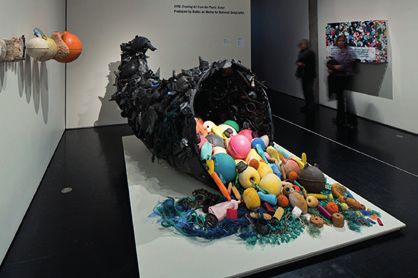
Toolkit | Plastic Tide Turners Challenge Badge

                     Landfills are not much better.                   slowly breaks down into smaller pieces called
                     As it moves to landfills, plastic                microplastics (measuring less than 5 mm in
                     often flies off in the wind and                  diameter), which are even harder to clean up.
                     ends up around drains, from
                                                                      Microplastics are extremely dangerous, as fish
                     where it enters rivers and
   Studies show                                                       and other marine animals have been known to
that 90 percent      ultimately oceans. Same story
                                                                      eat them. This is not cool at all, neither for their
of bottled water     with litter. Rainwater and wind
and 83 percent                                                        health or ours, because quite often fish who ate
    of tap water     send plastic litter into streams
                                                                      microplastics become part of our dinner.
 contain plastic     and rivers, from where, once
        particles.
Source: The State
                     again, it ends up in the oceans.
       of Plastics
               Plastics are un-biodegradable,
which means, unlike say with orange peels                                  China says no, everyone else says oh no
or bread crusts, bacteria cannot break                                     For decades, China has been importing plastic waste from
                                                                           Western countries, recreating items out of it for profit. But
plastics down into a harmless state. In other                              in November 2017, China said no thanks. Which means
words, plastic trash can take centuries to                                 plastic waste is piling up at a much faster rate than before.
                                                                           Countries are struggling to find solutions. Tougher bans
decompose, and, in the process, could leak                                 and closed loop systems on single-use plastics are one
harmful chemicals into the soil and water.                                 way to go.

There’s a silver lining, though: scientists are
coming up with amazing solutions.

Instead of decomposing harmlessly, plastic

                          Over the past 20 years,
                          entrepreneurs, companies and
                          researchers have created a huge
                          variety of biodegradable and/or
                          compostable plastic substitutes.
                          Everything from edible six pack
                          rings to grocery bags made from
                          shellfish shells—it’s all out there.
                          Source: CleanSeas Back to School
                          Plastic Challenge - https://bit.
                          ly/2RBJ2qo)

     The surprising uses of banana peels
     Cartoon characters slip on them all the time. But
     they’re good for something even more important:
     Insulating electric cables instead of using plastic.
     Who would’ve thought? Fortunately for us, 16-year-
     old Elif Bilgin from Turkey did think. She also
     developed her award-winning idea, not giving up
     even after 10 failed trials.
     Learn more: https://bit.ly/1a4nr3h

                                                                                                                                           5
Plastic Tide Turners Challenge Badge | Toolkit

    Single-use, so much to lose
                                                                                   Earth needs to look #instaready too!
                                                                                   The beauty industry has been in the spotlight
                                        Nearly one-third of the                    lately for its rampant use of plastics. From
                                                                                   microplastics in facial scrubs to excessive plastic
                                         plastic packaging                         packaging to the practically indestructible
                                          we use ends up                           facial and wet wipes, a wide
                                                                                   range of beauty products
                                          clogging our                             are wreaking havoc on the
                                          city streets and                         planet. We all need to choose
                                                                                   our products more carefully—
                                          polluting our natural                    find tips in Appendix 3 of the
                                         environment.                              badge. Dude. We can’t be
                                                                                   making ourselves look good
                                                                                   while ruining the Earth’s
                                          Every year, up to 13
                                                                                   natural beauty.
                                  million tons of plastic leaks                    Learn more at: https://www.teenvogue.com/story/the-
                                                                                   beauty-industry-has-a-plastics-problem?verso=true.
         into our oceans where it endangers marine wildlife.
         That’s the same as pouring an entire garbage truck
         of plastic into the ocean every minute.
         By 2050 there will be more plastic in the oceans
         than there are fish (by weight)

    Sources: www.worldenvironmentday.global/en/about/beat-
    plastic-pollution and www.Earthday.org)
    https://en.wikipedia.org/wiki/File:More_Plastic_in_the_
    Ocean_than_Fish_Infographic.png

       World Cleanup Day is a thing!
       Did you know there’s a day dedicated to making the world
       cleaner? A whole global movement comes together to take
       action and do something about the waste in their backyard.
       Cleaning up your room might be a
       bore but cleaning planet Earth
       is fun – especially when you’re
       joining forces with millions of
       people in 150 countries around
       the world. Join the fun on 21
       September 2019:
       www.worldcleanupday.org
       https://oceanconservancy.
       org/trash-free-seas/
       international-coastal-cleanup/

    Whew! That’s a lot to take in. But the great part is, each
    and every one of us can do something to tackle plastic
    pollution. And we’re going to start right now.

6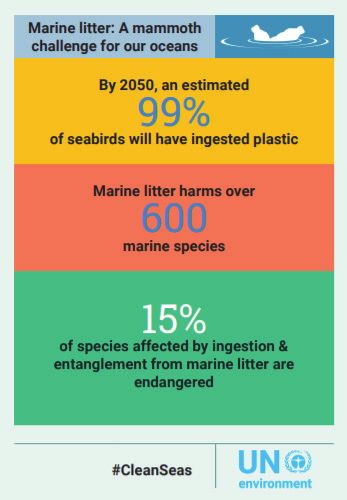
Toolkit | Plastic Tide Turners Challenge Badge

Audit Your Plastic Footprint

Start your war on single-use                   1.   Circle the plastic objects that you have used in past 2
plastics by first assessing where                   months, place a check by the frequency of use and the
you stand with the audit below.                     sources from where they reach.

     Plastic Bags                   PET Plastic                    Plastic Straw             Plastic Cups

    Daily                      Daily                             Daily                     Daily
    Once a week                Once a week                       Once a week               Once a week
    Once a month               Once a month                      Once a month              Once a month
    Once in past 2             Once in past 2                    Once in past 2            Once in past 2
    months                     months                            months                    months

    Vegetable vendor           Vegetable vendor                  Vegetable vendor          Vegetable vendor
    Restaurant                 Restaurant                        Restaurant                Restaurant
    Railway station,           Railway station, bus              Railway station, bus      Railway station, bus
    bus stop, or airport       stop, or airport                  stop, or airport          stop, or airport
    Stores/shops               Stores/shops                      Stores/shops              Stores/shops
    Street vendor              Street vendor                     Street vendor             Street vendor
    Anywhere else              Anywhere else                     Anywhere else             Anywhere else
    (specify)                  (specify)                         (specify)                 (specify)

                                          Where does it go after use?

    Segregate & sent           Segregate & sent to               Segregate & sent to       Segregate & sent to
    to recycler                recycler                          recycler                  recycler
    Junk dealer                Junk dealer                       Junk dealer               Junk dealer
    Landfill                   Landfill                          Landfill                  Landfill
    Neighboring water          Neighboring water                 Neighboring water         Neighboring water
    body                       body                              body                      body

                                                                                                                  7
Plastic Tide Turners Challenge Badge | Toolkit

              Balloons                   Single use Plastic                  Plastic Sachet              Styrofoam

         Daily                            Daily                             Daily                     Daily
         Once a week                      Once a week                       Once a week               Once a week
         Once a month                     Once a month                      Once a month              Once a month
         Once in past 2                   Once in past 2 months             Once in past 2            Once in past 2
         months                                                             months                    months

         Vegetable vendor                 Vegetable vendor                  Vegetable vendor          Vegetable vendor
         Restaurant                       Restaurant                        Restaurant                Restaurant
         Railway station                  Railway station                   Railway station           Railway station
         Grocery Store                    Grocery Store                     Grocery Store             Grocery Store
         Street vendor                    Street vendor                     Street vendor             Street vendor
         Anywhere else                    Anywhere else                     Anywhere else             Anywhere else
         (specify)                        (specify)                         (specify)                 (specify)

                                                  Where does it go after use?

         Segregate & sent to              Segregate & sent to               Segregate & sent to       Segregate & sent to
         recycler                         recycler                          recycler                  recycler
         Junk dealer                      Junk dealer                       Junk dealer               Junk dealer
         Landfill                         Landfill                          Landfill                  Landfill
         Neighboring water                Neighboring water                 Neighboring water         Neighboring water
         body                             body                              body                      body

    1.   From your responses above, answer the following                               Which is the most common source of
         questions:                                                                    single-use plastic for you?

            How many single-use plastic items have you not                             Where does most of the plastic you use
            used in the past 2 months?                                                 eventually end up?

                    1-3
                    4-10
                    More than 10

8
A
                                                 Toolkit | Plastic Tide Turners Challenge Badge

Badge Activities                                                                  Plastic Pollution: How Humans are
                                                                                  Turning the World into Plastic – an
                                                                                  excellent film by Clean Seas that has been
                    Enough talking. It’s time to                                  seen by 3 million people (www.youtube.
  Learning           act. Here is the first set of                                com/watch?v=RS7IzU2VJIQ)
  Outcome             challenges to get you started                               Is this the ocean of the future? – a
    2&3               on your plastic tide turner                                 short but moving look at how plastic is
                     journey.                                                     affecting our oceans (www.youtube.com/
                                                                                  watch?v=xKzqLdkuj6I)
A. Entry level
                                                                  Watch one of them and then share the link with friends
These activities will get you thinking about how
                                                                  within your on / offline community using the #CleanSeas
you can reduce your use of plastics in your daily
                                                                  hashtag. Ask them to watch it and include a personal
life and start getting others to do the same.
                                                                  message about why you think it’s important. Discuss the
Get a score of 50 or higher and you’ll be                         movie with friends after everyone has watched it.
ready for the Leader Level challenges
                                                                                  Watch one movie: 5 points
next!
                                                                                  Watch both movies: 10 points
A.1      Audit your plastic habit (mandatory
                                                                                  Hold a movie screening for at least 5 people
         activity): Does plastic rule your life or
                                                                                  for either or both movies: 15 points
         is your plastic footprint microscopic?
         Or are you somewhere in the middle?                      A.3      Plastic resolution: With 5 friends, talk through
         Take action now to cut down your plastic                          how you are each taking action to reduce your
         usage. That means reducing, reusing or                            plastic habits and come up with 3 things that
         replacing your plastic items.                                     you can do collectively to make a difference.
                                                                           Use Whatsapp or a similar app to share photos
                Cut 1 single-use plastic item from
                                                                           and ideas and then re-group to check on your
                your life: 5 points
                                                                           progress in 1 month’s time. How much have you
                Cut 2 single-use plastic items from                        reduced your plastic use? Some ideas to get
                your life: 10 points                                       your wheels turning: Ditch plastic straws, bring
                                                                           reusable bags with you everywhere and bring
                Cut 5 single-use plastic items from
                                                                           your own containers when your order takeout.
                your life: 25 points
                                                                           See APPENDIX 2 on page 22 for more ideas.
         What alternatives to plastic did you end
                                                                                  Maintain the group and stick to its goals for
         up using?
                                                                                  one month: 5 points
A.2      Movie night: Here’s a fun way for you to                                 Maintain the group and stick to its goals for
         learn more about the plastics problem:                                   two months: 10 points
         watch a movie! Here are a couple worth                                   Maintain the group and stick to its goals for
         checking out:                                                            six months: 20 points

                                                                  A.4      Play the game: Play the computer game Dumb
      Share! Show off! You’re a tide turner!                               Ways to Kill the Ocean and get a certificate for
      Completed any of the challenges yet? Make sure                       your hard work! https://gamingfortheoceans.org/
      you shout about it and let the world know! What
                                                                           game/index.html
      was fun about the challenge? What was not so
      great? Did you learn something that surprised you?                          Play the game at least once: 5 points
      Did you inspire anyone else? We want your photos,
      videos and stories!                                         A.5      Trash art: Discover your creative side! Collect
      Tag us at @UNEnvironment and use the hashtag                         as much discarded plastic as you can and try to
      #CleanSeas.                                                          make art or a craft out of it. Can you make a cool
                                                                           collage? A bracelet?

                                                                                                                                  9
Plastic Tide Turners Challenge Badge | Toolkit

      A sculpture of the CleanSeas hashtag? If you
      and your friends enjoy the challenge, how about
      taking it bigger and organizing a craft fair at
      your school, showcasing the beautiful items you
      designed out of plastic waste? Here are some
      ideas to get your wheels turning: https://bit.
      ly/2G66ACv.

           Segregate and pick some of your household
           plastic waste before it reaches the trash bin:
           5 points
           Make a piece of art out of discarded plastics
           and share it on the hashtag: 10 points
           Write a strong 15-word message inspiring
           people to segregate plastic waste, recycle                         In this activity, you will try to see the issue from
           it and display it along with your art: 20                          someone else’s point of view. In your classroom
           points                                                             or group divide into groups of four, with everyone
                                                                              playing a different role. You can choose between
A.6   Bag nag - making it simple: Who does the
                                                                              the roles of plastic manufacturer, tourist, local
      grocery shopping in your home? Place a sign
                                                                              resident, politician, storekeeper, young person,
      together with re-usable bags in the car or right by
                                                                              and fish. Have a discussion about plastic waste
      the door, so whoever does the shopping will have
                                                                              and plastic pollution, with everyone getting
      them on hand. Prepare a few sets of re-usable
                                                                              a chance to share their point of view and the
      straws, cutleries, and food containers that your
                                                                              particular challenges they face in this situation.
      family members can keep on hand too, so they’ll
                                                                              What do each of you want? Whose situation
      have no excuses next time they eat out or get                           seems more urgent? Is it possible for everyone
      takeout. Do an inventory of their toothpastes, face                     to be happy? What solution(s) did you come
      washes, etc., to check for microplastics and give                       up with? Regroup as a whole and discuss the
      them the names of some safe alternatives to buy                         outcomes of the role play.
      instead. Can you think of other ways to make it
      easier for them to reduce their plastic footprint?                      Carrying out the role play: 10 points
      After a while, did they start remembering to
      make these changes on their own?                               Great work! You’ve completed the entry level
                                                                     activities. How’d you score?
           For each type of single-use plastic you get
           people to replace with a reusable item: 10                         50: Move on to the leader level
           points
                                                                              100: Nailed it
A.7   Role play. Plastic pollution—and fighting
      plastic pollution—affects everyone in a different                       125: Rockstar
      way. For example, a shopkeeper might be worried
          about a ban on plastic shopping bags if no                               Share with us how you got on with the
             cheap alternative is available. Ocean wildlife,                       challenges and then get ready for the
             on the other hand, would be pretty happy                              next level!
             with a ban on all single-use plastics. A
            mayor or local councillor might want to
        tackle plastic trash to make the area beautiful
      and encourage tourists. But it’s also expensive to
      provide more trash bins and recycling services.

 10
Toolkit | Plastic Tide Turners Challenge Badge
Background Information Many marine animals swallow plastic items or get
trapped in them and often die as a result. Around 11.1
billion plastic items are tangled in coral reefs—blocking
Before you embark on the next level
their oxygen and light and releasing harmful chemicals.
of challenges, let’s learn a bit more
Learning
about plastic pollution.
Outcome 4
Earth wants to know what feels so heavy
The 300 million tons of plastic
Why does plastic pollution matter? waste we produce each year, that’s
what. That’s nearly the same as the
So, there’s a ton of plastic. Why is that such a big weight of the entire human population!
deal? Source: www.unenvironment.org/
interactive/beat-plastic-pollution
Only because it hurts pretty much everyone on
the planet.
But don’t take our word for it.
Six ways plastic hurts the planet 2. Spoiling our soil
Kicking off
1. Harming our marine friends Plastic takes its toll on a new look
land, too. Plastic from Spanish football
team Real
landfills leaks toxins Madrid’s new
into the soil and water, kit is made
completely from
affecting the health ocean plastic!
of soil, plants, and soil
dwellers performing essential ecosystem services like
Earthworms. By entering the soil, plastic—you guessed
it—finds its way back to us via the crops we eat. Even
cows have been known to eat plastic bags. In livestock
farms in Nairobi as many as 20 bags per cow have been
found inside cow stomachs. Not good either for cows or
for humans who eat beef or drink cows milk.
Probably not worth breaking this law
Kenya introduced one of the
world’s toughest laws against
plastic bags in 2017. Now,
Kenyans who are caught
producing, selling, or even
using plastic bags will risk
imprisonment of up to four
years or fines of $40,000.
Source: GlobalCitizen.org
Had a bad meal lately? Ocean animals say “join
the club.”
11Plastic Tide Turners Challenge Badge | Toolkit
3. Cranking up climate change 4. Blocked drain, major pain
Yep, plastic is behind climate change, too. Plastic is made We’re still going. Did you know that plastic waste
from petroleum and making plastic products accounts can cause flooding in cities? The thing is, plastic
for around 8 percent of the world’s oil production. That clogs drains and waterways, which is a key cause
figure is projected to rise to 20 percent by 2050 (Source: of urban flooding in many countries such as
World Economic Forum— www.bit.ly/1Ou5wDU). Drilling India and Bangladesh.
for oil and processing it into plastic releases greenhouse
gases into the environment, which causes global
5. Sick of plastic!
warming and hence contributes to climate change. And
wait, there’s more. Even when it’s just sitting around in When plastic bags block
seawater and sunlight, plastic releases greenhouse gases. sewage systems, this
Talk about the dangers of sunbathing! results in stagnant water
that provides a breeding
ground for mosquitoes
No, you’re not hallucinating…
and other pests. This
Clothes made out of plastic water bottles and straws
situation can lead to
made out of seaweed? Innovators around the world are
coming up with wacky ideas for a world without plastic the spread of malaria
waste.
and other vector-borne
Learn more at: https://bit.ly/2qSgP3h.
diseases. (Source: Single-
Use Plastics—A Roadmap
for Sustainability)
6. Costing us big bucks
Cleaning up after ourselves is expensive. In fact,
we spend billions each year dealing with trash.
Plastic affects our economies in other ways, too,
for example by discouraging tourism. Who wants
to go visit places covered in plastic trash?
12B
Toolkit | Plastic Tide Turners Challenge Badge
Badge Activities B.1 Get your school on board: With friends,
ask your headteacher at school to
conduct a plastic audit to determine
You’re now ready to take your fight how plastic waste is being created at the
Learning against plastic to the next level! Jump
school and see how it can be reduced.
Outcome Try to involve the wider student body. For
5&6 right in…
example do activities 1 and 2 (below)
from the Clean Seas toolkit together
as a group, or watch one of the videos
B. Leader level suggested in activity A.2. Next, get an
expert to come and speak at your school
This level might be a bit harder, but the impact will be and suggest ways that your school can
bigger too! For these challenges, you’ll team up with cut its plastic waste.
others and start making some noise at school and in
your community. Everyone cuts 1 single-use
plastic item: 5 points
NOTE: you don’t have to do all of these if Everyone cuts 2 single-use
they’re not easy to do, but to pass you need plastic items: 10 points
a score of 65 or higher. Then you’re ready for Everyone cuts 5 single-use
the Champion level challenges! plastic items: 25 points
Activity 1: Survey of plastics
Objectives:
Identify what plastics you are using
Identify other plastics you encounter
Completion time: 7 days
Instructions:
1. Go on a plastic journey – Make a note of all the single-use plastic items you
use throughout the day that are simply thrown away. You can use these
notes to create a tally chart to record the number and types of items.
2. Take a quick look in your trash bin and see what is in there, or write down
items before you throw them away – a tally chart next to the bin may be
useful for this.
3. As the week progresses, keep track of the single-use plastic items you use
(either on paper or on your phone). You could also tally up the number of
each item you use.
4. Fancy something a little more challenging? Go one step further and
look at the various types of plastic and their uses. For example, a bottle
lid and the bottle itself can be made of different types of polyethylene
terephthalate, also known as PET. You can also investigate how a piece of
plastic gets from your school into the ocean.
13Plastic Tide Turners Challenge Badge | Toolkit
Activity 2: Waste estimator
Objectives:
Estimate the amount of plastic waste produced
Consider how this waste could be reduced
Completion time: 7 days
Instructions:
1. Get each person in your class to collect their plastic waste for one week. You could have a
separate box for plastic waste next to your trash bin at home or at school.
2. Weigh each person’s plastic collection and then add up the combined weight to get the total
amount of waste generated by your class in one week. Are there any other ways it could be
measured? For example, if you do not have information from all the class members, you could
calculate the average based on available information and multiply by the number of students
in a class.
3. Brainstorm ideas about how the waste you
produced could be reduced – not by recycling,
but by reducing your use.
4. Fancy something a little more challenging?
Design a competition to reduce the amount
of waste – a ‘Reduce the Use’ challenge of your
own. Try using collected plastic to make a sculpture or art competition that makes people
aware of the pollution problem or how oceans are being polluted by plastic.
B.2 Poster campaign: Get creative and B.3 Changing minds: Do you have a sibling who
demonstrate hands-on leadership starts yawning when you talk about plastic
with a poster. Use your artwork to pollution? A cousin who flagrantly trashes plastic
get people to think about changing instead of recycling? A friend who uses far more
their single-use plastic habits and single-use plastic than necessary? Prepare
keep the neighborhood clean. Use the a slideshow for them, with facts and photos
#CleanSeas hashtag to share your signs about the problems with plastics. Afterwards,
with us and – if it’s legal – see if you can ask them if they learned anything new or if your
put up your signs in the places where the presentation made them care a bit more. If not,
plastic pollution is at its worst. what would it take for them to change their
ways? If yes, ask them to commit to one or two
Make a poster: 10 points lifestyle changes that will make a difference.
Put the poster up in a public space: Follow up in a month’s time to see if they have
15 points kept their promises. What have you learned about
making people change their behaviors? Will they
share your presentation with others?
Carrying out the slideshow: 5 points
At least one person said they learned
something new due to the slideshow: 10
14
pointsToolkit | Plastic Tide Turners Challenge Badge
At least one person commits to a lifestyle B.6 Picking up litter: Spend one week picking up
change because of the slideshow: 15 points plastic you find littering your neighborhood or
At least one person shares your presentation community. Take a photo or make a note to keep
with others: 20 points track of all that you find. How much of what you
found could have been recycled instead? At the
B.4 Organize an assembly / lesson on this issue:
end of the week, compile your findings and send
Identify a fantastic speaker / activist on the plastic
them to your local municipality with suggestions
pollution issue and ask them to give an assembly
for how to improve things. Should they provide
on the topic to inspire the whole school.
more trash and recycling bins? Should they have
Organize a 20-minute talk: 20 points street signs telling people which items can be
recycled and why it matters? Should they have
B.5 Biggest plastic footprints? Organize a “plastic
signs reminding people not to litter?
face-off” between your class and another class
in your school. Everyone in both classes will save *Please exercise safety and wear protective
the plastic they use over the course of the week, gloves – not plastic though (smiley face) -
from plastic shopping bags to water bottles when doing this project
to food packaging. Have each class create a
** Younger participants may need adult
“mountain” of everything collected and, at the
supervision for this activity, to avoid picking
end of the week, do a comparison with a league
up hazardous objects
table. Which mountain is bigger? What are the
main items found in each? Follow up with a Picking up plastic: 5 points
discussion. Did the activity make everyone think Getting a group to join you in community
more about reducing their use of plastic? Did the clean-up drive: 10 points
final amount of plastic collected shock them? Picking up plastic and also writing to your
How about a second showdown to see which municipality with suggestions: 20 points
class manages to reduce their plastic use more B.7 Advocate. Observe how your community deals
and produce a smaller mountain? with plastic. For example, could waste collection
Organize a plastic face off: 10 points be improved? Should schools be doing more
Get your whole class to do a plastic face-off: to raise awareness? Write a polite letter to your
15 points headteacher, official within your community
or local politician and express your concern
Get your whole school to do a plastic face-off:
about plastic waste in the community. Make
25 points
suggestions based on your observations about
how to reduce waste in your area. Ask for their
Repeat this in one month’s time. support with specific issues, like placing more
recycling bins around town or helping to organize
a cleanup. If they respond, offer to go and meet
them and discuss this face-to-face to see what
Share! Show off! You’re a tide turner! you can do together.
Completed any of the challenges yet? Make sure you shout Write a letter with suggestions: 10 points
about it and let the world know! What was fun about
the challenge? What was not so great? Did you learn
Your letter makes a difference (e.g., improved
something that surprised you? Did you inspire anyone else? recycling facilities): 20 points
We want your photos, videos and stories!
Tag us at @UNEnvironment and use the hashtag Great work! You’ve completed the leader level activities.
#CleanSeas. Or email us at: unenvironment-yea@un.org
How’d you score?
65: Move on to the champion level
100: Nailed it
145: Rockstar
Share with us how you got on with the
challenges and then get ready for the
next level!
15Plastic Tide Turners Challenge Badge | Toolkit
Background Information So far, more than 60 countries have introduced
national laws on plastic bags and Styrofoam
products.
When you count regulations at local levels as well,
How can the world solve
there are more than 140 laws around the world
Learning plastic pollution?
aimed at banning and discouraging the use of
Outcome 7
Governments need to create plastic bags and Styrofoam.
strong policies that encourage a Mostly, it’s too soon to say if the laws are actually
more circular way to design and working. But in 30 percent of cases, dramatic
produce plastics. They also need to make sure drops in plastic pollution and plastic bag usage
have already been reported.
all plastic products are properly labelled so
everyone knows what can be recycled and how.
Where countries are reporting little or no impact, the
They need to encourage and invest in research
main issues seem to be (i) lack of enforcement, and
and innovation for new solutions, and to raise
(ii) lack of affordable substitutes to plastic bags and
awareness amongst everyone about reducing or
Styrofoam.
cutting out single-use plastics.
This is not about
geometry, honest
One of the most important
aspects of sustainability is
achieving a circular economy.
A circular economy is an
alternative to the traditional
linear way that economies
work, in which we make stuff,
use it, and dispose of it. In a
circular economy, we hang on
to and use resources for as long
as possible, get the most value
out of them, and then find
ways to recover and regenerate
products and materials.
Source: http://www.wrap.org.uk/
about-us/about/wrap-and-circular-
economy
16C
Toolkit | Plastic Tide Turners Challenge Badge
Badge Activities C.1 Waste management (r)evolution:
Create a plastic collection scheme at
school or in your community. If there is no
waste management in your community
C. Champion Level: scale-up your
Learning / locality, raise this concern with your
efforts
Outcome local official and work with partners and
8,9 & 10 Get a score of 80 or higher to be private sector collaborators to create
a champion! a solution. To be truly successful, this
challenge should benefit at least 100+
This level is for those who want to be Champions on
people in an area which would see a
Plastic. You will have had such success at the Leader new community mechanism to reduce
level, that you’re ready to scale-up your efforts to either plastic waste in their area, with someone
an organization, community, city or national level to to come and collect it and take it away.
make an even greater impact. These challenges require While working on this, make sure you
you to be: know what is collectable and has value,
a) polite and what can’t be reused. As a next
b) inspiring step, you and your team could set up an
c) smart: focus on how you can have the environmental club at school to make
greatest impact sure the waste management scheme
continues. Take photos to capture the
difference before and after you launched
Creating behavior change the project.
Wanting to change the world (for better) is always great but it’s
never easy. Most people like to change their ways like a turtle likes
Raise concern with local official: 10
a plastic bag (sorry—too soon?). Work as a team and support one points
another. Before getting started, think hard about how to make Collaboratively brainstorm solutions
your projects successful.
with relevant parties: 15 points
The following may provide some food for thought: Set up an environmental club at
Be specific. E.g., instead of saying “use less plastic,” you could school: 20 points
advise others to “start carrying a reusable water bottle around.”
Action planning. Help the people you’re working with create a C.2 Private sector plastic persuasion:
realistic plan that can work.
Select 3 companies / shops that you like
Paying attention to current behavior. It helps when people
start thinking about how they do things and how they could/ and regularly visit. Ask them to reconsider
should change. the plastic that they sell or provide on
What’s getting in the way? Everyone has a ton of excuses. No their premises and discuss whether
time, no money, not enough info. Be prepared for this and arm
yourself with helpful alternatives and information. alternatives could be used instead. Think
Putting words into action. Talking about stuff isn’t enough. about how you can best influence them.
Getting others to try things out for themselves helps them take For example, have other businesses
the plunge and has more impact.
scored goodwill points by making this
Spending time in nature. Get your friends off their phones and
into the fresh air. Feeling more connected with nature makes change? Do customers prefer sustainable
people want to look after the planet and keep it beautiful. alternatives to plastic? Is plastic pollution
Saying it out loud. Try to get others to make public
hurting tourism and therefore business in
commitments about tackling plastic pollution. Making promises
makes it more likely they will keep their word. your region? Let them know of available
Share, share, share. Encourage everyone to spread the word alternatives that they could consider. To
through their networks and communities. People are more likely
pass this section, one company should
to listen to what a friend has to say than a politician or some
random official. have changed their policy.
Keeping an eye on things. Making a start is one thing, but how
to make sure people keep up their good behavior? Follow up Visit at least 3 shops and discuss
with them, send them reminders, prompts, and maybe even start plastic alternatives: 10 points
a system of rewards.
Get at least one shop to change its
Adapted from Making It Count—Increasing the Impact of Climate Change
behavior on plastics: 20 points
and Food Security Education Programmes.
17Plastic Tide Turners Challenge Badge | Toolkit
C.5 Raise it in the media: Whether it is activity
1,2,3 or 4, think through a media plan that can raise your
Share! Show off! You’re a tide turner!
activity with the media so that they can cover the work
Completed any of the challenges yet? Make sure you’re doing and share this with a much wider audience
you shout about it and let the world know! What
was fun about the challenge? What was not so
in your community. Think first about what the story is
great? Did you learn something that surprised that you’d want to tell, what your message and goals are,
you? Did you inspire anyone else? We want your and then identify who you think would be the most inter-
photos, videos and stories!
ested journalist to cover the work you are undertaking.
Tag us at @UNEnvironment and use the hashtag
#CleanSeas. Or email us at:
unenvironment-yea@un.org Each article published on your activity:
15 points
C.3 Take it to your politician: With friends, C.6 Plastic surprises: Work with a group of
identify a key issue that you think the local classmates for this one. Everyone researches
politician or even minister would consider one item that most people don’t realize contains
taking action to resolve. Then, (politely) plastic. For example, did you know cigarette
raise this directly with them, pointing filters contain tiny plastic fibers? In fact, in a
out the consequences and support for recent global survey, cigarettes were the most
action on this issue. To pass this section, common type of plastic waste found in the
you will need to have written a persuasive environment. Other sneaky plastics can be found
letter, explored a meeting or call with the in chewing gum, clothing, glitter, and tea bags.
individual, and tried your best to influence Have everyone bring their example to school and
them about the alternative. Make sure you get permission to set up an “exhibition” with your
take a selfie with the politician too! collected items in a prominent space, along with
information about why it matters.
Send a letter outlining a plastics issue
to a local politician or minister: 25 Organize an exhibit: 20 points
points
Meet with politician or minister to
C.7 Audit your plastic habit and find out where
discuss the issue in detail: 35 points
your waste goes: As a group, with friends or
your class at school, use the Clean Seas guide to
C.4 Commit to a river or beach for at least audit your plastic habits and take action to reduce
1 month: Identify one location that is your plastic usage. Can you—both individually
near you that has a major plastic / waste and collectively—manage a 50 percent reduction
problem and commit to keep it clean for of plastic use? This will mean reducing, reusing
at least one month. Bring your friends or replacing your plastic items. Create a blog or
along, as well as a local politician and the Instagram campaign to highlight your progress
media, to join your cleanup and showcase and share it with the wider community.
its success.
Start auditing your plastic and continue to do
Commit to the cleanup for one so for a month: 10 points
month: 10 Points Get 5 additional people to audit their plastic
Commit to the cleanup for two for a month: 20 points
months: 20 Points
Manage to reduce your plastic usage by 50
Commit to the cleanup for three percent after a month: 30 points
months: 30 Points
18D
Toolkit | Plastic Tide Turners Challenge Badge
Wrap up
Now tell us how you did… Leader Code: ................................................... (To be
generated automatically)
1) After badge quiz: 10 compulsory questions Name: __________________________
Well done for completing the Leaders Plastic Challenge Email: _______________________
– you are now a fully signed up Plastic Tide Turner – yay!
Age Group:
Before forging ahead, please take the following final 10
quick questions. Doing so will give us an idea of how this Gender: Male / Female
experience has helped you. 7-10 11-16 17-25 26 and above
Circle the most appropriate option in the table below.
1. In the past month, I have avoided eating at places that serve food Yes No Not Sure
with single-use plastic cutlery.
2. In the past month, I have used single-use plastic bags Yes No Not Sure
3. John gets his household supplies in a plastic bag. Do you think this Yes No I don’t
is right? know
4. Sheila drinks tea in a plastic cup. Is this a good idea? Yes No I don’t
know
5. I like to drink soda with a plastic straw. Yes No Not sure
6. People often view single-use plastic as a good thing. Agree Disagree Not Sure
7. I can change the way my friends and family use plastics in their Agree Disagree Not Sure
everyday lives by talking to them about the issues around plastic.
8. Sarah uses paper and cloth bags. Can you easily find paper or cloth Yes No Not Sure
bags or are you able to make a bag yourself?
9. Are there any plastic recyclers in your area? Yes No I don’t
know
10. Do you think it is possible to manage without single-use plastic in Yes No I don’t
our lives? know
Send your quiz response to: unenvironment-yea@un.org
19Plastic Tide Turners Challenge Badge | Toolkit
2) Now tell us your story: 4) Now get your badge
The next step is to consolidate what you’ve Hey tide turners! You’ve done amazing work and we’d
learned from this whole experience and write love to send you your certificate and badge to celebrate
a short story that helps us understand what what you’ve accomplished.
changes you made in your life, and in the lives of
others. Consider questions such as, what were
the main challenges? What part was most fun?
What did you realize that you didn’t know before?
What were you able to teach others about?
Where do you think you had the biggest impact?
Here are some suggestions for how to get your
ideas across:
1. Write an essay
2. Make a video
3. Do a photojournalism piece
Share these with us by emailing:
unenvironment-yea@un.org
3) Pledge
Let’s all make a commitment to making the
planet happier and healthier, helping our animal
friends, and improving our own health and
quality of life. Let’s kick single-use plastic to the
curb (not literally)!
I WILL
Always carry a reusable bag and say
‘no’ to single-use shopping bags.
Carry my own refillable bottle
Educate my friends and family about
the issues related to single-use
plastics
Convince my local shopkeepers/
vendors and communities to say no
to single-use plastic
20AP
Toolkit | Plastic Tide Turners Challenge Badge
Appendices
UN Environment
Clean Seas campaigns
Appendix 1
What are world leaders doing
Learning about plastics?
Outcome 11
Smile, y’all. We promised you good
news and here it is. All over the world,
people are joining forces to reduce
plastic waste. Let’s check out some of what’s been #CleanSeas
happening. In February 2017, UN Environment launched the
Clean Seas campaign to bring together governments,
the general public and the private sector to fight marine
plastic pollution. So far, more than 57 countries have
joined the movement, and companies are entering the
fray too. In fact, Volvo Cars has announced that, starting in
What do you do when someone tags 2025, at least 25 per cent of the plastics used in new Volvo
you in a photo that’s not your best? car models will come from recycled materials. Regular
people can join too! Find inspiration in the story of one
Unfriend. That’s also what many world governments young man who launched the world’s largest beach clean-
are deciding to do with single-use plastics. up. Then take the pledge and join the movement.
In Africa, 25 countries have introduced bans on plastic
bags and more than half of them kicked off the ban
between 2014 and 2017.
The European Union parliament has voted to ban
single-use plastics, and if all goes according to plan, it
will take effect by 2021.
Costa Rica is on a mission to be the first country in the
world to eliminate single-use plastics by 2021.
The Food and Agriculture Organization is
New York City, USA, banned all Styrofoam products in working on better food packaging
2017. A big share of plastic packaging comes from food in
developing countries. The Food and Agriculture Organization
India has vowed to eliminate all single-use plastics by of the UN (FAO) is working on ways to replace plastic
2022. In addition, several states and cities in the country packaging with packaging made out of biomass. This could
have introduced bans on plastic carrier bags and other include packaging made from tree fibers, corn starch,
plastic materials. potatoes and food waste. Making the switch will
help us move away from polluting plastics. It will
Japan is an interesting example, where, also provide a nice circular solution, because
with no bans on single-use plastic, when bio-based packaging reaches its end-of-
they still manage relatively little life stage (I’m not crying, you’re crying) it can
plastic pollution. How are they pulling be used for composting.
it off? Thanks to a very effective
Adapted from the FAO report Bio-based food
waste management system and a
packaging in Sustainable Development: www.
population that largely cares about bit.ly/2t8m9RB
the planet.
Learn more about FAO’s work on creating a
bio-based, reuse economy: www.bit.ly/2ROcxFS
Learn more about what governments
around the world are doing about plastic in
Chapters 3 and 4 of Single-Use Plastics—A Roadmap
for Sustainability.
21Plastic Tide Turners Challenge Badge | Toolkit
Appendix 2
Working with partners: plugging
into a bigger effort
Another great way to have impact is by joining
forces with others. Anyone can join in – the
bigger the group, the bigger the change. Check
out these organizations and initiatives that are
working on reducing plastic waste. They would
love some help from plastic tide turners around
the world.
Centre for Environment Education (CEE), India
– Build on your knowledge of plastic waste with
CEE’s array of resources and find ways to get
involved.
Food and Agriculture Organization of the
United Nations (FAO) – FAO is working hard
on different solutions to plastic waste, including
finding sustainable alternatives to plastic
packaging. Get the scoop on progress so far.
FAO Youth and United Nations Global Alliance
– If you care about the environment and
development, this is the place for you. Find loads
of ways to get involved and team up with young World Association of Girl Guides and Girl Scouts
people around the world. (WAGGGS) – Find exciting opportunities to participate in
Junior Achievement – Learn leadership and global and regional events.
other practical skills with help from Junior World Organization of Scout Movement (WOSM) –
Achievement’s range of programs. Find programs, events, and activities you can take part in
Planet or Plastic? – This platform from National and learn more about inspiring others to take action.
Geographic will help you learn more, find more World Wide Fund for Nature (WWF) – WWF is fighting
ways to reduce your use of single-use plastics and for producers to take responsibility regarding plastic
take a global pledge. pollution. Join the fight, get interesting info, and sign up
UN Environment – Get the latest on UN for updates.
Environment’s work on protecting the planet
and get involved through a range of different
campaigns.
22Toolkit | Plastic Tide Turners Challenge Badge
Appendix 3 As you know by now, plastics endanger
wildlife, threaten human health, worsen
problems like climate change, flooding,
Plastics and the SDGs and disease, and cost our global economy
billions each year. Good thing, then, that the
How are they connected? peeps who designed the SDGs included a
whole bunch of goals that are directly linked
The Sustainable Development Goals (SDGs) are a set of 17 to plastics.
goals that the international community identified as our
With everyone buckling down and getting
world’s most pressing needs, which we need to achieve
to work on the SDGs, there’s a lot of hope
by 2030 to nail a more sustainable future for everyone.
on the horizon that we’ll all do something
It’s not a stretch to say we can’t achieve the SDGs unless about plastic pollution and other global
we get a handle on our plastics problem. problems together.
The above SDGs are the ones most closely linked to plastic pollution. Learn more about specific targets within
the SDGs that are relevant to plastic pollution on page 21 of the publication: Towards Responsible Use of
Plastics—Reduce, Reuse, Recycle: https://bit.ly/2WCuTgx
23You can also read


