Tossed Treasures - Academy of Nutrition and Dietetics ...
←
→
Page content transcription
If your browser does not render page correctly, please read the page content below

Tossed Treasures
America’s Wasted Food
Problem, and How Dietetic Professionals
Can Help
Chris Vogliano, MS, RDN
Former Agriculture, Nutrition, and Health
Research Fellow
Academy of Nutrition and Dietetics
Foundation

Alice Henneman, MS, RDN
Registered Dietitian Nutritionist and
Extension Educator
University of Nebraska-Lincoln Extension
Session objectives

1. Define food waste.

2. Describe at least two implications of wasted food.

3. Identify at least two ways that Academy members
   can lead efforts with consumers and communities
   to reduce wasted food.

     Photo credit: http://consciouslifenews.com/wp-content/uploads/2014/01/food-waste.jpg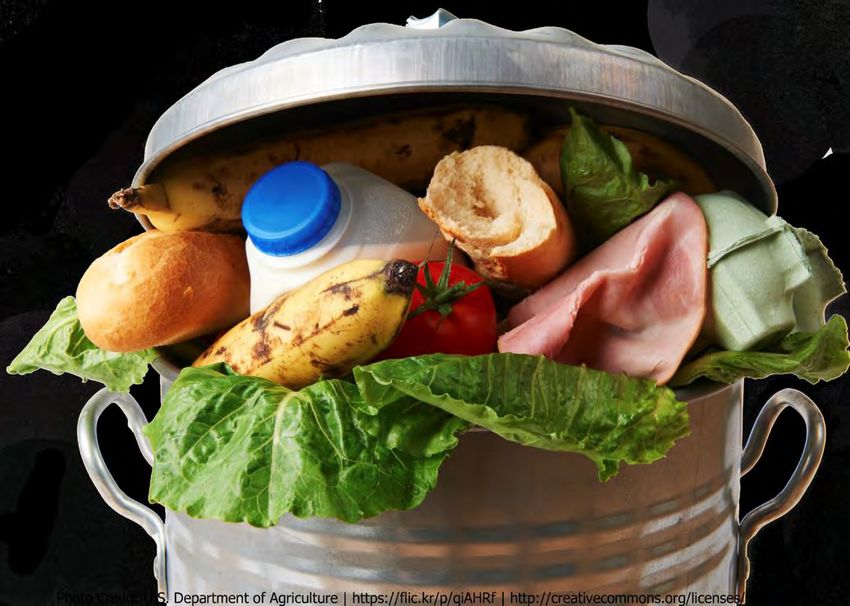
Speakers
           Chris Vogliano, MS, RDN
           Former Agriculture, Nutrition, and Health
           Research Fellow
           Academy of Nutrition and Dietetics Foundation

           Alice Henneman, MS, RDN
           Registered Dietitian Nutritionist and Extension
           Educator
           University of Nebraska-Lincoln Extension

           Lisa Medrow, RDN, LD
           Foundation Project Specialist
           Academy of Nutrition and Dietetics Foundation
Let’s get social!
Twitter
@alicehenneman
@chrisvogliano
@eatrightPRO
#foodwaste
Future of Food Initiative
Academy of Nutrition and Dietetics Foundation

Future of Food Resources for Members
• Toolkits www.eatrightfoundation.org/toolkits-webinars
   •   Hunger in Our Community. What We Can Do.
   •   Smart Choices. For a Healthy Planet. (English/Spanish!)
   •   Tossed Treasures. How We All Can Waste Less Food. (English/Spanish!)
• Supervised Practice Concentrations:
   •   Food Insecurity and Food Banking—available now!
       www.healthyfoodbankhub.org
   •   Food Systems—under development!
• Webinars and Infographics            www.eatrightfoundation.org
• Affiliate Presentations:
   •   “Changing the Way We Look at Agriculture” 32 affiliates/DPGs (2015)
   •   Food waste, food additives, and GMO presentations 10 affiliates
       (2016)
   •   Foods of future, farming tools, and food preservation presentations
       10 affiliates (2017)
Last year our donors’ generosity
         helped us award:

$446,900     in student scholarships to 194
students

$14,000    in student stipends to help 140
students attend FNCE.

$40,000 through Home Food Safety Challenge
grants to dietetics students.

           www.eatrightfoundation.org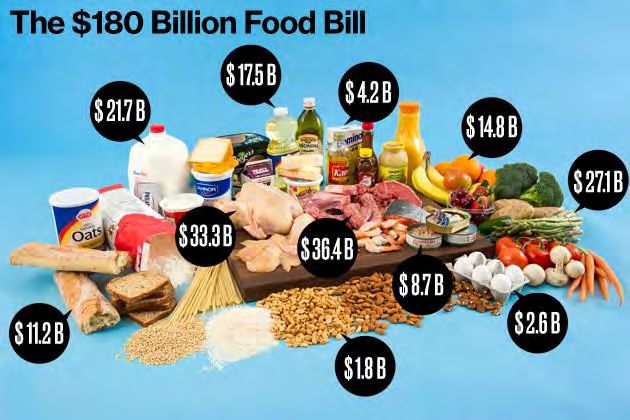
Chris Vogliano MS, RDN

America’s Wasted Food Problem, and How
Dietetic Professionals Can Help

@chrisvogliano
Disclosures
              Chris Vogliano MS, RDN
              Arivale - Clinical Research Associate
     The Academy of Nutrition and Dietetics Foundation –
         Agriculture Nutrition & Health Research Fellow
        Council of Future Practice – Young Practitioner
      Vegetarian Nutrition DPG – Second Century Liasion
     Greater Seattle Dietetic Association - Legislative Chair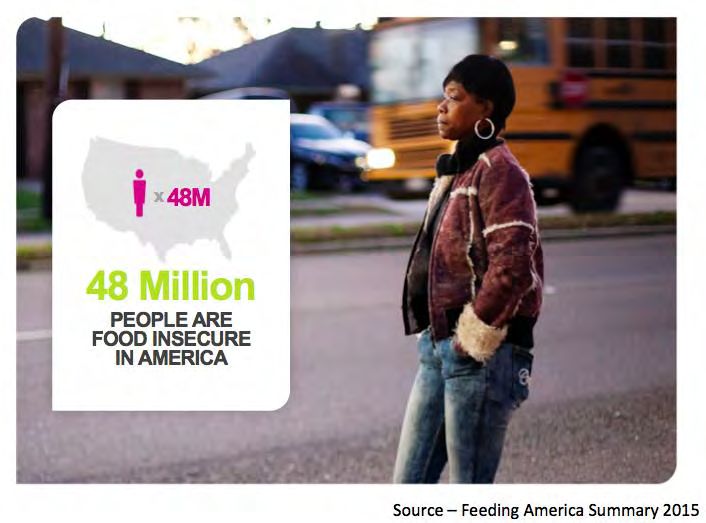
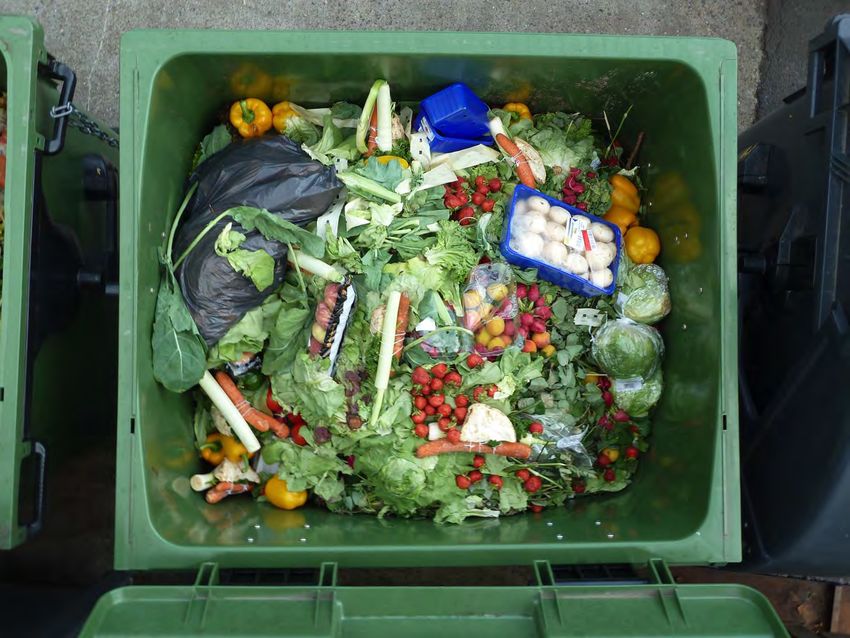
WHAT IS

WASTED FOOD?
  Photo credit: https://commons.wikimedia.org/wiki/File:Treasure_trove_of_wasted_food.JPG
Food waste: Defined1,2,3
•   Food waste is
    defined as food
    that is lost,
    discarded, or
    uneaten

•   Food Waste VS.
    Food Loss
    •   Food waste =
        Mostly in developed
        countries
    •   Food loss = Mostly
        in developing
        countries
                              BRC Infographic
Where does wasted food occur?3
Production, Harvest and Transportation
• Pests, insects, birds, diseases, weather
Processing and Packaging
• Blemishes, appearance, size, trimming
Retailers and Food Service
• Consumer expectation, past best buy, overstocking
Consumers
• Confusion over best buy dates, overbuying, uneaten leftovers
Photo credit: Photo credit; http://www.menorifiuti.org/tag/tmc/ Photo credit: http://www.mayoclinic.org/healthy-
http://easterncce.blogspot.com/2011_11_01_archive.html lifestyle/nutrition-and-healthy-eating/expert-
answers/food-safety/faq-20058500Where the greatest loss occurs3
NRDC - Wasted: How America Is Losing Up to 40 Percent of Its Food from Farm to Fork to LandfillHow much are we wasting?2,3
• Globally, 1/3 of the food produced for human
consumption is lost or wasted
• ~1.3 billion tons per year
• America wastes an estimated ~40% of all food
• Number has doubled since 1970’s
Photo credit: http://consciouslifenews.com/wp-content/uploads/2014/01/food-waste.jpg1 in 6 Americans are food insecure4
Photo credit: USDA September 2015Our “Tossed Treasures” add up!5,6,7
Photo credit: http://images.bwbx.io/cms/2013-01-10/food-waste-630x420.jpgImpact on environment 8,9,10,11
• Wasted natural resources
• Greenhouse gas
• Wasted water
Photo credit: http://www.compostturner.cn/upload/image/food%20waste.jpg
Wasted food enters our
landfills, creating methaneWhat can we do about it? Photo credit: http://images.medicaldaily.com/sites/medicaldaily.com/files/2014/11/20/americans-dont-know-what-gmos-or-organic-foods-are.jpg
EPA “Food Recovery Hierarchy”12

                         Photo credit: http://www.epa.gov/sustainable-
                         management-food/food-recovery-hierarchy
USDA Food Waste Challenge13
Join the USDA Food Waste Challenge by:
1. Adding your organizational objectives to reduce food waste to the
USDA website by using this form:
• http://www.usda.gov/oce/foodwaste/join.htm
2. Utilizing the free resources and educational materials hosted on
the USDA and EPA’s websitesWasted food around the world14
Photo credit http://growerdirect.co/img/11_Customer/customer_img1.jpg
• Chinese diners are posting pictures of empty plates online,
urging friends not to order more than they can eat
• South Korea is charging for garbage removal by weight in
hopes of persuading families to discard less food
• Massachusetts is barring large businesses from sending
kitchen waste to landfills
• British supermarkets are improving labels and packaging
so that customers throw out less of what they buy“Ugly” fruit needs love too!15 Photo credit; “Ugly Fruit and Veg” Instagram - https://www.instagram.com/uglyfruitandveg/ and Twitter - https://twitter.com/uglyfruitandveg
School food service

      food waste                                   fruit/vegetable
                                                     consumption

Key recommendations:
1. Choice
2. Time
3. Buying Local
4. Slice the Produce

          Tips from phone interview with Donna Martin, Director of School Food Service in GA November 2015
Non-profit food recovery16
Janell Walker, MPH, RD, LDN
Director of Nutrition & Community Outreach
For more than 25 years, DC Central Kitchen (DCCK) has
been fighting food waste by recovering leftover food and
converting it into meals for hungry and at-risk families.
http://www.dccentralkitchen.org/Bill Emerson Act17 Bill Emerson Act = “The Good Samaritan Act” 1. Protects businesses and consumers from liability when they donate to a non-profit organization 2. Protects businesses and consumers from civil and criminal liability should the product donated in good faith later cause harm to the recipient
Food banks & RDNS18,19

•   Help to recover food
•   Repurpose food unfit for sale
•   Educate clients and partner
    agencies on “best buy” dates and
    how to best utilize unfamiliar
    foods                              Photo credit:
•   Educate businesses on the Bill     http://cagardenweb.ucanr.edu/files/78558display.jpg

    Emerson Act
    •   Find out more at
        www.feedingamerica.org
Alice Henneman, MS, RDN America’s Wasted Food Problem, and How Dietetic Professionals Can Help @alicehenneman
Disclosures
                   Alice Henneman MS, RDN
        • Employed by University of Nebraska–Lincoln Extension
•   I have no actual or potential conflict of interest in relation to this presentation
Consumers - Decoding the Label Standardizing food label dates • No mandated labeling system - confusing • Over 90% of consumers throw out food too early, leading to massive food waste Solutions • Consumer education on what sell by, use by, best, by actually mean • Some manufacturers have experimented with adding “freeze by” language onto packaging to encourage customers to take active steps to preserve food in the freezer instead of throwing it in the trash • http://www.stilltasty.com/
Consumer Phone Apps
Creative ways to fight wasted food

  Colorado turns food waste into energy
  Credit NPR

                                                                       Misfit Juicery

                                          Olympic (Rio) chef uses wasted food to
                                          feed homeless - NYT
Reducing waste in food service
Photo credit: https://pixabay.com/en/kitchen-work-restaurant-cook-chef-731351Saving food saves food service money20
• Wasted food and packaging
wastes money
• Tax benefits are possible
through donating edible
whole food (that would
otherwise go to waste) to
food banks or rescue
organizations
• Saving food saves all the
food service resources
associated with the food
(labor, equipment, etc.)
Photo credit: https://pixabay.com/en/buffet-eat-food-chafing-dish-909166Technology driving change
ChowBank helps connect people donating food
with the people who need it.
From ingredients to cooked food, from a grocery
shelf to a conference buffet, ChowBank lists your
donations and notifies those who can take them.
LeanPath™ offers simple solutions to cut your
kitchen’s food waste in half.
LeanPath helps commercial kitchens around the
world prevent food waste with industry-leading
food waste smart meters and data driven
performance.12 ways to decrease food service waste
Following
are a dozen
ways how
food service
can reduce
food waste…
Photo credit: https://pixabay.com/en/buffet-dine-eat-chafing-dish-9091611. Practice
“offer”
vs.
“serve”
in school
lunch
food
service21
Photo credit: https://flic.kr/p/dbyxBr2. Avoid
overbuying
fresh produce22
Photo credit: https://flic.kr/p/bi3Xj3. Rethink or
initiate proper
portion
control to
ensure
employees
serve the
amount of
food you
specify
Photo credit: https://flic.kr/p/GKhv4. Plan ahead if
you anticipate a
certain item
won’t sell — can
you sell it at a
reduced price?
(Or convert it
into something
else.)
Photo credit: https://flic.kr/p/75Y4ht5. Change your
plates … plates
and glasses
with smaller
volume will
automatically
reduce
portions23
Photo credit: https://pixabay.com/en/pepper-mill-mill-grind-tableware-587266. Discourage
overloading
plates
through
trayless
dining24, 25
Photo credit: https://flic.kr/p/nqvKXk7. Cook in
smaller
batches
and/or use
smaller
service pans
– either less
deep or a
half-pan
Photo credit: https://pixabay.com/en/food-warmers-pans-pans-party-service-15174988. Help people
order foods
they want
and will eat
through
menu
descriptions26
Photo credit: https://pixabay.com/en/bar-barmaid-barman-bartender-123837927 Photo credit: Free for non-commercial use at http://foodpsychology.cornell.edu/discoveries/menu-secrets-can-make-you-slim-design
9. Get creative with scraps
  • Use older bread in croutons and bread pudding
  • Make one of the daily soups from leftovers
  • Crumble leftover bacon for the salad bar
  • Reuse cooked sausage as a pizza topping
  • Freeze vegetable trimmings; make a vegetable broth
    from scratch when you have enough
  • Use veggie scraps in a veggie burger or fried rice
  • Freeze rinds of hard cheeses such as parmesan, and add
    to soups for extra flavor; remember to remove the rind
    when soup is done!
Chef Dan Barber’s “garbage” meal28
• For 2 weeks, noted New
York Chef Dan Barber
turned his Blue Hill
restaurant in Greenwich
Village into a pop-up
restaurant
(open only a short time)
called wastED
• Menus were devised from
leftover items like stems,
peelings, rinds and bones
by an assortment of guest
chefs
Photo credit: https://flic.kr/p/9JrV9b10. Track and analyze waste in your
facility29 – some possibilities:
• Good idea to do BEFORE you start
an intervention to gauge success
• Check trash receptacles
throughout day and number of
trash bags
• Paper and pencil tracking – such
as EPA’s Waste Logbook at
http://bit.ly/2fn8vVm
• Spread sheet – such as EPA’s FREE
Food Packaging and Prevention
Tool at http://bit.ly/2g6uu46
• Check if there are auditing
services available locally
Photo credit: https://pixabay.com/en/garbage-bags-waste-plastic-413757Photo credit: Screen shot of EPA Waste Logbook at http://bit.ly/2fn8vVm Reference #30
11.Develop a
   relationship with
   a food donation
   program in your
   area31,32

        Photo credit: https://pixabay.com/en/refugee-foodbank-compassion-somali-886524
12.Make easy-to-
understand bin
labels in quick
serve operations
where the
customer is
disposing of
waste; for
example:
“bottles,” “cans,”
“plates and
silverware” and
"garbage
only.“33
Photo credit: https://flic.kr/p/d7uYAQExamples of downloadable signs34
Harvard has created downloadable waste reduction signage
in various sizes and styles for different locations and events
University-wide. A few examples below and more information
at: https://green.harvard.edu/topics/waste/signage
Photo credit: Screen shots from https://green.harvard.edu/topics/waste/signageFind more suggestions
from the US
Environmental
Protection Agency on
reducing wasted food
for food services and
restaurants20 at:
http://bit.ly/2g6oOqP
Photo credit: Screen shot of http://bit.ly/2g6oOqPSpread the message to consumers
Toolkit from Academy Foundation

           Download handout and PowerPoint at
      http://eatrightfoundation.org/toolkits-webinars
Accompanying handout
http://eatrightfoundation.org/toolkits-webinarshttp://www.eatright.org/resource/homefoodsafety/multimedia/infographics/reducing-food-waste-infographic
Sample slides
Optional activities
   Optional activity #1

         Sample question   Foods to include in makeover
Recommended Resources
Reports
1. Wasted: How America is losing up to 40 percent of its food from farm to fork to landfill - Natural
Resources Defense Council. http://www.nrdc.org/food/files/wasted-food-ip.pdf
2. Food and Agriculture Organization of the United Nations. Food wastage foodprint: impacts on
natural resources: summary report. http://www.fao.org/docrep/018/i3347e/i3347e.pdf
3. Academy of Nutrition and Dietetics Foundation. The State of America’s Wasted Food &
Opportunities to Make a Difference. http://eatrightfoundation.org/wp-
content/uploads/2016/09/The-State-of-Americas-Food-Waste-Report.pdf
Websites
1. Your ultimate shelf life guide - http://www.stilltasty.com/
2. USDA Food Waste Challenge - http://www.usda.gov/oce/foodwaste/
3. Feeding America - www.feedingamerica.org
4. Waste No Food - www.wastenofood.org
5. Sustainable America - www.ivaluefood.com
Apps
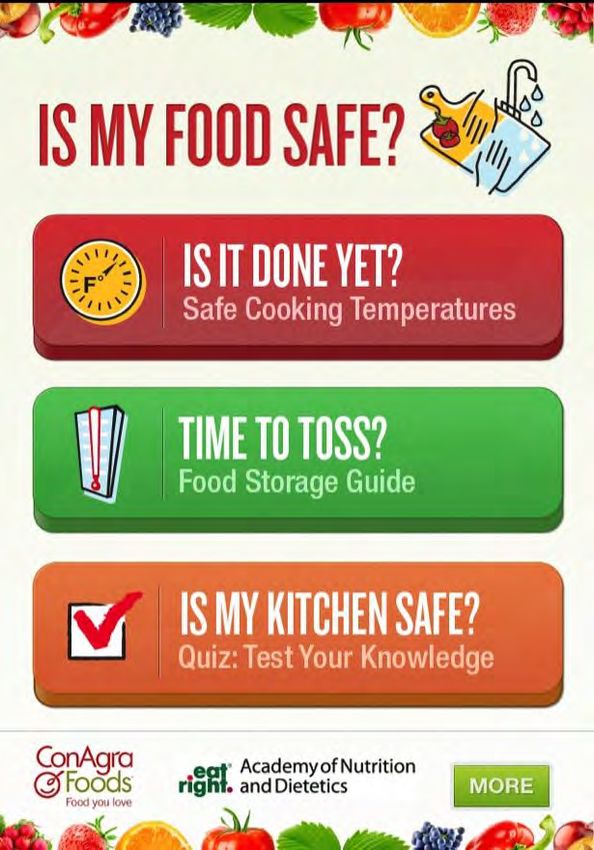
1. Is My Food Safe? – answers food safety questions
2. Love Food Hate Waste - www.lovefoodhatewaste.com
3. Green Egg Shopper - helps shoppers reduce food waste
Other
1. Food: Too Good to Waste Starter Kits www.westcoastclimateforum.com/food
2. Academy of Nutrition and Dietetics Infographics:
http://bit.ly/Refrigerator-Freezer-Storage-Chart
http://www.eatright.org/resource/homefoodsafety/multimedia/infographics/reducing-food-waste-infographic
http://www.eatright.org/resource/homefoodsafety/multimedia/infographics/how-to-keep-produce-fresh-longer-
infographicQuestions?
Thank you!
Please complete this short online feedback survey:
https://www.surveymonkey.com/r/fdwastewebinarReferences 1. USDA Office of the Chief Economist Web site. http://www.usda.gov/oce/foodwaste/faqs.htm . Accessed February 13, 2016. 2. Food and Agriculture Organization of the United Nations. Global food losses and food waste-Extent, causes and prevention. Rome. 2011. 3. Natural Resources Defense Council Issue Paper. Wasted: How America is losing up to 40 percent of its food from farm to fork to landfill. August 2012. 4. Feeding America. Hunger in America 2014 Executive Summary. http://www.feedingamerica.org/hunger-in-america/our-research/hunger-in- america/hia-2014-executive-summary.pdf. Accessed February 15, 2016. 5. Natural Resources Defense Council Blog. The Switchboard. http://switchboard.nrdc.org/. Accessed February 13, 2016. 6. Venkat K. The climate change and economic impacts of food waste in the United States. International Journal on Food System Dynamics. 2012; 2(4):431-446. 7. US Environmental Protection Agency. Waste Not Want Not. http://nepis.epa.gov/Exe/ZyPURL.cgi?Dockey=1000170R.TXT. Accessed February 13, 2016. 8. Hall KD, Guo J, Dore M, et al. The progressive increase of food waste in America and its environmental impact. PloS one. 2009;4(11):e7940.
References, continued
9. Vermeulen SJ, Campbell BM, Ingram JSI. Climate change and food
    systems. Annual Review of Environment and Resources. 2012;37(1):195.
10. Ridoutt BG, Juliano P, Sanguansri P, et al. The water footprint of food waste:
    case study of fresh mango in Australia. Journal of Cleaner Production.
    2010;18(16);1714-1721.
11. Lundqvist J, de Fraiture C, Molden D. SIWI Policy Brief. Saving water: from
    field to fork: curbing losses and wastage in the food chain. 2008.
12. US Environmental Protection Agency Web site.
    http://www.epa.gov/sustainable-management-food/food-recovery-hierarchy.
    Accessed February 15, 2016.
13. USDA Web site. Food Waste Challenge.
    http://www.usda.gov/oce/foodwaste/join.htm. Accessed February 15, 2016.
14. Gardiner B. The Economic and Environmental Costs of Wasted Food. The
    New York Times. April 23, 2014.
    http://www.nytimes.com/2014/04/22/business/energy-environment/the-
    economic-and-environmental-costs-of-wasted-food.html?_r=0. Accessed
    February 15, 2016.
15. Bon Appetit Web site. http://www.bamco.com/timeline/imperfectly-delicious-
    produce/. Accessed February 15, 2016.
References, continued
16. DC Central Kitchen Web site. http://www.dccentralkitchen.org/. Accessed
February 15, 2016.
17. Feeding America Web site. Protecting Our Food Partners.
http://www.feedingamerica.org/ways-to-give/give-food/become-a-product-
partner/protecting-our-food-partners.html. Accessed February 15, 2016.
18. Feeding America Web site. www.Feedingamerica.org. Accessed February 15,
2016.
19. Healthy Food Bank Hub Web site. www.healthyfoodbankhub.org. Accessed
February 15, 2016.
20. US Environmental Protection Agency, Reducing Wasted Food & Packaging; A
Guide for Food Services and Restaurants
https://www.epa.gov/sites/production/files/2015-
08/documents/reducing_wasted_food_pkg_tool.pdf. Accessed November 12,
2016.
21. USDA Food and Nutrition Service website. Sustainable Food Service.
http://www.fns.usda.gov/updated-offer-vs-serve-guidance-nslp-and-sbp-
beginning-sy2015-16. Accessed November 12, 2016.
22. Wasted Food website. http://www.wastedfood.com/2010/06/30/10-simple-
ways-to-reduce-wasted-food-in-restaurants-guest-post. Accessed November
12, 2016.References, continued
23. Brian Wansink, Food & Brand Lab, Cornell University
http://foodpsychology.cornell.edu/discoveries/large-plate-mistake. Accessed
November 12, 2016.
24. Thiagarajah K, Getty, VM. Impact on plate waste of switching from a tray to a
trayless delivery system in a university dining hall and employee response to
the switch. Journal of the Academy of Nutrition and Dietetics. 2013;113(1):141-
5.
25. John, J. Cafeteria trays vanishing from colleges in effort to save food. The
Washington Post at https://www.washingtonpost.com/local/education/cafeteria-
trays-vanishing-from-colleges-in-effort-to-save-
food/2011/02/17/ABeiFnQ_story.html. Accessed November 12, 2016.
26. Wansink B, Love K. Slim by design: Menu strategies for promoting high-
margin, healthy foods. International Journal of Hospitality Management.
2014;42:137-143.
27. Wansink, Brian & Love, Katie. Food & Brand Lab, Cornell University
http://foodpsychology.cornell.edu/discoveries/menu-secrets-can-make-you-
slim-design. Accessed November 12, 2016.
28. Roth, A. Did Dan Barber’s Food Waste Pop-Up make a Difference?
http://civileats.com/2015/04/02/table-scraps-and-leftovers-on-the-menu-at-
chef-dan-barbers-wasted. Accessed November 12, 2016.References, continued
29. Environmental Protection Agency. https://www.epa.gov/sustainable-
management-food/tools-assessing-wasted-food. Accessed November 12,
2016.
30. Environmental Protection Agency.
https://www.epa.gov/sites/production/files/2015-08/documents/food-waste-
log.pdf. Accessed November 12, 2016.
31. Food Donation Connection website.
http://www.foodtodonate.com/Fdcmain/About.aspx. Accessed November 12,
2016.
32. Bread for the World website. http://www.bread.org/blog/food-pantry-hospital.
Accessed November 12, 2016.
33. Sustainable Food Service website.
http://www.sustainablefoodservice.com/cat/waste.htm. Accessed November
12, 2016.
34. Harvard University. https://green.harvard.edu/topics/waste/signage. Accessed
November 15, 2016.You can also read


