Unlocking hidden value - Electronics Reuse and Recycling Strategy (2016-2020) - Telstra
←
→
Page content transcription
If your browser does not render page correctly, please read the page content below
Unlocking
hidden value
Electronics Reuse and
Recycling Strategy (2016–2020)
The four community and stakeholder
        barriers to improved electronics
       stewardship identified by Telstra:

    Cost, privacy and                Awareness
     data security                    and education
      Perceived cost of collection     Not knowing how to securely
      and recycling, and concerns       and responsibly reuse or
        regarding loss of data               recycle e-waste.
         security and privacy.

      Convenience                      Attitudes and
                                         behaviour
          People’s ability and          People’s desire to hold onto
       willingness to find a local        electronic equipment for
        e-waste collection and           spares, reuse, donation or
            recycling service.                other purposes.

2
1
Why the time
to act is now
The rapid evolution in technology is driving a significant growth in electronic waste
globally. A number of drivers are also creating unique opportunities to adopt more
resource-efficient approaches to managing retired technology. The need for action
has never been more important than now.

Information and communications                             Mounting pressure on resources                             At the same time, consumers and
technology (ICT) delivers a wide range                                                                                businesses are better informed
                                                           The manufacture of electronic
of economic, environmental and social                                                                                 and more engaged about the
                                                           equipment requires the extraction
benefits. A more connected digital                                                                                    environmental and ethical impacts
                                                           and processing of precious metals.
world presents opportunities to live,                                                                                 of resource production and use.
                                                           Reusing these materials has not been
work and play more efficiently, thereby
                                                           a priority for global manufacturers:                       Taking a proactive approach and
improving productivity, saving resources
                                                           obtaining them has traditionally been                      demonstrating voluntary action to
and connecting more people.
                                                           easy and affordable. However, over the                     reduce e-waste will therefore become
However, as technology opens doors,                        last decade there have been sustained                      an increasingly important part of
the use of more devices creates more                       rises in the price of resources and                        doing business.
electronic waste – called e-waste.                         unparalleled resource price volatility.
This, and other drivers suggest that the                                                                              Protecting health and the
                                                           A new opportunity to unlock value now                      environment
time for stronger stewardship of retired
                                                           exists by striving to keep resources in
electronics is now.                                                                                                   The environmental issues associated
                                                           use for as long as possible, extracting
                                                           the maximum value from them                                with e-waste arise because of low
                                                           while in use, then recovering and                          collection rates at the end of a

      i        What is                                     remanufacturing products at the end                        products service life. Equipment
                                                           of each service life.                                      owners store retired electronics in
               e-waste?                                    Governments and regulators
                                                                                                                      drawers, cabinets and offices or
                                                                                                                      dispose of them through normal waste
                                                           are mobilising                                             collection channels, where they end
                                                                                                                      up in landfill. Materials contained
                                                           Governments are increasingly
                                                                                                                      in electronic equipment can become
                                                           adopting regulatory approaches for the
                                                                                                                      hazardous to both the environment and
                                                           stewardship of electronic equipment
                                                                                                                      humans when they end up in landfill.
                                                           at end-of-life. Disposal of e-waste to
                                                           landfill is banned in some states
                                                           of Australia.

                                                           Given ICT equipment makes up about
                                                           30 per cent of all e-waste, a renewed
                                                           focus on this product category
                                                           is expected.

Unlocking hidden value sets out the first Electronics Reuse and Recycling Strategy for Telstra. The strategy aims to bring focus to the importance of applying
integrated and collaborative approaches to realise business and community value through increased electronics recovery, reuse and recycling. We’ve supported
mobile phone recycling through MobileMuster for nearly 20 years and we’ve made good progress – but we have a long way to go. Implementation of this strategy is an
important step to achieving a transition to world class product stewardship performance. This strategy was published by Telstra Corporation Limited, November 2016.

The information in this strategy is for general information purposes only.

Telstra has prepared this strategy with all due diligence and care, and endeavours to keep the information up to date and correct. Telstra makes no representations
or warranties of any kind, express or implied, about the completeness, accuracy, reliability, suitability or availability with respect to the strategy or the information,
products, services, or related graphics contained in the strategy for any purpose. Any reliance you place on such information is therefore strictly at your own risk. In no
event will Telstra be liable for any loss or damage including but not limited to, indirect or consequential loss or damage, or any loss or damage whatsoever arising from
loss of data or profits arising out of, or in connection with, the use of this strategy.

                                                                                                                                                                         2
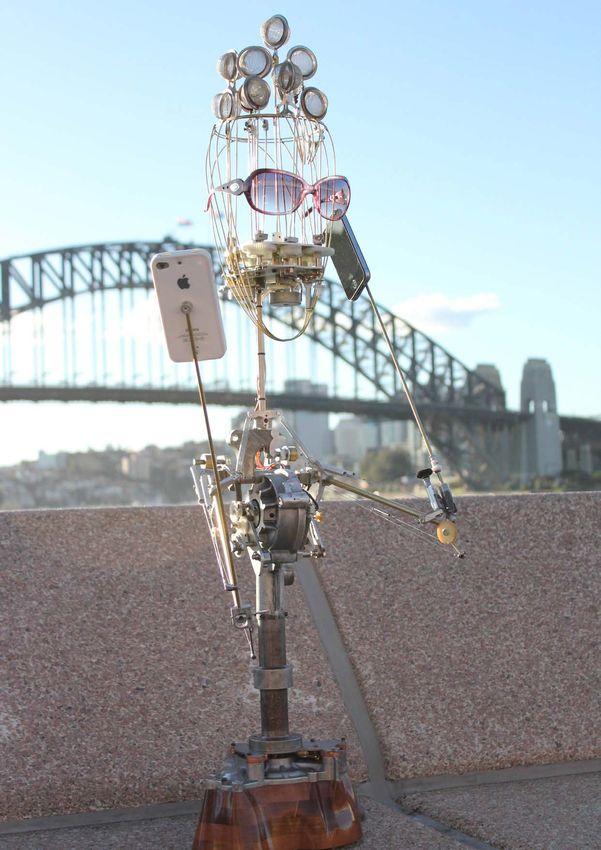
Credit: Art installation 'Simone'
by artist Paul Sattress

3
Towards electronics
product stewardship
Our ambition is to harness the benefits of electronics reuse and recycling,
while ensuring secure and responsible disposal practices.

Over the longer-term, we will                 Along with global thought leaders we      Better managing e-waste, and
participate in a wider product                want to accelerate change. We want to     ultimately reducing the generation of
stewardship approach that recognises          treat e-waste as not only an “end         e-waste, will take time. We’ve got a long
that manufacturers, importers,                of pipe” problem - where we manage        way to go. Current costs, data security,
retailers, governments and consumers          e-waste the best we can – but as a        complex supply chains and consumer
have a shared responsibility for the          product stewardship and circular          attitudes and behavior are all barriers
environmental impacts of products             economy opportunity.                      to overcome.
throughout their full life cycles, not just
at end-of-life.                               This approach will need to be adopted     The Electronics Reuse and Recycling
                                              throughout every phase of a products      Strategy establishes Telstra’s plan to
Telstra has supported responsible             lifecycle. A core focus on influencing    meet these challenges, and establish a
recycling programs for nearly 20              product design and manufacturing          foundation for future action across the
years. We are a founding member of            is required so that whole products or     full supply chain.
MobileMuster – the only not-for-profit,       components are more able to be
government accredited, mobile phone           re-used and / or recycled.
recycling scheme in Australia.
We know that when it comes to                 Among a range of actions, Telstra will
e-waste, doing nothing is not an option.      identify new ‘circular’ opportunities
We have been a leader in many e-waste         and work with designers and
programs but it is timely to take a           manufacturers. We will provide
fresh approach.                               customers with take back, re-use
                                              and recycling opportunities for a
It's imperative that Australia has            wide range of their e-waste. We will
business leaders advocating for the           securely and responsibly manage
secure and responsible management of          retired equipment from Australia's best
retired electronics. Telstra recognises       telecommunication network.
this leadership opportunity, and to
that end, we have established a new
Electronics Reuse and Recycling
Strategy detailing goals and specific
actions through to 2020.

                                                                                                                                4
The strategy
at a glance
Product recovery, Responsible end-of-life
reuse and recycling management
Transition to electronics Reduce environmental impacts and
product stewardship protect Telstra’s reputation
Goal Goal
Increase the recovery rates of retired Ensure responsible and secure reuse and
electronics through convenient product recycling of Telstra’s retired electronics
collection opportunities
Flagship action
Flagship action
Establish a panel of prequalified e-waste
Offer employees and customers easy, convenient recycling vendors that meet Telstra’s minimum
and rewarding collection opportunities that environment and social performance criteria
reuse or recycle retired electronics
Key actions Key actions
Introduce product offers underpinned by repair, Voluntarily reduce disposal of e-waste direct
refurbishment, reuse, leasing, remarketing and to landfill from our major facilities
donation initiatives
Establish employee e-waste collection hubs
Review our existing industrial supply chain at over 40 of Telstra’s major workplaces
recovery, repair and reuse program for potential
expansion to new product categories Regularly assess ongoing environmental
compliance requirements in a changing
Investigate the use of advanced technology regulatory landscape
and new incentives to recover and manage
retired technology Promote programs that facilitate
responsible remarketing and recycling
Continue Telstra’s leading role and
funding of MobileMuster
Join FluoroCycle™, committing Telstra
to the responsible recycling of hazardous
fluorescent light bulbs
5Outreach and Simplification
education and reporting
Enable consumers and Strengthen the way we work and
businesses to take action report our performance
Goal Goal
Become a trusted and influential voice on Simplify arrangements for responsibly
e-waste management in the community managing retired electronics
Flagship action
Deliver awareness and education campaigns
on how to securely and responsibly manage
retired electronics
Key actions Key actions
Host community e-waste collection Simplify existing internal disposal
events encouraging employee and and asset management guidelines
customer participation
Monitor community recycling attitudes and
Embed our electronics stewardship behaviours to understand major barriers
brand across priority products and services
Monitor and report publically
Develop tactical product offers built upon an on our progress
electronics stewardship value proposition
(trade-in, leasing, recycling, donation) Establish close links with product stewardship
specialists, organisations and institutions for
Promote community awareness and sharing knowledge and resources
understanding of the social and environment
benefits of electronics reuse and recycling
6Our commitments
and targets
The actions and commitments in this strategy are all
directly supported by key Telstra business units.
This strategy builds on the historical Over 34 discrete actions and
efforts of many business units commitments have been outlined
across Telstra. in detailed implementation plans.
Three flagship actions have been
While facilitation of the strategy will prioritised: offering new product
be led by the Chief Sustainability collection opportunities; delivering
Office, execution of our commitments mass market awareness and education
and actions will be led by identified campaigns; and ensuring our
business units. vendors meet acceptable social and
environment performance criteria.
The strategy must contribute to Telstra’s
stewardship of electronics meaningfully The strategy is comprised of eight key
and tangibly. For each action, we targets. These targets are specific and
have identified action leads, support measurable and enable us to track
partners and where required initial our progress towards achieving the
funding sources. strategies objectives and goals.
Priority area Targets FY17 FY18 FY19
Increase mobile collection rate (available phones) to 33% by 2020 29% 32% 33%
Product recovery
and recycling
Increase handset reuse / recycling 31% to 20t by 2020, from a 2015 baseline 17t 19t 20t
Sustain our reuse/recycling rate of collected electronics 98% 98% 98%
Responsible
end-of-life Priority network sites with permanent e-waste collection infrastructure 50% 75% 100%
management
E-waste recycling vendors are certified by end 2018 75% 100% 100%
Outreach and
Community awareness increased to 90% by 2020 80% 85% 90%
education
Asset disposal / management guidelines simplified - Yes -
Simplification
and reporting
Internal and external performance performance reports delivered on time 100% 100% 100%
7Telstra’s stores already collect
60% of all phones recycled by
mobile phone retailers in Australia
60%
of old mobiles returned to
Australia’s retailers are
collected by Telstra for recycling
But there is still
more Telstra can do:
Recycling Certification Collection
Increase mobile Certify 100% of Telstra’s Establish e-waste
recycling 31% by 2020, electronics recycling collection hubs at over 40
from 2015 levels vendors by end of 2018 major Telstra workplaces
8Telstra eCycle
An example of the leadership and innovation
required is Telstra’s pilot eCycle service.
Telstra eCycle provided a convenient and free
pick-up service to small businesses whereby a range
of e-waste could be recycled through boxes provided
by Telstra and transported to accredited recyclers.
Supported through participating Telstra Business
Centres, eCycle accepted a wide range of e-waste
and all materials were recycled. The program aimed
to overcome key barriers for small and medium
businesses (SMEs) when it comes to recycling
e-waste; those barriers being convenience, data
security and privacy.
9Accelerating our transition
to electronics stewardship
We have identified three flagship actions. These have the potential to move us
significantly towards achieving our electronics stewardship ambitions, today
and for the long term.
Flagship
1 action 1
Offer employees and customers easy, convenient and rewarding collection
opportunities that reuse or recycle retired electronics.
The challenge The action
One of the unintended consequences of the rapid evolution Building on our experience and learnings, Telstra now
in technology is the significant growth in e-waste. And it seeks to:
shows no sign of abating. E-waste in Australia is growing
three times faster than any other waste stream¹. The volume • D
evelop new products, campaigns and host local
of end-of-life electronics worldwide is expected to jump 33% community events to encourage e-waste recovery, reuse
to 65.4 million tonnes annually by 2017². and recycling, community awareness and participation
As Australia’s leading telecommunications company and • L
aunch new product offers built upon an electronics
a major retailer of consumer electronics, Telstra has long stewardship value proposition
been providing solutions to tackle e-waste. In FY16, Telstra
recycled over 5,000 tonnes of e-waste, of which mobile • I mplement a national recovery and reuse program
handsets and accessories comprised 16 tonnes. for Telstra internal communications devices.
We previously launched Telstra eCycle to trial a nationwide
e-waste collection service for SMEs. Telstra eCycle helped
over 600 small businesses securely recycle more than 60
tonnes of old technology, freeing up valuable office space for
more productive uses.
There is a pressing need to continue to evolve our approach
to electronics stewardship, and address hoarding, privacy
and data security barriers through new incentives and
innovative business models.
¹Australian Bureau of Statistics (ABS), 2013, Waste Accounts
²The Economic Intelligence Unit, 2014, Global e-waste systems,
Insights for Australia from other developed countries
10Flagship
2 action 2
Vendors used for asset management, including remarketing, remanufacturing
and recycling, meet acceptable industry environmental and social criteria.
The challenge The action
Telstra is a major purchaser of electronic and electrical A panel of pre-qualified vendors meeting Telstra’s
equipment, especially ICT. To date, being able to efficiently environmental and social standards will be established.
recover, reuse, redeploy and recycle equipment has been
difficult and has led to end-of-life equipment being At a minimum, Telstra will require:
stockpiled or poorly managed.
• i ndependent certification to ISO 14001: 2004
Managing e-waste can also pose a serious and often Environmental Management Systems; and
unmanaged environmental and data security threat.
• A
S/NZS 5377: 2013 Collection, storage, transport
Technologies to safely refurbish or recycle used electronics and treatment of end-of-life electrical and electronic
is available, but e-waste can end up in developing countries equipment (or a two-year action plan demonstrating
where it is often disposed of in a manner that damages a commitment and progress towards achieving
human health and the environment. certification).
Internal and customer information can be stored on
These standards set out principles and minimum
electronic equipment. Failure to maintain data security
requirements for the safe and environmentally sound
and privacy risks Telstra’s compliance and reputation
management of e-waste.
performance.
Telstra holds independent certification to ISO14001 for key
part of our business, and we expect our e-waste recycling
vendors to do the same.
11Flagship
3 action 3
Deliver awareness and education campaigns on how to securely
and responsibly manage retired electronic equipment.
The challenge The action
Action on electronics stewardship in Australia is increasing Telstra will assume an ambassadorial role and use our
and evolving. brand and marketing capabilities to further entice and
encourage consumers and businesses to become more
There are a range of existing and new electronic stewardship active players in the management and reuse/recycling
programs in Australia. Product coverage is currently limited of their retired electronics.
to televisions, computers, fluorescent light bulbs and some
batteries (e.g. batteries in power tools). Many of these Specifically, we will:
programs are at risk of closing due to insufficient community
awareness and acceptance. • B
uild on existing campaigns and use of traditional/social
media to overcome data security and privacy barriers
MobileMuster, however, is a unique program. Unlike many
schemes across the globe it is not governed by regulation or • P
ublically promote the need to address environmental
mandatory laws. It is a voluntary initiative of manufacturers impacts of products across the full lifecycle, not just at
and telecommunication carriers like Telstra who have chosen end-of-life
to work together and share responsibility for the product
category. • P
romote community awareness and understanding of
the social and environment benefits of electronics reuse
Consumer awareness and engagement in mobile phone and recycling.
recycling has improved significantly over the past decade.
The telecommunications industry has invested over $17
million in marketing and communications, lifting consumer
awareness of mobile phone recycling from 46% in 2005 to
nearly 80% in 2015.
However, consumer desire to hoard mobile phones has not
changed. The percentage of consumers with two or more
handsets at home is 37%, despite 80% of those people being
aware of mobile phone recycling through MobileMuster.
+
12Why is Telstra
doing this?
This strategy is the next step in an ongoing approach that
builds on the tremendous efforts and achievements of
many Telstra people.
Three pillars underpin our strategy To date, Telstra has supported many
and its role in managing and take back and recycling schemes,
reducing e-waste: however existing schemes are
limited in that they focus on recovery
1. Telstra is one of Australia’s most and recycling.
recognisable brands and is in a
position to take a lead in facilitating An enhanced focus on e-waste is
convenient, accessible and effective required that pursues increased
e-waste collection and take action across the entire value chain.
back systems. Consistent with Telstra's Environment
Strategy, our approach focusses on
2.Telstra is ideally positioned to strong integration within our company
undertake broad community and enhanced customer experiences.
awareness and education programs.
Telstra’s Electronics Reuse and
3. Telstra has a shared responsibility Recycling Strategy has been developed
with our suppliers, product with the support of internal business
manufacturers, logistics partners units, leading industry and academic
and reuse/recycling vendors to stakeholders. It is a new integrated
address the e-waste being generated approach consistent with similar
now, and to work to design and strategies being employed in other
produce electronic products that countries by some of the world’s
have less environmental impact. leading technology companies.
13We see tonnes of
opportunities
Australia is one of the highest per capita
producers of e-waste in the world. As a
population, we generate more than
25 kilograms of e-waste per person each year.
Telstra has already put a number of initiatives
in place that responds to the e-waste challenge.
These include our support for MobileMuster,
holding internal e-waste events, and offering
business and retail customers mobile device
reuse, trade-in and recycling programs.
Over the past three years, Telstra has diverted
over 45 tonnes of mobile phones and accessories
from landfill through the MobileMuster program.
Through this activity, we have avoided 362 tonnes
of carbon emissions, or the equivalent of planting
2,194 trees.
We have also sought to engage our employees in
electronics recovery and recycling through our
annual e-waste collection campaign. Since 2013,
we have collected over 46 tonnes of e-waste
across more than 80 corporate offices and
telephone exchange buildings.
14Acknowledgements
This strategy is the result of the work of more than
30 teams across Telstra, Institute of Sustainable
Futures at University Technology Sydney, Victorian
Eco-Innovation Lab (VEIL) - University of Melbourne,
Australian Mobile and Telecommunications
Association (AMTA) incorporating MobileMuster, and
many prominent industry stewardship specialists.
We thank everyone involved for their commitment to
this collaboration.
Find out more
Visit www.telstra.com/sustainability
Feedback
We welcome your feedback on our strategy,
approach and performance.
Please email us at sustainability@team.telstra.com
Stay in touch
twitter.com/telstra
facebook.com/telstra
O
ur monthly sustainability newsletter:
www.telstra.com/sustainability/subscribe
16You can also read


