Town of Sackville Marketing Strategy - FINAL July 6, 2020
←
→
Page content transcription
If your browser does not render page correctly, please read the page content below
Town of Sackville
Marketing Strategy – FINAL
July 6, 2020

             DR
                A                        FT

Town of Sackville - Marketing Strategy        1
TOWN OF SACKVILLE OVERVIEW ........................................................................................................3

CONTEXT ...........................................................................................................................................4

METHODOLOGY .................................................................................................................................4

STAKEHOLDER GENERATED SWOT ANALYSIS ......................................................................................8

AUDIENCE/STAKEHOLDER IDENTIFICATION ...................................................................................... 10

DISCOVERY AND ENGAGEMENT RESULTS – MAIN THEMES AND TARGET AUDIENCES ......................... 11

RESIDENTS:......................................................................................................................................... 11
VISITORS: ........................................................................................................................................... 13
BUSINESSES: ....................................................................................................................................... 15

OVERALL MARKETING FEEDBACK: .................................................................................................... 17

IMPACT OF COVID-19 ....................................................................................................................... 18

MARKETING MATERIAL AUDIT ......................................................................................................... 20

TOWN OF SACKVILLE ENVIRONMENTAL SCAN .................................................................................. 30

STRATEGIC FOCUSES FOR MARKETING PLAN..................................................................................... 39

TACTICS – PHASE 1 (JUNE 2020 – APRIL 2021) ................................................................................... 40

TACTICS – PHASE 2 (APRIL 2021 – APRIL 2022) .................................................................................. 45

TACTICS – PHASE 3 (APRIL 2022 – APRIL 2023) .................................................................................. 47

APPENDIX A – DISCOVERY REPORT ................................................................................................... 49

APPENDIX B - STAKEHOLDER INTERVIEW QUESTIONNAIRE................................................................ 49

APPENDIX C – WORLD CAFÉ SUMMARY REPORT ............................................................................... 49

APPENDIX D - STAKEHOLDER INTERVIEW SUMMARY REPORT ........................................................... 49

Town of Sackville - Marketing Strategy                                                                                                                2
Town of Sackville Overview
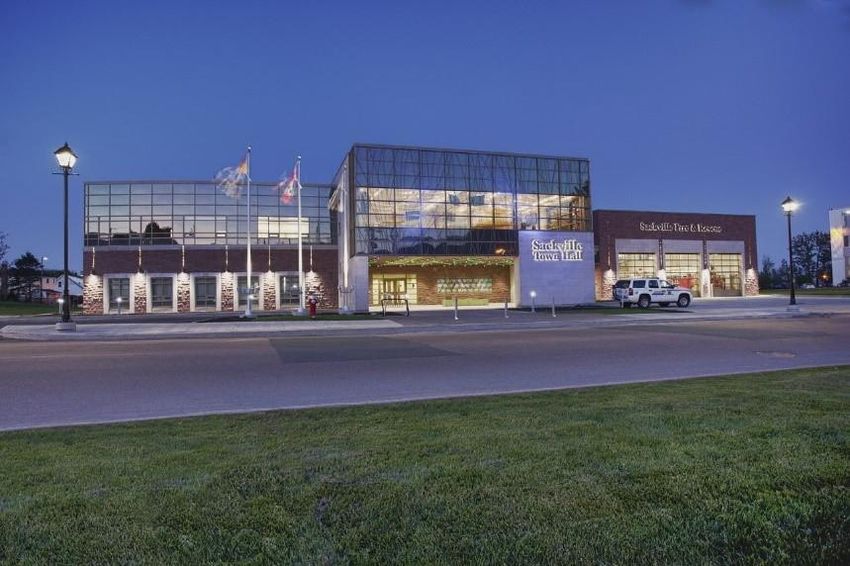
The Town of Sackville: home of the Mounties, beautiful sweeping views and a vibrant arts and
culture scene. A great place to live and to go to school. A Town that has so much to offer.

Located on traditional Mi’kmaq land, settled in 1708, and incorporated in 1903, Sackville serves
as a gateway to Nova Scotia and the Tantramar Marshes. Often referred to as the Happy Heart
of the Maritimes, Sackville’s central location, with convenient access to the Trans-Canada
Highway and proximity to the largest city in New Brunswick (Moncton), the ocean, beaches, lake,
an international airport and train station make it an attractive hub for visitors and businesses
alike. A friendly, walkable town dotted with specialty shops, cafés, pubs and a diverse range of
culinary options, Sackville offers its residents and visitors an array of recreational, cultural and
educational opportunities.

Sackville is a university town offering rich and diverse arts and cultural resources, including
Mount Allison University’s gallery, theatre, and noted fine arts and music programs. Established
in 1843, Mount Allison has consistently been ranked the best primarily undergraduate university
in Canada by Maclean’s Magazine and remains an important influence on Sackville’s continued
development. Sackville is also home to internationally renowned music festival SappyFest, a film
society, lively blues, independent music, and theatre scenes, and various art galleries.

Town of Sackville - Marketing Strategy                                                            3
Context
As part of its strategic plan, the Town of Sackville has partnered with Portfolio to develop a
Marketing Plan that will identify the Town’s positioning and provide guidance for marketing
initiatives and interactions with the public.

The process to develop this Plan includes an audit of the Town’s current brand and all
associated branding material and assets, a review of best practices, community engagement
and consultation and will be expected to give strategic direction on:

    •    Investment Attraction
    •    Tourism
    •    Corporate
    •    Resident Attraction
    •    Town Values

The resulting plan needs to be realistic and achievable, aligned with existing assets and
priorities and designed with clear tactics and execution plans that will facilitate effective
implementation and continued engagement throughout the 5 years of the Plan.

Methodology
Phase 1 – Discovery: Onboarding and Research (October 28 – December 4, 2019)

    1.   Review of existing marketing material from the Town of Sackville
    2.   Discovery session with members of the Town of Sackville internal team
    3.   Discovery session with Town Council
    4.   Review of marketing assets for comparable Towns across North America

The Discovery phase included facilitated workshops with the members of the Town of
Sackville’s internal team as well as the Town Council to dive deep into the planning of how the
marketing plan will help the Town build and grow. These sessions were designed to help solidify
key details including:

Goals/Objectives           Functionality/                                       Opportunities/
                                                       Town Assessment
Assessment                 Organizational Assessment                            Challenge Assessment
- Ensure clarity of        - Is the Town delivering on - Is the Town
goals and objectives       its mandate and “brand” delivering on                - What are the
throughout the             promise?                    expectations (internal   opportunities and
Town’s internal team                                   and external             challenges?
and Council                - What do stakeholders      stakeholders)?
                           think (i.e. employees,

Town of Sackville - Marketing Strategy                                                              4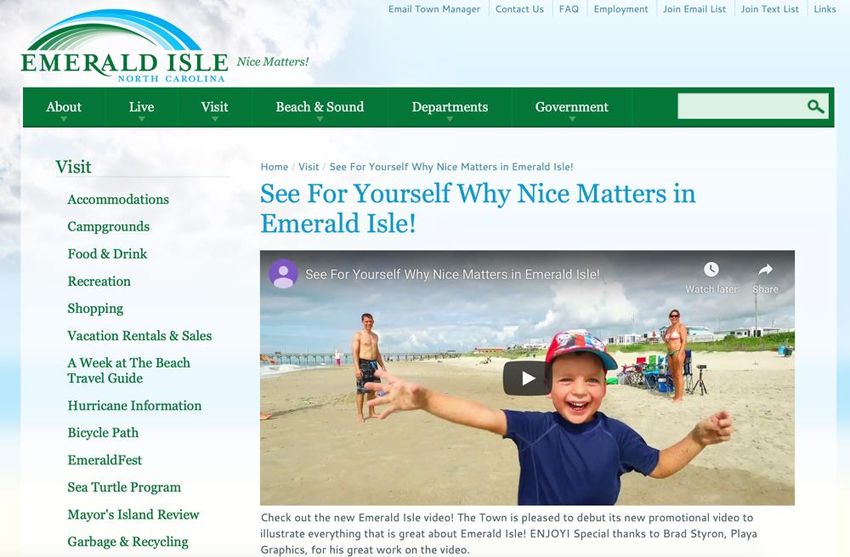
- Ensure clarity of    residents, businesses,      - What is the Town    - What ones connect
mission/ vision of the students, visitors)?        doing in terms of     with
Town                                               communications, as    objectives/goals?
                       - What                      per the Strategic
- Ensure reasonable branding/tools/image is        Plan?                 - What are low-
expectations of goals/ currently being used to                           hanging objectives?
objectives and         market the Town?            - What other towns    Medium term? Long
timeline to achieve                                do you compare        term?
                       - What’s working and        yourselves to? Aspire
                       what’s not working?         to be like?           - Have you identified
                                                                         all key challenges? Do
                                                                         you have plans to
                                                                         address those?

The key for the Discovery to be successful was to find truth (in where we are and where we
want to go) and then use that truth to build a Marketing Plan that will transform the Town into
the growing, sustainable community we desire.

For the complete Discovery Report, see Appendix A.

Phase 2 – Stakeholder Engagement (December 4, 2019 – January 15, 2020)

Key Stakeholder Interviews:

Portfolio conducted 12 one-on-one telephone interviews with key stakeholders, including:

    -   Business owners;
    -   Representatives of the University, including members of the Mount Allison Marketing
        team;
    -   Investors; and
    -   Representatives of Community Organizations.

The goal of the stakeholder interviews was to gather information on the opportunities and
challenges the Town has in terms of marketing. These conversations included questions such
as:

    1. What are the Town of Sackville’s biggest selling points?

    2. What would you like Marketing to achieve for the Town of Sackville?

    3. What type of business makes sense in Sackville?

Town of Sackville - Marketing Strategy                                                            5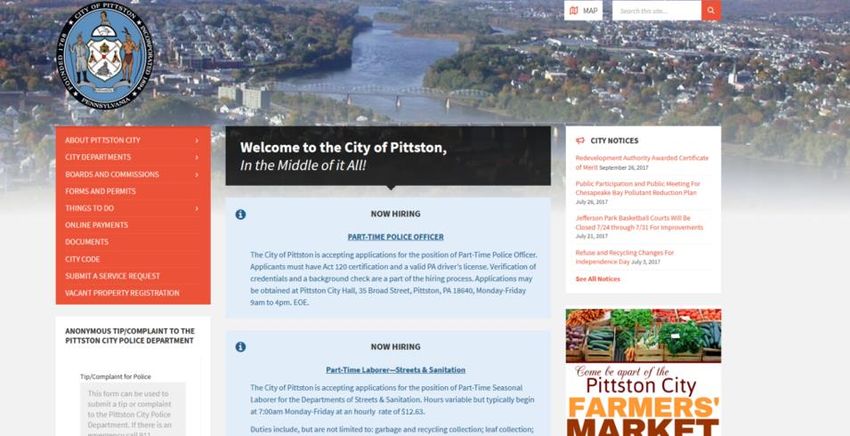
4. What channels do you think would work best to promote the Town of Sackville?

For the complete Stakeholder Interview Questionnaire, see Appendix B.

World Café Session:

Town of Sackville - Marketing Strategy                                                6
To complete the Stakeholder Engagement piece of building the Marketing Strategy, Portfolio
conducted a World Café session that was open to the public. The session was attended by
approximately 25 people and focused on 3 important conversations:

    1. Why Sackville?
             -   What attracted you to live in the Town of Sackville?
             -   What are the Town’s biggest selling points?

    2. The Town is talking about attracting more businesses and more people…
             -   Is that what you want?
             -   Why is that important to Sackville?
             -   How do you think we should attract more people or businesses?
             -   What’s the one thing we would need to change to successfully attract more
                 people and more businesses?

    3. Sackville is home to Canada’s #1 Undergraduate University, Mount Allison University…
             -   Why is Sackville better than other small university towns?
             -   What’s our unique selling proposition?
             -   How can the relationship between the University and the town be further
                 enhanced/improved?

For the notes summarizing the input gathered at the World Café Session, see Appendix C.

Phase 3 – Strategy Development (January 15 – April 6, 2020)

Based on the stakeholder engagement and discovery phases, Portfolio is now equipped to
develop a strategic blueprint of action which includes:

•   Clear and actionable recommendations and tactics of Marketing priorities, opportunities
    and initiatives, including the scope of resources required to implement, timelines and
    distinct and quantifiable measures of success and key performance indicators;
•   Direction on whether or not new branding is necessary and if so, what that branding should
    be;
•   The creation of a final universal logo and various target market tag-lines;
•   The identification of potential partnerships with private sector, regional tourism
    development organizations, senior government ministries and educational institutions; and
•   A plan to leverage existing resources to build capacity.

Town of Sackville - Marketing Strategy                                                        7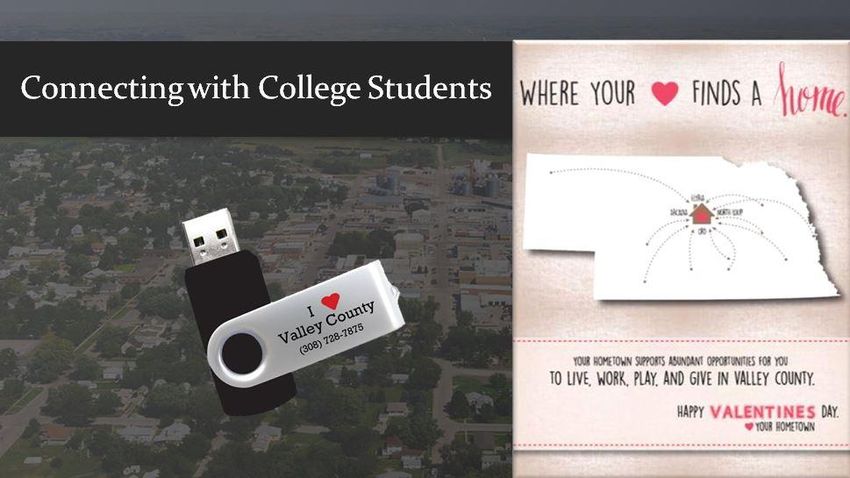
Stakeholder Generated SWOT Analysis
STRENGTHS                                                WEAKNESSES
• Location – regional hub potential as Sackville is in   • No clear positioning statement – Stakeholders had
   the middle of it all                                    difficulty answering the question “How would you
• Mount Allison University – offers a lot to the           describe Sackville?”, Mt A survey showed there
   community in terms of sports and cultural               wasn’t a clear understanding of what Sackville is
   opportunities, students add to the local economy      • Blended community (rural, new urban and
   and diversity                                           University) that is not all on the same page
• Arts and culture - cultural crossroads of the          • Lack of diversity - old fashioned, conservative,
   Maritimes, more museums than stop lights, a lot         sometimes too elitist
   of history, live music                                • Business doesn’t have a voice or support – there is
• Natural landscape                                        no longer a Chamber (may be coming back as a
• Welcoming – feels like home, close-knit                  Chapter of the Moncton Chamber)
   community, safe, happy heart of the Maritimes,        • Financial – the Province doesn’t pay their fair share
   where you belong, inclusive                             for the buildings the university has in town
• Small town feel                                        • No sense of belonging for students and new citizens
• Walkability                                            • Lack of entrepreneurs
• Affordability
• Beauty and Nature - Beautiful place to live,
   nature, relaxing
• Safe
• Community connectivity – volunteer culture,
   back social causes
• Diversity - diversity in ethnicity and activities
   offered, something for everyone
• Schools, hospital, services
• Family - A great place to grow up and raise a
   family, a great place to retire, see your future
   here

OPPORTUNITIES                                            THREATS
• Better communication between Town and                  • Surrounded by nature but flooding always a threat
   University                                               – climate change
• Economic development roundtable                        • Provincial economy and outlook for it
• Segment targeting for new business                     • History - citizens that hold onto the history and are
• Supply/support businesses in Moncton/Amherst              anti-change
• Non-retail business opportunities – co-working         • Burn out of Town staff and volunteers
   spaces, work from home, link different                •   Internal conflicts between resident groups
                                                         •   After effects of Covid-19 shut down

       Town of Sackville - Marketing Strategy                                                             8
government opportunities as well as private
    sector
•   Servicing growing senior population
•   Sectors that appeal to students, citizens and
    visitors for growth – Acadia/Wolfville example
•   Student participation in Town Council – youth
    council, ex-officio, round table on
    entrepreneurship, etc.

       Town of Sackville - Marketing Strategy        9
Audience/Stakeholder Identification
To achieve the Town of Sackville’s objectives with this marketing plan, it is necessary to identify
its various stakeholders. By properly defining stakeholders and their expectations, we can
develop appropriate strategies and tactics to tell the right story to the right people. The key
stakeholders for this Marketing Plan are listed below:

Internal Stakeholders:

 Residents                                        Rural/agriculture + Urban, Volunteers,
                                                  seniors (55+ is 50% of the population),
                                                  students at the high school, Seniors Club
 Clubs and groups                                 Rotary Club, sports organizations, art
                                                  organizations, Social enterprise/ Not for
                                                  Profit community – The Sackville Commons,
                                                  Agricultural development

 Citizen services                                 Healthcare, The Drew, Daybreak, Seniors
                                                  College, Public sector education, Community
                                                  policing officer, Community education officer
                                                  (Jessica Hughes)

 Business                                         BIA (Business Improvement Association),
                                                  Moneris (200 employees), Business owners,
                                                  Main Street redevelopment
 Mount Allison University                         Students, faculty, property managers, staff,
                                                  union, student union

External Stakeholders:

 Potential new residents                          Including out of province, within NB,
                                                  international newcomers, new students and
                                                  faculty, agricultural immigration.
 Visitors                                         Tourism groups, nature enthusiasts,
                                                  Canadian and international tourists, parents
                                                  of students, families visiting for sports and
                                                  cultural events.

Town of Sackville Marketing Strategy                                                              10
Government Province, Municipality, Council, Mayor,
employees, other regional organizations (e.g.
RDMO) to cover the Regional Service
Commission and the potential for a Regional
Destination Marketing Organization with the
Commission and City of Moncton.
Discovery and Engagement Results – Main Themes and Target
Audiences
Residents:
The Town of Sackville has a lot going for it. Residents love the small town they call home. The
top selling features for the residents include:
• Quality of life – welcoming, friendly, different/slower pace, walkable, advantages of
rural and urban - “best of both worlds”
• Arts, music and culture – art galleries, theater, live music, liberal arts flavour
• Educational opportunities - Mount Allison University (#1 undergrad university in
Canada), educated population, senior education center, good elementary and high
schools
Town of Sackville Marketing Strategy 11• Location – proximity to fastest growing city in New Brunswick (Moncton), centrally-
located in the Maritimes, 30 minutes from an international airport, accessibility to
highway, train station
• Nature – water fowl park, beaches, lake, clean and beautiful, environmentally conscious,
active
• Access to outdoor activities – cross-country skiing, skating at waterfowl park, hiking,
walking
• Freedom – safety, free to pursue what you want to pursue, be who you are, make your
own opportunities, self-sustaining
• Diversity/Great mix of people – university students, families, kids, seniors
• Services – town services, snow removal, schools, hospital
• Real estate – affordable, low cost of living, housing market, established, comfortable,
prosperous
• Food and drink – restaurants, coffee shops, bars, year-round farmer’s market, local
farms, seafood
• Lots of things to do – evening activities, socializing, always something to do
• Community connectivity - Community support for start-ups, Sackvillians back causes
(refugees, hospital, schools), easy to belong, kids can be part of any activity, social
solidarity, strong sense of caring, openness to ideas
The main challenges in promoting the Town to potential residents are the juxtaposition of
wanting to grow but also wanting to maintain that small town, community feeling that is
inherent to Sackville and the disunion that exists between the three distinct resident groups:
rural/agriculture, urban/Educated/hipster and the Mount Allison students/faculty.
Growth:
The residents of the Town want to see Sackville prosper but the idea of growth is approached
with a “Yes, but…” response. Although residents understand growth is important for Sackville
to maintain the level of services and assets they’re used to and the opportunities it would bring
in terms of an increased tax base, new energy, new skills and new businesses are appealing,
residents do not want growth at any cost. They want sustainable growth that maintains the
population and preserves what makes the town special. This means:
• No factories or big box stores (keep it Mom & Pop)
• Encourage the attraction of businesses that will enhance the Town
• Protect the heritage, environment/nature and what’s unique about Sackville
• Reluctance about bringing businesses that compete with community businesses
• Stick to niche retail/commercial – more niche shopping will attract more traffic/visitors
• Decent jobs - Business/enterprise that aren’t highly technical, businesses that can
survive in an online world
Disunion of Residents:
Town of Sackville Marketing Strategy 12Many of the stakeholders we spoke with mentioned the challenges of being a blended
community. There appears to be three distinct groups of residents: rural, urban and University
(students and faculty). These three groups have differing views on what the Town of Sackville
stands for and where they want to see it evolve in the future. This disconnect manifests itself in
feelings like:
• The relationship between the students and the Town as well as between residents and
the University and the Town is not as strong as it could be.
• Not everyone is as warm and welcoming as we make it out to be.
• Some resident groups don’t participate in making the Town a better place to live.
• There is a lack of communication between the Town and University.
• The University’s top priority is to keep students on campus.
• There is no sense of belonging for students and new citizens.
• Student survey showed there wasn’t a clear understanding of what Sackville is.
• As a Town, we are welcoming but also exclusive, diverse but also white and English
• A beautiful façade on the outside but economically depressed, big wealth and
employment gap.
• Sometimes too elitist.
In order to position Sackville as a great place to live, there is some internal work required to get
everyone on the same page when it comes to “Who we are” and “Why you should live here”.
The integration of the three resident groups: rural/agriculture, urban/Educated/hipster and
Mount Allison students/faculty into one common purpose is integral to ensuring the marketing
strategy succeeds.
Visitors:
Town of Sackville Marketing Strategy 13Sackville’s central location is perfect to use as a hub for a Maritimes adventure or a nice
stopover along the way to Nova Scotia or PEI or, going in the other direction, to Quebec or
Ontario. The main attractions that would bring visitors to Sackville are:
• Water Fowl park
• Music/cultural scene – Theater, Art galleries, shows, festivals and events
• University – parents would visit their kids (note there is a lack of accommodations in the
Town for visitors to stay overnight)
• Easy to visit, i.e. close to the highway, accidental visitors, genuine and hospitable
people, cute walkable small town
• History
• Food - Restaurants, Farmers market, Coffee shops
• Sporting events – hockey tournaments, high school and University sports
• Genealogical visitors – people tracing their family roots
Unfortunately, Sackville does have some challenges when it comes to attracting tourists and
visitors. According to stakeholders, the biggest challenges are getting people off the highway
and into Town, accommodations and the Visitor Information Center. Some other challenges
include:
Challenges Perceived by Stakeholders
• Visitor Information Center: wasn’t on Google Maps, perceived to be in a difficult
location (the need to move it to where people can find it, in town, was expressed), the
Town of Sackville Marketing Strategy 14location and set up isn’t perceived to encourage visitors to go downtown, thought to
cost the Town a lot of money but many felt no one goes there. Some stakeholders felt
no one goes to information centres anymore and referenced New Brunswick’s move to
close 2 more of its VICs in Spring of 2019.
• Downtown business commitment – A few stakeholders expressed concerns about
downtown restaurants closing during June and July and patios not being well-kept. They
felt this was not attractive for summer tourists. Further research found only one or two
downtown restaurants close during June and July.
• Town’s promotional activities to tourists – Several stakeholders voiced their opinion
about how the Sackville visitors guide has looked the same for years, a need to change
the format and a need to better promote what there is to do in town. One stakeholder
felt the Town does too much print and no one takes the brochure whereas another felt
this is the best tool for visitors. The Town confirmed that, in fact, the Visitor
Information Guide was completely revamped in 2018 and over 15,000 copies are
circulated yearly.
• Town has no PR, social media is very event focused and there is minimal investment in
internet - Need more photo-based beauty shots of the town, more video clips of the
town and what there is to do
• Limited accommodations
• Lovely B&B’s in town are hard to find out about, limited rooms
• Explore NB Visitors Guide - NB is no longer printing
• Campus is a no parking, pedestrian campus
With 14,000 cars driving by “exit 506” every day, there is an immense opportunity for increased
visitors/tourists in the Town of Sackville.
Opportunities
• Signage: On the 16, there’s no sign so everyone stops at the Big Stop, at the exit: “one
minute down this road leads you to this… (picture of town)” and directional signage for
visitors
• 3-fold visitors guide with a map of downtown, stores and restaurants listed
• Accommodations – year-round writers’ accommodations, writing circles, engagement
with music and arts
• Mount Allison could be a bigger part of the Sackville tourism destination offering – even
more conferences, more options to stay at residences
• Walking tours of arts and history
• Fort Folly – 70 acres of land recently purchased by the First Nations community. They
are working on a strategic plan to develop that land.
• Continue to develop Lorne street to expand the downtown core.
Businesses:
Town of Sackville Marketing Strategy 15The focus for attracting businesses to Sackville is to fill the voids of services and opportunities
for residents and students. These could include retail (clothing, shoes, furniture),
accommodations for visitors and culture (i.e. more ethnic restaurants and diversity for
international students) as well as businesses that will be a good fit and create jobs for residents
and contribute to the economy of the town. To strategically assess the business needs in Town,
a gap analysis of what’s missing is needed. This would provide a plan and evidence to target
and attract businesses that make sense. Some ideas brought forth from stakeholders were:
• Distribution companies that would hire larger numbers of employees
- Stakeholders expressed the industrial park has lots of land and would be a great
location for a transportation company.
- Industrial park could get into attracting food production and distribution.
- Further research found the industrial park has almost no land available and
already has a cranberry processing plant.
• Small business and small enterprise, entrepreneurial, create your own job businesses,
Farmer’s market allows for food entrepreneurs
• Writers, journalists, bloggers, at-home businesses
• Enterprise and start-up community – could become an incubator for social engagement
and social entrepreneurship
• Town has a lot of environmental, non-profit organizations - companies related to
wildlife would be a good fit
• Accommodations – for visitors and tourism, with restaurants
• Campgrounds – trailer parks for tourism to focus on natural beauty and location
• Community organizations – NGOs, NFO, Salt Marsh, Fundy Biosphere, 36 indigenous
• Bulk food store/another option for local produce, besides the farmer’s market
• Nightlife/Group activities – Many stakeholders felt there was not too much to do at
night, after dinner. There are a lot of evening activities during the Mount Allison school
year but less during the summer
• Culinary tourism, food innovation from University
• Sappyfest – keep doing it and do even more festivals like it
As was specified above in the residents’ response to growth, there are some reservations about
what businesses would be welcome and would make sense in Sackville. Besides the parameters
listed on page 10, stakeholders noted the following characteristics of the types of businesses
that would make sense:
• Pick sectors that appeal to students, citizens and visitors/tourists in summer for growth
– Acadia/Wolfville example
• Businesses that collaborate with the University
• Experiential learning opportunities
• Anything that supports/compliments the university
• Academic jobs but not at the University
• Knowledge economy
• Commercial businesses would be the preference
Town of Sackville Marketing Strategy 16One of the main challenges in promoting Sackville as a great place for businesses is the lack of
business voice or support. The development of an organization that can help to attract and
support businesses will be important. It would also be beneficial to work with the University to
develop entrepreneurial opportunities for students.
Overall Marketing Feedback:
Throughout the engagement process, we’ve been able to speak to many different people that
make up who Sackville is today. These findings combined with the research we have conducted
has led Portfolio to the following overall marketing feedback:
• Most stakeholders had a really hard time when asked “How would you describe
Sackville?” Mount Allison’s recent survey also showed there wasn’t a clear
understanding for students of what Sackville is. This clearly demonstrates a lack of
cohesion about what the personality of the Town is currently or what it is striving to be.
• The “New kind of small town experience” slogan is viewed by residents and key
stakeholders as too abstract and hard to grasp and, as a result, doesn’t do the job of
defining who Sackville is and getting everyone behind it. Residents can be amazing
ambassadors for the Town, if they all are clear on its positioning and have a consistent
“elevator pitch”. Also, in today’s age of social media and digital marketing, a shorter
“handle” would be more beneficial in promoting Sackville and creating consistency
across all mediums.
• The main communication medium for the Town appears to be the website. Although
beautifully presented with lots of great elements, it is a very residential-focused site.
The information included is what a municipality would communicate to its citizens, not
something that is targeted at potential new residents, investors or tourists. Many
municipalities fall into this pattern of talking to themselves and neglecting to market
their town to outsiders.
As summarized below, a review of past and current marketing initiatives (Marketing Materials
Audit) and a study of other similar-sized towns in the Maritimes and across North America
(Environmental Scan) was also conducted as part of this project. All of this information has led
us to the conclusion that Sackville has a lot going for it in terms of assets and resources. What’s
missing is something to tie it all together and define “Who are we?” and “Why should you come
here?” and a more targeted marketing approach, rather than trying to “be everything for
everybody”. The first step will be some internal community engagement work to get everyone
on the same page and define a personality for the town that it can deliver on.
Once this positioning is established, stakeholders would like to see Marketing achieve the
following for the Town:
• Bring people into town, off the highway, more traffic, be more aggressive with signage on
highway
Town of Sackville Marketing Strategy 17• Increase tourism and create a tourism season
• Generate momentum for the town and the university – build on character and uniqueness
• Promote the town as a food and drink destination - Sackville could be New Brunswick’s food
town (26 restaurants for a town of only 5,000 people)
• Buy local - encourage citizens to live more of their life in Sackville - grocery shop in town,
frequent local businesses
• Bring young families to town
• Guide so everyone becomes a town ambassador and can easily answer “how would you
describe Sackville?” and “what’s there to do in Sackville?”
• Keep people in the community for a few days
• Attract skilled labour
• “It all starts here” - 1st time tourists see the ocean when travelling from QC or ON, first entry
to NB from NS and PEI
• Play on “exit 506”, which is the NB area code
• Make people aware of what’s going on in Sackville
• Attract more smaller businesses
For the complete summary of the Stakeholder Engagement results, see Appendix D.
Impact of Covid-19
Following the completion of the stakeholder engagement phase of the marketing strategy, the
world was brought to its knees as the Covid-19 global pandemic changed the way we live, the
way we work and interact and the way we do business. This threat remains very real to every
community in the world and its impact will be significant and long term.
As strategic solutions providers, Portfolio is committed to helping organizations understand
that maintaining long-term sustainability is more important than short-term impact. Thankfully,
the Government of Canada and each provincial government has quickly implemented support
programs that will bridge these transitioning times.
As it relates to the Town of Sackville, we offer three key areas to consider:
• Maintain open and transparent dialogue with all your stakeholder groups – especially
citizens, the University and local businesses.
• It’s not too early to begin thinking of the long-term implications of COVID-19 and how
our communities, businesses and organizations might emerge from this global crisis
even stronger and more sustainable than before.
• Finally, it’s paramount that you commit to taking care of yourself and those around
you. This is critical to ensuring that you’re capable of leading your organization and
community through this new reality.
Town of Sackville Marketing Strategy 18Town of Sackville Marketing Strategy 19
Marketing Material Audit
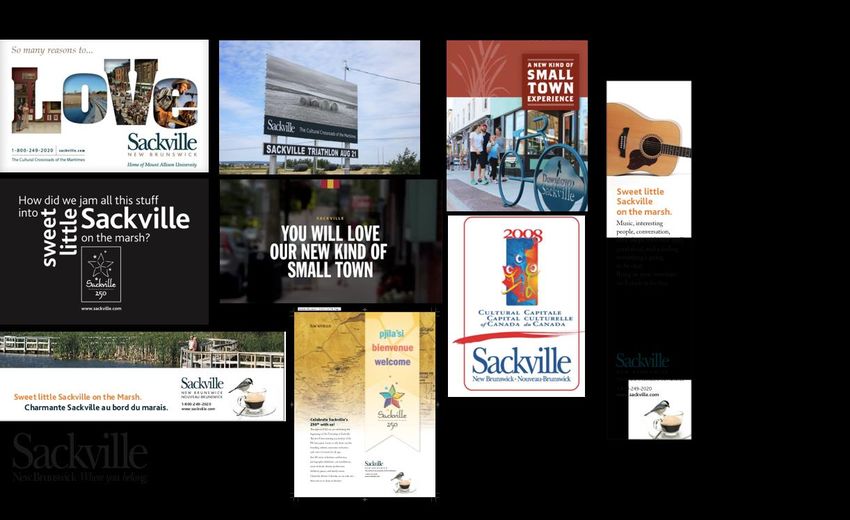
When reviewing the marketing material from the town of Sackville we looked at a decades-
worth of marketing approaches against the following criteria:

         1. What is the material to be used for and is that clear?
            - Is it to educate and inform? Attract business? Attract residents?
         2. Is there a clear audience?
         3. Does the material match other marketing efforts in the marketplace?
         4. Can we tell what content performed the best? Connected best with your audience?

In reviewing the material it’s apparent that Sackville has implemented a lot of different
marketing approaches over the last 10 years that were “one off” attempts to connect with an
audience without full integration into all the marketing channels.

In the last 8 years, the Town of Sackville has used the following different brand/tag approaches:

-    Cultural Crossroads
-    Taste of Sackville
-    Sweet Little Sackville
-    Cultural Capital
-    Where You Belong
-    Simple Be Yourself
-    Culturally Inspired, Naturally Beautiful
-    LOVE
-    A New Kind of Small Town

As well, marketing material has focused on a number of different community elements
including:
 - Culture and Arts
 - Sackville’s marsh
 - Young people and seniors
 - Food

Audit Results:

Material Use
When looking at the collective sample of marketing materials against the first audit question –
“What is the material to be used for?” there is a lack of clarity in target audience and purpose
with the majority of Sackville’s marketing efforts.

Other than event specific marketing, the generic ads for Sackville do not clearly present a clear
target audience or marketing intent with the piece. Our research for this project, along with

Town of Sackville Marketing Strategy                                                            20
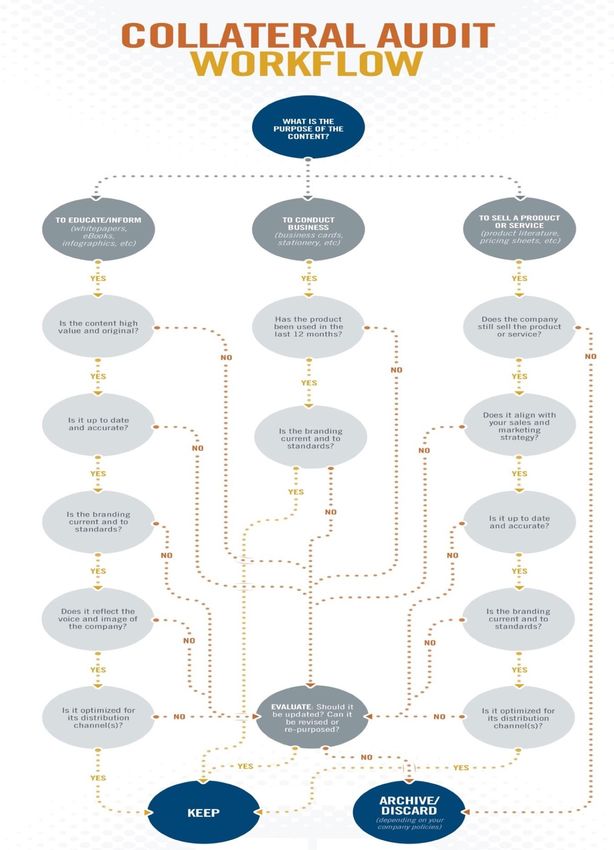
years of place marketing experience, shows that targeted materials with clear intent delivers the best results for marketing efforts. To date, Sackville has used a generic marketing approach, hoping to catch people with generic advertisements and marketing efforts as opposed to specific and targeted marketing. Recommendation Moving forward, it’s recommended that Sackville begin to better target material. We have included a flow chart that may help to provide better focus for marketing material development moving forward. In general, Sackville must be able to determine: - Why are we advertising or initiating this marketing activity? - Who’s the intended audience? - What’s the intended call to action? - How did the material perform? Town of Sackville Marketing Strategy 21
Audience
As mentioned, in reviewing the materials over the last decade it is difficult to clearly determine
the intended audience for the majority of the marketing material. For Sackville, while ensuring
consistent brand look and feel to all target segments, the messaging and content needs to be
better targeted and focused.
    - Is the piece intended for an investment audience and talks about the opportunities and
        support for setting up a business in Sackville?
    - Is the piece targeted to a recently retired couple in Central Canada who are looking for
        the perfect town to start the next phase of their life in?
    - Maybe the piece is targeted to young people to highlight the many cool things to do in
        Sackville and why they should consider it when looking at universities or as a place to
        start my life after school?

Recommendation
Marketing material must be targeted, both in terms of audience and intent. The material
should have a call to action and should drive targeted segments somewhere to learn more, take
action or to connect with someone directly.

Town of Sackville Marketing Strategy                                                             22
In addition to this, we believe that the Town of Sackville should consider developing specific
marketing properties targeted to specific stakeholder groups. We recommend dedicated
marketing channels for tourist attraction, resident attraction, investment attraction and for the
Town and its day-to-day business.
Channels could include:
- Visitsackville.com
- InvestinSackville.com
- MovetoSackville.com
Material Consistency
A key to any successful marketing initiative/campaign in ensuring consistency of that campaign
across all channels of communication to all target audiences. This means whatever might
appear in print should also be consistent on digital and social channels as well. To ensure that
your stakeholders begin to become “aware” of the initiative, it’s important to drive the
campaign through all intercept points. For example, if the Town of Sackville were launching a
resident attraction campaign for recently retired civil servants from Ottawa there should be a
consistency of campaign across;
- Newspaper or magazine (targeted to Ottawa professionals)
- Town of Sackville website (especially https://sackville.com/explore-sackville/move-here)
- Town of Sackville Facebook, Twitter and Instagram
- Any links from Province of NB highlighting Sackville
- Town of Sackville tourism site (https://sackville.com/explore-sackville/visitor-information/)
as most often new residents will be tourists first
Today there is virtually no consistency across channels for the Town of Sackville. While all
professionally presented and well done, the look and feel across communications channels is
each delivering a different message and different focus. The Town is trying to be everything to
everyone. Focus and consistency will help to tie all the elements together.
Recommendation
Upon finalization of the new branding look and feel (based on strategy) Sackville must ensure
consistency across all channels. This is the only way a brand position will gain traction and
begin to provide real returns on the investment.
Measuring Marketing Performance
Every marketing initiative, online or offline needs to start with concrete goals. SMART goals will
ultimately increase the impact of your marketing strategies. For those who may not be familiar,
SMART is an acronym for specific, measurable, actionable, relevant, and time-bound. A SMART
goal is critical to digital marketing efforts. To properly measure your results, you first need
specific, actionable goals to work with.
Town of Sackville Marketing Strategy 23When defining SMART goals for your campaign, you need to consider the following questions:
Will this initiative continue to produce results for me? What is the long-term value of this
initiative? Based on the goals and outcome, would I invest in a campaign like this again?
If you cannot come up with goals for a specific effort or campaign type, then you might want to
reconsider the investment. Instead, focus your time and your money on a marketing strategy
with results that you can quantify.
Tracking Your Efforts
It is critical that you have a plan of action for testing and measuring the success of your
marketing efforts. However, there is no cookie-cutter method that will effectively track all of
your metrics.
If you want to gain valuable insights into your digital marketing methods, you need to take a
close look at each one individually. Below, you’ll find a list of the most popular digital marketing
practices, and information on how to measure and analyze overall marketing performance.
1. SEO
Are the time and money you’re investing in SEO improvement paying off? One of the most
important metrics in search engine optimization is your keyword ranking. The higher you
rank with keywords, the more likely your website will show up on the first page of the
Google search results.
Another metric to pay attention to is the quality of the traffic you’re getting from search
engines. How long are users staying on your website? How many pages do they visit in one
session?
Google Analytics provides access to this information and then some. If you’re targeting the
right keywords, you should find that users are browsing for more than 20 seconds. If that is
not the case, you may want to try different keywords.
2. Social Media
There are many metrics to consider when it comes to social media. Pay attention to metrics
such as overall engagement each week, new followers, likes, and most popular posts. While
social media may not directly contribute to your ROI, it can be a significant source of traffic.
Town of Sackville Marketing Strategy 24So, how do you measure your growth across these platforms? Many popular social media
sites will provide you with analytics for your profiles for free.
Keep in mind that engagement will fluctuate frequently—no matter which social media
profiles you choose to use. However, you might find that one post engages 10% of your
total followers while another goes “viral” and is well received by a large number of people.
Track the posts that do exceedingly well and see if you can uncover a formula to use for
future posts.
You can also track how many leads and conversions your social media posts have facilitated.
Use a customer lifetime value calculator to find out how much each new lead costs, as well
the return on investment.
Overall, social media is a powerful tool to connect with new audiences. While it may be
challenging to define the exact ROI for social media posts, this form of marketing will help
boost PR efforts and foster a better relationship with target audiences. The type of content
that is of interest to each stakeholder group will differ. For example, internal stakeholders
(residents, university, clubs, etc.) will want to see what’s happening in Town this weekend,
spotlight on local businesses, “pride of place” visuals and ads, community initiatives, etc.
Whereas external stakeholders will be targeted through ads that focus on strategic key
messages for each group: tourists, potential new businesses, potential new investors,
potential new students, etc.
3. Email Campaigns
Although its impending doom has been heralded for years, email is far from dead. Having an
email list is essential for any business with an online presence. The more subscribers you
have, the more sales you will ultimately make. You can set your own goal for list growth
based on the current number of subscribers. Next, track results via the campaign manager
on your email deployment software.
Open and click-through rates are another set of metrics you’ll want to monitor. Aiming for a
20% open rate and 2% click-through rate (or higher) is a good goal, but make sure you’re
setting the baseline according to industry standards that are similar to your own. A
marketing automation platform like MailChimp will have analytics built in for you to view. If
you’re experiencing low opens and clicks, then you might want to try different strategies
like using split testing to discover the types of content your audience prefers.
The last factor to consider in email campaigns is how many conversions you’re getting from
your list. While a large number of email subscribers is great, if they aren’t converting into
sales, then your efforts are missing the mark. Using a marketing automation platform and
Town of Sackville Marketing Strategy 25linking it with Google Analytics will stop the guesswork by putting actual numbers behind
your conversions.
4. The Big Picture
Now that you’ve measured and analyzed the results of various digital marketing methods,
it’s time to take a look at how these methods relate to your ROI. Pulling all the results
together will show which marketing campaigns are lucrative and which ones are putting a
strain on the company.
5. Search traffic
Is your SEO strategy working? If 40%-50% of your total website traffic is coming from search
engines, the answer is yes. Google Analytics can help you determine how much traffic your
website is getting from search engines. It will also give you those numbers for individual
pages.
6. Campaign traffic
Campaigns are one of the most powerful digital marketing tools. They allow customers to
continue to engage with your brand over extended periods of time. While you’re running a
campaign, take a look at how many people are interacting with the campaign and clicking
through to your website or landing page.
7. Referral traffic
Referral traffic is traffic that’s directed to your website from somewhere other than a
search engine. You’ll often find that referral traffic is coming from inbound links or social
media posts.
Google Analytics provides information for you on your referral paths to help you identify
traffic sources. You can also add bit.ly links into your social media or campaign posts to
assist you in learning exactly where your traffic is coming from.
Recommendation
Town of Sackville Marketing Strategy 26Build marketing measurement into each targeted campaign to begin to get better insights into
what is working, what needs to be revamped/changed and where there is opportunity for
growth.
Ongoing Audits
Moving forward, we recommend the Town of Sackville conduct its own marketing audit every
two to three years. The following is an example of the process it can build into the process to
ensure consistency of measurement and results.
Here are five steps to help you simplify your marketing audit:
1. Create an inventory of marketing assets
Before you can start sifting through your marketing campaigns to figure out what’s working for
you, it’s important to create a complete list of all the marketing efforts you want to analyse
during this audit. If you’re conducting a comprehensive marketing audit, then you’ll need to
gather everything, from your email newsletters to your social media announcements, your
website to any blog posts about the Town. To keep your work to a minimum, try looking at the
assets specifically from the last 6 months or so. This should give you enough data without
overwhelming your team.
2. Align your audit with your goals
Next, you need a baseline on which you can measure the success of your efforts. In other
words, you need to know what you’re trying to achieve, and how your marketing campaigns are
taking you closer to your targets. Look at your current goals by target audience. For example,
for businesses: Do you want to raise more awareness about the businesses that are in town,
engage your current businesses owners or attract new businesses? Once you know your goals,
you can ask yourself more focused questions throughout the audit, such as:
• How does marketing channel X achieve goal A?
• What is marketing channel X’s ROI in line with goal B?
• How can we improve marketing channel X to serve our goals?
3. Gather data about your marketing performance
Gather as much information as possible about the marketing you’re tracking as part of your
audit. Certain channels will come with metrics that are easier to measure than others. For
instance:
• To measure social media performance, you can look at likes, shares, engagement, click-
through rate and social influence.
• To measure your website performance, you can examine bounce rate, average time on
page, conversion rates and click-through rate.
Town of Sackville Marketing Strategy 27• To measure email marketing, you can track open rates, subscription levels, unsubscribe
rates, and click-through.
Look for a way to calculate the return on investment for each of the major marketing channels
you want to address with your marketing audit. Remember, new residents or new businesses
aren’t the only conversions that drive value for the Town. An effective marketing campaign
might not drive a lot of new residents, tourists or new businesses, but it could encourage better
word of mouth marketing and social presence, which gives you a better brand reach. This will,
with time, lead to growth and visits.
4. Compare your results to your goals
Next, you’re ready to determine whether the goals you’re getting are sufficient enough to
continue your marketing investment or even increase it in a certain area. This part is tricky. It’s
easy to assume that a marketing campaign that isn’t living up to your targets is failing.
However, there’s also a chance that you could be setting your goals too high. To ensure that
you’re not unrealistic with your marketing efforts, compare the results of your campaigns with
the performance of similar competitors/towns in your space. While you might not be able to
track every detail about your competitors, such as their bound rate, you can make some
inferences based on the data you take from a competitor analysis.
5. Adapt and optimise
With your marketing audit in hand, you should make changes that are designed to improve
your ROI and streamline the Town’s marketing/advertising budget. Remember, don’t conduct
an audit if you’re not willing to act. This is your chance to make sure that you’re using your
resources and time properly – both online and offline.
For instance, you might:
1. Drive resident advocacy adoption.
2. Implement new SEO measures and keywords.
3. Produce and publish more website content.
4. Adapt your user personas and segments.
5. Switch to a different social media channel or add extra channels to your campaign,
targeted at specific key audiences.
6. Build out your email campaigns.
Sample Marketing Material Workflow:
Town of Sackville Marketing Strategy 28Town of Sackville Marketing Strategy 29
Town of Sackville Environmental Scan
Lessons learned from successful community marketing initiatives:

As part of our engagement with the Town of Sackville, Portfolio completed an environmental
scan of municipal marketing and branding across North America. We looked at a random
sampling of towns and small cities that have been highlighted as doing a good job at achieving
similar goals to those set by the Town of Sackville.

Our research shows clearly that people, when searching for somewhere to go, something to do
or somewhere to live, search by activity first and then location second. People will search for
“bird-watching Atlantic Canada” or “Best place to live in Canada.”

Our research has also shown that a lot of community-based marketing is ineffective, because
people immediately (consciously or subconsciously) filter out everything that doesn’t directly
relate to what they are looking for.

The successful communities act more like a business by narrowing the focus of what they’re
good at. Some of the things we have seen in looking at other communities include:

    1) Successful marketing communities have identified those key things that people they are
       hoping to attract can’t get or do closer to where they live or are located now;
    2) Highlighting what makes a visit/trip/move to the town special and worthwhile; and
    3) Highlighting what sets the community apart from everyone else.

“The most successful towns, large or small, are those with a clear vision of what they want to
be. Whether it is a town like Waynesville, Ohio (pop. 2,500), the “Antiques Capitol of the
Midwest;” Sprague, Connecticut (pop. 3,000), “A 19th Century Town Restored for 21st Century
Commerce and Recreation;” or Berthoud, Colorado (pop. 4,839), “The Garden Spot of Colorado,”
growth management starts with community vision.”
                                                                              Marano (2005)

Town of Sackville Marketing Strategy                                                             30
The City of Pittston Ohio is located in between the cities of Scranton and Wilkes-Barre so Pittston adopted the tag line “in the middle of it all” as well as “quality tomato capital of the world”. The secondary tagline is often used as an ego boost so it may be better to think of it this way: First Tagline: Your intro to the world Second Tagline: Your claim to fame Emerald Isle choose “Nice Matters” which gives you a good first impression as to the old- fashioned southern hospitality wherein nearby Surf City chose “Big enough to be competitive but small enough to be happy”. The town of Jackson Wyoming chose “Last of the Old West”. The point of the tagline is to create an emotional connection with visitors that can conjure up an image of what the town is all about while existing residents will hear it and be like “yeah, that fits”. Town of Sackville Marketing Strategy 31
Our scan shows clearly that whatever it is that makes a community different or clearly better is
what it must focus on. The most successful communities, however, have discovered that it isn’t
enough for them to claim that they’re different or clearly better. That difference has to come by
third party endorsement. Other people have to say it, too.

Most communities are stuck in the “group hug mentality.” They try to make everyone happy
with their tourism marketing. The “membership mentality” of “we don’t want to leave out any
of our members” leads to generic, “something for everyone” marketing that is ineffective.

Communities we looked at:

St Stephen, NB –
“The Middle of Everywhere”. (Formerly - “Canada’s Chocolate Town”)
https://town.ststephen.nb.ca/

“Future St Stephen” – Forward looking messaging around revitalization and growth
New to Town St Stephen - https://www.youtube.com/watch?time_continue=127&v=H-
HtDAuKv5A&feature=emb_logo
Cultivating an Environment for Business Success - https://town.ststephen.nb.ca/entrepreneurs/

St Andrews, NB
St Andrews By the Sea - https://standrewsbythesea.ca/

Mahone Bay, NS
Mahone Bay – Nothing to Sea Here - https://www.mahonebay.com

Charlottetown, PEI
Charlottetown - City Life, Island Style - https://www.discovercharlottetown.com

Town of Sackville Marketing Strategy                                                          32
Antigonish, NS
Antigonish – The Highland Heart of NS - https://www.visitantigonish.ca/

Sherbrooke, Quebec
Sherbrooke – Heart of the Townships - https://www.destinationsherbrooke.com/en/visitors

Sault St Marie, Ontario
Sault St Marie – “Welcome to the Soo” - http://www.saulttourism.com
Invest Sault St Marie - http://www.sault-canada.com

St Catharines, Ontario
You Are Here. St Catharines - https://www.tourismstcatharines.ca
Grow with St Catharines – Business Investment -
https://www.stcatharines.ca/en/investin/InvestIn.asp

Salmon Arm BC
https://www.saeds.ca

Orangeville Ontario
https://www.orangevilletourism.ca/
https://orangevillebusiness.ca/

Yakima Washington
https://www.visityakima.com

Tillamook Oregon
https://tillamookcoast.com/

Clarksdale Mississippi
https://www.visitclarksdale.com

Charlestown West Virginia
http://www.charlestownnow.com/home.html

Hallock Minnesota
https://hallockmn.org

Town of Sackville Marketing Strategy                                                      33
Some Interesting ideas discovered through this scan

1. Connect with Current & Former Residents

One idea that came out of the environmental scan is connecting with current residents to
connect with potential new residents.

Trevor Lee, Executive Director at Valley County Economic Development in Ord, Nebraska
(population 2,112), approaches current and former residents in unique ways that are yielding
results. He and his team targets seniors – both in college and in life – as a part of his goal to
attract talent to the region. Here are three interesting examples:

    •    One of the ways Mr. Lee connects with former residents is by making connections with
         senior citizens on their own turf. He visits the local senior center, joins early bird coffee
         drinkers, and joins Sunday worship activities at local assisted living facilities. During
         these talks, Lee visits with seniors about their grandchildren and other relatives.
         Through these conversations, he can gather contact information about residents’ family
         members who live outside the region but have an interest in returning. He then
         conducts targeted outreach to former residents, and he has seen some of them move
         back to Ord as a result.

    1.   Valley County Economic Development also sends college seniors a creative Valentine’s
         Day mailer with a USB stick of information about working and living in Valley County.

Town of Sackville Marketing Strategy                                                                34
You can also read


