Townhill Primary School Handbook 2019
←
→
Page content transcription
If your browser does not render page correctly, please read the page content below

Education Resources

Townhill Primary School
   Handbook 2019
Contents

1.       Introduction

2.      About our School

3.      Parental Involvement

4.      School Ethos

5.      The Curriculum

6.      Assessment and Tracking Progress

7.      Reporting

8.      Transitions

9.      Support for Pupils (Additional Support Needs)

10.     School Improvement

11.     School Policies and Practical Information

If you need this information in another language or format, please contact us to discuss how we can best
meet your needs.

Phone: 0303 123 1023       Email: education@southlanarkshire.gov.uk.

Welcome

Townhill Primary School
Melfort Road
HAMILTON
ML3 9UR

Phone: 01698 284776
Fax: 01698 458978

Email – headteacher@townhill-pri.s-lanark.sch.uk

Dear Parents/Carers

On behalf of the staff and pupils I would like to welcome you to Townhill Primary School. We are
delighted that you are considering sending your child to our school and look forward to working
with you. At Townhill we take great pride in ensuring that we offer a warm welcome to all pupils,
parents, carers and members of the local and wider community.

We make every effort to offer a high standard of learning and teaching in a safe, caring and
motivating environment. In Townhill we work hard to ensure that all children are supported and
encouraged to develop the skills and attributes which will allow them to reach their full potential
now and in the future.

Partnership with parents/carers is central to achieving our aims and we look forward to working
together with you to provide a rich and stimulating education for all our children.

Townhill Primary School is situated in the Hillhouse/Earnock area of Hamilton. The original school
opened in February 1965 and exactly forty-five years later, on the 17th February 2010, we moved in
to our new building.

The new school has 13 classes, a computer suite, two open areas, a dining room and a gym hall.

Should you wish any further information about our school please do not hesitate to contact me.

Yours sincerely

Julie McGowan
Julie McGowan
Head Teacher
1)        Introduction
South Lanarkshire Council is the fifth largest authority in Scotland. It covers the following main
areas: Clydesdale in the South which features extensive rural areas, Cambuslang, Rutherglen,
Blantyre and Uddingston to the north as well as the towns of East Kilbride and Hamilton.

The Council’s Plan Connect sets out the Council’s Vision to improve the quality of life for all within
South Lanarkshire.

For Education Resources this means delivering services of the highest quality as well as striving to
narrow the gap. It is about continually improving the services for everyone at the same time as
giving priority to children, young people, families and communities in most need. The priorities for
schools and services are set out in the Education Resources Plan which confirms the commitment
to provide better learning opportunities and outcomes for children and young people.

2. ABOUT OUR SCHOOL

Townhill Primary School is a non-denominational school, in which education is
provided for both male and female pupils.

Address :                           Townhill Primary School
                                    Melfort Road
                                    Hamilton
                                    ML3 9UR

Phone :                             Hamilton (01698) 284776
Fax :                               (01698) 458978

e-mail:                             office@townhill-pri.s-lanark.sch.uk

Website :                           www.townhill-pri.s-lanark.sch.uk

Twitter:                             @townhillps

Present Roll :                      331

Stages Covered :                    Primary 1 to Primary 7

School hours
Morning Session                     8.55 am - 12.25 pm
                                   (Interval - 10.40 am - 10.55 am)

Lunch :                             12.25 pm - 1.15 pm

Afternoon Session                   1.15 pm - 3.00 pm
Teaching staff

Head Teacher                 Mrs Julie McGowan
                             (Pastoral responsibility for Room 7 – Room 14)
Depute
Head Teacher                 Mrs Lorna Love
                             (Pastoral responsibility for R1 – Room 6)

Principal Teacher (acting)   Mrs Maureen Henry

Primary 1 (Room 1)           Miss Laura Douglas
Primary 1 (Room 2)           Miss Katie Ballantyne
Primary 2 (Room 3)           Mrs Fiona Cook
Primary 2 (Room 4)           Mrs Siobhan Kennedy
Primary 3 (Room 5)           Mrs Janis Miller (Mon, Tues, Wed, Thurs)
                             Mrs Mary Winton (Fri)
Primary 3 (Room 6)           Miss Emma Bryson (Mon, Tues, Wed, Fri)
                             Mrs Gemma Crawford (Thurs, Fri)
Primary 4/5 (Room 7)         Mrs Gemma Fagan
Primary 4 (Room 8)           Miss Fiona Mackenzie
Primary 5 (Room 9)           Miss Rachel Fields
Primary 5/6 (Room 10)        Mrs Emma Kelly (Mon, Tues)
                             Mrs Barbara Allan (Tues, Wed, Thurs, Fri)
Primary 6 (Room 11)          Mr Stuart McIntosh (Mon, Tues, Wed, Fri)
                             Mrs Emma Kelly (Thurs, Fri)
Primary 7 (Room 13)          Mrs Claire Campbell
Primary 7 (Room 14)          Mrs Maureen Henry

Additional members of teaching staff:

Mrs Catherine Culbertson (Wed, Thurs, Fri)
Mrs Emma Kelly (Wed)
Mrs Gillian Morrison (Mon, Tues, Wed)
Mrs Mary Winton (Tues, Wed, Thurs)

Support Staff - Clerical     Mrs Linda Beaton
                             Mrs Caroline Comer
                             Mrs Nicole Stirling

Support Staff - Classroom    Miss Stephanie Dunn
                             Mrs Fiona Lawler
                             Mrs Jessie Sempie
                             Mrs Gaynor Sherlock
                             Mrs Lesley-Ann Spence

Janitor                      Mr James Campbell

Educational Psychologist     Mrs Donna Carrigan

Specialist Support Teacher   Mrs Alison Hepburn

Music Tutors                 Mr Alistair Gammie (Woodwind)
                             Ms Louise Caldwell(Brass)
Catering Supervisor   Mrs Ann Williams
Catering Assistants   Ms Elizabeth Broadhurst
                      Ms Jo-Ann Syme
                      Mrs Margaret Wright

Cleaning Supervisor   Mrs Angela McQuade
Cleaning Assistants   Mrs Margaret Jamieson
                      Mrs Trisha Mulvaney
                      Mrs Agnes MacNamee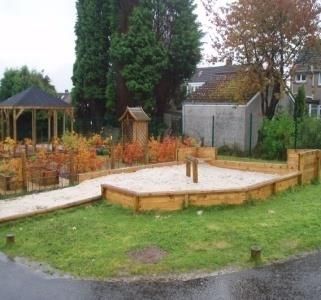
3) PARENTAL INVOLVEMENT (PTA’s, Parent
Forums, Parent Councils)
South Lanarkshire Council recognises the importance of parents as partners in the education of
their child and has published a strategy entitled, ‘Making a difference – working together to support
children’s learning. This is available from the Council’s website: www.southlanarkshire.gov.uk.
Parents, carers and family members are by far the most important influences on children’s lives.
Children between the age of 5 and 16 children spend only 15% of their time in school! Research
shows that when parents are involved in their child’s learning, children do better at school and
throughout life. Parental involvement can take different forms but we hope you share the same
aims and agree that by working together we can be partners in supporting children’s learning.
As parents/carers we want you to be:
Welcomed and given an opportunity to be involved in the life of the school;
Fully informed about child’s education and learning;
Encouraged to make an active contribution to your child’s learning;
Able to support learning at home;
Encouraged to express their views and involved in forums and discussions on education
related issues.
We value parental feedback and regularly ask for opinions and thoughts from our Parent Forum.
Here are some comments from a recent parental questionnaire:
We have found Townhill Primary a ‘I feel that the whole team of staff
very well organised and welcoming are excellent. They know all the
school. It has a friendly family children well and treat them in a
culture, with its finger on the pulse. caring and respectful manner.
P2 Parent P2 and P5 Parent
‘Excellent school – both my children
‘ Townhill is an outstanding school
loved it. Very good at seeing the
with a good reputation within the
bigger picture and preparing children
community as a whole.’
for high school and life in general.
P2 and P5 Parent
Well done!’
P6 Parent
Parent Groups
The structure of Parent Groups within our school us currently under review with plans underway to
create one parent group which will focus on both fundraising and aspects of school improvement.
The purpose of the Parent Group will be to maintain and enhance links between the school,
parents, carers and the wider community. This group will represent the parents of the school and
will be consulted on matters such as curriculum development, establishment planning, policy
development, budget as well as council and government initiatives.
The group will work closely with the headteacher and all staff to ensure that the voice of parents
and carers continues to influence the important partnership between school and home
In the past parents have taken an active role in the development of the School Travel Plan, the Anti
Bullying Policy and other policies that have an impact on our children and their school lives. They
have been effective in dealing with issues as diverse as dangerous parking around Townhill to P7
Transition to their chosen high school. The group also worked in partnership with the Pupil Council
to create a Parents Skills Directory to encourage parental engagement in our children’s learning,
by sharing any interesting skills and/or talents.

In the meantime, a small group of parents continue to very active within Townhill and this
encourages and enhances the relationship between both parents/carers and staff, providing
various opportunities for us to work together in organising social events and sponsored fundraising
activities. These events are both enjoyable and entertaining for our children and are very
successful in terms of funds raised for the school.

These funds are used by the school to enhance many aspects of our children’s experiences in
school.

These parents are enthusiastic and have a range of expertise which they dedicate to these events.
Most appreciated is their time and efforts which they provide to ensure success of each of these
events.

We openly welcome new parents/carers to join us and although you may not be able to attend
meetings if you can help in any aspect of the activities we would love to hear from you.

Contacts
Under Review

To find out more on how to be a parent helper, or a member of Parent Council or PTA, please
contact the school or visit our website.

Some useful information contacts for parents to find out more on education are as follows:
Parentzone – www.parentzonescotland.gov.uk.
Engage Parent Forum – www.engageforeducation.org
National Parent Forum – www.educationscotland.gov.uk/parentzone
South Lanarkshire Council – www.southlanarkshire.gov.uk

4)     SCHOOL ETHOS
Our Vision Statement
Townhill Learning Community provides a welcoming, safe and caring environment for all. We work
collaboratively to motivate, challenge, support and encourage all individuals to develop skills for
lifelong learning and promote global awareness and citizenship.

To help achieve our vision we do not confine our activities to the classroom, but provide
opportunities for a wide variety of experiences, including outdoor learning, sport, music, art and
community involvement. The teacher’s role is to provide experiences and facilitate opportunities
through which our pupils will learn.

We work to build pupils’ self-esteem and self-worth and to show that the whole school community
celebrates their efforts and their special occasions.

A Special Achievements Wall displays individual, group and school achievements and activities.
Our Year in Townhill board is a record of the main school events taking place each month. A
display shows ‘Stars of the Week’ following public recognition at assemblies and all classes have a
Sharing Achievement time within their class timetable.

We work with colleagues in other sectors sharing information to plan a child’s ‘learning journey’
from 3-18 so that each individual continues to work at an appropriate pace and experience
challenge they can thrive on.

Making Rights Real
In Townhill Primary we are working towards Making Rights Real.

Our pupils are involved in a range of learning experiences designed to help them grow into
confident, caring and responsible young citizens, both in school
and within the wider community. By learning about their rights, our
pupils also learn about the importance of respecting the rights of
others.

Through the creation of our school, playground, bistro and
classroom charters, pupils are encouraged to reflect on how their
behaviour and actions affect those around them. This allows us to
build and maintain a positive and safe learning environment for all,
both in the classroom and around the school. Our Calendar of
Rights provides a monthly focus on a particular aspect of rights education.

This session we will continue to work towards achieving South Lanarkshire Council’s Rights Made
Real accreditation.

Pupil Voice
We value the opinions of our children and there are opportunities available for all pupils at all
stages in the school to be involved in the various pupil groups – Pupil Council, Eco Group, Health
Group, Fairtrade Group, Rights Ambassadors, Reading Champions, Digital Leaders, Resource
Rangers, Global Citizens and Junior Road Safety Officers. These groups meet regularly and their
views and activities have had a positive effect on the school and wider community.

Read some of the comments from members of our pupil groups!

            In the eco group we encourage others to
            look after the environment. We try our
            best not to litter and teach others to do
            the same. The job is special to us and we
                                                              We are the Primary 7 Health and Sport Group
            enjoy it very much. Both of us want a
                                                              Leaders. Our job is to make sure the school is a
            healthy environment and a clean school.
                                                              healthy place to be and we also organise healthy
            The group aims to change the school and
                                                              activities for everyone. We are responsible for
            the area around it too. Let's go Eco!
                                                              running Fruity Friday, Health Day and Sports Day.
                                                              We listen to everyone's opinions and try our best to
            By Ashley and Theo (P7)
                                                              make our school a healthier place! We are looking
            ECO GROUP
                                                              forward to the challenges and partnership.

                                                              Codie and Jordan (P7)
                                                              HEALTH AND SPORT GROUP

                                                                                 Kirsten, P6
                                                                                 ECO GROUP

     As your Fairtrade representatives we will be
        encouraging you to eat more foods from
     companies that grow fruit food in a healthy
         and sustainable way. This ensures that
    farmers are paid fairer wages and treated in a
                                                               In the pupil council we make sure everyone’s ideas get
    more respectful way. We will attend meetings
                                                              heard and we help to make our school a better place to
       on your behalf and take your ideas to the
                                                               learn. We listen to pupils’ ideas and try to make them
      group. We look forward to organising this
                                                              happen with the help of staff, teachers, PTA and other
              year’s Fair Trade Fortnight.
                                                                 pupil groups. We love hearing everybody's ideas to
                                                                make the school better and we are really excited to
    Finlay and Cara (P7)
                                                              work with all other members of the pupil council to help
    FAIRTRADE GROUP
                                                                                      out more.
                                                              Kieran and Olivia (P7)
                                                              PUPIL COUNCIL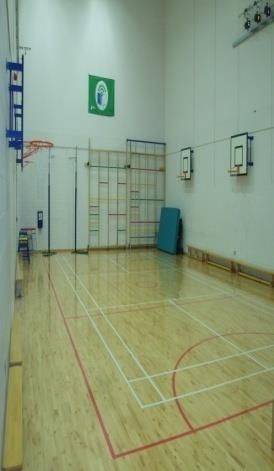
The Rights Respecting Group is a group that respects
         the rights of all pupils in our school and all around
         the world. Last year our group made a Rights
         Calendar and every month we talk about the Right of
         the Month in class and at assembly. We encourage all
         classes to make a class charter and we remind our
         pupils of our whole school charter.

         Andrew and Kyle (P7)
         RIGHTS AMBASSADORS

                                                                   We are a new pupil group that has been newly
                                                                   formed this year. Digital Leaders are involved in
                                                                   everything technical and we will help when you
                                                                   need assistance. We will help you with iPads,
                                                                   Smartboards, computers, cameras and much more.
                                                                   Please let you know if you need any help with
                                                                   anything digital around the school.

                                                                   Nathan and Emma (P7)
                                                                   DIGITAL LEADERS
      We enjoy our jobs because we both love to read and
      also love helping others find the book for themselves to
      read. We help at the Lunchtime library and we are
      looking forward to the busy year ahead. We promote
      the First Ministers Reading Challenge and have
      encouraged all classes to update their class library. We
      will be bringing exciting reading challenges to you
      throughout the year.

      By Katie and Ellie (P7)
      READING CHAMPIONS

House system

The school runs a ‘house’ system. This allows the children to belong to a smaller group than the
school as a whole and motivates our children and increases team work, leadership and
responsibility within the school.

BAIRD                  Red
BURNS                  Blue
LAUDER                 Green
LIVINGSTONE            Yellow
The names were chosen by the children and represent famous Scots from history. Our Primary 7
pupils are given the opportunity to stand for election as House Captains.

Points will be awarded for a range of reasons such as taking care of our school, demonstrating
kindness and respect and following our school Golden Rules. House events take place throughout
the year. Points will be counted and updated on a Friday by the House Captains. The winning
house per term will have a Reward Afternoon and the winning house overall will be presented with
the house trophy at the end of the year.

School and community links
We actively foster links with individuals and agencies in the community.

These include Road Safety, Health Agencies, Blantyre Credit Union, Hillhouse Community Police
and local businesses. Contact with other members of the community is also developed and the
school has strong links with Hillhouse Church, Wellhall Care Home, Miller Park Sheltered Housing
and Hamilton Foodbank.
To enhance the ongoing work of classes every opportunity is used to involve members of the community, and for visiting places of interest. The school uses the local museums, country parks and visitor centres. Experts in a variety of fields also visit the children in school and provide a valuable service in this way. Fund-raising for various charities, is encouraged and parents, staff and pupils are always extremely generous and supportive of our ventures each year. Learning Community Townhill is part of the Calderside Learning Community. A learning community is made up of local education establishments including a secondary school, the local primary schools, early years establishments, early years partners and schools and bases which provide additional learning services. It is about working together to plan better outcomes for children and young people. The Learning Community develops ways of working between establishments and with other agencies and organisations to ensure services are responsive, accessible and are delivered as effectively as possible. All the establishments and services in a learning community share priorities for improvement and are involved in the deployment of additional support to meet the needs of the child and family. Each Learning Community is managed by a Head of Education (Area). The Head of Education for the area is Mr Stewart Nicolson. The Curriculum Curriculum for Excellence is the name given to the new curriculum in Scotland for all children and young people aged 3-18. It is a forward looking, coherent, more flexible and enriched curriculum that provides young people with the knowledge, skills and attributes they will need if they are to flourish in life, learning and work, now and in the future. The curriculum includes all of the experiences that are planned for children and young people to support the development of these skills, wherever they are being educated, for example in the family and community, pre-school centre, nursery and school. This broad general education will allow them to become successful learners, confident individuals, responsible citizens and effective contributors to life in the 21st century. In taking this forward our School will work closely with South Lanarkshire Education Resources and other services to enable Curriculum for Excellence to be fully embedded, ensuring the best possible education for all children and young people. We wish you to feel confident that your child is encouraged and supported to develop their literacy and other skills whilst they attend our school. The curriculum areas are as follows: Expressive Arts Language and Literacy Health and Wellbeing Mathematics and Numeracy Religious and Moral Education
Science
Social Studies
Technologies
Information on what your child is learning will be provided to you throughout the year.
If you want to know more about Curriculum for Excellence, please visit website
http://www.educationscotland.gov.uk/thecurriculum/ or www.parentzonescotland.gov.uk.
Our learning and teaching activities are based on the outcomes and experiences in the guidelines
that all schools have for Curriculum for Excellence.
Level Stage
Early The pre-school years and Primary 1 or later for some.
First To the end of Primary 4, but earlier or later for some.
Second To the end of Primary 7, but earlier or later for some.
Expressive Arts
The four subject areas of Curriculum for Excellence Expressive Arts are: Drama, Music, Dance
and Art and Design.
Although some aspects are taught discreetly, these subjects often lead themselves to inclusion
within class interdisciplinary work.
Music
The school aims to ensure that all children have the opportunity to create, perform and respond
positively to music. Every effort is made to integrate music with other areas of the curriculum such
as social studies, poetry, drama etc., and to ensure that children enjoy and appreciate music.
Various resources are used throughout the school, including Sounds of Music, Jolly Music, Folens
music, teachers’ own resources and a resource for P6 and P7 developed by Townhill and
Calderside Academy teaching staff. Instrumental tuition is available at varying stages and
comprises percussion (tuned and untuned) and recorders. Woodwind and/or brass tuition is
usually offered by a visiting instrumental instructor. There is also a school choir which takes pupils
from Primary 5 upwards.Art and design Regular and frequent work in art and design is essential in our curriculum and as well as set lessons teaching techniques and skills, opportunities for art and design in association with other aspects of the curriculum are encouraged. A variety of media is available to stimulate interest and awareness and for development of certain techniques and skills. In all areas of the school, finished work is displayed both within and outwith the classroom areas. As with music, every effort is made to link art and design work into an interdisciplinary context. This makes the tasks more relevant and meaningful. Drama Drama Children from their earliest years use imaginative play to explore, order and make sense of themselves and the world around them. Drama offers pupils opportunities to explore human behaviour by creating roles and relationships in a variety of different contexts and settings. Many of the contexts for drama activities will relate to other areas of the curriculum, especially language, and excellent opportunities for collaborative group work based on pupil interaction are provided. A stimulating programme of study created by the teaching staff is now in use throughout the school. Once again every effort is made to relate dramatic contexts with ongoing class topic work. Opportunities for classes to experience live theatre include visits from theatre groups, Scottish Opera and outings to theatrical performances. Languages and Literacy In teaching the child to use language more effectively in a wider range of contexts, the teaching staff in Townhill not only see the child’s language competence growing but also see the child growing through his/her language. The atmosphere of our school is such that children are encouraged to talk and write freely and are given a wide variety of stimuli to enable them to do so. In addition we provide a large range of reading materials to encourage children to want to read. Many of the language experiences and skills arise within cross-curricular work and are, therefore, developed and consolidated through curricular areas such as social studies, expressive arts, mathematics, science, etc. While these subjects are important in themselves, the language they stimulate is also vitally important. We provide a learning programme covering the three lines of development – listening/talking, writing and reading. Alongside these we develop the necessary skills of spelling, punctuation, language structure and handwriting, each at a level appropriate to the child’s developmental needs. In line with the Scottish Government’s Languages 1 + 2 Strategy, French is taught in Townhill from Primary 1. Currently, pupils in P5-7 are also learning Gaelic.
Health and Wellbeing
The purpose of the Health and Wellbeing curriculum is to develop the
knowledge, understanding and skills, capabilities and attributes
necessary for mental, emotional, social and physical wellbeing. It is
the responsibility of every teacher to contribute to learning and
development in this area. Physical Education is included in this area
of the curriculum. We teach all children the value of participation in a
range of sporting and physical activities and believe that this is an
important part of children’s learning and development. Each class has
two hours of PE each week. This includes an outdoor PE slot which develops skills including team
building and orienteering. Swimming is also part of the curriculum and is delivered to each Primary
6 class at the local leisure centre. Townhill was presented with a Gold Sportscotland Award in
November 2017.
Other areas of Health and Wellbeing are food and nutrition, healthy living, road safety and many
other health related themes. Our programme also includes sexual health and relationships
education.
A wide variety of extra-curricular activities are offered each session and we try hard to offer every
child from Primary 1 to Primary 7 the opportunity to attend at least one activity.
Mathematics and Numeracy
Although the content of the school’s mathematical and numeracy programme is
based on Scottish Heinemann Maths, the scheme has been adapted
and tailored by the school. This ensures the progressive
development of skills and confidence in working with and
understanding mathematical concepts, not only in textbooks but
within real life contexts.
Many other resources, materials and teaching/learning methods are used to achieve these aims
including practical experiences, problem solving activities and relevant mathematical/numeracy
activities within interdisciplinary topics.
Sciences
Through learning in the sciences, children develop their interest in, and understanding of the living,
material and physical world. They engage in a wide range of collaborative investigative tasks,
which allows them to develop important skills to become creative, inventive and enterprising adults
in a world where the skills and knowledge of the sciences are needed across all sectors of the
economy
The key concepts of the living, material and physical world are organised into five themes:
Planet Earth
Forces, electricity and waves
Biological systems
Materials
Topical science
To continue to raise awareness, spark enthusiasm and encourage interest in Science, Engineering
and Technology, Townhill regularly takes part in National Science and Engineering Week.
In previous years, our Primary 4 and 5 children have had a visit from an Astrophysicist and found
out all about Space and gravity. Primaries 1 and 2 have taken part in various investigations about
water and materials. Primaries 3-6 have developed their Science, Design and Technology skills
through a range of challenges, from our Science on the Menu resource, based around saving astruggling Chocolate Factory. Primary 7 have used all their Science skills by working on
investigating natural food colourings and designing a celebration cake which reflected their market
research and investigation findings.
Many classes were also very excited about the recent eclipse and took part in viewing it safely on
the day, with their eclipse viewers and pinhole cameras.
Social Studies
Through social studies, children develop their understanding of the world by learning about other
people and their values, in different times, places and circumstances.
Social Studies are structured under three main organisers:
People, past events and societies
People, place and environment
People in society, economy and business
Our Social Studies programme has been developed to reflect Curriculum for Excellence
experiences and outcomes. The programme is mostly delivered through interdisciplinary topics,
allowing the children to make relevant and meaningful
connections across curricular areas and providing them with deeper, more enjoyable and active
experiences.
The children as they participate in the programme will:
develop their understanding of the history, heritage
and culture of Scotland
broaden their understanding of the world by
learning about human activities and achievements
in the past and present
develop an understanding of the principles of
democracy and citizenship
learn how to locate, explore and link periods, people and events in time and place
learn how to locate, explore and link features and places locally and further afield
engage in activities which encourage enterprising attitudes
Technologies
We work hard to keep pace with new developments in technology so that
our pupils will have the skills needed to succeed in modern society.
Information and Communication Technology (ICT) is used across the
curriculum. Our network allows all pupils access to the internet and the
security filter means that pupils can access only suitable material. All
pupils / families are asked to sign an Internet Access Agreement. Other
technology work is done in the context of themed projects or stand alone
units focusing on a particular aspect of design or uses of technology in
society. All classrooms have interactive whiteboards and we have wireless
access throughout the building.
Internet and Other Electronic Communication
The children benefit from access to the internet which enhances learning and teaching by providing
the children with the opportunity to retrieve information from the many educational websites
available. Many precautions are in place to prevent the pupils from accessing inappropriate
material.Religious and Moral Education
Religious and moral education enables children and young people to explore the world’s major
religion and views which are independent of religious belief and to consider the challenges posed
by these beliefs and values. It supports them in developing and reflecting upon their values and
their capacity for moral judgement. Through developing awareness and appreciation of the value
of each individual in a diverse society, religious and moral education promotes responsible
attitudes to other people. This awareness and appreciation will assist in counteracting prejudice
and intolerance as children and young people consider issues such as sectarianism and
discrimination more broadly.
Learning through religious and moral education enables children to:
recognise religion as an important expression of human experience
learn about the beliefs, values, practices and traditions of Christianity and other world
religions and viewpoints independent of religious belief
explore and develop knowledge and understanding of religions,
recognising the place of Christianity in the Scottish context
investigate and understand the responses which religious and non-
religious views can offer to questions about the nature and
meaning of life
recognise and understand religious diversity and the importance of
religion in society
develop respect for others and an understanding of beliefs and
practices which are different from their own
explore and establish values such as wisdom, justice, compassion and integrity and
engage in the development of and reflection upon own moral values
develop their beliefs, attitudes, values and practices through reflection, discovery and
critical evaluation.
make a positive difference to the world by putting beliefs and values into action
Religious and moral education is therefore an essential part of every child’s educational
experience.
Spiritual, social, moral and cultural values (religious observance)
Rights of Parents/Carers
Scottish Government Ministers consider that religious observance complements religious
education and is an important contribution to pupils’ development. It should also have a role in
promoting the ethos of a school by bringing pupils together and creating a sense of community.
Equalities
Integral to this guidance is the principle of mutual respect. The diversity of belief and tradition
provides an ideal context in which pupils can learn about, and so learn from, what is important in
the lives of themselves and others. South Lanarkshire’s guidance recognises and welcomes
diversity and promotes respectful understanding.
Parental right of withdrawal
There is a statutory provision for parents to withdraw children from participation in religious
observance. The right of parents’ wishes will be respected.
Where a child is withdrawn from religious observance, schools will make suitable arrangements for
the child to participate in a worthwhile alternative activity.
Parents may request that their children be permitted to be absent from school in order to celebrate
recognised religious events. Advance notice should be provided to the school when children willbe absent. Appropriate requests will be granted and the pupil noted as an authorised absentee in the register. 6) Assessment and tracking progress Assessment both formative and summative is an essential part of teaching and learning at every stage. Throughout the primary school, teachers are constantly assessing the work of their pupils to monitor and enhance progress, to ascertain strengths and areas for further development, to involve pupils in their own learning, to decide on what requires to be taught next and to determine if the pupils are working at a level appropriate to their ability. Children are also involved in their own target setting. These are reviewed and new targets set in discussion with their class teachers. Assessment reflects on-going work – by observation and interaction with pupils, by sharing criteria with children, by giving constructive feedback, by well-structured questioning, by peer assessment and by setting assessment tasks. Records of summative assessments are kept, both for teaching purposes and to keep parents up to date with their child’s progress. All class teachers engage in regular professional dialogue with the headteacher and depute headteacher to track pupils’ progress across the curriculum. 7) Reporting In Townhill we recognise that good teamwork among parents, children and schools is the key to a successful education for your child. Reporting is ongoing and comprises of a range of activities which can include children presenting their learning, newsletters, snapshot weeks and ongoing discussions. We will provide parents with reports so that you can see what your child is doing and how they are progressing. In addition, there will be parents’ meetings which offer you the opportunity to discuss how your child is doing in school and how you can contact the school if you wish further information. The school will offer you an appointment time so that you can visit in person to discuss your child’s education. Our ‘pupil reports’ help you get to know more about the curriculum which each child follows and will describe strengths, achievements and areas for development so you know what encouragement and support you can give. We welcome any comments or additional information from parents to help us provide the best possible education for your child. 8) Transitions Pupils normally transfer from primary to secondary school between the ages of 11 ½ and 12 ½ so that they will have the opportunity to complete at least 4 years of secondary education. Arrangements are made by the school to transfer children to the associated secondary school as determined by their home address. Parents of Primary 7 pupils will be informed of the transfer arrangements made for their children to attend secondary school.
We will also provide you with information at this time and on events designed to let P7 children visit
the secondary school, meet up with other P7 children from other schools so that the transition
period is as smooth as possible.

Normally children attend the school in their catchment area. However, there are times when
parents wish their children to go to other schools. If you wish your child to go to another school
then you may make what is known as a ‘placing request’. If you live in South Lanarkshire and
decide to submit a ‘placing request’, we are unable to reserve a place in your catchment school
until the council have made a decision on the ‘placing request’. Please note if your ‘placing
request’ application is unsuccessful and all places at your catchment school are filled you will be
offered a place at the next nearest appropriate South Lanarkshire School.

Please note that if an application for a ‘placing request’ is made then free school transport is not
provided.

If you move outwith your catchment primary school a ‘request to remain form’ must be completed.
If you move outwith your catchment primary, this may affect your right to transfer to the associated
Secondary School. Please note the secondary school is determined by the pupil’s permanent
home address and chosen denomination. If you require further information, please contact
Education Support Services on 0303 123 1023.

9)     Support for Pupils
Getting it right for every child, (GIRFEC)
Getting it Right for Every Child (GIRFEC) is a commitment to ensure that your child has the best
possible start in life and to improve outcomes for children and families based on a shared
understanding of their wellbeing. Most children make their journey from birth to the world of work
supported by family and the universal services of Health and Education. The Named Person in
education helps to make sure that the child’s wellbeing is developing. The school will let you know
the Named Person for your child. This is likely to be the Head Teacher in a primary school and a
principal teacher of pupil support in secondary school.

If you have any concerns relating to your child’s wellbeing you can speak to the Named Person
who will be happy to work with you to address any issues and to ensure that your child gets help
that is needed at the right time.

More information can be found on: www.girfecinlanarkshire.co.uk and
www.scotland.gov.uk/gettingitright

Support for All (Additional Support Needs)
The class teacher is responsible for planning and providing appropriate differentiated work for all
pupils for all abilities in the class.

However, there are times when extra support is required when a child is not making progress, has
been ill or when more able pupils require more challenging work. This is highlighted to the Head
Teacher/Depute Head Teacher during Learning Plan discussions and Monitoring and Tracking
meetings and an initial referral for support will be completed, indicating how the class teacher can
be supported to meet the child’s needs.
Some children require an Additional Support Plan (ASP) to monitor and support their progress and
these are devised by the class teacher and shared regularly with parents. ASP’s are overseen by
the Head Teacher and Depute Head Teacher (Mrs Lorna Love).

Some support is available to the school from the Learning Community Extended Team for children
requiring further support and assessment. In Townhill this service is provided by specialist support
teacher Mrs Alison Hepburn.
Psychological Services: Following consultation with parents, some children may be referred to an
Educational Psychologist. Mrs Donna Carrigan works within Townhill Primary, on a consultation
basis.
Parents will be informed if the school feels their child requires additional support for learning.
However, any parent who has concerns at any time about their child’s learning and progress
should contact Mrs McGowan, Head Teacher or Mrs Lorna Love, Depute Head Teacher.
South Lanarkshire Education Resources have published a series of leaflets available which cover
information for parents and carers about the Additional Support for Learning Acts.
Enquire
Enquire is funded by the Scottish Government to provide information on the framework for
supporting children who require additional support for learning and to encourage positive
partnerships between families, schools and local authorities to ensure children get the right
support.
Enquire – the Scottish advice service for additional support for learning
Enquire offers independent, confidential advice and information on additional support for learning
through:
Phone Helpline: 0345 123 2303
Address : Enquire
Children in Scotland
Rosebery House
9 Haymarket Terrace
Edinburgh
EH12 5EZ
Email Enquiry service: info@enquire.org.uk
Advice and information is also available at www.enquire.org.uk
Enquire provides a range of clear and easy-to-read guides and fact sheets including The parents’
guide to additional support for learning.
If you would like to order our leaflets, postcards or guides to share with parents and carers of
pupils in your school, please contact us on info@enquire.org.uk
10) School Improvement
The school recognises on-going self-evaluation as a necessary process if quality is to be
maintained or improved. Parents are updated on the school’s improvement priorities through our
newsletters and their views sought through effective consultation procedures.
Our school was inspected in November 2015. A team of inspectors visited the school for two and a
half days, following a two-week notification period.
The inspection team found the following strengths in the school’s work:
Very well-behaved children who demonstrate enthusiasm for learning, and who
are proud of their school.
The caring, supportive and inclusive ethos of the school.
The teamwork of staff and senior managers and their commitment to improving the
school.
The quality of teaching and learning across the school.Overall quality of our learners’ achievements - Highlights of session 2017-2018
Once again Session 2017-2018 was a busy year in Townhill as we worked together to provide our
children with a wide range of learning experiences and extra curricular activities. We continue to
offer a broad balanced curriculum, which is enhanced by high quality learning and teaching.
Further information can be found in our School Improvement Plan for 2017-2018.
We strive to ensure that our pupils develop the skills to enable them to become global citizens as
highlighted in our vision. This year, our Harvest Celebrations in October had a change of focus,
allowing us to support an international charity and two local organisations. The theme
was Brighten up our World and in return for wearing bright colours our
children brought a £1 donation. The generosity of our families meant that
we were able to donate 3 gifts of £120 to Tearfund, Miller Park
Sheltered Housing and the Hamilton District Food Bank.
Representatives from these three organisations met our children at
Assembly and helped them to understand how their donations would
be used.
In November 2017, two of our teachers presented to colleagues from across South Lanarkshire
Council at the Literacy Conference. They highlighted our school’s journey on The First
Minister’s Reading Challenge. This was well received and a number of schools made contact
with us and visited our Reading Champions to hear more about the work we are doing in Townhill
to promote reading for pupils in P1-P7.
Also in November, we were thrilled to receive our GOLD Sport Scotland
Award. During Session 2016-2017, our Principal Teacher worked very hard
with the Health and Sports Group and our Active Schools Coordinator to
increase sporting opportunities for everyone at Townhill. We had lunchtime,
after school and leadership activities accessible for all ages including;
Netball, Football, Dance, Judo, Lunchtime Fun Time and lots more! We were
presented our award by Steven Lytham from Sport Scotland and were
pleased to have Tony McDaid, SLC Executive Director of Education Resources, and Garry
Macguire, our Quality Link Officer, join us for a very special Assembly.
Further developing our charity work this session, we were able to send off a cheque for
£817.60 to Children in Need after a whole day of activities organised by our Primary 7
pupils and staff.
This year, one of the highlights of our First Minister’s Reading challenge was World
Book Day, which we eventually celebrated, due to the snow, on Thursday, 8th March. We all
dressed up as our favourite characters and the children, teachers and support staff
looked fabulous! There were some really creative costume ideas! We began
with an assembly hosted by the Reading Champions to explain what the day
was about and how it would be celebrated. The children took part in a range
of reading activities throughout the day in all classes. We were also excited
to have therapets in school to read with us! The dogs were very well
behaved and the children loved the experience of having them in school to
take part in reading activities. Following this taster, the therapets have been in school
once a week and has well as supported our pupils with their reading they have really helped some
overcome their fear of dogs! Our children also brought in pre-loved books and donated them to
our very popular book swap. The day was rounded off for the second year running with everyone
reading for enjoyment together. We lined our corridors from P7 to P1 in our hugely popular 'River
of Reading' and took 15 minutes to share our love of reading as a whole school.
We are delighted to have been named both Hamilton Sports Council’s Primary
Sporting School of the Year 2017 in April 2018 and Primary
School of the Year 2017 at the South Lanarkshire Council
Sports Awards in June 2018.In June, two of our teachers and our senior Reading Champions attended the First Ministers
Reading Challenge Celebration in Edinburgh. They had a wonderful time hearing about
all the fantastic projects being taken forward by other schools across Scotland and have
come back with lots of ideas to try in Townhill. A real highlight for everyone was meeting
the First Minster, Nicola Sturgeon!
Our PTA continued to organise successful fundraising events with this year’s Summer
Fayre being a particular highlight once again, made even better by fantastic weather.
Improvements in Literacy 2017-2018
Attainment data gathered since session 2015-2016, shows an improving trend in levels of
attainment across all aspects of Literacy, above both the SLC and National average.
In Session 2017-2018, our data and other evidence shows consistently high
attainment in Reading, Writing and Talking and Listening at P1. This is due to
effective tracking and monitoring, timely interventions, where required and
increased teacher confidence in confirming achievement of a level through
engagement in moderation activities.
This session, Writing at the Primary 4 stage is a strength with attainment levels
improving steadily since session 2015-2016.
This session Reading at the Primary 7 stage is a strength and has improved considerably since
session 2015-2016. Again, effective tracking and monitoring, timely interventions, where required
and increased teacher confidence in confirming achievement of a level through engagement in
moderation activities have been contributing factors. This has also been supported by end of level
assessments, developed by staff, which are linked to the benchmarks and form part of our
Assessment Framework for Literacy.
There are significant strengths in Talking and Listening with almost all pupils at all stages making
very good progress with attainment above both the SLC and National average.
Improvements in Numeracy 2017-2018
Attainment data gathered since session 2015-2016, shows an improving trend in
levels of attainment in Numeracy, above both the SLC and National average.
In Session 2017-2018, our data and other evidence shows that attainment in
Numeracy in Primary 1 continues to be a particular strength. Most pupils in P4
achieved expected levels of attainment in Numeracy.
Improvements in Health and Wellbeing 2017-2018
Since Session 2015-2016 we have been developing our nurture approaches. Our
DHT has been fully trained in Nurture and other approaches, for example, Lego
Build to Express and Theraplay. All teaching and Support Staff have also
received training from Nurture UK, which included the use of Boxall Profiles. 28
pupils from a range of stages benefited from targeted Nurture support this
session. In particular, P7 pupils found a Transition Nurture group beneficial in
supporting their emotional wellbeing as they prepared to move to secondary schoolOur Health and Wellbeing curriculum gives our pupils progressive opportunities to learn about their
physical and mental, emotional, social and physical wellbeing and is linked to the wellbeing
indicators and the United Nations Conventions on the Rights of the Child.
Staff also complete wellbeing assessments twice yearly to track our children’s health and wellbeing
using the wellbeing indicators.
The establishment of a Health and Wellbeing Improvement Group ensured that a whole school
programme build resilience in pupils was developed and trailed in Session 2017-2018, using the
Bounce Back resource.
Our Health and Sports Group, comprising pupils, staff and partners worked hard to
gather evidence which allowed us to achieve our GOLD Sports Scotland Award and be
named as Hamilton Sport Council’s Primary Sporting School of the Year 2017. In June
2018, we were delighted to be named SLC Primary School of the Year for Sport 2017.
Improvements in Employability Skills/Positive Destinations 2017-2018
Pupils have been more actively involved in self evaluation activities to inform
future improvements.
Some pupils have benefited from visits from members of the wider school
community talking about their job/career
A range of leadership opportunities continues to be offered to all pupils.
The Leadership Improvement Group revamped our existing House System, creating an exciting
year long programme of activities, ready to be implemented in session 2018-2019.
Our priorities for this session continue to focus on the implementation of Curriculum for Excellence.
Improve approaches to assessment, including tracking and monitoring of children’s
progress in literacy and numeracy, to raise attainment further.
Refresh the curriculum with a particular focus on approaches to further develop children’s
health and wellbeing
Develop programmes to allow learners to demonstrate their skills for learning, life and work
in a range of contexts.
We will also make following further improvements.
Continue to revise planning in health and wellbeing to ensure progression from P1-P7
Continue to ensure Rights Based Learning is embedded as Making Rights Real is taken
forward and accreditation achieved from South Lanarkshire Council
In line with The Scottish Government’s Languages 1+2 Strategy; continue to implement
French at P6/7; introduce P1 French vocabulary for all pupils at P1, P2 Vocabulary for all
pupils at P2 and P3 vocabulary for all pupils at P3 and P4 vocabulary for P4-5 and continue
with the introduction of Gaelic as a third modern language from P5
Our priorities for session 2019-2020, 2020-2021 and 2021-2022 will be agreed following
consultation and auditing of our improvement priorities, in collaboration with all stakeholders, to
inform our school’s strategic 3 year cycle of improvement.11) School Policies and Practical Information
School Meals
The school meals service provide a choice of meals each day of the school session. These
include a choice of hot meal and a sandwich option. Meals are served in the ‘Bistro’ hall.
Parents should notify the school of children who require a special diet. Facilities are also available
in the bistro for packed lunches.
Free School Meals
Children of parents who receive the following benefits are entitled to a free lunchtime meal for their
child
Income Support, Universal Credit (where your take home pay is less than £610 per month),
Job Seeker’s Allowance (income based), Employment and Support Allowance (income
related), Working Tax Credit and Child Tax Credit (where your gross annual income does not
exceed £6,515 as assessed by the HM Revenues and Customs), Child Tax Credit Only (where
your gross annual income does not exceed £16,105 as assessed by the HM Revenues and
Customs) or receive support under Part VI of the Immigration and Asylum Act 1999.
We would encourage parents of children who are in receipt of any of the above benefits to take up
this opportunity of having a meal provided for their child when they are at school. Arrangements
are in place so that children who receive free meals are not singled out and we encourage all
children to remain in school at lunch time.
Healthy eating is something that the school supports and a range of meals are available at
lunchtime that meet the Schools (Health Promotion and Nutrition) (Scotland) Act 2007 and the
Nutrient Requirements for Food and Drink in Schools (Scotland) Regulations 2008.
All meals include fresh chilled drinking water and milk will be available for those pupils entitled to
free school meals through the free school meal eligibility scheme at morning break or lunchtime.
Milk is also available for purchase to those pupils wishing to buy at breakfast service, where
applicable, morning break and lunchtime.
Pupils in:
Primary 1 - 3 receive a free school lunch.
Primary 4 - 7 meal cost is £1.65.
School Uniform
We ask all parents/carers to support the school by encouraging your child(ren) to adhere to the
agreed dress code and the wearing of our school uniform. The wearing of a school uniform helps
promote the identity of the school in the local community and helps create an ethos of sharing and
pride in the school.
In addition, the wearing of a uniform helps towards increasing the protection of all pupils. The
wearing of a uniform helps staff and the pupils to distinguish between who belongs to the school
and those who may be visitors. This enables staff to approach and identify visitors more readily
and helps in trying to offer a safer environment for pupils and teachers alike.
Equality of opportunity is an important aspect of the life of a school. Any proposals on the dress
code and on what constitutes the school uniform will be the subject of discussion with the Parent
Council and where appropriate consultation with parents, pupils and staff.There are forms of dress which are unacceptable in school, such as:
the wearing of football colours
clothing with slogans that may cause offence (anti-religious, symbolism or political slogans)
clothing which advertises alcohol, tobacco or drugs
clothing which can be deemed unsuitable in terms of health and safety grounds such as shell
suits, combat style clothing, dangling earrings, loose fitting clothes particularly in practical
classes
articles of clothing that could inflict damage on other pupils or be used by others to do so
footwear that may damage flooring
Townhill Primary Uniform:
White Shirt/Polo Shirt (school badge optional)
Navy Sweatshirt (school badge optional)
Navy or Grey Trousers/Navy or Grey Skirt
Navy Blazer/Fleece Jacket
For special occasions, we encourage pupils to wear white shirt and school tie with navy
trousers/skirt.
Our school uniform supplier:- Scotcrest, 41 Quarry Street, Hamilton.
To protect our carpeted area in the school we request that all pupils wear gym shoes inside the
school building.
Please label all children’s clothing clearly.
Allergies
A significant number of children and young people in our schools will have allergies and it is
important that parents keep the school fully informed on these matters.
Allergies can present in a variety of ways and can occur at any point in a person’s life. Symptoms
range from mild to severe. Children and young people known to have an allergy with moderate to
severe symptoms will likely have a Health Care Plan drawn up by the NHS. This will detail
symptoms and appropriate interventions.
It is vital that parents share this information with the school and continue to provide any updated
information.
Where symptoms are mild and a Health Care Plan is not in place, parents should still continue to
liaise regularly with the school on any new triggers, medications and actions required.
In all cases, our employees need to know your child’s symptoms, treatments and any actions
required to help prevent exposure to the allergen and minimise the risk of allergic reactions.
Employees in schools will receive training on allergies and will liaise with parents and NHS on any
additional specialist training required.In supporting children and young people with allergies, school employees will operate in
accordance with South Lanarkshire Council’s Safe Systems of Work / risk assessment and
national guidance on the administration of medicines.
Support for parent/carers
Clothing Grant
In certain circumstances the Council provides support to parents/carers for the purchase of school
wear.
We would encourage families if they are eligible to apply for these benefits.
Applications can be made online at www.southlanarkshire.gov.uk. If you are required to submit
evidence of your Tax Credit income it is important that a copy of this evidence is attached to your
online application. Should you require further information or you are unable to submit an
application online then please contact the helpline number 0303 123 1011 (option 5).
Attire for Physical Education
For health and safety reasons it is vital that the pupils are properly attired for P.E. Whilst it is not
school policy to insist on specialised clothing on P.E. or sporting activities, it is important that the
children wear shorts and gym shoes in the gym hall. Training shoes, which are worn outside, are
not acceptable as these hold dirt on the soles.(Plain sand/gym shoes, which can be kept in a
school bag at all times, are recommended) Children are not allowed to do P.E. in stocking soles or
bare feet.
Every child has a half hour outdoor PE slot each week. Pupils should bring tracksuit
bottoms, trainers and a warm, waterproof jacket for this activity.
The wearing of jewellery, including pierced earrings, during P.E. sessions is also not allowed for
safety reasons. Although it is preferable and safer for earrings to be removed during PE those
which cannot be removed can be taped over to prevent any unfortunate accidents.
As the children are wearing uniform, it is important that all items of clothing are clearly marked with
the child’s name. If desired, the children can wear their shorts under their uniforms. This makes
changing for P.E. easier, particularly for younger pupils. P.E. is an important part of the curriculum
and all children must take part unless there are physical or medical reasons, which prevent them
from participating.
School Hours/Holiday Dates
School Hours: School Day 8.55 am – 3.00 pm
Interval 10.40 am – 10.55 am
Lunch 12.25 pm – 1.15 pm
A list of the proposed school holiday dates are included at the back of this handbook.You can also read


