Trading blows US-CHINA - The Straits Times
←
→
Page content transcription
If your browser does not render page correctly, please read the page content below
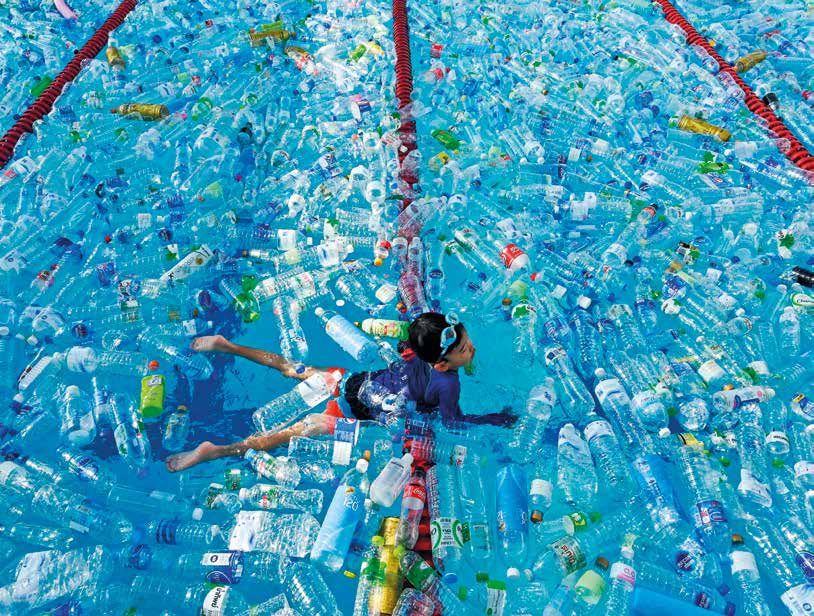
Outrage in Hong Kong
                                                    El Nino and Climate Change
                                                    Building Singapore Underground

MCI(P) 087/05/2019   July 2019
INDEPENDENT • INSIDER • INSIGHTS ON ASIA

                                           US-CHINA

                     Trading blows

                        The raging US-China trade war is seeing companies
                     move their production bases from China to South-east Asia,
                         and economies slowing down. How bad will it get?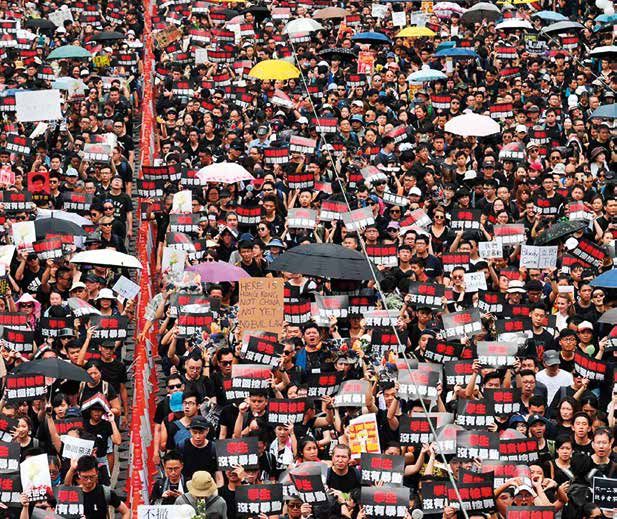
WE BRING YOU SINGAPORE
      AND THE WORLD

         UP TO DATE                                                      IN THE KNOW
News | Live blog | Mobile pushes                          Web specials | Newsletters | Microsites
       WhatsApp | SMS                                                Special Features

         IN THE LOOP                                                    ON THE WATCH
 Facebook | Twitter | Instagram                                 Videos | FB live | Live streams

           To subscribe to the free newsletters, go to str.sg/newsletters
           All newsletters connect you to stories on our straitstimes.com website.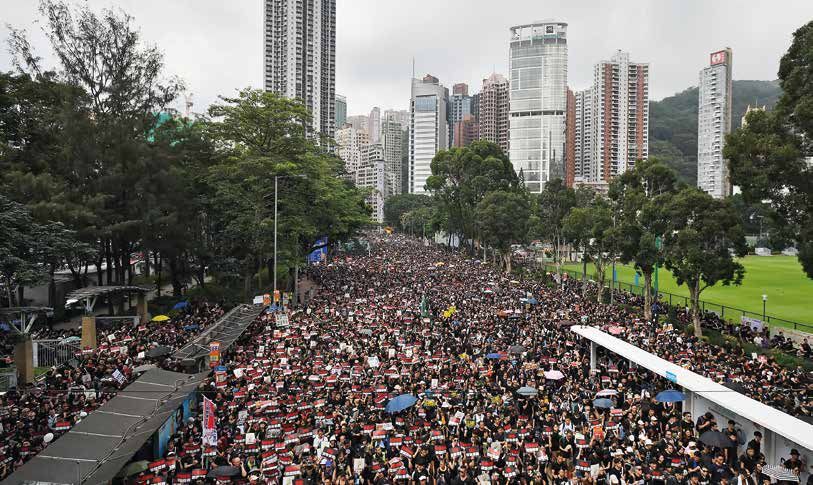
Data Digest
  US-China trade gap
  The United States’ trade deficit has widened to US$621 billion (S$843 billion) for all of 2018, and its gap with China
  has grown to a record US$419.2 billion. US President Donald Trump has made reducing the deficit with China a target
  of his administration, but economists say that looking at deficits in isolation provides a myopic view of both countries’
  economic linkages. Tariffs, which President Trump has imposed on China are a blunt instrument that may hurt US
  companies’ competitiveness as well.

                                                                           Imported:
   US-China trade
                                                                           US$539billion
                                                                           worth of goods

                             United States                            Deficit:   US$419.2 billion                  China

  7.2%               Share of US
                     exports to China

  18.8%
                                                                      Exported:
                           Share of China
                           exports to the US                          US$120billion
                                                                      worth of goods
   Ballooning US trade
   deficit with China                                                                       Recent US moves with other countries
   US trade with China
                                                                                            With Japan: The US rapped Japan for its “substantial edge”
    100 US$ billion                                                        Services         over its trade, calling for parity and more investment.
                                                                                            President Trump said he hoped to make a big
       0
                                                                                            announcement on trade in the next few months, with a deal
                                                                                            he hopes will address the trade imbalance. In mid-June,
   -100                                                                                     Japan’s Economy Minister Toshimitsu Motegi said the two
                                                                                            countries have been sorting out issues and will meet again.
   -200
                                                                                            With India: The US said it will terminate India’s preferential
   -300                                                                                     market access to it as of June 5. This status exempts
                                                                                            billions of dollars worth of Indian products from US tariffs,
           Goods
  -400                                                                                      and is part of a deepening clash over India’s protections for
                                                                           US$419 billion   its market. India has decided to raise tariffs on imports of
   -500                                                                                     29 goods from the United States after having deferred the
           1999 2001 2003 2005 2007 2009                         2011 2013 2015    2017     move several times since announcing it last year, media
                                                                                            reported on June 15.

Washington is adamant on reducing its trade deficit with China                                       Source: DBS Photo: REUTERS STRAITS TIMES GRAPHICS

                                                                                                                                                         1
Warren Fernandez

                                                                                       38
Editor-in-Chief, The Straits
Times & SPH’s English, Malay
and Tamil Media (EMTM) Group
Sumiko Tan
Executive Editor,
The Straits Times
Dominic Nathan
Managing Editor, EMTM
Tan Ooi Boon
Senior Vice-President                                                                   Sustainability
(Business Development), EMTM
Paul Jacob
                                                                                  Galapagos: El Nino rocks
Associate Editor,                                                                 the cradle of biodiversity
The Straits Times
Eugene Leow
Head, Digital Strategy, EMTM
Irene Ngoo
Vice-President
(Editorial Projects Unit) EMTM
Jeremy Au Yong
Foreign Editor
Shefali Rekhi
Asia News Network Editor,
The Straits Times &
Editor, ST Asia Report

DESIGN
Peter Williams
Head, Visual, EMTM &
Art Editor, The Straits Times
Marlone Rubio
Executive Artist
Gareth Chung
Senior Executive Artist
Anil Kumar
Graphic Artist
Cover photo: ISTOCK
                                                                                              ST PHOTO: MARK CHEONG
COPY DESK
Ronald Kow
Sub-editor, The Straits Times

CIRCULATION
Eric Ng
Head, Circulation Marketing
Tommy Ong
Senior Manager (Circulation)
                                 4   Cover Story
                                     Investment floods Vietnam but
                                     exposes limits of its economy   12   Opinion
                                                                          When China drew level with
                                                                          the US, but missed some
                                                                          opportunities
                                     China investment poised
REACH OUT TO US:
                                     to help Cambodian bicycle
For advertising enquiries:           industry pedal ahead
Sharon Lim Ling
Senior Manager                       US-China trade war starts to
(Business Development)
limls@sph.com.sg
                                     bite in Singapore

Circulation & subscription:          US-China trade war: Will tech
Delia Gan                            world of the future look like
Executive
                                     the past?
deliagan@sph.com.sg

WE WELCOME YOUR FEEDBACK
AND VIEWS
Letters can be sent to

                                                                     14
stasiareport@sph.com.sg
                                                                          US-China:
Published by                                                              The Way Forward
The Straits Times, Singapore
Press Holdings (SPH)                                                      US & China must avoid path of
                                                                          conflict
Printed by
Times Printers Private Limited
                                                                          The choice for South-east Asia
All rights reserved. No part                                              isn’t between the US and China
of this publication may be
reproduced in whole or
in part without written
permission from the publisher.
   2
contents
     26
     Special Report
     Carrie Lam likely to lead
     a weakened govt just
     when Hong Kong needs
     a strong hand

ST PHOTO: LIM YAOHUI

        22             Opinion
                       No sweet spot for Singapore
                       in US-China tensions                 44   Smart Cities
                                                                 Going underground –
                                                                 Singapore’s new frontier

        29             Special Report
                       Uncertainty may lead to
                       outflow of funds from city

        32             Country Report
                       Anwar-Azmin feud over Malaysia
                       gay sex videos seen cooling after
                       Mahathir’s exit promise

                       Abe negotiates minefield of

                                                            49   Lifestyle
                       bias as he plays peacemaker
                                                                 Robots at your service
                       India plays cricket to gain
                       edge in geopolitics

                                                            52   Big Picture
                                                                 Swimming in a plastic ocean

                                                                                               3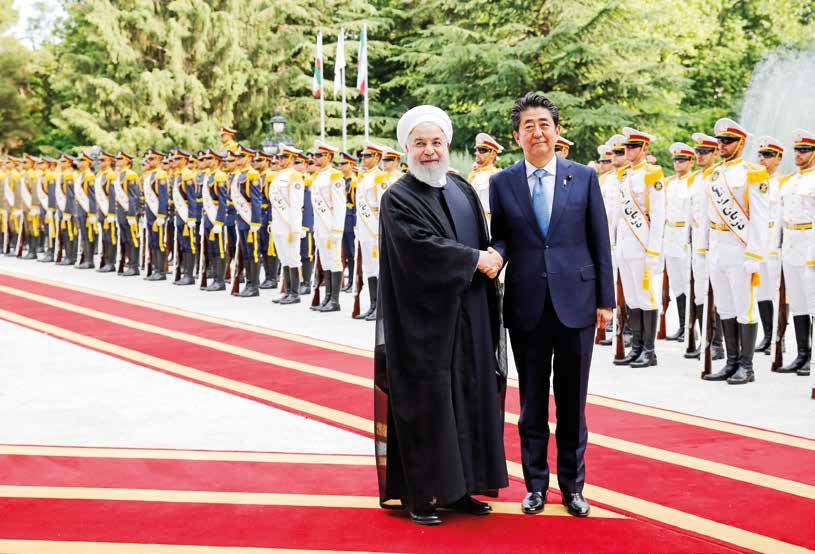
Vendors all ready for
business at a wholesale      Cover Story
fruit and vegetable market
in Hanoi on June 7.
PHOTO: AGENCE FRANCE-
PRESSE                       US-CHINA TRADE WAR
                             Investment floods Vietnam but
                             exposes limits of its economy
JEFFREY HUTTON               AT THE QUE VO INDUSTRIAL PARK, AN HOUR’S                  from the intensifying trade war between China and
Regional Correspondent       drive north of Hanoi, GoerTek’s gambit to skirt           the United States.
In Hanoi                     American tariffs is taking shape.                            Just a couple of months ago, Seattle-based
                                 Last year, the Chinese company, which makes           Brooks Sports said it would move its running shoes
                             AirPod earphones, became the first Apple supplier         and apparel production to Vietnam from China.
                             to say it would shift some production out of China.       Swedish furniture giant Ikea too has indicated to
                             It has since vastly expanded its presence in Vietnam      local suppliers that it wants to rely less on China’s
                             with a US$260 million (S$356 million) facility.           furniture makers.
                                 Seen from the road, the six factories on the 18,000      Vietnam’s registered foreign direct investment
                             sq m plot appear to dwarf all else in the park. Its       (FDI) has surged by nearly 70 per cent so far this
                             neighbours include Japan’s Canon and Taiwan’s             year, especially in labour-intensive industries like
   jdhutton@sph.com.sg
                             Foxconn. GoerTek has an existing factory about three      electronics, furniture and apparel. Investment in its
                             blocks away making conventional wired earphones.          textile industry, which employs 2.5 million people
                                 Thanks to its proximity to China, cheap labour,       across 7,000 companies, totalled US$17.5 billion,
                             a raft of trade pacts as well as ongoing efforts to       up from US$15.9 billion a year ago.
                             liberalise its economy, Vietnam stands to benefit            “The trade war has been very good for us,” said

  4     ASIA REPORT July 2019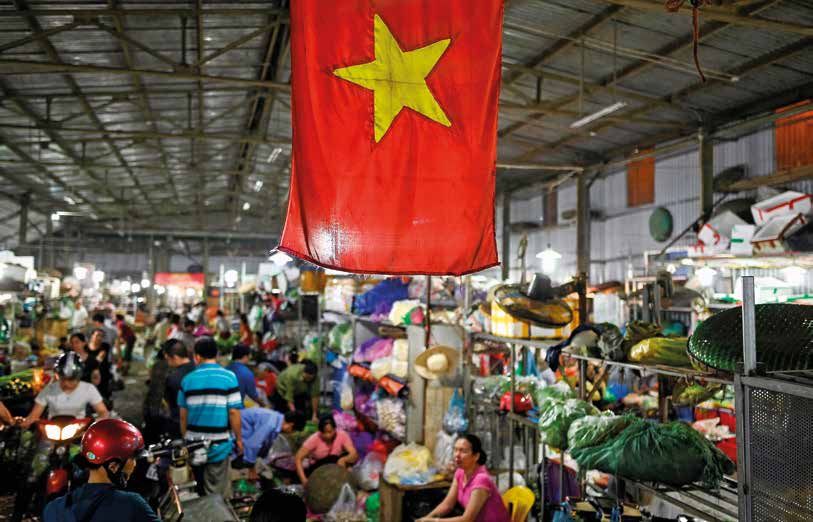
Ms Nguyen Thi Hong Thu of the Vietnam Textile
and Apparel Association (Vitas), the government
body that oversees the industry.
The administration of US President Donald
Trump, in May, levelled additional tariffs of 25 per
cent on Chinese products worth US$200 billion.
China retaliated with tariff hikes of its own on
US$60 billion of American goods. Mr Trump has
threatened to impose tariffs on another US$300
billion worth of Chinese goods.
Still, despite Vietnam’s gross domestic product
(GDP) growing by more than 7 per cent last year,
to US$240 billion, Vietnam’s economy is still half
of Thailand’s.
NOT A PERFECT SUBSTITUTE
billion from US$810 million a year earlier. Workers at a shoe factory
Infrastructure bottlenecks, persistent anti- in Dong Van Town, in
China sentiment among Vietnamese and a limited “This is a benefit and a challenge for us because
northern Vietnam.
domestic industrial base of raw materials and currently we are having trouble finding enough Proximity to China, cheap
services make the country an imperfect substitute material and we have to import more,” said Vitas’ labour, a raft of trade
for its northern neighbour. Ms Thu through an interpreter, referring to the pacts and ongoing efforts
increase in exports. to liberalise its economy
There is a lack of skilled labour as well. Garment have helped Vietnam
makers operating in Vietnam pay on average US$300 While infrastructure is in the works, including benefit from the US-China
a month to workers – about half the going rate in a US$15 billion north-south motorway and a third trade war.PHOTO: REUTERS
China, according to data from Vitas. ring road around Ho Chi Minh City, congestion is
“You can find the cost savings but not the quality,” getting worse. Merchandise from the province of
said Mr Maxfield Brown, a consultant with Dezan Binh Duong, home to the biggest industrial zones
Shira and Associates, which helps clients set up busi- in the south, must traverse about 100km through
nesses in markets across Asean including in Vietnam. parts of downtown Ho Chi Minh City, including
Mr Le Duy Anh, general director of local furniture trendy District Two, on its way to the deep-water
maker Xuan Hoa, told The Straits Times: “The port of Cat Lai to the south of the city.
Chinese have much better supply chains that can Vietnam ranked 45th in the World Bank’s 2018
logistics survey that measures 160 countries on the Exports of
affect the quality of the final product. In comparison,
Vietnam has advantages in labour price but the basis of timeliness, quality infrastructure and ease shirts and
Chinese have advantages in labour quality.” of Customs procedures. By comparison, Singapore sneakers and
ranked seventh while China was 27th.
Mr Anh’s company makes car seats for a Toyota other apparel
affiliate and is in advanced talks with Ikea to supply will surge
office furniture.
VIETNAM-CHINA TENSIONS
Producers are also forced to import raw materials, Chinese investment in Vietnam can be risky more than 10
which exposes them to exchange rate risks. business. per cent to a
Exports of shirts and sneakers and other apparel In 2014, China deployed a massive oil rig into record US$40
waters around the disputed Paracel Islands, touching
will surge more than 10 per cent to a record US$40
off protests and looting of businesses in Hanoi
billion this year,
billion this year, according to Vitas data. But the
country will need to import six million tonnes of thought to be Chinese-owned but were often those according to
spun fabric – triple its domestic capacity. belonging to Taiwanese or even Japanese investors. Vitas data. But
Vietnam’s trade deficit widened in May to US$1.3 High-profile Chinese investments in Vietnam the country will
have also attracted negative publicity.
The yet-to-be-completed Cat Linh-Ha Dong
need to import
railway project in Hanoi, first agreed to in 2008, six million
has suffered numerous delays and is two-thirds over tonnes of spun
budget. The government blamed China Railway Sixth fabric – triple
Group, which was appointed by China according to its domestic
the terms of a loan agreement between the two
countries, for lacking the “experience in putting capacity.
the line into commercial operation”.
Last year, police rounded up dozens of protesters
in Hanoi when news emerged that the government
was setting aside three special economic zones
offering 99-year leases that critics say would
disproportionately benefit China.
Garment makers in Vietnam pay workers an average US$300 “There’s real tension,” said Ms Pilar Dieter, senior
a month – about half the going rate in China. PHOTO: REUTERS partner at Shanghai-based supply chain consultancy
5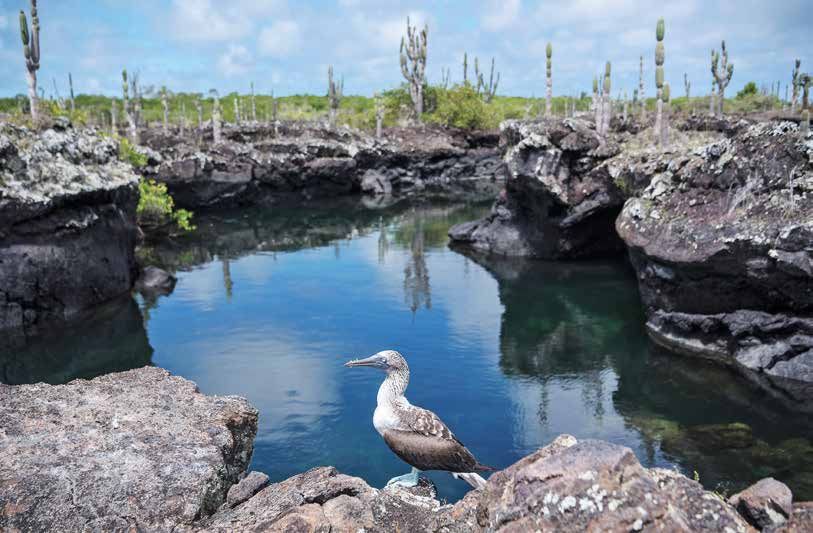
YCP Solidiance. “This notion of a Chinese invasion Thu said. “There’s no investment in infrastructure.
is becoming a point of contention.” They just want to jump in.”
Vietnam’s FDI from China has more than tripled A warmer embrace of Chinese investment
so far this decade to roughly US$2.4 billion last year. hinges on China dialling back the incursions
In the garment industry alone, Chinese investment into Vietnamese territory, said Dr Huong Le Thu,
last year more than doubled to US$300 million from a professor in strategic studies at the Australian
2017, according to Vitas data. National University. This seems unlikely, though.
But Chinese investment usually does little “China has built expectations at home that it is
to benefit local industry and can come with few strong,” Dr Thu said.
environmental safeguards, said Ms Thu. “The degree to which tensions ease will depend
“We aren’t fully on board with China FDI,” Ms on how ambitious and confident China is.”
Vietnam stands to win as foreign investments rise
Trade war or not, Vietnam’s patchwork of free trade agreements, trade tensions between the US and China, and the interest has
liberalisation and already close trading relationship with both extended to our other industrial park in the region too.”
China and the United States ensures that, for now at least, the Vietnam has also rekindled efforts to pare back its state-
country of 96 million people probably wins, whether relations owned sector, which comprises 30 per cent of the economy. The
between Beijing and Washington thaw or remain in deep freeze. government is selling down its stake in big state-owned firms,
“I have an optimistic view that Vietnam’s foreign direct including Vietnam Airlines and Vietnam National Petroleum
investment (FDI) inflows will continue to increase in the Group.
future,” said Dr Lam Thanh Ha, senior lecturer in economics at To some extent, the country’s accession to the World Trade
the Diplomatic Academy of Vietnam. Organisation in 2007 as well as recent free trade agreements
“Maintaining reform of the investment and business have provided leverage for reformers to liberalise the economy.
environment and choosing quality investment projects still have Vietnam will have preferential access to big markets with the
important implications.” Comprehensive and Progressive Agreement for Trans-Pacific
During the five months to May, investments from Hong Kong Partnership (CPTPP), which took effect in January, as well as
and China, including from Apple supplier GoerTek, added up to the upcoming free trade agreement with the European Union.
nearly US$1 billion (S$1.37 billion) in realised capital compared The value of registered investment from China surged from
with US$7.3 billion in total, Vietnam government data shows. less than US$400 million in 2008 to US$2 billion in 2016, which
The inflow of capital has touched off a scramble for resources means some of this overseas investment was coming to Vietnam
such as industrial property. regardless, said Dr Ha.
Vietnam Singapore Industrial Park, a joint venture between That means the country can be choosy.
Singapore’s Sembcorp Development and Vietnam state-owned “In the long term, the rise of FDI from China comes from
company Becamex IDC, attracted US$14.2 billion in investment by the trend of shifting capital outflows of its own businesses,”
822 companies across the eight properties it manages throughout Dr Ha said.
the country, up from US$12.9 billion at the end of last year. “Vietnam’s FDI attraction must be conducted in a selective
Mr Kelvin Teo, chief executive of Sembcorp Development, manner, rather than attracting FDI at all costs.”
said: “We continue to receive inquiries for land because of the – Jeffrey Hutton
China investment poised to help Cambodian
bicycle industry pedal ahead
TAN HUI YEE A BRAND NEW FACTORY IS EMERGING ON A 20ha bicycle supplier Shanghai General Sports.
Indochina Bureau Chief plot in Phnom Penh as part of a plan to shift produc- “If it really looks like that thing is completely
In Phnom Penh tion of millions of bicycles from China to Cambodia. falling apart, they will go into warp speed.”
How fast it is completed, however, will depend Mr Trump, who raised duties on US$200 billion
on the meeting between US President Donald Trump (S$273 billion) worth of Chinese imports the
and Chinese President Xi Jinping at the G-20 summit previous month, has threatened tariffs on another
in Japan, if it ever happens. US$300 billion worth of goods if Mr Xi does not
“If the meeting goes very well, they will go ahead meet him at the G-20 summit.
at one pace,” said Mr Arnold Kamler, chairman While Vietnam, Taiwan and Chile have been
of US bicycle company Kent International, as he identified by analysts as the biggest beneficiaries
tanhy@sph.com.sg explained the calculations made by his Chinese of diverted US-China trade, manufacturing hubs
6 ASIA REPORT July 2019
like Cambodia are seeing greater interest from
Chinese firms trying to relocate their operations
to get around punitive US tariffs.
   The kingdom has a bicycle industry that enjoys
tariff-free access to both the US and European Union.
   Last year, factories in Cambodia’s special
economic zones produced 1.4 million bicycles worth
US$287 million, with 64 per cent headed for the EU.
Another 7.3 per cent of Cambodia’s bicycle exports
are bound for the United States.
   A Straits Times check with Cambodia’s Ministry
of Commerce found at least two new Chinese-
controlled bicycle firms that had set up shop recently.
   Evergrand Bicycle (Cambodia) was registered in
November last year, while XDS Bicycle (Cambodia)
was registered three months ago.
   Most of the bicycles made by Shanghai General            The Kent bicycle production lines at Shanghai General Sports in Kunshan in China’s Jiangsu
Sports is produced for Kent, which sells some three         province. If its factory in Cambodia is built at full speed, the Chinese manufacturer could be
                                                            producing 50,000 bicycles a month by the middle of next year. PHOTO: REUTERS
million sets to retailers such as Walmart and Target
every year.
   If its factory in Cambodia is built at full speed, the
Chinese manufacturer could be producing 50,000
bicycles a month by the middle of next year, Mr
                                                              Trade Briefs
Kamler told The Straits Times.                                 Asean agrees on common vision                       attractive to foreign investors.
   “The plan is over the next three to four years.             for Indo-Pacific region                                “We welcome more and more
They will reduce the size of their factory in China by                                                             foreign investment to come to China,”
                                                               BANGKOK – Asean leaders announced
about 50 per cent to 60 per cent,” Mr Kamler said.                                                                 Mr Li told the group representing the
                                                               a collective vision for the Indo-Pacific
   Any remaining US-bound bicycles still produced              region on June 23, in an attempt to                 Global CEO Council.
in China will be subject to an eye-watering 36 per             reclaim the geopolitical narrative amid                                  – AGENCE FRANCE-PRESSE
cent duty.                                                     the strategic rivalry between China and
   But Cambodia is facing its own headwinds.                   the United States.
   The EU in February launched a process to suspend               The non-binding statement
Cambodia’s trade privileges after Prime Minister               foregrounds an inclusive and “rules-
Hun Sen cracked down on his political opponents.               based framework” to “help to generate
   Amid sustained Western pressure over its human              momentum for building strategic trust
rights record, Phnom Penh has leaned increasingly on           and win-win cooperation in the region”.
Beijing, whose investment in Cambodia accounted                   While mentioning neither the US nor
for 41.3 per cent of all foreign direct investment and         China by name, the document says:
77 per cent of bilateral debt last year.                       “The rise of material powers, i.e. eco-
   Between 2017 and last year, Chinese investment              nomic and military, requires avoiding
in Cambodia doubled in value to US$3.3 billion.                the deepening of mistrust, miscalcula-
   “China’s investments come with no conditions,”              tion and patterns of behaviour based                                             PHOTO: REUTERS
said Dr Chap Sotharith, a board member of the Cam-             on a zero-sum game.”
bodian Institute for Cooperation and Peace, a research                                      – The Straits Times   Google moving hardware
institute. “It’s not like investments from the US.”                                                               production out of China
   But this means that economic tremors from a                 China tells top global CEOs it will                TAIPEI – Alphabet Inc’s Google is mov-
slowdown in China are amplified in Cambodia,                   ‘further open up’                                  ing some production of Nest thermo-
the third smallest economy in Asean. Growth in                 BEIJING – Chinese Premier Li Keqiang               stats and server hardware out of China,
Cambodia’s real estate sector, for example, slowed             vowed on June 20 to further open up                avoiding punitive United States tariffs
after Beijing tried to control Chinese debt and halt           China’s economy during a meeting with              and an increasingly hostile government
a slide in the yuan’s value.                                   CEOs of top global companies amid                  in Beijing, sources said .
   “Approved investments into construction                     simmering trade tensions with the                      Google has already shifted much
projects declined last year, partly due to weaker              United States.                                     of its production of US-bound mother-
                                                                  Washington and other trade                      boards to Taiwan, averting a 25 per cent
external demand particularly from China, following
                                                               partners have long complained about                tariff, they said.
the US-China trade tension and China’s restrictions
                                                               the uneven playing field foreign                       While US officials have pinpointed
on outbound investments in the real estate sector,” a          companies encounter in China, theft of             Chinese-made motherboards as a
report from Cambodia’s central bank stated in April.           intellectual property and entry barriers           security risk, Google didn’t bring
   The government, mindful of the potential                    that allow state-backed companies                  that up during discussions with its
damage from a protracted trade war on the                      to dominate crucial sectors of the                 suppliers, they said. Tariffs have also
Cambodian economy, is striving to improve its trade            economy.                                           pushed American-bound production
competitiveness, Cambodia’s Minister for Economy                  During the meeting in Beijing with              of its Nest devices to Taiwan and
and Finance Aun Pornmoniroth was quoted by                     heads of 19 multinational companies,               Malaysia, the people said.
Khmer Times as saying earlier this month.                      Mr Li pledged to make China more                                                     – BLOOMBERG

                                                                                                                                                     7
US-China trade
                             war starts to bite in
                             Singapore
TAN EE LYN
Senior Correspondent         AT A FACTORY IN TUAS, COMPANY MANAGER
                             Michael is seeing his inventory of raw materials
                             for the production of semiconductor chips pile up.
                                 “Semiconductor production is practically dead.
                             I have three times the inventory that I need,” said
                             Michael, who was using a pseudonym because he
                             was not authorised by his company to speak publicly.
                                 He added: “Everyone is now putting their
                             business decisions on hold and not making new
   tanel@sph.com.sg          orders because they don’t know what will happen
                             to the trade war.”
                                 Effects of the tit-for-tat trade war between
                             the United States and China are starting to bite
                             in Singapore. From factory managers to industry
                             representatives, accounts are beginning to emerge        for other supply sources for fear that China will act
                             of falling orders and sales, reduced factory activity    against the island, a US ally.
                             and hiring freezes.                                         The impact is beginning to filter down to
                                 The spat, which began last year, intensified         Singapore workers.
                             when US President Donald Trump imposed higher               The Ministry of Manpower’s (MOM) latest
                             tariffs of up to 25 per cent on US$200 billion           statistics released on June 13 show that 3,230
                             worth of Chinese goods and threatened to levy            employees were retrenched in the first quarter of
                             duties on all remaining US$300 billion worth of          this year, up from 2,510 in the previous quarter and
                             Chinese imports. Beijing retaliated with tariff          2,320 in the same period a year ago. The jump was
                             hikes on a revised list of US$60 billion worth           driven by manufacturing, and it affected mainly
                             of US goods.                                             production and related workers in the electronics
                                 Caught in the cross hairs is Singapore, where some   sector. Among retrenched residents, the bulk of
                             of its exports are being hit, said industry observers.   the affected workers were professionals, managers,
                                 Factories here which manufacture products            executives and technicians.
                             for Chinese companies that would eventually be              DBS senior economist Irvin Seah saw the
                             shipped to the US are especially hit. Many such as       retrenchment figure as being linked to slowing
                             Michael’s factory have pressed the pause button          economic growth. “What is causing the down cycle
                             and are churning at less than full capacity.             (locally) is also contributed by the trade war,” said
                                 Others are making contingency plans. Mr John         Mr Seah, who added that there would be a time
                             Kong’s business, which buys raw materials from           lag before the effects of the trade war between the
                             Taiwan to build steel floors and aluminium roofing       world’s two largest economies can be fully felt.
                             here, is not yet affected, but he is already looking
                                                                                      NO CHRISTMAS CHEER
                                                                                         End-of-year orders for the holiday season would
                                                                                      usually have piled in by mid-June.
                                                                                         But this year, manufacturers are not getting the
                                                                                      usual bulk of orders due to a fall in demand, said Mr
                                                                                      Ang Wee Seng, executive director of the Singapore
                                                                                      Semiconductor Industry Association.
                                                                                         With higher tariffs raising prices, demand for
Observers say Singapore                                                               consumer goods has taken a hit and the trickle-
has been caught in the
cross hairs of the trade
                                                                                      down effect is now being seen especially in the
war, with some exports                                                                semiconductor business, which produces parts that
affected. Factories                                                                   are necessary for many electronic goods.
which make products for                                                                  “With the trade war, overall product demand
Chinese firms that would
eventually be shipped to
                                                                                      drops because people are wary of the price uptick
the US are especially hit.                                                            in the US,” said Mr Ang.
PHOTO: LIANHE ZAOBAO                                                                     “The demand is just not there, they still have

  8      ASIA REPORT July 2019
a company that designs and manufactures photonic
optical light source products.
Mr Kurt Wee, president of the Association of Factories in
Small and Medium Enterprises, said there were Singapore
no clear signs yet of fallout from the trade war, but see reduced
it was possible in the next few quarters due to an activity amid
overall fall in trade.
“If the downturn were to happen, the first slowing orders
sectors (to be affected) would be manufacturers and some firms
and logistics and supply chains. Then it is going freezing hiring.
to impact business, consumer consumption and
demand – that will take two to three quarters after
that. If the trade war continues to have negative
effects and gains momentum in a negative way, we
will be looking at an uncertain 12 to 18 months
going ahead and some contraction,” he added.
In May, the Ministry of Trade and Industry
lowered Singapore’s gross domestic product growth
forecast for this year to 1.5 per cent to 2.5 per cent,
from 1.5 per cent to 3.5 per cent, after “taking into
account the performance of the Singapore economy
A view of the Pasir Panjang container terminal. ST FILE PHOTO in the first quarter, as well as the weaker external
demand outlook”.
The weaker economy may have already claimed
orders, but they are not sufficient. So, you don’t get some of its early victims. Laboratory technical
the full loading of the factory. From the factory’s officer Sunny Liew was retrenched in May when
standpoint, this is an underutilised capacity.” the fertiliser company he was working for decided to
Raw material suppliers to the semiconductor move its operations to Malaysia, where overheads ST FILE ILLUSTRATION
industry are hurting too. An unusually strong and wages would be lower. The firm converts
boom for semiconductor chips in 2017 resulted in animal waste to fertiliser and sells its products
companies forecasting more raw material demand to countries in the region, such as Malaysia
last year – only for industry players to see a cyclical and Brunei.
slowdown that was made worse by uncertainties “I am still healthy, I can still work and I
caused by the trade war. want to make good use of my polytechnic di-
A recent meeting of human resource personnel ploma in environmental and chemical process
from the semiconductor industry confirmed that engineering,” said Mr Liew, 70, who added that
some companies were freezing headcount. This is retirement was not on the cards for him be-
usually the first course of action to control costs. cause he is still active and wants to continue
“When human resources tell you there is a working.
headcount freeze, you know the company is on Commenting on the latest labour figures,
red alert mode where it needs to reduce and control a Ministry of Trade and Industry spokesman
its costs,” said Mr Ang, adding that companies said that even though the economy slowed,
would “hire only to backfill critical resources during the labour market in Singapore continued to
this period”. hold up in the first quarter of the year.
According to the Economic Development Board, MOM figures showed total employment
Singapore’s precision engineering cluster output fell (excluding foreign domestic workers) as
12.5 per cent in the January to April period versus the having grown by 10,700 in the first quarter.
same period a year ago, while its electronics cluster This was higher than the growth in the first
output fell 3.2 per cent in the first four months of quarter of last year (400), but lower than that
this year, compared with the same period last year. in the fourth quarter of last year (14,700) due
to seasonal factors.
RIPPLE EFFECTS “Given the challenging external envi-
Some industry members see more uncertainties ronment, the Government remains com-
ahead if the trade war drags out. Singapore’s mitted to supporting our companies
manufacturing sector accounts for about 20 per to enhance their competitiveness
cent of the economy, with high-tech industries such by building their capabilities to
as semiconductor and precision engineering being access new markets, adopting
important pillars of the sector. technologies to remain relevant
“There is a generic slowdown in the market, and and upskilling their staff,” the
the semiconductor industry in general is not going spokesman said.
through the growth it had last year,” said Mr Rajan
Rajgopal, president of DenseLight Semiconductors, – Additional reporting by Sue-Ann Tan
9US-China trade war: Will tech world of the
future look like the past?
IRENE THAM TALK OF A BIFURCATED TECH WORLD – WITH
Tech Editor China’s Huawei on the one side and American huawei/google fall out
companies like Google and Apple on the other
– echoed along the information superhighway
following a decision by Google to limit the software HUAWEI
services it provides to Huawei Technologies in the
latest twist in the US-China trade war. E
Google made the alarming announcement on May L
20 after a Trump administration order the previous G
week to restrict the Chinese telecommunications giant O
O
itham@sph.com.sg from buying American technology and components. G
Google’s move means future versions of
smartphones made by Huawei that run on the
Android operating system will lose direct technical
support, as well as early access to security patches
and software updates.
It will also mean that proprietary Google apps
such as PlayStore, Gmail, Google Maps and YouTube
ST ILLUSTRATIONS: MANNY FRANCISCO
Experts say the – which are popular with users – will not be pre-
loaded on Huawei devices, deterring users who value
aggressive move convenience above everything else. chat payment. It is used by more than 900 million
by the US could Other US hardware firms Intel, Qualcomm, people and is a central cog of Chinese digital life.
Meanwhile, its American equivalent, Facebook-
also splinter Xilinx and Broadcom will also stop supplying parts
owned WhatsApp, is still beta testing in-app
to Huawei until further notice – cementing the
the hardware digital wall between China and the US. payment in India.
universe as How might the tech world the way we know Existing Huawei smartphones will continue to
have access to Google apps and services, as well as
China develops it change?
security updates. But Huawei may not be able to
its own ALTERNATE UNIVERSE update the Android software to the next version
components to A splintered tech world is not totally unfamiliar to
promptly, if at all.
wean itself off most people. China has already created an alternate INTER-OPERABILITY AT STAKE?
third parties like universe for apps and services behind its great
Experts say the aggressive move by the United States
Intel, Qualcomm, firewall designed to keep out foreign companies’
influence on domestic tech consumption. could also splinter the hardware universe as China
Xilinx and Experts say the aggressive move by the US could develops its own components to wean itself off third
Broadcom... also splinter the hardware universe as China develops parties like Intel, Qualcomm, Xilinx and Broadcom.
its own components to wean itself off third parties Ms Seema Shah, a senior global investment strat-
This means the egist at asset management firm Principal Global In-
like Intel, Qualcomm, Xilinx and Broadcom... This
world could means the world could end up with two hardware vestors, said: “Ultimately, this tech war could prompt
end up with and software ecosystems, possibly leading to inter- a medium-term acceleration of growth for China.”
This means the world could end up with two
two hardware operability issues reminiscent of the past.
hardware and software ecosystems, possibly leading
What began in 1999 – when Chinese tech giant
and software Tencent created the QQ instant messaging service to inter-operability issues reminiscent of the past.
ecosystems, to rival ICQ , then owned by American firm AOL – “Think of the early generation of mobile
communications, where consumers needed to
possibly leading started a slew of me-too inventions. These include:
change phones when they went from country to
to inter- • Baidu, the equivalent of Google for online search country,” said Mr Ramakrishna Maruvada, a regional
operability activities; telecoms analyst at Daiwa Capital Markets.
• Weibo, which rivals micro-blogging platform Up until the late 2000s, people in many parts of
issues Twitter; Asia and Europe still had to switch from using their
reminiscent of • Youku, the equivalent of Google-owned video GSM (global system for mobile communications)
the past. hosting service YouTube; and mobile phones to those based on the CDMA (code-
• Renren, which is similar to social networking division multiple access) standard when they
service Facebook. travelled to Japan and the US.
Some Chinese firms have even surpassed their Devices then were expensive due to the lack of
American counterparts in innovation. Take Tencent’s economies of scale – in engineering capabilities as
popular instant messaging platform WeChat, which well as sales opportunities.
has integrated micro-banking functions to allow in- The danger now is that, in some cases, buyers
10 ASIA REPORT July 2019from around the world might have to choose “Is it better to live in one big pond with two big
between US-or China-made technologies. fish or to live in one of two small ponds each with
Dr Chua Hak Bin, an economist at Maybank Kim a big fish?” asked technology lawyer Bryan Tan of
Eng, said: “The US may force countries to choose sides.” Pinsent Masons MPillay.
It would be similar to how the Trump adminis- “In a small pond, you would have to live under
tration used tariff concessions to prevent its biggest the whims of the big fish in the pond. There will
trading partners Canada and Mexico from having a be no more democratisation and it would just be
free-trade agreement with China. a power play.”
China’s Huawei is also barred from selling 5G Mr Aloysius Cheang, Asia-Pacific executive vice-
mobile network technologies to US companies. So president of the London-based think-tank Centre
far, only Australia, New Zealand and Japan have for Strategic Cyberspace + International Studies,
openly supported the US campaign against Huawei. warned of the dawn of a technology cold war.
Experts believe it would be a major setback to “If the world fractures into two economic camps, it
global progress if nations were forced to take sides; would reverse the efforts to integrate China into the
there would be no balance of power. world economy over the past few decades,” he said.
Decoupling of US, Chinese economies likely CHARISSA YONG
US Correspondent
inevitable
A YEAR AGO, THE SEPARATION OF THE AMERICAN intent, though there are factions of the White House
and Chinese economies seemed a distant fantasy of pushing for it.
China hawks in Washington. Giving an overview of intra-White House politics,
Today, decades of deepening economic interde- Dr Scissors described how members from the national
pendence between the United States and China are security community want to stop supporting Chinese
being undone, said national security experts. military improvements directly and indirectly, which charyong@sph.com.sg
Trade and investment flows are being reduced, requires some decoupling. Another group, which is
supply chains rerouted and research and innovation associated with Treasury Secretary Steven Mnuchin,
ecosystems becoming less integrated, said Dr Ely wants more from the Chinese but not at the cost of
Ratner, deputy national security adviser to then a major confrontation, he added.
Vice-President Joe Biden from 2015 to 2017. Mr Trump is closer to Mr Mnuchin’s camp than
“Despite protests from different quarters, the he is to the decoupling camp, said Dr Scissors,
facts are happening on the ground, some of it because the President primarily wants more US
potentially irreversible,” Dr Ratner said on June 14 exports to China. “The twist is if he doesn’t get
at the annual conference of the Washington-based those, he’ll push us down the road to decoupling”.
Centre for a New American Security (CNAS), where Dr Scissors also said that decoupling would Even if a sort
he is executive vice-president. hamstring the Chinese economy, echoing the
The decoupling is being driven by wider political dominant view in Washington foreign policy of truce is
and economic forces and will not stop even if US and trade circles that a trade war was reached on the
President Donald Trump and Chinese President Xi America’s to win. trade issue, the
Jinping reach a deal to end the trade war between If the US applied 25 per cent tariffs
their countries, said experts. to all Chinese imports and no other dynamics set
“There’s no ability for (Mr importers, it would lose 0.14 per in motion will
Trump) to shut it all down cent of its GDP growth in 2017 continue. We
without a very advanced terms, he estimated.
directive,” said CNAS ener- Ms Rosenberg said the
are in for an
gy, economics and secu- uncertainty about what extended period
rity programme director Mr Trump would do of change in
Elizabeth Rosenberg. was making traders and relations.
“Regulations, law investors jittery, and
enforcement, diploma- manufacturers to move
cy, research exchange, operations outside
visas, currency – there’s of China to insulate
a huge array of policy themselves from risk.
instruments in play that “Technology controls, – Obama
are pushing us towards de- trade controls, sanctions, Administration
coupling across many areas,” or controls on the flow of National Security
she added. energy do have the effect of Adviser Tom Donilon
American Enterprise Institute accelerating this decoupling,
resident scholar Derek Scissors said which won’t just be bilateral. It
separating the two economies is will compel the rest of the world to
not actually Mr Trump’s primary make choices,” she said.
11Opinion
When China drew level with
the US, but missed some
opportunities
Acting US Defence
Secretary Patrick
Shanahan and Chinese
Minister of National
Defence Wei Fenghe
shaking hands during a
ministerial roundtable
hosted by Singapore’s
Defence Minister Ng Eng
Hen at the Shangri-La
Dialogue on June 1.
PHOTO: KEVIN LIM
RAVI VELLOOR IN MANY WAYS, THE 18TH SHANGRI-LA “We hold different views with the US on several
Associate Editor Dialogue in Singapore will be remembered as the issues, and firmly oppose its wrong words and
regional event where China drew level with the actions concerning Taiwan and the South China
United States – optically at least. Sea,” said the Chinese defence minister, mincing
Chinese delegations to the annual Shangri-La no words.
Dialogue have tended to complain about not getting It was a message tailored equally for an audience
enough air time to voice their thoughts, compared both at home and abroad. Unlike Mr Shanahan, who
with the Americans. did not seem to relish the post-speech engagement
In turn, the International Institute for Strategic with the 600 ministers, military brass and analysts
Studies, the conference organiser, has consistently assembled, Gen Wei had the air of a man who had
velloor@sph.com.sg
responded that if the level of Chinese representation all morning for them.
was high enough, so would the platform be. His domestic audience saw a general fully capable
This year, China sent its defence minister to the of defending China; the global assembly in the
premier security summit after a gap of eight years. Shangri-La ballroom saw an officer neither overly
Given the platform of an exclusive opening concerned by the situation nor shying away from it.
plenary on the summit’s third day, General Wei The 18th Shangri-La summit, which concluded on
Fenghe on June 2 turned in a masterly performance, June 2, was held under the overhang of a geopolitical
calmly defending Chinese positions and displaying situation that seems to be getting more clouded
neither anxiety nor alarm over his country’s rapid by the day.
deterioration in ties with the US. As Singapore Defence Minister Ng Eng Hen said
While US Acting Defence Secretary Patrick in his conference-closing remarks, the events of the
Shanahan had generally avoided calling out China month past, particularly the breakdown of trade
in his own speech the previous day, Gen Wei had talks between the US and China, and the tariff
no such qualms. In his opening lines, he laid out and technology barriers being swiftly erected,
the scenario. “have altered the trajectory of this region into an
12 ASIA REPORT July 2019altogether different orbit”. senior research fellow at the Lee Kuan Yew School
A year ago, we were “hoping” that nothing of Public Policy, says he would have liked to hear
would go wrong, a key summit figure told me on more from Gen Wei on the notion that Chinese
the sidelines. This time, he said, that has turned to military modernisation has created a classic security
“fearing” that a lot could yet go wrong. dilemma whereby China’s actions to enhance its
While saying he did not expect anyone to take security has spread insecurity among its neighbours,
sides in the US-China struggle for dominance, Mr and further afield.
Shanahan, while calling for a network of allies and On June 2, that was not forthcoming.
partners in the region, made it clear he expected One opportunity Beijing has to match its words
them to foot more of the defence bill, and build with deeds is to help the speedy conclusion of a
common platforms with the US. This, he said, was quality Code of Conduct (COC) for the South China
also the way to future prosperity. Sea. Once that is in place, and particularly if China
Eager to get out of the way, it is getting evident were to yield on making it a legally binding document,
that many countries are gently shifting positions, South-east Asia would breathe a lot easier.
or if nothing else hurrying to take a centrist line. As of now, though, a legally binding COC seems
For instance, Australia, a treaty ally of the US, a distant possibility.
spoke up for continued American economic and
strategic engagement with the region, but some
observers took note that its defence minister Ms
Linda Reynolds omitted to mention a “US-led”
regional security order. While this may well be an
oversight by a person only four days into her job,
the world will be watching to see if it presages a
deeper course correction.
South-east Asia, with deep economic and military
ties to the US, and close ethnic and trade links
with giant neighbour China, has its work cut out
to balance the competing pulls.
Indonesian Defence Minister Ryamizard Ryacudu
spoke on June 2, of the great common threats facing
Asean, and the “deterrence” that the region, with
a combined population of 620 million and men in
uniform numbering 2.3 million, could bring to face
down these threats.
But, given the vast disparities between maritime
and mainland South-east Asia, and with strategic HEADING OFF A GLOBAL CLASH
orientations varying so widely between nations,
any form of a common defence platform is not at
all realistic.
A challenge for
That said, it is evident that the region needs to
have a serious discussion about what the Philippines’
Defence Secretary Delfin Lorenzana described as
The Straits Times readers
the possibility of “sleep-walking into another Calling for steps and actions to manage a transition to a new global order.
international conflict”. An essay contest organised by The Straits Times,
Unable to jell militarily, the region has no option in partnership with Harvard’s Kennedy School.
but to stand by and allow a widening band of outside
How the United States and the world relate to a ST editors will pick the top entries to be sent
players to enter the arena in the name of security, rising China is one of the great challenges today. to Professor Graham Allison, an American
irking stalwarts such as Malaysian Prime Minister This is your opportunity to help suggest political scientist and professor at the John F.
Mahathir Mohamad. pathways that might be taken to manage a Kennedy School of Government at Harvard,
transition to a new global order and make the and author of the bestseller Destined For War:
Ms Florence Parly, the French Minister of the world a safer place to live in. Can America And China Escape Thucydides’s
Armed Forces, made a particular point of the Charles Write an essay in no more than 600 words on Trap, for his review.
de Gaulle carrier strike group tethered at Changi “Can the US and China escape the Thucydides The best essay wins a $3,000 cash prize from
Naval Base to insist her country will have its say Trap?”. The Straits Times.
The trap refers to the power dynamic that The winner will also get two places to
in the “building blocks of a global confrontation comes into play when an incumbent power is The Straits Times Global Outlook Forum in
taking shape in Asia”. made anxious by an emerging rival. November.
This, she said, was a “question of principle when
rules are no longer the boundary of ambition”. Send your entry for this ST contest to http://str.sg/oV6P by Oct 27, 6pm.
As cool as Gen Wei was, the Chinese defence Details on the essay format and recommended background readings can be found here:
minister missed an opportunity to address such www.belfercenter.org/publication/searching-grand-strategy-meet-china-challenge
sentiments and offer more soothing words to this
troubled region.
China specialist Drew Thompson, a visiting
13US-China: The Way Forward
LEE HSIEN LOONG
US & China must avoid path of conflict
The world is in the throes of major geopolitical change as the Sino-US rivalry
intensifies. Both great powers must adapt to changing realities and work for a
peaceful transition, not upend the global system, says Singapore Prime Minister
Lee Hsien Loong in his key address at the opening of the Shangri-La Dialogue
on May 31. The text of his speech follows:
PHOTO ILLUSTRATION: ISTOCK, CHNG CHOON HIONG
WELCOME TO SINGAPORE AND TO THE 18TH to look for a new outpost for the British East India
edition of the Shangri-La Dialogue. Company, along the Strait of Malacca.
LEE HSIEN LOONG
The view from Singapore and South-east Asia. He chose Singapore, and that changed our destiny.
Our world is at a turning point. Globalisation is The Dutch protested Raffles’ action furiously,
under siege. Tensions between the US and China but in vain. To preserve their monopoly, the Dutch
are growing. Like everyone else, we in Singapore had either prohibited foreign ships from operating
are anxious. We wonder what the future holds, and in their ports, or imposed high tariffs. Raffles
how countries can collectively find a way forward to took a different approach. He set up Singapore
maintain peace and prosperity in the world. as a free port. Trade boomed, and the settlement
What can the history of South-east Asia tell us prospered. The more open approach of the British
about avoiding upheavals and disasters in our path delivered superior results.Over the next century,
ahead? This year, Singapore is commemorating our South-east Asia was divided between the British,
Bicentennial. Dutch, Spanish, French, and later the Americans.
Two hundred years ago, Stamford Raffles, an Their rivalry was intense. No single colonial power
Englishman, landed in Singapore and founded a dominated the whole region.
trading post here. The Dutch had already colonised In the 20th century, the interests of big powers
the Dutch East Indies, so the British were actually continued to intersect in South-east Asia. In 1941,
latecomers to South-east Asia. Raffles was Lieutenant- Imperial Japan invaded French Indochina. The US
Governor of Bencoolen, on the west coast of Sumatra. retaliated with an oil embargo on Japan. This was
He saw the trade potential of the region, and decided the immediate trigger for the Pacific War. On the
14 ASIA REPORT July 2019same day that Japan bombed Pearl Harbour, they
also attacked Malaya and Singapore. There followed
for us the Japanese Occupation: three years and
eight months of oppression, fear and misery.
During the Cold War, South-east Asia was again on
the front line. The region was split between commu-
nist and non-communist states. Vietnam became the
battlefield for a proxy war between the two camps.
Meanwhile, China supported communist insurgencies
and promoted armed revolution in the non-commu-
nist countries, including Malaysia and Singapore.
This was the backdrop when the five non-
communist countries in South-east Asia – Indonesia,
Malaysia, the Philippines, Singapore and Thailand
– came together to form Asean in 1967.
It was a remarkable act of statesmanship. Several
of the partners had a recent history of conflict with
one another, and the wounds had yet to heal fully.
But with Asean, the five countries eschewed conflict,
international environment for many years to come. Prime Minister Lee Hsien
and took the path of dialogue, cooperation and Loong delivering his
friendship. We integrated into the world economy, The relationship has already altered significantly.
keynote address at the
linked up with advanced countries, and thrived. China has totally changed since it started opening Shangri-La Dialogue on
Meanwhile, the communist countries in up 40 years ago. Its GDP per capita has grown by May 31, 2019.
Indochina were held back for decades by successive more than 25 times in real terms. China is now the ST PHOTO: JASON QUAH
wars and the rigidity of their command economies. second largest economy in the world.
After the Cold War ended, the US became the On many counts, China’s growth is a tremendous
sole superpower. South-east Asia entered a new boon, both to itself and the world. China has
phase. The Indochinese wars finally ended, and the substantially transformed its backward, centrally
communist countries opened up. Earlier, Vietnam planned economy into a middle-income, market-
had invaded Cambodia, thus posing a serious threat driven one, even though it is far from being a
to its non-communist neighbours. But now Vietnam full market economy. More than 850 million
joined Asean, together with Cambodia, Laos and Chinese people have been lifted out of poverty,
Myanmar. It was a case of beating swords into an achievement unprecedented in human history.
ploughshares. China’s development and success benefited the
Over the next decades, South-east Asia benefited world too. China has become a massive production
from a favourable external environment. The US and manufacturing base, lowering costs for the
was the dominant power in the Asia Pacific, and world’s producers, first for labour-intensive goods,
a stabilising security presence. International trade and now increasingly for high value and technology-
was expanding rapidly. Trade barriers came down, intensive production. It is also a huge market,
often led by the United States. importing everything from commodities and
The Asean economies prospered through export- electronic components to aircraft and fine wines.
led growth and foreign investments. International On the consumer side, billions of people
frameworks like the World Trade Organisation worldwide buy all manner of products, from Barbie
(WTO) and the UN Convention on the Law of the dolls and basketballs to drones and mobile phones,
Sea (Unclos) established rules, managed conflict, made in China, though often incorporating foreign
balanced competing interests, and fostered components and technology.
cooperation between countries big and small. Imagine, conversely, had China remained
closed and undeveloped. A failing China would
Initially, China played only a minor economic
have exported many problems to the world, quite
role, but as its economy took off, it became a
possibly still including armed revolution. Its huge
growing partner of the Asean countries, and a major
population would have been resentful and restless
participant in regional affairs.
at being left behind by other countries.
A generation ago, when China was still poor, Deng
GREAT GAME OF OUR TIMES: Xiaoping was asked by US President Jimmy Carter to
US-CHINA RELATIONS allow more people to emigrate. He answered: “Well,
I recount this history to show Mr President, how many Chinese nationals do you
that South-east Asia is no stranger want? Ten million? Twenty million? Thirty million?”
to the great game of nations, and to
offer some historical perspective RISE OF CHINA: ADAPTING
to the current strategic situation. TO NEW REALITIES
The US-China bilateral relationship is the most China’s success has enabled
important in the world today. How the two work the world to avoid this disastrous
out their tensions and frictions will define the outcome. At the same time,
15China’s growth has shifted the strategic balance the world, its words and actions are seen differently.
and the economic centre of gravity of the world, To protect its territories and trade routes, it is
and the shift continues. Both China and the rest of natural that China would want to develop modern
the world have to adapt to this new reality. and capable armed forces, and aspire to become not
China has to recognise that it is in a totally new just a continental but also a maritime power. At
situation created by its own success. China can no the same time, to grow its international influence
longer expect to be treated the same way as in the beyond hard power, military strength, China needs
past when it was much smaller and weaker. China to wield this strength with restraint and legitimacy.
may still be decades away from becoming a fully Frictions will arise between China and other
developed advanced country, but it cannot wait countries from time to time. The overlapping
decades before taking on larger responsibilities. maritime claims in the South China Sea are one
example. China should resolve these disputes
peacefully, in accordance with international law,
including Unclos. It should do so through diplomacy
COLLECTIVE EFFORT and compromise rather than force or the threat of
Small states like Singapore can do little to influence force, while giving weight to the core interests and
the big powers, but we are not entirely without agency. rights of other countries.
Then over time it will build its reputation as a re-
There are many opportunities for smaller countries sponsible and benevolent power that need not be
to work together to deepen economic cooperation, feared. Instead, China will be respected as a power that
strengthen regional integration, and build up can be relied on to support a stable and peaceful region.
multilateral institutions. This way, we can strengthen In the long term, this will allow China to
continue to benefit from a conducive and friendly
our influence as a group, and advance a collective international environment, and enhance its
position on issues that matter to us, be it trade, influence and standing in the world.
security or technology. The rest of the world, too, has to adjust to a
larger role for China. Countries have to accept
that China will continue to grow and strengthen,
and that it is neither possible nor wise for them to
– PM LEE, on how small states can help strengthen multilateral bodies. prevent this from happening. China will have its
own legitimate interests and ambitions, including
to develop indigenously advanced technologies like
Having gained much from the international infocomms and artificial intelligence.
system, China now has a substantial stake in As a major stakeholder in the international
upholding it, and making the system work for the system, China should be encouraged to play
global community. commensurate and constructive roles in
Chinese leaders have spoken up strongly in support supranational institutions like the IMF, World Bank
of globalisation and a rules-based international order. and WTO. If China cannot do so, it will create its
China must now convince other countries through own alternatives.
its actions that it does not take a transactional and
mercantilist approach, but rather an enlightened and NEW INTERNATIONAL RULES
inclusive view of its long-term interests. NEEDED
For example, when China joined the WTO in The US, being the preeminent
2001, its merchandise trade accounted for only 4 power, has the most difficult
per cent of world trade. Since then China’s share adjustment to make. But
has almost tripled, to 11.8 per cent. This is why the
however difficult the task, it is
trade arrangements and concessions that China
well worth the US forging a new
negotiated when it joined the WTO are no longer
understanding that will integrate China’s aspirations
politically wearable for other countries.
within the current system of rules and norms.
New international rules need to be made in many
CHINA: GREAT POWER,
areas, including trade and intellectual property,
GREAT RESPONSIBILITIES
cyber security and social media. China will expect
It is in China’s own interest a say in this process, because it sees the present
to prevent the international rules as having been created in the past without
framework of trade from breaking its participation. This is an entirely reasonable
down, and to implement timely expectation.
changes that bring about greater The bottom line is that the US and China need
reciprocity and parity with its trading partners, and to work together, and with other countries too,
that are more consistent with present-day China’s to bring the global system up to date, and to not
more advanced state of development. upend the system. To succeed in this, each must
Similarly, in security, now that China is a major understand the other’s point of view, and reconcile
power with the second largest defence budget in each other’s interests.
16 ASIA REPORT July 2019You can also read


